Is E. M. Forster “wrong”? (or, maybe, are our meanings different than his?)
Posted: July 24, 2018 Filed under: writing 2 Comments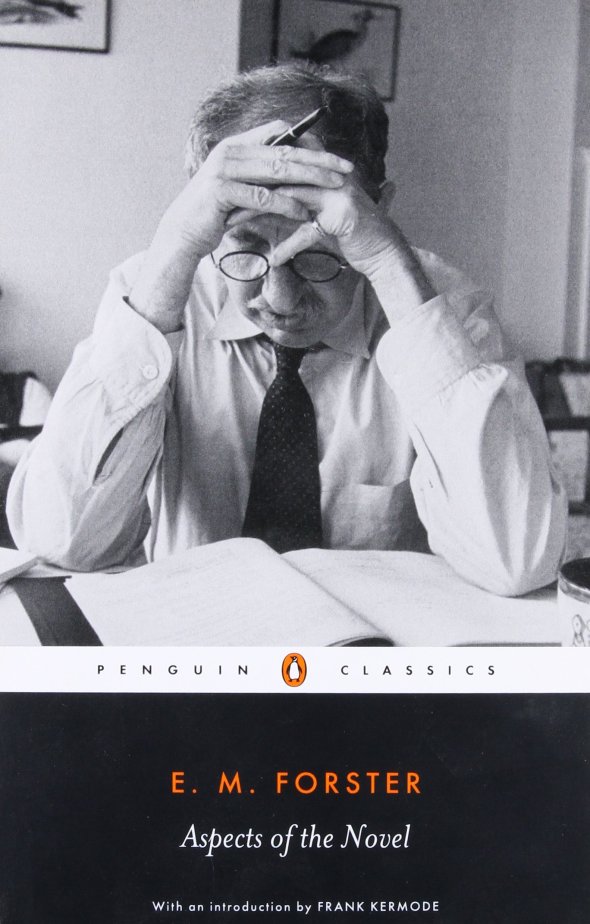
Let us define a plot. We have defined a story as a narrative of events arranged in their time-sequence. A plot is also a narrative of events, the emphasis falling on causality. “The king died and then the queen died” is a story. “The king died, and then the queen died of grief” is a plot.
So says Forster in Aspects of The Novel.
But this is the exact opposite way I feel most professional TV writers talk about this. Shorthanded, “plot” means the events and “story” is the emotional journeys of the characters.
Over here commenter Kenny Chaffin, a writer himself, puts it succinctly:
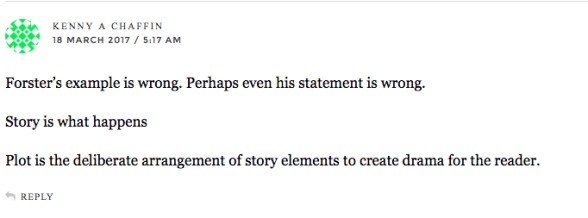
I’m not sure I’d say Forster was wrong, but these words seem to have an inverted meaning in 2018 Hollywood. When you have plot and no story, the audience will be bored.
 Helytimes
Forester is obviously not “wrong” he is simply discussing something different than contemporary TV writers are — usage and concerns having evolved over time — and it is a bit obtuse to condescend to Forester based on one’s own misapprehension of his point.
lol take it up with Kenny Chaffin. Headline is pure trolling.