Paul Revere, Silversmith
Posted: December 28, 2025 Filed under: Uncategorized Leave a comment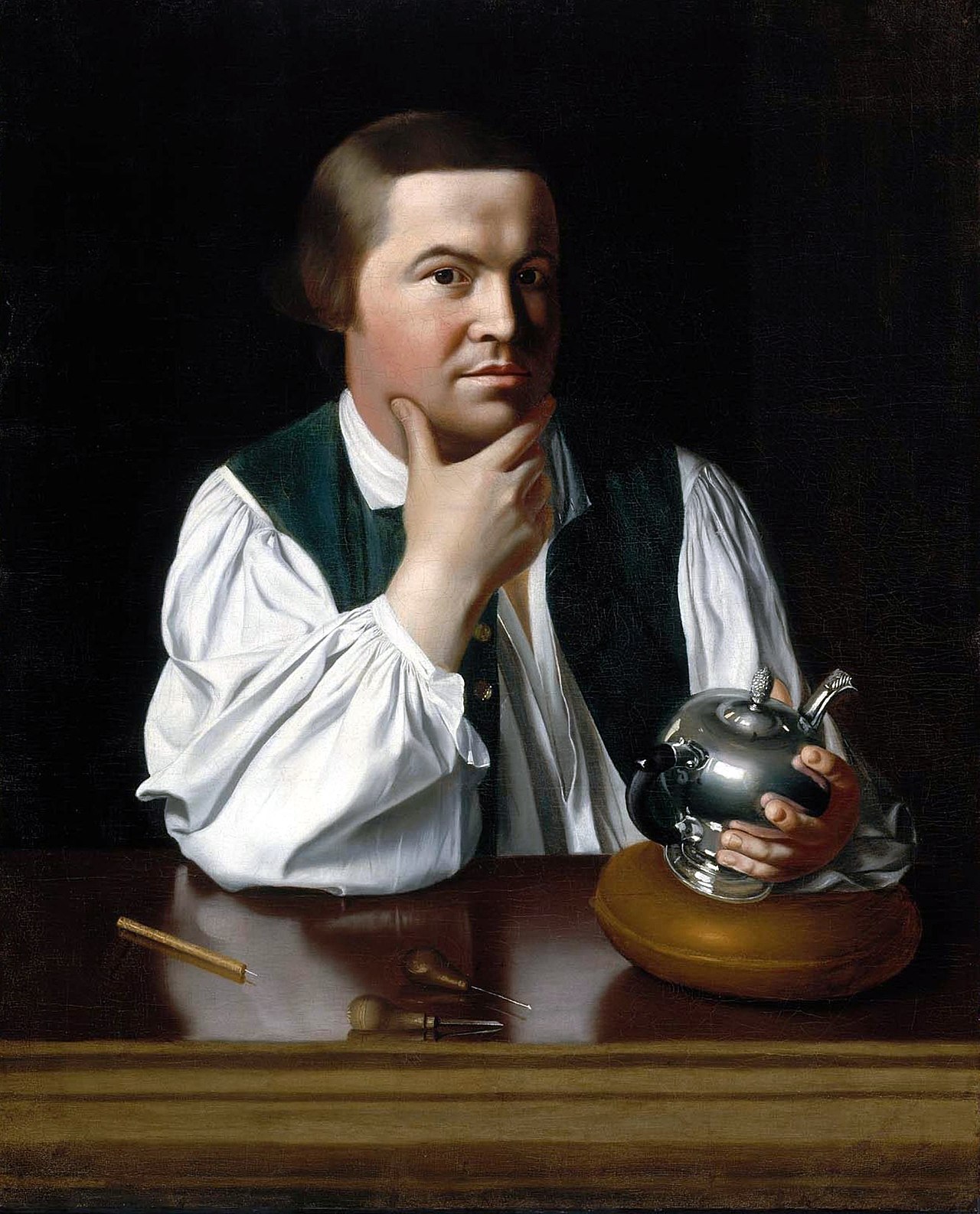
The ports also brimmed with silversmiths. We think of silversmithing as a classic “ye olde” profession; Paul Revere was a silversmith, and, generally, they outnumbered lawyers in Colonial America. But why were any there at all, given that the land had little by way of silver mines? The answer, Mark Hanna explains, is that silversmiths worked as fences, transmuting “pirate metal” into respectable wealth. The first mint in the thirteen colonies was established in 1652 by John Hull, who made Massachusetts pine-tree shillings from Spanish bullion. Hull was a silversmith; his brother Edward was a pirate.
source, “Were Pirates Foes of the Modern Order – Or Its Secret Sharers?” by Daniel Immerwahr in The New Yorker. That article is partly pegged to a book, Pirate Nests and the Rise of the British Empire, 1570-1740 (Published by the Omohundro Institute of Early American History and Culture and the University of North Carolina Press) by Mark G. Hanna.
The role of the silversmith in early America, as in medieval Europe, was complex, combining artisanship with the roles of banker, lender, hoarder, and smuggler. Silversmiths in England traditionally took the brunt of the blame for currency debasement because of the large volume of bullion that passed through their hands. In the colonies, silversmiths were highly respected and powerful men. As mintmaster and owner of trading vessels, Hull understood better than most the intricacies of the piratical market, making him one of the wealthiest men in New England.
…
Pirate metal was transfused into the colonial economy by fences, the most common being silversmiths. This helps explain the disproportionate number of silversmiths in regions allegedly suffering from a monetary crisis: metallic scarcity actually created a positive labor market for these artisans. At a time when pirate booty was welcome and alleged pirates rarely faced trial, there were more silversmiths than lawyers in the colonies. Scholars have identified at least 178 silversmiths who were active before 1740. As the currency problem grew into a perceived epidemic, following Gresham’s Law, individuals held on to full-weight Spanish specie and traded in clipped coins or commodities. Making matters worse, bullion in the form of cobs or bits was easy to counterfeit, fueling unease in the currency market.…
Colonial leaders like John Winthrop did not actively foster sea marauding but still considered the Spanish loot that arrived in Boston Harbor a sign of God’s providence.
Though like every Boston schoolchild I knew Paul Revere was a silversmith, it never occurred to me to wonder where he got any silver, since there weren’t really major silver deposits in the British Empire or New England.

One point Hanna makes is that pirating wasn’t necessarily a lifelong career, you might pirate for awhile and then become respectable:
Swashbuckling yarns about attacks in the Indian Ocean must be tempered by the fact that some of these men bought land in the Delaware Bay, married local Quaker women, took to farming, and won political positions.
Immerwahr tells us the sad fate of Captain Kidd, who got caught on the wrong side of a shift:
London also found that pirates interfered with the East India Company, the chartered trading firm that would become the bridge to Britain’s conquest of India. This was Kidd’s great crime. His theft of the Quedagh Merchant, which had been transporting goods owned by a high-ranking Mughal official, provoked fury on the subcontinent. The Mughal emperor insisted that, if the English wanted to continue operating there, justice must be served. Lord Bellomont’s arrest of Kidd, in 1699, was a sacrifice made on the altar of English trade.
The Crown’s crackdown meant that William Kidd faced a jury in London, not one in pirate-coddling New England. “I am the innocentest person of them all,” Kidd protested. He made much of the French pass that the Quedagh Merchant had carried, which in his view made it fair game. This defense might have worked a generation ago. But now? Kidd’s acts had been “the most mischievous and prejudicial to trade that can happen,” the judge told the jury. Kidd was convicted and sent to Execution Dock in Wapping.
 Helytimes