Chambéry
Posted: July 14, 2026 Filed under: France, Savoy 2 Comments
A passion: traveling and seeing the places on the map come to life.
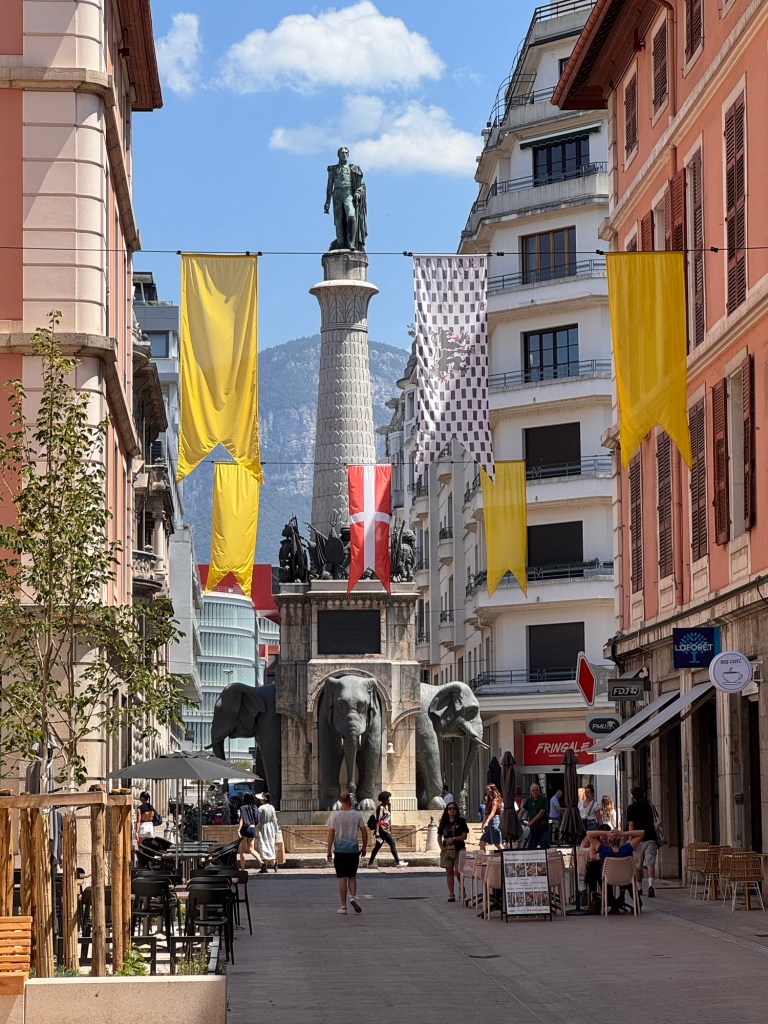
Reading the history of Savoy, Chambéry came up again and again. A 30-40 minute train ride from Annecy, we decided to have a morning’s look.

Chambéry sits in a nice, elevated spot on a mountain pass, near Lac du Bourget. It’s a good location. Says Claude:
Together, these features turned Chambéry into the natural “hinge” between Italy, France, and Switzerland — a role formalized when the Counts (later Dukes) of Savoy made it their capital in the 13th century, since holding this valley meant holding the keys to Alpine trade and military movement in the region.
The most distinct attraction in Chambéry is the Elephant Fountain, commissioned by Benoit Boige:
Benoit Boigne, the son of a Chambéry glove maker, left in 1769 aged seventeen, to join the Irish regiment in Louis XV’s army. He then tried his luck in the Russian navy, was captured by the Turks, escaped, was shipwrecked in Egypt, and finally joined the Madras regiment of the East India Company. In India, his career took off; after just six years he became the commander-in-chief of the 30,000-strong army of the Maharajah of Sindh. Boigne accumulated a fortune and thirty-five years after leaving Chambéry, he returned and spent his wealth, and the last twenty-eight years of his life, reshaping the capital of Savoy.
(so says John Dormandy in A History of Savoy: Gatekeeper of the Alps)
Sometimes this elephant statue is called “les quartre sans cul,” the four without asses, which sounds kind of like Les Quatre Cents Coups, Truffaut’s movie, and thus is the kind of wordplay French people enjoy.
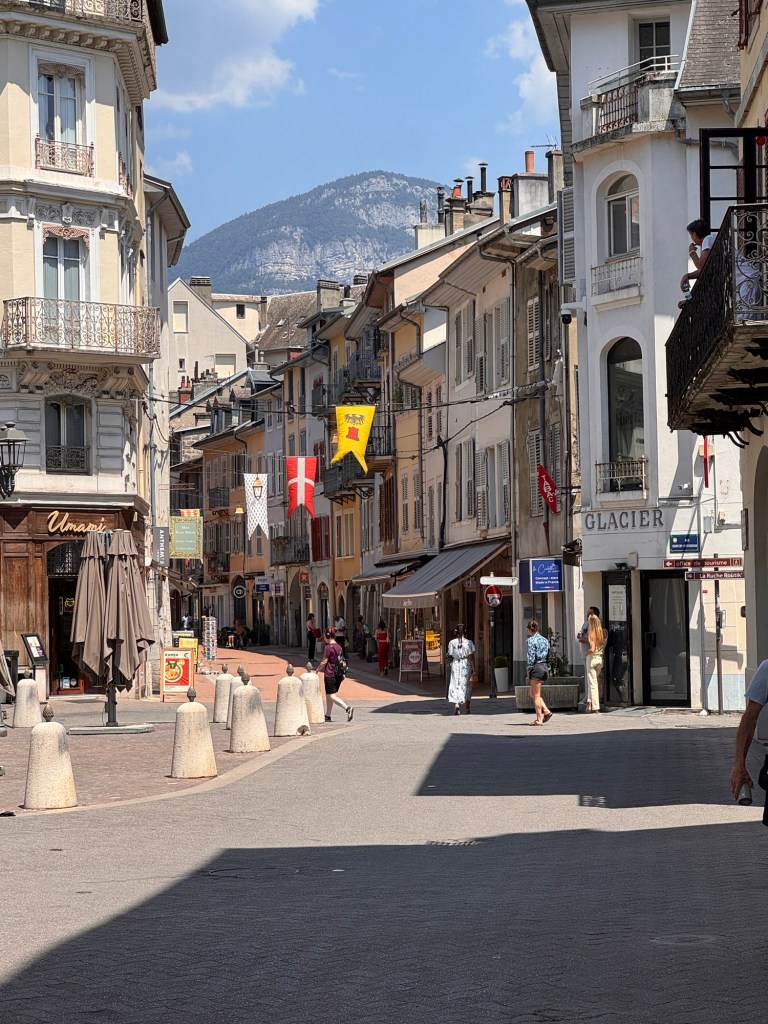
There is something distinct about Chambéry, the Savoy quality, the Alpine influence.
It was very hot the day we visited. This may have accounted for the empty streets. Real Rick Steves vibes as the medieval town revealed itself to us.
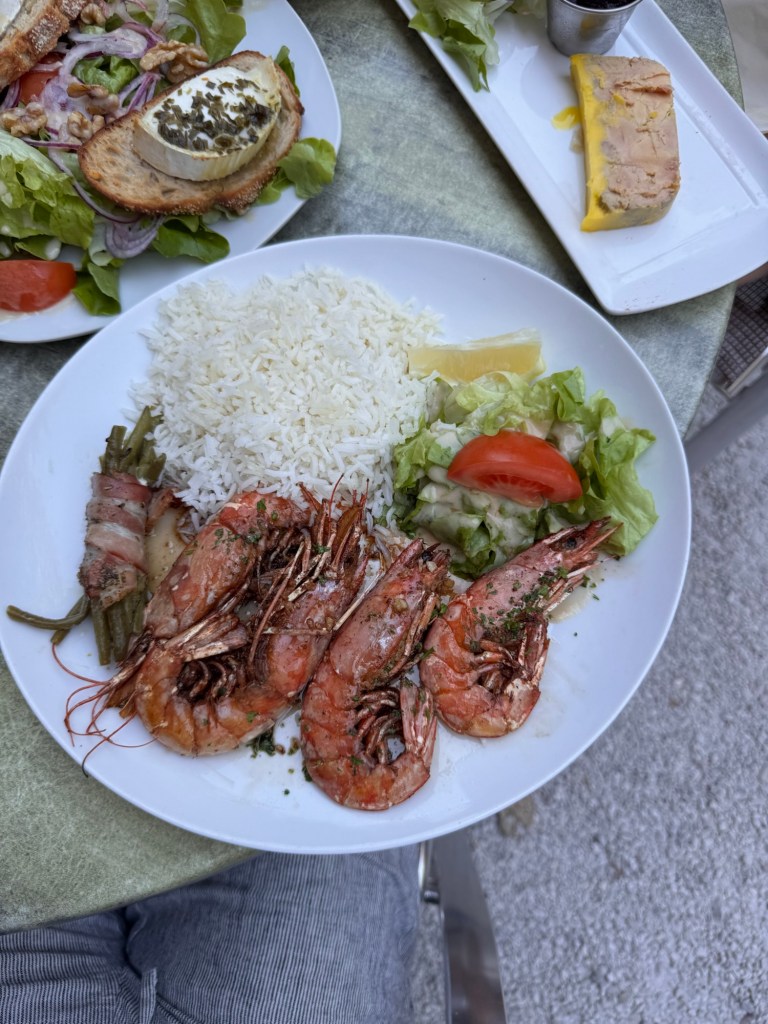
We lunched at Le Sporting, right next to the church. The birds and the quiet French chatter of the elderly lunchers was a very soothing acoustic accompaniment to the prawns cooked in calvados.
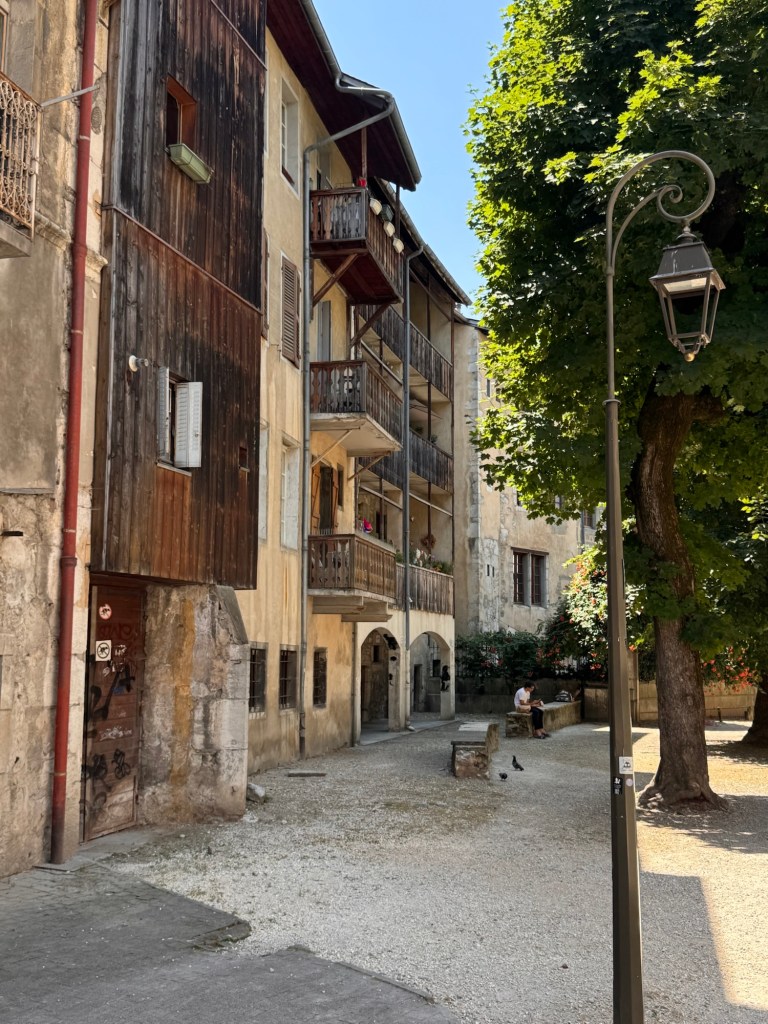
Chambéry was the capital of Savoy for two centuries. It maybe peaked by the year 1563, when Duke Emmanuel Philibert moved his capital to Turin, in what’s now Italy. Chambéry still kept a Senate (one of three for Savoy, it seems like this was more like an appeals court) and the Chamber of Accounts, so there was government business. At times the traveler can imagine himself as a 16th century visitor arriving on some annoying business and looking for lodging.
Over half of the 800 aristocratic families in Savoy lived in or near the old capital, Chambéry, almost none in the Alpine valleys. About two-thirds had acquired their titles more than 150 years earlier.
Walking the streets of Chambéry you can still be transported to that era. You can picture the events of an earlier time:
Discontented with a ruling of the ducal council in Chambéry, [Jacques de Montmajeur] and his men stormed into a council meeting, cut off the head of its president, and laid it on the council table.

The de Maistre brothers were Chambéry dignitaries, writers, political figures. Joseph was a monarchist political philosopher who thought the French Revolution was a terrible idea. His brother Xavier ended up fighting with the Russian army. As a younger man, Xavier was sentenced to house arrest for participating in duel. He wrote a whimsical memoir of his captivity called A Journey Around My Room. I took a look at it, there are some interesting philosophical musings. It’s not exactly funny to the modern reader but you can feel how it might’ve been delightful, even hilarious to readers at the time.
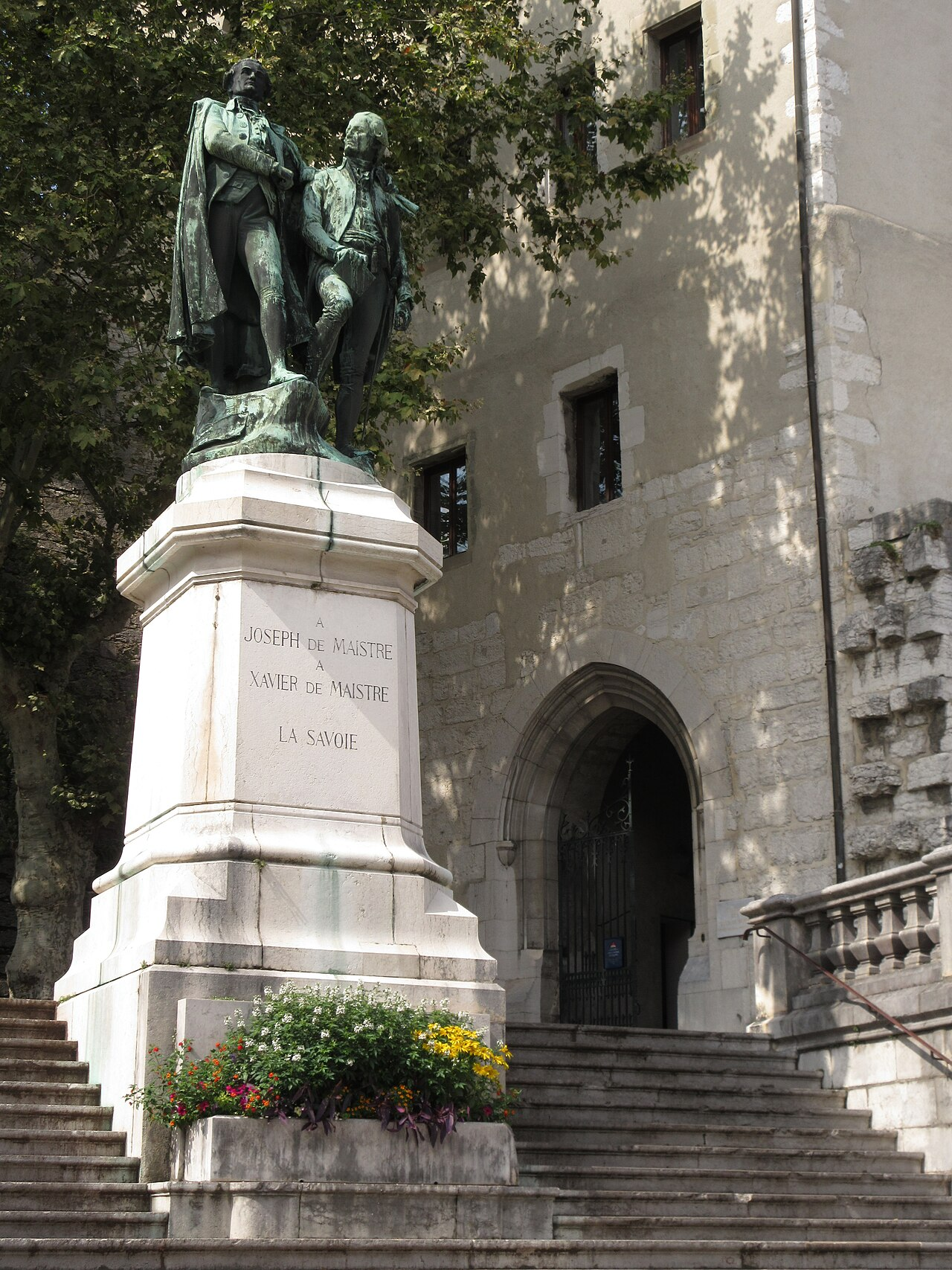
(Wikipedia photographer S23725 took that one. I concede my photography is amateur. So what?)

If life were infinity long maybe I would’ve checked out the exhibit of Albanian religious icons at the Musée de Beaux-Arts.
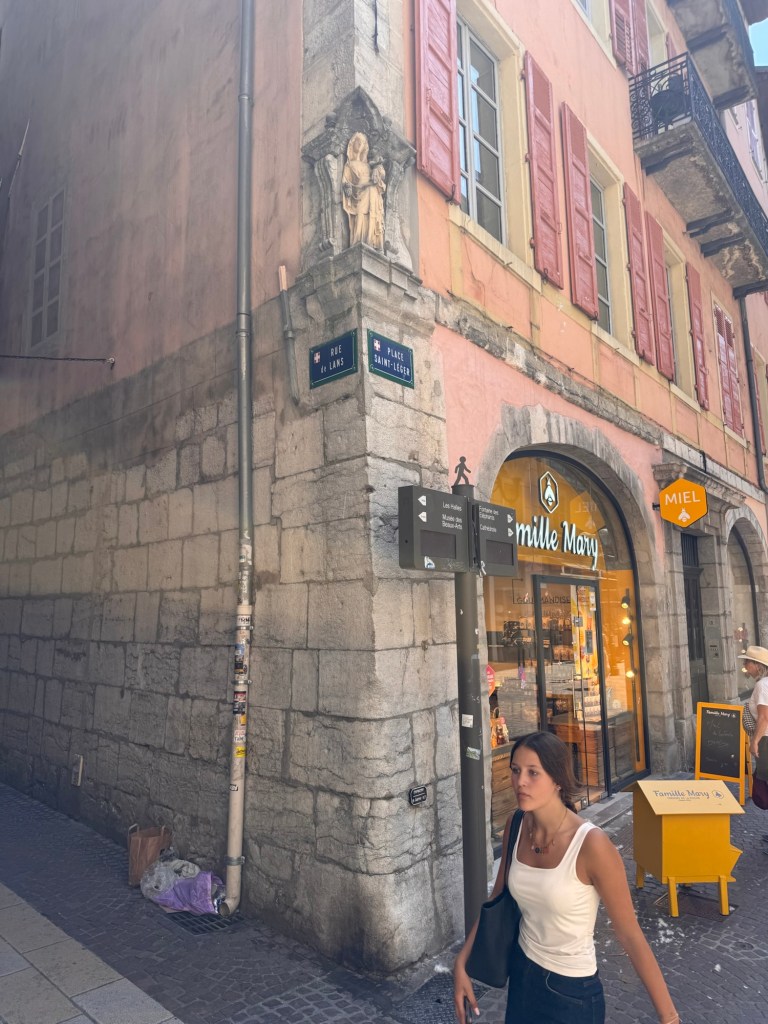
I was trying to photograph this Virgin Mary carved into the building when a Savoyard woman wandered into my shot, creating a much more compelling and memorable photo.
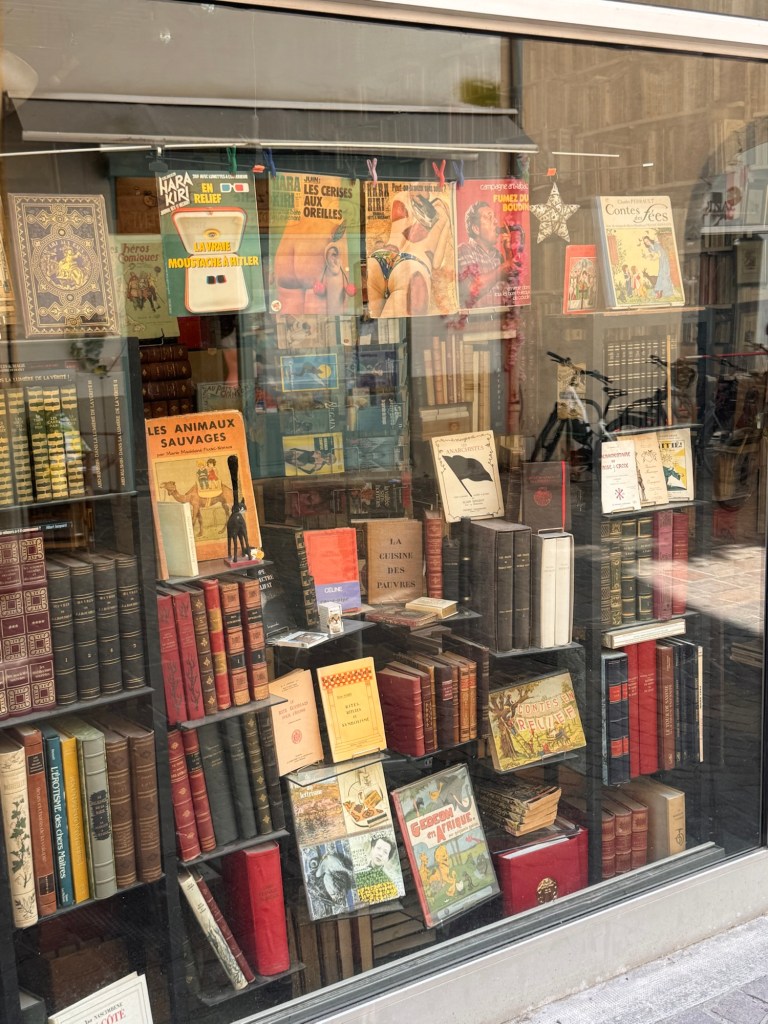
Yes.
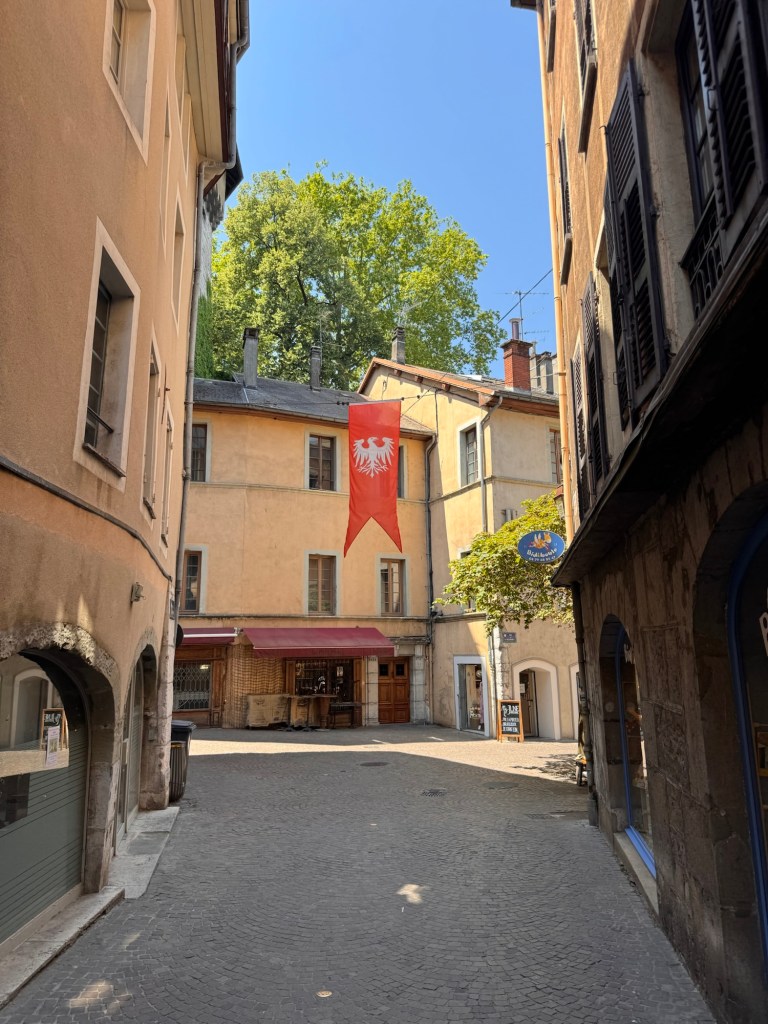
from the section on Savoy in Norman Davies Vanished Kingdoms:
Chambéry in the 1850s was a small provincial town still harbouring memories of its past glory. It was increasingly overshadowed both by the nearby spa of Aix-les-Bains, with its boisterous casino, and, across the frontier, by the French city of Grenoble, which was more than twice its size.
Bayle St John liked it: Chambéry is the capital of the province of Savoy; and, it has… a far more complete and metropolitan character than might have been expected. There is no trace of the village about it… evidently a place accustomed to be the seat of government [and] somewhat annoyed to be so no longer… Everything seems to be arranged for making the city a comfortable winter-quarter… During the summer everyone who can afford it disperses… up the lower slopes of the mountains which are dotted with villas…
However, the streets and… the Place Saint Léger, where the band played each evening, were sufficiently well-thronged… The aristocracy of the place being away, the middle classes tried to lord it… I wished to change some English sovereigns. The money-changer had gone to Paris. This is confirmation of a truth… that the English… all go to Switzerland, or only make a dash into northern Savoy to visit Mont Blanc… The fountain of De Boigne, with its four half-elephants stuck together is one of the ugliest things I have ever seen… M. de Boigne… earned a colossal fortune in India… He built the long street through the centre of town, adorned like the Rue de Rivoli [in Paris], with porticos… Then there is the old castle–so many times rebuilt that only a scrap is really old… Underneath the terrace of the castle… not far from the place where Mme. de Warens once [held]… her extraordinary interviews with Jean Jacques [Rousseau], extends a botanical garden.
In 1860, after the events of the Franco-Austrian war, this part of Savoy including Chambéry was ceded to France:
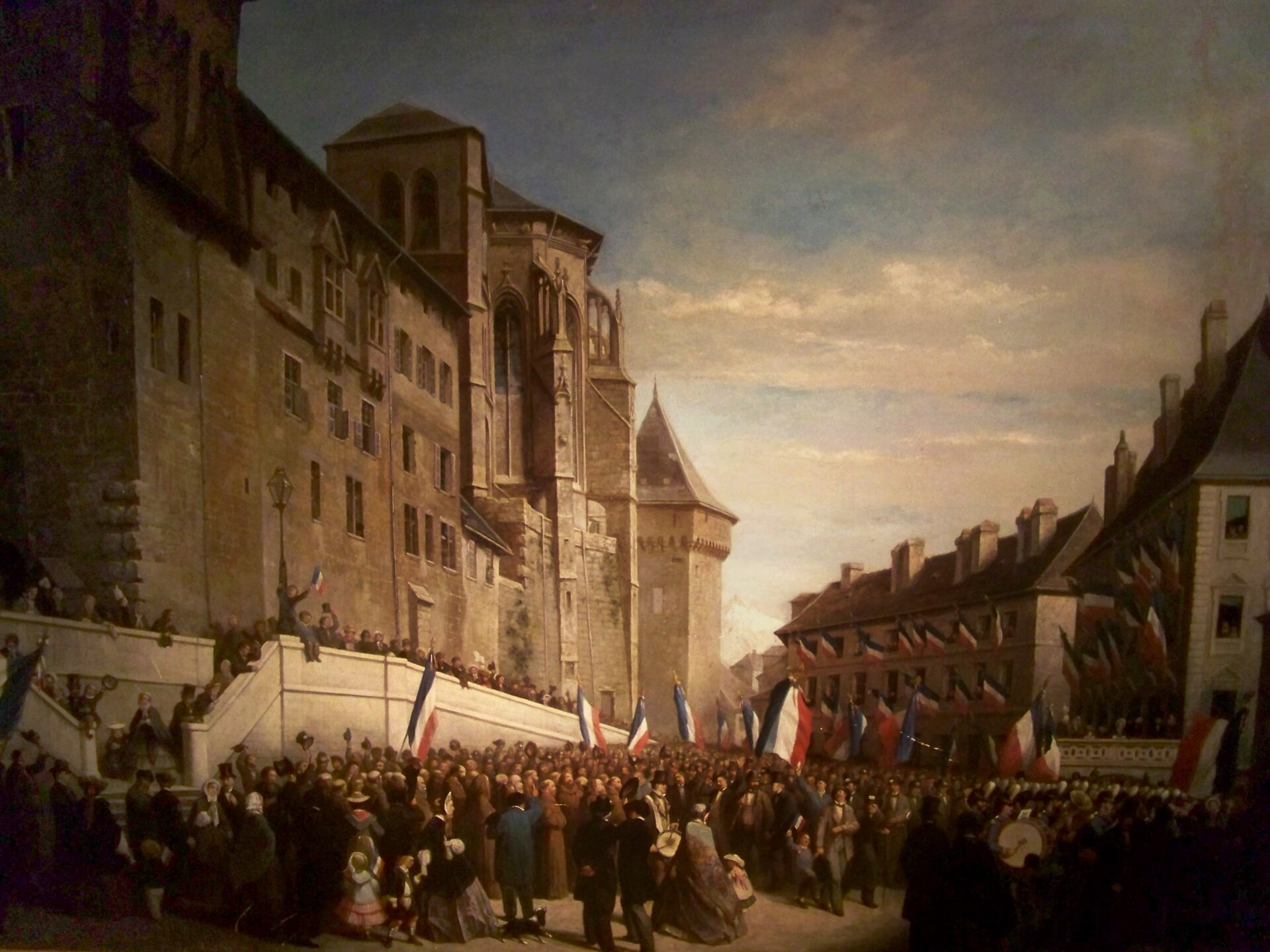
Louis Houssot painted the scene.
Any stocked bar will have a product of Chambéry in it:
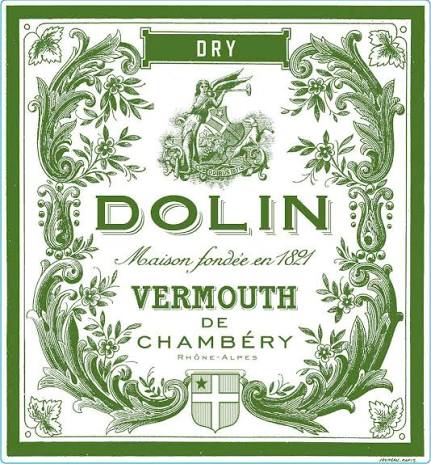
As far as I can tell you can’t tour the factory or do a vermouth tasting or anything. (Who would want to?)
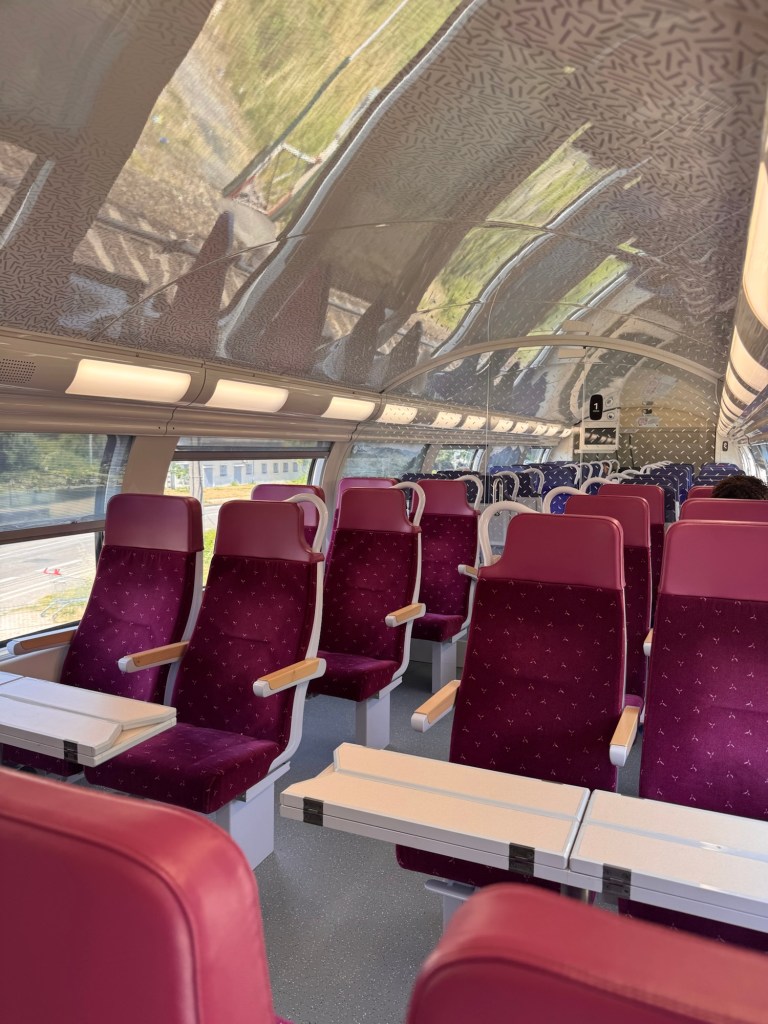
A French 2nd class train can get pretty sweaty. A French 1st class train is nice.
Aix-les-Bains
Posted: July 11, 2026 Filed under: France, Savoy Leave a comment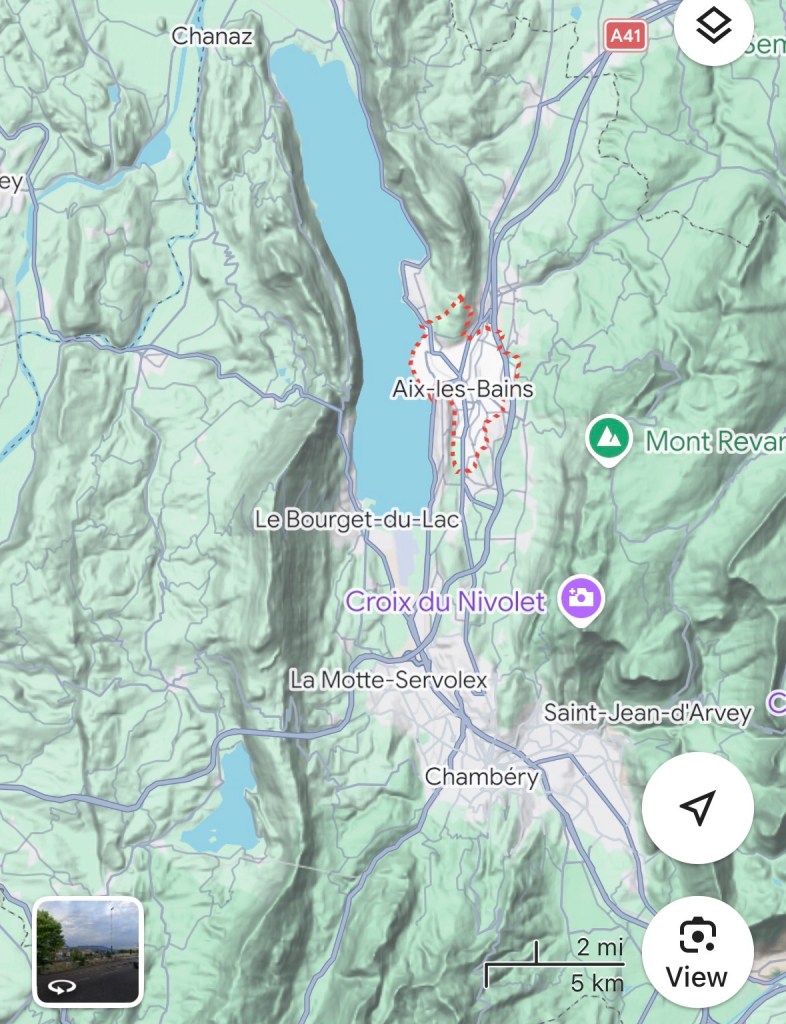

Great advertising.
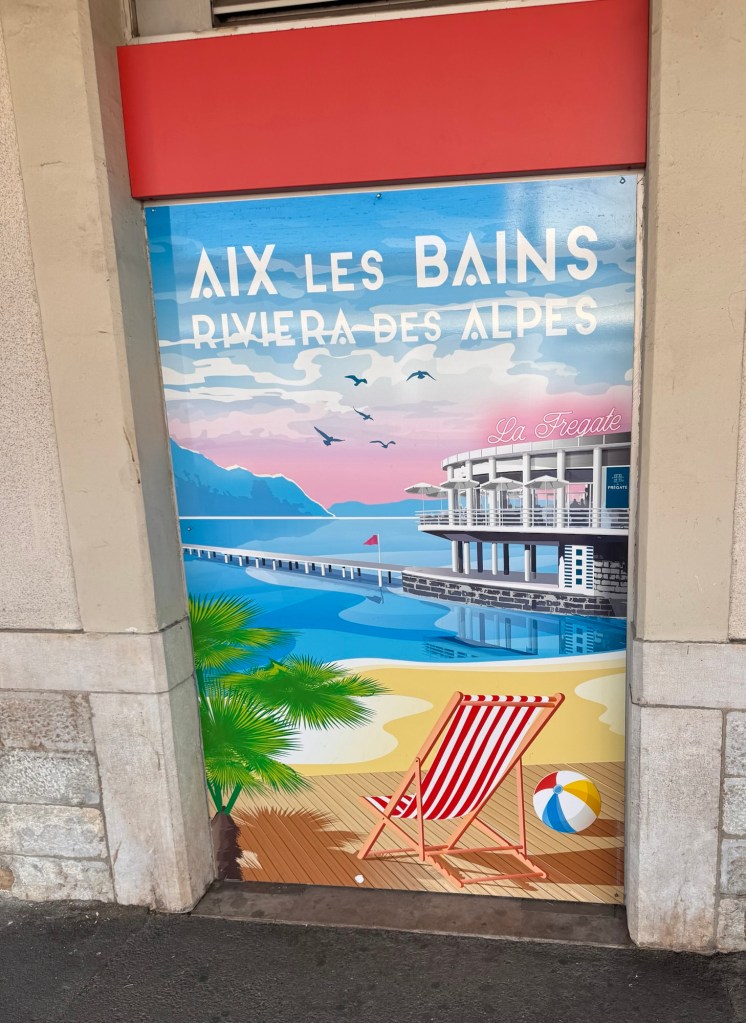
The town is not exactly like it pretends be at the train station.

But it’s not bad.
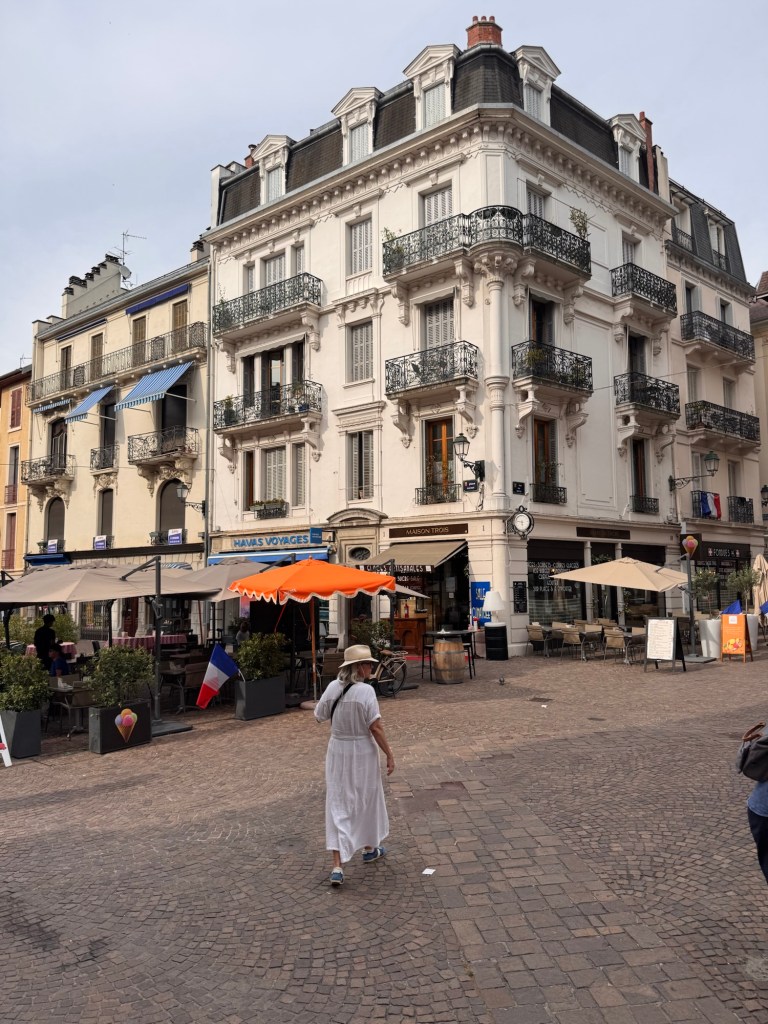
We love when a country looks like itself, or our idea of itself. Aix-les-Bains looks like the idea of France.
Aix-les-Bains is blessed with thermal springs which have been an attraction since Roman times. People would come and soak, and at night you would gamble. Sacha Guitry’s novel Le Roman d’un tricheur / Story of a Cheat, culminates at a casino in Aix-les-Bains in 1924.
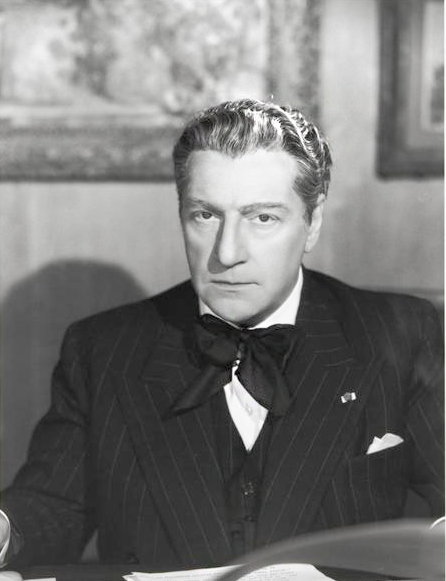
Guitry’s French wikipedia page is a fine read that can lead one anywhere.
There are a number of impressive old hotels, from the Belle Epoque era, though most of them today have been converted to apartments.
French history is so wild: a series of strong kings wage war against everybody, a revolution and a reign of terror, then Napoleon, then disfunction, then the history-repeated-as-farce of Napoleon III, a disastrous war, the Commune and subsequent executions, and then a period called “the beautiful era” where the art and architecture is killer. All this could’ve been experienced in one lifetime. Then two world wars, disaster overseas. Here we are today with a France that has to be one of the world’s most pleasant places to live, even if Houellebecq presents it as nightmare. That there’s even a serious novelist working and getting readers and discussion suggest France has still got it.
The concept of a spa town runs through French culture. Apparently French Social Security will pay for three weeks of thermal water treatment. There are many of these towns, my favorite has to be Bains-les-Bains.
There’s a Smurfs book where they build themselves a spa town:

On the day we visited Aix-le-Bains, by train from Annecy, there was a dance going on at the park:
Great sculpture of a lion with his balls exposed.
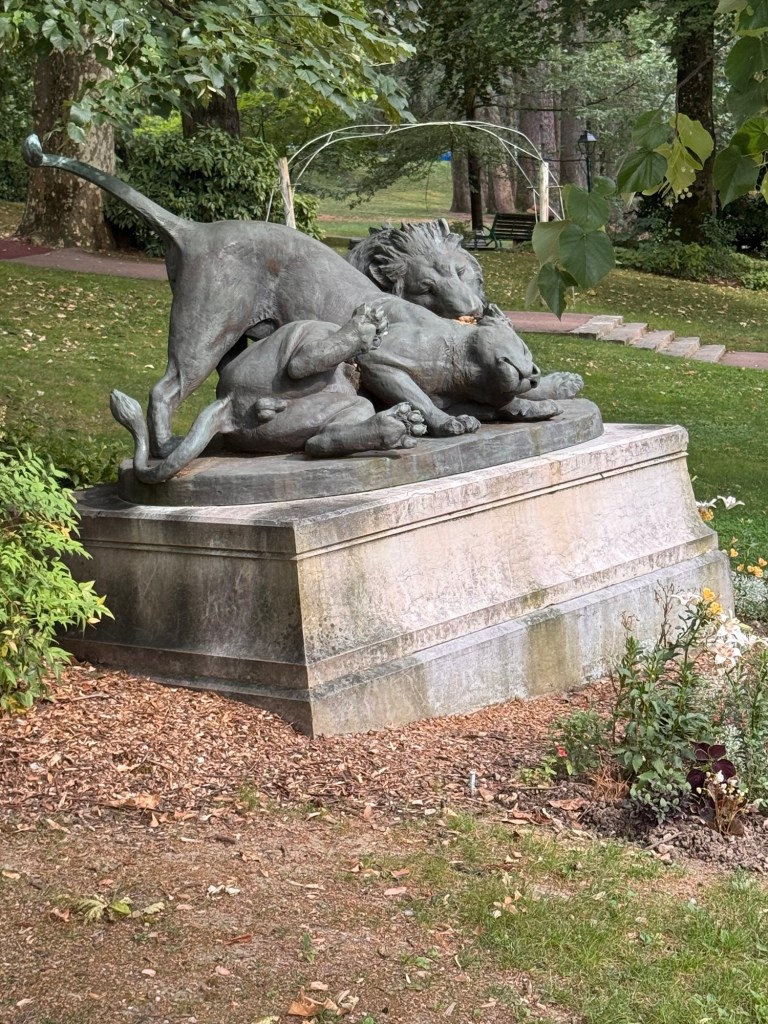
Are they kissing?
You can park your car next to the ancient Roman arch.
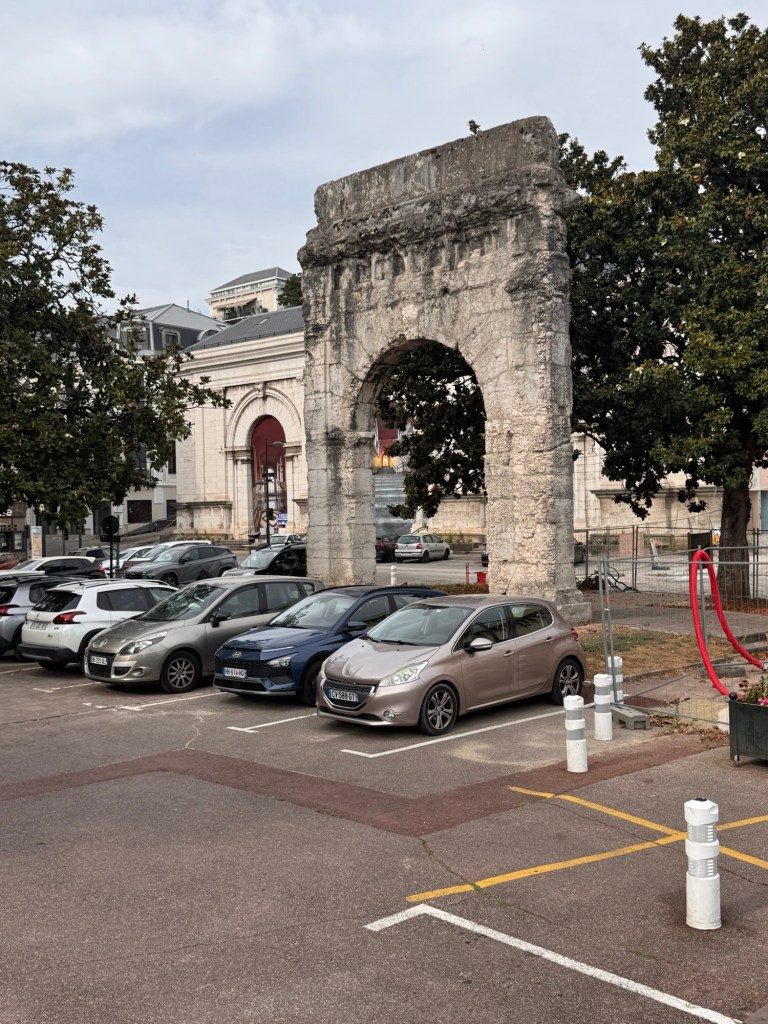
Although the arch bears inscriptions in honour of the Campanus family (the monumental glorification of elites and their families was an innovation of this era[2]), the function of the monument remains uncertain.
Congratulations Campanus, now you have a Honda parked next to you.
Aix-les-Bains is not the most famous Aix. There’s Aix-en-Provence. It’s not even the most famous spa town Aix: Aix-la-Chapelle, aka Aaachen, German, has quite a beautiful bath situation. Why are there so many Aixs? Apparently it comes from the Latin aqua. Aix-les-Bains=”Water The Baths.” French place names can seem strange to the Anglo but then again I grew up in Needham, Massachusetts and now live in Los Angeles, California.
Aix-les-Bains merits no section in the Lonely Planet: France guide I had on Kindle.
Lacking a guide I had Claude generate one.
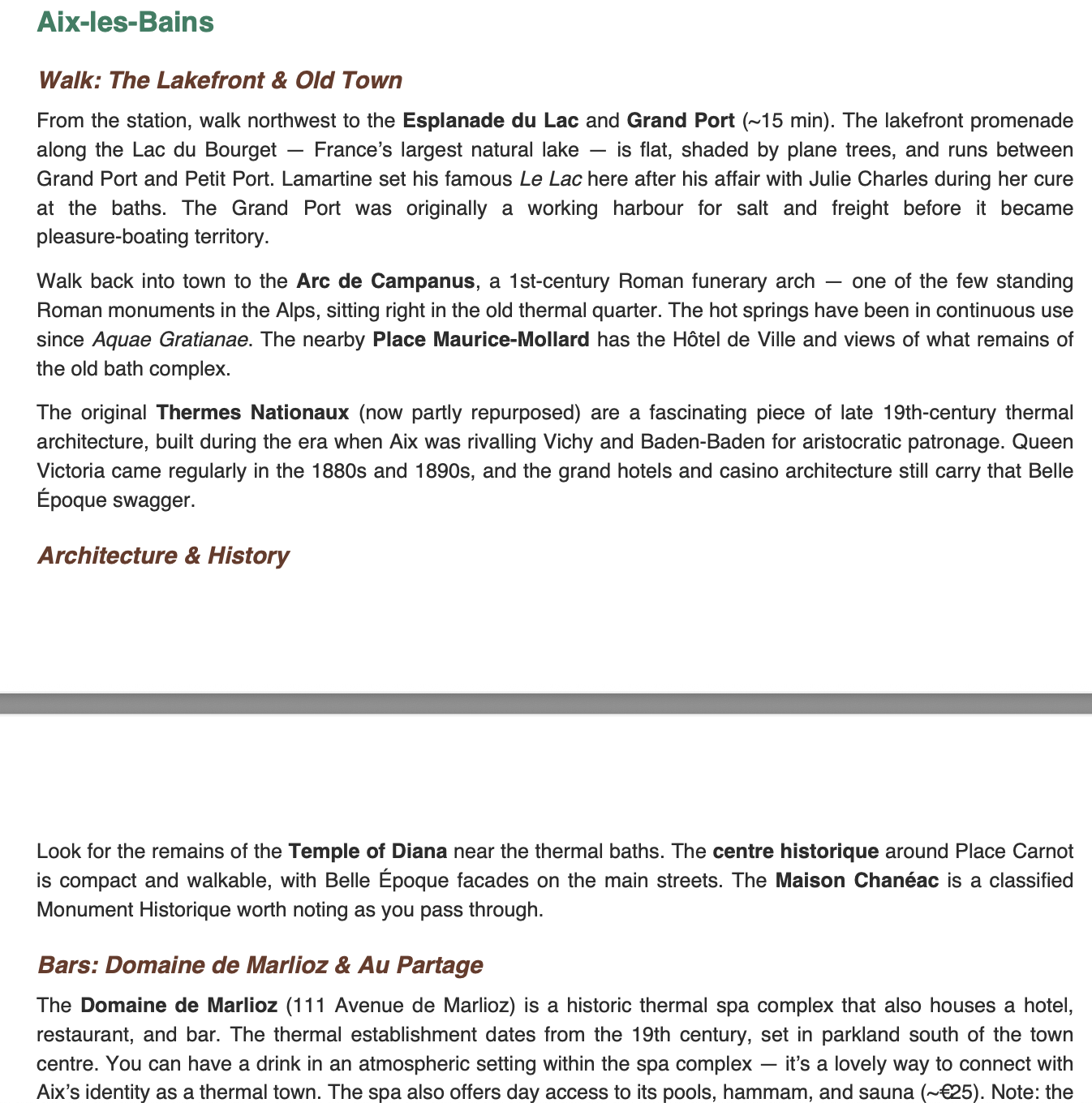
The schedule it devised was very optimistic. It failed to budget or warn for instance for French train delays.
The lakeshore, to me the main draw of Aix-les-Bains, is somewhat below the town, about a 2.3 km walk.

Always moved by the French war memorials. Something like 15-20% of the military age young men of France died in World War I. For what? It’s hard to comprehend.
Our walk took us mostly through a residential area. Short on time we decided to Uber.
In reading about Aix-les-Bains I was surprised to learn that the median household income is something like 26,375 Euros a year. By American standards that is pathetic. In Los Angeles (city) the median household income is $79,700 a year. In LA County its even higher. Aix-les-Bains is comparable to Rosedale, Mississippi on this metric.
However, in France the government covers health care, childcare, university. The public spaces seem well-maintained by American standards. The numbers for Aix-l-B are a little skewed because there are quite a few retirees (39.6% of households).
I had Claude create a comparison for the US, France, and Australia:
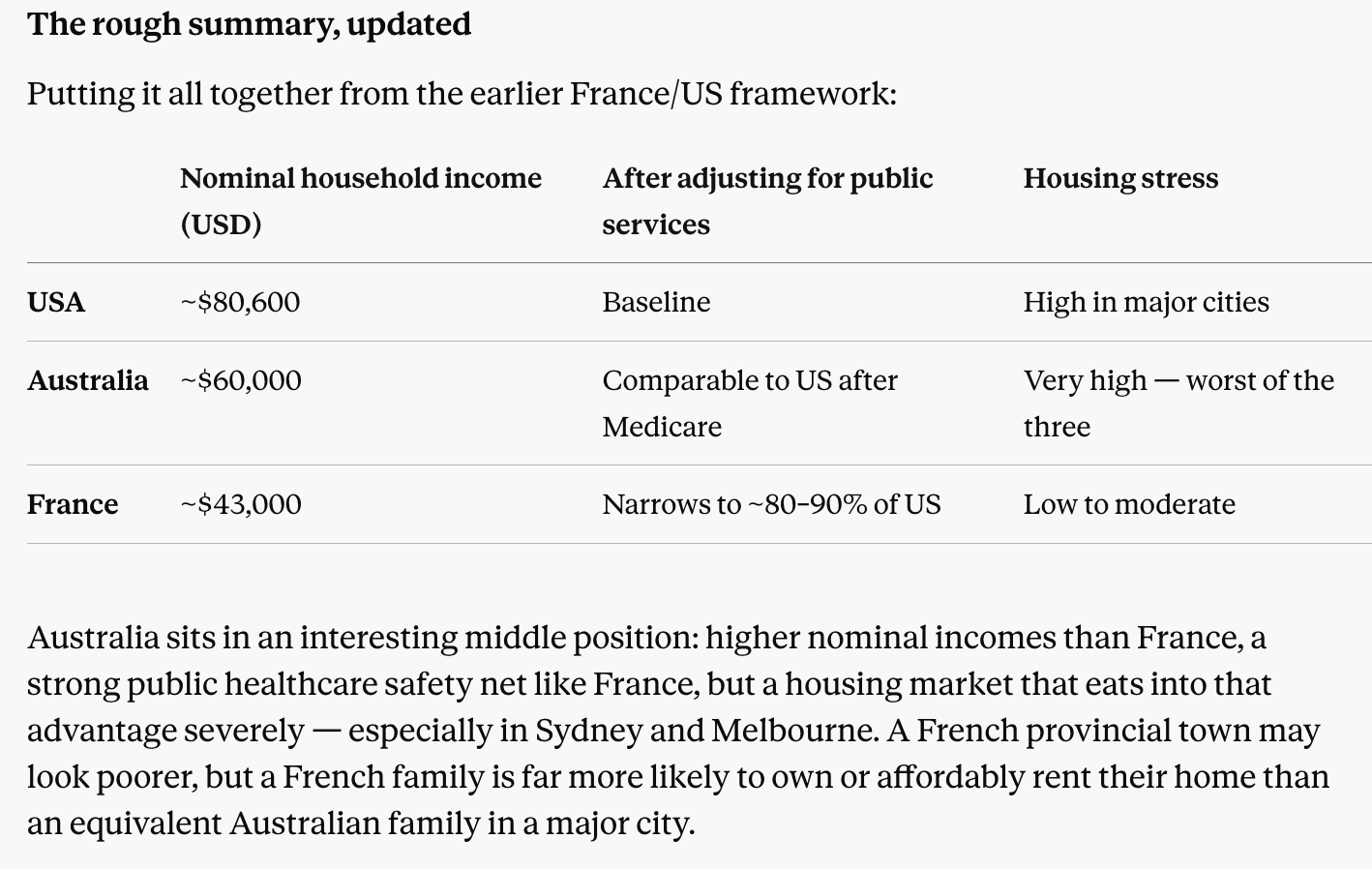
A takeaway, certainly, is that in money terms, the United States is stupendously rich.
On the other hand I enjoyed the style of life I saw on display in Aix-les-Bains. The accumulated layers of a built environment with 2,000 years of refinement can’t be bought.
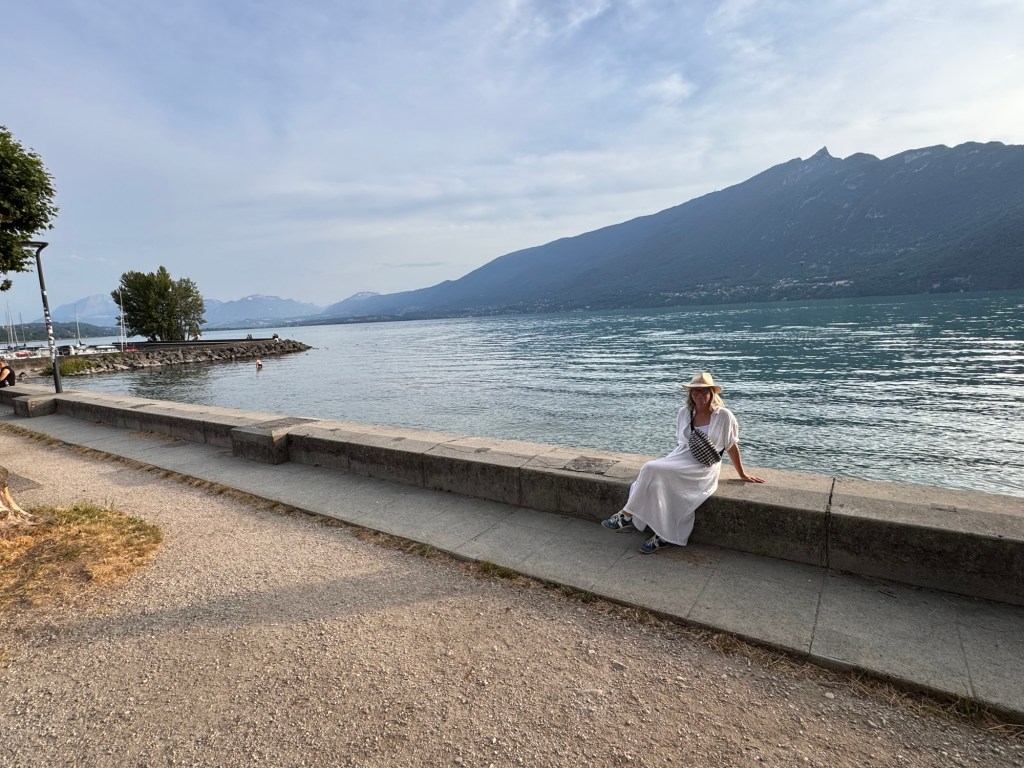
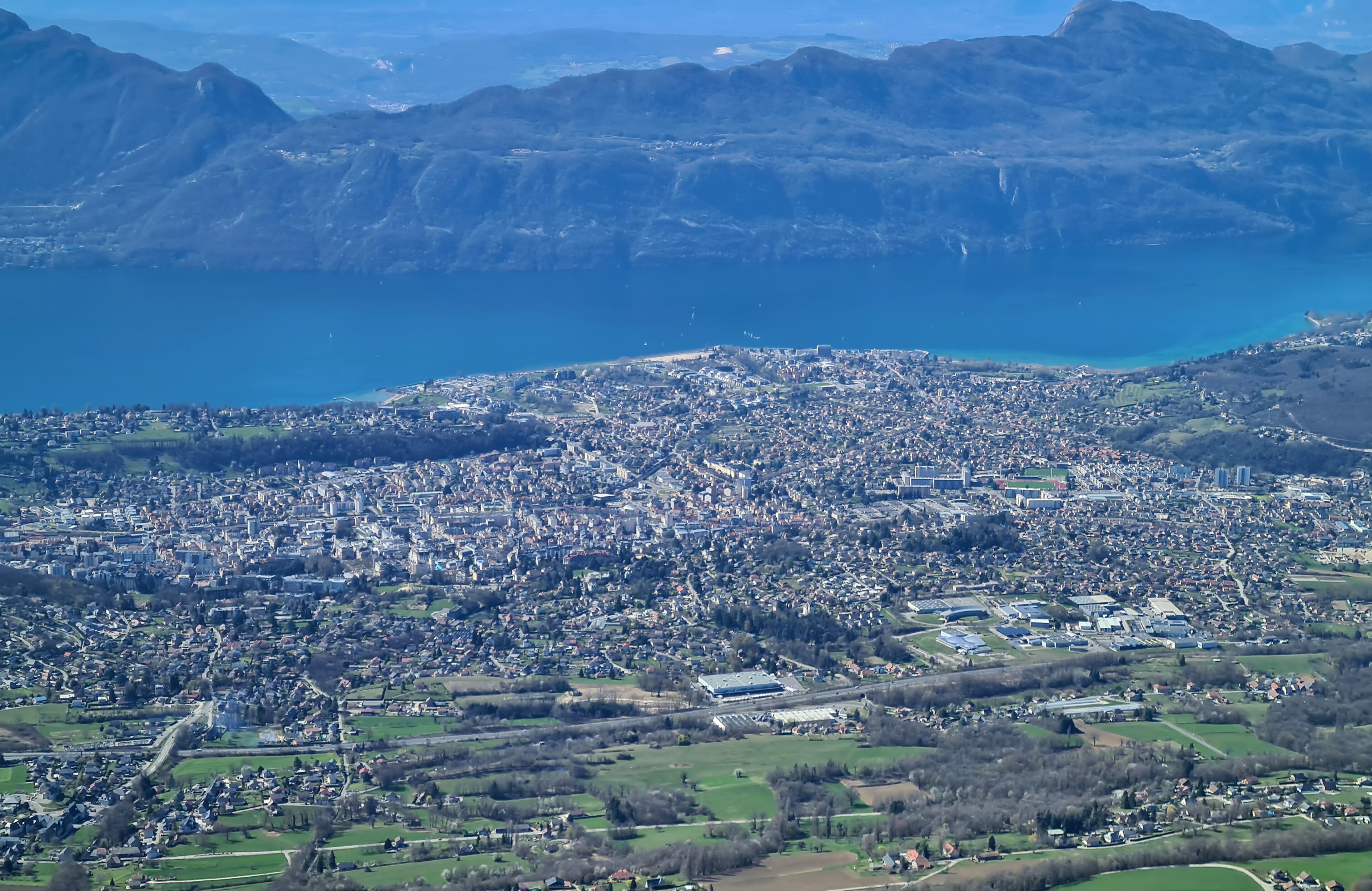
Lac du Bourget is famous for a poem about it, by Alphonse de Lamartine. The lake itself is a poem.
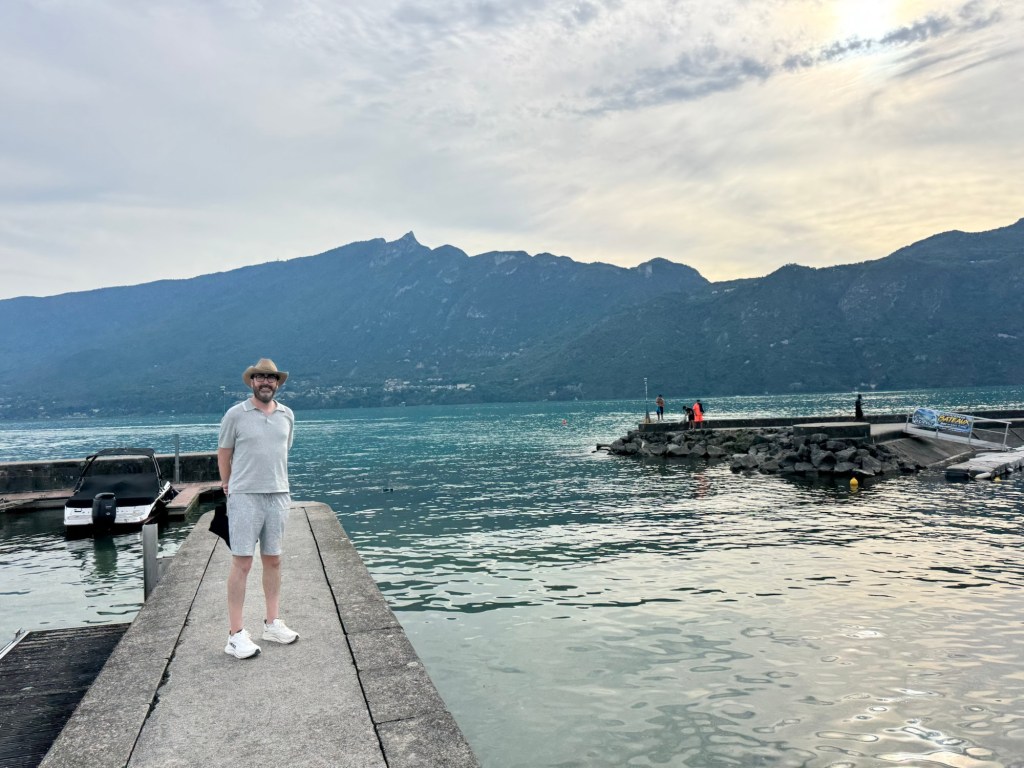
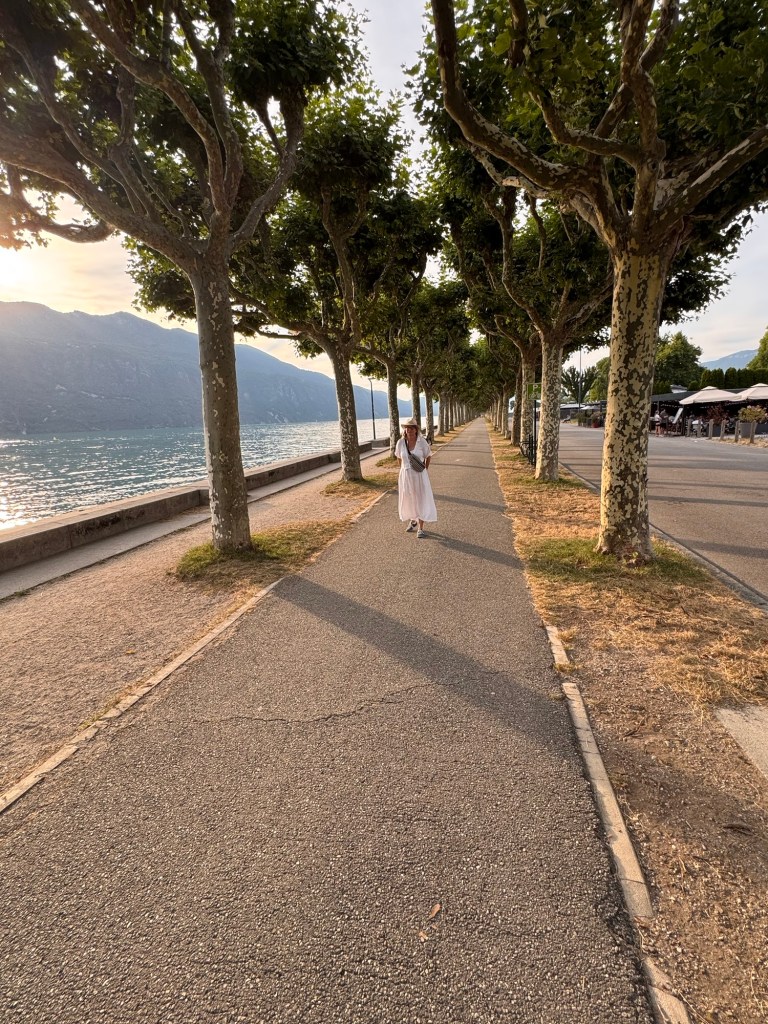
A lovely esplanade.
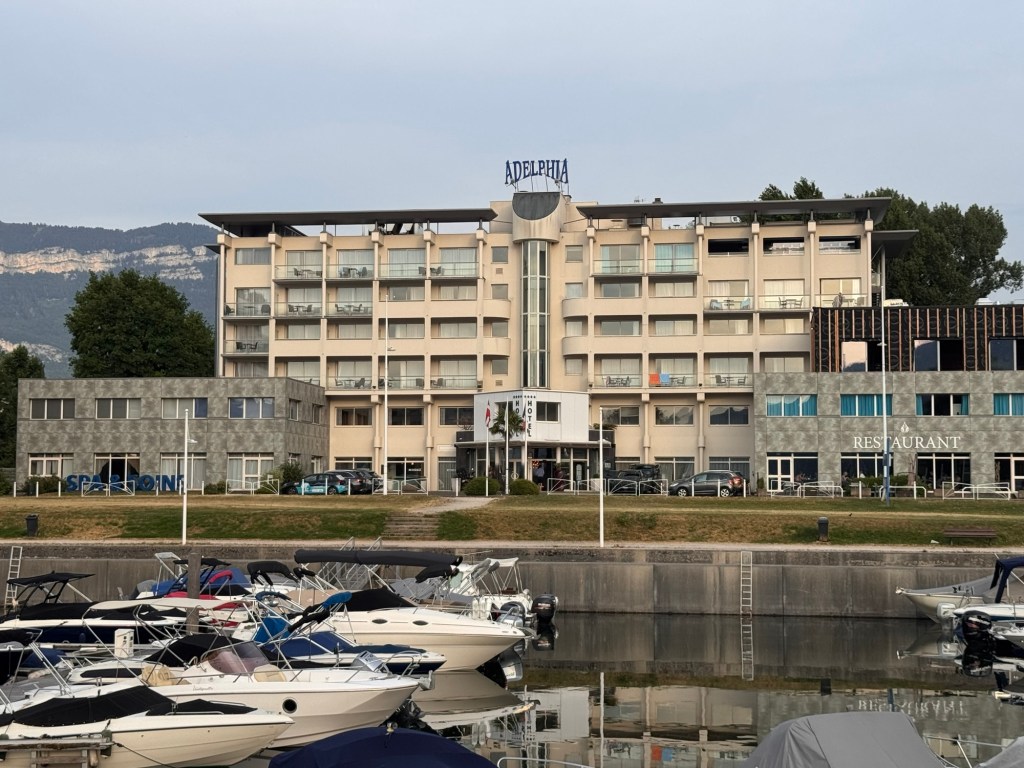
The Adelphia Hotel looked to me like it could be “low budget Wes Anderson.”
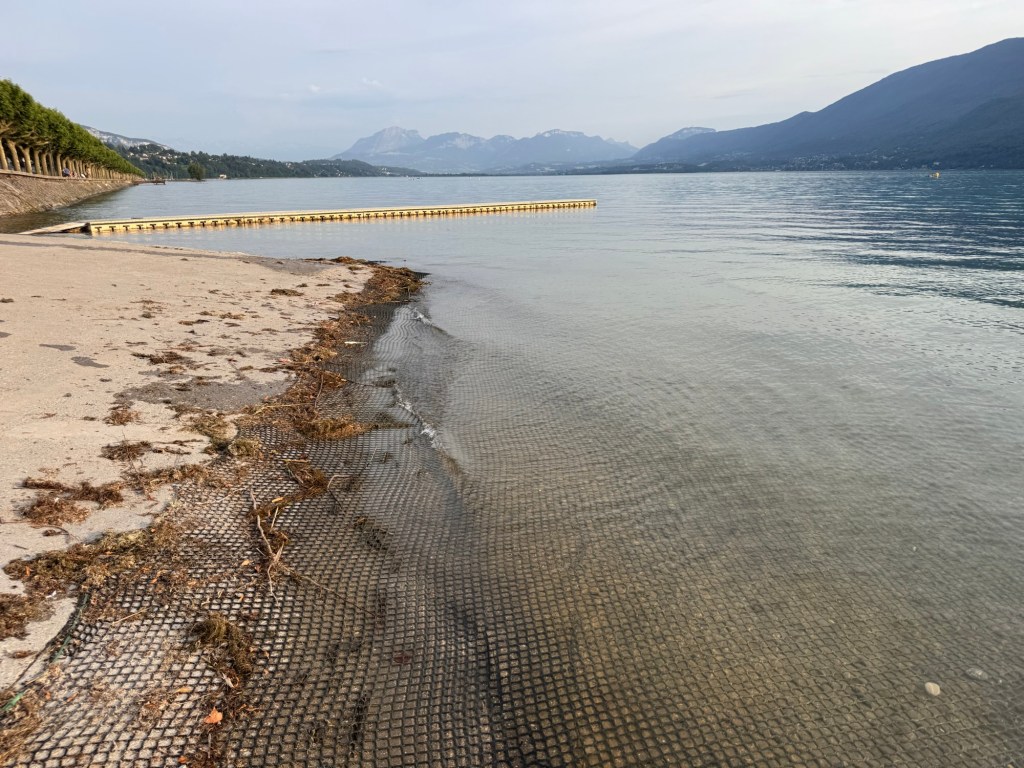
Beautiful but sort of severe.
(source)
Lakes of France
Posted: July 5, 2026 Filed under: France 2 Comments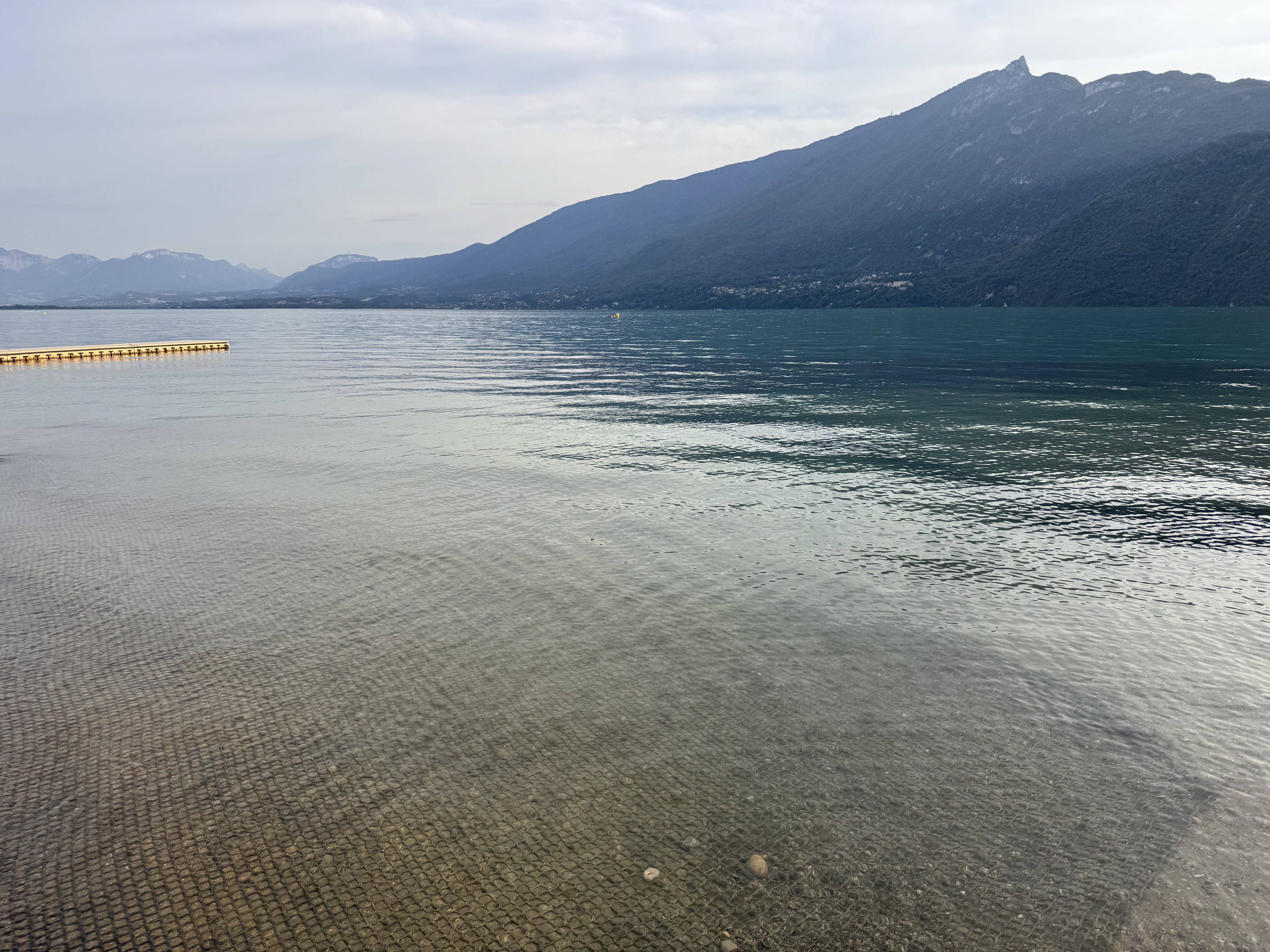
Let’s have a list of the largest lakes in France, please!
| Rank | Lake | Area | Type | Note |
|---|---|---|---|---|
| 1 | Lac Léman (French portion) | 234 km² of 582 km² total | Natural, glacial | Shared with Switzerland |
| 2 | Étang de Berre | 155 km² | Natural, saltwater lagoon | Largest entirely in France |
| 3 | Étang de Thau | 75 km² | Natural, saltwater lagoon | |
| 4 | Étang de Vaccarès | 63.3 km² | Natural, saltwater | Camargue |
| 5 | Lac d’Hourtin-Carcans | 58.3 km² | Natural, freshwater | Largest natural freshwater lake fully in France |
| 6 | Lac de Cazaux-Sanguinet | 55.6 km² | Natural, freshwater | Gironde/Landes |
| 7 | Étang de Leucate (+ Le Paurel, Sagne d’Opoul) | 54.8 km² | Natural, saltwater | |
| 8 | Lac de Grand-Lieu | 54.2 km² (varies 35–63 km²) | Natural, freshwater | Largest natural lake in France in winter (variable level) |
| 9 | Marais de Brière | 47.2 km² | Natural wetland/marsh | |
| 10 | Lac du Bourget | 44 km² | Natural, glacial freshwater | Deepest glacial lake (145 m) |
| — | Lac de Serre-Ponçon | 28 km² | Artificial reservoir | Largest artificial lake in France |
| 11 | Étang de Bages-Sigean (+ La Sèche, L’Aute, Peyriac-de-Mer) | 37 km² | Natural, saltwater | |
| 12 | Lac d’Annecy | 26.4 km² | Natural, glacial freshwater | |
| — | Lac de Vouglans | ~16 km² | Artificial reservoir | 3rd largest artificial lake (Jura) |
| 13 | Lac de Lacanau | 16.4 km² | Natural, freshwater | |
| 14 | Étang de Vendres | 15.4 km² | Natural, saltwater | |
| 15 | Étang de l’Impérial | 13.9 km² | Natural, saltwater | |
| 16 | Étang de Biguglia | 13.7 km² | Natural, saltwater lagoon | Corsica |
| 17 | Étang de l’Ayrolle | 13.3 km² | Natural, saltwater | |
| 18 | Étang de Biscarrosse-Parentis | 32.1 km² | Natural, freshwater | (note: actually ranks higher than some above — see correction below) |
| 19 | Étang de l’Or (Mauguio) | 31.4 km² | Natural, saltwater lagoon | |
| 20 | Lac d’Aiguebelette | 5.4 km² | Natural, glacial freshwater |
Source for this full continuation: French Wikipedia “Liste des plus grands lacs et étangs de France” — https://fr.wikipedia.org/wiki/Liste_des_plus_grands_lacs_et_%C3%A9tangs_de_France (their figures are drawn from IGN topographic surveys and regional hydrographic agencies, cited per-entry in the article’s footnotes).
(Claude generated that for me, using French Wikipedia’s table, cross-checked against GIPREB/Sandre-style figures, plus regional/prefecture sources).
Let’s eliminate any saltwater lagoons, and étangs. That leaves us with:
| Rank | Lake | Area | Type | Note |
|---|---|---|---|---|
| 1 | Lac Léman (French portion) | 234 km² (582 km² total) | Natural, glacial freshwater | Shared with Switzerland; excluded from “fully French” rankings |
| 2 | Lac d’Hourtin-Carcans | 58.3 km² | Natural, freshwater | Largest natural freshwater lake entirely in France |
| 3 | Lac de Cazaux-Sanguinet | 55.6 km² | Natural, freshwater | Gironde/Landes |
| 4 | Lac de Grand-Lieu | 54.2 km² (ranges 35–63 km²) | Natural, freshwater | Highly variable level; largest in winter |
| 5 | Lac du Bourget | 44 km² | Natural, glacial freshwater | Deepest glacial lake in France (145 m) |
| 6 | Lac de Serre-Ponçon | 28 km² | Artificial reservoir | Largest artificial lake in France |
| 7 | Lac d’Annecy | 26.4 km² | Natural, glacial freshwater | |
| 8 | Lac de Sainte-Croix | ~22 km² | Artificial reservoir | Verdon |
| 9 | Lac de Vouglans | ~16 km² | Artificial reservoir | Jura |
| 10 | Lac de Lacanau | 16.4 km² | Natural, freshwater |
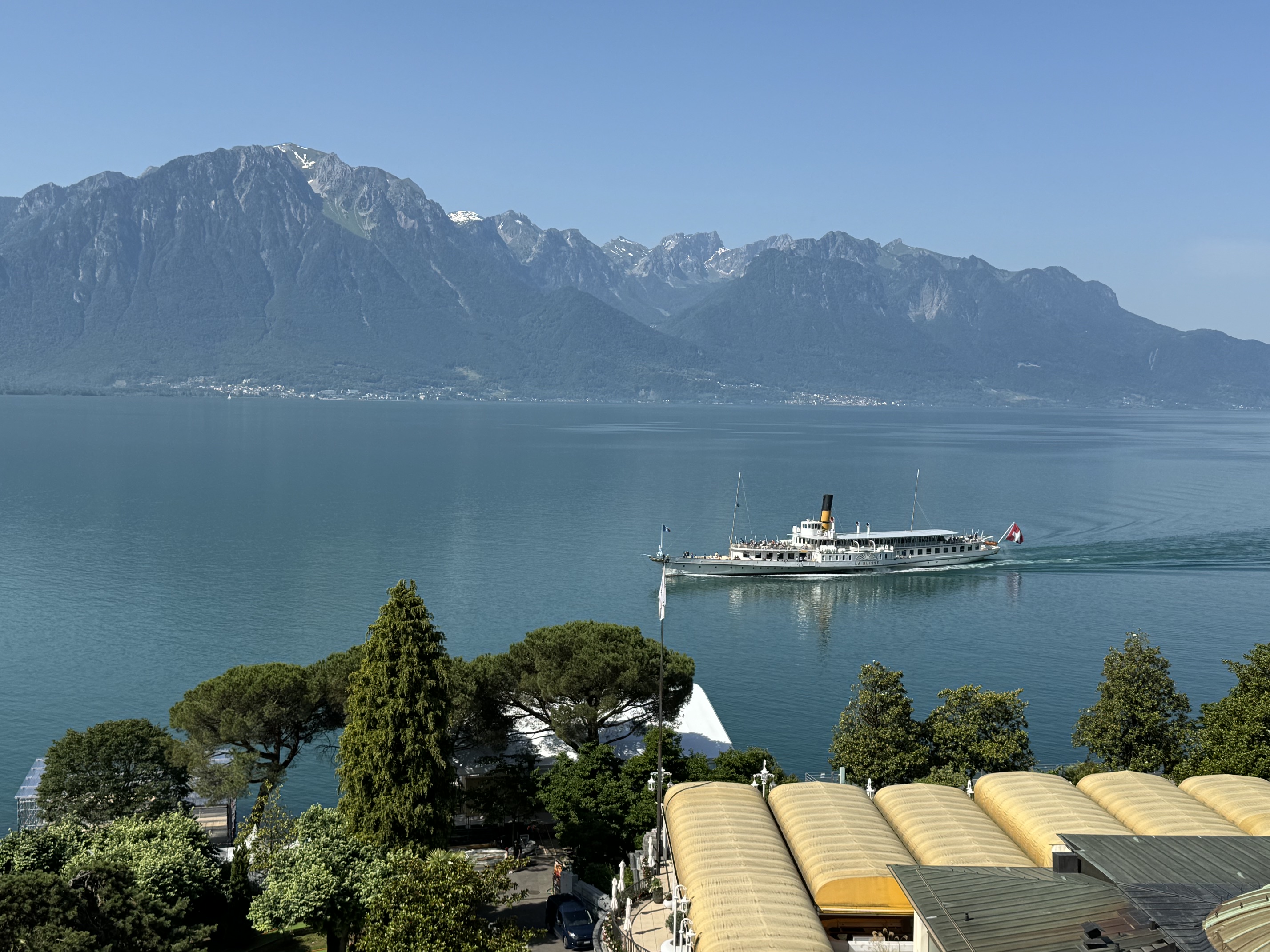
Lac Léman, aka Lake Geneva, is mostly in Switzerland.
Lac d’Hourtin-Carcans is pressed up against the Atlantic coast in a dunes situation:
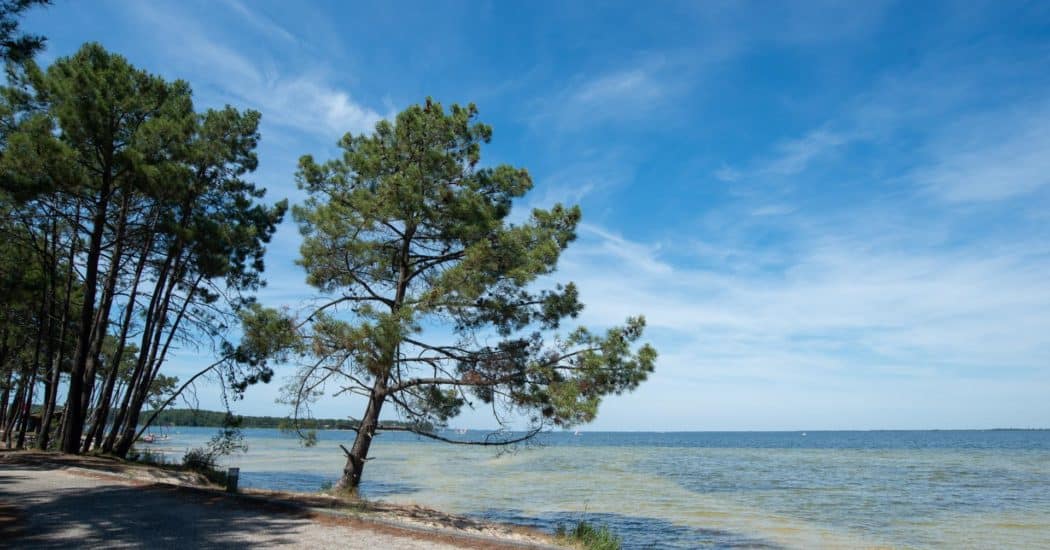
(source) I’ve got to imagine that water is somewhat brackish. Lac de Cazeux a similar setup:
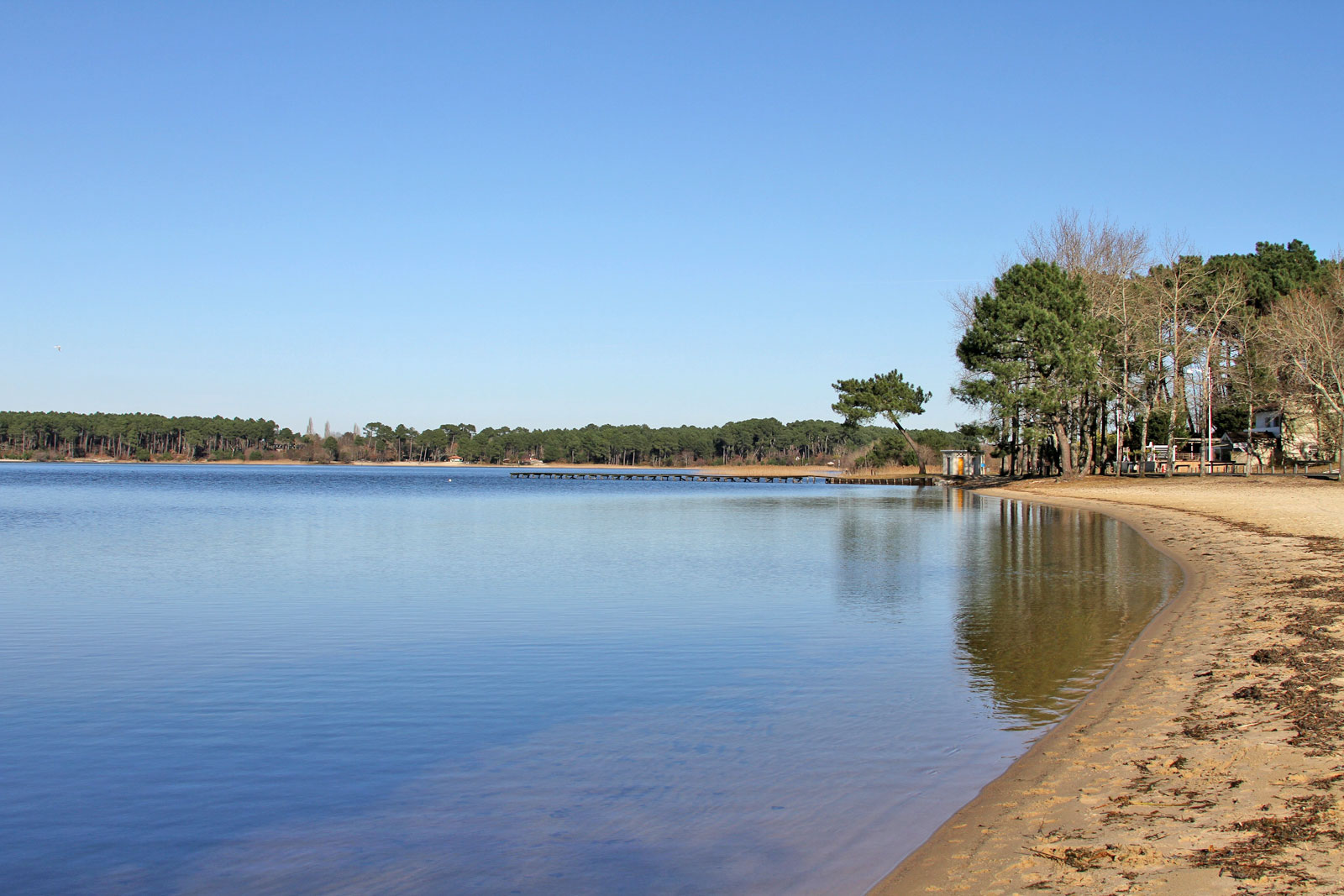
(source). More like a Florida-style lagoon or something than a real lake. That brings us to Lac de Grand-Lieu:
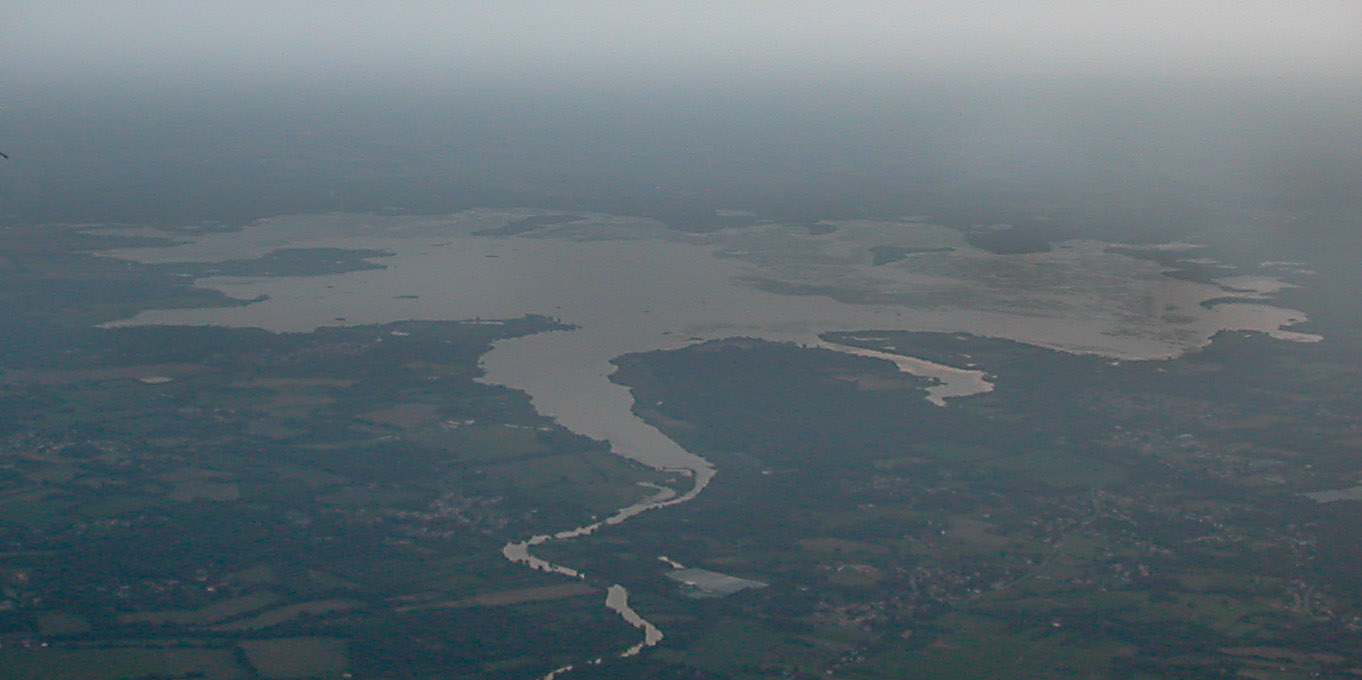
(source). Lake The Big Lake, appropriately named. The size of this lake size fluctuates, it’s very shallow, it’s in a protected area, and access is very limited. There are no towns along the shore. Says English Wikipedia:
Navigation on the lake is prohibited; only seven professional fishermen have been granted specific authorisation to do so. Because of its shallow topography, and its wild vegetation, the lake is difficult to access.
Would love to profile the seven professional fishermen. French Wikipedia suggests there’s a little more fishing allowed, but notes:
In 2024, the national reserve’s warden reported that the lake’s water quality had been deteriorating rapidly for the past five years due to runoff from agricultural land, which introduced excessive amounts of nitrates and phosphates. This nutrient saturation caused a proliferation of microalgae and cyanobacteria . Consequently, water oxygenation decreased, underwater plants disappeared, algae proliferated, and cyanobacteria produced a toxin harmful to local wildlife. Furthermore, three invasive species posed problems for the lake’s ecosystem: Louisiana crayfish, coypu , and water primrose , an invasive aquatic plant that colonized the waters and smothered native plants.
Bummer.
That brings us to Lac du Bourget:
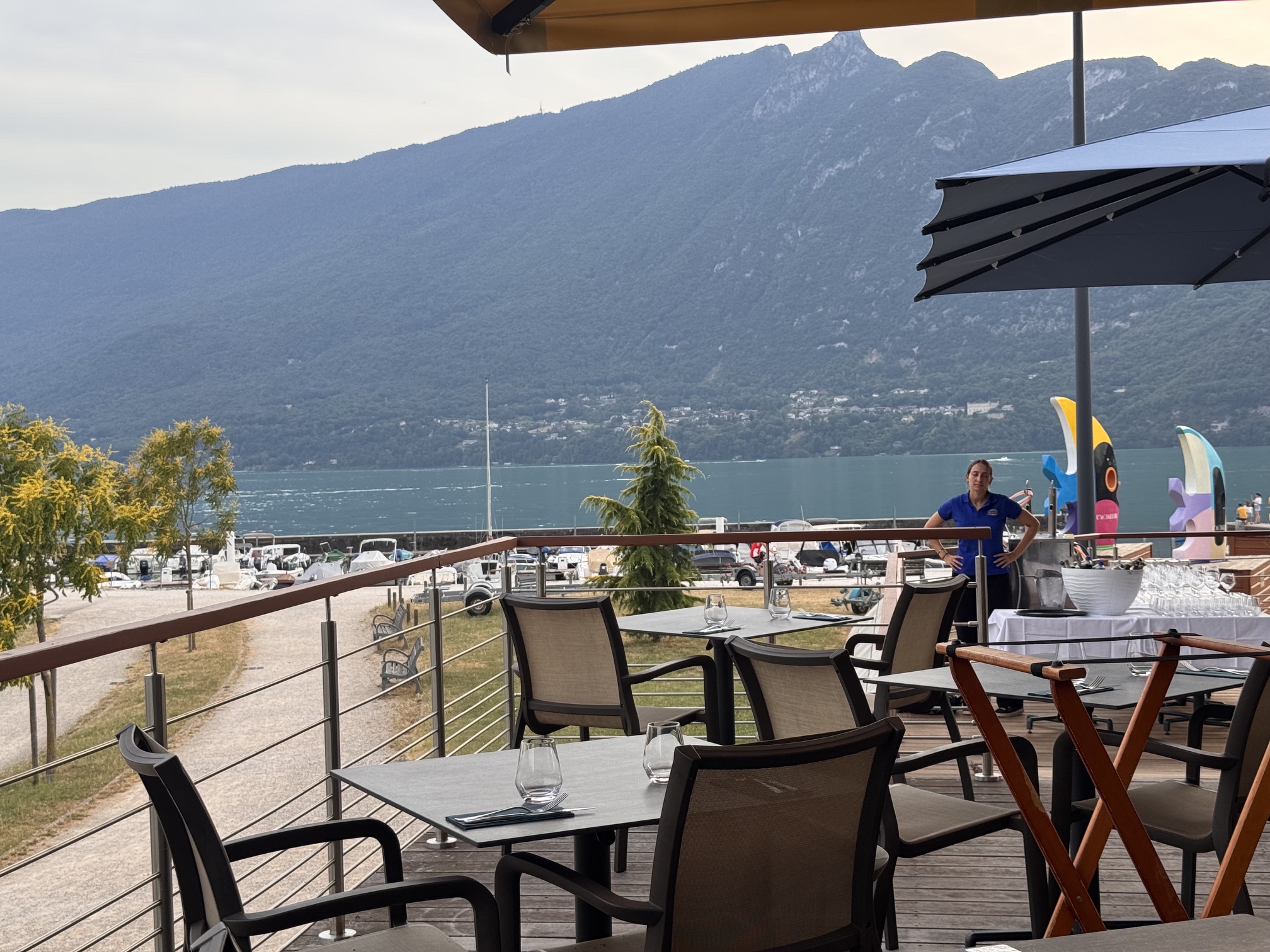
Here it is seen from Brasserie de l’Aquarium in Aix-les-bains.
Lac du Bourget is majestic and deep, but it has a kind of eerie quality. We can see why on a topographical map:
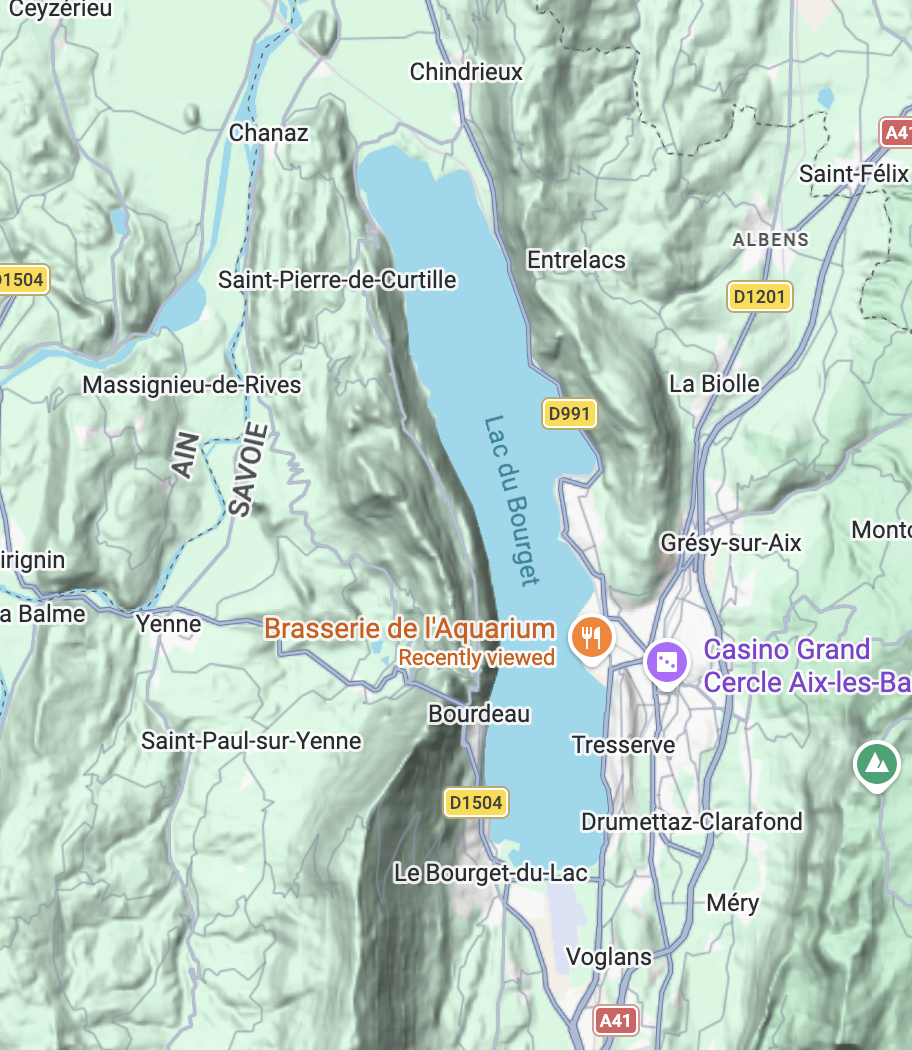
Steep mountains along the west side and much of the east side make it inaccessible, there’s no shore. Lac du Bourget has the isolated Hautecombe Abbey:
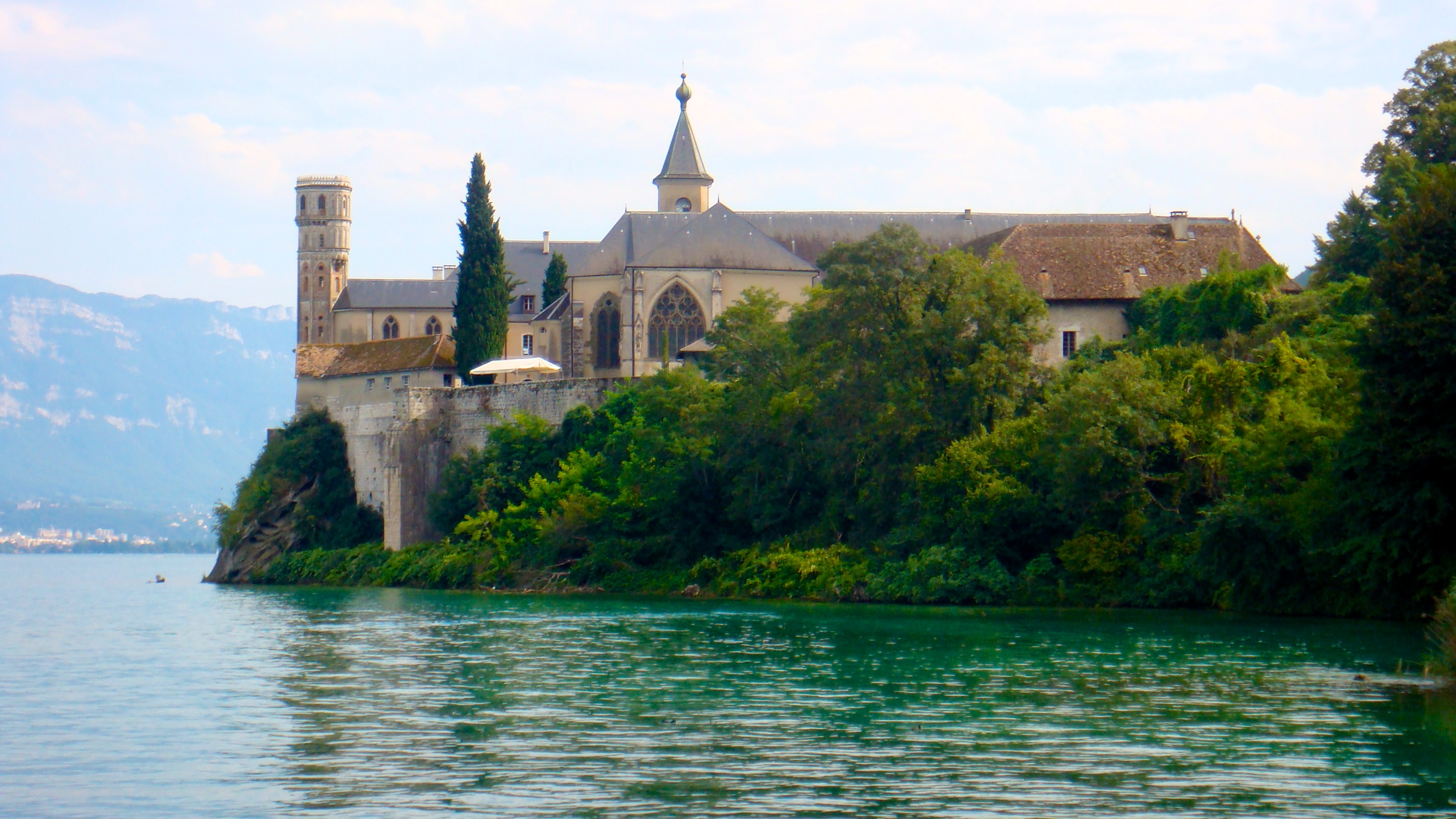
(source), entombment place of various members of the House of Savoy.
On the eastern side, there’s pleasingly symmetrical esplanade:
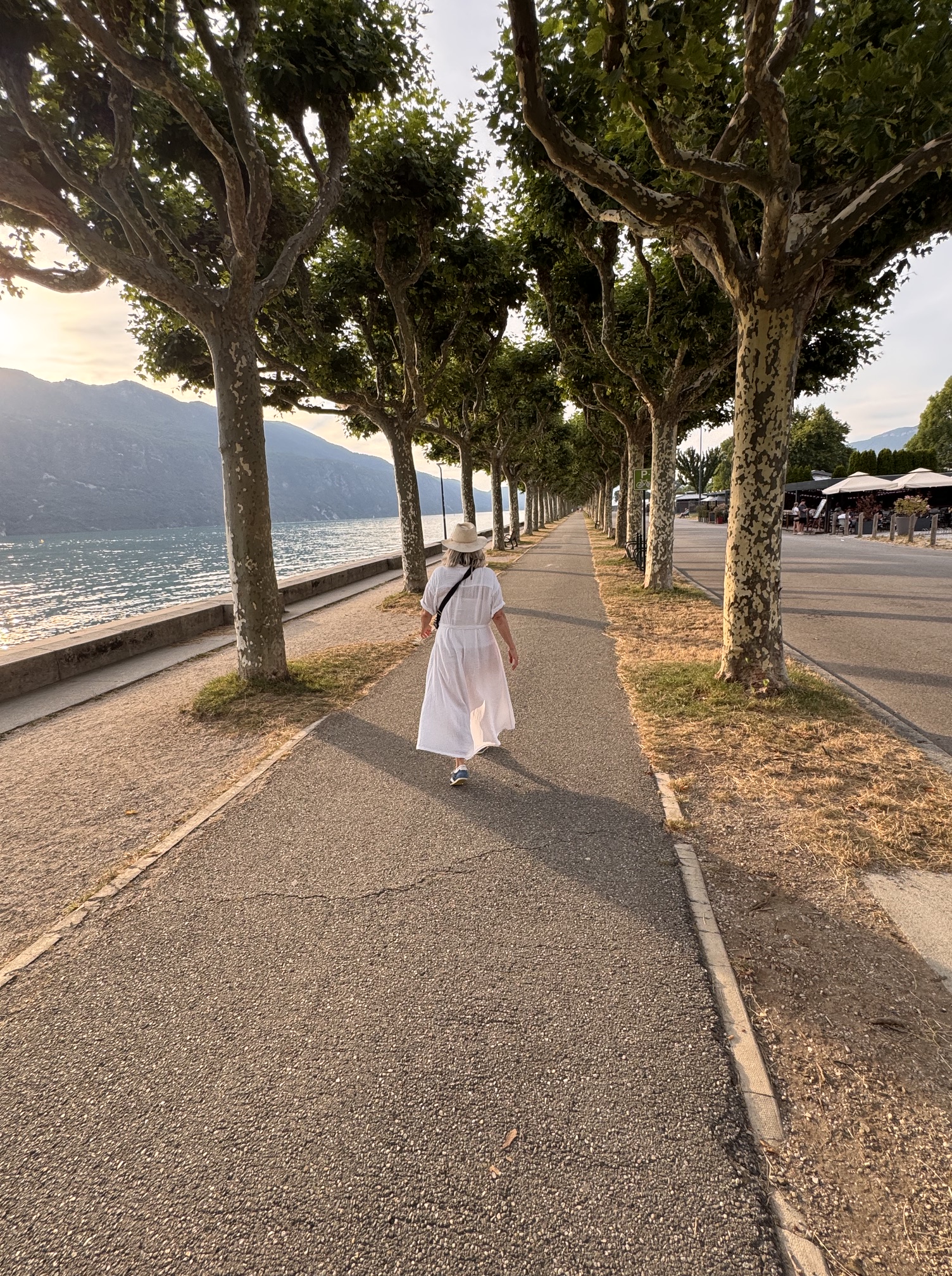
All told, a satisfying lake, not world class.
Next is Lake Annecy, which we’ve covered before:
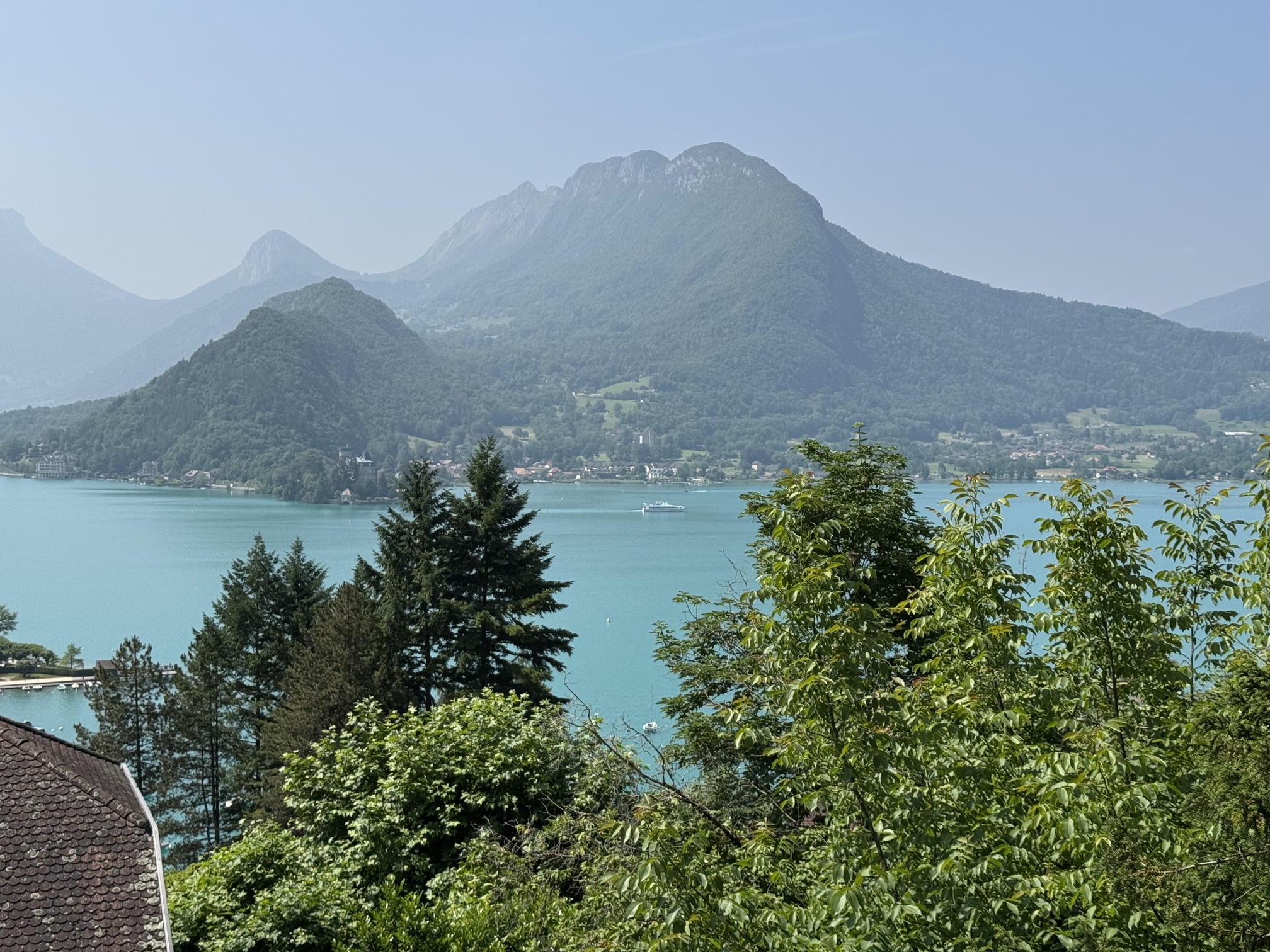
Which really has everything you could want in a lake. Preservation efforts have kept it blue, there are several interesting towns, a couple castles.
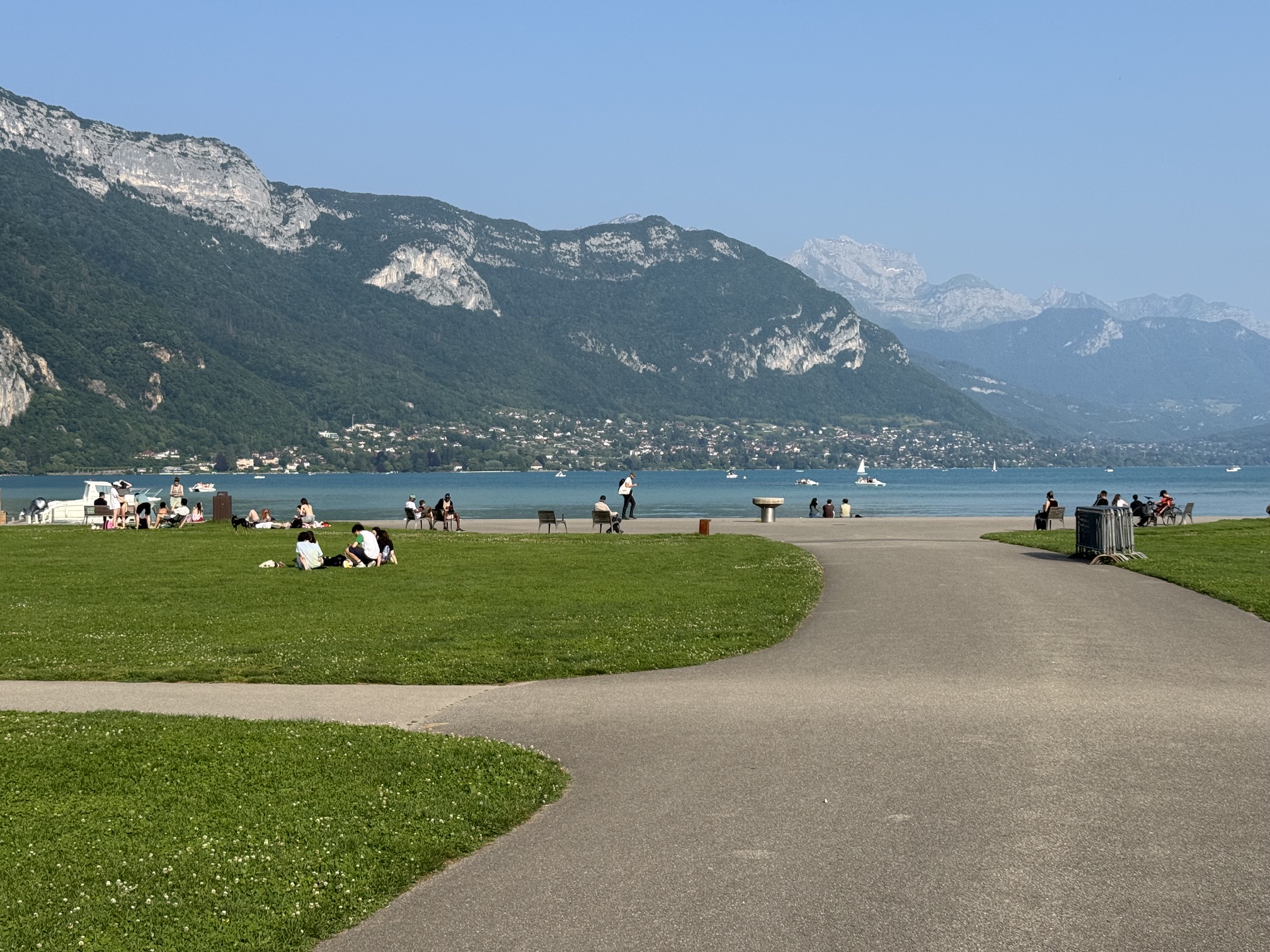
The only note on it might be Cézanne’s, that it’s almost too perfect, it’s too much a lake like you expect a lake to be, a platonic dream of a lake.
Lake Annecy kinda has a French Lake Tahoe vibe, with the rich blueness and mountain setting. But in size, it is a pebble compared to Tahoe. Lake Annecy has an area of about 10 miles, whereas Lake Tahoe is 191 square miles.
In size, Lake Annecy wouldn’t even rank in the top 100 American lakes, maybe not even the top 200 or 300. It’s a nothing on a US lake scale.
The USA is very blessed in its lakes. France is relatively lake poor – even measly Ireland has nine lakes bigger than Annecy. The UK has a whole Lake District. Switzerland, just a hair to the east, is sick with lakes. Bourget would barely crack Switzerland’s top ten.
Texas is a France-sized place:
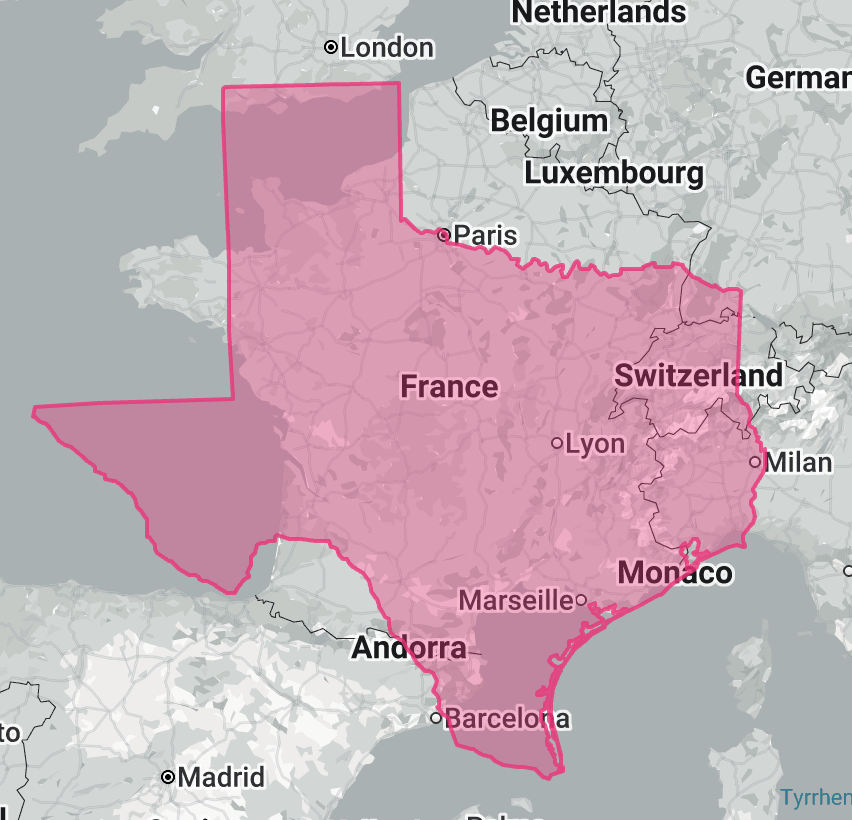
with really only one natural freshwater lake, spooky old Caddo:
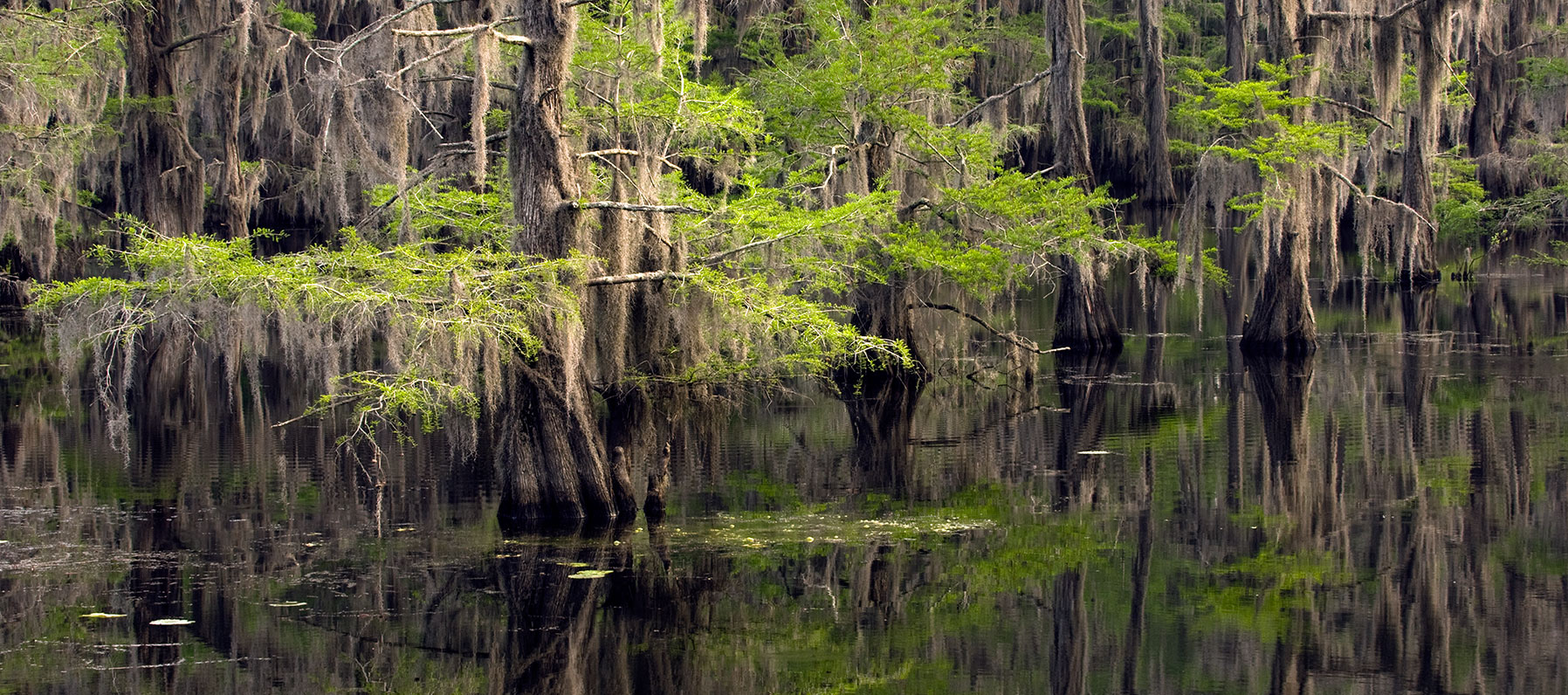
(source) but with great ingenuity the people there have created places to swim out of springs and reservoirs:
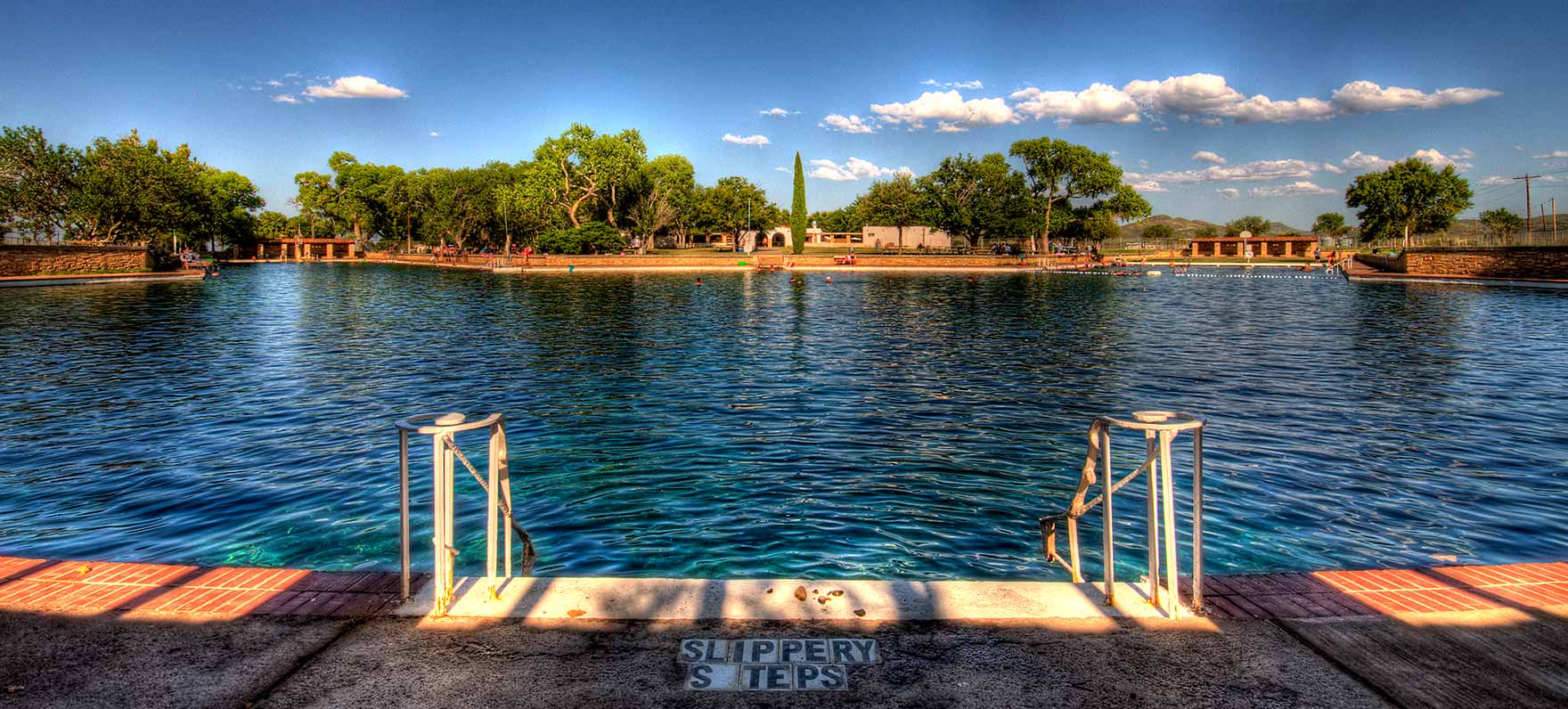
(source)
Discussion question: how do lakes or lack of lakes affect the national character?
Canicule
Posted: July 3, 2026 Filed under: France, Savoy, Uncategorized Leave a comment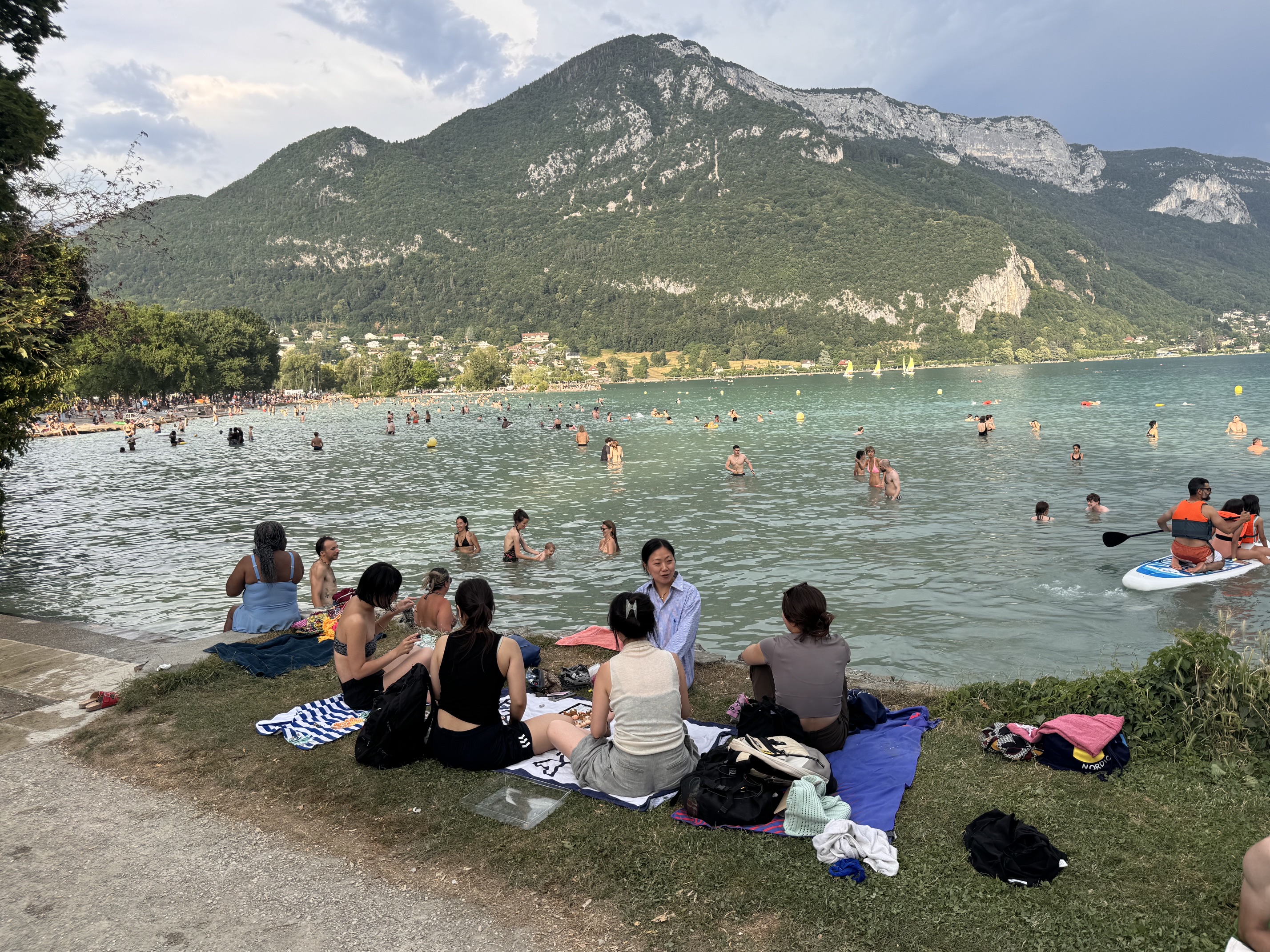
France was hot. Blessedly we were near the lake, and everyone was taking advantage.
The topic in everyone’s conversation was the heatwave. Even though it sounded unprecedented, there seemed to be a French word for it:
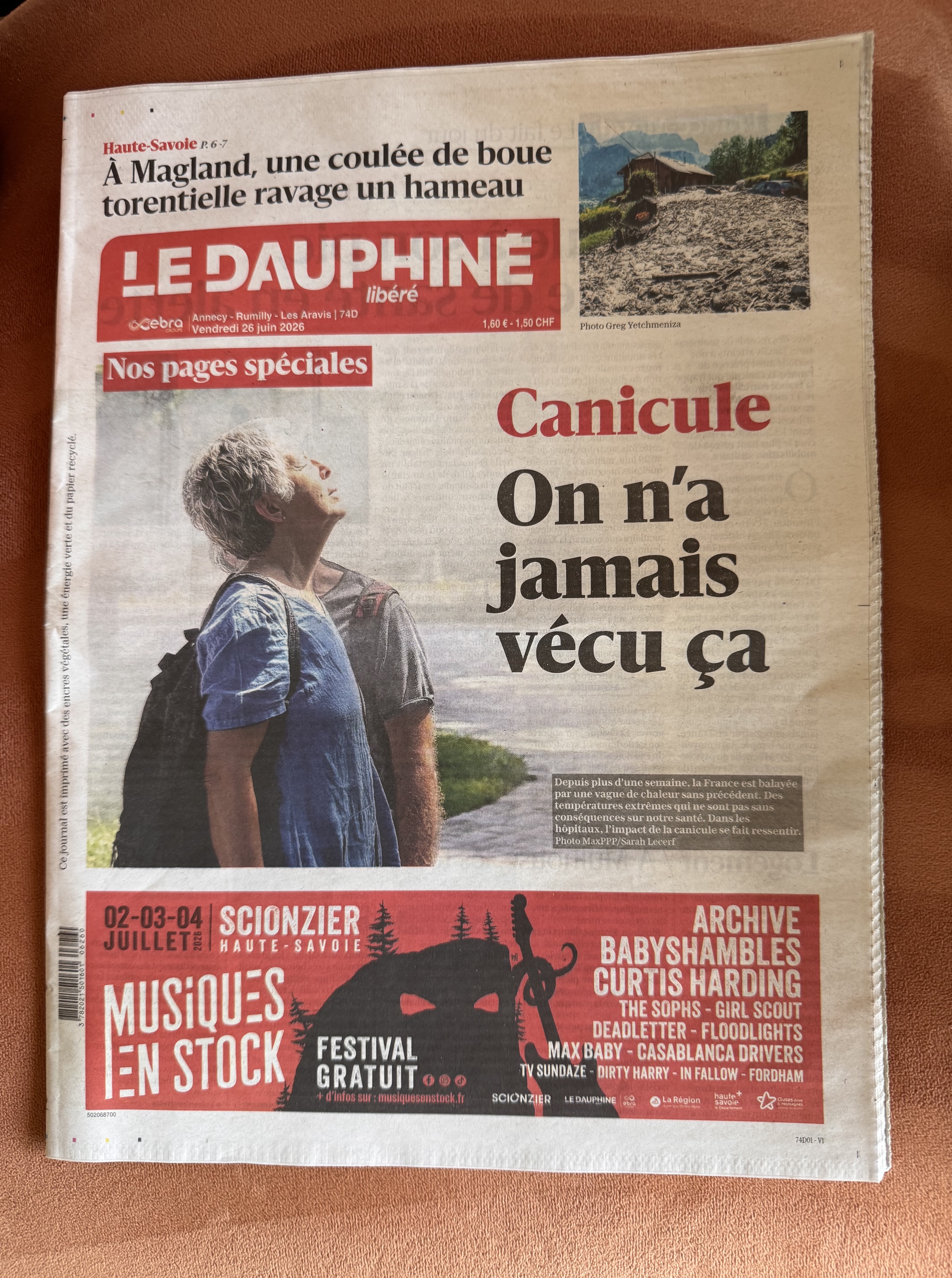
Canicule.
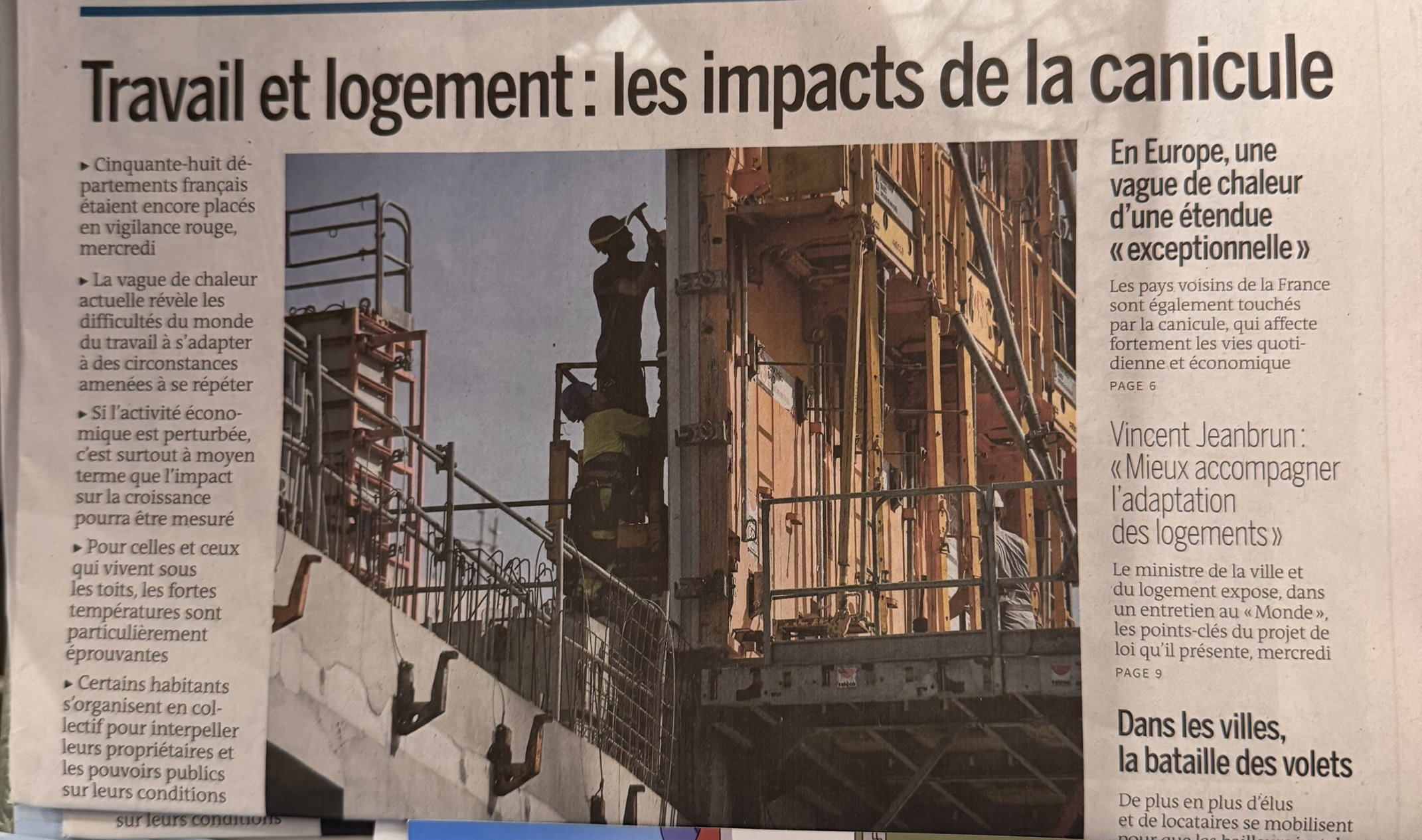
It even made Le Canard:

Where does this word “canicule” come from?
I’m not qualified to read French etymology. Is my robot friend Claude?:
Etymology
It comes from Latin canicula, literally “little female dog” — a diminutive of canis (“dog”). This was the Roman name for Sirius, the brightest star in the constellation Canis Major (the “Great Dog”), a usage already found in the Roman writer Varro, translating the ancient Greek kýôn (“dog”) used to designate the same star, Sirius, the dog of Orion. WikipediaWhy a star became a heat term
At the 45th parallel north — i.e., in Europe — during the period from July 24 to August 24, this very bright star rises at the same time as the sun, which led the ancients to believe there was a link between the star’s appearance and the great summer heat. Pliny the Elder even wrote that when Sirius/Canicula rises, it “kindles the sun’s heat,” boiling the seas, fermenting wine in cellars, and stirring stagnant waters. WikipediaThe link goes back even further than Rome: in ancient Egypt, the goddess Sopdet, personifying Sirius, was depicted accompanied by a dog, and the star’s heliacal rising marked the Egyptian new year and the start of the Nile flood around July 19 — the hottest time of year. Wikipedia
Semantic shift
Originally “canicule” just named that astronomical period (the “dog days”). Over time the word’s meaning shifted from the astronomical event to the weather phenomenon people associated with it — French dictionaries like Larousse still list the original astronomical sense (“the period when Sirius rises with the sun, coinciding roughly with the start of summer in antiquity”) alongside the now-dominant modern sense, a spell of abnormally high day-and-night temperatures lasting from several days to weeks.Modern technical meaning
Today canicule has an official meteorological definition in France: a heat wave is officially declared when temperatures stay above roughly 35°C by day and 20°C by night for several consecutive days, with thresholds varying by region. The word also picked up public-health weight after the catastrophic 2003 heat wave, which killed close to 15,000 people in France — since then “canicule” has been tied to heat-alert plans and prevention campaigns, which is likely why you noticed it used so frequently. Apple PodcastsSo: a star named “little dog” → a hot summer period → a meteorological and public-health term, all in one word that’s stayed essentially unchanged since antiquity.
from Doreen St. Felix in The New Yorker, “Scenes from La Canicule in Paris“:
“La Canicule,” the term that the French have used to describe an elongated spell of oppressive, often dangerous temperatures, doesn’t really translate to “heat wave”—the phrase for that would be “vague de chaleur.” The spirit of La Canicule is more like dog days. Typically, the dog days arrive in late July or August, when the country winds down for its prolonged weeks of vacation. And those days tend to hover some twenty degrees Fahrenheit lower than what it is experiencing now. La Canicule is an old term, a cheeky one, just newly representative of the climate crisis.
There’s a way to look at the Canicule as a sign of climate catastrophe. But first reaction was like if there’s a word for it maybe it’s just a part of life, like the mistral.
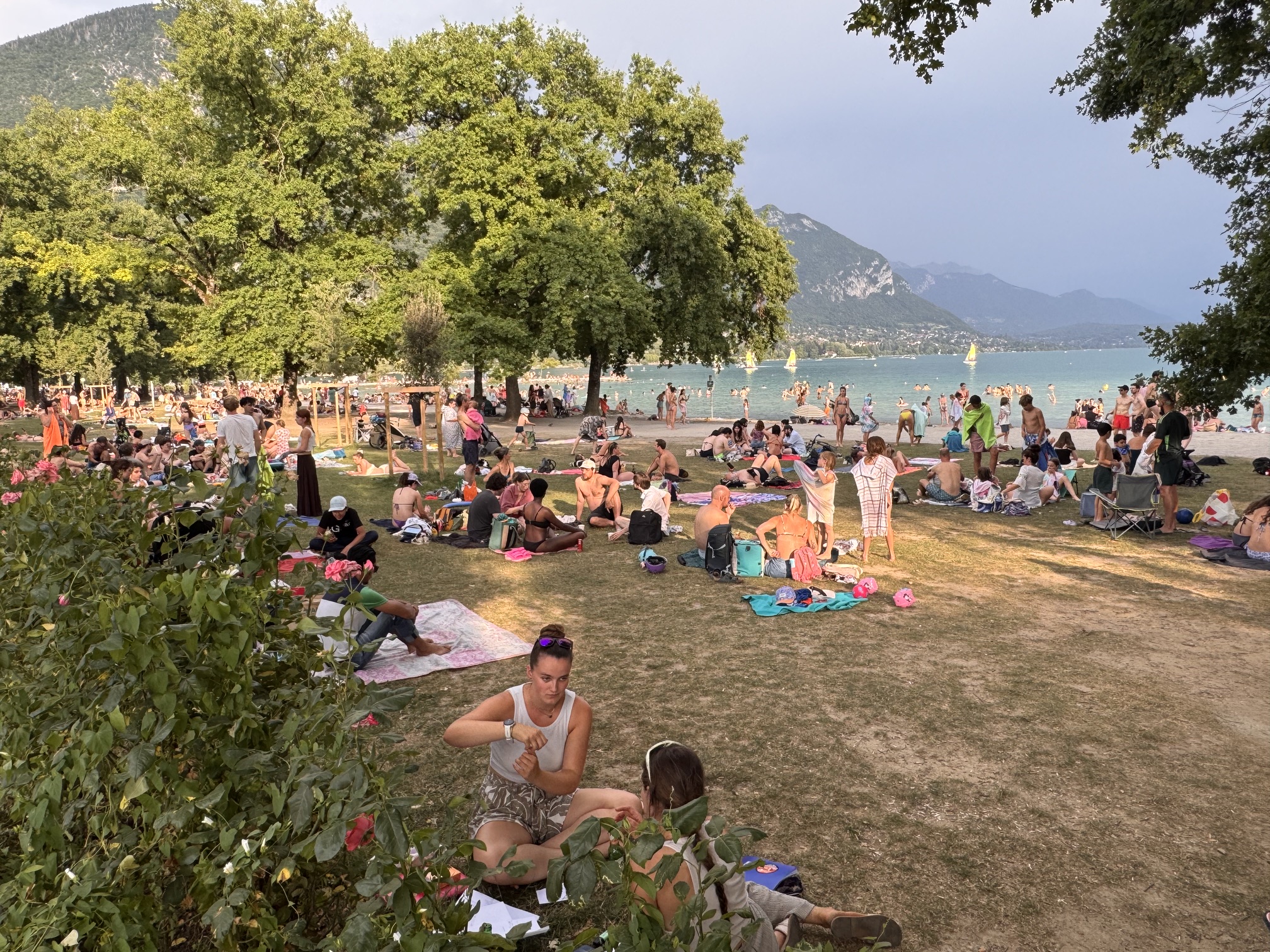
(by mistral I’m talking about the wind, not the French AI company).
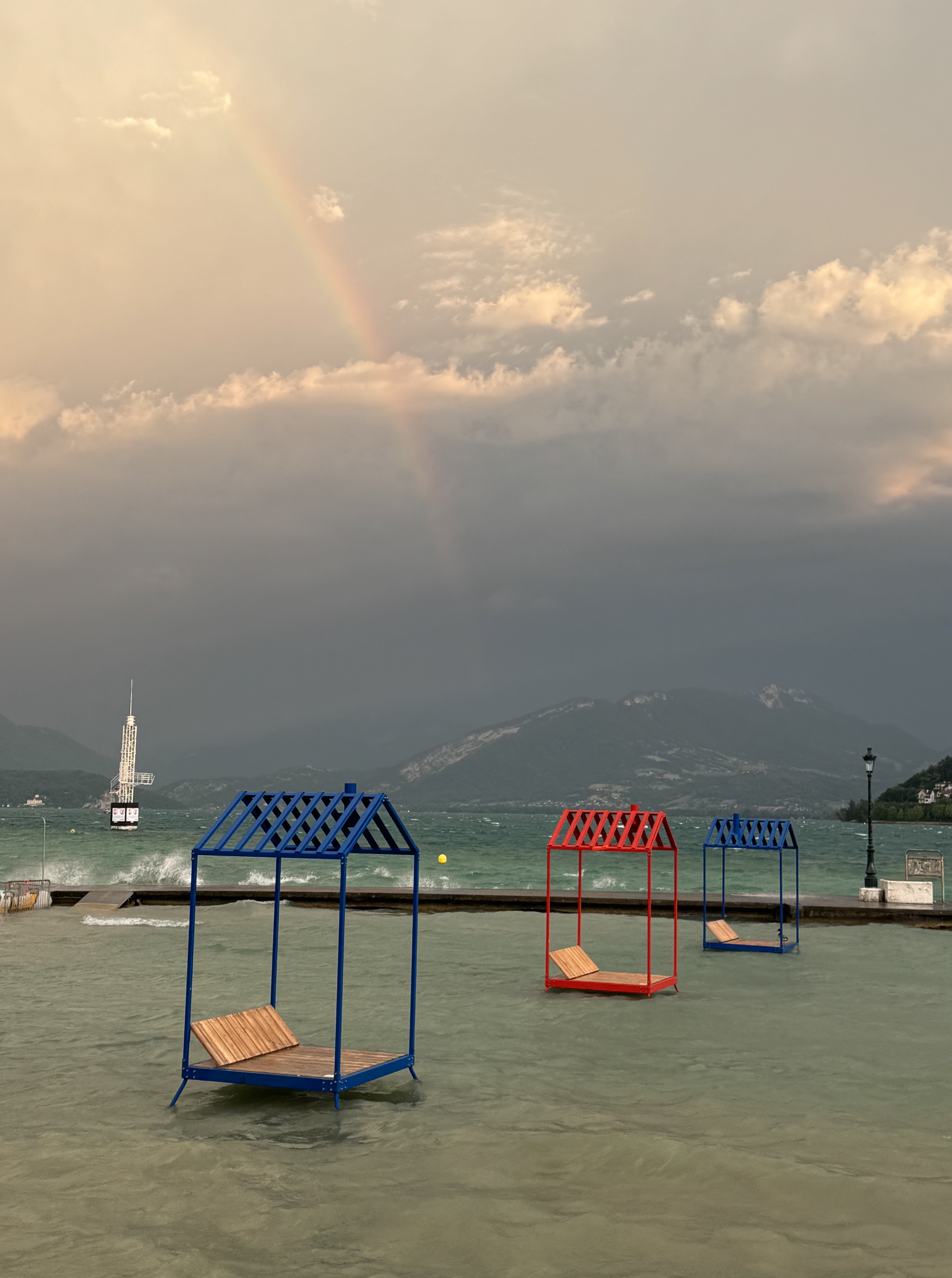
One day there was a windy storm, lightning in the distance. It seemed like there might be an American-style thunderstorm to break the heat. But it never quite came. There was though a nice rainbow:
Hang Yourself Brave Crillon
Posted: July 14, 2025 Filed under: France, Hemingway Leave a comment
From Jeffrey Meyers, Hemingway: A Biography:
Like most people who were drawn by Hemingway’s magnetic personality and valued him more as a companion than as a writer, Lanham found it amusing and exciting to be with him and to be known to have been with him. (The general is remembered today not for his military career but for his friendship with Hem-ingway.) While Hemingway was at the Ritz during the first week of September with Mary, Lanham, echoing Henry IV’s taunt to the Duke of Crillon after a victory at Arques, sent him a provocative message. “Go hang yourself, brave Hemingstein. We have fought at Landrecies and you were not there.”
This was (as Lanham knew) an irresistible challenge, and Hemingway immediately hastened northeast from Paris to Landrecies and Le Cateau (where Dorman-Smith and the British army had retreated after the bad show at Mons in the Great War). “The countryside through which Hemingway travelled in order to reach my command post,” wrote Lanham, who had summoned him there, “was alive with Germans who had been by-passed. All of these people were trying frantically to get back to Germany proper and the Siegfried Line. He was very lucky indeed to have made this trip without being killed.”
Boys will be boys (Hemingway was 44).
Had to look up Henry IV’s taunt to Crillon:
Hang yourself, brave Crillon; we fought at Arques and you were not there
According to Oxford Essential Quotations (4th Ed.) that’s the “traditional form given by Voltaire to [the original] in a letter from Henri to Crillon, 20 September 1597; Henri’s actual words, as given in Lettres missives de Henri IV, Collection des documents inédits de l’histoire de Francevol. 4 (1847) were
My good man, Crillon, hang yourself for not having been at my side last Monday at the greatest event that’s ever been seen and perhaps ever will be seen’
Boldface mine. You can feel the bro-ness, it’s giving Ben Affleck and Adam Driver in The Last Duel.
How did Hemingway and Lanham both know this?

(source). Maybe it was in the boys’ books of the day.
(Frequent readers of this site will recall that Pendu/Pender/PennDu language games&names in French reveal the origin of Cezanne’s House of the Hanged Man.)
All four of Henry IV’s Oxford quotes bang, his most famous might be
Paris is worth a mass
The origin story in that:
On 25 July 1593, with the encouragement of his mistress, Gabrielle d’Estrées, Henry permanently renounced Protestantism and converted to Catholicism to secure his hold on the French crown, thereby earning the resentment of the Huguenots and his ally Elizabeth I of England. He was said to have declared that Paris vaut bien une messe (“Paris is well worth a Mass”), although the attribution is doubtful.

That’s apparently Gabrielle on the left, some interpretation.
Here’s Henri IV at Arques:

Some pretty pictures and intriguing backstory of Arques-la-Bataille on the “Normandy Then and Now” website:

John Henry Twachtman painted the river there in 1885:

That’s in the Met.
Henri’s greatest event that had ever been wasn’t the only battle in the are
Just outside the town is the World War I Commonwealth War Graves Commission cemetery, designed by J R Truelove, the final resting place of 377 men of the Chinese, West Indies, and South African Native Labour Corps.
As for Landrecies, it’s Wikipedia page doesn’t even mention the Second World War, but notes:
It was the site of a skirmish between the British I Corps under Douglas Haig and the German First Army on 25 August 1914, that resulted in the death of Archer Windsor-Clive, the first first-class cricketer to fall in World War I.
Some day I’d like to do a little road trip through here:

Almost every town here has a famous siege or battle. Finish in Bruges. Or maybe Brussels, see The Royal Museum for Central Africa (they don’t know what to do with that inheritance). Or maybe Ghent. I’d like to see the altarpiece:

At St. Bavo’s Cathedral:

(Source)
Good map of France
Posted: July 12, 2025 Filed under: France, Uncategorized Leave a comment
At Trois Mec here in LA. 1789 boundaries, you can see that Savoy is still part of Italy here.
Cezanne’s view of Lake Annecy
Posted: June 28, 2025 Filed under: France, Hemingway Leave a commentfollowing up on Cezanne posting.
1896:

2025:

Think this is pretty much the spot. Does seem like he truncated/compressed the view. That’s the art!
The site is now the wonderful-seeming hotel Auberge du Père Bise (it’ll run you $500 something a night). The two Michelin starred – “worth a detour” – Jean Sulpice restaurant attached.
Across the lake there is the Chateau de Duignt.

Shit even as I was taking this I was like I can’t even take the photo even close to as good as Cezanne painted it!
[Cezanne] struggled with what he considered an overly charming setting, which contrasted with the rugged landscape of his native Provence.
says The Courtland.
Cézanne described this mountain lake near the French border with Switzerland as a scene one might expect to find in ‘the albums of young lady travellers’
says Art UK.
For me, I like the place! Was ok with the overly charming setting.
Cheers to the Annecy Animation Festival, full of gratitude and happy to be there.

Good essay by Jeffrey Meyers on Hemingway x Cezanne.
Curfew
Posted: June 17, 2025 Filed under: France Leave a comment
LA mayor Karen Bass made the front page of Le Monde while we were in France, and gave us a chance to ponder the etymology of “curfew”
from Etymology Online:
curfew(n.)
early 14c., curfeu, “evening signal, ringing of a bell at a fixed hour” as a signal to extinguish fires and lights, from Anglo-French coeverfu (late 13c.), from Old French cuevrefeu, literally “cover fire” (Modern French couvre-feu), from cuevre, imperative of covrir “to cover” (see cover (v.)) + feu “fire” (see focus (n.)). Related: Curfew-bell (early 14c.).
The medieval practice of ringing a bell (usually at 8 or 9 p.m.) as an order to bank the hearths and prepare for sleep was to prevent conflagrations from untended fires. The modern extended sense of “periodic restriction of movement” had evolved by 1800s.
The House of Savoy
Posted: April 19, 2025 Filed under: France Leave a comment
I expect to be at the Annecy Animation Festival in Annecy, France this year, a great treat. If you’ll be there, hmu. As prep I’m reading about the history of that region, known as Savoy.
The land we call Savoie had a curious destiny: a land of empire in the Middle Ages, but divided from the outset between the call of the Rhône valley and that of the Po valley. Over the centuries, it was the cradle of a dynasty of French language and culture, but the fortunes of its history made it the mother of Italian unity, fighting at different times against the Dauphiné, against the Valais, against the Calvinist Geneva, against the Milan, and succeeding despite these incessant wars, It was for a long time a bone of contention between France and the Holy Roman Empire, then between France and Spain, and finally between France and Austria, and is now a link between the two friendly countries that occupy both sides of the Alps.
— André Chamson, Archives de l’ancien duché de Savoie (source.) From the same article:
Pre-Christian Alpine traditions date from this period (Austria, Switzerland, Savoy, Northern Italy, Slovenia), whose characters – Krampus, Berchta (Perchten), wild man – are part of an endangered, folklorized cultural heritage, on the verge of extinction due to the disappearance of traditional ways of life that have been preserved for longer in the Alps.

Bercha/Perchta
Humbert Whitehands was called that because his hands were as white as snow. Or because he was honest in his dealings, his hands were white. Or it’s a misunderstanding, it came from white walls, an easy confusion in sloppy Latin.
Charles Previté-Orton was a scholar of the early house of Savoy:

And he weighs in on what we can know from the years around 1000, and our sources:

He does seem to have put in the work. You can read his Early History of the House of Savoy online if you so choose.
It seems we can agree that Humbert I was granted the lands that became Savoy for his loyalty to Holy Roman Emperor Conrad II. There followed various Amadeuses and Humberts, until we get to Thomas, the Eagle of Savoy.
In 1195, Thomas ambushed the party of Count William I of Geneva, which was escorting the count’s daughter, Margaret of Geneva, to France for her intended wedding to King Philip II of France. Thomas carried off Margaret and married her himself.
So says Wikipedia. But Eugene L. Cox, who published a couple of books about the House of Savoy, isn’t so sure:
How much truth there is in this story we shall probably never know, except that Thomas did marry Guillaume’s daughter and in due course found himself faced with the very serious problem of providing suitably for his numerous offspring.

(Side note but if you’re at Wellesley College why not see if you can get the Eugene L. Cox Fellowship? $10,000 to go poke around some castles or something.)
Thomas’s children were married off and scattered into various religious and secular posts (the distinction not being very clear at the time) all over Europe. As a result, the family had wide influence. Cox:
the Savoyards did play a remarkable variety of roles on the international scene, sometimes as adventurers and sometimes as members of a kind of one-family “United Nations” working to assist in the pacification of international conflicts. Thanks partly to the labors of their father and, more literally, to the labors of their sister Béatrice, the countess of Provence whose four daughters all became European queens, the uncles from the Alps could by their presence alone convert a diplomatic conference into a family reunion, a fact which may have contributed to the settlement of some of the more emotional issues in which they were involved. As friends and ambassadors of kings and popes, as men with homes in many lands and connections that stretched from Scotland and Flanders to Sicily and Rome, the Savoyards furnish a very unusual illustration of medieval “universalism,” yet they were not men without a country. No matter how far afield their enterprises may have taken them, all of the eagles kept an eye on the Alpine homeland. Whenever they could, they contributed to the advancement of family interests in Savoy, and all but one returned to the Alps to end his days.
One of Thomas’s granddaughters, Eleanor of Provence, married the king of England. So many of her family came with her that an area of London became known as Savoy, thus the Savoy Hotel, which gave its name to a Harlem ballroom, and thus Stompin at the Savoy.
Eventually after Thomas there was the Green Count, Amadeus VI:

(source)
and then the Red Count, Amadeus VII, and then Amadeus VIII, the Peaceful, who was elevated to duke status.

He became a pope, or an anti-pope, depending on who you ask.
Léon Menabrea sums up the period with these words: “Little by little, the petty feudatories faded away; a star grew and blazed in the middle of the feudal firmament: the star of the House of Savoy“.

(source)
At this time the Annecy region was not part of Savoy, it was run by the Counts of Geneva. Robert of Geneva, one of the last counts, was elected the first of the French antipopes at Avignon. When he died, sonless, the title Count of Geneva went to Humbert VII, who then died, and the title went to Odo, who sold the region to Amadeus VIII for 45,000 gold florins. Why did Odo need florins so bad? I don’t know. French Wikipedia doesn’t elaborate. Odo wasn’t really expecting to become count of Geneva. How much was 45,000 gold florins? Let’s ask Perplexity AI:
The Florentine gold florin in the late 14th and early 15th centuries was a high-value coin used mainly for large transactions, not everyday purchases. Its value in modern terms is hard to pin down exactly, but estimates based on gold content, purchasing power, and historical wages offer some perspective:
- The gold content (about 3.5 grams) would be worth roughly $187 USD today based on current gold prices
- In terms of purchasing power, a florin could buy about 1/12 of a metric ton of wheat in the 1330s, which would equate to about $28–$30 USD in modern wheat prices1.
- In the 15th century, annual salaries for skilled professionals in Florence ranged from 14 to 100 florins, and a city residence might cost 200 florins, with elite palaces valued at 3,500 florins.
- The florin was worth between 65 and 140 soldi (a silver coin) during this period, and was used for major transactions, dowries, and international trade rather than daily expenses
In summary, a single gold florin represented a significant sum—roughly equivalent to several hundred modern US dollars, or more, depending on the comparison method
Not a bad deal. Call it 45 million dollars, and you get a bustling town with canals and a flowing river and big lake and a lot of nice land.
The trade didn’t include the city of Geneva, which was ruled by the bishops of Geneva.
In Peter Wilson’s history of the Holy Roman Empire, of which Savoy was a part, he mentions the following:
The rapid development of cartography from the fifteenth century made a profound impact by providing a ready image of territorially defined political power. Maps now showed political boundaries as well as natural features and towns. The members of the House of Savoy celebrated its elevation to ducal rank in 1416 with a huge cake in the shape of their territory.
Would’ve loved to have a slice of that.
Eventually, during the French Revolution, revolutionary troops took Annecy back, but the House of Savoy was going strong. You can follow the line of the House through battles, marriages, regents, half-brothers, etc to Victor Amadeus II, who, as a result of some complicated negotiations after the War of the Spanish Succession, ended up as King of Sicily. From this lofty job he was demoted to King of Sardinia.
In a set of trades and turnarounds, the actual land of Savoy ended up officially as part of France, while the House of Savoy, led by Victor Emmanuel II, became the royal family of the newly united Italy.

The story of what happened thereafter is entertainingly told in Robert Katz’s book The Fall of the House of Savoy, which is full of mistresses and cunning ministers and morganatic marriages.

One of these books where even the footnotes are good:

From this turbulence the House of Savoy ended up on top, and they survived World War One, but it was not to last.
Victor Emanuel III messed it up:
He remained silent on the domestic political abuses of Fascist Italy
sadly relevant to our time. Mussolini took over, and we all know how that ended. VEIII ended up in exile in Egypt. Umberto II, his son, spent years in exile in Portugal. He died in Geneva.
Umberto’s son Vittorio Emanuel led a seedy life, including shooting a 19 year old kid in a strange yacht incident, and going to jail on charges of organizing prostitutes for casino patrons. Here he is in happier times, watching the launch of Apollo 11:

source. His son was on Italian Dancing With the Stars, and granddaughter, Vittoria, is of course an influencer.

Thus, the house of Savoy.
I look forward to returning to this lovely part of the world!

Great coat of arms
Posted: April 3, 2025 Filed under: France Leave a comment
reading about Dauphiné, was wondering why this region of France was called that, and of course it’s because Guigues IV had a dolphin on his coat of arms.
news from Paris
Posted: April 13, 2024 Filed under: France Leave a commenta report from Paris in the FT:
There’s been a spectacular decline in wine drinking. I sometimes ask people to guess which country was the world’s biggest exporter of wine in 1970. The answer: Algeria. Even after independence, the Muslim country was still producing cheap plonk that kept the former motherland pickled. French winemakers did their bit, too. But since the 1960s, the average French person’s consumption of wine has dropped by about 70 per cent, to below 40 litres a year. Wine barely exists at lunchtime any more. Younger French people prefer cannabis.


.jpg)


