Jo In Wyoming
Posted: August 19, 2014 Filed under: art history Leave a comment
Man, I thought I knew about and was casually “into” Edward Hopper, but I didn’t get even a tenth of it until I picked up a used copy of this book at Phoenix Books in SLO.
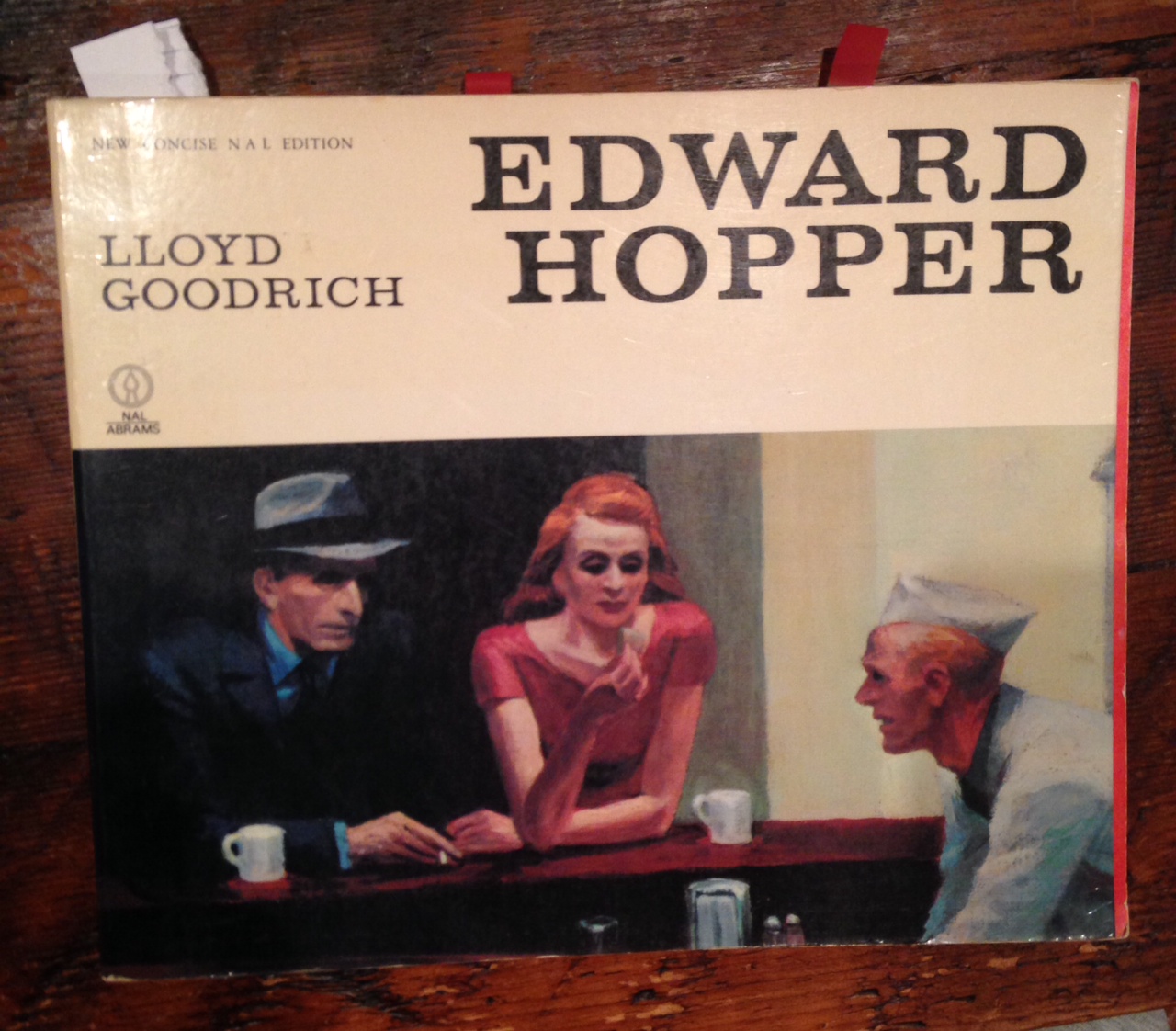
Hopper went to Paris when he was twenty-four, and a few more times before he was thirty. After that he never crossed the Atlantic again.
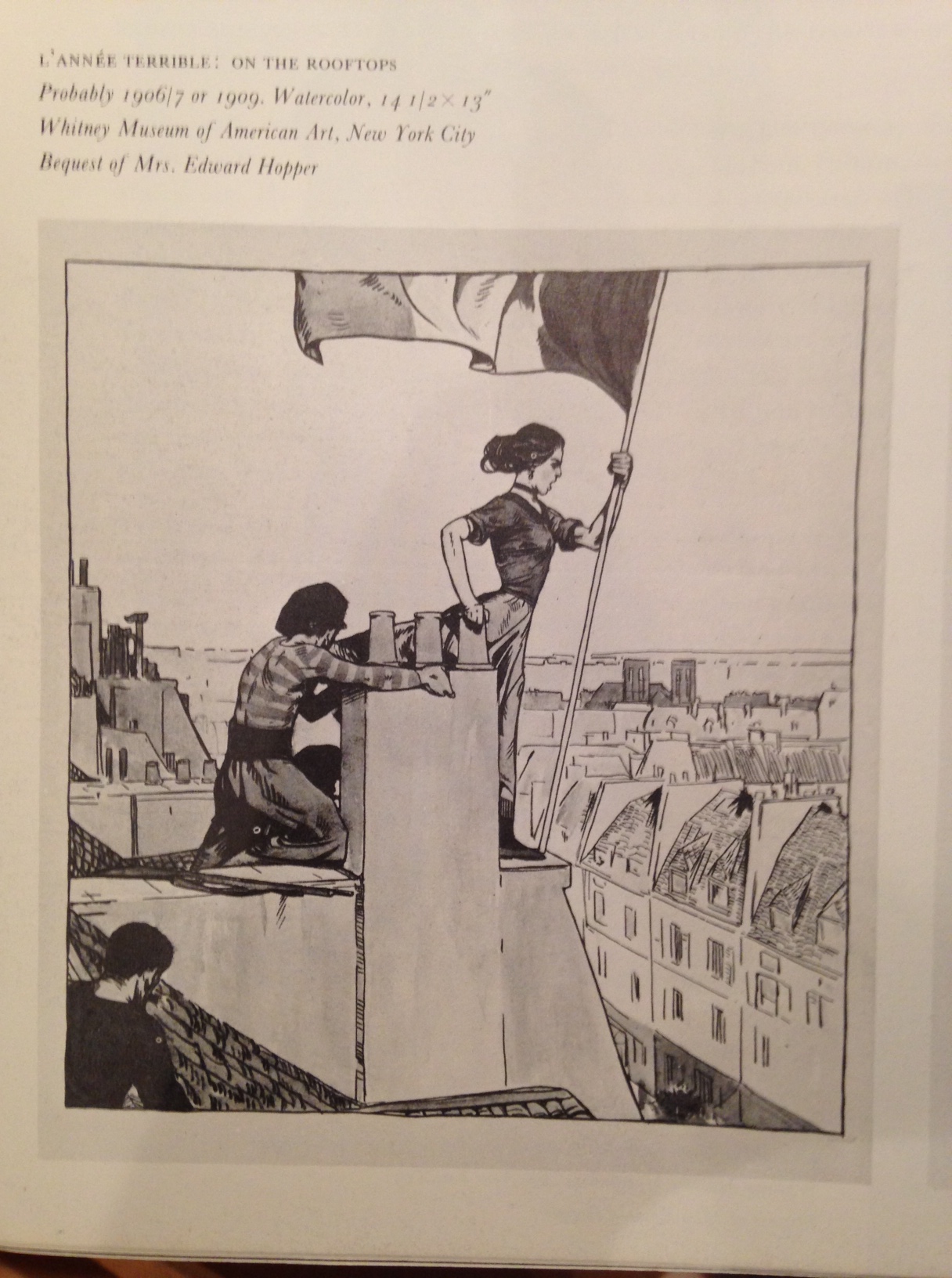
When he was 42 he married Jo Hopper, whom he’d known for at least ten years.

The austere way of life the Hoppers had chosen seemed to suit both of them completely. They were not unsociable, and they had plenty of friends, old and new; but neither were they gregarious. Hopper had no small talk; he was famous for his monumental silences… When he did speak, his words were the product of long meditation.
Jo Hopper on the other hand, was as articulate as he was laconic, with a lively sense of humor. (She once remarked that “sometimes talking with Eddie is just like dropping a stone in a well, except that it doesn’t thump when it hits bottom.”)
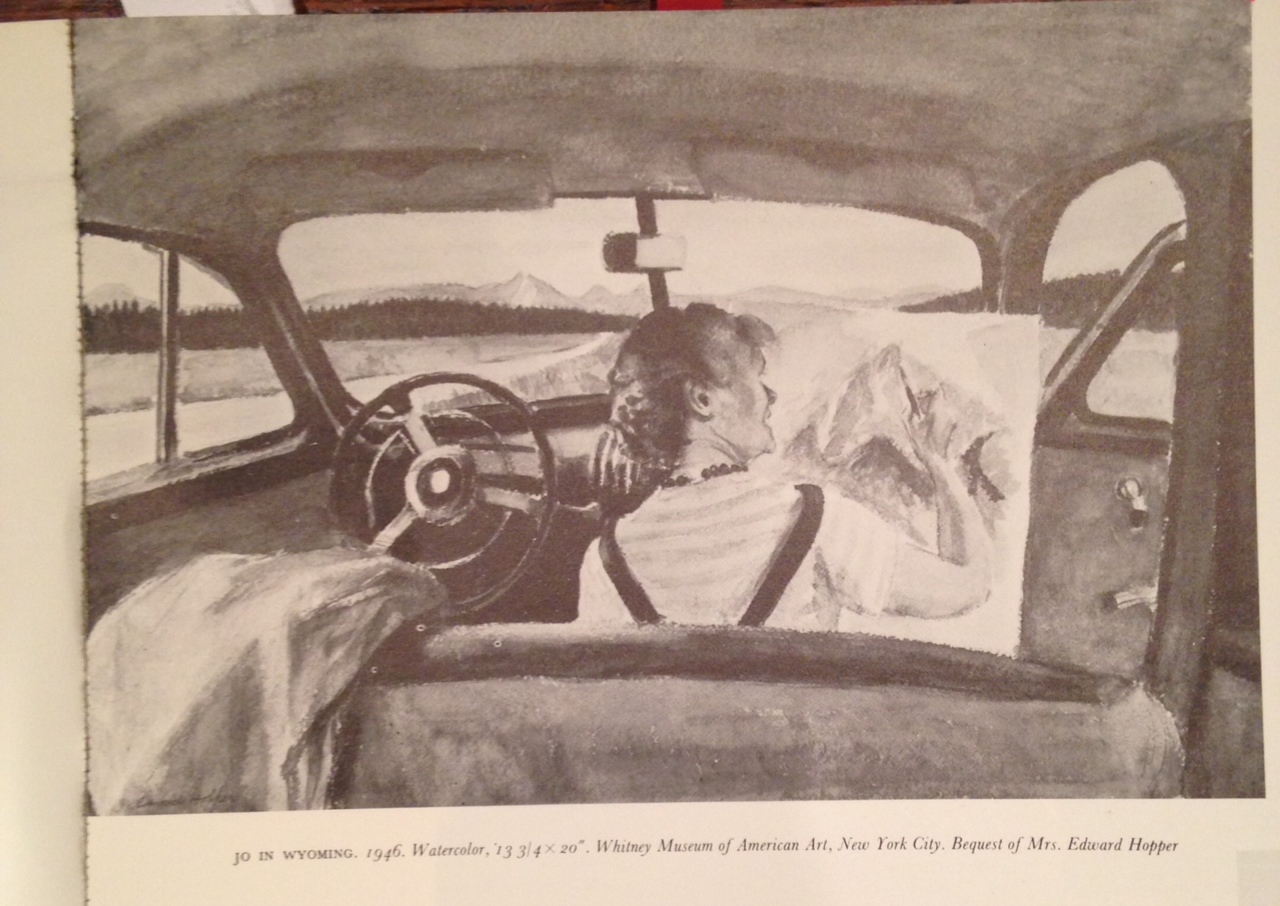
For the six months of they year they lived in New York, Edward Hopper worked like a machine. He’d go down his studio like a banker, work nine to five or so, never go out.
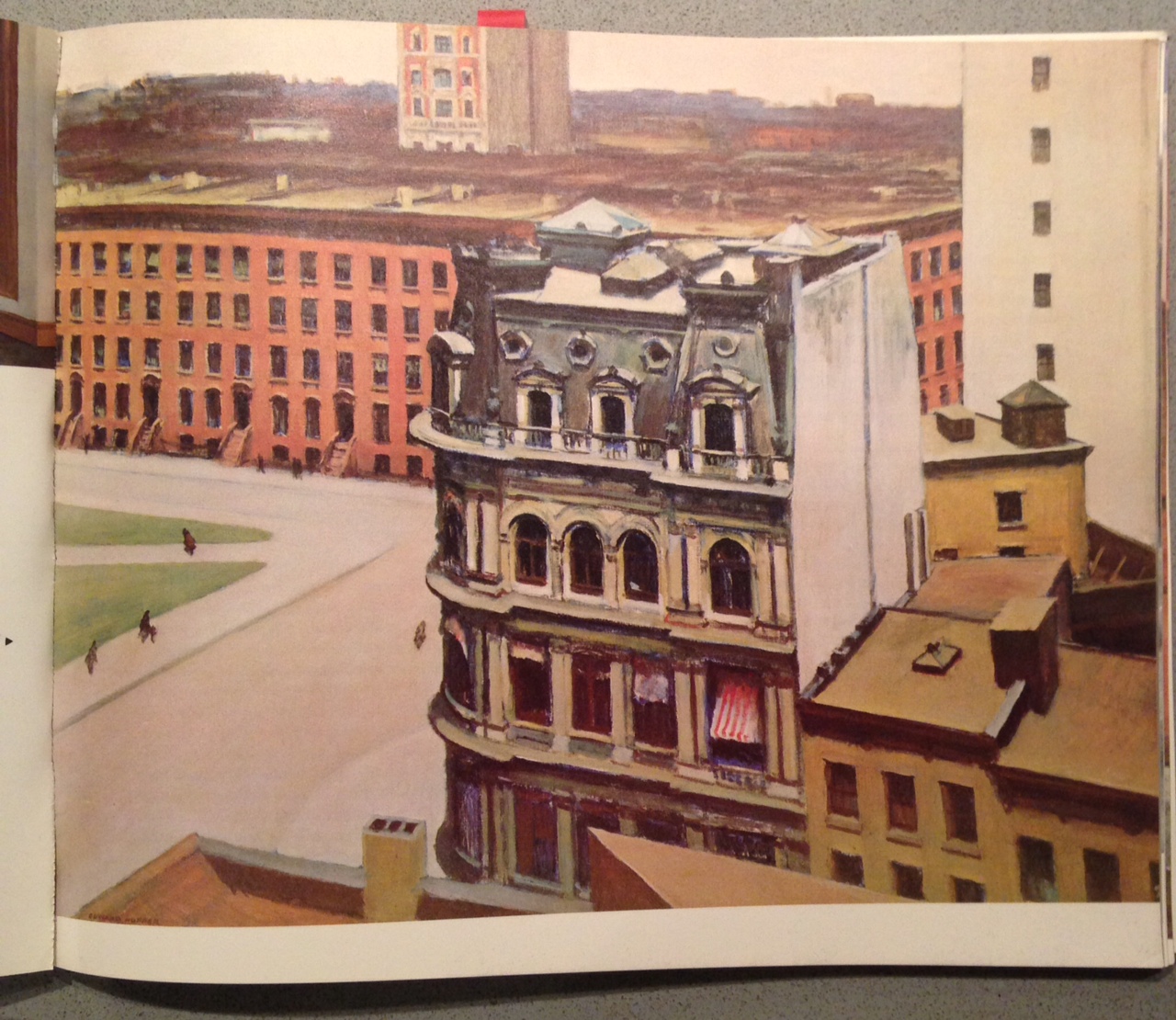
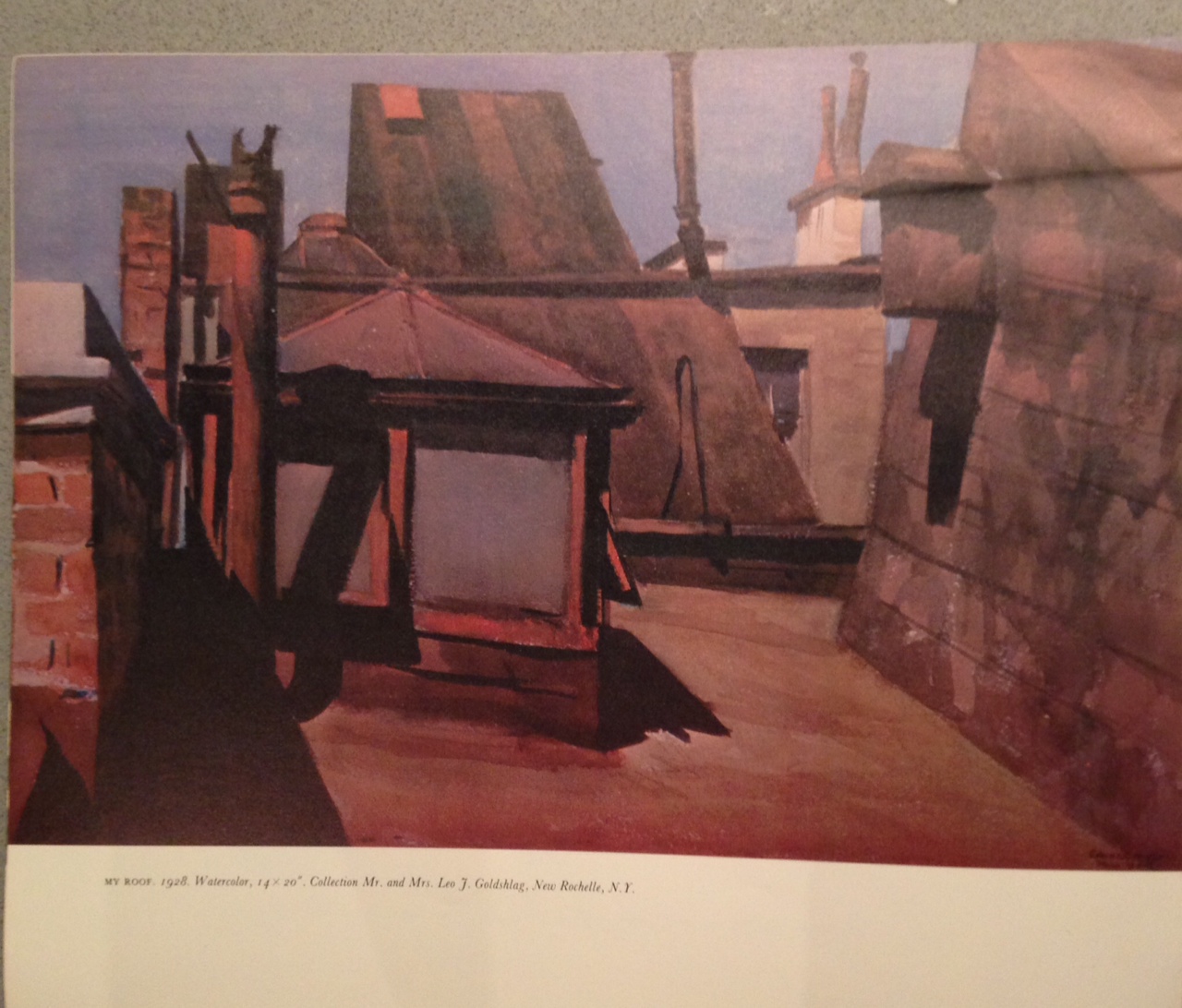
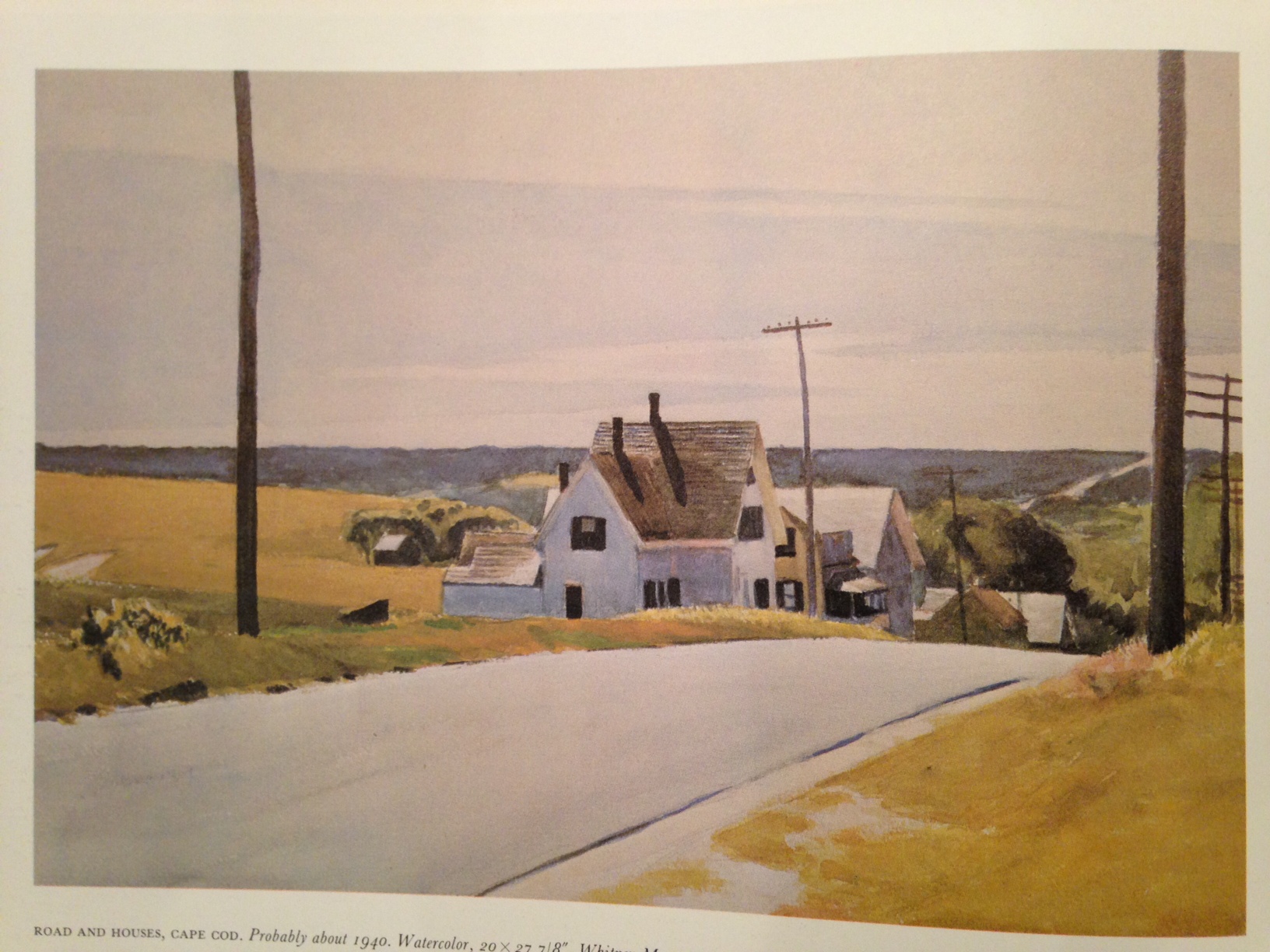
In the summers they’d travel.
A sad thing that happened to Jo when she was in her thirties, and she’d lost her job with the New York public schools because she caught influenza:
Penniless and homeless, she found temporary shelter thanks to an old sexton at the Church of the Ascension who had helped her after seeing her weeping in the church.

“Summer Interior”
Some sources suggest Edward and Jo fought all the time. Others say sure, they fought, but they were each other’s best friends and best helpers. Josephine’s diaries are in a private collection. Wiki:
Since about 1924–25, i.e. almost immediately after their marriage, Jo became her husband’s only model. It was also Jo who thought up the names for a number of her husband’s paintings, including one of the most famous oils, Nighthawks.
Though very interested in the American Civil War and Mathew Brady’s battlefield photographs, Hopper made only two historical paintings. Both depicted soldiers on their way to Gettysburg. Also rare among his themes are paintings showing action.

[Jo] reflected on her relative good fortune that [Edward’s] only vices were drinking too much coffee in the Automat and “doing word puzzles in the Evening Sun.”

Hopper’s last picture is called Two Comedians:
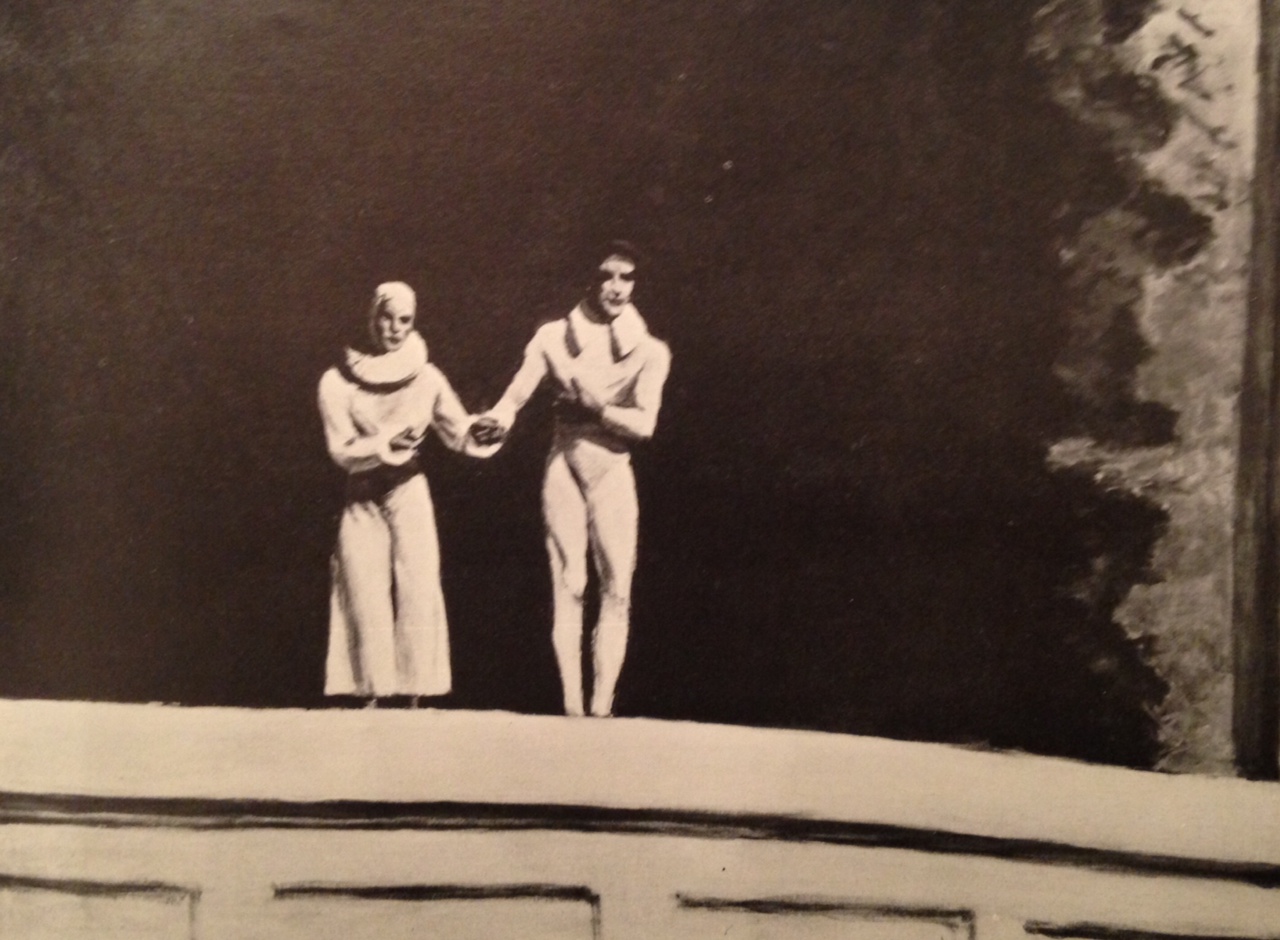
Jo Hopper confirmed that her husband intended the figures to suggest their taking their life’s last bows together as husband and wife.
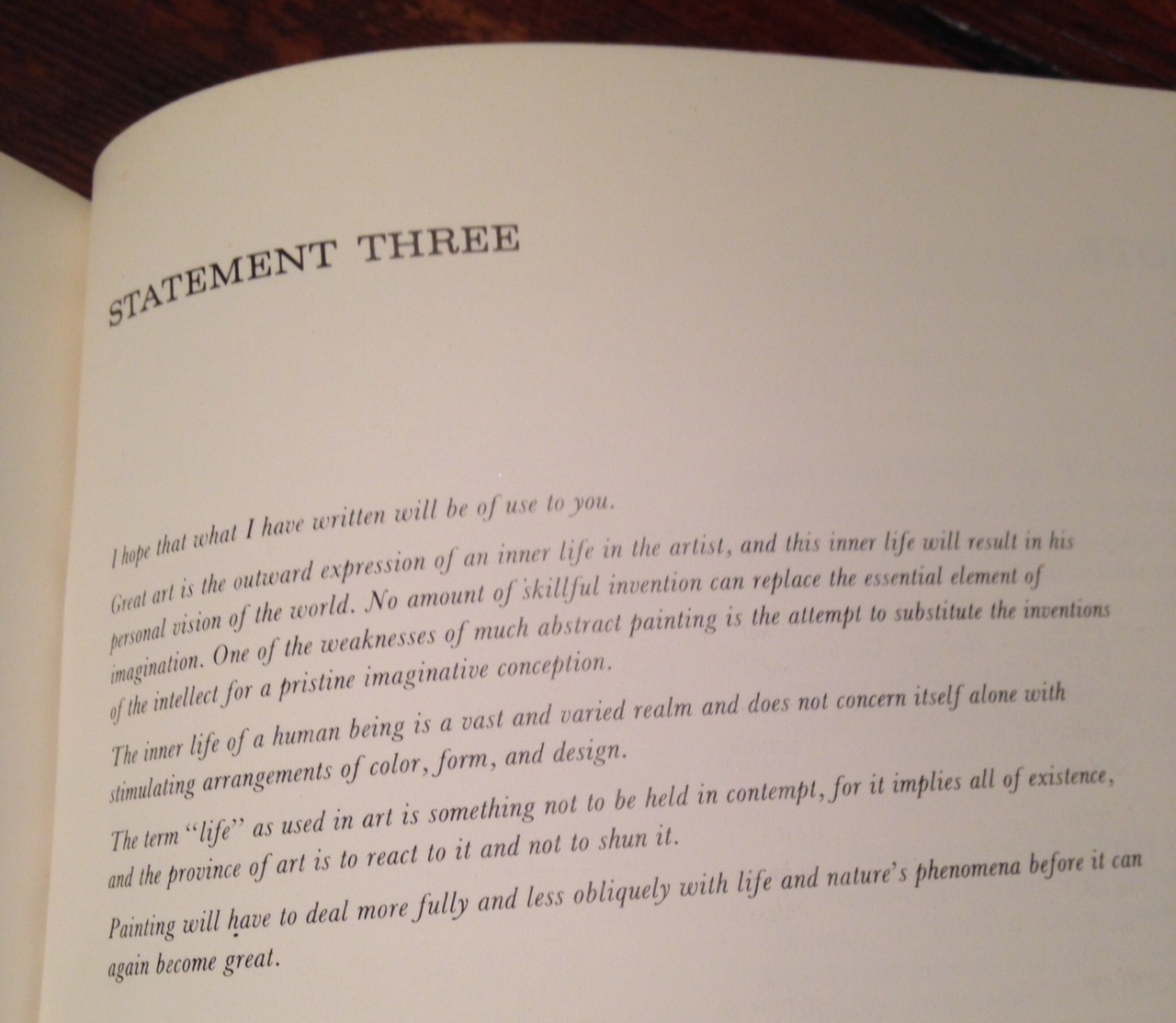
Let’s let the man himself have the last word:
Cezanne
Posted: July 11, 2014 Filed under: art history Leave a comment
Anybody who wants to tell me what Cezanne was up to has my attention. Fire away, Morgan Mies:
This holistic approach to art, where individual objects point beyond themselves, was not invented by Cézanne. Holism is an idea as old as the Pre-Socratic philosopher Parmenides in the Western tradition. And it was an idea buzzing around the French Mind quite actively in the middle and late 19th century. For example, Victor Hugo’s Les Misérables was published in 1862. In an abandoned preface to the book, Hugo had written:
This book has been composed from the inside out. The idea engenders the characters, the characters produce the drama, and this is, in effect, the law of art. … Destiny and in particular life, time and in particular this century, man and in particular the people, God and in particular the world, this is what I have tried to include in this book; it is a sort of essay on the infinite.
(No big deal, just an essay on the infinite.)
We can look at Cézanne’s still lifes in roughly the same way: “Fruits and in particular the apple, kitchens and in particular this kitchen, rooms and in particular this room, God and in particular the world, this is what I have tried to include in this painting; it is a sort of painting of the infinite.” Hugo created his essay on the infinite with words that build into stories. Cézanne was trying to do the same thing with paint that builds into visual scenes. By messing with perspective and tonal values, Cézanne created the feeling in his paintings that all the individual objects in the scene are connected and interpenetrated.
Here’s a beef: why does it take five clicks to find out who “the hanged man” is in The House Of The Hanged Man at Auvers?

Thanks to this person who seems to have looked into it:
Well, turns out I was wrong. Supposedly, the house had been owned by a Breton man named Penn’Du, which sounds like the French word for hanged man – ‘Pendu’. Hmmmmm.
Cezanne also did a print in 1873 (same year) entitled “Guillaumin with the Hanged Man”. In this image he actually has a little man hanging in the corner. I read that the tiny hanging man was the sign of an inn called ‘Le Pendu’. Well there sure are a lot of coincidences here!
Guillaumin au pendu

Fantastic Man
Posted: December 2, 2013 Filed under: art history Leave a comment In Stockholm I kept seeing this magazine until finally I had to learn “who is this fantastic man?”
Jeremy Deller is an English artist.
Deller staged The Battle of Orgreave in 2001, bringing together almost 1,000 people in a public re-enactment of a violent confrontation from the 1984 Miners’ Strike.
Here’s a documentary about it, I only watched part of it but it was pretty riveting.
Around 56:00 is an example of Margaret Thatcher’s hypnotic, eerie radio voice. I wonder why I haven’t read more about the importance or non-importance of radio in British politics at that time. I guess because I’m really busy.
Gauguin
Posted: September 27, 2013 Filed under: art history Leave a comment
In November 1882 a stock market crash put an abrupt stop to Gauguin’s double life as broker and artist. The crash cost him and his friend Schuffenecker their jobs. And it left Gauguin free to indulge the wayward life of a dandy to his heart’s content. He had always longed for the bohemian existence that suddenly became available to him; but the snag was that now he had a family to care for, five children to feed, and a house. None of this fitted in with the image of a drop-out adrift in the big city…
At any rate Mette, unable to share her husband’s euphoric view of art, went to stay with her parents in Denmark.

 Helytimes