“pursuing instead a random method”
Posted: February 10, 2012 Filed under: books, people, reading Leave a commentAfter Barry Lyndon did you begin work straight away on The Shining?
When I finished Barry Lyndon I spent most of my time reading. Months went by and I hadn’t found anything very exciting. It’s intimidating, especially at a time like this, to think of how many books you should read and never will. Because of this, I try to avoid any systematic approach to reading, pursuing instead a random method, one which depends as much on luck and accident as on design. I find this is also the only way to deal with the newspapers and magazines which proliferate in great piles around the house — some of the most interesting articles turn up on the reverse side of pages I’ve torn out for something else.
– from this interview of Stanley Kubrick by Michel Ciment. (Picture from this blog.)
More C. W. Peale, and the Falkirk Wheel
Posted: February 10, 2012 Filed under: art, from wikipedia, painting, pictures, science Leave a commentThe Exhumation of the Mastodon 1805-1808:

The wheel pictured reminded one correspondent of The Falkirk Wheel:
This guy
Posted: February 10, 2012 Filed under: adventures, from wikipedia, heroes, people Leave a comment
Bill Tilman:
- twice won the Military Cross for bravery in WWI
- was a coffee grower in Kenya
- rode a bicycle across Africa
- parachuted behind enemy lines to fight with Italian and Albanian partisans in WWII
- was given “the keys to the city of Belluno which he helped save from occupation and destruction”
- “was the first man to attempt climbing the remote and unexplored Assam Himalayas”
- “detoured through Afghanistan’s Wakhan Corridor to see the source of the river Oxus”
- “found the pass named after him beyond Gangchempo”
- presumed dead at sea while sailing the South Atlantic to find remote mountains to climb.
Me?
- I had some açai juice today.
..for whom the Creator alone is responsible…
Posted: February 9, 2012 Filed under: from wikipedia, writing Leave a comment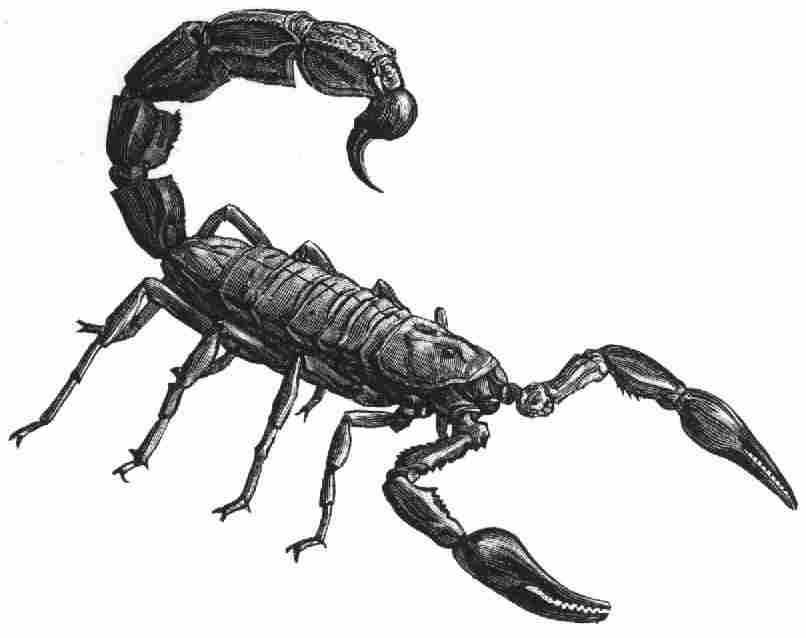
“apprehending the good, but powerless to be it, what was left for a personality like Claggert’s but, like the scorpion, for whom the Creator alone is responsible, to turn upon himself and act out the part allotted.”
– a quote from “Billy Budd” that David Milch brings up in an interview about the TV show “Luck” in “Written By” magazine.
I found the picture of the scorpion on the mysterious website www.scorpion.com
Good new term I learned
Posted: February 9, 2012 Filed under: from wikipedia, pictures Leave a comment
A fancy cancel is a postal cancellation that includes an artistic design. Although the term may be used of modern machine cancellations that include artwork, it primarily refers to the designs carved in cork and used in 19th century post offices of the United States.
– from Wikipedia, which also informed me about the Waterbury Running Chicken (a famed fancy cancel) and that I should be vy suspicious of fancy cancels on Confederate postage stamps.
The Artist In His Museum, by Charles Wilson Peale, 1822
Posted: February 9, 2012 Filed under: art, painting, pictures Leave a comment
“To Peale, the behavior of animals served as a model for a moral, productive, and socially harmonious society,” says Wikipedia, citing David R. Bingham in the Huntington Library Quarterly.
“When you meet the hero, you sure know it”
Posted: February 8, 2012 Filed under: comedy, from a magazine, people Leave a comment
From a New Yorker profile of Harold Ramis:
One afternoon, Ramis and I had lunch at a tavern near his office. He began talking about another star of his early films, Chevy Chase. “Do you know the concept of proprioception, of how you know where you are and where you’re oriented?” he asked. “Chevy lost his sense of proprioception, lost touch with what he was projecting to people. It’s strange, but you couldn’t write Chevy as a character in a novel, because his whole attitude is just superiority: ‘I’m Chevy Chase, and you’re not.’ ”
Ramis said that he identified with Nathan Zuckerman, the alter ego in many of Philip Roth’s novels: “Watching other people having experiences I’m not going to have. But understanding, empathizing. Much as I want to be a protagonist, it doesn’t happen, somehow. I’m missing some tragic element or some charisma, or something. Weight. Investment.”
After a moment, he continued, “One of my favorite Bill Murray stories is one about when he went to Bali. I’d spent three weeks there, mostly in the south, where the tourists are. But Bill rode a motorcycle into the interior until the sun went down and got totally lost. He goes into a village store, where they are very surprised to see an American tourist, and starts talking to them in English, going ‘Wow! Nice hat! Hey, gimme that hat!’ ” Ramis’s eyes were lighting up. “And he took the guy’s hat and started imitating people, entertaining. Word gets around this hamlet that there’s some crazy guy at the grocery, and he ended up doing a dumb show with the whole village sitting around laughing as he grabbed the women and tickled the kids. No worry about getting back to a hotel, no need for language, just his presence, and his charisma, and his courage. When you meet the hero, you sure know it.”
He smiled. “Bill loves to get lost, to throw the map out the window and drive till you have no idea where you are, just to experience something new.” And you? “Oh, I’d be the one with the map. I’m the map guy. I’m the one saying to Bill, ‘You know, we should get back now. They’re going to be looking for us.’ ”
– from “Comedy First: How Harold Ramis’ Movies Have Stayed Funny For Twenty-Five Years” by Tad Friend, The New Yorker, April 19, 2004.

(pictures from billmurray.tumblr)
 Helytimes