Peabiddy, Peabody, and Peabodys
Posted: May 31, 2026 Filed under: America Since 1945, TV Leave a comment
In Massachusetts there is a town called Peabody. Locally it is pronounced “PEE-biddy.”
The town was once part of Salem, and then became “South Danvers,” and then, in 1868, changed its name to Peabody, in honor of George Peabody, who was born there.
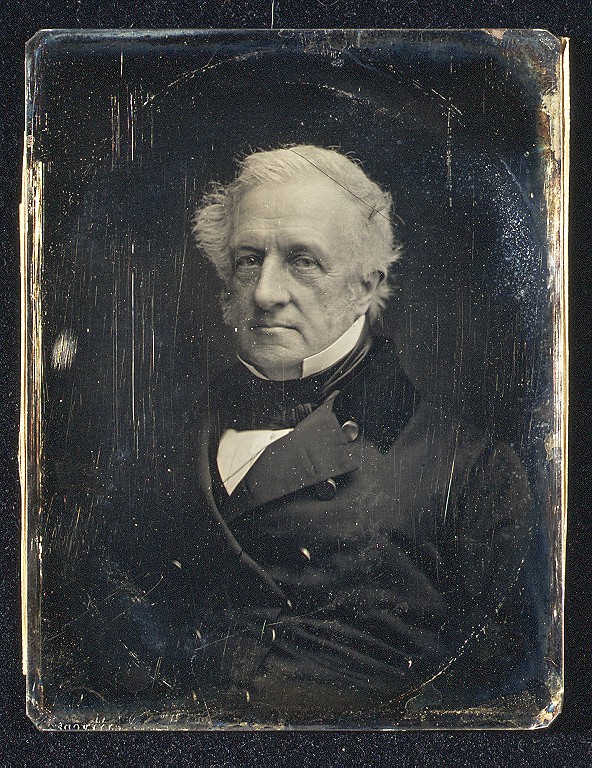
George Peabody was a financier and pioneer of trans-Atlantic banking. He started out, like every other rich American of the 19th century, in “dry goods,” and then selling cotton in the UK. He expanded into banking. He would sell the bonds of US states in London.
Here’s some of what Ron Chernow says about him in House of Morgan:
Peabody, a good talker, was not prepossessing. Over six feet tall with light blue eyes and dark brown hair, he had a rumpled face, with knobby chin, bulbous nose, side whiskers, and heavy-lidded eyes. That this homely man would found the House of Morgan-later a white-glove affair with high-society partners famous for good looks and stylish dress—is ironic. He carried the scars of early poverty and was quick to feel slights and perceive enemies. Like many who have overcome early hardship by brute force, he was proud but insecure, always at war with the world and counting his injuries.
Born in Danvers, Massachusetts, he had only a few years of schooling. When he was a teenager, his father died, and Peabody worked in his brother’s shop to support his widowed mother and six siblings. When he later prospered in a Baltimore dry-goods business with a rich older partner, Elisha Riggs, he remained haunted by his past. “I have never forgotten and never can forget the great privations of my early years, he later said.3 He hoarded his money, worked incessantly, and retained a lonely air.
In 1837, Peabody moved to London. A year later he opened a merchant house at 31 Moorgate in London, furnishing it with a mahogany counter, a sate, and some desks. He joined a select group of merchant bankers who traded in dry goods and also financed such trade; hence, their businesses became known as merchant banks. They developed a form of wholesale banking remote from the prosaic world of bank books, teller windows, and checking accounts.
Late in life, he looked for a successor:
Ordinarily, Peabody would have chosen a son or nephew to take over the business. Most merchant banks were family partnerships with a few talented outsiders. But as a bachelor, Peabody was in the unusual position of having to shop for an heir and bequeath his empire to a stranger.
He was, however, no stranger to the company of women. While he didn’t smoke or drink, he resorted to the shadowy world of illicit pleasure
(He had a mistress and an illegitimate daughter.)
Peabody took on a young partner, also from Massachusetts, named Junius Spencer Morgan.
Late in life, this Peabody became charitable:
The Civil War years saw the metamorphosis of George Peabody from Scrooge to Santa Claus. He had been a prototypical heartless banker, a one-dimensional hoarder. As a contemporary said, “Uncle George, as Americans… call him—was one of the dullest men in the world: he had positively no gift, except that of making money.”29 Yet this dour man suddenly became prodigal in his gifts; his philanthropy was as immoderate as his earlier greed. He found it hard to break his miserly habits. “It is not easy to part with the wealth we have accumulated after years of hard work and difficulty,” he confessed. 30 Now a lifetime of hoarding was disgorged in one compensatory binge, cleansing his Yankee conscience.
Wikipedia declares him “the father of modern philanthropy.” The list of his causes is many. The Peabody Museum at Harvard is one that made an impression on young Helytimes.
The Peabody Education Fund, for the purpose of promoting “intellectual, moral, and industrial education in the most destitute portion of the Southern States,” post-Civil War, was another big one.
It may have been this effort that Robert Campbell Brinkley had in mind. Brinkley founded the Peabody Hotel in Memphis. The story goes that he was going to name it the Brinkley Hotel, but just then he found out his friend Peabody had died, so he named after the great philanthropist.
In Memphis they pronounce this hotel “Pee-Body.” My Massachusetts pronounciation caused me no end of queer looks when I lived in this hotel for a week in 2022 while my wife was working on Young Rock. What a happy time that was.

There was more than one philanthropic George Peabody. There was also George Foster Peabody:
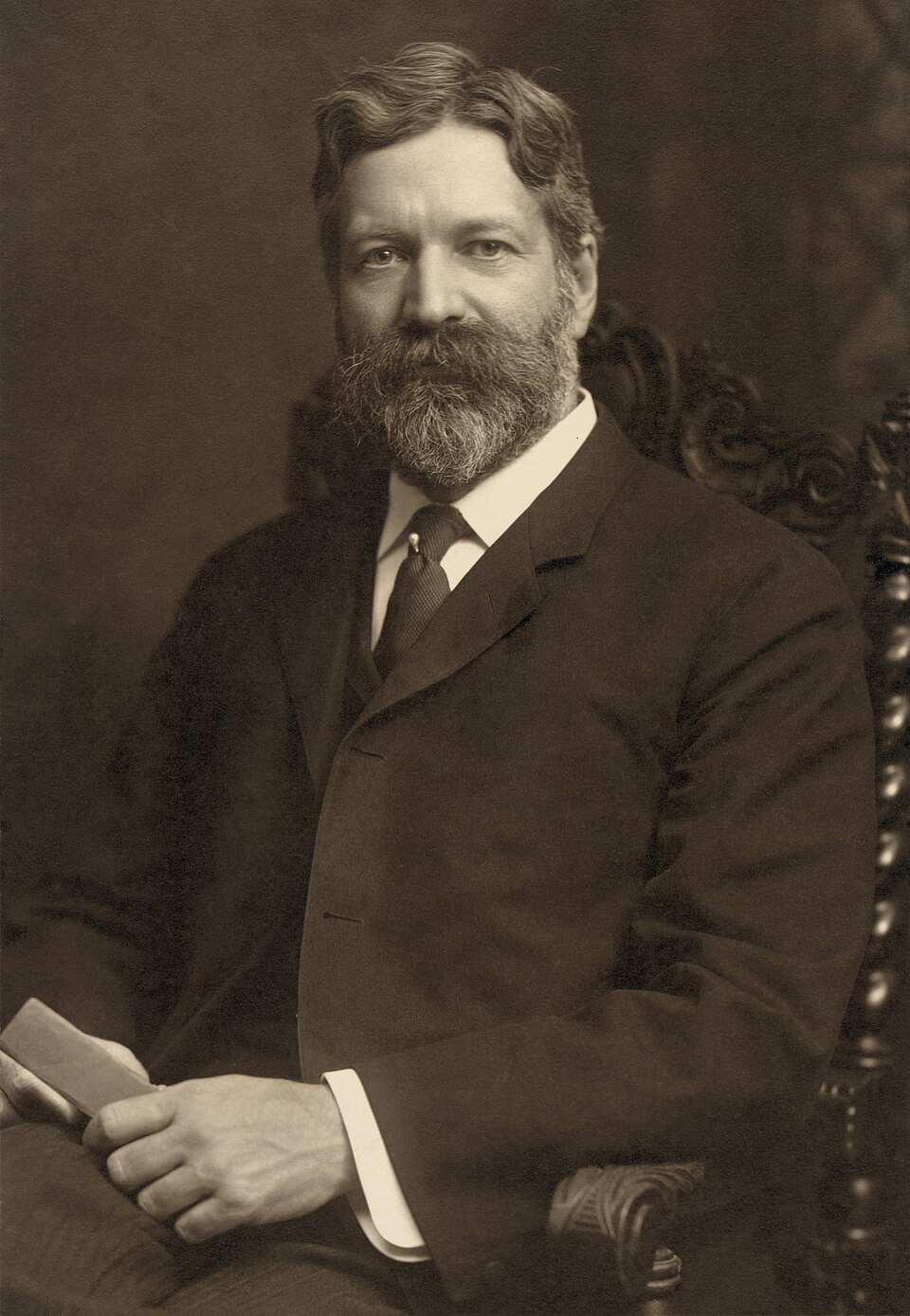
This George Peabody was connected to Junius Spencer Morgan’s son, J.P. Morgan. When J.P. Morgan put together General Electric, he had this George Peabody on the board of directors. Did J.P. and George ever discuss his father’s friend George? No doubt. If George Foster was closely related to the first George, I can find no evidence of it, but they were probably connected somewhere.
George Foster Peabody was also a benefactor to the South. He was raised in Georgia, and developed Warm Springs, where his friend Franklin Roosevelt came to soak (and eventually died).
The Peabody Awards for Excellence in Broadcasting are administered by the University of Georgia, and are named after this Peabody.
Start researching Peabodys and they are legion. Nathaniel Hawthorne married a Peabody. The first English language kindergarten was started by Elizabeth Peabody:
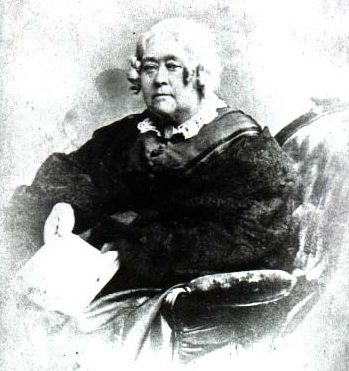
Imagine having this lady teach you finger painting.
Two different Peabodys, Harlan Berkley Peabody Jr and Francis Peabody Magoun, were important in the study of oral poetry. (Berkley Peabody’s obituary is soothing reading). There was Frank Peabody the paleontologist, and Frances Peabody the doctor and essayist, and James Hamilton Peabody, governor of Colorado, who crushed the Cripple Creek miners’ strike, and Richard Peabody who fought alcoholism. The town of Peabody, Kansas is named after a vice president of the Atchison, Topeka and Santa Fe Railroad (boy if you wanted a town named after you, 19th century railroad exec was the way to go).
How about tough old Endicott Peabody, the fighting reverend:
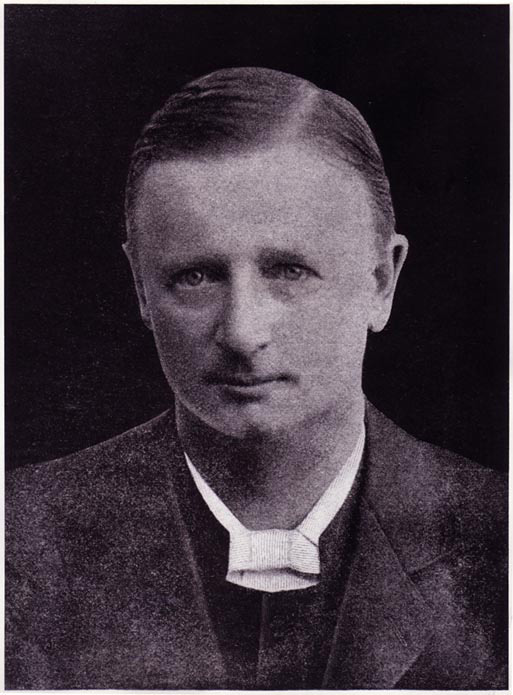
After his first semester of classes, Peabody was invited to take charge of a fledgling Episcopal congregation in Tombstone, Arizona. He arrived in January 1882, three months after the Gunfight at the O.K. Corral.
Though Peabody felt unqualified, his stay in Tombstone proved that he could attract donors and manage a congregation, two traits he employed to great effect in his educational career. Within months, he raised $5,000 to build St. Paul’s Episcopal Church. It opened on June 18, 1882, making it the oldest Protestant church building in Arizona.
It is said that he visited saloons to ask gamblers for donations and “would challenge locals to boxing matches on the condition that if he won, they had to come to church on Sunday,” although Peabody dismissed most of these stories as apocryphal.
This Peabody founded the Groton School. Isaacson & Thomas, in The Wise Men:Six Friends and the World They Made, say:
Groton’s driving force was Endicott Peabody, who ruled the school for its first sixty years. Educated in England at Cheltenham and at Trinity College, Cambridge, the Rector was a perfect Victorian. Tall and muscular, regarding his body as a temple, he always dressed in highly polished black shoes, blue suit, and white starched bow tie. As a thirteen-year-old Averell Harriman described him in a letter home:
“You know he would be an awful bully if he wasn’t such a terrible Christian.”
Peabody cared more about sportsmanship than scholarship. “I’m not sure I like boys who think too much,” he once said. “A lot of people think a lot of things we could do without.” He personally taught two subjects: football and sacred studies. “The way of the non-athlete at Groton was not so much hard as inconsequential,” wrote the school historian. “Football was the King of the Games. Theoretically, a boy does not have to play the game, but moral suasion on the part of the faculty and students makes it almost impossible to avoid doing so.”
…
Although Peabody was thoroughly intimidating, most of the students also revered him. He remained a loyal and powerful force to most of them throughout their lives, marrying them off, christening their children, and even on occasion visiting them in jail. (When one of his old prefects, New York Stock Exchange president Richard Whit-ney, was convicted of embezzlement, Peabody visited him at Sing Sing. He brought Whitney a first baseman’s mitt so he could play on the prison team.) Franklin Roosevelt cited him as “the biggest influence in my life.
… At the school’s twentieth anniversary celebration, the President of the United States, Theodore Roosevelt, summed up that message for the students by paraphrasing the gospel of Luke: “Much has been given you. Therefore we have a right to expect much from you.”
Groton did produce more than its share of public servants. The school history notes that Groton’s first thousand graduates included a President, two Secretaries of State, two governors, three senators, and nine ambassadors, grandly extrapolating that it the rest of the U.S. population had produced leaders at the same rate, “there would have been 37,000 Presidents, 350,000 ambassadors, 110,000 Senators…” With some exceptions, most notably Franklin Roosevelt, Groton’s graduates avoided politics and tended to prefer the more discreet branches of government, particularly the OSS and the CIA. Few entered the ministry, and virtually none pursued the arts. Service to God and Country was overshadowed by service to Mammon. The largest single category of career choice in the school history is “finances, stocks, bonds, etc.”
The grandson of this Endicott Peabody was Endicott “Chub” Peabody, who served one term as governor of Massachusetts and then ran and lost for a series of offices of diminishing importance in Massachusetts and New Hampshire.
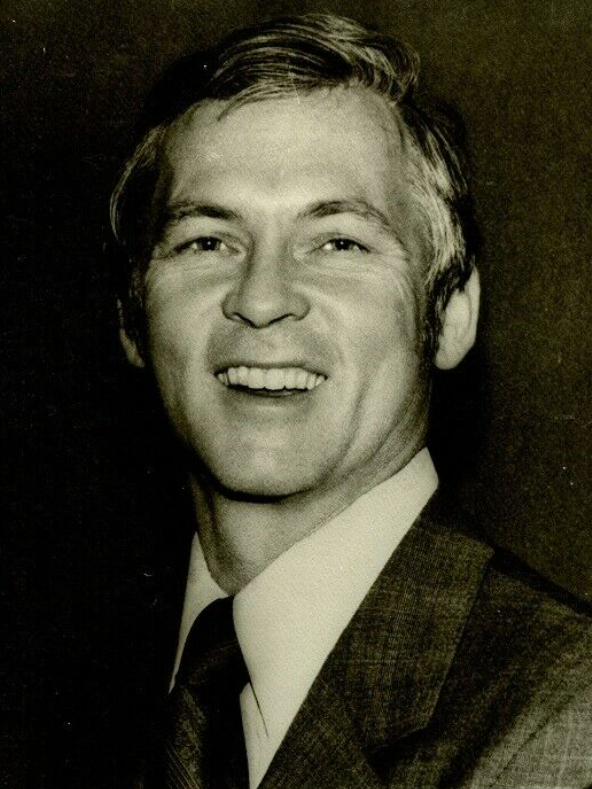
Chub. From his obituary in The Economist:
Young Endicott went to Groton, inheriting the nickname “Chub” from his father, who had also attended the school. They love tradition in Massachusetts.
In fact, as a young man he was more bulky than chubby. He was a football star at Harvard, a “baby-faced assassin” according to a writer in the Boston Globe. He had a brave war against the Japanese as a submarine officer, afterwards practising as a lawyer in Boston and getting political ambitions. He was in love with politics and after his string of failures moved to Washington for a time, just as a hopeful actor will go to Hollywood, without prospects but just to be there among the glamour. He did some lobbying and was given some minor political tasks by sympathetic Democrats.
In the tributes since his death “gentleman” is a word often used. He sometimes seemed to be too gentlemanly to be a successful politician. When he lost his bid for the Senate in 1966 he seemed genuinely pleased that his opponent, Edward Brooke, a black, had won. Ending racism was a family passion. At the age of 72 his mother was arrested in a southern town in 1964 for entertaining a group of whites and blacks in a segregated restaurant. Ending the death penalty was another of his campaigns, and he was always receptive to the latest liberal cause. One of his last tasks was to chair a meeting in Boston calling for the abolition of landmines.
What about the Mr. Peabody mentioned in John Prine’s song “Paradise”? That is Francis Peabody, founder of what’s now Peabody Energy. He was from Illinois, I don’t think he’s closely related to these Peabodys.
Anyway, this is all a roundabout way of bragging that Common Side Effects won a Peabody Award:

The ceremony will be at the Beverly Wilshire Hotel, a place that would probably shock Endicott. Then again is it worse than Tombstone?
We would be very remiss if we didn’t mention the greatest Peabody of all:

Simon Bolivar Buckner (and Jr.)
Posted: May 30, 2026 Filed under: America Since 1945 1 CommentSimon Bolivar Buckner was born in 1823. He served in the Mexican War, taught at West Point. A son of Kentucky, during the Civil War he became a Confederate general. When he was 62, he married a 28 year old, and had a son, Simon Bolivar Buckner Jr.
At 80 years of age, Buckner memorized five of Shakespeare’s plays because cataracts threatened to blind him, but an operation saved his sight. On a visit to the White House in 1904, Buckner asked President Theodore Roosevelt to appoint his only son as a cadet at West Point, and Roosevelt quickly agreed.
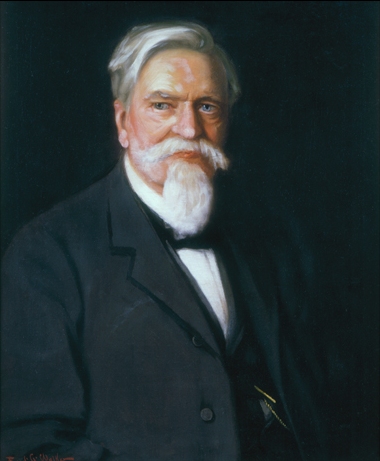
His son Simon Bolivar Buckner Jr. served in the U.S. Army, rising to the rank of lieutenant general. He was in command of the Tenth Army during the Battle of Okinawa when he was killed by hostile artillery fire on June 18, 1945, four days before the conclusion of the battle. He was the highest-ranking American to have been killed by enemy fire during World War II and was posthumously promoted to four-star general in 1954.
Buckner Jr.:
Buckner gave orders in June 1942 for the indigenous Aleut people to be evacuated and for their villages to be burned. The Aleut people were not allowed to return until 1945, after the war was over.[8] Buckner furthermore objected to the deployment of African American troops in Alaska, writing to his superiors of his concern that they would remain after the war, “with the natural result that they would interbreed with the Indians and the Eskimos and produce an astonishingly objectionable race of mongrels which would be a problem”.
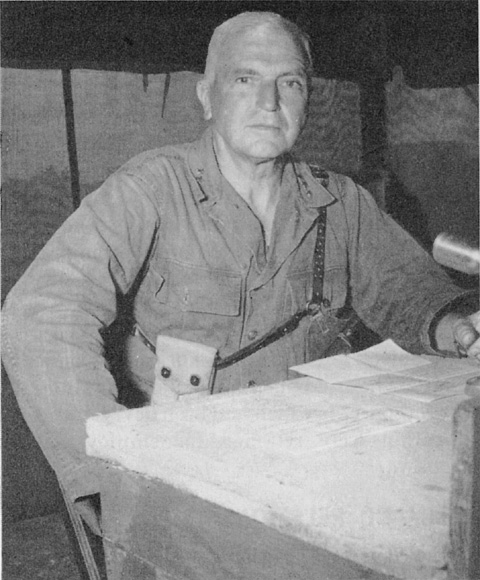
(source)
This is the last picture of him alive (at right).
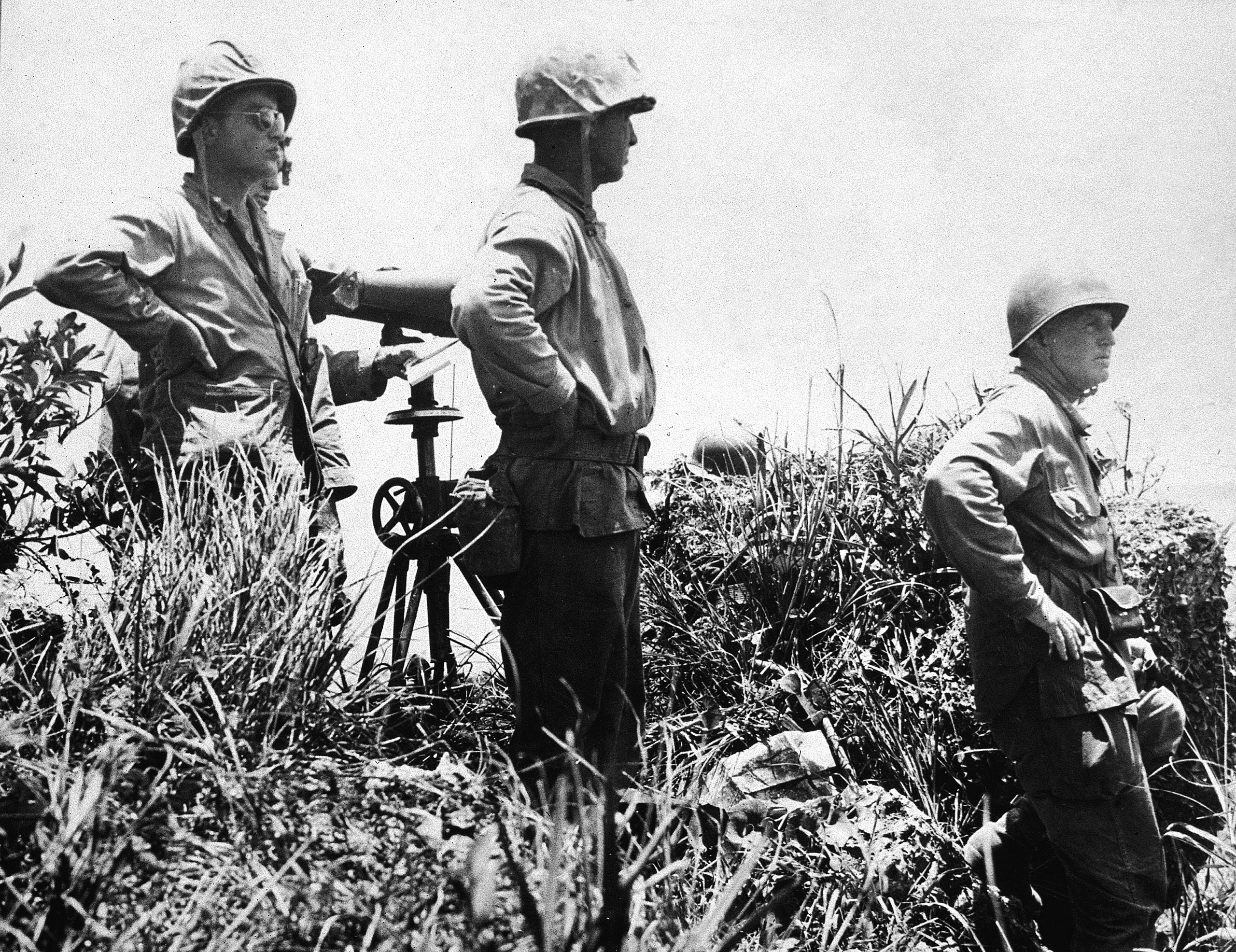
Pretty wild span of history in two lives. Douglas MacArthur’s father was in the Union Army during the Civil War, but he wasn’t a general. Patton’s grandfather was with the Confederate Army of Northern Virginia.
It seems possible that William Claiborne Buckner is still alive, thus there’s a guy out there whose grandfather was a Confederate general.
The Pope on AI
Posted: May 29, 2026 Filed under: Christianity, religion Leave a commentpreaching:
74. In many areas, we are already experiencing a kind of “ de facto solidarity,” for our lives are intertwined; digital networks connect people and communities across the world in real time, and global economies and communications mean that events in one place have a far-reaching impact. This network of relationships, however, only constitutes solidarity in the fullest sense of the word when it becomes a conscious choice. Faith invites us to see this reality as a call: we are not merely neighbors to one another, but entrusted to each other, so that each of us may take responsibility, as best we can, for the lives and wounds of our brothers and sisters. Solidarity arises precisely when we decide not to remain indifferent to what happens to our neighbor but instead to transform unavoidable bonds — economic, cultural and technological — into paths of sharing, cooperation and mutual care, embracing the idea of “thinking and acting in terms of community.” [101]
and
Jesus proclaims the “good news to the poor” ( Lk 4:18) and identifies himself with the lowly, the sick, the imprisoned and strangers (cf. Mt 25:31-46). He thus teaches us that justice is born from, and fulfilled in, fraternity, because the way we approach and relate to the least among us becomes, in concrete terms, the measure of our relationship with God and with our brothers and sisters. Justice, however, concerns not only the behavior of individuals, but also the way in which the structures of society are conceived and organized. In this regard, the Second Vatican Council reminds us that every institution is called to serve the human person and his or her dignity. [105] Social justice is, therefore, characterized by the capacity of a social, economic and political order to allow everyone — particularly the weakest — to live a truly dignified life, without leaving anyone behind.
and:
A litmus test for social justice today is the treatment of migrants, refugees and those forced to move due to poverty, violence, climate change and environmental disasters. The way a society treats them reveals whether its sense of justice is driven by fear or by the spirit of fraternity. Pope Francis urged us to see migrants not simply as a problem to be managed, but as a living image of the People of God on the move. [109] They are people with dignity, resources and dreams, who have the right to be treated with respect and to ask to become active members of the societies that welcome them. Social justice in this area entails at least two complementary commitments. On the one hand, this means protecting the rightful hopes of those forced to leave by ensuring safe and legal routes, dignified conditions for receiving them, and genuine pathways to integration. On the other hand, it means promoting the right to remain in one’s homeland in peace and security by addressing the root causes that force people to migrate, including those linked to economic injustices and the climate crisis. When these rights are respected, migration can become an opportunity for encounter and mutual enrichment among peoples.
and:
We are called to reflect on the great “construction sites” of our era and ask: What are we building? As technological development rapidly transforms languages, relationships, institutions and forms of power, we believers must and can choose which projects to work on and in what manner, so as to safeguard and value the grandeur of humanity that has been given to us as a gift. This is a choice not only for our future but also for our present, since artificial intelligence and other emerging technologies are already part of our daily lives.
(reminded of: Tom Waits)
Gonna read the whole thing but it will take time. Don’t believe rumors it’s 42,000 words, without footnotes it’s closer to 38,000. Most of these quotes are from Chapter 3.
In light of what has been said, we can better understand why AI can be a valuable tool and, at the same time, why it calls for a measured and vigilant approach. In recent years, its private use has expanded significantly, prompting growing reflection on both the opportunities it offers and the risks tied to its rapid spread. In personal use, three aspects in particular deserve careful consideration: the ease with which results are obtained, the impression of objectivity and the simulation of human communication. The speed and simplicity with which information, complex analyses, media content and practical assistance can be accessed undoubtedly makes life easier. Yet they can also encourage excessive reliance and the search for ready-made answers, and weaken personal creativity and judgment. The apparent objectivity of the responses and suggestions these systems provide can lead us to overlook the fact that they reflect the cultural assumptions of those who designed and trained them, with all their strengths and limitations. The artificial imitation of positive human communication — words of advice, empathy, friendship and even love — can be engaging and at times genuinely helpful. However, for less discerning users, it can also be misleading, creating the illusion of a relationship with a real personal subject. When words are simulated, they do not build genuine relationships, but only their appearance. The artificial imitation of care or support can become particularly risky when it enters contexts where real relationships and emotional bonds are lacking. Here, the danger is not so much that a person may believe they are communicating with another person, but rather that they may gradually lose the very desire to form genuine human connections.
101. Broadening our perspective to the use of AI in society, we see that it is now embedded in decision-making processes across many sectors and at multiple levels: in communication, management and control. The gains in efficiency and the potential to improve certain services are clear, yet rapidly and uncritically adopting them exposes us to a range of risks, including the tendency to overlook the environmental impact. Current AI systems require enormous amounts of energy and water, significantly influencing carbon dioxide emissions, and place heavy demands on natural resources. As their complexity increases, especially in the case of large language models, the need for computing power and storage capacity grows too, which requires an extensive network of machines, cables, data centers and energy-intensive infrastructure. For this reason, it is essential to develop more sustainable technological solutions that reduce environmental impact and help protect our common home.
One more:
Indeed, entrusting an algorithm in practice with the power to select who is worthy or not, without anyone bearing responsibility for that judgment, is to hand over the task of redefining the boundaries of human possibilities. In this process, political responsibility is also lost, not just empathy toward those excluded, which can, after all, be simulated. The exclusion of the vulnerable becomes cloaked in a veneer of neutrality and objectivity, against which it becomes difficult to raise objections. In this way, injustice goes unnoticed, and compassion, mercy and forgiveness — understood not as mere appearances but as real political actions — gradually disappear from view.
one more:
Reading stories to a child, offering company to an elderly person and arranging a home so that it is welcoming are simple gestures often rooted in family life. They teach us to value care at a societal level and train us to recognize others as persons worthy of attention. Technology can also support this mutual care between people, for example, by providing tools that help us anticipate and organize things, without undermining human freedom and judgment. After all, human beings are the subjects of relationships and responsible for their own decisions.
strange dream
Posted: May 24, 2026 Filed under: America Since 1945, TV Leave a commentwhere I was looking up this phrase I remembered from a 2001 New Yorker article.
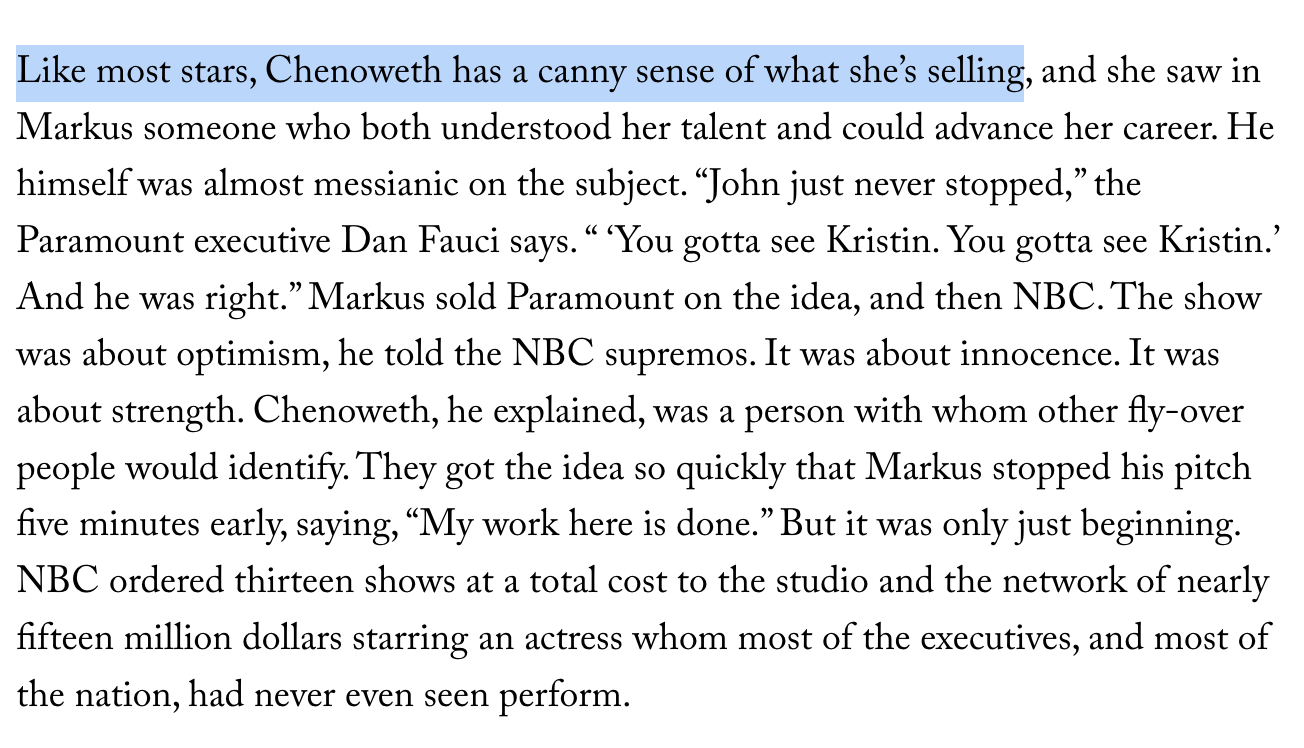
John Lahr writing about a Kristin Chenoweth sitcom, Kristin.
Leaning against the bar across the room was John Markus, a goateed forty-four-year-old TV writer, who was about two weeks away from completing the pilot script for a sitcom starring Chenoweth, and who was wondering, as he watched her bask in the affection of her fans, whether he was doing the right thing.
At the time I read that he must’ve seemed impossible aged to me.
Pied Piper and William Manchester (and AI)
Posted: May 23, 2026 Filed under: hely's history Leave a comment
In his book World Lit Only By Fire, William Manchester makes claims that the Pied Piper of folklore was a real person:
a psychopath and a pederast who on June 24, 1484, spirited away 130 children in the Saxon village of Hammel and used them in unspeakable ways. Accounts of the aftermath vary. According to some, the victims were never seen again; others told of dimebodied little bodies found scattered in the forest underbrush or festooning the branches of trees.
This got my attention to say the least when I read the book around age 15. This stop motion film about the Pied Piper creeped me out/held me enthralled around that time.
I went looking for more information.
And… this is totally made up. “Accounts of the aftermath” don’t “vary,” they don’t even exist!
Where did Manchester get this? Was it pure fiction? Can we trust anything Manchester says on anything else? Or in his other books, on Churchill or on his own experiences in World War 2?
As the Internet emerged I was able to learn more about what primary sources exist about the Hamelin legend. Nothing like what Manchester describes has been found by anyone. Other curious people have been baffled and infuriated by what Manchester did in his (very popular) book. A theme of Helytimes is going back to the source. Who saw it? Who was there? How do we know? What do we know?
Now a new tool has emerged: LLMs. I asked one, Perplexity, about the Hamelin story, and it offered to write me a cited PDF on what we might now. I wouldn’t trust anything it says without double-checking, but this is pretty impressive, and it presents what I believe is a plausible theory, that a sort of recruiter led away young people (not necessarily children) to settle in places north of Berlin or in (what’s now) northwest Poland.
The ability of the LLMs to generate pretty good answers to historical research questions is remarkable, and will certainly change my life as a person who likes to chase down answers. Here’s another example. I was wondering if there were any primary sources for the quote of Napoleon about “I found the crown of France lying in the gutter.” The LLM can do something I can’t do very easily: read French language sources.
Here’s one about the history of the Chateau at Annecy, which is way better than the current English language Wikipedia page:
Now, I’m aware that among the youth AI is suspect. Possibly the AI is like a piper leading me, an innocent kinder, to a land where my brain won’t function anymore because I’ve delegated too much. But it seems more likely this is just the latest tool than can take us farther faster. The main argument I can come up with against it is the Shelby Foote one – that in doing one’s own legwork you inevitably find other interesting material you didn’t know you were looking for. That’s true, but on the other hand, won’t that still be the case even if I’m having an LLM doing some of the work? Might it not in fact more speedily direct me to other material?
(The energy use for this kind of query does not seem to be significant. Perplexity estimates its equivalent to running a laptop for 25 minutes.)
The LLMs may make mistakes, or have biases, or whatnot, but remember I got here because a well-credentialed human either invented a lie, took a troubling level of literary license, or was delusional.
The implications of this are pretty staggering. The kind of work I did in college can be pretty well replicated in minutes. That could be bleak, if you’re attached to or dependent on the old ways. There is a way to view it optimistically, we can free ourselves from a lot of time consuming drudgery, and uncork massive new potential.
Clark Gable
Posted: May 17, 2026 Filed under: actors, America Since 1945, WW2 Leave a commentI saw this posted by someone (apologies to you, poster, I’ve lost track of you) as an example of an outstanding first page of a biography:
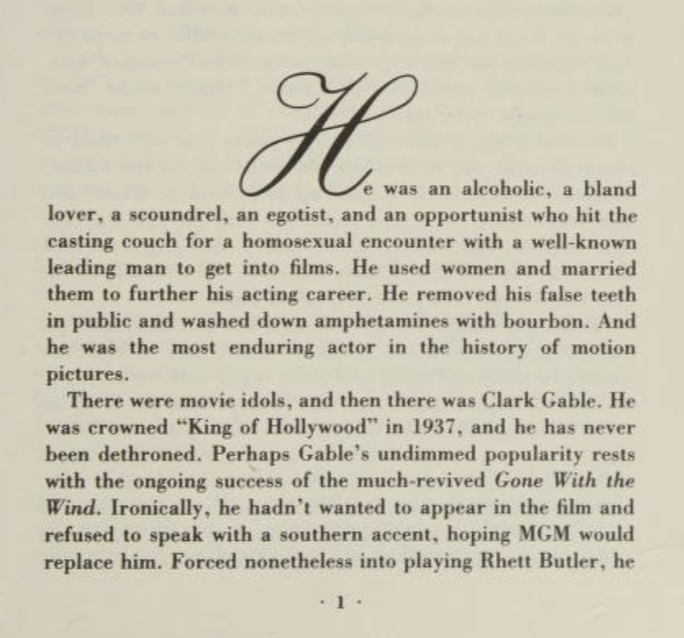
I lost the thread and it took me a minute to track it down again. In attempting to find it I read several first pages of biographies of Clark Gable. None of them begin with a punch like that, they start with stuff like “In 1982 a poll of film enthusiasts ranked their favorite stars of all time blahblah.”
This is from Jane Ellen Wayne, Clark Gable: Portrait of a Misfit. (You can read it for free. That casting couch allegation seems questionably documented but who knows. That isn’t the kind of event people keep meticulous records of.)
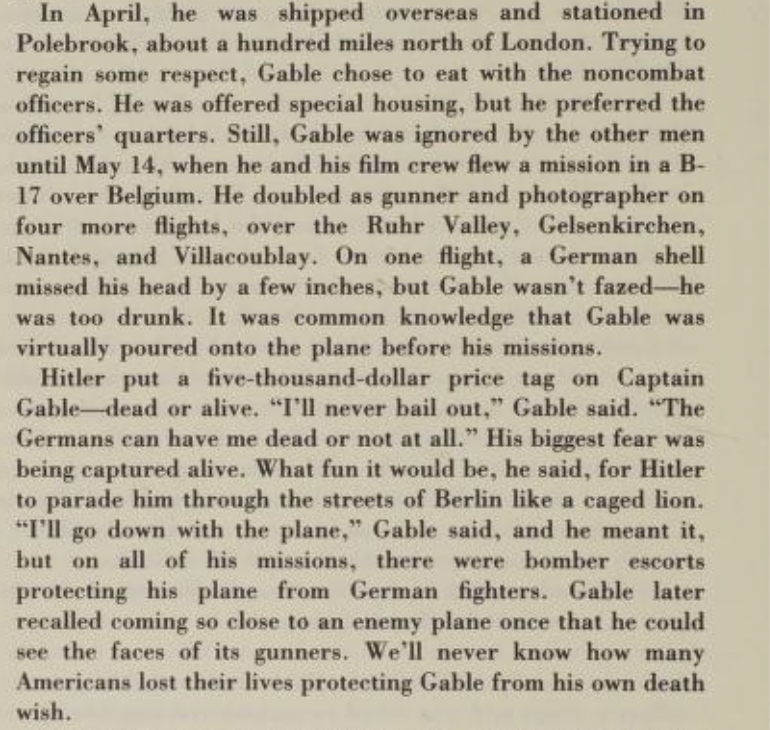
Wayne on Gable in World War 2:
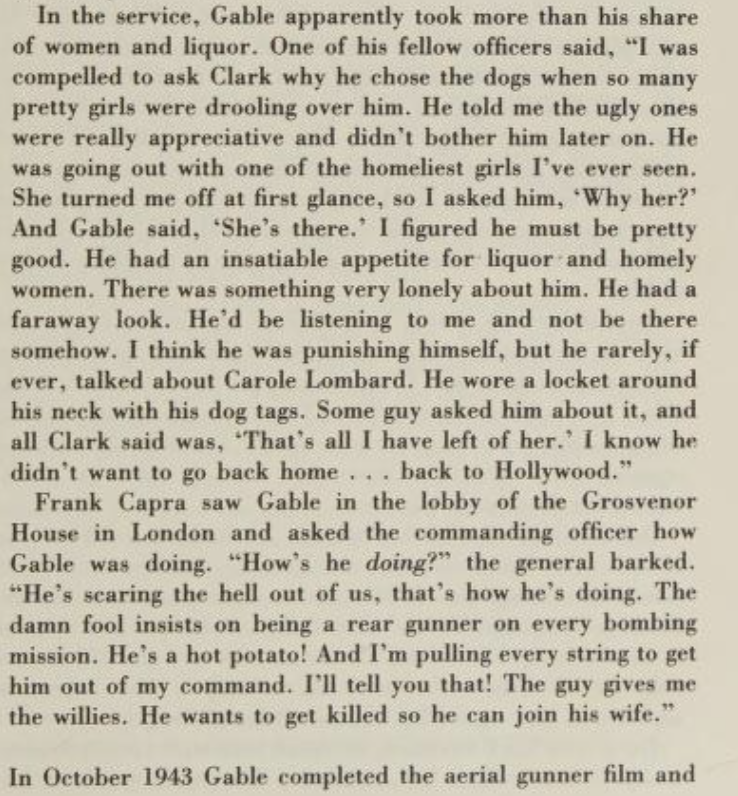
More:

(In case WordPress won’t let me embed Clark Gable singing “Puttin on the Ritz.”)
Kevin Starr on Jack London
Posted: May 16, 2026 Filed under: the California Condition Leave a comment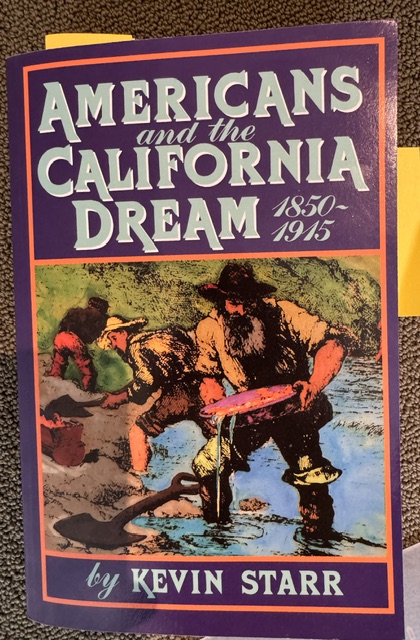
London’s socialism always had a streak of elitism in it, and a good deal of pose. He liked to play working class intellectual when it served his purposes. Invited to a prominent Piedmont house, he featured a flannel shirt, but, as someone there remarked, Jack’s badge of solidarity with the working class “looked as if it had been specially laundered for the occasion.” Mark Twain saw straight through to the ambiguity of London’s hopes for revolution. “It would serve this man London right to have the working class get control of things,” said Twain. “He would have to call out the militia to collect his royalties...
His deficient sense of culture-which could see in Paula Forrest such heraldic expression of social value-was the direct result of personal experience. Yet London’s psychological development took place within a specific context, California at the turn of the century. Social and personal experiences were concurrent and reinforcing. In a sense, London’s was a representative quest. His search for identity, for a place in the sun, was also contemporary California’s Like many Californians, he often pathetically misread signals, confusing consumption with culture, display with code, and aspiration with achievement. London bore within himself the burden of an ambiguous history, with its violent hates and tangled drives, and so did California.
…
His foster-father, John London, had been a vague and shadowy presence, embarrassingly aromatic with the smell of failure. He hounded his son for money (so London said in 1898), pursuing Jack to the offices of the school journal at Oakland City High School to borrow fifty cents. If unsuccessful, he would shamelessly wheedle the money from his son’s friends. In his mother-a strange, eccentric creature, harsh, compulsive-London could see only a burden of mutual shame, mother for son, son for mother, and rejection.
“I do not ever remember ever receiving a caress from my mother when I was young,” he recalled. Whether he did or not, he wanted that to be the case. He accused his mother of forcing her husband to beat him, after which London Junior and Senior fell weeping into each other’s arms.
…
Through the pseudo-historical terms of an imagined impoverished child-hood, London gave mythic structure to his inner trauma of repudiation and rejection, a mythic past onto which he later grafted his version of California history. All his life he whined of the poverty of his childhood, which was simply not the case. “I never had a boyhood,” Jack said, “and I seem to be hunting for that lost boyhood.” He meant that he had a boyhood he chose not to remember. He had put together his personal myth as carly as 1908, complaining to his upper bourgeois girl friend Mabel Applegarth (appearing as Ruth Morse in Martin Eden) that as a boy he was so hungry for meat that he would steal from lunchbags at school. “Great God!” moaned London, “when those voungsters threw chunks of meat on the ground because of surfeit, I could have dragged it from the dirt and eaten it”-“This meat incident is an epitome of my whole life”-
“Hungry! Hungry! Hungry! From the time I stole meat and knew no call above my belly, to now when the call is higher, it has been hunger, nothing but hunger. The fact was, Flora London often served steak-but she insisted upon putting newspapers under the plates to prevent meat juice from spashing upon her tablecloth. In the newspapers, London could remember his mother’s eccentricity, with more than faint overtones of hostility and resentment, and the seedy inconsequentiality, not grim poverty, of their social position. Psychological and social expectations fused, and the memory became one of no meat, not no love and no social position, as symbolized in newspaper place-mats. In later life London loved bloody rare steaks and half-cooked duck, which he devoured with juice-spilling abandon.
The first larger myth to be grafted onto this story of a deprived childhood was socialism, London’s youthful systematization of experience. Socialism explained boyhood rejection in socio-economic terms. Laced with strong draughts of Darwin and Nietzsche, socialism offered a route of escape. Around 1905 or so, just after the publication of The Sea Wolf, London had what he called the Long Sickness, a sense of failure and self loathing. His marriage to Charmian was part of his effort to come out of this depression. Although he continued to sign letters “Yours for the revolution,” socialism ceded to Sonoma as London’s most vital myth. Like socialism, Sonoma explained the facts of dispossession and recovery: how old Americans had lost out in the California scramble and how on the land they would reclaim their rightful place. Sonoma’s revolution was agricultural, not industrial, but just as redeeming a myth. If London could not storm the barricades in pressed flannels, then he would lead a counter-march across scientifically terraced fields and orchards, astride a spirited stallion, dressed in boots, riding togs, and Baden-Powell.
Both socialism and Sonoma were more matters of fantasy than hardheaded diagnosis. London could not relate closely enough to any society to coax forward realistic, pragmatic imperatives. Psycho-sexuality had much to do with determining what forms of social expression appealed to him. London grew up dominated by women, first his mother, and then his sister Eliza, who supervised Jack when their parents left them alone on the ranch to scour the countryside for spiritualist meetings. (Eliza later managed the Sonoma ranch in Jack’s absences.) Lonely and shy, young London read a lot, dreamed of becoming a poet or a composer.
Schoolmates taunted him for being a sissy. His aesthetic boyhood tastes later embarrassed him.
… He recreated himself as a Huck Finn of the Oakland water-front, ignoring his withdrawn pre-adolescent years. Ideologically and psychologically he developed a he-man complex, playing the well advertised womanizer, instructing his barber that he wanted his hair “not fancy, you know, but rough,” filling his fiction with vanquishing males…
London’s friendship with George Sterling-to whom in 1909 he sent from the Solomon Islands a dried clitoris-was romantically intense, characterized at one point by an exchange of confiding and confessional letters slipped wordlessly into each other’s pockets. London called Sterling “Greek” and answered to Sterling’s “Wolf.” He had always been searching for “the great Man-Comrade,” London told Charmian in a love-letter, and had first wished that she were a man. He dreamed at night in later life of a man “to whom he would eventually bend a vanquished intelligence.” “Imperial, inexorable with destiny,” this vanquisher would descend a staircase, at the base of which waited a psychically ravished Jack.
…Tormented by toothache, he loved to pull other people’s teeth, having a portablé dental kit for the purpose. Obsessed with meat, he once barbecued a snake, laughing as some of his guests vomited when told what they had just eaten. He loved violent practical jokes, hitting from behind with a rubber mallet, booby-trapping books with explosives.
One contemporary at least felt Jack’s tastes for aggressive pranks “evidence of a serious mental condition.” He loved to write of the cruel matings of wild animals…
As a younger man, he especially relished San Francisco’s Chinese bordellos, with their contrived practices. After bloody rare steak and drinks on the Barbary Coast, Jack would head for one of San Francisco’s many houses, where, as he described it, “my most savage natural instincts are unleashed. I can be cruel or kind, according to my whim and my pocketbook. What more, after being well fed, may a man want? There is mastery in it. A fecling of power, a satisfaction of the instinct that inclines us toward beauty.”..
Aggression, distrust, ambivalent sexuality, hatred of women—such psychological facts conditioned London’s capacity for social existence and for a theory of society. Like his mannish heroines, the ranch represented a male ideal—managed, paradoxically, by Jack’s older sister. As a utopian enterprise, it was conceived in aggression against the California fact. The lineaments and contours of that dream-realm proceeded partially from a subliminal life common to both London and California. Through Sonoma myth London partook in the larger myth of California. There-like California-he sought to find a heroic past. There-like California-he sought to synthesize vigor and intellect. There-like California-out of private but not irrelevant compulsions he sought to manifest a sense of regional identity and to glory in regional possibilities. A confused inner life made fulfillment of this ideal impossible, distorting his relation to the land, alienating him from any form of community, driving him to self-destruction: over-eating, over-drinking, and-on his sleeping porch in the early hours of 22 November 1916—over-dosing himself with morphine and atropine sulphates. It was not suicide in the unambiguous sense of the word. Waking in the night with an attack of renal colic, London took what proved to be an overdose, complicated by the alcohol in his system, in an effort to stop the excruciating pain. But when one considers what had brought about London’s uraemic condition-his drinking, his disregard of doctors’ advice that he exercise his disintegrating body, the compulsive devouring twice a day of near-raw venison and wild duck—a pattern of self-destruction is quite clear.
London’s psychic distress paralleled California’s own internal social tensions. Latent homosexuality, anxieties about manhood, had an analogue in California’s turn-of-the-century determination to identify with the titanic energies that had pulsated through society during the frontier period, energies which both attracted and repelled a genteel generation.
His insecurity, his intimidation by an imagined hostile high culture, characterized California’s ambivalent speculations about style and value. It was the reverse aspect of the determination to retain frontier vigor, an intimidation by the East of the fact and the East of the mind—an Fast so-phisticated, impervious, assured of its history, assured of its caste. Like California, London was certain of none of these things and so he constructed a myth, not by himself, but in concert with fellow Californians.
His flight into narcissism and fantasy, expressed mythically in the remembered story of his own life and in his version of California history, expressed spatially on the ranch, paralleled California’s appropriation of a fabled Hispanic era and a mythically redemptive frontier. London’s death in one-and by no means exclusive-sense came when his myth, his iden-tity, broke down.
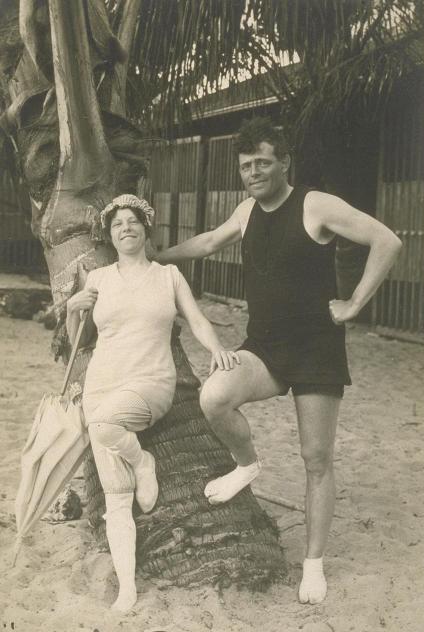
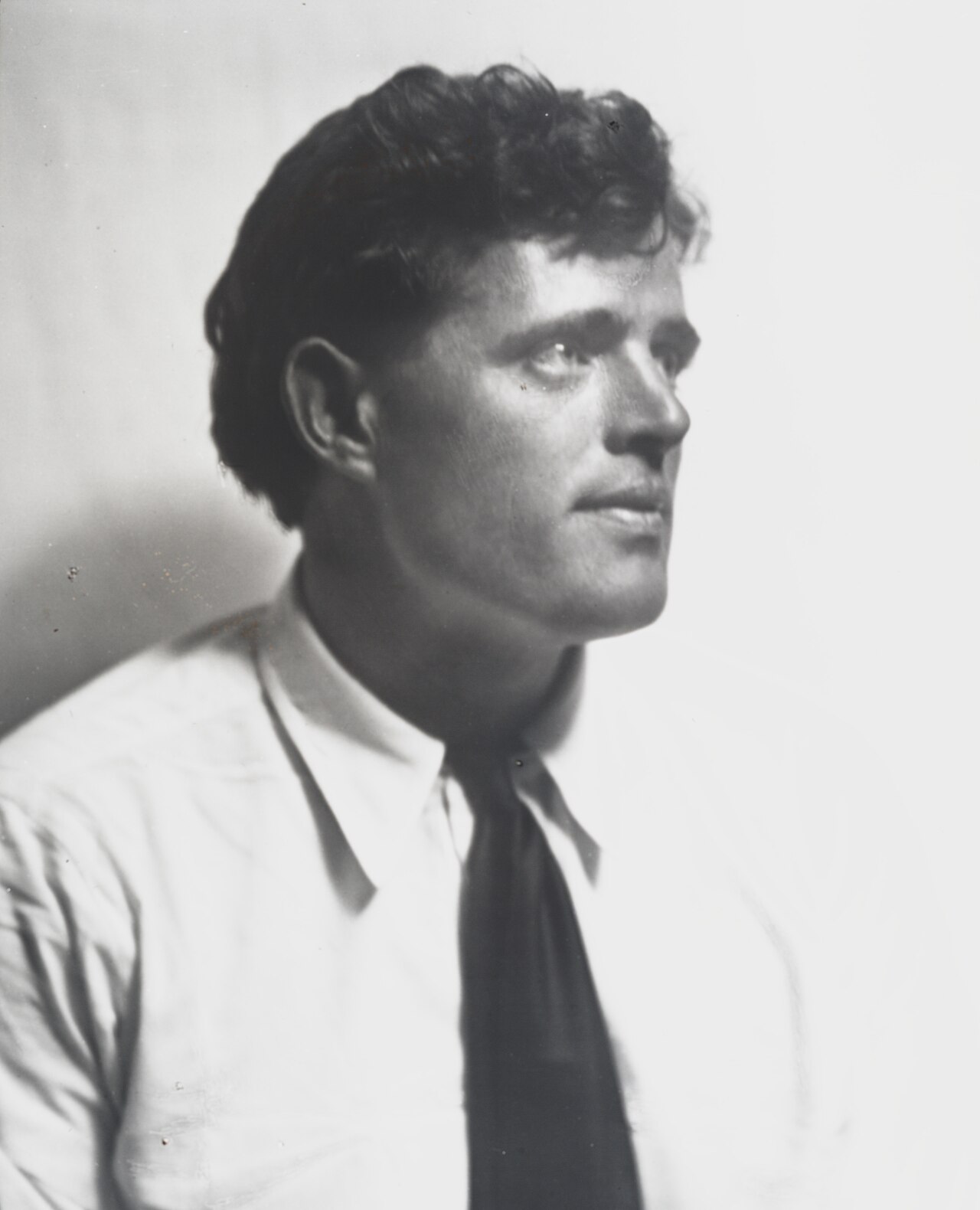
Jack London bought a sloop and was an oyster pirate, went as a crewman on a sealing expedition to the coast of Japan, was a hobo and a tramp, arrested for vagrancy in Buffalo, NY, all before he enrolled in high school.

Next time I’m in Oakland I must go to Heinold’s.
Lucius Fairchild
Posted: May 9, 2026 Filed under: the California Condition Leave a commentWriting of Gold Rush California in Americans and The California Dream, 1845-1815, Kevin Starr tells us:
“Five years,” wrote Prentice Mulford, “was the longest period any one expected to stay. Five years at most was to be given to rifling California of her treasures, and then that country was to be thrown aside like a used-up newspaper and the rich adventurers would spend the remainder of their days in wealth, peace, and prosperity at their Eastern homes.” Leonard Kip of Albany, New York (brother of the first Protestant Episcopal missionary bishop to California), and John Hale of North Bloomfield, New York, rushed home after a year to write discouraging reports. M. T. McClellan of Jackson County, Missouri, made his opinion known in no uncertain terms: “I do not like this country-I do not like the climate, and more than all I abhor and detest the society; I never expect to sow a seed or plant a grain in this country” Others found themselves and their future in California, although the West was not to be the scene of their fulfillment. Having seen the elephant (as the expression went), they returned to Eastern careers. Lucius Fairchild, a seventeen-year-old clerk in a dry goods store, left Madison, Wisconsin, in 1849 to cross the plains. “I don’t see how I could be satisfied to work for 12 or 15 dollars per Month when I can make that here in two days,” Fairchild wrote home from California. He stayed six years, a miner, a cattleman in Siskiyou, and a businessman. He considered those years a time of emancipation and preparation, a way of making sure that he would never have to step back behind the dry goods counter. When he returned to Madison-in high boots, spurs, a wide-brimmed hat, a money belt strapped around his waist-it was to play a man’s part. Fairchild studied for the bar, won promotion to brigadier in the Civil War, served three terms as governor of Wisconsin, represented the United States at the Court of Saint James’s, and had his portrait painted by John Singer Sargent.
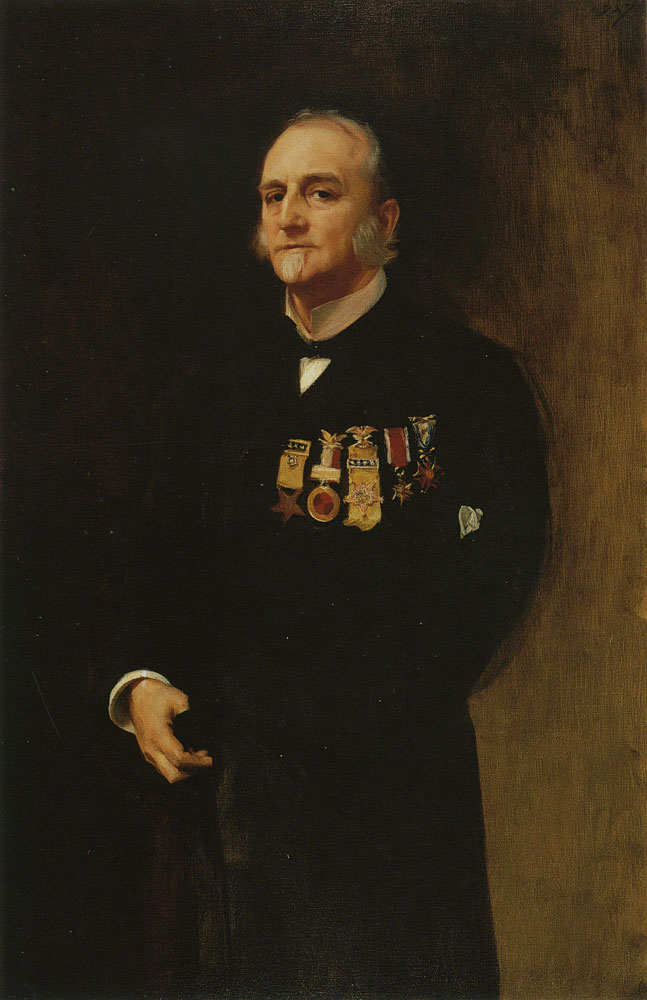
Not sure I love Sargeant’s portrait here, reminds me of The Generals. I prefer just the photographic image of Fairchild:
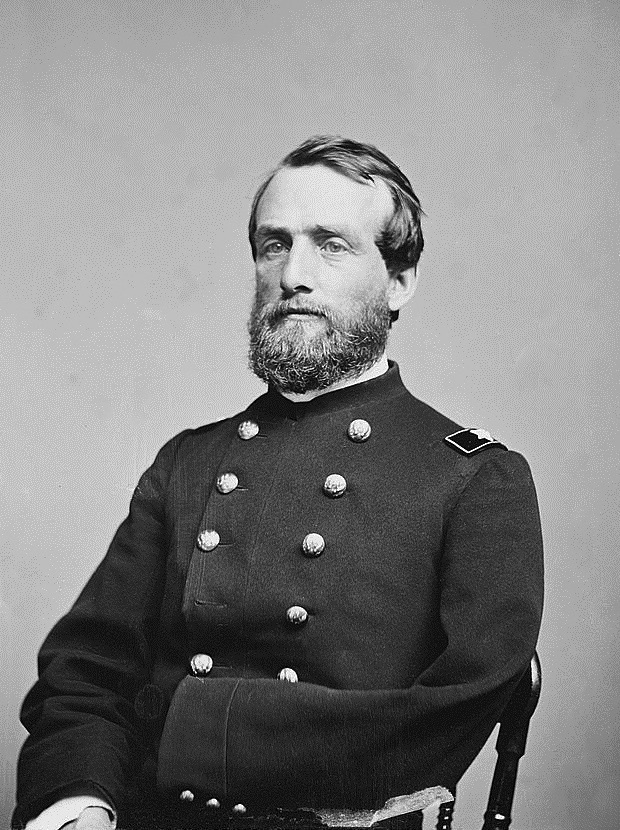
Note that Lucius Fairchild (along with Levi-Strauss, Leland Stanford, Wells and Fargo, Ghiradelli, and Studebaker) didn’t make his fortune in gold but in “picks and shovels“:
Once in California Fairchild did not pan for gold, but instead tilled soil, butchered cattle, waited tables, and farmed. Fairchild’s hard worked attracted the eye of democrat politician Elijah Steele who eventually became Fairchild’s business partner in trading beef. In 1855 after six years in California Fairchild sold his beef business to Steele for $10,000. After selling his business in California Fairchild moved back to Wisconsin.
(Did anybody make a lasting fortune from California gold? Most of Hearst’s money came from the Comstock Lode, the silver of Virginia City, Nevada, and then of course Deadwood. I guess there were the Murphys. I gotta check out Murphy’s Hotel sometime:
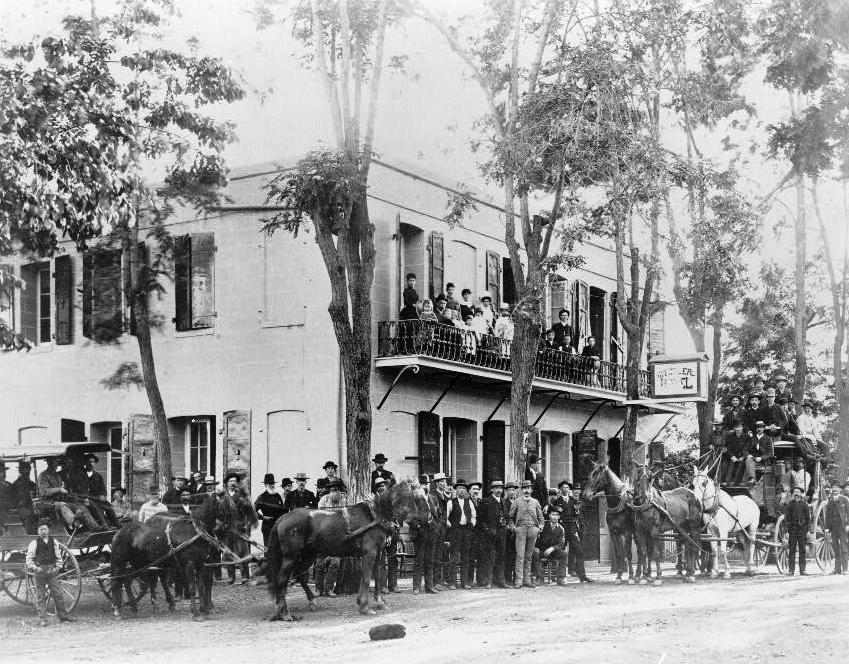
More recently:

That part of California is kind of dispiriting. Takes forever to drive around in the hills, it’s all been dug up and tossed over like an anthill, hot in summer impossible in winter, the forest is suffering, touristy, and the tourists don’t seem sure what they’re looking at. Then again I was there in a fire and drought time. The trees were like dry matchsticks.)
Lucius Fairchild had an exciting and no doubt terrifying July 1, 1863, in Gettysburg, PA:
The 2nd Wisconsin… distinguished themselves at … Seminary Ridge during the first day of fighting , being the first infantry regiment to make close contact with the Confederate Army. During the engagement, at approximately 10:00, the 2nd Wisconsin Infantry delivered a striking blow by capturing very first Confederate general officer of the war, Brig. Gen. James J. Archer. Almost immediately after this success, the regiment was ambushed by an attack on their right flank, losing seventy-seven percent of their ranks, including most officers. Fairchild was shot in the upper arm, captured, tended to, and released.
You can look inside his vest in this video from the Wisconsin Veterans Museum.
great name for a magazine
Posted: May 7, 2026 Filed under: America Since 1945 Leave a comment
(source)
Ted Turner
Posted: May 7, 2026 Filed under: America Since 1945 Leave a comment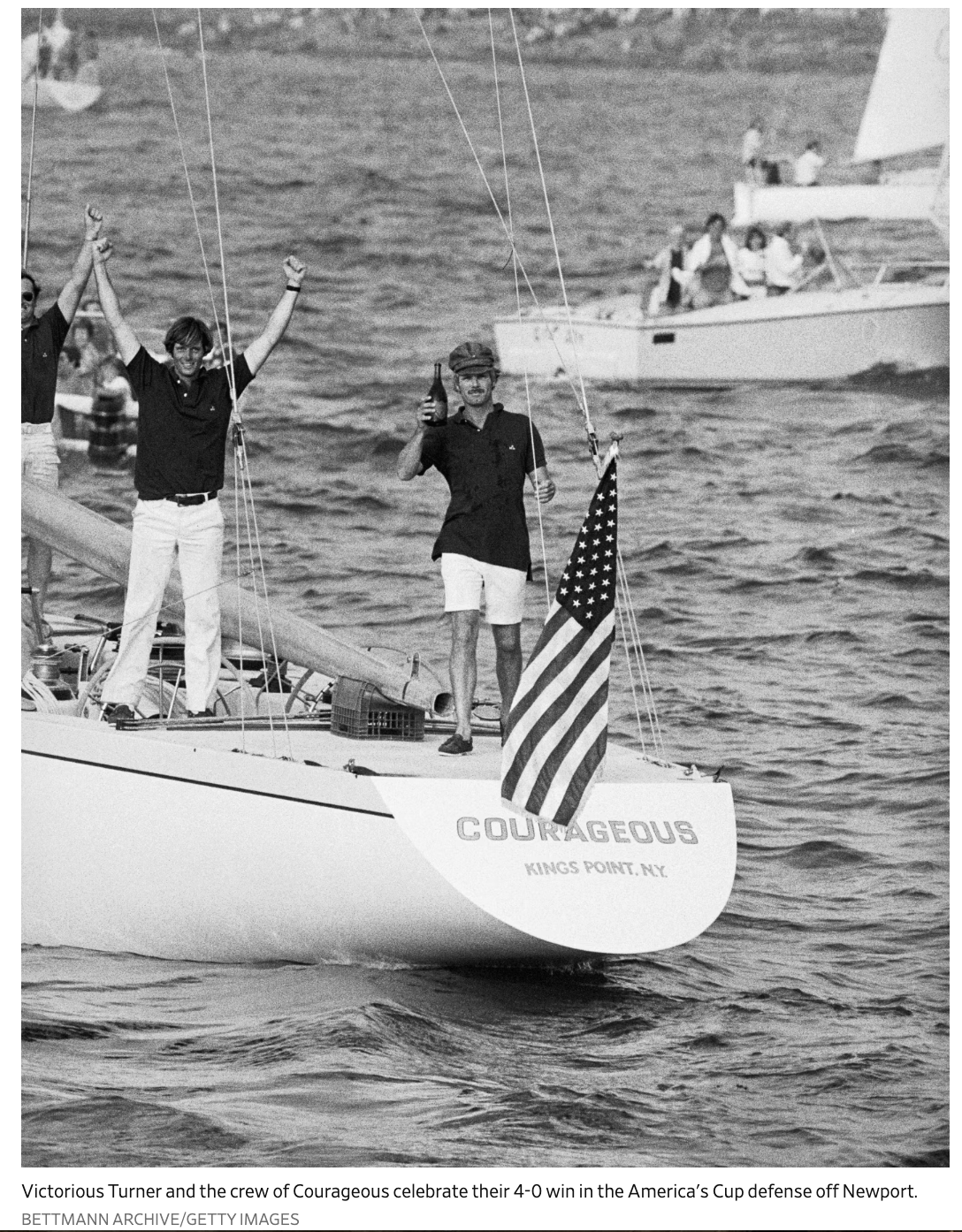
from a Playboy interview with Ted Turner, which I find here.
PLAYBOY: You go to every home game and sit in the front row. Why don’t you sit in the upper deck in the owner’s air-conditioned box?
TURNER: That’s what’s wrong! I told you, you idiot! All the owners sit up there behind their bulletproof glass and they’re afraid to meet the fans. I sit down front and I have to give about three dozen autographs during every game. Anyway, I figure the best seats are in the front row. The first thing I did was spend $1,000,000 on a giant TV screen over the scoreboard, then I spent $500,000 moving the dugouts and front rows closer. What I really love is catching foul balls and throwing them back in. Caught one the first day after I got back from winning the America’s Cup. Not too shabby!PLAYBOY: We notice that some of the Braves grew mustaches and beards. You have no objection to that?
TURNER: Hell, you’ve got a beard and I’ve got a mustache. I don’t care what a ballplayer does, if it makes him happy, it makes me happy. Just as long as he wears something over his cock, you know.
More:
PLAYBOY: Considering the fact that you got interested in baseball just two years ago, how can you stand to be around it so much?
TURNER: It’s like anything, my friend; no matter what you’re doing, if your attitude’s right, you’re going to enjoy it. I mean, when I was in the Coast Guard cleaning latrines, I whistled while I was cleaning them. I didn’t even question it. “Mine is not to question why, mine is but to do or die.”
PLAYBOY: Do you think about your past a lot?
TURNER: Yeah, I always wonder why people did things. When you think back, when men look back, the happiest times of their lives were when they got together and did something. We are social animals. The most fun that you ever have as a man is in doing men’s things. Men’s things are primarily getting a bunch of guys together and going out and conquering a country, fighting a war, winning a big fight, putting a baseball team together. For most guys, the happiest times were when they were on the football team, when they won the Ivy League championship or the state championship or the debate team or the bridge team or whatever it was. But first of all, you got to get a good bunch of guys together and do it, whatever it is. And then you have to get them all excited and motivated so they’ll bust their ass. People have the most fun when they’re busting their ass.
More:
PLAYBOY: You still love history?
TURNER: Yeah, mostly military history. As much as I hate war now, I was basically a warrior. I was reading about war all the time as a kid. Fighting and soldiers and all that stuff. What I wanted to be was Horatio, Admiral Nelson, Napoleon, Alexander the Great and Pericles; they were the greatest warriors.
PLAYBOY: Why did you like it so much?
TURNER: In the past, war was a lot of fun. You know, rape and plunder, kill and steal. There weren’t enough women to go around, because they died early, so you grabbed the other guy’s women, sold his children into slavery and killed the soldiers. Used to go home and have a big parade. Glorious, you know. Now war is finished.
PLAYBOY: What do you mean?
TURNER: It’s no longer fun. The weapons are too sophisticated. It’s not men leading the fleet into battle or running up the flags, you know. Back in the old days, when they didn’t have professional sporting events, war was sport, like gladiators killing each other. You know who was the original rookie of the year? David, when he went out against Goliath.
(Similar thought from Bruce Catton). More:
PLAYBOY: How much money do you need to stay happy?
TURNER: Not much. Just give me an old 12-meter sailboat and a couple of movie starlets, a house in the suburbs and a television station and I can get by on one sirloin strip at a time, or a two-and-a-quarter-pound lobster, plus a couple hundred thou in the bank.
PLAYBOY: Sounds like wealth is the way to joy, then.
TURNER: I’ve seen very, very poor people who were happy and very, very wealthy people who were miserable. I mean, you have to realize how lucky you are that you weren’t born a mosquito. Not to mention people–a black guy wonders, Why wasn’t I born white? Or a guy from India says, Why wasn’t I born an American? But you’re still better off than a mosquito, ’cause it lives only one summer and gets swatted at every time it gets a bite to eat.
PLAYBOY: You turn out to be quite a philosopher.
TURNER: Well, at least I know the meaning of life.
PLAYBOY: We’re waiting.
TURNER: Man is put on earth for one reason alone, and that’s to reproduce. As soon as we do, we start dying. Life is one great big endless circle. You know that song, “We’re here because we’re here because we’re here”? Who was the wisest man ever? Socrates, right? He said, “All I know is that I know nothing.” Which is pretty heavy. It’s a shattering thought.
Without Ted Turner there’d be no Cartoon Network, no Adult Swim, no Common Side Effects? An effect Ted Turner had on my life: because the residue of his cable empire is still HQ’d there, we’ve made several visits to Atlanta. It coulda been Dallas or Phoenix or something. The rise of Ted Turner, is it connected to the overall rise of Georgia that came with the Jimmy Carter governorship? The two were friends:
“I was a regular fishing companion with Ted, and he and I were both fishing for bass, and he had told me that he had just heard that Jane Fonda was going to get a divorce from her husband. And he was thinking about asking her for a date,” friend and former President Jimmy Carter told CNN in a previous interview.
(sources, I can’t find the original CNN interview transcribed.)
dairy farming
Posted: May 3, 2026 Filed under: America Since 1945 Leave a commentThe number of dairy farms in the United States had fallen to fewer than 25,000 from a peak of nearly 700,000 in the 1970s. Milk prices had barely risen in half a century, held down by overproduction and a handful of large corporations that dominated the dairy market. The costs of running a family farm had skyrocketed by as much as 500 percent.
wild stat from this NYT piece.
Nut picking
Posted: May 3, 2026 Filed under: America Since 1945 Leave a comment“I Love Lucy” wasn’t important content, but it was shared content. And it meant that tomorrow morning you had a whole bunch of topics you could go to with your neighbor or your co-worker that was just shared cultural data.
We don’t have any of that anymore. So, in a world where everybody is incentivized to go narrow but deep, there’s not a lot of need to call out B.S. and crazy on your own end of the continuum.
There’s a ton of incentive for both political addicts on the right to find some nut job on the left who did or said something crazy — “They’re all going to grab our guns” — or there’s some nut job on the left who says everybody on the right wants to do this horrible thing to you because they found some idiot on Twitter or on a podcast who said that thing.
The problem with that kind of nut picking is it doesn’t ever solve a problem.
I found Ben Sasse’s term a useful description of something I see constantly (especially on X).
A funny friar, recorded by Salimbene de Adam, 1280 or so
Posted: May 2, 2026 Filed under: comedy, Italy, Uncategorized Leave a comment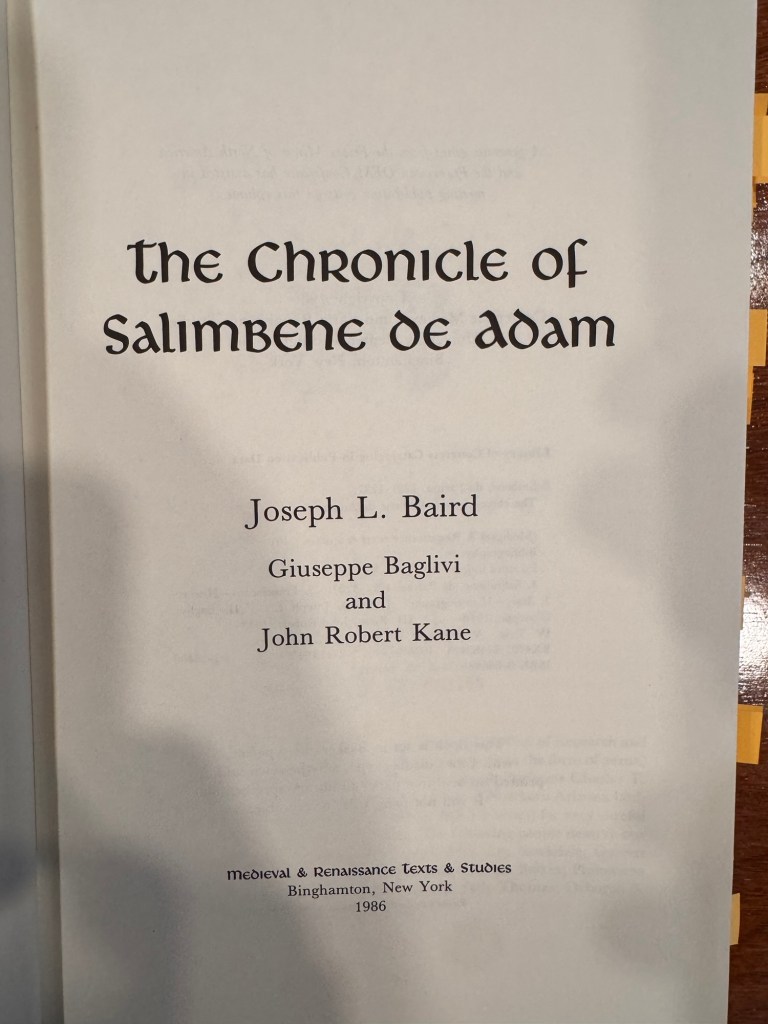
The pranks of Brother Detesalve of the Order of the Friars Minor.
Yet Brother Detesalve of Florence, a Friar Minor, could have stood up well to John of Vicenza, answering “a fool according to his folly” very well indeed “lest he imagine himself to be wise” [Proverbs 26.5). For he was a great prankster, as Florentines naturally are. Once when visiting the convent of the Dominicans where John of Vicenza was, he accepted lunch only on the condition that they would give him a piece of Brother John’s tunic as a relic. And they did indeed give him a large piece of the tunic. Then after his meal, Detesalve withdrew to relieve his bowels and, afterward, wiped himself with the tunic and threw it down the privy. And then taking a stick, he began to stir up the excrement, shouting,
“Alas, Alas, help me, Brothers! I have lost the relic of a saint in the privy, and I am searching for it.” And just as they bent their heads over the privy holes, he stirred all the harder so that they might receive the full brunt of the stench.
Repulsed by this malodorous mess, they blushed in shame, realizing that they had been fooled by such a prankster.
…
On another occasion when Detesalve was walking in Florence during the winter, he slipped on the ice and fell flat, upon which those great pranksters, the Floren-tines, gathered round him and began to laugh at his expense. And one of them derisively inquired whether he would not like something more underneath him, to which Detesalve retorted, “Yes, your wife.” The gathering of Florentines, far from taking this reply amiss, as one might have expected, commended him, say-ing, “He should be blessed, for he is one of us.” Some people say, however, this incident happened to another Florentine, a Friar Minor named Paul
From another section:
Emperor Frederick was a witty man, who could take jokes at his expense with good humor, as is made clear below.
At times the Emperor used to hold forth jokingly in his close circle of friends, mimicking, for example, the ambassadors from Cremona who stand about lavishing mutual praise on one another as noble, wise, rich, and powerful lords before getting on with the business for which they were sent. Also, the Emperor would listen to the jokes, derision, and insults of the jongleurs and bear them in good humor, sometimes pretending that he did not even hear…
… when he was besieging Brescello, the Emperor asked Villano the names of the war machines called the mangonel and trebuchet which were being used in the siege, and Villano gave them joking names, saying that they were called sbegna and sbegnoinus. Yet the Emperor simply smiled and turned away.
A footnote says it can’t explain:
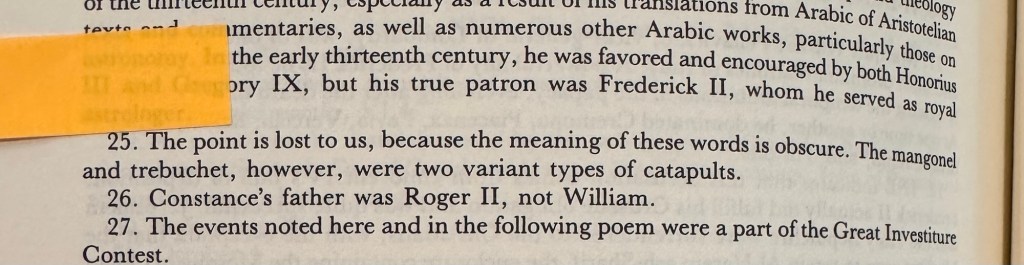
But I think we get it.
In his Chronicle Salimbene says he’s writing all this for his niece. 50+% is commentary on the Bible, but the gems are great. I went looking because he’s the source for the tales of the eccentricity of Frederick II.


