Cheney
Posted: November 5, 2025 Filed under: America Since 1945, politics, presidents 1 CommentThe other intern was active in Young Democrats and naturally wanted to intern with his party, which then controlled the legislature’s lower chamber. The Republicans, who controlled the state senate, agreed to take Cheney, the last man standing, as their intern. Cheney, by his own admission, “didn’t have a political identity.” His parents had been Democrats and if the other intern had been a strong Republican, Cheney would gladly have worked for the Democrats. In essence, Cheney became a Republican by accident.
All these from Stephen F. Hayes’ biography, Cheney: The Untold Story of America’s Most Powerful and Controversial Vice President.
The power of a memo:
When Cheney learned that Rumsfeld had been appointed to run the OEO, he drafted an unsolicited twelve-page strategy memo on the upcoming confirmation hearings. He gave the memo to Steiger, who then passed it to Rumsfeld. Cheney’s memo focused on accountability, and—not coincidentally—so did Rumsfeld’s testimony:
What was the mission exactly at the Office of Economic Opportunity under Richard Nixon?
Rumsfeld sought to have many OEO programs reassigned to other departments, a move that many observers interpreted as the first step in a plan to dismantle the agency. “The president sent Rumsfeld there to close it down,” recalls Christine Todd Whitman, future governor of New Jersey and administrator of the Environmental Protection Agency, who began her political career at the OEO as a special assistant. “Some of us thought the programs were worth saving, but we were all aware that the agency’s time was limited.”
Nixon:
Nikita Khrushchev, Nixon said, had once given him a sage bit of advice: in order to be a statesman, it is sometimes necessary to be a politician. “If the people believe there’s an imaginary river out there, you don’t tell them there’s no river there,” Cheney remembers Nixon saying. “You build an imaginary bridge over the imaginary river.” In late June 1972, the CLC froze food prices again.
A philosophy forms:
His experience in the Nixon administration began to change that. He saw well-intentioned government programs that solved one problem and created a dozen others. A plan by the Office of Economic Opportunity to train migrant workers to grow azaleas in South Carolina would have provided jobs for the workers but destroyed the market for azaleas in the process. Need-based assistance in the poorest parts of the country was diverted to “community-action programs” that did little more than line the pockets of local politicians. Through the Cost of Living Council, the IRS targeted small businesses because their owners wanted to give employees a raise. Grocery stores had to fight with the federal government to raise the price of a dozen eggs. To protect the American public, the Price Commission directed McDonald’s to reduce the price of Quarter-Pounders. To Cheney, these experiences not only demonstrated the inherent inefficiencies of big government but seemed to confirm the wisdom of individualism and self-reliance, the cardinal virtues of his home state.
(why not extrapolate that to how things would go when Big Government invades other countries?)
(it is really wild that the Nixon administration had federal government price controls on everyday goods and McDonald’s burgers! Every time I’m reminded of the Nixon era price controls I feel crazy)
Cheney was thirty-three years old when he began his work for the Ford administration. He had sat in on meetings with Ford when they were both working in the House. But Cheney didn’t meet his new boss until after starting full-time at the White House. Ford was a trusting soul, a rarity in the cutthroat politics of Washington, and he immediately saw Cheney as part of his inner circle. “He is as comfortable with Cheney as he is with Rumsfeld,” one senior aide of Ford’s said. “He doesn’t hesitate to say ‘Get me Cheney,’ if something comes up and Dick is the one close at hand.”
…
Little more than a decade earlier, Cheney had been a college dropout living in a tent and working as a grunt laying power lines in rural Wyoming. Now, he was working directly for the leader of the free world, coordinating the unceremonious dismissal of the man in charge of energy policy for the United States. It’s hard to imagine a more dramatic change in direction, but Cheney doesn’t remember spending much time reflecting on where he had been and where he was headed
How he stifled Nelson Rockefeller:
Frustrating the policy proposals of the vice president became a significant part of Cheney’s job in the Ford White House. Rockefeller, said Cheney: …would periodically produce these big proposals and he’d go in for his weekly meeting for the president and oftentimes give him these proposals. At the end of the day I’d go down for the wrap-up session and the president would say: “Here, what are we going to do with this?” And I’d say, “Well, we’ll staff it out.” So I would take it and put it into the system. It would go through OMB and it would go to the Treasury and all of the other places that had a say in his Council of Economic Advisers. Of course the answer would always come back, “This is inconsistent with our basic policy of no new starts,” so it would get shot down. He would later describe this role as putting “sand in the gears.” The phrase “we’ll staff it out” quickly became a euphemism for killing one of Rockefeller’s projects.
Back to Wyoming to run for office:
Although they complained about their father’s driving music—an eight-track tape of the Carpenters—the girls liked to go along.
Health tips:
As he began to mend, Cheney consulted with his doctor, Rick Davis. “He said, ‘Look, hard work never killed anybody.’ He said, ‘What is bad for you, what causes stress is doing something you don’t enjoy, having to spend your life living in a way you don’t want to live it.’”
…
He began a light exercise regimen, walking the five blocks from his house to the campaign headquarters and back.
Secretary of Defense:
As he stood behind the oversize desk that once belonged to General John Pershing, the legendary commander in World War I, he ordered an aide to fetch the Pentagon organization chart. The aide returned and flopped the mammoth diagram in front of his boss. “It sort of fell off both ends of the desk,” says Cheney. “And I rolled it up and stuck it in the trash and never looked at it again. I decided right then and there that I wasn’t going to spend a lot of time trying to reorganize the place.”
Odd incident on 9/11:
As the afternoon wore on, Condoleezza Rice noticed that Cheney hadn’t eaten anything. “You haven’t had any lunch,” she said to the vice president. As soon as she said it, she realized that it probably sounded odd. “I thought, ‘Where did that come from? What a strange thing to say in the middle of this crisis.’”
(Whether or not the US military shot down any civilian aircraft on that day (a mild conspiracy theory, that they shot down Flight 93), there was period on the day when Cheney certainly thought that they had, and on his orders. It seems to me that this traumatized him, or at least deeply affected his thinking.)
“I’ve seen him listen to some tirades from senators that would try anyone’s patience,” says McCain. “He stands there, smiles. Polite.” McCain sits up; straightens his face; and, speaking in an exaggerated monotone, does his best impersonation of Dick Cheney: “Thanks very much. Thank you. Yes.”
“I’ve seen a guy come up to him and say, ‘We’ve got to reauthorize the ag bill. Understand? My farmers, they’ve got to have this emergency funding. You’ve got to get the president to say, ‘We need this ag bill.’ He smiles,” says McCain, continuing as Cheney. “‘ Thank you very much. Yes. Yes, Pat.’ In fact, now that I think about it, I’ve never seen him fire back at any one of these guys when they do that. I just never have.” Cheney, of course, has a reason for subjecting himself to this gantlet. “What I try to do is maintain those relationships when you don’t need them so that they’re there when you do need them,” he says.
lifestyle:
Cheney sips Johnny Walker Red and snacks from a jar of Planters dry-roasted peanuts. (“ Yeah, and he doesn’t share,” laughs one friend.)
On fish:
Words stream out of Cheney’s mouth as he describes his favorite fish. “A steelhead is a magnificent fish. It’s a sea-run rainbow that spawns in fresh water. It hatches out, spends maybe a couple of years in fresh water. And then goes to sea, just like Atlantic salmon. A couple years in the ocean, cruising the Pacific, grows to considerable size and then comes back to fresh water. Probably the biggest steelhead I’ve caught—a few in the twenty-pound class,” he says, then clarifies, “twenty-pounds-plus. That’s a big fish on a fly rod. They catch a few up there every year where we go, over thirty pounds. I’ve never caught a thirty-pounder. And it’s very tough technical fishing. You might fish all day long and not have a strike, but, boy, once you’ve got one on it’s just—it’s an amazing experience when you’ve got a twelve-, fifteen-pound steelhead on the end of your line, tail-walking down the river, putting up a hell of a fight. And you do it in some of the most beautiful country. If I had one fishing trip left in me I want to go spend a week on the Babine.”

(source)
Previous coverage of Cheney:
The importance of bird hunting in American politics.
Senate Majority Leader Thune
Posted: November 4, 2025 Filed under: America Since 1945, politics 1 CommentThe Speaker of the House, Mike Johnson, is a chronic liar and uninspiring character, at least to this home viewer. From The New York Times:
Mr. Johnson, who without the president’s backing wields little influence over his own members, has chosen to make himself subservient to Mr. Trump, a break with many speakers of the past who sought in their own ways to act more as a governing partner with the president than as his underling.
“I’m the speaker and the president,” Mr. Trump has joked, according to two people who heard the remark and relayed it on the condition of anonymity because of concern about sharing private conversations with him.
(who knows though, maybe that is a “seven almonds” story)
But what about the Senate Majority Leader, John Thune? Everyone seems to like this guy. From a Politico profile by Michael Kruse:
There is, however, a not inconsiderable camp of Democrats and anti-Trump Republicans who expected more. “To the extent that there needs to be Republicans in the Senate, and obviously there’s going to be, I wish they were all like John Thune,” Drey Samuelson, the longtime chief of staff of the late Tim Johnson, the last Senate Democrat from South Dakota, told me. “I mean, I don’t know anybody that really doesn’t like John Thune,” Samuelson said. “I like him.”
from a New Yorker profile by David D. Kirkpatrick:
a city aptly described as Hollywood graduated from for ugly people, Thune could pass for an actual movie star, with pale-blue eyes, a square jaw, and Mt. Rushmore cheekbones. Now sixty-four, he has salt-and-pepper hair that is still thick enough to part neatly on the side, and the broad lats, shoulders, thick arms, and narrow waist of a basketball player. His morning workouts at the Senate gym are legendary. Until a recent knee injury, Thune held the informal title of the fastest man in Congress. (He has likened that honor “the best surfer in Kansas.“)
(why did he say Kansas instead of his home state, South Dakota?)

Thune used to be opposed to Trump:
Thune’s candor often stood out in the course of Trump’s rise to power. During the 2016 race, Thune condemned Trump’s expressions of bigotry as “inappropriate.” After the leak of the “Access Hollywood” video, on which Trump boasted about grabbing women by the genitals, Thune was one of the first Republican senators to demand that Trump quit the race “immediately,” though the election was only a month away. And, even after Trump’s victory, Thune never masked his opposition to the President’s most cherished plans. In a 2017 television interview, he objected to the mass deportation of illegal immigrants, adding that “a lot of my colleagues” shared his view. He has called across-the-board tariffs “a recipe for increased inflation” that would punish South Dakota farmers and ranchers by setting off trade wars. He has consistently stood with what he calls “our trusted intel community” on the conclusion that Russia indeed meddled to help Trump in the 2016 election; he has called Vladimir Putin “a murderous thug” whose invasion of Ukraine proved “the value of NATO.” Thune also often praises wind energy—a booming industry in his home state—even though Trump considers turbines loathsome eyesores.
Trump’s demand that Congress refuse to certify Joe Biden’s 2020 election win elicited one of Thune’s few memorable turns of phrase: he told journalists that the request would “go down like a shot dog” in the Senate. After January 6th, Thune called Trump’s role in the riot “inexcusable.” Linda Duba, a friend from South Dakota and a retired Democratic state legislator whose children used to run in track meets alongside Thune’s, told me that she once asked him what working with Trump was like. “Not fun,” Thune had said. Another old friend was blunt: “I think he thinks Trump’s an ass.”
Not so much anymore. Here’s a (long) recent history of Congress I guess you can skip:
Thune arrived in Congress at a time that now looks like a high point of its power and effectiveness. In the nineties, lawmakers debated issues, committees drafted bills, and the parties compromised to tackle urgent problems.
Congress sent Presidents George H. W. Bush and Bill Clinton major legislation on trade, crime, environmental protection, financial regulation, civil rights, and other issues. Negotiations between the parties even closed the deficit, briefly.
Philip Wallach, a fellow at the conservative American Enterprise Institute and the author of a timely book, “Why Congress,” told me that, looking back, “it’s really amazing-nothing like that has happened in the last fifteen years.”
One turning point, Wallach told me, was Newt Gingrich’s Republican takeover of the House of Representatives, in 1994. Gingrich relished partisan warfare, demanded loyalty from his rank and file, and turned district elections into contests between the national parties. Political scientists have identified long-standing trends that have contributed to the deepening polarization of Con-gress, including the growing ideological homogeneity of each party and the breakdown of the media into echo chambers.
But Wallach is surely correct that Congress, the branch of government designed to mediate factional conflicts, has succumbed to them—and even made them worse.
To more effectively wage partisan battles, Democratic and Republican leaders in both chambers consolidated their own power. Instead of relying on committees to draft bills, party leaders increasingly negotiated significant measures behind closed doors, then brought often in the form of giant “must-pass” bills against a tight deadline, such as measures to keep funding the govern-ment. In the Senate, the concentration of power has been especially stark. Senators used to take pride in proposing amendments during floor debates, facilitating bipartisan dealmaking even against party leaders’ wishes. Yet those leaders now often block individual senators from such freelancing by allowing consideration of only a limited number of amendments and then filling those slots with innocuous proposals of their own choosing—a tactic called “filling the tree.” The former Democratic Majority Leader Harry Reid pioneered this strategy in the two-thousands, and his successors from both parties have kept it up ever since.
In the Congress of 1991-92, Wallach noted, the Senate adopted more than sixteen hundred amendments. In 2023-24, that number fell to two hundred. And the last Congress passed just two hundred and seventy-four bills- down from about seven hundred a year during the late eighties and fewer than any Congress since before the Civil War. Of those two hundred and seventy-four bills, the ten longest were assembled by the party leaders, and they accounted for four-fifths of all the pages of legislation passed in that Congress.
Lawmakers sometimes grouse about their loss of power. Ten years ago, Mark Begich, then a Democratic senator from Alaska, tried, unsuccessfully, to instigate a revolt against Reid’s tree-filling. Lamar Alexander, another critic of the practice, told me that being elected to the chamber now resembled “joining the Grand Ole Opry and not being allowed to sing”
Several senators told me that, at the end of last year, Thune negotiated an agreement with Democratic leaders that allowed Biden to equal the number of judicial confirmations made during the first Trump Administration. In exchange, the Democrats agreed to drop a handful of liberal appellate nominees whom Republicans found especially objection-able, leaving those seats open. Senator Kirsten Gillibrand, a New York Democrat who participates in a weekly Bible study with Thune, told me that “he was fundamental to all the bipartisan work we did in the last cycle.” For example, Thune helped initiate talks on an immigration bill, even letting legislators use his office. In the end, the bill became a classic example of partisan paralysis: when Trump indicated that he preferred to leave the border problems unaddressed, so that he could keep campaigning on the issue, the Republicans killed the legislation.
The Thune ancedote that stuck with me is this one, from Kruse in Politico:
But Thune decided against a White House run. His mother neared the end, a decade of dementia having taken its toll. “She would sit down at a meal, and she would say, ‘We suffer greatly here on Planet Earth,’” Tim Thune told me. “She might say that 30 times over the next 15 minutes.”
Jimmy Carter reconsidered
Posted: January 6, 2025 Filed under: America Since 1945, politics, presidents 1 Comment
Tyler Cowen didn’t like him. George Will didn’t like him. Ken Layne made me laugh:

Aren’t we always interested in the history that came right before we appear?

Delta Airlines has not one but two documentaries about Jimmy Carter available to view: Carterland and Jimmy Carter: Rock and Roll President. (Do these movies make money? Who is funding them?) I was able to watch most of both of them (without sound, with subtitles) on recent transcontinental travels. Rock and Roll President was particularly interesting, for example how Carter did not turn on Gregg Allman even after he was busted for and then testified in a case involving pharmaceutical cocaine, or the role John Wayne played in helping the Panama Canal treaty to pass
All this has me to prepared to somewhat revise my view of Carter’s presidency. His inability to “do something” about the Iranian hostage crisis was because he was unwilling to start a war or kill a lot of innocent Iranians. Though his temperament may not have suited him to win reelection, he improved life in the United States, made a lot of difficult choices on tough problems, avoided war (Panama could’ve been one). His presidency was devoted to peace, and helped heal the United States.
The contradictions are endless but was it not good for us, in that moment, to have a prayerful man of peace and leadership that reached for the spiritual?
Similar to the way Gerald Ford was later honored for his courage (?) in pardoning Richard Nixon, should Jimmy Carter be honored for absorbing political consequences of hard decisions and hard efforts that kept the peace?
At the Carter Library the fact that Carter never dropped a bomb or fired a missile during his presidency is highlighted. He’s the last president of whom that can be said. The American people don’t seem to want that.
Perhaps his story is a Christian story, of the martyr, the saint, who suffers as he absorbs our sins. A traveling preacher who came to town.
Perhaps all post-1945 US presidents should be judged on one standard only: whether there was a nuclear war on their watch. We must give Carter an A!
In his Miller Center interview, Jimmy Carter notes several times that the governor of Georgia is very powerful – more powerful, relative to the legislature, than the president is to Congress:
Fenno
Mr. President, I just wanted to follow up one question about the energy preparation. In your book you note that when you came to present the energy package, you were shocked, I think the word was shocked, by finding out how many committees and subcommittees this package would have to go through.
Carter
Yes.
Fenno
I guess my question is in the preparation that you went through, didn’t Congressmen tell you what you were going to find? Why were you shocked?
Carter
Well, I don’t know if I expressed it accurately in the book. I don’t think it was just one moment when all of a sudden somebody came in the Oval Office and said there was more than one committee in the Congress that has got to deal with energy. I had better sense than to labor under that misapprehension. But I think when Tip O’Neill and I sat down to go over the energy package route through the House, I think Jim Wright was there also, there were seventeen committee or subcommittee chairmen with whom we would have to deal. That was a surprise to me, maybe shock is too strong a word. But in that session or immediately after that, Tip agreed as you know to put together an ad hoc committee, an omnibus committee, and to let [Thomas Ludlow] Ashley do the work.
That, in effect, short-circuited all those fragmented committees. The understanding was, after the committee chairmen objected, that when the conglomerate committee did its work, then the bill would have to be resubmitted, I believe to five different, major committees. There were some tight restraints on what they could do in the way of amendment. So that process was completed as you know between April and August, an unbelievable legislative achievement.
In the Senate though, there were two major committees and there had to be five different bills and unfortunately, Scoop Jackson was on one side and Russell Long was on the other. They were personally incompatible with each other and they had a different perspective as well. Scoop had been in the forefront of those who were for environmental quality and that sort of thing, and Russell represented the oil interest. That was one of the things that caused us a problem. But we were never able to overcome the complexities in the Senate. In the House, we did short circuit the process. I never realized before I got to Washington, to add one more sentence, how fragmented the Congress was and how little discipline there was, and how little loyalty there would be to an incumbent Democratic President. All three of those things were a surprise to me.
Truman
Were those in sharp contrast to the experience in the Georgia legislature?
Carter
Well, there’s no Democratic-Republican alignment of the Georgia legislature. It’s all Democrats, and therefore, there is no party loyalty. You had to deal with individual members. The Governor is really much more powerful in Georgia than the President is in the United States. As Georgia Governor, I had line-item veto, for instance, in the appropriations bills. And, as you also know, in Georgia and in Washington, most of the major initiatives come from the executive branch. There’s very seldom a major piece of legislation that ever originates in the legislature. I think that there is a parallel relationship between the independent legislature confronting an independent Governor or the independent Congress confronting an independent President. At the state level, the Governor, at least in Georgia, is much more powerful than the President in Washington.
Neustadt
Did you have the same kind of subcommittee structure?
Carter
No. It’s not nearly so complicated.
Neustadt
That helps you too.
Carter
The seniority and the guarding of turf and so forth is not nearly so much of a pork barrel arrangement in the state legislature. Also, the Georgia legislature only serves forty days a year. They come and do their work in a hurry, and then they go home.
Truman
A simple legislature doesn’t have much staff either.
Carter
They are growing rapidly in staff, but nothing like the Congress. And you don’t have the insidious, legal bribery in the Georgia legislature that is so pervasive in the Congress. That’s a problem that’s becoming much more serious and I don’t believe that it’s going to be corrected until we have a major, national scandal in the Congress. I think it’s much worse than most people realize.
The reviews all focus on the presidency but Carter was an extremely effective governor of Georgia.
wish I could read this redacted story:

The ex-presidency of Carter is often cited as admirable, the work on guinea worm is undeniable. James Baker contacted Carter frequently. He helped convince Daniel Ortega to leave office. But then:
In the run-up to the 1991 Gulf War, Carter’s relationship with President Bush turned sour. Carter felt passionately that Saddam Hussein’s invasion of Kuwait wasn’t worth going to war over, even though Bush cited the Carter Doctrine in justifying it. The former president said so publicly, then took matters a fateful step further, writing each member of the UN Security Council and urging them to vote against the United States on the resolution.
That is wild! Brian Mulroney told the Bush White House about it and they were unsurprisingly pissed!
The Carter/ Bill Clinton relationship is funny, Alter says Carter’s freelance riffing with North Korea made Clinton apoplectic. Bill and Jimmy, could make an almost not boring play.
Maybe I will stake out the take that Carter was a great president and a mixed bag as an ex-president. Could be fun!
Consider this:
In 2016, the squabbling children of Martin Luther King Jr. needed Carter to mediate. They were at one another’s throats over their family’s possessions, including an old pool table. Brothers Marty and Dexter teamed up to sue sister Bernice, who had possession of their father’s Bible (used by Barack Obama to take the oath of office) and his Nobel Peace Prize. Carter’s approach was the same as at Camp David: both sides would agree at the end of the process to one document. This time, the document went through six or seven drafts, with the parties finally agreeing that Carter’s decisions on what would be sold or kept were to be final. One night Carter would be hard on Bernice; the next, on Dexter or Marty. Carter finally determined — and a judge soon ratified that Marty, as chairman of the estate, had control of the Bible and the Nobel, but they would be displayed at the King Center in Atlanta, not sold.
The one document method might be something practical we can all learn from Jimmy Carter. I haven’t felt like time spent studying this American original has been wasted. The more I learn about him the more complex he becomes.
(photo of Dolly and Jimmy borrowed from Parton News instagram)
Reedy, Twilight of the Presidency
Posted: August 18, 2024 Filed under: America Since 1945, politics, presidents Leave a comment
It’s time to revisit George Reedy, Twilight of the Presidency.
I can’t do better as a summary than this 1970 review by William C. Spragens in The Western Political Quarterly found on JSTOR:

The edition I read is updated for the Reagan administration. Some choice passages:
In talking to friends about the presidency, I have found the hardest point to explain is that setbacks often impel presidents to redouble their efforts without changing their policies. This seems to be perversity because very few of us have the opportunity to make decisions of colossal consequences. When our projects go wrong, it is not too difficult for most of us to shrug our shoulders, cut our losses, and take off on a new tack. Our egos may be bruised. But we can live with that. It is a different thing altogether when we can give orders that can lead to large-scale death and destruction or even to economic devastation. Such a situation brings into play psychological factors that are virtually unconquerable.
Suppose, for example, that a president gives the military an order that leads to the deaths of several soldiers in combat. Can any human being who did such a thing say to himself: “Those men are dead because I was a God-damned fool! Their blood is on my hands.” The likely thought is: “Those men died in a noble cau and we must see to it that their sacrifice was not in vain.”
This, of course, could well be the “right” answer. But even if it is the wrong answer, it is virtually certain to be the one that will be accepted. Therefore, more men are sent and then more and then more. Every death makes a pull out more unacceptable.
Furthermore, when a large amount of blood has been spilled, a point can be reached where popular opposition to a policy will actually spur a president to redoubled effort in its behalf. This is due to the aura of history that envelops every occupant of the Oval Office. He lives in a museum, a structure dedicated to preserving the greatness of the American past. He walks the same halls paced by Lincoln waiting feverishly for news from Gettysburg or Richmond. He dines with silver used by Woodrow Wilson as he pondered the proper response to the German declaration of unrestricted submarine warfare. He has staring at him constantly portraits of the heroic men who faced the same excruciating problems in the past that he is facing in the present. It is only a matter of time until he feels himself a member of an exclusive community whose inhabitants never finally leave the mansion. When stories leaked out that Richard Nixon was “talking to the pictures” in the White House, it was taken by many as evidence that he was cracking up. To anyone who has had the opportunity to observe a president at close range, it is perfectly normal conduct.
(This may be a problem beyond presidents. Do we all have a tendency to double down on our most consequential decisions, even if the results are obviously disastrous?)
The life of the monarch:
As noted, an essential characteristic of monarchy is untouchability. No one touches a king unless he is specifically invited to do so. No one thrusts unpleasant thoughts upon a king unless he is ordered to do so, and even then he does so at his own peril. The response to unpleasant information has been fixed by a pattern with a long history. Every courtier recalls, either literally or instinctively, what happened to the messenger who brought Peter the Great the news of the Russian defeat by Charles XII at the Battle of Narva. The courtier was strangled by decree of the czar. A modern-day monarch-at least a monarch in the White House-cannot direct the placing of a noose around a messenger’s throat for bringing him bad news. But his frown can mean social and economic strangulation. Only a very brave or a very foolish person will suffer that frown.
Some ways in which this effect takes shape:
In retrospect, it is almost impossible to believe that John Kennedy embarked on the ill-fated Bay of Pigs venture. It was poorly conceived, poorly planned, poorly executed, and undertaken with grossly inadequate knowledge. But anyone who has ever sat in on a White House council can easily deduce what happened without knowing 34 THE I any facts other than those which appeared in the public press. White House councils are not debating matches in which ideas emerge from the heated exchanges of participants. The council centers around the president, himself, to whom everyone addresses his observations.
The first strong observations to attract the favor of the president become subconsciously the thoughts of everyone in the room. The focus of attention shifts from a testing of all concepts to a groping for means of overcoming the difficulties. A thesis that could not survive an undergraduate seminar in a liberal arts college becomes accepted doctrine, and the only question is not whether it should be done but how it should be done.
Reedy on White House aides as courtiers, and how Vietnam could’ve happened (he was there!):
Unfortunately, the problem is far deeper than the machinations of courtiers. They do exist in large numbers but most of their energies are absorbed in grabbing for personal favors and building havens of retreat for the future. Generally speaking, they play the role in the White House of the court jesters of the Middle Ages and may even be useful in that they give the chief executive badly needed relaxation. Paradoxically , it is the advisers who are not sycophantic, who are not looking for snug harbors, and who do feel the heavy weight of responsibility who are the most likely to play the reinforcing role. It is precisely because they recognize the ultimacy of the office that they react the way they do.
However they feel, the burden of decision is on another man. Therefore, however much they may argue against a policy at its beginning stages, once it is set they become “good soldiers” and devote their time to making it work.
Those who disagree strongly tend to remain in the structure in the vain hope they can change it coupled with the certainty that they would become totally ineffectual if they left.
This is the bitter lesson we should have learned from Vietnam. In the early days of that conflict, it might have been possible to pull out. My most vivid memories are the meetings early in Lyndon Johnson’s presidency in which his advisers (virtually all holdovers from the Kennedy administration) were looking to him for guidance on how to proceed. He, on the other hand, felt an obligation to continue the Kennedy policies and he was looking to them for indications of what steps would carry out such a course. I will always believe that someone misread a signal from the other side with the resultant commitment to full-scale fighting. After that, all the resources of the federal government were devoted to advising the president on how to do what it was thought he wanted to do.
Reedy on the White House as Versailles:
Sir Thomas Malory seems to have missed the true significance of King Arthur’s Round Table. As long as his knights ate at it every day under King Arthur’s watchful eye and lived in his palace where he could call them by shouting through the corridors, they were his to ensure that the kingdom would be ruled the way he wanted it ruled. Louis XIV did not build the Palace of Versailles as a tourist attraction but as a huge dormitory where he could keep tabs on the nobles who were disposed to become insubordinate if they spent all their time on their own estates. Peter the Great downgraded the boyars whose power rested on their distance from Moscow and brought the reins of government into his own hands by making all the top officials dependent on him. And the Turkish sultans reached the ultimate in the creation of personal force by raising young Christian boys captured in combat as Janissaries who lived solely to defend the ruler.
Reedy has a great chapter titled “What Does The President Do?”:
A president is many things. Basically, however, his functions fall into two categories. First, and perhaps most important, he is the symbol of the legitimacy and the continuity of our government. It is only through him that power can be exercised effectively-but only until opposition forces rally themselves to counter it. Second, he is the political leader of our nation. He must resolve the policy questions that will not yield to quantitative, empirical analysis and then persuade enough of his countrymen of the rightness of his decisions so that they are carried out without disrupting the fabric of society.
At the present time, neither of these functions can be carried out without the president.
He notes that the idea of the President “working” is confusing:
Despite the widespread belief to the contrary, there is far less to the presidency, in terms of essential activity, than meets the eye. The psychological burdens are heavy, even crushing, but no president ever died of overwork and it is doubtful that any ever will. The chief executive can, of course, fill his working hours with as much motion as he desires. The “crisis” days (the American hostages held in Iran or the attempted torpedoing of American navy vessels in the Gulf of Tonkin) keep office lights burning into the midnight hours. But in terms of actual administration, the presidency is pretty much what the president wants to make of it. He can delegate the “work” to subordinates and reserve for himself only the powers of decision as did Eisenhower, or he can insist on maintaining tight control over every minor detail, like Lyndon Johnson.
Presidents on vacation:
It is impossible to take a day and divide it with any sure sense of confidence into “working hours” and “nonworking hours.” But it is apparent from the large volume of words that have been written about presidents that in the past few decades, the only one who seemed able to relax completely was Eisenhower. He was capable of taking a vacation for the sake of enjoying himself, and he disdained any suggestion that he was acting otherwise.
Franklin Roosevelt apparently had little or no time to devote to relaxation. He was notorious for using his dinner hours as a means of lobbying bills through Congress. Once Harry Truman had made a decision he was able to put it out of his mind and proceed to another problem. Furthermore, he too disdained any pretensions of working when he wasn’t. But those who were close to him made it clear that he really didn’t know what to do with himself when he took a holiday. His favorite resort was Key West, Florida, where he would “go fishing” but he would hold a rod only if someone put it in his hands, and about all he really enjoyed was the sunshine and the opportunity to take long walks.
John Kennedy was described as a “compulsive reader” who could not pass up any written document regardless of its relevance to his problems or its contents. Many of his intimates reported that any spare time would find him restlessly prowling the White House looking for something to read. Lyndon Johnson anticipated with horror long weekends in which there was nothing to do. He usually spent Saturday afternoons in lengthy conferences with newspaper reporters who were hastily summoned from their homes to spend hours listening to Johnson expound the thesis that his days were so taken up with the nation’s business that he had no time to devote to friends.
The real misery of the average presidential day is the haunting knowledge that decisions have been made on incomplete information and inadequate counsel. Tragically, the information must always be incomplete and the counsel always inadequate, for in the arena of human activity in which a president operates there are no quantitative answers. He must deal with those problems for which the computer offers no solution, those disputes where rights and wrongs are so inextricably mixed that the righting of every wrong creates a new wrong, those divisions which arise out of differences in human desires rather than differences in the available facts, those crisis moments in which action is imperative and cannot wait upon orderly consideration. He has no guideposts other than his own philosophy and intuition, and if he is devoid of either, no one can substitute.
Reedy summarizes something Robert Caro goes into some detail about (how did an obscure Texas congressman obtain power?):
The office is at such a lonely eminence that no standard rules of the political game govern the approaches to it. Johnson told fascinating stories about the tactics he had used, while still a member of the House, to extract favors from FDR. He made a practice of driving Roosevelt’s secretary, Grace Tully, to the White House every morning. This gave him an opportunity to drop words in her ear, give her memoranda knowing she would pass them on to the “boss,” and learn personal characteristics that he could exploit at a later date. He once filed away in his memory the knowledge that Roosevelt was passionately interested in the techniques of dam construction. A few months later, he wangled his way into the White House with a series of huge photographs of dams that had been supplied to him by an architectural firm in his home district. Roosevelt became so absorbed in comparing the pictures that he absentmindedly okayed a rural electrification project that Johnson wanted but that had been held up by the Rural Electrification Administration for a couple of years.
None of this makes me very sanguine about either Presidential candidate, but over here at Helytimes we consider it better to look truth in the face, best we can, no?
Martin Anderson, a Reagan aide, endorsed the book in a Miller Center interview:
There’s a wonderful book called The Twilight of the Presidency by Reedy. You ever read that?
Young
George Reedy.Anderson
In which he says, If you try to understand the White House—most people make the mistake, they try to understand the White House like a corporation or the military and how does it look, with the hierarchy. He said, The only way to understand it, it’s like a palace court. And if you can understand a palace court, then you understand the White House. I think that’s probably pretty accurate. But those are the things that happen. So anyway, I didn’t go back. So I missed Watergate.Asher
Darn.
Power and The Presidency
Posted: November 19, 2023 Filed under: America Since 1945, politics, presidents Leave a comment
These are a series of essays based on lectures given at Dartmouth. David McCullough introduces us:
In a wonderful old photograph, the three workmen who did the installation sit together quite comfortably in Taft’s giant tub.
Is this the photo he’s talking about?

Doris Kearns Goodwin on FDR’s power of persuasion:
At the Democratic Convention in 1936, Roosevelt answered the attacks in dramatic form. He admitted he had not kept his pledge. He admitted that he had made some mistakes in the early years. But then he quoted the famous line: “Better,” he said, “the occasional faults of a government guided by a spirit of charity and compassion than the constant omissions of a government frozen in the ice of its own indifference.” As he was making his way up to the podium to that “Rendezvous with Destiny” speech, leaning on the arms of his son and a Secret Service agent, his braces locked in place to make it seem as if he could walk (he really could not on his own power), he reached over to shake the hand of a poet. He immediately lost his balance and fell to the floor, his braces unlocked, his speech sprawled about him. He said to the people around him, “Get me up in shape.” They dusted him off, picked him up almost like a rag doll, put his braces back in place, and helped him up to the podium. He then somehow managed to deliver that extraordinary speech.
There weren’t that many fireside chats:
He delivered only thirty fireside chats in his entire twelve years as president, which meant only two or three a year. He understood something our modern presidents do not: that less is more, and that if you go before the public only when you have something dramatic to say, something they need to hear, they will listen. Indeed, over 80 percent of the adult radio audience consistently listened to his fireside chats.
FDR truly swayed public opinion towards what he wanted:
And somehow, through his ability to communicate, he educated and molded public opinion. At the start of this process, the people were wholly against the idea of any involvement with Britain. By the time the debate finished in the Congress and the Lend-Lease Act was passed, the majority opinion in the country was for the lend-lease program. That is what presidential leadership should and must be about. Not reflecting public opinion polls, taking focus groups to figure out what the people are thinking at that moment, and then simply telling them what they’re thinking, but rather moving the nation forward to where you believe its collective energy needs to go.
Life in the FDR White House during WWII:
He became a part of an intimate circle of friends who were also living in the family quarters of the White House during the war, including Franklin’s secretary, Missy Lehand, who had started working for him in 1920, loved him the rest of her life, and was his hostess when Eleanor was on the road; Franklin’s closest adviser, Harry Hopkins, who came one night for dinner, slept over, and didn’t leave until the war was coming to an end; Eleanor’s closest friend, a former reporter named Lorena Hickock; and a beautiful princess from Norway, in exile in America during the war, who visited on the weekends.
Michael Beschloss on Eisenhower:
To hold down the arms race as much as possible, he worked out a wonderful tacit agreement with Soviet premier Nikita Khrushchev. Khrushchev wanted to build up his economy. He didn’t want to spend a lot of money on the Soviet military because he wanted to start feeding people and recover from the devastation of World War II. But he knew that to cover this he would have to give speeches in public that said quite the opposite. So Khrushchev would deliver himself of such memorable lines as, “We Soviets are cranking out missiles like sausages, and we will bury you because our defense structure is pulling ahead of the United States.” Eisenhower dealt with this much as an adult deals with a small boy who is lightly punching him in the stomach. He figured that leaving Khrushchev’s boasts unanswered was a pretty small price to pay if it meant that Khrushchev would not spend much money building up his military. The result was that the arms race was about as slow during the 1950s as it could have been, and Eisenhower was well on the way to creating an atmosphere of communication. Had the U-2 not fallen down in i960 and had the presidential campaign taken place in a more peaceful atmosphere, I think you would have seen John Kennedy and Richard Nixon competing on the basis of who could increase the opening to the Soviets that Eisenhower had created.
Eisenhower pursued almost an opposite strategy to Reagan re: the USSR.
On one of the tapes LBJ made of his private conversations as president, you hear Johnson in 1964. He knows that the key to getting his civil rights bill passed will be Everett Dirksen of Illinois, Republican leader of the Senate. He calls Dirksen, whom he’s known for twenty years, and essentially says, “Ev, I know you have some doubts about this bill, but if you decide to support it, a hundred years from now every American schoolchild will know two names—Abraham Lincoln and Everett Dirksen.” Dirksen liked the sound of that.
I don’t think that worked. I’ll quiz the next American schoolchild I encounter.
On JFK:
What’s more, he had been seeking the presidency for so long that he had only vague instincts about where he wanted to take the country. He did want to do something in civil rights. In the i960 campaign, he promised to end discrimination “with the stroke of a pen.” On health care, education, the minimum wage, and other social issues, he was a mainstream Democrat. He hoped to get the country through eight years without a nuclear holocaust and to improve things with the Soviets, if possible. He wanted a nuclear test ban treaty.
Bay of Pigs:
People at the time often said Eisenhower was responsible for the Bay of Pigs, since it was Eisenhower’s plan to take Cuba back from Castro. I think that has a hard time surviving scrutiny. Eisenhower would not necessarily have approved the invasion’s going forward, and he would not necessarily have run it the same way. His son once asked him, “Is there a possibility that if you had been president, the Bay of Pigs would have happened?” Ike reminded him of Normandy and said, “I don’t run no bad invasions.”
Then Robert Caro comes to the plate with some classics:
Trying to understand why this relationship developed, I asked some of Roosevelt’s assistants. One of them, Jim Rowe, said to me, ‘You have to understand: Franklin Roosevelt was a political genius. When he talked about politics, he was talking at a level at which very few people could follow him and understand what he was really saying. But from the first time that Roosevelt talked to Lyndon Johnson, he saw that Johnson understood everything]! ^ was talking about.”
This young congressman may have been unsophisticated about some things, but about politics—about power—he was sophisticated enough at that early age to understand one of the great masters. Roosevelt was so impressed, in fact, that once he said to Interior Secretary Harold Ickes, “That’s the kind of uninhibited young politician I might have been—if only I hadn’t gone to Harvard.” Roosevelt made a prediction, also to Ickes. He said, ‘You know, in the next generation or two, the balance of power in the United States is going to shift to the South and West, and this kid, Lyndon Johnson, could be the first southern president.”
Hill Country:
It was also hard for me to understand the terrible poverty in the Hill Country. There was no money in Johnson City. One of Lyndon’s best friends once carried a dozen eggs to Marble Falls, 22 miles over the hills. He had to ride very slowly so they wouldn’t break; he carried them in a box in front of him. The ride took all day. And for those eggs he received one dime.
Hill Country women:
asked these women—elderly now—what life had been like without electricity. They would say, “Well, you’re a city boy. You don’t know how heavy a bucket of water is, do you?” The wells were now unused and covered with boards, but they would push the boards aside. They’d get out an old bucket, often with the rope still attached, and they’d drop it down in the well and say, “Now, pull it up.” And of course it was very heavy. They would show me how they put the rope over the windlass and then over their shoulders. They would throw the whole weight of their bodies into it, pulling it step by step while leaning so far that they were almost horizontal. And these farm wives had yokes like cattle yokes so they could carry two buckets ofwateratatime. They would say, “Do you see how round-shouldered I am? Do you see how bent I am?” Now in fact I had noticed that these women, who were in their sixties or seventies, did seem more stooped than city women of the same age, but I hadn’t understood why. One woman said to me, “I swore I wouldn’t be bent like my mother, and then I got married, and the babies came, and I had to start bringing in the water, and I knew I would look exactly like my mother.”
LBJ effectively nagged FDR until he got a dam built and then transmission lines extended that would electrify Hill Country:
This one man had changed the lives of 200,000 people. He brought them into the twentieth century. I understood what Tommy Corcoran meant when he said, “That kid was the best congressman for a district that ever was.”
Ben Bradlee on Nixon:
When he was detached, Nixon could see with great subtlety the implication of actions. The story about Chicago mayor Richard Daley delivering enough graveyard votes for Kennedy to win one of the narrowest victories in the history of presidential politics is well known. Some say that Nixon made a very statesmanlike, unselfish decision in not protesting voting irregularities. He felt, they suggest, that it could weaken the country to have no one clearly in charge while the dispute went on. But as someone who covered the story closely—I was the reporter who quoted Daley’s remark to JFK on election night: “With a little luck and the help of a few close friends, we’re gonna win. We’re gonna take Illinois”—I am not so sure of Nixon’s altruism. What actually happened was this: Nixon sent William P. Rogers, who would later become his attorney general, to check on the situation. Rogers reported back that however many votes were cast illegally by Democrats in Chicago and Cook County, just as many were probably cast illegally by Republicans in downstate Illinois. I am almost certain that Nixon would have found it irresistible to protest the illegal votes had it not been for the fact that his own party might have been doing the same thing. He made a political decision: The risk was too great. He certainly had the power to protest, but for not entirely statesmanlike reasons chose not to use it.
Edmund Morris in his lecture gives some of the clearest takes on Reagan I’ve seen him deliver:
In the last weeks of 1988, toward the end of his presidency, he let me spend two complete days with him. I dogged his footsteps from the moment he stepped out of the elevator in the morning till the moment he went back upstairs. Within hours I was a basket case, simply because I discovered that to be a president, even just to stand behind him and watch him deal with everything that comes toward him, is to be constantly besieged by supplications, emotional challenges, problems, catastrophes, whines. For example, that first morning I’m waiting outside the elevator in the White House with his personal aide, Jim Kuhn. The doors open, out comes Ronald Reagan giving off waves of cologne, looking as usual like a million bucks, and Jim says to him, “Well, Mr. President, your first appointment this morning is going to be a Louisiana state trooper. You’re going to be meeting him as we go through the Conservatory en route to the Oval Office. This guy had his eyes shot out in the course of duty a year ago. He’s here to receive an award from you and get photographed, and he’s brought his wife and his daughter. You’ll have to spend a few minutes with him, just a grip-and-grin, and then we’re going on to your senior staff meeting.” So around the corner we go, and I’m following behind Reagan’s well-tailored back, and there is this state trooper, eyes shot out, aware of the fact that the president is coming—he could hear our footsteps. And there’s his wife, coruscating with happiness. It’s the biggest moment of their lives. There, too, is their little girl. Reagan walks up, introduces himself to the trooper, gives him the double handshake—the hand over the hand, the magic touch of flesh—and expertly turns him so the guy understands they are going to be photographed. The photograph is taken, a nice word or two is exchanged with his wife. It lasted about thirty-five seconds. On to the Oval Office. By the way, Reagan said to me as we walked along, ‘You know the biblical saying about an eye for an eye and a tooth for a tooth? I sure would like to get both eyes of the bastard that shot that policeman.” In other words, he was as moved as I was. But he had magnificently concealed it. A president has to deal with this kind of thing all day, every day, for four or eight years. He therefore has to be the kind of person who is expert at controlling emotion, at not showing too much of it—containing himself; otherwise, he is going to be sucked dry in no time at all and lose his ability to function in public.
(Also an origin story to why he wrote about Theodore Roosevelt:)
Theodore Roosevelt was also a man of overwhelming force—a cutter-down of trees in the metaphorical sense. He was famously aggressive. There was nothing he loved more than to decimate wildlife. I first became aware of him as a small boy in Kenya, when the city of Nairobi, where I was born, published its civic history. The book contained a photograph of this American president with a pith helmet and mustache and clicking teeth and spectacles. He had come to Kenya from the White House in 1910 and proceeded to shoot every living thing in the landscape. I remember as a ten-year-old boy looking at this picture of this man and, as small boys do, saying to myself, “He looks as though he is fun. I’d like to spend time with that guy.” I was conscious even as a child not only of the sweetness of his personality but of this feeling of force that a smudgy old photograph could not obscure.
Reagan’s voice:
Now, Reagan’s voice, which was a large part of Reagan’s power, was indeed beautiful. Even in his teenage years it was unusual, a light, very fluid baritone, quick and silvery. It had a fuzzy husk to it, rather like peach fuzz. And there was something sensually appealing about it—so much so that people got physical pleasure out of listening to Reagan talk.
…
Dutch Reagan was an extremely successful sportscaster. His mellifluous voice beamed out over Iowa and Illinois and the central states, first from WOC-Davenport and then from WHO-Des Moines. It beamed to such a beguiling extent that Hugh Sidey, the presidential correspondent of Life magazine, once told me, ‘You know, I was a Dust Bowl brat in the early 1930s, living in Iowa. I used to hear Dutch Reagan’s voice coming through our loudspeaker, and I don’t remember anything he said, but that voice persuaded me that although life was terrible at the moment, somehow things were going to get better.” He said, “I cannot describe the quality of the voice; it just filled me with optimism.” And we saw this come to pass when Reagan eventually became president and filled us almost overnight with a sense of well-being and purposeful-ness.
A revealing visit to the ranch:
It perplexed me for at least a year until I was sitting with Reagan on the patio of his beloved Rancho del Cielo, “Ranch in the Sky,” in southern California. He had given me a tour of this surpassingly ordinary little house, a cabin that he’d put together practically with his own hands. It had phony tile flooring, an ugly ceiling, horse pictures hanging crooked, a Louis L’Amour novel by his bedside. He takes me out onto the patio and we sit down at a leather table pocked with food stains, beneath a flypaper with dead flies on it, looking out over the valley, and he says, “Isn’t it beautiful?” and I said, ‘Yes, Mr. President, it is very nice.” But you know, it was not naturally beautiful. It was a long, manicured—that’s the only word I can think of—manicured valley, open in the central part, but rising on both sides to a ridge that overlooked the Pacific. And all the madrona trees and live oaks that encircled this valley had been manicured to such an extent—I’m not talking topiary now, I’m just talking about trimming limbs and taking off dead leaves and undergrowth—had been pruned to such an extent that it was not quite real. It looked like a Grant Wood landscape. It was too clean.
The impossibility of changing Reagan’s mind:
Michael Deaver told me that once in 1973, when Reagan was still governor, they were talking to him across a table about the enforced resignation of Vice President Spiro Agnew, who had had to step down for taking bribes and corruption in office. Reagan was saying, ‘You know, it’s really tough what they did to Agnew. I always liked that guy. It was very unfair what happened to him.” And Deaver said, “Governor, he took money in office. The guy was a sleazebag. He had to be thrown out.” Reagan was playing with a heavy bunch of keys when Deaver said this. He hauled back and threw the keys smack into Deaver’s chest—koodoomp! He was angry at being confronted with evidence that conflicted with his sentiments.
David Maraniss on Clinton:
And yet when you look at what he used his power for—at his achievements, particularly in domestic policy—I think a strong argument can be made that they are largely moderate Republican programs. The North American Free Trade Agreement (NAFTA), the balanced budget, and welfare reform are the central programs that have passed, largely through a coalition of President Clinton and the Republicans in Congress. That’s where his power went.
picanha
Posted: November 3, 2022 Filed under: advertising, politics Leave a comment
had to search that on Wikipedia after reading this:

these days everyone’s an armchair David Plouffe but “picanha politics” seems like a winning strategy
Who runs Bartertown?
Posted: July 18, 2022 Filed under: America Since 1945, business, politics Leave a commentWhen he gets to Bartertown, Max is taken up in the tower to meet Aunty (Tina Turner). She tells him she wants him to kill somebody. Who? Master Blaster.
Master is a little gnome who rides around on the giant Blaster. Aunty explains that the energy to run the lights and electricity of Bartertown comes from the underworld, a horrible factory-like place where pig shit generates methane.
Max goes down to the underworld under the guise of a pig-shit shoveler. While there, he meets Master Blaster, who is determined to show him who really runs Bartertown. Master Blaster turns off the methane to Bartertown. Everything goes dark. Master Blaster calls up to Aunty. His demand to turn the methane back on is that she answer the question: Who run Bartertown? Reluctantly, she answers: Master Blaster. He makes her say it publicly, over the PA system. Who run Bartertown? Master Blaster. Once she’s said this he smiles and turns the methane back on.
That’s all pretty early in the movie, we haven’t even gotten inside the Thunderdome yet. And since the movie is called Mad Max Beyond Thunderdome, we know we’re barely getting started.
Did sugar ruin us?
Posted: January 26, 2022 Filed under: food, politics Leave a commentHere’s an excerpt from On The House, the memoir by former Speaker of the House of Representatives, John Boehner:


Cheers to this tweet for calling my attention to this, via Marginal Revolution. I got Boehner’s book and read it, and found it very illuminating in many ways (his harshest words are for Ted Cruz).
This is from The Half Has Never Been Told: Slavery and the Making of American Capitalism, by Edward E. Baptist:
The creation of the first slavery complex, with its “drug foods” – sugar, tobacco, tea, coffee, and chocolate – stimulated Western Europe’s desire to seek out and consume still more resources. The massive Atlantic slave trade required ships, trade commodities, and new structures of credit, and growth spilled over into sectors less directly linked to sugar. Many in Western Europe began to work longer hours in order to get new commodities, in what is sometimes called an eighteenth-century “Industrious Revolution.”
(boldface mine). Other scholars have written about the connection of sugar to capitalism, power, etc.
What if sugar has all of our balls in a vice, to use Boehner’s phrase?
“The brain is dependent on sugar as its main fuel,” says Vera Novak, MD, PhD, an HMS associate professor of medicine at Beth Israel Deaconess Medical Center. “It cannot be without it.” Although the brain needs glucose, too much of this energy source can be a bad thing.
so we learn over here from Harvard Medical School. My wise dentist called my attention to this as we were discussing why TV writers’ rooms are stocked with candy.
What if we’re trapped in a loop of feeding our brains sugar, and our brains getting bigger and trapping us in a sugar addiction loop? What if that’s what’s really driving capitalism, the whole mess we’re in?
Consider the Biblical tale of the garden of Eden. Adam and Eve are chilling happily there, and God asks them but one thing: don’t eat the fruit from the tree of knowledge of good and evil. What if, instead of being a metaphor, this was meant literally? God was telling the first people don’t eat too much sugar, or your brains will get too big and you’ll ruin everything?
When the woman saw that the fruit of the tree was good for food and pleasing to the eye, and also desirable for gaining wisdom, she took some and ate it. She also gave some to her husband, who was with her, and he ate it. 7 Then the eyes of both of them were opened, and they realized they were naked; so they sewed fig leaves together and made coverings for themselves.
This is where it all went wrong. Recall that as punishment for this, Adam is cursed to work:
Cursed is the ground because of you;
through painful toil you will eat food from it
all the days of your life.
18 It will produce thorns and thistles for you,
and you will eat the plants of the field.
19 By the sweat of your brow
you will eat your food
And as for Eve:
I will make your pains in childbearing very severe;
with painful labor you will give birth to children.
Human labor is indeed very painful, and why? Because our heads/ brains are so big! Compare with a horse or goat, who can drop a baby and then scamper off, nbd.
Maybe humans never should’ve fucked with sugar, and Genesis actually contains a pretty straightforward origin story for the mistake that led to our predicament. Is it possible to observe the very mistake happening in chimps?
from Tao Lin’s blog:

Maybe our whole deal stems from being trapped in a species-wide sugar addiction.
Now that we’re stuck, we should at least get the good stuff!
Antwerp
Posted: January 5, 2022 Filed under: business, politics Leave a comment
Authorities have seized 88 metric tons of cocaine stashed in containers from Latin America this year, nearly 10 times the figure in 2014. It is far more than any other European port, as traffickers flood the continent with so much cocaine that it may now be a bigger market than the U.S., according to the Drug Enforcement Administration.
from “Inside Europe’s Cocaine Gateway: ‘A Repeat of Miami in the 1980s’ Antwerp, now the No. 1 port in Europe for cocaine busts, has seen a rise in gang violence and corruption” by James Marson in the WSJ.
The cash tsunami is distorting Antwerp’s economy, officials say, jacking up prices for real estate and existing businesses.
“Bad money drives out good money,” said Antwerp Mayor Bart De Wever. “They will chase out honest people.”
Some companies are used to launder money, from restaurants to luxury car dealers. Far more widespread and pernicious are companies that undermine and disrupt the legal economy, said Yve Driesen, director of the Federal Judicial Police in Antwerp.
Drug traffickers buy restaurants or shops to give the impression that their fortunes derive from legal commerce. Front companies also use legal activities to hide their illegal drugs-related work. For example, a transport company that extracts cocaine from shipping containers could also carry out legal transport on behalf of multinationals.
“They will win contracts because their prices are lower than competitors,” said Mr. Driesen.
Other companies have popped up to service the criminals. Resellers of encrypted phones depend on drug gangs who are the only ones able to afford contracts that can cost thousands of dollars a year, officials say. Companies rent out luxury cars for the equivalent of $1,000 a day and more.
My reaction to this is: time to legalize it? It seems clear that Europeans want cocaine really bad. What we’re doing isn’t working. If we imagine legalization causes a massive spike in cocaine use, can that be worse than the warping effect of trying to defy reality? The most urgent cocaine related problem here in Los Angeles at the moment is people dying from cocaine laced with fentanyl. Would that problem be made better or worse with legalization? Honestly some of the high octane coffee people consume around me seems as mind-altering as cocaine.
You can’t put law on people if it’s not in their hearts
as a Florida law enforcement official once put it to me, in a conversation about Key West.
Recalling what former mayor of London Ken Livingstone said during a campaign in 2012:
Equally, because I have been around for a long time, I’ve also learned how much of what you are told is bulllshit. And when I hear so many people in the City say they’re all going to go [because of higher taxes], the simple fact is we really only have one rival, and that is New York. You are not going to have major banks in the City relocate to Shanghai because there’s a degree of political uncertainty, perhaps decades ahead. They are not going to Frankfurt because young men want to go out on the pull and do a load of cocaine and they can’t really do that easily in Frankfurt. So you need to have a dynamic city. Our only real rival is New York.
(Livingstone lost that election, Boris Johnson won.)
Politics, Oct 2021
Posted: October 25, 2021 Filed under: America Since 1945, politics Leave a comment- On Youngkin and Trump: “You can’t run ads telling me you’re a regular ol’ hoops-playing, dish-washing, fleece-wearing guy, but quietly cultivate support from those who seek to tear down our democracy.”
Uh, you absolutely can, it’s the entire playbook. Whether you should is another question, but I don’t even think you can argue it doesn’t work.
- On fatigue among Dems: “I know a lot of people are tired of politics right now. We don’t have time to be tired. What is required is sustained effort.”
I don’t think “sustained effort from you!” is a winning message for a political campaign. Often I spot sustained effort from my elected officials, but I don’t know what the effort is towards? Most often it seems towards “not doing anything that would upset existing power structures but while avoiding the appearance of giving up, while also fundraising,” which must be exhausting indeed, and is no doubt effortful, but is not effective at improving outcomes.
Anyway, that was former President Barack Obama yesterday in the Virginia governors race, where Terry McAuliffe, a guy who was a Democratic party functionary for like 30 years, who was chairman of Hillary Clinton’s 2008 presidential campaign, and already was governor of Virginia, is running on a program of… change? Keep doing the same stuff? The alternative is worse? Seems like the third, but I haven’t been on the ground in Virginia for a couple years.
Any Virginians with takes please weigh in.
Reedy, The Twilight of the Presidency: From Johnson To Reagan
Posted: March 24, 2021 Filed under: America Since 1945, politics, presidents Leave a commentformer Nixon and Reagan aide has just told his Miller Center oral history interviewers a long story about the Nixon administration:
Young
So, what is the moral of that story?Anderson
The moral of the story, I think, is in the White House people don’t realize the extent to which the President of the United States is forced to delegate enormous authority. You know how busy you can get during the day, try multiplying that by 100 times, 500 times. The pressures that come in are incomprehensible. So when he says, Do something, he usually thinks, Well, maybe it will get done. Most of the time, it doesn’t get done, but he says, Maybe it will get done. And he doesn’t have time to follow up.He doesn’t have time to sit down and say, Ehrlichman, what happened with Anderson? And whatever Ehrlichman tells him, he may say, Well, Anderson wasn’t interested, which is probably what he told them. Now, he’s not going to pick up the phone and call me and say, What happened? and follow through on all this. You can talk to Dick Allen. Similar things happened to Dick Allen, in terms of he gave instructions to have Dick do certain things, and Dick was never told and then the President was told that Dick hadn’t done it.
There’s a wonderful book called The Twilight of the Presidency by Reedy. You ever read that?
Young
George Reedy.Anderson
In which he says, If you try to understand the White House—most people make the mistake, they try to understand the White House like a corporation or the military and how does it look, with the hierarchy. He said, The only way to understand it, it’s like a palace court. And if you can understand a palace court, then you understand the White House. I think that’s probably pretty accurate. But those are the things that happen. So anyway, I didn’t go back. So I missed Watergate.Asher
Darn.
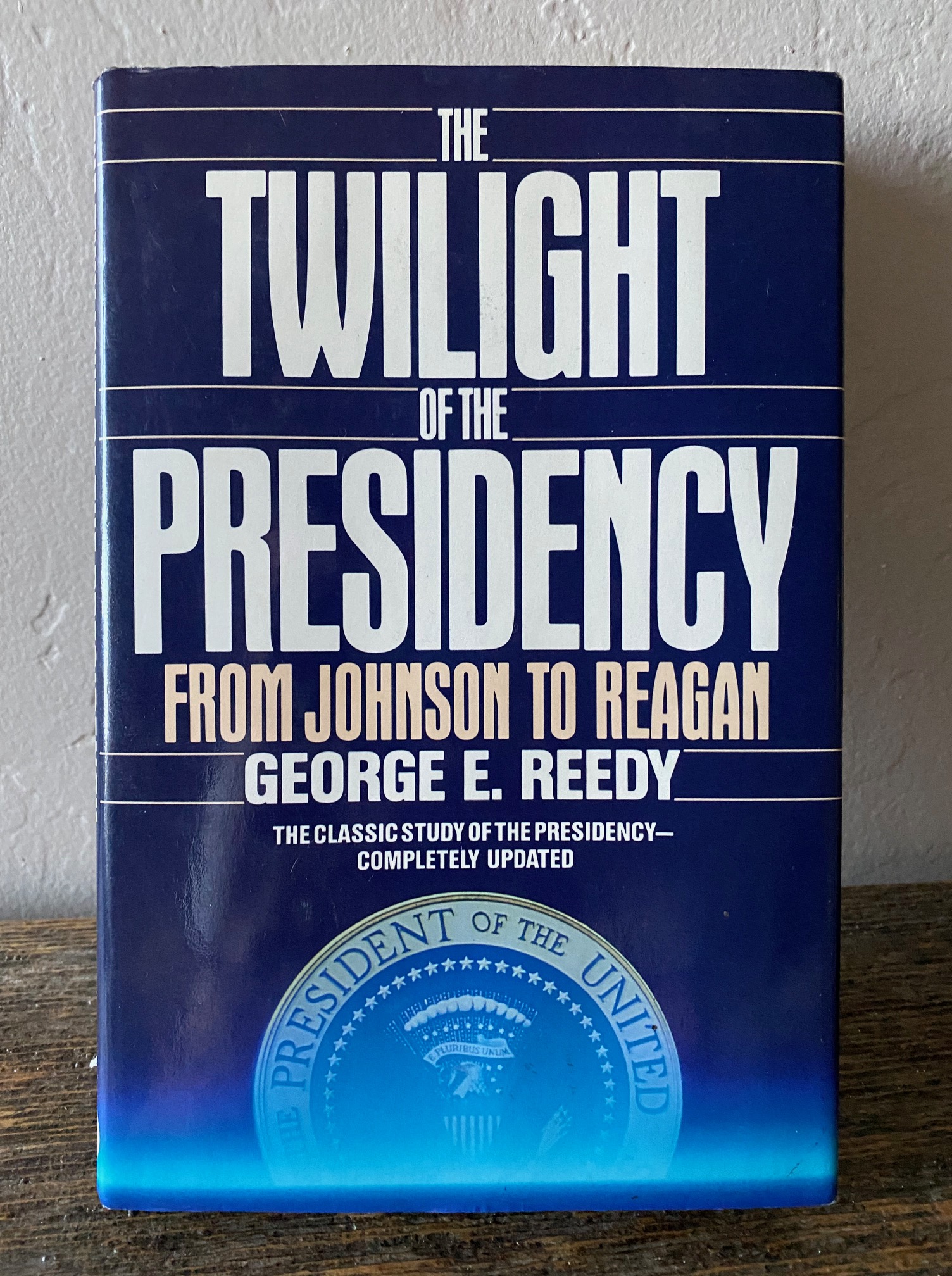
Reedy’s book is fascinating, Reedy was himself Press Secretary and a special assistant to LBJ.
This is the bitter lesson we should have learned from Vietnam. In the early days of that conflict, it might have been possible to pull out. My most vivid memories are the meetings early in Lyndon Johnson’s presidency in which his advisers (virtually all holdovers from the Kennedy administration) were looking to him for guidance on how to proceed. He, on the other hand, felt an obligation to continue the Kennedy policies and he was looking to them for indications of what steps could carry out such a course. I will always believe that someone misread a signal from the other side with the resultant commitment to full-scale fighting.
Reedy argues that the presidency is such a powerful and weird job that in effect it always creates something of a monarchy, dependent on the personality of the (so far!) man.
When stories leaked out that Richard Nixon was “talking to the pictures” in the White House, it was taken by many as evidence that he was cracking up. To anyone who has had the opportunity to observe a president at close range, it is perfectly normal conduct.
The tone of Reedy’s book is pretty scholarly, but he’s also a skilled, entertaining presenter:
For many years, a corporation sold a popular mouthwash to the American people on the basis that it would inhibit bad breath. The slogan under which the product was merchandised – “Even your best friends won’t tell you” – meant that the subject was too delicate to mention and that a person could exclude the foulest odors without being aware of the fact. As far as the mouthwash was concerned, the slogan was somewhat misleading: not only your best friends but your worst enemies will tell you if you have bad breath. But the concept that “even your best friends won’t tell you” about unpleasant things applies with tremendous force to the president.
Reedy argues that, even in his boyhood, the President wasn’t really that important, or at least not a constant topic in national life:
For those who have lived long enough to have some political consciousness from the pre-Franklin Delano Roosevelt ere, there will be memories of local politicians who had far greater name identification than the president, even among educated people… the press spent very little time covering presidents.
What changed that? The radio, and TV cameras, and national level communication. Reedy mentions how the TV crews in the Johnson White House started keeping the cameras “warmed up,” a huge advantage that gave LBJ the power to give a TV briefing whenever he wanted. What would Reedy make of Twitter?
On the rise of Henry Kissinger:
When a crisis would break out anywhere in the world, Nixon would call his Secretary of State, who would promise to get “my people” together and report back. The president would then call Kissinger, who would give him at least ten answers before hanging up the phone. Presidents like answers.
Strange times
Posted: January 8, 2021 Filed under: politics Leave a comment
during the takeover of the Capitol by goons I went to see what Eric Trump, the President’s second son, had to say. Turns out it was his birthday so a graphic of balloons was going across his page on my phone
Napoleon meets Metternich
Posted: January 6, 2021 Filed under: politics Leave a commentIn the course of a face-to-face meeting in Dresden in June 1813, Metternich, by now the Austrian foreign minister, reminded Napoleon of the appalling human cost of his wars. ‘In ordinary times,’ Metternich observed, ‘armies are formed of only a small part of the population. Today it is the whole people that you have called to arms.’ This was a matter also of ‘future generations’, he remarked, in reference to the extreme youth of many in the latest cohort of recruits who had perished on the Russian campaign. Napoleon made an extraordinary reply. ‘You are no soldier,’ he barked, ‘and you do not know what goes on in the soul of a soldier. I was brought up in military camps, I know only the camps, and a man such as I am does not give a fuck about the lives of a million men’ – ‘un homme comme moi se f(out) de la vie d’un million d’hommes.’ Metternich sometimes wondered how Napoleon did not shrink from himself in horror at the pain and injury he had inflicted. Here was the answer. A lasting peace with such a man was not possible. That the Napoleon who turned up to meet Metternich the day after this chilling exchange was the soul of amiability and charm merely confirmed his intuition.
The Napoleon whom Metternich came to know resembled a Calabrian crime boss: tender to the point of indulgence with his family, formidably shrewd and utterly pitiless in his dealings with the wider world.
Must the history-makers be psychos? Reminded of the scene in Oliver Stone’s Nixon:


Politics and drama in ancient Athens
Posted: December 16, 2020 Filed under: actors, politics Leave a commentAll art has a political dimension, but tragedy actually began life in fifth-century Athens as a political institution, locked into the structures of the state. The authorities appointed an official to train and pay the Chorus, the city preserved play scripts in its archives, and there was a state fund which poor Athenians could draw on for the entry fee. Tragedy was a form of ethicopolitical education for the city state as a whole, not just a night off for the toffs.
Wild. What if the US government paid for movie tickets? They probably should! We were pretty close to a merger like this during World War II I suppose, when they’d show the GIs Mrs. Miniver and stuff.
That’s Terry Eagleton reviewing A Cultural History of Tragedy: Vols I-VI edited by Rebecca Bushnell in LRB back in February. Cleaning out my files!
BJ and Ursula
Posted: December 10, 2020 Filed under: food, politics Leave a comment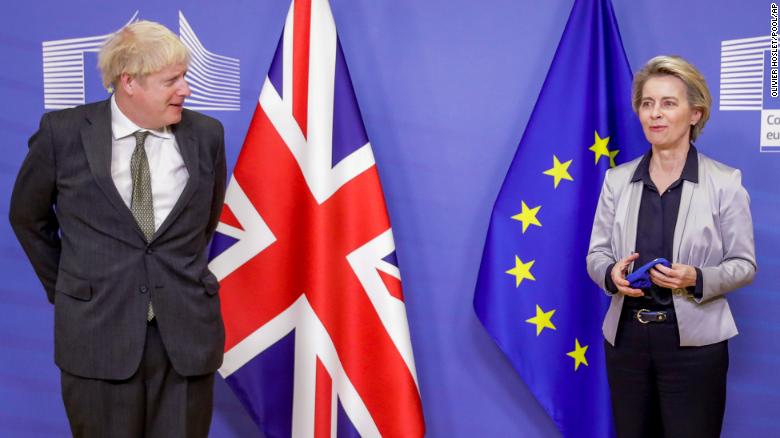
Struck by how much the visuals of these two, Boris Johnson and EU president Ursula von der Leyen, look like a Black Mirror version of Trump and Hillary.
The group dined on a starter of pumpkin soup with scallops; a main of steamed turbot, mashed potatoes with wasabi and vegetables; and a desert of pavlova with exotic fruit and coconut sorbet. It was fitting that fish featured on the menu, given arrangements for fisheries is one of three outstanding sticking points in the trade talks, and particularly scallops, which were the subject of clashes between British and French fishermen in 2018.
source. Love the idea of pointedly serving someone fish.
Ursula von der Leyen is interesting. She has seven children? And maybe plagarized her doctoral thesis?
Von der Leyen’s father’s grandparents were the cotton merchant Carl Albrecht (1875–1952) and Mary Ladson Robertson (1883–1960), an American who belonged to a plantation owning family of the southern aristocracy from Charleston, South Carolina. Her American ancestors played a significant role in the British colonization of the Americas, and she descends from many of the first English settlers of Carolina, Virginia, Pennsylvania and Barbados, and from numerous colonial-era governors. Among her ancestors were Carolina governors John Yeamans, James Moore, Robert Gibbes, Thomas Smith and Joseph Blake, Pennsylvania deputy governor Samuel Carpenter, and the American revolutionary and lieutenant governor of South Carolina James Ladson. The Ladson family were large plantation owners and her ancestor James H. Ladson owned over 200 slaves by the time slavery in the United States was abolished; her relatives and ancestors were among the wealthiest in British North America in the 18th century, and she descends from one of the largest British slave traders of the era, Joseph Wragg.
Boris Johnson for his part has been getting away with stuff his whole life. As with the naughty schoolboys of my youth, I have a desire both to see him “caught” and punished and also to see him get away with it. He seems to thrive in the space where, like, a Dec 31 deadline looms, and there’s lots of technical details to work out, and he’s barely started.
Interested by this developing story
Posted: November 19, 2020 Filed under: politics Leave a commentabout a possible job for Pete Buttigieg in a Biden administration:
(from Politico, 10/22). Low on reward and high on risk. Sounds like a job for a hero who’s interested in taking on tough problems.
But it sounds like, reasonably enough, Buttigieg wants an easier, more fun job. From CBS:
Buttigieg, meanwhile, is under consideration for U.N. ambassador. Aides to the military veteran and former South Bend, Indiana mayor were told that some transition officials envisioned him serving as secretary of the Department of Veterans Affairs. But the mayor made clear, along with his team, his preference for representing the U.S. before the world body or in another Cabinet position, two people familiar with the Cabinet discussions explained. A representative for Buttigieg declined to comment.
One factor in picking a VA secretary will be finding someone with experience managing large organizations, according to people involved in the transition. The VA is one of the largest federal departments and one of the largest hospitals systems in the world, requiring management of hundreds of thousands of employees.
It’ll be interesting to see what happens!
a haiku
Posted: November 5, 2020 Filed under: politics, presidents Leave a comment
The interviewer is Jon Wiener, LA Review of Books, Sept 11, 2003
JW: Most pundits emphasized the unique and unprecedented qualities of the Bush v. Gore contest in Florida that ended the 2000 election – but you wrote that the events in Florida were “not entirely predictable, but entirely familiar.” What do you mean.
JD: It was entirely predictable: at the most immediate level, the election was that close because both candidates had run the same campaign directed at the same small number of people. Florida had a certain poetry to it; it was like a haiku of what the process had become.
The goal: being in power
Posted: April 6, 2020 Filed under: America Since 1945, politics Leave a comment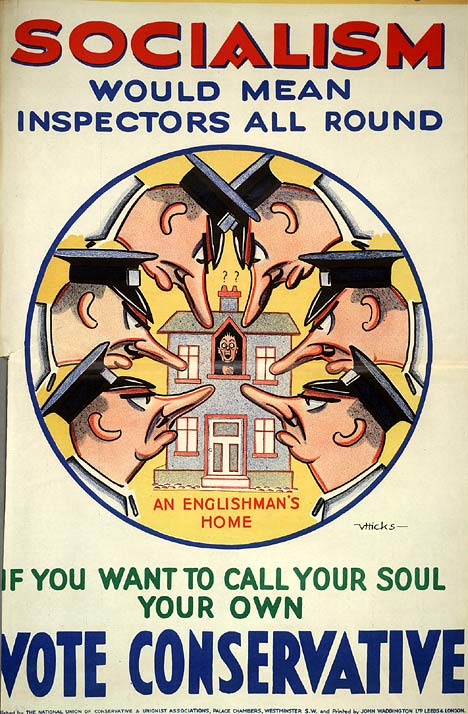
Baffled by politics in the last four years or so, I’ve been thinking quite a bit about this Bagehot column in The Economist from 21 Dec 2019.
It’s probably behind a paywall for non-subscribers, but I’ll try and give the jist. In the 20th and (so far) 21st centuries the UK Conservatives have been in power for longer than any other party. Why?
It’s because the Conservative Party views their job as being in power. That’s it. That’s their meaning and their purpose. The Conservative Party is not guided by any principles or beliefs or philosophies. It may pretend to be, individual members may be, that might be part of the whole stew, but the job of the party is to be in power.
Evelyn Waugh once complained that the Tories had never succeeded in turning the clock back for a single minute. But this is exactly why they have been so successful. The party has demonstrated a genius for anticipating what Harold Macmillan once called “the winds of change”, and harnessing those winds to its own purposes.
They keep their eyes on the mission:
The Conservatives have always been quick to dump people or principles when they become obstacles to the successful pursuit of power. Theresa May immediately sacked her two chief advisers, Fiona Hill and Nick Timothy, after the party’s poor performance in 2017, whereas Jeremy Corbyn is still clinging on to Karie Murphy and Seumas Milne after Labour’s devastating failure last week.
Mr. Johnson keeps with this tradition:
He succeeded in this where Mrs May failed because he possessed the other great Tory weapons. He has been willing to sacrifice anything in the pursuit of office. Beneath the bumbling exterior lies a ruthless, power-seeking machine. His withdrawal of the whip from 21 colleagues (some of them close friends) in September made Macmillan’s “night of the long knives” in 1962 look tame.
When I try to think about American politics, it helps to imagine that the Republican Party understands its job: getting power, keeping power, staying in power. The issues are irrelevant as long as they serve this goal. That’s why various attacks about the absolute hypocrisy of “pro life”ideas, or pretend deficit hawkishness, or “small government” –> enormous bailouts whenever necessary, etc etc just don’t stick or have any meaning. You’re falling for the game if you fall for that.
Now, what the point of the Democratic Party is I’m not sure. It might be “losing nobly,” or something, as evidenced by the career of this longtime Democratic operative and summed up by this speech. Or maybe it’s “not appearing too extreme.” Or “making people feel ok about themselves.” In any case, it’s not as focused a mission, and it’s not gonna be as successful until it gets figured out.
Maybe the Democrats need to remember what Hillary Clinton and Barack Obama’s supposed mentor, Saul Alinsky, put bluntly:
Horwitt says that, when Alinsky would ask new students why they wanted to organize, they would invariably respond with selfless bromides about wanting to help others. Alinsky would then scream back at them that there was a one-word answer: “You want to organize for power!“
Source on that.
cause a scene
Posted: March 26, 2020 Filed under: politics Leave a comment
You’re the Speaker of the House, you’re eighty years old, two trillion dollars on the line, and the problem is someone might “cause a scene.”
The idea of “causing a scene worth thinking about!
When I read about UK or USA politics
Posted: January 31, 2020 Filed under: America Since 1945, politics Leave a comment
sometimes I’m just like, haven’t we seen this before?
 Helytimes
