Lucius Fairchild
Posted: May 9, 2026 Filed under: the California Condition Leave a commentWriting of Gold Rush California in Americans and The California Dream, 1845-1815, Kevin Starr tells us:
“Five years,” wrote Prentice Mulford, “was the longest period any one expected to stay. Five years at most was to be given to rifling California of her treasures, and then that country was to be thrown aside like a used-up newspaper and the rich adventurers would spend the remainder of their days in wealth, peace, and prosperity at their Eastern homes.” Leonard Kip of Albany, New York (brother of the first Protestant Episcopal missionary bishop to California), and John Hale of North Bloomfield, New York, rushed home after a year to write discouraging reports. M. T. McClellan of Jackson County, Missouri, made his opinion known in no uncertain terms: “I do not like this country-I do not like the climate, and more than all I abhor and detest the society; I never expect to sow a seed or plant a grain in this country” Others found themselves and their future in California, although the West was not to be the scene of their fulfillment. Having seen the elephant (as the expression went), they returned to Eastern careers. Lucius Fairchild, a seventeen-year-old clerk in a dry goods store, left Madison, Wisconsin, in 1849 to cross the plains. “I don’t see how I could be satisfied to work for 12 or 15 dollars per Month when I can make that here in two days,” Fairchild wrote home from California. He stayed six years, a miner, a cattleman in Siskiyou, and a businessman. He considered those years a time of emancipation and preparation, a way of making sure that he would never have to step back behind the dry goods counter. When he returned to Madison-in high boots, spurs, a wide-brimmed hat, a money belt strapped around his waist-it was to play a man’s part. Fairchild studied for the bar, won promotion to brigadier in the Civil War, served three terms as governor of Wisconsin, represented the United States at the Court of Saint James’s, and had his portrait painted by John Singer Sargent.
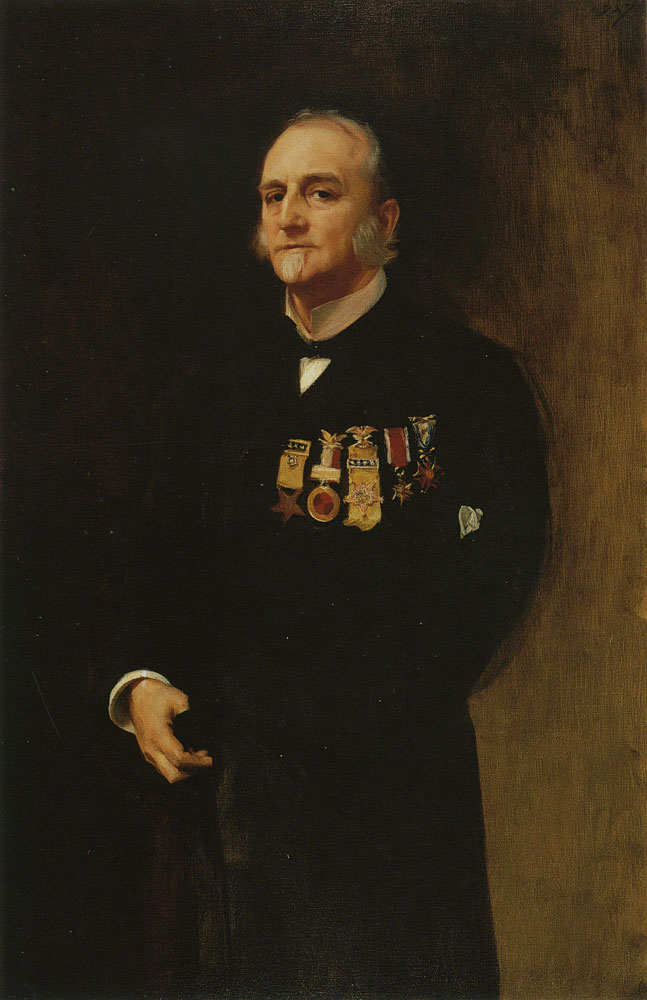
Not sure I love Sargeant’s portrait here, reminds me of The Generals. I prefer just the photographic image of Fairchild:
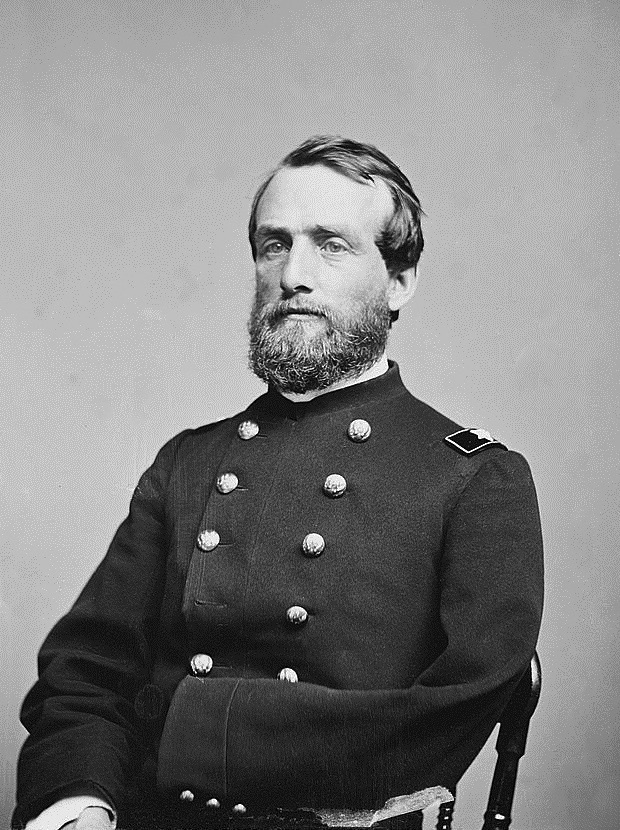
Note that Lucius Fairchild (along with Levi-Strauss, Leland Stanford, Wells and Fargo, Ghiradelli, and Studebaker) didn’t make his fortune in gold but in “picks and shovels“:
Once in California Fairchild did not pan for gold, but instead tilled soil, butchered cattle, waited tables, and farmed. Fairchild’s hard worked attracted the eye of democrat politician Elijah Steele who eventually became Fairchild’s business partner in trading beef. In 1855 after six years in California Fairchild sold his beef business to Steele for $10,000. After selling his business in California Fairchild moved back to Wisconsin.
(Did anybody make a lasting fortune from California gold? Most of Hearst’s money came from the Comstock Lode, the silver of Virginia City, Nevada, and then of course Deadwood. I guess there were the Murphys. I gotta check out Murphy’s Hotel sometime:
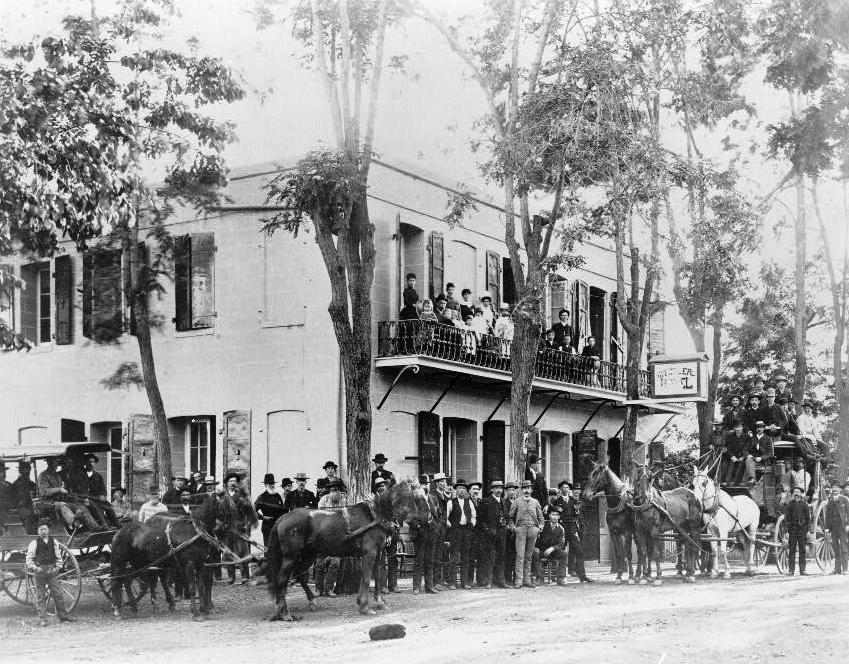
More recently:
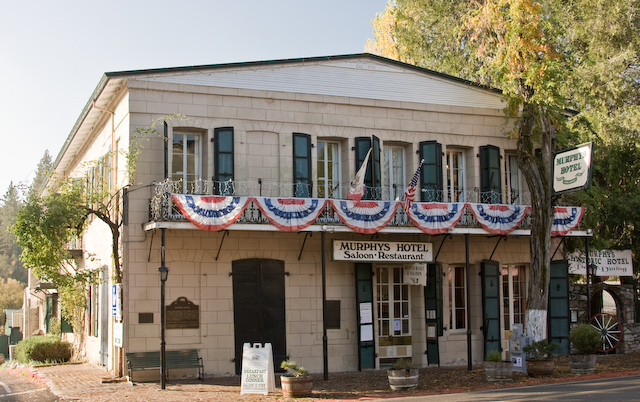
That part of California is kind of dispiriting. Takes forever to drive around in the hills, it’s all been dug up and tossed over like an anthill, hot in summer impossible in winter, the forest is suffering, touristy, and the tourists don’t seem sure what they’re looking at. Then again I was there in a fire and drought time. The trees were like dry matchsticks.)
Lucius Fairchild had an exciting and no doubt terrifying July 1, 1863, in Gettysburg, PA:
The 2nd Wisconsin… distinguished themselves at … Seminary Ridge during the first day of fighting , being the first infantry regiment to make close contact with the Confederate Army. During the engagement, at approximately 10:00, the 2nd Wisconsin Infantry delivered a striking blow by capturing very first Confederate general officer of the war, Brig. Gen. James J. Archer. Almost immediately after this success, the regiment was ambushed by an attack on their right flank, losing seventy-seven percent of their ranks, including most officers. Fairchild was shot in the upper arm, captured, tended to, and released.
You can look inside his vest in this video from the Wisconsin Veterans Museum.

