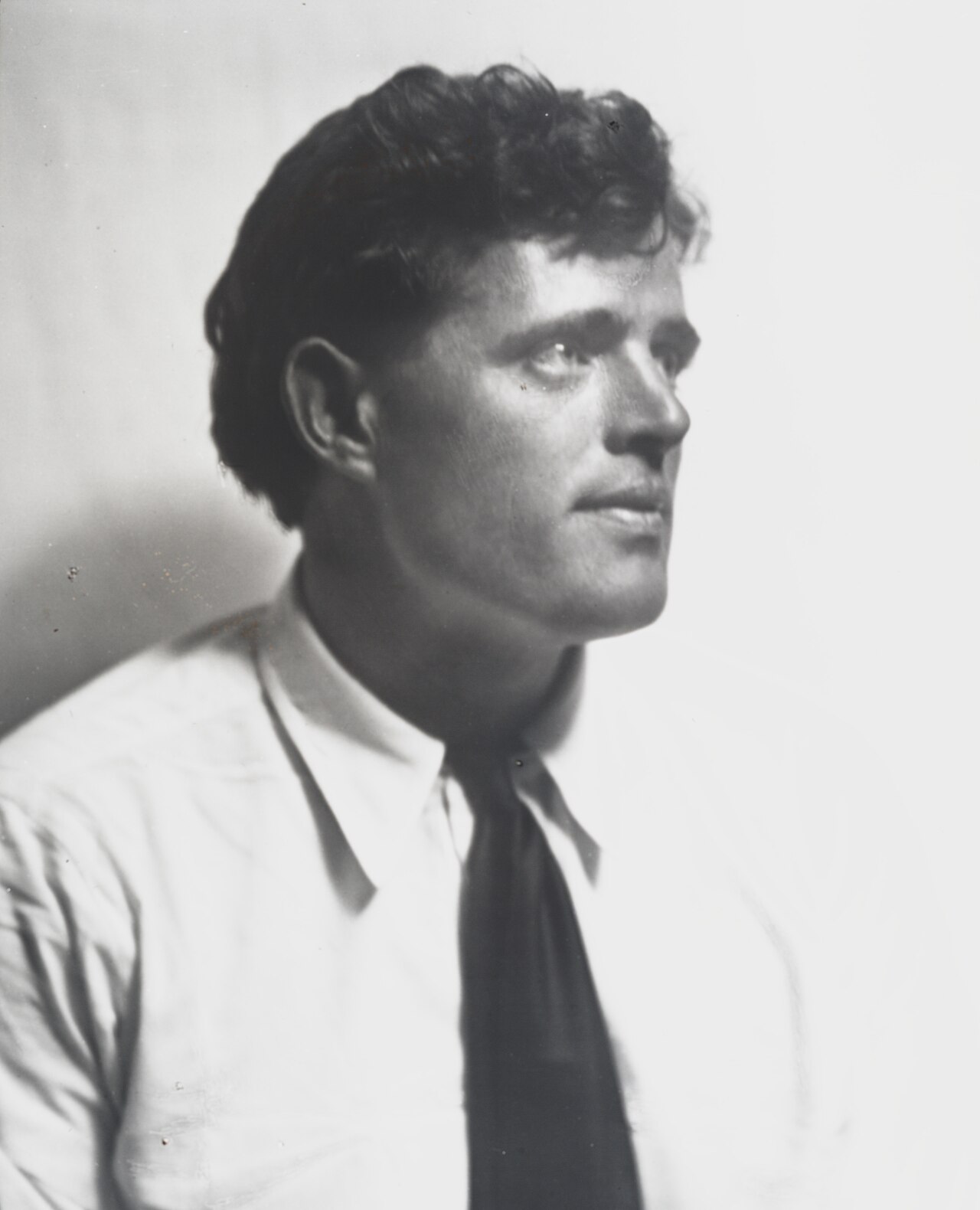
Kevin Starr on Jack London
Posted: May 16, 2026 Filed under: the California Condition Leave a comment
London’s socialism always had a streak of elitism in it, and a good deal of pose. He liked to play working class intellectual when it served his purposes. Invited to a prominent Piedmont house, he featured a flannel shirt, but, as someone there remarked, Jack’s badge of solidarity with the working class “looked as if it had been specially laundered for the occasion.” Mark Twain saw straight through to the ambiguity of London’s hopes for revolution. “It would serve this man London right to have the working class get control of things,” said Twain. “He would have to call out the militia to collect his royalties...
His deficient sense of culture-which could see in Paula Forrest such heraldic expression of social value-was the direct result of personal experience. Yet London’s psychological development took place within a specific context, California at the turn of the century. Social and personal experiences were concurrent and reinforcing. In a sense, London’s was a representative quest. His search for identity, for a place in the sun, was also contemporary California’s Like many Californians, he often pathetically misread signals, confusing consumption with culture, display with code, and aspiration with achievement. London bore within himself the burden of an ambiguous history, with its violent hates and tangled drives, and so did California.
…
His foster-father, John London, had been a vague and shadowy presence, embarrassingly aromatic with the smell of failure. He hounded his son for money (so London said in 1898), pursuing Jack to the offices of the school journal at Oakland City High School to borrow fifty cents. If unsuccessful, he would shamelessly wheedle the money from his son’s friends. In his mother-a strange, eccentric creature, harsh, compulsive-London could see only a burden of mutual shame, mother for son, son for mother, and rejection.
“I do not ever remember ever receiving a caress from my mother when I was young,” he recalled. Whether he did or not, he wanted that to be the case. He accused his mother of forcing her husband to beat him, after which London Junior and Senior fell weeping into each other’s arms.
…
Through the pseudo-historical terms of an imagined impoverished child-hood, London gave mythic structure to his inner trauma of repudiation and rejection, a mythic past onto which he later grafted his version of California history. All his life he whined of the poverty of his childhood, which was simply not the case. “I never had a boyhood,” Jack said, “and I seem to be hunting for that lost boyhood.” He meant that he had a boyhood he chose not to remember. He had put together his personal myth as carly as 1908, complaining to his upper bourgeois girl friend Mabel Applegarth (appearing as Ruth Morse in Martin Eden) that as a boy he was so hungry for meat that he would steal from lunchbags at school. “Great God!” moaned London, “when those voungsters threw chunks of meat on the ground because of surfeit, I could have dragged it from the dirt and eaten it”-“This meat incident is an epitome of my whole life”-
“Hungry! Hungry! Hungry! From the time I stole meat and knew no call above my belly, to now when the call is higher, it has been hunger, nothing but hunger. The fact was, Flora London often served steak-but she insisted upon putting newspapers under the plates to prevent meat juice from spashing upon her tablecloth. In the newspapers, London could remember his mother’s eccentricity, with more than faint overtones of hostility and resentment, and the seedy inconsequentiality, not grim poverty, of their social position. Psychological and social expectations fused, and the memory became one of no meat, not no love and no social position, as symbolized in newspaper place-mats. In later life London loved bloody rare steaks and half-cooked duck, which he devoured with juice-spilling abandon.
The first larger myth to be grafted onto this story of a deprived childhood was socialism, London’s youthful systematization of experience. Socialism explained boyhood rejection in socio-economic terms. Laced with strong draughts of Darwin and Nietzsche, socialism offered a route of escape. Around 1905 or so, just after the publication of The Sea Wolf, London had what he called the Long Sickness, a sense of failure and self loathing. His marriage to Charmian was part of his effort to come out of this depression. Although he continued to sign letters “Yours for the revolution,” socialism ceded to Sonoma as London’s most vital myth. Like socialism, Sonoma explained the facts of dispossession and recovery: how old Americans had lost out in the California scramble and how on the land they would reclaim their rightful place. Sonoma’s revolution was agricultural, not industrial, but just as redeeming a myth. If London could not storm the barricades in pressed flannels, then he would lead a counter-march across scientifically terraced fields and orchards, astride a spirited stallion, dressed in boots, riding togs, and Baden-Powell.
Both socialism and Sonoma were more matters of fantasy than hardheaded diagnosis. London could not relate closely enough to any society to coax forward realistic, pragmatic imperatives. Psycho-sexuality had much to do with determining what forms of social expression appealed to him. London grew up dominated by women, first his mother, and then his sister Eliza, who supervised Jack when their parents left them alone on the ranch to scour the countryside for spiritualist meetings. (Eliza later managed the Sonoma ranch in Jack’s absences.) Lonely and shy, young London read a lot, dreamed of becoming a poet or a composer.
Schoolmates taunted him for being a sissy. His aesthetic boyhood tastes later embarrassed him.
… He recreated himself as a Huck Finn of the Oakland water-front, ignoring his withdrawn pre-adolescent years. Ideologically and psychologically he developed a he-man complex, playing the well advertised womanizer, instructing his barber that he wanted his hair “not fancy, you know, but rough,” filling his fiction with vanquishing males…
London’s friendship with George Sterling-to whom in 1909 he sent from the Solomon Islands a dried clitoris-was romantically intense, characterized at one point by an exchange of confiding and confessional letters slipped wordlessly into each other’s pockets. London called Sterling “Greek” and answered to Sterling’s “Wolf.” He had always been searching for “the great Man-Comrade,” London told Charmian in a love-letter, and had first wished that she were a man. He dreamed at night in later life of a man “to whom he would eventually bend a vanquished intelligence.” “Imperial, inexorable with destiny,” this vanquisher would descend a staircase, at the base of which waited a psychically ravished Jack.
…Tormented by toothache, he loved to pull other people’s teeth, having a portablé dental kit for the purpose. Obsessed with meat, he once barbecued a snake, laughing as some of his guests vomited when told what they had just eaten. He loved violent practical jokes, hitting from behind with a rubber mallet, booby-trapping books with explosives.
One contemporary at least felt Jack’s tastes for aggressive pranks “evidence of a serious mental condition.” He loved to write of the cruel matings of wild animals…
As a younger man, he especially relished San Francisco’s Chinese bordellos, with their contrived practices. After bloody rare steak and drinks on the Barbary Coast, Jack would head for one of San Francisco’s many houses, where, as he described it, “my most savage natural instincts are unleashed. I can be cruel or kind, according to my whim and my pocketbook. What more, after being well fed, may a man want? There is mastery in it. A fecling of power, a satisfaction of the instinct that inclines us toward beauty.”..
Aggression, distrust, ambivalent sexuality, hatred of women—such psychological facts conditioned London’s capacity for social existence and for a theory of society. Like his mannish heroines, the ranch represented a male ideal—managed, paradoxically, by Jack’s older sister. As a utopian enterprise, it was conceived in aggression against the California fact. The lineaments and contours of that dream-realm proceeded partially from a subliminal life common to both London and California. Through Sonoma myth London partook in the larger myth of California. There-like California-he sought to find a heroic past. There-like California-he sought to synthesize vigor and intellect. There-like California-out of private but not irrelevant compulsions he sought to manifest a sense of regional identity and to glory in regional possibilities. A confused inner life made fulfillment of this ideal impossible, distorting his relation to the land, alienating him from any form of community, driving him to self-destruction: over-eating, over-drinking, and-on his sleeping porch in the early hours of 22 November 1916—over-dosing himself with morphine and atropine sulphates. It was not suicide in the unambiguous sense of the word. Waking in the night with an attack of renal colic, London took what proved to be an overdose, complicated by the alcohol in his system, in an effort to stop the excruciating pain. But when one considers what had brought about London’s uraemic condition-his drinking, his disregard of doctors’ advice that he exercise his disintegrating body, the compulsive devouring twice a day of near-raw venison and wild duck—a pattern of self-destruction is quite clear.
London’s psychic distress paralleled California’s own internal social tensions. Latent homosexuality, anxieties about manhood, had an analogue in California’s turn-of-the-century determination to identify with the titanic energies that had pulsated through society during the frontier period, energies which both attracted and repelled a genteel generation.
His insecurity, his intimidation by an imagined hostile high culture, characterized California’s ambivalent speculations about style and value. It was the reverse aspect of the determination to retain frontier vigor, an intimidation by the East of the fact and the East of the mind—an Fast so-phisticated, impervious, assured of its history, assured of its caste. Like California, London was certain of none of these things and so he constructed a myth, not by himself, but in concert with fellow Californians.
His flight into narcissism and fantasy, expressed mythically in the remembered story of his own life and in his version of California history, expressed spatially on the ranch, paralleled California’s appropriation of a fabled Hispanic era and a mythically redemptive frontier. London’s death in one-and by no means exclusive-sense came when his myth, his iden-tity, broke down.
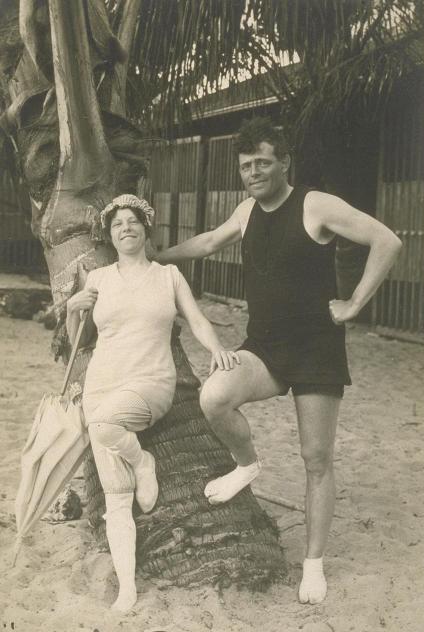
Jack London bought a sloop and was an oyster pirate, went as a crewman on a sealing expedition to the coast of Japan, was a hobo and a tramp, arrested for vagrancy in Buffalo, NY, all before he enrolled in high school.
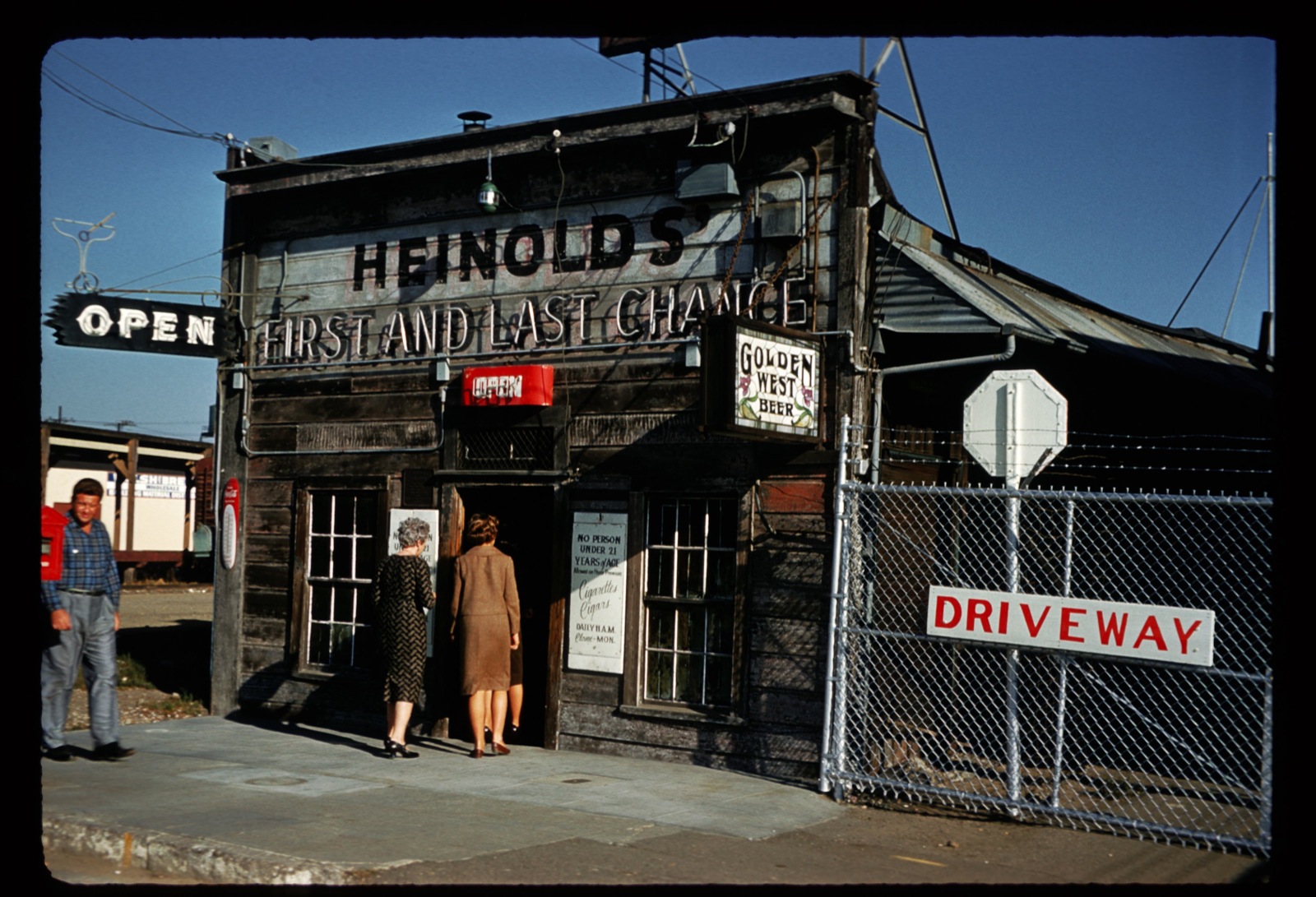
Next time I’m in Oakland I must go to Heinold’s.