Whole Foods didn’t have the mezcal I like
Posted: July 31, 2015 Filed under: America Since 1945, food, world Leave a comment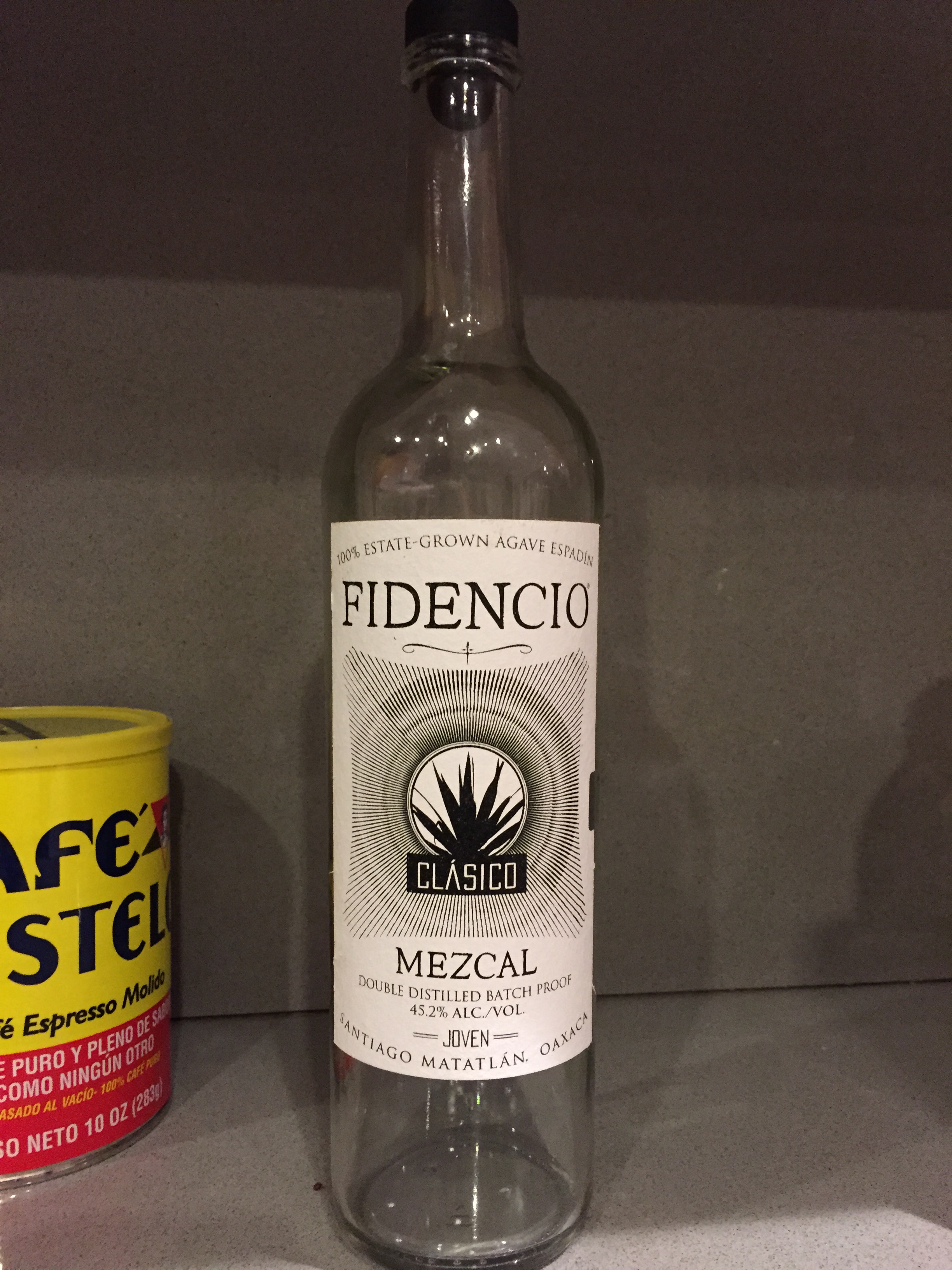
You can call that the ultimate #firstworldproblem. But I bet not being able to find your favorite alcohol is a relatable problem in every nation on Earth, among every race* and at every level of wealth and poverty.
* how many races are there? is this a useful way to categorize people? was it ever? (was thinking the other day about “Asian/Pacific Islander.” Are a Tongan and a Han Chinese in Beijing any more related than a white guy from Dublin and a black man from Senegal? )
Food
Posted: May 13, 2015 Filed under: food Leave a comment The food in 2001: A Space Odyssey is what I’m looking for. Four nourishing mushes you eat with a monofork.
Bulletproof
Posted: December 15, 2014 Filed under: America Since 1945, food, the California Condition, Tibet Leave a comment
NYTimes article about “Bulletproof,” a fad/product:
The recipe — a riff on the yak butter tea Mr. Asprey found restorative while hiking in Tibet — calls for low-mold coffee beans; at least two tablespoons of unsalted butter (grass-fed, which is higher in Omega 3s and vitamins); and one to two tablespoons of medium-chain triglyceride (MCT) oil, a type of easily digestible fat.
and this sticks out:
Being Bulletproof means never traveling light. After a MacGyver attempt to make coffee in a Chicago hotel room, Brandon Routh, who plays the superhero The Atom on the CW show “Arrow,” now carries ground beans, containers of clarified butter, a silicone squeeze bottle of MCT oil, plus a hand blender and Aeropress filter.
“My energy levels are through the roof compared to what they used to be,” said Mr. Routh, who learned of the drink at a bachelor party, of all places. He added: “My lines just kind of sink in and they’re there when I need them.”

Here’s the thing about my human brain: Routh’s endorsement will end up “counting,” in my brain, certainly sticking way longer, than any carefully researched, cautiously presented bit of scientific evidence.
Already I’m like “well, who’s to argue with Routh? Why would he lie? Am I so arrogant as to not TRY butter coffee?”
(Separate thing: what is with our infatuation with the spiritual powers of Tibet? A strong case could be made that Tibet is a violent, backwards, cruel theocracy historically run by puppet child-monks under control of death-obsessed masters.)

© Joseph F. Rock / National Geographic Image Collection.
Oysters Grilled And Raw
Posted: July 10, 2014 Filed under: food 1 Comment
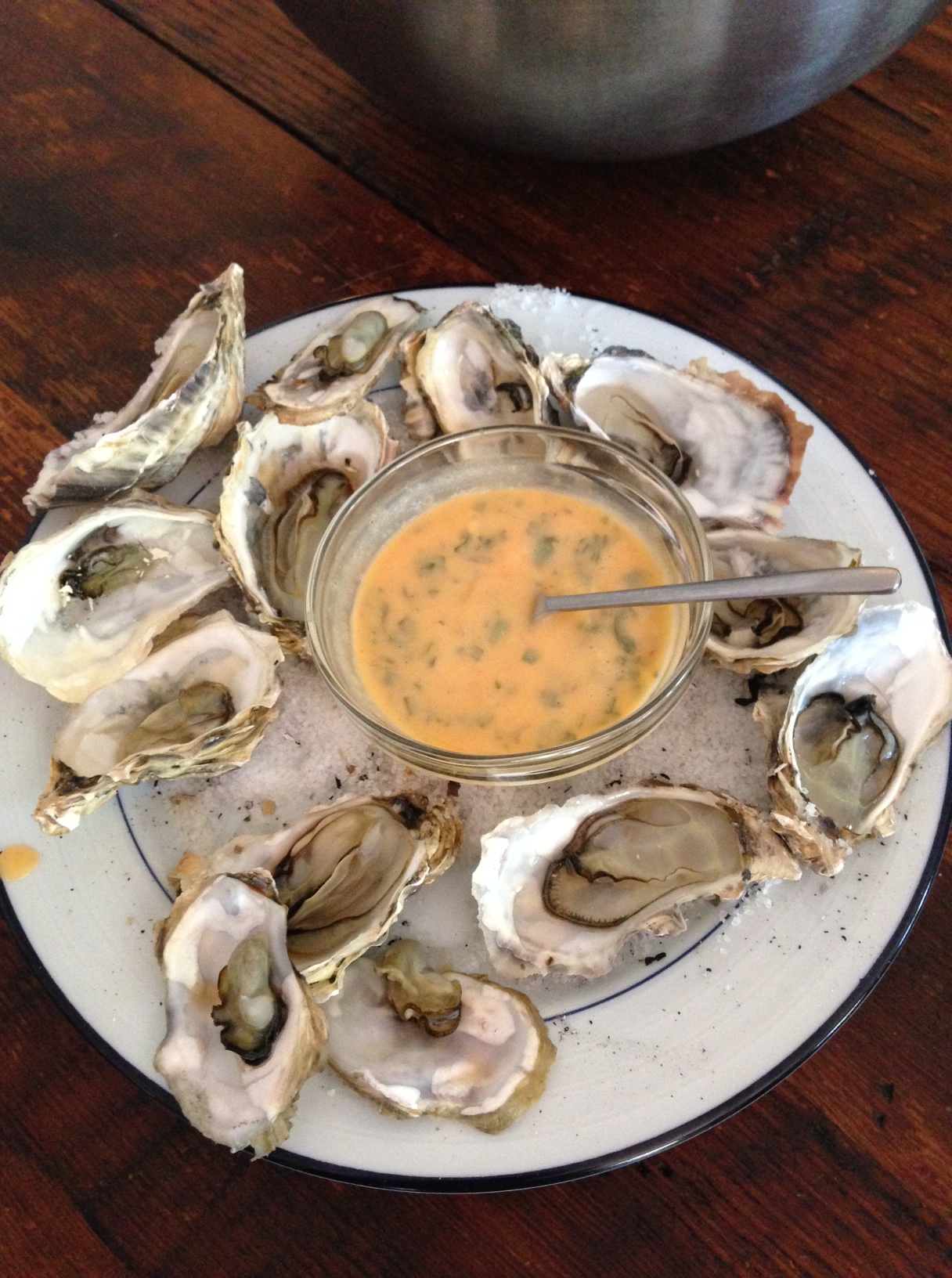
Saw Anthony Bourdain enjoying some grilled oysters in Baja California on “No Reservations,” so I fired some up for Fourth of July.
How To Grill Oysters:
Get the grill really flaming hot (I used mesquite charcoal and mesquite chips)
Put the oysters down, shell on.
(don’t be confused by that top image: the oysters should be in the shell, and the shell should be closed. If the shell’s open, chuck ’em)
In 3-4 minutes they’ll pop open.
Take ’em off (with a glove or towel because they’re hot!).
Pop ’em open with a flathead screwdriver.
For sauce, I used this recipe from Food52 (ht Wrenshall).
Let’s learn more about oysters.
The type I grilled were Pacific oysters. Maybe the most widely grown bivalve in the world.
Crassostrea gigas was named by a Swedish naturalist, Carl Peter Thunberg in 1795. It originated from Japan, where it has been cultured for hundreds of years. It is now the most widely farmed and commercially important oyster in the world, as it is very easy to grow, environmentally tolerant and is easily spread from one area to another. The most significant introductions were to the Pacific Coast of the United States in the 1920s and to France in 1966. In most places, the Pacific oyster was introduced to replace the native oyster stocks which were seriously dwindling due to overfishing or disease. In addition, this species was introduced to create an industry that was previously not available at all in that area. As well as intentional introductions, the Pacific oyster has spread through accidental introductions either through larvae in ballast water or on the hulls of ships. In some places in the world, though, it is considered by some to be an invasive species, where it is outcompeting native species, such as the Olympia oyster in Puget Sound, Washington, the rock oyster, Saccostrea commercialis in the North Island of New Zealand and the blue mussel, Mytilus edulis, in the Wadden Sea.
Specifically we had Pacific Gold and Carlsbad. Carlsbad are farmed in Carlsbad, CA:
Here’s Thomas Grimm, co-founder of Golden Shore, which owns Carlsbad Aquafarm:

What’s the history of oysters in California? Well everyone knows Jack London was an oyster pirate.

But beyond that? My research ends with the mysterious Mose Wicks.
I wanted to learn more about different types of oysters, with maps. I found this great guide on WaitersToday.com.
Since the mid-1800’s most oysters have been cultured or farmed.Clad in rubber boods and rain gear,oyster growers spend hours on blustery beaches nursing their crop.
Along with current efforts to globalize oyster stocks,the growers we use have helped to foster the interest in boutique oysters – gourmet strains,with names reflecting their bays of origin.
In the old days it was simply “Hood Canal Oysters”.Now we’ll have Hamma,Sunset Beach,Pleasent Cove,Annas Bay,Little Creek,and Dabob Bay just to name a few.All of which are Hood Canal.
Many of these oysters come from small scale farms,which like regional vineyards have proliferated in the past 20 years.
 What a helpful site! I look forward to reading more on WaitersToday.
(If you go down to Australia though? to eat the oysters there? you enter a whole new world.
Someday.)
Readers seriously interested in oysters will enjoy Mark Kurlansky’s great book on the subject.

Kurlansky tells us:
Diarist Samuel Pepys often mentioned eating, giving, or receiving oysters for breakfasts, lunches, and inners – in all he mentions oysters fifty times in his diaries. Dr. Johnson fed oysters to his cat, Hodge, buying them personally because he feared that if he sent servants, they would end up resenting the cat.
And:
William K. Brooks, the nineteenth century Maryland pioneer in the study of oysters, said, “A fresh oyster on the half-shell is no more dead than an ox that has been hamstrung.” If the oyster is opened carefully, the diner is eating an animal with a working brain, a stomach, intestines, liver, and a still-beating heart. As for the “liquor,” that watery essence of oyster flavor that all good food writers caution to save, it is mostly oyster blood.
In 1932, at a convention of the Oyster Growers Association in Atlantic City, Dr. Vera Koehring of the U.S. Bureau of Fisheries said that it was cruel and inhuman to crack open an oyster’s shell and pry the animal loose. Dr. Koehring proposed, “The oysters, before being shelled, should be given an anesthetic.”
And:
The New York of the second half of the nineteenth century was a city overtaken by oystermania. It was usual for a family to have two oyster dinners a week, one of which would be on Sunday. It was one of the few moments in culinary history when a single food, served in more or less the same preparations, was commonplace for all socioeconomic levels. It was the food of Delmonico’s and the food of the dangerous slum. The oyster remained inexpensive. Shucked oysters were sold by street vendors for twenty-five cents a quart. The poor person might eat raw oysters from a street stand or have a stew at the market – it was cheap enough – or a wealthy man might get the same raw oysters to start his meal or the same stew for a fish course at the most expensive restaurants. At Delmonico’s, a serving of six or eight oysters, depending on the size, cost twenty-five cents.
This is also just a great book about New York. Maybe the best pop history of Dutch New York after Shorto:

Here’s a good NYTimes article from 2006 about oyster varieties. First two paragraphs:
A FOOTLOOSE young American named Jon Rowley sat in a down-at-the-heels room in Paris one day in the mid-1960’s, reading “A Moveable Feast,” Ernest Hemingway’s posthumously published memoir of life in the city during the 1920’s.
One passage above all seized his attention. Hemingway had written, “As I ate the oysters with their strong taste of the sea and their faint metallic taste that the cold white wine washed away, leaving only the sea taste and the succulent texture, and as I drank their cold liquid from each shell and washed it down with the crisp taste of the wine, I lost the empty feeling and began to be happy and to make plans.”
I guess my point is, oysters are interesting! Let’s agree to meet back here and discuss oyster gender sometime.

Pacific oyster Crassostrea gigas equiped with activity electrodes to follow their daily behavior 24/7
Orange Butter
Posted: February 2, 2013 Filed under: food, New York Leave a comment
from Edward Robb Ellis’ The Epic Of New York City
A delicacy of the day was orange butter, made according to this recipe: “Take new cream two gallons, beat it up to a thicknesse, then add half a pint of orange-flower-water, and as much red wine, and so being become the thicknesse of butter it has both the colour and smell of butter.” Drunkenness was common.
from Onion AV interview with Mel Brooks
Posted: December 20, 2012 Filed under: food 2 Comments
found here.
AVC: A lot of comedians nowadays are very open about their past, and discuss some darkness that drew them to comedy. For some, comedy comes from a place of insecurity and anxiety, very heavy stuff. What’s your take on that? What was there at the very beginning that drove you to comedy? Was it dark?
MB: That’s a good question, about what was the determining factor. What ignited the rocket that sent you up into the vast regions of comedy, and why? I would say, for me, that philosophical treatise about having black beginnings and wanting love to compensate for that, wanting audiences and wanting attention—I say, “Au contraire.” Completely opposite. I want the continuation of my mother’s incredible love and attention to me. I was the baby boy. There were four boys. I was 2 years old when my father died, and my mother had to raise four boys. She must be in heaven, because in those days you washed clothes, you washed diapers. There was no income, and she had to take in home work. My Aunt Sadie brought her work that made these bathing suits and stuff, and ladies’ dresses. And my mother would sometimes do bathing-suit sashes all night. She got $5 or $6, and it was a lot. She could feed us, you know? But certainly she’d feed four boys for that day. It was amazing. But she loved me a lot. I don’t think I learned to walk until I was 5, because she always held me. [Laughs.] She’d say, “You can do anything, good or bad. You’re the best kid.” So I say, “Au contraire.” I think my surge forward into show business and getting audiences to love me was to continue gathering that affection and that love. It’s the opposite of a dark place. I came from a lovely, sunny place. Even though we were poor, you don’t know it. When you’re a kid, you don’t know it. I love franks and beans. I wouldn’t have eaten anything else! I didn’t know that was poor people’s food. [Laughs.] I didn’t know there was such a thing as steak. I knew there were French fries. There was chicken. Things were good.
My mother used to make [lunch for me] when I played with the kids in the street. She’d slice a Kaiser roll and fill it with tomatoes and butter on both sides, salt and pepper. And she’d put it in a brown paper bag and throw it down, and I’d catch it. I’d sit on the curb with Benny and Lenny and whoever, I had my lunch, and I loved it. It couldn’t have been anything better. Except one day I missed. And the brown paper bag, which held the Kaiser roll with all the tomatoes, the sliced tomatoes, and butter, and salt and pepper, smashed on the sidewalk. [Laughs.] So I just carefully peeled it away, peeled the brown paper bag away from it, and held it, and ate it. I began crying, because it was the best thing I had ever eaten in my life. The butter and the tomato had penetrated every crevice of that Kaiser roll. To this day, there will be nothing better.
Bologna in Newfoundland
Posted: December 17, 2012 Filed under: food Leave a comment
from this article on the CBC, ht Tyler Cowen.
Factory Girls by Leslie T. Chang
Posted: December 3, 2012 Filed under: food, writing Leave a comment
The stories of migrant women shared certain features. The arrival in the city was blurry and confused and often involved being tricked in some way. Young women often said they had gone out alone, though in fact they usually traveled with others; they just felt alone. They quickly forgot the names of factories, but certain dates were branded in their minds, like they day they left home or quit a bad factory forever. What a factory actually made was never important; what mattered was the hardship or opportunity that came with working there. the turning point in a migrant’s fortunes always came when she challenged her boss. At the moment she risked everything, she emerged from the crowd and forced the world to see her as an individual.
Best sentence:
I would have liked to spend more time with Big Sister Sun, minus the interpretive commentary; it was unendurable to watch one woman cry while another compared her to seaweed.
Highly recommend this excellent, enlightening, moving book. I had heard amazing things about it, but figured it would be either dull or depressing or both. I found it instead to be incredibly compelling. There is a modesty and openness in the way Leslie Chang writes that is very rare in even the best nonfiction. The description of the man who invented “Assembly Line English” is a genuine if somewhat tragic LOL.
I trailed Mr. Wu around the room. I thought he was going to introduce me to some students, but he walked me over to one of the machines instead. “These are so much more unwieldy than my new machines,” he said. “It takes two people to carry one.”
By now it was early evening, and I commented that it was getting a little dark to read without light.
“That’s not bad for the eyes,” he said. “Bright sunshine is bad for the eyes.”
“I’m not saying bright sunshine is good for the eyes,” I said. “I’m just saying it’s not good to read in the dark.”
“That’s not true,” he said heatedly. “That’s only if your eyeballs are not moving. If your eyeballs are moving, it doesn’t matter how dark it is.”
One small complaint. There is a description of the village girl Min going to McDonald’s for the first time. “She brought her face down close to her Big Mac and ate her way through the sandwich one layer at a time.” I could not exactly picture how this worked (like, was she descending on the bun part from the top? did she remove each layer?) and would’ve liked more clarity.


Fish Tea
Posted: November 4, 2012 Filed under: film, food, Jamaica, music Leave a commentHighly recommend the documentary Marley:
on netflix instant. Well-told, dramatic, incredible story about shyness, power, religion, family, belonging, loneliness.
Maybe my favorite parts were the helicopter shots of Jamaica’s crazy topography:

As he was dying, Marley’s mistress Cindy Breakspeare suggested that he go back home and spend his last days drinking fish tea:
Fish tea is a spicy soup in Caribbean cuisine and Jamaican cuisine. It is similar to a fish bouillon and can take four hours to prepare. It includes ground yam, pumpkin, cassava, potatoes and “bottlers,” cooked until very soft. As much as 15 pounds of fish is added to make five gallons.[1] Carrots and cho–cho can also be added. It is flavored with coconut milk and seasoned with various ingredients that may include black pepper, salt, thyme, butter, scallion and season–all.

He didn’t take her advice.
(photo of the Cockpit Country from here)
Chicken of the woods
Posted: October 29, 2012 Filed under: food, New England Leave a comment
Learning about laetiporous thanks to this article, “Cape Cod mushroom fan hit jackpot while foraging,” sent to us by Chestnut Hill office. Three good sentences from the article:
Ian Sullivan saw the giant mushroom and rejoiced. There would be soup that night.
“It’s fun for them to find something that is big and bright orange growing in the woods.”“You have to think like a mushroom,” said Sullivan.

Taco Bell ad inserted into this book?
Posted: September 19, 2012 Filed under: food Leave a comment
“Mark Owen” has just returned to Virginia Beach after the Osama raid:
On my way home, I spotted the neon drive-through sign at the Taco Bell. I always stopped for a south of the border fix on my way home from a deployment, usually in Germany. I had made this stop several times over the years. Pulling into the line, I ordered two crispy tacos, a bean burrito, and a medium Pepsi.
At the window, a high school kid handed me my food and drink. I pulled forward into the parking lot and took out a taco. I spread the paper in my lap and drizzled some fire sauce over the cold, crisp lettuce and ate.

 Helytimes