Fo
Posted: October 24, 2016 Filed under: comedy, Nobel, Uncategorized, writing Leave a comment
People are mad that Dylan won the Nobel Prize for Literature? Why? Because he does music, which is not the same as literature? What is the difference? More sounds? Instruments are allowed? Hmm.
Anyway, have heard no mention in the convo about the time a literal clown won the Nobel Prize.
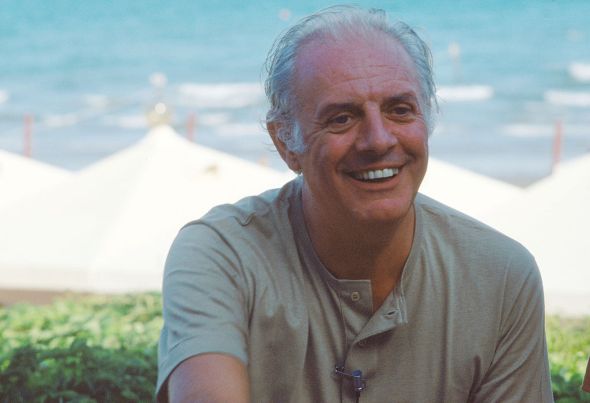
Gorupdebesanez – Own work Il drammaturgo e attore Dario Fo alla Mostra del cinema di Venezia
OK fine Dario Fo was a playwright but what he did was more than just write words down, right?
Mr. Fo attributed the State Department’s change of heart to the intervention of President Ronald Reagan, a former actor. It was, Mr. Fo said dryly, “the gesture of a colleague.”
Was reminded because heard he died. Dario Fo obituary.
Weird vote in Colombia
Posted: October 21, 2016 Filed under: Uncategorized Leave a commentLast month there was a weird and surprising vote in Colombia. I’ve been learning myself about it, and let me share the story as I understand it:

click for source

from the BBC’s helpful Q&A about Farc
Nasty would be a mild word for this fight.

If you’re new to Colombian history it’s easy to lump this 52 year war in with the period known as La Violencia, but no, La Violencia was a whole separate ten year time, starting in 1948, in which maybe 200,000 people died.
Here’s how we got to the vote. The last president of Colombia, Álvaro Uribe, was what you might call “aggressive” in his tactics towards FARC.

Makes sense: FARC killed his dad. His efforts severely diminished FARC if not knocked it to the ropes.
Uribe oversaw, for example, Operation Jaque, that freed Ingrid Betancourt from her FARC captors.

Wiki, Justin Hoch
Colombia entered the Korean War when Laureano Gómez was elected as President. It was the only Latin American country to join the war in a direct military role as an ally of the United States. Particularly important was the resistance of the Colombian troops at Old Baldy.

Camera Operator: SFC. CHARLES M. ROBERTS – DOD ID: HA-SN-98-07069 (old version)
Personnel of the Korean service corps unload logs from an M-39 Armored Utility Vehicle at the RHE 2nd US Inf Div supply point on “Old Baldy” near Chorwon, Korea. Logs are for use in the construction of bunkers. A second M-39 is in the background. Korea, 1 Oct 1952.
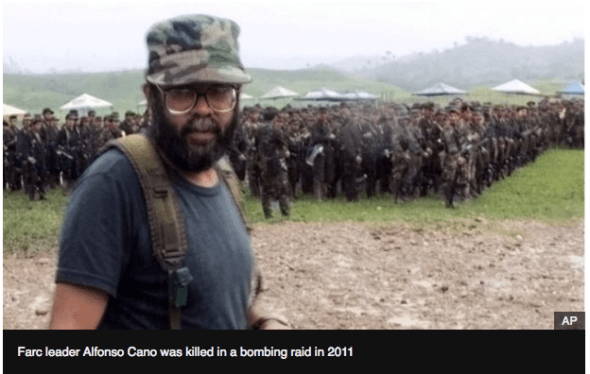

First secretly, then publicly, his guys negotiated with FARC in Havana. The two sides reached an agreement that would end what Santos called the last armed conflict in the Western Hemisphere.
The guy leading FARC is called Timochenko:

from wiki.
According to the United States Department of State, Timoleon Jimenez has set the FARC’s cocaine policies directing and controlling the production, manufacture, and distribution of hundreds of tons of cocaine to the United States and the world, including the “taxation” of the illegal drug trade in Colombia to raise funds for the FARC and the murder of hundreds of people who violated or interfered with the FARC’s cocaine policies
Santos and Timochenko shook hands at a meeting in Havana in June.
All that had to happen to ratify the accord was that Colombia’s people vote on it. Guess what happened?:

Don’t know where CNN got this number, The Economist says 13m people voted. Anyway, low turnout in a country of 47 million, partly because there was a hurricane.
Perhaps many NO voters thought it was bullshit that FARC murderers would get to be in parliament and wouldn’t be punished much for their various cruelties. Says The Economist:
People who live in areas where the FARC has recently been active mostly backed the deal. “We are the ones who’ve had to live with bullets flying around us,” says Freddy Rendón, a cattle rancher in Uribe, a town in Meta, in central Colombia, where Yes won 93.5% of the vote. Those who live in more peaceful parts, including cities, voted No.
After the votes were counted, everybody was apparently surprised and nobody knew what would happen next.
Then, in a funny twist, Santos won the Nobel Peace Prize.

Maybe to give the whole project a peaceward shove from Norway. Some cynics suggested Santos was a little too thirsty for the prize. That’s a little vain perhaps but is it so wrong? There is something funny about how much humans like prizes.
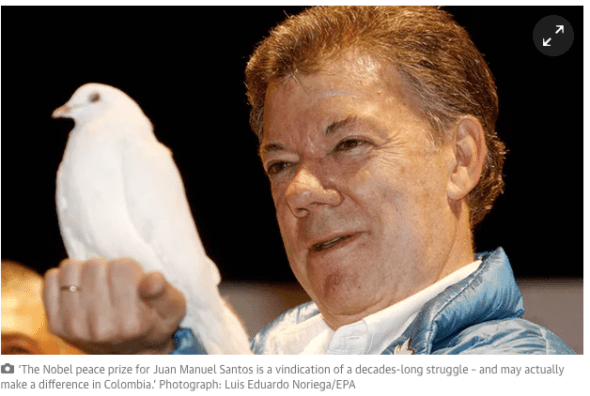
Santos with a bird from The Guardian, click for link.
Me? I’m rooting for peace in Colombia, a country I very much enjoyed visiting.

Popayán, Colombia, in a photo taken by Helytimes.

Only if you like tales of fun and adventure.
Amazon or your local indie bookstore. Pick one up at South Congress Books in Austin, TX for example.

I think you’ll enjoy it.

Colombia.
Inside the La Croix wars: FIZZ vs Glaucus Research
Posted: September 30, 2016 Filed under: beverages, business, Uncategorized 2 Comments
We have the best correspondents here at Helytimes. Anonymous Soda Lover tips us off to the story of FIZZ vs Glaucus Research.
FIZZ is the stock ticker symbol of National Beverage Company, which makes La Croix, the popular sparkling water, Joe Mande enemy, and indispensable hydration agent at Hollywood writers’ rooms:

Myself, I prefer the Perrier slim can, because it is thin and tall like me:

Plus a smaller amount of fluid to become hot in your hand.
But one way or another: Hollywood and indeed America and the world is full of addicts and compulsives who have to consume something constantly. The beer-like but zero-cal zero sugar La Croix fills that hole. Thus, there is an endless market for La Croix.
And indeed, look at National Beverage’s stock price over the last two years:

I cut out what happened this week, when this news came out:

Shares of National Beverage plunged as much as 15 percent on Wednesday after Glaucus Research revealed a short position in the company.
The short selling firm valued the parent company of LaCroix sparkling water at $16.15 per share, more than 65 percent below the stock’s Tuesday closing price of $46.48.
Glaucus’ note alleges that National Beverage “manipulates its reported earnings” as its “reported financial performance is inexplicable.”
Later on Wednesday, National Beverage issued a statement calling the report “false and defamatory.” The stock recovered its losses and ended the day down 8 percent.
“We believe that this ‘report’ was intended to severely manipulate our stock price downward in support of short sellers, whose short position has dramatically increased over recent weeks,” the company said.
First of all, “Glaucus”? Their name comes from the glaucus. Not the ancient Greek sea god:

But the freakish pelagic gastropod, also known as the blue sea slug:

From Glaucus Research’s website:

Glaucus Research, based in Newport Beach, CA, has a rep for bringing the hammer down on fraudulent mid and small-cap Chinese companies. But this week, they dropped a report on FIZZ.
Glaucus alleges all manner of mischief by FIZZ CEO Nick Caporella. At Helytimes we really believe that the first step in evaluating a company is seeing a picture of the CEO. Unfortunately, we can’t find a confirmed pick of Mr. Caporella.
It appears that Nick Caporella personally owns 74% of FIZZ.
We do find this on FIZZ’s website:

Caporella’s letters have been weird before:

This non-English might make more sense when you remember FIZZ also makes Faygo, drink of choice of the Insane Clown Posse:

Now listen. It’s not often that we at Helytimes recommend reading a 56 page report on the finances of a company, but this one is worth a look. For example, have a look at Caporella’s letters to prospective National Beverage Co. buyer Asahi, in which he refers to himself as Nick-San.

Or what about this business about his “little jewel box”?:

FIZZ has hit back hard. They counterattack at the website ReadTheTrueFacts.com.
Glaucus Research is straight-up about the fact that they are short La Croix and thus benefit if the stock goes way down. From Wiki’s page about the glaucus atlanticus:
The Glaucus atlanticus is able to swallow the venomous nematocysts from siphonophores such as the Portuguese man o’ war, and store them in the extremities of its finger-like cerata.Picking up the animal can result in a painful sting, with symptoms similar to those caused by the Portuguese man o’ war.
You can find the latest on FIZZ here. As of this writing, price is $43.32. Glaucus values it at $16.15.
We’ll be watching this battle with interest, with a refreshing Perrier slim can, made by good ol’ Nestlé, in our hand.
Shorter History Of Australia
Posted: August 14, 2016 Filed under: Australia, Uncategorized Leave a comment
Trying to learn a bit more about the history of Australia, a frequent topic here. Barcelona Jim directed me to:
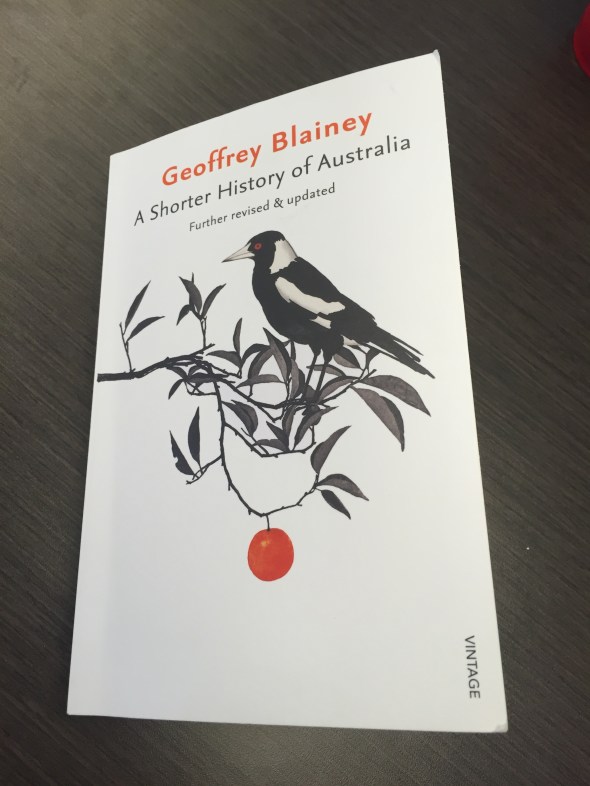
This book is fantastic, just what the doctor ordered, highly readable, interesting on every page. It’s so hard to get good condensed history but Prof. Blainey just crushes it. Some highlights:
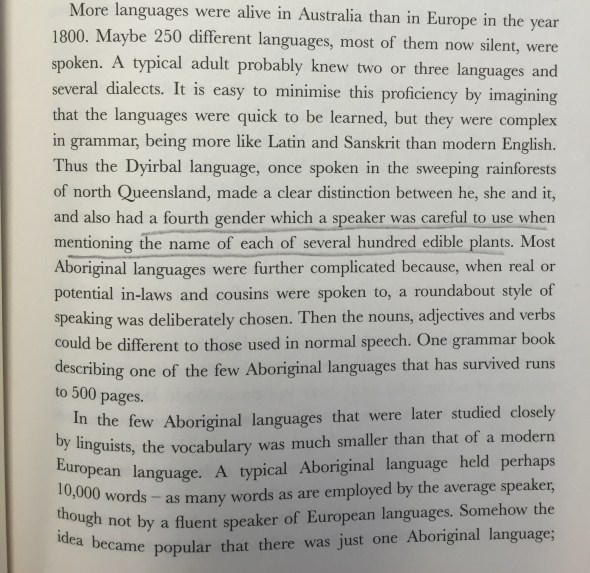

(A nepenthes rowaniae of North Queensland from northqueenslandplants.com)
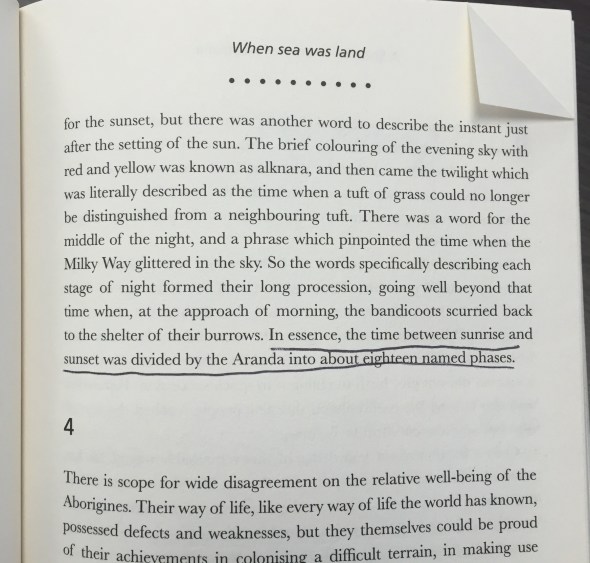
How about the Aranda nighttime divisions?
Delicious trepang:
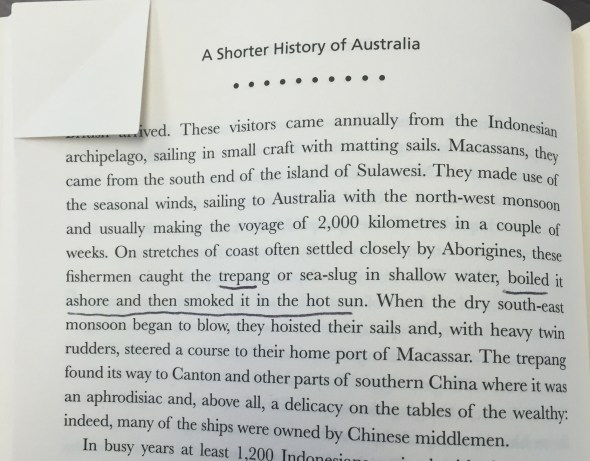

Photo: Gail Ngalwungirr harvesting trepang on South Goulburn Island (NT Department of Fisheries)
The last convicts:

Stamps!
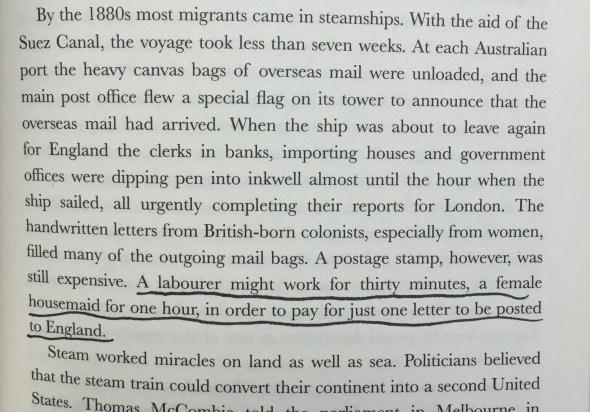
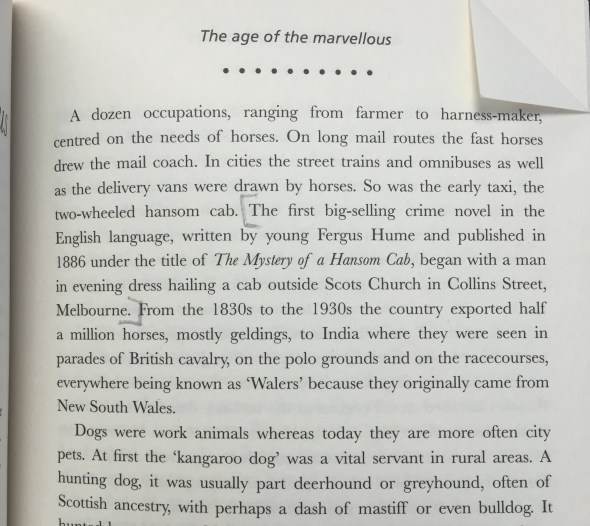
from Wiki:
t eventually became the best selling mystery novel of the Victorian era, author John Sutherland terming it the “most sensationally popular crime and detective novel of the century”. This novel inspired Arthur Conan Doyle to write A Study in Scarlet, which introduced the character Sherlock Holmes. Doyle remarked, “Hansom Cab was a slight tale, mostly sold by ‘puffing’.”
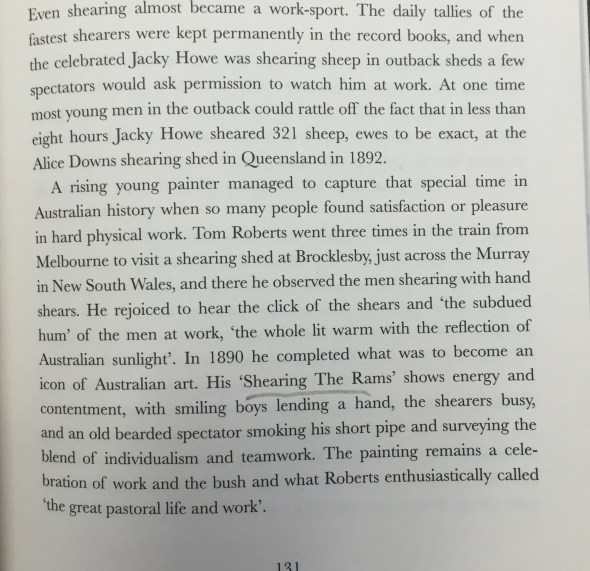
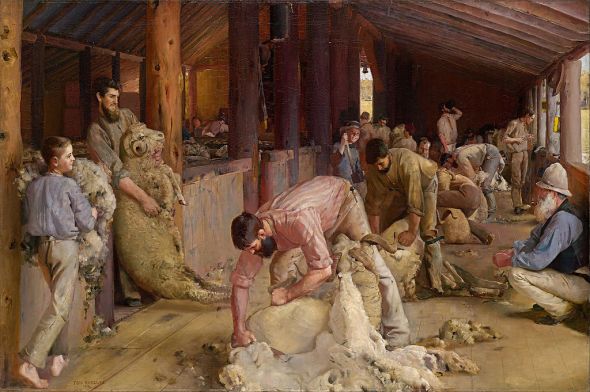
Shearing as serious sports:
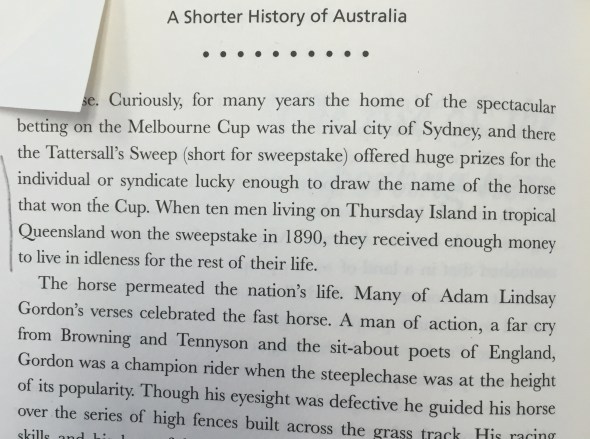
Thursday Island:

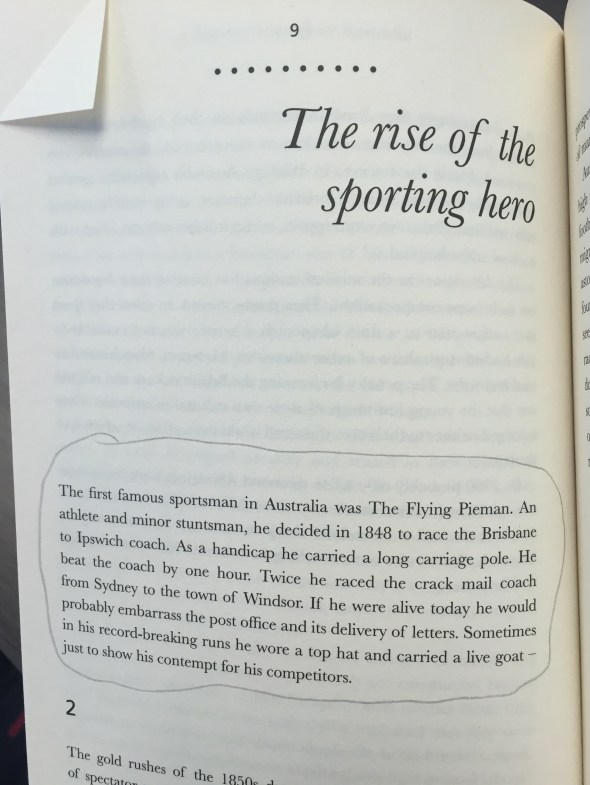
Looks like a nice place to chill. How about the Flying Pieman?:
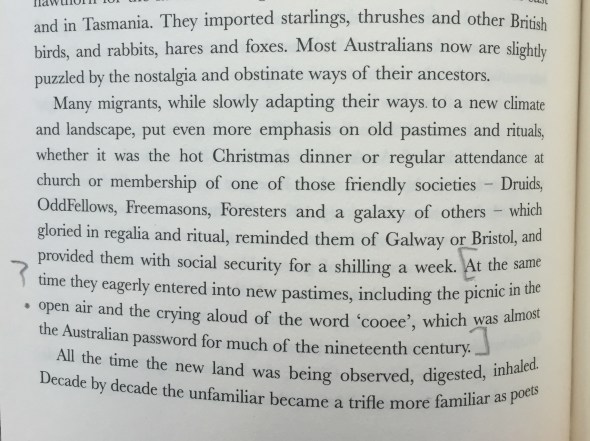
New pasttimes:
What?
What the hell were the Mama’s and the Papa’s up to?
Posted: May 30, 2016 Filed under: Uncategorized Leave a comment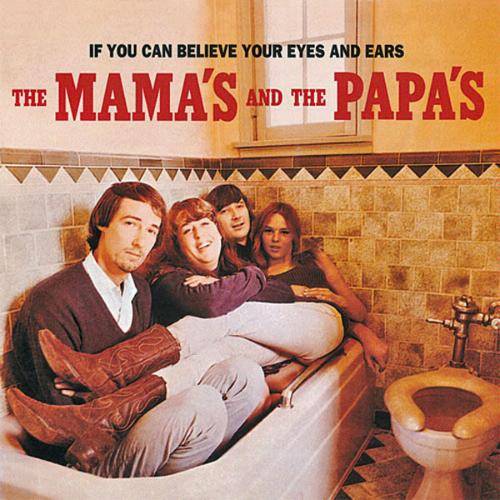
Feels like a fake name
Posted: May 3, 2016 Filed under: the California Condition, Uncategorized Leave a comment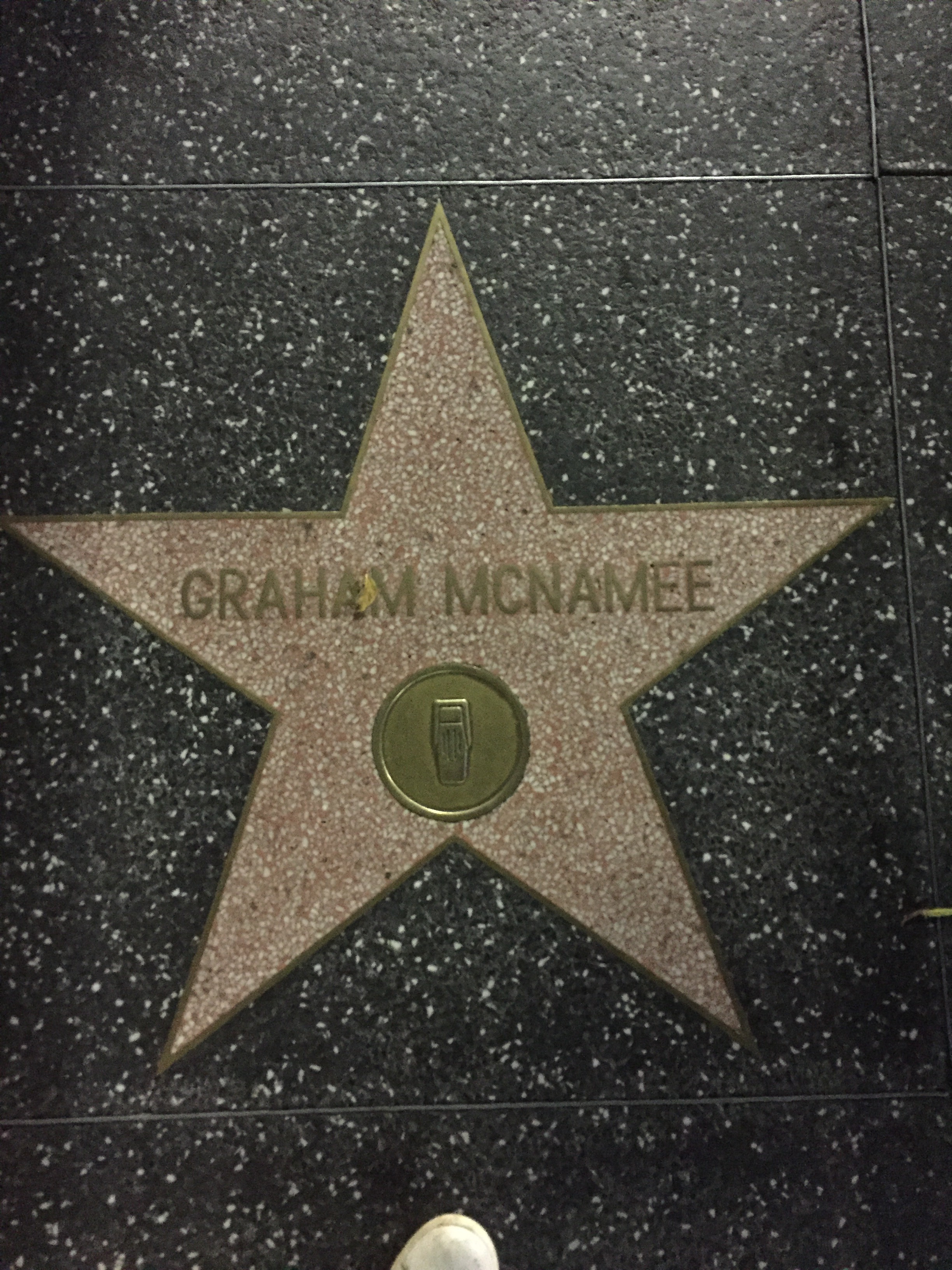
It’s not tho.
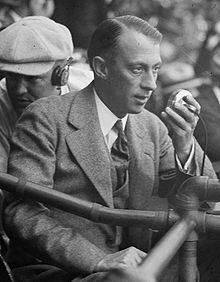
A play by play man and newscaster who made the cover of Time and died 1942 at St. Luke’s at the age of 53.
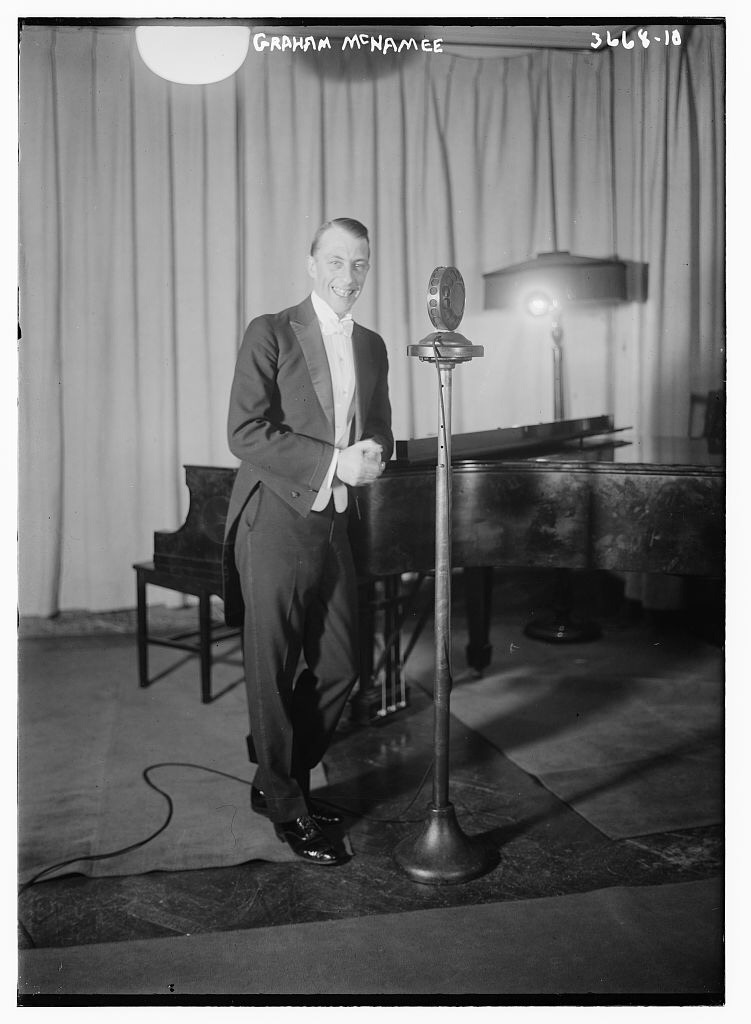
England forever!
Posted: April 16, 2016 Filed under: everyone's a critic, Uncategorized, writing Leave a comment
From the Times Literary Supplement, this remarkable sentence in Geoffrey Wheatcroft’s review of Christopher Hitchens posthumous book of essays:
Born to a dyspeptic, reactionary naval officer and a mother whose Jewish origins Hitchens only discovered after her tragic suicide, he was educated at a modest public school and Oxford University, where he delightedly embarked on a double life – radical agitation by day, sybaritic lotus-eating by night – which set the tone for the years to come.
Bookbinderlocal455.com
Posted: April 16, 2015 Filed under: Uncategorized Leave a commentyou gotta keep this one in your rotation.
here’s to pretzels
Posted: April 15th, 2015 | No Comments »
THE WORLD’S DRYEST SNACK
Bao Bao’s first snow day
Posted: January 7, 2015 Filed under: Uncategorized Leave a commentInsurance:
spaghetti [reblog]
Posted: November 17, 2014 Filed under: Uncategorized Leave a commentreblog from Bookbinderlocal455.com:
from the essential guide to hysterectomy:
Without a doubt, the most common question about anatomy involves the mystery of the empty space. Women are really concerned about what’s going to happen to the void left by the uterus. Picture this. If you have a bowl of spaghetti with a large meatball in the middle and a few smaller meatballs on the side, and then someone removes the large meatball, the space the meatball formerly occupied is replaced by the spaghetti. No one would know that the meatball was ever there.
a touching farewell
Posted: October 8, 2014 Filed under: Uncategorized Leave a comment
from this Vulture article about the passing of actress Sarah Goldberg:
Barry Watson, who played her boyfriend on 7th Heaven, tweeted his condolences Tuesday, writing: “#RIP Sarah. I will miss you always. Love Ya! B.”
Gingham Style
Posted: September 25, 2014 Filed under: Uncategorized Leave a commentdon’t know why but got to wondering if anyone made a parody called “Gingham Style”
Yes, of course they did. Not really recommended:
36.262 is somehow the exact saddest number of views this could have.
Gabo
Posted: April 21, 2014 Filed under: Uncategorized Leave a comment
Happened to be in Colombia when I learned Gabriel Garcia Marquez died. I had just finished reading One Hundred Years Of Solitude. It was a bit of a slog to read, I felt, although impressive as a human achievement. Possibly its greatness had already been absorbed into later stuff I’ve consumed; always important to view these things in context. In the supplementary material in my edition there’s a story that GGM sent the first eighty pages to Octavio Paz, who declared (I’m picturing this at a dinner party) “I have just read eighty pages by a master.”
I liked this story, from Wiki:
Since García Márquez was eighteen, he had wanted to write a novel based on his grandparents’ house where he grew up. However, he struggled with finding an appropriate tone and put off the idea until one day the answer hit him while driving his family to Acapulco. He turned the car around and the family returned home so he could begin writing. He sold his car so his family would have money to live on while he wrote, but writing the novel took far longer than he expected, and he wrote every day for eighteen months. His wife had to ask for food on credit from their butcher and their baker as well as nine months of rent on credit from their landlord. Fortunately, when the book was finally published in 1967 it became his most commercially successful novel, One Hundred Years of Solitude, which sold more than 30 million copies.
I bet his kids are still pissed about that vacation.
A couple nights later I was drinking with two Colombian university students, and I asked them about Marquez. They both expressed the same opinion. They were disappointed in him. They said that his hometown was one of the poorest places in Colombia. That with all his wealth and success he’s done very little for Colombia, “fucking off to Mexico” as they put it.

My own favorite Marquez short story is called “The Earless One.” It has kind of a Twilight Zone feel.
What happens is a gambler in Mexico City meets an adventurer heading to the Amazon. He offers him a wager of one hundred thousand pesos if he can travel through Latin America overland without once hearing the song “Chan Chan” as recorded by the Buena Vista Social Club. The adventurer accepts.
A week later the gambler received a postcard: “I have not heard it.” He’s surprised: it’s nearly impossible not to hear this song every single day. But he remains calm. A week later another postcard: “Still I have not heard it.” The gambler begins to be concerned. Another week, another card: “I have not heard it still.” The gambler is shocked – how can this be?
Finally, he receives a package. He finds inside a note: “I have not heard it, nor will I.” And inside? The adventurer’s bloody ears.
It turns out he deafened himself – the only way to win this absurd bet.
I’m told this is a metaphor for Colombian politics.
What city am I in?
Posted: April 17, 2014 Filed under: Uncategorized | Tags: wiht Leave a comment
Important work has taken us on the road. Can you guess where?
Send answers to helphely at gmail.com
Lucky winners will receive a copy of The Story Of New York.

Getting caught up on the news
Posted: April 9, 2014 Filed under: Uncategorized Leave a comment
Correlation=causation?
I found the world’s most boring website.
Posted: October 9, 2013 Filed under: Uncategorized 1 CommentI mean it.
I am proud of this discovery.
In every way: content, style, it is perfectly, wonderfully flavorless.
I think if you pitched on boring websites for a long time you would not do better than this.
I’m building it up like this because I’m confident in it, in its boring beauty.
It keeps giving, all the way to the end, like a well-crafted work of art.
Here it is.
Pretty baller
Posted: July 19, 2013 Filed under: Uncategorized Leave a commentTo have your picture in the dictionary.

I was looking up cloaca:

Steven Soderbergh
Posted: March 18, 2013 Filed under: film, Uncategorized 2 Comments
I look at Hurricane Katrina, and I think if four days before landfall you gave a movie studio autonomy and a 100th of the billions the government spent on that disaster, and told them, “Lock this place down and get everyone taken care of,” we wouldn’t be using that disaster as an example of whatnot to do. A big movie involves clothing, feeding, and moving thousands of people around the world on a tight schedule. Problems are solved creatively and efficiently within a budget, or your ass is out of work. So when I look at what’s going on in the government, the gridlock, I think, Wow, that’s a really inefficient way to run a railroad. The government can’t solve problems because the two parties are so wedded to their opposing ideas that they can’t move. The very idea that someone from Congress can’t take something from the other side because they’ll be punished by their own party? That’s stupid. If I were running for office, I would be poaching ideas from everywhere. That’s how art works. You steal from everything. I must remember to tweet that I’m in fact not running for office.
(I can’t agree that the entertainment biz is a model of efficiency)
On the few occasions where I’ve talked to film students, one of the things I stress, in addition to learning your craft, is how you behave as a person. For the most part, our lives are about telling stories. So I ask them, “What are the stories you want people to tell about you?” Because at a certain point, your ability to get a job could turn on the stories people tell about you. The reason [then–Universal Pictures chief] Casey Silver put me up for [1998’s] Out of Sight after I’d had five flops in a row was because he liked me personally. He also knew I was a responsible filmmaker, and if I got that job, the next time he’d see me was when we screened the movie. If I’m an asshole, then I don’t get that job. Character counts. That’s a long way of saying, “If you can be known as someone who can attract talent, that’s a big plus.”
I was watching one of those iconoclast shows on the Sundance Channel. Jamie Oliver said Paul Smith had told him something he hadn’t understood until very recently: “I’d rather be No. 2 forever than No. 1 for a while.” Just make stuff and don’t agonize over it. Stop worrying about being No. 1. I see a lot of people getting paralyzed by the response to their work, the imagined result. It’s like playing a Jedi mind trick on yourself, and Smith is right. That’s the way I’ve always approached films, the way I approach everything. Just make ’em.
 Helytimes
