This is from the annual letter of Kanbrick, an investment company run by Warren Buffett protege Tracy Britt Cool:
You’ve maybe heard this Mark Twain quote before. Here’s what bothers me: there’s no evidence Twain ever said this. It’s not anywhere in his writings (easily searchable). Maybe he said it to some person who wrote it down? Well, Quote Investigator can’t find that quote anywhere in print until 1970.
Twain did write this:
NOTE. November, 1903. When I became convinced that the “Jumping Frog” was a Greek story two or three thousand years old, I was sincerely happy, for apparently here was a most striking and satisfactory justification of a favorite theory of mine—to wit, that no occurrence is sole and solitary, but is merely a repetition of a thing which has happened before, and perhaps often.
but that’s not quite the same thing, is it?
Now, you might say, who cares? But, like, Kanbrick’s job is researching, and curiosity, and getting facts right. If Twain made this interesting statement, wouldn’t it be worth finding out to whom he said it? or where he wrote it? and in what context? Even Mark Twain didn’t go around saying aphorisms. He said stuff in a setting. If Kanbrick had gone looking for the context, they wouldn’t have found it. So, they weren’t curious?
Look, let’s let Kanbrick off the hook here, they’re an investment firm. But here’s Ken Burns in a graduation speech at Brandeis University:
We continually superimpose that complex and contradictory human nature over the seemingly random chaos of events, all of our inherent strengths and weaknesses, our greed and generosity, our puritanism and our prurience, our virtue, and our venality parade before our eyes, generation after generation after generation. This often gives us the impression that history repeats itself. It does not. “No event has ever happened twice, it just rhymes,” Mark Twain is supposed to have said. I have spent all of my professional life on the lookout for those rhymes, drawn inexorably to that power of history. I am interested in listening to the many varied voices of a true, honest, complicated past that is unafraid of controversy and tragedy, but equally drawn to those stories and moments that suggest an abiding faith in the human spirit, and particularly the unique role this remarkable and sometimes also dysfunctional republic seems to play in the positive progress of mankind.
Now, Ken Burns at least gives the qualifier “supposed to have said,” but… Ken Burns made a 212 minute long documentary about Mark Twain! He must’ve steeped himself in Mark Twain! Did he not want to check out the context? I would guess that he just found it too good a quote to lose, and Mark Twain too good a source to put it too.
People chalk up quotes to Mark Twain and Churchill and Einstein all the time. That’s sorta just human nature to give these witty remarks to folk heroes famous for wisdom and smarts. The part that bothers is me is that no one, even in annual letters to investors and graduation speeches, was curious enough to be like “what was the context here for this quote I like? What was Twain saying? Where did he say it?”
It’s never been easier to find something like that out, it can be done in a few minutes. In the old days you had to walk to Cambridge and find the bookseller Bartlett, who knew every quote. Eventually Bartlett got tired of the inquiries and published a book, which is now an app.
Perhaps you’re thinking, Steve, who cares? These folks wanted to sauce their speech a little bit, does it matter? Maybe not. But as Mark Twain said, “what’s a personal website for if not working out life’s little irritants?”
Related: did Fitzgerald mean that thing about “no second acts in American lives“? Or did he conclude the exact opposite? (I’ve sometimes wondered if F. meant no second acts in the sense of like a three act Broadway play, like: American lives go right from the first act to the third act.)
About that civil war, 1847. A group of southern cantons decided they weren’t being treated well and wanted to separate. Here’s how it went down:
(Could our civil war have ended fast too, with a lighting strike at the heart of the Confederacy? Did we dither too much because the guy at the time was the obese Winfield Scott? It seems like Lincoln pushed for that, but the debacle at Bull Run ended the hope.)
On William Tell:
Religious segregation:
Huge distinction in Swiss political organization:
This strikes me as opposite the US. In the US the weight is at the top. Presidential elections are fanatical but local elections tend to be somewhat pathetic. The US President is a big deal. The Swiss president is elected for one year and has very few powers, they’re not even the head of state, they’re just sort of a tiebreaker if necessary. Right now it’s Viola Amherd:
There is an unwritten rule that the member of the Federal Council who has not been president the longest becomes president. Therefore, every Federal Council member gets a turn at least once every seven years. The only question in the elections that provides some tension is the question of how many votes the person who is to be elected president receives. This is seen as a popularity test.
The cover of the second edition is less spooky than the third:
Cheers to Steinberg for this valuable book full of insight.
The history of Switzerland is combinations of alliances. (Is that all history?) Places (cantons) form groups to fight invasions and encroachments. From the Habsburgs, from the Burgundians, from each other. If you watched a timelapse political map of Switzerland it grows… like a cancer? Like a growth. Cells combining. Watch the flags pass by as you scroll through this one.
One answer to Steinberg’s titular question, Why Switzerland? is The Congress of Vienna. French Revolutionary armies rolled all over Switzerland, Napoleon used it as he saw fit (he seemed to find it kind of amusing and sort of admirable, and thought a federation was the natural state for the Swiss). It was not peaceful during this time. There were 21,000 Russians at the battle of Gothard Pass.
After Waterloo, when the still standing powers sorted out the future of Europe, Swiss neutrality was guaranteed.
Staying neutral, that was the hard part. In the Concise History Church and Head mention that during WWI the average Swiss guy spent 605 days deployed patrolling the border, which was tough and boring. Active duty to keep Switzerland neutral. Active neutrality. That’s another answer to Steinberg’s question Why Switzerland?: the army/national service keeps the diverse cantons bonded together.
Contemplate the following alt outcome for Europe, past or future: instead of an EU, Switzerland expands, absorbing the states around it and then the whole continent into its federal system.
Jerry Seinfeld was interviewed by Bari Weiss on her podcast Honestly. Several parts have created headlines but I thought this, towards the end, was interesting. I’ve edited this crude transcript:
Weiss:
In 1976, you took a few Scientology classes. You remember anything they taught you?
Seinfeld:
Tons. Like: Always confront any problem. Avoid – avoidance. Avoidance makes the problem grow and confronting it makes a shrink.
Weiss:
You’ve dabbled in Zen Buddhism. Do you have a favorite Buddhist teaching?
Seinfeld:
Yes, before enlightenment carry water and… And what’s the other thing? They do? They sweep. After Enlightenment. Carry water and sweep.
Imperial immediacy (German: Reichsfreiheit or Reichsunmittelbarkeit) was a privileged constitutional and political status rooted in German feudal law under which the Imperial estates of the Holy Roman Empire such as Imperial cities, prince-bishoprics, and secular principalities, and such individuals as the Imperial knights, were declared free from the authority of any local lord, having no suzerain but the Holy Roman Emperor directly, without any intermediary authority: immediate = im- (negatory prefix) + mediate (in the sense of a third-party go-between, mediator); immediacy also applied to later institutions of the Empire such as the Diet (Reichstag), the Imperial Chamber of Justice and the Aulic Council.
Kemper Boyd for Wikipedia.
Trying to work out what the deal was with the counts of Annecy, or counts of Geneva who had their seat at Annecy, and the House of Savoy.
Here’s some of what Wikipedia says under “Problems Understanding the Empire:”
The practical application of the rights of immediacy was complex; this makes the history of the Holy Roman Empire particularly difficult to understand, especially for modern historians. Even such contemporaries as Goethe and Fichte called the Empire a monstrosity. Voltaire wrote of the Empire as something neither Holy nor Roman, nor an Empire, and in comparison to the British Empire, saw its German counterpart as an abysmal failure that reached its pinnacle of success in the early Middle Ages and declined thereafter.[4] Prussian historian Heinrich von Treitschke described it in the 19th century as having become “a chaotic mess of rotted imperial forms and unfinished territories”. For nearly a century after the publication of James Bryce’s monumental work The Holy Roman Empire (1864), this view prevailed among most English-speaking historians of the Early Modern period, and contributed to the development of the Sonderweg theory of the German past.[5]
A revisionist view popular in Germany but increasingly adopted elsewhere[citation needed] argued that “though not powerful politically or militarily, [the Empire] was extraordinarily diverse and free by the standards of Europe at the time”. Pointing out that people like Goethe meant “monster” as a compliment (i.e. ‘an astonishing thing’), The Economist has called the Empire “a great place to live … a union with which its subjects identified, whose loss distressed them greatly” and praised its cultural and religious diversity, saying that it “allowed a degree of liberty and diversity that was unimaginable in the neighbouring kingdoms” and that “ordinary folk, including women, had far more rights to property than in France or Spain.
Perhaps a page from the Nuremberg Chronicle will help us understand how all this worked:
We jumped ahead a bit to cover the Bernese and Lucernese chronicles, from around 1500. Some real tough stuff in there, but also some fun:
When we last left what’s now Switzerland it was the Dark Ages. That term’s become unpopular but we just don’t know that much about what was up. There seems to be enough record and lineage to know there were some saints: Saint Bernard of Menthon, for example, he of the dogs with the barrels.
Where are our firsthand sources on Saint Bernard? What lingers seems to be mostly unsourced legend and possible propaganda? We have some 9th century stories about Saint Gall:
but we’re getting into lore here:
Images of Saint Gall typically represent him standing with a bear
who knows?
The saints, it is arguable, were trying to live outside of History, at least political history, which was possibly the smart move in the year 900. Perhaps always. Or maybe that’s the wrong way to see them, maybe they were political actors just like the counts of Annecy and the kings of Burgundy but with a holy varnish.
Between the Romans and what came next, the saints seem to have had the most lasting legacy: structures that still stand and names that are known.
The Rütli
In 1291, when the Holy Roman Emperor, Rudolf of Habsburg, died, the Helvetians decided their moment had come. On August 1, before a new emperor could be elected by a council of German princes, the elders of the three small states met on a tiny heath known as the Rütli on the shores of the Lake of Lucerne and negotiated an “eternal pact.” They declared their right to local self-government, promised one another assistance against any encroachment upon these rights and committed future generations to an alliance that was to “endure forever.” The pact was the beginning of the Everlasting League and the foundation of the Swiss Confederation. The forest meadow, the Rütli, accessible only by boat or by foot down a steep trail, is Switzerland’s most venerated patriotic shrine. Every school child is required to make at least one pilgrimage to it.
So says Herbert Kubly in the Time Life Switzerland. You’d think he’d include a picture of the Rutli, but he doesn’t. Maybe not his decision. That must’ve been frustrating in the days before you could find thousands of images of anything in one second.
A key word you come across in Swiss history is Eidgenossenschaft. Says Wiki:
Eidgenossenschaft is a German word specific to the political history of Switzerland. It means “oath commonwealth” or “oath alliance” in reference to the “eternal pacts” formed between the Eight Cantons of the Old Swiss Confederacy of the late medieval period, most notably in Swiss historiography being the Rütlischwur between the three founding cantons Uri, Schwyz and Unterwalden, traditionally dated to 1307. In modern usage, it is the German term used as equivalent with “Confederation” in the official name of Switzerland.
But how could a town/canton make a pledge? A person can make an oath, but can a canton? Clive H. Church and Randolph C. Head, in their Concise History of Switzerland, say:
Urban autonomy was common across medieval Europe, and many rural communities adopted corporate forms of organization in the High Middle Ages, but rural communities with imperial liberty emerged in only a few areas, notably in the central Alps. Valley communities in the mountains from the Valais to the Grisons organized as political corporations bearing seals and administering justice, and once they had gained sufficient legal privileges and autonomy, joined as equal members the networks of alliances among communes that characterized the entire region. Several factors enabled this development: location on the passes critical to imperial policy in Italy, the relative weakness of the major feudal dynasties and the high degree of cooperation demanded by pastoralism in the Alps, which encouraged strong collective institutions. Living in a diverse landscape of nobles, towns and cities also provided models and sometimes the impetus to organize on corporate lines. Historians have pointed to the emergence of alliances that included both urban and rural communes as a distinctive feature that enabled the Swiss leagues to thrive and survive after 1500, even as primarily urban alliances elsewhere foundered.
Here is Schwyz, from which Switzerland gets her name:
(Markus Bernet took that one.)
The truth or details about all this is still somewhat disputed, but a pact among the cantons is the key to Swiss history.
Together they fought off the Hapsburgs:
This was an intense time:
Source is this great site, Swiss History: Fact of Fake News, which goes into much detail about how much to trust our historians.
William Tell
You can’t talk about Swiss history without addressing William Tell, supposedly made to shoot an apple off his son’s head by a tyrannical Habsburg reeve (or vogt)? The earliest reference to him comes in The White Book of Sarnen, put together in 1474 by a country scribe named, conveniently, Schriber. (I learn all that here).
Both Church and Head in their Concise History of Switzerland and Steinberg in Why Switzerland? (great title) delicately broach the idea that William Tell very likely never existed, but he was so important as an idea to the Swiss that he’s significant. You can go as deep as you want on the historicity of Bill Tell. I found this interesting:
Rochholz (1877) connects the similarity of the Tell legend to the stories of Egil and Palnatoki with the legends of a migration from Sweden to Switzerland during the Middle Ages.
That’s Tell by Ferdinand Hodler:
Hodler’s life gives us a snapshot of everday Swiss history as it existed in the 19th century:
Hodler was born in Bern, the eldest of six children. His father, Jean Hodler, made a meager living as a carpenter; his mother, Marguerite (née Neukomm), was from a peasant family. By the time Hodler was eight years old, he had lost his father and two younger brothers to tuberculosis. His mother remarried, to a decorative painter named Gottlieb Schüpach who had five children from a previous marriage. The birth of additional children brought the size of Hodler’s family to thirteen.
The family’s finances were poor, and the nine-year-old Hodler was put to work assisting his stepfather in painting signs and other commercial projects. After the death of his mother from tuberculosis in 1867, Hodler was sent to Thun to apprentice with a local painter, Ferdinand Sommer. From Sommer, Hodler learned the craft of painting conventional Alpine landscapes, typically copied from prints, which he sold in shops and to tourists.
When we come back: Jean Cauvin and why there were no musical instruments in Geneva for two hundred years.
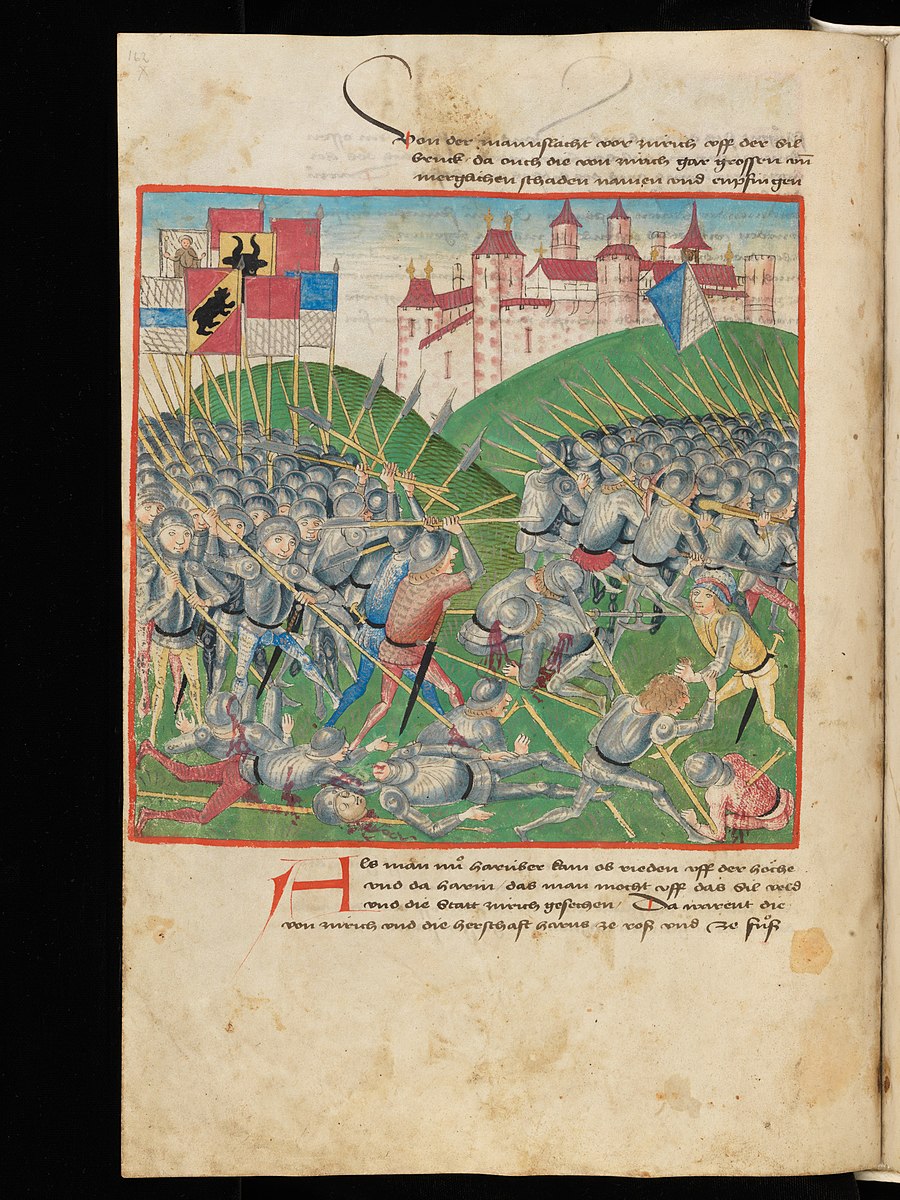
Our attempts to learn the history of Switzerland led us to a swirling eddy that is the chronicles of the city/canton of Bern. Illustrated books created to record notable events centered on the 1400s.
These depict in vivid detail the Swabian and Burgundian Wars.
Diebold Schilling the Elder was the uncle of Diebold Schilling the Younger.
Here is the work of the Younger, who created a similar chronicle for Lucerne:
Those are rampages through the Vaud.
The battle of Dorneck.
Entire chronicles can be found online, they’re shockingly long. Even a browse through them can be numbing. It’s like the work of Henry Darger or something, obsessive numbers of battle scenes and sieges and killings. Regrettably my German is insufficient for me to read them. I suspect I get the idea.
The events depicted kept the Burgundians and Habsburgs out of Switzerland and allowed the Old Swiss Confederacy to maintain its independence.
During this period the Swiss became so good at war that they became in demand mercenaries in Italy and elsewhere (the origin of the Vatican’s Swiss Guards?). Their super-weapon was the halberd, which was capable of killing a mounted knight. Defeating a guy on horseback who was armed with metal sword from your feet was a vexing fighting problem of the time. The Inca did not solve it in time.
The death of the Burgundian Charles The Bold at the battle of Nancy ended the Burgundian hopes for swallowing pieces of the Swiss Confederacy:
The corpse of Charles the Bold remained concealed until three days after the battle, when it was found lying on the river, with half of his head frozen.[308] It took a group consisting of Charles’ Roman valet, his Portuguese personal physician, his chaplain, Olivier de la Marche, and two of his bastard brothers to identify the corpse through a missing tooth, ingrown toenail, and long fingernails
One cheek had been chewed away by wolves and the other embedded in frozen slime.
so said Wikipedia at one time (source for this claim?). It was a halberd that got him.
from a footnote on Charles’ Wiki page:
he word Eidgenossen is literary translated as ‘oath companion’, and was a synonym for Swiss, referring to the members of the Old Swiss Confederacy.[286] Until the Siege on Morat, most of the confederacy had not declared war on Burgundy, because Charles had yet to invade a territory officially part of one of its members. But during the siege, Charles attacked a bridge which was a part of Bernese territory, thus obligating the confederacy to join Bern in their campaign against Burgundy.
Charles’ death left Mary of Burgundy in charge. I’ve been meaning to put together something about all the depictions of her in art, but that’ll have to be another day.
And Switzerland stayed independent.
The Swiss are not in the EU. Switzerland itself is a kind of mini EU, a union of 26 cantons, mini nations, that speak French, Italian, German, Romansh. You can see how alliances of any kind would be a serious topic in Switzerland.
That’s enough for now.
I hope to visit Bern, it looks cool. Einstein lived there.
CucombreLibre from New York, NY, USA took that for Wikipedia.
continuing a deranged hobby of reading corporate materials for fast food companies. See if you can guess what the acronym C.R.A.V.E.D stands for at $JACK, the corporate parent of Jack In The Box and Del Taco.
To buy time while you think, here is a story about Herb Kelleher, founder of Southwest Airlines, who had a strong, clear mission focus:
There is a great story shared by Chip and Dan Heath in the book “Made to Stick” about the late founder Herb Kelleher. Kelleher once posed a question to someone about their strategy,
“Tracy from marketing comes into your office. She says her surveys indicate that the passengers might enjoy a light entree on the Houston to Las Vegas flight. All we offer is peanuts, and she thinks a nice chicken Caesar salad would be popular. What do you say?”
The person stammered for a moment, so Kelleher responded:
“You say, `Tracy, will adding that chicken Caesar salad make us THE low-fare airline from Houston to Las Vegas? Because if it doesn’t help us become the unchallenged low-fare airline, we’re not serving any damn chicken salad.’
looking it up for my own purposes, but I’ll cop to making a cheap ploy for traffic, as various map comparisons are one of the biggest drivers of stray Google searches to this site.
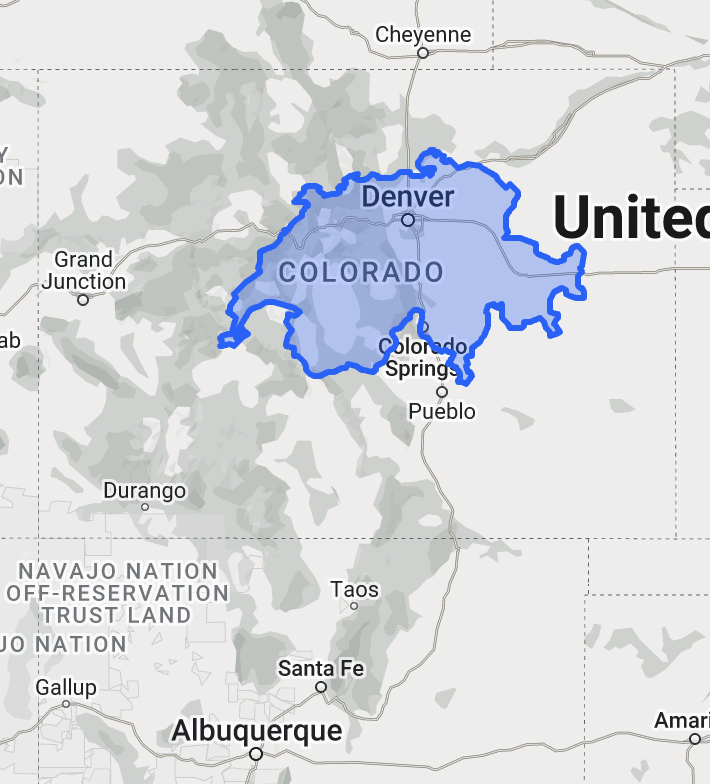
And here’s Switzerland compared to Colorado:
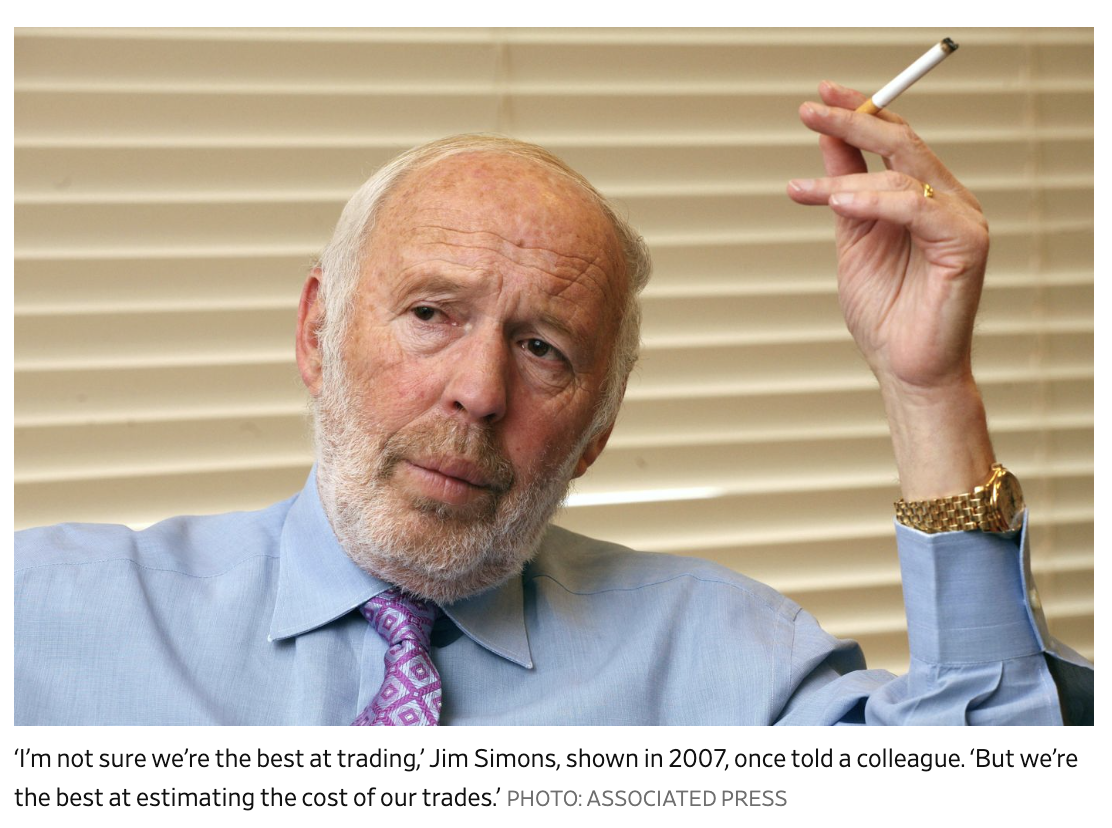
Here by the way is Jim Simons musing on a possible future for the USA:
Zierler:
And Jim, on that point, thinking about where China is headed in the 21st century, where are the similarities to the Cold War? In other words, when we had Sputnik, it was almost like it was a zero-sum game. Russia’s advance was our loss. To what extent do you see that same dynamic at play now with China – where is there competition and where is there cooperation?
Simons:
You know, I don’t know enough about it to talk very intelligently. It’s clear that the Chinese are spending a lot on science and building it up. You know, I see the United States— Look, China is five times the size, four times the size of the United States. We have 300 million people, I think they have 1.2 billion or 1.3 billion. India has a lot of people. So relatively speaking, we’re not such a big country. But we do have some wonderful things. We have great universities in the United States, and so what I’m hoping, although like Switzerland, it’s a small country but it’s very prosperous country, because it’s focused on what it can do best. And done very well for years, Switzerland. So if you compare, sometimes, the United States could be a very big Switzerland, focusing on education, keeping our great public and private universities, that attracts people to come to the United States, and does a lot of research and so on. So in China with all its people, will, you know, be a very big force. There’s nothing we can do about it, but we can, you know, cooperate with them to some extent, so we don’t have to fight with them. But we want to stay ahead as long as we can.
I think we’re a bit too manic to settle into that, but it’s an intriguing thought.
Did these adventures really happen? Did we really meet up in Wilmington, North Carolina? The very day Duke was playing UNC? Did we really go explore the fringes of the Orton Plantation? Did we really go to Myrtle Beach? (what an unBeyers place, it could hardly be more unBeyersy, and yet he was sort of enthusiastic!) The conversation with the antiques guy in Southport, did that really happen? Did the woman really warn us not to swim in the Cape Fear River? (we won’t!) The night wanderings and laughings?
Some of these scenes feel like a dream, a bit of magical realism, and yet these weren’t even in the top twenty of our explorations. The other day Mat reminded me about the whale watch in Tofino. We went on a whale watch? I didn’t even remember. I remembered the hike to the crashed plane, and the raccoon of course, and Port Alberini.
I remember what we were talking about just before the photo above: I was saying that places that serve both beer and coffee kind of drag on me because the vibe and effect of each beverage is quite contrary to the other, so that a place that serves both will be caught in liminal territory, it’s inevitable that such a place will feel kinda like a WeWork or something rather than forming a strong identity. Beyers was more charitable. He’d had firsthand experiences with the realities of running a coffee shop. His attitude was always to approach with openness.
And Jim, when you were a kid, how did you or your teachers or your parents first recognize the abilities that you had?
Simons:
Well, all parents think their kids are a genius, so (laughs) so, but I did get involved with math very early. I loved to keep multiplying by two and see… I finally got up to whatever it is, 1,024, I guess? And so I liked to do that. I remember I was in the car with my father when I was maybe four or five at the most, and he said he had to stop to get gas, and I said, “Why do you have to do that?” And he said, “Well, we could run out of gas if I don’t stop.” And I said to myself and then to him, “Well, you don’t have to run out of gas. You can use half of what you have, and then you can use half of that and then half of that, and you’ll never run out of gas.” (both laugh) Well, it didn’t occur to me that you’d never get anywhere either, but I just kept slicing up what was in the gas tank. And I remember also spending many a night lying in bed thinking, “How do you define the expression, “Pass it on.” That’s an expression, right? Pass it on. How do you define it? How do you explain to someone that he’s supposed to say to someone, the next guy down, et cetera, that wasn’t good enough. I really wanted to figure it out. And one night, I did figure it out, and then when I woke up, I forgot what it was. So (both laugh) but now I remember. But it’s, you know, a strange thing for a kid to do as, I was maybe eight, to think about such a question. So I always liked math.
Here’s my source for that. Jim Simons, smoker, figured out a way to turn the markets into a money machine, suffered severe tragedies, gave money to science. (Why are so many brilliants from Brookline? Irish Jewish interaction under the looming mountains of Boston?)
We’ve discussed before the work of microsociologist Randall Collins. Not sure why his work isn’t more popular. His insights about violence are both profound and practical. Here’s a summary he gave of much of his own work.
Now that we have photos and videos of violent situations, we see that at the moment of action the expression on the faces of the most violent participants is fear. Our folk belief is that anger is the emotion of violence, but anger appears mostly before any violence happens, and in controlled situations where individuals bluster at a distant enemy. I have called this confrontational tension/fear; it is the confrontation itself that generates the tension, more than fear of what will happen to oneself. Confrontational tension is debilitating; phenomenologically we know (mainly from police debriefings after shootings) that it produces perceptual distortions; physiologically it generates racing heart beat, an adrenaline rush which at high levels results in loss of bodily control.
Collins speaks of what sociologists have learned from CCTV footage of fights at bars:
This explains another, as yet little recognized pattern: when violence actually happens, it is usually incompetent. Most of the times people fire a gun at a human target, they miss; their shots go wide, they hit the wrong person, sometimes a bystander, sometimes friendly fire on their own side. This is a product of the situation, the confrontation. We know this because the accuracy of soldiers and police on firing ranges is much higher than when firing at a human target. We can pin this down further; inhibition in live firing declines with greater distance; artillery troops are more reliable than infantry with small arms, so are fighter and bomber crews and navy crews; it is not the statistical chances of being killed or injured by the enemy that makes close-range fighters incompetent. At the other end of the spectrum, very close face-to-face confrontation makes firing even more inaccurate; shootings at a distance of less than 2 meters are extremely inaccurate.
(Now, Collins does cite the work of S. L. A. Marshall, who is controversial. Story for another day.).
Why do most potential fights defuse before they start?:
Most of the time both sides stay symmetrical. Both get angry and bluster in the same way. These confrontations abort, since they can’t get around the barrier of confrontational tension.
Practical advice:
Keep any confrontation emotionally symmetrical; make confrontational tension work for you by maintaining face contact; avoid micro-escalations; let the situation calm down out of boredom, which is what happens when an interaction becomes locked into repetition. In the violent sociology of emotions, boredom is your friend.
Go read the whole thing. He also speaks on sex:
the strongest sexual attraction is not pleasure in one’s genitals per se, but getting the other person’s body to respond in mutually entraining erotic rhythms: getting turned on by getting the other person turned on. If you don’t believe me, try theorizing the attractions of performing oral sex. This is an historically increasing practice, and one of the things that drives the solidarity of homosexual movements. Gay movements are built around effervescent scenes, not around social media.
Rower, photographer, architect of farm buildings, toy maker, llama soother, alpaca wrangler, kiva digger, wind-phone experimenter, gardener, shepherd, scholar, party animal, Lampoon member, “humble Harvard graduate” (as a Facebook commenter put it), Canadian, listener, musician, hippie, explorer, cyclist, hemp fabric evangelist, coffee shop proprietor, writer, cartoonist, sportsman, athlete, concoction maker, community activist, entrepreneur, naturalist, disc golfer, fermenter, osteologist (message me if you want to see the series of photos he took of a decomposing llama), maker of playlists, draftsman, burger chain logo designer, model, painter, diplomat, chef, potter, patissier, enthusiast. Friend.
Most important for him was husband and father.
We once had a conversation about the word kin, kindred. Kindling. The people you share your fire with.
Gone back to the spirit that brought him forth. Off on a new adventure.
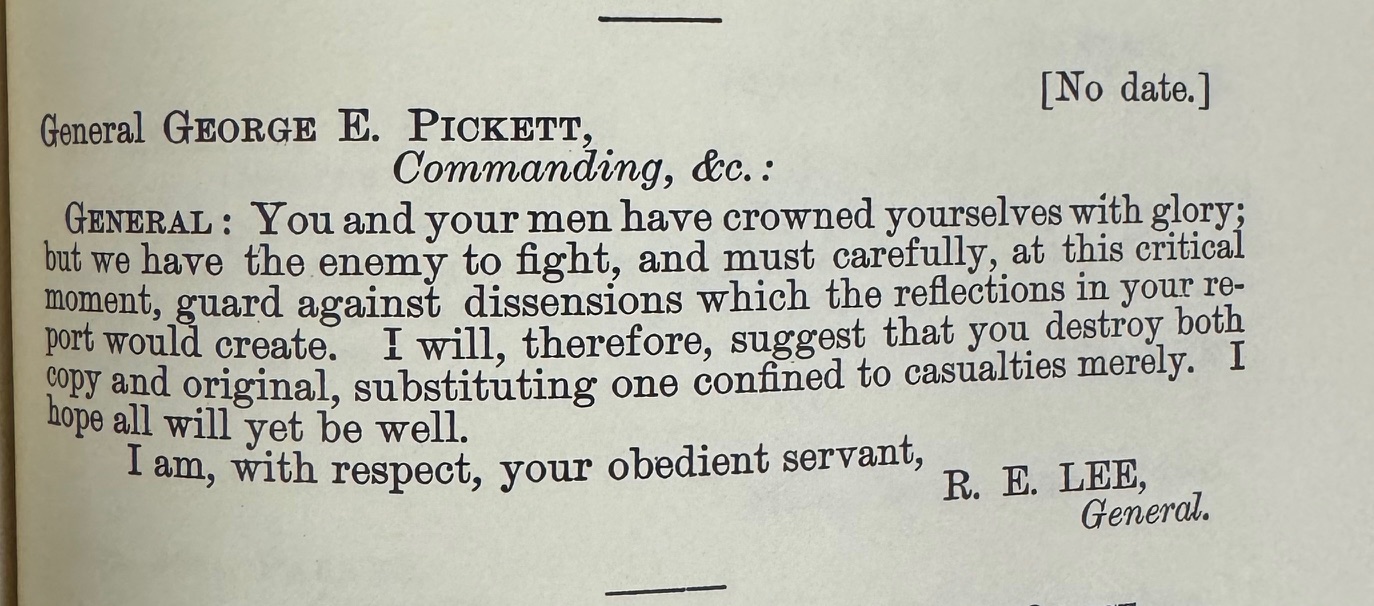
The first time I went to look at the Official Records of the War of the Rebellion at the LA Public Library (Central, Geneaology and History Department) the librarian said “it’s… it’s a lot” and then he showed them to me:
Before the Civil War was even over they’d started compiling the official records: every report and bit of correspondence they could gather.
Then there are people who are more familiar like Akira Kurosawa. Anybody who has actually been involved in war – in fighting, in using weapons – knows that Seven Samurai is a complete course on how to train fighters, raise their morale, and command them in war. When Seven Samurai came out, people quickly realized that it was a film that had to be watched three or four times in a row, and then every few years. And people did that, very commonly.
I have actually trained men to fight in war, and I have sat them down and made them watch Seven Samurai, and they complained a lot. Then a few of them wanted to see it again. Then after a while, all of them wanted to see it again. All of them learned a hell of a lot from that film. Leadership, cohesion, morale, when you should raid and when you shouldn’t raid, when you should be on the defensive, when you should be on the offensive. Akira Kurosawa pretended that he was a pacifist and antiwar (in post-1945 Japan, war was unfashionable, to say the least). But in truth he loved war. I’ve used it in El Salvador – actually did the same thing – train villagers to defend themselves from any passing guerilla. Making the name of the village a terror to them all. They would no longer be attacked anymore.
Source. Helen DeWitt would be nodding. how about this:
MR: Where do you think the best snorkeling in the world is?
EL: I think it’s the Tuamotu Archipelago in French Polynesia – as it happens where Gauguin went, but not his particular atoll, Rangiroa. There are different atolls in the archipelago, and one has a very rude name. That is my favorite atoll.
MR: What’s it called?
EL: I’m not going to tell you, but it’s extremely rude.
I wonder which one he’s talking about. Maybe this one?
After visiting [his wife Susan] in hospital, he told a class at Georgia Tech, “When you get to my age, you’ll really measure your success in life by how many of the people you want to have love you actually love you. I know people who have a lot of money, and they get testimonial dinners and they get hospital wings named after them. But the truth is that nobody in the world loves them. If you get to my age in life and nobody thinks well of you, I don’t care how big your bank account is, your life is a disaster. That’s the ultimate test of how you have lived your life.” He continued, “The trouble with love is that you can’t buy it. You can buy sex. You can buy testimonial dinners. You can buy pamphlets that say how wonderful you are. But the only way to get love is to be lovable. It’s very irritating if you have a lot of money. You’d like to think you could write a check: I’ll buy a million dollars’ worth of love. But it doesn’t work that way. The more you give love away, the more you get.” Of all the lessons that Warren has taught me, perhaps this is the most important.
from Education of a Value Investor by Guy Spier.
If you keep Jimmy Buffett and Warren Buffett as navigational beacons, you’ll probably have an ok ride.
There’s been a spectacular decline in wine drinking. I sometimes ask people to guess which country was the world’s biggest exporter of wine in 1970. The answer: Algeria. Even after independence, the Muslim country was still producing cheap plonk that kept the former motherland pickled. French winemakers did their bit, too. But since the 1960s, the average French person’s consumption of wine has dropped by about 70 per cent, to below 40 litres a year. Wine barely exists at lunchtime any more. Younger French people prefer cannabis.