After finishing The Education of Henry Adams, I was like what do I do with this?
Here’s a brilliant guy at the end of his life talking about how he and everybody he knows is a failure and totally lost. An autobiography of a sort, except the guy never mentions his wife except when saying her tomb had become a tourist attraction? Barely mentions his children? The guy he admired the most, Clarence King, had (extratextual research reveals) a very weird and intriguing personal situation?
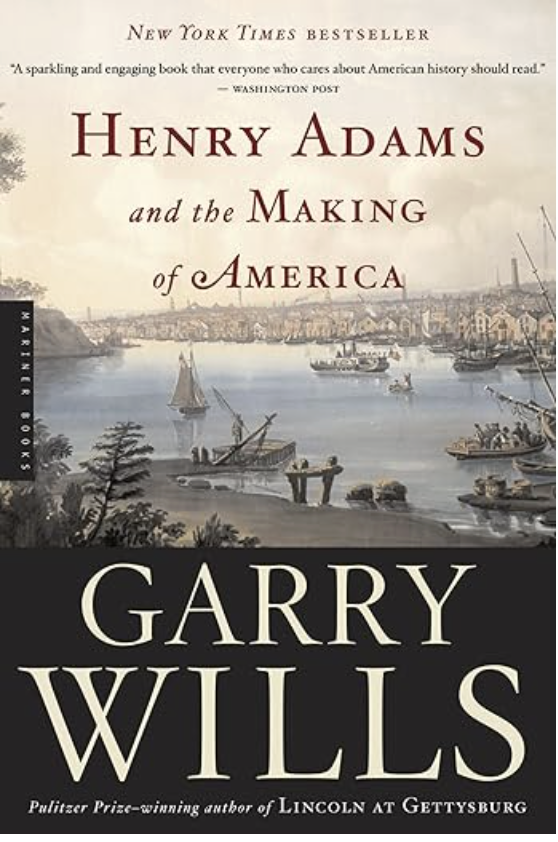
Garry Wills Henry Adams and the Making of America really put the whole story in context for me. Wills book is mostly a summary of Henry Adams’s six volume history of the USA in the Jefferson era. Wills says Henry Adams history is misunderstood: everyone (he particularly calls out Richard Hofstadter) only read volume one, so they didn’t get it. They assume Henry Adams is pro-John and JQ Adams, and anti-Jefferson, but he’s not. Henry Adams actually didn’t like his grandfather, who was severe and harsh with him when he was a kid. He especially didn’t like Abigail Adams, who’d been mean to his (Henry’s) beloved grandmother Louisa.
Abigail:
“I never knew a man of great talent much given to laughter.”
Booo.
But Adams never defended the Federalists. He despised Hamilton, and he told his Harvard students, “You know, gentlemen, John Adams was a demagogue” (S 1.216). His attitude toward his grandfather, John Quincy Adams, was far more caustic—he called him an opportunist in politics and “demonic” in his family relations.
Did Charles Sumner have the caning coming?
But the part of Sumner’s speech that drew the most attention was his personal slur against Senator Andrew Butler of South Carolina. Butler had a lisp, and Sumner mocked “the loose expectoration of his speech” in favor of slavery. This maddened a cousin of Butler, Preston Brooks, who served in the other chamber. The thirty-six-year-old Brooks waited outside the Senate to attack the forty-five-year-old Sumner.
(still, this is a bit much:)
Sumner was pinioned behind his desk. Only by wrenching the desk from the floor, to which it was firmly bolted, could the bleeding Sumner rise, and then, as he staggered about, Brooks rained more blows on him till the cane broke, after which he continued beating him with the thick end of it.
Henry Adams was one of the first American historians to really go into the archives and dig stuff up. In the Education he kinda minimizes this part of his life, but he was a really pioneering historian, processing huge volumes of material for the first time.
In the early days of America, it was the free states who were always talking about “states rights”:
Thus, in truth, states’ rights were the protection of the free states, and as a matter of fact, during the domination of the slave power, Massachusetts appealed to this protecting principle as often and almost as loudly as South Carolina.
The historians of these days were inspired by Tacitus’s history of Germania, and interpreted this to describe a kind of proto-democracy that was very feminist:
The Teutonists honored as their founding text the only work of anthropological sociology to have survived from classical antiquity, The Germans’ Rise and Territory (c. 98 C.E.) by Senator Cornelius Tacitus, a book commonly known as the Germania. 2 Describing a people basically different from his own, Tacitus collected everything he could find out about the Germans’ religion, education, family conditions, and what influence those conditions had on political and military affairs.
…
And women, though not trained to fight, accompanied their men into battle to inspire them.
Travel in the days of Jefferson:
Adams has an even harsher picture to draw, of canals not built (J 911), of steam engines of a more advanced kind being neglected (J 7-53), of roads so lacking that “between Baltimore and the new city of Washington, it [the road] meandered through forests” (J 11). In the southern states the difficulties and perils of travel were so great as to form a barrier almost insuperable. Even Virginia was no exception to this rule. At each interval of a few miles the horseman found himself stopped by a river liable to sudden freshets and rarely bridged. Jefferson, in his frequent journeys between Monticello and Washington, was happy to reach the end of the hundred miles without some vexatious delay. “Of eight rivers between here and Washington,” he wrote to his attorney general in 1801, “five have neither bridges nor boats.”
Some context for the Education:
Early in the twentieth century Adams presented his Education as a sequel to his book on medieval art, Mont Saint Michel and Chartres. He was charting a decline, from medieval unity to modern multiplicity, since he had come to believe in historical entropy, the fission of things no longer able to cohere. Those who go backward to the History from the Education look for some similar decline—from an age of Federalist statesmen, say, to the courting of separate clienteles, from the Revolution’s impulse to the growth of partisan politics. In short, from Adams to Jefferson.
The South vs the North at the time:
The difference had one clear cause: slavery. Traveler after traveler noted the shock of moving from an area of free farms and neat cities into fields where slovenly shacks were not tended by the owners of human property. This had struck Adams himself when he first traveled, when he was twelve, into slave territory: The railroad, about the size and character of a modern tram, rambles through unfenced fields and woods, or through village streets, among a haphazard variety of pigs, cows, and Negro babies, who might all have used the cabins for pens and styes, had the southern pig required styes, but who never showed a sign of care. This was the boys impression of what slavery caused and, for him, was all it taught. (E 719)
Yet Adams admires the things that drew him toward the South—the rural simplicity, the courteous code of the owning class, the leisurely pace, the feebleness of open commercial ambition. He quotes the northern churchman William Ellery Channing on the superior manners of the South: “They love money less than we do” (92, emphasis in original).
Washington and others knew that slavery was a burden, economic as well as moral (93), and hoped vaguely that something could someday bring it to an end; but the state (and every other southern state) was quick to resent and resist any outside pressure to change the whole infrastructure of southern life. The southern leaders who ratified the Constitution, over a stout resistance, were “influenced by pure patriotism as far as any political influence could be called pure,” but the popular majority was still hostile to the Union, and certainly remained hostile to the exercise of its powers (96). It was this restive majority that Jefferson and Madison could count on in their appeal to resist the federal government in 1798, when Virginia moved further toward secession than Massachusetts would in 1804 (97-98). Washington’s massive influence was constantly needed to keep his state in line with the Union.
As president Thomas Jefferson found himself trapped in situations where he kept having to expand federal power, which was against his whole philosophy. He was trapped as his ideology confronted reality and immediate problems. He was always trying to avoid war, not because he thought we would lose, but because he thought we might win, and the federal government would expand.
Tom Wolfe would’ve done wonders on Jefferson’s shabby chic:
For them, the shabbiness demonstrated that Jefferson was, improbably, just a plain man of the people. Louisa rightly considered him an aristocrat pretending to be a democrat, noting that he presided in plain clothes over a gourmet’s meal tended by liveried servants, all to the standards, as she said, of a European court. She was wrong to think Jefferson’s attire affected. Or, better, it was not a private affectation but one of his class. He was not hiding his aristocratic style but exhibiting it. The aristocrat is often negligent of appearances, to show he is above relying on them. It is the nervous middle-class striver who is anxious about his dignity. The country gentleman, from Squire Weston to Lord Emsworth, often putters about in old clothes, proving that he has nothing to prove. The Virginia style was apparent in John Randolph, who went onto the floor of the House in muddied riding clothes, high boots on his thin stork legs.
…
Even George III in England liked to call himself a farmer, as Carlos IV in Spain called himself a worker: Don Carlos was a kind of Spanish George … the gunsmiths, joiners, turners, and cabinet-makers went with him from Madrid to Aranjuez, and from Aranjuez to La Granja. Among them he was at his ease; taking off his coat and rolling his shirt-sleeves up to the shoulder, he worked at a dozen different trades within the hour, in manner and speech as simple and easy as the workmen themselves. (232) That was an aristocrat’s style, not a genuine workman’s.
…
Jefferson himself had dressed like a court dandy in Europe, as we know from the first portrait of him, by Mather Brown, in which he wears a wig and frilly lace in the highest French fashion.
…
No law of the United States or treaty stipulation forbade Jefferson to receive Merry in heelless slippers, or for that matter in bare feet, if he thought proper to do so. Yet Virginia gentlemen did not intentionally mortify their guests; and perhaps Madison would have done better to relieve the President of such a suspicion by notifying Merry beforehand that he would not be expected to wear full dress. In that case the British minister might have complimented Jefferson by himself appearing in slippers without heels.
Wills points out that diplomatic protocol, while it can seem silly, is really important. It’s a language to avoid conflict:
Without a symbolic language to reward favors, or to warn of possible trouble, diplomacy would fumble in the dark. The ranking of states by the degree of honor afforded their representatives is itself a continual way of feeling out the attitudes of the other country, where ambiguity can lead to dangerous misunderstandings.
James Monroe, in Europe trying to smooth things over:
Adams sees a sadly comic side to Monroe’s travail, rejected in court after court, like a silent-movie actor who opens a series of doors and gets a pie in the face every time:
When Jefferson ended up with the Louisiana Purchase he was actually trying to buy Florida (or “the Floridas” as they might’ve been called at the time). Spain, France, who was in control was shifting with the Napoleonic Wars. Adams’ book seems to call attention to the fact that history is really a lot of unintended consequences. A guy as smart as Thomas Jefferson was constantly surprised by unpredictable twists of fate.
Garry Wills is now in an assisted living facility, apparently (I wanted to send him a fan letter). I went to see if he had anything to say on Trump, and yes, he did.
warning: there’s some rough language in this post.
Is the barbecue sauce my first association with Kansas City?
KC Masterpiece is a barbecue sauce that is marketed by the HV Food Products Company, a subsidiary of the Clorox Company
It was invented by Rich Davis, a child psychologist and former Dean of the University of North Dakota Medical School, who also experimented with “mustchup,” a mustard ketchup combo.
Kansas City became famous in song as a party town. The Beatles sing about it:
“Kansas City” was written by Jerry Leiber and Mike Stoller, two nineteen-year-old rhythm and blues fans from Los Angeles. Neither had been to Kansas City, but were inspired by Big Joe Turner records.
from Big Joe Turner’s Wikipedia page:
At that time Kansas City nightclubs were subject to frequent raids by the police; Turner said, “The Boss man would have his bondsmen down at the police station before we got there. We’d walk in, sign our names and walk right out. Then we would cabaret until morning.”
Why Kansas City?:
In the 1930s, Kansas City was very much the crossroads of the United States, resulting in a mix of cultures. Transcontinental trips by plane or train often necessitated a stop in the city. The era marked the zenith of power of political boss Tom Pendergast. Kansas City was a wide open town with prohibition era liquor laws and hours totally ignored, and was called the new Storyville. Most of the jazz musicians associated with the style were born in other places but got caught up in the friendly musical competitions among performers that could keep a single song being performed in variations for an entire night.
In the late 1930s and early 1940s, when Kansas City was a hotbed of jazz activity, Mr. McShann was in the thick of the action. Along with his fellow pianist and bandleader Count Basie, the singer Joe Turner and many others, he helped establish what came to be known as the Kansas City sound: a brand of jazz rooted in the blues, driven by riffs and marked by a powerful but relaxed rhythmic pulse.
“You’d hear some cat play,” he told The Associated Press in 2003, “and somebody would say, ‘This cat, he sounds like he’s from Kansas City.’ It was Kansas City style. They knew it on the East Coast. They knew it on the West Coast. They knew it up north, and they knew it down south.”
from a pretty interesting 1948 article in the Journal of Criminal Law and Criminology, “The Myth of hte Wide-Open City,” by Virgil W. Peterson:
In 1933 Tom Pendergast openly boasted that while gambling and slot machine complaints might be frequent, Kansas City afforded its citizens greater protection from violence and crime than any other American city. But that was only the usual prating of a machine boss. The die had been cast,-wide-open gambling, always a chief pillar of organized crime and political corruption, had resulted in powerful alliances between officialdom and the underworld. Kansas City had become the most wideopen town in the United States,-a haven for the toughest gangsters from every part of America. The officials who had utilized the underworld in maintaining political dominance had created a monster they could no longer control. The underworld was completely out of hand. In May, 1933, the daughter of the city manager, Henry F. McElroy, was kidnaped. John Lazia, the gangster, took over the task of raising the ransom money. She was released. On the morning of June 17, 1933, a brazen attempt was made to liberate the notorious bank robber and escaped federal prisoner, Frank Nash, who had been captured and was being returned to the federal penitentiary. As officers emerged with Nash from the Kansas City Union Station, machine guns blasted forth. Five persons were killed, including two members of the Kansas City Police Department, a special agent of the FBI, a chief of police from Oklahoma and, ironically, Frank Nash himself. Two other officers were wounded. The massacre had been engineered by the outlaw, Vern C. Miller, who had been placed in touch with the killers, Pretty Boy Floyd and Adam Richetti, by the gambling czar John Lazia. In July, 1933, the kidnaping of the wealthy Charles F. Urschel in Oklahoma attracted nationwide attention. Ransom money paid in the case was traced to a prominent Kansas City criminal gang. In the same year a lieutenant of John Lazia attempted to kill Sheriff Thomas B. Bash.
In the March, 1934, election, fraud was rampant and it was conducted in Hitler fashion. Four people were killed and eleven seriously injured in election violence. The attention of the entire United States was focused on Kansas City. The United States Senate announced its intention to conduct an official investigation. John Lazia was then recognized in Kansas City as one of its most influential and powerful political figures. A short time later, on July 10, 1934, John Lazia fell in a hail of gangland bullets. Tom Pendergast’s chief lieutenant and gambling overlord was dead. And, ironically, the gun which fired the fatal bullets had been used a year earlier in the Union Station massacre in which Lazia had figured. Kansas City still had to endure five years of the “rule of ruin” before Tom Pendergast was committed to the federal penitentiary May 29, 1939. Unfortunately, the story of the Pendergast machine is not the story of Kansas City alone. Disgracing the pages of American political history, comparable stories are recorded of many of our large municipalities.
Peterson argues that “wide open city” method – letting the gangsters get away with their vices in exchange for keeping murder outside of the cities – didn’t work. I don’t know if it was ever really intended to, seems like bullshit the likes of Pendergast invented so they could justify the profitable vices and criminal alliances.
While it may not have worked for keeping order, the wide open city did seem to lead to a raucous music scene. The greatest Kansas City jazzman has got to be Charlie Parker.
In 1940, he returned to Kansas City to perform with Jay McShann and to attend the funeral of his father, Charles Sr. The younger Parker then spent the summer in McShann’s band playing at Fairyland Park for all-white audiences; trumpet player Bernard Anderson introduced him to Dizzy Gillespie.
You won’t have a bad time if you go to Spotify or YouTube and put on Charlie Parker Radio as you read the rest of this post.
Music and violence still seem to intersect in Kansas City. Mac Dre was shot and killed there:
After Hicks and other Thizz Entertainment members had performed a show in Kansas City, Missouri on October 31, 2004, an unidentified gunman shot at the group’s van as it traveled on U.S. Route 71 in the early morning hours of November 1. The van’s driver crashed and called 911, but Hicks was pronounced dead at the scene from a bullet wound to the neck.[13] Local rapper Anthony “Fat Tone” Watkins was alleged to have been responsible for the murder, but no evidence ever surfaced, and Watkins himself was shot dead the following year.
Although maybe there’s one of those in every city if you go digging.
Before Pendergast, Kansas City was already wild. From David McCullough’s Truman, describing Kansas City around 1900:
It. was a wide-open town still, more than living up to its reputation. Sporting houses and saloons far outnumbered churches. “When a bachelor or stale old codger was in sore need of easing himself [with a woman], he looked for a sign in the window which said: Transient Rooms or Light Housekeeping,” remembered the writer Edward Dahlberg, whose mother was proprietor of the Star Lady Barbershop on 8th Street. To Dahlberg, in memory, nearly everything about the Kansas City of 1905, the city of his boyhood, was redolent of sex and temptation. To him it was a “wild, concupiscent city.” Another contemporary, Virgil Thomson, who was to become a foremost composer, wrote of whole blocks where there were nothing but saloons, this in happy contrast, he said, to dry, “moralistic” Kansas across the line. “And just as Memphis and St. Louis had their Blues, we had our Twelfth Street Rag proclaiming joyous low life.” But with such joyous low life Harry appears to have had little or no experience. Years afterward, joking with friends about his music lessons, he would reflect that had things gone differently he might have wound up playing the piano in a whorehouse, but there is no evidence he ever set foot in such a place, or that he “carried on” in Kansas City in any fashion.
Young Ernest Hemingway was a reporter for The Kansas City Star in 1917-1918, when he was roughly 17-18. Hemingway biographers and documentarians like to point out the influence of The Kansas City Star style sheet, which begins:
but it also has a bunch of stranger rules:
I’m glad I printed it out, it used to be online at the Kansas City Star’s website but the link appears dead.
An interstitial section in in our time contains a Kansas City story fragment:
At two o’clock in the morning two Hungarians got into a cigar store at Fifteenth Street and Grand Avenue. Drevitts and Boyle drove up from the Fifteenth Street police station in a Ford. The Hungarians were backing their wagon out of an alley. Boyle shot one off the seat of the wagon and one out of the wagon box. Drevetts got frightened when he found they were both dead.
Hell Jimmy, he said, you oughtn’t to have done it. There’s liable to be a hell of a lot of trouble.
—They’re crooks ain’t they? said Boyle. They’re wops ain’t they? Who the hell is going to make any trouble?
—That’s all right maybe this time, said Drevitts, but how did you know they were wops when you bumped them?
Wops, said Boyle, I can tell wops a mile off.
15th and Grand? 15th is now Truman Road.
In Across the River and Into the Trees, Hemingway’s Colonel Cantwell tells his young Italian mistress about the Muehlebach Hotel. They’re fantasizing about an American road trip?
‘Do you mind being here out of season?’
‘Did you think I was a snob because I come from an old family? We’re the ones who are not snobs. The snobs are what you call jerks and the people with all the new money. Did you ever see so much new money?’
‘Yes,’ the Colonel said. ‘I saw it in Kansas City when I used to come in from Fort Riley to play polo at the Country Club.’
‘Was it as bad as here?’
‘No, it was quite pleasant. I liked it and that part of Kansas City is very beautiful.’
‘Is it really? I wish that we could go there. Do they have the camps there too? The ones that we are going to stay at?’
‘Surely. But we’ll stay at the Muehlebach hotel which has the biggest beds in the world and we’ll pretend that we are oil millionaires.’
‘Where will we leave the Cadillac?’
‘Is it a Cadillac now?’
‘Yes. Unless you want to take the big Buick Roadmaster, with the Dynaflow drive. I’ve driven it all over Europe. It was in that last Vogue you sent me.’
‘We’d probably better just use one at a time,’ the Colonel said. ‘Whichever one we decide to use we will park in the garage alongside the Muehlebach.’
‘Is the Muehlebach very splendid?’
‘Wonderful. You’ll love it. When we leave town we’ll drive north to St. Joe and have a drink in the bar at the Roubidoux, maybe two drinks and then we will cross the river and go west. You can drive and we can spell each other.’
‘What is that?’
‘Take turns driving.’
‘I’m driving now.’
‘Let’s skip the dull part and get to Chimney Rock and go on to Scott’s Bluff and Torrington and after that you will begin to see it.’
‘I have the road maps and the guides and that man who says where to eat and the A.A.A. guide to the camps and the hotels.’
‘Do you work on this much?’
‘I work at it in the evenings, with the things you sent me. What kind of a licence will we have?’
‘Missouri. We’ll buy the car in Kansas City. We fly to Kansas City, don’t you remember? Or we can go on a really good train.’
from Wikipedia. The windowless section is an addition. It’s now part of the downtown Marriott, and it sounds like you’d struggle to find anything of what the Colonel remembers.
They imploded the 1952 Muehlebach Tower annex building and in 1998 built a new, modern Muehlebach tower in its place. A “skybridge” was also built that connects both hotel buildings on their second floors. The original 1915 Muehlebach building’s lobby and ballrooms were restored and are now used as banquet and convention facilities by the Marriott. The original hotel guest room floors above have been gutted and remain unused.
In A Moveable Feast, published posthumously but written around 1960, a sickly fellow in Paris makes Hemingway reminsce:
Some RFK Jr. type thinking..
Back when we were learning about Savoy Special, we came across the Savoy Hotel of Kansas City:
It’s now the Hotel Savoy Kansas City, Tapestry Collection by Hilton. I’d at least check this place out on a next visit.
On my first trip to Kansas City, around 2009, stopping in for a night on a transcontinental train trip, I stayed at the Sheraton Crown Center, formerly the Hyatt Regency, which was famous for a disastrous walkway collapse that killed 114 people. Some grim photos there tell the story and also evoke the era, when hundreds of people would attend a “tea dance.”
Kansas City is famous for barbecue, specifically a style that’s just some meat with a sweet sauce.
Kansas City–style barbecue is a slowly smoked meat barbecue originating in Kansas City, Missouri in the early 20th century. It has a thick, sweet sauce derived from brown sugar, molasses, and tomatoes. Henry Perry is credited as its originator, as two of the oldest Kansas City–style barbecue restaurants still in operation trace their roots back to Perry’s pit.
Those would be Arthur Bryant’s (subject of a New Yorker piece by Calvin Trillin) and Gates B-B-Q. There’s also Jack Stack, Oklahoma Joe’s now Joe’s, and more.
Henry Perry himself was from Memphis:
He had a sign in his restaurant that said “my business is to serve you, not to entertain you,” and it was known for its far-reaching BBQ smells. He was known for his generosity, and would often give food to people for free.[1]
He later moved a few blocks away within the neighborhood of 19th and Highland, where he operated out of an old trolley barn throughout the 1920s and 1930s when the neighborhood became famed for its Kansas City Jazz during the Tom Pendergast era.
Customers paid 25 cents for hot meat smoked over oak and hickory and wrapped in newsprint. Perry’s sauce was described as “harsh, peppery” (rather than sweet). Perry’s menu included such barbecue standards of the day as beef and wild game such as possum, woodchuck, and raccoon.
According to Mr. Gates, the meats at a Kansas City barbecue joint historically all had one thing in common: They were cheap.
Cooking inexpensive cuts low and slow is the foundation of every American barbecue tradition, but Kansas City had an advantage — one of the largest stockyards in the country. “Brisket was practically a giveaway,” Mr. Gates said. Abundance inspired new ideas: Burnt ends, a signature of Kansas City barbecue, began as overcooked brisket edges that Arthur Bryant’s cooks chopped up and gave away to customers.
The stockyards never fully recovered from a devastating flood in 1951 and closed permanently in 1991.
I ate all the barbecue, went to the Negro Leagues Baseball Museum and the American Jazz Museum, walked the Power & Light District when I went there alone. When I went there with my wife, again a brief stop before a train trip, we looked at the Christmas lights on Country Club Plaza, and we had a KC strip steaks in the West Bottoms.
The Kansas City of reality didn’t quite match the myth. That might be my fault, who knows. If I ever get back, I’d like to visit the Nelson- Atkins Museum, and see Bosch’s Temptation of St. Anthony:
The other day on my plane back from New Jersey I looked out the window and saw Kansas City below me. There was Arrowhead Stadium and Kauffman Stadium, and the surrounding car-consumed wasteland:
it’s too bad there wasn’t a game on. I could’ve seen a tiny Travis Kelce and a tiny Patrick Mahomes.
Many people are unaware that Columbus made not just one voyage but four; others are surprised to learn that he was brought back in chains after the third voyage. Even fewer know that his ultimate goal, the purpose behind the enterprise, was Jerusalem! The 26 December 1492 entry in his journal of the first voyage, hereafter referred to as the Diario, 3 written in the Caribbean, leaves little doubt. He says he wanted to find enough gold and the almost equally valuable spices “in such quantity that the sovereigns… will undertake and prepare to go conquer the Holy Sepulchre; for thus I urged Your Highnesses to spend all the profits of this my enterprise on the conquest of Jerusalem” (Diario 1492[1988: 291, my emphasis]).4 This statement implies that it was not the first time Columbus had mentioned the motivation for his undertaking, nor was it to be the last.5 Columbus wanted to launch a new Crusade to take back the Holy Land from the infidels (the Muslims). This desire was not merely to reclaim the land of the Bible and the place where Jesus had walked; it was part of the much larger and widespread, apocalyptic scenario in which Columbus and many of his contemporaries believed.
Columbus knew from Marco Polo that there was a Great Khan somewhere to the west/east, and that this Khan had requested emissaries from the Pope. So possibly the Khan could be an ally against the Muslims.
In case he should encounter the Great Khan or other emperors, kings, or princes, it was deemed appropriate for Columbus to carry letters of greeting from the sovereigns (with space left blank for the addressee) and to take along as an interpreter Luis de Torres, a converso who knew Hebrew, Chaldean, and some Arabic. It was highly unlikely that anyone in Spain knew Mongolian or Chinese, but since ‘it was supposed that Arabic was the mother of all languages’ (Morison 1942, vol. I: 187), it was assumed that Arabic would suffice.”
Columbus and the other conquistador types commissioned by the King and Queen of Spain must be seen in the conquest of the Reconquista, the 700 year effort to drive Islam from Iberia. Cortes, for example, was a religious fanatic, who used the Spanish word “moscas” or mosques to describe the temples he found in the land of the Aztecs.
(Ridley Scott gets at some of this in 1492: Year of Discovery. My mom at least wanted to walk out of this movie once it gets to the torturing. Sigourney Weaver plays Queen Isabella.)
Delaney expands from Columbus’s religiosity to some bigtime thoughts on how we, today, may not be able to grasp what “religion” meant to someone like Columbus:
The modern understanding of religion did not fully emerge until the late nineteenth century when scholars began to attach “-ism” to make substantives out of adjectives—Buddhism rather than Buddhist, Hinduism rather than Hindu—thus making a ‘religion’ by separating out the spiritual elements from a whole way of life or culture that included ethnicity, language, food, dress, and other practices (see Smith 1962; Rawlings 2002). In reality, however, science, technology, and religion can be and are easily and seamlessly combined. For example, I found Turkish villagers, while mostly illiterate and uneducated, could discuss, understand, make, use, and fix a variety of modern machines and equipment including automobiles, telephones, and television sets; they could talk about international and national politics with more sophistication than most Americans, and they understood the economic networks with which their lives were entangled. They would appear to have a thoroughly modern consciousness. But staying long, getting to know them, and “pushing the envelope,” revealed to me how, at a much deeper level, they lived within a completely Islamic cosmology or worldview. That worldview encompassed their lives, it was the context within which they lived, and it provided answers to the perennial questions: who are we, why are we here, where are we going? It also affected the way they dressed, the food they ate, their practices of personal hygiene, the way they moved, and their spatial and temporal orientations (see Delaney 1991). It was inseparable from the rest of their lives, not something they practiced only on Fridays, the Muslim holy day, or by keeping the fast of Ramadan. Though they evinced varying degrees of devoutness, secularism was not an option. They believed their views were self-evident to any thinking person and they could not understand why I could not accept Islam and, in their terms, submit and become Muslim. Islam, to them, is not one religion among others; it is “Religion.” It is the one true religion given in the beginning to Abraham, and Muhammad was merely a prophet recalling people to that original faith. They had heard of Christianity, of course, and questioned me about it. But to them it was not a separate, equally valid religion, but rather a distortion of the one true word, the one true faith.
Just so did Columbus and his contemporaries view the sectas of the Jews and Muslims. His statement about freeing the Indians from error shows that religion was not a matter of choice but of right or wrong—there was only one right way. Indeed, they really had no conception of alternatives. The Reformation had not yet begun, and Judaism and Islam were seen not as different religions but as erroneous, heretical sects
Like a good anthropologist she quotes Clifford Geertz:
The anthropological critique of this position has been insistent: “[T]he image of a constant human nature independent of time, place, and circumstance, of studies and professions, transient fashions and temporary opinions, may be an illusion, that what man is may be so entangled with where he is, who he is, and what he believes that it is inseparable from them” (Geertz 1973: 35). In other words, there is no backstage where we can go to find the generic human; humans are formed within specific cultures. This does not mean that cultures are totally closed or that there is no overlap; one can learn another culture—that is, indeed, what anthropologists do during fieldwork. But if we are to understand Columbus (or anyone else), we must attempt insofar as is possible to reconstruct the world in which he lived. While some historians writing about Columbus appear to do this, they still, in my reading, project a modern consciousness onto him, leaving the impression that the time and place are merely “transient fashions.”
Delaney includes a great map, which I steal:
Since I was a kid the tone around Columbus has been a lot less “In fourteen hundred ninety two, Columbus sailed the ocean blue” and more he was a genocidal colonialist. But applying our concepts in moral judgment of these figures of the past seems not that far from Columbus applying his concepts to the native people he discovered. Then again, evolving our conceptions and adjusting our heroes as we go seems healthy, right?
On November 20, 1936, in Jacksonville, FL a WPA field worker named Rachel Austin interviewed a former enslaved person named Florida Clayton (she was given that name as the first in her family born in that state).
The rest of this story is too upsetting to reprint, it can be found in The American Slave: A Composite Autobiography, volume 17, Florida Narratives, reprinted 1972. Or here.
Dry Head and Bloody Bones. If you go poking into American history you’ll find some scary stuff!
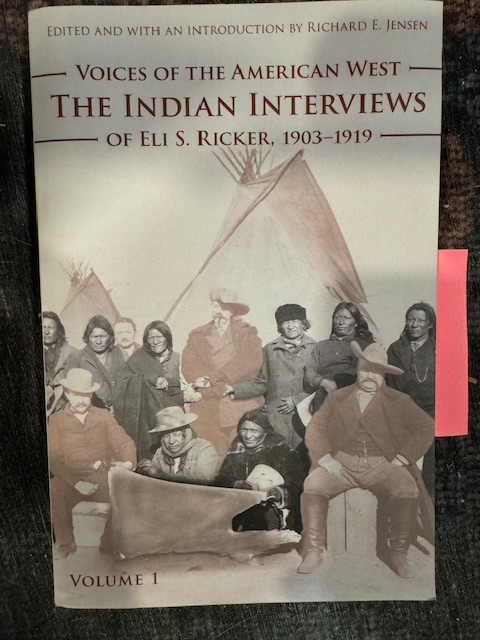
Lt. James Bradley led a detachment of Crow Indian scouts up the Bighorn Valley during the summer of 1876. In his journal he records that early Monday morning, June 26, they saw the tracks of four ponies. Assuming the riders must be Sioux, they followed these tracks to the river and came upon one of the ponies, along with some equipment which evidently had been thrown away. An examination of the equipment disclosed, much to his surprise, that it belonged to some Crows from his own command who had been assigned to General Custer’s regiment a few days earlier.
While puzzling over this circumstance, Bradley discovered three men on the opposite side of the river. They were about two miles away and appeared to be watching. He instructed his scouts to signal with blankets that he was friendly, which they did, but for a long time there was no response. Then the distant men built a fire, messages were exchanged by smoke signal, and they were persuaded to come closer.
They were indeed Crow scouts: Hairy Moccasin, Goes Ahead, White Man Runs Him. They would not cross the river, but they were willing to talk.
Bradley did not want to believe the story they told, yet he had a feeling it was true. In his journal he states that he could only hope they were exaggerating, “that in the terror of the three fugitives from the fatal field their account of the disaster was somewhat overdrawn.”
The news deeply affected his own scouts. One by one they went aside and sat down, rocking to and fro, weeping and chanting. Apart from relatives and friends of the slain soldiers, he later wrote, “there were none in this whole horrified nation of forty millions of people to whom the tidings brought greater grief.”
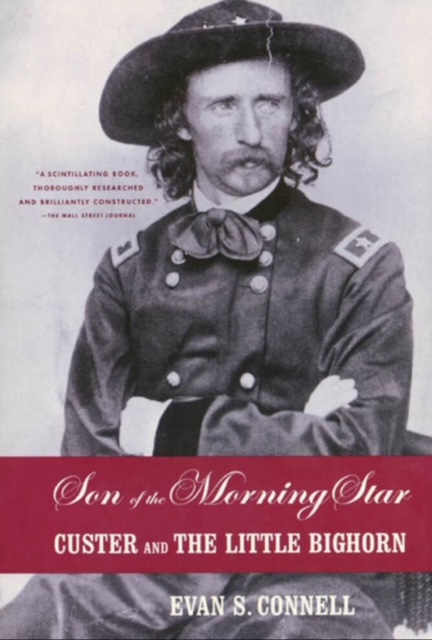
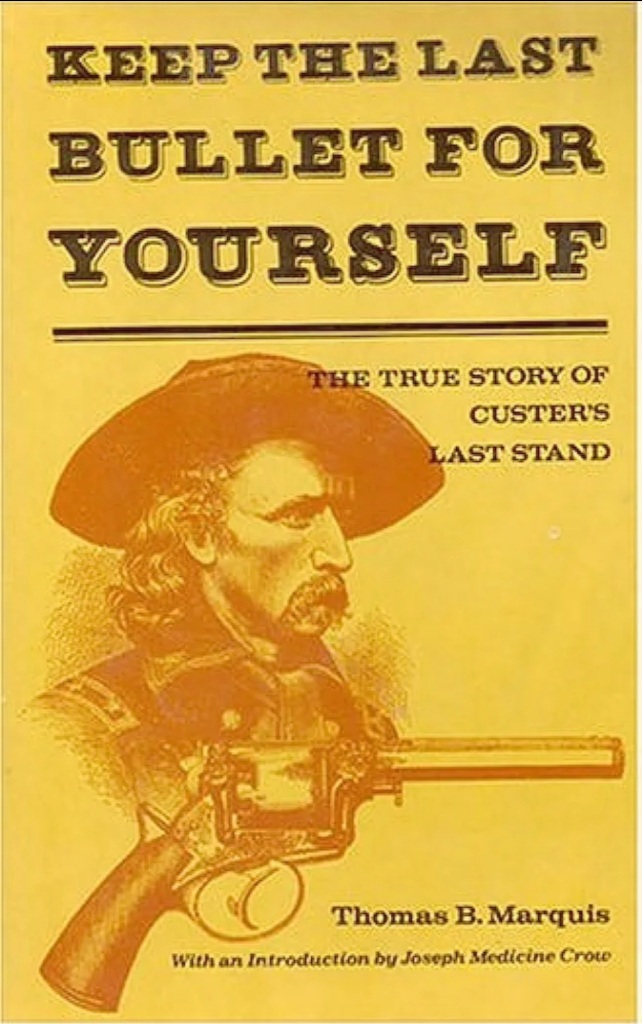
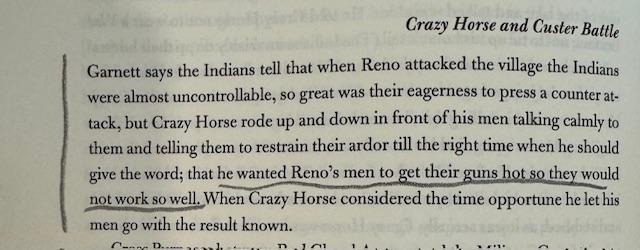
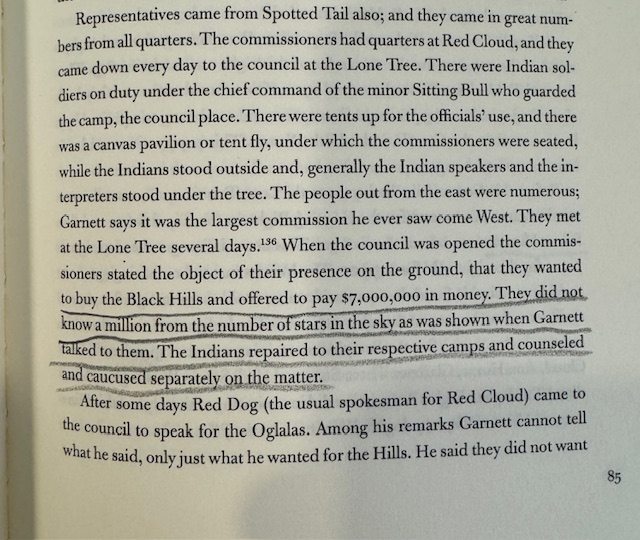
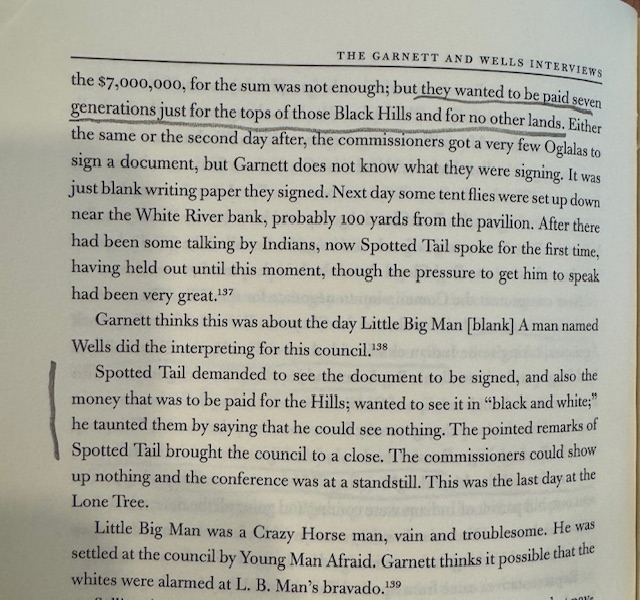
There were no literate survivors to the “last stand” event of June 25, 1876, so we have no firsthand written accounts. What happened was pieced together first from a sort of crime scene investigation. Later, interviews with participants were done, but cultural and linguistic gaps remained. Thomas Marquis, who lived among the Northern Cheyenne and knew many of them, wrote a book whose conclusions were so shocking it couldn’t be published in his lifetime.
Later, art, illustrations, apparently by eyewitnesses emerged, much of it quite vivid.
This is an interesting book. We’ve discussed how oral history as we know think of it didn’t seem to exist in the past, it didn’t occur to anyone (a search for “oral history” on Amazon reveals mostly books about music scenes and bands). John Nicolay, who’d been a secretary to Lincoln, worked with John Hay on a biography of Lincoln. They collected stories and reminiscences, but they concluded they couldn’t trust people’s memories. Prof. Burlingame dug through Nicolay’s notes and letters and put this book together.
One J. T. Stuart remembered that Lincoln was almost appointed territorial governor of Oregon during the Fillmore administration, but Mary Todd refused to go out there.
Robert Todd Lincoln remembers visiting his father after Gettsyburg, and finding him just after a cry:
(let’s note too that tied for 11 are Reba McEntire’s The Hammer and UTZ BesTexSmokestack. Reba McEntire’s The Hammer’s name is presumably promotion for the movie of that title?)
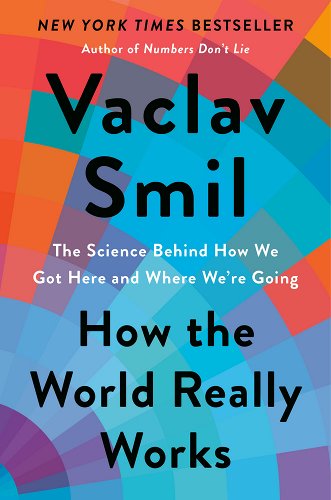
In my ongoing effort to understand how the world really works, I started listening to How the World Really Works by Vaclav Smil. Smil has a cool origin story:
Growing up in a remote mountain town in the Plzeň Region, Smil cut wood daily to keep the home heated. This provided an early lesson in energy efficiency and density.
“I have never been wrong on these major energy and environmental issues,” he says, “because I have nothing to sell.”
How the World Really Works can be a tough listen at times, because the gist of it is there are no easy answers, anything’s gonna require tradeoffs. One big takeaway: we’re not getting off fossil fuels any time soon. Sometimes though Smil has a rhetorical flourish that’s sort of fun. Much like Paul Johnson’s Birth of the Modern, however, the book is so overwhelming, so full of information that the result can be a glum feeling as I’m reminded of how much I don’t know, how complex everything is, it can be paralyzing. I see I’m in good company feeling this way:
After reading his first Smil book, [Bill] Gates “felt a little beat up. … Am I ever going to be able to understand all of this?” But he ultimately concluded that “I learn more by reading Vaclav Smil than just about anyone else.”
Natural Gas on the other hand I found quite exciting. Methane, ethane, and propane: you can see why Hank Hill loved the stuff. Smil, impartial though he tries to be, seems to have a soft spot of natural gas.
inhabitants of large northern cities hardly ever think about having their gas supply interrupted because such experiences are exeedingly rare.
Where does this wonderful gas come from?
Methane is produced during strictly anaerobic decomposition of organic matter by species of archaea, with Methanobacter, Mathanococcus, Methanoscarina, and Mathothermobacter being the major methanogenic genera
So we’re talking about the released gases over three billion years or so from prehistoric swamps. It might seem crazy that all that gas comes from the breathing out of life forms. And indeed, some have questioned that:
But what if hydrocarbons were of inorganic, rather than biogenic, origin? That was assumed by Dmitri Ivanovich Mendeleev, Russia’s leading nineteenth-century chemist, and that has been an alternative to the biogeneic explanation offered by the so-called Russian-Urkanian hypothesis about the abiogenic formation of oil and gas in abyssal environments. … Porfir’yev (1959, 1974) had also argued that abiogenic formation of giant oil fields is a better explanation of their origins than assuming truly gigantic accumulations of organic material that would be needed to create such structures…
The American Thomas Gold got in on the act. An astrophysicist, he pointed out that methane exists on planets apparently devoid of life, and theorized that methane:
can from by combining hydrogen and carbon under high temperatures and pressures in the outer mantle, and after this mantle-derived methane migrates it is then converted to heavier hydrocarbons in the upper layers of the Earth’s crust
After giving that a fair hearing, Smil says
I will note here half a dozen of major realities that undermine the abiogenic hypothesis
Submanticular squeezing, the exhaust of ancient wetlands, either way, it’s valuable stuff! The invention of liquified natural gas and compressed natural gas are remarkable examples of human ingenuity, and there may be more to come, but Smil, as usual, notes that energy transitions take a long time, and it won’t be soon that we convert all trucks to methane.
[Energy transitions] incremental progress can be accelerated or retarded by specific policies – but only rarely do such measures result in truly revolutionary shifts; energy systems are too complex and generally fairly long-lived and hence too inertial to be rapidly redirected by deliberate action designed to change their fundamentals. Grand plans aimed at their basic redesgn thus have a very low probability of success, and we are left trying to do the best we can to nudge the process in what we think is the best direction – but we still must keep in mind that, in retrospect, we may find such actions not as beneficial as we thought them to be at the beginning.
It’s not that we haven’t tried to occasional big swing. Smil notes about natural gas extracting:
one of the methods that was not just proposed, but actually tried several times in the United States is truly incredible (an adjective used with restraint).
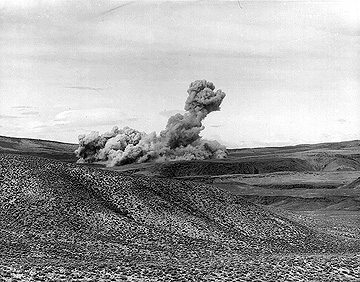
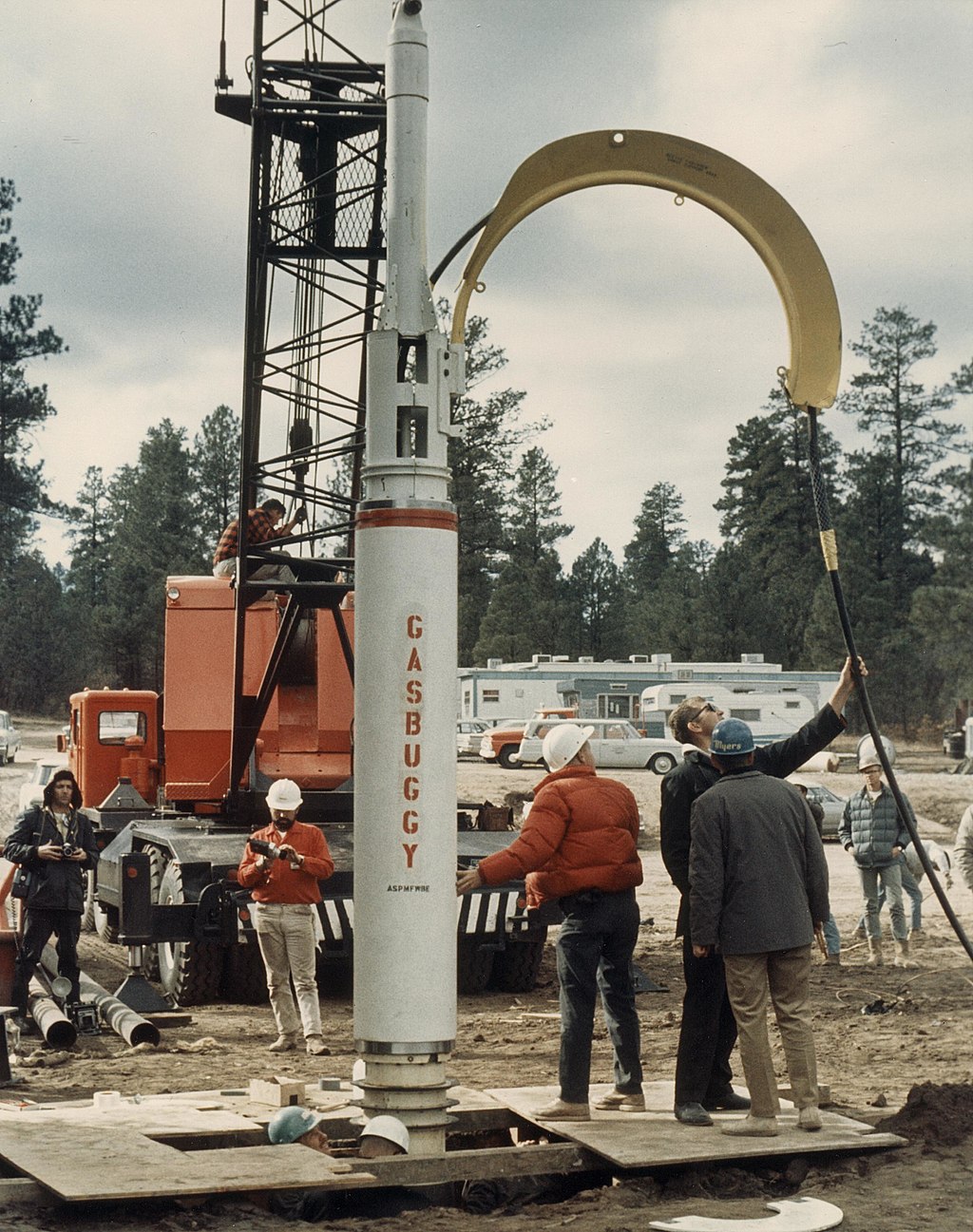
That was the Plowshare Program, where we detonated underground nuclear bombs to try and loosen up natural gas.
Reading this four decades later has only increased the sense of incredulity: how could these frequent detonations be ever justified in net energy terms, and how could regular detonation of powerful nuclear bombs underneath the grassland, fields and forests of the American West be accepted by the public as routine means of producing gas used for heating and cooking?
The sky had cleared, the clouds raveled to tatters, and at four oclock the sun broke through, silver on the bright green of grass and leaves and golden on the puddle sin the road; all down the column men quickened the step, smiling in the sudden burst of gold and silver weather.
So goes the first sentence of Foote’s book. You hear about things being unraveled, but “raveled” not so much.
From Stuart Chapman’s biography of Shelby Foote:
Faulkner would tell his son-in-law that Foote wrote as if he had been there himself.
He knows what he’s talking about.
We must agree, there are parts of Foote’s novel that are very vivid and feel very real.
Winston Groom is perhaps most notable as the author of the novel Forrest Gump. Don’t sleep on his narrative histories. They are terrific: compelling, clear, human, personal, funny even sometimes. Winston Groom was in the Vietnam War. When it comes to battle he writes like he knows what he’s talking about.
Civil War battlefields can be some of the most peaceful places in America. Some days tour buses or school groups must crowd the roads, but driving and walking around Shiloh in the late afternoon, a random Wednesday some days ago, I had the place to myself. On beautiful marked roads, stopping wherever I wanted to read some information. Walking in the woods, looking at the water, or the mowed fields. I was in a nine square mile park, quiet, undisturbed. Preserved landscape.
That the landscape is spooky, haunted, a burial ground, only adds to the draw. Certain places, certain moments, you can feel the reverie. A break in the veil to the past. Is there something worrying in being drawn to that? This place was the scene, for several thousand people, of the most traumatic event in their lives. At the end of the first day, there were something like two thousand dead bodies on the ground. An even higher number of people with an arm or a leg blown off or other mangling wound. And that’s not to mention the horses. Ambrose Beirce said dead horses were everywhere. Several soldiers in their accounts remembered some pitiful moment or another involving a hurt horse.
At night, after the first day ended, thunderstorms rolled in:
Flashes of lightening showed hogs feeding on the ungathered dead.
as they put it in the PBS Civil War series (holds up, Shiloh is in episode two).
If you want to visit a place where that happened, are you a bit of a sicko?
In War of the Worlds Tom Cruise’s son says:
Dad, I need to see this!
“Seeing the elephant.” Bruce Catton, asked to explain why boys joined the armies, says we shouldn’t overlook the simple fact that they were bored.
Shiloh is the cosmic joke answer to that desire. The twisted reward to a Devil’s bargain. Oh, you want to see what a war is like? Here you go!
One of Abraham Lincoln’s great and compelling qualities was a resolve to find some meaning in these events. Suffering and horror on this scale had to be worth something. Had to be made to be worth something.
Shiloh was decisive. Grant’s army could’ve been driven into the Tennessee River, or surrounded in the swamps and forced to surrender or retreat. Grant or Sherman could’ve been killed. Albert Sidney Johnston was killed. Many considered him the best of the Confederate generals. His conduct on the first day had changed the outcome of the battle, but then he was shot, and not realizing the extent of the wound he bled to death. Johnston has the biggest monument at the Texas State Cemetery in Austin.
Sherman was shot three times on the first day. One bullet passed through his hat. In his memoirs Grant gives much credit to the way Sherman conducted himself. Facing disaster the two of them, Grant and Sherman, managed to keep their cool.
At close to the last possible second, Union reinforcements arrived. The second day, their commander dead, the Confederates were driven away.
That would be more or less the furthest the Confederacy got in the Mississippi Valley. Some weeks after the battle, the Confederate army abandoned Corinth, Mississippi. Corinth was key: it was the crossroads where the railroad from Memphis to Charleston intersected the railroad that ran from the Ohio river to the Gulf port at Mobile, Alabama.
The crossroads at Corinth: it all connected here.
In the aftermath of Shiloh, the South was cut in half. Grant, assessing the situation years later in his PersonalMemoirs:
The Confederates were now driven out of West Tennessee, and on the 6th of June, after a well-contested naval battle, the National forces took possession of Memphis and held the Mississippi river from its source to that point. The railroad from Columbus to Corinth was at once put in good condition and held by us. We had garrisons at Donelson, Clarksville and Nashville, on the Cumberland River, and held the Tennessee River from its mouth to Eastport. New Orleans and Baton Rouge had fallen into the possession of the National forces, so that now the Confederates at the west were narrowed down for all communication with Richmond to the single line of road running east from Vicksburg. To dispossess them of this, therefore, became a matter of the first importance. The possession of the Mississippi by us from Memphis to Baton Rouge was also a most important object. It would be equal to the amputation of a limb in its weakening effects upon the enemy.
By May 1862, something like this was the situation:
Once Vicksburg fell (not easy, Winston Groom has a whole book about it) it was all over but the crying. Of which there’d be plenty, there are places in the former Confederacy where they’re still crying.
The ground at Shiloh can be confusing. Almost every part of the battlefield was in the hands of different armies at different times. The Shiloh church for instance was the headquarters of the Union’s Sherman and the Confederate Beauregard at different points.
The church at the park today is a reproduction. The original was damaged, bloodstained, torn apart for souvenirs. You’ll notice all the pictures of the church are taken at the same angles. This is because no one wants to spoil the 1862 time travel aspect of their photos by including the modern Methodist church that sits just out of frame.
Everyone who was at the battle of Shiloh found it weird:
Everything looked weird and unnatural
recalled John Cockerill years later. He was sixteen at the time.
Actions took the grotesque form of a nightmare
remembered another veteran. Groom tells us:
At least two soldiers’ accounts report a lone woman walking across the battlefield in the midst of heavy fighting
In one forested part of the battlefield there are old Indian mounds. There were used as vantage points by Forrest’s cavalry, among others. At the time they were widely believed to be burial mounds, thus participants could believe they were fighting on an abandoned Indian burial ground.
It occurred to me that the closest thing to a battle I’ve been at is a huge concert festival. Ridiculous comparison but go with us. Take away the maiming and the killing: there were over 100,000 people at Shiloh. How many times in US history prior had there been a gathering of that size? Ever? I’m not aware of any Revolutionary battle that was close to that size. There were revival meetings, some even in the same area, but they never exceeded 10,000 or so.
Pittsburg Landing, where Union reinforcements under General Don Carlos Buell disembarked late on the first day of the battle, ensuring Grant’s salvation, is stop 22 on the driving tour. The National Park Service must have good reasons for that. But if you want to follow the battle as a narrative, take Pittsburg Landing as the starting place.
Follow the journey of Ebenzer Hannaford. Hannaford was in the Sixth Ohio. On Sunday April 6, they woke up near Savannah, Tennessee, broke camp, and marched ten miles. Late in the afternoon, maybe around five PM or so, an hour before sundown, he and his comrades boarded a steamboat and were ferried across the river. As they got close, they saw probably five thousand Union soldiers who’d taken themselves out of the battle and were huddled by the river, warning the guys coming over that they were doomed:
The same scene was witnessed by Ambrose Bierce, coming the same way as Hannaford:
Along the sheltered strip of beach between the river bank and the water was a confused mass of humanity—several thousands of men. They were mostly unarmed; many were wounded; some dead. All the camp-following tribes were there; all the cowards; a few officers. Not one of them knew where his regiment was, nor if he had a regiment. Many had not. These men were defeated, beaten, cowed. They were deaf to duty and dead to shame. A more demented crew never drifted to the rear of broken battalions.
A detail stuck out to Hannaford, when he wrote an account two years after the event, published as “Coming Up at Shiloh” in The Continental Review:
The antic drummer boy sticks in the mind. Shelby Foote may write like he was there, but in the end it’s pretend. Hannaford was there, and what he remembered was a boy pounding away on his drum, “to what purpose we could none of us divine.”
Travel tip: if you are visiting Shiloh, I recommend approaching via Corinth, MS. The Corinth Civil War Interpretative Center, built in 2004, is a stunning building and the film, exhibits and National Park staff there do a great job putting everything in context. They told me their site is designed to be a starting point on a journey to Shiloh. There’s a tantalizing library there for the serious buff:
The NPS guy in Corinth had so much integrity he would not recommend a lunch restaurant due to “favoritism,” but he allowed that The Rib Shack in Corinth was very popular. I recommend The Rib Shack in Corinth.
Trains of cars were heard coming in and going out of Corinth constantly. Some of the men who had been engaged in various capacities on railroads before the war claimed that they could tell, by putting their ears to the rail, not only which way the trains were moving but which trains were loaded and which were empty. They said loaded trains had been going out for several days and empty ones coming in. Subsequent events proved the correctness of their judgment.
Reading up on endorheic basins, places where water does not drain out to the ocean, where what rain falls will be retained or evaporated.
An endorheic basin is a drainage basin that normally retains water and allows no outflow to other external bodies of water, such as rivers or oceans, but drainage converges instead into lakes or swamps, permanent or seasonal, that equilibrate through evaporation.
The Valley of Mexico was endorheic, but now drains through artificial canals.
For the real endorheic enthusiast, Australia is the place.
If you find endorheic basins somewhat eerie, as I do, I suggest you don’t even read up on cryptorheic basins, where the water flows out through subterranean karst.
by Jan Mostaert, 1535 or so. (Dutch for “John Most Art”?)
Found that while reading up on Coronado’s expedition.
Upon reaching the top they beheld a landscape unlike anything they had seen before, a vast treeless prairie, as flat as a table, and so became the first Europeans to traverse what later became the Texas Panhandle. Virtually swallowed by the trackless soft grassland, they found it an unnerving experience.
So says James L. Haley in his (excellent, readable) Passionate Nation: TheEpic History of Texas, about which I hope to say more when I finish.
This is how the Coronado business got started:
On this thin evidence they set off. Native peoples they came across took the wise strategy of telling them “oh yeah, absolutely, there’s tons of gold and silver, wayyyyyy over that way, super far from here, keep going.”
The expedition was guided by a Native man they called the Turk, who finally admitted he’d deliberately led them into the plains in the hopes they’d all starve and die far away from his people.
At least one member of the expedition, Cervantes, was suspicious of this Turk, and with good reason:
I’d love to read firsthand accounts of the Coronado expedition all day, but unfortunately I’m very busy. You could spend a lifetime working on where, exactly, Quivara was. Some have!
Our post about the food scene in Papeete, Tahiti was one of the most popular posts ever on this site. The obvious conclusion: I should become a South Pacific food critic. You may think I’m not qualified, because I’ve spent no more than 25 days or so in the South Pacific, and that’s generously assuming we count New Zealand and Australia. You may think a South Pacific food critic should be a big jolly rotund character who loves food, not a picky eater with a skinny frame. But, we must follow where called, so here is our latest dispatch, on the food scene in Honolulu.
Above are the dumplings of the day (a spiced beef, on this particular day) at Koko Head Cafe, Lee Ann Wong’s (of Top Chef) brunch spot in the cool, chill Kaimuki neighborhood. Fantastic for post-hike feasts.
The Don Buri Chen is no joke, and the fish eggs are serious as well.
Shave ice, of course, this is at Kokonuts:
Obama’s flavors are said to be Lemon Lime and Cherry, went with Lemon Lime and cocoanut, maybe because they were toasting cocoanut inside which aromated the strip mall joint in a most pleasing way.
Musubi, Japanese seaweed and rice-wrapped pyramid sandwiches, very solid. I’m not into the classic spam musubi, ground beef and tuna both solid and satisfying:
That’s from Mana Musubi, which was sold out by Friday around 11 am. What a packable food!
Piggy Smalls, offshoot of The Pig and the Lady, is making incredible new Vietnamese food in a former burger joint location:
Failed to photograph the Burmese Tea Salad before devouring. We intended to visit the legendary shrimp trucks of the North Shore, but were stopped by torrential downpour, luckily this hit us just as we rolled up on Aloha Shrimp Truck in Hauula. (Remember when pronouncing Hawaiian words: there are no silent letters).
Simple? Yes. Excellent? Yes.
A beloved Oahu institution is Zippy’s fast food, which has a pretty extensive menu and some baked goods as well. Had to try the Zap Pak and the Surf Pak.
Look, is it delicious? Kind of. Is it convenient? Also kind of.
Fête in downtown Honolulu rules:
Ridiculous Italian food with local Hawaiian-raised meats and ingredients.
The queen of Oahu foodstuffs however must be the poke you can buy by the pound at the counter in the back of Tamara’s liquor store, there are several locations:
You eat that on a cracker and you’re having a great time. This is the classic tuna in Tamara’s sauce. I became a poke convert.
For some Hawaiian food/plate lunch classics, Highway Inn, several locations.
For freshness, invention, and wild array of influences, Honolulu gotta be in the conversation as a food destination. The cuisine skews a bit fatty and decadent, I must say, a salad seems harder to come by than a mai tai, but if you’re cutting loose on vacay and pairing with some outdoor adventures, it’s pretty grand.
Maximum mahalo to friend and local guide Kim H. for knowing all the spots!
Hawaii has kept low Covid #s in part by taking great care in letting people in, you must produce a negative Covid test taken within 72 hours of departure. And not just any Covid test, a Hawaii-approved test. Don’t be like this knucklehead and take the wrong kind of test!
Look, once you get the original Hawaii 5-0 theme in your head, it’s hard to get out, but man, is that the best TV opening ever?
Senator Mitt Romney of Utah, the lone Republican who voted to convict Trump in last year’s impeachment trial, pointed out that there’s little time for either an impeachment or what likely would be a drawn out battle over the Constitution’s 25th Amendment, which provides for the removal of a president.
“I think we have to hold our breath,” he told reporters.
Is that gonna be the plan, in this country? We’re a lucky country, but nobody’s lucky forever. (it’s like this bit!)
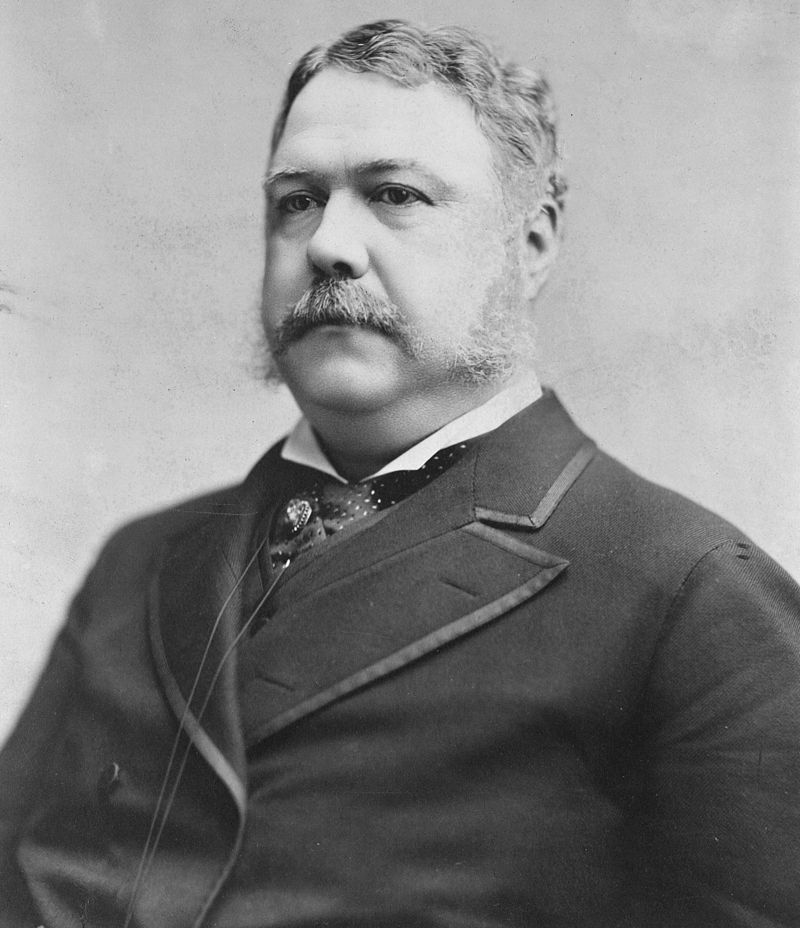
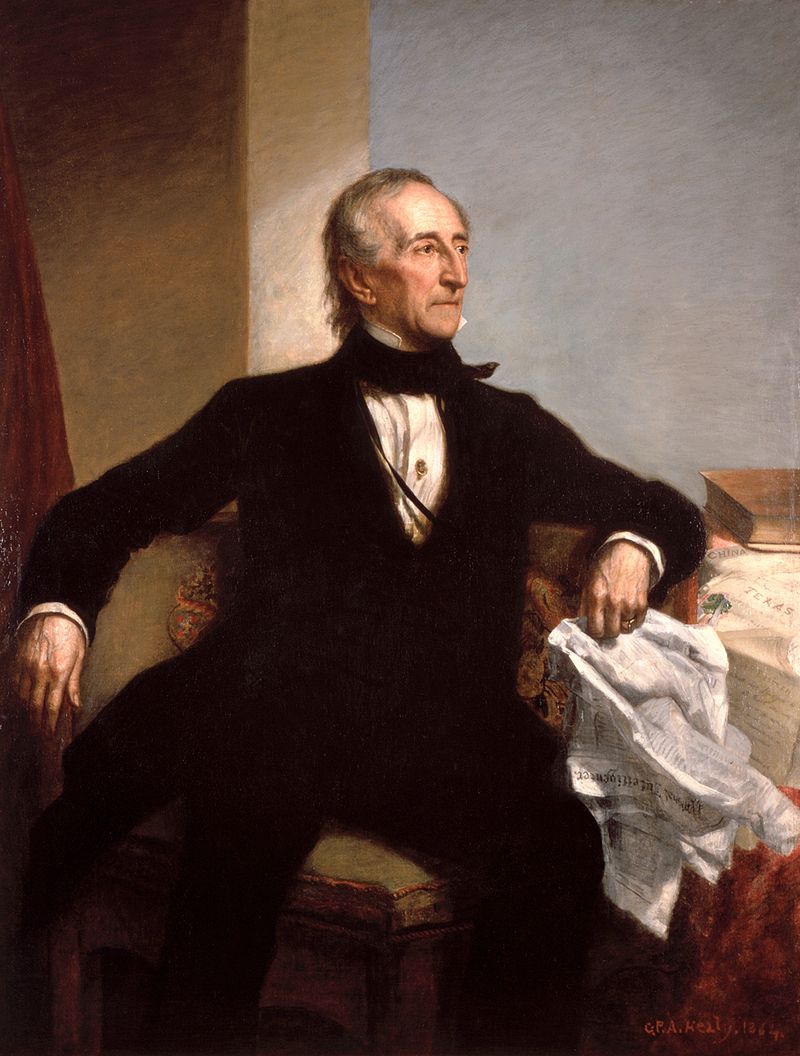
but somehow get the sense that Chester Alan Arthur did his best. I guess signing the Chinese Exclusion Act would be the ugliest mark on his record. He tried to stop it!
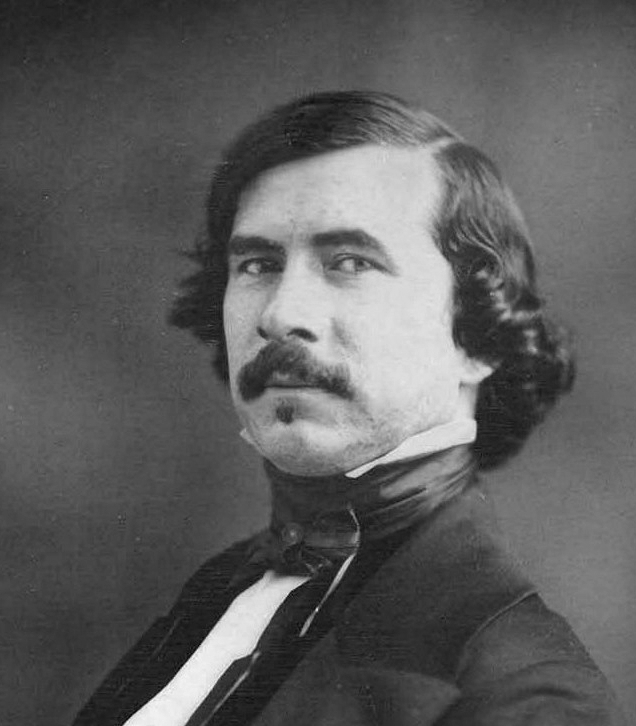
Healy was born in Boston, Massachusetts. He was the eldest of five children of an Irish captain in the merchant marine. Having been left fatherless at a young age, Healy helped to support his mother. At sixteen years of age he began drawing, and at developed an ambition to be an artist. Jane Stuart, daughter of Gilbert Stuart, aided him, loaning him a Guido’s “Ecce Homo”, which he copied in color and sold to a country priest. Later, she introduced him to Thomas Sully, by whose advice Healy profited, and gratefully repaid Sully in the days of the latter’s adversity.
so far as I know no relation, there are plenty of Healys and Helys from here to Australia.
He painted Tyler
and drew Grant.
He’s got a few that have appeared in the White House, like this one, The Peacemakers.
We can never let a Patriots’ Day go by without reflecting on the events of April 19, 1775. How did this happen?
The people of countryside Massachusetts at that time were probably the freest and the least taxed people in the British Empire. What were they so mad about?
From my hometown of Needham, MA, almost every able bodied man went out. What motivated people that morning to grab guns and shoot at their own army?
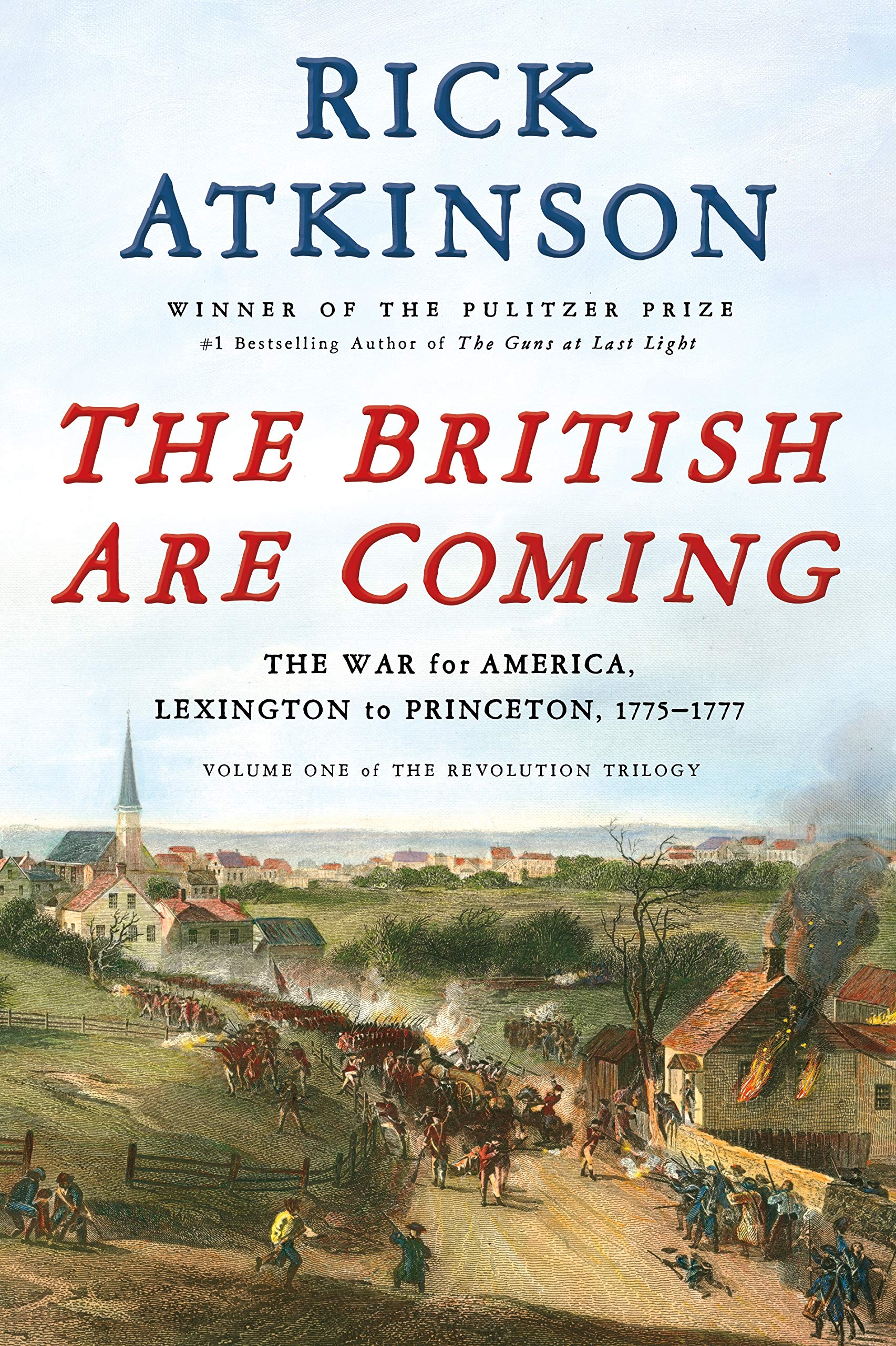
Lately I’ve been reading Rick Atkinson’s book on the first years of the American Revolution. It’s interesting that Atkinson titled his book this, because as he himself notes:
Popular lore later credited him with a stirring battle cry – “The British are coming!” – but a witness quoted him as warning, more prosaically, “the regulars are coming out.”
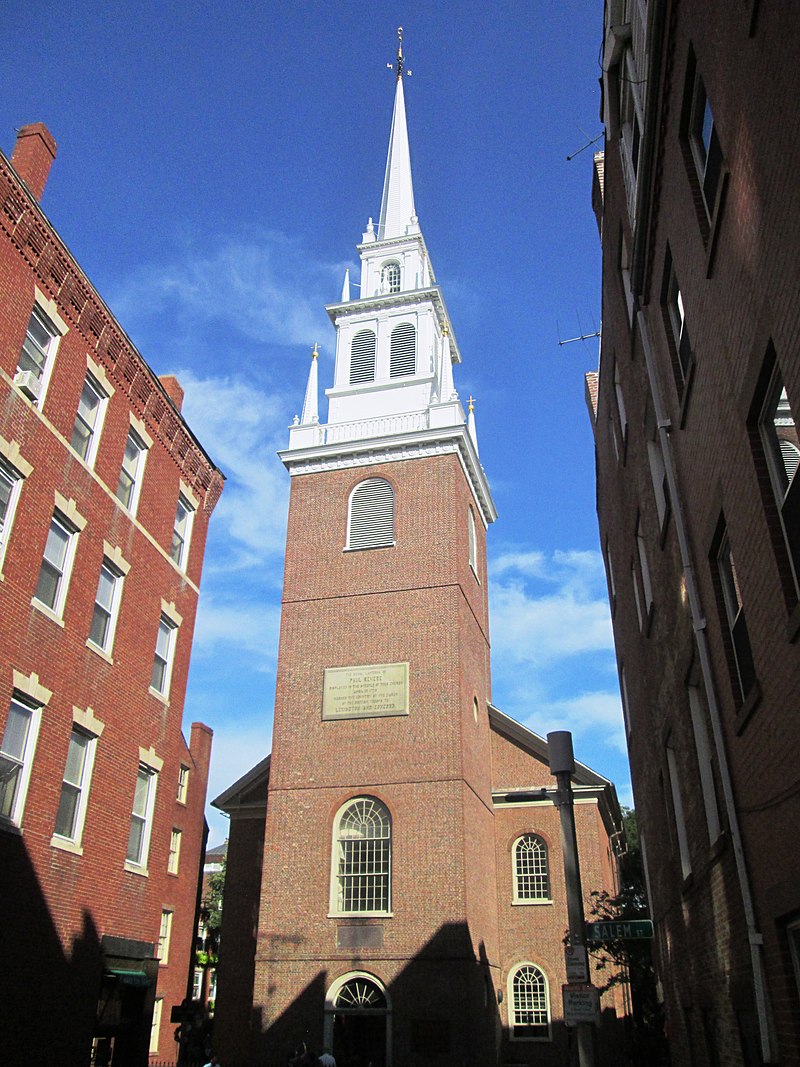
The word would’ve gotten out anyway, because of information sent by light in binary code: one if by land, two if by sea. (it was two).
Atkinson does a great job of laying out how tensions and feelings and fears and resentments escalated to this point. George III and his Prime Minister Lord North (they’d grown up together, it’s possible they were half-brothers) miscalculated, misunderstood, overreacted.
North held a constituency in Banbury with fewer than two dozen eligible voters, who routinely reelected him after being plied with punch and cheese, and who were then rewarded with a haunch of venison.
The image of a stern father disciplining a disobedient child seemed to guide George III/North government thinking. Violently putting down rebellions was nothing new, even within the island of Britain. Crushing Scottish revolt had been a big part of George III’s uncle’s career, for example.
From the British side, the disobedience did seem pretty flagrant, the Boston Tea Party being a particularly outrageous and inciting example, from a city known to be full of criminals and assholes. The London government responded with the “Coercive Acts.”
With this disobedient child, the punishment didn’t go over well. The mood had gotten very, very tense in Boston when the April 19 expedition was launched.
Everything about it went wrong. Everybody was late, troops were reorganized under new commanders. Orders were screwed up, the mission was unclear. It was a show of force? A search and destroy? Both? The experience for the soldiers in on it was awful: started out cold and wet, ended up lucky if you were alive and unmangled.
What the Lexington militia was up to when they formed up opposite the arriving Redcoats is unclear. Did they intend to have a battle? Doesn’t seem like it, why would they line up in the middle of a field? There’d already been an alarm, and then a weird break where a lot of the guys went to the next door tavern and had a few.
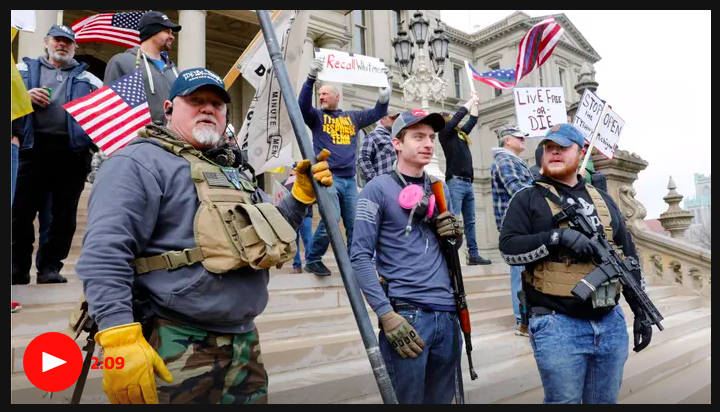
Were they intending just kind of an armed protest and demonstration (as is common in the United States to this day)?
A lot of the guys in the Massachusetts militias had fought alongside the British army in the wars against the French and Indians. Captain Parker of Lexington had been at Louisburg and Quebec. How much was old simmering resentment of the colonial experience serving with professional British military officers a part of all this?
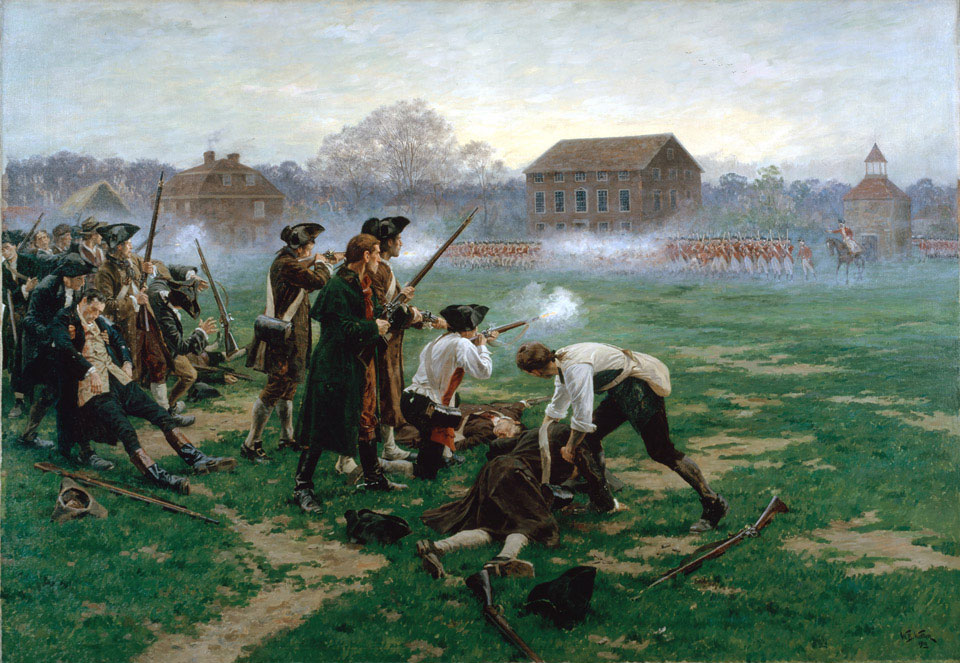
One way or another, a shot went off, and then it got out of hand very fast. When it was over eight Lexington guys were dead.
The painting above is by William Barnes Wollen, he painted it in 1910. Wollen was a painter of military and battle scenes. He’d been in South Africa during the Boer War, so maybe he knew what an invading army getting shot at by locals was like.
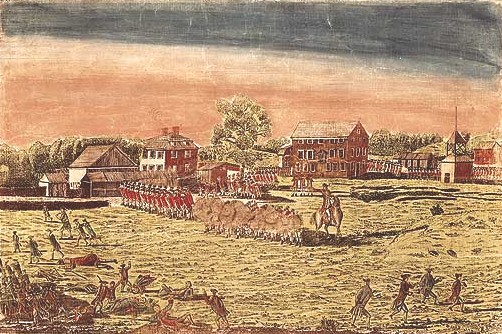
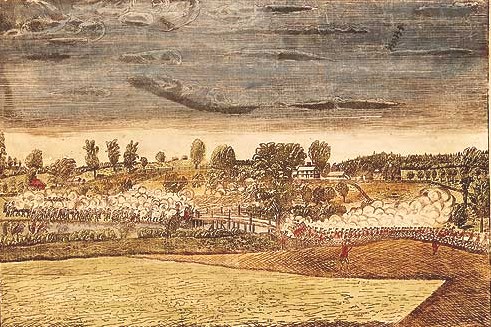
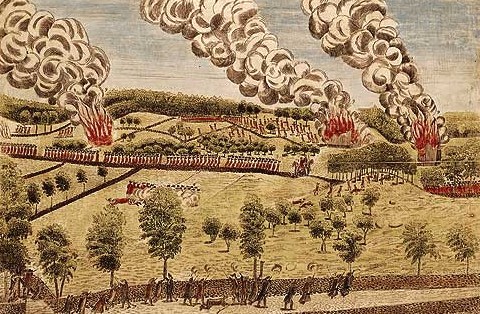
Amos Doolittle was on the scene a few days after the events, interviewed participants, walked the grounds, and rendered the scene like this.
But Doolittle had propaganda motives.
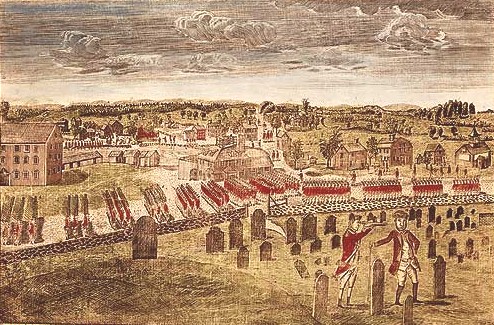
After the massacre at Lexington the British got back into formation and kept moving.
They ran into another fight at Concord Bridge.
Information and misinformation and rumor became a part of the day. The story spread that the British were burning Concord, maybe murdering people.
By now minutemen from all over were blasting away. It must’ve been horrific. Atkinson tells us that the British “Brown Bess” musket fired a lead slug that was nearly .75 of an inch in diameter (compare to, say, a Magnum .45, .45 of an inch).
How would history have been different if the British column had been completely wiped out, like Custer’s last stand? It almost happened. The expedition was saved by the timely arrival of reinforcements with two cannons.
The column avoided an ambush at Harvard Square, but several soldiers died in another gunfight near the future Beech and Elm Streets while three rebels who had built a redoubt at Watson’s Corner were encircled and bayoneted. William Marcy, described as “A simple-minded youth” who thought he was watching a parade, was shot dead while sitting on a wall, cheering.
They were able to get back across the river and into Boston, minus 73 killed, 53 missing, 174 wounded. A bad day in Massachusetts.
This event looms large in the American imagination: the gun-totin’ freedom lovers fighting off the government intrusion. But the more you read about it the more it sounds like just a catastrophe for everyone involved.
Back in Needham the Rev. West reported:
In the evening we had intelligence that several of the Needham inhabitants were among the slain, and in the morning it was confirmed that five had fallen in the action and several others had been wounded. It is remarkable that the five who fell all of them had families, and several of them very numerous families so that there were about forty widows and fatherless children made in consequence of their death. I visited these families immediately, and with a sympathetic sense of their affliction I gave to some the first intelligence they had of the dreadful event, the death of a Husband and a Parent.
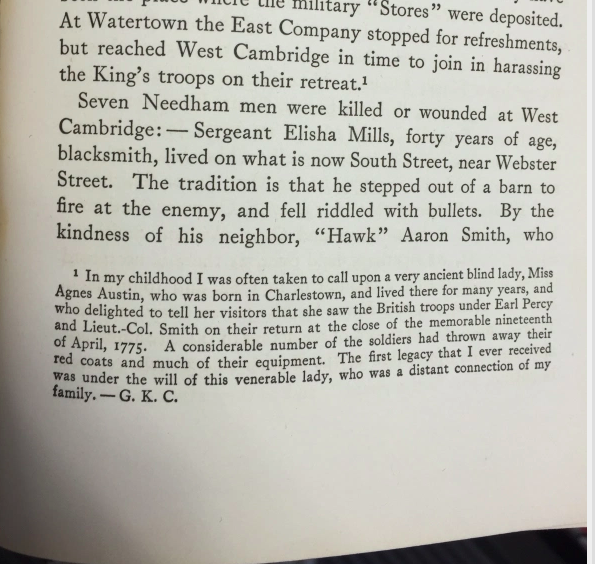
How about this footnote Clarke’s History Of Needham?
Sapir’s special focus among American languages was in the Athabaskan languages, a family which especially fascinated him. In a private letter, he wrote: “Dene is probably the son-of-a-bitchiest language in America to actually know…most fascinating of all languages ever invented.”
Could he have been wrong? People were wrong a lot back then.
Well, after looking it with an amateur’s enthusiasm, I feel more trusting.
I feel confident Navajo/Diné is connected to languages of what’s now Alaska, British Columbia, and nearby turf.
Navajo / Diné speakers can be understood by speakers of other Athabaskan languages, and most of the words in Navajo seem to have Athabaskan origin.
Edward Sapir wrote a paper about internal evidence within the Navajo language for a northern origin to this people.
Sapir was wrong* about some things, but no one seems to doubt he was a pretty serious linguist.
How about Michael E. Krauss?
After completing a dissertation on Gaelic languages Krauss arrived in Alaska in 1960 to teach French at the University of Alaska.
Krauss’ largest contribution to language documentation is his work on Eyak, which began in 1961. Eyak was then already the most endangered of the Alaskan languages, and Krauss’ work is all the more notable considering that it represents what today might be considered salvage linguistics. While some Eyak data had been previously available, they were overlooked by previous scholars, including Edward Sapir. However, Eyak proved to be a crucial missing link for historical linguistics, being equally closely related to neighboring Ahtna and to distant Navajo. With good Eyak data it became possible to establish the existence of the Athabaskan–Eyak–Tlingit language family, though phonological evidence for links to Haida remained elusive.
If anyone makes any progress on native American language classifications while under precautionary self-quarantine, let us know
* I’m just teasing poor Sapir here, I don’t think it’s fair to “blame” him exactly for the “Sapir-Whorf hypothesis,” which maybe isn’t even wrong, and as far as I can tell it was Whorf not Sapir who misunderstood Hopi













 Helytimes
_-_DSC07833.JPG)


.jpg)


