BECKY QUICK: What kind of things would you recognize that they– that they were doing wrong?
CHARLIE MUNGER: Oh. They had some crazy idea. For instance, my Latin teacher was maladjusted, but one who was a devoted follower of Sigmund Freud. And I recognized that Sigmund Freud was –when I first read him when I was in high school. And, of course, it was an odd little boy whose Latin teacher is teaching him Freud. But that was – she was peculiar and so was I. And, of course, when I read – I bought the complete writings of Sigmund Freud from the area library. It was one big book. And I went through it very laboriously. And I realized he was a goddamn lunatic. And so I decided I wasn’t gonna learn that from my Latin teacher. I had some very unusual teachers. The best teacher I had in my life was Lon Fuller. Well, he was the best contracts teacher in any law school. And contracts is the best subject in every law school, at least I think it is. Because it integrates so beautifully with the new doctrine of an economics that came along with Adam Smith and all those people.
I had Dall-E generate some images of boy Charlie Munger reading the complete works of Sigmund Freud:
Chairman Mao: The trade between our two countries at present is very pitiful. It is gradually increasing. You know China is a very poor country. We don‘t have much. What we have in excess is women. (Laughter)
Dr. Kissinger: There are no quotas for those or tariffs.
Chairman Mao: So if you want them we can give a few of those to you, some tens of thousands. (Laughter)
Prime Minister Chou: Of course, on a voluntary basis.
Chairman Mao: Let them go to your place. They will create disasters. That way you can lessen our burdens. (Laughter)
from a transcript of a conversation, Feb. 17 1973. Although who can say what they really said? A few months later:
Chairman Mao: Let’s discuss the issue of Taiwan. The question of the U.S. relations with us should be separate from that of our relations with Taiwan.
The Secretary: In principle….
Chairman Mao: So long as you sever the diplomatic relations with Taiwan, then it is possible for our two countries to solve the issue of diplomatic relations. That is to say like we did with Japan. As for the question of our relations with Taiwan, that is quite complex. I do not believe in a peaceful transition. (To the Foreign Minister) Do you believe in it?
The Secretary: Do I? He asked the Foreign Minister.
Chairman Mao: I’m asking him (the Foreign Minister). (Prime Minister Chou said something that was not translated.)
They are a bunch of counterrevolutionaries. How could they cooperate with us? I say that we can do without Taiwan for the time being, and let’ it come after one hundred years. Do not take matters on this world so rapidly. Why is there need to be in such great haste? It is only such an island with a population of a dozen or more million.
Strange. Game (power addicted psycho) recognize game I guess.
“Like Warren, I had a considerable passion to get rich,” Munger told Roger Lowenstein for Buffett: The Making of an American Capitalist, published in 1995. “Not because I wanted Ferraris — I wanted independence. I desperately wanted it. I thought it was undignified to have to send invoices to other people.”
Munger never stopped preaching old-fashioned virtues. Two of his favorite words were assiduity and equanimity.
He liked the first, he said in a speech in 2007, because “it means sit down on your ass until you do it.” He often said that the key to investing success was doing nothing for years, even decades, waiting to buy with “aggression” when bargains finally materialized.
He liked the second because it reflected his philosophy of investing and of life. Every investor, Munger said frequently, should be able to react with equanimity to a 50% loss in the stock market every few decades.
Munger on horse race betting, from his most famous (or second most famous?) speech:
How do you get to be one of those who is a winner—in a relative sense—instead of a loser? Here again, look at the pari-mutuel system. I had dinner last night by absolute accident with the president of Santa Anita. He says that there are two or three betters who have a credit arrangement with them, now that they have off-track betting, who are actually beating the house. They’re sending money out net after the full handle—a lot of it to Las Vegas, by the way—to people who are actually winning slightly, net, after paying the full handle. They’re that shrewd about something with as much unpredictability as horse racing. And the one thing that all those winning betters in the whole history of people who’ve beaten the pari-mutuel system have is quite simple. They bet very seldom. It’s not given to human beings to have such talent that they can just know everything about everything all the time. But it is given to human beings who work hard at it—who look and sift the world for a mispriced bet—that they can occasionally find one. And the wise ones bet heavily when the world offers them that opportunity. They bet big when they have the odds. And the rest of the time, they don’t. It’s just that simple. That is a very simple concept. And to me it’s obviously right—based on experience not only from the pari-mutuel system, but everywhere else.”
One day Warren Buffett and Charlie Munger visited the set of The Office to film a comedy video for the Berkshire Hathaway annual meeting. Everyone swarmed around Buffett but nobody really knew Munger. When the lunch break came I had the opportunity to take my plate and sit right down across from him.
From reading his Wikipedia page that morning I’d learned that Charlie Munger had been a weatherman during World War II, so I asked him about that. “It was kind of a humdrum job,” he said, modest. “A lot of people had humdrum jobs in the war.” His job was hand-drawing weather maps to predict the best times to fly planes across the Bering Strait to our Soviet allies in such a way that the engines wouldn’t ice up and kill the pilots. It seems like that might teach you something about probability and decision-making under uncertainty.
We talked about Clifton’s Cafeteria in downtown LA. He expressed admiration for that institution.
In 1931, Clinton leased a “distressed” cafeteria location at 618 South Olive Street in Los Angeles and founded what his customers referred to as “The Cafeteria of the Golden Rule”. Patrons were obliged to pay only what they felt was fair, according to a neon sign that flashed “PAY WHAT YOU WISH.” The cafeteria, at the western terminus of U.S. Route 66, was notable for serving people of all races, and was included in The Negro Motorist Green Book.
The conversation itself wasn’t that profound, but it launched me on a project of learning about more about Munger and his thinking that’s really changed my life.
“You don’t have a lot of envy.
You don’t have a lot of resentment.
You don’t overspend your income.
You stay cheerful in spite of your troubles.
(this from a guy whose first child died of leukemia).
You deal with reliable people.
And you do what you’re supposed to do.
And all these simple rules work so well to make your life better. And they’re so trite.”
His prescription is logical, he says.
“Staying cheerful” is “a wise thing to do,” Munger told Quick, adding that in order to do so, you have to let go of negative feelings.
“And can you be cheerful when you’re absolutely mired in deep hatred and resentment? Of course you can’t. So why would you take it on?” Munger said.
from 2019. (Struck by a resemblance to the mantra Liam Clancy gave Bob Dylan: “no fear, no meanness, no envy.”) He was committed to being rational, and he was witty, he expressed a lot of wisdom in a fast and punchy way. You could listen to him talk for a long time and not get bored. (And he could talk for a long time too.)
(not sure what year he said that, might be more like $1 million today)
Munger holding forth in February, 2022 with a rare stock pick:
But I would argue that if I was investing money for some sovereign wealth fund or some pension fund with a 30,40, 50-year time horizon I buy Costco at the current price.
Here’s Costco vs. S&P 500 over that timeline:
(although my guy was talking 30-50 years.)
Posting about Munger has led to some interesting real life connections. The Mungerheads search out every scrap on the man. They’re interesting people to talk to, and you usually learn something
“I’ve mellowed because I consider it counterproductive to hate as much as both parties now hate, and I have disciplined myself,” Munger said. “I now regard all politicians higher than I used to. I did that as a matter of self-preservation.” He said that he had re-read “The Decline and Fall of the Roman Empire,” and it made him “feel a lot better about the current political scene. We’re way ahead of the Romans at the end.”
That’s a pretty low bar, I pointed out.
“It’s very helpful — I suggest you try it,” Munger replied. “Politicians are never so bad that you don’t live to want them back. There will come a time when the people who hate Trump will wish that he was back
Free Samples, from 2023, a look at a commonality in Buffett-Munger businesses.
CHARLIE MUNGER: I used to come to the Berkshire annual meetings on coach from Los Angeles. And it was full of rich stockholders. And they would clap when I came into the coach section. I really liked that. (LAUGHTER) (APPLAUSE)
Obviously, you’ve got to be able to handle numbers and quantities—basic arithmetic. And the great useful model, after compound interest, is the elementary math of permutations and combinations. And that was taught in my day in the sophomore year in high school. I suppose by now in great private schools, it’s probably down to the eighth grade or so.
It’s very simple algebra. It was all worked out in the course of about one year between Pascal and Fermat. They worked it out casually in a series of letters.
Doris Kearns Goodwin on FDR’s power of persuasion:
At the Democratic Convention in 1936, Roosevelt answered the attacks in dramatic form. He admitted he had not kept his pledge. He admitted that he had made some mistakes in the early years. But then he quoted the famous line: “Better,” he said, “the occasional faults of a government guided by a spirit of charity and compassion than the constant omissions of a government frozen in the ice of its own indifference.” As he was making his way up to the podium to that “Rendezvous with Destiny” speech, leaning on the arms of his son and a Secret Service agent, his braces locked in place to make it seem as if he could walk (he really could not on his own power), he reached over to shake the hand of a poet. He immediately lost his balance and fell to the floor, his braces unlocked, his speech sprawled about him. He said to the people around him, “Get me up in shape.” They dusted him off, picked him up almost like a rag doll, put his braces back in place, and helped him up to the podium. He then somehow managed to deliver that extraordinary speech.
There weren’t that many fireside chats:
He delivered only thirty fireside chats in his entire twelve years as president, which meant only two or three a year. He understood something our modern presidents do not: that less is more, and that if you go before the public only when you have something dramatic to say, something they need to hear, they will listen. Indeed, over 80 percent of the adult radio audience consistently listened to his fireside chats.
FDR truly swayed public opinion towards what he wanted:
And somehow, through his ability to communicate, he educated and molded public opinion. At the start of this process, the people were wholly against the idea of any involvement with Britain. By the time the debate finished in the Congress and the Lend-Lease Act was passed, the majority opinion in the country was for the lend-lease program. That is what presidential leadership should and must be about. Not reflecting public opinion polls, taking focus groups to figure out what the people are thinking at that moment, and then simply telling them what they’re thinking, but rather moving the nation forward to where you believe its collective energy needs to go.
Life in the FDR White House during WWII:
He became a part of an intimate circle of friends who were also living in the family quarters of the White House during the war, including Franklin’s secretary, Missy Lehand, who had started working for him in 1920, loved him the rest of her life, and was his hostess when Eleanor was on the road; Franklin’s closest adviser, Harry Hopkins, who came one night for dinner, slept over, and didn’t leave until the war was coming to an end; Eleanor’s closest friend, a former reporter named Lorena Hickock; and a beautiful princess from Norway, in exile in America during the war, who visited on the weekends.
Michael Beschloss on Eisenhower:
To hold down the arms race as much as possible, he worked out a wonderful tacit agreement with Soviet premier Nikita Khrushchev. Khrushchev wanted to build up his economy. He didn’t want to spend a lot of money on the Soviet military because he wanted to start feeding people and recover from the devastation of World War II. But he knew that to cover this he would have to give speeches in public that said quite the opposite. So Khrushchev would deliver himself of such memorable lines as, “We Soviets are cranking out missiles like sausages, and we will bury you because our defense structure is pulling ahead of the United States.” Eisenhower dealt with this much as an adult deals with a small boy who is lightly punching him in the stomach. He figured that leaving Khrushchev’s boasts unanswered was a pretty small price to pay if it meant that Khrushchev would not spend much money building up his military. The result was that the arms race was about as slow during the 1950s as it could have been, and Eisenhower was well on the way to creating an atmosphere of communication. Had the U-2 not fallen down in i960 and had the presidential campaign taken place in a more peaceful atmosphere, I think you would have seen John Kennedy and Richard Nixon competing on the basis of who could increase the opening to the Soviets that Eisenhower had created.
Eisenhower pursued almost an opposite strategy to Reagan re: the USSR.
On one of the tapes LBJ made of his private conversations as president, you hear Johnson in 1964. He knows that the key to getting his civil rights bill passed will be Everett Dirksen of Illinois, Republican leader of the Senate. He calls Dirksen, whom he’s known for twenty years, and essentially says, “Ev, I know you have some doubts about this bill, but if you decide to support it, a hundred years from now every American schoolchild will know two names—Abraham Lincoln and Everett Dirksen.” Dirksen liked the sound of that.
I don’t think that worked. I’ll quiz the next American schoolchild I encounter.
On JFK:
What’s more, he had been seeking the presidency for so long that he had only vague instincts about where he wanted to take the country. He did want to do something in civil rights. In the i960 campaign, he promised to end discrimination “with the stroke of a pen.” On health care, education, the minimum wage, and other social issues, he was a mainstream Democrat. He hoped to get the country through eight years without a nuclear holocaust and to improve things with the Soviets, if possible. He wanted a nuclear test ban treaty.
Bay of Pigs:
People at the time often said Eisenhower was responsible for the Bay of Pigs, since it was Eisenhower’s plan to take Cuba back from Castro. I think that has a hard time surviving scrutiny. Eisenhower would not necessarily have approved the invasion’s going forward, and he would not necessarily have run it the same way. His son once asked him, “Is there a possibility that if you had been president, the Bay of Pigs would have happened?” Ike reminded him of Normandy and said, “I don’t run no bad invasions.”
Then Robert Caro comes to the plate with some classics:
Trying to understand why this relationship developed, I asked some of Roosevelt’s assistants. One of them, Jim Rowe, said to me, ‘You have to understand: Franklin Roosevelt was a political genius. When he talked about politics, he was talking at a level at which very few people could follow him and understand what he was really saying. But from the first time that Roosevelt talked to Lyndon Johnson, he saw that Johnson understood everything]! ^ was talking about.”
This young congressman may have been unsophisticated about some things, but about politics—about power—he was sophisticated enough at that early age to understand one of the great masters. Roosevelt was so impressed, in fact, that once he said to Interior Secretary Harold Ickes, “That’s the kind of uninhibited young politician I might have been—if only I hadn’t gone to Harvard.” Roosevelt made a prediction, also to Ickes. He said, ‘You know, in the next generation or two, the balance of power in the United States is going to shift to the South and West, and this kid, Lyndon Johnson, could be the first southern president.”
Hill Country:
It was also hard for me to understand the terrible poverty in the Hill Country. There was no money in Johnson City. One of Lyndon’s best friends once carried a dozen eggs to Marble Falls, 22 miles over the hills. He had to ride very slowly so they wouldn’t break; he carried them in a box in front of him. The ride took all day. And for those eggs he received one dime.
Hill Country women:
asked these women—elderly now—what life had been like without electricity. They would say, “Well, you’re a city boy. You don’t know how heavy a bucket of water is, do you?” The wells were now unused and covered with boards, but they would push the boards aside. They’d get out an old bucket, often with the rope still attached, and they’d drop it down in the well and say, “Now, pull it up.” And of course it was very heavy. They would show me how they put the rope over the windlass and then over their shoulders. They would throw the whole weight of their bodies into it, pulling it step by step while leaning so far that they were almost horizontal. And these farm wives had yokes like cattle yokes so they could carry two buckets ofwateratatime. They would say, “Do you see how round-shouldered I am? Do you see how bent I am?” Now in fact I had noticed that these women, who were in their sixties or seventies, did seem more stooped than city women of the same age, but I hadn’t understood why. One woman said to me, “I swore I wouldn’t be bent like my mother, and then I got married, and the babies came, and I had to start bringing in the water, and I knew I would look exactly like my mother.”
LBJ effectively nagged FDR until he got a dam built and then transmission lines extended that would electrify Hill Country:
This one man had changed the lives of 200,000 people. He brought them into the twentieth century. I understood what Tommy Corcoran meant when he said, “That kid was the best congressman for a district that ever was.”
Ben Bradlee on Nixon:
When he was detached, Nixon could see with great subtlety the implication of actions. The story about Chicago mayor Richard Daley delivering enough graveyard votes for Kennedy to win one of the narrowest victories in the history of presidential politics is well known. Some say that Nixon made a very statesmanlike, unselfish decision in not protesting voting irregularities. He felt, they suggest, that it could weaken the country to have no one clearly in charge while the dispute went on. But as someone who covered the story closely—I was the reporter who quoted Daley’s remark to JFK on election night: “With a little luck and the help of a few close friends, we’re gonna win. We’re gonna take Illinois”—I am not so sure of Nixon’s altruism. What actually happened was this: Nixon sent William P. Rogers, who would later become his attorney general, to check on the situation. Rogers reported back that however many votes were cast illegally by Democrats in Chicago and Cook County, just as many were probably cast illegally by Republicans in downstate Illinois. I am almost certain that Nixon would have found it irresistible to protest the illegal votes had it not been for the fact that his own party might have been doing the same thing. He made a political decision: The risk was too great. He certainly had the power to protest, but for not entirely statesmanlike reasons chose not to use it.
Edmund Morris in his lecture gives some of the clearest takes on Reagan I’ve seen him deliver:
In the last weeks of 1988, toward the end of his presidency, he let me spend two complete days with him. I dogged his footsteps from the moment he stepped out of the elevator in the morning till the moment he went back upstairs. Within hours I was a basket case, simply because I discovered that to be a president, even just to stand behind him and watch him deal with everything that comes toward him, is to be constantly besieged by supplications, emotional challenges, problems, catastrophes, whines. For example, that first morning I’m waiting outside the elevator in the White House with his personal aide, Jim Kuhn. The doors open, out comes Ronald Reagan giving off waves of cologne, looking as usual like a million bucks, and Jim says to him, “Well, Mr. President, your first appointment this morning is going to be a Louisiana state trooper. You’re going to be meeting him as we go through the Conservatory en route to the Oval Office. This guy had his eyes shot out in the course of duty a year ago. He’s here to receive an award from you and get photographed, and he’s brought his wife and his daughter. You’ll have to spend a few minutes with him, just a grip-and-grin, and then we’re going on to your senior staff meeting.” So around the corner we go, and I’m following behind Reagan’s well-tailored back, and there is this state trooper, eyes shot out, aware of the fact that the president is coming—he could hear our footsteps. And there’s his wife, coruscating with happiness. It’s the biggest moment of their lives. There, too, is their little girl. Reagan walks up, introduces himself to the trooper, gives him the double handshake—the hand over the hand, the magic touch of flesh—and expertly turns him so the guy understands they are going to be photographed. The photograph is taken, a nice word or two is exchanged with his wife. It lasted about thirty-five seconds. On to the Oval Office. By the way, Reagan said to me as we walked along, ‘You know the biblical saying about an eye for an eye and a tooth for a tooth? I sure would like to get both eyes of the bastard that shot that policeman.” In other words, he was as moved as I was. But he had magnificently concealed it. A president has to deal with this kind of thing all day, every day, for four or eight years. He therefore has to be the kind of person who is expert at controlling emotion, at not showing too much of it—containing himself; otherwise, he is going to be sucked dry in no time at all and lose his ability to function in public.
(Also an origin story to why he wrote about Theodore Roosevelt:)
Theodore Roosevelt was also a man of overwhelming force—a cutter-down of trees in the metaphorical sense. He was famously aggressive. There was nothing he loved more than to decimate wildlife. I first became aware of him as a small boy in Kenya, when the city of Nairobi, where I was born, published its civic history. The book contained a photograph of this American president with a pith helmet and mustache and clicking teeth and spectacles. He had come to Kenya from the White House in 1910 and proceeded to shoot every living thing in the landscape. I remember as a ten-year-old boy looking at this picture of this man and, as small boys do, saying to myself, “He looks as though he is fun. I’d like to spend time with that guy.” I was conscious even as a child not only of the sweetness of his personality but of this feeling of force that a smudgy old photograph could not obscure.
Reagan’s voice:
Now, Reagan’s voice, which was a large part of Reagan’s power, was indeed beautiful. Even in his teenage years it was unusual, a light, very fluid baritone, quick and silvery. It had a fuzzy husk to it, rather like peach fuzz. And there was something sensually appealing about it—so much so that people got physical pleasure out of listening to Reagan talk.
…
Dutch Reagan was an extremely successful sportscaster. His mellifluous voice beamed out over Iowa and Illinois and the central states, first from WOC-Davenport and then from WHO-Des Moines. It beamed to such a beguiling extent that Hugh Sidey, the presidential correspondent of Life magazine, once told me, ‘You know, I was a Dust Bowl brat in the early 1930s, living in Iowa. I used to hear Dutch Reagan’s voice coming through our loudspeaker, and I don’t remember anything he said, but that voice persuaded me that although life was terrible at the moment, somehow things were going to get better.” He said, “I cannot describe the quality of the voice; it just filled me with optimism.” And we saw this come to pass when Reagan eventually became president and filled us almost overnight with a sense of well-being and purposeful-ness.
A revealing visit to the ranch:
It perplexed me for at least a year until I was sitting with Reagan on the patio of his beloved Rancho del Cielo, “Ranch in the Sky,” in southern California. He had given me a tour of this surpassingly ordinary little house, a cabin that he’d put together practically with his own hands. It had phony tile flooring, an ugly ceiling, horse pictures hanging crooked, a Louis L’Amour novel by his bedside. He takes me out onto the patio and we sit down at a leather table pocked with food stains, beneath a flypaper with dead flies on it, looking out over the valley, and he says, “Isn’t it beautiful?” and I said, ‘Yes, Mr. President, it is very nice.” But you know, it was not naturally beautiful. It was a long, manicured—that’s the only word I can think of—manicured valley, open in the central part, but rising on both sides to a ridge that overlooked the Pacific. And all the madrona trees and live oaks that encircled this valley had been manicured to such an extent—I’m not talking topiary now, I’m just talking about trimming limbs and taking off dead leaves and undergrowth—had been pruned to such an extent that it was not quite real. It looked like a Grant Wood landscape. It was too clean.
The impossibility of changing Reagan’s mind:
Michael Deaver told me that once in 1973, when Reagan was still governor, they were talking to him across a table about the enforced resignation of Vice President Spiro Agnew, who had had to step down for taking bribes and corruption in office. Reagan was saying, ‘You know, it’s really tough what they did to Agnew. I always liked that guy. It was very unfair what happened to him.” And Deaver said, “Governor, he took money in office. The guy was a sleazebag. He had to be thrown out.” Reagan was playing with a heavy bunch of keys when Deaver said this. He hauled back and threw the keys smack into Deaver’s chest—koodoomp! He was angry at being confronted with evidence that conflicted with his sentiments.
David Maraniss on Clinton:
And yet when you look at what he used his power for—at his achievements, particularly in domestic policy—I think a strong argument can be made that they are largely moderate Republican programs. The North American Free Trade Agreement (NAFTA), the balanced budget, and welfare reform are the central programs that have passed, largely through a coalition of President Clinton and the Republicans in Congress. That’s where his power went.
You mentioned watching a lot of TV. What’s the best show of the past 15 years? Breaking Bad. I knew it was great from the first scene you see him wearing jockey shorts. I thought it was amazingly brave since they look so geeky.
Do you think if you had been born at a later time you would have wanted to work as a TV showrunner? No. Too much time for too little payoff. I don’t mean in terms of money. Also, showrunning is a thing where you have to work with tons of different people. You have to schmooze people, you have to talk to network people. I don’t want to do any of that.
I can give you an Atwater anecdote. After Atwater became chairman, I went down to his office one day, he was RNC [Republican National Committee] chairman and I walk in and the television is on and there are two guys in a ring wrestling on television. I say, Atwater, why are you watching that stuff? That’s fixed. He said, What do you mean? I said, You’re watching wrestling. He said, I’m not watching wrestling. I said, You’ve got two half naked guys in a ring, groping each other, that’s called wrestling. He said, I’m not watching wrestling. I said, What are you doing?He said, See the audience? That’s the swing vote in November. And he really believed that the wrestling audience and the stock car racing audience epitomized the swing vote in America. And this is a guy that understood, maybe only Bill Clinton understands as well as he did. And maybe only the three of us believed in see me, touch me, feel me politics as much as Lee. But he understood completely what we were doing in New Hampshire and really just reinforced everything.
Is it your judgment that if Lee had lived, that he would have made a difference in anything?
Rove
Yes. I think if Lee had lived, 41 would have been reelected and 43’s rise would have been impossible.
Milkis
Because of his political feel?
Rove
Lee’s political feel would have caused him to say, in ’91, you’ve got to be careful about this, and he would have. Even if Bush 41 had said I’m going forward with this, he would have found a way to better handle the campaign than it ultimately was handled. Talk about a dysfunctional campaign. In preparing for 2004, I went back and talked to [Michael] Deaver and Baker and everybody else who played a significant role in the reelect campaign, and the ’91, ’92 Bush effort is too late, too disorganized, no clarity of structure, no clarity of message, and a candidate who allowed himself to come across as distant and disinterested. The campaign ill-served the man.
Just one question before lunch about Lee Atwater. He’s such a colorful figure.
McBride
Yes, a great guy.
Perry
What were your thoughts about him?
McBride
I loved Lee Atwater. He was completely missed in ’92. I think that’s one of the key factors. The President missed him personally. I’m not sure we really know how much we missed him politically. I think he had a great deal of influence over the selection of Dan Quayle, ████ ███████ ███████ ███ ███ ███ ████ ████ ███ █████ ██████████ ███ he had influence in the sense that he helped the Vice President to imagine the baby boom generation as important to go after. That was a transformational idea for the Vice President. ███ ███ ████ ███ █████████ ███ ████ ███ ██ ██████ ███████ ██ ████ ███ ██████ █████ ████ █████████ ███ ███ ████ ██ █████ ████ ████ █████ ███████
There is a lot we can discuss about Lee Atwater, but what I noticed after Mr. Bush became President was that Lee would come to visit the President—I think he was RNC chair at the time. He would come into the Oval Office and just sort of let the President have it on some issue. You’re wrong on this, you need this, this, or this. Lee would get literally thrown out of the office, Get out of here. Forget it. The President would call Lee up later and say, You know, you’re right. Let’s figure this out.
Lee had a great deal of influence over the President (the Vice President)—on him, not over him—and had the ability to speak very directly and very frankly, which is something many Presidents miss. Most Presidents don’t have that, and I think increasingly George Bush didn’t have it after Lee’s death, particularly on the politics. He had more of that with [Brent] Scowcroft but that’s a different issue. But in the politics it was missing, and it was completely absent in ’92. Lee would have made a difference, I’m sure.
Riley
That was an odd pairing, wasn’t it? I mean generationally, temperamentally?
McBride
Yes. He was W’s age, his son’s age. Temperamentally he was a funny guy, in many respects outlandish, really, Lee Atwater was. But George Bush had the ability to recognize that he was helped by many points of view, many perspectives. He wasn’t of the mind in all things that if it’s not like me, if it’s not comfortable, that it must be wrong. I think that’s what Lee demonstrated.
Now, he had to earn his trust. He won the primary, got through the primaries. Lee had built the South Carolina strategy as the road to Super Tuesday. Lee had been the architect of that. He had demonstrated success, so that trust was built. Generationally he was very different on so many levels. Lee wasn’t afraid to just tell it like he saw it. That is a challenge for many Presidents. Without that, you can start to believe your own stuff, and that’s where they run into trouble, and we ran into trouble in ’92 as a result of that.
Riley
Okay, why don’t we break for lunch.
Craig Fuller, chief of staff to HW Bush when he was VP:
In some ways has become almost a legendary figure, at least amongst politicos. Could you talk a little bit about Lee Atwater, his attributes?Fuller
He was just a remarkable individual in touch with what was on the minds of people. Exactly how he got there was sometimes a mystery to me. There would be times in the campaign, for example, and even the run-up to the campaign, where he wouldn’t feel right about our message or what we were doing. He’d just go off to California or go spend some time talking to people and try to listen to what they were thinking about. He’d read the kind of newspapers they sell at the check-out counter at supermarkets, to see what people are tuning into and paying attention to.
Yet with all these quirks of personality, he was a really brilliant strategist. He really did understand how extraordinarily vital South Carolina was going to be. When I mentioned earlier that we came from different regions—I mean, pretty remarkably, Vice President Bush had assembled Lee Atwater from South Carolina, Bob Teeter from Michigan, Roger Ailes from New York, Fuller from California, Mosbacher from Texas. Our life experiences had tied us all to different regions, and all those regions that covered the country were, needless to say, important. Lee certainly moved well beyond just a strategist for the South, but he certainly was good at that.
He also had a remarkable candor about what was helping Vice President Bush and what was hurting him. He was probably, by any measure, more outspoken and certainly more irreverent than I was. Definitely told better jokes than I did. So he was somebody that the Vice President just simply enjoyed being around. Lee knew this, so it’s not telling stories that he wasn’t aware of. He would at times drive the Vice President crazy. He would appear in print with something the Vice President would be upset about, and yet mostly it was me who would call Lee and say, Okay, we’ve got a little problem, Lee.
I know, I know. Is he mad at me? What’s the man saying? He’d always say, What’s the man saying?Well,I’d say, He’s not very happy, but don’t worry. Come on over for lunch. He’d say, What should I say at lunch?Just ignore it.
So as I said, I started my mornings getting, Have you seen what’s in the newspaper? from the Vice President. By lunch, it was Lee and stories about this Senator or that Congressman, and it all went away. It was very good for George Bush. I think that if you could point at one thing—others have suggested this, not just me—if you could point at one thing that was distinctly different in the reelection campaign, it was the absence of Lee Atwater, who really didn’t allow any of us to get lost in the inside the beltwaythinking. He was just constantly forcing us to look at realities.
It’s 1990. Bill Clinton is planning his presidential run. But he has a problem. He has to get reelected as governor of Arkansas.
In 1990, Clinton has a very difficult primary. He’s clearly wanting to look toward running for the Presidency. He’s now been in office—I think it’s ten years. I can’t remember the exact number of years, but he was in the fifth term. Anyway, the justification for another term was hard to figure. He had a difficult primary and he was running against a former Democrat in the general. It was a real question as to whether he could, indeed, lose. Obviously, if he lost the Governor’s race, his presidential ambitions were done.
I figured out a rationale that centered around not going back. It’s not important to your overall narrative, but it was focused on things he had done, including sex education, which surprised everybody, that sex education was popular in Arkansas. The Republican running was against all this and many of the education reforms.
Turn the clock back became the symbol, and it was all around the idea of, rather than him having a new agenda for his eleventh year in office—whatever it was—it was focused on not allowing the clock to be turned back on a modern Arkansas. It was effective and he won the election.
Cut to 1992, the New Hampshire primary. The Gennifer Flowers story breaks. Greenberg describes the situation:
It was James’ decision that everybody get to New Hampshire, and that we have to throw every resource—
Anyway, James at this point says, Everybody in New Hampshire.
Riley
Is that because you want to have resources to deploy there, or because there is an efficiency in having all the heads in one place to figure out how to deal with this?
Greenberg
There’s a sense that this entire candidacy could crash in a second. If we don’t do everything conceivable to save it, it’s gone. And so, enough of these conference calls all over America. Everybody get to New Hampshire.
George Stephanopoulos called me. It was early in the morning and he said, “Why don’t you meet us? Why don’t you come to the airport? The governor wants you to come . . . thinks that something’s going to break today about some woman.” And I said, “Aw, shit, every day something’s going to break about some woman.” You know what I mean? I was not at all fired up about getting on a plane in January. And he said, “I think you’d better come.”
So I went. As the incoming started coming, they were out campaigning. I was in between. They were trying to tell Mrs. Clinton, who was in Georgia at the time, that the story was going to break. . . . From then until the primary, the dominant memory I have is fatigue–just being so tired and not sleeping. And the story broke, and of course they had the sort of press conference, the Gennifer Flowers press conference and the stuttering John thing. . . .
Right after that, we went on a tour down south. . . . My dominant memory in all of that is being tired. We had an event in Boston, Massachusetts. . . . I know what it feels like if you’re at a soccer game and you lose control. The media throng there was so intense that I got pinned. Maybe it was three seconds; I don’t want to exaggerate it. But I didn’t have any control. I thought I was going to be crushed. I was just sort of lifted off my feet. There was this radio guy with a little tape recorder and a mike, and he was screaming and he was crawling over the top of the crowd. And I was sitting there, and my arms were pinned, and I couldn’t move my legs. Like I said, for two or three seconds, I panicked that it was out of control–that I wasn’t just going to lose the election, but I was going to lose my life–as they say, I was going to be “taking a dirt nap” pretty soon.
The day that Mandy Grunwald went on Nightline, you had a strategy session. What was the strategy?
I think the “cash for trash,” was the sort of main thing. . . .
Who came up with the phrase “cash for trash?”
I wish I could say it was me, but I honestly don’t know.
In your book, you said it actually was Bill Clinton.
Okay, then it was. . . . The book supercedes my memory.
What was the strategy, and who came up with it?
The strategy was to say that there was a lot of money that was passing hands here. It was all odd that this was coming up around 10 days before the election. The strategy was pretty obvious, and I think the strategy worked pretty good.
When Mandy went on Nightline that night and you all were watching, what was the reaction in the campaign?
“Attagirl! Way to go!” It was good. We had pretty good points to make, and people really resent it. At one event in New Hampshire, someone there asked the question, and it was actually a journalist who sort of posed–they didn’t identify themselves — and there was a time when I thought the crowd could have turned physical.
Against the reporter?
Yes, against the reporter. If you did focus groups, if you did events, if you did anything, there was a real backlash to the whole thing
When Governor and Mrs. Clinton went on 60 Minutes, you had prepared an extensive memo for that interview. What were you trying to accomplish?
In that environment, if you let the story take its own course, it was going to be bad for you. You had to get in the middle of the story. Governor Clinton, myself, and most of the people in the campaign all shared this one thing — we were not just going to let people do what they wanted to do. If they were going to give us a chance to get on there, by God, we were going to get on there. We were going to get in the middle of it. There’s a lot of times when people have a strategy to say, “We’re just not going to participate in that sort of witch hunt here,” or something like that. That doesn’t work for very long in presidential races in the United States.
You have to fight back.
You’ve got to fight back. Yes, sir. And our strategy from day one was to contest it at every point, and to have them out there… The best person to explain what happened … was then-Governor Clinton and Mrs. Clinton. And that’s why we did the 60 Minutes thing, because it was the biggest deal out there. You had to show that you were out there, taking it on.
You mentioned Jacques Chirac at lunch. I don’t know if you want to tell the story about that.
Kuhn
Oh yes. When Mitterrand was President, Chirac was Prime Minister. Prime Minister of France is a very limited role, but he was there for a meeting at the White House. It was a small plenary session in the Cabinet room. I recall afterwards that Chirac came into the Oval Office just to spend some brief time with the President alone. Photos were taken in the Oval Office and then it was just the two of them. I happened to be in there and was about to leave so they could spend some time together. And Chirac pulls a pack of cigarettes out of his pocket and just lights up a cigarette in the Oval Office like it’s an everyday thing. I had never seen anybody smoke in the Oval Office before. At that time I don’t even think people were smoking in the West Wing. I think they had stopped that, staff-wise.
President Reagan wasn’t at all upset that he lit up, he was fine with that. His big concern was, what do we do for an ashtray? Like, Jim, we’ve got to find—he’s looking frantically and I’m looking because we want to be hospitable. We couldn’t find anything. Finally we found, there was a nice Herend dish on the coffee table that was there and never got used for anything. I thought, well, why not? We’re going to make this a practical piece now, and gave it to him. That Herend dish just became an ashtray. But it was funny, he just fired that cigarette up like—he didn’t offer Reagan one because he knew he didn’t smoke. That was an old fashioned thing to do in the old days.
tales from the Reagan oral histories at UVA’s Miller Center, that is James Kuhn.
WILSON: Well, I think the question that you’ve answered in great part in your book, that I would like to put a little differently. You indicated that you were working for a remarkable man, Harry Truman.
ACHESON: Oh, yes.
WILSON: And I wonder how much again the contrast between the previous man’s administrative efforts had to do with your obvious admiration and ability to work with Truman?
ACHESON: You mean FDR?
WILSON: Yes. It was so much better.
ACHESON: Truman was straight, above board, straight in line.
Two days ago, Monday, former President Sachar of Brandeis University was here and talked about President Truman. He started off by saying, “Let me read you two or three paragraphs here about Mr. Truman, criticize that.”
And I said, “All right.”
And he began about how with totally inadequate preparation, education, and everything else, Mr. Truman was turning out to be one of the best Presidents, and went on and said, “What do you think of this?”
I said, “I think it’s the goddamndest collection of cliches I ever heard in my life, and none of it is true.”
Well, he said, “You agree that he didn’t have any education.”
I said, “I don’t agree to that at all; he had a remarkable education.” My younger daughter had TB at 19, after she had been in college one month, and just been married and her husband went off to the war, and she spent five years in Saranac and lost her lung; and in the course of that time she spent in bed she read and read and read and talked to all kinds of people. And she’s far better educated than I am. I went to the best school, the best college, the best law school. That isn’t the way you get educated. The point is what enters into your innards.
Suppose somebody sits under John Kenneth Galbraith for three years to get an education; a hell of a waste of time. Mr. Truman read every book in the Independence library, which had about 3,500 to 5,000 volumes including three encyclopedias, and he read them all the way through. He took in a hell of a lot more out of that effort, which he took out of farming when he did it, than he would listening to all of this crap that goes on at Yale and Harvard, and perhaps in other places–Harvard Law School education.
I sit here and talk about his preparation. I would think he did more preparation by being on the County Court or whatever it was called in Jackson County, than he would have being a Justice of the Supreme Court, a hell of a lot more. See how people work, how the thing runs, what makes it tick, what are the important things, what are the unimportant things. And it’s sort of significant comparing to other Presidents. Well, I think I said Washington should have been President. Tom Jefferson I would give a very low rating, too; he was a man of words, and was a poor Governor, a poor Ambassador to France. The only thing as President that he really did that was really worth a damn was the Louisiana Purchase. And that was contrary to everything that he was . . .
MCKINZIE: That he believed in, yes.
ACHESON: Well, he said, “What do you think about Lincoln?”
I said, “The best thing that can be said about Lincoln are the Trumanesque qualities that he had.
“He said, “That’s the damndest thing I ever heard, you usually think it’s the other way, the thing that is good about Truman is the Lincolnesque.”
I said, “That isn’t what he had at all; he didn’t have Lincolnesque qualities. Lincoln had Trumanesque qualities. He did things that were contrary to the baloney that he talked; he didn’t believe his own book. A house divided against itself doesn’t fall if you stand up and fight, the house stands up, and he proved it. All these things–it isn’t true that a drop of blood drawn by the lash has got to be paid for by one drawn by the sword, or that the judgments of the Lord are true and righteous–poetic talk, that’s fool talk. Dr. Johnson said to Boswell, “You can talk foolishly, but don’t think foolishly.”
from Dean Acheson’s oral history at the Truman Library. I was looking for the source of Truman’s “cry-baby” remark re: Oppenheimer, as dramatized in the popular film. There were only three people at that meeting, so how do we know what happened? How does that story come down to us?
from American Prometheus.
The authors cite as their source a memo in the Truman Library:
If any of my readers pass through Independence, Missouri, grab me a photo of that memo in box 201, will ya?
Warren Buffett said in a written remembrance Tuesday:
Jimmy loved the audience just as much as they loved him. He never lost a fan. Music changed, performing styles changed, but if you liked Jimmy in 1983, you wanted to see him again in 2023. And you wanted to bring your kids.
I never heard him make an unkind remark – either publicly or privately – in the more than 35 years I knew him. He made everybody feel good, particularly me. We weren’t related but in his first call to me, he began with “Cousin Warren?” and I replied “Cousin Jimmy” and that’s the way it stayed.
from WSJ. You know we had to make the cheeseburger in paradise per lyrical recipe (only thing we didn’t have was draft beer but we managed):
Smith: It’s interesting to hear Alan Greenspan talk about some of the factors that led to the change. He said one of them, he thinks, is the jet plane. Because now members from the West Coast, instead of bringing their families to live in D.C. – that’s something that you hear over and over again – that, in fact, families were brought to the District.
Rumsfeld: And much less so now. You try to have a gathering for an evening celebration for some purpose and to include members of the House or Senate on a Thursday or Friday or Saturday or Sunday, you don’t get anybody. They’re not here, the overwhelming majority. Unless they live in Virginia or Maryland, they’re not here. That’s one thing. The jet aircraft.
Another thing, I think, is the gerrymandering that has been developed to a fine art in our country. Today there are relatively few Congressional districts that are considered contestable. The threats that members feel tend to be in the Democratic Party from the left, and in the Republican Party the threat comes from the right. That tends to polarize the situation, and you don’t have this pressure, or natural political process that led people to work things out in the middle and to try to fashion compromises that would make sense for the country. So you end up electing people who tend to be most representative of their political party as opposed to their district. That’s, I think, maybe as or even possibly more important than the jet aircraft.
As a person outside of politics through that interim largely, what did you ascribe that to?
Gates
It depends on whether you talk to Republicans or Democrats. [laughter] But it mostly happened in the House. Some people will say that it began with Newt Gingrich going after Jim Wright and the viciousness with which that took place. Others will say that it was the impeachment of Clinton. Others will say the cumulative effect of the Democrats controlling the House for 40-some years and the arrogance with which they did that and then the Republicans’ determination to take revenge when they finally got a majority.
But the thing that really began in the early ’90s was the steady erosion of the numbers—my best examples are in the Senate—of the people—center-left, center-right—that I regarded as bridge builders. David Boren called me in early ’94. He had been invited to become president of Oklahoma [University] and he was wrestling with it. He asked me to come down to his Senate office to talk about it. We talked for an hour. At the end I said, “David, there is an easy solution to your dilemma here. When you’re in your car or on an airplane and daydreaming, are you daydreaming about what you can accomplish at OU [Oklahoma University] or what you can accomplish in the Senate?” He just burst out laughing. He said, “That makes it easy.”
So you lost in fairly short order Bill Cohen, Sam Nunn, David Boren, Bill Bradley, and then over time Jack Danforth, Bob Dole, Nancy Kassebaum, a number of moderate Democrats, of additional Democrats. More and more from both parties, even in the Senate, which is less polarized than the House, all those guys from the center were disappearing. Olympia Snowe is the most recent. It’s not because any of them were in danger of not being reelected. They were just fed up; they were tired and frustrated because there was nothing happening.
Or maybe it all began with C-Span. Ari Fleischer in his W. Bush oral history, he’s talking about his time as a Congressional staffer:
Perry
Could I ask about reaching the public? You said you were learning so much about how it could be done in a noneffective way with the Republicans in the minority in the House. Can you talk about the role of C-SPAN during this time? I’m thinking particularly of Newt Gingrich’s use of that to foment the revolution of ’94.
Fleischer
What a great point. People forget, now with Facebook and Twitter, how revolutionary C-SPAN was and how, in the Senate particularly, it was controversial. “What? A camera in the Senate?”
A group of people in the House minority all of a sudden got this idea that if you delivered a one-minute speech, you could create an audience and you could market that speech. You could do things with the speech that the New York Times would never cover, that your normal mainstream media would never cover, so it became one of the first, if not the first, ways around the mainstream press corps to reach a targeted constituency. I think Republicans in the House came to it out of desperation and a lack of anywhere else to go, so it was good timing for them. If you remember, [Thomas P., Jr.] O’Neill ordered the cameras to pan the empty House chamber, showing that these are just speeches, there is nobody here, this is theater, which probably propelled it even more, because then people started paying attention. “Hey, it is theater; I want to see what the theater is about.”
It’s fascinating. In retrospect, if there is one thing I could change–and this genie is so far out of the bottle I don’t think you could, and I think Mike McCurry would agree with this too–I would no longer televise the White House press briefings. I would take C-SPAN off the air. There is a piece of me that is just–“haunted” goes too far, but if you think about the institutions in Washington that are held in the highest regard, with the most respect by the American people, it’s the Supreme Court, where their deliberations are entirely in secret, with no transparency, and up until 2008 at least, the Federal Reserve. Their deliberations are entirely secret. There is something about the massive exposure that also can coarsen democracy and that’s at work in the House, the Senate, and the White House. The genie is out of the bottle, but it did start with C-SPAN.
The University of Virginia’s Miller Center collects oral histories on recent presidents. Sometimes I go poking around in them and rarely do I come away unrewarded:
Dale Bumpers, US senator from Arkansas, remembers a first encounter:
All politicians consider anybody that has—I don’t know what the precise word is, but any politician who sees another politician with a lot of talent, speaking ability, intelligence, social mores, customs and so on can’t help but worry about the future. On the way home, I said to one of my aides, “I hope I don’t ever have to run against that guy.” We were discussing Clinton’s speech at the Democratic rally in Russellville, Arkansas, on the campus of Arkansas Tech. I had never laid eyes on him, but I had heard quite a bit about him, about how brilliant and charismatic he was. He was handsome. He had a good speaking voice. He had everything that a politician needs.
…
So he stood at the podium without a sign of a note or a prop and talked to the audience. He talked into the microphone but he looked that audience over all the time he was talking. He did everything precisely the way you’re taught to do it if you ever go to a speaking school. It was beautiful. Every sentence followed the other one perfectly. I could not believe that he could deliver a flawless speech like that without a note of any kind. But after it was over some of his staff who were with him were standing at the door handing out copied of the speech. He had written the speech, memorized it, and delivered it from memory. It was roughly, I’d say, three to five minutes, which at most political events is quite long enough.
The first time I met Bill Clinton was in the Oval Office to brief him on the Framework talks. The second time was in Tokyo in July of 1993. My kids know the date because I was pulled away from our Fourth of July holiday to go back to Tokyo to finish the talks. I was in Tokyo. We had been negotiating all day. There were a couple of things I wanted that we didn’t yet have and it was 1:30 in the morning, maybe 2:00 in the morning.
Mickey, Warren Christopher, and I went up to the President’s suite at the hotel where we were all staying—the Okura. He was at the dining room table of his suite and he was dressed in khakis and a plaid shirt, looking reasonably rumpled. He was reading a newspaper when we walked in. He barely looked up. To the left was a book, open, facedown—Marcus Aurelius Meditations. To the right, the New York Times crossword puzzle with a pen.
We walked in. He lowered the newspaper—he was wearing his reading glasses—looked up, and said to me, I’ve been waiting to see you, which took me somewhat aback. I said, Well, here I am. We sat around the table, and he looked at Warren Christopher and said, Chris? and Chris said, The negotiations over the Framework are at a very delicate phase and I thought Charlene should brief you and tell you what she needs.
The President nodded and looked at me. The newspaper came up again covering his face. I remained silent and Chris motioned, [whispering] Go ahead. I thought, Well, all right. Mr. President, this is a complicated topic. We’re at a delicate point. There are a couple of trades I could make. I don’t want to have to make any of them, and so I want to lay out a plan of action.
As I’m talking, the hand comes out from behind the newspaper, picks up the book, turns it over and he starts to read the book. About a minute goes by. The book gets put back down. The paper goes back up, he turns the page. A hand comes out to the right, and he fills in a word on the crossword puzzle. This is all true—I am not exaggerating. This is going on, and I’m thinking, I don’t care how smart this guy is, this is a completely disastrous briefing session. I finished what I needed to say, and the newspaper finally came down.
He looked at me, and he said, I think we have an inconsistency between your briefing two weeks ago and where you are now. Let me see if I can spell it out. And he went through the briefing I had done several weeks earlier in the Oval perfectly. He also went through what I had just said and concluded that there might be an inconsistency in our approach. I explained why there wasn’t. He poked and prodded some with respect to a couple of other points I had made. He had caught the nuance in what I was saying, not only the words in the order in which I had said them. At the end, we agreed on the game plan and we were off and running. We concluded the Framework agreement the next day.
I walked out of the room and Warren Christopher and Mickey both burst out laughing and said, Your expression went from astonishment, to disdain and despair in the beginning of the briefing, to amazement that he could multitask to this degree and miss nothing.
No. It was not my favorite thing, but by then I think I was probably convinced that a Democrat couldn’t be anti-death penalty and win a national election.
Freedman
Did that ever come up? Did you ever have a substantive conversation with him about capital punishment?
Myers
Yes, later, but just over time. Flying around, we talked about everything. I told him that that was one place where I disagreed with him. These are just snippets of memory, but I don’t remember him making a big philosophical thing about it. It’s just, “Well, that’s the way it has to be.” I think it was a very practical decision as a politician from Arkansas.
He’s a remarkable human being. He is routinely described by people as the smartest person they’ve ever met. I feel that that’s true. Also he has these shifting abilities. I mentioned earlier that he can talk to a car mechanic one second, a short-order chef the next, and then Stephen Hawking the minute after that. I wanted someone with those skills. I was not aware that he was a prodigy when I was simply someone reading the papers. I was a well-educated person living in Boston but I was not aware that a prodigy occupied the White House.
When I got there I began to become aware of it. I wanted the rest of America to become aware of what I was becoming aware of. I thought we should really maximize these speech opportunities. I’m not sure we ever did. That speech in Memphis that he gave off the top of his head may have been his best speech as a President of the United States. It’s an argument without end. He gave a lot of speeches. Not as many as I would have liked soared, you know, just jumped out at you off the page the way that Memphis one did. But if I talk about every speech in this much detail we’ll be here for 20 hours.
Back to Myers:
Nelson
Would he tease you guys?
Myers
Not about stuff like that. He loved to make people blush about whatever it was. So he would try to find your blush button and then he loved to, gently—
Freedman
For example.
Nelson
Give us some good buttons.
Myers
This woman, Wendy Smith, who was the trip director. He would tease Wendy. “I saw that Secret Service agent looking at you.” Stuff like that, which of course was always true. Wendy was doing everything in her power to get that agent to look at her, but the fact that he would catch her at it—She would blush. Then of course he would always watch, and she would always know that he was watching. Then as soon as he would even look at her she’d blush, because he would see her. He loved that kind of stuff.
Nelson
Did he flirt?
Myers
Yes, definitely.
Nelson
Say more, because that ended up being an important part of his Presidency, the flirtation—
Myers
He flirts with men and with women. I don’t necessarily mean that as a sexual thing.
Nelson
That’s what I meant.
Myers
He’s good, flirting is really about establishing a little bit of intimacy, which he was good at doing.
Nelson
What about the hundred million people at the same time?
Myers
A rope line of a hundred people—He could do that with each person individually and every one of them thought that he or she was the one person the President was going to remember at the end of the day.
Riley
The men and the women?
Myers
The men and the women, yes.
These are compelling reading, cheers to the Miller Center.
I had never met anyone quite like James. His story is so interesting. He talks openly about how he was a complete failure until he was 40. One time he missed a flight; he was supposed to go down to Texas, I think, to work for [Lloyd] Doggett. He missed his flight and didn’t have enough money to take a cab to the airport to get another flight, and he sat down on the curb with his garment bag and cried. That’s one of the first stories that Carville told me about himself. This is not what I was used to in the braggadocio, swaggering world of political consultants. I didn’t quite know what to make of him.
Dee Dee Meyers in her Miller Center Bill Clinton oral history.
Senator Alan Simpson remembers talking to James Baker III during the 1992 Bush-Clinton election
I did tell him that I thought it was very important that he stay away from the Cigarette boat (a racing water craft) during the campaign, and the golf course, and Jim Baker told him, At the Democratic convention, they’re playing music that you and I don’t even know—Fleetwood Mac or whatever it was. That was a Cadillac car to George and to me. We’re old farts.
Do you remember what your sense was about Clinton as an early contender? Was he on the map of folks against whom Bush expected to run, or was he predicted in any way?
Simpson
No. Everybody else had quit. There are still guys wringing their hands in the Democratic Party because they didn’t have the guts to step forward. I won’t name them, but there are at least four or five. They would opine, I’m not going to run against Bush. My God, he’s the most popular guy we’ve ever had. Why throw myself on the fire? Clinton did. I don’t think they realized the intensity of how he would gather the troops. But you want to remember always that people don’t vote for; they vote against. I don’t think anyone won an election because people were for them; they voted against the other guy. That may sound insipid, but it is the way it is.
That whole Simpson oral history is fun to read, what a storyteller.
photo from Wikipedia: Senator Alan Simpson fishing in Wyoming with President George H. W. Bush (center) and Senator Craig Thomas (left)
Even middle-of-the-road liberals in Britain live in a world of Daily Show clips and piled-up copies of the New Yorker. This wasn’t happening a generation ago. And the photo negative of it is a serene incuriousness about the mental life of their own continent. When did something European last penetrate the British cognoscenti? Prime-era Michel Houellebecq? Or the Scandinavian TV dramas? This is a Brexit of the mind.
And of the tongue. “Elton John is living his best life and I’m here for it!” How lost do you have to be as a British adult, how impressionable, to speak like this? Or to say “oftentimes”, “at this point”, “not OK”? There was a fine essay (as it happens, in the New Yorker) about the protean richness of multicultural London slang. How odd that some people in the same city prefer to converse, and tweet, in the register of an Amherst common room.
Janan Ganesh over at FT might be competing with Matt Levine as my most admired columnist. Both of them have the great quality of they’re always joking but you’re not sure how much. “An Amherst common room” so specific! really funny to complain London is sinking to the level of kids at a famously wonderful and hard to get into US college.
Perhaps a great power’s cultural influence, like an ageing gigolo’s charm, is the last thing to go. Long after Britain lost its might, there were people in Hong Kong and Zimbabwe moaning about their servants and describing things as “just not cricket” in a way no one in England had done since 1913. Plus anglais que les anglais, was the phrase for these tragicomic people and their affectations. How things come round. Don’t be more American than the Americans.
It’s traveling music. I’ve said there’s no Grateful Dead songs that take place at home. These are all people on the move, all the time. The spirit, the world – if you put all these people together and built a town, nobody lives there.
John Mayer, friend of the pod talking about The Grateful Dead on Rick Rubin’s Tetragrammaton podcast.
Was listening to the Dead on Sirius while driving around Colorado. Off the top of my head can think of two Dead songs (“Me and My Uncle,” “I Know You Rider”) that reference Colorado by name.
Enrapt listening to Richard Rhodes on Lunar Society podcast (part of the Oppenheimer mania that’s sweeping the land). Rhodes is trying to describe how Oppenheimer could be condescending.
I mean…
says Rhodes, (I paraphrase)
Oppenheimer was condescending to Hans Bethe. And Bethe won a Nobel Prize because he figured out how the sun works.
Credit Sarang on Wikipedia for that beauty.
Think of Bethe, born in Strasbourg. If Germany’s Jewish physicists hadn’t fled it feels likely the Nazis might’ve gotten the atomic bomb first.
James Baker signed memos JAB III but he was really James Baker IV. All the previous Jameses Baker had been powerful lawyers and fixers in Houston, Texas. They had nicknames, more like titles. The Judge, etc. The first James Baker, our James Baker’s great-grandfather, knew Sam Houston. The Bakers played a role in the opening of Houston’s ship channel, enabling the city to outflank and overtake Galveston. (A side benefit of this book is the early pages provide a pretty good history of Houston).
JAB III might’ve ended as another in this line, quiet, forceful, but not a national figure, had he not met a remarkable transplant to Texas named George Herbert Walker Bush. The two of them shared weighty lineages, prep and Ivy League backgrounds. They formed a brotherly relationship, they were doubles tennis partners (club champions, these guys play to win). The rise of one was linked to the rise of the other.
Baker was that way because of who he was and where he came from, and it was his strange luck, and the country’s, that he happened to be ready to leave his hometown and legal career behind at just the moment when the entire Republican elite had been decimated by Richard Nixon’s Watergate disaster.
Secretary of State, Secretary of the Treasury, Under Secretary of Commerce, White House chief of staff for President Ronald Reagan, failed candidate for Attorney General of Texas, Marine officer, Princeton guy, elk killer.
Brokaw told him the key was understanding that Baker was a patient and expert turkey hunter. He would rise before dawn, dress in camouflage, venture out into the Texas heat and then sit there not so much as blinking. “And he waits and waits until he gets the turkey right where he wants it,” Brokaw told Netanyahu, “and then he blows its ass off.”
JAB III’s last major act in American politics* was presiding over the legal team that won the battle that gave George Herbert Walker Bush’s son, W Bush, the presidency. Whether on reflection the outcome of that victory is exactly the future JAB III would’ve wanted we can discuss later.
Cheney was thirty-five years old and, following Donald Rumsfeld’s promotion to defense secretary, had become the youngest man ever to serve as White House chief of staff. With the demeanor of a cool cowboy from Wyoming, the fierce intellect of a Yale dropout-turned-doctoral-candidate, and the discipline of a recovering drinker, Cheney had established himself as a force to be reckoned with in the White House
In 1980 JAB III was Bush’s guy, but Ronald Reagan picked him as his chief of staff. Why? JAB III outmaneuvered people who’d been around Reagan for years. How? That’s why I wanted to read this book. It was written by Peter Baker (no relation) and Susan Glasser, two NY Times reporters who are married. The book is snappy and good, recommend. As an act of service and review we prepared this summary for the busy executive.
Baker was, deep down, neither very versed on matters of policy nor intensely interested in them. As long as it was directionally sound, he was satisfied.” …
It was a classic Baker solution to the problem. As a negotiator, he always looked for ways to satisfy his counterparts’ concerns—or more precisely, ways to let his counterparts publicly demonstrate that their concerns had been addressed—without giving up the substance of what he was trying to secure.
The answers to my questions about how he rose in the Reagan administration were that he was extremely hard working, practical, canny. Reagan advisors Stuart Spencer and Michael Deaver recognized his talent and needed someone to stop a potential civil war among the Reagan team. They convinced Nancy Reagan JAB III was the guy. JAB III would be quick to say Ronald Reagan made his own decisions, but it wouldn’t’ve gotten to Ronald Reagan without Nancy Reagan.
One of JAB III’s main goals as Reagan’s chief of staff was to stop the yahoos around Reagan from getting the US involved in a war in Central America. He succeeded (mostly). Iran-Contra might’ve been avoided if JAB III hadn’t switched jobs, and gone to run the Treasury Department. Iran-Contra was sloppy and JAB III did not tolerate that. He was a scary but admired boss.
He was rich, but not as rich as people thought. When on vacation, he could usually be found shooting quail in South Texas or fishing the Silver Creek near his ranch in Wyoming. He kept a bottle of Chivas Regal in a desk drawer for an afternoon drink when needed. He swore profusely and told dirty jokes. “Did you get laid last night?” he would ask his young advance man, Ed Rogers, each morning when they were on the road together during the Reagan years. It was not a throwaway line. “He’d look me in the eye and want an answer,” Rogers recalled.
When JAB III was a kid his dad (JAB II? Also JAB III?) took him elk hunting, deep in the woods. JAB III came back with the biggest elk as his trophy. You wonder if that’s the turning point. What if the boy JAB had flinched, or said “I don’t want to kill a mammal”?
JAB III had a way of not being present at the moment of blowup. When the 1987 stock crash hit he was on his way to hunt elk with the king of Sweden. He was out of Enron just at the right time. And out of the White House for Iran-Contra, maybe he saw it coming.
And so in his desire to move on and move up, Baker left Reagan with a partner manifestly ill-suited for the job, arguably a disservice to the president he had worked so hard to make successful.
He was a flop as a retail politician, losing the one statewide race he ran in. His power was tremendous. Out of spite for the Houston Chronicle for not endorsing him, he eliminated an exception to a law stopping a nonprofit institution from owning a newspaper, thus ruining Houston Chronicle’s structure (and maybe the newspaper?) More or less singlehandedly he arranged with his worldwide financial counterparts to weaken the US dollar (good for US exporters and making it easier to pay down US debt).
Baker had little interest in Asia, Africa, or South America, nor did he want to become embroiled in the turmoil in South Africa as its system of racial apartheid unraveled in the face of international protests and sanctions. He especially wanted to stay away from the Middle East and the endless failed quest for peace between Israel and the Arabs.
Actually sometimes he is interested in South America:
Sometimes, they would conjure up the other part of their life together, getting back on the tennis court or dreaming up a hunting trip. When they flew in a helicopter over Barranquilla, Colombia, in February for a summit, Baker looked out the window at the landscape below and said to Bush, “This is a place where you and I could shoot some quail.”
In 2000 Baker led W’s legal team in the recount battle. Baker is played (well) by Tom Wilkinson in the film Recount. Ted Cruz was the guy who read the final Supreme Court decision in Bush v. Gore and translated: we win. Brett Kavanaugh was also there.
Baker doesn’t talk down W to these biographers but the ultimate results cannot have been to his satisfaction. Perhaps he tells himself the alternative, a Gore presidency, would’ve been worse. I don’t know. The W administration cannot be said to have ended in US triumph. Not enough JAB III or his ilk? Too much? A lesser grade? JAB III’s patron Cheney was there. JAB III was considered to replace Rumsfeld as Secretary of Defense. Didn’t happen: remember, he’s never there when it blows up.
As this book begins, Baker is considering Trump:
In the end, he voted for him.
A lesson here may be that forceful, smart people may have the illusion they can bend history but the consequences of both their ways and means are unpredictable.
Not sure how actionable a book like this is:
“This is not a man who sat back and read Machiavelli or read the great books about influence and power,” noted David Gergen. “It just came naturally to him.”
But it gives you the feeling of a little more understanding of the workings of the world.
You can also read, for free, online, JAB III’s oral histories with the Miller Center. Even the way he lays out the ground rules in the 2004 interview shows you what you’re dealing with. And the role of Dick Cheney in the rise of JAB comes through too.
Knott
There were some reports—not to get back to Edmund Morris—that the President was never quite the same after this assassination attempt. Did you see any change?
Baker
No. No. President Reagan had a very private but very deep spiritual faith. Remember he said, “I decided after that, that whatever time I had left, I was going to devote to the man upstairs.” Or “He spared me.” I saw that. I saw that reflective spirituality component of his personality, but that’s all. In terms of being less vibrant, less vigorous, less effective? No, I didn’t see it. Ask Fritz Mondale if you think he was adversely affected. [laughter] He wasn’t. That was a blowout election.
* if there’s a flaw in this book, it could’ve used more about Baker’s work in Western Sahara, which apparently ended in frustration when Morocco refused to budge. Maybe that was still ongoing at press time.
I was in See’s Candy the other day, as I am on many a weekend, and it dawned on me that two of the classic Buffett/Munger businesses, Costco and See’s Candy, are places that offer delicious free samples.
Go to a Costco and you’ll likely get a tasty snack or two, go to See’s and you’ll get whatever the day’s sample is (yesterday it was salted dark chocolate caramel).
Buffett and Munger are all about urging people to be rational, and managing their own emotions (“I can’t recall any time in the history of Berkshire that we made an emotional decision”) but a huge part of their success and what makes them interesting is their awareness that some businesses are sort of magical. They’ve got a grip on customers that’s beyond rational, that exists in the worlds of love and nostalgia and strong emotion. Buffett raving about the iphone, for instance:
If you’re an Apple user and somebody offers you $10,000, with the the only proviso [that] they’ll take away your iPhone and you’ll never be able to buy another, you’re not going to take it
If they tell you [that] if you buy another Ford motor car, they’ll give you $10,000 not to do that, [you’ll] take the $10,000 and buy a Chevy instead.
I mean, it’s a wonderful business. We can’t develop a business like that, and so we own a lot of it. And our ownership goes up over time.
Or See’s:
People had “taken a box on Valentine’s Day to some girl and she had kissed him … See’s Candies means getting kissed,” he told business-school students at the University of Florida in 1998. “If we can get that in the minds of people, we can raise prices.”
“If you give a box of See’s chocolates to your girlfriend on a first date and she kisses you … we own you,” the investor said in “Becoming Warren Buffett,” an HBO documentary.
(That U Florida interview is one of my favorite Buffett texts, you can see not just the sunny old grandpa but the rapacious capitalist).
There is an accounting term that attempts to quantify some of this, goodwill, but this quality is not measurable in any exact way. In Munger’s famous talk on The Psychology of Human Misjudgment, he talks about how he didn’t learn about any of this at Caltech or Harvard Law School. Being rational is wise, even a moral duty as Munger often says, but you’ll miss out on human decisionmaking if you don’t look for and acknowledge the power of essentially magical forces at work.
The gap between rationality and the way people actually behave due to romantic attachments, sentimentality, brand loyalty, etc is a source of humor, as well as an opportunity for price increases. Buffett and Munger seem to see both.
One example I can think of where free samples didn’t work: the teriyaki place at the mall. Did you have these? At the mall food court the kid at the teriyaki place would often have a plate of free samples. Yet the one time I tried a full plate it was kind of repulsive. I didn’t finish. Too sweet or something, or just not good at scale.
Coke has no taste memory. You can drink one of these at 9 o’clock, 11 o’clock, 3 o’clock in the afternoon, 5 o’clock. The one at 5 o’clock will taste just as good to you as the one you drank early in the morning. You can’t do that with cream soda, root beer, orange, grape, you name it. All of those things accumulate on you. Most foods and beverages accumulate on you — you get sick of them after a while. There is no taste memory to cola.
Maybe the free sample method only works with a quality product. Sometimes the samples at Costco are bad. Remember when they used to give a sample at Trader Joe’s? Covid has killed that I guess. It worked on me.
Giving out free samples, in both See’s and Costco’s case, represents a strong investment on serving customers. Giving out free samples is a pain in the butt. A business that has the abundance to consistently deliver is probably confident and well-managed. Is this blog a form of free samples?
And there used to be a politician in Nebraska, and if you asked him some really tough question like, you know, how do you stand on abortion, he would look you right in the eye and he’d say, “I’m all right on that one.” And then he’d move next.
very Warren Buffett joke from Warren Buffett.
You know, Tom Murphy, the first time I met him, said two things to me. He said, “You can always tell someone to go to hell tomorrow.” Well, that was great advice then. And think of what great advice it is when you can sit down at a computer and screw your life up forever by telling somebody to go to hell, or something else, in 30 seconds. And you can’t erase it. …
And then the other general piece of advice, I’ve never known anybody that was basically kind that died without friends. And I’ve known plenty of people with money that have died without friends, including their family. But I’ve never known anybody, and you know, I’ve seen a few people, including Tom Murphy Sr. and maybe Jr., who’s here, (LAUGH) but certainly his dad, I never saw him, I watched him for 50 years, I never saw him do an unkind act.
on fun:
And we had as much fun out of deals that didn’t work in a certain sense as the ones that did work. I mean, if you knew you were going to play golf and you were going to hit a hole in one on every hole, you just hit the ball, and it went in the hole that was 300 yards away, or 400 yards away, nobody would play golf.
I mean, part of the fun of the game is the fact that you hit them to the woods. And sometimes you get them out, and sometimes you don’t.
So, we are in the perfect sort of game. And we both enjoy it. And we have a lot of fun together. And we don’t have to do anything we don’t really believe in doing.
On See’s:
And it has limited magic in sort of the adjacent West. It’s gravitational, almost. And then you get to the East. And incidentally, in the East, people prefer dark chocolate to milk chocolate. In the West, people prefer milk chocolate to dark. In the East, you can sell miniatures, and dark — in the West —
I mean, there’s all kinds of crazy things in the world that consumers do.
Talking about Netjets:
CHARLIE MUNGER: I used to come to the Berkshire annual meetings on coach from Los Angeles. And it was full of rich stockholders. And they would clap when I came into the coach section. I really liked that. (LAUGHTER) (APPLAUSE)


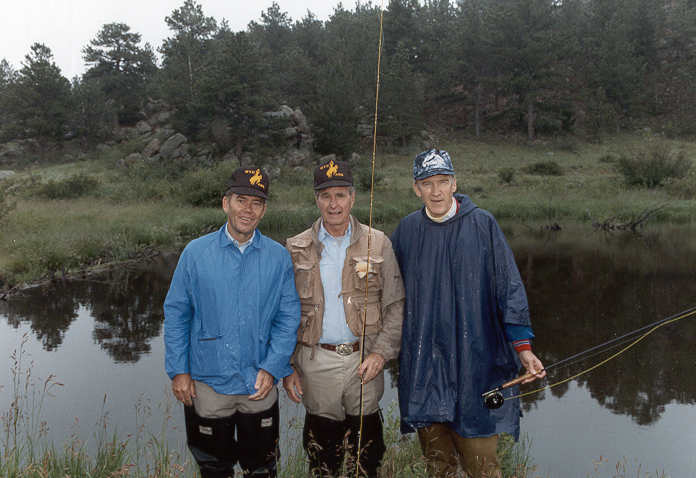
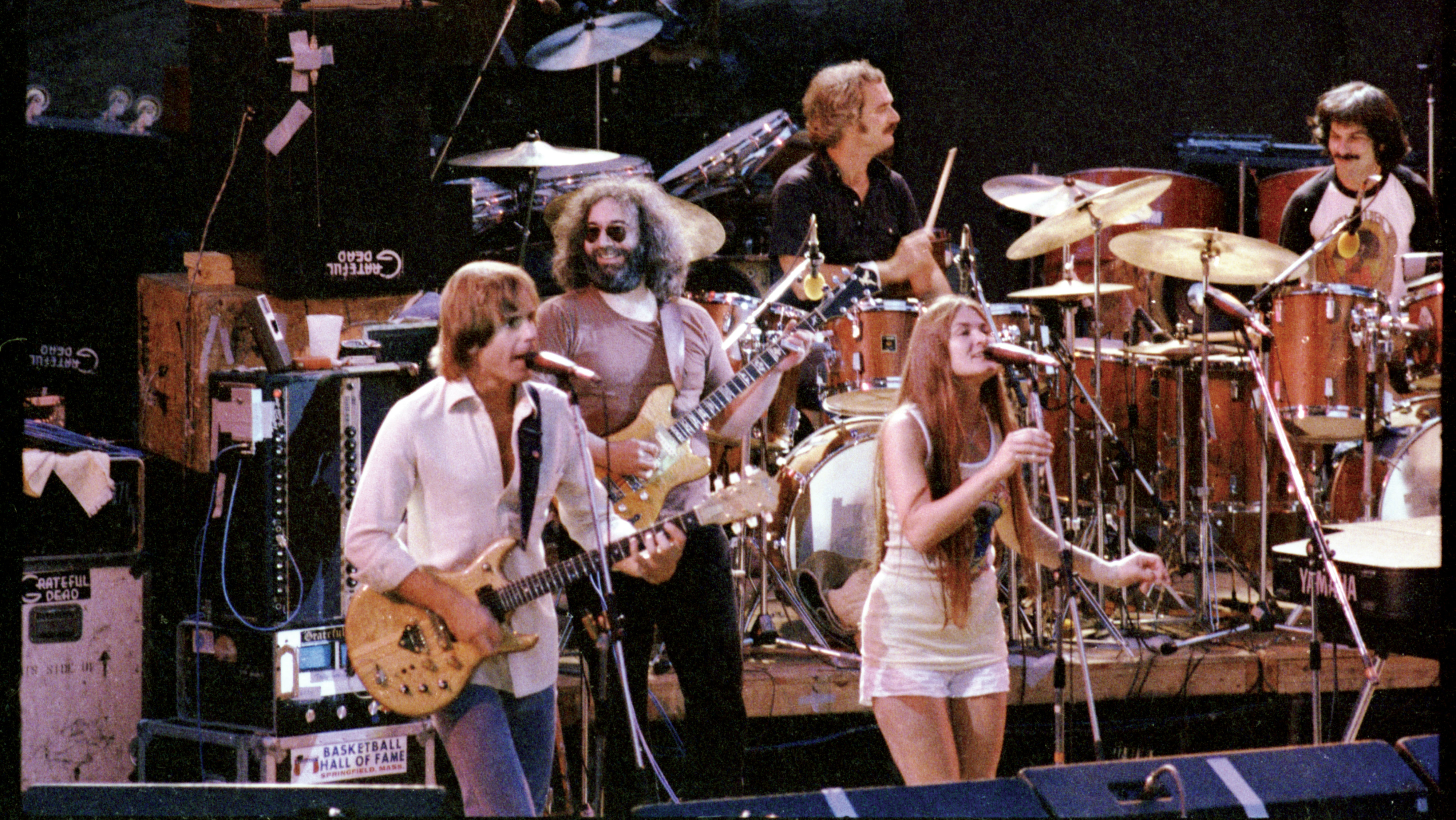
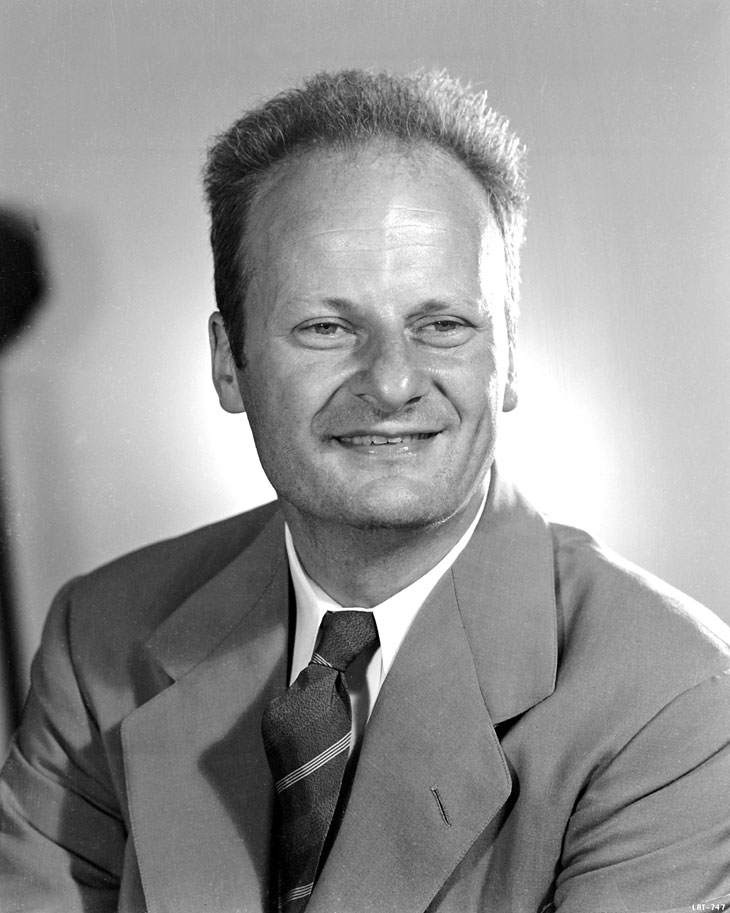


 Helytimes
#/media/File:George_H._W._Bush,_Alan_Simpson,_and_Craig_Thomas.jpg)