Lionel Pries
Posted: September 9, 2012 Filed under: architecture, California, pictures Leave a commentReading up on some Disney animators and writers.

Ken Anderson, one of the credited screenwriters for The Rescuers, Aristocats, The Jungle Book, and Cinderella, was (wikipedia tells me) “particularly influenced” by his University of Washington architecture professor, Lionel Pries.
Lionel Pries designed the Andalucia building in Santa Barbara:

Here’s a house he designed for himself:

“He used affordable modern materials — concrete, concrete block and cement-asbestos board.”
Here’s another house Pries designed, in the Laurelhurst neighborhood of Seattle:

Wikipedia:
Pries was gay, but deeply closeted in the University of Washington community. He anticipated teaching at least until he reached retirement age, but was forced to resign his university position in 1958 after he was picked up in a vice sting in Los Angeles. The reason for Pries’s abrupt departure from the university was concealed at the time.
Pries worked as a drafter until he was able to retire in 1964, then lived quietly until his death in 1968.
Lionel Pries:

(Pries photo is credited to Dorothy Conway and the Pries Collection, Special Collection, UW Libraries, Pries house photo to Charles R. Pierson from the same collection, Laurelhurst house photo “courtesy Max and Helen Gurvitch, and I got them all from this Seattle Times article by Laurence Kriesman.)
John Cage
Posted: September 3, 2012 Filed under: California, music Leave a comment
Tyler Cowen talks about John Cage today, as what would be his 100th is coming up. His quotes link doesn’t include my favorite. Possibly apocryphal, I believe I got it from the Paris Review interview of Sam Shepard which I am WAY too busy to reread right now:
Theater exists all around us and it is the purpose of formal theater to remind us.
I told that quote to the actor friend I thought would most appreciate it and even he kinda scoffed.
Couple curios from Cage’s wikipedia page:
On his education at Pomona:
I was shocked at college to see one hundred of my classmates in the library all reading copies of the same book. Instead of doing as they did, I went into the stacks and read the first book written by an author whose name began with Z. I received the highest grade in the class. That convinced me that the institution was not being run correctly. I left.
And:
After several months in Paris, Cage’s enthusiasm for America was revived after he read Walt Whitman’s Leaves of Grass – he wanted to return immediately, but his parents, with whom he regularly exchanged letters during the entire trip, persuaded him to stay in Europe for a little longer and explore the continent.
Whose parents ever did that?
He went to Santa Monica, California, where he made a living partly by giving small, private lectures on contemporary art.
What? Who paid for that? How much? Sounds like something PON might get away with:
Cage was working at his mother’s arts and crafts shop, where he met artist Xenia Andreyevna Kashevaroff. She was an Alaskan-born daughter of a Russian priest; her work encompassed fine bookbinding, sculpture and collage. Although Cage was involved in relationships with Don Sample and with architect Rudolph Schindler’s wife Pauline when he met Xenia, he fell in love immediately.
Well, yeah. An Alaskan-born daughter of a Russian priest walks in, introduces herself as Xenia, and starts talking bookbinding, it’s Robyn time.
Cage met [Allen] Kaprow while on a mushroom hunt with George Segal and invited him to join his class.
That’s from the chapter of the wiki called ’60s: FAME
Lon Chaney’s Cabin
Posted: August 29, 2012 Filed under: California, celebrity, heroes Leave a comment
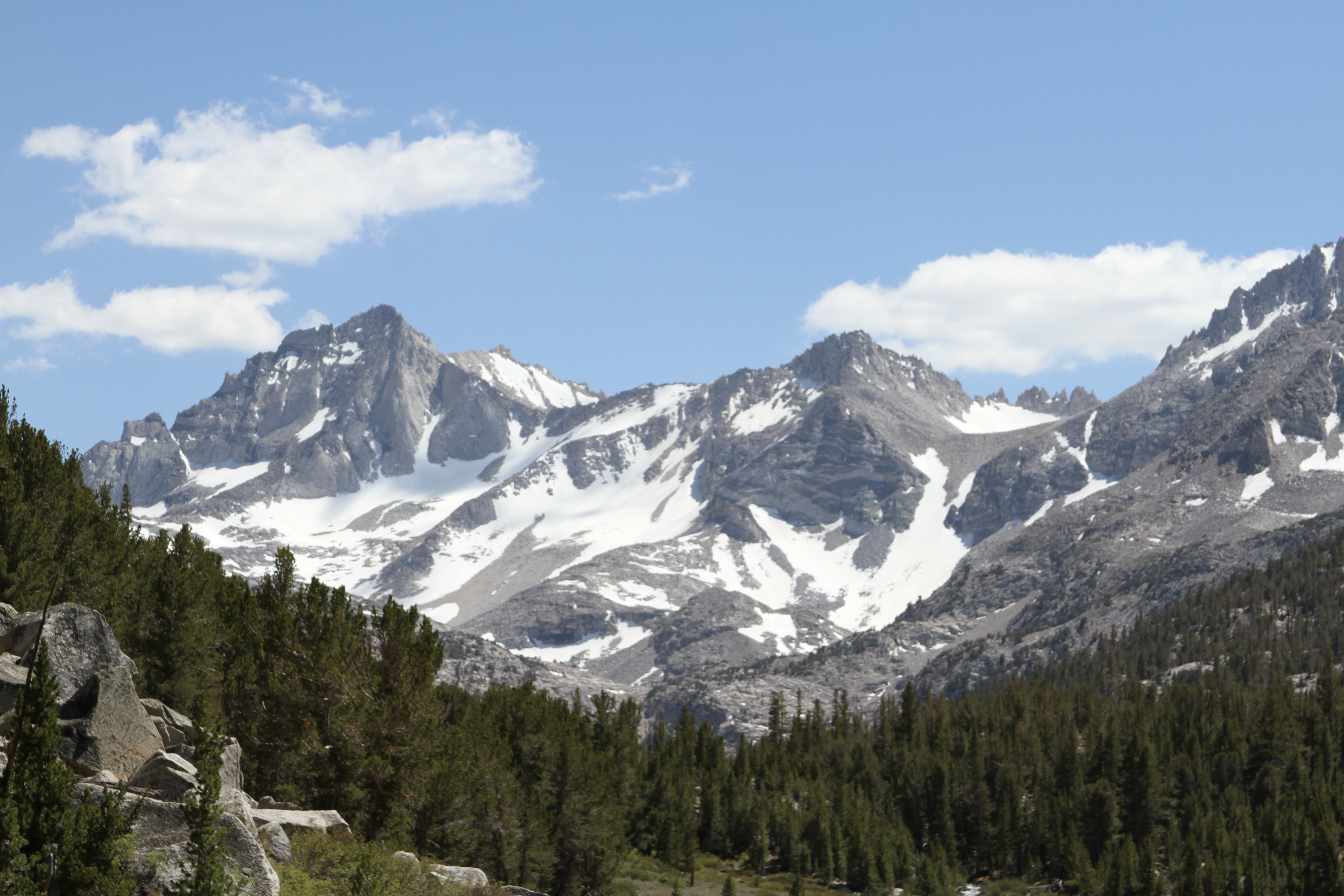
High in the Sierras, the cabin of actor Lon Chaney, Sr., “the man of a thousand faces.”

Both of Chaney’s parents were deaf, and as a child of deaf adults Chaney became skilled in pantomime.
From this LA Times article:
“Tonight I start out for the High Sierra. No shaving, no makeup, no interviews for four long, lazy weeks. We take a stove along and the wife cooks the fish I catch. We sleep under the pines and I try to climb high enough to reach the snows. Camping’s the biggest kick in life for me,” Chaney told a writer in 1928.
And:
The Forest Service considered destroying the cabin to comply with the 1964 Wilderness Act, which calls for the restoration of natural conditions in wilderness areas. But the agency changed its mind when it became clear that the amount of dynamite required to demolish the massive stone structure would cause major damage to the surrounding trees.
Vincent Thomas Bridge
Posted: August 20, 2012 Filed under: California Leave a comment
On October 26, 1990, 1964 Olympic diving bronze medalist Larry Andreasen was killed jumping from the west tower of the bridge in an attempt to set a diving record.
Automatic Dumper, Jack Delano, 1943
Posted: August 15, 2012 Filed under: California, pictures Leave a comment
from Library of Congress
The Los Angeles Basin
Posted: August 13, 2012 Filed under: California Leave a comment
(wikipedia via Landsat)
Albert Bierstadt
Posted: July 2, 2012 Filed under: California, painting Leave a commentBierstadt sometimes changed details of the landscape to inspire awe. The colors he used are also not always true. He painted what he believed was the way things should be: water is ultramarine, vegetation is lush and green, etc.

Hamburgers
Posted: June 26, 2012 Filed under: California, writing Leave a comment
Like the film, the hamburger is a non-California invention that has achieved a kind of symbolic apotheosis in Los Angeles; symbolic, that is, of the way fantasy can lord it over function in Southern California. The purely functional hamburger, as delivered across the counter of say, the Gipsy Wagon on the UCLA campus, the Surf-Boarder at Hermosa Beach or any McDonald’s or Jack-In-The Box outlet anywhere, is a pretty well-balanced meal that he who runs (surfs, drives, studies) can eat with one hand; not only the ground beef but all the sauce, cheese, shredded lettuce, and other garnishes are firmly gripped between two halves of the bun.
But the fantastic hamburger as served on a platter at a sit-down restaurant is something else again. Its component parts have been carefully opened up and separated out into an assemblage of functional and symbolic elements, or alternatively, a fantasia on functional themes. The two halves of the bun lie face up with the ground beef on one and, sometimes, the cheese on the other. Around and alongside on the platter are the lettuce leaves, gherkins, onion rings, fried potatoes, paper cups of relish or coleslaw, pineapple rings, and much more besides, because the invention of new varieties of hamburger is a major Angeleno culinary art. Assembled with proper care it can be a work of visual art as well; indeed, it must be considered as visual art first and foremost, since some components are present in too small a quantity generally to make a significant gustatory as opposed to visual contribution – for instance, the seemingly mandatory ring of red-dyed apple, which does a lot for the eye as a foil to the general greenery of the salads, but precious little for the palate.
Reyner Banham was writing in 1971. I have a used addition, in which someone (I like to imagine a foreign student) has underlined the word “hamburger.”
Baton Practice at the Manzanar War Relocation Center, 1943
Posted: June 21, 2012 Filed under: California, photography Leave a comment
Ansel Adams, the original king of US 395.
“In Shark’s life there had been no literary romance.”
Posted: April 4, 2012 Filed under: books, California, love, Steinbeck, Steinbeck Leave a comment
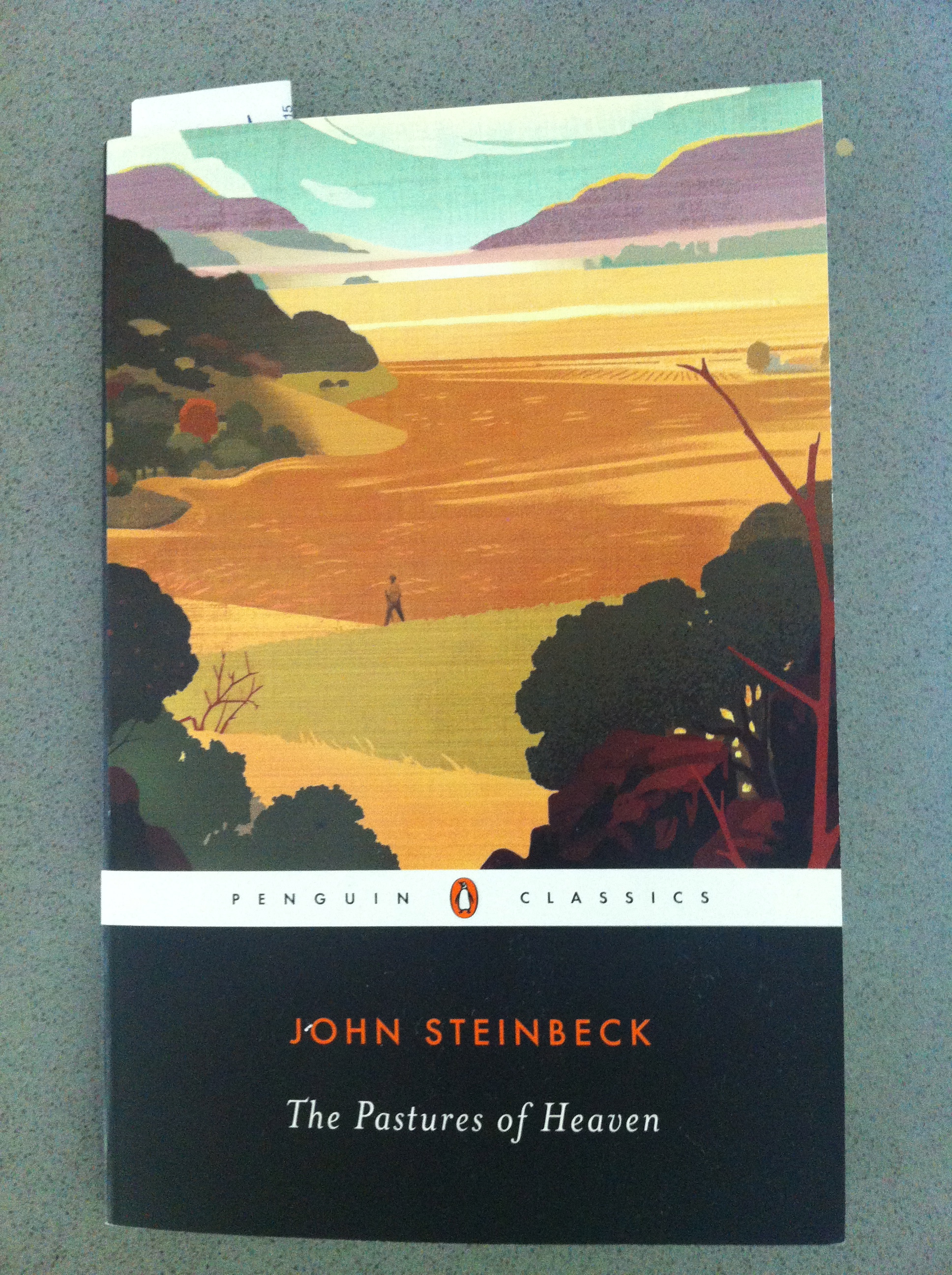
In Shark’s life there had been no literary romance. At nineteen he took Katherine Mullock to three dances because she was available. This started the machine of precedent and he married her because her family and all of the neighbors expected it. Katherine was not pretty, but she had the firm freshness of a new weed, and the bridling vigor of a young mare. After her marriage she lost her vigor and her freshness as a flower does once it has received pollen. Her face sagged, her hips broadened, and she entered into her second destiny, that of work.
In his treatment of her, Shark was neither tender nor cruel. He governed her with the same gentle inflexibility he used on horses. Cruelty would have seemed to him as foolish as indulgence. He never talked to her as to human, never spoke of his hopes or thoughts or failures, of his paper wealth nor of the peach crop. Katherine would have been puzzled and worried if he had. Her life was sufficiently complicated without the added burden of another’s thoughts and problems.
Pacific-Union Club Punch
Posted: April 2, 2012 Filed under: California, how to live, people, San Francisco 1 CommentThis is the Pacific-Union Club, at the top of Nob Hill in San Francisco:

Are you going to tell me you can walk by that building and not think, “I want to make their famous punch!”
For a party of ten. Into a large punch-bowl place ten tablespoonfuls of bar sugar and ten tablespoonfuls of freshly squeezed lime or lemon juice. Add two jiggers of Curaçao and dissolve the whole in about a quart of effervescent water. Add two quarts of champagne and one bottle of good cognac. Stir thoroughly, ice, decorate and serve in thin glassware.
READER: be sure to use regular, orange Curacao, not blue curacao, or your punch will be a revolting green color.
That recipe is from William “Cocktail” Boothby’s 1908 book, The World’s Cocktails and How To Make Them. Let’s take a look at Boothby’s resume, just to make sure he’s for real:
- Minstrel performer.
- Bartender in New York, Chicago, Philadelphia, New Orleans, and Kansas City.
- Bartender at Byron Hot Springs.
- Bartender (or in his terms “presiding deity”) at Hotel Rafael, San Rafael, California, in “the gay days when Baron von Schroeder was making history over there”.
- Bartender at the Silver Palace, San Francisco
- Bartender at the Palace Hotel, San Francisco.
- Saloon owner.
- Assemblyman in California in 1895. The 1908 edition of The World’s Drinks & How To Mix Them begins “To the liquor dealers of San Francisco who unanimously assisted in my election to the Legislature by an unprecedented majority.”
- Soda drink counter supervisor, Olympic Club, during Prohibition
 Helytimes