The British Entering Concord, Amos Doolittle (1775)
Posted: May 1, 2012 Filed under: heroes, history, New England Leave a comment
More Celia Johnson
Posted: April 30, 2012 Filed under: adventures, film, Future Mrs. Hely, heroes, how to live, women Leave a commenttubechopped her speech from Noel Coward’s “In Which We Serve” (1942).

Fact (?) I learned in college: Goebbels was constantly infuriated and impressed by how much better and subtler American and English propaganda films were.
[Celia Johnson] later recalled her choice of an acting career with the comment, “I thought I’d rather like it. It was the only thing I was good at. And I thought it might be rather wicked.”
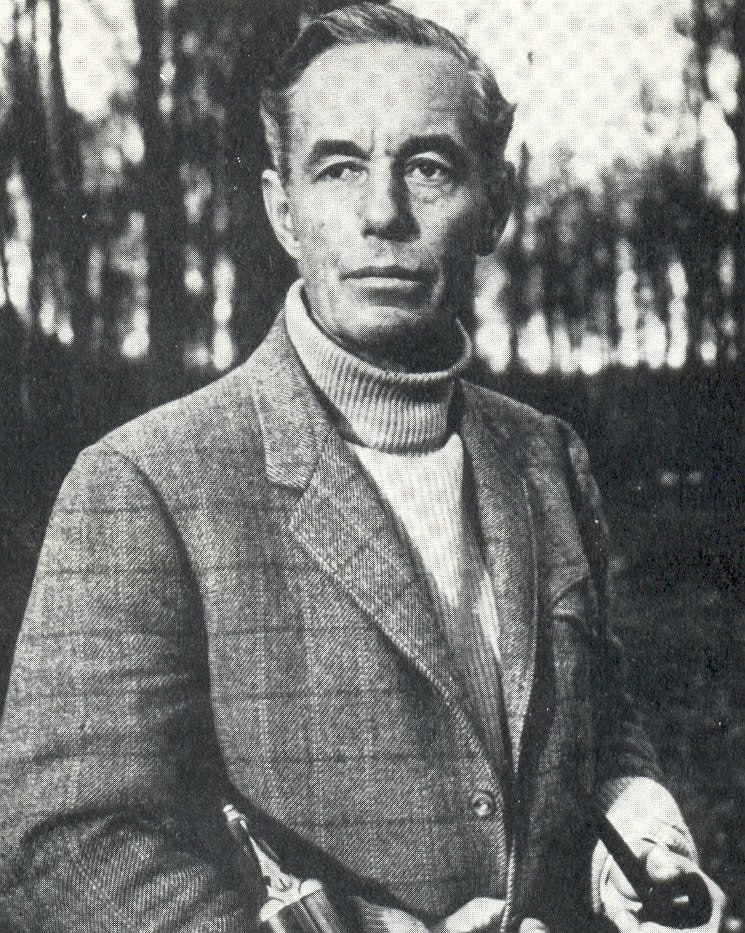
She was married to Peter Fleming, brother of Ian. He held his own in the adventuring department:
In April 1932 Fleming replied to an advertisement in the personal columns of The Times: “Exploring and sporting expedition, under experienced guidance, leaving England June to explore rivers central Brazil, if possible ascertain fate Colonel Percy Fawcett; abundant game, big and small; exceptional fishing; ROOM TWO MORE GUNS; highest references expected and given.”
The expedition, organised by Richard Churchyard, travelled to São Paulo, then overland to the rivers Araguaia and Tapirapé, heading towards the likely last-known position of the Fawcett expedition. During the inward journey, the expedition was riven by increasing internal disagreements as to its objectives and plans, centred particularly on its local leader, ‘Major Pingle’ (a pseudonym).
Here is a picture of him from this intriguing blog:
Celia Johnson
Posted: April 29, 2012 Filed under: film, Future Mrs. Hely, heroes, women Leave a commentis cool:
Yuri Gagarin
Posted: April 12, 2012 Filed under: heroes, photography, pictures, science Leave a commentGood Artwork of the Day from the Met today:

The sudden rise to national and international fame took its toll on Gagarin. In attending various functions and receptions in his honour, he consumed large amounts of vodka and other alcoholic beverages, even though otherwise he was not a regular drinker. His physical appearance changed and he became noticeably heavier. The attention of female fans took a toll on his marriage. It was rumoured that his wife once caught him in a hotel room with another woman and Gagarin jumped out of the second floor window and hit his face on a kerbstone, which resulted in a deep cut above his left eye. The scar remained visible after the incident.
The photographer is Yousef Karsh:
As Karsh wrote of his own work inKarsh Portfolio in 1967, “Within every man and woman a secret is hidden, and as a photographer it is my task to reveal it if I can. The revelation, if it comes at all, will come in a small fraction of a second with an unconscious gesture, a gleam of the eye, a brief lifting of the mask that all humans wear to conceal their innermost selves from the world. In that fleeting interval of opportunity the photographer must act or lose his prize.”
The Pogues And The Dubliners – The Irish Rover
Posted: April 7, 2012 Filed under: heroes, Ireland, Irish traditional music, the ocean Leave a commentWas anyone ever uglier than Shane McGowan? Not criticizing, just saying.
MacGowan claims to have been introduced to alcohol and cigarettes by his aunt on the promise he would not worship the devil. In a 2007 interview with the Daily Mirror he told a reporter: “I was actually four when I started drinking. I just remember that Ribena turned into stout and I developed an immediate love for it.” MacGowan says he tried whiskey when he was 10 and continued to drink heavily thereafter.
The wikipedia page on Shane no longer claims, as it once did, that his dental troubles were at least partially due to attempting to eat a vinyl record of “Sgt. Pepper” while on LSD.
The Atlantic encourages us to start “Remembering Project Gemini”
Posted: April 5, 2012 Filed under: explorers, heroes, photography, pictures, the ocean Leave a commentWill do! That there is the same Intrepid that’s docked in the Hudson River, seen here some twenty years after surviving two crashes from kamikazes.


The Jolly Flatboatmen (1846)
Posted: April 3, 2012 Filed under: art, George Caleb Bingham, heroes, people, pictures Leave a comment
George Caleb Bingham was, among other things, the first chief of police in Kansas City. I’d like to visit his house next time I’m in Arrow Rock, Missouri.
This painting is apparently in the collection of Detroit industrialist Richard Manoogian. Manoogian’s father was a refugee from the Armenian genocide. Arriving in America at age 19, he worked as a machinist before founding the Masco Screw Company.
Manoogian’s redesign and production of the Delta faucet, which allowed one-handed use, resulted in best-selling status for the plumbing fixture and generated substantial profits for his business wealth. In 1995 his company had $3 billion dollars in sales and had 38 percent of the domestic market for faucets.
A Delta faucet:

Possible Ancestor?
Posted: April 2, 2012 Filed under: heroes, people Leave a commentAn alert relation links us to the Southeast Missourian’s history of one Edward Hely, who established a rock-crushing plant in Cape Girardeau in 1902.

Is there anything manlier than crushing rocks?
(photo from The Southeast Missourian)
Van Wyck Brooks on: Emerson
Posted: March 30, 2012 Filed under: books, Boston, heroes, New England Leave a comment
More excellence from The Flowering of New England
…generations later, when people spoke of Emerson’s “education,” they put the word in quotation-marks – it was not that he did not know his Greek and Latin, but that he was never systematic. He had read, both then and later, for “lustres” mainly. He had drifted first to Florida and then to Europe, and finally settled at Concord…As for the lectures that Emerson was giving in Boston, on great men, history, the present age, the famous lawyer, Jeremiah Mason, when he was asked if he could understand them, replied, “No, but my daughters can.”
To the outer eye, at least, Emerson’s life was an aimless jumble. He had ignored all the obvious chances, rejected the palpable prizes, followed none of the rules of common sense. Was he pursuing some star of his own? No one else could see it. In later years, looking back, Emerson’s friends, remembering him, thought of those quiet brown colts, unrecognized even by the trainers, that outstrip all the others on the race-course. He had had few doubts himself. He had edged along sideways towards everything that was good in his life, but he felt that he was born for victory…
Luke Kelly’s Hair
Posted: March 23, 2012 Filed under: hair, heroes, how to live, Ireland, Irish traditional music, music Leave a commentOK, wikipedia, gimme the tragedy:
On 30 June 1980 during a concert in the Cork Opera House Luke Kelly collapsed on the stage. He had already suffered for some time from headaches and forgetfulness, which however had been ascribed to his alcohol consumption. He was diagnosed with a brain tumor.
The subject of the song, btw?:
[Kelly] was dragged from his bed and hanged by British soldiers who decapitated his corpse and kicked his head through the streets shortly after the fall of Wexford on 21 June 1798.
Trying to learn how to pronounce “Childe Hassam,” found this.
Posted: March 21, 2012 Filed under: art, heroes, painting, pictures 1 Comment

President Barack Obama in the Oval Office 1/28/09. Official White House Photo by Pete Souza
That’s his “The Avenue In The Rain” past Barry. Pronounced “Child HASS-m.”

Scraps from F. Scott’s notebook
Posted: March 17, 2012 Filed under: DFW, fscottfitzgerald, heroes, writing Leave a comment
My edition of The Crack-Up, from New Directions, includes a bunch of other assorted scraps found in F. Scott Fitzgerald’s notebook. They are amazing. Plots, lines, ideas, whatever. Here are some from the two pages I happened to open to:
- A tree, finding water, pierces roof and solves a mystery.
- Girl and giraffe
- Marionettes during dinner party meeting and kissing
- Play about a whole lot of old people – terrible things happen to them and they don’t really care.
- Play: The Office – an orgy after hours during the boom.
- A bat chase. Some desperate young people apply for jobs at Camp, knowing nothing about wood lore but pretending, each one.
- Girl whose ear is so sensitive she can hear radio. Man gets her out of insane asylum to use her.
- Boredom is not an end-product, is comparatively rather an early stage in life and art. You’ve got to go by or past or through boredom, as through a filter, before the clear product emerges. (hear that DFW?!)
- Girl marries a dissipated man and keeps him in healthy seclusion. She meanwhile grows restless and raises hell on the side
On the next page begins the section “Jingles and Songs.”
The Scottish Himalayan Expedition
Posted: March 10, 2012 Filed under: adventures, books, from wikipedia, heroes, how to live 1 Comment
A quotation by [mountaineer W. H. Murray] is widely misattributed to Johann Wolfgang von Goethe. The following passage occurs near the beginning of Murray’s The Scottish Himalayan Expedition (1951):
-
… but when I said that nothing had been done I erred in one important matter. We had definitely committed ourselves and were halfway out of our ruts. We had put down our passage money— booked a sailing to Bombay. This may sound too simple, but is great in consequence. Until one is committed, there is hesitancy, the chance to draw back, always ineffectiveness. Concerning all acts of initiative (and creation), there is one elementary truth the ignorance of which kills countless ideas and splendid plans: that the moment one definitely commits oneself, then providence moves too. A whole stream of events issues from the decision, raising in one’s favor all manner of unforeseen incidents, meetings and material assistance, which no man could have dreamt would have come his way. I learned a deep respect for one of Goethe’s couplets:
-
Whatever you can do or dream you can, begin it.
-
Boldness has genius, power and magic in it!
-
– from our old friends at Wikipedia. That Goethe quote is great, sure, but I’ll take Murray himself if I’m going on a hike. Murray’s autobiography, btw, was entitled The Evidence of Things Unseen, citing of course Hebrews 11:1.
Bowditch
Posted: February 14, 2012 Filed under: adventures, heroes, science 2 Comments
Reading The Flowering of New England by Van Wyck Brooks. Terrific, although seems specifically designed for my own personal brains. VWB seems to know everything about everybody who was alive in New England between 1820-1860, and talks about them all like they’re his kooky old pals. Here he is, diverting himself to talk about Nathaniel Bowditch.
So was the most illustrious of the Salem worthies, the great mathematician, Nathaniel Bowditch, the author of The Practical Navigator, a little, nimble man with burning eyes, with silky hair prematurely white, who darted about rubbing his hands with excitement. This second Benjamin Franklin, the son of a poor cooper and mechanic, who had learned his Latin as a boy in order to read Newton’s Principia – in which he found an error – had found eight thousand errors in the best English book on navigation. The book he had written himself, the Navigator, had saved countless lives and made the American ships the swiftest that had ever sailed. Everyone knew that, as a supercargo, bound for Sumatra and Manila, Bowditch had mastered astronomy so well – between the stars that he watched from the deck and the books he carried with him in his berth – that he was able to revise Laplace. Everyone knew how, on a Christmas night, in the midst of a blinding snow-storm, when he was captain of his own ship and there was not a landmark to be seen, Bowditch had sailed straight to his Salem wharf, as if it had been a sunny day in June.
Discussion question: who do you know who darts about rubbing his/her hands with excitement?
Mentioned all this to one of our correspondents, who told me that as a boy he was made to read this:

What?! From the somewhat scolding wikipedia article about this book: Carry On, Mr. Bowditch includes many dramatized and fictional components, including a chapter implying that Bowditch invented the lunar distance method of navigation when, in fact, his contribution was a relatively minor technical improvement in mathematical calculations.
Point is, when it comes to Bowditch, everybody’s getting worked up in all the best ways.
(stole picture of Salem from a real estate site)
This guy
Posted: February 10, 2012 Filed under: adventures, from wikipedia, heroes, people Leave a comment
Bill Tilman:
- twice won the Military Cross for bravery in WWI
- was a coffee grower in Kenya
- rode a bicycle across Africa
- parachuted behind enemy lines to fight with Italian and Albanian partisans in WWII
- was given “the keys to the city of Belluno which he helped save from occupation and destruction”
- “was the first man to attempt climbing the remote and unexplored Assam Himalayas”
- “detoured through Afghanistan’s Wakhan Corridor to see the source of the river Oxus”
- “found the pass named after him beyond Gangchempo”
- presumed dead at sea while sailing the South Atlantic to find remote mountains to climb.
Me?
- I had some açai juice today.
 Helytimes