Do You Hear What I Hear
Posted: December 24, 2025 Filed under: Christmas, music Leave a commentJimmy Iovine talking to Rick Rubin on Tetragrammaton podcast. The backstory is Iovine’s dad loved Christmas, so when he died, Jimmy decided to make a Christmas album (it became A Very Special Christmas):
“and I just like, for example, Whitney Houston. I went to North Carolina.
She did a show there and she met me in the studio on the way to soundcheck. Let me tell you something. I didn’t know miracles existed until I recorded that woman’s voice.
She walked out there. She sang a song in church. It was Do You Hear What I Hear as a kid.
She knew the song. She went out there. I can’t explain this to layman, but you didn’t need a microphone or tape.
It was so powerful and extraordinary. She sang it in one take. She comes in and says, what do you need?
I said, I’m not going to tell you this, but she said, I’m going to sing it one more time. She did all the backing vocals. She was gone in an hour.
And it was so inspiring. If you get a chance, you should listen to it. Do you hear what I hear?
Let’s listen to it right now.
That’d be great. When you hear this, it’s going to blow your mind.
She makes it sound completely effortless.
Really beautiful.
Just comes out.
Well, she’s a miracle. I mean, she’s a miracle. What an incredible, incredible gift she had, and she gave everybody else.”
Tetragrammaton with Rick Rubin: Jimmy Iovine, Nov 26, 2025
https://podcasts.apple.com/us/podcast/tetragrammaton-with-rick-rubin/id1671669052?i=1000738489216&r=2927
Listen here.
Merry Christmas everyone. Remember to let your children smoke one cigarette today.
Nebraska: Springsteen and Starkweather
Posted: October 30, 2025 Filed under: music Leave a comment
watching Springsteen: Deliver Me From Nowhere has me thinking about Charlie Starkweather, the spree killer inspiration for the role played by Martin Sheen in Badlands, shown in the film as stimulating Bruce’s imagination for the song and album Nebraska.
Larry McMurtry, in Roads, says:
Kids in the midwest only get to see even modest levels of glamour if they happen to be on school trips to one or another of the midwestern cities: K.C., Omaha, St. Louis, the Twin Cities. In some, clearly, this lack of glamour festers. Charles Starkweather, in speaking about his motive for killing all those people, had this to say: “I never ate in a high-class restaurant, I never seen the New York Yankees play, I never been to Los Angeles…”
I put Perplexity AI on the job of sourcing that quote, and it gave up in failure:
The phrase you provided—”I never ate in a high-class restaurant, I never seen the New York Yankees play, I never been to Los Angeles…”—does not appear in any published 1958 interview transcript or Nebraska prison record in major archival listings. Summaries of Starkweather’s statements, including interrogation by Lancaster County officials and defense attorneys, acknowledge the existence of multi-session transcripts (over 350 combined pages) but do not index or quote this passage in digitized form. Newspaper, trial, and archival indices available online—including items at Lincoln Libraries and the Nebraska State Historical Society—lack specific reference to the Yankees, Los Angeles, or restaurant themes in direct quotations or transcript extracts.
This absence suggests that, while the quote may be reprinted in retrospectives or literary dramatizations, it is not verifiably documented in digitized or catalogued 1958 primary sources. To definitively confirm or rule out its existence, a physical review of the transcript collections listed by History Nebraska or onsite microfilm holdings of Lincoln-area newspapers from the trial period would be required.
McMurtry didn’t include footnotes.
A search of Google books reveals James M. Reinhardt included a phrase like this in two books that included Starkweather, one is The Murderous Trail of Charles Starkweather, the other is The Psychology of Strange Killers

Used copies of The Psychology of Strange Killers are dear in price but I might have to get one to review for this important website. Perhaps the original source lies in these boxes at the University of Nebraska. Here we abandon the trail, unless any readers want to cut for sign.
Hoedown
Posted: October 18, 2025 Filed under: music Leave a commentIn October 1937, in the town of Saylersville in Magoffin County, Kentucky, Alan Lomax recorded William Hamilton Stepp playing a fiddle tune called “Bonaparte’s Retreat,” or as he identifies it in the recording, “the Bonaparte.”
Some years later, Aaron Copland found a transcript of the recording in a book:
Composer Aaron Copland, who was commissioned by choreographer Agnes De Mille to score the ballet in 1942, probably did not hear the original field recording before adapting it. Instead, he likely learned the tune from the book Our Singing Country (1941), which presented transcriptions of John and Alan Lomax’s field recordings prepared by the composer and musicologist Ruth Crawford Seeger. According to Jabbour, “when Aaron Copland was looking for a suitable musical theme for the ‘Hoedown’ section of his ballet Rodeo (first produced in 1942), his eye was caught by the version in the Lomax book, and he adopted it almost [note] for note as the principal theme.”
(source)
In 1972, Emerson Lake & Palmer recorded an electronic version:
Some years after that, in 1993, I heard the tune on TV in a “Beef: It’s What’s For Dinner” commercial. They play “Hoedown” from Copland’s Rodeo all the time on KUSC.
I note all this because I’m interested in transmissions from the past to the present. Fiddle tune -> recording -> transcription -> orchestral score -> recording -> TV commercial is an cool lineage.
Professor Longhair
Posted: March 4, 2025 Filed under: America Since 1945, music, New Orleans Leave a comment
Mardi Gras has me thinking about Professor Longhair. In his memoir Rhythm and Blues Jerry Wexler tells a story about Ahmet Ertegun finding the Professor:
I’d started noticing Atlantic’s early releases with Professor Long-hair’s “Hey Now Baby,” “Hey Little Girl,” and “Mardi Gras in New Orleans.” Fess—as the Professor was called—was a revelation for me, my first taste of the music being served up in Louisiana in the late forties.
There were traces of Jelly Roll Morton’s habanera-Cuban tango influence in his piano style, but the overall effect was startlingly original, a jambalaya Caribbean Creole rumba with a solid blues bottom.
In a foreshadowing of trips I myself would later take to New Orleans, Ahmet described the first of his many ethnomusicological expeditions. “Herb and I went down there to see our distributor and look for talent. Someone mentioned Professor Longhair, a musical shaman who played in a style all his own. We asked around and finally found ourselves taking a ferry boat to the other side of the Mississippi, to Algiers, where a white taxi driver would deliver us only as far as an open field. ‘You’re on your own,’ he said, pointing to the lights of a distant village. ‘I ain’t going into that n***ertown.’ Abandoned, we trudged across the field, lit only by the light of a crescent moon. The closer we came, the more distinct the sound of distant music—some big rocking band, the rhythm exciting us and pushing us on. Finally we came upon a nightclub—or, rather, a shack—which, like an animated cartoon, appeared to be expanding and deflating with the pulsation of the beat. The man at the door was skeptical. What did these two white men want? ‘We’re from Life magazine,’ I lied.
Inside, people scattered, thinking we were police. And instead of a full band, I saw only a single musician—Professor Longhair—playing these weird, wide harmonies, using the piano as both keyboard and bass drum, pounding a kick plate to keep time and singing in the open-throated style of the blues shouters of old. “ ‘My God,’ I said to Herb, ‘we’ve discovered a primitive genius.’ “Afterwards, I introduced myself. ‘You won’t believe this,’ I said to the Professor, ‘but I want to record you.’ “ ‘You won’t believe this,’ he answered, ‘but I just signed with Mercury.’
Ahmet recorded him anyway—“ I am many men with many names who play under many styles,” Fess used to say—and jewels from that first session remain in the Atlantic catalogue today, over four decades later.”
(source on that photo) Previous coverage of New Orleans.
Spoonful
Posted: February 7, 2025 Filed under: America Since 1945, music Leave a commentHave been listening to Spoonful as recorded by Howlin Wolf lately.
The lyrics relate men’s sometimes violent search to satisfy their cravings, with “a spoonful” used mostly as a metaphor for pleasures, which have been interpreted as sex, love, and drugs
Chester Arthur Burnett was born in White Station Mississippi, near West Point, in the “Black Prairie” (later remarketed as the “Golden Triangle“). JD Walsh digs up a photo, source undescribed, of our guy working on a horse’s hoof while he was in the 9th Cavalry.

Howlin Wolf was an apprentice/student to Charlie Patton. I first heard about Charlie Patton from R. Crumb’s comic, which was reprinted in an anthology of underground comics they had at the Needham Public Library.

The Library also had a cassette of some of these blues guys. Living walking distance to the library, a life-changer.
Blues research is a famous graveyard for the curious – we’ve gone about as far as we dare on this topic, see previous coverage. Listening to Charlie Patton especially with the warble of the old recordings sounds spooky, and there’s a desire to see this as emerging from some mysterious beyond, but the turth might be more interesting, these people were modern. Elijah Wald shed some light on Delta blues in his book Escaping the Delta:
If someone had suggested to the major blues stars that they were old-fashioned folk musicians carrying on a culture handed down from slavery times, most would probably have been insulted.
Mississippi was legally dry until 1966, at least in theory, a factor in blues history.
It is startling to thank that all of the evolution from the first Bessie Smith record to the first Rolling Stones record took only forty years. When Skip James and John Hurt appeared at the Newport Folk Festival, they were greeted as emissaries from an ancient, vanished world, but it was only three decades since they had first entered a recording studio – that is, they were about as ancient as disco is to us today.
The Mississippi Delta at this time was actually kind of a dynamic region, crisscrossed with railroads, you could quit your job and move and get another one.
Wald tells of an anthropological team from Fisk University and the Library of Congress that visited the Delta in 1941 and 1942. They reported:
There are no memories of slavery in the delta. This section of the delta has little history prior to the revolution of 1861
Howlin’ Wolf was on to health insurance for musicians long before Chappell Roan was born:
After he married Lillie, who was able to manage his professional finances, he was so financially successful that he was able to offer band members not only a decent salary but benefits such as health insurance. This enabled him to hire his pick of available musicians and keep his band one of the best around. According to his stepdaughters, he was never financially extravagant (for instance, he drove a Pontiac station wagon rather than a more expensive, flashy car).[48]
That Sun Records link reports that Howlin’ Wolf was 6’6″ and close to 300 lbs.
Stompin’ at the Savoy
Posted: June 29, 2024 Filed under: music, UK Leave a commentWhen you are in Annecy, France you are in the department of Haute-Savoie, just above the department of Savoie. The counts of Savoy and the House of Savoy were a whole scene, and the Savoy is “a cultural-historical region in the Western Alps,” as Wiki tells us.
Situated on the cultural boundary between Occitania and Piedmont, the area extends from Lake Geneva in the north to the Dauphiné in the south and west and to the Aosta Valley in the east.
The Savoy does not include the city of Geneva itself. During an event known as the Escalade, in December 1602, the Savoyards attacked Geneva, but were repelled.

(Supposedly) the late night cooks caught the sneaking Savoyards and dumped boiling pots of stew on them and alerted everybody.

Although the armed conflict actually took place after midnight, in the early morning on 12 December, celebrations and other commemorative activities are usually held on 11 December or the closest weekend. Celebrations include a large marmite (cauldron) made of chocolate and filled with marzipan vegetables and candies wrapped in the Geneva colours of red and gold… Teenagers tend to throw eggs, shaving cream, and flour at each other as part of the celebration. The high school students parade together by first going to “conquer” each other and end up in the central square of the old town after walking through the rues basses to the plaine de Plainpalais and back.
On the sleepless cook does history turn, don’t let anyone tell you otherwise. So ended Savoyard expansion and Geneva stayed independent.
The first count of Savoy was Humbert I:
Humbert is the progenitor of the dynasty known as the House of Savoy. The origins of this dynasty are unknown, but Humbert’s ancestors are variously said to have come from Saxony, Burgundy or Provence.
That’s as far back as we can get on Savoy. As Bob Dylan says:
But that pedigree stuff, that only works so far. You can go back to the ten-hundreds, and people only had one name. Nobody’s gonna tell you they’re going to go back further than when people had one name.
In 1860 the Duchy of Savoy became part of France in a deal where France agreed to support unifying Italy. By then the House of Savoy was the royal family of Italy, and they kept on until 1946. Since then they’ve fallen rather hard, I recommend this wikpedia section, The House of Savoy Today. Vanity Fair article type stuff. Maybe Princess Vittoria is the current heiress, I dunno, it gets mixed up with the cousins. Suffice to say that the House of Savoy is at a low ebb in their thousand year journey.
The word Savoy associates in my mind to “Stompin at the Savoy” and The Savoy Hotel. How did this word spread?

Stompin’ at the Savoy took its name from the Savoy Ballroom, which was once at 596 Lenox Avenue in Harlem.

(those images from the Savoy Ballroom wiki)
That Savoy took its name from the famed London hotel:
Built by the impresario Richard D’Oyly Carte with profits from his Gilbert and Sullivan opera productions, it opened on 6 August 1889. It was the first in the Savoy group of hotels and restaurants owned by Carte’s family[a] for over a century. The Savoy was the first hotel in Britain to introduce electric lights throughout the building, electric lifts, bathrooms in most of the lavishly furnished rooms, constant hot and cold running water and many other innovations. Carte hired César Ritz as manager and Auguste Escoffier as chef de cuisine; they established an unprecedented standard of quality in hotel service, entertainment and elegant dining, attracting royalty and other rich and powerful guests and diners.
(Then Ritz and Escoffier left in a scandal, they were stealing booze and semi-embezzling. Ritz of course would go on to have his own chain, that also generated music:
https://www.youtube.com/watch?v=aNFffHQOXMc
)
The London hotel was called Savoy because it was on the location of the Savoy Palace. Eleanor of Provence married King Henry III in 1236. He was 28, she was maybe 12.

Wiki tells us:
she was very much hated by the Londoners. This was because she had brought many relatives with her to England in her retinue; these were known as “the Savoyards”, and they were given influential positions in the government and realm. On one occasion, Eleanor’s barge was attacked by angry Londoners who pelted her with stones, mud, pieces of paving, rotten eggs and vegetables.
One of these Savoyards was her uncle Peter, who was granted some land where he built Savoy Palace:
The Savoy was the most magnificent nobleman’s house in England. It was famous for its owner’s magnificent collection of tapestries, jewels, and other ornaments. Geoffrey Chaucer began writing The Canterbury Tales while working at the Savoy Palace as a clerk.
It was destroyed in the Peasants’ Revolt of 1351. Later on the site was built Savoy Hospital:

Later this area became a little precinct:

There was a chapel there, Savoy Chapel:

In 1912 it was the scene of a suffragette wedding between Victor and Una Duval. The wedding was attended by leading suffragettes and the wedding caused much debate because the bride refused to say “and obey”, despite the intervention of the Archbishop of Canterbury.
And nearby D’oyly Carte built the Savoy Theatre and the Savoy Hotel.

And there we have some history of “Savoy” as a concept. Once again a cultural and historical puzzle that’s come up in our travels has been followed towards the source, with illuminating new stories and details that have enriched our experience of life. We’ve shared it with you, the reader, and hope you’ve found it edifying.

Let’s all listen to Stompin’ At The Savoy, we’ll go with the version by… Art Tatum:
Harrison Ford on Jimmy Buffett
Posted: April 12, 2024 Filed under: music 2 CommentsSpeaking at the Hollywood Bowl tribute.
Jimmy Buffett was a cool guy. A lot of cool guys are not that nice. Jimmy was more than nice. He was kind.
paraphrase but pretty close. (oh looks like it’s up on YouTube already). Occurred to me watching that Harrison Ford probably could’ve been a great standup.
Brandi Carlisle said whenever she was in some random spot and wanted to go fishing, she’d call Jimmy Buffett and soon some salty dog captain would pick her up.
The Coral Reefers Band has held together for close to fifty years.
Everyone mentioned that Jimmy Buffett had “a twinkle in his eye.” The word “generous” came up a lot. Everyone’s story was about like flying with Jimmy (or refusing to) in St. Barth’s or meeting him by chance on some island.
If after you die Paul McCartney sings “Let It Be” at a sold out tribute to you, not bad.
More on Jimmy. May as well watch Brandi Carlisle sing Come Monday:
The Dead
Posted: July 23, 2023 Filed under: America Since 1945, music Leave a comment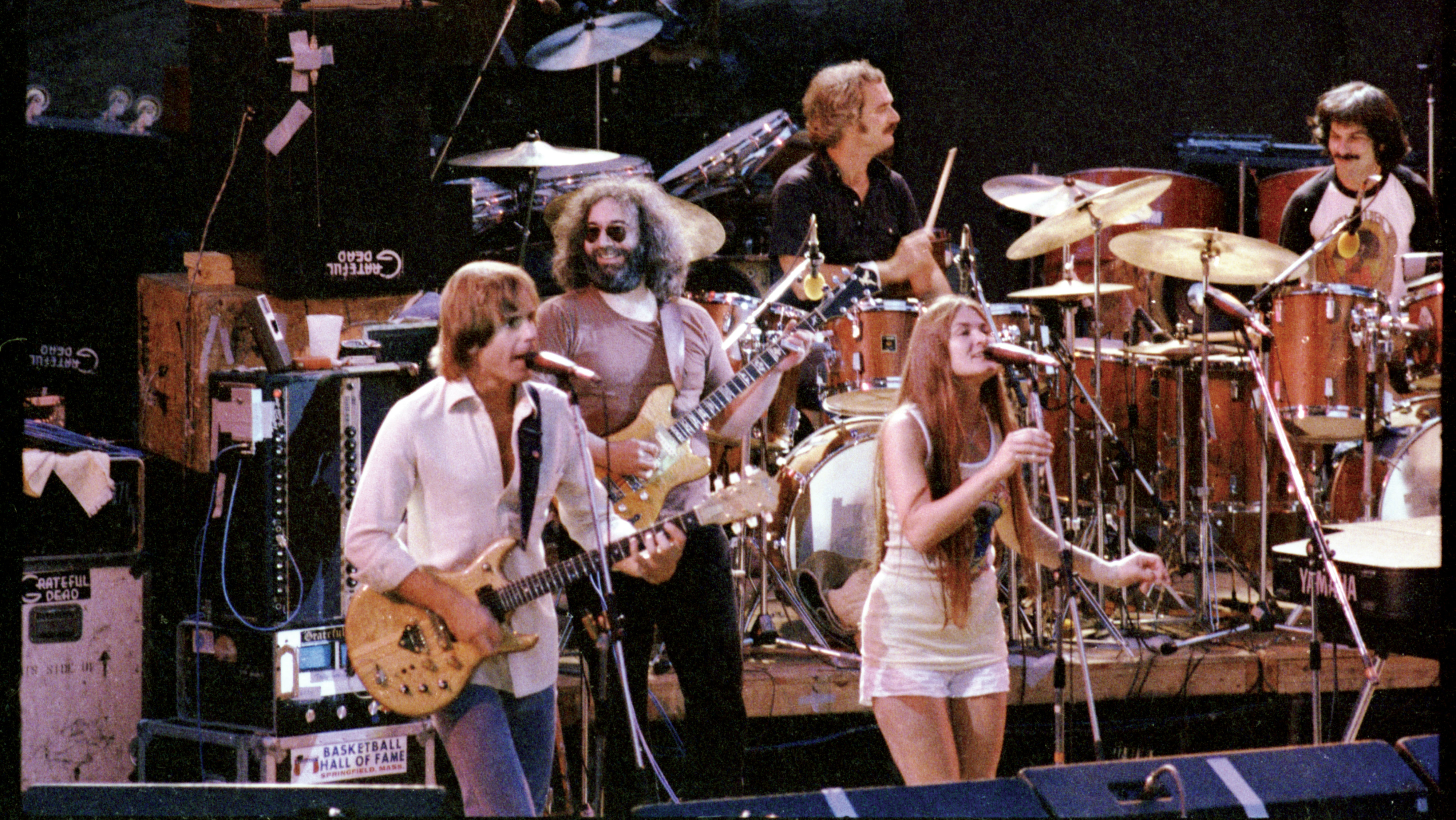
It’s traveling music. I’ve said there’s no Grateful Dead songs that take place at home. These are all people on the move, all the time. The spirit, the world – if you put all these people together and built a town, nobody lives there.
John Mayer, friend of the pod talking about The Grateful Dead on Rick Rubin’s Tetragrammaton podcast.
Was listening to the Dead on Sirius while driving around Colorado. Off the top of my head can think of two Dead songs (“Me and My Uncle,” “I Know You Rider”) that reference Colorado by name.
Source on that photo, borrowed:
Photo by Keith Stieduhar, courtesy of Rhino Records)The Grateful Dead at Red Rocks, 1978.
Last Train To Memphis: The Rise of Elvis Presley by Peter Guralnick
Posted: August 31, 2022 Filed under: America Since 1945, music Leave a comment
A few years ago I read this book and took a few notes on it, which we present here in case they can be of benefit to the Helytimes reader:
Elvis’ parents were real country folk. His father had done time in Mississippi’s dreaded Parchman Farm prison for writing a bad check. It all seems pretty Dickensian: his boss was “making an example of him.” Elvis’ twin brother was born dead, and Elvis’ mom told him he’d acquired the power of the dead twin.
Then the Presleys moved to Memphis and lived in public housing until they made too much money to qualify (still not much money). Even in Memphis they were seen as kinda bumpkins. Elvis was completely devoted to his mother.
In Memphis Sam Phillips was running Sun Records, trying to record “real Negro music,” and the unrelated Dewey Phillips had a radio show that broadcast to a mostly black audience. Elvis listened mostly to gospel music and sometimes sang at an Assembly of God church.
As a boy Elvis used to turn on lights on Saturdays for his Orthodox Jewish neighbors.
Elvis was driving a truck for an electrical company and trying to be an electrician, even though he felt he was too easily distracted to be good at wiring – he was a little afraid of blowing himself up. He was dating a girl named Dixie who was really in love with him. They were committed to remaining “pure” until marriage.
Elvis used to hang around Sun Records, and he recorded a demo of himself. Sam Phillips had him on a list of maybe promising singers. Months later he found what he thought was a good song for him. It turned out to not sound so good, but Elvis and the musicians Sam had recruited kept screwing around for hours until Elvis started singing an old blues song.
When Elvis’ record of That’s Alright Mama first got huge on Dewey Phillips’ radio show. The first time it was played on the radio Elvis was too nervous to listen and went to the movies. Dewey Phillips kept calling his parents and demanded Elvis come down to the station. When he got out of the movies he went down there. Dewey tricked Elvis into being interviewed on air. He asked Elvis where he went to high school so everyone would know Elvis was white.
Elvis wore “crazy” clothes, like a pink shirt. But he was also incredibly sensitive. He was always afraid people were laughing at him. Sam Phillips wouldn’t let him play at a bunch of rougher bars because he thought Elvis would get beaten up.
[Roy] Orbison later said of his first encounter with Elvis: “his energy was incredible, his instinct was just amazing… Actually it affected me exactly the same way as when I first saw that David Lynch film [Blue Velvet]. I just didn’t know what to make of it. There was just no reference point in the culture to compare it.'”
One thing I took from this book was that musicians in those days died on the road like all the time. Cars caught on fire. And of course we all know the fate of Buddy Holly, Richie Valens and the Big Bopper. At some point Elvis’ mother made him promise not to fly anymore, so he would take the train to Hollywood and New York.
(says a bandmate of an early tour): “he would run the women, he’d run two or three of them in one night – whether or not he was actually making love to all three, I don’t know, because he was kind of private in that sense and if I thought he was going to run some women in the room with him, I didn’t stay. But I just think he wanted them around, it was a sense of insecurity, I guess, because I don’t think he was a user. He just loved women, and I think they knew that.”
By 1955 when Elvis was 20 girls would tear his clothes to pieces. “Of course the police started getting them out, and I will never forget Faron Young – this one little girl had kind of a little hump at the back, and he kicked at her, and these little boots fell out.” (???) Sometime after this Elvis took Dixie to her junior prom.
Manufacturing a hit record back then could actually put a small record company out of business, because there were high upfront costs of making the record, so Sam Phillips sold Elvis’ contract, seemingly without rancor.
“Popular music has reached its lowest depths in the ‘grunt and groin’ antics of one Elvis Presley,” wrote the Daily News. OH REALLY!
In between having his clothes ripped off Elvis seemed to “date” relatively pure-heartedly. There’s a weird account on p. 315 of Elvis and his girlfriend sort of dry-humping and tickling each other and almost doing it but then not doing it: “‘we almost did it, didn’t we baby?’ And I said, ‘We almost did.’ He said, ‘That was close, wasn’t it?'”
Later, in Hollywood, “more experienced girls” were surprised to find that “what he liked to do was to lie in bed and watch television and eat and talk all night – the companionship seemed as important for him as the sex – and then in the early-morning hours they would make love.”
This book had a good amount about what food everybody ate. Elvis liked eggs cooked rock hard and burnt bacon. At age 23 he’s conducting an interview “while lunching alone in his dressing room on a bowl of gravy, a bowl of mashed potatoes, nine slices of well-done bacon, two pints of milk, a large glass of tomato juice, lettuce salad, six slices of bread, and four pats of butter.”
In Hollywood he seems to have fallen in with some real lame characters and professional best friends. He stayed at the Knickerbocker Hotel until that got too nuts and he stayed at the Beverly Wilshire. His movies were shot on the Paramount lot. Sometimes he would call his mother and talk to her all day.
This book ends with Elvis getting drafted into the Army. He agreed with his weird hypnotizing carnival-guy manager Colonel Tom Parker that he should turn down all special offers and just be a regular soldier. He joined the Army and then his mother died. He was totally shattered.
After his mother died, he invited his dentist over and showed him around the recently purchased Graceland.
He said, ‘the newspapers have made my house so laughable’ – that was the word. He said, ‘They have made it sound so laughable, I would love to have your opinion of my home.’ He took us all through the house, my taste is not so marvelous, but it was very attractive, it all fit – there was a modern sculpture on the chimney over the fireplace, and I had the same sculpture in my office, it was called ‘Rhythm.’ Anyway, when we got back to the living room, he said, ‘What do you think? and Sterling said, ‘If you give me the key, I’ll swap you.”
Guitarist
Posted: June 17, 2022 Filed under: music Leave a commentheard a story about a blues guitarist who learned guitar during his first concert. don’t ask me which one.
A Pirate Looks At Fifty by Jimmy Buffett
Posted: April 29, 2022 Filed under: adventures, Caribbean, Cuba, music Leave a comment
How many of Jimmy Buffett’s Big Eight (now the Big Ten) could you name? A few weeks ago I could’ve gotten two for sure, maybe three, I’m no Parrothead. When I thought of “Jimmy Buffett,” I thought of MW’s story of listening to his greatest hits on cassette on their way to family vacation, with his mom reaching over to frantically fast forward whenever “Why Don’t We Get Drunk (and Screw)” came around.
In Mile Marker Zero I loved the origin story of Jimmy Buffett: down on his luck in Nashville, goes to Miami for a gig, only to find either he or the club owner got the dates wrong. Stuck, he calls his friend Jerry Jeff Walker, whose girlfriend suggests they take the unexpected week and go down to Key West. When Jimmy Buffett sees the lifestyle there he knows he’s in the right place and never turns back.
The Margaritaville retirement community was profiled in The New Yorker. How many of the singer-songwriters of the ’70s have a retirement community based on their worldview? John Prine? Kris Kristofferson? Only one. At the Berkshire Hathaway annual meeting they sold a Jimmy Buffett boat. The man is a phenomenon. Why?
On a warm spring morning driving from Chapel HIll to Wilmington, NC in a rented Ford Escape armed with Sirius Satellite XM, I put on Parrothead Radio. They were playing a live concert from March 2001. “Before 9/11,” I thought. The contagious fun of this man came through, and the joy of the audience. It’s strange since, can you even really picture Jimmy Buffett? You can picture what kind of shirt he wears.
He’s in that kinda shirt on the cover of the mass market paperback of A Pirate Looks at Fifty. On a sunny beach obviously. Behind him is an enormous Albatross seaplane, the Hemisphere II.
This is a travel book, and a great one. I’d rank it up there with Bruce Chatwin’s The Songlines, which it references a few times. I bet more of A Pirate Looks at Fifty is true. I saved this book to read on the beach in Malibu – perfect setting. The book, leisurely, describes a trip around the Caribbean Sea to commemorate his fiftieth birthday, with stops in Grand Cayman, Costa Rica, Cartagena, St. Barts. A treasure map opens the book, you can follow the voyage. Along the way, Buffett tells of his rise and his adventures. He desired to be a Serious Southern Writer, but that wasn’t him. As a boy he was struck by a parade float at Mobile Mardi Gras: Folly chasing Death. That was him. Catholicism plays a bigger role than you may suspect, with St. Louis Cathedral in New Orleans his home church, but plenty of bad behavior to balance the ledger. A friend at Auburn teaches him the D and C chords on a guitar. He busks on the corner of Chartres and Conti in New Orleans.
My talent came in working an audience.
Buffett begins the book with four hundred words summing up his life to present. An excerpt:
I signed a record deal, got married, moved to Nashville, had my guitars stolen, bought a Mercedes, worked at Billboard magazine, put out my first album, went broke, met Jerry Jeff Walker, wrecked the Mercedes, got divorced, and moved to Key West. I sang and worked on a fishing boat, went totally crazy, did a lot of dope, met the right girl, made another record, had a hit, bought a bought, and sailed away to the Caribbean.
Having brought us up to speed, he gets going. This is a memoir more of flying and fishing than of music. Buffett is a pilot, and recounts many adventures in the air, usually flying somewhere to fish or surf.
In looking back, I see there wasn’t that much difference between Jimi Hendrix playing “The Star-Spangled Banner at dawn at Woodstock and Jimmy Stewart playing Charles Lindbergh in “The Spirit of St. Louis.”
Memorable meals are described: cucumber and tomato sandwiches at the brassiere on the Trocadero in Paris for example. And bars: Buck Forty Nine, New Orleans; Trade Winds, St. Augustine; The Hub Pub Club, Boone NC; Big Pine Inn; The Hangout, Gulf Shores; The Vapors, Biloxi; Le Select, St. Barts.
Of a visit to paintings of Winslow Homer and Frederick Edward Church:
I can’t put the feeling into words; the closest I can come is to say that the sights and sounds of such things may enter the body through the senses but they find their way to the heart, and that is what art is really about.

Buffett says:
Anyone bellying up to a bar with a few shots of tequila swimming around the bloodstream can tell a story. The challenge is to wake up the next day and carve through the hangover minefield and a million other excuses and be able to cohesively get it down on paper.
Mission accomplished.
Miles Davis
Posted: October 25, 2021 Filed under: America Since 1945, music Leave a comment
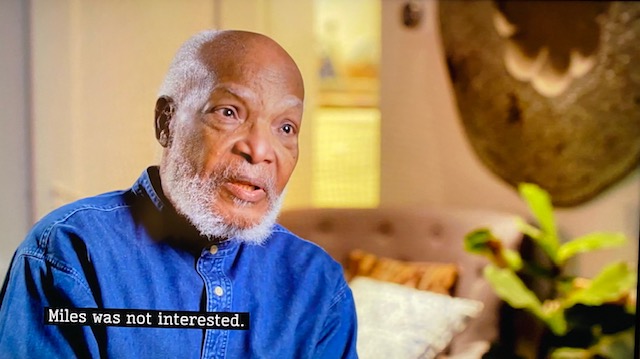


from the American Masters doc Miles Davis: Birth of the Cool
Stagolee Shot Billy
Posted: December 25, 2020 Filed under: Mississippi, music, Nick Cave Leave a comment
In a St. Louis tavern on Christmas night in 1895 Lee Shelton (a pimp also known as Stack Lee) killed William Lyons in a fight over a hat. There were other murders that night, but this one became the stuff of legend. Songs based on the event soon spread out of whorehouses and ragtime dives across the country. Within 40 years, Stagolee had evolved into a folk hero, a symbol of rebellion for black American males. With commendable scholarship and thoroughness, Brown shows how we got from the murder to the myth.
so says Leopold Froehlich in Playboy, quoted on the book’s back cover. I’ve been curious about this book since I first heard about it, finally pulled the trigger. Just that a book like this exists brings joy.
The murder was around 11th and Morgan in St. Louis, which today looks like this:

Should it be a UNESCO site? Paired perhaps with another St. Louis place of myth and violence, Cahokia?
Layers of Christmas songs
Posted: December 12, 2020 Filed under: music Leave a commentBy 1958, when Brenda Lee is singing “Rockin Around The Christmas Tree,” we have a Christmas song that’s playing on the existing corpus of Christmas music. “Let’s rock up those old Christmas classics,” is the theme of a song from sixty years ago.
In 1957, Elvis sings “Blue Christmas,” already playing on “White Christmas,” a song from 1940.
Accounts vary as to when and where Berlin wrote the song. One story is that he wrote it in 1940, in warm La Quinta, California, while staying at the La Quinta Hotel, a frequent Hollywood retreat also favored by writer-director-producer Frank Capra, although the Arizona Biltmore also claims the song was written there. He often stayed up all night writing. One day he told his secretary, “I want you to take down a song I wrote over the weekend. Not only is it the best song I ever wrote, it’s the best song anybody ever wrote.”
The Charlie Brown Christmas Special aired in 1965. If you saw it as a ten year old, you are now eligible for Social Security.
Schulz was adamant about Linus’ reading of the Bible, despite Mendelson and Melendez’s concerns that religion was a controversial topic, especially on television. Melendez recalled Schulz turned to him and remarked, “If we don’t do it, who will?”. Schulz’s estimation proved accurate, and in the 1960s, less than 9 percent of television Christmas episodes contained a substantive reference to religion, according to university researcher Stephen Lind. It could also be worth noting that Linus’s recitation of Scripture was incorporated in such a way that it forms the climax of the film, thus making it impossible to successfully edit out.
Just musing on both the meta quality of Christmas music and the accruing of material in a way that is both comforting and emotionally potent.
It has often been noted that the mix of melancholy—”just like the ones I used to know”—with comforting images of home—”where the treetops glisten”—resonated especially strongly with listeners during World War II. A few weeks after the attack on Pearl Harbor, Crosby introduced “White Christmas” on a Christmas Day broadcast. The Armed Forces Network was flooded with requests for the song. The recording is noted for Crosby’s whistling during the second chorus.
Already we’re deep in nostalgia.
The poetry in some of these songs:
So I’m offering this simple phrase
To kids from one to ninety two
And of course, most powerful:
Someday soon we all will be together
If the fates allow
Until then, we’ll have to muddle through somehow
So have yourself a merry little Christmas now
One Two Three Four: The Beatles In Time by Craig Brown
Posted: July 26, 2020 Filed under: books, music, writing Leave a comment
1966. The Beatles return from the US, having played what will be their “last proper concert,” Candlestick Park, San Francisco, August 29. They have some time off.
For the first time in years, the four of them were able to take a break from being Beatles. With three months free, they could do what they liked. Ringo chose to relax at home with his wife and new baby. John went to Europe to play Private Gripweed in Richard Lester’s film How I Won The War. George flew to Bombay to study yoga and to be taught to play the sitar by Ravi Shankar. This left Paul to his own devices.
For a while he hangs out in London, where he’s surely the most famous person. It gets a tiresome, really. Paul gets the idea of going incognito. He arranges a fake mustache, and fake glasses, and slicks his hair back with Vasoline. He has an Aston Martin DB6 shipped to France, and across the Channel he goes. He drives around France for a bit, relaxing in Paris, sitting in cafes unrecognized. From his hotel window he shoots experimental film of cars passing a gendarme. On he goes.
Upon reaching Bordeaux, he felt a hankering for the night life. Still in disguise, he turned up at a local discothèque, but was refused entry. “I looked like old jerko. ‘No, no monsieur, non’ – you schmuck, we can’t let you in.” So he went back to his hotel and took off his scruffy overcoat, his moustache and his glasses. Then he returned to the disco where he was welcomed with open arms.
I absolutely hoovered up this book. I’ve read a bunch of Beatles books in the last few years: Rob Sheffield’s Dreaming The Beatles, the gossipy The Love You Make by Peter Brown and Steven Gaines, You Never Give Me Your Money by Peter Doggett, about the Beatles post Beatles. This last one may have been the most compelling, even though much of it is patient unraveling of complex business and tax situations (plus anecdotes about decadence.) A tragedy about the years the Beatles spent suing each other. Maybe because how a person handles that kind of stress – the stress of tedious meetings – is more revealing, the personalities really came to life.
You’d think I’d be bored of the Beatles. The facts of the history don’t even interest me that much, and I doubt there’s a Beatles song on my top 100 most played. I’m not that much of a Beatles fan, to be honest, not compared to the psychos. (A funny bit in this book is Craig Brown, saying he’s spent a few years in deep on Beatles books and lore, acknowledging he’s barely scratched the surface of like, people who know every version of the lineup of the Quarrymen.)
We don’t need a recounting of the basic beats of the plot of the Beatles. We know.
Craig Brown goes so far beyond that. He assumes you know the rough outlines, and somehow he breathes new life into these old bones. He makes moments pop. Specimens of time, how far can we go to recapturing them? That’s the real question of this book.
Brown will take an incident – the day Bob Dylan turned the Beatles on to marijuana, for instance – and turn it over from every angle, consider every account. How do we know what we know? Who’s telling us? What was their agenda? How much can they be trusted? The historigraphy, you might say. At the same time, he puts us right there as Brian Epstein looks at himself in the mirror, repeating a single word over and over.
Take Pete Best. You probably know that story, the original drummer, they replaced him with Ringo. The cruelty of how that went down, how the Beatles treated him, shocks here in Brown’s retelling. I didn’t know, for instance, that in 1967 Pete Best tried to kill himself. Brown takes us thereL
He locks the door, blocks any air gaps, places a pillow on the floor in front of the gas fire, and turns on the gas. He is fading way when his brother Rory arrives, smells gas, batters the door down and, screaming “Bloody idiot!” saves his life.
If you want to know what happened to the comedians who had to perform in between the Beatles’ sets on Ed Sullivan, this is the book for you.
Can I reprint all of Chapter 30?

Seems like I’m just approximating picking this book up in a bookshop. What harm in that?

Craig Brown: going on my Role Models and Inspirations board. In a random, unrelated search I learn that he is aunt by marriage to Florence Welch, of Florence + The Machine. That’s the kind of connection Craig Brown would track down and work over for any possible meaning. Maybe there’s something there, maybe he’d discard it to the flotsam of chance, who knows. The point is he’d track it down.
Brown’s 99 Glimpses of Princess Margaret is great too, if you’re into The Crown type stuff.

All right, good for him
Posted: July 10, 2020 Filed under: music Leave a comment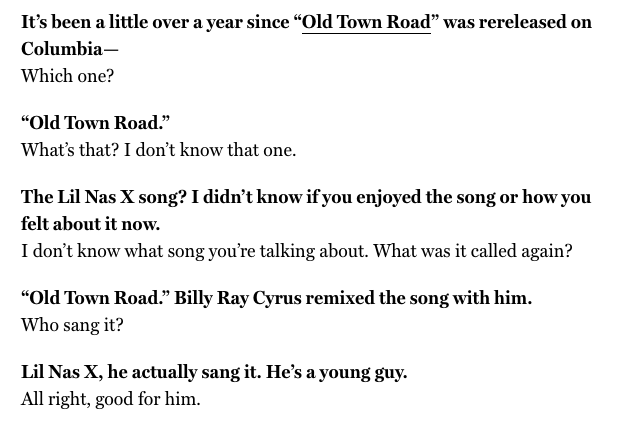
Willie Nelson in Vulture. And:
I read that you and Snoop Dogg were doing a new song. Is he also a fan of Willie’s Reserve?
Oh yeah. I was over in Amsterdam one time and I called him. I said, “Come on, Snoop. This is where you and me need to be.” We had a heck of a good time.
More on sound in Nintendo
Posted: April 27, 2020 Filed under: music Leave a comment
After we discussed Nintendo soundscapes, a correspondent writes:
So the simplest reason is that Nintendo a whole are like that, gentle, pleasing in aesthetic with musical rhythms to fit. When making the old games like Donkey Kong in the arcades, where they had wanted to a) get kids hooked to Keep spending quarters b) not sound dark or dangerous to scare off any young kids or parents worried about the new technology and c) being forced to create an earworm that, because of the chip being limited yet the amount of time they want you playing, be a sound loop that keeps it bouncy, happy, and remain in players head so you would think of it after leaving the arcade.When they moved home consoles, to the NES there wasn’t anything they could do as music really, the Commodore 64 had only the beeps that the computer chip itself could make, (kind of like what a modem would do). But Nintendo improvised. Say they only had a chip that could make 8 bit tunes, memory space of a few kb which were utilising system itself. No synth or midi or anything like that, 4 channels, because all the memory had to go towards the sprites basically. So you had just a small number or door bell tones basically making the sound effects nd the music at the same time. (Mario bopping a block, grabbing a coin playing along with a tune could go up or down a tiny bit then have to loop back again almost imperceptibly. Staying in c and returning back to the same notes as often as possible in different ways like the song that Never ends til you haven’t even noticed it hasn’t.They also, seeing as budgets and schedules were tight and with almost no memory for music music conposers werent hired, so the programmers had to do this, a little known tidbit is the origin of the Zelda song came from an all nighter. The developers planned on using a tiny orchestration of Ravel’s Bolero as the title crawl, seeing as the arrangement was so old. So that was the idea for the mario kinda games. With something like Zelda, still operating under the same rules but wanting a more grand brave adventurous sound they chose an old arrangement, Rachel’s bolero to go with it, they found out like the night before it had to go to print that it was one month before it would go to public domain so the composer made a whole new score in one night to make one of the most memorable and recognisable tunes ever. 49 years and 11 months and if Zelda was delayed by one month it would have rewritten video game history. But I’m getting off track.The biggest thing to happen after the Nes with the Super Nintendo music was Donkey Kong Country and a fella called David Wise. Nintendo had figured out a way to create a 3D look to a dimensional platforms, by shading the characters differently and moving them along deceptively deep but static backgrounds (kinda like tv animation) so he worked out a way to do the same thing with the same musical limitations. Rare and Nintendo hired him to make one jungle themed tune, link here, and he wrote the music along one string, moved the entire string down a few octaves and then just wrote over that with the melody going over it to basically make it one track sounding like multiple instruments rather than a tiny synth out tracking from less than 10 bits. It seems like it might be simple now but it was revolutionary, it sounded live instrument quality but it was tiny in size in reality. so they hired him to do the whole score. So with Koji Kondo creating Zelda and Mario’s basic looping almost gambling sound effects into what couldn’t really be considered a tune to something you can hum thirty years on to DavidWwise creating 2d soundtracks that sounded 3d by keeping music simple they tapped into repetition and psychological depth that you are still nostalgic for these daysTldr a cartridge has only so many chips back then and so you had to twist the chip to make it repeat the same noise only mildly different to look back to the same chip doorbell which makes it almost 4chord Beatles ish in its genetic simplicity.They’d also loop say four notes a few times then one loop then go back to those same 4 notes and repeat so it wouldn’t sound the same but it would be … familiar maybe why you have such nostalgic memories of them
Animal Crossing
Posted: April 13, 2020 Filed under: music Leave a commentI’ve never played Animal Crossing, but my wife is playing, and I can hear the sounds from the next room or down the couch. The sounds are so soothing and pleasant. Since the NES days, Nintendo always managed to produce nice, soothing sounds. Some games are exceptions, but when I think of the sounds of Super Mario, or Tetris on GameBoy, or Mario Kart on N64, and now Animal Crossing, I’m impressed at Nintendo’s ability to generate fun, calming sounds. I believe that’s an under-appreciated part of Nintendo’s appeal and success.
Books I’ve been meaning to review for Helytimes
Posted: April 12, 2020 Filed under: books, music, railroads Leave a commentThere’s a big stack of books over here I’ve been meaning to write up.

This book is super good. Full of vivid detail.
Drums were banned everywhere in North America except French Louisian by the middle of the eighteenth century, and so were horns, which are made from wood or animal horns and played in hocketing ensembles in the slave coast and Congo-Angola regions.
There are excerpts from a long interview with Jim Dockery, of Dockery Farms. Stories retold and remembered. Sonny Payne tells of the Helena, Arkansas based radio show King Biscuit Time:
These are well-to-do white women listening. I listen, every day when I’m doing the show, for the simple reason that there’s something there. They’re trying to tell you something, and if you think hard enough and listen hard enough, you will understand what it’s all about.
The story this book tells is really about how blues music went from its origin point, where the Southern cross the Dog in the Mississippi Delta, to Chicago and then by record to the UK, where Eric Clapton and Jimmy Page and the Rolling Stones heard it and picked up on it. Along the way there’s so much juicy richness about race and America and music and history and everything. Palmer takes us to a meeting in Chicago where they tried to encourage black migrants to come back to Mississippi.
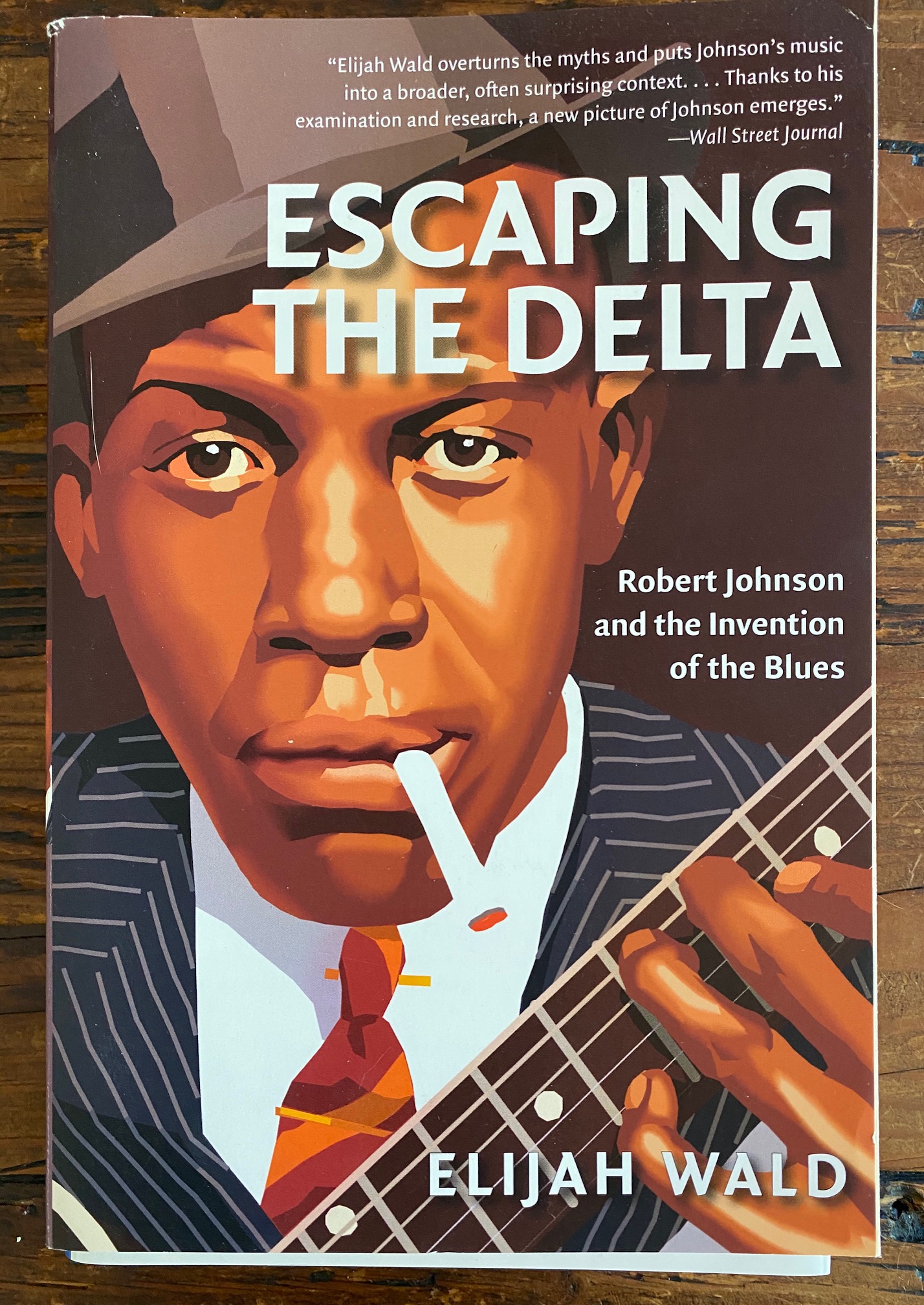
This book is almost like a response to the fetishizing or the legend-building surrounding the Mississippi Delta and blues music. Says Wald:
If someone had suggested to the major blues stars that they were old-fashioned folk musicians carrying on a culture handed down from slavery times, most would probably have been insulted.
I didn’t know that Mississippi was dry until 1966.
It is startling to thank that all of the evolution from the first Bessie Smith record to the first Rolling Stones record took only forty years. When Skip James and John Hurt appeared at the Newport Folk Festival, they were greeted as emissaries from an ancient, vanished world, but it was only three decades since they had first entered a recording studio – that is, they were about as ancient as disco is to us today.
One point both these books make is that the Mississippi Delta at this time was actually kind of a dynamic region, crisscrossed with railroads, you could quit your job and move and get another one.
Wald tells of an anthropological team from Fisk University and the Library of Congress that visited the Delta in 1941 and 1942. They reported:
There are no memories of slavery in the delta. This section of the delta has little history prior to the revolution of 1861
The research team asked people what their favorite song was. What a question! (My Country Tis of Thee and The Star-Spangled Banner among the answers).

Gotta love a book where this is a footnote.

When I was a kid you couldn’t go to a library book sale or a book store without seeing some paperback Tony Hillerman mysteries, about the Navajo Tribal Police. I never got into books like that, not sure why. But when it comes to New Mexico writers, Tony Hillerman is a name to reckon with. (And there are a lot of New Mexico writers, just see The Spell of New Mexico, edited by Tony Hillerman).
So, as I was gonna be in New Mexico, I got Tony Hillerman’s memoir.
Man. Tony Hillerman was a combat infantryman in World War II. Before he was twenty or so he’d fought his way through the Vosges, killed German boys yards away from him, gone on night raids and been shelled in the dead of winter. Finally he stepped on a landmine, and his war ended in a military hospital. There was a guy in the hospital, a tank gunner, who was called “Jug” because of the way his injuries had mangled his face. Jug considered himself lucky compared to what happened to Colonel Delaney.
All this happened to Tony Hillerman when he was a teenager, before he’d ever really had a girlfriend.
When he got back home, he got a job driving a truck in the New Mexico oil fields. In the Chaco Canyon country, he happened to come across some Navajos on horseback. They were going to an “Enemy Way” ceremony, a ritual for those returned from war.
The healing power and religious idea of this ceremony impressed Tony Hillerman. It was just what he needed. (It sounds like the kind of ceremony Karl Marlantes describes the need for in his book).
Hillerman became a newspaperman in New Mexico, and the rest of the book is mostly funny and interesting stories about that life, and his family, and his decision to attempt some mystery books. On a writing class he taught at UNM:
my premise was that power to persuade lies in the ability to make people see – sometimes literally – the situation as the writer sees it. Instead of telling readers the city should improve its maintenance programs, walk them down the street with you and show them those same details that drew you to that conclusion – the roaches around the drains, the trash collecting on the fences, and so forth. Based on that argument, I’d send them forth.
A good book by a man who seems tough and tender, humble and wise, I read most of it on an overnight train ride.

Speaking of trains, how about Hunter Harrison? A first ballot Hall of Famer for sure if the Hall of Fame is “railroad CEOs.” Hell they’ll probably name the hall after him. Hunter Harrison from the time he was a teenager only ever worked for one kind of company: railroad company.
Harrison’s thing was “Precision Scheduled Railroading,” which apparently revolutionized a kind of sleepy industry.
Harrison created approximately $50 billion in shareholder value in his time as a CEO.
says the book jacket, telling you something about how we’re keeping score. Harrison was an absolute fanatic about railroading. He ran Canadian National, Canadian Pacific, and died on the job running CSX.
I’m not sure if I’ll finish this book, it’s interesting and I’m learning a lot, but I’m just not sure I’m that interested in this guy. So far the part that sticks out in my mind is Harrison’s semi-mentor, Thompson.
Thompson was William F. Thompson – a.k.a. “Pisser Bill”
says the book. I thought the nickname might be kind of a metaphor or something, but no, a few pages later Pisser Bill was at the trainyard and saw something he didn’t like so he pissed all over the place.
This book was worth the price for that alone.
Notes on a decade
Posted: January 8, 2020 Filed under: America Since 1945, music Leave a comment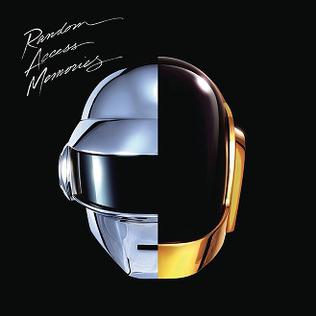
Born near the turn of a decade, the decades of the marked years neatly match my own personal decades. The 2010s were pretty much my 30s. Probably I was less in tune culturally than I was in the 2000s / 20s. Or maybe I was REALLY tuned in. Who can say? Sometimes re: “current events”, they did feel like little more than backdrop to my own personal dramas. If nothing else I was present for a lot of cool moments, the finales of The Office and VEEP, for example.
For that I’m grateful.
Helytimes was launched in 2012, out of a desire to claim a space for myself on what we still called “the Internet,” plus a sense that figuring out how to write online would be important. Haven’t quite made it to ten years yet, which I remember setting as a benchmark to strive for.
The 2010s decade, if we’re being flexible, has to begin with the September 2008 financial crisis and aftermath. The bad guys really did get away with it. That’s a fact we’ve had to sit with all decade, and I think it’s an ugly, unpleasant fact that lies beneath a lot of the roiling turmoil since then. A small percentage of people rigged the economy and were reckless with the lives of others, and mostly left others holding the bag and were never held to account.
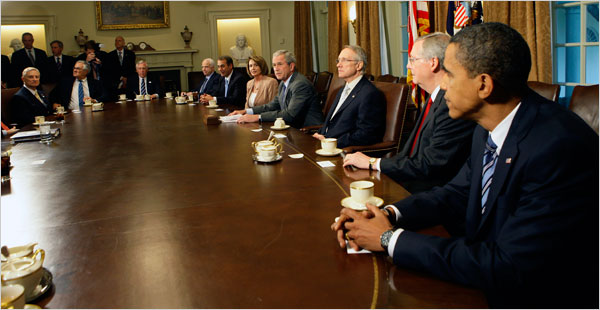
Did it all begin here?
The decade was really split by the shock of the 2016 election. A troubling, disturbing shock, even to the guy who won! When I consider that was almost four years ago it feels weird, I’m still kinda not out of the initial dizziness that Donald J. Trump is the President. It feels like it warbles the universe to even write that and have it be true.
Historywise, what was this decade? Was it good? Was it bad? Was it tumultuous? Are we brimming with more hope than we were in 2009? If you were making one of those CNN docs of the decade, what would you have to include? The fact that it is kinda hard to answer does – well I don’t want to say it disappoints, but it might suggests this was not a decade of great innovation.
Art and culture of the 2010s? How were they distinct from the 2000s? I can’t name the true trends in music, or even film or TV. What about literature? Here we are in 2019 and who’s a hot young writer? Sally Rooney? Jia Tolentino? Is there anyone else who pops out of this decade in literature?
Technology-wise, 2010 was very different for me than 2000, when I didn’t own a phone. But I don’t think 2019 is that different from 2010.
The big ticket of the 2010s, it seems to me, is “social media.” My phone regularly reports to me that I spend five or so hours on it A DAY, and I don’t think I’m that unusual. Twitter, Insta, TikTok, etc. Gaming streams? Social is where people live.
Is sorting the decades by their cultural touchstones itself kind of a Boomer idea? Feels like it became strongest with “the Sixties.” As David Halberstam pointed out in his book, it wasn’t like nothing was going on in the ’50s, it just felt like that for a certain generation which hadn’t yet come awake.
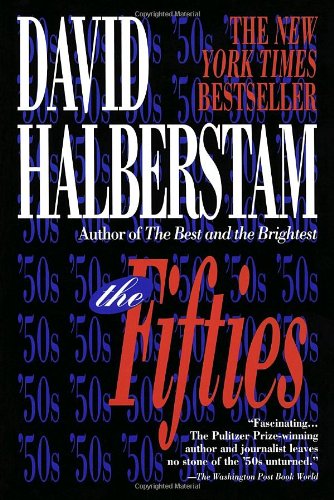
maybe thinking about “decades” is itself an old idea, we’re so fast now we’re on years, months, days, moments.
Moments. Were the 2010s the decade of moments? We could capture and share moments better than ever before. I remember a tech bro pitching me an idea in Austin for some kind of photo storing service. “I was getting so sick of missing moments,” he said. Within a few months another person pitched me essentially the same idea, though neither time did I really understand what the problem was, exactly, nor the solution.
One quality the 2020s will need is hope. One of the best things there is is hope, and here’s hoping for a decade of amazing moments for Helytimes readers, and well heck, why not wish everyone a peaceful, happy, prosperous decade with just the right amount of excitement.
I put on Spotify’s best of the decade and man, I’d forgotten this one:
CeeLo’s “Fuck You” if the link dies, as they inevitably do.
 Helytimes


