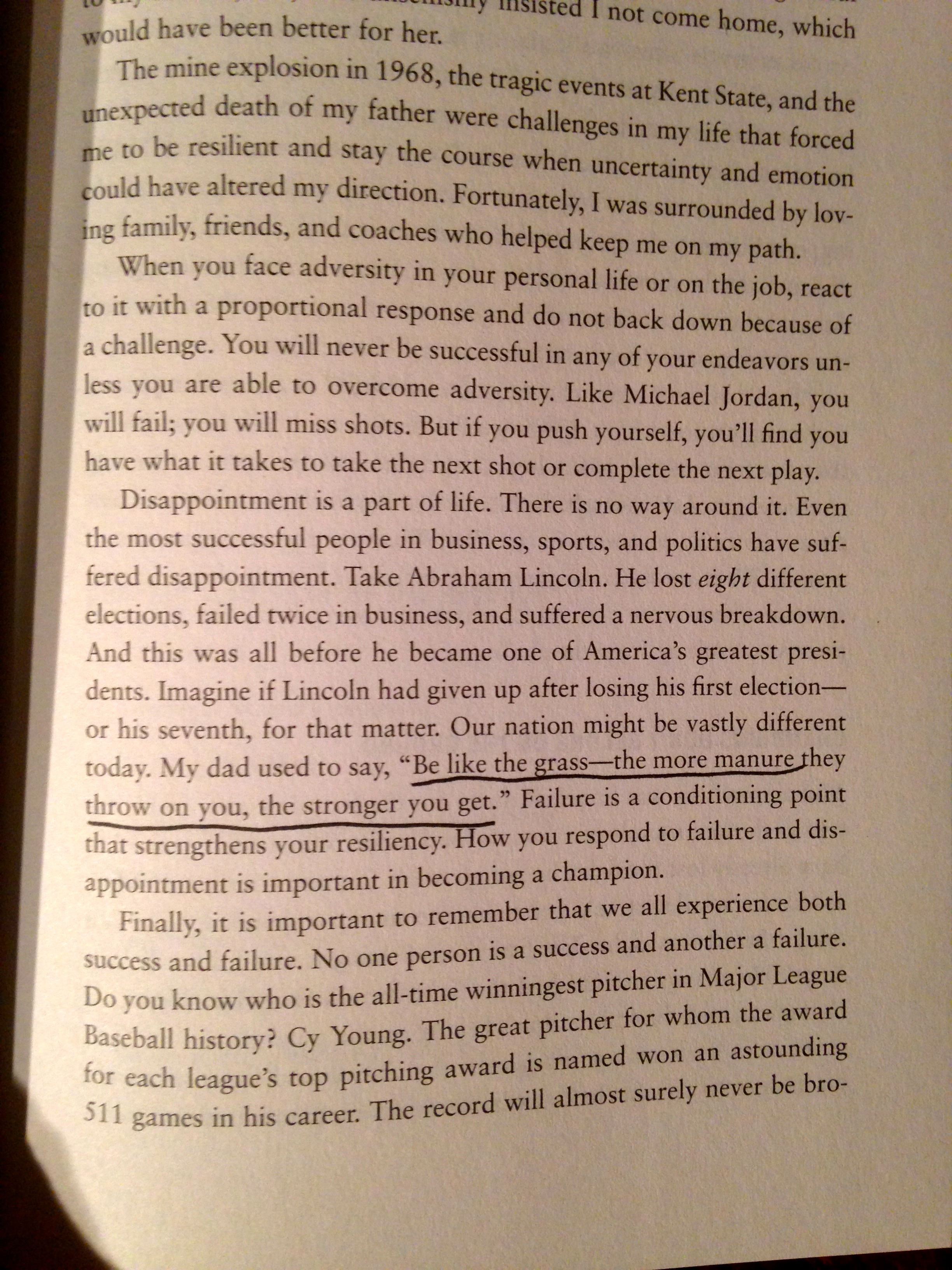
Coaches for Super Bowl LI
Posted: February 3, 2017 Filed under: Boston, heroes, New England, sports Leave a commentMORE ON public lands under Trump to come, but first we have to address a reader email:
Dear Helytimes,
Will you continue your tradition of discussing the Super Bowl coaches, in anticipation of Big Game LI?
So writes reader Abigail J. in Wellesley, Mass.
Thanks for writing Abigail! Last year, we profiled the somewhat dim personalities of Ron Rivera and Gary Kubiak.
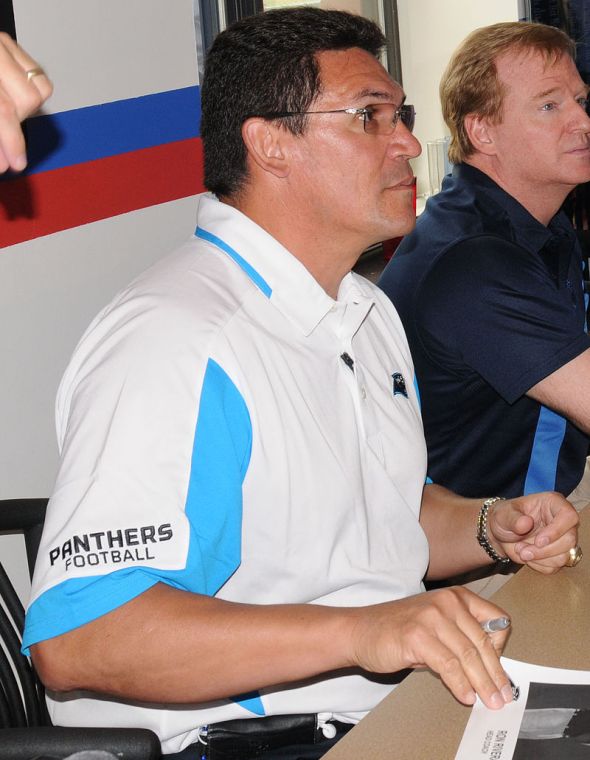
Photo Credit: Reginald RogersParaglide Carolina Panther head coach Ron Rivera, left, NFL Commissioner Roger Goodell and former Carolina Panthers player Mike Rucker sign autographs and photos for Soldiers at the 1st Brigade Combat Team dining facility Friday during their visit to the post.
Rivera’s Panther’s may have controlled their APE but it wasn’t enough.
This year we have a return for Bill Belichick, whom we investigated to the edge of known facts before the epic XLIX game. In that battle he squared off against Pete Carroll, the most compelling coaching figure in the NFL and subject of an in-depth Helytimes profile.
This year comes Dan Quinn.
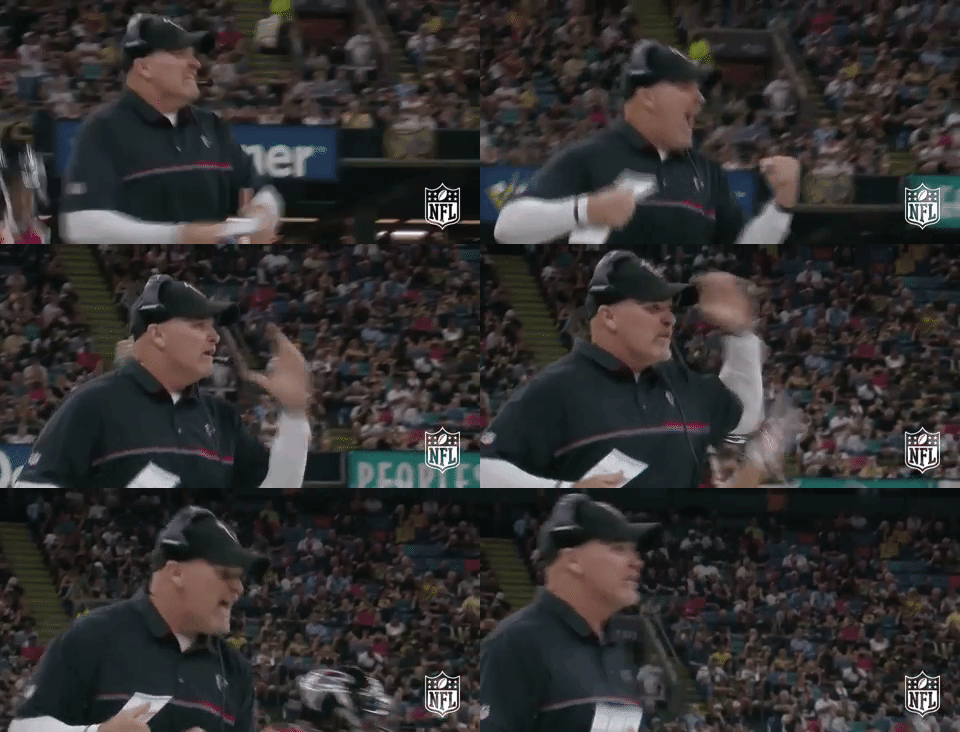
He won a Super Bowl under Pete Carroll in 2014, and seems more Carroll than Belichick for sure. Here’s an article about him from the AJC by Jeff Schultz. Bumper stickers are a theme:
Quinnisms: Iron sharpens iron. Do right longer. Do what we do. It’s about the ball. It’s about the process (Former coach Mike Smith left that one behind.)
Quinn also has had a dozen T-shirts or hats with punchy thoughts made up during the season, the latest being, “Ready to Ride, Dog.” The week of the first playoff win over Seattle, players wore shirts reading: “Arrive violently.” Those words were referenced by Neal after the game.
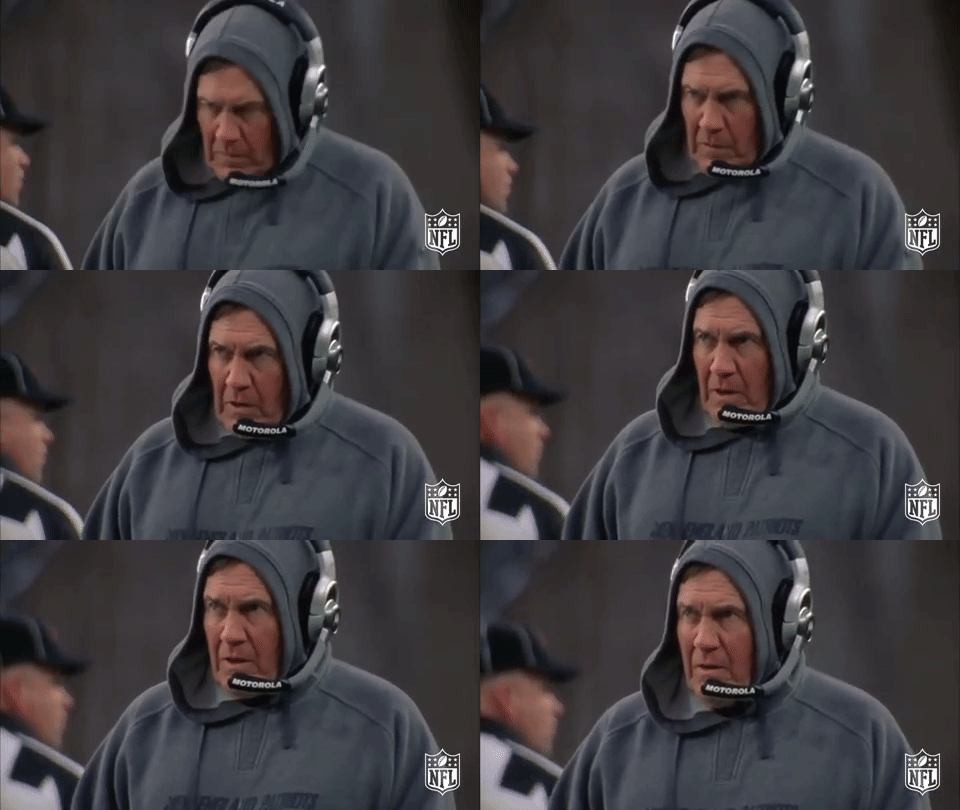
Don’t have much more to add. In light of Belichick’s Trump support perhaps this a revealing moment, from Inside the NFL:
We’ll see what happens in Houston.
At the moment, who can fail to find NBA coaches more compelling?:
Stressful job
Posted: October 18, 2016 Filed under: New England, sports Leave a comment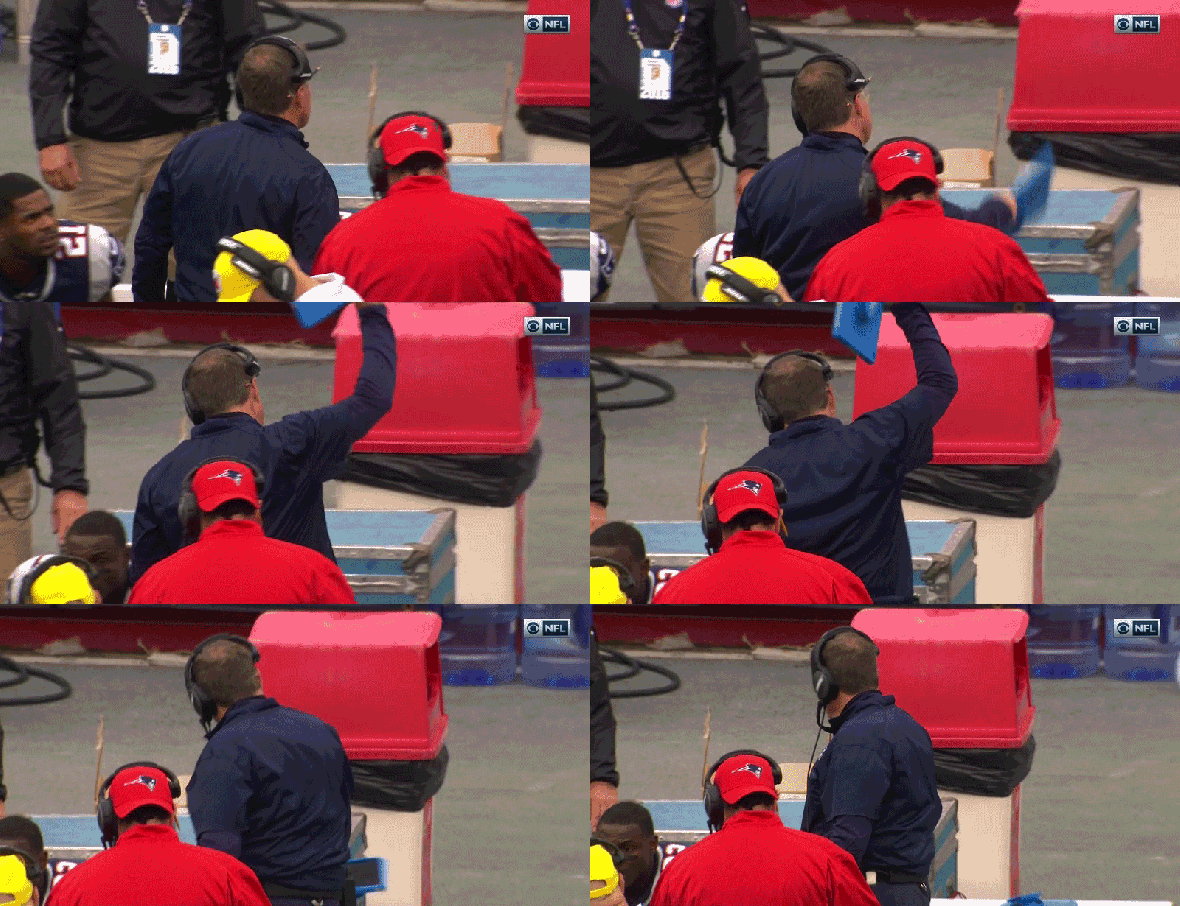
Bill Belichick’s IT guy. Lucky Coach says he is happy with Dan Famosi.
Went to check on results of the Harvard-Yale boat race
Posted: June 13, 2016 Filed under: New England, sports Leave a comment
an inauspicious day for the Crimson.
Control Your APE
Posted: February 3, 2016 Filed under: America Since 1945, sports Leave a commentReader Kayla in Colorado writes,
Enjoyed your take on Bill Belichick and Pete Carroll last year. Would love your read on this year’s Super Bowl vis a vis coaches (Kubiak vs. Rivera)
Thanks for writing Kayla! As should be noted, I don’t know much about football but I’m interested in coaches and coaching philosophies. So let’s take a look at Super Bowl Fifty: The Coaches.
In this year’s Super Bowl L, we have Ron Rivera of the Carolina Panthers:
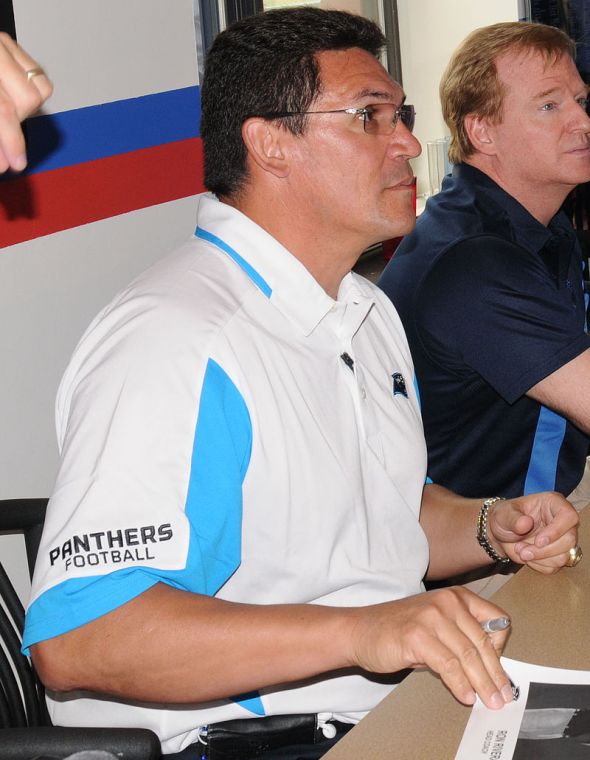
Photo Credit: Reginald RogersParaglide Carolina Panther head coach Ron Rivera, left, NFL Commissioner Roger Goodell and former Carolina Panthers player Mike Rucker sign autographs and photos for Soldiers at the 1st Brigade Combat Team dining facility Friday during their visit to the post.
against the Broncos’ Gary Kubiak:

DENVER, CO – AUGUST 29: Denver Broncos head coach Gary Kubiak wasn’t happy when the team had to call a timeout on defense in the second quarter of the preseason game against the Arizona Cardinals at Sports Authority Field at Mile High on Thursday, September 3, 2015. (Photo by Steve Nehf/The Denver Post)
Neither of them has written a book, nor have their personal philosophies been as parsed and examined as those of Belichick and Carroll. Still, from what we have available let’s take a look.
Ron Rivera was born on Fort Ord, right here in California, and he went to Seaside High in Monterey.


Fort Ord
His dad was a Puerto Rican born Army officer and his mom is Mexican. He’s not the first Hispanic head coach in the Super Bowl, though – that honor goes to Tom Flores of the Raiders:

Every week during team meetings, the 56-year-old Rivera chooses one pivotal play from the previous week’s game and plays the Spanish broadcast version for his players. Most don’t have a clue what the broadcasters are screaming about, but they holler in delight upon hearing the call.
So says this article in Citizen-Times. Everyone seems to agree Rivera is a decent, focused dude.
“On one side I’m getting a strong and deep sense of family, tradition and culture,” he says. “On the other side I’m getting this discipline and pride that you get growing up and living on Army bases.”
He won a Super Bowl himself with the ’85 Bears, a game I myself watched with disappointment during, if I remember right, a snowstorm.
He could’ve been in the famous “Super Bowl Shuffle” video but missed his chance:
Rivera could have been a part of the video, and gone down in music video (and YouTube) history, but he chose to sleep in instead.“Half the team showed up for it,” Rivera said. “Half stayed home and slept because it was a Monday night game. We didn’t get home until 4:30-5 o’clock in the morning.”
Pulling up his weekly presentations to the team, Rivera showed me how every one of them starts with a slide that says “Control Your A.P.E – Attitude, Preparation, Effort.” This emphasis on self-empowerment and responsibility has created a team culture of positive attitude, intense preparation and maximum effort.
On to Denver:
Gary Kubiak:

Photo by Eric Lars Bakke, AP
That’s the perspective behind this article, “Gary Kubiak and the Tao Of the Backup Quarterback” by Footbyballs over on SI’s The Cauldron.
As a backup Kubiak was on the sidelines for three Super Bowl losses. (He also won three as an assistant coach for the Broncos and 49ers). Elway as GM/EVP of the Broncos is still Kubiak’s boss.
Says Footyballs:
I don’t think it’s a stretch to say that Gary Kubiak is a Broncos’ franchise cornerstone. He played out his quarterback career. He did his job, stayed ready, and waited. Now, it’s his team to lead. The Broncos are doing just fine with the professional backup in charge, uneven seas and all. Maybe he’ll have a third career, as a writer, in which he gathers all his accumulated wisdom into a book of sorts. He could call it “Precepts of the Tao of the Backup Quarterback.”
I would definitely read that.
The more dynamic coach on the Broncos might be defensive coordinator Wade Phillips, himself a former head coach

and the son of NFL coach Bum Phillips:

can’t find source
whose Quotes section on his wiki page is worth a look:
- (20 years after playing Pittsburgh six times in two seasons) “Don’t take long to spend all the time you want in Pittsburgh.”[7]
- (referring to Miami Dolphins coach Don Shula) “He can take his’n and beat your’n and take your’n and beat his’n.”[8] He also said the same line about Bear Bryant.[9]
- (referring to Houston Oilers quarterback Warren Moon) “That boy could throw a football through a car wash and not get it wet.”
- (when asked about Oilers RB Earl Campbell’s inability to finish a one-mile run in training camp) “When it’s first and a mile, I won’t give it to him.”
- (when asked by Bob Costas why he took his wife on all of the Oilers’ road trips) “Because she’s too ugly to kiss goodbye.”[10]
Here’s a little trivia coworker Zack calls to my attention: who did both Ron Rivera and Gary Kubiak replace when they took over their current job?
Answer?:

John Fox
All things considered, this doesn’t seem like nearly the coaching duel of last year.
I give the psychological edge here to Rivera, and predict based on my patented Coaching Analysis System the Panthers will defeat the Broncos (and cover the six point spread).
As you can see here, my system has me at 1/3 total, but 1/1 on Super Bowls.
Kareem Abdul-Jabbar talks to Tyler Cowen
Posted: February 2, 2016 Filed under: America Since 1945, sports, the California Condition Leave a comment
Great interview. Kareem talks about how his love of Sherlock Holmes made him a better basketball player:

 About that action scene above:


The USWNT
Posted: July 2, 2015 Filed under: America Since 1945, sports Leave a comment
I gotta say, I’m enjoying the women’s World Cup, and I am for the US women. I like Tobin Heath
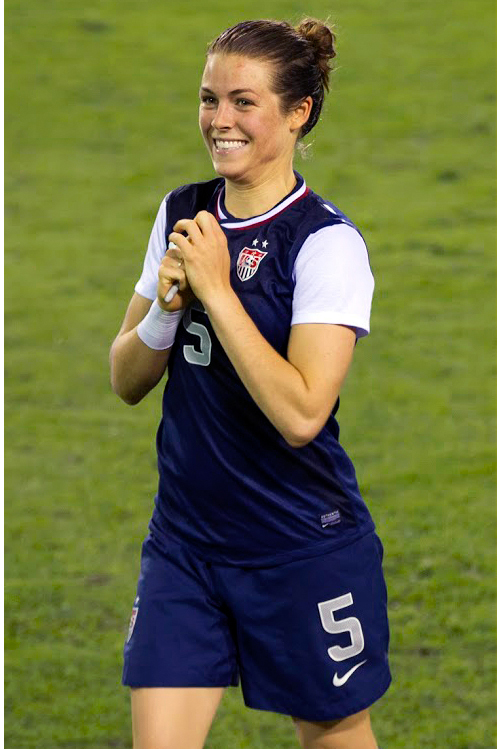
And Kelley OHara
And Sydney Leroux

I like this:
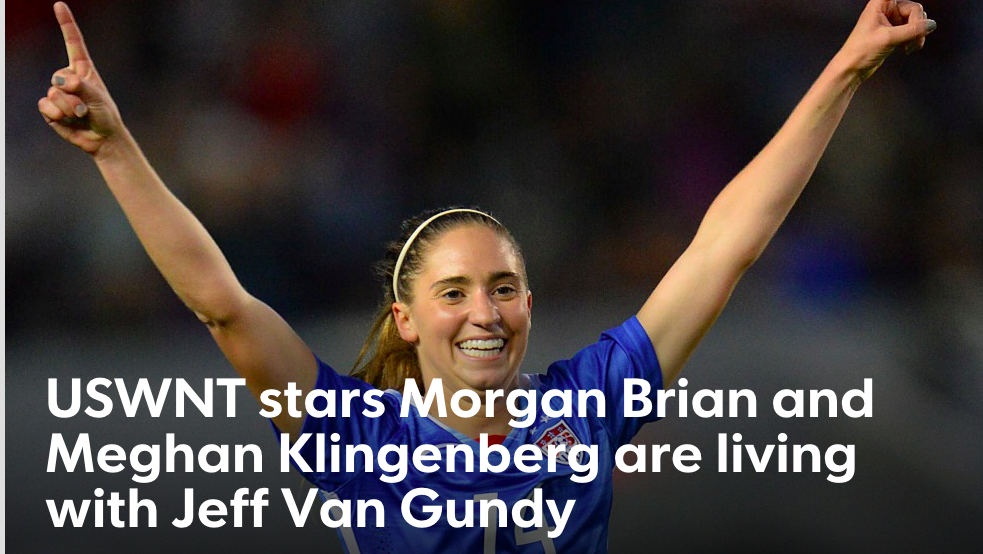
And I like that Alex Morgan wrote a bestselling book for middle schoolers:

This is the only one star review:

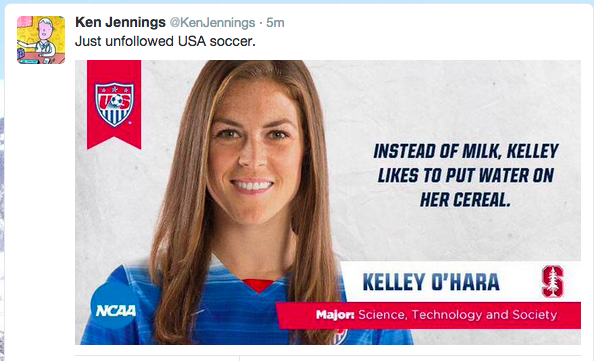
Do agree with Ken that this is troubling:
Conversational fodder for your Super Bowl party
Posted: February 1, 2015 Filed under: Christianity, mysticism, religion, sports, writing 1 CommentThrowback to an old classic. Milch spins Super Bowl –> Kierkegaard. Starts around 0:41, meanders away by 3:40, pretty interesting again by 9:20 or so.
Good luck to both the Seahawks and the Patriots in returning to the spirit which gave them rise. Stand by my Super Bowl pick.
Coaches, Part 2: Belichick
Posted: January 29, 2015 Filed under: America Since 1945, New England, sports Leave a comment
(Part One, about Pete Carroll and Nick Saban’s memoirs, is here)
The most interesting character in this book isn’t Belichick, it’s Ernie Adams.

Photo by Stu Rosner from this Northwestern magazine article: http://www.northwestern.edu/magazine/winter2008/feature/adams.html
Ernie Adams, it should be noted, was a coach even before entering Andover. he had gone to elementary and junior high at the Dexter School, a private school in the Boston area (where John F. Kennedy had gone), and being more passionate about football than the teacher who had been drafted to coach the intramural team there, he had ended up giving that teacher more suggestions than the teacher wanted to hear. Finally the teacher, in desperation, had turned to Ernie and said, “Well, if you know so much, why don’t you coach?” That was an offer Ernie Adams could not turn down, and he ended up coaching the Dexter team quite successfully.
At Andover he had already befriended another football-crazed classmate, Evan Bonds, with whom he talked constantly and with whom he diagrammed endless football plays and with whom he jointly did the senior project breaking down and analyzing all of Andover’s plays from the their senior season…
Bonds felt that although his own life revolved completely around football, Adams was already a good deal more advanced in his football obsessions, going off on his own to coaching clinics where everyone else was at least ten years older, collecting every book written by every coach on the game, the more technical the better, and collecting films of important games: “Ernie already had an exceptional football film collection, sixteen-millimeter stuff, the great Packer-Cowboy games, Raiders-Jets, films like that, which he somehow found out about through sports magazines, had sent away for, and for which he had enough primitive equipment that he could show the films,” Bonds said. “It’s hard to explain just how football crazed we were, but the year before Bill arrived, when we were in the eleventh grade, and it was spring, the two of us went down to Nickerson Field, the old Boston University field, because BU was having an intra-squad spring game. We were up there in the stands, taking notes, these two seventeen-year-olds – can you believe it? – scouting an intra-squad game at BU on our own, and I still have no earthly idea what we would have done with the notes. Anyway, pretty soon a BU assistant coach came up looking for us, to find what we were doing, and why we were doing it. So we said we were from Northeastern, as if that would give us extra legitimacy, and the coach said what we were doing was illegal, and we had to get out then and there.”
And then at Andover arrived young Bill Belichick, doing a post-graduate year, a kind of bonus senior year after graduating from Annapolis High, in the hopes of getting into a better college:
Adams was already as advanced a football junkie as Belichick: he had an exceptional collection of books on coaching, including Football Scouting Methods ($5.00 a copy, published by the Ronald Press of New York City, and featuring jacket quotes from, among others, the legendary Paul Brown: “Scouting is essential to successful football coaching.”), the only book written by one Steve Belichick, assistant coach of the Naval Academy. The book was not exactly a best seller – the author himself estimated that it sold at most four hundred copies – nor was it filled with juicy, inside tidbits about the private lives of football players. Instead it was a very serious, very dry description of how to scout an opponent, and, being chockful of diagrams of complicated plays, it was probably bought only by other scouts and the fourteen-year-old Ernie Adams.
That year, just as the first football practice was about to start at Andover, Coach Steve Sorota posted the list of the new players trying out for the varsity, including the usual number of PGS – the list included the name Bill Belichick, and Ernie Adams was thrilled. That first day Adams looked at the young man with a strip of tape that Belichick on his helmet, and asked if he was from Annapolis, Maryland, and if he was related to the famed writer-coach-scout Steve Belichick, and Bill said yes, he was his son. Thus were the beginnings of a lifetime friendship and association sown…
..”Because we were such football nerds, it was absolutely amazing that Bill had come to play at Andover, because we were probably the only two people in the entire state of Massachusetts who had read his father’s book,” Bonds said years later.
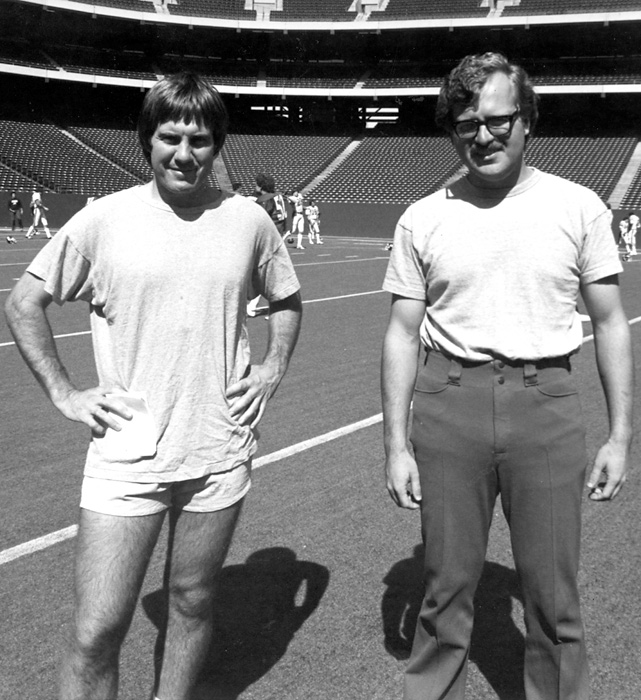
Belichick and Adams, traceable through http://www.patsfans.com/new-england-patriots/messageboard/threads/rare-photos-of-bill-belichick.813505/
Adams has more or less been at Belichick’s side ever since, “Belichick’s Belichick,” aside from interludes on Wall Street. Here’s a good profile on him, with quotes from Andover classmate Buzz Bissinger. (Apparently Jeb Bush was in that class too).
So you can never really tell what is going on in his head. But I did get Carlisle to call Adams on Monday and ask for his five favorite books, hoping to get a window into the places a man like him goes for inspiration. Here is the list:
- “The Best and the Brightest,” by David Halberstam
- “The Money Masters of Our Time,” by John Train
- Robert Caro’s three-volume biography of Lyndon B. Johnson
- Robert Massie’s biography of Peter the Great
- William Manchester’s two-part biography of Winston Churchill
…
Adams also seems to enjoy not only watching greatness work, but also seeing it fail. Carlisle thinks the central message of Halberstam’s Vietnam classic appeals to Adams: that people incredibly well-educated and well-intentioned could be so flat-out wrong about something. It’s a helpful notion to keep in mind about the conventional-wisdom-obsessed world of football, where pedigree and tradition dictate many overly conservative decisions. Indeed, when Adams agreed to participate in Halberstam’s Belichick book, he did so with this caveat: For every two questions the journalist got to ask Adams about football, Adams got to ask one back about Vietnam. Did that trait allow Adams to make sure the mistakes of Belichick in Cleveland were not repeated? Maybe.
Most articles on Adams will include this detail:
When Belichick and Adams were together when the coach was in Cleveland, Browns owner Art Modell once said, “I’ll pay anyone here $10,000 if they can tell me what Ernie Adams does.”
Or:
A few years back, during a team film session, the Patriots players put up a slide of Adams. The caption read: “What does this man do?” Everyone cracked up. But no one knew.
Mysterious, rigorous, intense, scholarly dissection of football — that seems to be the Belichick way. “Unadorned,” as Halberstam puts it:


Belichick doesn’t seem like the kind of dude to write a book, least of all a peppy all-purpose motivational paperback like Pete Carroll’s. This is the closest thing, a kind of biography starting with the arrival of Bill Belichick’s grandparents in America. They came, like Belichick apprentice Nick Saban’s grandparents and Pete Carroll’s maternal grandparents, from Croatia:
 Bill Belichick grew up in football. His dad, Steve Belichick, spent the bulk of his career (33 years) as an assistant coach at the Naval Academy. (As a young guy, a fellow coach advised him to get a tenure-track job as an associate professor of physical education, so he had job security even as eight head coaches passed through.) Belichick’s mom seems like a great lady — she’d done graduate work in languages at Middlebury, and during the war she translated military maps. She learned Croatian so she could speak to her in-laws more easily.
Though he never worked at Oakland, Belichick apparently picked up several things from the way Al Davis ran the Raiders:
There were important things that [assistant coach Rich] McCabe told Belichick about the Davis system that would one day serve Belichick well. The first thing was that Oakland looked only for size and speed. Their players had to be big and fast. That was a rule. If you weren’t big and fast, Oakland wasn’t interested. The other thing was about the constancy of player evaluation. Most coaches stopped serious evaluation of their personnel on draft day – they chose their people, and that was that. But Davis never stopped evaluating his people, what they could do, what you could teach them, and what you couldn’t teach them. He made his coaches rate the players every day. Were they improving? Were they slipping? Who had practiced well? Who had gone ahead of whom in practice? The jobs the starters had were not held in perpetuity.
This is similar to stuff Carroll talks about — everyone is competing every practice. After a stint in Denver:
That summer [Belichick] came home and visited with his boyhood friend Mark Fredland and told him he had found the key to success: It was in being organized; the more organized you were at all times, the more you knew at every minute what you were doing and why you were doing it, the less time you wasted and the better coach you were.
Halberstam likes Belichick, obviously. They had become friendly because they both had houses on Nantucket, and Halberstam suggests that the gruff Belichick we see is part presentational strategy:
That persona – the Belichick who had never been young – was one he had either created for the NFL or had evolved because of the game’s needs. Part of the design was more or less deliberate, and part of it was who he was. For when he had first entered the League, he had been a young man teaching older men, and he had needed to prove to them he was an authority figure. Thus, he believed, he had been forced to be more aloof and more authoritarian than most coaches or teachers working their first jobs.
Compare this to the young guy at Wesleyan with his frat brothers, sneaking a case of beer into a showing of Gone With The Wind (why that movie? even Halberstam is baffled) under his parka.
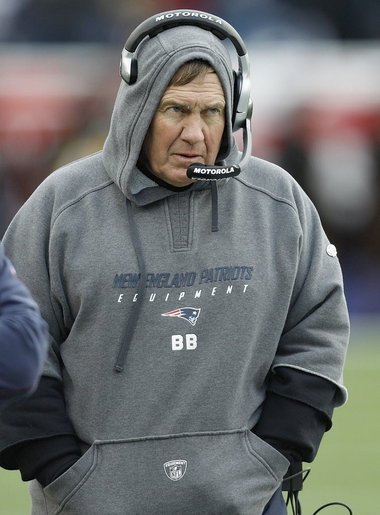
The best parts of this book are about Belichick’s relationship with Bill Parcells, when they were at the Giants. The biggest issue there was how to handle Lawrence Taylor, who was supremely excellent at football, but semi-out of control on drugs and women, prone to nodding off in meetings though he would somehow intuitively understand what he had to do in complex plays. A great anecdote — LT has injured his ankle:
So on his own, without telling the coaches, he went to a nearby racetrack and somehow managed to find someone there who was an expert in horse medicine, who had some kind of pill – a horse pill – and he took it and played well.
Belichick’s takeaway from dealing with LT was, apparently, never to bend the rules for anyone.
Parcells and Belichick needed each other, but they weren’t friends exactly:
There was one terrible moment, during a game, when Belichick called a blitz, and Parcells seemed to oppose it. They went ahead with it and the blitz worked – the other team did what Belichick had expected, not what Parcells had – but Parcells was furious, and over the open microphones in the middle of a game, he let go: “Yeah, you’re a genius, everybody knows it, a goddamn genius, but that’s why you failed as a head coach – that’s why you’ll never be a head coach… some genius.” It was deeply shocking to everyone who heard it; they were the cruelest words imaginable.
Not true, though. Belichick got to be head coach at Cleveland, where he didn’t really get on with owner Art Modell or QB Bernie Kosar and had a tough time, going 36-44 there. Halberstam almost seems to admire how bad/stubborn/unhelpful Belichick was with the media there.
And then he got to New England (taking over for the fired Pete Carroll).
As his friend Ernie Adams said, “The number one criteria for being a genius in this business is to have a great quarterback, and in New England he had one, and in Cleveland he did not.”
The stuff in Halberstam’s book about Belichick’s decision to go with Brady over Drew Bledsoe is pretty great:
But among those most impressed by Belichick’s decision to go with Brady was his father. Steve Belichick thought it was a very gutsy call, perhaps the most critical call his son had ever made, because the world of coaching is very conservative, and the traditional call would be the conservative one, to go with the more experienced player in so big a game. The way you were protected if it didn’t work out, because you had gone with tradition and experience, and no one could criticze you. That was the call most coaches would have made, he said, under the CYA or Cover Your Ass theory of coaching. Many of his old friends disagreed with what his sone was doing, he knew, but he was comfortable with it himself. When friends who were puzzled called him about it, he told them that Bill was right in what he was doing. “He’s the smart one in the family, and I’m the dumb one,” he would say.

Brady seems like he earned it, surely, and he had the special thing Belichick needed:
There were some quarterbacks who were very smart, who knew the playbook cold, but who were not kinetic wonders, and could not make the instaneous read. That was the rarest of abilities, the so-called Montana Factor: the eye perceiving, and then even as the eye perceives, transferring the signal, eye to brain, and then in the same instant, making the additional transfer from brain to the requisite muscles. The NFL was filled with coaches with weak arms themselves, who could see things quickly on the field but who were doomed to work with quarterbacks who had great arms, but whose ability to read the defense was less impressive. What Brady might have, they began to suspect, was that marvelous ability that sets the truly great athletes apart from the very good ones. Or as one of the assistants said, it was like having Belichick himself out there if only Belichick had had a great arm. In the 2001 training camp Brady would come off the field after an offensive series, and Belichick would question him about each play, and it was quite remarkable: Brady would be able to tell his coach what every receiver was doing on each play, what the defensive backs were doing, and explain why he had chosen to throw where he had. It was as if there were a camera secreted away in his brain. Afterward, Belichick would go back and run the film on those same plays and would find that everything Brady had said was borne out by the film.
There’s no secret in this book. Belichick is obsessed with analyzing football, has been since he was at least seventeen, probably younger. Even with that intensity it took luck and circumstance to get him five Super Bowl rings. A lesson from the coaching careers of Carroll and Belichick might be perseverance, but I don’t think that’s even the word for this — it’s not like it’s any kind of choice with these guys, it’s nature.
I read one other Halberstam sports book a few years ago, The Amateurs, about Harvard rowing. The theme of that book is similar: obsessive characters irresistibly driven, almost forced by their nature to be completely devoted, single-minded, unrelenting. There was no end of it. “The kind of guys whose idea of a day off is to drive up to New Hampshire and cross-country ski until you couldn’t stand up,” as a rowing coach put it.

Most of us (me) aren’t this kind of guy, certainly not about football or rowing. The compelling thing about the Pete Carroll book is that he seems semi-human. He seems to find joy and fun in this pursuit. Not that he’s any less competitive than Belichick, and who knows what eats him up in private. But he can explain what he’s doing to others in a way that seems born out of enthusiasm and positivity rather than just some incomprehensible inner nature. Just being willing to try to explain it is something.
That’s not typical:
“Don’t do it, don’t go into coaching,” the famed Bear Bryant had counseled young acolytes who were thinking of following him into the profession, “unless you absolutely can’t live without it.”
There was a constant loneliness to the job, a sense that no one else understood the pressures you faced. Each year, before the season began, Belichick would tell his team that no one else would understand the pressure on them, not even the closest members of their families. The person in football who knew him best and longest, Ernie Adams, thought Belichick had remained remarkably true to the person he had been as a young man. Adams was a serious amateur historian, and he was not a coach who threw the word “warrior” around to describe football players, because they were football players, not warriors, and the other side did not carry Kalashnikovs. Nonetheless, he thought the intensity under which the game was now played and the degree to which that intensity separated players and coaches from everyone else, even those dear to them, was, in some way, like combat, in that you simply could not explain it to anyone who had not actually participated. It was not a profession that offered a lot in the way of tranquility. “My wife has a question she asked me every year for ten years,” Bill Parcells said back in 1993 when he was still married, “and she always worded it the same way: ‘Explain to me why you must continue to do this. Because the times when you are happy are so few.’ She has no concept.”
(A good roundup of Belichick stories here.)
Coaches
Posted: January 1, 2015 Filed under: America Since 1945, sports, the California Condition 1 Comment
A Chance Encounter With Pete Carroll
One Sunday afternoon, a few years ago, I was drinking in a bar on Hermosa Beach (I believe but am not certain it was The Poop Deck) when I saw USC Trojans head football coach Pete Carroll ride by the front door on a bike.
He was with a handsome woman, his wife I guessed, and as they rode along saw somebody they appeared to know. Pete and his wife stopped to talk to him.
From where I was in the dark of the bar, the sunlight in the doorway framed Coach Carroll perfectly, it was like the last shot of The Searchers.

We couldn’t hear what Coach was saying. But watching him talk was mesmerizing. Engaged, upbeat, demonstrative: I couldn’t look away. The whole scene was compelling. Who was this chilled out beach boardwalk motivator? What was his life?

The Inner Game
Some time after that I found a copy of The Inner Game Of Tennis by Timothy Gallwey at my friend’s house. The only times I’ve ever played tennis I embarrassed myself, but I like “inner games,” and reading about tennis, so I read it.
The book blasted my head open.
Here is a very crude summary of Gallwey’s ideas as I understood them: when you do something like play tennis, sometimes you can split into a self that’s doing the actions, and a self that’s observing, judging, intellectually assessing: critical. That second self can easily slip into becoming abusive. You screw up a shot and you’re like “dammit, so STUPID!”
When that happens, Gallwey asks, who is yelling at who? What’s going on here?
This struck me re: writing. (Or really, any creative work.)
You’ve got your creator self, and your critical self. You need them both: all one and you’ll write stream of consciousness garbage, all the other and you’ll never write anything. But how do you get them to work together?
Gallwey says: we will improve (and have more fun) when we get these two selves aligned. When the critical self isn’t pissed at the performing self, but instead simply, non-brutally observes what is happening.

She instilled in me a great curiosity about how the world works, along with an overall sense of optimism and possibility. She used to say: “Something good is just about to happen.” I still believe that today.


For breakfast, he eats two Little Debbie Oatmeal Creme Pies; for lunch, a salad of iceberg lettuce, turkey, and tomatoes. The regular menu, he says, saves him the time of deciding what to eat each day, and speaks to a broader tendency to habituate his behaviors. Saban comes to this system by instinct rather than by adherence to some productivity guru’s system. When I try to engage him in a discussion of the latest research on habit formation, he hits me with a look his assistants call the bug zapper, for its ability to fry all who encounter it; he has no idea what I’m talking about.




The site of the first Father’s Day on July 5, 1908, originally celebrated in honor of the more than 200 fathers lost in the Monongah Mining disaster several months earlier.
The inability to clear the mine of gases transformed the rescue effort into a recovery effort. Only one man, a Hungarian by the name of John Tomko, was rescued from the mine. The official death toll stood at 362, but it is possible the number is much higher since mining companies at the time did not keep accurate records of their workers.
When they were teenagers, an explosion at the mine where Saban’s grandfather worked killed 78. (His grandfather was spared because he was off-shift.) It was a place where you knew not to complain; someone always had it worse.


Big Nick, the son of Croatian immigrants, also had a sense of fairness unusual for the place and the times. He took heat from some locals for treating black customers the same as whites at his Dairy Queen. And when he learned that an African-American player on the Black Diamonds named Kerry Marbury didn’t have a father around, Big Nick took him in. Marbury, who went on to become a star running back at West Virginia, says he was accepted so completely by the Sabans that he was effectively shielded from racism as a child. “I was very confused when I got out in the world and found out how much prejudice there really was,” he tells me.
Marbury and Saban became close friends as kids, and later, each served as the other’s best man. In the ’80s, after football, Marbury was busted for drugs, and went to prison for two and a half years for probation violation. The day he got out of jail, he said, Saban called and sent money to help him get a fresh start. Marbury went on to get his master’s degree and now serves as an administrator of public safety at a small West Virginia university. “I got where I am all as a result of him caring about me when no one else did.”
Respect for the man. Feel he is underserved by his book.
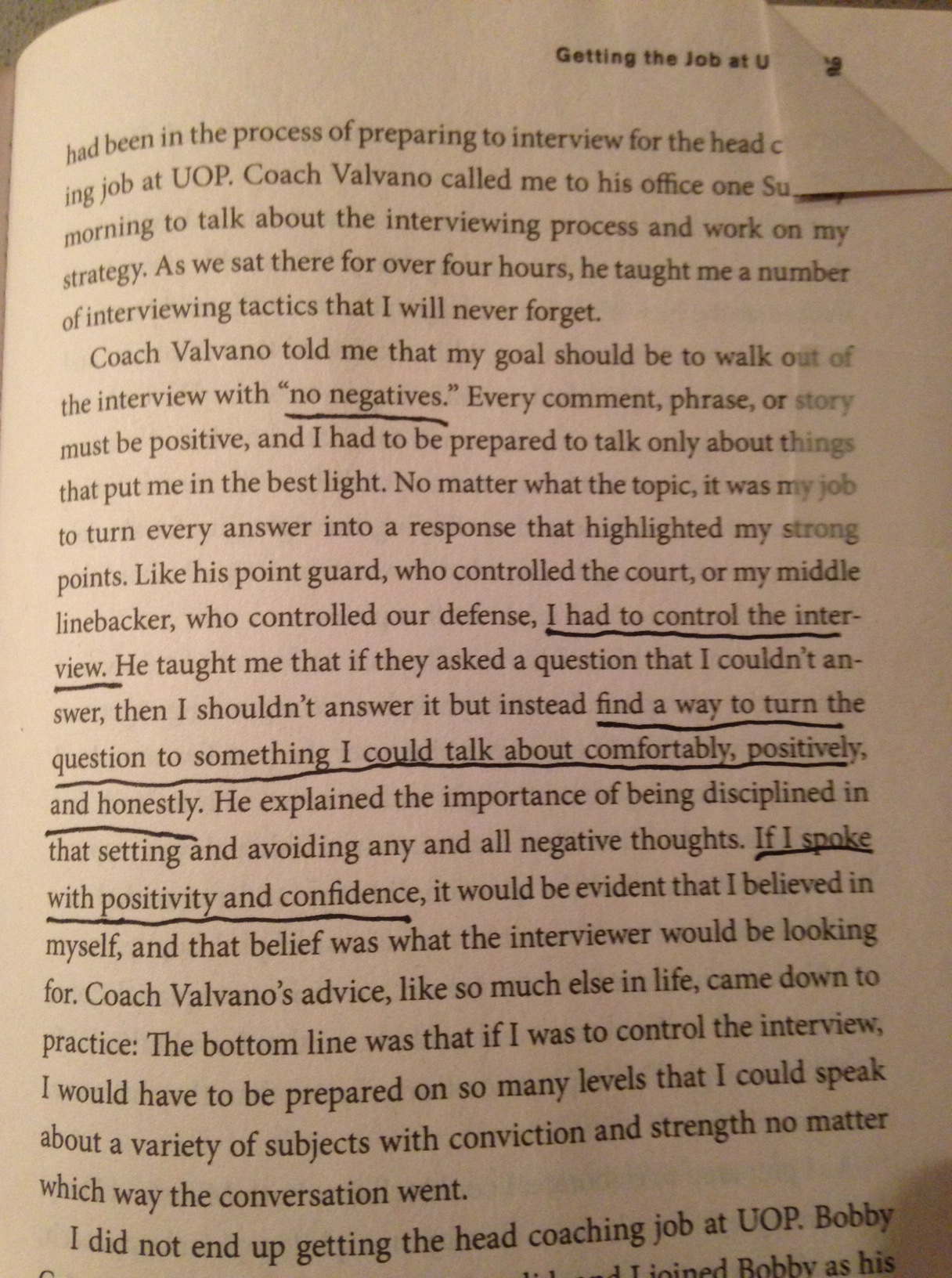
But maybe: that’s the point. Pete Carroll’s book is compelling because it’s about a guy wondering if there’s another way to do this, if he can adapt himself and his mentality to football success. He’s excited by the idea, he tells how he came up with it, and he pulls it off.
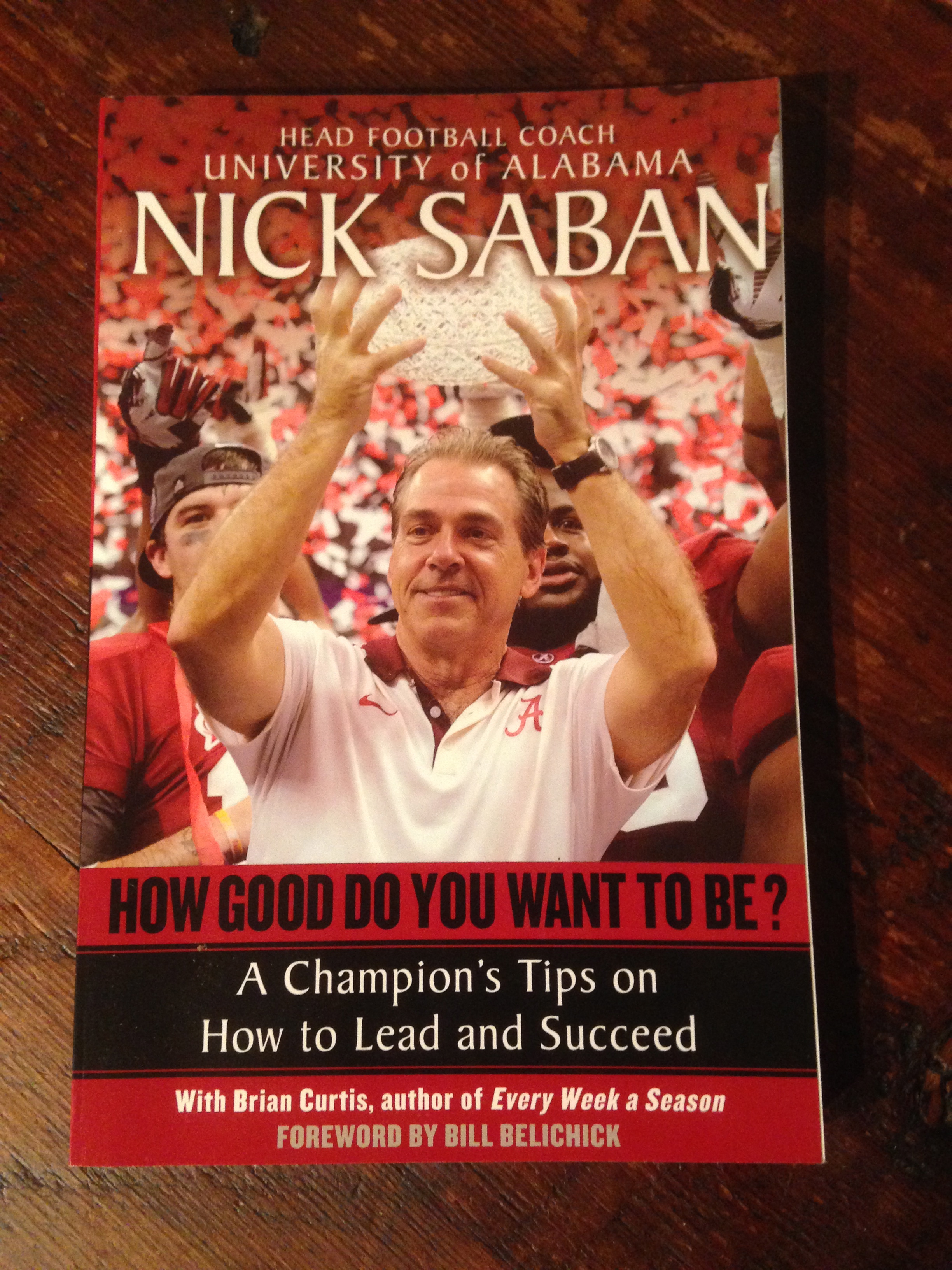
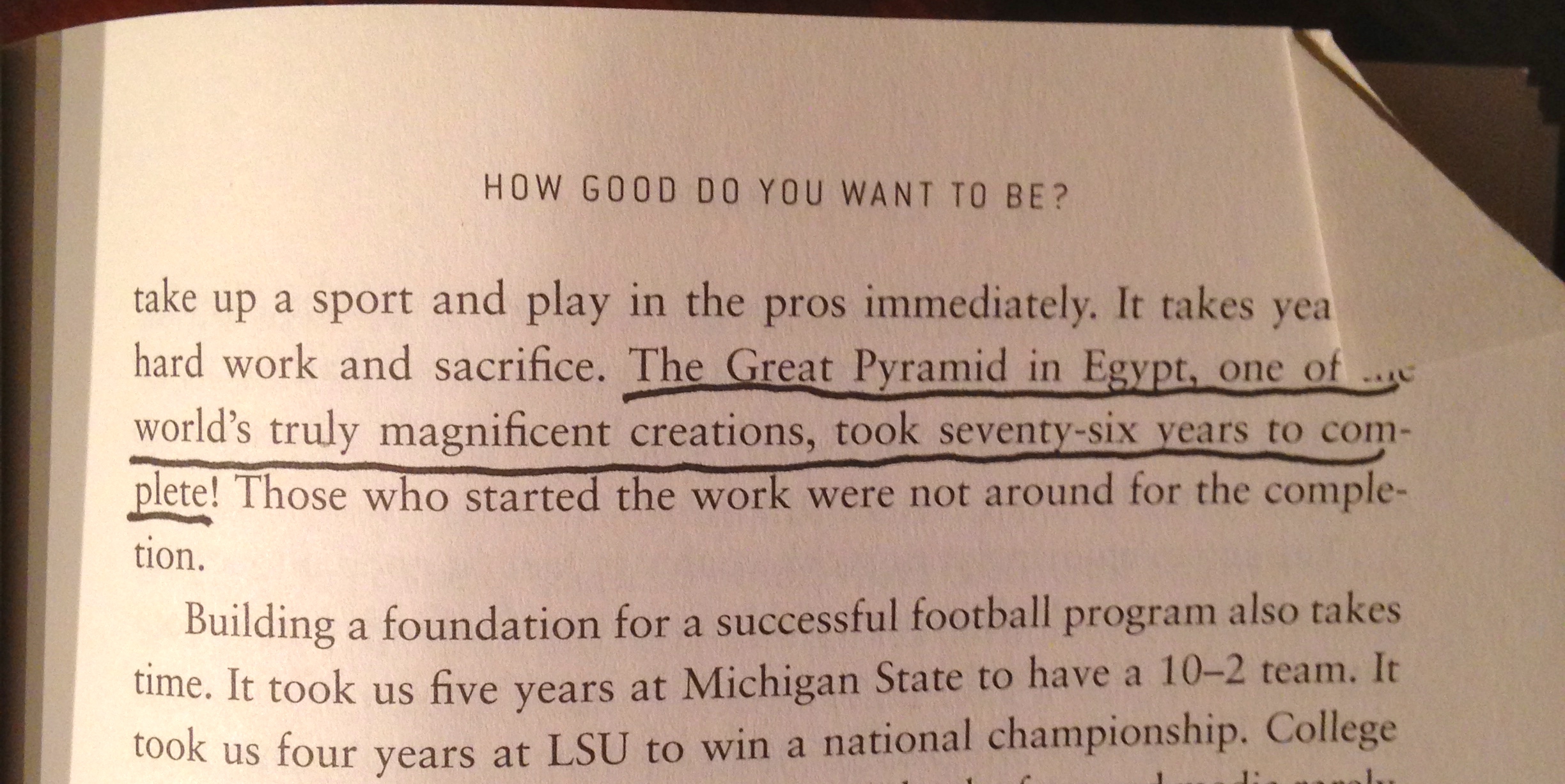
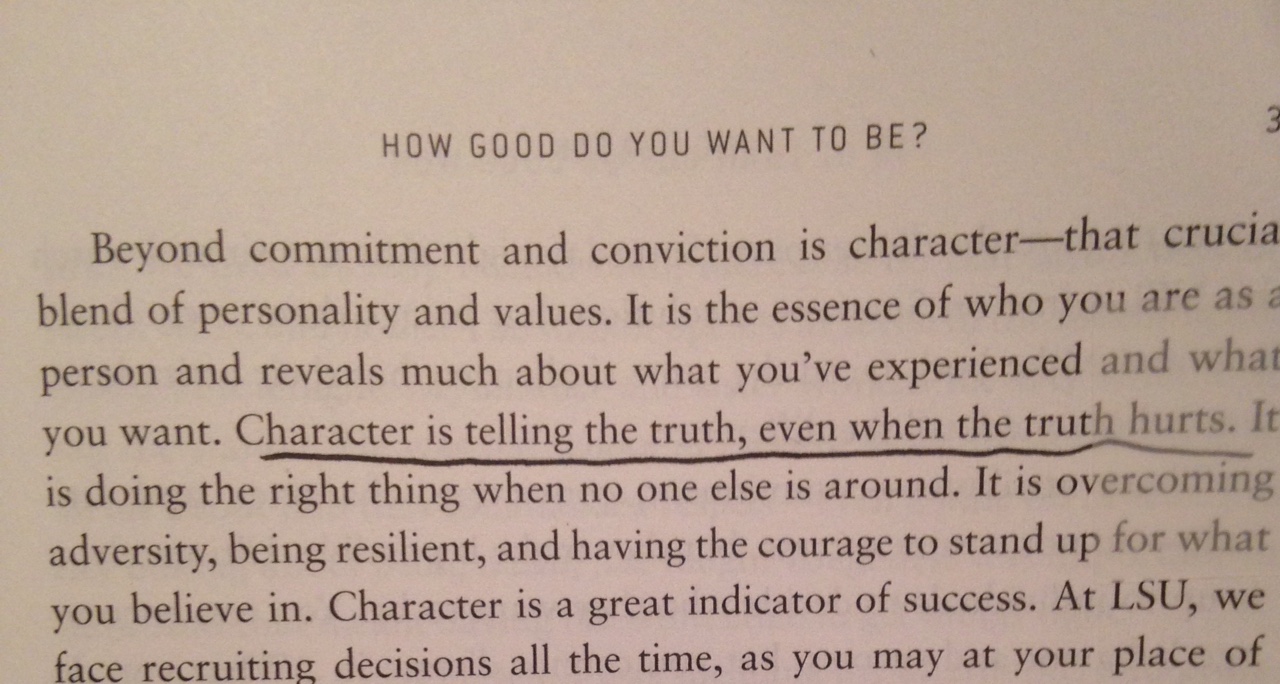
The point of Saban’s book might be: there is no secret. There is no trick. Discipline, hard work, drilling things again and again until you can do them the right way, focusing on doing everything right and not on results — it ain’t easy but it’s simple.
Good to think about.
Apologies if I made any football errors in this post, don’t let me fool you into thinking I know shit about the game compared to serious fans. With that said, here’s my picks for the BCS:
will defeat:
Alabama will then play:

who will defeat

(Oregon coach Mark Helfrich doesn’t seem that interesting, although it’s cool he’s from Oregon. Unless this actually is his memoir I don’t think I’ll read it. Can’t say I’m all that curious about Urban Meyer either, although it is interesting that both he and Saban are Catholic. Also interesting that Urban Meyer is the only of these coaches to be coaching his alma mater.
I did take a look at this Kindle book:

where the fact that Saban and Meyer both seem to “enjoy” coaching football or at least hate not doing it is described under the chapter heading “Hedonism.” I don’t think that’s an appropriate word for these mens’ lives.
I’d love to read Jimbo Fisher’s memoir. If I didn’t mishear, once watched him say Jameis Winston’s ability to not worry at all about how he’d been charged with sexual assault was a testament to his character.
Fisher earned the nickname Slim Jimbo because of his affinity for meat snacks. He has mentioned in numerous interviews that he wishes to launch an organic beef jerky company after he retires from coaching. The company would feature jerky made from animals native to both the Deep South and his native West Virginia, such as alligator, muskrat, and wild boar.)
Then at the national championship game on Jan. 12:
will defeat
Puzzle: given that this is close to a random guess, although I factored in these odds (plus my feeling from reading Saban’s book) what are the odds I picked this right? 12.5%? I could be proven completely wrong in a few hours.)
In the Super Bowl:


Overheard from the World Cup announcers
Posted: July 8, 2014 Filed under: heroes, sports Leave a comment
Hope turns to prayer… the likelihood is that prayer will turn to disappointment.
 Helytimes