Wild
Posted: December 20, 2014 Filed under: America Since 1945, movies, nature, screenwriting, the California Condition, women, writing Leave a comment
Contains WILD spoilers!
1) This movie has a high degree of difficulty.
I read 2/3s of the book Wild – abandoned it before I finished, but I did the same thing with Eat Pray Love and then years later started over and found it very impressive. Perhaps a similar fate awaits Wild & me.
At least two top-notch women I know swear by Tiny Beautiful Things. I like reading interviews with Cheryl Strayed, she seems like the real deal.
In books you can get into somebody’s head. That is their killer advantage, and why I don’t think books are going anywhere anytime soon. You just can’t do that in a movie. Wild the movie does a pretty good job of this, but it’s sort of just doomed, imo. This is a story about a person’s journey from one mental state to another, with most of the work done internally. Very hard to dramatize.
While there are good tricks towards doing that in this movie, it comes up a little short on the radical innovations needed to tell that story in a movie. Nick Hornby wrote the screenplay: a dude who is good at this kind of thing, his books make excellent movies, but maybe a true writer-director could’ve worked the solutions even tighter?
[One particular note: it seemed to me like all the cutaways should’ve cut a few beats earlier. You’re always like, “ok, here we go, we’re about to cutaway to Cheryl’s childhood.”]
2) The story has a motivation problem.
Cheryl decided to do this, herself. No one made her, asked her, even cares if she accomplishes her goal. So when she faces difficulty or problems, it easy to think “well, you’re the one who decided to hike the PCT, dumdum. Why should I care about this?”
In a story, a person sets out to do something and arrives at a win/lose/draw (thanks to John Gardner for articulating that for me). What would count as a win in this story? Getting to Ashland? No, who cares about Ashland, nothing but hippies in Ashland. The goal of this story is: Cheryl restoring herself (whether or not she knows that’s the goal at the start).
But: that’s an internal goal, how will you show it in a movie? It’s easier to answer these questions in a book, where Cheryl can articulate her reasons and get you with her and make you see that this particular journey is important even if nothing tangible’s at stake.
3) Still, pretty good movie.
Despite all that I thought the ending was pretty satisfying. It’s hard to make a pretty good movie. When Reese Witherspoon yells “FUCK YOU BITCH!” I thought that was good acting.
Sometimes I think all the hugely successful actresses [Reese, Anne Hathaway, etc.] are such intense people that when they act like normal people their instinct is to be way too intense. I would argue Julianne Moore might be the best at not doing this. Think how hard that must be: to act intense but not at your full-bore intense because you somehow intuitively understand that your own “full bore” is too strong for the screen. Acting is crazy hard.
Like all criticism should, let this come with a disclaimer: it’s easy to be a critic hard to make a thing, makers > critics x1000!
4) Interesting sex stuff in this movie.
I do remember in the book being jarred by the period of sexual degradation and heroin, hadn’t realized that was part of the tale. It was new territory, I felt, in exploring a woman’s sexual… could we call it addiction? self-punishment? Cheryl’s not not in control at that point, right? But she also isn’t having a great time. It’s fucked up, she knows it’s fucked up. But it’s not fucked up because she’s a slut, it’s fucked up because she’s not being the woman she wants to be (right?).
Whatever, it made me think/was also slightly titillating/made me feel kind of bad for the husband she was compulsively cheating on. What are the nice guy husbands of America to make of Eat Pray Love and Wild, two biggest women’s memoirs of the last ten years, that both start with a woman leaving her nice guy husband for sexual adventuring?
How often in a movie do you see sex that is intended to be not rape but also not fun?
5) The music in this movie is kind of good but also kind of sucks.
That’s my take anyway. What if I told you that in 2014 we were making an epic movie about a woman’s adventure across America? Would you say that scattered samples of Simon & Garfunkel is the best we could do? Fuck no! Why didn’t they get some awesome woman to make a badass score like Eddie Vedder did for the man-equivalent, Into The Wild?
6) There’s a weird shoutout to REI in this movie.
Where Reese calls them to get new boots and is like “you’re my favorite company ever.” Maybe Cheryl really felt that way. I have a bunch of stuff from REI, but sometimes I think their business model is based on making you think going outdoors is more expensive and complicated than it really is to sell you more junk. Which, weirdly: in the same scene where Cheryl learns about REI’s return policy, the dude is like “you don’t need all this shit.”
Former REI CEO Sally Jewell is Secretary of the Interior.

Strikes me as a very Obama kind of pick: on the one hand, kind of hip and modern and innovative, but on the other hand she was still the CEO of a huge corporation.
7) Wild and Eat Pray Love are in long American literary tradition of spiritual narrative.
If I were a grad student at Yale I’d write my Ph. D. on this, trace it all back through Emerson and Puritan religious narratives and captive narratives of 18th century New England and I’d be the smartest boy in the seminar. Since I’m not in grad school though I can make my point in one sentence which is that things that seem radical and new are often just new versions of an old tradition, we’re not so different from the past or as wildly inventive as we think we are, etc.
8) Is this how women go through life? Constantly having to wonder if a random dude is a rapist?
Damn, that might be the most important aspect of Wild, seeing the world through a woman’s eyes, showing that tension of life. When I walk around at 11pm or so in my neighborhood and I see women walking their dogs it always feels very tense. My instinct to somehow indicate I am not a rapist usually just seems to make the problem worse.
ANYWAY: one reason I was excited to see Wild is I’ve been to many of the settings along the Pacific Crest Trail on fishing trips. Here, for example, is a photo of Kennedy Meadows:

Kennedy Meadows is like a plateau high up in the Sierras. To get there you drive up a crazy 27-mile twisty road up from the 395. If you find yourself there, be sure to stop at The Grumpy Bear:

They’re happy to teach you about jerking meat:

Don’t get it confused with the other Kennedy Meadows up in Sonora.

While I was up there I crossed the PCT and wondered if it would be interesting to film a couple seconds of walking on it:
If you’d like to see Wild, but only have ten seconds, my film gets at similar themes but with more nauseating camerawork.
“What Happened When Marissa Mayers Tried To Be Steve Jobs”
Posted: December 18, 2014 Filed under: America Since 1945, business, writing Leave a comment
This article, by Nicholas Carlson in the upcoming NY Times magazine, is one of the best business articles I’ve ever read (note: I don’t read that many business articles).
Here’s where the story really begins:
But as Alibaba’s stock soared, Yahoo’s dropped, an indication that the market seemed to concur with Jackson’s analysis: Yahoo’s core business was worth less than zero dollars.
That’s bad. Next sentences:
A week later, Smith published an open letter calling for Yahoo to divest itself of its Alibaba assets, return the money to its shareholders and then merge with AOL. Redundancies could be eliminated, thousands of people could be fired and two former Internet superpowers would be downsized into a single and steady (if uninspiring) entity that sold ads against its collective online properties — news, blogs and Web products like email, maps and weather. “We trust the board and management will do the right thing for shareholders, even if this may mean accepting AOL as the surviving entity,” Smith wrote.
(Note that “could be fired” — non-business readers like me often gotta remind themselves that in business articles it’s often assumed that firing people is positive.)
The article goes on with punchy, succinct, clear explanations the challenges of tech companies, and specifically the challenge Mayers faced, and I don’t envy her:
Previous Yahoo C.E.O.s had underinvested in mobile-app development, plowing money into advertising technology and web tools instead. A couple of days into the job, Mayer was having lunch at URL’s when an employee walked up to her and introduced himself as Tony. “I’m a mobile engineer,” Tony said. “I’m on the mobile team.”
Mayer responded to Tony, “Great, how big is our mobile team?” After some back and forth, Tony replied that there were “maybe 60” engineers. Mayer was dumbfounded. Facebook, for instance, had a couple of thousand people working on mobile. When she queried the engineering management department, it responded that Yahoo had roughly 100. “Like an actual hundred,” Mayer responded, “or like 60 rounded up to 100 to make me feel better?” The department responded that it was more like 60.
But then it starts to unravel:
Mayer subsequently immersed herself in the redesign. Months into her tenure, she was meeting with Sharma’s team regularly in a conference room that started to look more like a design studio: projectors hung from the ceiling, rendering screens displayed on the wall. All around, dozens of foam core boards were pinned with ideas. Mayer would regularly interrogate designers about the minutest details of display and user experience. By early December, one day before Yahoo Mail was set to release, she convened a meeting at Phish Food, a conference room in the executive building of Yahoo’s campus, to talk about the product’s color. For months, the team had settled on blue and gray. If users were going to read emails on their phones all day long, the thinking went, it was best to choose the most subtly contrasting hues. But now, Mayer explained, she wanted to change the colors to various shades of purple, which she believed better suited Yahoo’s brand.
Well, see, purple sucks? More great detail:
During a breakfast with Anna Wintour, the editor in chief of Vogue, Mayer asked if there might be any partnership opportunities between the magazine and Shine, Yahoo’s site for women. According to Mayer’s own telling of the story to top Yahoo executives, Wintour lookedappalled.
I bet she did!

Reuters photo stolen from NY Post article “Anna Wintour Has A Sense Of Humor Over Drag Parody Show” http://pagesix.com/2014/08/12/anna-wintour-has-sense-of-humor-over-drag-parody-show-about-her/
Bad to worse:
Yahoo Tech would sometimes go weeks without running a single ad.
Don’t know much about this, but that sounds terrible.
This delinquency eventually became a problem outside Yahoo. At a major advertising event in the South of France, Mayer sat for an interview with Martin Sorrell, the C.E.O. of WPP, one of the world’s largest agencies. In front of a filled auditorium, Sorrell asked Mayer why she did not return his emails. Sheryl Sandberg, he said, always got back to him. Later, Mayer was scheduled for dinner with executives from the ad agency IPG. The 8:30 p.m. meal was inconvenient for the firm’s C.E.O., Michael Roth, but he shuffled his calendar so he could accommodate it. Mayer didn’t show up until 10.
Fuck that. Worse:
Mayer’s largest management problem, however, related to the start-up culture she had tried to instill. Early on, she banned working from home. This policy affected only 164 employees, but it was initiated months after she constructed an elaborate nursery in her office suite so that her son, Macallister, and his nanny could accompany her to work each day. Mayer also favored a system of quarterly performance reviews, or Q.P.R.s, that required every Yahoo employee, on every team, be ranked from 1 to 5. The system was meant to encourage hard work and weed out underperformers, but it soon produced the exact opposite. Because only so many 4s and 5s could be allotted, talented people no longer wanted to work together; strategic goals were sacrificed, as employees did not want to change projects and leave themselves open to a lower score.
This got ugly:
During the revamping of Yahoo Mail, for instance, Kathy Savitt, the C.M.O., noted that Vivek Sharma was bothering her. “He just annoys me,” she said during the meeting. “I don’t want to be around him.” Sharma’s rating was reduced. Shortly after Yahoo Mail went live, he departed for Disney. (Savitt disputes this account.)

Then this part is deeply weird:
As concerns with Q.P.R.s escalated, employees asked if an entire F.Y.I. could be devoted to anonymous questions on the topic. One November afternoon, Mayer took the stage at URL’s as hundreds of Yahoo employees packed the cafeteria. Mayer explained that she had sifted through the various questions on the internal network, but she wanted to begin instead with something else. Mayer composed herself and began reading from a book, “Bobbie Had a Nickel,” about a little boy who gets a nickel and considers all the ways he can spend it.
“Bobbie had a nickel all his very own,” Mayer read. “Should he buy some candy or an ice cream cone?”
Mayer paused to show everyone the illustrations of a little boy in red hair and blue shorts choosing between ice cream and candy. “Should he buy a bubble pipe?” she continued. “Or a boat of wood?” At the end of the book, Bobby decides to spend his nickel on a carousel ride. Mayer would later explain that the book symbolized how much she valued her roving experiences thus far at Yahoo. But few in the room seemed to understand the connection.
Strange. But man, what great writing in this article.
Let’s give the last word to Aswath Damodaran:
Aswath Damodaran, a professor at N.Y.U.’s Stern School of Business, has long argued about the danger of companies that try to return to the growth stage of their life cycle. These technology companies, he said, are run by people afflicted with something he calls the Steve Jobs syndrome. “We have created an incentive structure where C.E.O.s want to be stars,” Damodaran explained. “To be a star, you’ve got to be the next Steve Jobs — somebody who has actually grown a company to be a massive, large-market cap company.” But, he went on, “it’s extremely dangerous at companies when you focus on the exception rather than the rule.” He pointed out that “for every Apple, there are a hundred companies that tried to do what Apple did and fell flat on their faces.”

from New York University’s beautifully done website: http://people.stern.nyu.edu/adamodar/
reblog from bookbinderlocal455
Posted: December 7, 2014 Filed under: advice, Texas, writing 3 Commentsgotta remember this re: consuming internet.
stirs something within you
i think about this constantly in marfa, where there is a non-stop stream of performance and art, which sometimes rob one of time to pursue his/her own work. via pitchfork:
“One of the problems of our modern world is that there’s a lot of things to work through, but, at some point, everybody should take a pause from that and make something, so that it’s not just all one-way traffic. Human beings aren’t meant to be solely consumers—eventually, something has to come out. Otherwise, I don’t really see what the point of all that consumption is. The idea behind watching things and listening to things is that it stirs something within you, and hopefully that will stimulate you to then create your own thing.”
Holy fucking shit (?)
Posted: November 26, 2014 Filed under: writing Leave a commentThey discovered a first folio of Shakespeare in a library in France.

Denis Charlet/Agence France-Presse — Getty Images
Is this like a big deal?
“This is huge,” said Eric Rasmussen, an American Shakespeare expert who traveled to France over the weekend to authenticate the volume.
Wow. How huge?
Mr. Rasmussen pointed out the name “Neville,” inscribed on the folio’s first surviving page — a possible indication, he said, that the book was brought to St.-Omer in the 1650s by Edward Scarisbrick, a member of a prominent English Catholic family who went by that alias and attended the Jesuit college, founded when Catholics were banned from England’s universities.
OK…
The St.-Omer folio, Mr. Rasmussen said, also contains handwritten notes that may illuminate how the plays were performed in Shakespeare’s time.
Like… Hamlet has a happy ending now?
In one scene in “Henry IV,” the word “hostess” is changed to “host” and “wench” to “fellow” — possibly reflecting an early performance where a female character was turned into a male. “I’ve never seen this kind of gender switch in a Shakespeare folio,” Mr. Rasmussen said.
I’m very happy for Mr. Rasmussen, and wish him happy hunting. But if you ask me, the better story is of the hunt for the things, not the things:
Today, first folios are tracked like rare black rhinoceroses, right down to their disappearances. One is known to have burned in the Great Chicago Fire of 1871; another went down with the S.S. Arctic off Newfoundland in 1854.
New ones come to light every decade or so, Mr. Rasmussen said, most recently in the library of a London woman who died without a will. “It was a mess, with a bunch of second-folio bits mixed in,” Mr. Rasmussen said.
The disgust in his voice.
What was up with European witch trials in the Middle Ages?
Posted: October 22, 2014 Filed under: history, writing Leave a commentThis tweet by Chris Schleicher:

got me to thinking. What with plagues and beheadings and barbarians, droughts and wars and rumors of wars and all, it can feel like end times. But there’s nothing new there, people have pretty much always thought it was end times. In 2 Thessalonians Paul has to calm down the panicky Thessalonians that the second coming hasn’t already happened – he’s like guys, I promise, you’ll hear about it.
A good book on this subject is In Pursuit Of The Millennium:

The Pursuit of the Millennium: Revolutionary Millenarians and Mystical Anarchists of the Middle Ages (1957, revised and expanded in 1970) isNorman Cohn’s study of millenariancult movements.
Covering a wide span of time, Cohn’s book discusses topics such as anti-Semitism and the Crusades, in addition to such sects as the Brethren of the Free Spirit, flagellants, the Anabaptists, and the Ranters. The Pursuit of the Millennium concludes with a discussion of the theocratic king John of Leiden, who took over the city of Münster in 1534.
(You can, apparently, still see the cage where they left John’s body on the steeple of St. Lambert’s in Münster)

Germany is twisted. Anyway: read Cohn in high school because I was interested in what kind of weird and creepy cults emerged from the bubonic plague. Cohn doesn’t have a ton on that, if I remember, but he does have lots of interesting stuff about flagellating cults of penitents and so forth. And he talks about the Children’s Crusade, a deeply sad event which is all the more intriguing because of how hard it is to sort out.
ANYWAY: went to wikipedia Cohn, and learned about another topic he was into: witch trials. In this book:

Cohn tries to sort out what the hell was going on with medieval witch trials.
Within the book, Cohn argues that there never were any Devil-worshiping witches in Early Modern Europe, and that all of those persecuted for being so were innocent. In this he specifically rejects the Witch-cult hypothesis put forward by English scholar Margaret Murray, which argued that there really had been a witch-cult religion which had been pre-Christian in origin. Cohn notes that accusations of worshiping a beast-headed deity, eating children and committing incest were not new to the witches of Late Medieval and Early Modern Europe, but had originally been leveled at Jews in the first century and then at Christians in the second, before being reused against Christian heretical sects like the Waldensians and the Knights Templar during the Late Medieval.
Now, the Margaret Murray hole is a great one to go down. Basically, her argument was that there was a pre-Christian folk religion in England that worshipped a horned fertility god, and that witch hunts were Christian efforts to stamp this out.

Amazing book cover.
Murray’s is a great, exciting idea and it still can put a twinkle in the eye of deep English folk hippies. But the prevailing historical view started to go at it:
In his 1962 work A Razor for a Goat, Rose asserted that Murray’s books on the witch-cult “contain an incredible number of minor errors of fact or of calculation and several inconsistencies of reasoning.”[75] He accepted that her case “could, perhaps, still be proved by somebody else, though I very much doubt it.”[75]Highlighting that there is a gap of about a thousand years between the Christianisation of Britain and the start of the witch trials there, he asserts that there is no evidence for the existence of the witch-cult anywhere in the intervening period.
That last part seems like the best argument to me – if there was a horn-god religion, why didn’t we hear about it before the 1400s? But, of course, there were ancient pre-Christian religions in Britain:

In keeping with what was by then the prevailing academic view, [Ronald Hutton’s boo] disputed the widely held idea that ancient paganism had survived into the contemporary and had been revived by the Pagan movement. In turn, it proved somewhat controversial among some sectors of the Pagan community, with two prominent members of the Goddess movement, Asphodel Long and Max Dashu publishing criticisms of it.
The Murray “witch-cult hypothesis” was talking about Britain, but people picked up on it elsewhere:
During the 1930s and 1940s, Heinrich Himmler organised a branch of the SS to undertake the largest survey of witch-hunt trial records in Europe ever taken, with the dual aim of using it as anti-Christian propaganda, to claim that the inquisition had been a repression of an indigenous Völkisch Norse-Germanic nature religion, and as evidence for reconstructing that religion.
Ultimately it seems like your more serious British historians, going through more and more documents, picking away at Murray, found it didn’t hold up. But that still leaves us with the question of what the fuck was going on with witch trials?

Down in Italy in the ’60s, Carlo Ginzberg started looking into benandanti:
The benandanti (“Good Walkers”) were members of an agrarian visionary tradition in the Friuli district of Northeastern Italy during the 16th and 17th centuries. The benandanti claimed to travel out of their bodies while asleep to struggle against malevolent witches (streghe) in order to ensure good crops for the season to come. Between 1575 and 1675, in the midst of the Early Modern witch trials, a number of benandanti were accused of being heretics or witches under the Roman Inquisition, and their beliefs assimilated to Satanism.
He suggested that these guys were in line with “shamanistic” traditions which anthropologists note all over the world. Over in Hungary, Éva Pócs started getting into a similar idea:

But man, some people weren’t into it:
Writing in the journal Anthropos, T.O. Beidelman lamented that despite the huge amount of source material that Pócs had to work with, “No account whatsoever is provided to set these witch-hunts and trials (and thus the data at hand) into any kind of historical, cultural, or social contexts. We gain no idea of just what kind of materials may be found in these accounts, who transcribed them, or how these transcriptions may or may not relate to what actually occurred and just who believed what.” He argues that Pócs “displays little sense of proper historical procedures” in her method, and that she also “has little concern for any anthropological, sociological, or psychology theory”, remarking that ultimately the work is “essentially [a] folkloristic, neo-Frazerian account content to describe a large aggregation of terms, beliefs, and practices mainly with the aims of comparing them to materials from elsewhere in Europe… and of tracing the possible origins of such ideas and customs to earlier beliefs and customs of the pre-Christian or even prehistoric past.” He furthermore criticised the style of writing, claiming that it was “rambling and discursive”, to the extent that it became “the most serious weakness of this volume”. He similarly criticises the translation into English, asserting that it “reads poorly”.
Da-yum.
(Let me pause here to note I’m just digesting all this from wikipedia, Helytimes’ greatest friend, and haven’t read these books).
They got into the shaman idea in Germany, too:

Anyway, back in England, Emma Wilby at the University of Exeter picked up on this “shamanic” idea:
she has published two books examining witchcraft and the cunning folk of this period. In these, she has identified what she considers to be shamanic elements within the popular beliefs that were held in this place and time, which she believes influenced magical thought and the concept of the witch.
Wilby started digging into on something interesting, the confession of a witch named Isobel Gowdie, who was arrested around 1662, but apparently confessed without being tortured:
Wilby herself was able to obtain copies of the trial records, which had been presumed lost for two centuries, from which she concluded that Gowdie had been involved in some form of shamanic visionary trances.

Isobel sounds like an interesting lady:
A young housewife living at Auldearn, Highland, Scotland, her confession painted a wild word-picture about the deeds of her coven. They were claimed to have the ability to transform themselves into animals; to turn into a hare, she would say:
- I shall go into a hare,
- With sorrow and sych and meickle care;
- And I shall go in the Devil’s name,
- Ay while I come home again.
(sych: such; meickle: great)
To change back, she would say:
-
Hare, hare, God send thee care.
-
I am in a hare’s likeness now,
-
But I shall be in a woman’s likeness even now.
 What was going on here? Were these people psychotic? Is a word like that even useful or transferable across centuries and cultures? Was there some kind of folk shamanism that stayed alive all over Europe through the Middle Ages? Is that so different from what Margaret Murray was saying?
I don’t have time to sort it all out, but I’m glad somebody’s on it.
I’m just talking about Europe, too – the Salem witch trials are a whole different ballgame. There you can get into theories about West Indian psychotropic hallucinogens, real estate dynamics, wild ergot poisoning, social politics, post-Indian wars PTSD, proto-feminism and fear of adolescent girls’ sexuality, and so on forever down the worm hole.
I guess my point is, 1) history is interesting and 2) dope book cover from Margaret Murray.
When it comes to the pinch
Posted: August 8, 2014 Filed under: writing Leave a comment
Was thinking about this Orwell quote:
When it comes to the pinch, human beings are heroic.
did my Google legwork, and found it came from an essay about the postcard artist Donald McGill. Here’s more:
Society has always to demand a little more from human beings than it will get in practice. It has to demand faultless discipline and self-sacrifice, it must expect its subjects to work hard, pay their taxes, and be faithful to their wives, it must assume that men think it glorious to die on the battlefield and women want to wear themselves out with child-bearing. The whole of what one may call official literature is founded on such assumptions. I never read the proclamations of generals before battle, the speeches of fuhrers and prime ministers, the solidarity songs of public schools and Left Wing political parties, national anthems, Temperance tracts, papal encyclicals and sermons against gambling and contraception, without seeming to hear in the background a chorus of raspberries from all the millions of common men to whom these high sentiments make no appeal. Nevertheless the high sentiments always win in the end, leaders who offer blood, toil, tears, and sweat always get more out of their followers than those who offer safety and a good time. When it comes to the pinch, human beings are heroic. Women face childbed and the scrubbing brush, revolutionaries keep their mouths shut in the torture chamber, battleships go down with their guns still firing when their decks are awash. It is only that the other element in man, the lazy, cowardly, debt-bilking adulterer who is inside all of us, can never be suppressed altogether and needs a hearing occasionally.
The comic post cards are one expression of his point of view…
The whole essay is a terrific thing to read about life and comedy, we trust most HelyTimes readers will savor that over the weekend. For Friday, let’s enjoy this McGill postcard, which was apparently listed in the 1973 Guinness book as the most sold postcard ever:
McGill was born in London in 1875. He lost a foot in a school rugby accident…
Approaching 80, McGill fell foul of several local censorship committees which culminated in a major trial inLincoln on 15 July 1954 for breaking the Obscene Publications Act 1857. He was found guilty and fined £50 with £25 costs. The wider result was a devastating blow to the saucy postcard industry.


(found those here thanks to a tumblr search)
I should’ve known
Posted: July 28, 2014 Filed under: writing 1 Comment
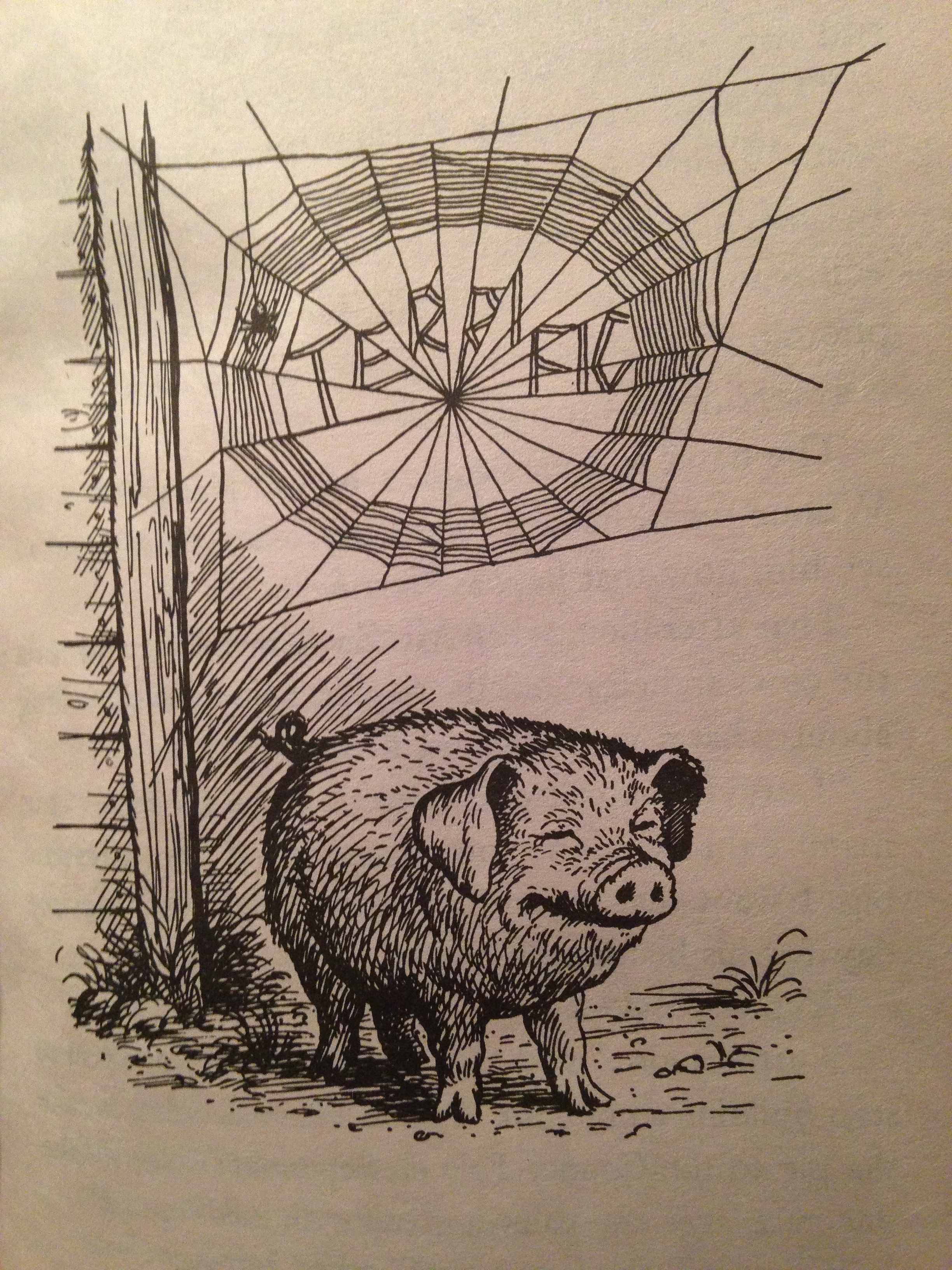
I’d find something poignant when I bought a used copy of Charlotte’s Web.

How about Wilbur’s plan for his day?
His plans for the day went something like this:
Breakfast at six-thirty. Skim milk, crusts, middlings, bits of doughnuts, wheat cakes with drops of maple syrup sticking to them, potato skins, leftover custard pudding with raisins, and bits of Shredded Wheat.
Breakfast would be finished at seven.
From seven to eight, Wilbur planned to have a talk with Templeton, the rat that lived under his trough. Talking with Templeton was not the most interesting occupation in the world but it was better than nothing.
From eight to nine, Wilbur planned to take a nap outdoors in the sun.
From nine to eleven he planned to dig a hole, or trench, and possibly find something good to eat buried in the dirt.
From eleven to twelve he planned to stand still and watch flies on the boards, watch bees in the clover, and watch swallows in the air.
Twelve o’clock – lunchtime. Middlings, warm water, apple parings, meat gravy, carrot scrapings, meat scraps, stale hominy, and the wrapper off a package of cheese. Lunch would be over at one.
From one to two, WIlbur planned to sleep.
From two to three, he planned to scratch itchy places by rubbing against the fence.
From three to four, he planned to stand perfectly still and think of what it was like to be alive, and to wait for Fern.
At four would come supper. Skim milk, provender, leftover sandwich from Lurvy’s lunchbox, prune skins, a morsel fo this, a bit of that, fried potatoes, marmalade drippings, a little more of this, a little more of that, a piece of baked apple, a scrap of upsidedown cake.
Wilbur had gone to sleep thinking about these plans. He awoke at six and saw the rain, and it seemed as though he couldn’t bear it.
No one has ever written this.
Posted: July 2, 2014 Filed under: the California Condition, writing Leave a comment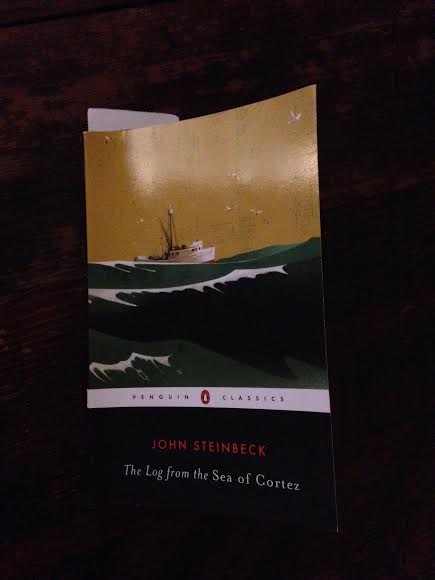
A baller second sentence to write in your book.
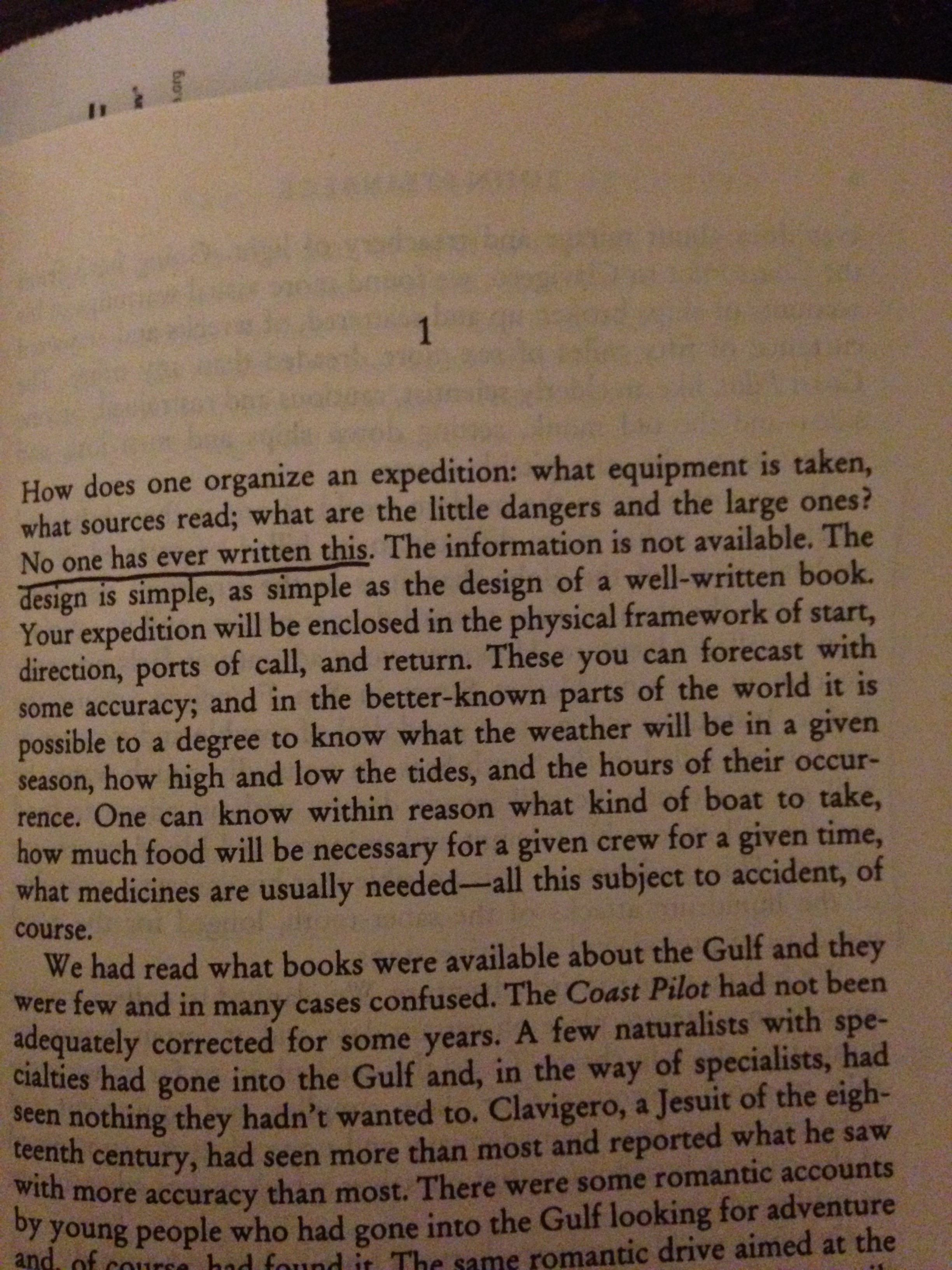
Three messages from writers I admire
Posted: June 22, 2014 Filed under: writing Leave a comment1) George Saunders, from a Chipotle bag.
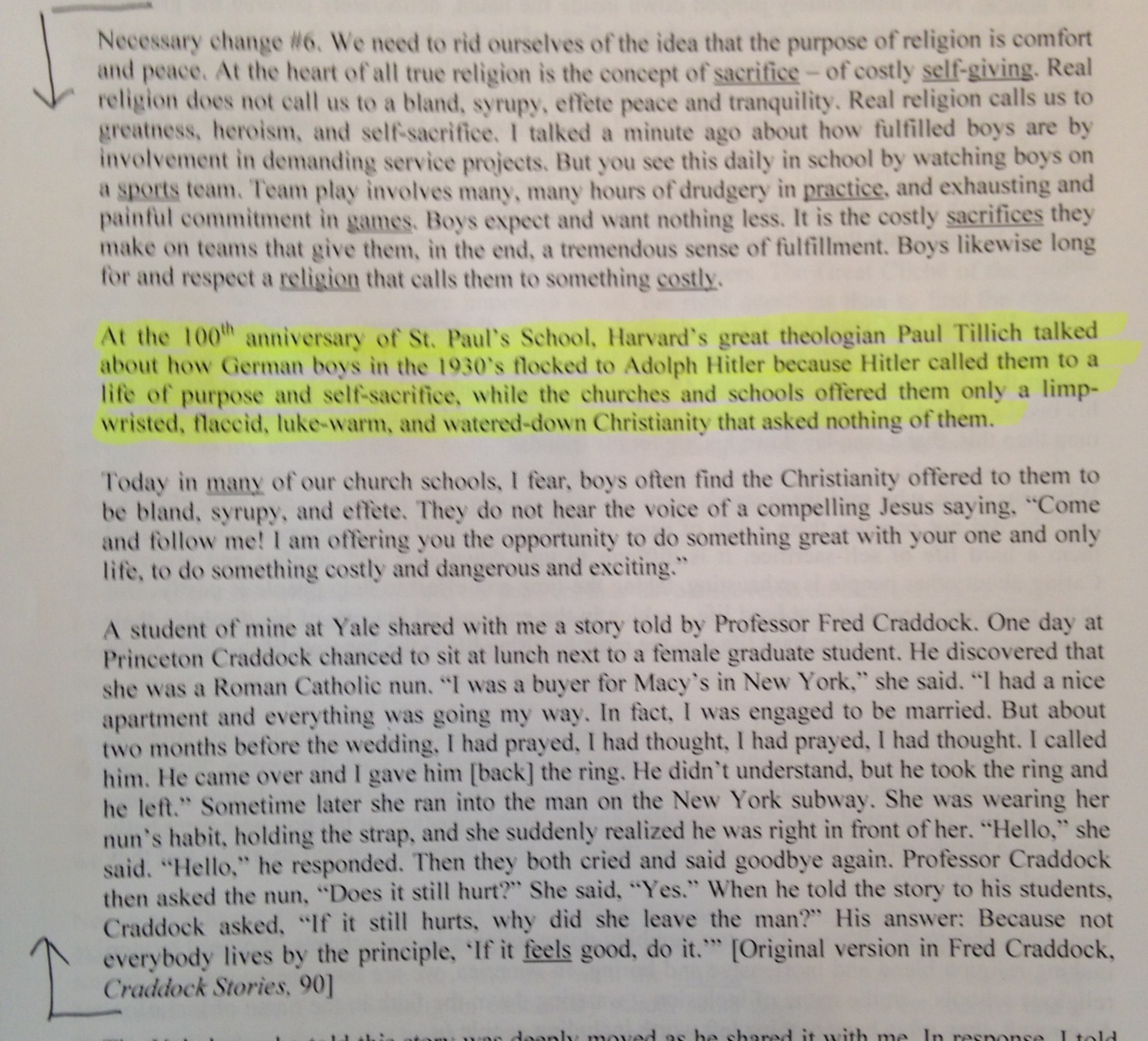
 2) Rev. F. Washington Jarvis, speaking at the International Boys’ School Conference in Hawkes Bay, New Zealand in 2009:
3) Cormac McCarthy, in The New York Times magazine, April 19, 1992.
“There’s no such thing as life without bloodshed,” McCarthy says philosophically. “I think the notion that the species can be improved in some way, that everyone could live in harmony, is a really dangerous idea. Those who are afflicted with this notion are the first ones to give up their souls, their freedom. Your desire that it be that way will enslave you and make your life vacuous.”
Happy belated Bloomsday, ya’ll
Posted: June 17, 2014 Filed under: writing Leave a comment
A puzzle I turn over in my head sometimes is whether it’s worth someone’s time to read Ulysses. Depends how much time you have, I guess.
I remember reading once that you can’t really begin to approach this book unless you can speak English, Old English, Irish, Greek, and Latin, and you’d probably best know Hebrew too.

My favorite part, from Episode 8, Lestrygonians. Bloom sees a walking advertisement for his former employer:
A procession of whitesmocked men marched slowly towards him along the gutter, scarlet sashes across their boards. Bargains. Like that priest they are this morning: we have sinned: we have suffered. He read the scarlet letters on their five tall white hats: H. E. L. Y. S. Wisdom Hely’s. Y lagging behind drew a chunk of bread from under his foreboard, crammed it into his mouth and munched as he walked. Our staple food. Three bob a day, walking along the gutters, street after street. Just keep skin and bone together, bread and skilly. They are not Boyl: no: M’Glade’s men. Doesn’t bring in any business either. I suggested to him about a transparent show cart with two smart girls sitting inside writing letters, copybooks, envelopes, blotting paper. I bet that would have caught on. Smart girls writing something catch the eye at once. Everyone dying to know what she’s writing.
Fight scene on last night’s Game Of Thrones*
Posted: June 2, 2014 Filed under: writing Leave a comment
Still at best a distant number two in “upsetting fight scenes on HBO serials,” falling well behind to Deadwood, season 3 episode 5.
HelyTimes will always be in the tank for Milch. Milch on (parentheticals) in scripts:

Taking it as always to it’s conclusion…
One more bonus Milch:

* what a bunch of wimps we are about “spoilers.” All-time favorite Mindy Kaling rant is about how whining about spoilers is disgusting and unmanly. Take your spoilers with courage and dignity.
Words
Posted: May 29, 2014 Filed under: writing Leave a comment
This New Yorker blog review of Patricia Lockwood‘s book reads like delightful nonsense to me. It reminds me of writing bullshit papers for English classes.
Take this sentence
Lockwood is famous—more than thirty thousand people follow her on Twitter—but the source of her fame is almost entirely owing to her tweets and not to her poetry.
1) Does that count as “famous”? I have no idea what famous is anymore. My cousin Mike has fifty-seven thousand followers, is he famous? Coffee Dad has 125,000 followers, is he famous?
2) “Lockwood is famous – look at how many Twitter followers she has – but the source of those Twitter followers is almost entirely owing to her tweets and not to a thing that is not her tweets.”
3) isn’t her whole point, the whole reason to write an article about her, that the separation between her tweets and her poetry is kinda porous?
Karl Ove Knausgaard
Posted: March 5, 2014 Filed under: writing 2 Comments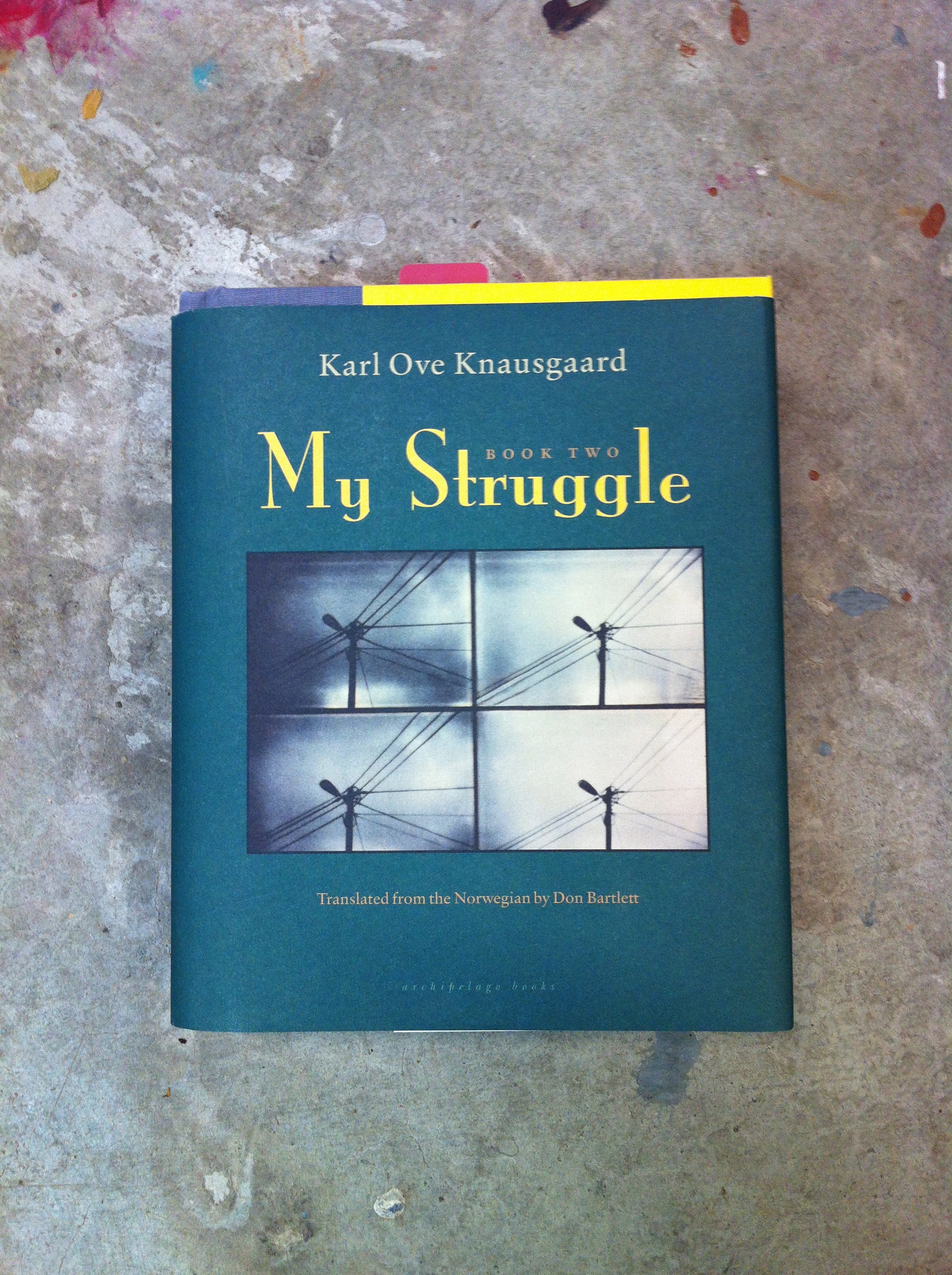
Came to my attention that some HelyTimes readers are not following the book world’s frenzy over Karl Ove Knausgaard’s My Struggle.

Some facts:
* Norwegian writer Karl Ove Knausgaard has been publishing a six volume book that recounts the minute details of his life, or at least the life of a man named Karl Ove Knausgaard the details of which match the actual details of the author’s life to an almost* exact degree.
* We’re only up to Volume 2 in English. Here is my copy pictured next to a coffee mug for scale:

* One out of every ten Norwegians has bought at least one of the volumes.
The level of obsession around this literaryGesamtkunstwerk has been so intense that some Norwegian workplaces have reportedly instituted “Knausgaard-free days”, when staff are forbidden to talk about the books.
* Reviews have been rapturous. Tyler Cowen:
I would put this among the greatest Continental novels of the last fifty years and not at the bottom of that tier. It is not often that one discovers such books.
*
His wife had agreed to be included, telling him only: “Don’t make me boring,” and he gave her the manuscript to read on a long train journey. Having finished it, she called him three times. The first time she said she thought it was OK, but that she didn’t like it. The second time, she told him that their life could never be romantic again. Finally, she called him and wept.
“I was so frustrated that I didn’t foresee the consequences,” Knausgaard has said. “I thought, if the consequences are that she’s leaving me, then OK, she can go. That was how it was. There was a certain desperation that made it possible. I couldn’t do it now.”
Nonetheless, their marriage survived. Last year, Knausgaard admitted that he felt guilt, “for almost everything around this book. I was kind of autistic […] I was saying, ‘My book is more important than your life.'”

(Linda with cat, from here, a site of artists and cats)
* The kind of stuff that’s in the book:
A teenage mission to procure beer for a New Year’s Eve party, for example, occupies about 70 pages in book one.
* I’ve only read about 20 pages, at random, which were about Karl going to gymnastics with his kid and being frustrated that the attractive young teacher can only see him as an emasculated dad.
* I flipped to another section, which was musing about “what would it have been like to live in a world where everything was made from the power of your hands, the wind, or water?” It was pretty engaging.
* The title’s provocative, obviously. KOK says:
For two years, I worked as a kind of adviser on a team that translated the Bible to Norwegian. It was there I learned to read. The gap between the two languages was a shock, and made it possible to experience, not only to recognize, the gap between language and the world, the arbitrariness everybody talked about in the eighties was all of a sudden visible for me.
Another lesson was that in the Old Testament, everything is concrete, nothing is abstract. God is concrete, the angels are concrete, and everything else has to do with bodies in motion, what they say, what they do, but never what they think. No speculations, no reflections. Even the metaphors are connected to bodies. I became especially interested in the story of Cain and Abel, when Cain’s countenance falls and God says, “Why is your countenance fallen? Lift up!” Cain doesn’t look anyone in the eyes, and no one looks in his. This is to hide from the world and from the other. And that is dangerous.
In the sixth book of Min Kamp, I wrote four hundred pages on Adolf Hitler’s Mein Kampf. Hitler was a man who lived a year without seeing anyone, just sitting in his room reading, and when he left that room, never let anyone close, and stayed that way, intransigent, through the rest of his life, and one characteristic thing with his book, is that there is an “I,” and a “we,” but no “you.” And while I was writing about Hitler, a young Norwegian who had stayed some two years all by himself, and written a manifesto with a strong “I” and a “we,” also without a “you,” massacred sixty-nine youths on an island. In other words, his countenance fell.
* I’m told by a Scandinavian friend that the last volume was so long it couldn’t be bound into a book, so Karl took it home and cut it down until it was the EXACT length that could fit into a binding.
* I’d highly recommend reading this short take on it by Sophia Pinkham at n+1, which points out that what might strike an American writer is “how come this guy isn’t worried about money?”
* Karl himself:
“The critical reading of the texts always resulted in parts being deleted. So that was what I did. My writing became more and more minimalist. In the end, I couldn’t write at all. For seven or eight years, I hardly wrote. But then I had a revelation. What if I did the opposite? What if, when a sentence or a scene was bad, I expanded it, and poured in more and more? After I started to do that, I became free in my writing. Fuck quality, fuck perfection, fuck minimalism. My world isn’t minimalist; my world isn’t perfect, so why on earth should my writing be?”
Or this, from The Guardian:
“Concealing what is shameful to you,” he’s said, “will never lead to anything of value.” And the most indelible moments tend to involve his own humiliation. In book two, A Man in Love, for example, he describes getting drunk, breaking a glass and slicing up his own face, when the woman he loves rejects him. Even more abject and embarrassing are book three’s boyhood recollections, including an unhappy appraisal of his own penis, “like a little cork. Or a kind of spring, because it quivered when you flicked it lightly.”
Well, I’m glad it exists I guess.
Is art just the turning of yourself into “art” until you, yourself, are indistinguishable?
Is the cost always that your wife will be crying?
Is it “worth” it?
Should we honor a person like this or figure out what meds he needs?
Is this the logical end of writing?
Is it criminal to do this to your children/relatives? Or worth it for the art?
How good does the art have to be to justify the cost?
Would we feel differently if Karl Ove did this and almost NO Norwegians bought it?
Do we have to respect his balls at least?
Is his desire for us to respect his balls part of this project?
If part of his motive is our respect, does that change it?
Do I actually have to read this or is it enough that it exists?
Is this admirable, like a kid doing an awesome trick on a playground, or just kind of horrifying or troubled, like a kid taking out his little cork on the playground?
What about this, the very first exchange in KOK’s Paris Review interview?:
Did you keep diaries when you were young?
Yes, I did, but I burned them when I was twenty-five or twenty-six.
Why?
I was so embarrassed, I couldn’t stand it. It’s the same with Min Kamp, I can’t stand it. If I could I would burn that, too, but there are too many prints, so it’s impossible.
Life develops, changes, is in motion. The forms of literature are not. So if you want the writing to be as close to life as possible—I do not mean this in any way as an apology for realism—but if you want to write close to life, you have to break the forms you’ve used, which means that you constantly have the feeling of writing the first novel, for the first time, which means that you do not know how to write. All good writers have that in common, they do not know how to write.
Anyway, here’s another picture from the Cultural Cat website:

* behind a paywall, but in her review Sheila Heti finds herself disappointed at a detail Karl admitted to her he made up or at least may not have remembered exactly.
Inside Hollywood
Posted: February 3, 2014 Filed under: writing 1 Comment
From this profile of Beau Willimon and the writing staff of “House Of Cards”:
Meanwhile, Willimon stood in front of a table full of writers and spoke, while the writers, many of them playwrights whose work he admired, sat and listened and occasionally chimed in. One writer, whose back was toward me, idly surfed the Internet: He researched a plane ticket, then checked out an Airbnb listing for a tropical getaway for $99 a night, then bought some camping gear, then browsed an article with the headline “The Top Five Regrets of the Dying.”
(An excellent detail although why did reporter Adam Sternbergh include it I wonder? Photo by Ruddy Roye.)

The human desire to give a shit is not defeatable.
Posted: December 20, 2013 Filed under: writing Leave a comment
from Craig Mazin and John August’s podcast (Mike is guest Mike Birbiglia):
Craig: You’ve lost your defenses and you’re expecting to laugh again. So, nobody sees it coming, you know? I remember talking to David Zucker and Jerry Zucker about the first time they screened the movie Airplane! for a test audience. And in their minds everything was jokes. They were just obsessed with how the jokes would play. And they were just thrown on their heels when at the end of the movie the plan finally lands and the audience bursts into applause.
Mike: Oh, that’s amazing.
Craig: Because they cared that the plane would land. You know? And they just thought, “It doesn’t matter. We’ve told them in every possible way this is not a real plane.” It is to them. It matters. And so the human desire to give a shit is not defeatable.
We Spent It All On Kites
Posted: December 11, 2013 Filed under: writing 1 Comment
Ann Summa for The New York Times
Haven’t read The Flamethrowers by Rachel Kushner yet despite strong recs from Pittsburgh office and elsewhere.
How about this, from this NY Mag profile?
In Eugene, Oregon, where the Kushners lived in a painted school bus like Ken Kesey’s, Rachel walked to her “totally hippie preschool” unaccompanied. Hard at work on their Ph.D.’s, the Kushners often left her and her brother at home alone, once for days with no sitter. “They left money in a jar,” Kushner says. “We spent it all on kites, and then we didn’t have any money to buy food.”
And:
Eugene “was a sweet little town,” Kushner says now, “but it was the seventies. I feel like there was a certain kind of evil lurking around the edges.” She and Smith are raising their own 6-year-old son very differently. “We actually take him to school and make his lunch. We dress him in clothes.”

Vollman vs. Munro!
Posted: November 7, 2013 Filed under: writing 3 Comments
vs.

Robert L. Caserio, a professor of English at Pennsylvania State University who has studied Vollmann extensively, thinks Vollmann deserves a far greater audience: “When I consider Vollmann’s gigantic energy and global reach, and consider that feeble, ill-writing Alice Munro has won a Nobel Prize, I am staggered by how pathetically shrunken our standards of magnitude have become.”
from this Newsweek article about William Vollman.
A personal counterpoint to that:
- I tried to read Vollman, many times, because he seems brave and his projects are fascinating. (Going out of my way to be nice here even though Vollman has said he does not read the internet)
- The Ice Shirt is interesting and ambitious (Jean and Hubbs got it for me for my birthday!) but I found that it was so wrapped up in elaborate Norse dream visions and stuff as to be unreadable (and I’m pretty into pre-Columbian North America)
- Ditto Imperial.
- Riding Towards Everywhere – a book about hobos, mind you – I failed to finish.
From the other corner:
- I once read an Alice Munro story, selected truly at random from the probably full yard of Alice Munro books on the shelf at a public library in Victoria, British Columbia. When I was done I had to wipe tears off my face with a coarse Tim Horton’s napkin. I put the book back and was like shit that was just one I picked at random, maybe not even a good one of these, of which there are – 200?
Anyway, no accounting for taste, huge respect to Vollman, whose latest thing was dressing up like an old woman named Dolores I just think Prof. Caserio came off sounding a bit catty.
(Vollman from Wiki, Alice Munro photo from here)
(readers should know I have a possible positivity bias towards Alice M. because I won £200 betting on her, through a London intermediary, to win the Nobel Prize)
Trivia
Posted: October 21, 2013 Filed under: writing 2 Comments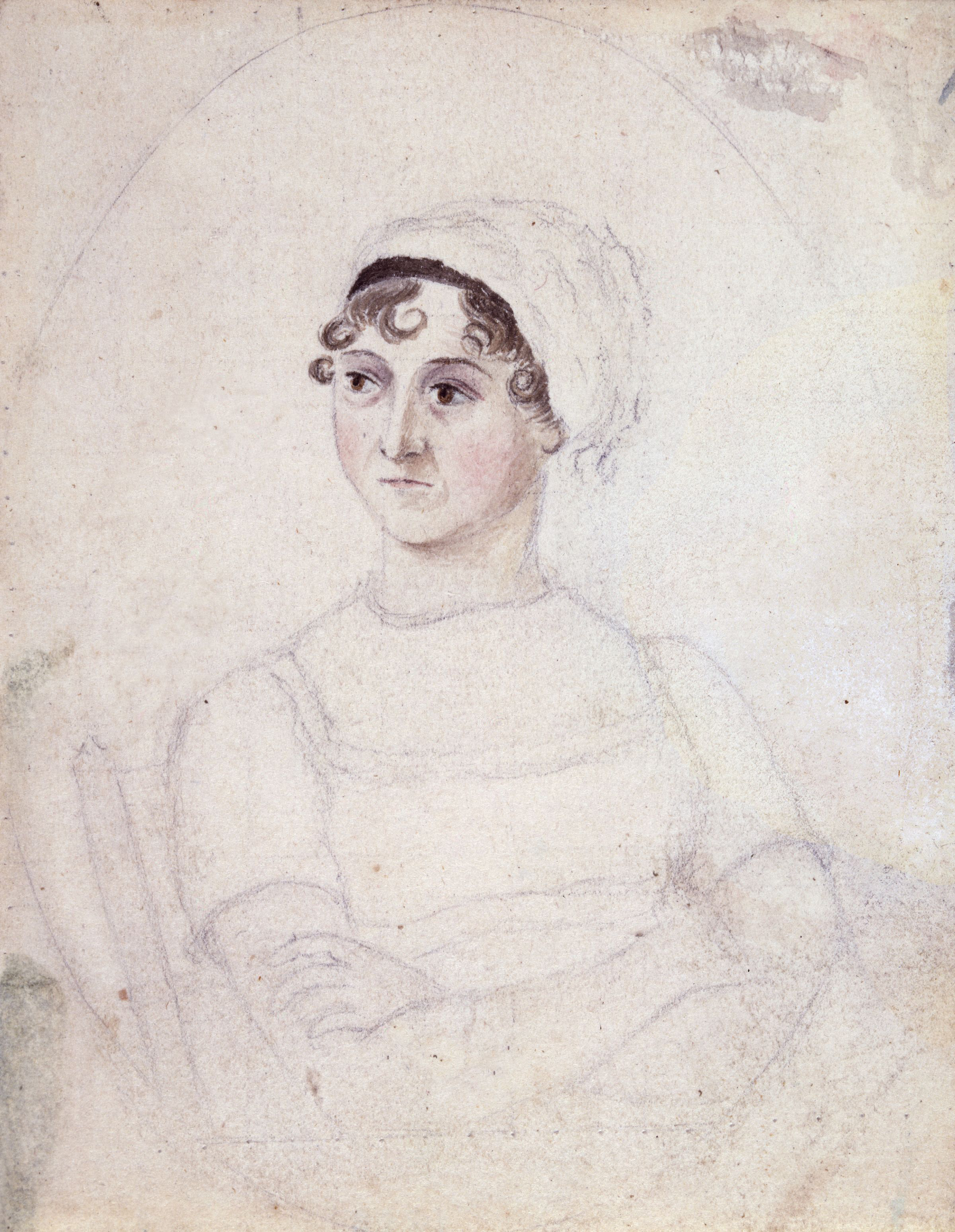
Jane Austen died a virgin.
(so says John Sutherland in The Lives Of The Novelists. Portrait of Jane Austen by her sister Cassandra).
Wiki:
In December 1802, Austen received her only known proposal of marriage. She and her sister visited Alethea and Catherine Bigg, old friends who lived near Basingstoke. Their younger brother, Harris Bigg-Wither, had recently finished his education at Oxford and was also at home. Bigg-Wither proposed and Austen accepted. As described by Caroline Austen, Jane’s niece, and Reginald Bigg-Wither, a descendant, Harris was not attractive — he was a large, plain-looking man who spoke little, stuttered when he did speak, was aggressive in conversation, and almost completely tactless. However, Austen had known him since both were young and the marriage offered many practical advantages to Austen and her family. He was the heir to extensive family estates located in the area where the sisters had grown up. With these resources, Austen could provide her parents a comfortable old age, give Cassandra a permanent home and, perhaps, assist her brothers in their careers. By the next morning, Austen realised she had made a mistake and withdrew her acceptance. No contemporary letters or diaries describe how Austen felt about this proposal.
Tough review
Posted: September 20, 2013 Filed under: writing Leave a comment
Joseph C. Hart wrote a bestselling book of the 19th century, Miriam Coffin or The Whale-Fisherman (1835). It was based, apparently, on real life Nantucket smuggler, war profiteer, and sharp-eyed businesswoman Kezia Coffin (ht Nathaniel Philbrick’s Away Off Shore: Nantucket Island And Its People, 1602-1890).
At the end of the novel, Miriam is instructed by her husband to literally go back to the kitchen where she belongs.
Hart also wrote a book called The Romance of Yachting, which Wikipedia describes “as a narrative of his travels to places that give him occasion for musings on a variety of topics.”
Herman Melville, who was apparently influenced by Miriam Coffin, did not care for this one. Says Wiki:
Herman Melville scathingly described Hart’s book in his review as “an abortion” which “deserves to be burnt in a fire of asafetida, & by the hand that wrote it.”
Asafoetida is an interesting plant. Wiki tells us it’s used as an antiflatulent in the Jammu region of India.

Jammu.
I’m guessing it also burns pretty hot? There’s also this mysterious claim on the asafoetida wiki page:
Penrod, an 11-year-old boy in a 1929 Booth Tarkington story set in the midwestern United States, suffers intensely for being forced to wear a bag of asafoetida on his neck and encounters a girl in the same condition.
You remember Penrod of course:

 Helytimes
