Sometimes the adventure gets out of hand
Posted: May 29, 2014 Filed under: heroes Leave a comment
Always interested in stories how people keep their minds together in solitary confinement. Here is a good one from a NY Times obituary today, of Robert J. Flynn, “who spent five and a half years in a Communist Chinese prison during the Vietnam War, almost always in solitary confinement, after he was shot down on a bombing mission.”

“I’d think of my family,” he said. “I’d plan parties, birthdays, anniversaries for everyone. And I would imagine that Kathy bought some land in Alaska and gold was discovered there. And I had the biggest gold mine going. I had all kinds of people working for me — people I knew. And I ran a big imaginary corporation. That’s what I did.”
And gee whiz what a great quote at the end:
“I wouldn’t want to do it again,” he told The News Journal in recalling his captivity. “But it was part of the experience of my life. Life is sort of an adventure. Sometimes, the adventure gets out of hand.”
(that’s him on the right, from UPI/NYT. Corporate flow chart from GMP Hawaii.)
Words
Posted: May 29, 2014 Filed under: writing Leave a comment
This New Yorker blog review of Patricia Lockwood‘s book reads like delightful nonsense to me. It reminds me of writing bullshit papers for English classes.
Take this sentence
Lockwood is famous—more than thirty thousand people follow her on Twitter—but the source of her fame is almost entirely owing to her tweets and not to her poetry.
1) Does that count as “famous”? I have no idea what famous is anymore. My cousin Mike has fifty-seven thousand followers, is he famous? Coffee Dad has 125,000 followers, is he famous?
2) “Lockwood is famous – look at how many Twitter followers she has – but the source of those Twitter followers is almost entirely owing to her tweets and not to a thing that is not her tweets.”
3) isn’t her whole point, the whole reason to write an article about her, that the separation between her tweets and her poetry is kinda porous?
Dianne Feinstein
Posted: May 28, 2014 Filed under: America Leave a commentHelytimes isn’t usually the place for politics. But we’re easing back in here after a long hiatus, and something this morning got my engines a li’l fired.
A perfectly nice person who’s my friend on Facebook posted this:

Now I’m a sane person who values his time. Not gonna comment on some guy’s Facebook post certainly.
But this one did get me steamed.
I don’t know what specific quote this is referring to, if any, where Dianne Feinstein maybe claimed she’s a gun expert because she looked at lots of pictures of guns. No source is cited except a link to the “Cold Dead Hands Guitars, Guns And Posters Giveaway Contest.”
This isn’t the first time I’ve seen Dianne Feinstein specifically mentioned as a villain to anti-gun control folks.
What got me steamed is that Dianne Feinstein is a terrible, terrible target to pick – pardon the metaphor – in an anti-gun control crusade.
I know hardly anything about Dianne Feinstein.
Except, one of the few things I know about her is that SHE SURVIVED A WORKPLACE GUN MASSACRE.
On November 27, 1978, disgruntled* ex-City Board of Supervisors member Dan White went to San Francisco City Hall and shot the Mayor, George Moscone twice in the chest and then twice in the head. Then he went over and shot Supervisor Harvey Milk.
From a San Francisco Gate article on the anniversary of the shootings:
[Feinstein’s] office was on the other side of City Hall. She heard a door slam in Milk’s office, heard shots, saw the killer run out, went in herself and found Harvey Milk’s body. “I put my finger to see if there was any pulse, and it went in a bullet hole in his chest,” she said the other day. “I think of it as if it were yesterday. I remember Harvey’s body, his blood on me. I see it all.”**
With the Mayor now dead, Dianne Feinstein, president of the Board of Supervisors, became the acting mayor.
Here she is that day, around 2:30:
That’s how she became mayor. You might say it was the major event in her political life. In fact, if you truly hated Dianne Feinstein, then maybe you should become a gun control advocate, maybe if there’d been more gun control she would’ve just stayed as a San Francisco local politician.
Oh, also, separate incidents: some people once shot out the windows of Dianne Feinstein’s beach house (she’s super rich) and one time somebody put a bomb outside Dianne Feinstein’s window. San Francisco was pretty weird in the 1970s. With all that weirdness in the air, you know what Dianne Feinstein did? Dianne Feinstein used to carry a pistol in her purse for safety.***
What makes you an expert on guns? Shooting a lot of guns? Knowing a lot about the mechanics, makes, models and varieties of guns? Yes, that’s a kind of expertise.
But I dunno, in my opinion if you survive a gun massacre you get a little bit of cred on the issue of gun massacres.
My point is I wish there were some easily digestible and sharable video in which Dianne Feinstein herself made this point in such a clear, pointed manner, shutting down some chump for reals, slamming somebody who is obviously ignorant of her history with guns and gun massacres. But I can’t find it.
Maybe my point is I wish The West Wing was still on, so Toby or Josh or best yet Leo could sum this up in a much punchier, pithier way than I ever could.
Anyway.
Helytimes will return to regular broadcasting as soon as possible! Here’s a picture of a church in the Atacama desert of Chile, no filtah.

* “You always hear about ‘disgruntled.’ Is anyone ever ‘gruntled’?” – Seinfeld maybe? Or did I make this one up?
** the account of this event on this wikipedia page seems to be slightly inconsistent with the cited source, Randy Shilts’ book The Mayor Of Castro Street.
*** Mayor of Castro Street p. 207
Gabo
Posted: April 21, 2014 Filed under: Uncategorized Leave a comment
Happened to be in Colombia when I learned Gabriel Garcia Marquez died. I had just finished reading One Hundred Years Of Solitude. It was a bit of a slog to read, I felt, although impressive as a human achievement. Possibly its greatness had already been absorbed into later stuff I’ve consumed; always important to view these things in context. In the supplementary material in my edition there’s a story that GGM sent the first eighty pages to Octavio Paz, who declared (I’m picturing this at a dinner party) “I have just read eighty pages by a master.”
I liked this story, from Wiki:
Since García Márquez was eighteen, he had wanted to write a novel based on his grandparents’ house where he grew up. However, he struggled with finding an appropriate tone and put off the idea until one day the answer hit him while driving his family to Acapulco. He turned the car around and the family returned home so he could begin writing. He sold his car so his family would have money to live on while he wrote, but writing the novel took far longer than he expected, and he wrote every day for eighteen months. His wife had to ask for food on credit from their butcher and their baker as well as nine months of rent on credit from their landlord. Fortunately, when the book was finally published in 1967 it became his most commercially successful novel, One Hundred Years of Solitude, which sold more than 30 million copies.
I bet his kids are still pissed about that vacation.
A couple nights later I was drinking with two Colombian university students, and I asked them about Marquez. They both expressed the same opinion. They were disappointed in him. They said that his hometown was one of the poorest places in Colombia. That with all his wealth and success he’s done very little for Colombia, “fucking off to Mexico” as they put it.

My own favorite Marquez short story is called “The Earless One.” It has kind of a Twilight Zone feel.
What happens is a gambler in Mexico City meets an adventurer heading to the Amazon. He offers him a wager of one hundred thousand pesos if he can travel through Latin America overland without once hearing the song “Chan Chan” as recorded by the Buena Vista Social Club. The adventurer accepts.
A week later the gambler received a postcard: “I have not heard it.” He’s surprised: it’s nearly impossible not to hear this song every single day. But he remains calm. A week later another postcard: “Still I have not heard it.” The gambler begins to be concerned. Another week, another card: “I have not heard it still.” The gambler is shocked – how can this be?
Finally, he receives a package. He finds inside a note: “I have not heard it, nor will I.” And inside? The adventurer’s bloody ears.
It turns out he deafened himself – the only way to win this absurd bet.
I’m told this is a metaphor for Colombian politics.
What city am I in?
Posted: April 17, 2014 Filed under: Uncategorized | Tags: wiht Leave a comment
Important work has taken us on the road. Can you guess where?
Send answers to helphely at gmail.com
Lucky winners will receive a copy of The Story Of New York.

Getting caught up on the news
Posted: April 9, 2014 Filed under: Uncategorized Leave a comment
Correlation=causation?
Etymology
Posted: March 19, 2014 Filed under: mailbag Leave a comment
Correspondent “J. M.” in the UK writes:
Dear HelyTimes,
A bit of etymology found on a browse through the OED that I thought might delight and enlighten your readers. I found myself looking up the word “douche bag” after a
Thanks JM! Here is his discovery:
The New Yorker Magazine
Posted: March 18, 2014 Filed under: from a magazine 1 Comment Recently, I had a chance to read this magazine. It’s incredible.
First, take this letter to the editor:

I don’t know why I liked it so much, but somehow it did my heart good to picture right-minded citizen Alison J. Bell in Stowe, Vermont taking the time to share her views in clear, even New Yorker-y style.
Then, how about this, in the profile of Lydia Davis:
Michael Silverblatt, the erudite host of the Los Angeles radio show “Bookworm,” says “Literary people know that at the sentence level and the word level she’s the best there is.”
At the WORD level! Imagine that! Does that mean she’s the best writer there is at picking words?
Anyway: then there’s the piece about Adam Lanza.
How about this, from the profile of Darren Aronofsky:
Nolte arrived at the studio in Santa Monica only fifteen minutes late He came in slowly, a heavy man now, at seventy-three, his blue oxford shirt billowing over his pants like a caftan. Aronofsky introduced himself and explained Nolte’s first scene, when the Watchers discuss what to do with Noah and his family in the pit, and an embittered Samyaza declares, “Leave him there to rot.”
“I know that pain,” Nolte said, “because the Watchers have got no purpose – and I understand that.” After rumbling through some vocal exercises, he exploded into character, becoming a roaring bull elephant. Then he tweaked his delivery to add every nuance that Aronofsky proposed: mor disgust, a heightened formality, a disenchantment with mankind.
Aronofsky raced into the control room and cried, “How fucking talented is that guy? God damn! He’s giving us character and emotion, which is what was missing. I might have to write a movie for him. Oh, it’s a shame – he’s had more work than Mickey, but he hasn’t done enough. It’s so heartbreaking.”
After a rest, Nolte told an involved story about a small role he had in “Run All Night,” a forthcoming film starring Liam Neeson. “Wow,” Aronofsky said, when the story appeared to be over. “So who’s the director?”
“No idea,” Nolte said.
When the story appeared to be over.

(The director is Jaume Collet-Serra, I looked it up).
My one problem with this issue of the New Yorker, and it’s a big one, is this: profiler Tad Friend has been trying hard to get Aronofsky to take him to Coney Island, where he grew up. At last he does:
In the summers, Aronofsky spent much of his time on Coney Island’s Cyclone, the rackety wooden roller coaster built in 1927. He led me to it, then cried “Bawk, bawk” when I declined to go aboard. “Everything about myself as a filmmaker is only understandable by going on the Cyclone,” he said.
THEN GO ON THE CYCLONE YOU PUSSY!!!!
(editor’s note: for the next two months we’ll be away from HelyTimes headquarters. As a result, formatting on HelyTimes may suffer, as it’s a pain in the bun to format on an iPad. Please bear with us.)
St. P’s
Posted: March 17, 2014 Filed under: Ireland Leave a comment
The story goes that one day Brendan Behan ran into Patrick Kavanagh on the streets of Dublin. Brendan suggested a drink and unsurprisingly Patrick agreed. Patrick mentioned a nearby pub.
“Ah, can’t do it,” said Brendan. “I’ve been banned from there for life.” Brendan suggested an alternative.
“Ah, can’t be done,” said Patrick, “I’m banned from that one.”
So the two shook hands and went on their way.
Patrick Kavanagh, quite cleverly, wrote a poem describing exactly the kind of statue that ought to be built to commemorate him, and that’s what they built.
The actor Russell Crowe has stated that he is a fan of Kavanagh. He commented “I like the clarity and the emotiveness of Kavanagh. I like how he combines the kind of mystic into really clear, evocative work that can make you glad you are alive”. On 24 February 2002, after he won the BAFTA Award for Best Actor in a Leading Role for his performance in A Beautiful Mind, Crowe quoted Kavanagh during his acceptance speech at the 55th British Academy Film Awards. When he became aware that the Kavanagh quote had been cut from the final broadcast, Crowe became aggressive with the BBC producer responsible, Malcolm Gerrie.[22] He said “it was about a one minute fifty speech but they’ve cut a minute out of it”.[23] The poem that was cut was a four line poem:
To be a poet and not know the trade,
To be a lover and repel all women;
Twin ironies by which great saints are made,
The agonising pincer-jaws of heaven.
In this other picture on his wiki page, painted by Patrick Swift, PK looks a bit like Larry David:  Lovelorn, tragic, Patrick Kavanagh wrote the poem which became the lyrics to the song “On Raglan Road,” sung here by the heroically haired Luke Kelly:
(previous HelyTimes on St. Ps: here, here and here)
Wade Davis
Posted: March 7, 2014 Filed under: adventures Leave a comment
reading up on ethnobotanist, photographer, anthropologist and National Geographic Explorer-in-Residence Wade Davis. This guy goes to all the best conferences.
It’s interesting how these things change though. I find it fascinating that there is this ayahuasca phenomenon, it’s literally sweeping Europe and sweeping the United States. I meet young people who take ayahuasca and they speak so positively about the experience whereas I remember the whole point of ayahuascawas facing down the jaguar, being ripped away from the tit of jaguar woman. That was sort of what its point was.
I think our reaction to these substances can change over time too, almost as age cohorts move though. I’m someone who’s very happy to say that not only did I used psychedelics and enjoyed them but that they changed my life. I don’t think I would speak the way I speak, write the way I write, synthesise information the way I do, understand those notions of cultural relativism as reflexively as I do, if I hadn’t taken psychedelics.
I often think it’s interesting that if we look at the social changes of the last 30 years – everything from new attitudes towards the environment, new sense of the holistic integration of the Earth, women going from the kitchen to the board room, people of colour from the woodshed to the Whitehouse, gay people from the closet to the alter, that we always leave out of the recipe of social change that millions of people all around the world lay prostrate before the gates of awe after having taken some psychedelic.
We came out of a place with profound alienation of our cultures, experimenting with psychedelics in a very fresh way – there was not a lot of expectation. We rediscovered lots of new drugs and just tried them on ourselves so there were a number of things we could say we were the first to take. Not that I want to dwell on that, but the idea that were trying to find some idea of what it means to be human.
And also cultural relativism and just the idea that other peoples of the world aren’t failed attempts at being you, that comes powerfully from the psychedelic experience. I one point I remember I took some big heroic dose of some drug, I can’t remember exactly, San Pedro I think, and I was stopped by my friend just before I could send a telegram to my professor at Harvard that was going to say ‘Eureka! We’re all ambulatory plants!’ I don’t think that would have really got me too far.

This is good, too:
In his early 20s, Davis says he was so mixed up that he applied to both botany and law school at the University of B.C.
On one occasion, he stopped at the Vancouver law firm where his sister was articling. A receptionist demanded to know if he was the man who travelled in the Amazon and ate weird plants. Davis said he was.
She then marched him into a dusty law library, showed him a picture of an 18th-century English solicitor with a wig and crooked nose, and asked him if that’s what he wanted to become.
“I went back to the front desk, called UBC law school and retracted my application,” he says. “Thanks to that guardian angel, I went to graduate school in botany.”
(That, and top picture, from The Province, photo by Jenelle Schneider)
Karl Ove Knausgaard
Posted: March 5, 2014 Filed under: writing 2 Comments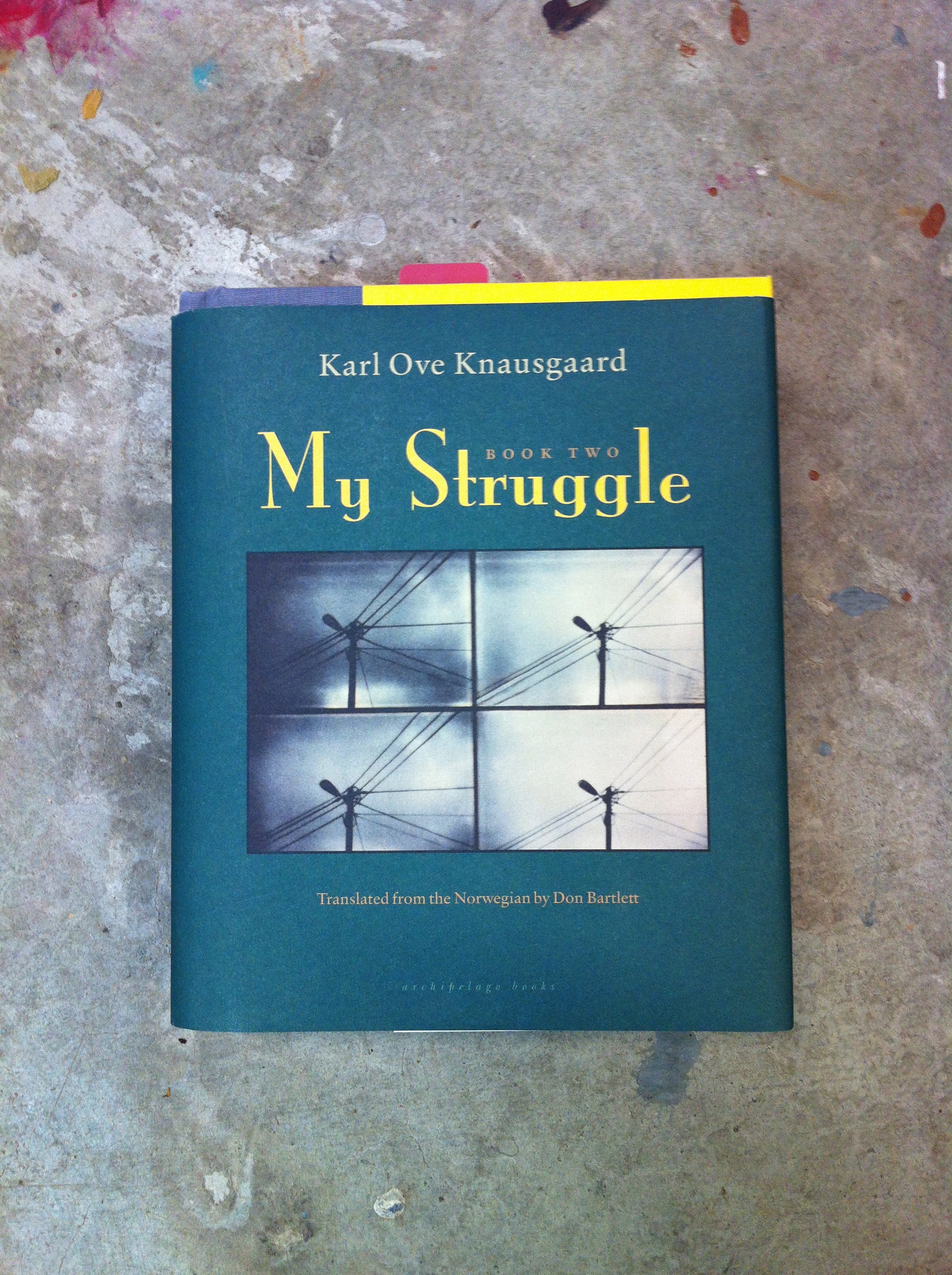
Came to my attention that some HelyTimes readers are not following the book world’s frenzy over Karl Ove Knausgaard’s My Struggle.

Some facts:
* Norwegian writer Karl Ove Knausgaard has been publishing a six volume book that recounts the minute details of his life, or at least the life of a man named Karl Ove Knausgaard the details of which match the actual details of the author’s life to an almost* exact degree.
* We’re only up to Volume 2 in English. Here is my copy pictured next to a coffee mug for scale:

* One out of every ten Norwegians has bought at least one of the volumes.
The level of obsession around this literaryGesamtkunstwerk has been so intense that some Norwegian workplaces have reportedly instituted “Knausgaard-free days”, when staff are forbidden to talk about the books.
* Reviews have been rapturous. Tyler Cowen:
I would put this among the greatest Continental novels of the last fifty years and not at the bottom of that tier. It is not often that one discovers such books.
*
His wife had agreed to be included, telling him only: “Don’t make me boring,” and he gave her the manuscript to read on a long train journey. Having finished it, she called him three times. The first time she said she thought it was OK, but that she didn’t like it. The second time, she told him that their life could never be romantic again. Finally, she called him and wept.
“I was so frustrated that I didn’t foresee the consequences,” Knausgaard has said. “I thought, if the consequences are that she’s leaving me, then OK, she can go. That was how it was. There was a certain desperation that made it possible. I couldn’t do it now.”
Nonetheless, their marriage survived. Last year, Knausgaard admitted that he felt guilt, “for almost everything around this book. I was kind of autistic […] I was saying, ‘My book is more important than your life.'”

(Linda with cat, from here, a site of artists and cats)
* The kind of stuff that’s in the book:
A teenage mission to procure beer for a New Year’s Eve party, for example, occupies about 70 pages in book one.
* I’ve only read about 20 pages, at random, which were about Karl going to gymnastics with his kid and being frustrated that the attractive young teacher can only see him as an emasculated dad.
* I flipped to another section, which was musing about “what would it have been like to live in a world where everything was made from the power of your hands, the wind, or water?” It was pretty engaging.
* The title’s provocative, obviously. KOK says:
For two years, I worked as a kind of adviser on a team that translated the Bible to Norwegian. It was there I learned to read. The gap between the two languages was a shock, and made it possible to experience, not only to recognize, the gap between language and the world, the arbitrariness everybody talked about in the eighties was all of a sudden visible for me.
Another lesson was that in the Old Testament, everything is concrete, nothing is abstract. God is concrete, the angels are concrete, and everything else has to do with bodies in motion, what they say, what they do, but never what they think. No speculations, no reflections. Even the metaphors are connected to bodies. I became especially interested in the story of Cain and Abel, when Cain’s countenance falls and God says, “Why is your countenance fallen? Lift up!” Cain doesn’t look anyone in the eyes, and no one looks in his. This is to hide from the world and from the other. And that is dangerous.
In the sixth book of Min Kamp, I wrote four hundred pages on Adolf Hitler’s Mein Kampf. Hitler was a man who lived a year without seeing anyone, just sitting in his room reading, and when he left that room, never let anyone close, and stayed that way, intransigent, through the rest of his life, and one characteristic thing with his book, is that there is an “I,” and a “we,” but no “you.” And while I was writing about Hitler, a young Norwegian who had stayed some two years all by himself, and written a manifesto with a strong “I” and a “we,” also without a “you,” massacred sixty-nine youths on an island. In other words, his countenance fell.
* I’m told by a Scandinavian friend that the last volume was so long it couldn’t be bound into a book, so Karl took it home and cut it down until it was the EXACT length that could fit into a binding.
* I’d highly recommend reading this short take on it by Sophia Pinkham at n+1, which points out that what might strike an American writer is “how come this guy isn’t worried about money?”
* Karl himself:
“The critical reading of the texts always resulted in parts being deleted. So that was what I did. My writing became more and more minimalist. In the end, I couldn’t write at all. For seven or eight years, I hardly wrote. But then I had a revelation. What if I did the opposite? What if, when a sentence or a scene was bad, I expanded it, and poured in more and more? After I started to do that, I became free in my writing. Fuck quality, fuck perfection, fuck minimalism. My world isn’t minimalist; my world isn’t perfect, so why on earth should my writing be?”
Or this, from The Guardian:
“Concealing what is shameful to you,” he’s said, “will never lead to anything of value.” And the most indelible moments tend to involve his own humiliation. In book two, A Man in Love, for example, he describes getting drunk, breaking a glass and slicing up his own face, when the woman he loves rejects him. Even more abject and embarrassing are book three’s boyhood recollections, including an unhappy appraisal of his own penis, “like a little cork. Or a kind of spring, because it quivered when you flicked it lightly.”
Well, I’m glad it exists I guess.
Is art just the turning of yourself into “art” until you, yourself, are indistinguishable?
Is the cost always that your wife will be crying?
Is it “worth” it?
Should we honor a person like this or figure out what meds he needs?
Is this the logical end of writing?
Is it criminal to do this to your children/relatives? Or worth it for the art?
How good does the art have to be to justify the cost?
Would we feel differently if Karl Ove did this and almost NO Norwegians bought it?
Do we have to respect his balls at least?
Is his desire for us to respect his balls part of this project?
If part of his motive is our respect, does that change it?
Do I actually have to read this or is it enough that it exists?
Is this admirable, like a kid doing an awesome trick on a playground, or just kind of horrifying or troubled, like a kid taking out his little cork on the playground?
What about this, the very first exchange in KOK’s Paris Review interview?:
Did you keep diaries when you were young?
Yes, I did, but I burned them when I was twenty-five or twenty-six.
Why?
I was so embarrassed, I couldn’t stand it. It’s the same with Min Kamp, I can’t stand it. If I could I would burn that, too, but there are too many prints, so it’s impossible.
Life develops, changes, is in motion. The forms of literature are not. So if you want the writing to be as close to life as possible—I do not mean this in any way as an apology for realism—but if you want to write close to life, you have to break the forms you’ve used, which means that you constantly have the feeling of writing the first novel, for the first time, which means that you do not know how to write. All good writers have that in common, they do not know how to write.
Anyway, here’s another picture from the Cultural Cat website:

* behind a paywall, but in her review Sheila Heti finds herself disappointed at a detail Karl admitted to her he made up or at least may not have remembered exactly.


The Painter of Light
Posted: February 27, 2014 Filed under: art, painting, pictures Leave a comment
The Times further reported that [Thomas Kinkade] openly groped a woman’s breasts at a South Bend, Indiana, sales event, and mentioned his proclivity for ritual territory marking through urination, once relieving himself on a Winnie the Pooh figure at the Disneyland Hotel in Anaheim while saying “This one’s for you, Walt.”[37][38]
In 2006, John Dandois, Media Arts Group executive, recounted a story that on one occasion six years previous, Kinkade became drunk at a Siegfried & Roy magic show in Las Vegas and began shouting “Codpiece! Codpiece!” at the performers. Eventually he was calmed by his mother.[37]
Newspapers are funny
Posted: February 25, 2014 Filed under: actors, comedy Leave a comment
Correction: February 25, 2014
This article has been revised to reflect the following correction: An earlier version of this obituary incorrectly described a scene from the movie “Caddyshack.” In it, a clergyman is struck by lightning when he curses after missing a putt during the best golf game of his life, not when he thanks God.
Helytimes Trivia: the Harold Ramis profile in the New Yorker is the source for the first ever post on Helytimes
Another death yesterday:
What “broke the cycle,” he said, was when he spoke at Omaha Beach, telling of how he had waved to Roland as they prepared to board their ships to cross the English Channel. “My knees were trembling when I stood before the audience that day, with 14,000 vets and 17 heads of state,” he said. “But after that, the nightmares went away. I came to grips with his death. They say when you talk about something you finally let it out.”
California
Posted: February 20, 2014 Filed under: the California Condition 1 Comment
Was reading about missions in California, came across this wonderful tidbit about the mission of San Antonio de Padua:
In popular culture
-
The 1965 horror film Incubus was partly filmed at the Mission. The writer and director, Leslie Stevens, concerned that the Mission authorities would not allow the film to be shot there because of the subject matter, concocted a cover story that the film was calledReligious Leaders of Old Monterey, and presented a script that was about monks and farmers. He was helped in this deception by the fact that the film was shot entirely in Esperanto.[12]
Ellen Page
Posted: February 15, 2014 Filed under: actors Leave a commentA good chance to revisit Trailer Park Boys:
Treena Leahy never really broke out as a character, no fault of Miss Page’s I say.
RIP Shirley Temple Black, former US Ambassador to Ghana
Posted: February 13, 2014 Filed under: actors Leave a comment
Amazing paragraph from the NYT obituary:
Mr. Black, who was dropped from the San Francisco Social Register for marrying an actress, told a reporter in 1988: “Over 38 years I have participated in her life 24 hours a day through thick and thin, traumatic situations, exultant situations, and I feel she has only one personality. She would be catastrophic for the psychiatric profession. You can wake her up in the middle of the night and she has the same personality everybody knows. What everybody has seen for 60 years is the bedrock.”
Title of an early film series: “Baby Burlesque.”
(photo)
Rookie Mag.
Posted: February 12, 2014 Filed under: how to live Leave a comment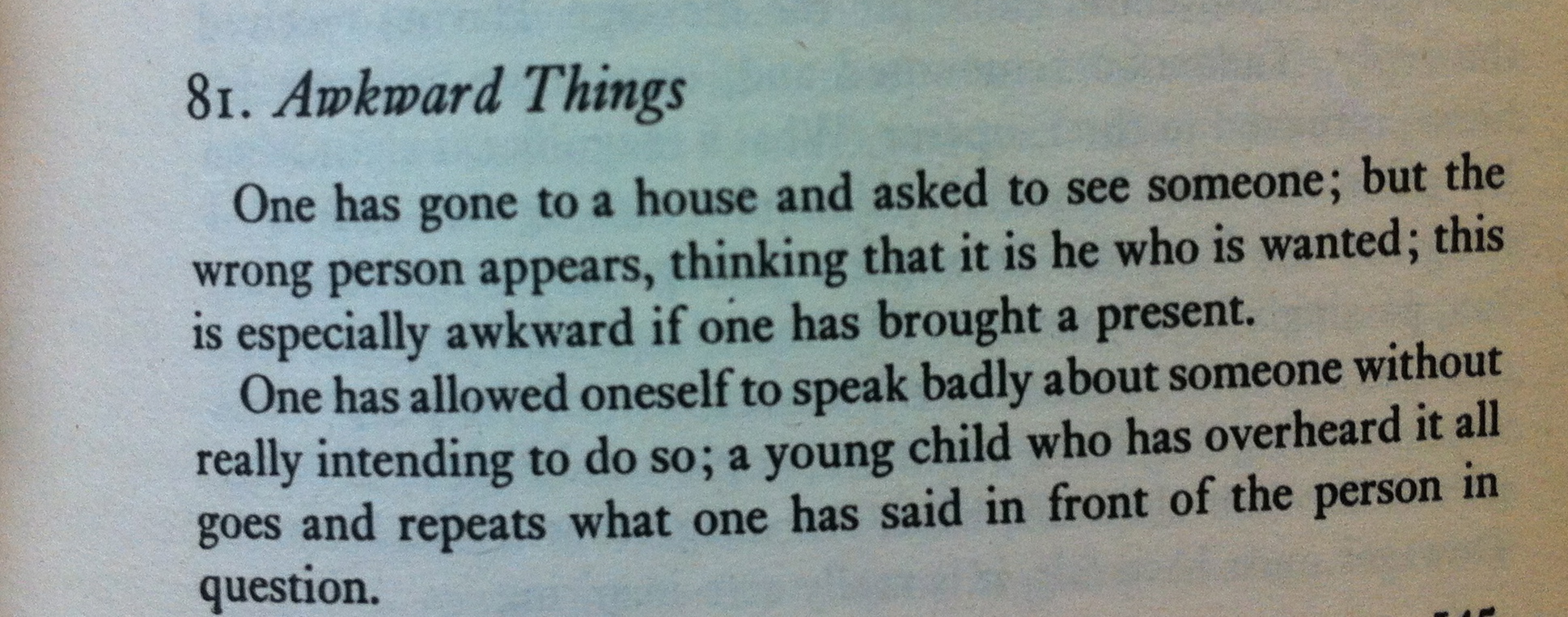
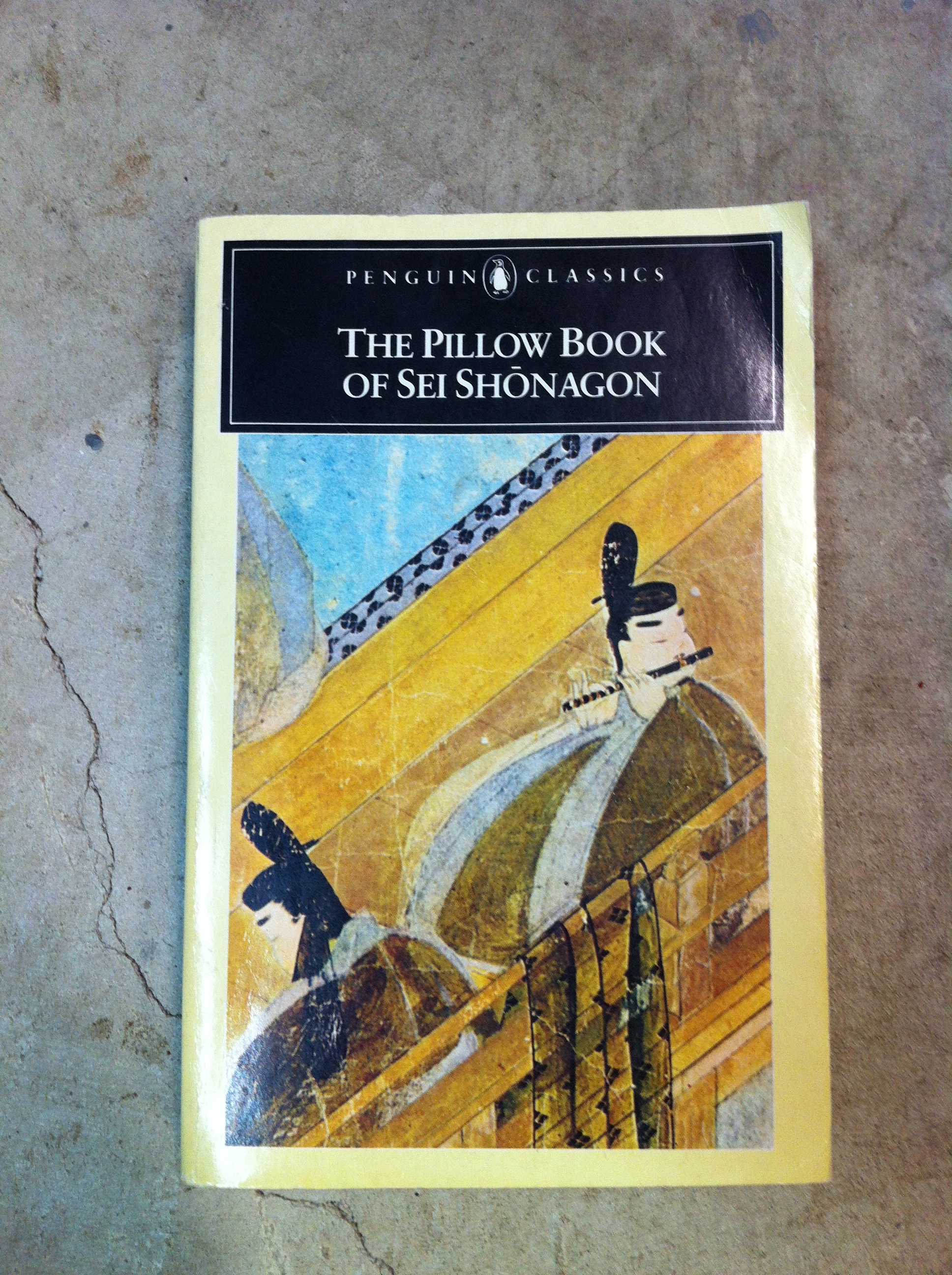
My friend Sei Shonagon should write for Rookie.
Dance of the Californians
Posted: February 6, 2014 Filed under: the California Condition Leave a comment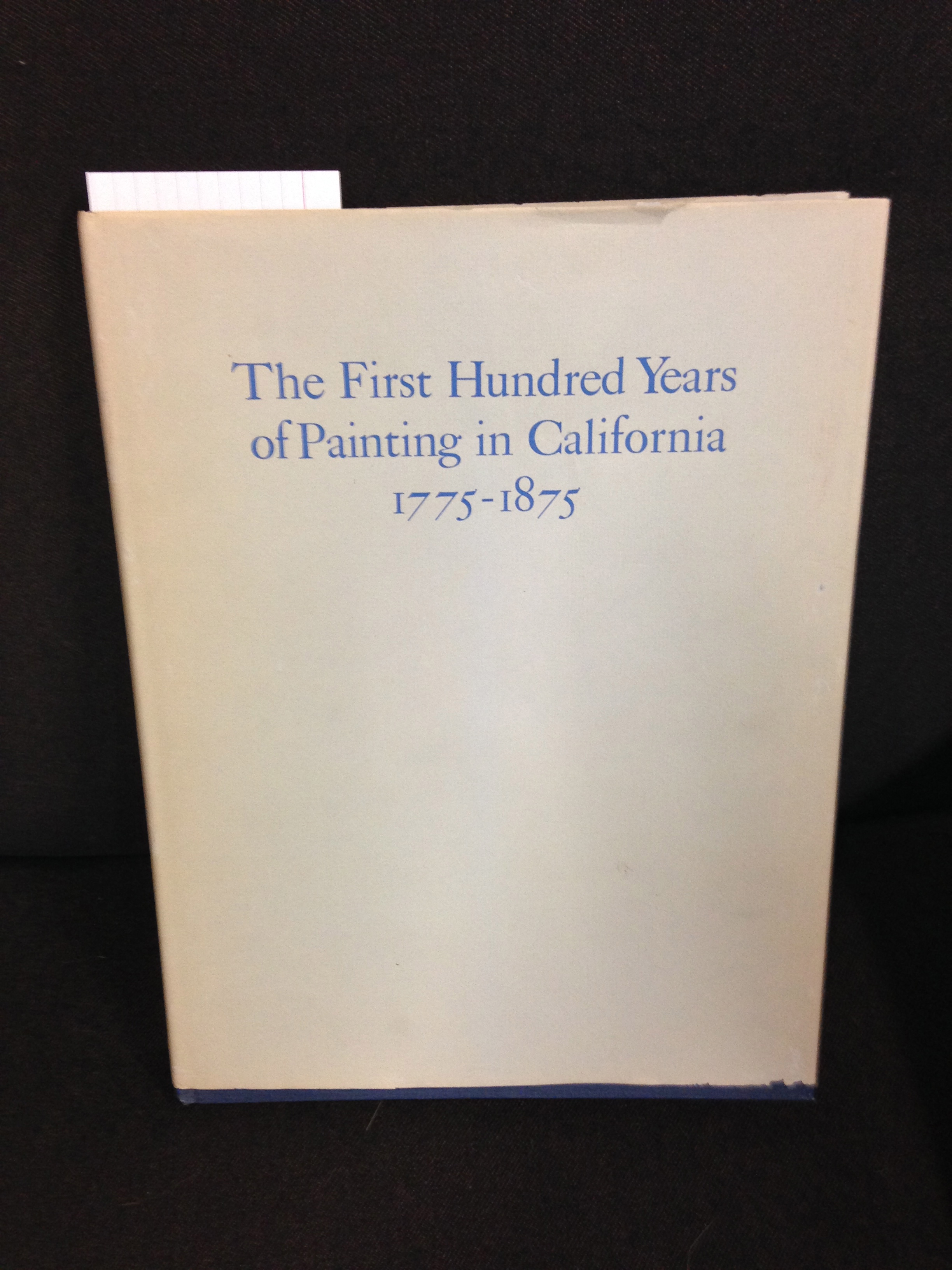
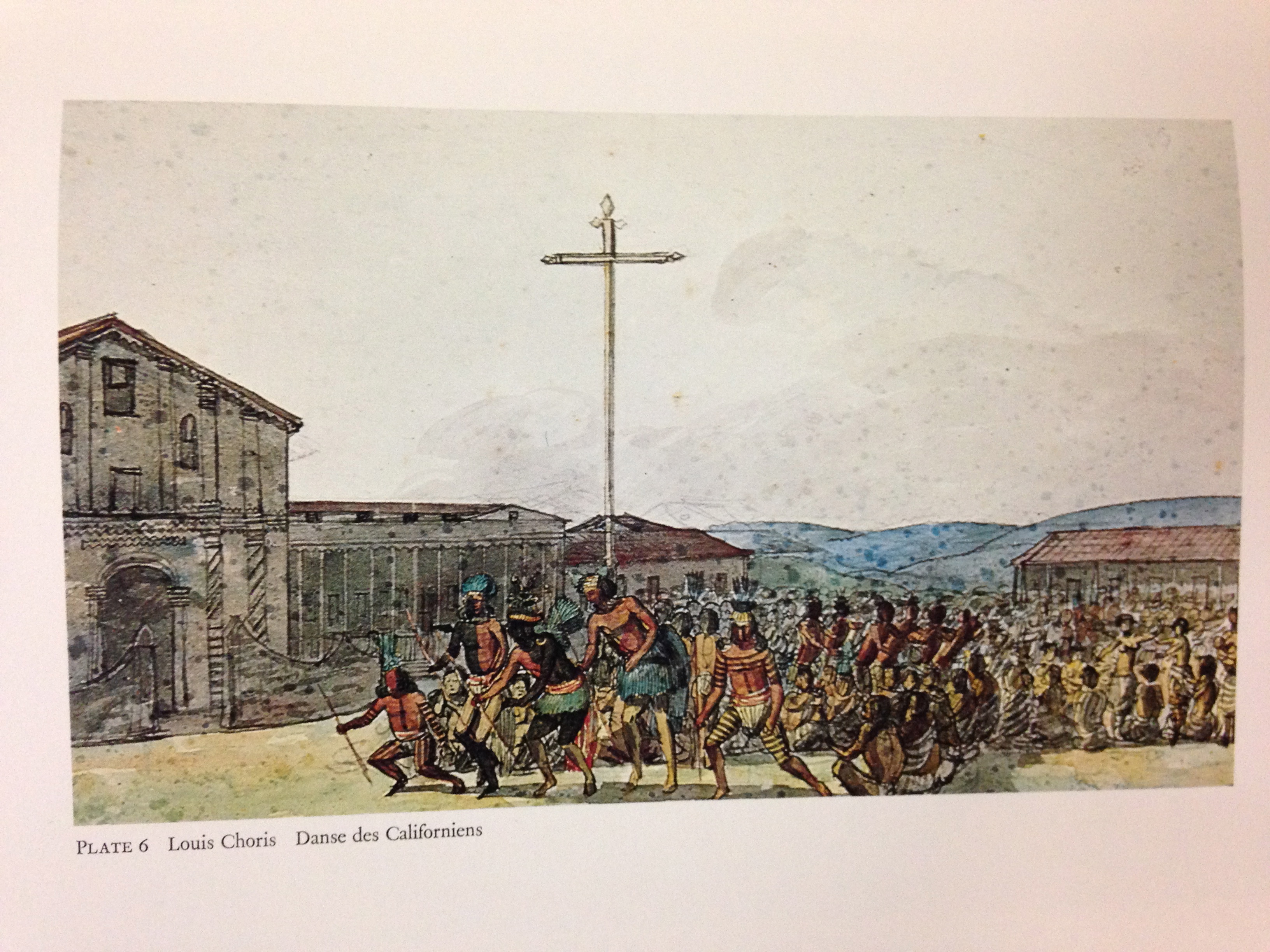
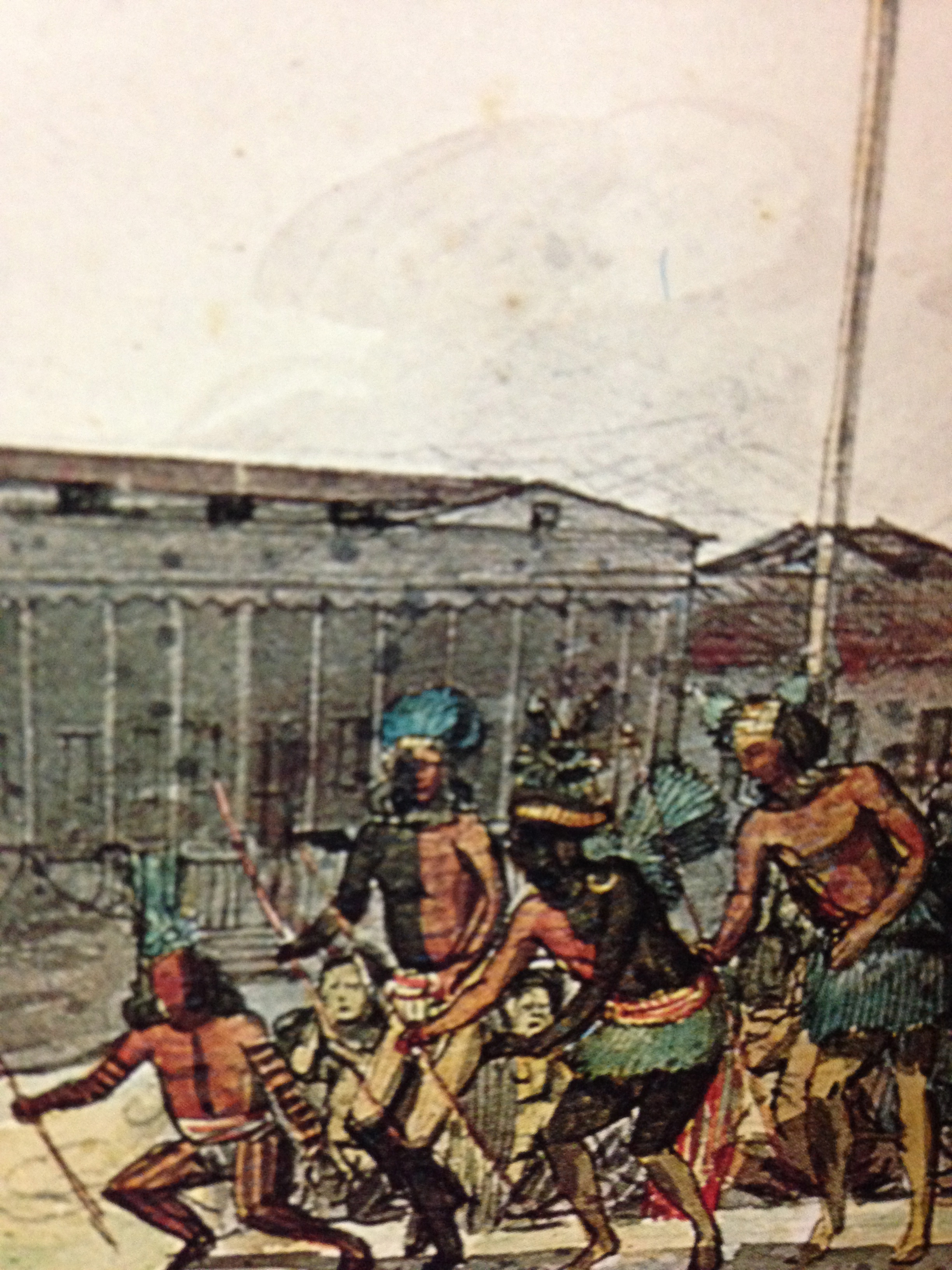
Seized by an irresistible craving for adventure, [Louis Choris] left France in 1827 for South America. He met his end when he was murdered by robbers on March 22, 1828, en route to Vera Cruz, Mexico
Inside Hollywood
Posted: February 3, 2014 Filed under: writing 1 Comment
From this profile of Beau Willimon and the writing staff of “House Of Cards”:
Meanwhile, Willimon stood in front of a table full of writers and spoke, while the writers, many of them playwrights whose work he admired, sat and listened and occasionally chimed in. One writer, whose back was toward me, idly surfed the Internet: He researched a plane ticket, then checked out an Airbnb listing for a tropical getaway for $99 a night, then bought some camping gear, then browsed an article with the headline “The Top Five Regrets of the Dying.”
(An excellent detail although why did reporter Adam Sternbergh include it I wonder? Photo by Ruddy Roye.)
 Helytimes