Train Dreams
Posted: October 27, 2012 Filed under: writing Leave a comment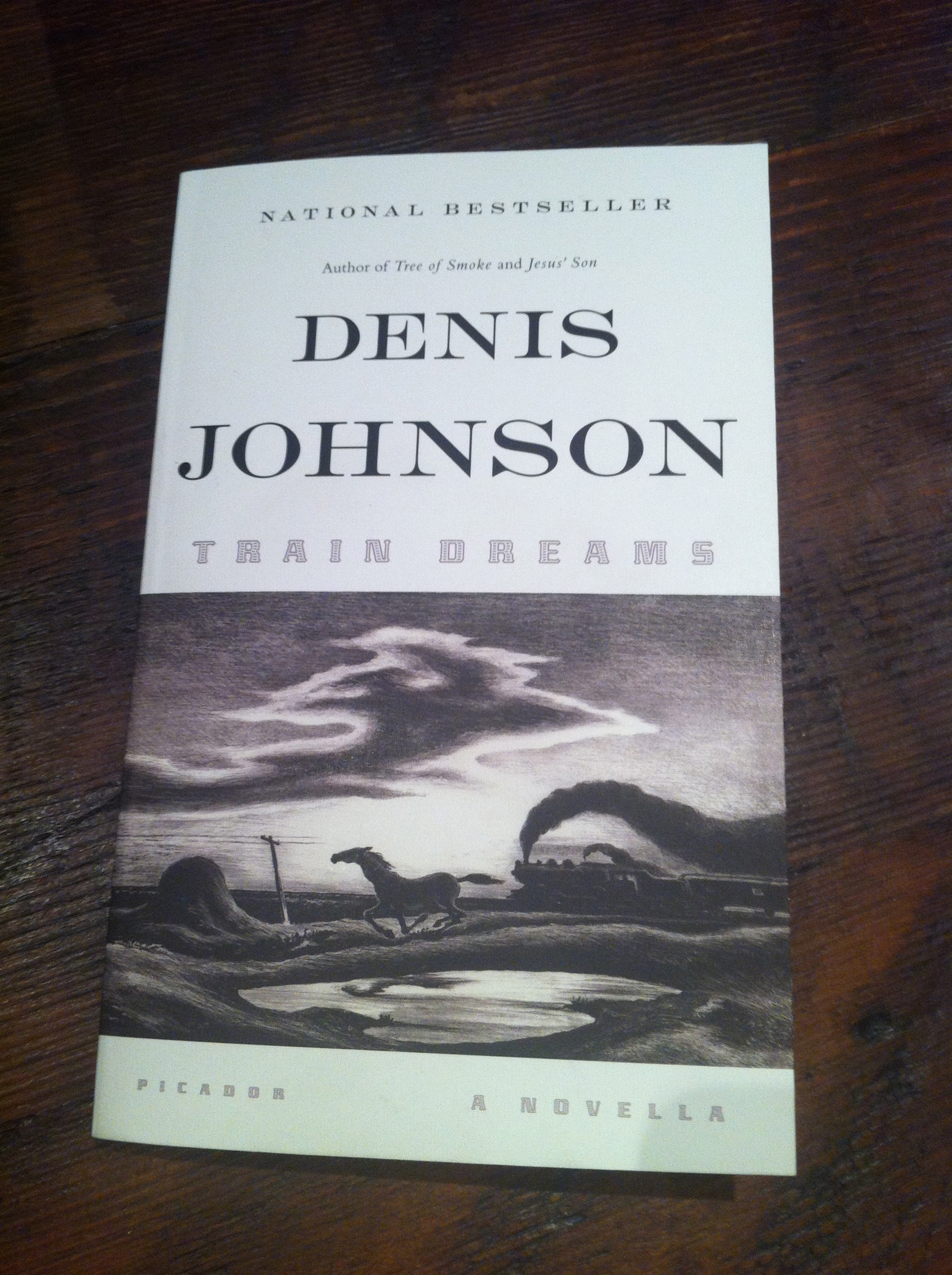
One of Grainier’s last jobs was to get up the Yaak River Road to the saloon at the logging village of Sylvanite, in the hills above which a lone prospector had blown himself up in his shack while trying to thaw out frozen dynamite on his stove. The man lay out on the bartop, alive and talking, sipping free whiskey and praising his dog…
Much that was astonishing was told of the dogs in the Panhandle and along the Kootenai River, tales of rescues, tricks, feats of supercanine intelligence and humanlike understanding.
Seven Psychopaths
Posted: October 24, 2012 Filed under: film Leave a comment
Mickey Rourke dropped out of The Expendables 2 to star in the film. However, he later dropped out of Seven Psychopaths after having disagreements with [Martin] McDonagh, calling him a “jerk-off.”
George McGovern
Posted: October 23, 2012 Filed under: America, heroes, Sorkin Leave a comment
Reading obituaries of this guy, who seemed great and tragic:
After leaving the Senate, McGovern held a number of visiting professorships and opened a motel in Stratford Connecticut — which struggled for a few years before going bankrupt. He was briefly and unsuccessfully involved in the 1984 Democratic primaries, his campaign notable for a speech in which he explained to party members why he needed their vote: “I didn’t have a job. My apartment burned down and I had a real nice dog but he died. If you want to house the homeless and comfort the afflicted, vote for me. I am one of these eight candidates who really does need that house at 1600 Pennsylvania Avenue.”
Awhile ago an English friend suggested that the Telegraph has the best obituaries. From there I learned:
his 30th [mission as a bomber pilot] almost proved fatal when his aircraft was badly damaged over Vienna and his navigator killed. McGovern managed, however, to nurse the bomber away from the conflict zone to make a crash-landing on the island of Vis in the Adriatic.
Here is Vis (the town of Komiža, to be specific):

In his temperament (wise, good-humored) and his background (professor, considered becoming a minister) McGovern seems like a bit of a real life President Bartlet:

Kind of have the feeling that in real life Bartlet too would have only won Massachusetts.
(That top photo is from this great Life set, credited to Bill Eppridge; rest from wiki as us)
The Finish, by Mark Bowden
Posted: October 22, 2012 Filed under: America, writing Leave a comment
This is a good book, highly recommended, a complex story well-told.
Bowden notes that in many of his final letters, Osama bin Laden has a “quaint courtesy,” and indeed his language does sound oddly cute. Here’s an excerpt from one written close to his death:
It would be nice if you would pick a number of brothers, not to exceed ten, and send them to their countries individually, without knowing the others, to study aviation… it would be nice if you would ask the brothers in all regions if they have a brother distinguished by good manners, integrity, courage, and secretiveness, who can operate in the United States…
It would be nice. Maybe it’s the translation. Osama also doesn’t think too much of Joe Biden, advising in another letter:
The reason for concentrating on [trying to kill Obama, but not other high-level Americans, during a possible visit to Afghanistan] is that he is the head of infidelity and killing him will automatically make Biden take over the presidency for the remainder of the term, as it is the norm over there. Biden is totally unprepared for that post, which will lead the United States into crisis.

Anyway, the book has some excellent information on the lives and careers of figures key to the hunt for Bin Laden. I learned, for instance, that on 9/11, Bill McRaven, later head of Joint Special Operations Command, was in a hospital bed, having had his pelvis cracked and his back broken during a parachute accident.
Bowden introduces speechwriter and Deputy National Security Advisor Ben Rhodes, noting his”prematurely thinning black hair.” Later, we learn, “his hair had thinned on top.”

Ship’s Cats
Posted: October 20, 2012 Filed under: the ocean Leave a commentA good Wikipedia page, well-illustrated.
Here’s Blackie, with Winston Churchill:

Here is Convoy:

Sadly, Convoy was lost when the HMS Hermione was sunk in the Mediterranean in 1942.
Here is Peebles, known for shaking hands with strangers:

Pebbles served on the HMS Western Isles, which was used to evacuate children from Guernsey before the German occupation.
And here is Tiddles:

When he sailed around Australia in 1801-3, the explorer Matthew Flinders had a cat named Trim. According to Flinders, Trim was eaten by slaves in Mauritus some years later. Here is a statue of Trim in Sydney:

Mrs. Chippy deserves and will receive more extensive coverage at some future date.
First Space Jump
Posted: October 18, 2012 Filed under: adventures, heroes Leave a comment
Joseph Kittinger.
Pressurization for his right glove malfunctioned during the ascent, and his right hand swelled to twice its normal size. Ignoring the pain, he rode the balloon up to 102,800 feet and said a short prayer — “Lord, take care of me now” — before stepping off.
Of the jumps from Excelsior, Kittinger said, “There’s no way you can visualize the speed. There’s nothing you can see to see how fast you’re going. You have no depth perception. If you’re in a car driving down the road and you close your eyes, you have no idea what your speed is. It’s the same thing if you’re free falling from space. There are no signposts. You know you are going very fast, but you don’t feel it. You don’t have a 614-mph wind blowing on you. I could only hear myself breathing in the helmet.”
Here is his gondola, on display at the National Air & Space Museum:

Kittinger was shot down on May 11, 1972, just before the end of his third tour of duty [in Vietnam]… Kittinger and his wingman were chasing a MiG-21 when Kittinger’s Phantom II was hit by an air-to-air missile that damaged the fighter’s starboard wing and set the airplane on fire. Kittinger and [Weapons Systems Operator William] Reich ejected a few miles from Thai Nguyen and were soon captured and taken to the city of Hanoi.
Kittinger and Reich spent 11 months as prisoners of war (POWs) in the “Hanoi Hilton” prison. Kittinger was put through “rope torture” soon after his arrival at the POW compound and this made a lasting impression on him.
Sunday Morning In The Mines, Charles Christian Nahl, 1872
Posted: October 17, 2012 Filed under: painting, pictures, the California Condition Leave a comment
The Faroe Islands
Posted: October 16, 2012 Filed under: photography, pictures Leave a comment
From The Atlantic’s In Focus, pure The Helytimes bait: photos of the Faroe Islands. These two are credited to Arne List.

Traditional Faroese food is mainly based on meat, seafood and potatoes and uses few fresh vegetables. Mutton is the basis of many meals, and one of the most popular treats is skerpikjøt, well aged, wind-dried mutton, which is quite chewy. The drying shed, known as a hjallur, is a standard feature in many Faroese homes, particularly in the small towns and villages. Other traditional foods are ræst kjøt (semi-dried mutton) and ræstur fiskur, matured fish. Another Faroese specialty is Grind og spik,pilot whale meat and blubber. (A parallel meat/fat dish made with offal is garnatálg.) Well into the last century, meat and blubber from a pilot whale meant food for a long time. Fresh fish also features strongly in the traditional local diet, as do seabirds, such as Faroese puffins, and their eggs. Dried fish is also commonly eaten.
Statue Storm!
Posted: October 16, 2012 Filed under: painting, pictures Leave a comment
“Oh SHIT!” I thought, as I lay in bed last night. “I’ve forgotten! What was the consequence of the ‘Letters from the Segovia Woods,’ written by Philip II of Spain to Margaret of Parma in 1565-66, wherein Philip rejected requests to abolish the laws against heresy in the Spanish Netherlands?!”
It’s a wonder I got to sleep at all, but I did. All night I was haunted, however, by dreams of Dutch Calvinists smashing Catholic art. My dreams looked like this:

When I woke up, it was with a smile.
“Of course,” I remembered. “The Letters from the Segovia Woods led to the ‘Beeldenstorm’ – the ‘statue storm’ – wherein angry Dutch Protestants destroyed Catholic iconography. Then the Duke of Alba shows up to repress the uprising, etc. etc., the 80 Years War is ON.”
Here, from the relevant Wikipedia page, is Bruegel the Elder’s painting The Preaching Of John The Baptist:

Who’s that looking back at us? Bruegel himself? I dunno, but here’s the kind of detail you’d get to see if you were at the Szépmûvészeti Múzeum, Budapest:

Hurricane, Bahamas (1898)
Posted: October 15, 2012 Filed under: painting, pictures Leave a comment
Winslow. Not on display at the Met.
Proto-Human
Posted: October 15, 2012 Filed under: writing Leave a commentRemembered a story I heard once that Columbus on one of his later expeditions brought along speakers of Hebrew and Arabic, in the hopes that they might be able to communicate with North Americans in some version of the “original language.” Found myself on the wikipedia page for “Proto-Human language.”
A fairly large number of words have been tentatively traced back to the ancestor language, based on the occurrence of similar sound-and-meaning forms in languages across the globe. The best-known such vocabulary list is that of John Bengtson and Merritt Ruhlen (1994), who identify 27 “global etymologies”.
Source: Ruhlen 1994b:103. The symbol V stands for “a vowel whose precise character is unknown” (ib. 105).
Based on these correspondences, Merritt Ruhlen (1994b:105) lists these roots for the ancestor language:
- ku = ‘who’
- ma = ‘what’
- pal = ‘two’
- akwa = ‘water’
- tik = ‘finger’
- kanV = ‘arm’
- boko = ‘arm’
- buŋku = ‘knee’
- sum = ‘hair’
- putV = ‘vulva’
- čuna = ‘nose, smell’
To summarize some further reading: these findings are controversial.
Una’s Tits
Posted: October 12, 2012 Filed under: mountains Leave a comment
Una’s Tits, also known as Cape Renard Tower, are two towers of basalt, each topped by a cap of ice, guarding the northern entrance to the Lemaire Channel on the Antarctic Peninsula… they are officially named “Una’s Tits” and are identified as such on navigation charts.
Una was a woman living in Stanley, Falkland Islands who was working for what is now the British Antarctic Survey.
Flickr user Liam Quinn says this about Una:
named after the Falklands office secretary who would have been one of the last women seen by British Antarctic staff around 1950.
Three diligent minutes of internet searching leaves me without a last name, and I think I prefer it that way.
Photo from wikipedia, via this great category.
I did not know
Posted: October 11, 2012 Filed under: the California Condition Leave a commentthat there is a middle school in LA named after Johnnie Cochran:

(let me stress once again that if I don’t source a photo, it’s from Wikipedia or I took it myself. This one’s from Wiki)
Photos of Antarctica from The Atlantic
Posted: October 10, 2012 Filed under: adventures, photography 1 Comment
That snow’s not dirty – those are penguins. On South Georgia Island, a Norwegian whalers’ church:

See ’em big.
Charles Rennie Mackintosh
Posted: October 10, 2012 Filed under: California, painting, pictures Leave a commentGet a load of this dandy:

Born in Glasgow the year Seward bought Alaska from the Russians, one of twelve children, he became an architect. He designed this house which wasn’t built until 1996:

He had this idea for Liverpool Cathedral:

But they built this instead:

(Giles Gilbert Scott, the winning architect, was 22)
Frustrated with architecture, Rennie became a painter:

The fort in Port-Vendres, France? Or a mad vision of the PCH between Big Sur and San Francisco?
The Lighthouse, Glasgow:

Died 1928.
(Cathedral plan from here, everything else from Wikipedia per usual)
Photos by Sze Tsung Leong
Posted: October 9, 2012 Filed under: photography, pictures Leave a comment
ht bldgblog’s twitter. STL’s website.

Top is China, bottom is Quito, Ecuador.
Karen Russells
Posted: October 8, 2012 Filed under: writing 1 Comment
Have not read Swamplandia! or St. Lucy’s Home For Girls Who Were Raised By Wolves – on title alone both sound excellent – but I did enjoy Karen Russell’s article about Spanish bullfighter Juan Jose Padilla, seen here before a bull gored out his left eye:
Pepe doesn’t think he will ever recover from his son’s accident.
“I thought that I had killed him,” he says in a raw voice. “I thought that I had murdered my son. I was the one who encouraged him in this profession….”
Pepe Padilla has raised three toreros. (Oscar, the middle son, retired as a banderillero the day after Juan Jose’s goring and now runs a chain of pet-supply stores.) Pepe coached his sons after school, caping cows with them in the green hills around Jerez. He once dreamed of being a matador himself. As a teenager, he was a novillero, a matador in training. “But I was a coward,” he says, smiling. “Not like my Juan.”
Today, Pepe is a charmer in his sixties with uncorrected teeth, gold jewelry wreathed by silver chest hair, and one droopy eyelid. For decades he worked as a baker in Jerez, sleeping three or four hours, heading back out before dawn to support his seven children. (Seven children! Franco years, he grins, shaking his head. Everything scarce and hard-won, including condoms.)
So I went on twitter to see if Karen Russell was on there. She is not, but there are 50+ other Karen Russells. Here are some of the twitter biographies of these other Karen Russells:
Country girl at heart who loves her kids (fifth grader & my Navy girl), husband (the judge) and my animals (horses and dog). Life is Good!!!!
I’m a public relations professor, but in my spare time I read mysteries (and sometimes watch on film).
Lives in Fife. Ex Army, Qualified Veterinary Nurse. Doesn’t suffer fools.
Mom of 4 boys, blogger, addicted to Young Adult books, Facebook, and twitter.
23 & a sweet down-to-earth TX girl ! I work as a Paralegal in Downtown Houston!
Married 40 something mum working in OT, diagnosed in may 2011 with severe inflammatory arthritis,learning to accept life changes 🙂
Born, live and work in the best place in the world…. Yorkshire!!!
Christian, mom of three, wife, I make videos of various Christian topics
A curious lover of life who never tires of trivial facts or useful knowledge.
Mother of one, forgiven sinner, lover of classic rock, reader of mysteries, rider of motorcycles, and sometime knitter.
Accountancy student at Glasgow Uni, flute player, Scout Leader, and master of procrastination.
i am a mom to 3 special need boys
registered nurse, church pianist
engaged to a woman who has taught me to be a better woman and mother. so that makes me the luckiest woman in this world.
A feisty free spirit that has low tolerance for stupidity and loves to bake. I also love my grands
im 47 yrs old seperated from my husband i have four sons two are in the army and now my 16 yr old is thinking of joining.i was born in north london.
love spendin time with family n friends,love my job not many can say that haha, have two georgous children who are my world
NICKELBACK!!!
Nutty 40 something that loves horse riding, badminton, hockey and watching pretty much all sport, am an Arsenal supporter, have 2 daughters & grumpy husband.
I teach mathematics
Lately Andrew Sullivan has had a lot of sentences like this:
Posted: October 6, 2012 Filed under: writing Leave a commentCostica Bradatan explains why we’re moved by self-immolation:
Rob Dunn celebrates the celestial beauty of plants:
Gina Barreca locates literature’s odd place in the history of shoplifting:
The Organ Recital, Henry Lerolle
Posted: October 4, 2012 Filed under: film, painting Leave a comment
at The Met.
There is literally nothing interesting on LeRolle’s wikipedia page, so we turn to a tidbit sent recently from our Greenville office. Our correspondent there found this on the wikipedia page for the movie “It’s A Mad, Mad, Mad, Mad World.”
“(Director Stanley) Kramer considered adding a fifth ‘mad’ to the title before deciding that it would be redundant but noted in interviews that he later regretted it.”

Hunza
Posted: October 1, 2012 Filed under: adventures Leave a commentThe Hunza Valley is a mountainous valley in the Gilgit–Baltistan region of Pakistan.

Healthy living advocate J.I. Rodale wrote a book called The Healthy Hunzas in 1955 that asserted that the Hunzas, noted for their longevity and many centenarians, were long-lived because of their consumption of healthy organic foods such as dried apricots and almonds, as well as them getting plenty of fresh air and exercise. He often mentioned them in his Prevention magazine as exemplary of the benefits of leading a healthy live style.
Dr. John Clark stayed among the Hunza people for 20 months and in his book Hunza – Lost Kingdom of the Himalayas[19] writes: “I wish also to express my regrets to those travelers whose impressions have been contradicted by my experience. On my first trip through Hunza, I acquired almost all the misconceptions they did: The Healthy Hunzas, the Democratic Court, The Land Where There Are No Poor, and the rest—and only long-continued living in Hunza revealed the actual situations”. Regarding the misconception about Hunza people’s health, John Clark also writes that most of patients had malaria, dysentery, worms, trachoma, and other things easily diagnosed and quickly treated; in his first two trips he treated 5,684 patients.
Furthermore, Clark reports that Hunza do not measure their age solely by calendar (metaphorically speaking, as he also said there were no calendars), but also by personal estimation of wisdom, leading to notions of typical lifespans of 120 or greater.


