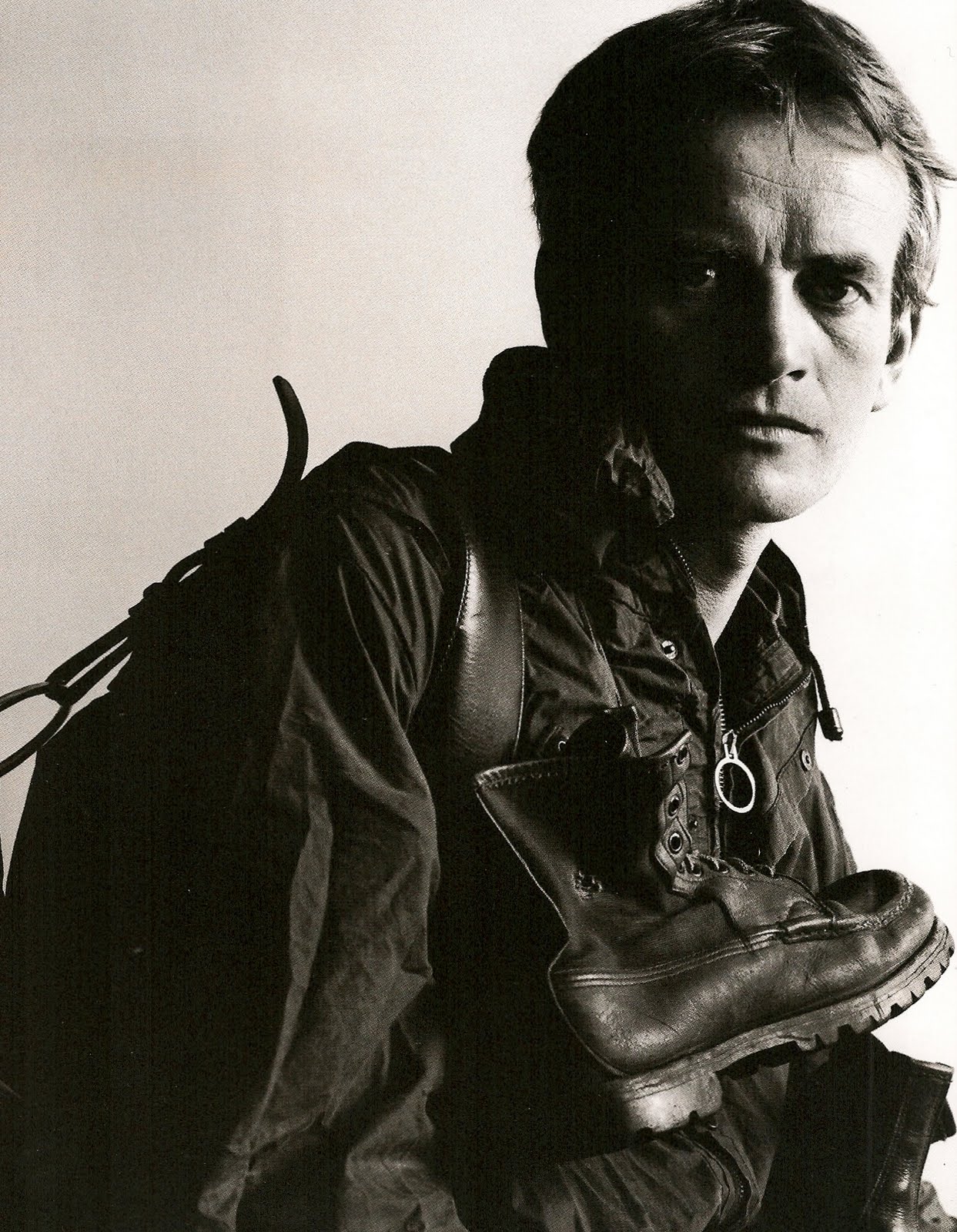
Amazing moment
Posted: July 10, 2012 Filed under: adventures, film 2 Commentsrecounted in this Will Leitch interview with Spike Lee:
What do you think of Romney?
You know what’s funny? I met him in an airport, Reagan National Airport, and we said hello. It was, like, two, three years ago. I was just in D.C. and he was there and he said, “What’s up, Spike?” and I said, “What’s happening, Mitt?” We were in line getting something to eat. So I said what’s up and shook hands. I think it is going to be very, very, very close.
Readers, are you as surprised as I am that Mitt could recognize Spike Lee?
More from amazing John Muir
Posted: June 25, 2012 Filed under: adventures, New England, writing Leave a comment
Of the people of the States that I have now passed, I best like the Georgians. They have charming manners, and their dwellings are mostly larger and better than those of adjacent States. However costly or ornamental their homes or their manners, they do not, like those of the New Englander, appear as the fruits of intense painful sacrifice and training, but are entirely divested of artificial weights and measures, and seem to pervade and twine about their characters as spontaneous growths with the durability and charm of living nature.
In particular, Georgians, even the commonest, have a most charmingly cordial way of saying to strangers, as they proceed on their journey, “I wish you well, sir.”

School’d
Posted: June 20, 2012 Filed under: adventures, writing Leave a comment
In 1867, 29 year old John Muir decided to walk from Indiana to the Gulf of Mexico, making botanical observations. In the Cumberland Mountains of Tennessee, he knocks on the door of a farmhouse:
My knock on the door was answered by a bright, good-natured, good-looking little woman, who in reply to my request for a night’s lodging and food, said “Oh, I guess so. I think you can stay. Come in and I’ll call my husband.” “But I must first warn you,” I said, “that I have nothing smaller to offer you than a five-dollar bill for my entertainment. I don’t want you to think that I am trying to impose on your hospitality.”
She then called her husband, a blacksmith, who was at work at his forge. He came out, hammer in hand, bare-breasted, sweaty, begrimed, and covered with shaggy black hair. In reply to his wife’s statement, that this young man wished to stop over night, he quickly replied, “That’s all right; tell him to go into the house.” He was turning to go back to his shop, when his wife added, “But he says he hasn’t any change to pay. He has nothing smaller than a five-dollar bill.” Hesitating only a moment, he turned on his heel and said, “Tell him to go into the house. A man that comes right out like that beforehand is welcome to eat my bread.”
When he came in after his hard day’s work and sat down to dinner, he solemnly asked a blessing on the frugal meal, consisting solely of corn bread and bacon. Then, looking across the table at me, he said, “Young man, what are you doing down here?” I replied that I was looking at plants. “Plants? What kind of plants?” I said, “Oh, all kinds; grass, weeds, flowers, trees, mosses, ferns – almost everything that grows is interesting to me.”
“Well, young man,” he queried, “you mean to say that you are not employed by the Government on some private business?” “No, I said, “I am not employed by any one except just myself. I love all kinds of plants, and I came down here to these Southern States to get acquainted with as many of them as possible.”
“You look like a strong-minded man,” he replied, “and surely you are able to do something better than wander over the country and look at weeds and blossoms. These are hard times, and real work is required of every man that is able. Picking up blossoms doesn’t seem to be a man’s work at all in any kind of times.”
To this I replied, “You are a believer in the Bible, are you not?” “Oh, yes.” “Well, you know Solomon was a strong-minded man, and he is generally believed to have been the very wisest man the world ever saw, and yet he considered it was worth while to study plants; not only to go and pick them up as I am doing, but to study them; and you know we are told that he wrote a book about plants, not only of the great cedars of Lebanon, but of little bits of things growing in the cracks of the walls.
“Therefore, you see that Solomon differed very much more from you than from me in this matter. I’ll warrant you he had many a long ramble in the mountains of Judea, and had he been a Yankee he would likely have visited every weed in the land. And again, do you not remember that Christ told his disciples to ‘consider the lilies how they grow,’ and compared their beauty with Solomon in all his glory? Now, whose advice am I to take, yours or Christ’s? Christ says, ‘Consider the lilies.’ You say, ‘Don’t consider them. It isn’t worth while for any strong-minded man.'”
What do you think happens next?
a) The blacksmith beats up John Muir
or
b) “This evidently satisfied him, and he acknowledged that he had never thought of blossoms in that way before.”
Wanderer Above The Sea Of Fog, 1818
Posted: June 4, 2012 Filed under: adventures, art, mountains, painting 1 Comment

Caspar David Friedrich.
By 1820, he was living as a recluse and was described by friends as the “most solitary of the solitary”. Towards the end of his life he lived in relative poverty and was increasingly dependent on the charity of friends. He became isolated and spent long periods of the day and night walking alone through woods and fields, often beginning his strolls before sunrise.
The Glorious First Of June
Posted: June 1, 2012 Filed under: adventures, history, painting, the ocean Leave a comment
The Glorious First of June (also known as the Third Battle of Ushant, and in France as the Bataille du 13 prairial an 2 or Combat de Prairial) of 1794 was the first and largest fleet action of the naval conflict between the Kingdom of Great Britain and the First French Republic during the French Revolutionary Wars. The British Channel Fleet under Admiral Lord Howe attempted to prevent the passage of a vital French grain convoy from the United States, which was protected by the French Atlantic Fleet, commanded by Vice-Admiral Louis Thomas Villaret de Joyeuse.
In the immediate aftermath both sides claimed victory and the outcome of the battle was seized upon by the press of both nations as a demonstration of the prowess and bravery of their respective navies.
Watson And The Shark (1778), John Singleton Copley
Posted: May 31, 2012 Filed under: adventures, heroes, MFA Boston, museum Leave a commentAt his death, Watson bequeathed the 1778 painting to Christ’s Hospital, with the hope that it would prove “a most usefull Lesson to Youth”.
Little did I know that the MFA version, which proved so useful to me in my own youth, was “a replica Copley made for himself.”
Not to worry, Brook Watson survived the attack depicted, and grew into this happy fellow:

Says the great Wiki article:
A verse penned by one of Watson’s political enemies poked fun at his ordeal (and perhaps at his abilities):
“
- Oh! Had the monster, who for breakfast ate
- That luckless limb, his noblest noddle met,
- The best of workmen, nor the best of wood,
- Had scarce supply’d him with a head so good.
Now, what does this have to do with the previous post? :
Three years later [Watson] was sent to supervise the expulsion of the Acadians from the Baie Verte area.
That’s in Havana harbor, btw.
The former king of Lo
Posted: May 20, 2012 Filed under: adventures Leave a comment
from The Boston Globe’s Big Picture blog collection on the Nepalese region/former kingdom of Mustang.
Nuns at Tatsang, 1931
Posted: May 7, 2012 Filed under: adventures, mountains, photography, pictures, Tibet, travel Leave a comment
Wish I had a larger version of this. The photographer is Frank Smythe, who went on the 1938 Shipton-Tilman Everest expedition. My source is the Royal Geographic Society.
In 1949, in Delhi, [Smythe] was taken ill with food poisoning; then a succession of malaria attacks took their toll and he died on June 27, 1949 two weeks before his 49th birthday.
One more Jack Delano
Posted: May 3, 2012 Filed under: adventures, photography, pictures Leave a commentBorn in the Ukraine in 1923, “he travelled to Puerto Rico in 1941 as a part of the FSA project. This trip had such a profound influence on him that he settled there permanently in 1946.” Died 1997.

I killed a bee with this egregious New Yorker
Posted: April 30, 2012 Filed under: adventures Leave a comment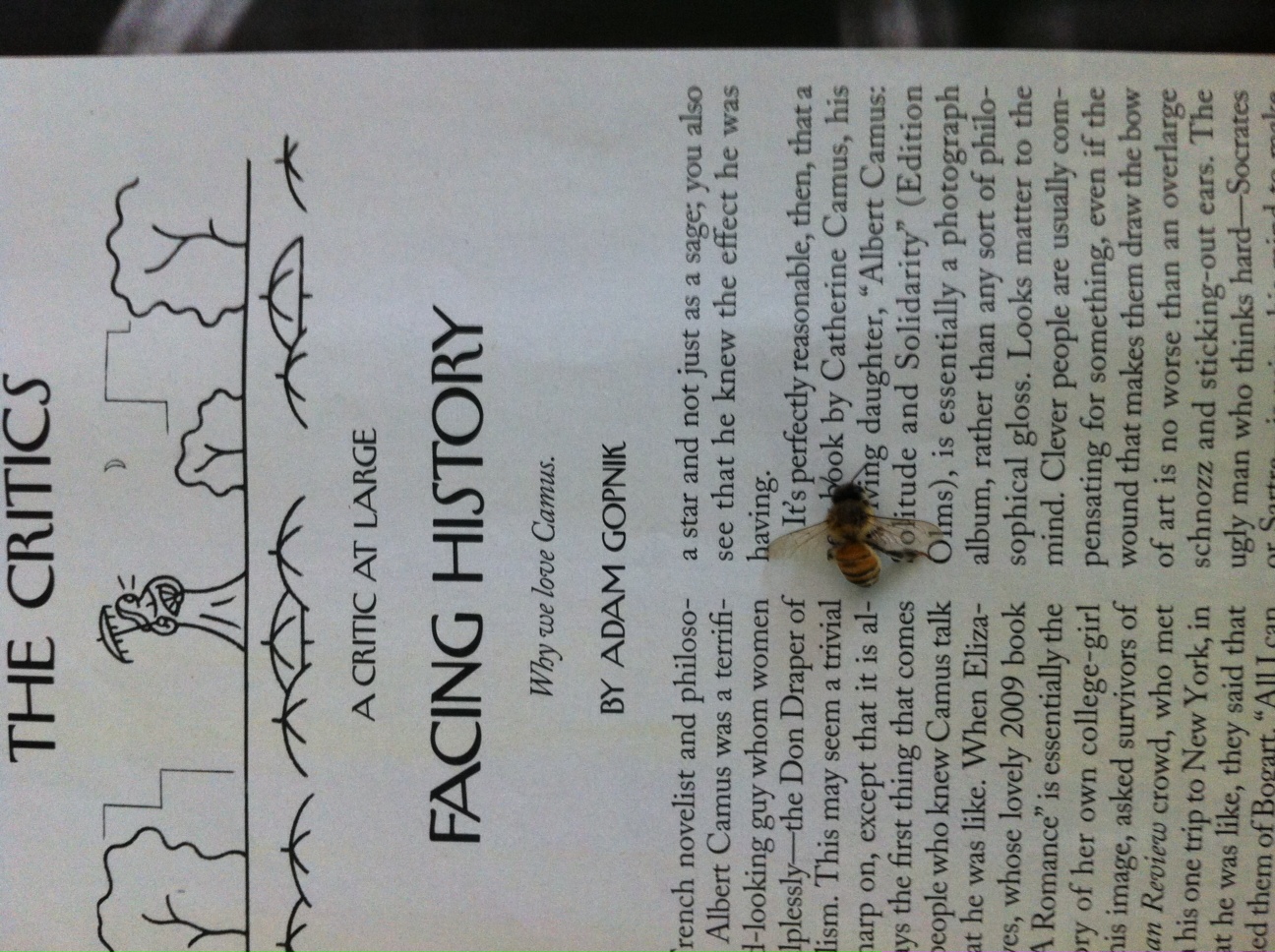
More Celia Johnson
Posted: April 30, 2012 Filed under: adventures, film, Future Mrs. Hely, heroes, how to live, women Leave a commenttubechopped her speech from Noel Coward’s “In Which We Serve” (1942).

Fact (?) I learned in college: Goebbels was constantly infuriated and impressed by how much better and subtler American and English propaganda films were.
[Celia Johnson] later recalled her choice of an acting career with the comment, “I thought I’d rather like it. It was the only thing I was good at. And I thought it might be rather wicked.”
She was married to Peter Fleming, brother of Ian. He held his own in the adventuring department:
In April 1932 Fleming replied to an advertisement in the personal columns of The Times: “Exploring and sporting expedition, under experienced guidance, leaving England June to explore rivers central Brazil, if possible ascertain fate Colonel Percy Fawcett; abundant game, big and small; exceptional fishing; ROOM TWO MORE GUNS; highest references expected and given.”
The expedition, organised by Richard Churchyard, travelled to São Paulo, then overland to the rivers Araguaia and Tapirapé, heading towards the likely last-known position of the Fawcett expedition. During the inward journey, the expedition was riven by increasing internal disagreements as to its objectives and plans, centred particularly on its local leader, ‘Major Pingle’ (a pseudonym).
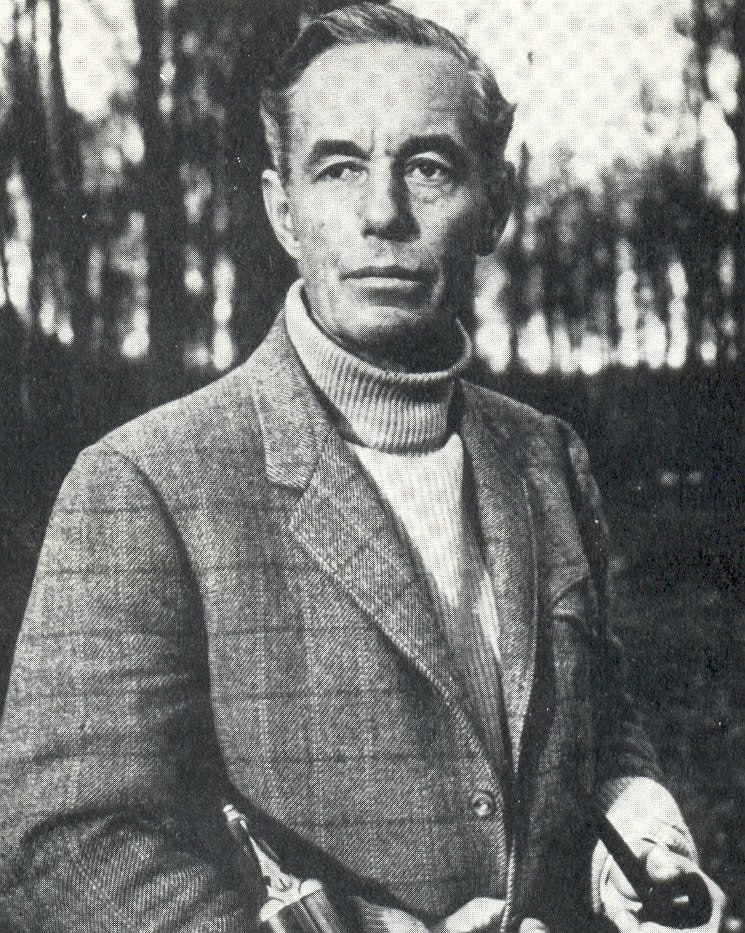
Here is a picture of him from this intriguing blog:
Coup In Mali, 2
Posted: April 3, 2012 Filed under: adventures, Mali, science, the world around us, UNESCO Leave a comment
Had a vague idea that I might go to Dogon country in Mali, ever since I read about it in Lonely Planet’s list of the world’s ten best treks. Now seems like an especially bad time to go, better stick to the Haute Route. But still, in my reading, came across this interesting or perhaps stupid discussion of whether the Dogon people have advanced astronomical knowledge. (My verdict? WHAT? Definitely not.)

Bruce Chatwin
Posted: March 26, 2012 Filed under: adventures, books, bruce chatwin, travel, writing Leave a comment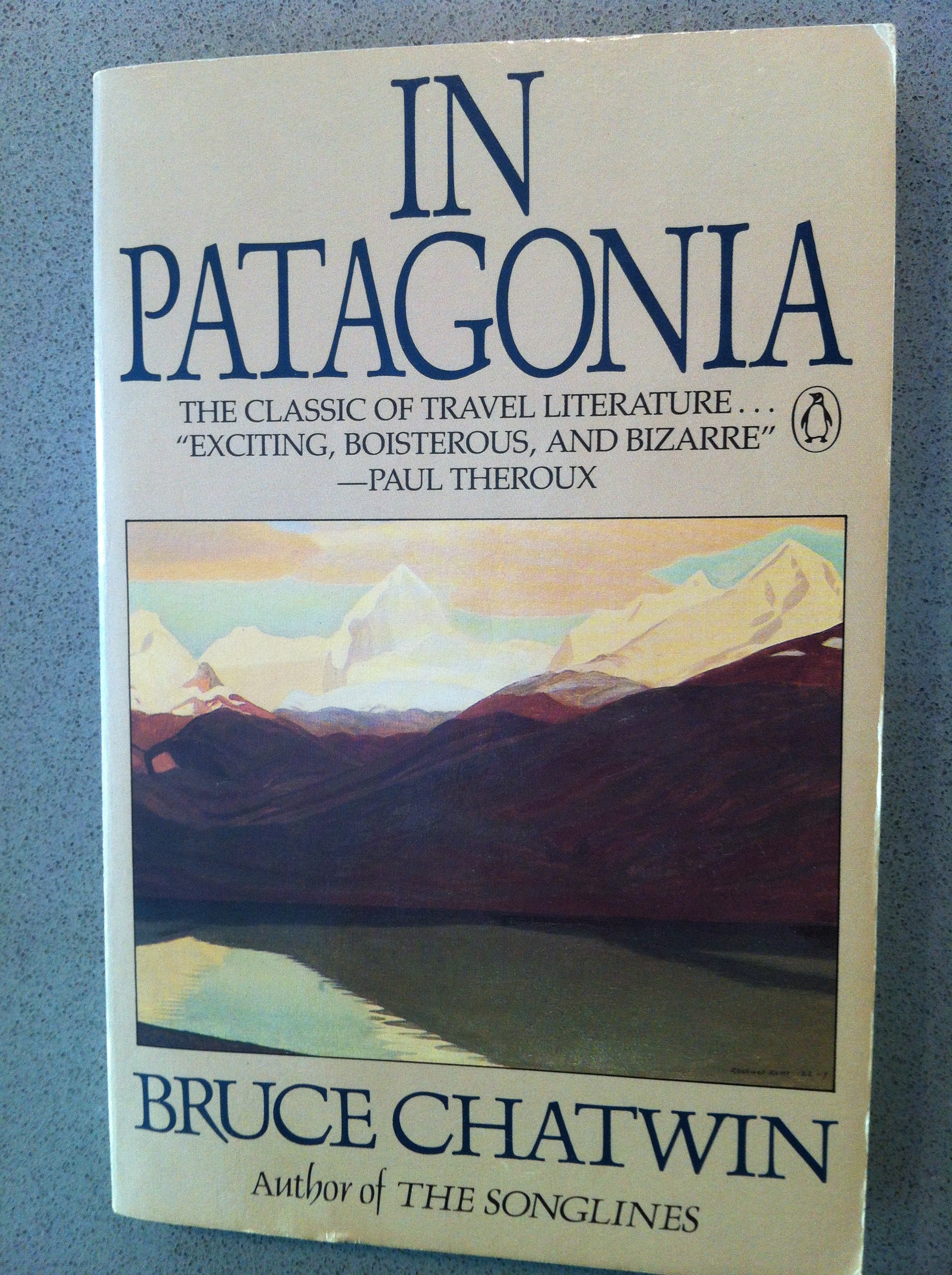
He definitely had bigtime Mike Daisey problems. No way he’d be as famous if he weren’t so photogenic. But still. This is the entire chapter 69 from “In Patagonia”:
The “Englishman” took me to the races. It was the sunniest day of summer. The Strait was a flat, calm blue and we could see the double white crown of Mount Sarmiento. The stands had a coat of fresh white paint and were full of generals and admirals and young officers.
“Day at the races, eh? Nothing like a good race-meeting. Come along with me now. Come along. Must introduce you to the Intendente.”
But the Intendente took no notice. He was busy talking to the owner of Highland Flier and Highland Princess. So we talked to a naval captain who stared out to sea.
“Ever hear the one about the Queen of Spain,” the Englishman asked, trying to liven up the conversation. “Never heard the one about the Queen of Spain? I’ll try and remember it:
A moment of pleasure
Nine months of pain
Three months of leisure
Then at it again.
“You are speaking of the Spanish Royal Family?” The Captain inclined his head.
The “Englishman” said he read history at Oxford.
The Nicholas Shakespeare biography is well-worth a flipthrough. When Chatwin was diagnosed with HIV he claimed, among other things, that he had an extremely rare disease he caught from being bitten by a Chinese bat.
Come with me!
Posted: March 21, 2012 Filed under: adventures, mountains, the world around us, UNESCO Leave a commentTo Reunion Pitons, Cirques, and Remparts UNESCO World Heritage Site!

Pack a lunch! Or should we stop for cari and bonbon piments?
The Chernobyl Ant
Posted: March 19, 2012 Filed under: adventures, animals, nature, the world around us Leave a comment
A famous flyfishing fly, the Chernobyl ant was designed (it appears, research cursory) by Mark Forslund and Allen Wooley, guides on the Green River below Flaming Gorge, Utah.
That picture is from the website of Elburgon Flies Supply, “a leading fly fishing flies supplier in Africa.”
St. Patty’s Roundup, #1
Posted: March 18, 2012 Filed under: adventures, how to live, Ireland Leave a commentA good pick-up tactic, from the Tain, as translated by Thomas Kinsella:
Nes the daughter of Eochaid Salbuide of the yellow heel was sitting outside Emain with her royal women about her. The druid Cathbad from the Tratraige of Mag Inis passed by, and the girl said to him:
“What is the present hour lucky for?”
“For begetting a king on a queen,” he said.
The queen asked him if that were really true, and the druid swore by god that it was: a son conceived at that hour would be heard of in Ireland for ever. The girl saw no other male near, and she took him inside with her.
She grew heavy with a child. It was in her womb for three years and three months.
That kid, as you no doubt know, Reader, was Conchobor, who gets obsessed with Deirdre later on. Bad idea, Con, she ain’t called “Deirdre of the sorrows” for nothing.
The Scottish Himalayan Expedition
Posted: March 10, 2012 Filed under: adventures, books, from wikipedia, heroes, how to live 1 Comment
A quotation by [mountaineer W. H. Murray] is widely misattributed to Johann Wolfgang von Goethe. The following passage occurs near the beginning of Murray’s The Scottish Himalayan Expedition (1951):
-
… but when I said that nothing had been done I erred in one important matter. We had definitely committed ourselves and were halfway out of our ruts. We had put down our passage money— booked a sailing to Bombay. This may sound too simple, but is great in consequence. Until one is committed, there is hesitancy, the chance to draw back, always ineffectiveness. Concerning all acts of initiative (and creation), there is one elementary truth the ignorance of which kills countless ideas and splendid plans: that the moment one definitely commits oneself, then providence moves too. A whole stream of events issues from the decision, raising in one’s favor all manner of unforeseen incidents, meetings and material assistance, which no man could have dreamt would have come his way. I learned a deep respect for one of Goethe’s couplets:
-
Whatever you can do or dream you can, begin it.
-
Boldness has genius, power and magic in it!
-
– from our old friends at Wikipedia. That Goethe quote is great, sure, but I’ll take Murray himself if I’m going on a hike. Murray’s autobiography, btw, was entitled The Evidence of Things Unseen, citing of course Hebrews 11:1.
Bowditch
Posted: February 14, 2012 Filed under: adventures, heroes, science 2 Comments
Reading The Flowering of New England by Van Wyck Brooks. Terrific, although seems specifically designed for my own personal brains. VWB seems to know everything about everybody who was alive in New England between 1820-1860, and talks about them all like they’re his kooky old pals. Here he is, diverting himself to talk about Nathaniel Bowditch.
So was the most illustrious of the Salem worthies, the great mathematician, Nathaniel Bowditch, the author of The Practical Navigator, a little, nimble man with burning eyes, with silky hair prematurely white, who darted about rubbing his hands with excitement. This second Benjamin Franklin, the son of a poor cooper and mechanic, who had learned his Latin as a boy in order to read Newton’s Principia – in which he found an error – had found eight thousand errors in the best English book on navigation. The book he had written himself, the Navigator, had saved countless lives and made the American ships the swiftest that had ever sailed. Everyone knew that, as a supercargo, bound for Sumatra and Manila, Bowditch had mastered astronomy so well – between the stars that he watched from the deck and the books he carried with him in his berth – that he was able to revise Laplace. Everyone knew how, on a Christmas night, in the midst of a blinding snow-storm, when he was captain of his own ship and there was not a landmark to be seen, Bowditch had sailed straight to his Salem wharf, as if it had been a sunny day in June.
Discussion question: who do you know who darts about rubbing his/her hands with excitement?
Mentioned all this to one of our correspondents, who told me that as a boy he was made to read this:

What?! From the somewhat scolding wikipedia article about this book: Carry On, Mr. Bowditch includes many dramatized and fictional components, including a chapter implying that Bowditch invented the lunar distance method of navigation when, in fact, his contribution was a relatively minor technical improvement in mathematical calculations.
Point is, when it comes to Bowditch, everybody’s getting worked up in all the best ways.
(stole picture of Salem from a real estate site)
This guy
Posted: February 10, 2012 Filed under: adventures, from wikipedia, heroes, people Leave a comment
Bill Tilman:
- twice won the Military Cross for bravery in WWI
- was a coffee grower in Kenya
- rode a bicycle across Africa
- parachuted behind enemy lines to fight with Italian and Albanian partisans in WWII
- was given “the keys to the city of Belluno which he helped save from occupation and destruction”
- “was the first man to attempt climbing the remote and unexplored Assam Himalayas”
- “detoured through Afghanistan’s Wakhan Corridor to see the source of the river Oxus”
- “found the pass named after him beyond Gangchempo”
- presumed dead at sea while sailing the South Atlantic to find remote mountains to climb.
Me?
- I had some açai juice today.
 Helytimes