SFJ: There’s a lot to talk about in that it mirrors the larger economy… You know, all the mergers that happened at the corporate level are now happening at the musical level. I was talking to someone who was handwringing about Spotify, a fellow musician who wrote an editorial, and when we were talking about the whole thing, he said, “You know, there’s no reason to yell at any particular party, because they all have equity in each other. It’s all one thing, and they’re completely aligned against the artist in every case.”
What we had in the ’90s was… what another very famous, huge record executive [said to me] in a very, very hilarious way. We went to his Fifth Avenue townhouse, gorgeous space, and he said—maybe I’ll give it away if I can do his accent properly—but he said [Affects accent.], “You know what this is? This right here? It’s stupid money. It’s CD money. That’s the kind of money that made dumb people feel smart.” You have the biggest fucking markup in retail history, and somehow in one winter, the music business—with Phillips leading the way—said, “Hey, that $7.99 album you love? Guess what? Your lucky day: You get to buy it for $18.99, it’s going to sound worse, and you have to buy fucking pieces of equipment.” And everyone said, “Great, I’d like to buy more of them please.” And so there was this incredible surplus of money. And then musicians like me [Frere-Jones played in the post-rock/punk-funk band Ui at the time. —ed.] get a day job doing very little at Columbia House, and go on tour, because those jobs existed.
Reader Reax: Steve Albini
Posted: September 15, 2015 Filed under: music Leave a comment
One reader writes:
You don’t like Steve Albini? You realise he made all of the best albums of the 90’s from
Nirvana to nick cave and he has own band that have been playing for 20 years for the love of it.Their MO is that you can’t tap your foot along to any of their songs and then they fuck around. They play primavera every year for the love of it.
Listen to his band Shellac’s ‘prayer to god’, ‘squirrel song’ ‘dude, incredible’ and ‘end of radio’. Tap your foot. Listen to how much he takes the piss.
He made an entire album about surveyors for god’s sake.
I’m trying here.
Steve Albini
Posted: September 14, 2015 Filed under: business, music Leave a comment
I have pretty much zero interest in the kind of music Steve Albini plays but whenever I come across an interview or something with him, he always strikes me as remarkably clear-headed about the realities of making money as an artist.
Take this profile in Psychology Today (what?) by Michael Friedman:
“There are kind of two perspectives on business. One of them is that a business exists to make money for the investor class that has a stake in that business. That’s one perspective. So, from a stock-market perspective, from a shareholder perspective, from an investor perspective, that from any publicly held company’s perspective, the company’s reason to exist is to make money for those people,” he explained. “And if you’re not making money, you’re a failing company. If its share price doesn’t go up, then the company’s failing, whether you’re making a profit or not. The idea is that the fundamental reason for that company to be there is to make money.”
Albini contrasts this approach to how he runs his business. “From an entrepreneurial standpoint, from someone like me — someone who builds a business for a reason — the reason my company exists is to make recordings of music. And in so doing, every now and again we’ll turn a profit. But that’s not why we’re in business. We’re not in business so that we can make money. And there’s a pretty strong argument that most businesses that are not part of the public sphere, not part of the investment transaction or equity management or whatever, most businesses operate on that level,” he said.
“Like a bakery opens because a guy wants to make bread. A tavern opens because a guy wants to serve beer to people. That’s why people start businesses. It’s because they want to do something with their time. They want that enterprise to be how they spend their days. But from an academic standpoint or from an analytical standpoint or from the standpoint of publicly held companies and investment class and everything, the reason the company started is meaningless. All they want to know is the share price going up. And for people like me that seems insane.”
“It’s like defining a marriage by the size of the house it occupies as opposed to defining the marriage by the love between two people and the life they build for themselves and the experience they share as part of the marriage. That’s the difference between the people who don’t get it (that you’re talking about), business people who can’t seem to buy into the greater culture of their business, and entrepreneurs, who started the business because the business itself means a lot to them.
“And there’s literally no way you can turn the second type of businessman into the first type. If somebody is hired to run a company and that company has investors who have expectations, then it is already impossible for that company to mean more to the employees as a concept than a paycheck. Because the value of the company has already been defined by the investor class. Now it is possible for somebody to start as an entrepreneur and then eventually sell off his company into the publicly held market and then he’s transformed from an entrepreneur into that second type of businessman. But it’s literally impossible to go the other way.”
I am a little baffled as to how this guy is, as he says, broke. More:
“Selfishness and greed are among the first things that we are instructed against as children. Like, ‘Don’t be selfish; share with your sister’ or whatever. And I feel like abandoning that principle when it’s money rather than gummy bears involved is fucking ridiculous.”
Albini takes heart that he is not alone: Other artists who have followed in a similar path. He explains: “There’s a Dutch band called The Ex who are an absolute inspiration. They’ve been going for 30 years now. And they originally started as sort of a squatter punk band in the squats in Amsterdam. And they have since built a sustainable, durable career, extraordinary body of work. They’ve been all over the world. They’ve made records with pop musicians and traditional musicians from Ethiopia. They’ve toured every flat spot on the globe. And they’ve all bought homes and raised families and all that sort of stuff — and all of it done in a very natural, very sustainable, very ethical way. They’re not a household name.”
“That’s the difference. If you want to be a household name, you kind of have to participate in the rock-star world of things where you’re either going to be a superstar or you’re going to be nobody. If you just want to play music for the rest of your life, that’s a completely attainable goal,” he said.
Miracle Man by Bob Carpenter
Posted: August 22, 2015 Filed under: music, Texas | Tags: Helys Leave a comment
in honor of cousin’s birthday, she put me on to this one.
Julie London
Posted: August 7, 2015 Filed under: actors, America Since 1945, music, the California Condition, women Leave a comment
came up on my Spotify. One great sentence after another on her wiki page:
In 1947, London married actor Jack Webb (of Dragnet fame). This pairing arose from their common love of jazz.

Her widely regarded beauty and poise (she was a pin-up girl prized by GIs during World War II) contrasted strongly with her pedestrian appearance and streetwise acting technique (much parodied by impersonators).

London and Troup appeared as panelists on the game show Tattletales several times in the 1970s. In the 1950s, London appeared in an advertisement for Marlboro cigarettes singing the “Marlboro Song” and in 1978 appeared in television advertisements for Rose Milk Skin Care Cream.

A private and introverted lady,[13] London suffered a stroke in 1995 and was in poor health until her death on October 18, 2000 (the day her husband, Bobby Troup, would have been 82), in Encino, California, at age 74.
In an interview, Mantooth claimed London “was not impish nor a diva. She was a soul, kind of mother. She was the kindest person I have ever known.” He also added, “I don’t know if it was up to her, but Kevin and I were both kept calm by her personality, when we were shooting in the hospital. Only Bobby Troup knew who she was…she was just like Julie! She made us laugh!”
Columbia House
Posted: June 23, 2015 Filed under: music, New York 2 Comments
Really enjoyed this AV Club thing about Columbia House:
SFJ: Scattered through many musician interviews and oral histories, you hear a lot of stories of people early on who really did have no other way of getting music, and how important it was to them. And, even as a kid in Fort Greene [in Brooklyn], I subscribed to Columbia House because I wasn’t allowed to go buy things on my own yet. I would wait and wait for my ELO record. One of the most disappointing moments of my life was [when] I came back from vacation knowing that Kiss’ Alive II was going to be in my mailbox, and for some reason the son-of-a-bitch mailman, as if he didn’t know what he was doing, folded the fucking thing in half and put it through the slot.
All: [Rousing chorus of everyone groaning and saying, “Nooooooo!”]
And:
Aquarium Drunkard
Posted: April 22, 2015 Filed under: America Since 1945, music, the California Condition Leave a comment
Picked this one up from listening to Aquarium Drunkard‘s playlists on Spotify.

Don’t know anything about Aquarium Drunkard except passed-down oral legend and intend to keep it that way but I’m not the first to discover him — the guy is brightening my life with his (?) music curating.

Sherrill initially planned to have Tucker record “The Happiest Girl In the Whole USA,” but she passed on the tune to Donna Fargo, choosing “Delta Dawn” — a song she heardBette Midler sing on The Tonight Show — instead. Released in the spring of 1972, the song became a hit, peaking at number six on the country charts and scraping the bottom of the pop charts. At first, Columbia Records tried to downplay Tucker’s age, but soon word leaked out and she became a sensation. A year later, Australian singer Helen Reddy would score a No. 1 U.S. pop hit with her version of “Delta Dawn.”
She had begun drinking in her late teens, and she explained how it started: “You send your ass out on the road doing two gigs a night and after all that adoration go back to empty hotel rooms. Loneliness got me into it.” In 1978 Tucker moved to Los Angeles, California, to try, unsuccessfully, to broaden her appeal to pop audiences, and was quickly captivated by the city’s nightlife. She also said that she “was the wildest thing out there. I could stay up longer, drink more and kick the biggest ass in town. I was on the ragged edge.”
Worth having a look at Bette’s version if only for her outfit:
Shady Grove
Posted: April 16, 2015 Filed under: America Since 1945, music Leave a comment
In my foolish youth I thought Tom Petty was kind of a joke, until Bob Dylan in Chronicles woke me up hard.
Bob also has words of respect for Jerry Garcia:
What an eerie tune. Wikipedia is unusually quiet on this one.
Many verses exist,[citation needed] most of them describing the speaker’s love for a woman called Shady Grove. There are also various choruses, which refer to the speaker traveling somewhere (to Harlan, to a place called Shady Grove, or simply “away”)

Harlan
The folks at mudcat.org take on the problem:
| Subject: Origins: ‘Shady Grove’ a mondegreen ? From: GUEST,Jake Date: 15 Aug 10 – 11:23 PMMulling (for the thousandth time) over the incongruity of ‘Shady Grove’ which is nothing about trees protecting the singer from the sun, but seems to be a woman’s name, it occurred to me in a flash of insight, that of course it must have started as a song about a Woman or girl named “Sadie” with the surname “Grove”, ie, “Sadie Grove”, and was corrupted by the usual vagaries of oral transmission, etc, etc. Searching this forum and the web generally provides no support for this conjecture, however. |
| Subject: RE: Origins: ‘Shady Grove’ a mondegreen ? From: MGM·Lion Date: 15 Aug 10 – 11:32 PMI have always shared this confusion: Shady Grove seems to be the woman’s name, but also the name of the place or location in which she lives, sometimes incongruously both at the same time. The fact that it’s one of those myriad songs [Going Down Town; Bowling Green …] which share pretty much the same set of ‘floaters’ doesn’t help.~Michael~ |
| Subject: RE: Origins: ‘Shady Grove’ a mondegreen ? From: Hamish Date: 16 Aug 10 – 03:18 AM”Wish I was in Shady Grove” takes on a new meaning.”When I was in Shady Grove I heard them pretty birds sing” (and the earth moved, no doubt). |
| Subject: RE: Origins: ‘Shady Grove’ a mondegreen ? From: GUEST,Lynn W Date: 16 Aug 10 – 04:11 AMThere is a comment on Wikipedia that the melody is similar to Matty Groves. Any connection, I wonder? |
| Subject: RE: Origins: ‘Shady Grove’ a mondegreen ? From: Jack Campin Date: 16 Aug 10 – 05:19 AMWikipedia has got it backwards. The folk-revival version of “Matty Groves” took its tune from “Shady Grove”. |
That’s as far down this hole as I can go at the moment.
I’d be shocked if any Helytimes readers hadn’t wikipedia’d The Child Ballads.
If demographizing the known Helytimes readership, I’d say “it’s people, mostly people I know, who have Wikipedia’d The Child Ballads.”
Still, why not a refresher on some best ofs?

Although shy and diffident on account of his working-class origins, he was soon recognized as “the best writer, best speaker, best mathematician, the most accomplished person in knowledge of general literature” and he became extremely popular with his classmates.
Child became the Boylston Professor of Rhetoric and Oratory when he we was 26. Says an admirer, writing in the 1970s:
Child well understood how indispensable good writing and good speaking are to civilization, or as many would now prefer to say, to society. For him, writing and speaking were not only the practical means by which men share useful information, but also the means whereby they formulate and share values, including the higher order of values that give meaning to life and purpose to human activities of all sorts. Concerned as he thus so greatly was with rhetoric, oratory, and the motives of those mental disciplines, Child was inevitably drawn into pondering the essential differences between speech and writing, and to searching for the origins of thoughtful expression in English.
(Yes! That’s the good reason for being into this I’ve been looking for.)
Sometimes I picture Child backpacking around from pub to pub learning these things. Mostly, though, he got them from manuscripts.
Don’t you worry, he could cut loose sometimes:
he also gave a sedulous but conservative hearing to popular versions still surviving.
Child engaged
in extensive international correspondence on the subject with colleagues abroad, primarily with the Danish literary historian and ethnographer Svend Grundtvig, whose monumental twelve-volume compilation of Danish ballads, Danmarks gamle Folkeviser, vols. 1–12 (Copenhagen, 1853), was the model for Child’s resulting canonical five-volume edition of some 305 English and Scottish ballads and their numerous variants.
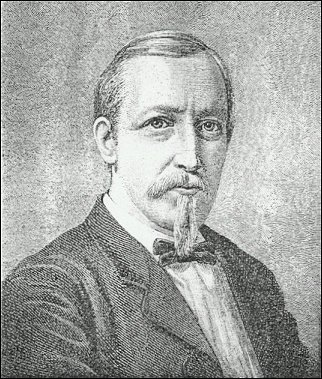
Svend.
Child is buried in the Sedgwick Pie.

Is Kyra Sedgwick eligible for the Sedgwick Pie? Seems like she might be. Also seems a bit rude to ask a wonderful and very alive actress and mother if she’s given any thought to her grave.
Famously (? I guess, I never read the biography) not included:

Videos discussed last night
Posted: April 12, 2015 Filed under: animals, film, music 1 Commentfrom a conversation about whether my friends should get a goat:
from a conversation about Tinashe:
The Ragged Antique Phonograph Program
Posted: March 18, 2015 Filed under: music Leave a commentReading this article about The Best Show:
Like WFMU itself, which takes pride in its esotericism (the lead-in to The Best Show for years was The Ragged Antique Phonograph Program, which played only 78s or cylinders on period equipment), The Best Show is a cult phenomenon. Its most hard-core listeners can literally become card-carrying fans: “Friends of Tom” are issued membership cards signed by Scharpling. For years, finding out about the show took some digging. Chicagoans who wanted to hear it had to visit the tristate area or find one of five CDs that Scharpling and Wurster self-released between 2002 and 2007. That finally changed in 2008, when they added a podcast.
and was like “haha what a hilarious gag from Scharpling and Wurster. That’s just the kind of well-observed satire of the excesses of eccentric fandom they specialize at.”
But no, apparently, that really was the lead-in. Here’s a photo of the hosts from their website, where you can listen to probably over a hundred episodes.

This world is truly amazing. I wonder if there’s a big future in documentary or “reality” comedy, that’s not making anything up but just observing and capturing the absurdities of what exists, the way all my friends watch documentaries now? The trouble there might be it’s very difficult to construct a documentary that is purely funny without a strong dose of some pathetic sadness or hopefulness or something — you can’t get undiluted laughs out of unconstructed reality? If the goal is simply, “watch something that makes me laugh” might be hard to capture.
Anyway, best of luck to Scharpling in continuing Best Show:
St. Vincent
Posted: January 5, 2015 Filed under: America Since 1945, music, women 3 Comments
photo by Tod Seelie.
What red-blooded American hasn’t considered suicide?
HIGHEST recommendation to Marc Maron’s interview with St. Vincent. A truly fantastic interview with a person who can’t seem to say anything except in some intriguing, innovative way. Super cool.
A fun twist in my listening experience: I was skipping over the first ten minutes as is my way with WTF Podcast, but because there’s a mini-interview or teaser at the beginning, I listened to about five minutes of Andrea Martin, thinking she was St. Vincent:

Getty images.
A trippy misunderstanding.
One thing St. Vincent said is that, as a kind of resolution, she’s stopped reading the Internet, and she’s found — whether it’s causation or correlation — that she’s been more present, has more interesting conversations with people she comes across.
Unachievable goal for me, but I am gonna continue to think about this, she’s onto something here.
Today I looked at Drudge Report, as I so often do, and was like “what the fuck am I doing looking at this garbage?” Some headlines from Drudge today, punctuation is sic:
Students slam Michelle O lunch rules: Mayo banned
‘SEX SLAVE’ MET QUEEN
PAPER: Unending Anxiety of ‘ICYMI’ World…
Man posts bail — with sneakers…
BABIES WITH ‘THREE PARENTS’ TO BE LEGAL WITHIN WEEKS…
RISE OF THE MACHINES: ROBOTS LEARN WATCHING YOUTUBE!
Al Qaeda warns of new ‘undetectable’ bombs to be used against US…
Egypt defence lawyers challenge police in gay bathhouse case…
Do I need this garbage in my life?
(Hey serious q: if any HelyTimes readers know some best practices for using photos from the internet on your non-profit blog please lemme know. Can’t find a source for that St. Vincent photo, not sure how hard I should try/worry about that)
Merry Christmas
Posted: December 24, 2014 Filed under: children, music, musicals Leave a comment
Esther [Judy Garland] finally gets to meet John properly when he is a guest at the Smiths’ house party, although her chances of romancing him don’t go to plan when, after all the guests are gone and he is helping her turn off the gas lamps throughout the house, he tells her she uses the same perfume as his grandmother and that she has “a mighty strong grip for a girl”…
At the ball, Esther fills up a visiting girl’s (Lucille Ballard, played by June Lockhart) dance card with losers because she thinks Lucille is a rival of Rose’s. But when Lucille turns out to be interested in Lon, Esther switches her dance card with Lucille’s and instead dances herself with the clumsy and awkward partners. After being rescued by Grandpa, she is overwhelmed when John unexpectedly turns up after somehow managing to obtain a tuxedo, and the pair dance together for the rest of the evening. Later on, John proposes to Esther and she accepts.
Esther returns home to an upset Tootie. She is soothed by the poignant “Have Yourself a Merry Little Christmas.” Tootie, however, becomes more upset at the prospect of the family’s move and runs downstairs, out into the cold to destroy the snowmen they have made. Mr. Smith sees his daughter’s upsetting outburst from an upstairs window.
Remember to let your kids smoke a cigarette.
Fist City
Posted: December 16, 2014 Filed under: America Since 1945, music, women Leave a comment
Loretta has such an admirable way of getting right to the point.
Hot Cross Buns
Posted: November 20, 2014 Filed under: music 1 CommentFinding a leftover roll in my house reminded me of the sad, funny sound of elementary students playing “Hot Cross Buns” on their recorders. I went looking for it on YouTube:
This video has 11,221 views.
utterly nonsensical
Posted: October 6, 2014 Filed under: America Since 1945, music Leave a comment
The chorus of the song is wordless, consisting of a repeated chant of “lie-la-lie”. Simon stated that this was originally intended only as a placeholder, but became part of the finished song.
“I didn’t have any words! Then people said it was ‘lie’ but I didn’t really mean that. That it was a lie. But, it’s not a failure of songwriting, because people like that and they put enough meaning into it, and the rest of the song has enough power and emotion, I guess, to make it go, so it’s all right. But for me, every time I sing that part… [softly], I’m a little embarrassed.”
It has sometimes been suggested that the words represent a “sustained attack on Bob Dylan”. Under this interpretation, Dylan is identified by his experience as an amateur boxer, and the “lie-la-lie” chorus represents allegations of Dylan lying about his musical intentions. Biographer Marc Eliot wrote in Paul Simon: A Life, “In hindsight, this seems utterly nonsensical.”
Bob Dylan in turn covered the song on his Self Portrait album, replacing the word “glove” with “blow.” Paul Simon himself has suggested that the lyrics are largely autobiographical, written during a time when he felt he was being unfairly criticized:
“I think I was reading the Bible around that time. That’s where I think phrases such as ‘workman’s wages’ came from, and ‘seeking out the poorer quarters’. That was biblical. I think the song was about me: everybody’s beating me up, and I’m telling you now I’m going to go away if you don’t stop.”[5]
During a New York City concert in October 2010, Paul Simon stopped singing midway through “The Boxer” to tell the story of a woman who stopped him on the street to tell him that she edits the song when singing it to her young child. Simon told the audience that she removed the words “the whores” and altered the song to say, “I get no offers, just a come-on from toy stores on Seventh Avenue.” Simon laughingly commented that he felt that it was “a better line.”[6]
Polio and Songwriting
Posted: October 3, 2014 Filed under: America Since 1945, music, the California Condition Leave a commentJoni Mitchell and Neil Young

both got polio in the same 1951 epidemic.

More on that here, with specific reference to Ian Dury. Dury was played by Andy Serkis in the film Sex & Drugs & Rock & Roll:

I learned that Mitchell/Young polio fact, and many other interesting things, from this David Samuels article:
His second discovery was that he could encourage the writing of hits by urging songwriters to follow his nine rules of hit songwriting. While Caren’s rules are not comprehensive or exclusive, it is easy to measure their value by a glance at the dozens of gold and platinum records hanging in his office. He is happy to run down his rules for me. “First, it starts with an expression of ‘Hey,’ ‘Oops,’ ‘Excuse me,’” he begins. “Second is a personal statement: ‘I’m a hustler, baby,’ ‘I wanna love you,’ ‘I need you tonight.’ Third is telling you what to do: ‘Put your hands up,’ ‘Give me all your love,’ ‘Jump.’ Fourth is asking a question: ‘Will you love me tomorrow,’ ‘Where have you been all my life,’ ‘Will the real Slim Shady please stand up.’”
He takes a deep breath, and rattles off another four rules. “Five is logic,” he says, “which could be counting, or could be spelling or phonetics: ‘1-2-3-4, let the bodies hit the floor,’ or ‘Ca-li-fornia is comp-li-cated,’ those kind of things. Six would be catchphrases that roll off the tip of your tongue because you know them: ‘Never say never,’ ‘Rain on my parade.’ Seven would be what we call stutter, like, ‘D-d-don’t stop the beat,’ but it could also be repetition: ‘Will the real Slim Shady please stand up, please stand up, please stand up.’ Eight is going back to logic again, like hot or cold, heaven or hell, head to toe, all those kind of things.”
The ninth rule of hit songwriting is silence. Why? Because most people who are listening to music are actually doing something else, he explains. They are driving a car, or working out, or dancing, or flirting. Silence gives you time to catch up with the lyrics if you are drunk or stoned. If you are singing along, silence gives you time to breathe. “Michael Jackson, his quote was ‘Silence is the greatest thing an entertainer has,’” Caren continues. “‘I got a feeling,’ space-space-space, ‘Do you believe in life after love,’ space-space-space-space-space.”

In addition to writing all the music and lyrics for Nirvana, Kurt Cobain designed the band’s T-shirts and album covers and created shot-by-shot scripts for the band’s videos on MTV, as well as edited the bios and other publicity materials that helped shape the band’s narrative in the rock press. It was all part of his art, or inseparable from his art; it’s what he got paid for. “Rock and roll is a commercial art form, it’s not just about the music, it’s about what you look like, it’s about how you connect with an audience, it’s about the photos that appear in the British trades.” Nirvana’s longtime manager, Danny Goldberg, told me this when I met with him in New York, before I left for the Grammys. Even when Cobain was nodding off on rock-star doses of heroin in the MTV editing suite, Goldberg remembers, he could still identify exactly where the camera should come in and when to cut away. “He had a dark side, but he was so nice to me, you know, it was so out of proportion to anything that I did for him,” he remembered. “He was tremendously intellectually curious, incredibly creative, and had a great sense of humor; he was like a leprechaun or an elf. You’d go to wherever he was living, and he lived in a lot of places, and there’d be like reams of drawings and paintings and poems. He was also a great fan of other artists. He’d always be saying, ‘You’ve got to hear Captain America, you’ve got to hear the Jesus Lizard,’ or whatever those bands were.”

As an irony
Posted: September 15, 2014 Filed under: America Since 1945, music 1 Commentfrom Buzzfeed’s fascinating profile of Ryan Adams:
“And I slept. I slept like I never had. I totally crashed in this beautiful way. I let go of all the false ideas of my late twenties and early thirties, this construct of who I was and how I thought I should be. That struggle was over.”
That sounds great! How about this?:
In 1994 he formed Whiskeytown. As Adams would famously declare in the group’s musical manifesto “Faithless Street”: “I started this damn country band, ‘cause punk rock was too hard to sing.” Today Adams says the foundational conceit behind the band was a pose — something his more strident critics accused him of at the time. “There’s this wrong idea about me being identified with things that are Southern or country,” he notes. “I do not fucking like country music and I don’t own any of it. I watched Hee-Haw as a kid with my grandmother, I only like country music as an irony. I liked it when I would get drunk.”
As an irony. Or this:
In the studio Adams plied [Jenny] Lewis with psychological tricks: He told her to write her own Oasis-style anthem, forced her to listen to Creed incessantly before laying down vocals. “I had been stuck in the mud for so long, I needed a person who could push me ahead. The casual, low-stakes environment for me was crucial.”
Now here is a lady.
Posted: July 14, 2014 Filed under: America Since 1945, music Leave a comment
Kate McGarrigle.
Her ex-father-in-law was Loudon Wainwright, Jr.:
Wainwright joined the staff of Life magazine and worked in a variety of positions over the years, including covering the Mercury astronauts. He and John Glenn listened to the inauguration speech of John F. Kennedy while riding in Glenn’s car in 1961.
John and Mrs. Glenn:

(from Lily Koppel’s extremely rad blog for her book for her (presumably) rad book The Astronaut Wives Club:

Buying that immediately. Check out the postcard she has up there now.
Loudon’s son and Kate’s ex of course is Loudon III:
The old Australian Crawl.
Happy Bastille Day!

In his later years [Jean-Pierre] Houël published two illustrated treatises on elephants. Drawings of other animals suggest he was preparing to publish further zoological works; however, his death at the age of seventy-eight cut short his plans.
Wild Heart
Posted: July 7, 2014 Filed under: celebrity, music Leave a comment
Man. Shoutout to MCW for putting me on to this, I’d never seen it. She must be 33 here?
Compare to the person on the cover of the album:

“I’m telling you, a piano player and a girl — get it.”
Nicks toured for Rock a Little in 1986. The tour ended on October 10, 1986.
The tour marked a turning point in Nicks’ life. The January before the tour was to begin, a plastic surgeon warned her of severe health problems if she did not stop using cocaine. “I said, ‘What do you think about my nose?’,” she recalled on The Chris Isaak Hour in 2009. “And he said, ‘Well, I think the next time you do a hit of cocaine, you could drop dead.” At the end of the Australian tour, Nicks checked herself into the Betty Ford Center for 30 days to overcome her cocaine addiction. Recalling the strong influence of Janis Joplin and Jimi Hendrix on her music and life, she told a UK interviewer, “I saw how they went down, and a part of me wanted to go down with them…but then another part of me thought, I would be very sad if some 25-year-old lady rock and roll singer ten years from now said, ‘I wish Stevie Nicks would have thought about it a little more.’ That’s kind of what stopped me and made me really look at the world through clear eyes.”
Also:
Nicks has started a charity foundation entitled “Stevie Nicks’ Band of Soldiers” which is used for the benefit of wounded military personnel.
In late 2004, Nicks began visiting Army and Navy medical centers in Washington, D. C. While visiting wounded service men and women, Nicks became determined to find an object she could leave with each soldier that would raise their spirits, motivate, and give them something to look forward to each day. She eventually decided to purchase hundreds ofiPod Nanos, load them with music, artists, and playlists which she would hand select, and autograph them:
-
“I call it a soldiers’ iPod. It has all the crazy stuff that I listen to, and my collections I’ve been making since the ’70s for going on the road, when I’m sick…Or the couple of times in my life that I have really been down, music is what always dances me out of bed. ” – Stevie Nicks. The Arizona Republic
Nick Drake
Posted: July 1, 2014 Filed under: music Leave a comment
Gee whiz the story of Nick Drake (1947-1974) is sad.
He played rugby for the C1 House team and was appointed a House Captain in his last two terms. School friends recall Drake at this time as having been confident and “quietly authoritative”, while often aloof in his manner. His father Rodney remembered, “In one of his reports [the headmaster] said that none of us seemed to know him very well. All the way through with Nick. People didn’t know him very much.”
Good song though.

You Don’t Know What It’s Like
Posted: June 13, 2014 Filed under: music Leave a comment

Some good stuff in this Rolling Stone I picked up.

And:

How about this, from an interview with Carlos Santana?

I bet!
From another article, about the history of concert festivals:

This article was sad:

They wrote this one for Otis Redding, who died before he could record it.
 Helytimes