How to talk to children?
Posted: May 17, 2012 Filed under: children, Steinbeck, writing Leave a comment
At The Hairpin they have an interview with John Steinbeck’s son, re: a letter the dad sent the son that was at Letters of Note recently. Here’s an excerpt:
One of the things my father had going for himself is he talked to children like he talked to adults. Kids loved my father, because he didn’t talk down to them. They asked him a question, he gave a serious answer, he treated them as serious human beings.
My mom did the same thing, when I was young. She used to talk to me, even before I could talk, like I was an adult. I think that’s the right way to go about it.
I think so, too, especially if you expect your children to talk like adults. It’s really quite amazing what children will absorb if you give them the benefit of the doubt to understand that the intelligence is there. They may not be able to verbalize themselves completely, but comprehension is there.
Right.
And if you feel that someone is taking your question seriously, you’ll take the answer seriously, even if you don’t quite understand it all.
I’ve been really appreciating the lively conversation all 12,000-odd of you have been generating in the comments. If you know how to talk to children please discuss.
Bear in mind, though, Thom Steinbeck’s final warning:
Well what do you think it is about this letter that resonated with so many people, though? I mean, it was all across the internet, everyone was passing it along.
You can’t trust the internet for that, they’d pass along a car accident if they thought it was amusing!
(photo: “[Girl next to barn with chicken]” from the Library of Congress.)
Sitting Bull Part 2
Posted: May 11, 2012 Filed under: books, Custer, Fate, from wikipedia, history, Indians, photography, pictures, the American West, writing Leave a commentThat detail about the meadowlark is from Nathaniel Philbrick, The Last Stand: Custer, Sitting Bull and The Battle of The Little Bighorn. At best the second-best book about the Little Bighorn battle, first of course being:

but that image is amazing. Good on Philbrick.
What is amazing about “Son Of The Morning Star” is Connell doesn’t just tell the story, he follows the meandering lines that lead to it and out of it, and the people who traced them. He demonstrates that as soon as you focus on any particular incident, you can keep finding new dimensions of weirdness in it.
Take, for example, this meadowlark warning Sitting Bull. Philbrick cites that detail as coming from the recollections of One Bull, Sitting Bull’s nephew, found in box 104, folder 21 of the Walter Campbell collection. Walter Campbell was born in Severy, Kansas in 1887. He was the first Rhodes Scholar from the state of Oklahoma. He wrote under the name Stanley Vestal. Why? I don’t know. According to the University of Oklahoma, where his collection is kept, he was adopted by Sitting Bull’s family, and “was named Makes-Room or Make-Room-For-Him (Kiyukanpi) and His Name Is Everywhere (Ocastonka). Kiyukanpi was the name of Joseph White Bull’s father, and Ocastonka is a reference to the Chief’s great fame.”
Here’s a picture from the Walter Campbell collection:

That’s Young Man Afraid Of His Horses. Here’s another:

Regrettably OU won’t let me make that any bigger. Campbell/Vestal/His-Name-Is-Everywhere died of a heart attack on Christmas Day, 1957.
There’s also a Walter CAMP who is very important in Bighorniana. Camp worked for the railroad, and so could travel all over. An unsourced detail from Indiana University’s Camp collection is that this is how he “spent his summers,” finding lost battlefields and interviewing old Indians and soldiers. Here is a picture from Camp’s collection:

As for One Bull, here he is. This is a photograph by William Cross (which I found here):

On wikipedia’s page for One Bull, however, they illustrate him with a picture of his spoon:

This spoon is now in the Spurlock Museum, at the University of Illinois at Urbana-Champaigne, where they also have collections of Japanese wood carvings, Arctic artifacts, and Babylonian clay tablets.
from the Paris Review interview with J. P. Donleavy
Posted: May 9, 2012 Filed under: New York, writing Leave a commentINTERVIEWER
How did you motivate yourself?
DONLEAVY
That was easy. It was simply money and fame. I was aware as anyone is, that in this world you can just be swept away. I’m aware of this just as much now. New York is a great place to be reminded of it. You arrive here, and Good Lord, you find out in ten seconds that nothing whatever matters, especially your own small life. So I knew I had to write a book that would be the best work in the world. It was that simple.
rest here. FYI The Ginger Man is not the best work in the world. Some writers are better at playing writer than writing. There is a sentence or two in The Ginger Man that I think about lots, though.
Last stop on the Hemingway/Lillian Ross tour of the Met
Posted: April 21, 2012 Filed under: art, Cezanne, Hemingway, Met, museum, painting, pictures Leave a comment
We came to El Greco’s green “View of Toledo” and stood looking at it a long time. “This is the best picture in the Museum for me, and Christ knows there are some lovely ones,” Hemingway said.

After we reached the Cezannes and Degases and the other Impressionists, Hemingway became more and more excited, and discoursed on what each artist could do and how and what he had learned from each. Patrick listened respectfully and didn’t seem to want to talk about painting techniques any more. Hemingway spent several minutes looking at Cezanne’s “Rocks – Forest of Fontainebleu.” “This is what we try to do in writing, this and this, and the woods, and the rocks we have to climb over,” he said. “Cezanne is my painter, after the early painters. Wonder, wonder painter…
As we walked along, Hemingway said to me, “I can make a landscape like Mr. Paul Cezanne. I learned how to make a landscape from Mr. Paul Cezanne by walking through the Luxembourg Museum a thousand times with an empty gut, and I am pretty sure that if Mr. Paul was around, he would like the way I make them and be happy that I learned it from him.”
Wiki, close out Cezanne for us:
One day, Cézanne was caught in a storm while working in the field. Only after working for two hours under a downpour did he decide to go home; but on the way he collapsed. He was taken home by a passing driver. His old housekeeper rubbed his arms and legs to restore the circulation; as a result, he regained consciousness. On the following day, he intended to continue working, but later on he fainted; the model with whom he was working called for help; he was put to bed, and he never left it again. He died a few days later, on 22nd October 1906. He died of pneumonia and was buried at the old cemetery in his beloved hometown of Aix-en-Provence.
Captain George K. H. Coussmaker (Joshua Reynolds, 1782)
Posted: April 20, 2012 Filed under: art, Hemingway, Joshua Reynolds, Met, museum, painting, pictures, writing Leave a comment
“What the hell!” Hemingway said suddenly. “I don’t want to be an art critic. I just want to look at pictures and be happy with them and learn from them. Now, this for me is a damn good picture.” He stood back and peered at a Reynolds entitled “Colonel George Coussmaker,” which shows the Colonel leaning against a tree and holding his horse’s bridle. “Now, this Colonel is a son of a bitch who was willing to pay money to the best portrait painter of his day just to have himself painted,” Hemingway said, and gave a short laugh. “Look at the man’s arrogance and the strength in the neck of the horse and the way the man’s legs hang. He’s so arrogant he can afford to lean against a tree.”
remembers Miss Ross.
Coussmaker sat for Reynolds 21 times and his horse 8 times between February 9 and April 16, 1782 – an exceptional number of times.
Van Dyck, Portrait Of The Artist (possibly 1620-21)
Posted: April 19, 2012 Filed under: art, Hemingway, Met, museum, painting, pictures, writing 1 Comment
Weighed in already but let’s get Hemingway’s take:
Mrs. Hemingway called to us. She was looking at “Portrait of the Artist” by Van Dyck. Hemingway looked at it, nodded approval, and said, “In Spain, we had a fighter pilot named Whitey Dahl, so Whitey came to me one time and said, ‘Mr. Hemingway, is Van Dyck a good painter?’ I said ‘Yes, he is.’ He said, ‘Well, I’m glad, because I have one in my room and I like it very much, and I’m glad he’s a good painter because I like him.’ The next day, Whitey was shot down.”
– from Miss Ross again.
Portrait of Federigo Gonzaga (Francesco Francia, 1510)
Posted: April 16, 2012 Filed under: art, Hemingway, Met, museum, painting, pictures, writing Leave a comment
“Here’s what I like, Papa,” Patrick said, and Hemingway joined his son in front of “Portrait of Federigo Gonzaga (1500-1540) by Francesco Francia. It shows, against a landscape, a small boy with long hair and a cloak.
“This is what we try to do when we write, Mousie,” Hemingway said, pointing to the trees in the background. “We always have this in when we write.”
– “How Do You Like It Now, Gentleman,” by Lillian Ross, The New Yorker, May 13, 1950
“In Shark’s life there had been no literary romance.”
Posted: April 4, 2012 Filed under: books, California, love, Steinbeck, Steinbeck Leave a comment
In Shark’s life there had been no literary romance. At nineteen he took Katherine Mullock to three dances because she was available. This started the machine of precedent and he married her because her family and all of the neighbors expected it. Katherine was not pretty, but she had the firm freshness of a new weed, and the bridling vigor of a young mare. After her marriage she lost her vigor and her freshness as a flower does once it has received pollen. Her face sagged, her hips broadened, and she entered into her second destiny, that of work.
In his treatment of her, Shark was neither tender nor cruel. He governed her with the same gentle inflexibility he used on horses. Cruelty would have seemed to him as foolish as indulgence. He never talked to her as to human, never spoke of his hopes or thoughts or failures, of his paper wealth nor of the peach crop. Katherine would have been puzzled and worried if he had. Her life was sufficiently complicated without the added burden of another’s thoughts and problems.
Bruce Chatwin
Posted: March 26, 2012 Filed under: adventures, books, bruce chatwin, travel, writing Leave a comment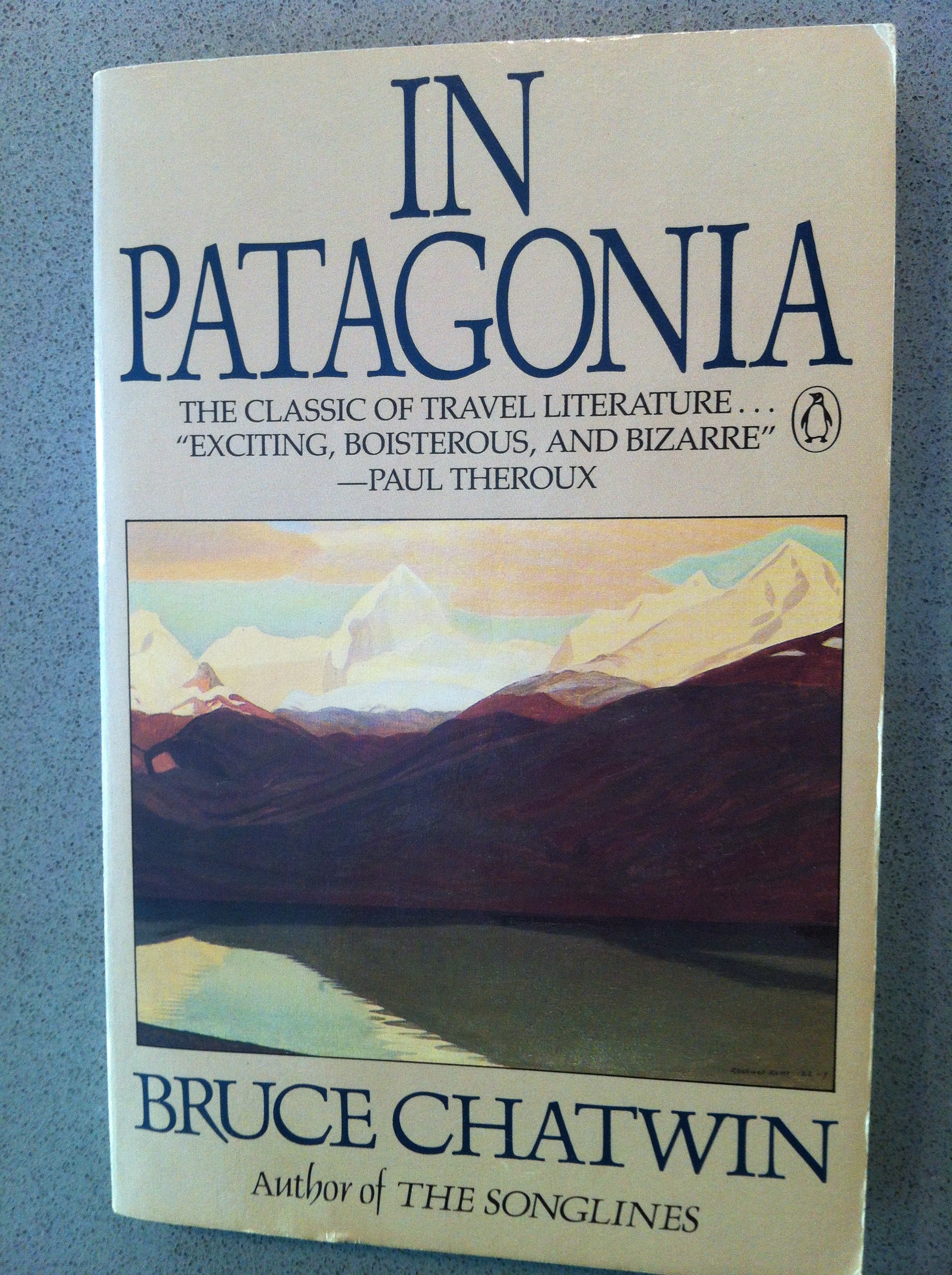
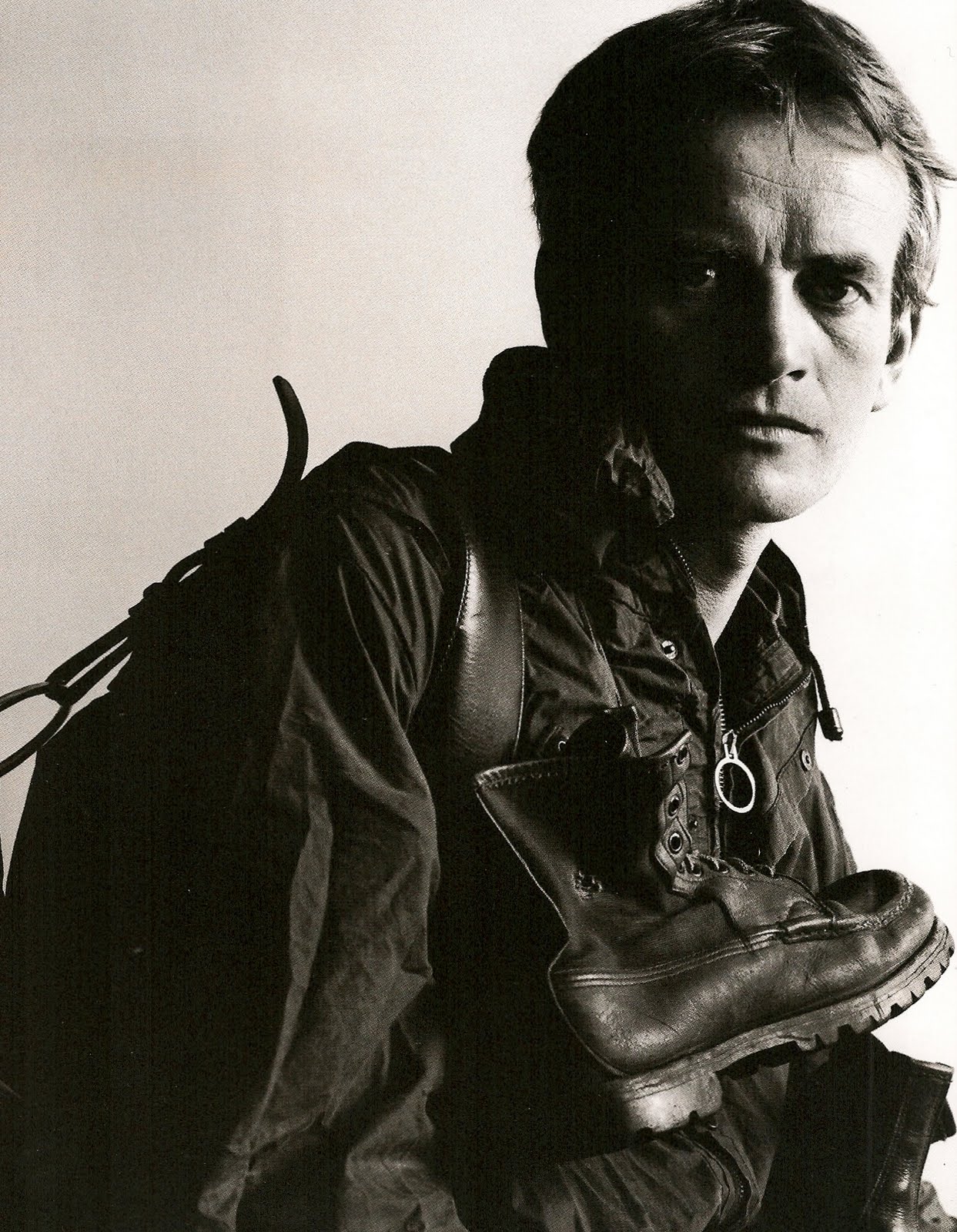
He definitely had bigtime Mike Daisey problems. No way he’d be as famous if he weren’t so photogenic. But still. This is the entire chapter 69 from “In Patagonia”:
The “Englishman” took me to the races. It was the sunniest day of summer. The Strait was a flat, calm blue and we could see the double white crown of Mount Sarmiento. The stands had a coat of fresh white paint and were full of generals and admirals and young officers.
“Day at the races, eh? Nothing like a good race-meeting. Come along with me now. Come along. Must introduce you to the Intendente.”
But the Intendente took no notice. He was busy talking to the owner of Highland Flier and Highland Princess. So we talked to a naval captain who stared out to sea.
“Ever hear the one about the Queen of Spain,” the Englishman asked, trying to liven up the conversation. “Never heard the one about the Queen of Spain? I’ll try and remember it:
A moment of pleasure
Nine months of pain
Three months of leisure
Then at it again.
“You are speaking of the Spanish Royal Family?” The Captain inclined his head.
The “Englishman” said he read history at Oxford.
The Nicholas Shakespeare biography is well-worth a flipthrough. When Chatwin was diagnosed with HIV he claimed, among other things, that he had an extremely rare disease he caught from being bitten by a Chinese bat.
Story about Aaron Sorkin and pacing
Posted: March 26, 2012 Filed under: film, screenwriting, writing 3 CommentsCraig [Mazin]: There is a great story recently from The Social Network, because Sorkin writes very — the dialogue is designed to be delivered at an insane pace. And he turned the script in and everybody was kind of freaking out. And he recorded that great opening sequence with Mark Zuckerberg being dumped by his girlfriend.
He recorded it the way, at the pace he thought it should be, and supposedly — this sounds true to me — Fincher basically timed everything per Sorkin. And on the day, he would sit there and his script supervisor had a stopwatch, and if they didn’t hit it, they did it again. [laughs] It had to be at that pace.
So, the one minute per page rule is something that, some standard needs to be there, but… — Like I said, if you know that it is supposed to go faster, just make sure everybody knows beforehand.
– from John August and Craig Mazin’s podcast. So helpful of them to provide a transcript.
Scraps from F. Scott’s notebook
Posted: March 17, 2012 Filed under: DFW, fscottfitzgerald, heroes, writing Leave a comment
My edition of The Crack-Up, from New Directions, includes a bunch of other assorted scraps found in F. Scott Fitzgerald’s notebook. They are amazing. Plots, lines, ideas, whatever. Here are some from the two pages I happened to open to:
- A tree, finding water, pierces roof and solves a mystery.
- Girl and giraffe
- Marionettes during dinner party meeting and kissing
- Play about a whole lot of old people – terrible things happen to them and they don’t really care.
- Play: The Office – an orgy after hours during the boom.
- A bat chase. Some desperate young people apply for jobs at Camp, knowing nothing about wood lore but pretending, each one.
- Girl whose ear is so sensitive she can hear radio. Man gets her out of insane asylum to use her.
- Boredom is not an end-product, is comparatively rather an early stage in life and art. You’ve got to go by or past or through boredom, as through a filter, before the clear product emerges. (hear that DFW?!)
- Girl marries a dissipated man and keeps him in healthy seclusion. She meanwhile grows restless and raises hell on the side
On the next page begins the section “Jingles and Songs.”
DFW thought to the [unhealthy?] limit
Posted: February 20, 2012 Filed under: how to live, people, writing Leave a commentThe novella-length monologue at the center of Pale King thus tells a story Wallace had told a thousand times before, of an American adolescent attempting to escape his head, and grow up. Formerly a self-anointed “wastoid,” I. R. S. auditor Chris Fogle recounts having muddled through his youth in the aptly named Libertyville, Illinois, unable to hold down a job and drifting between three different colleges and “four or five different majors.” Fogle, who describes himself as “like many of my generation,” speaks of having led a “crude approximation of a human life.” he was, he said, “the worst kind of nihilist – the kind who isn’t even aware he’s a nihilist.” He might have said he was leading a life of quiet desperation, or of conformity, even though it felt to him at the time like a free life of non-conformity. Many of us are leading such lives, according to Wallace. Our problem is not that we walk around angry and confused, as in Freedom. Our problem is that we sleepwalk, “choosing to have nothing matter.”
Fogle’s unlikely conversion – which is how he describes his transition to maturity, as if religious in nature – occurs after he stumbles into the wrong classroom at the Catholic DePaul University, where a “substitute Jesuit” holds forth in the waning moments of an advanced accounting class. Alternately a parody and a paraphrase of Kierkegaard, the Jesuit delivers a peroration on the necessity of the “leap outward” into adulthood -a leap bound to look, from the point of view of the ego’s Eden that is childhood, like the “first of many deaths.” The speech impresses on Fogle the negative aspect of his seemingly limitless freedom. “If I wanted to matter – even just to myself,” he explains, “I would have to be less free, by deciding to choose in some kind of definite way.”
– from this essay by one Jon Baskin.
..for whom the Creator alone is responsible…
Posted: February 9, 2012 Filed under: from wikipedia, writing Leave a comment
“apprehending the good, but powerless to be it, what was left for a personality like Claggert’s but, like the scorpion, for whom the Creator alone is responsible, to turn upon himself and act out the part allotted.”
– a quote from “Billy Budd” that David Milch brings up in an interview about the TV show “Luck” in “Written By” magazine.
I found the picture of the scorpion on the mysterious website www.scorpion.com
 Helytimes