Buffett on Buffett
Posted: September 6, 2023 Filed under: America Since 1945 Leave a commentWarren Buffett said in a written remembrance Tuesday:
Jimmy loved the audience just as much as they loved him. He never lost a fan. Music changed, performing styles changed, but if you liked Jimmy in 1983, you wanted to see him again in 2023. And you wanted to bring your kids.
I never heard him make an unkind remark – either publicly or privately – in the more than 35 years I knew him. He made everybody feel good, particularly me. We weren’t related but in his first call to me, he began with “Cousin Warren?” and I replied “Cousin Jimmy” and that’s the way it stayed.
from WSJ. You know we had to make the cheeseburger in paradise per lyrical recipe (only thing we didn’t have was draft beer but we managed):

We admire Jimmy as a writer and storyteller.
what causes US political polarization?
Posted: September 3, 2023 Filed under: America Since 1945 Leave a commentThe jet airplane?
Smith: It’s interesting to hear Alan Greenspan talk about some of the factors that led to the change. He said one of them, he thinks, is the jet plane. Because now members from the West Coast, instead of bringing their families to live in D.C. – that’s something that you hear over and over again – that, in fact, families were brought to the District.
Rumsfeld: And much less so now. You try to have a gathering for an evening celebration for some purpose and to include members of the House or Senate on a Thursday or Friday or Saturday or Sunday, you don’t get anybody. They’re not here, the overwhelming majority. Unless they live in Virginia or Maryland, they’re not here. That’s one thing. The jet aircraft.
Another thing, I think, is the gerrymandering that has been developed to a fine art in our country. Today there are relatively few Congressional districts that are considered contestable. The threats that members feel tend to be in the Democratic Party from the left, and in the Republican Party the threat comes from the right. That tends to polarize the situation, and you don’t have this pressure, or natural political process that led people to work things out in the middle and to try to fashion compromises that would make sense for the country. So you end up electing people who tend to be most representative of their political party as opposed to their district. That’s, I think, maybe as or even possibly more important than the jet aircraft.
from Donald Rumsfeld’s oral history at the Gerald Ford Library.
Robert Gates offers different answers in his George W. Bush oral history:
Engel
As a person outside of politics through that interim largely, what did you ascribe that to?
Gates
It depends on whether you talk to Republicans or Democrats. [laughter] But it mostly happened in the House. Some people will say that it began with Newt Gingrich going after Jim Wright and the viciousness with which that took place. Others will say that it was the impeachment of Clinton. Others will say the cumulative effect of the Democrats controlling the House for 40-some years and the arrogance with which they did that and then the Republicans’ determination to take revenge when they finally got a majority.
But the thing that really began in the early ’90s was the steady erosion of the numbers—my best examples are in the Senate—of the people—center-left, center-right—that I regarded as bridge builders. David Boren called me in early ’94. He had been invited to become president of Oklahoma [University] and he was wrestling with it. He asked me to come down to his Senate office to talk about it. We talked for an hour. At the end I said, “David, there is an easy solution to your dilemma here. When you’re in your car or on an airplane and daydreaming, are you daydreaming about what you can accomplish at OU [Oklahoma University] or what you can accomplish in the Senate?” He just burst out laughing. He said, “That makes it easy.”
So you lost in fairly short order Bill Cohen, Sam Nunn, David Boren, Bill Bradley, and then over time Jack Danforth, Bob Dole, Nancy Kassebaum, a number of moderate Democrats, of additional Democrats. More and more from both parties, even in the Senate, which is less polarized than the House, all those guys from the center were disappearing. Olympia Snowe is the most recent. It’s not because any of them were in danger of not being reelected. They were just fed up; they were tired and frustrated because there was nothing happening.
Or maybe it all began with C-Span. Ari Fleischer in his W. Bush oral history, he’s talking about his time as a Congressional staffer:
Perry
Could I ask about reaching the public? You said you were learning so much about how it could be done in a noneffective way with the Republicans in the minority in the House. Can you talk about the role of C-SPAN during this time? I’m thinking particularly of Newt Gingrich’s use of that to foment the revolution of ’94.
Fleischer
What a great point. People forget, now with Facebook and Twitter, how revolutionary C-SPAN was and how, in the Senate particularly, it was controversial. “What? A camera in the Senate?”
A group of people in the House minority all of a sudden got this idea that if you delivered a one-minute speech, you could create an audience and you could market that speech. You could do things with the speech that the New York Times would never cover, that your normal mainstream media would never cover, so it became one of the first, if not the first, ways around the mainstream press corps to reach a targeted constituency. I think Republicans in the House came to it out of desperation and a lack of anywhere else to go, so it was good timing for them. If you remember, [Thomas P., Jr.] O’Neill ordered the cameras to pan the empty House chamber, showing that these are just speeches, there is nobody here, this is theater, which probably propelled it even more, because then people started paying attention. “Hey, it is theater; I want to see what the theater is about.”
It’s fascinating. In retrospect, if there is one thing I could change–and this genie is so far out of the bottle I don’t think you could, and I think Mike McCurry would agree with this too–I would no longer televise the White House press briefings. I would take C-SPAN off the air. There is a piece of me that is just–“haunted” goes too far, but if you think about the institutions in Washington that are held in the highest regard, with the most respect by the American people, it’s the Supreme Court, where their deliberations are entirely in secret, with no transparency, and up until 2008 at least, the Federal Reserve. Their deliberations are entirely secret. There is something about the massive exposure that also can coarsen democracy and that’s at work in the House, the Senate, and the White House. The genie is out of the bottle, but it did start with C-SPAN.
Bluebeard’s Castle by Anna Biller
Posted: September 2, 2023 Filed under: Hollywood, Steinbeck, writing Leave a comment
Anna Biller is herself an exciting, energetic book reviewer. See for example her review of John Steinbeck’s The Grapes of Wrath, or her other Goodreads reviews. So we’ll try to bring you the same as we review her upcoming novel, Bluebeard’s Castle.

We requested a review copy because we’re Anna Biller fans after watching the 2016 film The Love Witch. This movie can be called a cult classic. A term like that and what it says is the sort of concept Biller herself might interrogate in one of the essays on her website.
The great thing about The Love Witch is that it’s totally unique. Who else is doing this? What’s another movie like this? It’s amazing that a movie like that exists. You can feel this is a project from someone with a singular vision. The Love Witch is striking, funny, odd, with a style that’s both homage and sendup of sort of 60s-70s Vincent Price era glam horror? After seeing it we followed Anna Biller on Twitter, where she mixes it up, mostly about film, in a fun way. Really though our way in is the director’s longer pieces of writing, like this account of the awfulness of working in a Honolulu hostess bar.

Bluebeard’s Castle is exactly what it purports to be, a retelling of the Bluebeard fairy tale/story/case study. But it’s more, a kind of play on the whole idea of the gothic novel, done with enthusiasm. A striking feature of it is that while it’s specific (we learn what people eat:
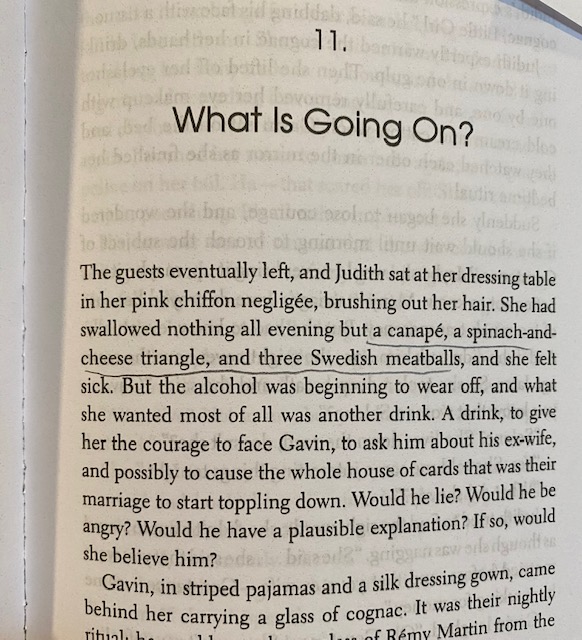
) the story also plays in a dreamlike timelessness.
Very cool and thrilling, even just on the sentence level. Nothing here is as it seems.
A+, excited to see the reaction when this book is released on October 10, 2023. Great for Halloween.
fragments from the Bill Clinton oral history at the Miller Center
Posted: August 20, 2023 Filed under: America Since 1945 Leave a comment
The University of Virginia’s Miller Center collects oral histories on recent presidents. Sometimes I go poking around in them and rarely do I come away unrewarded:
Dale Bumpers, US senator from Arkansas, remembers a first encounter:
All politicians consider anybody that has—I don’t know what the precise word is, but any politician who sees another politician with a lot of talent, speaking ability, intelligence, social mores, customs and so on can’t help but worry about the future. On the way home, I said to one of my aides, “I hope I don’t ever have to run against that guy.” We were discussing Clinton’s speech at the Democratic rally in Russellville, Arkansas, on the campus of Arkansas Tech. I had never laid eyes on him, but I had heard quite a bit about him, about how brilliant and charismatic he was. He was handsome. He had a good speaking voice. He had everything that a politician needs.
…
So he stood at the podium without a sign of a note or a prop and talked to the audience. He talked into the microphone but he looked that audience over all the time he was talking. He did everything precisely the way you’re taught to do it if you ever go to a speaking school. It was beautiful. Every sentence followed the other one perfectly. I could not believe that he could deliver a flawless speech like that without a note of any kind. But after it was over some of his staff who were with him were standing at the door handing out copied of the speech. He had written the speech, memorized it, and delivered it from memory. It was roughly, I’d say, three to five minutes, which at most political events is quite long enough.
Charlene Barshefsky, US Trade Representative:
The first time I met Bill Clinton was in the Oval Office to brief him on the Framework talks. The second time was in Tokyo in July of 1993. My kids know the date because I was pulled away from our Fourth of July holiday to go back to Tokyo to finish the talks. I was in Tokyo. We had been negotiating all day. There were a couple of things I wanted that we didn’t yet have and it was 1:30 in the morning, maybe 2:00 in the morning.
Mickey, Warren Christopher, and I went up to the President’s suite at the hotel where we were all staying—the Okura. He was at the dining room table of his suite and he was dressed in khakis and a plaid shirt, looking reasonably rumpled. He was reading a newspaper when we walked in. He barely looked up. To the left was a book, open, facedown—Marcus Aurelius Meditations. To the right, the New York Times crossword puzzle with a pen.
We walked in. He lowered the newspaper—he was wearing his reading glasses—looked up, and said to me,
I’ve been waiting to see you,which took me somewhat aback. I said,Well, here I am.We sat around the table, and he looked at Warren Christopher and said,Chris?and Chris said,The negotiations over the Framework are at a very delicate phase and I thought Charlene should brief you and tell you what she needs.The President nodded and looked at me. The newspaper came up again covering his face. I remained silent and Chris motioned, [whispering]
Go ahead.I thought, Well, all right.Mr. President, this is a complicated topic. We’re at a delicate point. There are a couple of trades I could make. I don’t want to have to make any of them, and so I want to lay out a plan of action.As I’m talking, the hand comes out from behind the newspaper, picks up the book, turns it over and he starts to read the book. About a minute goes by. The book gets put back down. The paper goes back up, he turns the page. A hand comes out to the right, and he fills in a word on the crossword puzzle. This is all true—I am not exaggerating. This is going on, and I’m thinking, I don’t care how smart this guy is, this is a completely disastrous briefing session. I finished what I needed to say, and the newspaper finally came down.
He looked at me, and he said,
I think we have an inconsistency between your briefing two weeks ago and where you are now. Let me see if I can spell it out.And he went through the briefing I had done several weeks earlier in the Oval perfectly. He also went through what I had just said and concluded that there might be an inconsistency in our approach. I explained why there wasn’t. He poked and prodded some with respect to a couple of other points I had made. He had caught the nuance in what I was saying, not only the words in the order in which I had said them. At the end, we agreed on the game plan and we were off and running. We concluded the Framework agreement the next day.I walked out of the room and Warren Christopher and Mickey both burst out laughing and said,
Your expression went from astonishment, to disdain and despair in the beginning of the briefing, to amazement that he could multitask to this degree and miss nothing.
Dee Dee Meyers, press secretary:
Riley
The death penalty situation wasn’t a hang-up?
Myers
No. It was not my favorite thing, but by then I think I was probably convinced that a Democrat couldn’t be anti-death penalty and win a national election.
Freedman
Did that ever come up? Did you ever have a substantive conversation with him about capital punishment?
Myers
Yes, later, but just over time. Flying around, we talked about everything. I told him that that was one place where I disagreed with him. These are just snippets of memory, but I don’t remember him making a big philosophical thing about it. It’s just, “Well, that’s the way it has to be.” I think it was a very practical decision as a politician from Arkansas.
He’s a remarkable human being. He is routinely described by people as the smartest person they’ve ever met. I feel that that’s true. Also he has these shifting abilities. I mentioned earlier that he can talk to a car mechanic one second, a short-order chef the next, and then Stephen Hawking the minute after that. I wanted someone with those skills. I was not aware that he was a prodigy when I was simply someone reading the papers. I was a well-educated person living in Boston but I was not aware that a prodigy occupied the White House.
When I got there I began to become aware of it. I wanted the rest of America to become aware of what I was becoming aware of. I thought we should really maximize these speech opportunities. I’m not sure we ever did. That speech in Memphis that he gave off the top of his head may have been his best speech as a President of the United States. It’s an argument without end. He gave a lot of speeches. Not as many as I would have liked soared, you know, just jumped out at you off the page the way that Memphis one did. But if I talk about every speech in this much detail we’ll be here for 20 hours.
Back to Myers:
Nelson
Would he tease you guys?
Myers
Not about stuff like that. He loved to make people blush about whatever it was. So he would try to find your blush button and then he loved to, gently—
Freedman
For example.
Nelson
Give us some good buttons.
Myers
This woman, Wendy Smith, who was the trip director. He would tease Wendy. “I saw that Secret Service agent looking at you.” Stuff like that, which of course was always true. Wendy was doing everything in her power to get that agent to look at her, but the fact that he would catch her at it—She would blush. Then of course he would always watch, and she would always know that he was watching. Then as soon as he would even look at her she’d blush, because he would see her. He loved that kind of stuff.
Nelson
Did he flirt?
Myers
Yes, definitely.
Nelson
Say more, because that ended up being an important part of his Presidency, the flirtation—
Myers
He flirts with men and with women. I don’t necessarily mean that as a sexual thing.
Nelson
That’s what I meant.
Myers
He’s good, flirting is really about establishing a little bit of intimacy, which he was good at doing.
Nelson
What about the hundred million people at the same time?
Myers
A rope line of a hundred people—He could do that with each person individually and every one of them thought that he or she was the one person the President was going to remember at the end of the day.
Riley
The men and the women?
Myers
The men and the women, yes.
These are compelling reading, cheers to the Miller Center.
James Carville
Posted: August 13, 2023 Filed under: America Since 1945 1 CommentI had never met anyone quite like James. His story is so interesting. He talks openly about how he was a complete failure until he was 40. One time he missed a flight; he was supposed to go down to Texas, I think, to work for [Lloyd] Doggett. He missed his flight and didn’t have enough money to take a cab to the airport to get another flight, and he sat down on the curb with his garment bag and cried. That’s one of the first stories that Carville told me about himself. This is not what I was used to in the braggadocio, swaggering world of political consultants. I didn’t quite know what to make of him.
Dee Dee Meyers in her Miller Center Bill Clinton oral history.
music you and I don’t know
Posted: August 6, 2023 Filed under: America Since 1945 Leave a comment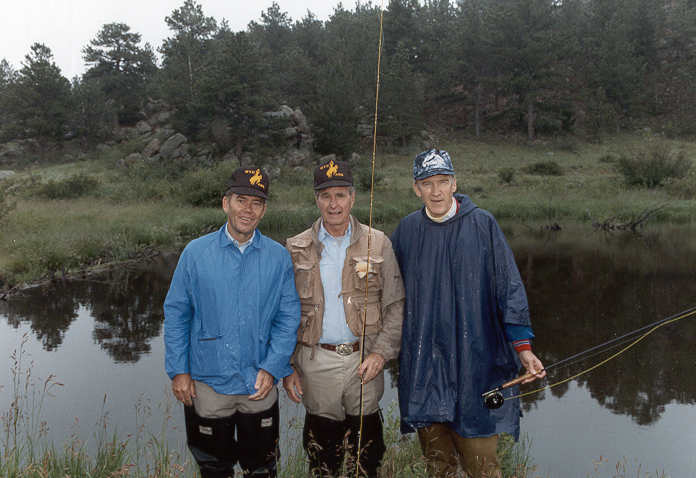
Senator Alan Simpson remembers talking to James Baker III during the 1992 Bush-Clinton election
I did tell him that I thought it was very important that he stay away from the Cigarette boat (a racing water craft) during the campaign, and the golf course, and Jim Baker told him,
At the Democratic convention, they’re playing music that you and I don’t even know—Fleetwood Mac or whatever it was. That was a Cadillac car to George and to me. We’re old farts.
source. And how about this:
Martin
Do you remember what your sense was about Clinton as an early contender? Was he on the map of folks against whom Bush expected to run, or was he predicted in any way?
Simpson
No. Everybody else had quit. There are still guys wringing their hands in the Democratic Party because they didn’t have the guts to step forward. I won’t name them, but there are at least four or five. They would opine,
I’m not going to run against Bush. My God, he’s the most popular guy we’ve ever had. Why throw myself on the fire?Clinton did. I don’t think they realized the intensity of how he would gather the troops. But you want to remember always that people don’t vote for; they vote against. I don’t think anyone won an election because people were for them; they voted against the other guy. That may sound insipid, but it is the way it is.
That whole Simpson oral history is fun to read, what a storyteller.
photo from Wikipedia: Senator Alan Simpson fishing in Wyoming with President George H. W. Bush (center) and Senator Craig Thomas (left)
Not sure I’ve ever seen a sarcastic caption in the NYT before
Posted: July 31, 2023 Filed under: the California Condition Leave a comment
from Amy Larocca’s article about Montecito, a topic we covered last summer.
Is the UK turning American?
Posted: July 29, 2023 Filed under: America Since 1945 1 CommentEven middle-of-the-road liberals in Britain live in a world of Daily Show clips and piled-up copies of the New Yorker. This wasn’t happening a generation ago. And the photo negative of it is a serene incuriousness about the mental life of their own continent. When did something European last penetrate the British cognoscenti? Prime-era Michel Houellebecq? Or the Scandinavian TV dramas? This is a Brexit of the mind.
And of the tongue. “Elton John is living his best life and I’m here for it!” How lost do you have to be as a British adult, how impressionable, to speak like this? Or to say “oftentimes”, “at this point”, “not OK”? There was a fine essay (as it happens, in the New Yorker) about the protean richness of multicultural London slang. How odd that some people in the same city prefer to converse, and tweet, in the register of an Amherst common room.
Janan Ganesh over at FT might be competing with Matt Levine as my most admired columnist. Both of them have the great quality of they’re always joking but you’re not sure how much. “An Amherst common room” so specific! really funny to complain London is sinking to the level of kids at a famously wonderful and hard to get into US college.
Perhaps a great power’s cultural influence, like an ageing gigolo’s charm, is the last thing to go. Long after Britain lost its might, there were people in Hong Kong and Zimbabwe moaning about their servants and describing things as “just not cricket” in a way no one in England had done since 1913. Plus anglais que les anglais, was the phrase for these tragicomic people and their affectations. How things come round. Don’t be more American than the Americans.
the history of interviews and history in interviews
Posted: July 29, 2023 Filed under: Indians, presidents Leave a commentSojourner Truth is taken to see President Abraham Lincoln, October 29, 1864:
The president was seated at his desk. Mrs. C. said to him, “This is Sojourner Truth, who has come all the way from Michigan to see you.” He then arose, gave me his hand, made a bow, and said, “I am pleased to see you.”
I said to him, Mr. President, when you first took your seat I feared you would be torn to pieces, for I likened you unto Daniel, who was thrown into the lion’s den; and if the lions did not tear you into pieces, I knew that it would be God that had saved you; and I said if he spared me I would see you before the four years expired, and he has done so, and now I am here to see you for myself.
He then congratulated me on my having been spared. Then I said, I appreciate you, for you are the best president who has ever taken the seat. He replied: ‘I expect you have reference to my having emancipated the slaves in my proclamation. But,’ said he, mentioning the names of several of his predecessors (and among them emphatically that of Washington), ‘they were all just as good, and would have done just as I have done if the time had come. If the people over the river [pointing across the Potomac] had behaved themselves, I could not have done what I have; but they did not, which gave me the opportunity to do these things.’ I then said, I thank God that you were the instrument selected by him and the people to do it. I told him that I had never heard of him before he was talked of for president. He smilingly replied, ‘I had heard of you many times before that.”
I’ve been reading oral histories of the American Plains. In the late 1800s and early 1900s, several amateur historians like Thomas Marquis, Eli Ricker, and Eleanor Hinman realized there were people alive on the vanishing frontier who’d seen events and known people of historical interest yet never had their memories recorded. They conducted interviews with Indians and others who’d experienced the Plains Indians wars of a few decades before, creating something like what we might call an oral history.
When did we get the idea of the interview? So far as I know no one really ever “interviewed” George Washington or Thomas Jefferson. The concept would’ve seemed presumptuous or impolite perhaps. Monticello has some examples of people recording memories of conversations with Jefferson, often in letters or diaries close to the event, but none of these seem to fit the modern idea of an interview, they mostly don’t even record specific statements.
Plato’s dialogues of Socrates have a sort of interview format, but those seem more like a literary form than a record of a conversation. There are court documents and records, the trial record of Joan of Arc might be an example, it’s almost in a question/answer format, but that’s not really an interview like we think of one.
Did the idea of an interview require the invention of technology to record a conversation? Eli Ricker had no mechanical device, he wrote in shorthand. Was even the idea of shorthand related to the invention of recorders? Eli Ricker was a newspaper man, did the interview come with the expansion of the newspaper? The need to fill pages?
These days there are oral histories of everything. Andy Warhol’s Interview magazine probably pushed the idea forward.
In looking into this question I searched for an interview with Abraham Lincoln. After he was dead people like Carl Sandberg interviewed people who knew him. But a quick search doesn’t turn up anything like a modern interview. People recorded memories of their encounters with Lincoln, often close to the event. But no one seems to have sat down with him the way people do with any modern candidate for office.
In looking into the interview question, I found a conversation between Sojourner Truth and Lincoln, which she must’ve dictated to someone who wrote it down. It was published in letter form in some newspapers.
The Dead
Posted: July 23, 2023 Filed under: America Since 1945, music Leave a comment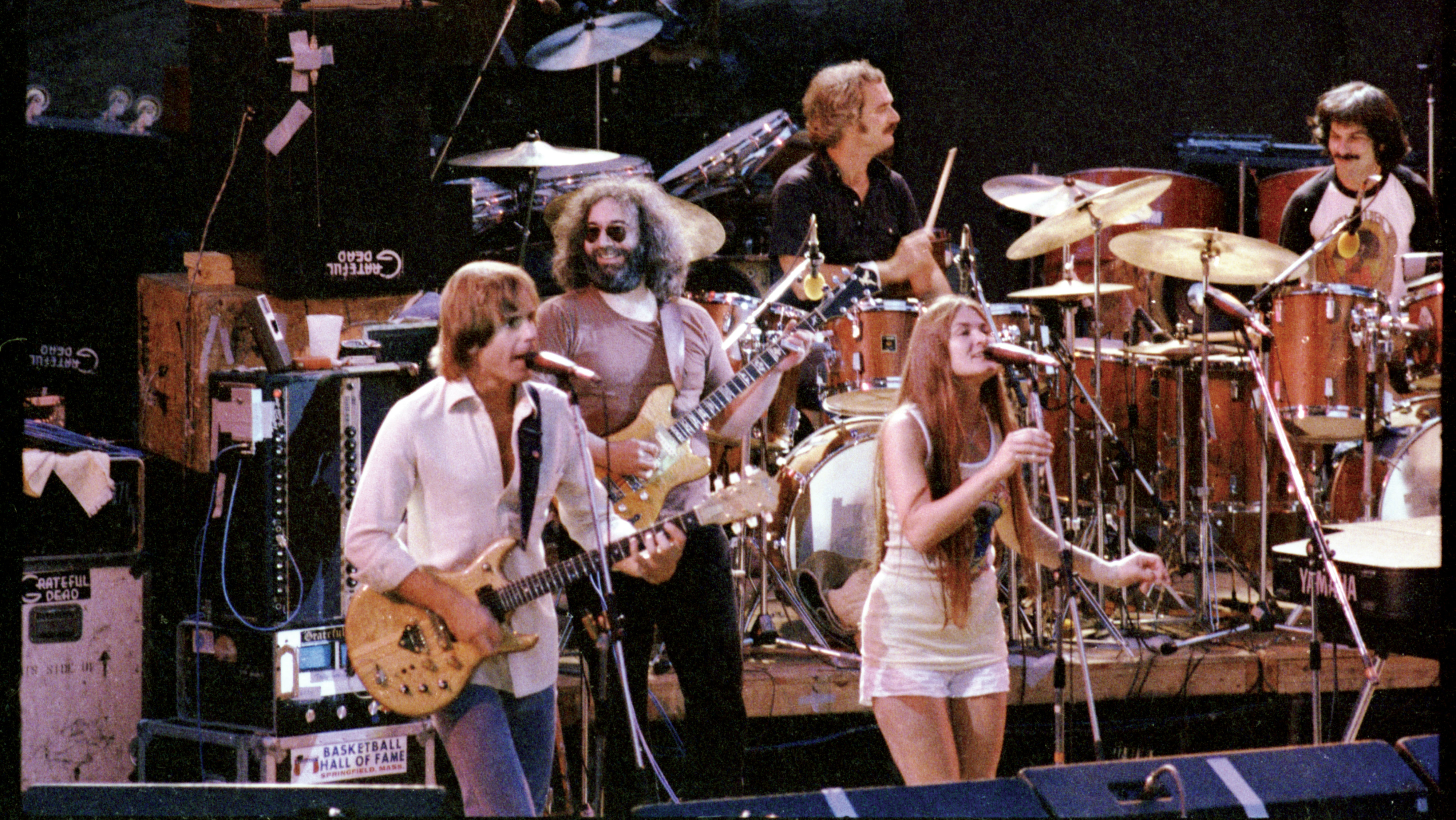
It’s traveling music. I’ve said there’s no Grateful Dead songs that take place at home. These are all people on the move, all the time. The spirit, the world – if you put all these people together and built a town, nobody lives there.
John Mayer, friend of the pod talking about The Grateful Dead on Rick Rubin’s Tetragrammaton podcast.
Was listening to the Dead on Sirius while driving around Colorado. Off the top of my head can think of two Dead songs (“Me and My Uncle,” “I Know You Rider”) that reference Colorado by name.
Source on that photo, borrowed:
Photo by Keith Stieduhar, courtesy of Rhino Records)The Grateful Dead at Red Rocks, 1978.
Hundred in the Hand
Posted: July 22, 2023 Filed under: murders, mysteries, native america, the American West, war Leave a comment
The Sioux were of two minds about winktes but considered them mysterious (wakan) and called on them for certain kinds of magic or sacred power. Sometimes winktes were asked to name children, for which the price was a horse. Sometimes they were asked to read the future. On December 20, 1866, the Sioux, preparing another attack on the soldiers at Fort Phil Kearny, dispatched a winkte on a sorrel horse on a symbolic scout for the enemy. He rode with a black cloth over his head, blowing on a sacred whistle made from the wing bone of an eagle as he dashed back and forth over the landscape, then returned to a group of chiefs with his fist clenched and saying, “I have ten men, five in each hand – do you want them?”
The chiefs said no, that was not enough, they had come ready to fight more enemies than that, and they sent the winkte out again.
Twice more he dashed off on a sorrel horse, blowing his eagle-bone whistle, but each time the number of enemy he brought back in his fists was not enough. When he came back the fourth time he shouted, “Answer me quickly – I have a hundred or more.” At this all the Indians began to shout and yell, and after the battle the next day it was often called the Battle of a Hundred in the Hand.
– so writes Thomas Powers in The Killing of Crazy Horse. In a footnote Powers says “This version of the story of the winkte was told to George Bird Grinnell in 1914 by the Cheyenne White Elk, who took part in the Fetterman fight when he was about seventeen years old. It can be found in George Bird Grinnell, The Fighting Cheyennes, 237-8.” You can also find White Elk’s testimony in Eyewitness to the Fetterman Fight: Indian Views, edited by John H. Monnett and published by the University of Oklahoma Press.
On the morning of the 21st ultimo at about 11 o’clock A.M. my picket on Pilot hill reported the wood train corralled, and threatened by Indians on Sullivan Hills, a mile and a half from the fort. A few shots were heard. Indians also appeared in the brush at the crossing of Piney, by the Virginia City road…
Brevet Lieutenant Colonel Fetterman also was well admonished, as well as myself, that we were fighting brave and desperate enemies who sought to make up by cunning and deceit, all the advantages which the white man gains by intelligence and better arms.
Hence my instructions to Brevet Lieutenant Colonel Fetterman, viz: – “Support the wood train, relieve it and report to me. Do not engage or pursue Indians at its expense. Under no circumstances pursue over the ridge viz; Lodge Trail Ridge, as per map in your possession.”
At 12 o’clock firing was heard towards Peno Creek, beyond Lodge Trail Ridge. A few shots were followed by constant shots, not to be counted. Captain Ten Eyck was immediately dispatched with infantry and the remaining cavalry and two wagons, and ordered to join Colonel Fetterman at all hazards.
The men moved promptly and on the run, but within little more than half an hour from the first shot, and just as the supporting party reached the hill overlooking the scene of action, all firing ceased.
Captain Ten Eyck sent a mounted orderly back with the report that he could see and hear nothing of Fetterman, but that a body of Indians, on the road below him, were challenging him to come down, while larger bodies were in all the valleys for several miles around.
Moving cautiously forward with the wagons, evidently supposed by the enemy to be guns, as mounted men were in advance, he rescued from the spot where the enemy had been nearest, forty nine bodies, including those of Brevet Lieutenant Colonel Fetterman and Captain F.H. Brown. …
The following morning, finding genuine doubt as to the success of an attempt to recover other bodies, but believing that failure to rescue them would dishearten the command and encourage the Indians who are so particular in this regard, I took eighty men and went to the scene of action..
The scene of action told its story. The road on the little ridge where the final stand took place was strewn with arrow heads, scalps, poles and broken shafts of spears. The arrows that were spent harmlessly from all directions, showed that the command was suddenly overwhelmed, surrounded and cut off while in retreat. Not officer or man survived. A few bodies were found at the north end of the divide over which the road runs just below Lodge Trail Ridge.
…
Fetterman and Brown had each a revolver shot in the left temple. As Brown always declared he would reserve a shot for himself as a last resort, so I am convinced that these two brave men fell, each by the other’s hand, rather than undergo the slow torture inflicted upon others…
The officers who fell believed that no Indian force could overwhelm that number of troops well held in hand.
…
Pools of blood on the road and sloping sides of the narrow divide showed where Indians bled fatally, but their bodies were carried off. I counted sixty five such pools in the space of an acre, and three within ten feet of Lieut. Grummond’s body.
At the northwest or further point, between two rocks, and apparently where the command first fell back from the valley, realizing their danger, I found citizen James S. Wheatly and Isaac Fisher of Blue Springs Nebraska, who, with “Henry rifles”, felt invincible, but fell, one having one hundred and five arrows in his naked body.
The widow and family of Wheatly are here. The cartridge shells about him, told how well they fought.
…
…
I was asked to “send all the bad news”. I do it as far as I can. I give some of the facts as to my men whose bodies I found just at dark, resolved to bring all in viz: –
Mutilations
Eyes torn out and laid on the rocks.
Noses cut off.
Ears cut off.
Chins hewn off.
Teeth chopped out.
Joints of fingers. [sic]Brains taken out and placed on rocks with other members of the body.
Entrails taken out and exposed.
Hands cut off.
Feet cut off.
Arms taken out from socket.
Private parts severed and indecently placed on the person.
Eyes, ears, mouth, and arms penetrated with spear heads, sticks and arrows.
Ribs slashed to separation with knifes.
Sculls [sic] severed in every form from chin to crown.
Muscles of calves, thighs, stomach, breast, back, arms and cheek, taken out.
Punctures upon every sensitive part of the body, even to the soles of the feet and palms of the hand.All this only approximates to the whole truth.
so wrote Colonel H. B Carrington in his report dated Jan 3, 1867, which you can find for yourself here if you’re so inclined.
Fetterman’s march ended on a knoll beside U.S. 87 a few miles below Sheridan—less than a hundred miles from Custer’s blind alley. Today a rough stone barricade encloses the site. A flagpole stands beside a cairn emblazoned with a bronze shield and a summary of the disaster. One farmhouse can be seen about a mile up the road, otherwise there is nothing to look at except a line of telephone poles. Not many people use the old highway, traffic cruises along 1-90 some distance east. Very few tourists leave the freeway to commune with the shade of this arrogant officer who, like Lt. Grattan twelve years earlier, thought a handful of bluecoats could ride straight through the Sioux nation. The black iron gate to this memorial frequently hangs open.
Capt. Fetterman was sucked to death by a stratagem antedating the Punic wars. He met a weak party of Oglalas just out of reach. Naturally he chased them. He almost caught them. A few yards farther—a few more yards. It is said that young Crazy Horse was among these decoys.
Meanwhile, the woodcutters got back safely. Fetterman could not have been very bright because two weeks earlier the Sioux just about bagged him in a similar ambush. From that experience he learned nothing. He entered the trap again. Why? Because he was new to the frontier, because of constitutional arrogance, perhaps because he had been educated at West Point to assume that one American soldier could handle a dozen savages. And he might possibly have been enraged by the decoys shouting in English: “You sons of bitches!”
Dunn, whose ponderous history of these sanguine days appeared in 1886, claims that many years after the fight he was shown an oak war club bristling with spikes—still clotted with blood, hair, and dried brains—which the Oglalas used on Fetterman’s troops. He does not excuse Fetterman, but at the same time he has no very high opinion of Col. Carrington, whom he labels a dress-parade officer. Carrington should not have been assigned to the frontier, says Dunn, he should have been teaching school: “He built a very nice fort, but every attack made on him and his men, during the building, was a surprise. There is nothing to indicate that he ever knew whether there were a thousand or only a hundred Indians within a mile of the fort. He seems to have disapproved of Indians. Perhaps he would have ostracized them socially, if he could have had his way.”
Two experienced civilians, James Wheatley and Isaac Fisher, had joined the party in order to try out their new sixteen-shot Henry repeating rifles. These men especially infuriated the Sioux, probably because they punctured a good many of Red Cloud’s finest before being dropped. Identification was tentative because their faces were reduced to pudding, and one of them—scholars disagree as to which—had been spitted with 105 arrows.
…
John Guthrie was one of the first troopers on the scene. He noted his impressions in a convulsive, agitated style. He wrote that the command lay on the old Holiday coach road near Stoney Creek ford just over a mile from the fort—which is not quite accurate, the true distance being at least twice that far.
The fate of Colonel Fetterman command all my comrades of the detail could see, the Indians on the bluff, the silver flashed with the glorious sunshine, flashed in the hair of the skulking Indians carrying away the clothing of the butchered, with arrows sticking in them, and a number of wolves, hyenas and coyotes hanging about to feast on the flesh of the dead men’s bodies. The dead bodies of our friends at the massacre lay out all night and were not touched or disturbed in any way again, and the cavalry horse of Co. C 2nd, those ferocious and devourers of bodies, did not even touch. Another rather peculiar feature in connection with those massacres is that it is thought by some that those wild animals that eat the dead bodies of the Indians are not so apt to disturb the white victims, and this is accounted for by the fact that salt generally permeates the whole system of the white race, and at least seems to protect to some extent even after death, from the practice of wild animals. Twenty four hours after death Dr. Report at Fort detailed we start to load the dead on the ammunition, all of the Fetterman boys huddled together on the small hill and rock some small trees nearly shot away on the old coach road, near the battle field or Massacre Hill, ammunition boxes we packed them, my comrades on top of the boxes terrible cuts left by the Indians, could not tell Cavalry from the Infantry, all dead bodies stripped naked, crushed skulls, with war clubs ears and noses and legs had been cut off, scalps torn away and the bodies pierced with bullets and arrows, wrist feet and ankles leaving each attached by a tendon. We loaded the officers first. Col. Fetterman of the 27th Infantry, Captain Brown of the 18th Infantry and bugler Footer of Co. C 2nd Cavalry were all huddled together near the rocks, Footer’s skull crushed in, his body on top of the officers … . Sargeant Baker of Co. C 2nd Cavalry, a gunnie sack over his head not scalped, little finger cut off for a gold ring; Lee Bontee the guide found in the brush near by the rest called Little Goose Creek, body full of arrows which had to be broken off to load him … . Some had crosses cut on their breasts, faces to the sky, some crosses cut on the back, face to the ground, a mark cut that we could not find out. We walked on top of their internals and did not know it in the high grass. Picked them up, that is their internals, did not know the soldier they belonged to, so you see the cavalry man got an infantry man’s gutts and an infantry man got a cavalry man’s gutts … .
Only one man, bugler Adolph Metzger, had not been touched. His bugle was so badly dented that he must have gone down swinging it like a club, and for some reason the Indians covered his body with a buffalo robe.
Years later an Oglala named Fire Thunder, who had been sixteen at the time, described with eloquent simplicity the Indian trap. He said that after finding a good place to fight they hid in gullies along both sides of the ridge and sent a few men ahead to coax the soldiers out. After a long wait they heard a shot, which meant soldiers were coming, so they held the nostrils of their ponies to keep them from whinnying at the sight of the American horses. Pretty soon the Oglala decoys came into view. Some were on foot, leading their ponies to make the soldiers think the ponies were tired. Soldiers chased them. The air filled with bullets. But all at once there were more arrows than bullets—so many arrows that they looked like grasshoppers falling on the soldiers. The American horses got loose, Fire Thunder said. Several Indians went after them. He himself did not because he was after wasichus. There was a dog with the soldiers which ran howling up the road toward the fort, but died full of arrows. Horses, dead soldiers, wounded Indians were scattered across the hill “and their blood was frozen, for a storm had come up and it was very cold and getting colder all the time.” Then the Indians picked up their wounded and went away. The ground felt solid underfoot because of the cold. That night there was a blizzard.
– so says Evan S. Connell in Son of the Morning Star.
American Horse (the elder?) drew a representation of the event in a winter count that’s now in the collection of the Smithsonian:

Red Cloud and other Oglala Sioux who took part in that whirlwind affair talked of it afterward to Captain James Cook, who resided for many years near their Pine Ridge Agency in South Dakota. Cook says they told him that the white soldiers seemed paralyzed, offered no resistance, and were simply knocked in the head. Old Northern Cheyenne Indians who were there have talked of it to the author. They say that Crazy Mule, a noted Cheyenne worker of magic, performed one of his miracles on that occasion. He caused the soldiers to become dizzy and bewildered, to run aimlessly here or there, to drop their guns, and to fall dead.
– Thomas Marquis in Keep The Last Bullet For Yourself, a valuable source with a provocative title. The manuscript was only published years after Marquis died. Marquis was a doctor on the Northern Cheyenne reservation and spoke to many eyewitnesses.

Marquis hearing from the old scout Tom Leforge, from Marquis wiki page
Eerie events on the American plains.
Picture of the site from Google Street View.
Hans Bethe
Posted: July 20, 2023 Filed under: America Since 1945 Leave a comment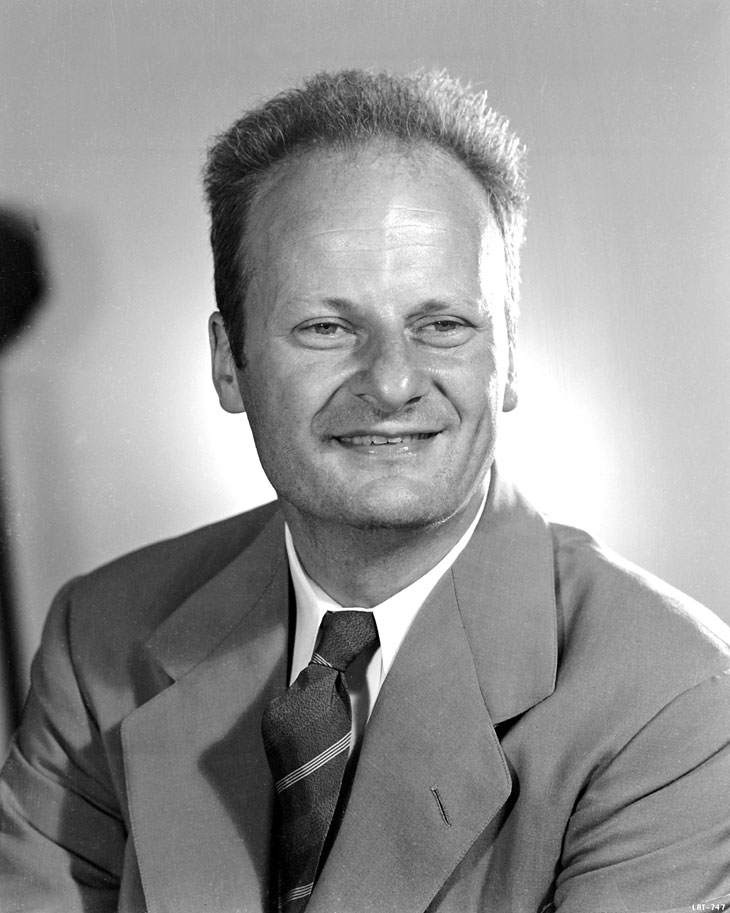
Enrapt listening to Richard Rhodes on Lunar Society podcast (part of the Oppenheimer mania that’s sweeping the land). Rhodes is trying to describe how Oppenheimer could be condescending.
I mean…
says Rhodes, (I paraphrase)
Oppenheimer was condescending to Hans Bethe. And Bethe won a Nobel Prize because he figured out how the sun works.

Credit Sarang on Wikipedia for that beauty.
Think of Bethe, born in Strasbourg. If Germany’s Jewish physicists hadn’t fled it feels likely the Nazis might’ve gotten the atomic bomb first.

Clubs were trumps when Basing House was took
Posted: July 2, 2023 Filed under: United Kingdom Leave a comment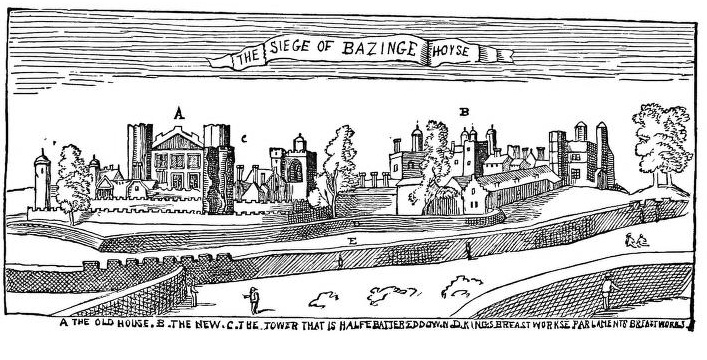
from Malcolm Gaskill’s 3164 word review of The Siege of Loyalty House: A Civil War Story by Jessie Childs in the 30 March 2023 LRB:
At the start of the civil war in 1642, Basing House’s aesthetic virtues were second to its strategic significance, namely its command of the main road heading west from London. To puritan polemicists, it was also tainted by Stuart moral corruption, a ‘limb of Babylon’ dripping with effeminate decadence and idolatrous popery.
Basing House seemed like easy pickins but it turned into a fierce siege or series of sieges. At last:
Basing House was ‘hobbled by religious factionalism, clashing egos and a weak king’. Cromwell arrived with the big guns (literally), and, murmuring scripture, blasted Basing House and its ‘nest of Romanists’ into submission. The New Model Army surged in, the ragged defenders crawled out of their holes and the game was up. The treasures of the house – its jewels, plate and tapestries – vanished in minutes; the quaking inhabitants had the clothes stripped from their backs. The marquess was carted off to the Tower of London, as church bells pealed through the city in gratitude that Babylon had finally fallen.

Found at Visually Impaired Person Awareness (terrific) Basing House page:
On the 13th, a last patrol was sent out and captured prisoners included Captain Robert Hammond, later the King’s gaoler at Carisbrooke Castle. Then, on the morning of the 14th October 1645, at dawn, the Ironsides launched a final attack and intaking of Basing House. The small garrison could never have stopped these fresh soldiers, but it is said they were surprised while playing cards. This story is unlikely, but a phrase has caught on and ‘Clubs are trumps, as when Basing House was taken’ is a, now little-known unfortunately, Hampshire saying. The final assault did not take long. Three thousand men were employed in the attack and a further four thousand ringed the house out. There was no escape. Yet men fought to the death at sword point. At the end, there were only two hundred prisoners, including women and children.
after it was taken its rubble was declared free for the taking and not much remains of Basing House except a gatehouse and a shape in the earth.
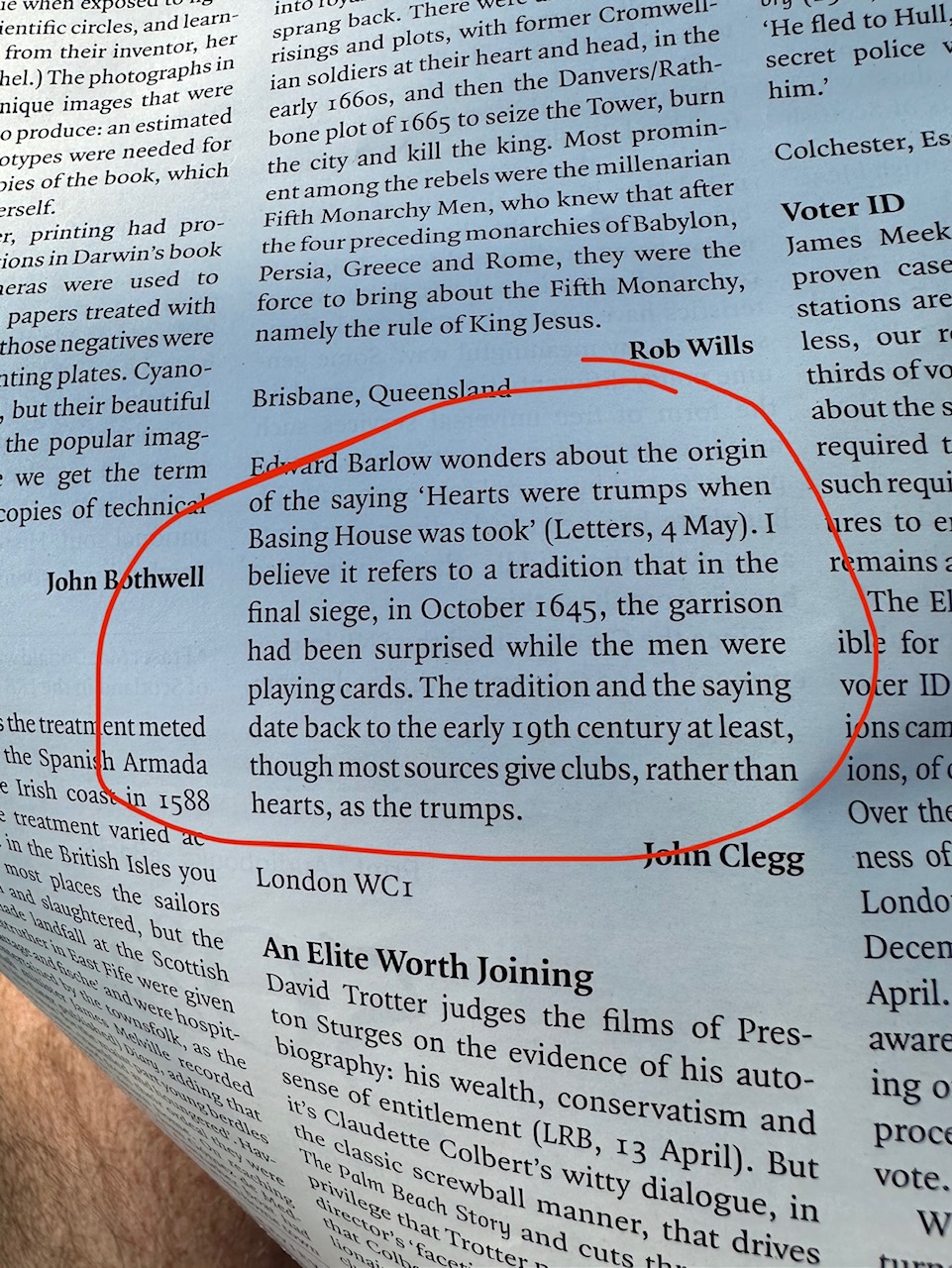
Cheers to John Clegg.
Clubs were trumps when Basing House was took. Adding that to my stable of phrases, be warned.
Hemingway, Men At War
Posted: June 25, 2023 Filed under: Hemingway, war, writing Leave a comment
once we have a war there is only one thing to do. It must be won. For defeat brings worse things than any that can ever happen in war.
Went looking for the origin of that quote, because it seemed relevant to the current WGA strike.
The “internet of quotes” is a candy-colored jungle, where no one ever bothers to give the source or the context and half the time it’s wrong or on an inappropriate sunset backdrop.
This quote can be found in the Introduction to Men At War, by Ernest Hemingway. Men At War was a literary anthology first published in 1942. Hemingway edited his introduction for the 1955 edition. We find the whole essay reproduced here, and it’s worth a read.
The writers who were established before the war had nearly all sold out to write propaganda during it and most of them never recovered their honesty afterwards. All of their reputations steadily slumped because a writer should be of as great probity and honest as a priest of God. He is either honest or not, as a woman is either chase or note, and after on piece of dishonest writing he is never the same again.
on some pitiful bravado compared to some solid magnificence:
it was like comparing the Brooklyn Dodger fan who jumps on the field and slugs an umpire with the beautiful professional austerity of Arky Vaughan, the Brooklyn third baseman.

on Tolstoy’s War And Peace:
his ponderous and Messianic thinking was no better than many another evangelical professor of history and I learned from him to distrust my own Thinking with a capital T and to try to write truly, as straightly, as objectively and as humbly as possible.
On cavalry:
A man with a horse is never as alone as a man on foot, for a horse will take you where you cannot make your own legs go. Just as a mechanized force, not by virtue of their armor, but by the fact that they move mechanically, will advance into situations where you could put neither men nor animals; neither get them up there nor hold them there.
on fights:
At that moment it was perfectly clear that we would have to fight them.
When that moment arrives, whether it is in a barroom fight or in a war, the thing to do is to hit your opponent the first punch and hit him as hard as possible.
A couple recommendations I’ve got to check out: a story called “The Wrong Road” by Marquis James and “The Stars in Their Courses” by Lt. Col. John W. Thomason, a chapter in a book called Lone Star Preacher (did Shelby Foote crib that title title for his book on Gettysburg?)
To live properly in war, the individual eliminates all such things as potential danger. Then a thing is only bad when it is bad. It is neither bad before nor after. Cowardice, as distinguished from panic, is almost always simply a lack of ability to suspend the functioning of the imagination. Learning to suspend your imagination and live completely in the very second of the present minute with no before and no after is the greatest gift a soldier can acquire. It, naturally, is the opposite of all those gifts a writer should have. That is what makes good writing by good soldiers such a rare thing and why it is so prized when we have it.
(is that what DFW was trying to say, re athletes not soldiers, in his Tracy Austin review?)
I have seen much war in my lifetime and I hate it profoundly. But there are worse things than war: and all of them come with defeat. The more you hate war, the more you know that once you are forced into it, for whatever reason it may be, you have to win it. You have to win it and get rid of the people that made it and see that, this time, it never comes to us again.
As for Arky:
After leaving the Seals, Vaughan bought a ranch in Eagleville, California, where he retired to fish, hunt and tend cattle. On August 30, 1952, Vaughan was fishing in nearby Lost Lake, with his friend Bill Wimer. According to a witness, Wimer stood up in the boat, causing it to capsize, and both men drowned.
Gordon Granger
Posted: June 24, 2023 Filed under: WOR Leave a comment
Juneteenth is not about any one man but it was Gordon Granger who posted and enforced General Order #3 in Galveston, kicking off the day.
The historian’s eye was intrigued by this line in Granger’s Wikipedia page:
General Ulysses S. Grant disliked Granger[11] and prevented him from gaining more prominent commands in the West or in the Eastern Theater of the American Civil War.
The citation there is for a bio of Granger, but why not get the word from Grant himself? We scanned Grant’s memoirs for mentions of Granger:
While the advance up Mission Ridge was going forward, General Thomas with staff, General Gordon Granger, commander of the corps making the assault, and myself and staff occupied Orchard Knob, from which the entire field could be observed. The moment the troops were seen going over the last line of rebel defences, I ordered Granger to join his command, and mounting my horse I rode to the front. General Thomas left about the same time. Sheridan on the extreme right was already in pursuit of the enemy east of the ridge. Wood, who commanded the division to the left of Sheridan, accompanied his men on horseback in the charge, but did not join Sheridan in the pursuit. To the left, in Baird’s front where Bragg’s troops had massed against Sherman, the resistance was more stubborn and the contest lasted longer. I ordered Granger to follow the enemy with Wood’s division, but he was so much excited, and kept up such a roar of musketry in the direction the enemy had taken, that by the time I could stop the firing the enemy had got well out of the way. The enemy confronting Sherman, now seeing everything to their left giving way, fled also. Sherman, however, was not aware of the extent of our success until after nightfall, when he received orders to pursue at daylight in the morning.
He got too excited. Later he’s grumpy:
Finding that Granger had not only not started but was very reluctant to go, he having decided for himself that it was a very bad move to make, I sent word to General Sherman of the situation and directed him to march to the relief of Knoxville. I also gave him the problem that we had to solve—that Burnside had now but four to six days supplies left, and that he must be relieved within that time.
More or less the last we hear of him:
All these movements were designed to be in support of Sherman’s march, the object being to keep the Confederate troops in the West from leaving there. But neither Canby nor Thomas could be got off in time. I had some time before depleted Thomas’s army to reinforce Canby, for the reason that Thomas had failed to start an expedition which he had been ordered to send out, and to have the troops where they might do something. Canby seemed to be equally deliberate in all of his movements. I ordered him to go in person; but he prepared to send a detachment under another officer. General Granger had got down to New Orleans, in some way or other, and I wrote Canby that he must not put him in command of troops. In spite of this he asked the War Department to assign Granger to the command of a corps.
Boy Grant is an efficient writer. Granger died of a stroke in Santa Fe in 1876 after chasing around Apaches for awhile.
Los Angeles: The Ultimate City
Posted: June 16, 2023 Filed under: the California Condition Leave a comment
Picked up a used copy of this one, from the genre of New Yorker (the magazine) writers doing longform jobs on big topics. It’s not super insightful or vital in 2023 (“restaurants in L. A. must have plenty of parking space available”) but I appreciated this summary of the socialist history of California:


When Moscow smelled like chocolate
Posted: June 11, 2023 Filed under: Russia Leave a comment
A Moscow memory:
Walking around Red Square in May, in a good mood. Six days of travel, six days on the train, from Beijing on the Trans-Siberian Railroad. Now here I was, I’d made it to Moscow. Moscow! The dream of every Chekhov character. Soon I would meet a friend.
This was 2007, post Cold War, post post Cold War. Moscow boomed, exploding with wealth and energy. At least it seemed to me. Eurasian beauties stepping out of chaffeured cars and into Prada. Certainly Moscow seems to boom when you arrive from the east, where what you see out of the train windows is bleak. True log cabins, shells of abandoned buildings, stark forests, vast cold rivers.
Now here were the towers, the mazes of the ancient and modern city. The city that stopped Hitler and Napoleon! Deep intense people inside Café Pushkin eating smoked goose borscht (the waitress there, I can still picture her, like a movie star from a movie too intense to ever film). Soulful men sweating naked inside the the Sanduny Baths. Chandeliers in the metro stations.
That morning I’d waited in line to see the waxy candle mummy of Lenin. The wall of memorials to the revolutionary heroes (“German Jews,” I heard the tour guide say. “We have a joke that the Russian Revolution was started by German Jews”).
There were the spires of Saint Basil’s, the image most often used to represent Russia in video games. Here was Red Square, and then there was the Kremlin, right there, can you imagine? I was just strolling past the place that stood as symbol for the calculating minds of the Evil Empire. Now, walking towards the river, there was a smell I kept noticing, An alluring smell, a tempting smell. A sweet smell, a smell I recognized but it couldn’t be that. Is that… the smell of chocolate?
It can’t be. Is that fantastical, enormous building just across the river, on the island… is that a chocolate factory?

Why did it seem surprising? I never thought of Russia as a great producer of sweets, but why not? There were massive constructions everywhere, products of enormous, empire-sized energy and direction. Take the giant Moscow State University building for example. Why wouldn’t they put some of that force and power into chocolate?
Sad to learn they’ve since closed the Krasny Oktyabr factory and turned into like mixed use condos. Too bad. I still feel my marvel. The idea that all this time, outside the Kremlin, Moscow smelled like chocolate.
(source on that photo, cheers to Hans-Jürgen Neubert)
the purpose of the beehive
Posted: June 10, 2023 Filed under: business Leave a commentCOWEN: What do you think is the central insight you have about how to build that, that is otherwise under-emphasized?
GODIN: I think that Frederick Taylor’s demise is long overdue, that the purpose of a beehive is not to maximize the amount of honey we produce. The honey is a by-product of a successful beehive. That what we have is the chance to get what we want by connecting with people who have a choice about where they work, who choose to enroll with us, to avoid the false proxies of “You look like me” or “You sound like me” or “I want to have lunch with you” when we hire people, and instead dance with the people from whatever background that are going to make our project better.
When you lay it out that simply, people go, “Well, of course.” Then they go back to work in some place that demeans them and undermines them and asks them to phone it in. It just breaks my heart to see that gap.
Seth Godin talking to Tyler Cowen.
50 Cent on water
Posted: June 9, 2023 Filed under: business, water Leave a commentJust looking at things and not understanding why they’re the way they are sparked interest and ideas. I may walk down the grocery aisle, see a gallon of spring water for $2.69, and then I walk farther down, and there’s a gallon of spring water for 59 cents. And I’m like, So I wouldn’t know whether that was Poland Spring if it was in two different glasses. Yo. I want to sell water. This was before I knew Vitamin Water existed. But I knew I could charge $1.50 extra per piece and it wouldn’t even matter. I could get in the middle of that, come in at a dollar and change, and see what happens.
from this Vulture interview.
 Helytimes
#/media/File:George_H._W._Bush,_Alan_Simpson,_and_Craig_Thomas.jpg)

