Canicule
Posted: July 3, 2026 Filed under: France, Savoy, Uncategorized Leave a comment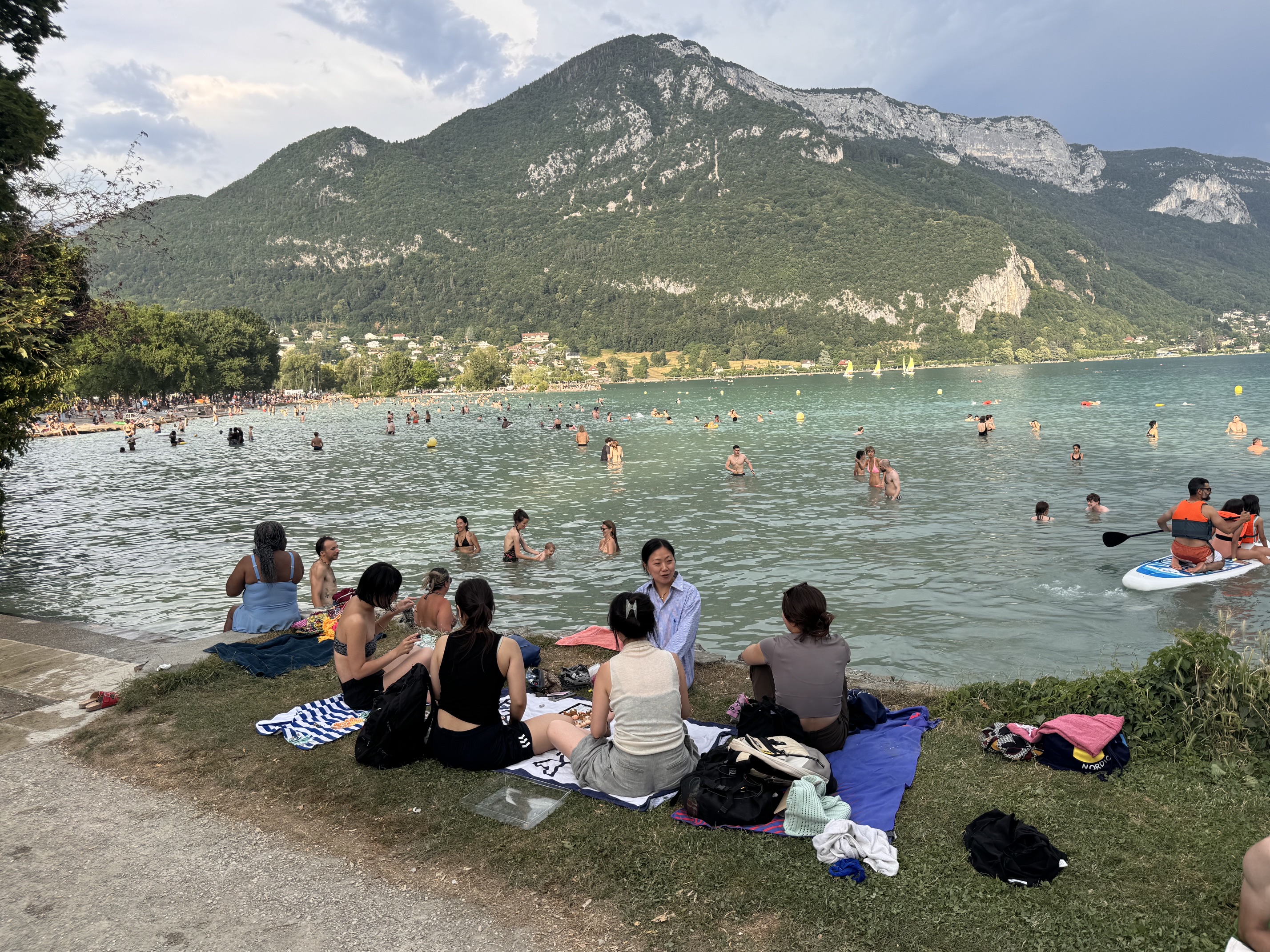
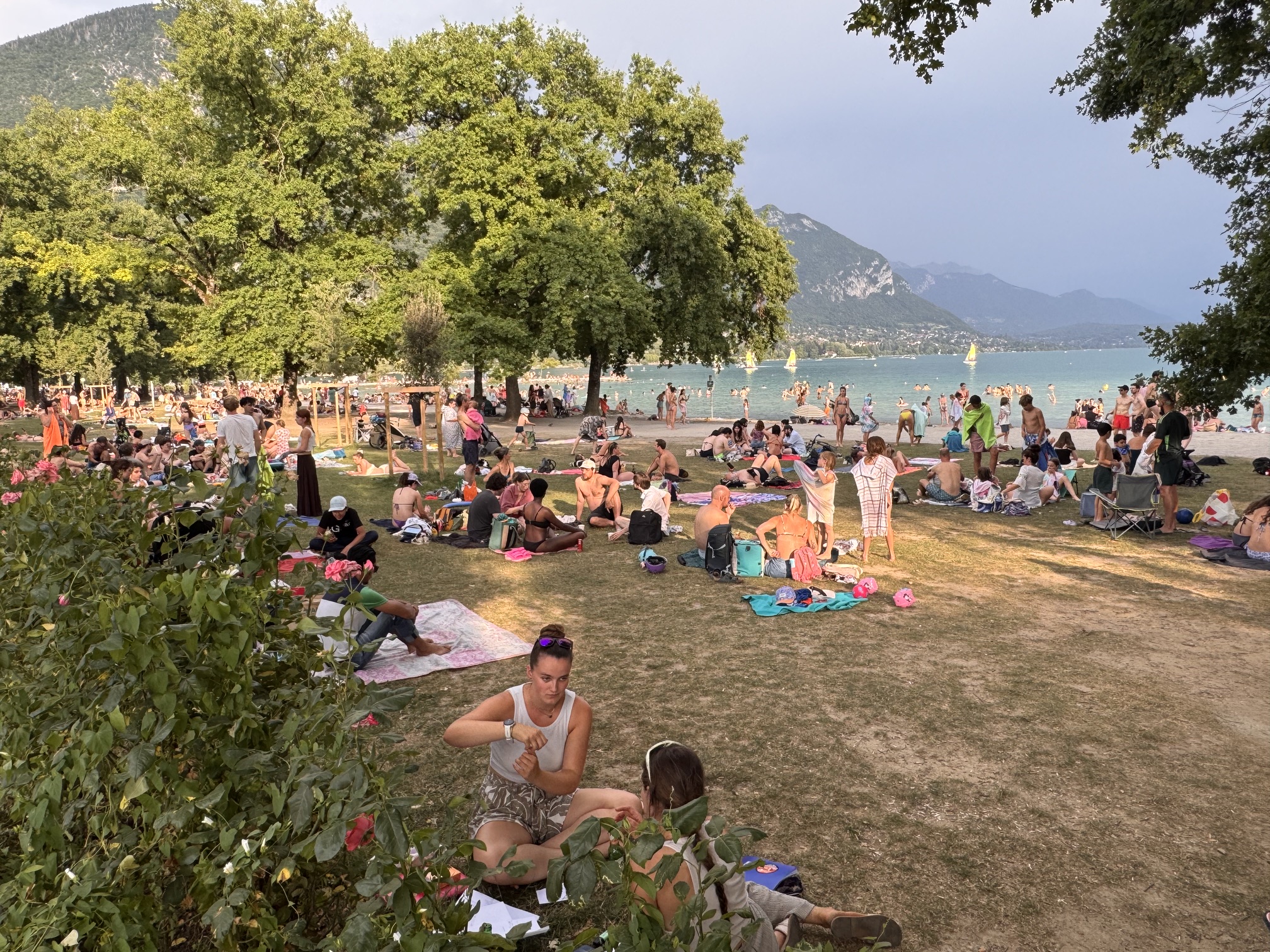
France was hot. Blessedly we were near the lake, and everyone was taking advantage.
The topic in everyone’s conversation was the heatwave. Even though it sounded unprecedented, there seemed to be a French word for it:

Canicule.

It even made Le Canard:

Where does this word “canicule” come from?
I’m not qualified to read French etymology. Is my robot friend Claude?:
Etymology
It comes from Latin canicula, literally “little female dog” — a diminutive of canis (“dog”). This was the Roman name for Sirius, the brightest star in the constellation Canis Major (the “Great Dog”), a usage already found in the Roman writer Varro, translating the ancient Greek kýôn (“dog”) used to designate the same star, Sirius, the dog of Orion. WikipediaWhy a star became a heat term
At the 45th parallel north — i.e., in Europe — during the period from July 24 to August 24, this very bright star rises at the same time as the sun, which led the ancients to believe there was a link between the star’s appearance and the great summer heat. Pliny the Elder even wrote that when Sirius/Canicula rises, it “kindles the sun’s heat,” boiling the seas, fermenting wine in cellars, and stirring stagnant waters. WikipediaThe link goes back even further than Rome: in ancient Egypt, the goddess Sopdet, personifying Sirius, was depicted accompanied by a dog, and the star’s heliacal rising marked the Egyptian new year and the start of the Nile flood around July 19 — the hottest time of year. Wikipedia
Semantic shift
Originally “canicule” just named that astronomical period (the “dog days”). Over time the word’s meaning shifted from the astronomical event to the weather phenomenon people associated with it — French dictionaries like Larousse still list the original astronomical sense (“the period when Sirius rises with the sun, coinciding roughly with the start of summer in antiquity”) alongside the now-dominant modern sense, a spell of abnormally high day-and-night temperatures lasting from several days to weeks.Modern technical meaning
Today canicule has an official meteorological definition in France: a heat wave is officially declared when temperatures stay above roughly 35°C by day and 20°C by night for several consecutive days, with thresholds varying by region. The word also picked up public-health weight after the catastrophic 2003 heat wave, which killed close to 15,000 people in France — since then “canicule” has been tied to heat-alert plans and prevention campaigns, which is likely why you noticed it used so frequently. Apple PodcastsSo: a star named “little dog” → a hot summer period → a meteorological and public-health term, all in one word that’s stayed essentially unchanged since antiquity.
from Doreen St. Felix in The New Yorker, “Scenes from La Canicule in Paris“:
“La Canicule,” the term that the French have used to describe an elongated spell of oppressive, often dangerous temperatures, doesn’t really translate to “heat wave”—the phrase for that would be “vague de chaleur.” The spirit of La Canicule is more like dog days. Typically, the dog days arrive in late July or August, when the country winds down for its prolonged weeks of vacation. And those days tend to hover some twenty degrees Fahrenheit lower than what it is experiencing now. La Canicule is an old term, a cheeky one, just newly representative of the climate crisis.
There’s a way to look at the Canicule as a sign of climate catastrophe. But first reaction was like if there’s a word for it maybe it’s just a part of life, like the mistral.
(by mistral I’m talking about the wind, not the French AI company).
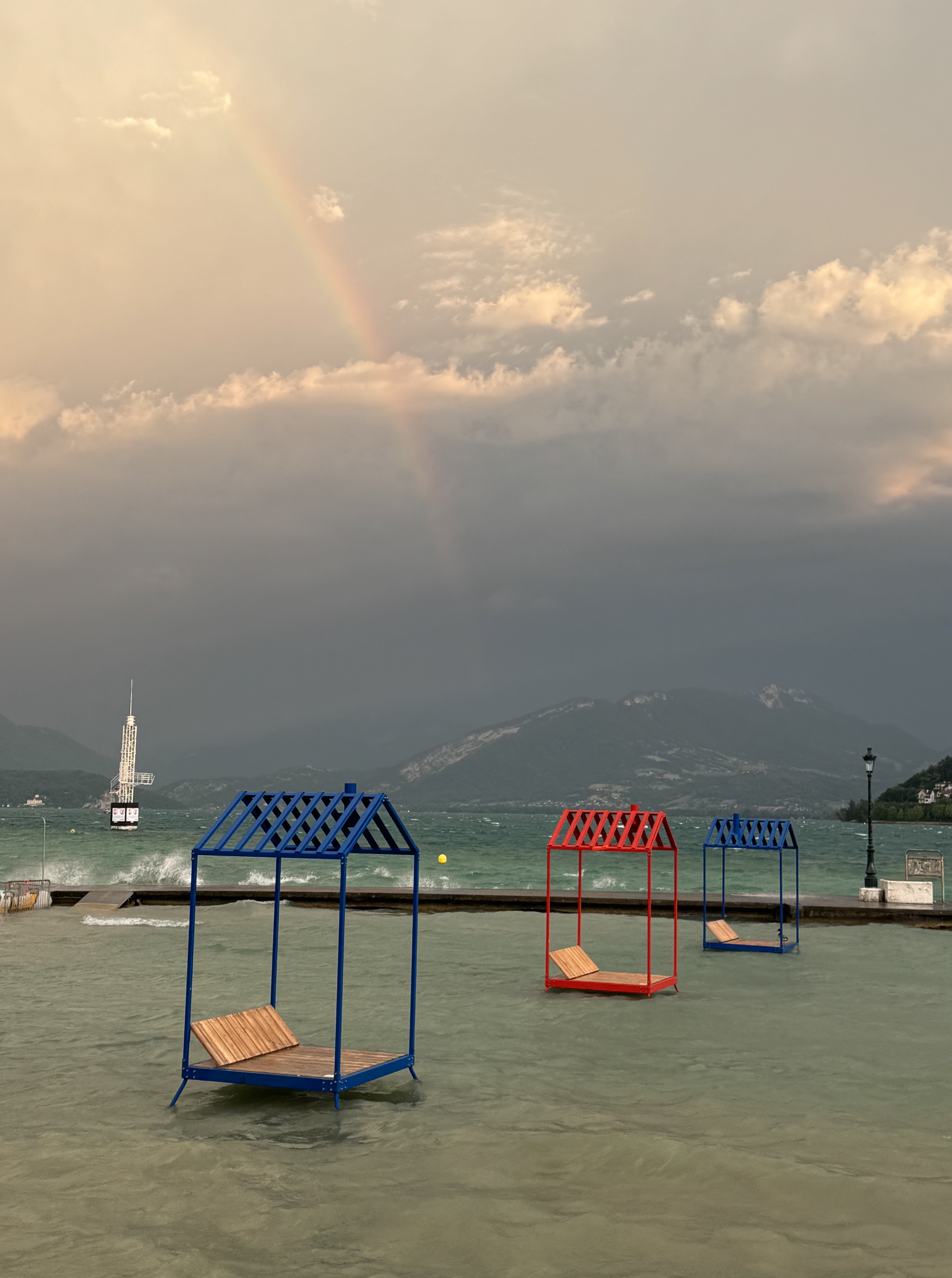
One day there was a windy storm, lightning in the distance. It seemed like there might be an American-style thunderstorm to break the heat. But it never quite came. There was though a nice rainbow: