Aix-les-Bains
Posted: July 11, 2026 Filed under: France, Savoy Leave a comment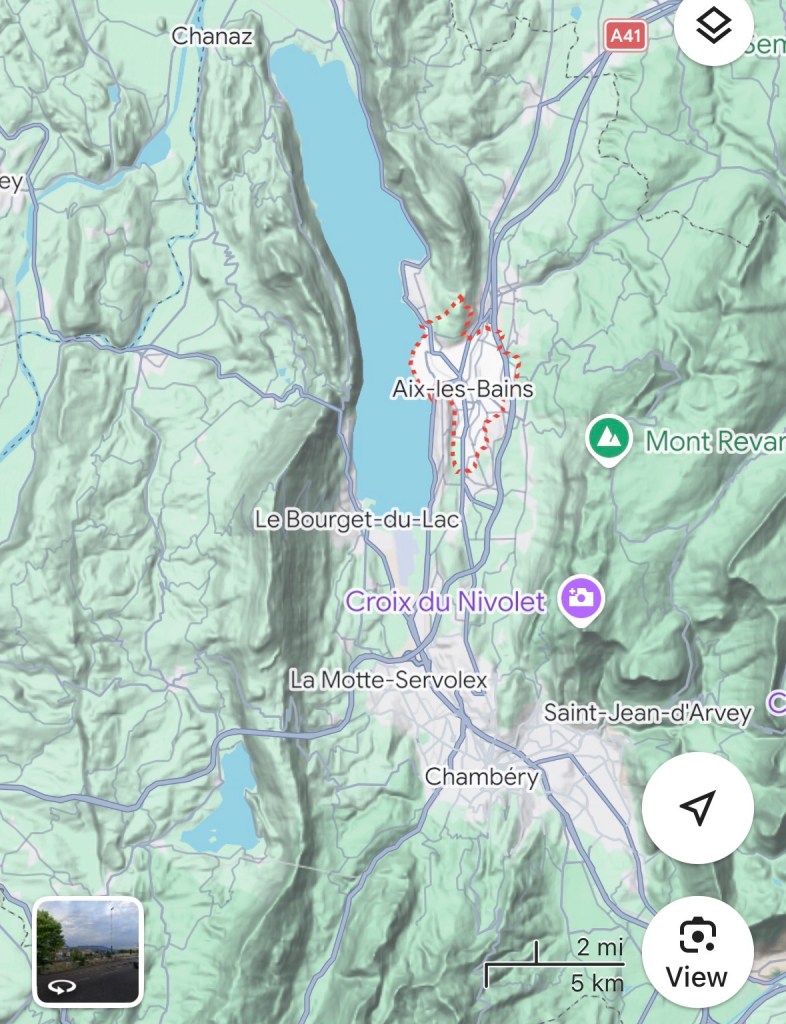

Great advertising.
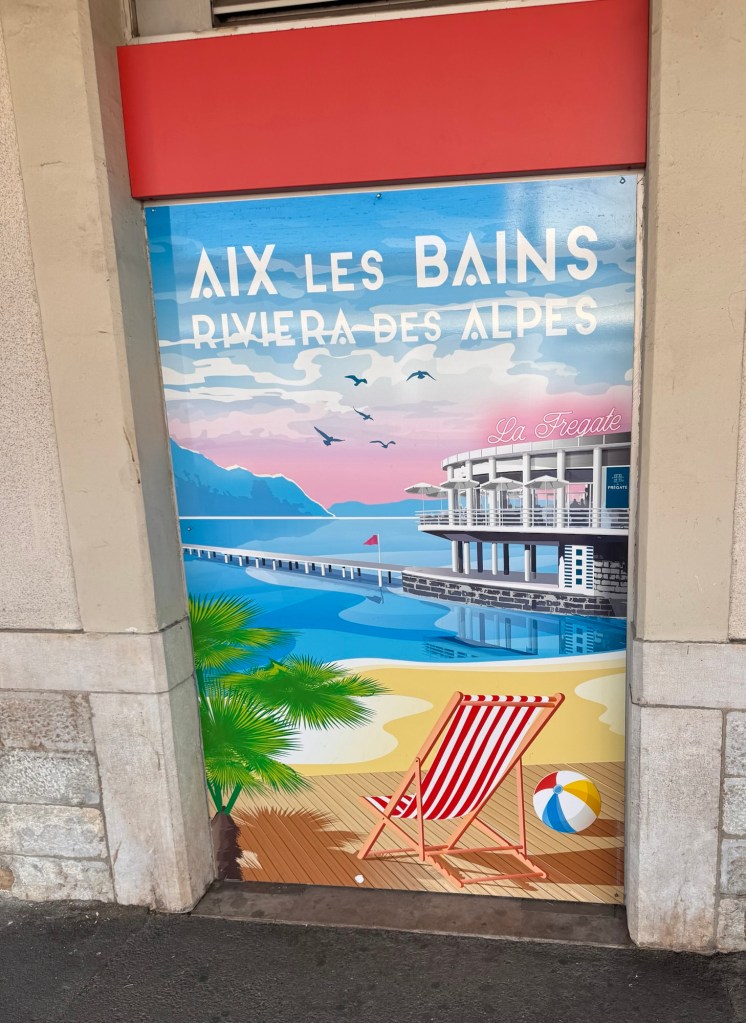
The town is not exactly like it pretends be at the train station.

But it’s not bad.
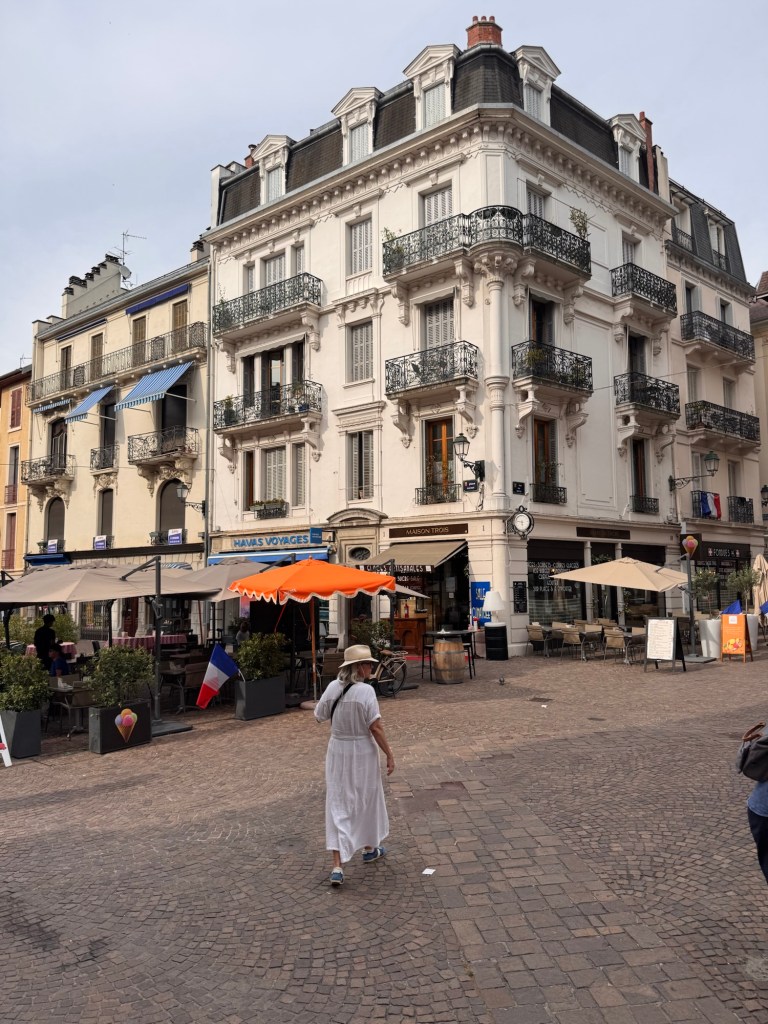
We love when a country looks like itself, or our idea of itself. Aix-les-Bains looks like the idea of France.
Aix-les-Bains is blessed with thermal springs which have been an attraction since Roman times. People would come and soak, and at night you would gamble. Sacha Guitry’s novel Le Roman d’un tricheur / Story of a Cheat, culminates at a casino in Aix-les-Bains in 1924.

Guitry’s French wikipedia page is a fine read that can lead one anywhere.
There are a number of impressive old hotels, from the Belle Epoque era, though most of them today have been converted to apartments.
French history is so wild: a series of strong kings wage war against everybody, a revolution and a reign of terror, then Napoleon, then disfunction, then the history-repeated-as-farce of Napoleon III, a disastrous war, the Commune and subsequent executions, and then a period called “the beautiful era” where the art and architecture is killer. All this could’ve been experienced in one lifetime. Then two world wars, disaster overseas. Here we are today with a France that has to be one of the world’s most pleasant places to live, even if Houellebecq presents it as nightmare. That there’s even a serious novelist working and getting readers and discussion suggest France has still got it.
The concept of a spa town runs through French culture. Apparently French Social Security will pay for three weeks of thermal water treatment. There are many of these towns, my favorite has to be Bains-les-Bains.
There’s a Smurfs book where they build themselves a spa town:

On the day we visited Aix-le-Bains, by train from Annecy, there was a dance going on at the park:
Great sculpture of a lion with his balls exposed.
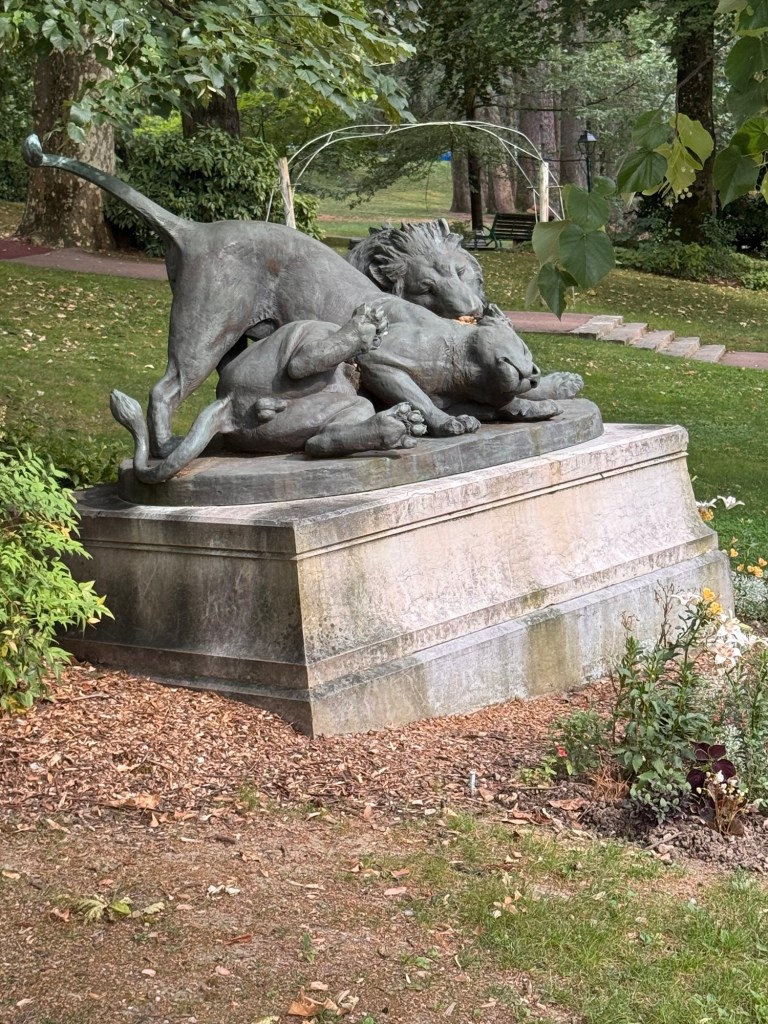
Are they kissing?
You can park your car next to the ancient Roman arch.
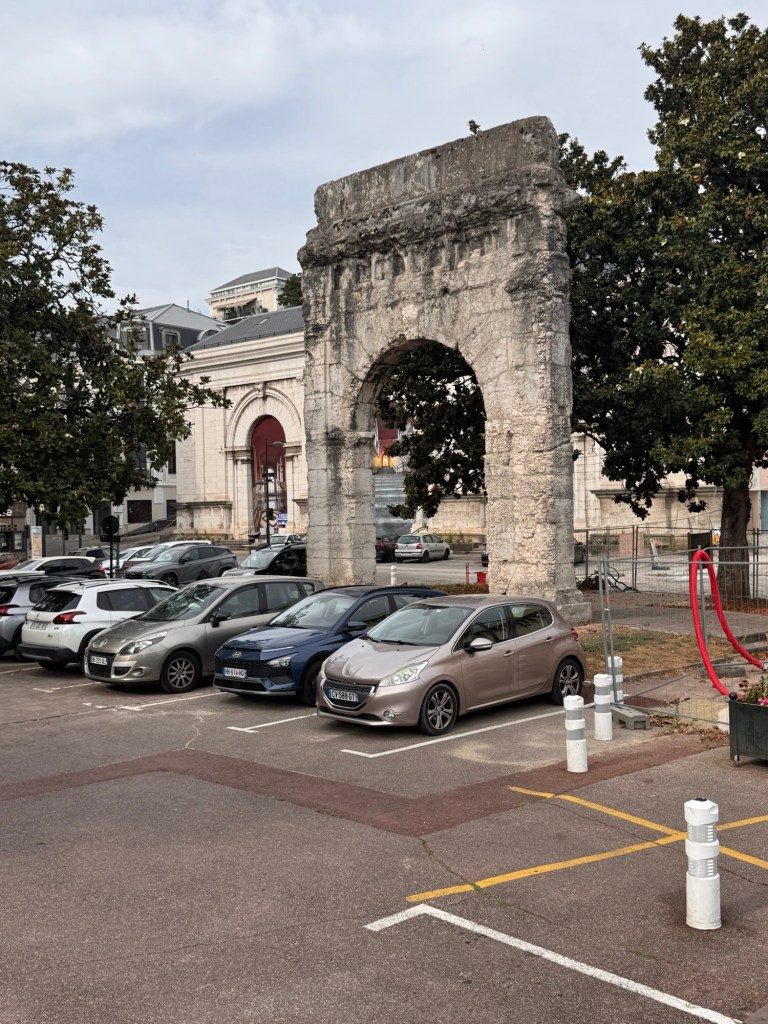
Although the arch bears inscriptions in honour of the Campanus family (the monumental glorification of elites and their families was an innovation of this era[2]), the function of the monument remains uncertain.
Congratulations Campanus, now you have a Honda parked next to you.
Aix-les-Bains is not the most famous Aix. There’s Aix-en-Provence. It’s not even the most famous spa town Aix: Aix-la-Chapelle, aka Aaachen, German, has quite a beautiful bath situation. Why are there so many Aixs? Apparently it comes from the Latin aqua. Aix-les-Bains=”Water The Baths.” French place names can seem strange to the Anglo but then again I grew up in Needham, Massachusetts and now live in Los Angeles, California.
Aix-les-Bains merits no section in the Lonely Planet: France guide I had on Kindle.
Lacking a guide I had Claude generate one.
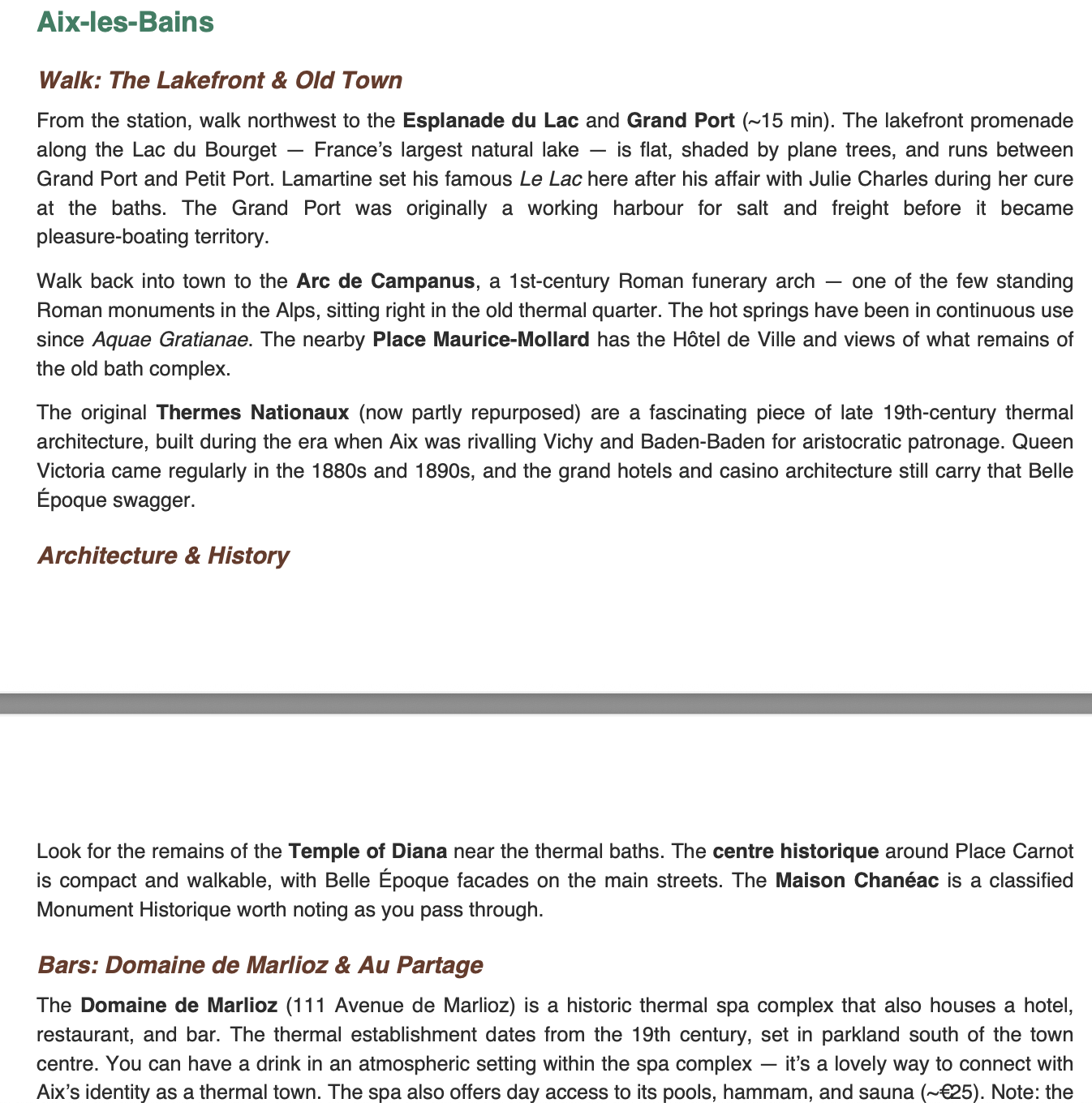
The schedule it devised was very optimistic. It failed to budget or warn for instance for French train delays.
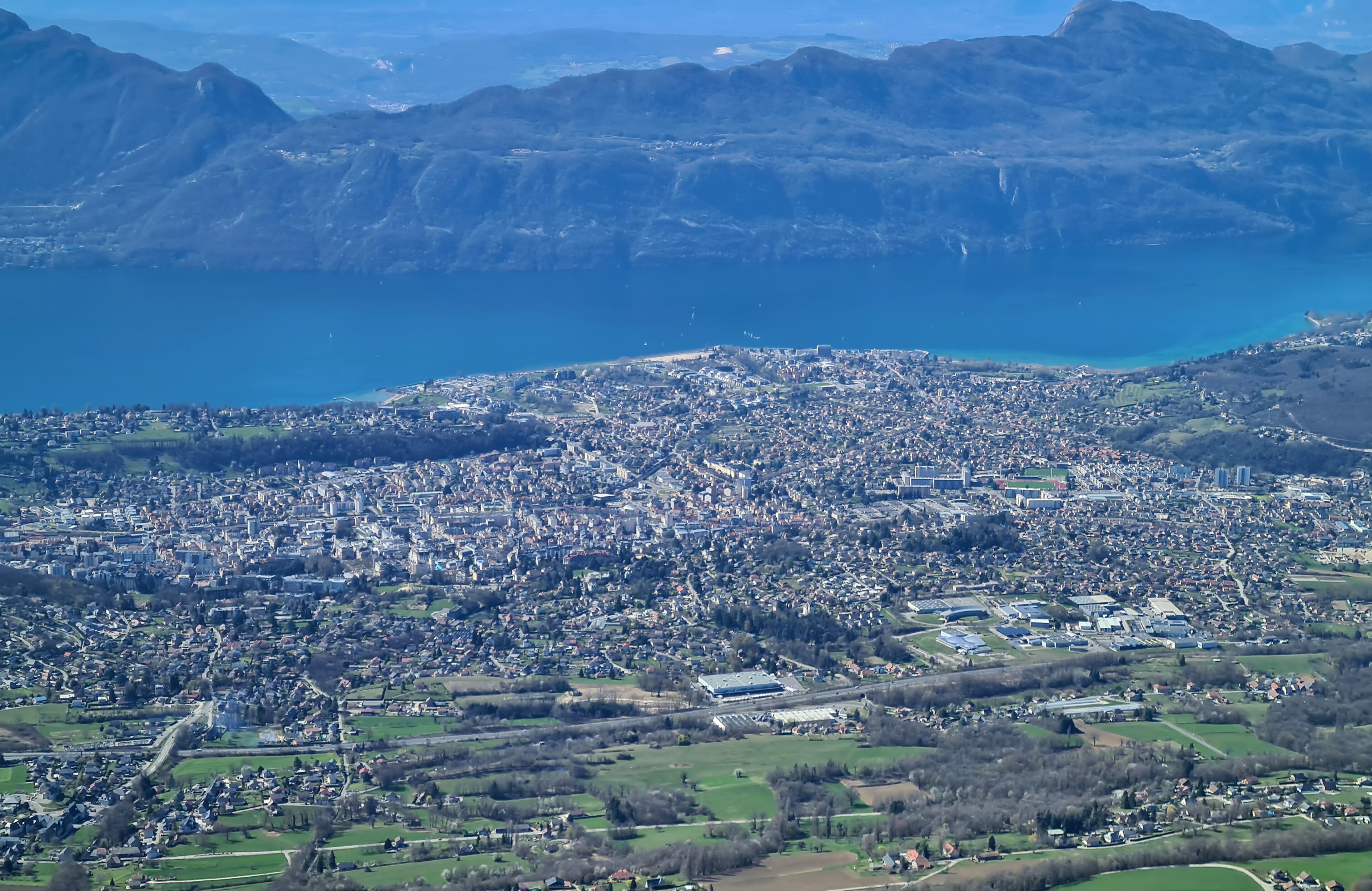
The lakeshore, to me the main draw of Aix-les-Bains, is somewhat below the town, about a 2.3 km walk.

Always moved by the French war memorials. Something like 15-20% of the military age young men of France died in World War I. For what? It’s hard to comprehend.
Our walk took us mostly through a residential area. Short on time we decided to Uber.
In reading about Aix-les-Bains I was surprised to learn that the median household income is something like 26,375 Euros a year. By American standards that is pathetic. In Los Angeles (city) the median household income is $79,700 a year. In LA County its even higher. Aix-les-Bains is comparable to Rosedale, Mississippi on this metric.
However, in France the government covers health care, childcare, university. The public spaces seem well-maintained by American standards. The numbers for Aix-l-B are a little skewed because there are quite a few retirees (39.6% of households).
I had Claude create a comparison for the US, France, and Australia:
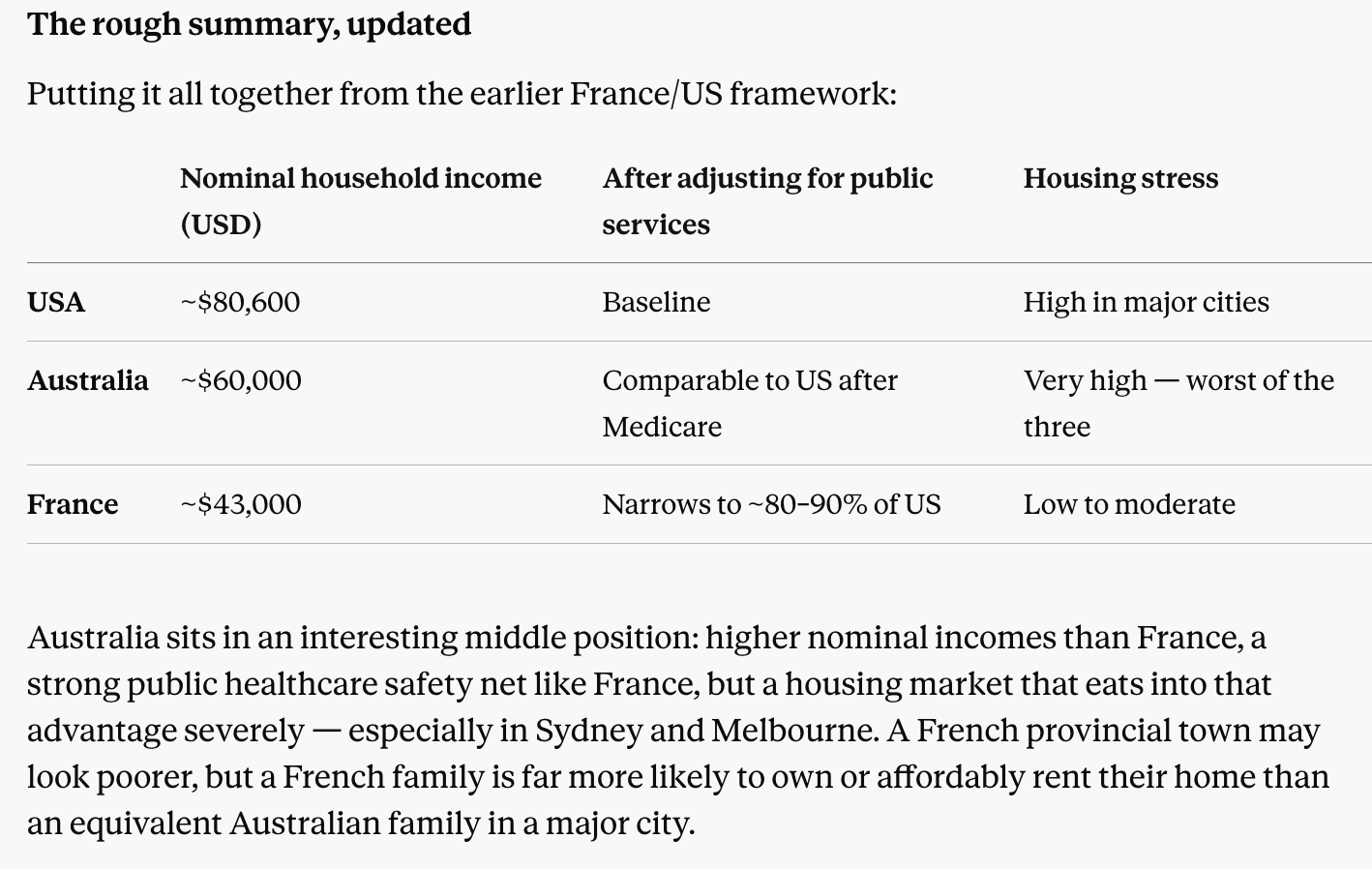
A takeaway, certainly, is that in money terms, the United States is stupendously rich.
On the other hand I enjoyed the style of life I saw on display in Aix-les-Bains. The accumulated layers of a built environment with 2,000 years of refinement can’t be bought.
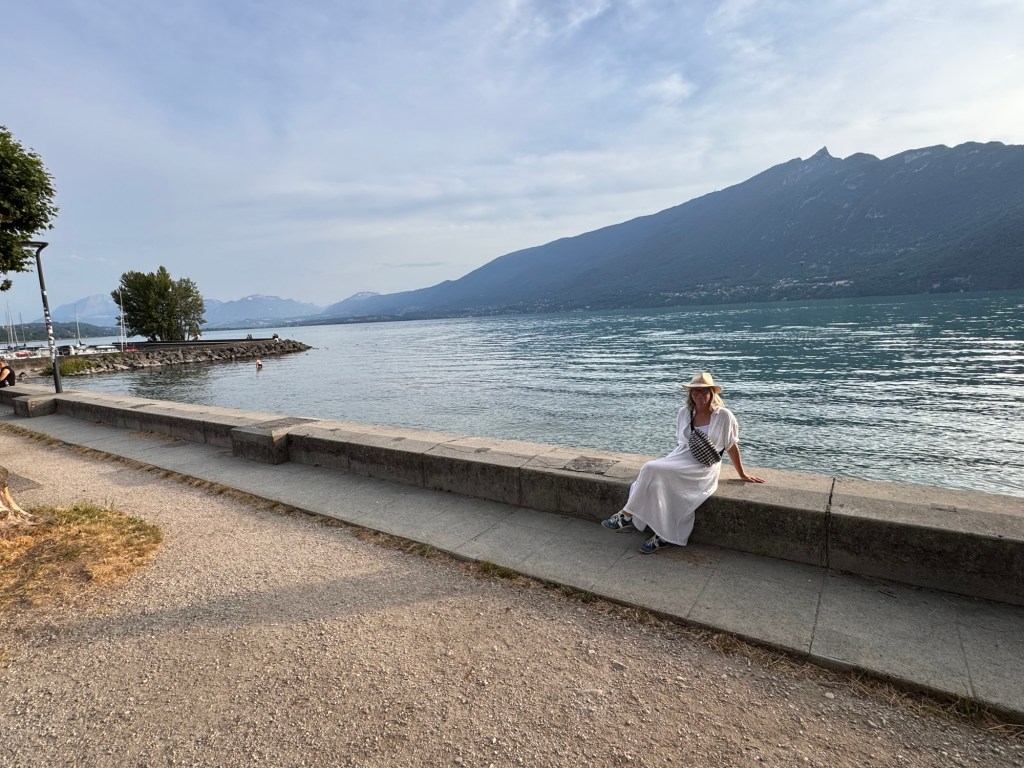
Lac du Bourget is famous for a poem about it, by Alphonse de Lamartine. The lake itself is a poem.
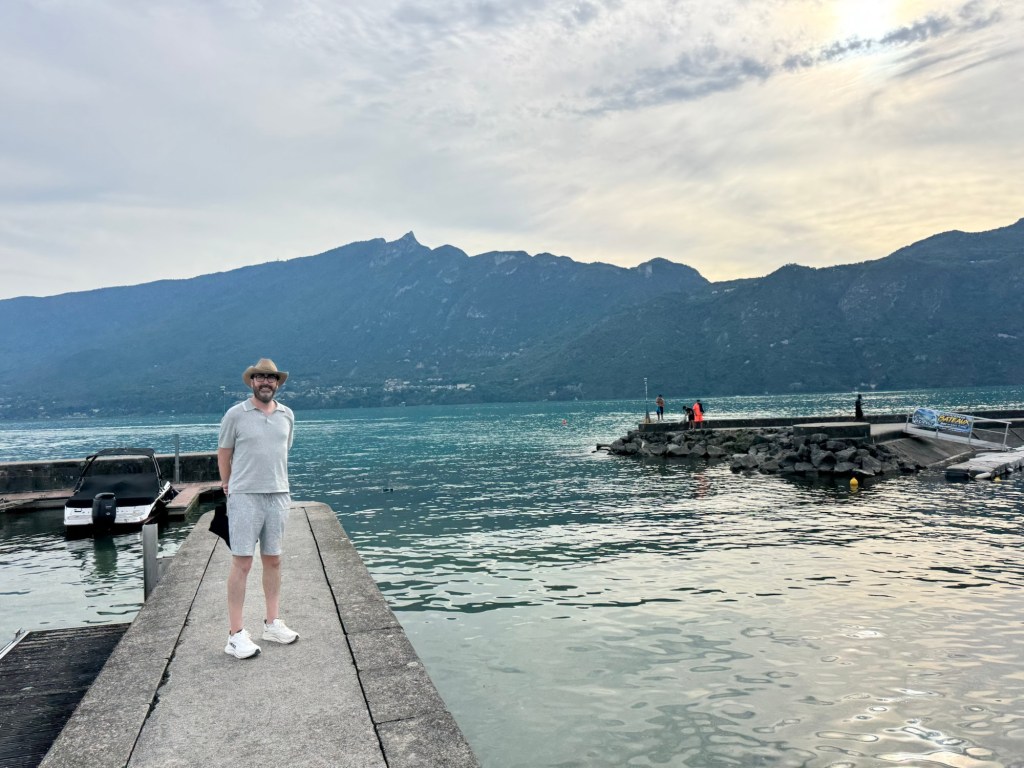
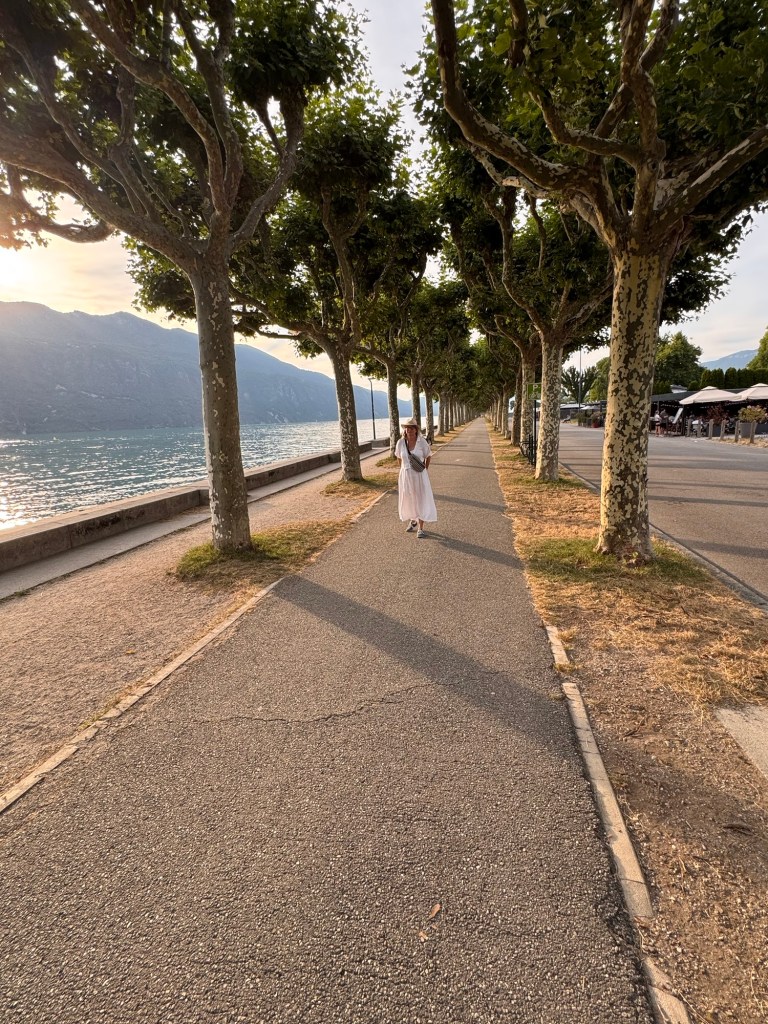
A lovely esplanade.
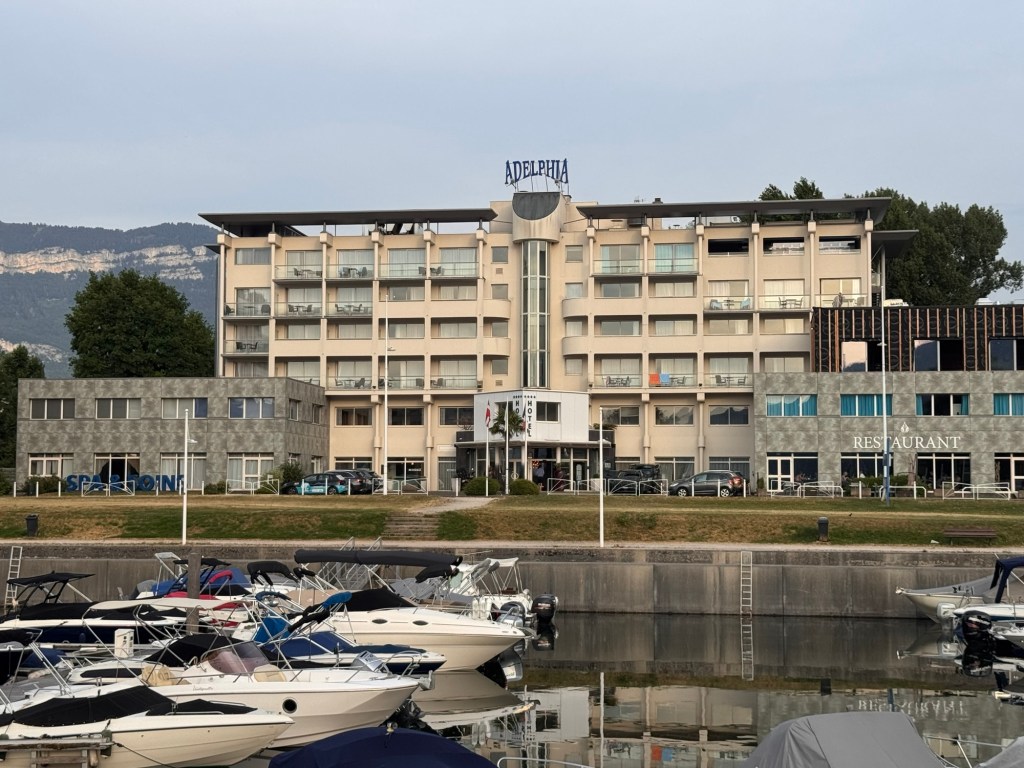
The Adelphia Hotel looked to me like it could be “low budget Wes Anderson.”
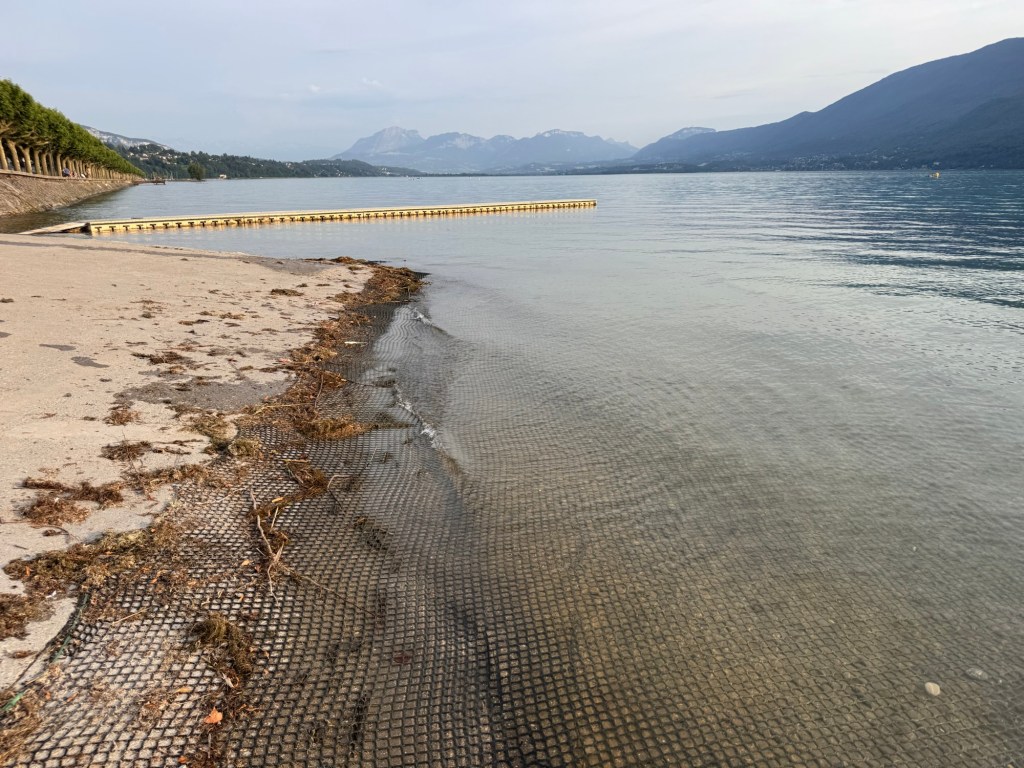
Beautiful but sort of severe.
(source)


.jpg)