Maximilian I, Holy Roman Emperor*
Posted: June 28, 2026 Filed under: Fate, hely's history, Uncategorized 1 CommentAlbrecht Dürer drew the emperor Maximilian in Augsburg in the year 1518:

On the drawing’s margin, he noted: “Is the emperor Maximilian that I Albrecht Dürer portrayed in Augsburg, up in the high palace, in his small room, Monday 28 June 1518”.
We continue our study of the Holy Roman Empire, and come to a prominent figure, who looms through the centuries. What was Maximilian like to encounter? Who saw him firsthand and wrote it down? Who spoke with him and left a record of it?
I spent a day’s worth of Fable tokens having the latest LLM model find and translate firsthand accounts of him:
Maximilian either wrote or commissioned some semi-autobiographical works about how terrific he was.

Durer’s painting of Innsbruck.
Maximilian was King of the Romans, the equivalent of Holy Roman Emperor, though he was never crowned by the Pope. He was a Habsburg, the son of Frederick III, the first Habsburg to become emperor. After him the family would produce almost all the holders of that office until the Empire was disbanded.
During Maximilian’s reign there were some wins for the family, but they lost Switzerland forever.
We’re concerned here though with Maximilian’s death:
In 1501, Maximilian fell from his horse and badly injured his leg, causing him pain for the rest of his life. Some historians have suggested that Maximilian was “morbidly” depressed: from 1514, he travelled everywhere with his coffin. In 1518, feeling his death near after seeing an eclipse, he returned to his beloved Innsbruck, but the city’s innskeepers and purveyors did not grant the emperor’s entourage further credit. The resulting fit led to a stroke that left him bedridden on 15 December 1518. However, he continued to read documents and received foreign envoys right until the end. Maximilian died in Wels, Upper Austria, at three o’clock in the morning on 12 January 1519. Different historians have listed different diseases as the main cause of death, including cancer (likely stomach cancer or intestinal cancer), pneumonia, syphilis, gall stones, stroke (he did have a combination of dangerous medical problems) etc.

Maximilian was succeeded as Emperor by his grandson Charles V, his son Philip the Handsome having died in 1506. For penitential reasons, Maximilian gave very specific instructions for the treatment of his body after death. He wanted his hair to be cut off and his teeth knocked out, and the body was to be whipped and covered with lime and ash, wrapped in linen, and “publicly displayed to show the perishableness of all earthly glory”. Gregor Reisch, the emperor’s friend and confessor who closed his eyes, did not obey the instruction though. He placed a rosary in Maximilian’s hand and other sacred objects near the corpse. He was buried in the Castle Chapel at Wiener Neustadt on borrowed money. The casket was opened during renovation under Maria Theresa. After that, the body was reinterred in a Baroque sarcophagus, that later was found unscathed amidst the wreckage of the chapel (due to the Second World War) on 6 August 1946. The emperor was ceremoniously buried again in 1950.

His death portrait.
Keir Starmer
Posted: June 23, 2026 Filed under: UK Leave a comment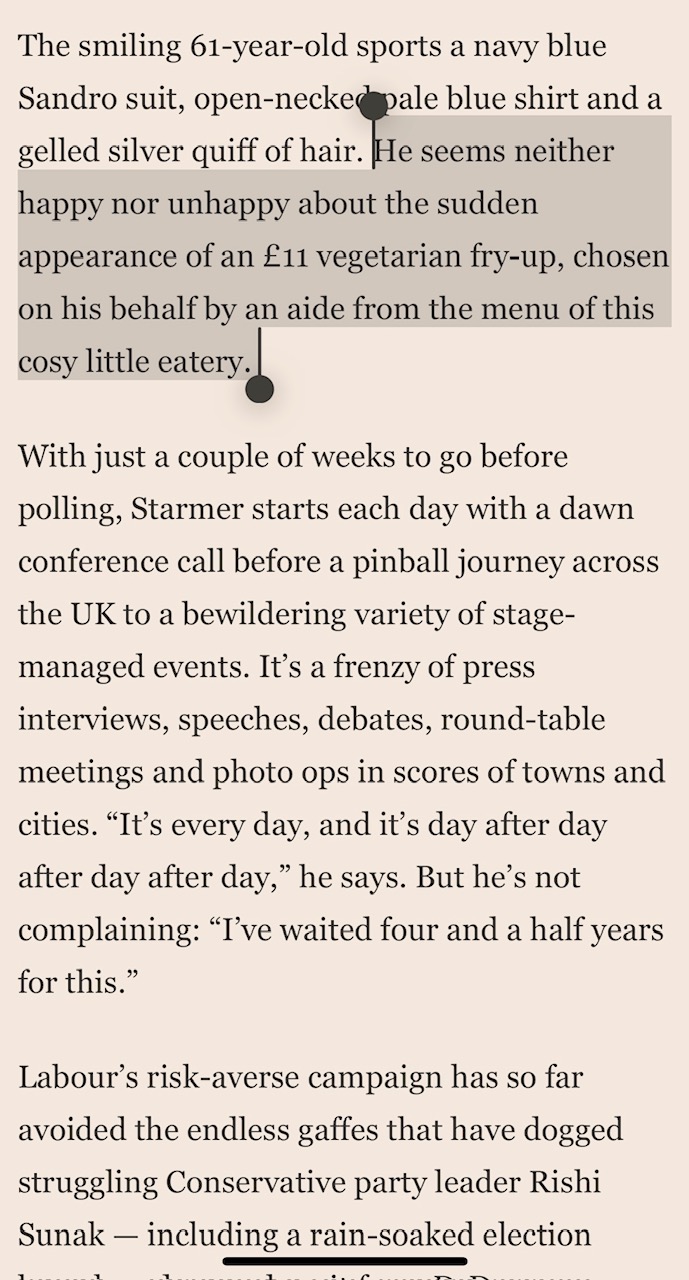
Had a strong feeling Keir Starmer would be a flop when, in his interview with the Financial Times back in 2023, he seemed incapable of ordering his own lunch, or to even have any preference on his lunch.
Do you think Winston Churchill or Disraeli passively accepted a vegetarian fry-up?!
You, happy Austria, marry!
Posted: June 21, 2026 Filed under: Savoy Leave a comment
Traveling to the former Habsburg lands. What was the deal with these guys?
Origins:
As far back as we can trace, the Habsburg family was illustrious. In the 10th century, its progenitors carved out a medley of discontinuous lordships and manors in the region of the Upper Rhine, ranging across Alsace, the Black Forest, and what is now northern Switzerland. Around 1030, the earliest Habsburg of whom we have a definite record, Radbot (c.985-1045), founded the Benedictine abbey at Muri in the Swiss Aargau. Muri served over several centuries as the family’s place of burial. About the same time, Radbot built a stone fort called Habsburg some 30 kilometres away from Muri.
The name probably means Castle by the Ford, but is usually given the grander rendering of Castle of the Hawk. It was by the title of Habsburg that Radbot’s descendants were generally known.
The family had various forged documents that connected them to Julius Caesar and beyond:
By virtue of this and other similar deceptions (including a charter purportedly written by the Roman emperor, Nero), the Habsburgs ‘discovered’ that they were entitled to the rank of archduke. It was by this spoof title that all senior members of the dynasty subsequently styled themselves, in honour of which they wore a cloak trimmed with ermine and a coronet.
The story behind the forgeries rests on politics and ambition. In the 1lth and 12th centuries, Radbot and the first Habsburgs had sought to carve out a principality in the region of Switzerland and the Upper Rhine. They were, however, unable to consolidate their disparate properties into a unified block, for the region was intersected by too many rival lordships, cities, and confederacies.
One thing the early Habsburgs did have was money, for they controlled the Alpine toll stations which stood between the upland pastures and the cities of the valleys. In the hope that his family’s wealth might be deployed to bring order to the Holy Roman Empire, the German princes elected Rudolf of Habsburg as king in 1273. He did not disappoint them, deploying his armies against the robber-knights whose Rhineland castles impeded merchants and commerce.
One key to their success: using their daughters:
The Habsburgs were striking in the way that they used daughters not only as political pawns but also as political players, administering parts of the dynasty’s possessions.
Not that it was great to be a Habsburg daughter, you probably had to marry some prince you didn’t like, maybe more than one.
Meanwhile, Charles’s younger brother, Ferdinand, for whom Maximilian had engineered marriage into the Polish Jagiello line, acquired in 1526 the crowns of Hungary and Bohemia, following the death in battle of his Jagiello brother-in-law, Louis. In the space of just half a century, therefore, the two Habsburg brothers, Charles and Ferdinand, had through Maximilian’s marriage schemes taken over half of Europe, and they had done so more or less peacefully. Only in Hungary was there any concerted resistance. As an adage put it at the time, ‘Let others fight, you Happy Austria marry.’
It’s hard to understand the period from the end of the Roman Empire until at least the 20th century if you can’t comprehend that Christianity did really matter to people. There were sinners and cynical operators but there were people at both the top and the bottom who really believed and acted on their belief.
Dynastic ambition was only one factor that guided the Habsburg rulers. Indeed, on occasions the policies they pursued were potentially damaging and even ruinous to the dynasty’s interests and survival. These other guiding principles and determinants of policy included the conviction that as Holy Roman Emperors the Habsburg rulers had an obligation to defend the Catholic Church and to promote its spiritual interests, which included the promotion of peace.
How this worked (or didn’t):
They also embraced the belief that government was a trust and that rulership implied duties to subjects. Although rarely doubting the divine providence that vindicated their power and ordained the secular hierarchy on which they stood at the apex, the Habsburg emperors took their obligations to their subjects seriously. Right through to the 20th century, their mornings were typically occupied by audiences at which up to a hundred petitioners queued to ask the sovereign for his help or advice, or (which was more usual) to thank him in person for some kindness shown.
There were two problems with the cultivation of good government.
The first was the problem of distance, which meant that Habsburg rulers might demonstrate their personal rule and fatherly concern only to a few. Country folk from Lower Austria might thus travel to Vienna to have a private word with the emperor about their daughters’ marriages, but this was scarcely possible for most Habsburg subjects. The old adage of Spanish colonial rule, ‘If death came from Madrid, we would be immortal, was a fitting verdict on the problems of communication that beset Habsburg rule more generally.
How did we get here?:
In 1437, the Emperor Sigismund, son of Charles IV of Luxemburg, died without heir. Meanwhile, the various cadet lines of the Habsburgs either expired or faltered, leaving children as heirs. In 1438, the electors chose as king Albert of Habsburg, the late Emperor Sigismund’s son-in-law. Upon Albert’s death the next year, they appointed as successor his second cousin, Frederick of Styria, who was now the senior member of the dynasty.
Frederick was chosen by the electors because there was no one else available for the role of king. Nevertheless, he looked the part, for he was tall and muscular, with long blond hair-characteristics that he had inherited from his Polish mother, Cymburga, a woman of prodigious beauty and physical strength, who could reputedly drive nails into oak tables with her bare fist. Frederick ruled as king of Germany from 1440 and, following his coronation in Rome, as emperor from 1452 until his death in 1493.
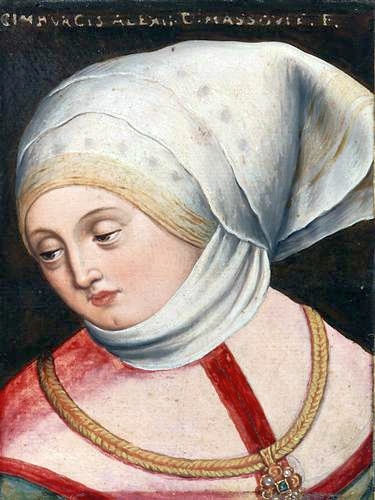
That nails in oak claim sounds like a seven almonds story: a joke or quip that is taken too literally and enters the historical record.
Historians have not looked kindly upon Frederick III, too readily following the later description of him as the ‘arch-sleepyhead or averring by reference to the Austrian poet Rilke that his main achievement was to have reigned in adversity for so long: Who speaks of victory, when to endure is all?’ An even harsher verdict blames Frederick for Germany’s later misfortunes. Instead of busying himself with the Holy Roman Empire and trying to bring order to its politics, Frederick withdrew to provincial Wiener Neustadt and occupied himself with Habsburg family affairs.
Where all this led:
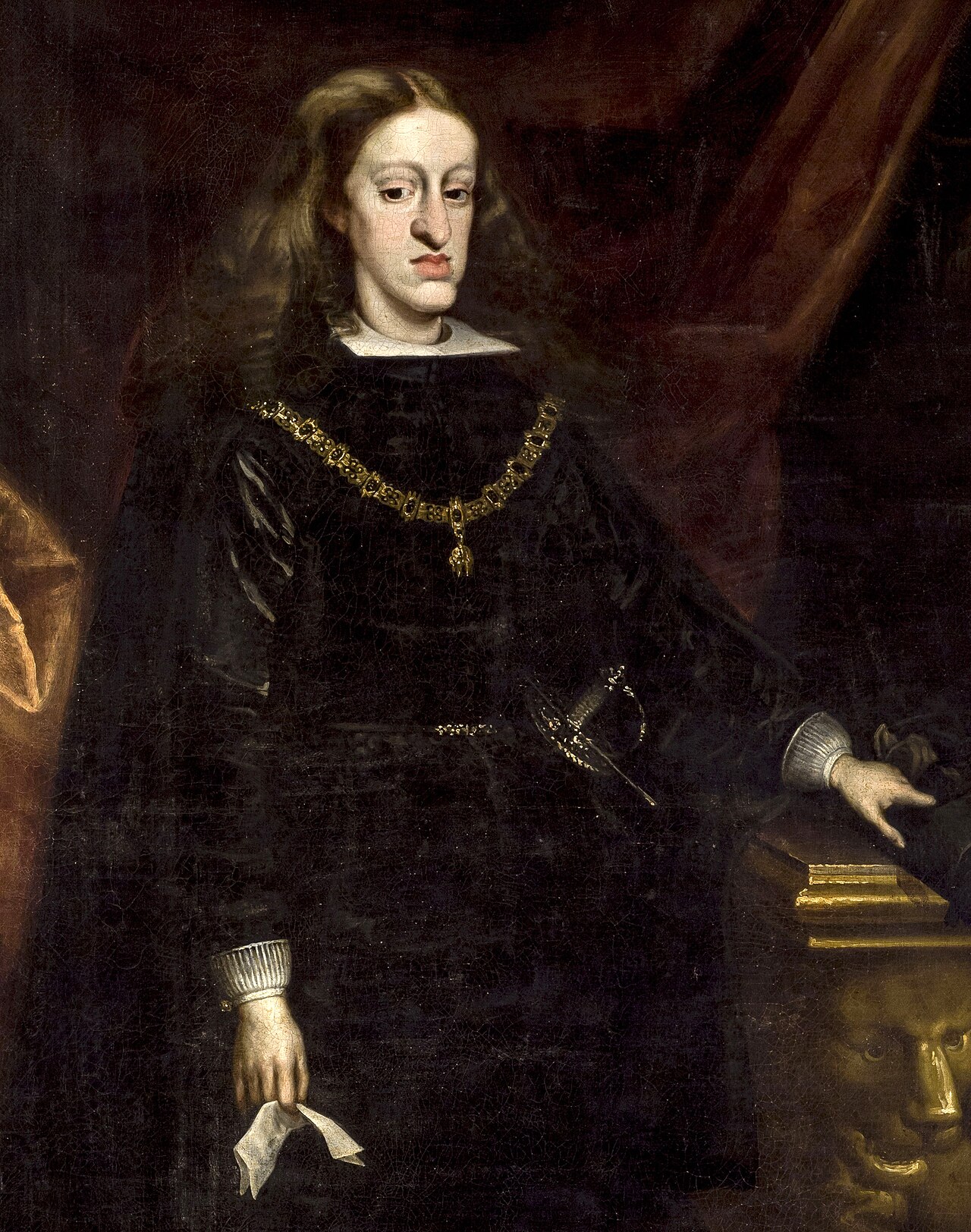
[The Habsburg dynasty] held to a mythologized history that taught it to expect greatness. It was tenacious in acquiring lands, kingdoms, and titles, either by war or by marriage. Its members were, moreover, bound together both biologically and by the distribution of power and honours. The branches of the dynasty thus regularly intermarried, to such an extent that Charles II of Spain (1665-1700) had only two-thirds the normal number of great-and great-great-grandparents.
Inbreeding between cousins and uncles caused the prognathism for which the Habsburgs were famous and was most pronounced in Charles II (Figure 2).
Magenta
Posted: June 20, 2026 Filed under: Savoy Leave a comment
So many topics we’re working through here could be filed as “footnotes to footnotes.”
In John Dormandy’s A History of Savoy: Gatekeeper of the Alps he drops this one:
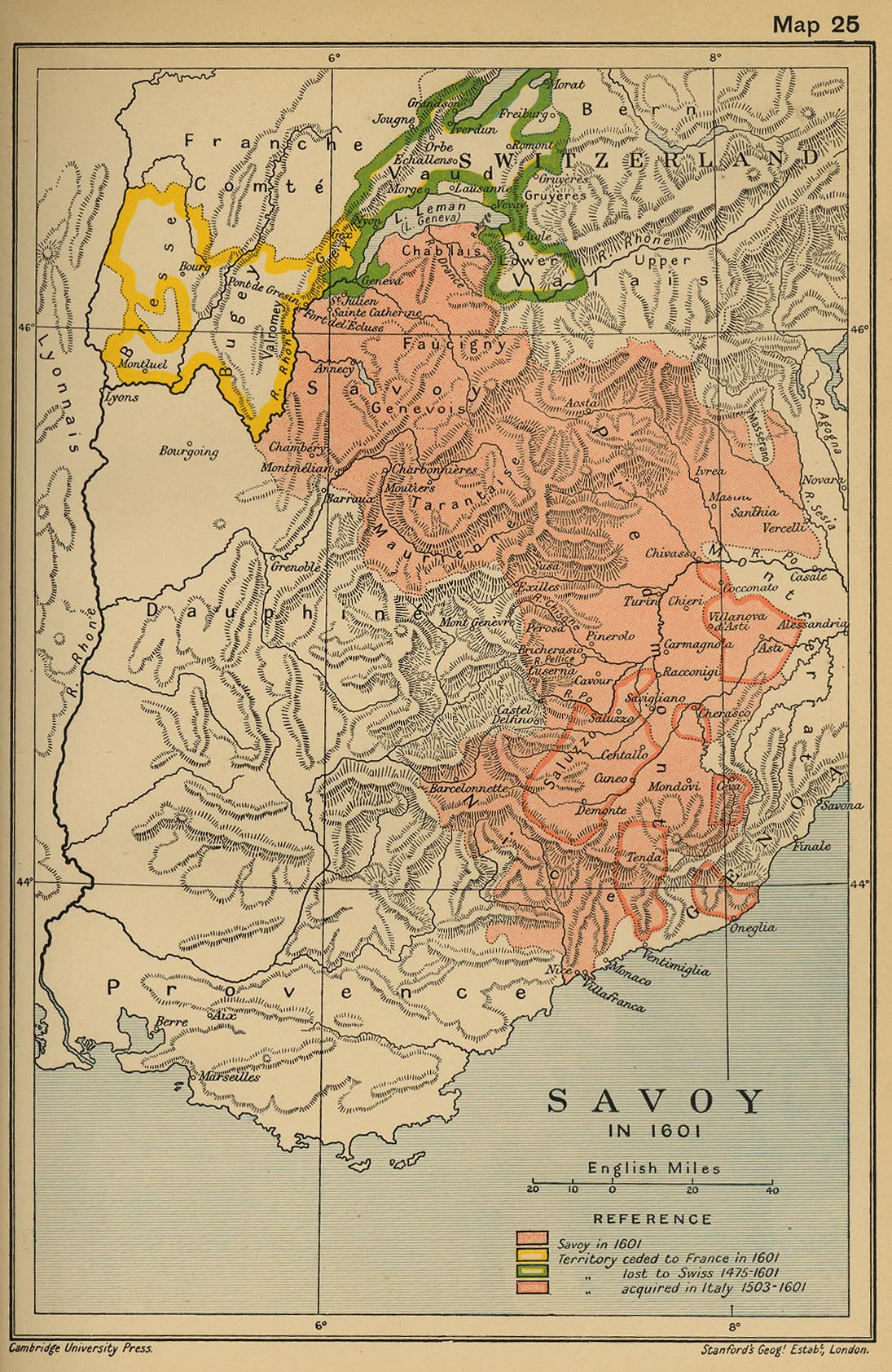
In 1858, Emperor Louis Napoleon III and Count Benzo Cavour, prime minister of King Victor Emmanuel, met secretly in the small spa town of Plombières in the Vosges mountains to hatch a plot. The two men, equally devious, agreed to provoke an attack by Austria on the Kingdom of Sardinia that included Savoy; the French would then promptly come to the aid of poor Sardinia, and together they would expel the Austrians from northern Italy. Following that happy outcome, Sardinia would acquire all of northern Italy and in recompense for his help, Napoleon III would be allowed to annexe Savoy to France. That was exactly what happened, except that by the mid-nineteenth cen-tury, Europe, particularly Victorian England, was beginning to baulk at countries being traded as commodities, especially if the recipient of the gift was France under a second Napoleon. Cavour and Napoleon, ever resourceful, organised a ‘free’ plebiscite in Savoy in which 99 per cent of the population voted for annexation to France.
Savoy has had our attention. Savoy is a region of alpine lakes, mountains, valleys and passes in what’s now France, Italy, maybe a touch of western Switzerland. Savoy was a duchy, a principality, a state, a province, the seat of an empire, a poor source of refugees and emigrees, a retreat for aristocrats, a land of dairies, of resorts, of monestaries. Savoy was an idea, and it was a catchy idea. It spread in funny ways, through marriages and princesses and neighborhoods and towns, a hotel, and then many hotels, a cake, and a dance hall and a song and a beer and a fictional baseball bat.
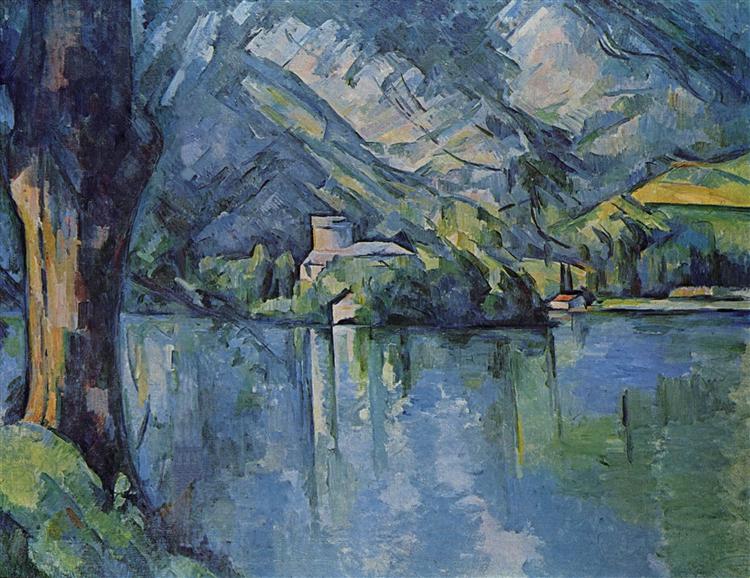
Fortune brought us twice to Savoy to one of her most favored spots, Lake Annecy. We’ll be there again.
If you’re at the animation festival, come see us. We have two panels, one for Common Side Effects on Thursday at 2:30pm at Salle Pierre Lamy, one for Adult Swim on Friday at 1:30pm at MIFA Tent at the Imperial Hotel.
Back to Magenta:
Undeterred by their lack of any military experience, there was no way Napoleon and Victor Emmanuel were going to be talked out of leading their armies in person. Parliament in Turin dissolved itself and gave the King, and therefore Cavour, full executive powers. Once war was declared the anti-Cavour faction in Savoy became as patriotic as everybody else, cheering the French troops as they crossed Savoy, on the way to Italy.
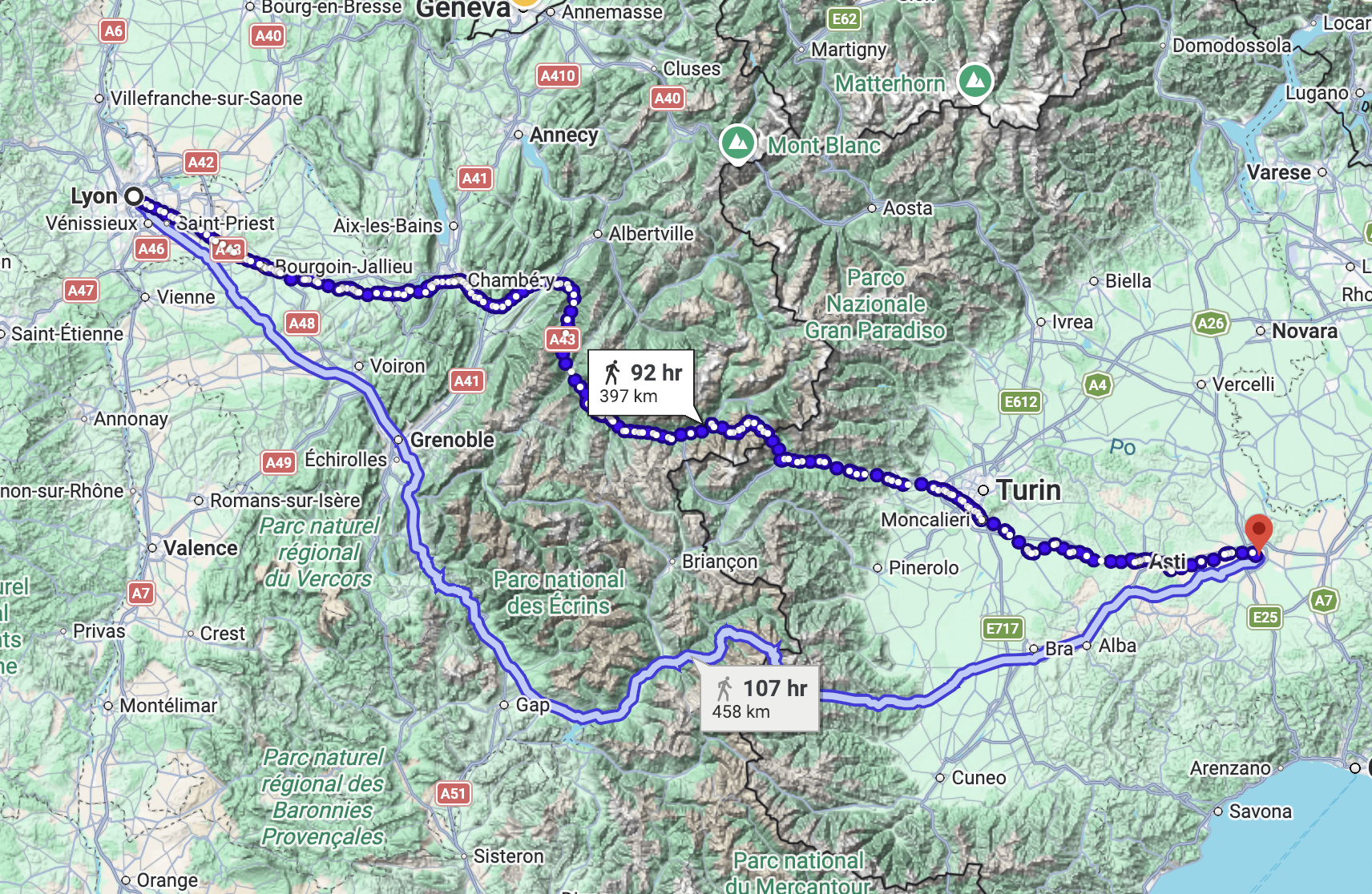
The forty-year-old King concentrated the Sardinian army of 50,000 men between Alessandria and Casale. Napoleon had been gathering his army near Lyons and French troops started crossing Savoy within forty-eight hours of the Austrian army entering Piedmont territory. The French Army used the railway as far as St-Jean-de-Maurienne, but the Mont Cenis Pass had to be crossed on foot. Within days, French soldiers were streaming down the Alps into Piedmont at the rate of 10,000 a day. On 14 May, the fifty-year-old Napoleon joined his army of 107,000 men and 324 cannons in Alessandria.
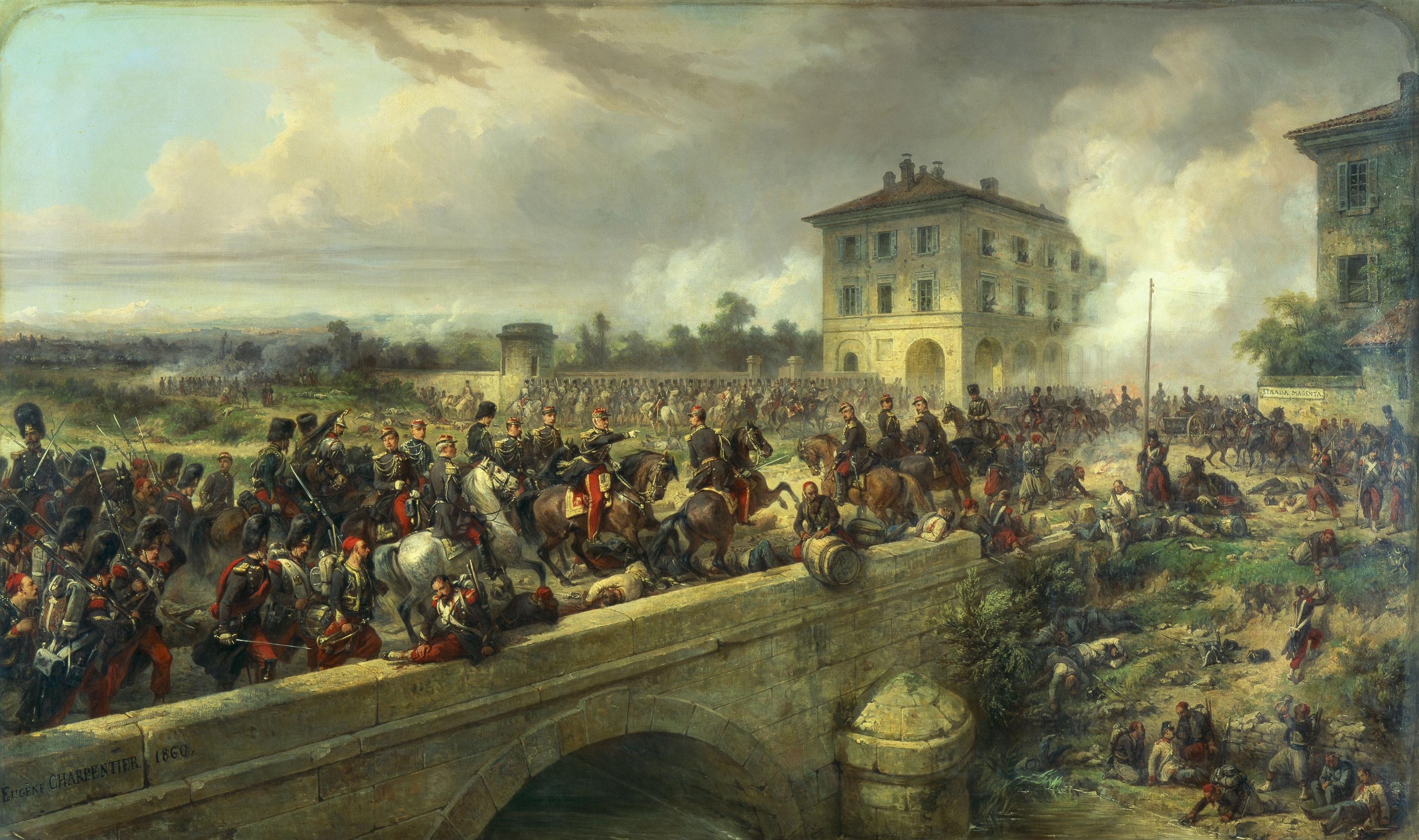
For reasons that are unclear, General Gyulai stopped the unopposed advance of the Austrian army behind the Ticino river and did not resume his advance till 20 May, more than three weeks after crossing the frontier … Ninety-year-old Field Marshal Radetzky was brought out of retirement, but he was too late to undo Gyulai’s blunder. The first major battle took place on 4 June at Magenta, 20 km west of Milan. Some 50,000 French soldiers faced an equal number of Austrians. It was Napoleon’s first experience of commanding an army in battle and for several hours, the outcome was in balance, until finally the French prevailed. About 7,000 Austrian and 4,000 French soldiers died at Magenta.* The twenty-nine-year-old Emperor Franz Joseph, even less experienced than Napoleon or Victor Emmanuel, now took over personal command of the Austrian armies. Victor Emmanuel placed Garibaldi in charge of the volunteer corps of untrained civilians, but without any specific orders, which Garibaldi would probably have ignored in any event. By 20 June, Garibaldi had reached Lake Garda, well behind the Austrian lines, further enhancing his reputation with his men and the Italian public.
Four days after the battle at Magenta, Napoleon and Victor Emmanuel made a triumphal entry into Milan. The Emperor and the King were cheered at the service of thanksgiving in the cathedral, at the gala performance in La Scala, and at a series of banquets. Napoleon assured everyone that he had no personal agenda and that his only motive for being there was to help his ‘brother’ Victor Emmanuel fulfil the legitimate aspirations of the Italian people and liberate Italy…
Napoleon III and Cavour got exactly what they wanted. At first.
Then events got out of their control, Italy became independent, Napoleon III was a prisoner, then died in exile in England. Cavour died of malaria while Prime Minster of Italy, an office that would eventually go to Mussolini. Even these guys who briefly seem as if they bend history end up toppled by unforeseen consequences.
Savoy, meanwhile, took off! It’s great for skiing in the winter and relaxing in the summer. It’s probably the richest it has ever been.
Previous coverage:
Savoy Special (and knowing and not knowing in the age of AI)
Everyday Life in the Holy Roman Empire
Swiss History series: Part One, Bernese Chronicles, William Tell etc., League of God’s House, Why Switzerland?, Calvin’s Geneva, Geneva Conventions
Robert Thurman
Posted: June 19, 2026 Filed under: America Since 1945 Leave a commentHe enrolled in boarding school at Phillips Exeter Academy, in New Hampshire. He was expelled in 1958 — weeks from graduation, having already been accepted at Harvard — after leaving without permission to join Fidel Castro and his guerrilla army in Cuba. He was stopped in Florida and worked for a brief time in Mexico.
In 1959, he married Christophe de Menil, an oil heiress. In 1961, while changing a flat tire, the tire iron slipped and destroyed his left eye, a freak accident that left him questioning his own mortality.
He dropped out of Harvard to travel across Asia. His wife, uninterested in his wanderings, left him. He arrived in Turkey close to broke.
…
He returned home when his father died in 1962, but continued his pursuit of Buddhist knowledge with Geshe Wangyal, a Buddhist lama in New Jersey. Adept at languages, he learned Tibetan in a matter of months and eventually spoke it without an accent.
He decided to become a monk and persuaded his teacher to accompany him to Dharamshala, India, the home in exile of the Dalai Lama.Dr. Thurman and the Dalai Lama became fast friends: He studied under the Tibetan spiritual leader and, in turn, gave him lessons in Freudian psychology, nuclear physics and other Western ideas.
“He would say, ‘Forget about the teaching, you can go and talk to some old lama,’” Dr. Thurman told The San Francisco Examiner in 1997. “‘But now what I want to know is how does the bicameral American constitutional system work? What is a gene, how does it work?’”
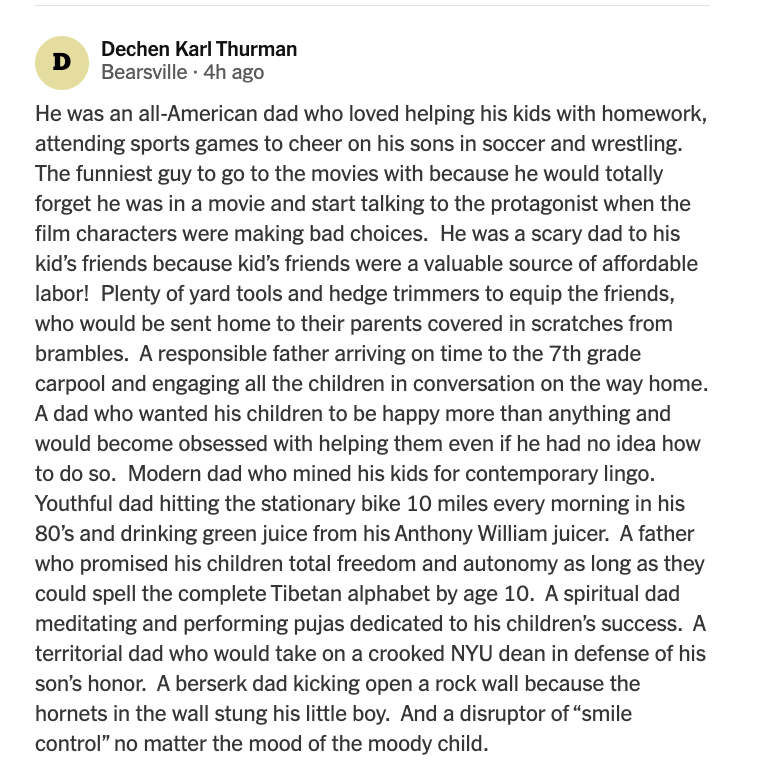
Incredible obituary of Robert Thurman. A remarkable comment from one of his kids:
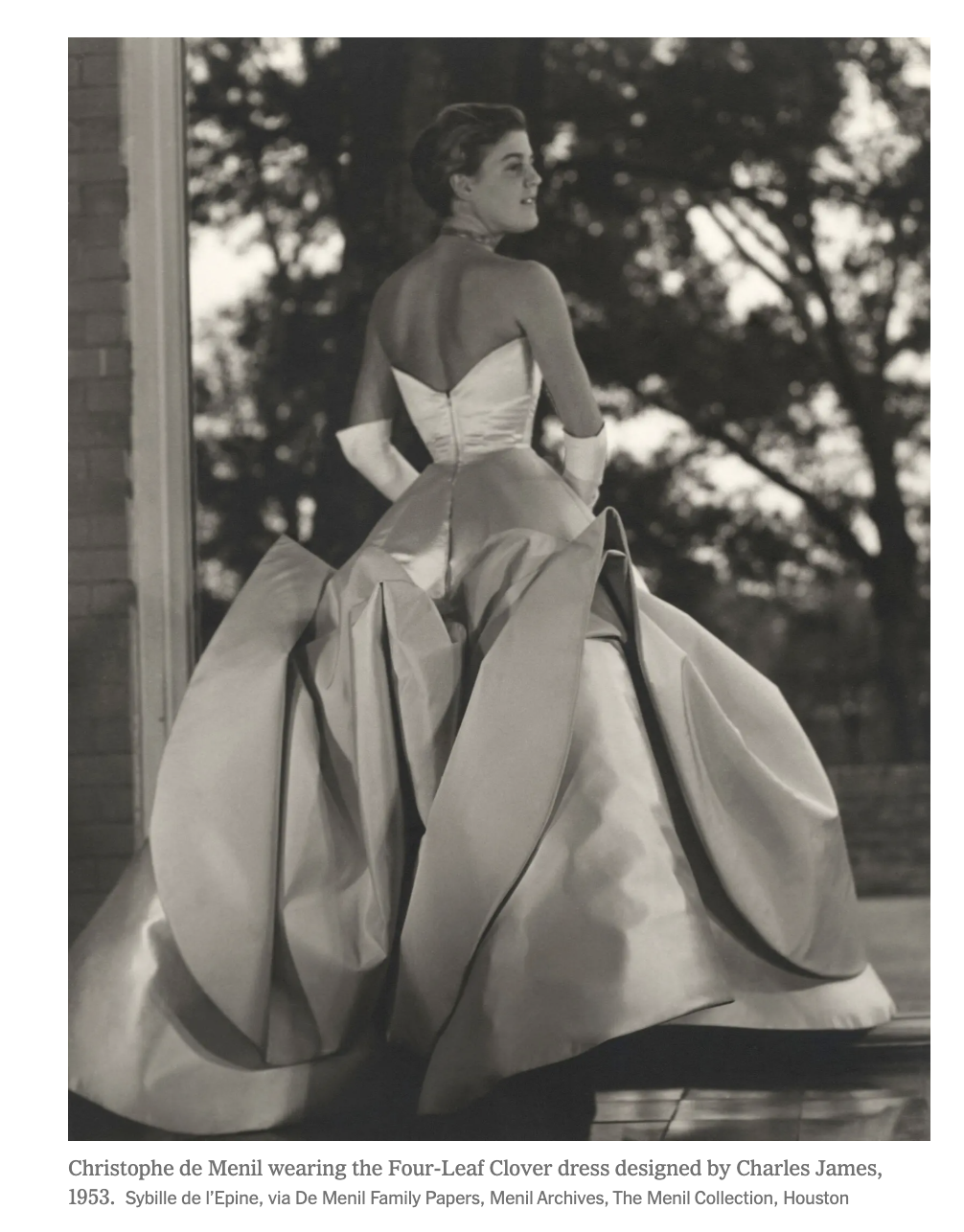
From Christophe DeMenil’s obituary:
In the spring of 1959, she married Robert Thurman, who was eight years her junior and who would enter Harvard that fall. He dropped out two years later with wanderlust and headed toward India by way of Turkey and Iran in search of enlightenment through Buddha. He left behind his infant daughter, Taya, as well as his wife, who, he was quoted as saying, was “nervous, scared of the whole thing.”
Ms. de Menil maintained for years that it was not India where he had been headed but the mountains of Mexico, where he proposed to camp and explore mind-altering drugs, neither of which she felt was appropriate for an infant. The marriage ended in divorce, and Mr. Thurman, who became a distinguished scholar of Buddhism and a monk, later married a German-Swiss model who had divorced Timothy Leary, the proponent of LSD. One of their children, born in 1970 in Mexico, is the actress Uma Thurman.
How did the de Menils get so rich?
Each child was endowed with a formidable financial legacy, thanks to their grandfather Conrad Schlumberger, a physicist, and the great-uncle, Marcel. Together the two men pioneered well-logging, which, using the electrical resistance of the earth, determines with considerable accuracy the location of oil deposits.
I know the name from the art collection in Houston, founded by Christophe’s mother.
Not a great nursery rhyme
Posted: June 18, 2026 Filed under: advice, Savoy, the California Condition Leave a comment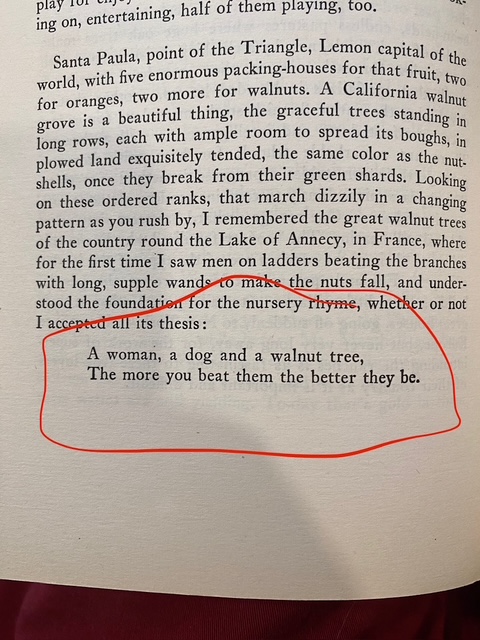
from this kinda strange book:
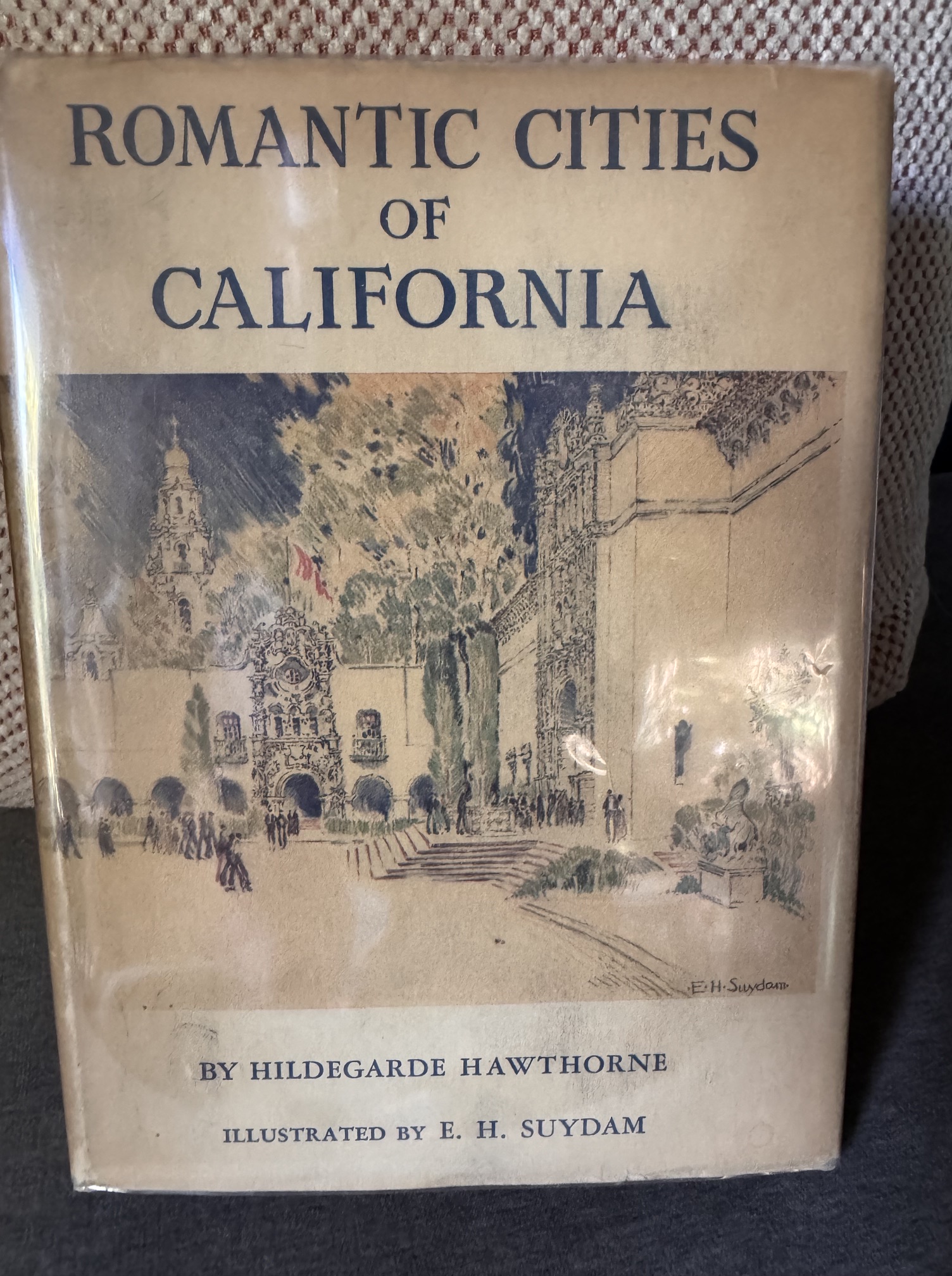
Hildegarde Hawthorne, Nathaniel’s granddaughter, swans around California musing on the Spanish and Mediterranean majesty. I know, it sounds interesting, but it’s not. The best part of E. H. Suydam’s illustration.
Ulysses, by Hugh Kenner
Posted: June 16, 2026 Filed under: Ireland Leave a comment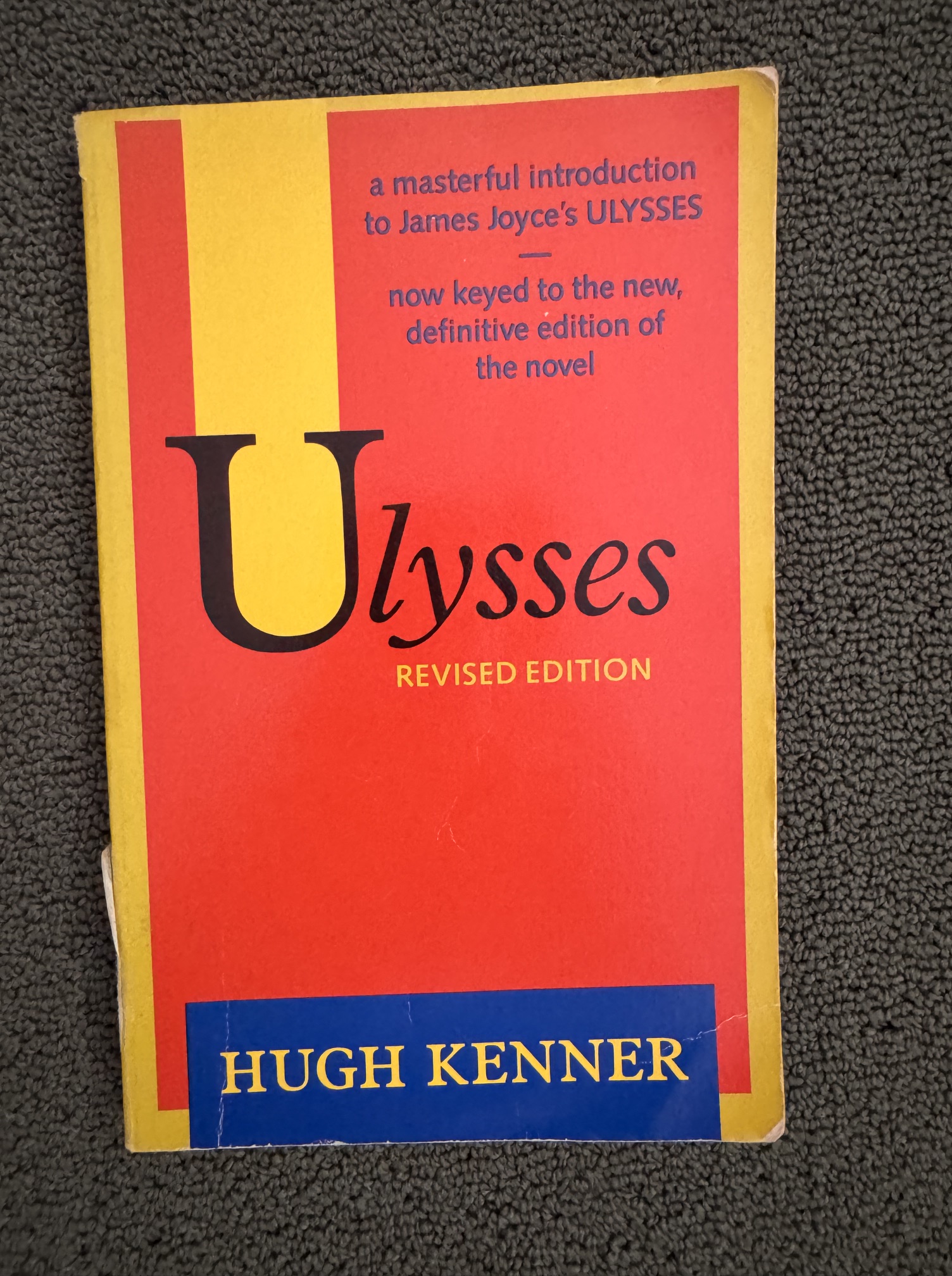
Ulysses, the Book of Bloom, was commenced in Trieste about 1914, written there and in Zurich and Paris during the next seven years, published in Paris, 2 February 1922 on the author’s fortieth birthday, and promplty created what the gutter press loves, a scandal. SCANDAL OF ULYSSES read hoardings for the Sporting Times (‘The Pink ‘Un’) in which one could read that the contents of the book were “enough to make a Hottentot sick.” Hottentots in those days were British subjects.
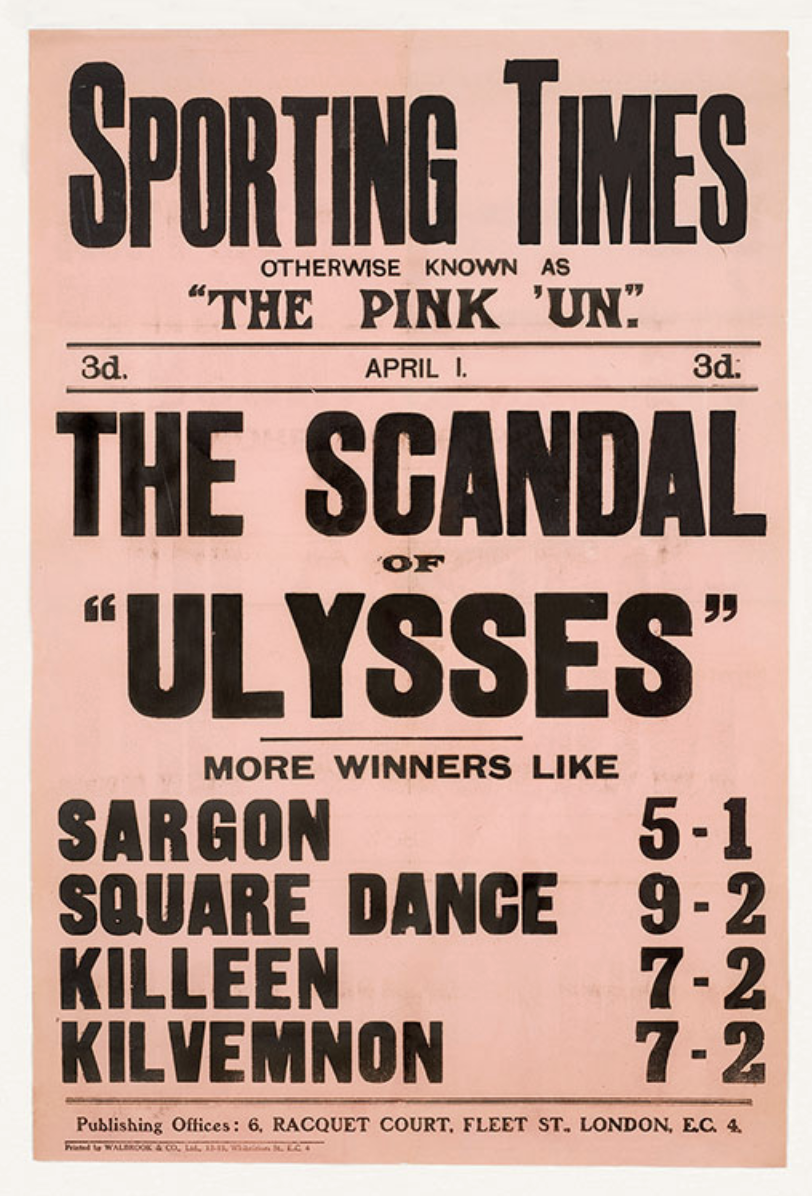
That’s from Hugh Kenner, Ulysses.
A day in June is very long indeed at 53′ North latitude. In Dublin in 1904, Standard Time and Summer Time still years in the future, local time had the sun rise at 16 June at 3:33 AM and not set until 8:27.
A few years ago, my friends saw Gatz, a production by the theater group Elevator Repair Service that is about eight hours long and brings to life The Great Gatsby:
James Gatz — that was really, or at least legally, his name.One morning in the shabby office of a mysterious small business, an employee finds a copy of The Great Gatsby in the clutter on his desk. He starts to read it out loud and doesn’t stop. At first his coworkers hardly notice. But after a series of strange coincidences, it’s no longer clear whether he’s reading the book or the book is transforming him.
8 hours long and with a cast of 13, Gatz is by far ERS’s most ambitious endeavor yet — not a retelling of the Gatsby story but an enactment of the novel itself. Fitzgerald’s American masterpiece is delivered word for word, startlingly brought to life by a low-rent office staff in the midst of their inscrutable business operations.
an eight hour theater production sounded tough.
but my friends were mesmerized.
The reviews matched:
the most remarkable achievement in theater not only of this year but also of this decade.
—Ben Brantley, The New York Times
So when Elevator Repair Service came to town with Ulysses, I had to check it out:
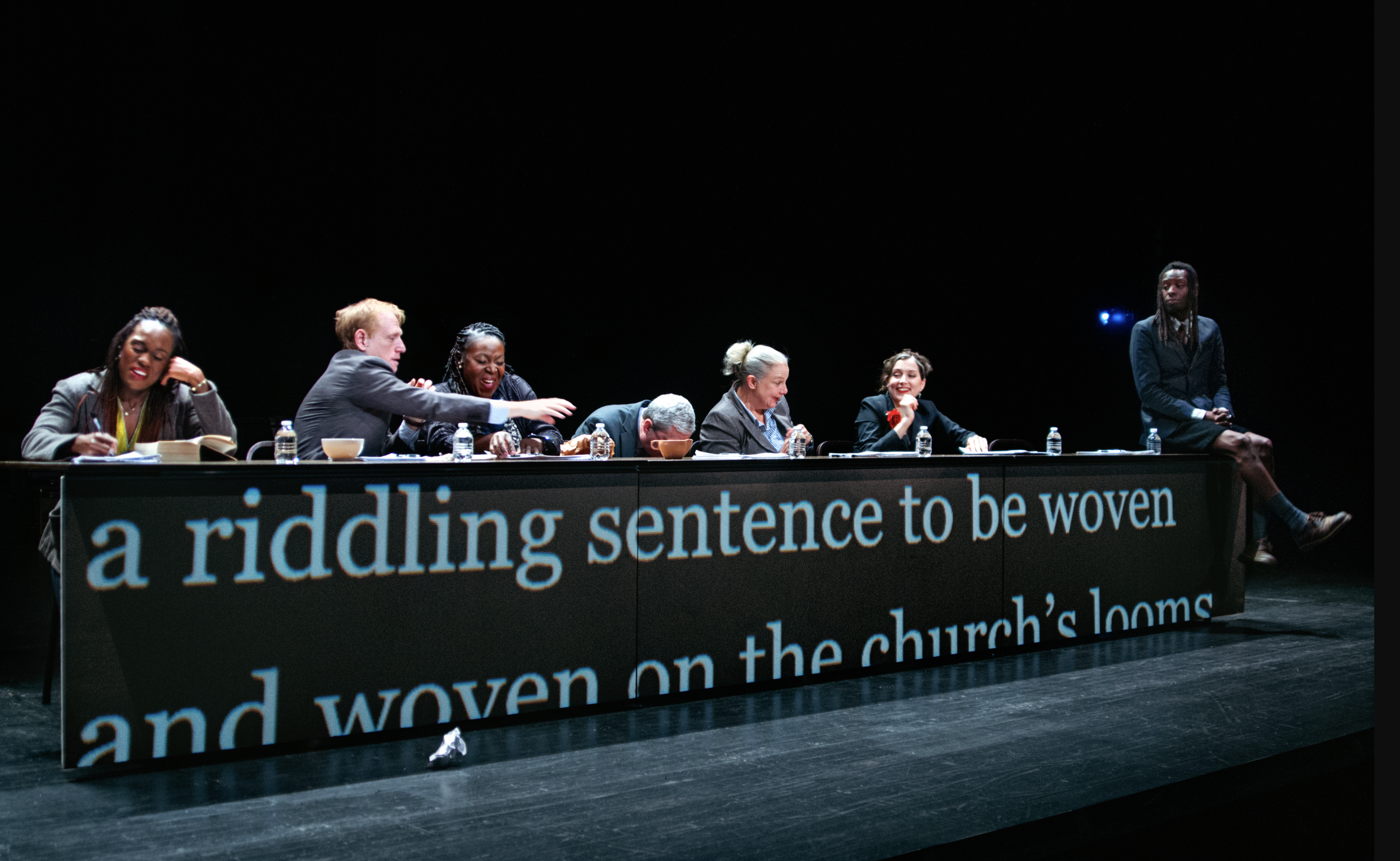
Blessedly, just a couple hours long.
Riotous fun at times although it might be totally incomprehensible if you didn’t know the book?
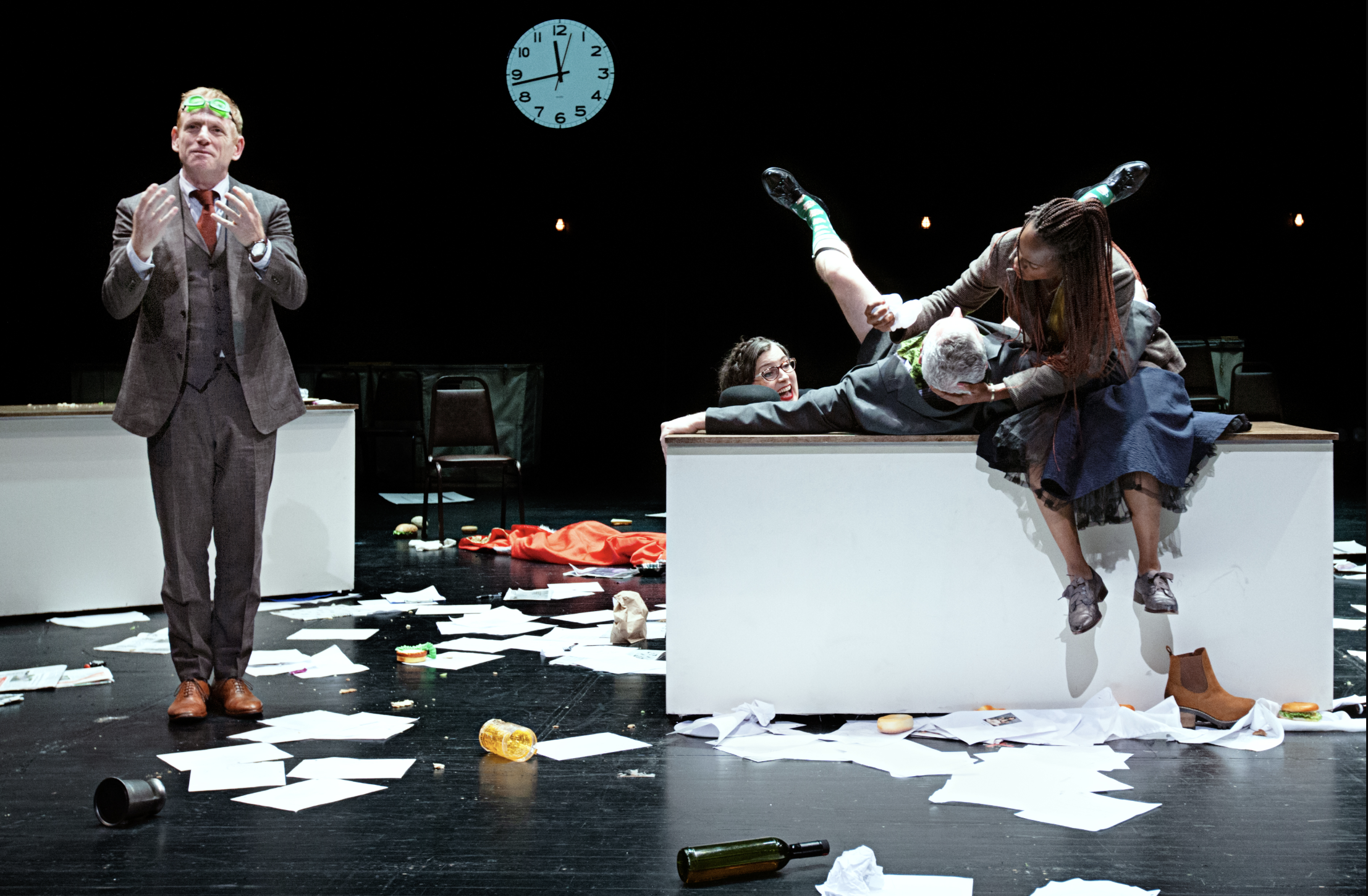
It got Ulysses back on my mind.
Ulysses by James Joyce starts with the living situation of Stephen, a sort of gloomy softboi. Then we pick up with Leopold Bloom, feeding his cat, eating breakfast, and then walking around Dublin trying to think about anything except the fact that this afternoon his wife Molly is gonna have sex with Myles Boylan.
(He gazes ahead, reading on the wall a scrawled chalk legend Wet Dream and a phallic design.) Odd! Molly drawing on the frosted carriagepane at Kingstown. What’s that like? (Gaudy dollwomen loll in the lighted doorways, in window embrasures, smoking birdseye cigarettes. The odour of the sicksweet weed floats towards him in slow round ovalling wreaths.)
BLOOM: (As before.) Rarely smoke, dear. Cigar now and then. Childish device. (Lewdly.) The mouth can be better engaged than with a cylinder of rank weed.
ZOE: Go on. Make a stump speech out of it.
BLOOM: (In workman’s corduroy overalls, black gansy with red floating tie and apache cap.) Mankind is incorrigible. Sir Walter Ralegh brought from the new world that potato and that weed, the one a killer of pestilence by absorption, the other a poisoner of the ear, eye, heart, memory, will, understanding, all. That is to say he brought the poison a hundred years before another person whose name I forget brought the food. Suicide. Lies. All our habits.
Hugh Kenner identifies some issues:
Joyce obeyed a principle Hemingway later enunciated, that a writer’s omissions will show only when he omits things because he doesn’t know them, and he worked out elaborate schemata so as to be able to suppress them. Except for the funeral cortège, with which we ride swaying and rattling clear across the city with frequent indications of time and place (“Are we late?’ asks Martin Cunningham; Paddy Dignam has an appointment with the grave), Joyce only once (10.113) takes us aboard the wheeled conveyances his characters use so freely. An abrupt cessation of action here, an abrupt resumption there – such is his staccato notation: the cut, not the dissolve. The effect, for a reader trained on the Portrait’s suave transitions (where cuts signify the passage of days, or years) is one of calculated disorientation: Where are we now? How did we get here?
Joyce the critic:
Some things were clear to Joyce extremely early. At 22 he wrote to his brother ‘Damned stupid, after reading “The Wild Goose’ in George Moore’s Untilled Field. ‘A lady who has been living for three years on the line between Bray and Dublin is told by her husband that there is a meeting in Dublin at which he must be present. She looks up the table to see the hours of the trains. This on [the Dublin, Wicklow & Wexford Railway] where the trains go regularly; this after three years. Isn’t it rather stupid of Moore.”
Moore, who didn’t live on the DW & WR, would have had to look up that train, but he should have reflected that his character wouldn’t have. The writer should be alert to what his characters would know
Ulysses can be a tough read, this aint exactly Jack Reacher:
But Ulysses is so designed that new readers, given, even, what cannot be postulated, ideal immunity to attention overload, cannot possibly grasp certain elements because of a warp in the order of presentation, and veteran readers will perceive after twenty years new lights going on as a consequence of a question they have only just thought to ask. Such a question would be: Why is Bloom made to advert to the potato just when he does, on a page where there seems no earthly reason for him to remember the potato or for us to be apprised of it? And when we think to ask something happens.
Kenner implores us this is worthy:
For nearly seven years Ulysses was more than a project: it was what James Joyce was doing with the one life at his disposal, and he should be credited with some reflection on the import of this.
Not to worry, plenty of brainpower has been deployed on this book:
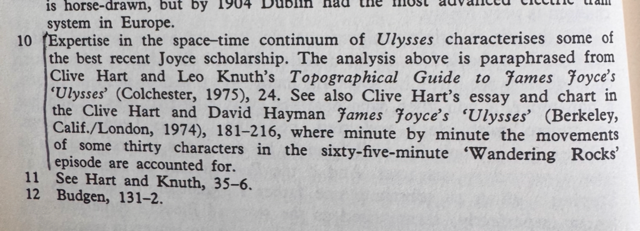
Possible Joyce was frustrated with the reception:
Ezra Pound in old age liked to recall how Joyce had responded to reviews and explications: “If only someone would say the book was so damn’ funny.”
It’s not a laugh riot but there’s fun.
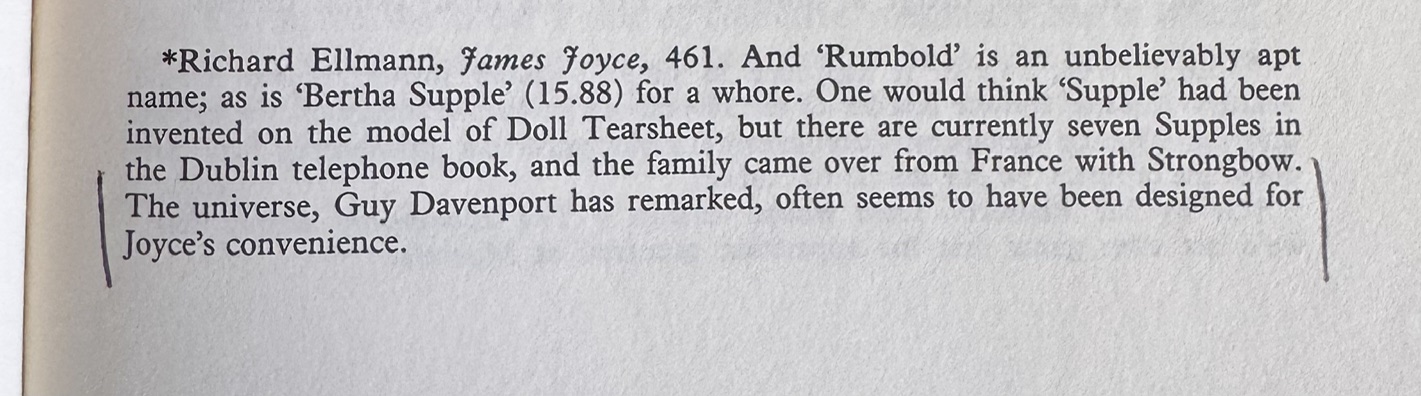
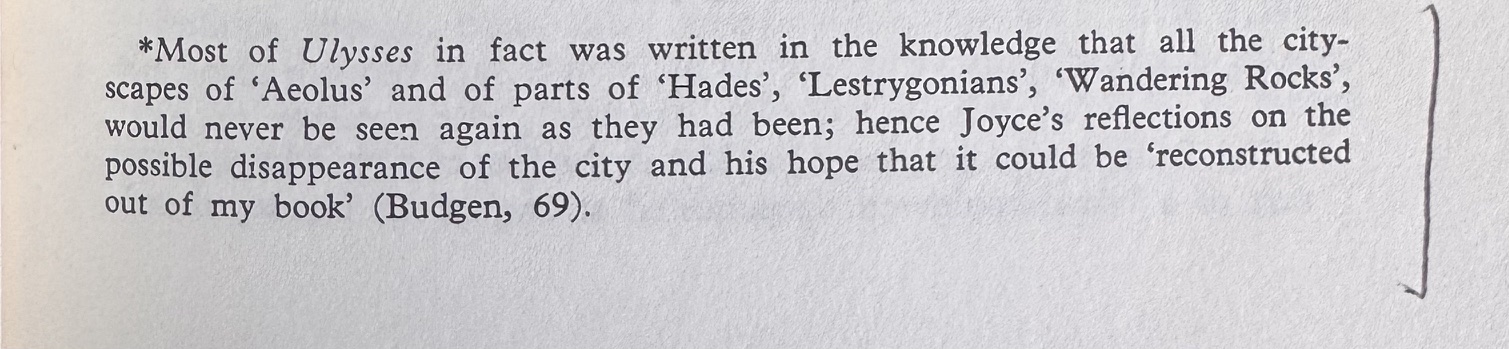
Ulysses came out in 1922, but it’s set in 1904. Eighteen years earlier. Imagine l reading a book today about a guy walking around.., San Francisco? Boston?… in 2008. (Would read).
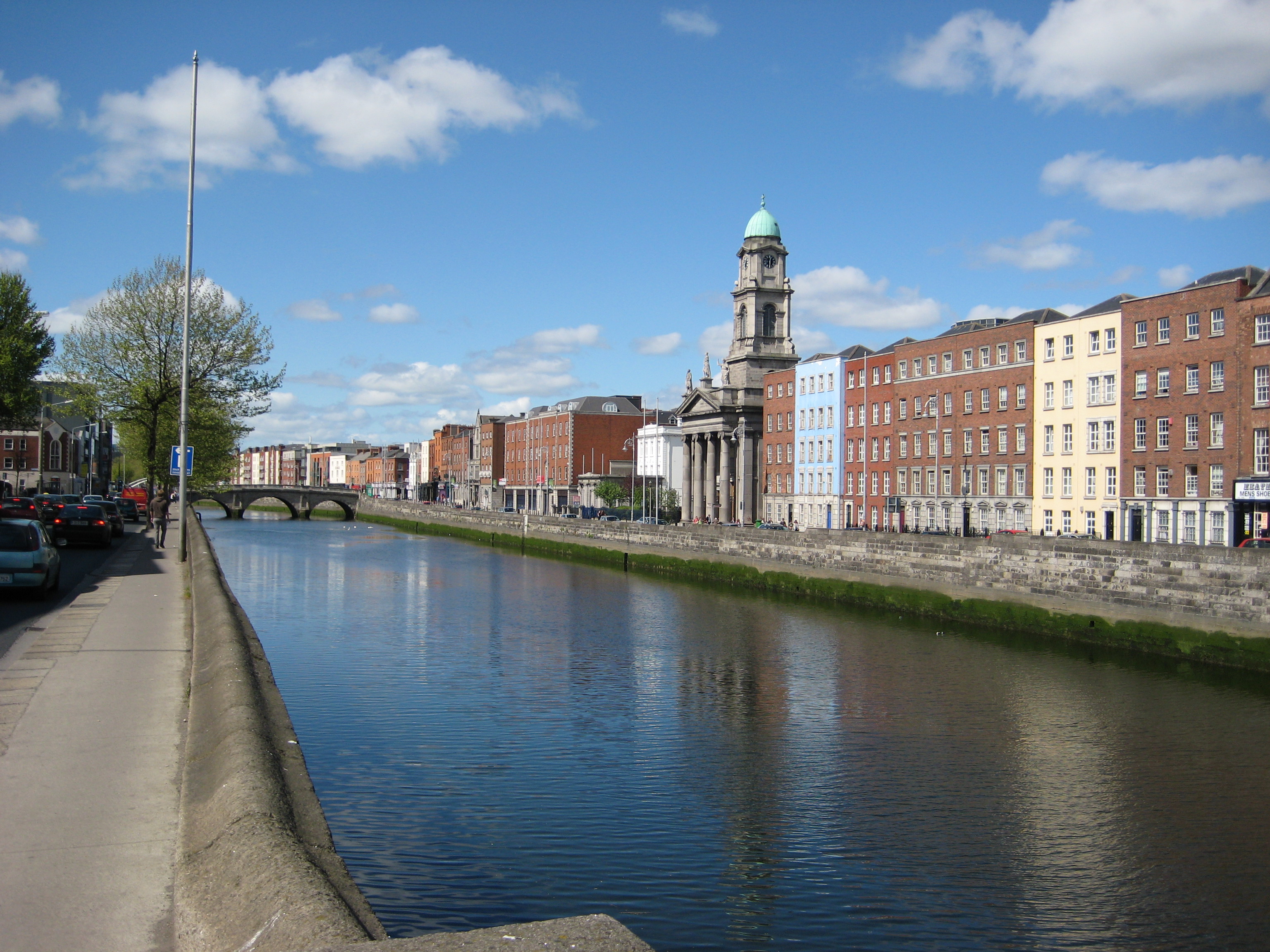
In 1916, between the setting and the publication, many spots in central Dublin were damaged in the Easter Rising and aftermath:
A biography of Joyce biographer Richard Ellmann came out not long ago. From a New Statesman review piece by Lyndall Gordon:
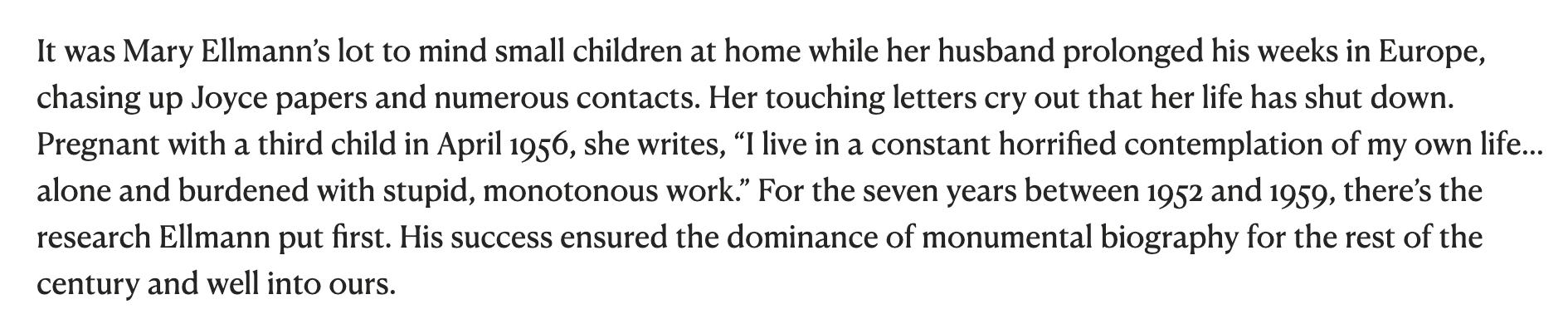
I was struck by the phrase “stupid, monotonous work.”
Even admirers of Ulysses get exhausted:
it sometimes overruns the bounds of art into an arid ingenuity which would make a mystic correspondence do duty for an artistic reason
EO Wilson, source
I picked up Hugh Kenner’s Ulysses looking for an answer to a specific question, about the catechism section, 17, are those real? Like she had sex with all those people?
What did his limbs, when gradually extended, encounter?
New clean bedlinen, additional odours, the presence of a human form, female, hers, the imprint of a human form, male, not his, some crumbs, some flakes of potted meat, recooked, which he removed.
If he had smiled why would he have smiled?
To reflect that each one who enters imagines himself to be the first to enter whereas he is always the last term of a preceding series even if the first term of a succeeding one, each imagining himself to be first, last, only and alone whereas he is neither first nor last nor only nor alone in a series originating in and repeated to infinity.
What preceding series?
Assuming Mulvey to be the first term of his series, Penrose, Bartell d’Arcy, professor Goodwin, Julius Mastiansky, John Henry Menton, Father Bernard Corrigan, a farmer at the Royal Dublin Society’s Horse Show, Maggot O’Reilly, Matthew Dillon, Valentine Blake Dillon (Lord Mayor of Dublin), Christopher Callinan, Lenehan, an Italian organgrinder, an unknown gentleman in the Gaiety Theatre, Benjamin Dollard, Simon Dedalus, Andrew (Pisser) Burke, Joseph Cuffe, Wisdom Hely, Alderman John Hooper, Dr Francis Brady, Father Sebastian of Mount Argus, a bootblack at the General Post Office, Hugh E. (Blazes) Boylan and so each and so on to no last term.
My question is, are those names all Molly Bloom’s actual lovers/roster? or is this Bloom’s imagining?
Kenner has an answer:
This is easily taken as a list of Molly’s lovers other than Bloom, twenty-five of them in all – confirming, as it seems to, impressions we’ve picked up earlier in the book… It was long so taken by critical consensus, and Molly long regarded as a hardened adulteress, a misconception which deprives Bloomsday of its special tang.
Its conceptions were nearly forty years being challenged, and Molly’s character as long a time being refocused… Thus Penrose was a ‘delicate looking student, a priestylooking chap was always squinting in when he passed (8.176; that was 1889 when Molly was nursing Milly, and Penrose nearly caught sight of her breasts; ‘that was his studenting’ is her tart recall (18.575), and we’re safe in concluding she taught him nothing further. Dr Brady (elsewhere described as old: 15.4359) attended her in her confinement (18.575); Fr Sebastian may have been the cleric who sat beside her at the Jews’ Temples Gardens (18.90) or else someone who once heard her confession; gynaecological examination and examination of conscience are intimacies of a sort, but not the sort that contribute to the tale of a hardened adulteress. And so on. No, this list is a list of past occasions for twinges of Bloomian jealousy, and there is no ground for supposing that the hospitality of Molly’s bed has been extended to anyone but her husband and Boylan. No rhetoric affords more pitfalls than that of ‘objectivity.*
Is Molly’s soliloquy itself actually just a Bloom imagination?
I asked Claude:

Coy as usual Claude.
Joyce was interested in technology, he helped open one of the first movie theaters in Dublin.
Whether Molly’s soliloquy is all Molly or part Bloom part Molly or all Bloom, really Blooming: that will be a good discussion question for our seminar.
Is the meaning of Ulysses that life is a distracted fog of comedy and allusion and confusion and worry and jealousy, punctuated with a few moments of pure post-nut clarity?
Stella Adler
Posted: June 10, 2026 Filed under: actors Leave a comment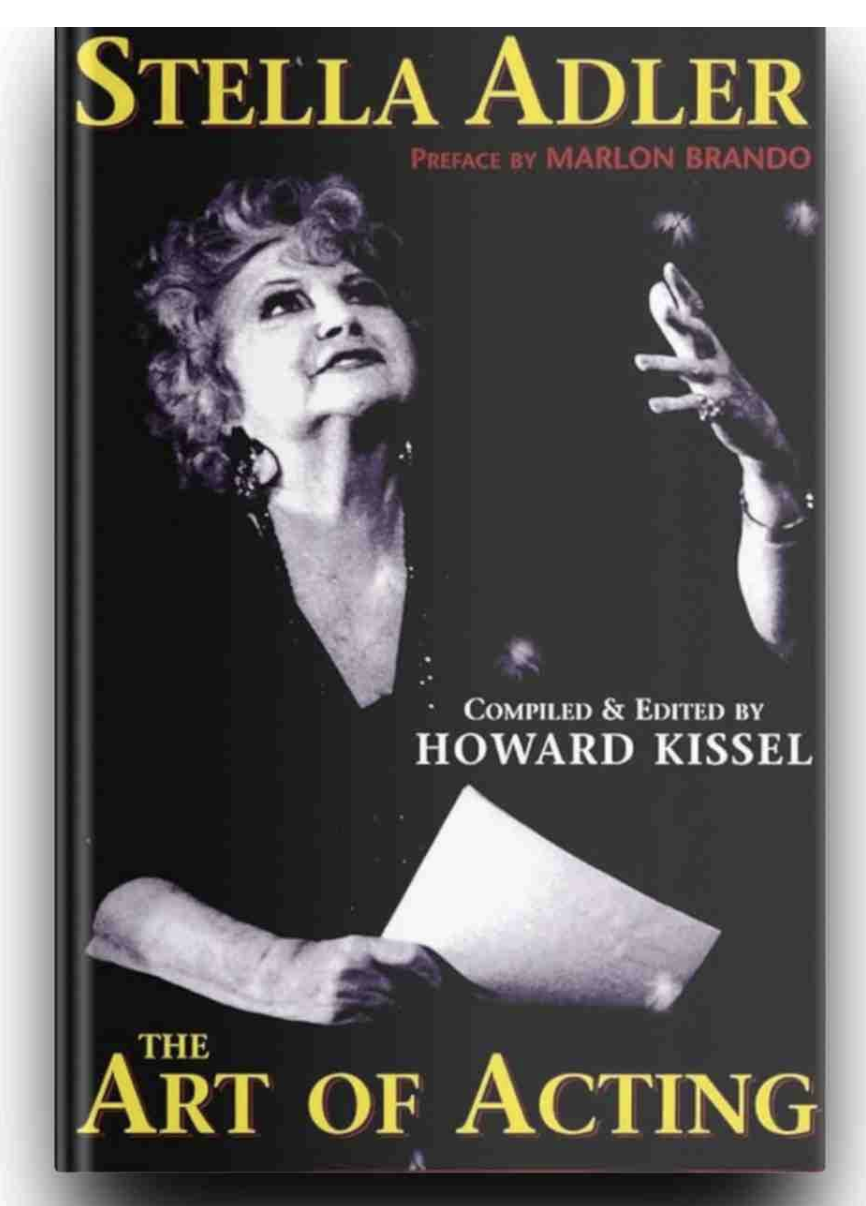
These are collected classroom lectures by the famous acting teacher:
One night, when Olivier was playing Othello, he gave what must have been an electrifying performance. Even he was startled by it. And the audience would not stop applauding. Maggie Smith, who was playing Desdemona, was also stunned. When the curtain was rung down for the last time, instead of going to her own dressing room she went to his. She found him sitting there alone in the dark. “Larry,” she asked him. “How did you do it?” “I don’t know,” he said. “I don’t know.”
Interestingly, shortly after giving this momentous performance Olivier went into a horrible artistic funk. I suppose it’s what they would call a midlife crisis, but it was unusually severe. He was convinced he knew nothing about acting. He was afraid every time he went out on stage that a moment would come in the performance when he would have to step down to the footlights, beg the audience’s forgiveness and ask that the curtain be brought down because he would not be able to remember his lines or not be able to perform. That never happened, but for years the possibility that it might happen haunted him. Many years afterward he described this crisis in an interview, and I wondered if it had to do with that night when he did some of the best acting he ever did in his life and didn’t understand how.
An origin story:
Now I didn’t have a so-called normal childhood, because I lived with the greatest actor I’ve ever seen, who happened to be my father. Jacob P. Adler was recognized in America as one of the greatest actors of all time. When Stanislavski came to America he sought out my father because my father had played a role in Yiddish that Stanislavski was going to play in Russian and he wanted to know how my father had done certain things. My father didn’t give me a moment’s peace. If we were walking in the street, he’d point to someone and say, “Look at her. Look at the way she walks. Look at him. Watch the way he uses his hands. Imitate her voice.” I was always being told to do something. I wasn’t told just to walk. My father’s eyes never stopped. All of his kids had to imitate everything. He didn’t care whether we slept or not. At night we would be taken out of bed. Company would be there. “Get up and imitate your teacher,” he would order us. We were acting all the time. “Observe! Observe! Observe!” he’d tell us. I was sitting in a box in the theatre with him once, and he saw a girl in the next box who had a nervous habit. He studied her and he started imitating her. He never stopped for a minute. That’s the way you become an actor. You cannot afford to confine your studies to the classroom. The universe and all of history is your classroom.
John Steinbeck writing routine
Posted: June 7, 2026 Filed under: Steinbeck, the California Condition Leave a commentOh, yes, John said, his father was a disciplined worker. “He would get up at five in the morning, generally, and fiddle around with breakfast. Then he would sharpen pencils for a long time. he had a box of not such dull pencils here … ” John reached with his right hand into an imaginary box … “and an empty box here.” He reached with his left hand into a second, imaginary box. Laughed. “I’m talking about 400 pencils. He had one of the first electric pencil sharpeners ever made He’d take a pencil,” John mimed, “put it in the sharpener, and by the time he had them all sharpened, when this box was full, he had gotten over what all writers have: that morning inhibition: ‘Am I really going to put my mind on a piece of blank paper?’ By the time the 400 pencils were sharpened, he’d negotiated all that. And then he would write, from six or seven in the morning until noon. Then quit and go fishing or whittling or invent. I thought that was really enviable, that he only worked until noon. But he did it with a great deal of discipline. He didn’t give himself vacations. He didn’t gnash his teeth about stuff. He worked out a lot of his mechanical problems by writing letters to his close friends and editor.”
I was looking up “John Steinbeck San Diego” to see if he ever wrote anything about the place and found this 1989 interview with his son, who was living in La Jolla, in The San Diego Reader.
“He worked very hard at what he did. He was poor for a long time. His success of any remark was in in his late 30s. He worked hard and he worked a lot of things, did a lot of manual labor, was a night watchman, helped build Madison Square Garden, poured cement ffr it.”
What things remind him of his father? “Some odors — a certain Florida toilet water. I noticed very pleasantly the other day, I walked into my office and it smelled like my father’s office.
Some gags:
“He brought a lot o this into his real life. In one of the Sports Illustrated articles, he had written that one of the sports he liked — he was making them up — was fishing contests without baiting the hook. Actually, he did fish that way a lot, not baiting the hook. Actually, he did fish that way a lot, not baiting the hook, because, he said, ‘It won’t disturb them.’ Also, he fished that way sometimes in order to work out problems in his work.”
In another of his Sports Illustrated articles, Steinbeck had discussed racing oak trees. John was visiting him and saw, next to his father’s writing desk, a baking dish filled with peat moss and on the peat moss were rows of acorns, turned upside down. “I didn’t let him know I’d read the Sports Illustrated article,” John said, “and I asked him, “What are you doing here?’ and he said, ‘I’m racing oak trees.'” John’s laughter interrupted his story, then he continues, repeating to us his father’s answer, “‘Well, it hasn’t caught on yet, but if it does, I have one of the first stables.’
“It was so strange. He had a very funny private little thing going on. You’d go into the attic where people had mousetraps. He’d have a plate of poisoned grain, and he’d have signs all over, ‘Mouse Beware. This is Poison. Do not Eat.’ He was a funny guy.”
How about this:
“The most gratifying thing he gave me, both before and after he died, was to know that the most refined highest wisdoms and human knowledge we find in the everyday, ordinary world, not in a library of Sanskrit, not at Oxford, but from the guy down the street. That guy knows as much. The common wisdom is the most profound. Ordinary mind is enlightened mind. Fortunately, my other training also reinforced that truth.
“Not that my father didn’t believe scholarship was useful, but that it had its place. If he needed to learn something about the language of the Middle Ages, he would go to the books or scholars who could teach him, but he did that only so he could learn what ordinary people said in the Middle Ages.”
Los Angeles
Posted: June 6, 2026 Filed under: the California Condition Leave a comment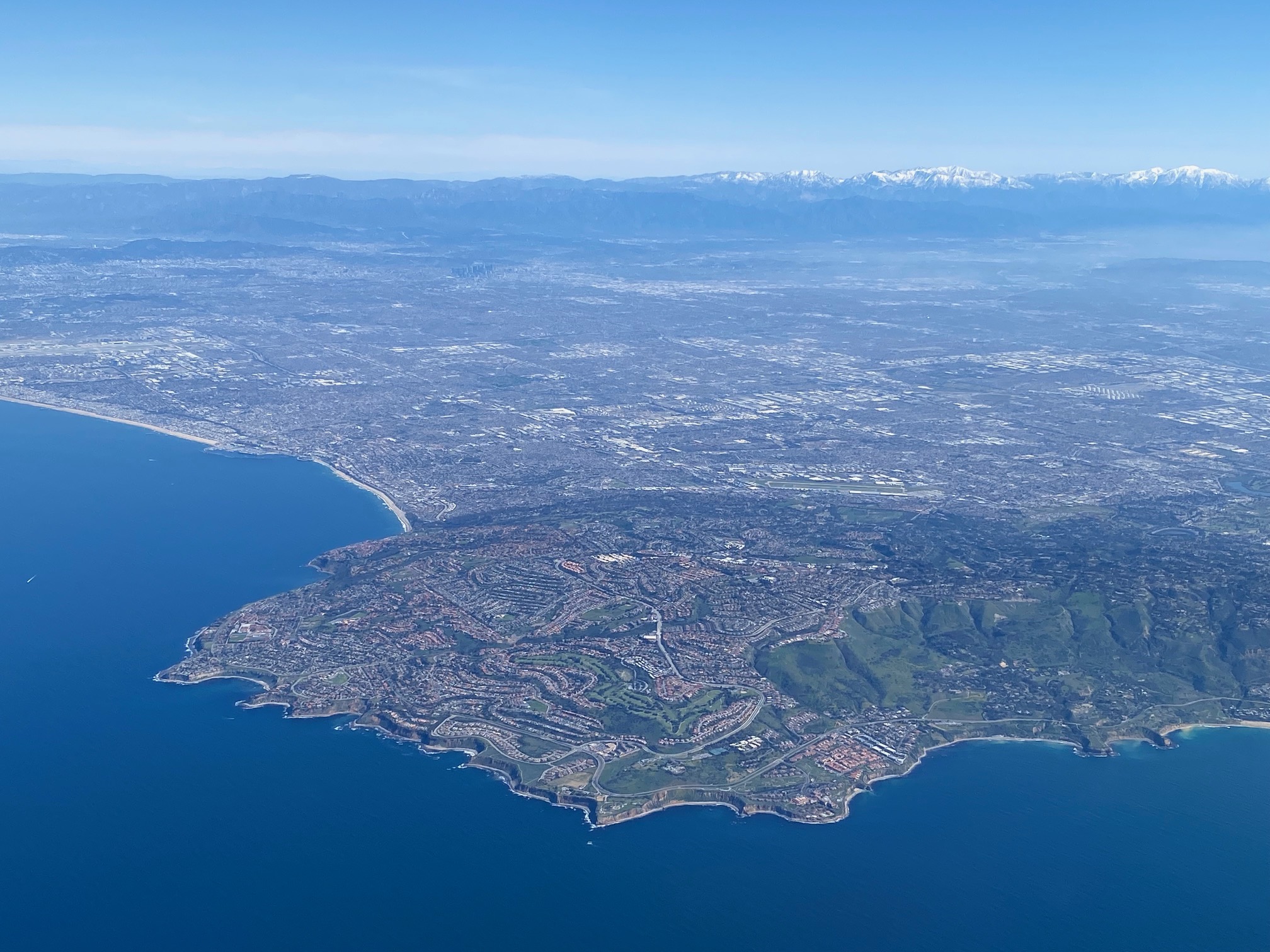
Out the window. Are people’s airplane photos boring? C’mon, this is a pretty decent capture of the whole basin.
Chesapeake vs Shannon: The Battle of Boston Harbor
Posted: June 1, 2026 Filed under: Boston, New England Leave a comment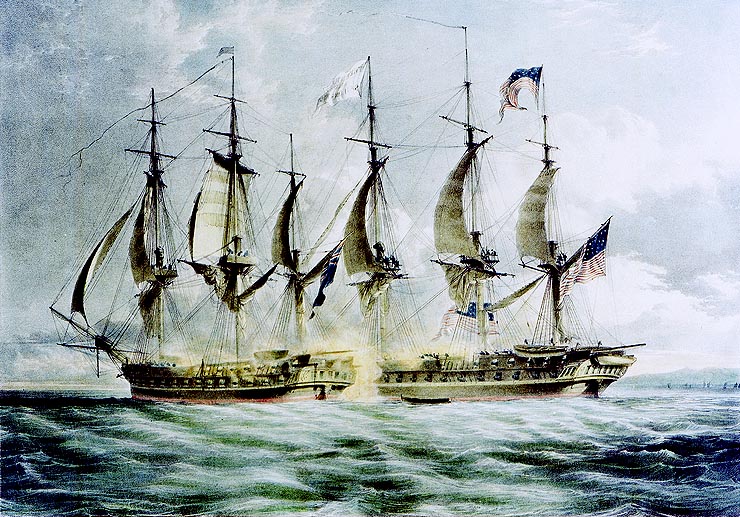
[The Chesapeake] had become known as an unlucky ship… crews were reluctant to serve on it.
Broke was the captain of the Shannon, which was waiting outside Boston harbor for the USS Chesapeake, one of the six frigates designed for the new US Navy by Joshua Humphreys.
Broke sent James Lawrence, captain of the Chesapeake, a written challenge:
As the Chesapeake appears now ready for sea, I request you will do me the favour to meet the Shannon with her, ship to ship, to try the fortune of our respective flags. The Shannon mounts twenty-four guns upon her broadside and one light boat-gun; 18 pounders upon her maindeck, and 32-pounder carronades upon her quarterdeck and forecastle; and is manned with a complement of 300 men and boys, beside thirty seamen, boys, and passengers, who were taken out of recaptured vessels lately. I entreat you, sir, not to imagine that I am urged by mere personal vanity to the wish of meeting the Chesapeake, or that I depend only upon your personal ambition for your acceding to this invitation. We have both noble motives. You will feel it as a compliment if I say that the result of our meeting may be the most grateful service I can render to my country; and I doubt not that you, equally confident of success, will feel convinced that it is only by repeated triumphs in even combats that your little navy can now hope to console your country for the loss of that trade it can no longer protect. Favour me with a speedy reply. We are short of provisions and water, and cannot stay long here.
(that’s as condensed by James and Chamier 1837, Wikipedia tells me. Boldface mine).
Lawrence never got the letter, but he got the idea and sailed out anyway for a ship to ship duel.
Bostonians and their neighbours anticipated great results from the celebrated Lawrence and his crew. Local authorities reserved a space at the docks in expectation of accommodating the captured British man-of-war. Also plans were set in motion for a gala victory banquet. As the American warship moved down the harbour, citizens raced to vantage points to witness the fight. Crowds gathered on available heights from Lynn to Malden and from Cohasset to Scituate. A diarist likened the Salem crowds to swarms of bees. The more daring took to boats to follow the Chesapeake. A Boston newspaper reported the bay being covered with civilian craft of all kinds.
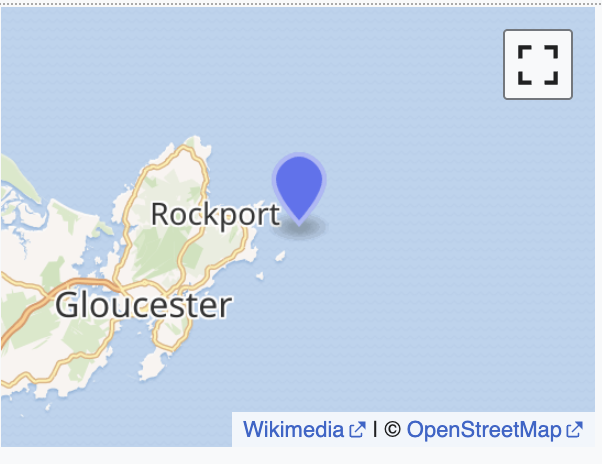
The battle happened on June 1, 1813. A Tuesday. June 1 is an auspicious day in British naval history, “the glorious first of June.” The ships met around half past five pm:
Captain Lawrence realised that his ship’s speed would take it past Shannon and ordered a ‘pilot’s luff’. This was a small and brief turn to windward which would make the sails shiver and reduce the ship’s speed. Just after Chesapeake began this limited turn away from Shannon, she had her means of manoeuvring entirely disabled as a second round of accurate British fire caused more losses, most critically to the men and officers manning Chesapeake‘s quarterdeck. Here the helmsmen were killed by a 9-pounder gun that Broke had ordered installed on the quarterdeck for that very purpose, and the same gun shortly afterwards shot away the wheel itself.
Damn I would not sleep easy as the helmsman if word came down they had a 9-pound cannonball just for killing me.

A funny illustration but the actual event must’ve been horrifying. Garry Wills, summarizing Henry Adams in Henry Adams and the Making of America says:
The battle that followed was surreally intense and brief.
Lawrence was killed by a musket shot, and the British boarded Chesapeake.
Broke himself led a charge against a number of the Americans who had managed to rally on the forecastle. Three American sailors, probably from the rigging, descended and attacked him. Taken by surprise, he killed the first, but the second hit him with a musket which stunned him, whilst the third sliced open his skull with a sabre or cutlass, knocking him to the deck. Before the sailor could finish Broke off, the American was bayoneted by a British Marine named John Hill. Shannon‘s crew rallied to the defence of their captain and carried the forecastle, killing the remaining Americans. Broke sat, dizzied and weak, on a carronade slide, and his head was bound up by William Mindham, who used his own neckerchief.
The engagement had lasted just ten minutes according to Shannon‘s log, or eleven minutes by Lieutenant Wallis’ watch. Broke more modestly claimed fifteen minutes in his official despatch. Shannon had lost 23 men killed, and had 56 wounded. Chesapeake had about 48 killed, including four lieutenants, the master and many other of her officers, and 99 wounded.
The Chesapeake and the American survivors were taken to Halifax:
Many officers were paroled to Halifax, but some began a riot at a performance of a patriotic song about Chesapeake‘s defeat. Parole restrictions were tightened: beginning in 1814, paroled officers were required to attend a monthly muster on Melville Island, and those who violated their parole were confined to the prison.
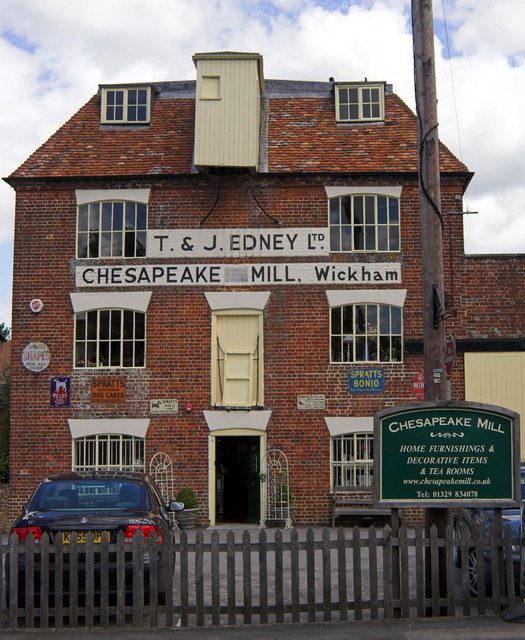
Chesapeake, after active service in the Royal Navy, was eventually sold at Portsmouth, England, for £500 in 1819 and broken up. Some of the timbers of Chesapeake were used in the construction of the Chesapeake Mill in Wickham, Hampshire.
The American captain Lawrence was killed:
He is probably best known today for his last words, “Don’t give up the ship!”, uttered during the capture of the Chesapeake.
…
Captain Lawrence was buried in Halifax with full military honours; six British naval officers served as pallbearers
As for Broke:
Broke never again commanded a ship. The head wound from a cutlass blow, which had exposed the brain, had been very severe accompanied by great blood loss. Therapeutic bleeding, routinely employed at the time, was not performed by Shannon‘s surgeon Mr Alexander Jack, which was to Broke’s advantage. The report of the surgeon described the wound as “a deep cut on the parietal bone, extending from the top of the head … towards the left ear, [the bone] penetrated for at least three inches in length”.[65] Broke survived the wound into moderate old age (64 years), though he was debilitated. He suffered, to a greater or lesser extent, from headaches and other neurological problems for the rest of his life.
Yeah, his skull got split open and his brain was exposed, I would guess he had some headaches.
Sidequest: in his Naval History of the War of 1812 (quoted by Wills) Theodore Roosevelt says:
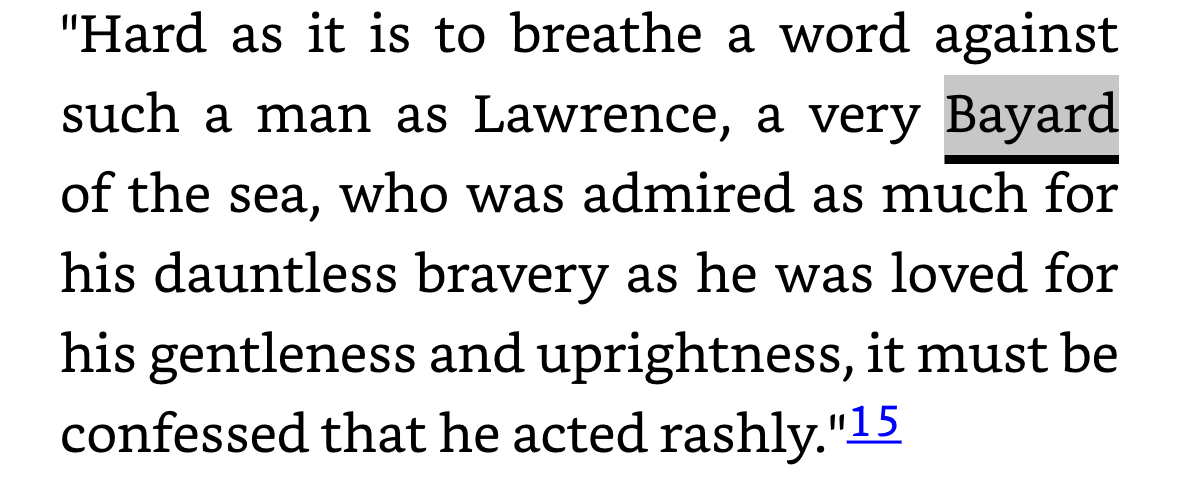
I had to look up Bayard. Confusing, because there was an American politician Nicholas Bayard who was active in the events of this era. But Roosevelt must mean Pierre Terrail, seigneur de Bayard, “the knight without fear and reproach.” This must be one of those references like Crillon that came from a time when everyone knew more about the heroes of chivalry. Bayard fought at lots of 16th century battles, including the Battle of the Spurs (the art of which is epic).
About his personal life, Wikipedia says he never married but he’s believed to have fathered a child.
Various hypotheses have been made about the identity of the mother: numerous clues lead to Bianca di Monferrato, the Duchess of Savoy, who was widowed when very young. This is supported by Bayard’s presence at that time in Piedmont and his statement that the child was noble and the daughter of a lady of great house.
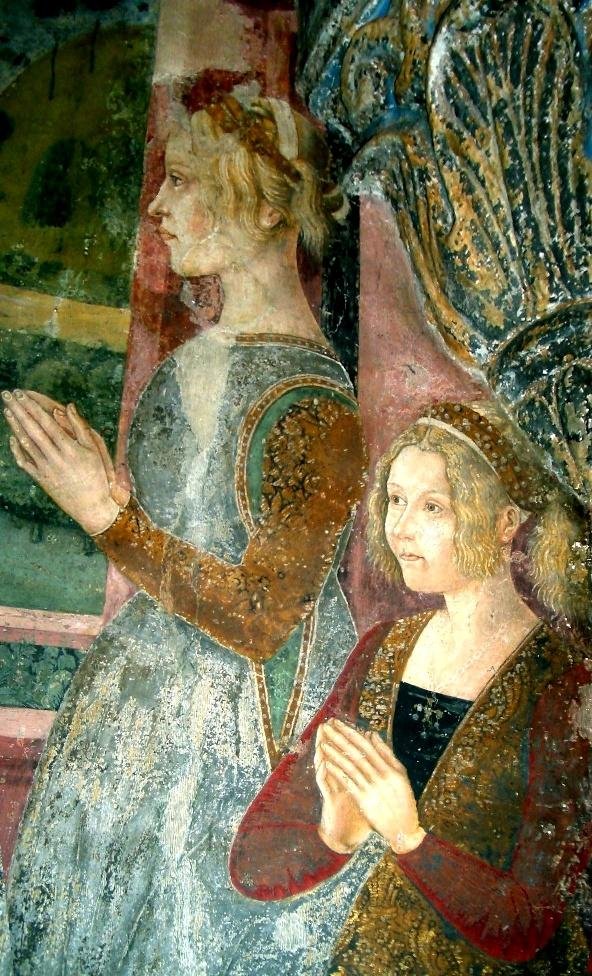
(I swear, once you start noticing you see Savoy everywhere. That’s the Duchess on the left, painted by the Master of the Chapel of Crea.)
The hypothesis is strongly supported by Paul Ballaguy, while Camille Monnet categorically rejects it.
Let’s get those two on the pod!


