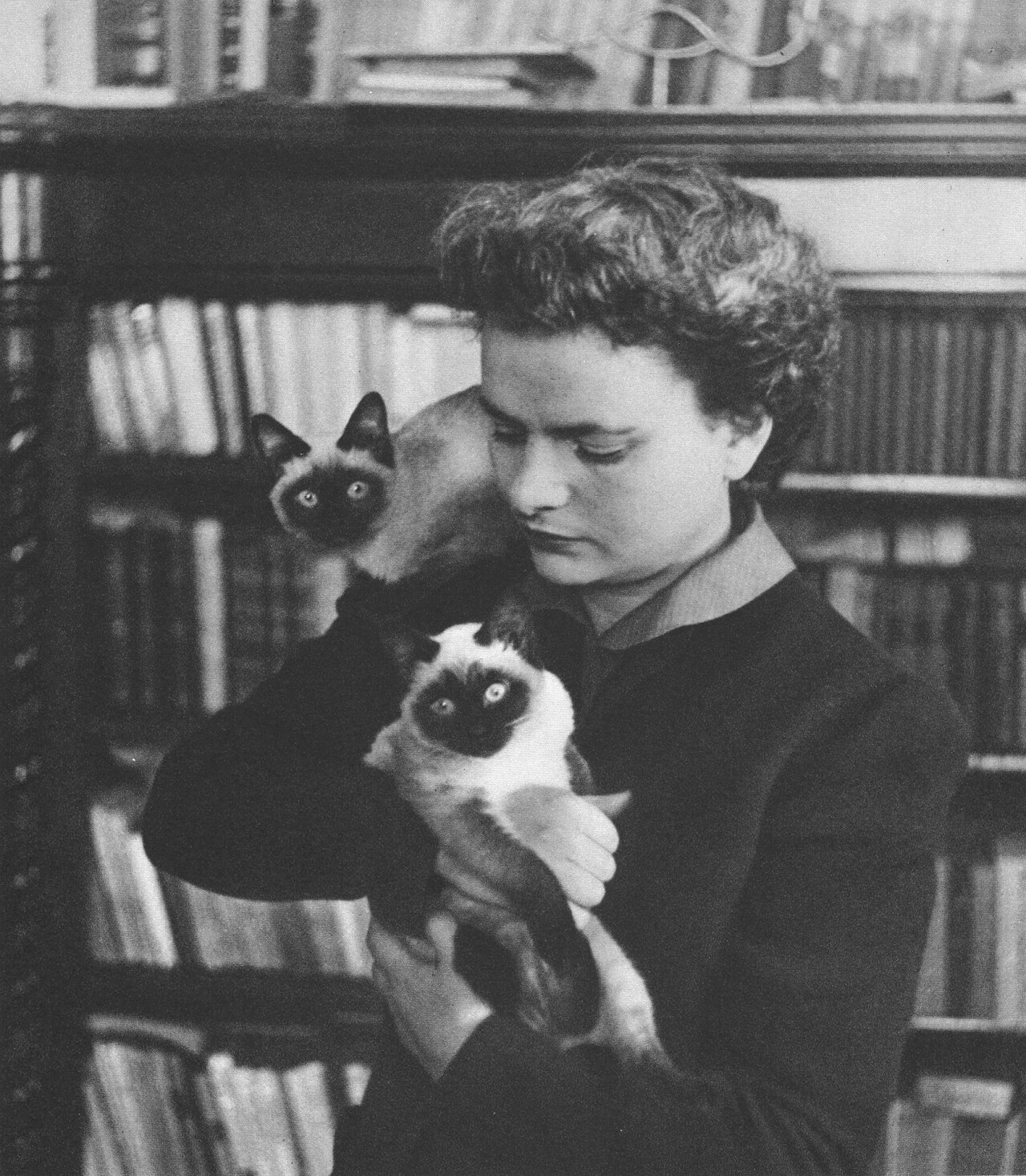
Elsa Morante
Posted: September 27, 2026 Filed under: Italy Leave a comment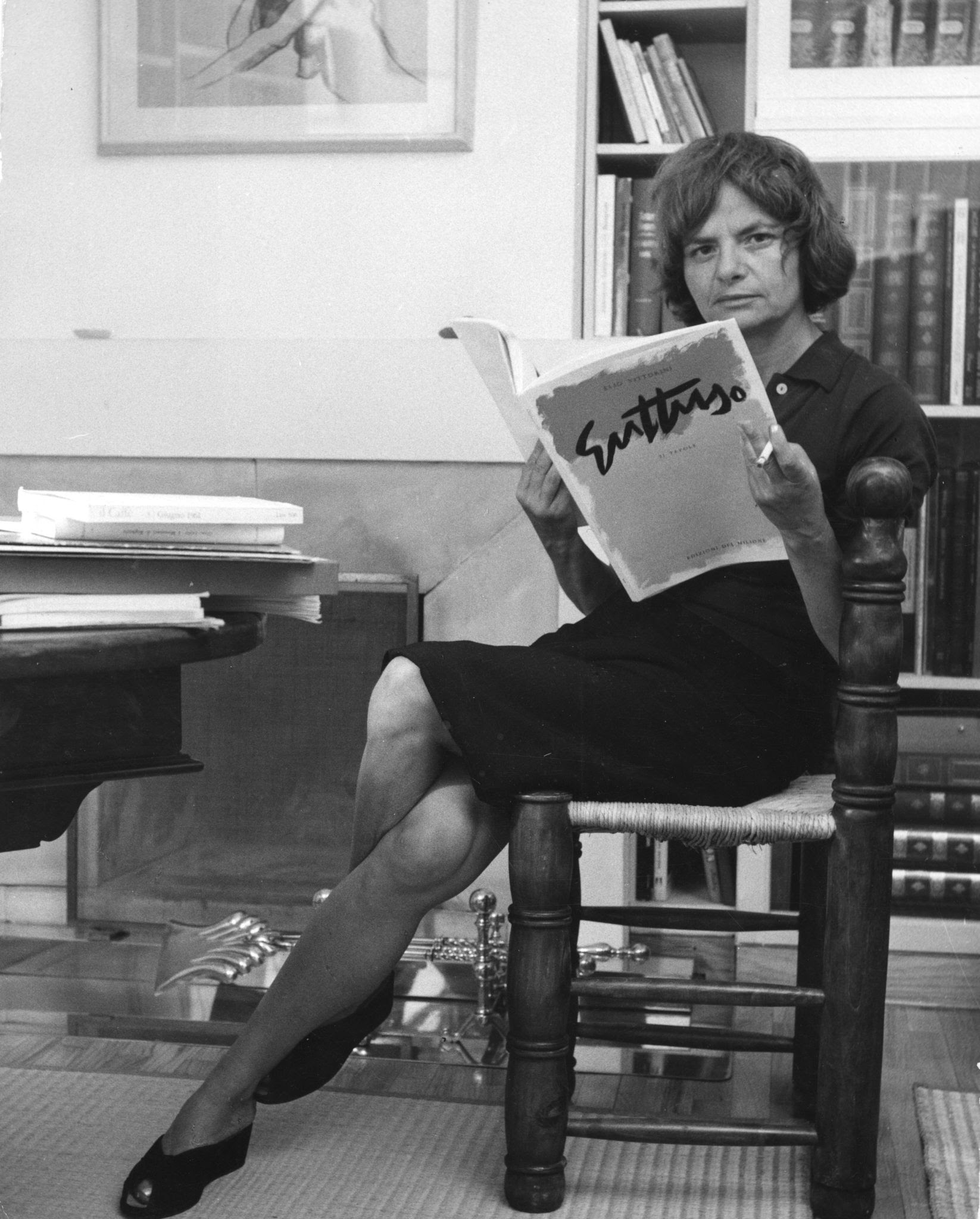
The Italian writer Elsa Morante browsing a Renato Guttuso catalog in her apartment. Rome, 1961 (Photo by Marisa Rastellini/Mondadori via Getty Images)
This 2015 New Criterion piece about Elena Ferrante and Italy called my attention to Morante’s work:
Elena Ferrante, The Boston Globe tells us, is a “reclusive avant-garde genius.” Yet there is nothing avant-garde about her writing. As Ferrante’s pseudonym suggests, and as she has admitted, she is inspired by Elsa Morante, whose History (1974) might be a Roman ancestor of the Neapolitan novels. Nor does Ferrante exhibit genius, in the Romantic sense of spontaneous, profound evocation. Ferrante is expert in the techniques of late nineteenth- and early twentieth-century modernism. She switches nimbly between omniscient and unreliable narrations. She times her twists and cliffhangers perfectly. She avoids the long words and long sentences that might challenge her readers, but winks to the canon of modern Italian literature. To create a national language, Manzoni revitalized an artificial “Milanese Tuscan” with a “rinsing in the Arno” of Florentine dialect. Elena, entrusted with Lila’s confessions in Neapolitan dialect, tips them back into the Arno. All this artlessness takes a lot of practice.
from Morante’s Wiki page:
In 1974 Morante published La storia, a book chronicling the events surrounding Rome during World War II. It became a national bestseller in Italy, partially due to Morante’s insistence that publisher Einaudi would put it out in an economical paperback edition. Despite its commercial success, the book provoked furious and at times negative reactions from left-wing literary critics, who disliked its anti-ideological tone. After Pier Paolo Pasolini wrote a negative review of the book, Morante broke off their friendship.
The History:
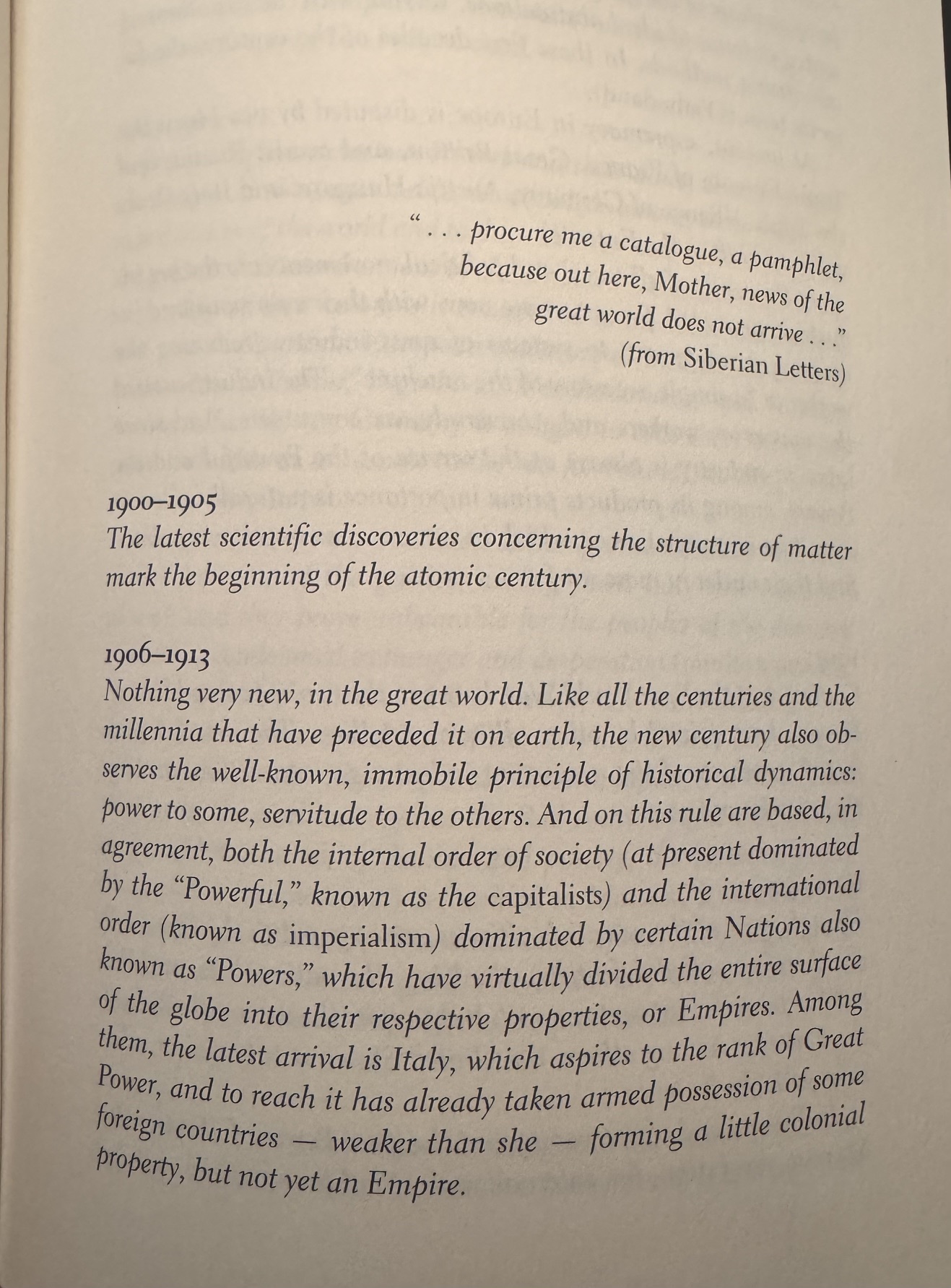
Each of the novel’s eight sections is prefaced by a precis of macro-historical events that actually took place in the year of the fictional Ramundos’ life in the subsequent section, usually from an anarchist or Marxist perspective. The narrator frequently interrupts this fictional narrative to note how her own research verifies the subjective accounts of the characters …
When Elsa Morante published La Storia in 1974, it hit Italy like a storm, quickly becoming the most talked about book of the year. In the first year, it sold, in Italy alone, a record 800,000 copies (at a time when a successful novel rarely sold more than 100,000 copies). La Storia became one of the few best-sellers written by a living author in the turbulent 1970s.
Pretty spectacular way to open page one of a 700+ page novel:
It’s kind of giving Gramsci’s Outline of History from his Prison Notebooks:
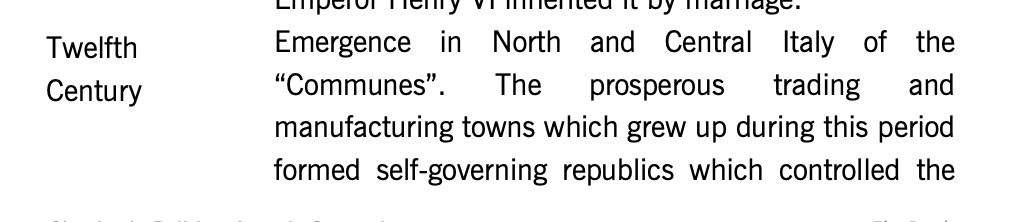
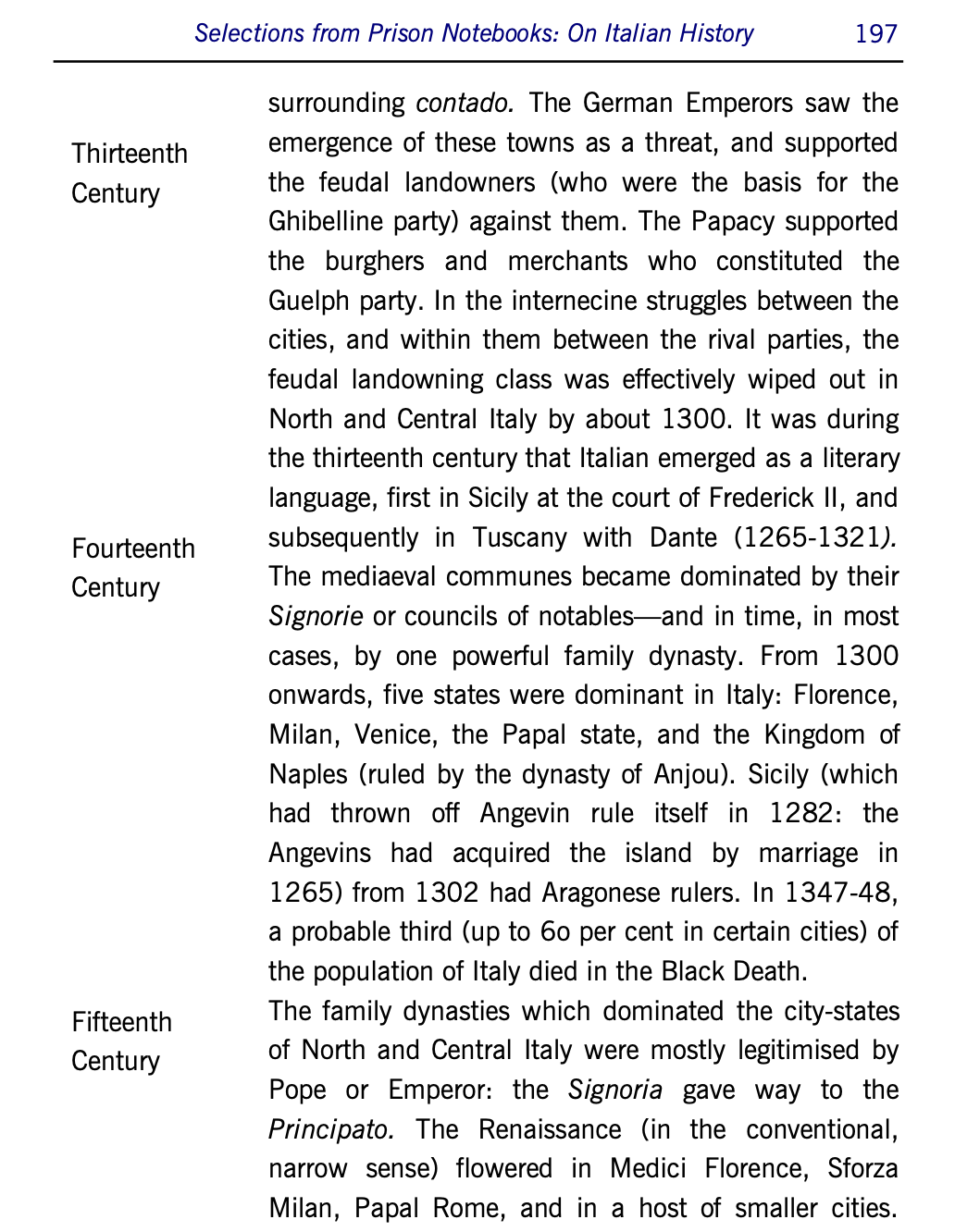
(I bet Elsa Morante had some opinions on Gramsci).
My copy of The History is the 2007 edition translated by Lily Tuck. Unfortunately a used edition of this book appears to be around $65 and up. From some scouting it looks like Penguin in the UK has a new translation coming out in November? That will make for an excellent LRB piece no doubt.