Fish Tea
Posted: November 4, 2012 Filed under: film, food, Jamaica, music Leave a commentHighly recommend the documentary Marley:
on netflix instant. Well-told, dramatic, incredible story about shyness, power, religion, family, belonging, loneliness.
Maybe my favorite parts were the helicopter shots of Jamaica’s crazy topography:

As he was dying, Marley’s mistress Cindy Breakspeare suggested that he go back home and spend his last days drinking fish tea:
Fish tea is a spicy soup in Caribbean cuisine and Jamaican cuisine. It is similar to a fish bouillon and can take four hours to prepare. It includes ground yam, pumpkin, cassava, potatoes and “bottlers,” cooked until very soft. As much as 15 pounds of fish is added to make five gallons.[1] Carrots and cho–cho can also be added. It is flavored with coconut milk and seasoned with various ingredients that may include black pepper, salt, thyme, butter, scallion and season–all.

He didn’t take her advice.
(photo of the Cockpit Country from here)
Seven Psychopaths
Posted: October 24, 2012 Filed under: film Leave a comment
Mickey Rourke dropped out of The Expendables 2 to star in the film. However, he later dropped out of Seven Psychopaths after having disagreements with [Martin] McDonagh, calling him a “jerk-off.”
The Organ Recital, Henry Lerolle
Posted: October 4, 2012 Filed under: film, painting Leave a comment
at The Met.
There is literally nothing interesting on LeRolle’s wikipedia page, so we turn to a tidbit sent recently from our Greenville office. Our correspondent there found this on the wikipedia page for the movie “It’s A Mad, Mad, Mad, Mad World.”
“(Director Stanley) Kramer considered adding a fifth ‘mad’ to the title before deciding that it would be redundant but noted in interviews that he later regretted it.”

Sean Connery
Posted: September 18, 2012 Filed under: adventures, advice, film Leave a comment
on “believability”:
PLAYBOY: This brings up a point raised by many of Fleming’s critics: While conceding that Bond’s adventures are entertaining, they denounce him as a caricature of sex appeal, and his erotic exploits as impossibly farfetched. Do you feel that’s valid?
CONNERY: No, I don’t. The main concern for an actor or a writer is not believability but the removal of time, as I see it. Because I really think the only occasions you really are enjoying yourself, being happy, swinging, as they say, are when you don’t know what time it is–when you’re totally absorbed in a play, a film or a party and you don’t know what time it is or how long it has been going on; then you’ll usually find there is contentment and happiness. When an artist can suspend time like that for an audience, he has succeeded. It doesn’t really matter, I think, whether it is “believable” or not. The believability comes afterward; or it doesn’t. If you want to question it afterward, that’s up to you. But the writer’s and the actor’s job is to remove time–while you’re still in the book or the theater. That’s exactly what Fleming achieved for millions of readers; and that’s what I’ve tried to achieve in the Bond films.
on Ian Fleming:
CONNERY: He had great energy and curiosity and he was a marvelous man to talk to and have a drink with because of the many wide interests he had. What made him a success and caused all the controversy was that his writing was such good journalism. He always contrived extraordinary situations and arranged extravagant meetings for his characters, and he always knew his facts. He was always madly accurate, and this derived from his curiosity. When he was discussing anything, like how a truck worked or a machine or a permutation at bridge, there was a brain at work and an enormous amount of research involved; it wasn’t just a lot of drivel he was talking. That’s what I admired most about him–his energy and his curiosity.

possibly Romney-esque in politics?:
CONNERY: … This sort of motivation is the great thing that’s lacking in present-day society. Everything is so smooth-running, so attainable, that one is deprived of initiative, lured into a false sense of security. In the days before the War, with high unemployment, many people simply put in an appearance every morning at the factory although they knew there was no chance of work. Sheeplike, they felt they just had to go. Today everything’s handed to them on a platter: They know they can get work and enough food, and socialized medicine has taken the worry out of being ill. If there is a malnutrition of any kind in this country–and I think there is–it’s self-inflicted. The only competition you’ll find today is the conflict between those few who try to correct a wrong, and the majority who hope it will just cure itself in the end.

a controversial view:
PLAYBOY: How do you feel about roughing up a woman, as Bond sometimes has to do?
CONNERY: I don’t think there is anything particularly wrong about hitting a woman–although I don’t recommend doing it in the same way that you’d hit a man. An openhanded slap is justified–if all other alternatives fail and there has been plenty of warning. If a woman is a bitch, or hysterical, or bloody-minded continually, then I’d do it. I think a man has to be slightly advanced, ahead of the woman. I really do–by virtue of the way a man is built, if nothing else. But I wouldn’t call myself sadistic. I think one of the appeals that Bond has for women, however, is that he is decisive, cruel even. By their nature women aren’t decisive–“Shall I wear this? Shall I wear that?”–and along comes a man who is absolutely sure of everything and he’s a godsend. And, of course, Bond is never in love with a girl and that helps. He always does what he wants, and women like that. It explains why so many women are crazy about men who don’t give a rap for them.
a recipe:
CONNERY: Well, for three or four people with some left over, I take a pound of the best beef and do it in olive oil and garlic for half an hour in a pot with a lid on it, so that all the juice is drained away from it, and while that’s going on I finely chop onions and carrots and have fresh tomatoes and tinned tomatoes all ready. Then I fry the carrots and the onions in butter, and once the steak has been cooking for about half an hour in the pot, I take it out and dice it up into squares–one- or two-inch squares–and then roll it in flour, salt, pepper and seasoning, and line the bottom of the bowl or stone dish. Then I cover all the meat with the onions and the carrots and the tomato–fresh and tinned–and the oil that’s left over in the juice that’s been taken from the meat I pour over the top. I then add a tube of Italian tomato purèe, and top it all off with either good stock or boiled water, and bake it in the oven for three hours and medium heat. It’s superb.
All these are from an interview in the Nov. 1965 issue of Playboy.

Scene from “Seven Samurai” (1954)
Posted: September 17, 2012 Filed under: film, heroes, pictures, screenwriting Leave a commentThe main characters in Helen DeWitt’s excellent novel The Last Samurai are deeply emotionally invested in the Arika Kurosawa movie Seven Samurai.
Here is a scene from the movie they often reference:
Amazing moment
Posted: July 10, 2012 Filed under: adventures, film 2 Commentsrecounted in this Will Leitch interview with Spike Lee:
What do you think of Romney?
You know what’s funny? I met him in an airport, Reagan National Airport, and we said hello. It was, like, two, three years ago. I was just in D.C. and he was there and he said, “What’s up, Spike?” and I said, “What’s happening, Mitt?” We were in line getting something to eat. So I said what’s up and shook hands. I think it is going to be very, very, very close.
Readers, are you as surprised as I am that Mitt could recognize Spike Lee?
More Celia Johnson
Posted: April 30, 2012 Filed under: adventures, film, Future Mrs. Hely, heroes, how to live, women Leave a commenttubechopped her speech from Noel Coward’s “In Which We Serve” (1942).

Fact (?) I learned in college: Goebbels was constantly infuriated and impressed by how much better and subtler American and English propaganda films were.
[Celia Johnson] later recalled her choice of an acting career with the comment, “I thought I’d rather like it. It was the only thing I was good at. And I thought it might be rather wicked.”
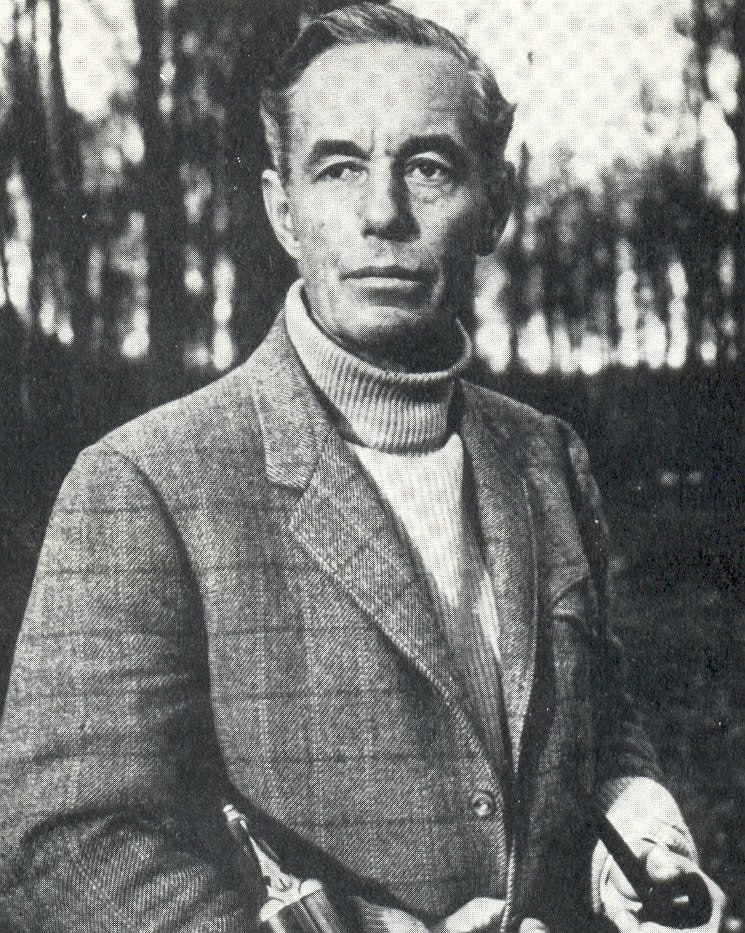
She was married to Peter Fleming, brother of Ian. He held his own in the adventuring department:
In April 1932 Fleming replied to an advertisement in the personal columns of The Times: “Exploring and sporting expedition, under experienced guidance, leaving England June to explore rivers central Brazil, if possible ascertain fate Colonel Percy Fawcett; abundant game, big and small; exceptional fishing; ROOM TWO MORE GUNS; highest references expected and given.”
The expedition, organised by Richard Churchyard, travelled to São Paulo, then overland to the rivers Araguaia and Tapirapé, heading towards the likely last-known position of the Fawcett expedition. During the inward journey, the expedition was riven by increasing internal disagreements as to its objectives and plans, centred particularly on its local leader, ‘Major Pingle’ (a pseudonym).
Here is a picture of him from this intriguing blog:
Celia Johnson
Posted: April 29, 2012 Filed under: film, Future Mrs. Hely, heroes, women Leave a commentis cool:
Damn.
Posted: April 5, 2012 Filed under: everyone's a critic, film, SDB Leave a comment
I wish SDB were around to talk to me about Hunger Games. I would definitely be exhausted long before he was even warmed up.
I read 1/2 of the Hunger Games book. For that half, the book was “better” than the movie because there was much more backstory about Katniss and Peeta.
The book seemed to take place in a real, recognizable world. I did not feel this way in the movie. But if the movie were on that level of reality it would be too horrifying to make one billion dollars.
I thought the movie was shot kind of poorly. The forest never looked awesome enough. Maybe they should’ve gotten Debra Granik, who directed Winter’s Bone.

My favorite character was the Game Maker.

A complicated villain.
(photo from People Magazine’s website, where it is used to illustrate an article about “Why Wes Bentley’s ‘Hunger Games’ Beard Drew Stares Off Set.” The answer is because “while the beard’s futuristic design certainly fit in with the film’s stylized setting, it was less suited to rural North Carolina, where the cast and crew shot.”)
Story about Aaron Sorkin and pacing
Posted: March 26, 2012 Filed under: film, screenwriting, writing 3 CommentsCraig [Mazin]: There is a great story recently from The Social Network, because Sorkin writes very — the dialogue is designed to be delivered at an insane pace. And he turned the script in and everybody was kind of freaking out. And he recorded that great opening sequence with Mark Zuckerberg being dumped by his girlfriend.
He recorded it the way, at the pace he thought it should be, and supposedly — this sounds true to me — Fincher basically timed everything per Sorkin. And on the day, he would sit there and his script supervisor had a stopwatch, and if they didn’t hit it, they did it again. [laughs] It had to be at that pace.
So, the one minute per page rule is something that, some standard needs to be there, but… — Like I said, if you know that it is supposed to go faster, just make sure everybody knows beforehand.
– from John August and Craig Mazin’s podcast. So helpful of them to provide a transcript.
O’Donoghue’s Opera (St. Patty’s Roundup, Finale)
Posted: March 20, 2012 Filed under: film, Ireland, music, musicals | Tags: musicals 9 CommentsIn the 1960s, some impoverished Irish musicians and folk singers decided to put together an Irish musical. Based on the balled “The Night Before Larry Was Stretched,” attributed to “Hurlfoot Bill,”* the film, “O’Donoghue’s Opera,” starred Ronnie Drew, later incredibly famous for his work with The Dubliners. The film, left uncompleted when the makers ran out of money, was found in 1997 in a junk shop in Galway.
Now you can enjoy the entire film on YouTube. I can’t encourage you to power through the whole thing. But I think you’ll have some fun around 2:44 of Part 1, where some winning girls sing an old IRA recruiting song. Then hop to 7:51 to see Larry’s cat burglar costume and the temptation that proves his undoing.
The stirring conclusion I have TubeChopped for you.
It is quite moving, really, to see Ronnie get hung. This really happened to people all the time.
A great shame that I never had the chance to discuss this film with fellow cinephile/Hibernophile SDB, who was seemingly designed by the Almighty to enjoy this picture.
Elvis Costello recorded “TNBLWS” but I prefer the version by The Wolfe Tones:
* Wikipedia has some stern words on the subject of attribution for this song.
Adam Curtis’ blog
Posted: February 27, 2012 Filed under: film Leave a commentEnglish people told me about Adam Curtis, he sounded great, an English Errol Morris
Then I came across his blog and I can’t put the content into my brain fast enough. They seem to be mini blogposts / documentaries. Here is one about the Congo, gorillas, Che Guevara, Diane Fossey… the interview with Colonel “Mad” Mike Hoare (2:00) is astounding. What kind of character is this!
I would like to play a villain in a Nigerian film.
Posted: February 24, 2012 Filed under: film, the world around us Leave a commentAccording to legend, the first Nollywood movie was made by a small-time electronics trader named Kenneth Nnebue, who, stuck with a large shipment of blank videotapes, decided to unload them by making a movie about a man who sells his soul for wealth. That movie, “Living in Bondage” sold hundreds of thousands of copies and established Nollywood’s archetypal plot elements: martial discord, greed, a conflict between Christianity and juju, as the occult is called in West Africa. From these accidental origins, a cultural phenomenon emerged.
– from this great NY Times article about Nigerian cinema.
“a tempting sample of sexual ripeness”
Posted: February 22, 2012 Filed under: film Leave a commentFound a copy of a screener of “Anton Chekhov’s The Duel” at work. Duels are exciting and dramatic, and a good subject for a movie, I thought. So I watched the trailer.
I looked the movie up online and learned that The New Yorker called the film “a tempting sample of sexual ripeness.”
Based on the first eleven minutes, I can’t say I agree. There were some boobs, maybe that’s what The New Yorker was talking about? but they were presented rather coldly, not as a source of fun or joy.
I’ll report back if I watch the rest.
 Helytimes