“A picture of Musashi engaged in fantastic combat”
Posted: February 13, 2013 Filed under: adventures, animals, heroes, painting, pictures Leave a comment
That’s wikipedia’s caption for this picture by Utagawa Kuniyoshi (1798-1861)
Real life super spies
Posted: January 14, 2013 Filed under: adventures, heroes Leave a comment
I love this picture so much. It is from the NY Times obituary of Jeanne Vertefeuille (center), who helped catch CIA mole Aldrich Ames. It is credited to Central Intelligence Agency.
This woman was station chief in Gabon.
“There’s no winning. Nobody ever wins.”
Posted: January 9, 2013 Filed under: comedy, heroes Leave a commentI used to keep a VHS of Norm MacDonald on Conan from ’95. Such excellence. For the busy executive the first two minutes will suffice. Or the last two minutes. (HT Andrew Sullivan)
Django
Posted: January 5, 2013 Filed under: film, heroes, the California Condition Leave a commentThere’s been much talk about the exchange at 13:56 in this video. But for me the compelling part is at 12:05-13:03. What coolness.
George Saunders
Posted: January 4, 2013 Filed under: heroes, writing Leave a comment
In NY Times:
“I admired him so much,” he said about [DF] Wallace. “His on-the-spot capabilities were just incredible. And I thought, Yeah, we’re a lot alike. We’re similar, nervous guys. And then when he died, I thought [of myself], Wait a minute, you’re not like that. You don’t have chronic, killing depression. I’m sad sometimes, but I’m not depressed. And I also have a mawkish, natural enthusiasm for things. I like being alive in a way that’s a little bit cheerleaderish, and I always felt that around Dave. When he died, I saw how unnegotiable it was, that kind of depression. And it led to my being a little more honest about one’s natural disposition. If you have a negative tendency and you deny it, then you’ve doubled it. If you have a negative tendency and you look at it” — which is, in part, what the process of writing allows — “then the possibility exists that you can convert it.”
Possible negative tendencies a person could have:
- reading about famous greats while aggressively hunting for holes and hypocrisies in wicked hope famous great isn’t really much kinder and more thoughtful and generally better, and thus you yourself can’t be expected to improve or be better
- cynical assumption that you should be very very skeptical about anyone described as a “saint” in a newspaper.
- suspicion that people promoting “saints” have inevitable tangled agenda of self-promotion or goal of manipulating saints into espousing ideas from which they themselves [the saint-promoters] intend to make some gain.
Brief personal experience:
Met Saunders once (courtesy of Chennai Office). Walked and talked with him for about ten minutes.
During that walk he completely (by accident, just in casual conversation) altered my perception of college.
That afternoon Saunders gave a reading almost nobody came to. A person literally rollerbladed in, midway through.
Then watched him meet a bunch of young strangers. Many of whom weren’t exactly sure who he was or why he was there, and >50% of them were pretty drunk.
Saunders offered each of these people (and several were legendary messes) some genuine complimentary observation, or more likely, a complimentary question.
Afterwards, had the sense I’d just been given a free demonstration in how to be: considerate. In the deepest, “put yourself in the other guy’s shoes” way. NY Times:
The last time we met, Saunders waited in the cold with me until the bus for New York came along. We were talking about the idea of abiding, of the way that you can help people flourish just by withholding judgment, if you open yourself up to their possibilities…
(photo from the wikipedia page for Nyingma Buddhism)
tiny, tragic inspiration
Posted: December 15, 2012 Filed under: heroes Leave a commentfrom this AP article, ht David Grann. The scene is a barricaded first grade classroom:
One student claimed to know karate. “It’s OK. I’ll lead the way out,” the student said.
“You can’t help but say hats off to them”
Posted: December 12, 2012 Filed under: heroes, history, New England, writing Leave a comment
When I read Abigail’s letters, I wonder how she ever hat time to write them. She was raising a family with four children, running the farm without her husband there; it was nip and tuck whether she could make a go of it financially; she had sickness to contend with, plagues, waves of smallpox and epidemic dysentery that swept through Braintree. How did John Adams have time to write his letters and keep the diaries? If they’d done nothing else, you’d say to yourself, how did they do it? And remember, they were writing by candlelight with a quill pen, they probably had their teeth hurting because there was no dentistry as we know it. They were probably getting over some recent attack of jaundice or whatever else was epidemic at the time. It’s very humbling. You can’t help but say hats off to them.

Petraeus
Posted: November 10, 2012 Filed under: America, heroes, news Leave a comment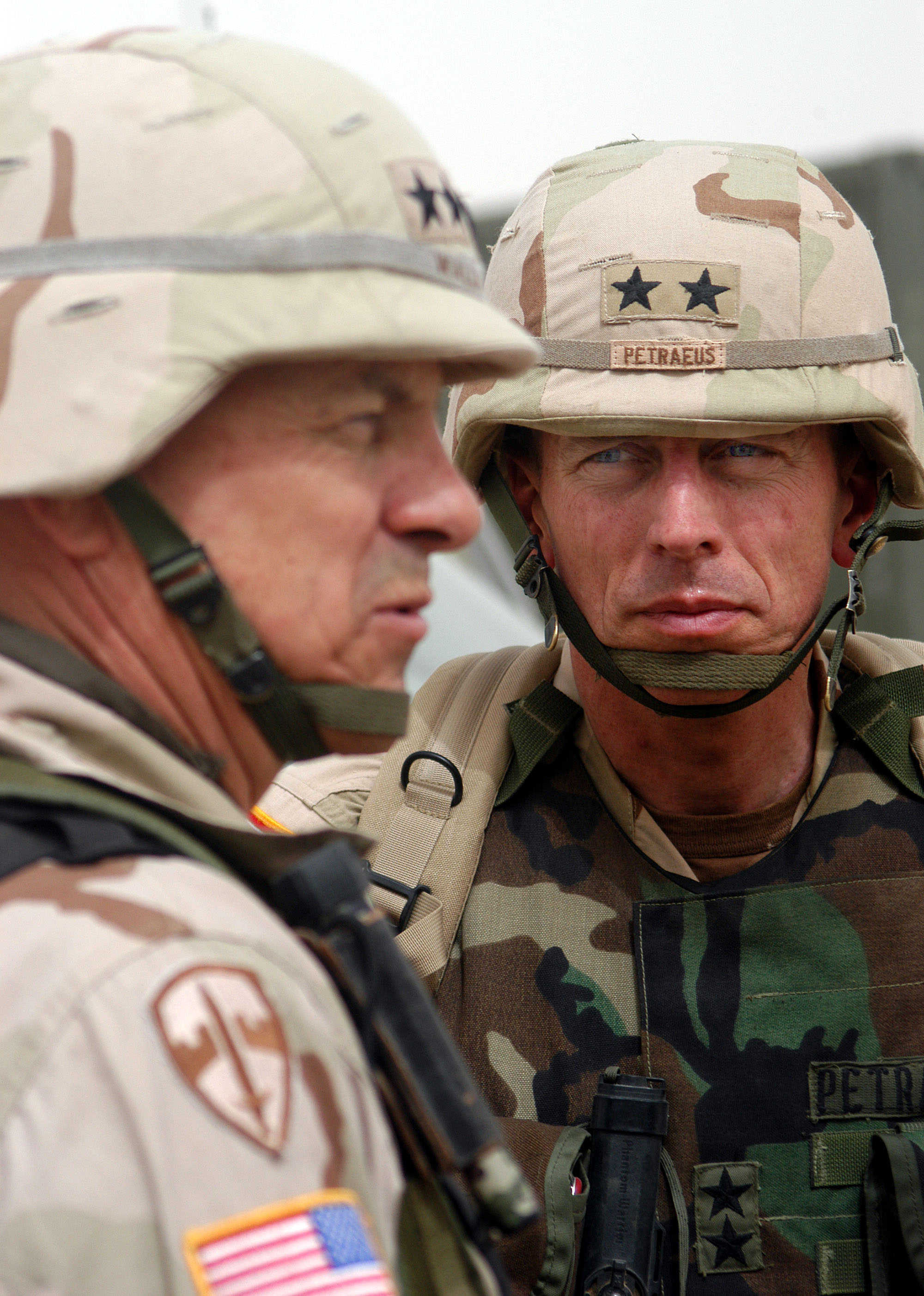
What a great, tragic name. I guessed it was Greek but in fact his father was “Sixtus Petraeus, a sea captain from Franeker, Netherlands.”
Two stories, first from Wikipedia:
Upon promotion to lieutenant colonel, Petraeus moved … to Fort Campbell, Kentucky, where he commanded the 101st Airborne Division (Air Assault)’s 3rd Battalion 187th Infantry Regiment, known as the “Iron Rakkasans”, from 1991–1993. During this period, he suffered one of the more dramatic incidents in his career; in 1991 he was accidentally shot in the chest with an M-16assault rifle during a live-fire exercise when a soldier tripped and his rifle discharged. He was taken to Vanderbilt University Medical Center,Nashville, Tennessee, where he was operated on by future U.S. SenatorBill Frist. The hospital released him early after he did fifty push-ups without resting, just a few days after the accident.
The other one I heard Rick Atkinson tell on NPR: Apparently Petraeus got into a joking interaction with a private on a dock in Kuwait City in 1991. Petraeus challenged the soldier to a push-up contrast. The private tapped out at 27. Petraeus did 20 more, and then told the private he could write that off on his tax returns, because it was an education.
Charles C. Mann
Posted: October 30, 2012 Filed under: adventures, heroes, writing Leave a comment

Reading this great article by Charles C. Mann, one of my faves.
About 75,000 years ago, a huge volcano exploded on the island of Sumatra. The biggest blast for several million years, the eruption created Lake Toba, the world’s biggest crater lake, and ejected the equivalent of as much as 3,000 cubic kilometers of rock, enough to cover the District of Columbia in a layer of magma and ash that would reach to the stratosphere. A gigantic plume spread west, enveloping southern Asia in tephra (rock, ash, and dust)… In the long run, the eruption raised Asian soil fertility. In the short term, it was catastrophic. Dust hid the sun for as much as a decade, plunging the earth into a years-long winter accompanied by widespread drought….
At about this time, many geneticists believe, Homo sapiens’numbers shrank dramatically, perhaps to a few thousand people—the size of a big urban high school.
Talking about how fast bacteria can grow:
The cells in the time-lapse video seemed to shiver and boil, doubling in number every few seconds, colonies exploding out until the mass of bacteria filled the screen. In just thirty-six hours, she said, this single bacterium could cover the entire planet in a foot-deep layer of single-celled ooze. Twelve hours after that, it would create a living ball of bacteria the size of the earth.
On behavioral changes by humanity:
To get Crusoe on his unlucky voyage, Defoe made him an officer on a slave ship, transporting captured Africans to South America. Today, no writer would make a slave seller the admirable hero of a novel. But in 1720, when Defoe published Robinson Crusoe, no readers said boo about Crusoe’s occupation, because slavery was the norm from one end of the world to another. Rules and names differed from place to place, but coerced labor was everywhere, building roads, serving aristocrats, and fighting wars. Slaves teemed in the Ottoman Empire, Mughal India, and Ming China. Unfree hands were less common in continental Europe, but Portugal, Spain, France, England, and the Netherlands happily exploited slaves by the million in their American colonies. Few protests were heard; slavery had been part of the fabric of life since the code of Hammurabi…
Even as the industrial North and agricultural South warred over the treatment of Africans, they regarded women identically: in neither half of the nation could they attend college, have a bank account, or own property. Equally confining were women’s lives in Europe, Asia, and Africa. Nowadays women are the majority of U.S. college students, the majority of the workforce, and the majority of voters.
Photo is of Lake Toba, I found it here.

George McGovern
Posted: October 23, 2012 Filed under: America, heroes, Sorkin Leave a comment
Reading obituaries of this guy, who seemed great and tragic:
After leaving the Senate, McGovern held a number of visiting professorships and opened a motel in Stratford Connecticut — which struggled for a few years before going bankrupt. He was briefly and unsuccessfully involved in the 1984 Democratic primaries, his campaign notable for a speech in which he explained to party members why he needed their vote: “I didn’t have a job. My apartment burned down and I had a real nice dog but he died. If you want to house the homeless and comfort the afflicted, vote for me. I am one of these eight candidates who really does need that house at 1600 Pennsylvania Avenue.”
Awhile ago an English friend suggested that the Telegraph has the best obituaries. From there I learned:
his 30th [mission as a bomber pilot] almost proved fatal when his aircraft was badly damaged over Vienna and his navigator killed. McGovern managed, however, to nurse the bomber away from the conflict zone to make a crash-landing on the island of Vis in the Adriatic.
Here is Vis (the town of Komiža, to be specific):

In his temperament (wise, good-humored) and his background (professor, considered becoming a minister) McGovern seems like a bit of a real life President Bartlet:

Kind of have the feeling that in real life Bartlet too would have only won Massachusetts.
(That top photo is from this great Life set, credited to Bill Eppridge; rest from wiki as us)
First Space Jump
Posted: October 18, 2012 Filed under: adventures, heroes Leave a comment
Joseph Kittinger.
Pressurization for his right glove malfunctioned during the ascent, and his right hand swelled to twice its normal size. Ignoring the pain, he rode the balloon up to 102,800 feet and said a short prayer — “Lord, take care of me now” — before stepping off.
Of the jumps from Excelsior, Kittinger said, “There’s no way you can visualize the speed. There’s nothing you can see to see how fast you’re going. You have no depth perception. If you’re in a car driving down the road and you close your eyes, you have no idea what your speed is. It’s the same thing if you’re free falling from space. There are no signposts. You know you are going very fast, but you don’t feel it. You don’t have a 614-mph wind blowing on you. I could only hear myself breathing in the helmet.”
Here is his gondola, on display at the National Air & Space Museum:

Kittinger was shot down on May 11, 1972, just before the end of his third tour of duty [in Vietnam]… Kittinger and his wingman were chasing a MiG-21 when Kittinger’s Phantom II was hit by an air-to-air missile that damaged the fighter’s starboard wing and set the airplane on fire. Kittinger and [Weapons Systems Operator William] Reich ejected a few miles from Thai Nguyen and were soon captured and taken to the city of Hanoi.
Kittinger and Reich spent 11 months as prisoners of war (POWs) in the “Hanoi Hilton” prison. Kittinger was put through “rope torture” soon after his arrival at the POW compound and this made a lasting impression on him.
Marc Isambard Brunel
Posted: September 25, 2012 Filed under: family, heroes, Irish traditional music Leave a comment
Marc Isambard Brunel was Isambard Kingdom’s father. He was born in France and served as a naval cadet, during which service he built a quadrant for himself.
During his stay in Rouen, Brunel had met Sophia Kingdom, a young Englishwoman who was an orphan and was working as a governess. Unfortunately he was forced to leave her behind when he fled to Le Havre [because of the French Revolution] and boarded the American ship Liberty, bound for New York…
…Sophia Kingdom remained in Rouen and during the Reign of Terror, she was arrested as an English spy and daily expected to be executed.
Meanwhile, in New York, Marc was sick with worry:
In 1798, during a dinner conversation, Brunel learnt of the difficulties that the Royal Navy had in obtaining the 100,000 pulley blocks that it required each year to fit out its ships. Each of these was being made by hand. Brunel quickly produced an outline design of a machine that would automate the production of pulley blocks. He decided to sail to England and put his invention before the Admiralty. He sailed for England on 7 February 1799 with a letter of introduction to the Navy Minister

Back in London, Marc was joyfully reunited with the now-freed Sophia. They had a son, Isambard Kingdom. Marc went to work on an idea for a tunnel under the Thames.

Marc’s helper in this project was 18 year old Isambard.
I’m stealing all this from Marc’s wikipedia page, which in turn seems to be stolen from a book called The Greater Genius? by one Harold Bagust. Q: is that the perfect name for the biography of a father?
A good way to remember the Brunels is the lyrics of Irish traditional song “The Humours of Whiskey,” found here.
Come guess me this riddle, what beats pipe and fiddle,
What’s hotter than mustard and milder than cream?
What best wets your whistle, what’s clearer than crystal,
What’s sweeter than honey and stronger than steam?
What’ll make the lame walk, what’ll make the dumb talk,
What’s the elixir of life and philosopher’s stone?
And what helped Mr. Brunel to dig the Thames Tunnel?
Wasn’t it whiskey from old Inishowen?
Isambard Kingdom Brunel
Posted: September 24, 2012 Filed under: heroes, photography Leave a comment
In 1843, while performing a conjuring trick for the amusement of his children, Brunel accidentally inhaled a half-sovereign coin, which became lodged in his windpipe. A special pair of forceps failed to remove it, as did a machine devised by Brunel to shake it loose. At the suggestion of his father, Brunel was strapped to a board and turned upside-down, and the coin was jerked free.
Scene from “Seven Samurai” (1954)
Posted: September 17, 2012 Filed under: film, heroes, pictures, screenwriting Leave a commentThe main characters in Helen DeWitt’s excellent novel The Last Samurai are deeply emotionally invested in the Arika Kurosawa movie Seven Samurai.
Here is a scene from the movie they often reference:
Lon Chaney’s Cabin
Posted: August 29, 2012 Filed under: California, celebrity, heroes Leave a comment
High in the Sierras, the cabin of actor Lon Chaney, Sr., “the man of a thousand faces.”

Both of Chaney’s parents were deaf, and as a child of deaf adults Chaney became skilled in pantomime.
From this LA Times article:
“Tonight I start out for the High Sierra. No shaving, no makeup, no interviews for four long, lazy weeks. We take a stove along and the wife cooks the fish I catch. We sleep under the pines and I try to climb high enough to reach the snows. Camping’s the biggest kick in life for me,” Chaney told a writer in 1928.
And:
The Forest Service considered destroying the cabin to comply with the 1964 Wilderness Act, which calls for the restoration of natural conditions in wilderness areas. But the agency changed its mind when it became clear that the amount of dynamite required to demolish the massive stone structure would cause major damage to the surrounding trees.
Good one from The Atlantic’s tribute to Neil Armstrong
Posted: August 27, 2012 Filed under: heroes, photography 2 Comments
“Astronaut John Young, Frank Borman and Neil Armstrong with Deke Slayton, during astronaut desert survival training near Reno, Nevada, in 1964.”
Selling the Aga Cooker
Posted: August 14, 2012 Filed under: heroes, writing Leave a commentHere’s Swedish inventor Gustaf Dalen:

Gustaf Dalen lost his sight in an explosion while developing his earlier invention, a porous substrate for storing gases, Agamassan. Forced to stay at home, Dalen discovered that his wife was exhausted by cooking. Although blind, he set out to develop a new stove that was capable of a range of culinary techniques and easy to use.
His invention was the AGA cooker:

In the 1920s these were sold, door to door, in the UK. And the greatest AGA cooker salesman of all was David Ogilvy:

His success at this marked him out to his employer, who asked him to write an instruction manual, The Theory and Practice of Selling the AGA cooker, for the other salesmen. Thirty years later, Fortune magazine editors called it the finest sales instruction manual ever written.
I went looking for this manual, and found it at Patrick Lannigan’s blog. I make sure to link because Patrick Lannigan reports that “I’d have to say my number one obsession is playing with Google rankings.” I wish him well.
Anyway, Ogilvy has some good writing and interesting advice:
Salesmen are only too often unpopular people in Aga-worthy houses.. Show straight away that you are not of the so-called canvasser variety. Never bully, get into an argument, show resentment, or lose your temper. Do not talk about “your husband” – “Mr. Smith” is less impertinent.
Never talk down or show superior knowledge. Never appeal to a prospect’s pity because the more prosperous you appear the more she is likely to be impressed with you and to believe in you and your Aga.
The worst fault a salesman can commit is to be a bore. Foster any attempt to talk about other things; the longer you stay the better you get to know the prospect, and the more you will be trusted. Pretend to be vastly interested in any subject the prospect shows an interest in. The more she talks the better, and if you can make her laugh you are several points up. If she argues a lot, do not give the impression of knowing all the answers by heart and always being one up on her. She will think you are too smart by half, and mistrust your integrity. Find out as soon as possible in the conversation how much she already knows about Aga; it will give you the correct angle of approach. Perhaps the most important thing of all is to avoid standardisation in your sales talk. If you find yourself on fine day saying the same things to a bishop and a trapezist, you are done for.
When the prospect tries to bring the interview to a close, go gracefully. It can only hurt to be kicked out. Learn to recognise a really valid reason for the prospect being unable to order (there are mighty few such reasons). With these reservations you cannot be too tenacious or too persevering. The good salesman combines the tenacity of a bull dog with the manners of a spaniel. If you have any charm, ooze it.
The more prospects you talk to, the more sales you expose yourself to, the more orders you will get. But never mistake the quantity of calls for quality of salesmanship.
Later, in the “Attack” section:
Learn to recognise vegetarians on sight. It is painful indeed to gush over roasting and grilling to a drooping face which has not enjoyed the pleasures of a beefsteak for years.
From the section “Wise-cracking”:
The longer you talk to a prospect, the better, and you will not do this if you’re a bore. Pepper your talk with anecdote and jokes. Accumulate a repertoire of illustration. Above all, laugh till you cry every time the prospect makes the joke about the Aga Khan. A deadly serious demonstration is bound to fail. If you can’t make a lady laugh, you certainly cannot maker buy.
David Ogilvy might be better than Mystery.

Finis Mitchell
Posted: July 23, 2012 Filed under: adventures, heroes, mountains, writing Leave a commentOne thing led to another and I got to reading about Finis Mitchell:

In 1906, as a young boy, Finis came to the Wind River Range [in Wyoming] with his father in a boxcar along with the rest of his family… Not bowing down to the fierce obstacles wielded by a stark and barren land with winters lasting 9 months a year, Finis spent the next 7 years carefully carrying five-gallon cans of water and wild trout on horseback over steep rugged trails to more than 300 remote Wyoming lakes. Due to the glacial topography of the upper mountains, these lakes had no native populations of fish. These isolated lakes, which had never seen a trout before, began to team with these newcomers. Miraculously, as though knowing the way, these fish migrated to over 700 more lakes in the upper mountains. With his life-long friend and wife Emma, he carved a life in this unknown wilderness.
Here’s a photo, from this Forest Service website, of Finis and Emma:

During the Depression, he and his wife stocked lakes in the Wind River Range with over 2.5 million trout. He served in the Wyoming House of Representatives from 1955 to 1958. At the age of 67 he retired from his job as a railroad foreman and dedicated himself full-time to exploring and writing about the Wind River Range of mountains…
…At the age of 73, while on a glacier, he twisted his knee in a snow-covered crevasse. He hacked crude crutches out of pine wood and hobbled 18 miles to find a doctor, and was able to resume climbing until the age of 84, when further injury to the knee from a fall put an end to his solo climbing career.
Here’s a quote from Finis:
A mountain is the best medicine for a troubled mind. Seldom does man ponder his own insignificance. He thinks he is master of all things. He thinks the world is his without bonds. Nothing could be farther from the truth. Only when he tramps the mountains alone, communing with nature, observing other insignificant creatures about him, to come and go as he will, does he awaken to his own short-lived presence on earth.
The Wind River Range:

Finis Mitchell is of course not to be confused with Finesse Mitchell:

Watson And The Shark (1778), John Singleton Copley
Posted: May 31, 2012 Filed under: adventures, heroes, MFA Boston, museum Leave a commentAt his death, Watson bequeathed the 1778 painting to Christ’s Hospital, with the hope that it would prove “a most usefull Lesson to Youth”.
Little did I know that the MFA version, which proved so useful to me in my own youth, was “a replica Copley made for himself.”
Not to worry, Brook Watson survived the attack depicted, and grew into this happy fellow:

Says the great Wiki article:
A verse penned by one of Watson’s political enemies poked fun at his ordeal (and perhaps at his abilities):
“
- Oh! Had the monster, who for breakfast ate
- That luckless limb, his noblest noddle met,
- The best of workmen, nor the best of wood,
- Had scarce supply’d him with a head so good.
Now, what does this have to do with the previous post? :
Three years later [Watson] was sent to supervise the expulsion of the Acadians from the Baie Verte area.
That’s in Havana harbor, btw.
 Helytimes