when you cut into an onion
Posted: October 30, 2023 Filed under: the California Condition 1 Comment
and it turns out to be two onions? that’s a small pleasure

fine use for a Herend dish
Posted: October 15, 2023 Filed under: America Since 1945, presidents, the California Condition Leave a comment
Knott
You mentioned Jacques Chirac at lunch. I don’t know if you want to tell the story about that.
Kuhn
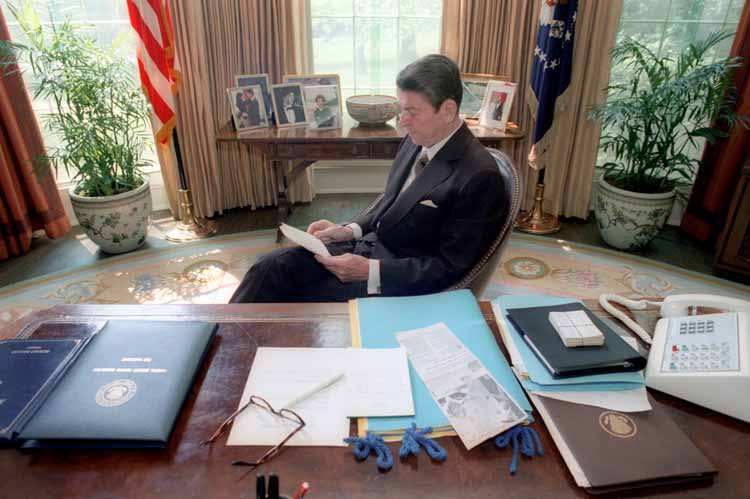
Oh yes. When Mitterrand was President, Chirac was Prime Minister. Prime Minister of France is a very limited role, but he was there for a meeting at the White House. It was a small plenary session in the Cabinet room. I recall afterwards that Chirac came into the Oval Office just to spend some brief time with the President alone. Photos were taken in the Oval Office and then it was just the two of them. I happened to be in there and was about to leave so they could spend some time together. And Chirac pulls a pack of cigarettes out of his pocket and just lights up a cigarette in the Oval Office like it’s an everyday thing. I had never seen anybody smoke in the Oval Office before. At that time I don’t even think people were smoking in the West Wing. I think they had stopped that, staff-wise.
President Reagan wasn’t at all upset that he lit up, he was fine with that. His big concern was, what do we do for an ashtray? Like, Jim, we’ve got to find—he’s looking frantically and I’m looking because we want to be hospitable. We couldn’t find anything. Finally we found, there was a nice Herend dish on the coffee table that was there and never got used for anything. I thought, well, why not? We’re going to make this a practical piece now, and gave it to him. That Herend dish just became an ashtray. But it was funny, he just fired that cigarette up like—he didn’t offer Reagan one because he knew he didn’t smoke. That was an old fashioned thing to do in the old days.
tales from the Reagan oral histories at UVA’s Miller Center, that is James Kuhn.
Not sure I’ve ever seen a sarcastic caption in the NYT before
Posted: July 31, 2023 Filed under: the California Condition Leave a comment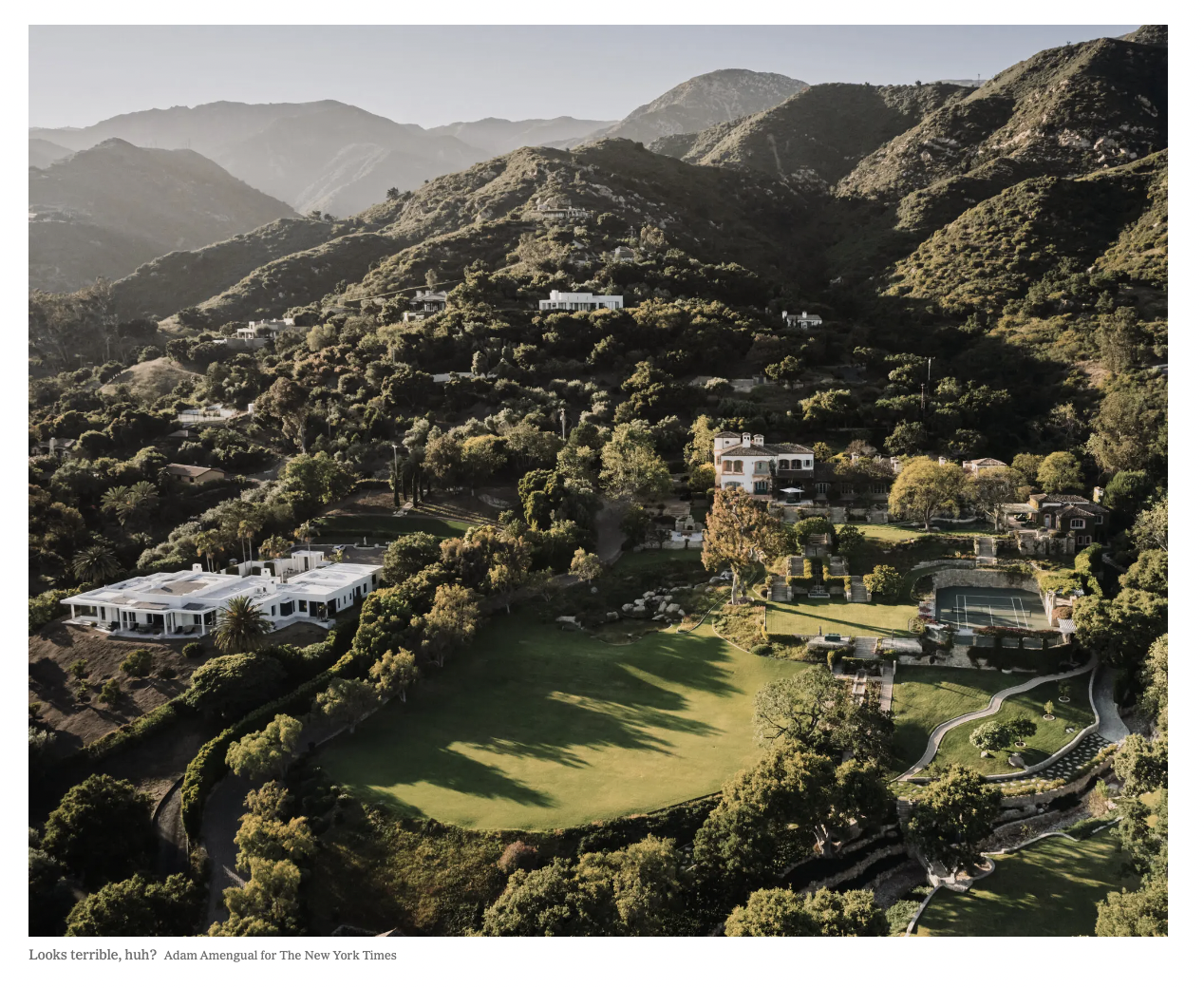
from Amy Larocca’s article about Montecito, a topic we covered last summer.
Los Angeles: The Ultimate City
Posted: June 16, 2023 Filed under: the California Condition Leave a comment
Picked up a used copy of this one, from the genre of New Yorker (the magazine) writers doing longform jobs on big topics. It’s not super insightful or vital in 2023 (“restaurants in L. A. must have plenty of parking space available”) but I appreciated this summary of the socialist history of California:


Once again
Posted: March 26, 2023 Filed under: the California Condition Leave a comment
Once again find ourselves thinking about Tulare Lake, appearing again.
Last time we drove up there was to look for the site of the Mussel Slough gunfight.
We were almost lost in the tule fog.
Los Angeles is beautiful
Posted: November 12, 2022 Filed under: the California Condition Leave a comment
It really is. Been meaning to compose more on that theme but I get overwhelmed.
Love of The Last Tycoon by F. Scott Fitzgerald
Posted: September 17, 2022 Filed under: the California Condition Leave a comment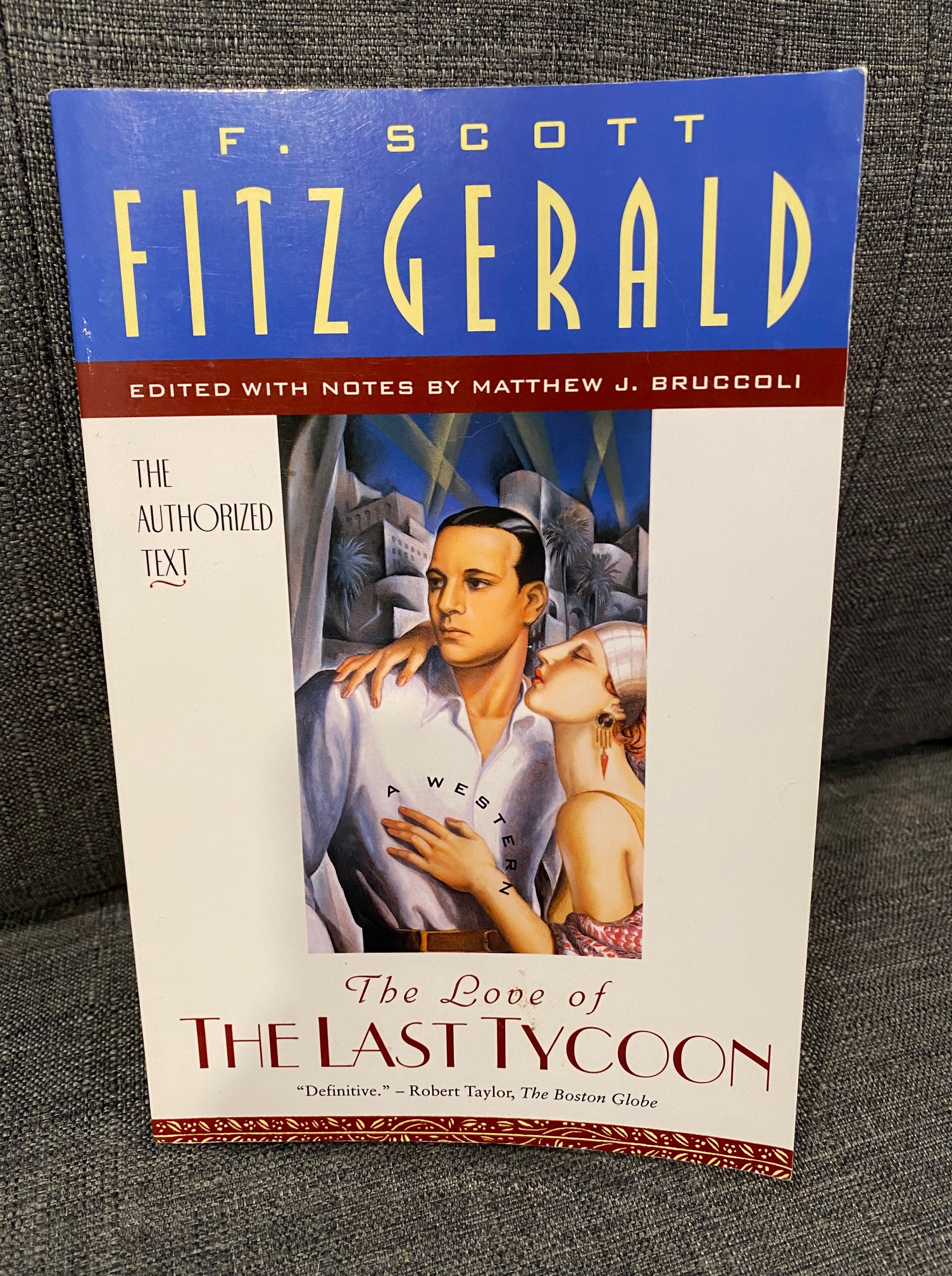
“There’s a writer for you,” he said. “Knows everything at and at the same time he knows nothing.”
This is a strange book. It opens in “flyover country”: literally. We’re on a transcontinental airplane trip. Very different from current day air travel: there are sleeping compartments, the passengers all chat, the stewardess offers them pharmaceuticals. (Are we on a Douglas Sleeper Transport?).
A theme of this book is the ability to see the whole picture, as if from on high, so maybe the plane flight makes sense as a metaphor. Hollywood producer Monroe Stahr, the tycoon of the title, is up with the pilots:
Obviously Stahr had put the pilots right up on the throne with him and let them rule with him for a while. Years later I travelled with one of those same pilots and he told me one thing Stahr had sad.
He was looking down at the mountains.
“Suppose you were a railroad man,” he said. “You have to send a train through there somewhere. Well, you get your surveyors’ reports, and you find there’s three or four or half a dozen gaps, and not one is better than the other. You’ve got to decide – on what basis? You can’t test the best way – except by doing it. So you do it.”
The pilot thought he had missed something.
“How do you mean?”
“You choose some way for no reason at all – because that mountain’s pink or the blueprint is a better blue. You see?”
Fitzgerald based Stahr on Irving Thalberg, a boy wonder who ran production at MGM. In Genius of the System, there are some quotes from transcripts of story meetings with Thalberg, and he really does sound like this.
The plane we open on is forced to land in Tennessee. Our narrator, Cecila Brady, is taken to see Andrew Jackson’s house, The Hermitage. What of this? Or just a detail that felt real? Is Fitzgerald suggesting something of the movie obsession with American myth? Did he have in mind how the mansion on the Culver studios lot was modeled on Mount Vernon?
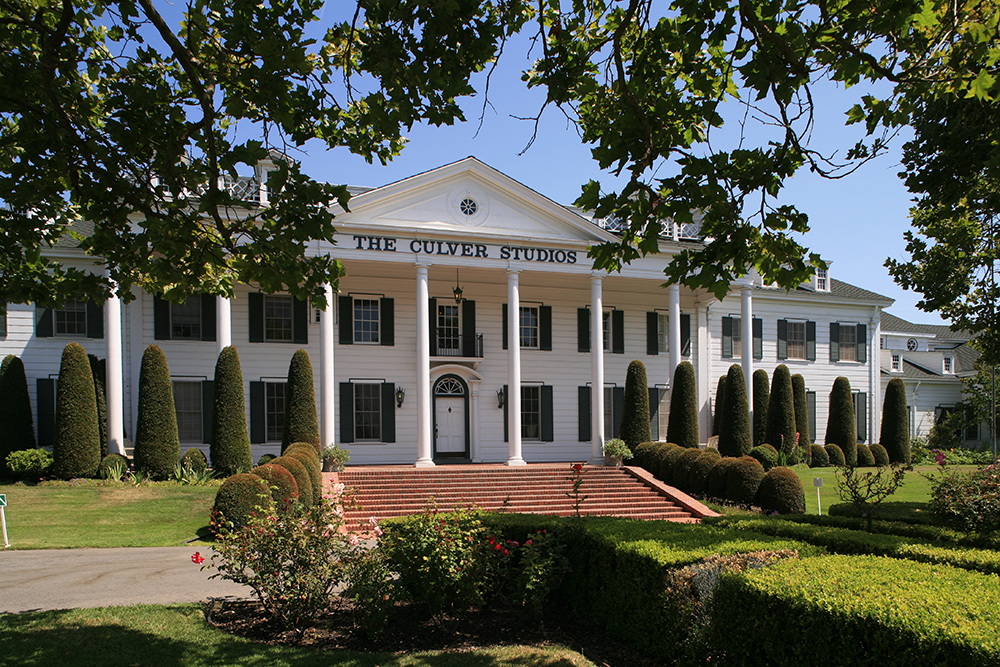
It’s said Jack Warner’s second wife redesigned the house to look more like Monticello.
Fitzgerald never finished this book. He died while writing it, after eating a Hershey bar. The day before he’d been wrestling with the scene where Stahr and the Communist get in a fistfight. Sheilah Graham says he told her:
Baby, this book will be good. It might even make enough money for us both to leave Hollywood.
He left Hollywood the next day.
Like John Fante’s Ask The Dust, Love of the Last Tycoon involves the Long Beach earthquake of 1933.
When he heard about the thousands dead at Long Beach he was still haunted by the abortive suicide at dawn
Wikipedia tells us only about 128 people actually died in the quake. Maybe a misperception at the time is accurate. Or who knows?
An evocation of a studio backlot:
Under the moon the back lot was thirty acres of fairyland – not because the locations really looked like African jungles and French châteaux and schooners at anchor and Broadway by night, but because they looked like the torn picture books of childhood, like fragments of stories dancing in an open fire.
Stahr makes a decision:
The oracle had spoken. There was nothing to question or argue. Stahr must be right always, not most of the time, but always – or the structure would melt down like gradual butter.
Here’s Malibu, 1933:
Past Malibu with its gaudy shacks and fishing barges they came into the range of human kind again, the cars stacked and piled along the road, the beaches like ant hills without a pattern, save for the dark drowned heads that sprinkled in the sea.
Would there were still fishing barges there.
The perspective of Love of the Last Tycoon is kind of odd, it’s narrated by Cecilia Brady, but she’s often describing, maybe imagining, scenes she was not present for.
This is Cecilia taking up the story. I think it would be most interesting to follow my own movements at this point, as this is a time in my life that I am ashamed of. What people are ashamed of usually makes a good story.
(does it?)
In Gatsby too there’s a sort of observer/narrator.
The English novelist Boxley doesn’t get it with writing for the movies. Stahr tries to help him:
“If you were in a chemist’s,” conceded Stahr, and you were getting a prescription for some member of your family who was very sick -“
“- Very ill?” queried Boxley.
“Very ill. Then whatever caught your attention through the window, whatever distracted you and held you would probably be material for pictures.”
“A murder outside the window, you mean.”
“There you go,” said Stahr smiling. “It might be a spider working on the pane.”
“Of course – I see.”
“I’m afraid you don’t, Mr. Boxley. You see it for your medium but not for ours. You keep the spiders for yourself and you try to pin the murders on us.”
Stahr tries to press the point:
Our condition is that we have to take people’s own favorite folklore and dress it up and give back to them. Anything beyond that is sugar. So won’t you give us some sugar, Mr. Boxley?
More geography, LA 1933:
They rode through Griffith Park and out past the dark studios of Burbank, past the airports and along the way to Pasadena past the neon signs of roadside caberets… they passed over the suicide bridge with the high new wire.
Stahr on writers:
“I never thought,” he said, ” – that I had more brains than a writer has. But I always thought his brains belonged to me – because I knew how to use them. Like the Romans – I’ve heard that they never invented things but they knew what do with them. Do you see? I don’t say it’s right. But it’s the way I’ve always felt – since I was a boy.”
Around the town
Posted: September 5, 2022 Filed under: the California Condition Leave a comment
Professor McHugh is off to Berlin to deliver a talk. In ancient India, they conceived of thought, the mind, and the soul as being located in the heart. So what did they think the brain was for? That’s the theme, wish we could attend. Haven’t been to Berlin since Jones was working on a movie there (Speed Racer?). Mat W is just back from Pittsburgh, where he toured an old iron factory…
Beyers says he plans to come down for Thanksgiving, should be rowdy as always. He’s been watching Hip Hop Evolution on Netflix, hosted by Shad. A fun introduction to various hiphop scenes, organized semi-geographically. We watched the one about Memphis and Three Six Mafia, the one about New Orleans bounce and Cash Money records, the one about Houston and chopped and screwed (DJ Screw was making thousands of dollars selling tapes out of his house), and the one about Atlanta crunk and Lil Jon: very fun. Lil Jon in particular seems to have bloomed into something like a civic booster and public face of Atlanta.
Hip Hop Evolution led to watching The Carter documentary about Lil Wayne. The most dramatic moment of the film occurs around 56:00 when Wayne has had it with a European reporter who’s trying to get him to place himself in a New Orleans musical tradition. Lil Wayne’s not having it.
We played a game called Ranker (or is it Rancor?) over at Vali’s. Someone leaves the room, and the group then comes up with a number from one to ten. Eight say. The guesser then returns and takes turns asking people questions like “US cities” or “movies from the 70s.” You try and give an answer that will steer them towards the correct number. It’s fun, try it, Jen Crittenden is credited with introducing it to us.
Dave and Esther are back from Italy. Esther’s been doing great work on TikTok on the categories “Hot Girls” vs “Pretty Girls” (no offense is intended, take it in spirit its intended). Dave’s excited to see Pavement at the Orpheum this week, we’ll be joining.
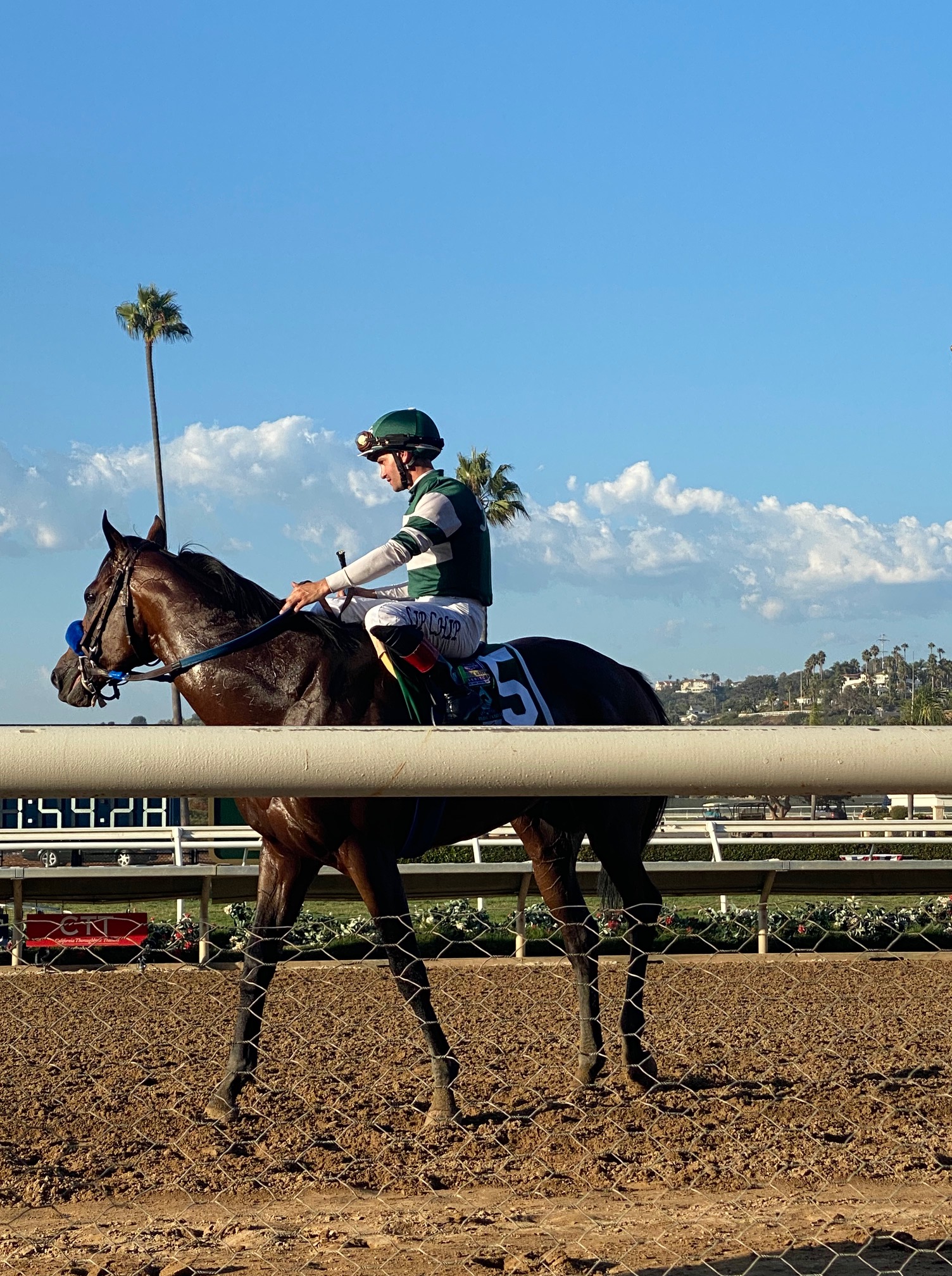
Boy, how about Flightline? We trained down to Del Mar on Amtrak’s Surfliner for the Pacific Classic, and we weren’t disappointed. Standing right by the rail I was convinced I’d just seen the fastest horse to ever run, but in fact Flightline was seventeen one hundredths short of breaking the track record (set by Candy Ride, 2003). Two seconds shy of the 1 1/4 mile world record. Maybe it was the heat. Still, nice to see excellence of any kind. After the race you can bet Red Tracton’s was lively.
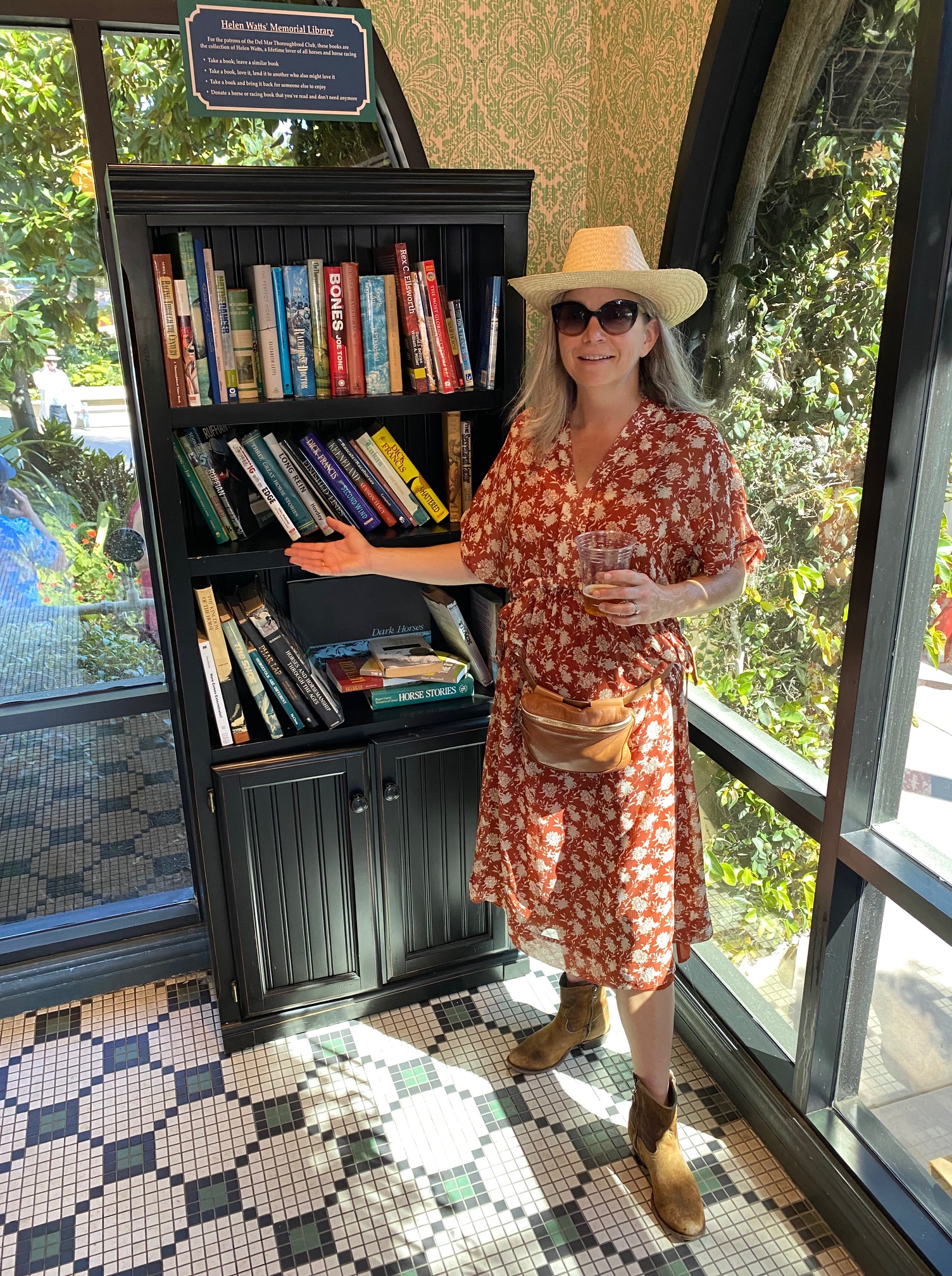
If you’re going down to Del Mar, bring an old racing book you don’t need anymore, and you can trade it for another at the Helen Watts’ Memorial Library, at the southeast corner of 17 Hands. You wouldn’t think a bar would be a likely place for a trading library, but there it is!
Everyone’s excited for the release of W. David Marx’s book on status and culture. The galley was hard to get, an instant “status galley” – cunning marketing on Dave’s part? Sounds like we might get to hear him on How Long Gone soon… Greaney’s on his way to Mexico to see his buddy Alma, who built himself a house out of volcanic rocks. We lunched at, you guessed it, Terroni… Congrats to Tim Robinson on winning an Emmy, he earned that one!… Our correspondents from overseas had reports for us: Chileans rejected their draft constitution. A boy in New Zealand discovered a giant worm (click that link at your peril if you have Scoleciphobia)… We’re under the heat dome here in Los Angeles but we’ll make it, we always do. The Giants are coming to Dodger Stadium this week, if you’re going over there make sure you’ve studied the shade map.
California agriculture statistics to delight, amaze, and amuse
Posted: September 4, 2022 Filed under: the California Condition Leave a comment
California leads the nation in production of: apricots, asparagus, avocados, lima beans, broccoli, brussel spouts, carrots, cauliflower, dates, eggplant, sweet corn, figs, cut flowers, grapes, alfalfa hay, herbs of all kinds, jojoba of course, kale, kumquats, lemons, lettuce, limes, cantaloupes, onions, parsley, chili peppers, bell peppers, persimmons, pomegranates, raspberries, tangerines, tomatoes, spinach, strawberries, and watercress.
And those are just the competitive categories.
When it comes to almonds, artichokes, celery, figs, garlic, kiwis, honeydew, nectarines, olives, pistachios, plums, and walnuts, forget it, we’re so far ahead it’s barely worth counting other states: California produces 99% or more of the US total for each.
On top of that, we’re number two in rice, sweet potatoes, oranges, blueberries, grapefruits, and mushrooms. Arkansas, North Carolina, Florida, Washington, Florida, and Pennsylvania better watch their respective backs.
Vermont and Wisconsin pride themselves on their dairies, but in production of milk and cream, California is unrivaled: we produce forty one billion pounds of milk and cream a year. (Wisconsin is second, thirty one billion, and third is actually Idaho).
The agricultural statistics are so staggering they please the brain to contemplate: California produces in a single year, for example, a billion pounds of strawberries, three billion pounds of lettuce, five billion pounds of grapes, and eleven billion pounds of tomatoes. We grew ninety two million daisies and seventy five million lilies. Thirty six thousand acres of California are devoted simply to cauliflower. There are in total one thousand, three hundred square miles of California covered in grape vines, and close to two thousand square miles of almond trees, equivalent to an entire Delaware.
Almonds are truly where we dominate: California produces eighty-two percent of all the almonds on planet Earth. That’s insane for a lot of reasons, one of them being that it takes about a gallon of water to grow a single almond. Now, some places in California have lots of water: water roars down the Trinity River through the redwoods of far northern California, and over the waterfalls of Yosemite. But some places in California have very little water at all: Death Valley gets about two inches of rain in an entire year.
Most of the almonds are grown somewhere in between. The biggest almond growing county is Fresno, which gets about fifteen inches of rain a year on average. That’s less than half of the US average. The water for all those thirsty almonds is coming from the thin rivers, by aqueduct or it’s pumped out of the ground. California exports water in the form of delicious almonds and other crops. That doesn’t really make a lot of sense, condensing our precious water into nuts and shipping it away. But almonds are $5.6 billion business, so that’s what happens.
(Here’s my source)
Antonio Ygnacio Avila
Posted: September 4, 2022 Filed under: the California Condition Leave a comment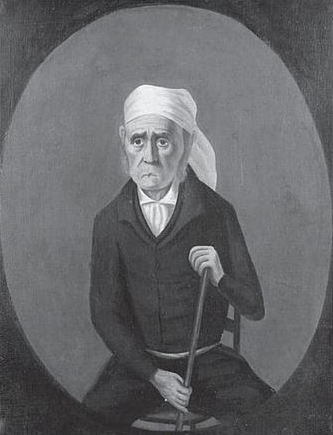
Taken with this dour fellow, who once owned 22,000+ acres of what’s now Playa Del Rey, El Segundo, Manhattan Beach, Lawndale, Hermosa Beach, Inglewood, Hawthorne, and Redondo Beach. Cheer up pal, you live on the beach!
Montecito: the little wood
Posted: August 27, 2022 Filed under: the California Condition Leave a comment
The site of Montecito was originally part of the Santa Barbara pueblo lands of which allotments were given to soldiers when their enlistments at the presidio expired. From earliest times it was a region of exceptional beauty, with its leafy canyons and its forested valley, and the Spanish called it El Montecito, the little wood. Even today it is not infrequently referred to as “the Montecito.” Quail, deer, bear, and strayed cattle still roamed the valley in 1847, by which time a small settlement had developed, consisting of a few little ranches with the houses not more than a quarter mile apart…
In the late 1860s the first of the Montecito estate builders had erected a fine old-fashioned Southern home on Hot Springs Road and made the first landscaped garden in the valley. This was Colonel W. A. Haynes. With others soon to follow Haynes’ lead, bears were still so common in the region that a $50 bounty was set on every one taken within the limits of the settlement, and horse thieves and highwaymen were using Montecito as a hideout.
…In the 1870s the bears gradually retreated into the Santa Ynez Mountains and the freebooters all met one form of justice or other, leaving the future of Montecito tottering for awhile between those who wish to keep its natural beauty for homes and estates, and a few hustling Americans who wanted to make it a health center by exploiting the hot springs which had been discovered there in 1801 by an Indian wandering in the foothills.
later:
Montecito embarked on an ambitious landscaping project, to emerge from its chrysalis a gay and exclusive suburb with luxurious estates.
California is full of strange microclimates, and Montecito has one: it’s foresty and cool in there. Eucalyptus trees abound. These are not native, but Australians introduced them during the gold rush, and many were planted in the following years. Jack London planted at least 16,000 eucalyptus trees up on his northern California lands during a speculative craze around 1900. Eucalyptus trees can grow thick and tall and are pleasant to see, but the planting of trees with the potential to explode during wildfires has been a mixed blessing for the state.
Whenever we’re in Montecito we think about Prince Harry and Meghan in exile up there. Something tragic about it, like Wallis and the Duke of Windsor lounging around in the Bahamas with nothing to do. You’re in Heaven but it’s a tiny heaven, there’s not much to do, and you’re sort of trapped. Maybe Harry finds satisfaction in his polo, and Meghan in her podcast.
In 2018 mudslides killed twenty three people in Montecito. The mudflow reached Oprah’s backyard, yet her house was spared.
John Steinbeck on San Francisco
Posted: August 23, 2022 Filed under: San Francisco, Steinbeck, Steinbeck, the California Condition Leave a comment
Thomas Wolf took that one for Wikipedia.
Can you remember anywhere in John Steinbeck’s fiction where he discusses San Francisco? Whole books about Monterey, but does he even mention the place? I couldn’t remember. A friend’s been working on Steinbeck’s letters, he couldn’t think of any mention either.
Turns out Steinbeck does talk about San Francisco in Travels with Charley in Search of America. The chapter begins:
I find it difficult to write about my native place, northern California. It should be easiest, because I knew that strip angled against the Pacific better than any place in the world. But I find it not one thing but many – one printed over another until the whole thing blurs.
He mentions growth:
I remember Salinas, the town of my birth, when it proudly announced four thousand citizens. Now it is eighty thousand and leaping pell mell on in mathematical progression – a hundred thousand in three years and perhaps two hundred thousand in ten, with no end in sight.
(The population of Salinas is, in 2022, 156,77.)
Then he writes some about mobile home parks, and property taxes, concluding:
We have in the past been forced into reluctant change by weather, calamity, and plague. Now the pressure comes from our biologic success as a species.
Then he gets going on San Francisco:
Once I knew the City very well, spent my attic days there, while others were being a lost generation in Paris. I fledged in San Francisco, climbed its hills, splet in its parks, worked on its docks, marched and shouted in its revolts. In a way I felt I owned the City as much as it owned me.
…
A city on hills has it over flat-land places. New York makes its own hills with craning buildings, but this gold and white acropolis rising wave on wave against the blue of the Pacific sky was a stunning thing, a painted thing like a picture of a medieval Italian city which can never have existed.
Steinbeck can’t stay though. He has to hurry on to Monterey to cast his absentee ballot (it’s 1960; he’s voting for John F. Kennedy).
Alice Marble
Posted: August 17, 2022 Filed under: California, San Francisco, the California Condition Leave a comment
(Paul T. submitted this photo to FourSquare)
Several times in walks around San Francisco I’ve stopped at the Alice Marble Tennis Courts, at the top of Russian Hill, for the view from Alcatraz to the bridge.

Alice Marble was a tennis champ of the 1930s and ’40s. Wikipedia informs us:
For a brief time after retirement, she worked on the editorial advisory board of DC Comics and was credited as an associate editor on Wonder Woman. She created the “Wonder Women of History” feature for the comics, which told the stories of prominent women of history in comic form.
In her second autobiography Courting Danger (released after her death in 1990), Marble mentions that, back in the 1940s, she had married Joe Crowley around World War II, a pilot, who was killed in action over Germany. Only days before his death, she miscarried their child following a car accident. After an attempt to kill herself, she recuperated, and in early 1945, agreed to spy for U.S. intelligence. Her mission involved renewing contact with a former lover, a Swiss banker, and obtaining Nazi financial data. The operation ended when a Nazi agent shot her in the back after chasing her while she was trying to escape in a car, but she recovered. Few details of this operation have been corroborated by journalists and authors who tried to investigate this part of her life in the years from the time of her death to the present. No Swiss banker has been discovered, leading to suspicions that this man of mystery might have been a Nazi, someone who Marble may have been trying to avoid having had an association.
Marble greatly contributed to the desegregation of American tennis by writing an editorial in support of Althea Gibson for the July 1, 1950 issue of American Lawn Tennis Magazine. The article read “Miss Gibson is over a very cunningly wrought barrel, and I can only hope to loosen a few of its staves with one lone opinion. If tennis is a game for ladies and gentlemen, it’s also time we acted a little more like gentle-people and less like sanctimonious hypocrites…If Althea Gibson represents a challenge to the present crop of women players, it’s only fair that they should meet that challenge on the courts.”

Female tennis champs of that era are honored all over San Francisco. Alice Marble’s career followed that of Helen Willis Moody, painted by Diego Rivera in his mural inside the former Pacific Stock Exchange. It’s cool that California is still producing world class tennis champs.
The Alice Marble courts are surrounded by George Sterling Park:

Kevin Starr (1973) wrote:
The uncrowned King of Bohemia (so his friends called him), Sterling had been at the center of every artistic circle in the San Francisco Bay Area. Celebrated as the embodiment of the local artistic scene, though forgotten today, Sterling had in his lifetime been linked with the immortals, his name carved on the walls of the Panama-Pacific International Exposition next to the great poets of the past.
Lots of people around George Sterling’s life died of poison, including finally the man himself, who poisoned himself inside the San Francisco clubhouse of the Bohemian Club. Next time I’m up there, I’ll have to stop by the Bohemian Club and see the bronze relief by Jo Mora.
The style of poetry Sterling practiced is no longer really in fashion:
The winds of the Future wait
At the iron walls of her Gate,
And the western ocean breaks in thunder,
And the western stars go slowly under,
And her gaze is ever West
In the dream of her young unrest.
Her sea is a voice that calls,
And her star a voice above,
And her wind a voice on her walls—
My cool, grey city of love.
How did the Bohemian Club go from being a scene of outré artists to having like Richard Nixon as a member? Probably the same way Carmel went from being an out there semi-commune to being a rich person retirement place. And the same way San Francisco was a cool place to drop out in 1965, and is now unaffordable unless you’re making mid six figures programming algorithms.
A lesson from California history: wherever the outcast artists are setting up camp, you’d be wise to buy real estate, and hang onto it for a hundred years. Although maybe that kind of thinking is contrary to the Bohemian Club motto:
Weaving spiders come not here.
The Golden West: Hollywood Stories, by Daniel Fuchs
Posted: August 14, 2022 Filed under: Hollywood, the California Condition, writing, writing advice from other people Leave a comment
Critics and bystanders who concern themselves with the plight of the Hollywood screenwriter don’t know the real grief that goes with the job. The worst is the dreariness in the dead sunny afternoons when you consider the misses, the scripts you’ve labored on and had high hopes for and that wind up on the shelf, when you think of the mountains of failed screenplays on the shelf at the different movie companies…
brother, I hear you, but also c’mon, it beats working for a living.
An old-timer in the business, a sweet soul of other days, drops into my room. “Don’t be upset,” he says, seeing my face. “They’re not shooting the picture tomorrow. Something will turn up. You’ll revise.” I ask him what in his opinion there is to write, what does he think will make a good picture. He casts back in his mind to ancient successes, on Broadway and on film, and tries to help me out. “Well, to me, for an example – now this might sometimes come in handy – it’s when a person is trying to do something to another person, and the second fellow all the time is trying to do it to him, and they both of them don’t know.” Another man has once told me the secret of motion picture construction: “A good story, for the houses, it’s when the ticket buyer, if he should walk into the theater in the middle of the picture – he shouldn’t get confused but know pretty soon what’s going on.” “The highest form of art is a man and a woman dancing together,” still a third man has told me.
Didion on Reagan’s day
Posted: August 9, 2022 Filed under: America Since 1945, the California Condition 1 Comment
The aides gave us the details, retold now like runes. Promptly at nine o’clock on most mornings of the eight years he spent as President of the United States, Ronald Reagan arrived in the Oval Office to find on his desk his personal schedule, printed on green stationery and embossed in gold with the presidential seal. Between nine and ten he was briefed, first by his chief of staff and the vice president and then by his national security adviser. At ten, in the absence of a pressing conflict, he was scheduled for downtime, an hour in which he answered selected letters from citizens and clipped items that caught his eye in Human Events and National Review. Other meetings followed, for example with the congressional leadership. “I soon learned that those meetings lasted just one hour, no more, no less,” Tony Coelho, at the time majority whip in the House, tells us in Recollections of Reagan: A Portrait of Ronald Reagan. “If the agenda—which he had written out on cards—wasn’t completed at the end of the hour, he would excuse himself and leave. If it was finished short of an hour, he would fill the rest of the time with jokes (and he tells a good one).” During some meetings, according to his press secretary, Larry Speakes, the President filled the time by reciting Robert Service’s “The Cremation of Sam McGee.”
source. Martin Anderson, who was there, had a different perspective.
Catholic gentlemen in neckties
Posted: August 9, 2022 Filed under: California, the California Condition Leave a comment
The passing of Vin Scully, beloved Los Angeles icon, has occasioned an outpouring of expressions of both loss that we should no longer have this man and gratitude that we ever did. Scully’s skills as a baseball announcer have been the focus of course. We offered some appreciation for the man’s gifts in that field a few years ago. His was a voice we loved and that we’ll miss.
We’d like to note today though another aspect of Scully, and consider him as an example of something that’s passing away. Scully was a Catholic gentleman in a necktie.
For Scully’s gentlemanliness, see any tribute to him. For his Catholicism, note that he narrates a 2 CD recording of the Rosary (you can listen on YouTube). As for the necktie, he didn’t always wear one, but it was part of the presentation, and this was a presenter.
We know this type. They were everywhere in greater Boston circa 1990. The Catholic gentleman in a necktie has national expression in President Joe Biden, though maybe Biden’s roguish side distracts us from his essential typology.
The Catholic gentleman in a necktie was an important part of Los Angeles life as well. Former LA mayor Richard Riordan was one (whether he was a true gentleman couldn’t say, he was before our time, but you’ll accept the point). Rick Caruso, current mayoral candidate, could be another case. Kevin Starr was one. The late John Bowman is one we knew personally, though he didn’t always wear a tie.
Is this type dying away? Current LA mayor Eric Garcetti is a second-generation, copy of a copy version, but he often skips the necktie, and he’s in trouble at the moment for basically not being a gentleman.
Josh Brolin’s character Eddie Mannix in Hail, Caesar (based on the real Eddie Mannix) is shown several times going to confession. This isn’t the outre decadent Catholicism described in The New York Times, it was the real deal, with all the contradictions.
Consider this merely some notes towards a sociological type.
Rest in Heaven Vin. The way he calls this brawl is delightful. (And Greinke demonstrates a pretty good example of a smaller man handling a much bigger opponent).
Senator Alan Cranston (D-California)
Posted: August 8, 2022 Filed under: the California Condition Leave a comment
Served four terms in the US Senate.
As a young man he was sued by Adolf Hitler for publishing an unauthorized translation of Mein Kampf. (Cranston felt the existing translations expunged too much, hiding the true nature of Hitler’s thought).
In the wake of World War II, Mr. Cranston became a strong advocate for world government. In 1945, he published a book, ”The Killing of The Peace,” about how the League of Nations had been defeated in the United States Senate.
In 1947, he took over his father’s real estate firm in Palo Alto.
(from his obituary)
How did he get into office? He made a lot of money, and then he organized:
In 1952, Cranston co-founded the California Democratic Council (CDC), and served as chairman. Since that time, the CDC has served as an unofficial coalition of local Democratic clubs that coordinate electoral activities and activism throughout California. The CDC provided substantial support to Cranston in his bid for State Controller in 1958 and his numerous runs for the U.S. Senate.
Also:
The New York Times called Cranston a “bald, craggy-looking, none-too-charismatic man.”
While on his many political trips, Cranston would spend time sprinting in long hotel hallways to maintain his fitness.
He wanted to abolish nuclear weapons, an idea fellow California politician Ronald Reagan also had. Could they have done it?
Is Alan Cranston’s lasting legacy to history that the Eagles broke up after Glenn Frey and Don Felder erupted in a screaming match at one of his fundraisers, 1980?
On July 31, 1980, in Long Beach, California, tempers boiled over into what has been described as the “Long Night at Wrong Beach”.[58][59] The animosity between Felder and Frey boiled over before the show began, when Felder said, “You’re welcome – I guess” to California Senator Alan Cranston‘s wife as the politician was thanking the band backstage for performing a benefit for his re-election.[60] Frey and Felder spent the entire show telling each other about the beating each planned to administer backstage. “Only three more songs until I kick your ass, pal,” Frey recalled Felder telling him near the end of the band’s set.[61] Felder recalls Frey telling him during “Best of My Love”, “I’m gonna kick your ass when we get off the stage.”
from the Global Security Institute, where we got the photo:
Alan Cranston used as a guide for leadership a quote by the Chinese philosopher Lao-Tzu, which he carried in his wallet for years:
A leader is best
When people barely know
That he exists,Less good when
They obey and acclaim him,Worse when
They fear and despise him.Fail to honor people
And they fail to honor you.But of a good leader,
When his work is done,
His aim fulfilled,
they will all say,
‘We did this ourselves.’
deer showers
Posted: August 5, 2022 Filed under: the California Condition Leave a commentsad situation on dry Catalina Island:
The famed Catalina Island fox, as well as the island’s non-native deer and bison, are “suffering mightily” due to the lack of moisture, which is tied closely to their food supply, according to Deni Porej, senior conservation director with the Catalina Island Conservancy. Lately, he said, deer have been appearing on the island’s golf course in the evenings, when they know the sprinklers will turn on and provide them with a spot of relief.
from this LA Times piece by Hayley Smith
Where is Hollywood?
Posted: August 3, 2022 Filed under: Hollywood, the California Condition Leave a comment
Hollywood and Highland, 1907. Source.
There was a municipality called Hollywood. It existed from 1903 to 1910. This Hollywood gave up its independence to Los Angeles in exchange for water. Los Angeles was about to arrange for a steady supply via William Mulholland’s Los Angeles Aqueduct, and thirsty Hollywood needed in. (Will this happen to other cities? Countries?)
What is the definition of Hollywood? Here is a map that appears to show the old municipality, I found it on Pinterest (barf) and cannot trace it to a source, this is the closest I get:

Here’s how the LA Times defines Hollywood:

Also seems to be a dead link, I found it here.
AboutHollywood.com tells us this:
Although it is not the typical practice of the City of Los Angeles to establish specific boundaries for districts or neighborhoods, Hollywood is a recent exception. On February 16, 2005, Assembly Members Goldberg and Koretz introduced a bill to require the State to keep specific records on Hollywood as though it were independent. For this to be done, the boundaries were defined. This bill was unanimously supported by the Hollywood Chamber of Commerce and the LA City Council. Assembly Bill 588 was approved by the Governor on August 28, 2006, and now the district of Hollywood has official borders. The border is shown at the right, and can be loosely described as the area east of Beverly Hills and West Hollywood, south of Mulholland Dr., Laurel Canyon, Cahuenga Blvd. and Barham Blvd., and the cities of Burbank and Glendale, north of Melrose Avenue, and west of the Golden State Freeway and Hyperion Avenue.
But how to explain this sign, found on Melrose and Flores (the southwest corner, in fact!) which would push the boundary of Hollywood further west than anyone is prepared to acknowledge?

Kate Corbaley, Storyteller
Posted: July 29, 2022 Filed under: actors, Hollywood, screenwriting, the California Condition, writing Leave a commentAnother staff writer with a rather unconventional but valued talent was Kate Corbaley. At $150 a week, Corbaley was one of the few staffers whose salary was in the same range as Selznick’s…
Her specialty was not in editorial but rather as Louis Mayer’s preferred “storyteller.” Mayer was not a learned or highly literate man, and he rarely read story properties, scripts, or even synopses. He preferred to have someone simply tell him the story and he found Mrs. Corbaley’s narrational skills suited him. She never received a writing credit on an MGM picture, but many in the company considered her crucial to Mayer’s interest in stories being considered for purchase or production at any given time.
That’s from Thomas Schatz, The Genius of the System: Hollywood Filmmaking in the Studio Era.
Corbaley’s brother was Admiral S. C. Hooper, “the father of naval radio,” if The New York Times is to be believed. What a family of communicators!
Storytelling is a current obsession in business. A few days ago I searched “storyteller” under Jobs on LinkedIn and found 35,831 results. Amazon, Microsoft, and Pinterest are all hiring some version of “storyteller,” as are Under Armor, Eataly and “X, the Moonshot Factory.” The accounting firm Deloitte is hiring Financial and Strategic Storytellers (multiple listings, financial and strategic storytellers are sought in San Diego, Miami, Chicago, Charlotte, Tampa, Las Vegas, and Phoenix).
Cool job.
It’s reported in City of Nets: A Portrait of Hollywood in the 1940s that one afternoon in May, 1936, Kate Corbaley summarized a novel that was already perceived as hot property. She told Louis B. Mayer
a new story about a tempestuous southern girl named Scarlett O’Hara.
Mayer wasn’t sure what to think, so he sent for Irving Thalberg, who declared:
Forget it, Louis. No Civil War picture ever made a nickel.
(This seems improbable: in 1936 Birth of A Nation would’ve held the record as one of if not the biggest movie of all time? Must track this tale to its source, will report.)
 Helytimes
_(cropped).jpg)