Djokovic
Posted: August 29, 2013 Filed under: writing Leave a comment
Reading this New Yorker profile of Djokovic, which reprints his daily schedule. I’ve decided I’m going to copy it, just replacing tennis stuff with writing:
7:30 Wake-up. Tepid glass of water. Stretching. A bowl of muesli with a handful of mixed nuts, some sunflower seeds, sliced fruit, and a small scoop of coconut oil. Chew very slowly.
8:30. Writing. Drink two bottles of energy drink, adding a hydration drink with electrolytes if it’s humid
10:00 Stretching. Check color of urine.
11:00 Sports massage.
12:00 Lunch. Gluten-free pasta with vegetables.
1:30 Writing. Drink organic protein shake made from water mixed with pea protein.
2:30 Stretching.
3:00 Sentence practice.
4:30 Stretching
5:00 Business meetings.
7:30 Dinner. No Alcohol. No Dessert. Protein. Vegetables, but not beets, potatoes, parsnips, squash or pumpkin, which are too high in carbs.
(picture found here, credit Picture: Dita Alangkara Source: AP)
More Milch
Posted: August 16, 2013 Filed under: TV, writing 1 Comment
QUESTION: I work for a homeless newspaper, and I encounter a lot of writing by people who are mentally divergent. In your years of self-confessed madness and drug abuse, did you have any moments of clarity?
MILCH: Once I was burying myself in Mexico . I had sold my passport to some criminals, and I got drawn further in by steps, as these things usually happen. There was a lunatic chemist who contracted a stomach ache, and a consort of his named Yum-Yum decided to treat it with an enema. Turns out he had peritonitis and she killed him. We were all down there illegally, so I was digging this guy’s grave, and I tossed the body in. I figured I should grab his ID just in case I eventually decided to do the right thing and contact his relatives, and found my own passport that I had sold six months before. That was a moment of clarity, but thanks to liberal amounts of chloroform, it didn’t last.
Difficult Men
Posted: August 2, 2013 Filed under: TV, writing Leave a comment
I enjoyed this book. (A sequel about Amy Sherman-Palladino etc.?) Here are a few items of interest.
David Chase talking about what he learned from Stephen J. Cannell:
“Cannell taught me that your hero can do a lot of bad things, he can make all kinds of mistakes, can be lazy and look like a fool, as long as he’s the smartest guy in the room and he’s good at his job. That’s what we ask of our heroes.”
Cannell:
“I’m not a mogul, I’m a writer. I write every day for five hours. If that doesn’t make me a writer, what does?”
https://www.youtube.com/watch?v=E7vo9cJhsXQ
And here’s a good tidbit:
The Corner: A Year in the Life of an Inner-City Neighborhood [the book] was finished three years after the project began. (“Simon was very heavy into fantasy baseball one of the years,” Burns said by way of explaining why it took so long to write.)
There’s some great stuff about how cool Clarke Peters is.
Peters was an erudite, fifty-year-old native New Yorker. He had left the United States as a teenager for Paris, where there were still the remnants of a great African American expat community. Within weeks of arriving, he’d met James Baldwin, Maya Angelou, and the blues pianist Memphis Slim, among others.
While Peters was running basically a salon in Baltimore, Herc and Carver were playing video games all day and going to strip clubs.
David Milch does not disappoint:
The actor Garret Dillahunt, who first played Wild Bill’s killer and then the character Francis Wolcott, was given and asked to study 190 pages of biographical material about a sixteenth-century heretic named Paracelsus.

Later, talking about John From Cincinnati:
“My understanding of the way the mechanism of storytelling works is [that] any story is constantly appending specific values to the meanings of words, and of the actions of characters. And the fact that story uses as its building blocks words or character that the audience believes it has some prior recognition or understanding of, is really simply the beginning of the story, but not its end.”
Um, yeah no shit duh.
Say what you will: for my money, the opening sequence to JfC is the best ever in TV history:
https://www.youtube.com/watch?v=UrWZlh7DnBE
Obama
Posted: February 18, 2013 Filed under: America, Boston, Chicago, heroes, New England, politics, the California Condition, writing Leave a comment
James Fallows calls my attention to this article, from Chicago Magazine in 2007, about then-Senatorial candidate Obama’s Democratic convention speech.
The best bits, for the busy executive:
Obama composed the first draft in longhand on a yellow legal pad, mostly in Springfield, where the state senate was in overtime over a budget impasse. Wary of missing important votes, Obama stayed close to the Capitol, which wasn’t exactly conducive to writing. “There were times that he would go into the men’s room at the Capitol because he wanted some quiet,” says Axelrod. Once, state senator Jeff Schoenberg walked into the men’s lounge and found Obama sitting on a stool along the marble countertop near the sinks, reworking the speech. “It was a classic Lifemagazine moment,” says Schoenberg, who snapped a picture of Obama with his cell-phone camera.
(Photo not included, regrettably.) Kerry’s folks made Obama take out a line:
After the rehearsal ended, Obama was furious. “That fucker is trying to steal a line from my speech,” he griped to Axelrod in the car on the way back to their hotel, according to another campaign aide who was there but asked to remain anonymous. Axelrod says he does not recollect exactly what Obama said to him. “He was unhappy about it, yeah,” he says, but adds that Obama soon cooled down. “Ultimately, his feeling was: They had given him this great opportunity; who was he to quibble over one line?”
And:
On Tuesday, the day of his speech, Obama was up before 6 a.m. He gobbled down a vegetable omelet en route to the FleetCenter for back-to-back-to-back live interviews with the network morning shows. Next, he rushed off to speak at the Illinois delegation breakfast and then to a rally sponsored by the League of Conservation Voters. Afterwards, he returned to the arena for another hour of TV interviews. There was barely time for lunch, a turkey sandwich that he ate in the SUV while being interviewed by a group of reporters.
Always, always tell me what everyone ate.

(both photos from Chicago Magazine, uncredited. Michelle’s skeptical face in that first photo!)
Hemingway
Posted: February 11, 2013 Filed under: Hemingway, writing Leave a comment
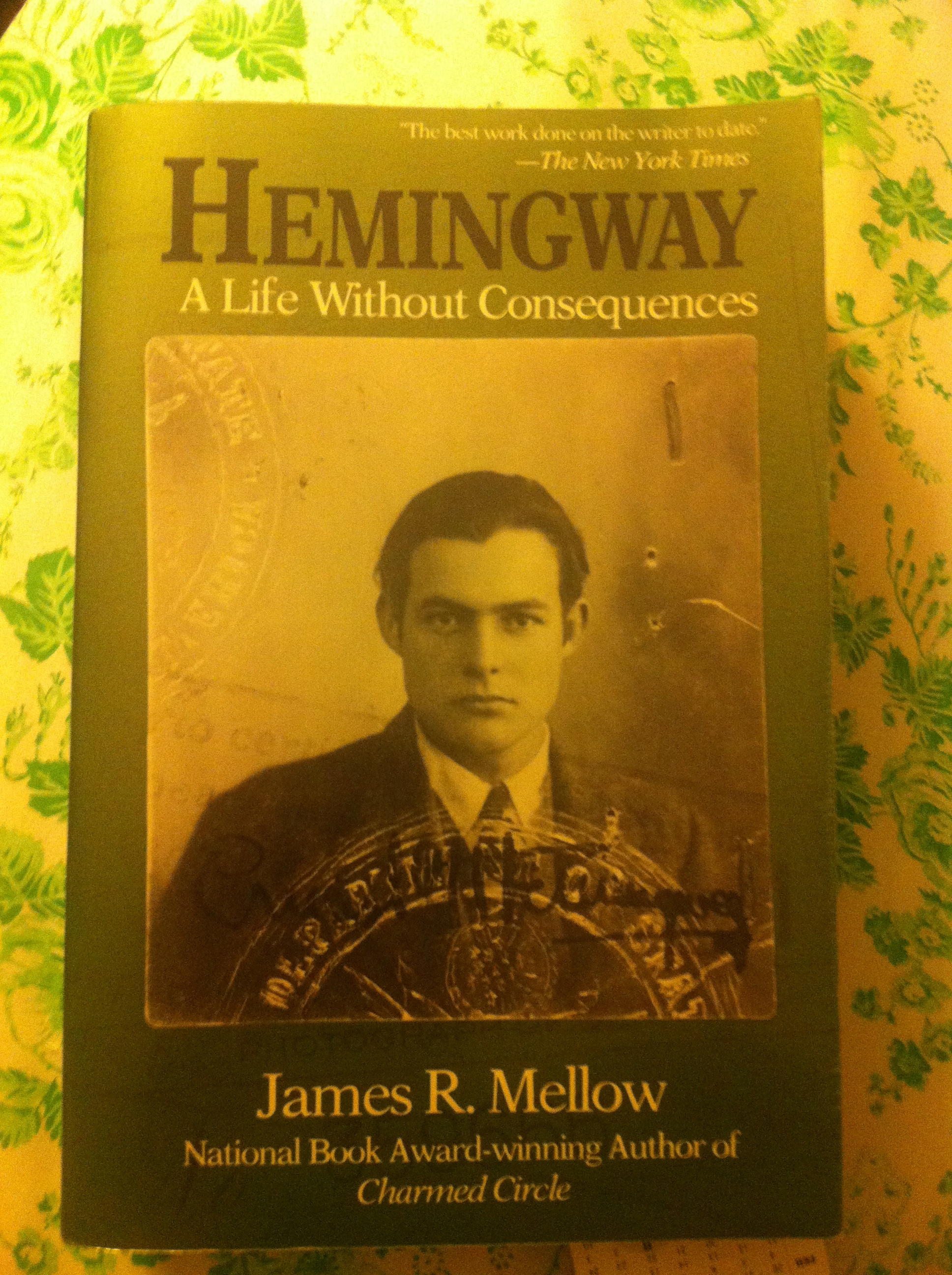
Dinner with James and Nora Joyce:

A troubled fourth marriage:

Memphis
Posted: January 8, 2013 Filed under: America, Vivien Kent, writing 1 Comment
Memphis is where hillbillies meet black folk. They are stunned to find how much they have in common with each other. Dangerous and exciting ideas explode from them then.
– Vivien Kent, The Fatback Of America (1948)
(photo by SCH)
George Saunders
Posted: January 4, 2013 Filed under: heroes, writing Leave a comment
In NY Times:
“I admired him so much,” he said about [DF] Wallace. “His on-the-spot capabilities were just incredible. And I thought, Yeah, we’re a lot alike. We’re similar, nervous guys. And then when he died, I thought [of myself], Wait a minute, you’re not like that. You don’t have chronic, killing depression. I’m sad sometimes, but I’m not depressed. And I also have a mawkish, natural enthusiasm for things. I like being alive in a way that’s a little bit cheerleaderish, and I always felt that around Dave. When he died, I saw how unnegotiable it was, that kind of depression. And it led to my being a little more honest about one’s natural disposition. If you have a negative tendency and you deny it, then you’ve doubled it. If you have a negative tendency and you look at it” — which is, in part, what the process of writing allows — “then the possibility exists that you can convert it.”
Possible negative tendencies a person could have:
- reading about famous greats while aggressively hunting for holes and hypocrisies in wicked hope famous great isn’t really much kinder and more thoughtful and generally better, and thus you yourself can’t be expected to improve or be better
- cynical assumption that you should be very very skeptical about anyone described as a “saint” in a newspaper.
- suspicion that people promoting “saints” have inevitable tangled agenda of self-promotion or goal of manipulating saints into espousing ideas from which they themselves [the saint-promoters] intend to make some gain.
Brief personal experience:
Met Saunders once (courtesy of Chennai Office). Walked and talked with him for about ten minutes.
During that walk he completely (by accident, just in casual conversation) altered my perception of college.
That afternoon Saunders gave a reading almost nobody came to. A person literally rollerbladed in, midway through.
Then watched him meet a bunch of young strangers. Many of whom weren’t exactly sure who he was or why he was there, and >50% of them were pretty drunk.
Saunders offered each of these people (and several were legendary messes) some genuine complimentary observation, or more likely, a complimentary question.
Afterwards, had the sense I’d just been given a free demonstration in how to be: considerate. In the deepest, “put yourself in the other guy’s shoes” way. NY Times:
The last time we met, Saunders waited in the cold with me until the bus for New York came along. We were talking about the idea of abiding, of the way that you can help people flourish just by withholding judgment, if you open yourself up to their possibilities…
(photo from the wikipedia page for Nyingma Buddhism)
Peggy Noonan
Posted: December 20, 2012 Filed under: writing Leave a comment
is a truly fascinating writer.
let’s never forget that she claimed, on Nov. 5, 2012:
While everyone is looking at the polls and the storm, Romney’s slipping into the presidency. He’s quietly rising, and he’s been rising for a while.
There is no denying the Republicans have the passion now, the enthusiasm. The Democrats do not. Independents are breaking for Romney. And there’s the thing about the yard signs. In Florida a few weeks ago I saw Romney signs, not Obama ones. From Ohio I hear the same. From tony Northwest Washington, D.C., I hear the same.
Is it possible this whole thing is playing out before our eyes and we’re not really noticing because we’re too busy looking at data on paper instead of what’s in front of us? Maybe that’s the real distortion of the polls this year: They left us discounting the world around us.
but she is the only political columnist I am excited to read every week.
I think the secret is that she is the best at writing. she is hypnotic and confident and compelling.
“You can’t help but say hats off to them”
Posted: December 12, 2012 Filed under: heroes, history, New England, writing Leave a comment
When I read Abigail’s letters, I wonder how she ever hat time to write them. She was raising a family with four children, running the farm without her husband there; it was nip and tuck whether she could make a go of it financially; she had sickness to contend with, plagues, waves of smallpox and epidemic dysentery that swept through Braintree. How did John Adams have time to write his letters and keep the diaries? If they’d done nothing else, you’d say to yourself, how did they do it? And remember, they were writing by candlelight with a quill pen, they probably had their teeth hurting because there was no dentistry as we know it. They were probably getting over some recent attack of jaundice or whatever else was epidemic at the time. It’s very humbling. You can’t help but say hats off to them.

Ways of describing horsemanship
Posted: December 7, 2012 Filed under: writing Leave a comment
He looked natural on a horse.
That might be one way. Gets the point across. But, just in case, let’s try another way:
The boy who rode on slightly before him sat a horse not only as if he’d been born to it which he was but as if were he begot by malice or mischance into some queer land where horses never were he would have found them anyway. Would have known that there was something missing for the world to be right or he right in it and would have set forth to wander wherever it was needed for as long as it took until he came upon one and he would have known that that was what he sought and it would have been.
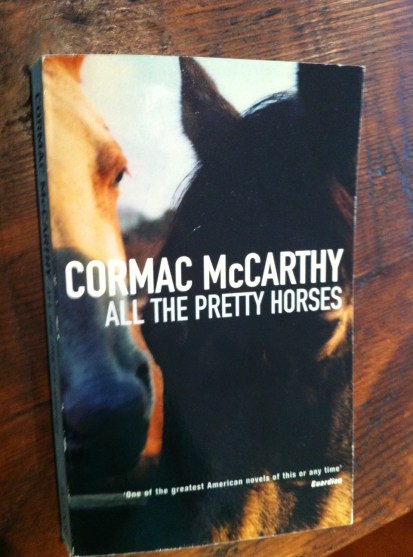
(theory: all great writers are comedy writers? “Cracker Cowboys of Florida” by Frederick Remington, 1895)
Scenes from the life of Marie Antoinette
Posted: December 6, 2012 Filed under: film, history, writing Leave a comment
1) An angry mob tries to show her the head of her best friend.
She’s being held captive by revolutionaries. Outside, she hears an angry mob yelling and shouting. She asked what it was. Nobody would tell her. Antonia Fraser tells us
“…the municipal officers had had the decency to close the shutters and the commissioners kept them away from the windows…
One of these officers told the King “they are trying to show you the head of Madame de Lamballe.”
Mercifully, the Queen then fainted away”.
2) She and her family try to make a run for the border, in disguise, but they are recognized by the local postmaster.
Or possibly by a tavern-keeper who recognized the king’s face from a coin.
3) Her husband is taken from her and executed.
4) Her eight year old son is taken away from her.
He was given to be raised by a cobbler. The revolutionaries tried to trick him into accusing his mother of sexually abusing him.
5) Then at last her hair is cut off, and she’s wheeled in a cart through the streets of Paris. When they led her up to the scaffold, she steps on the executioner’s foot by accident. So she apologizes. “Pardon me, sir, I did not mean to do it.”
None of these scenes (I got from a quick read of wikipedia) were in this movie:
There were some other good scenes.
Factory Girls by Leslie T. Chang
Posted: December 3, 2012 Filed under: food, writing Leave a comment
The stories of migrant women shared certain features. The arrival in the city was blurry and confused and often involved being tricked in some way. Young women often said they had gone out alone, though in fact they usually traveled with others; they just felt alone. They quickly forgot the names of factories, but certain dates were branded in their minds, like they day they left home or quit a bad factory forever. What a factory actually made was never important; what mattered was the hardship or opportunity that came with working there. the turning point in a migrant’s fortunes always came when she challenged her boss. At the moment she risked everything, she emerged from the crowd and forced the world to see her as an individual.
Best sentence:
I would have liked to spend more time with Big Sister Sun, minus the interpretive commentary; it was unendurable to watch one woman cry while another compared her to seaweed.
Highly recommend this excellent, enlightening, moving book. I had heard amazing things about it, but figured it would be either dull or depressing or both. I found it instead to be incredibly compelling. There is a modesty and openness in the way Leslie Chang writes that is very rare in even the best nonfiction. The description of the man who invented “Assembly Line English” is a genuine if somewhat tragic LOL.
I trailed Mr. Wu around the room. I thought he was going to introduce me to some students, but he walked me over to one of the machines instead. “These are so much more unwieldy than my new machines,” he said. “It takes two people to carry one.”
By now it was early evening, and I commented that it was getting a little dark to read without light.
“That’s not bad for the eyes,” he said. “Bright sunshine is bad for the eyes.”
“I’m not saying bright sunshine is good for the eyes,” I said. “I’m just saying it’s not good to read in the dark.”
“That’s not true,” he said heatedly. “That’s only if your eyeballs are not moving. If your eyeballs are moving, it doesn’t matter how dark it is.”
One small complaint. There is a description of the village girl Min going to McDonald’s for the first time. “She brought her face down close to her Big Mac and ate her way through the sandwich one layer at a time.” I could not exactly picture how this worked (like, was she descending on the bun part from the top? did she remove each layer?) and would’ve liked more clarity.

“Find where the dogs sleep…”
Posted: November 27, 2012 Filed under: travel, Vivien Kent, writing 1 Comment
Whenever I travel, I look for the place where the wild dogs sleep. Never have I been disappointed. It is always some odd corner, some makeshift shelter, some unvisited ruin.
– Viven Kent, How To Travel (1947)
(photo of the Dutch cemetery in Kochi, India by me)
Ya burnt!
Posted: November 26, 2012 Filed under: comedy, writing Leave a comment
Matters of doctrinal dispute, too, give rise to the occasional sly squib. The early Irish Church had its differences with Rome, for example on the thorny question of the dating of Easter, which led to a “great dispute” and a resulting Irish hostility towards St Peter, the founder of the Roman Church… Thus on the recto of folio 180, a line of text referring to Peter’s denial of Christ incorporates the figure of a hare, an animal known for its timidity.
From John Banville’s article about the Book of Kells in the Financial Times. Above is Lindisfarne, from Wikipedia.
Mark Helprin
Posted: November 7, 2012 Filed under: writing Leave a comment
from The Paris Review:
INTERVIEWER
Why don’t you like to give interviews?
MARK HELPRIN
When I was young it was impossible to stop me from talking about myself, but I now find it difficult to start. As an adolescent (which stage in life took me to about the age of thirty) I had a facile tongue, a prodigious memory, and an all-consuming fear of sociality (a fear and distaste that is, if anything, stronger now than it ever was, but now I am disciplined enough just to suffer through it and, quite frankly, I’m tired of trying to keep back a sea of discomfort with the flood of my own words).
The source of my aversion is partly hereditary, in that my father and many of my relatives were much the same, and partly an acquisition that I owe to my early upbringing. When this was far more serious a matter than it is now, I was born two months prematurely, with malformations of the spine (spina bifida) and lungs, and what was later diagnosed as “hyperconvulsive neurological syndrome.” Whatever that is, it was sufficient to have kept me out of the United States Army, though not the Israeli infantry and air force or the British Merchant Navy.
To make a rather long story extremely short, I spent many weeks in an incubator, came home as damaged goods, and spent much of my early life in the throes of respiratory diseases that kept me out of school and apart from others. As a small child, I once ran a fever for, literally, a year. I had pneumonia half a dozen times, double pneumonia, whooping cough—all because of the circumstances of my birth.
Now, combine that, and all that you can imagine might flow from it, with the place in which I was raised—Ossining, New York. Culturally, the character of the area was formed during the Revolutionary War, when it was a no-man’s-land between the Americans and the British, and every criminal, deserter, and malcontent for hundreds of miles found his way there and left his genes. When I was a child, I would always look at people’s hands, to see if they had six fingers, and sometimes they did.
My draft board, I am told (although it may be myth), had, of all draft boards in the United States, the highest proportion of men killed in Vietnam—where, incidentally, my godfather, the photographer Robert Capa, was the first American to die, though he was a Hungarian and had nothing to do with the Hudson. The area was salted with military institutions—West Point, military academies, veterans’ hospitals—and old soldiers, including even, when I was young, some from the Civil War. The play of the boys was guerilla warfare in the extensive woods. Every stranger was a threat, an enemy. Indeed, there were a lot of bad apples around—escaped convicts from Sing Sing (twice as I remember), standard criminals, gangs in the fifties, child molesters (a beautiful little girl was taken from my third-grade schoolyard and raped and beaten over a period of many hours), and hoboes (not Shakespearian woodwinds) on the rail line that was the geographical locus of my childhood. I ran wild through all this, protected by my paranoia, by my sharply-honed guerilla skills, and by a rather extensive arsenal. Had you turned me upside down and shaken me, the floor would have looked like a military museum after an earthquake.
INTERVIEWER
I was asking about your dislike of being interviewed.
(photo found here, by Jim Harrison for Harvard Magazine)
Charles C. Mann
Posted: October 30, 2012 Filed under: adventures, heroes, writing Leave a comment

Reading this great article by Charles C. Mann, one of my faves.
About 75,000 years ago, a huge volcano exploded on the island of Sumatra. The biggest blast for several million years, the eruption created Lake Toba, the world’s biggest crater lake, and ejected the equivalent of as much as 3,000 cubic kilometers of rock, enough to cover the District of Columbia in a layer of magma and ash that would reach to the stratosphere. A gigantic plume spread west, enveloping southern Asia in tephra (rock, ash, and dust)… In the long run, the eruption raised Asian soil fertility. In the short term, it was catastrophic. Dust hid the sun for as much as a decade, plunging the earth into a years-long winter accompanied by widespread drought….
At about this time, many geneticists believe, Homo sapiens’numbers shrank dramatically, perhaps to a few thousand people—the size of a big urban high school.
Talking about how fast bacteria can grow:
The cells in the time-lapse video seemed to shiver and boil, doubling in number every few seconds, colonies exploding out until the mass of bacteria filled the screen. In just thirty-six hours, she said, this single bacterium could cover the entire planet in a foot-deep layer of single-celled ooze. Twelve hours after that, it would create a living ball of bacteria the size of the earth.
On behavioral changes by humanity:
To get Crusoe on his unlucky voyage, Defoe made him an officer on a slave ship, transporting captured Africans to South America. Today, no writer would make a slave seller the admirable hero of a novel. But in 1720, when Defoe published Robinson Crusoe, no readers said boo about Crusoe’s occupation, because slavery was the norm from one end of the world to another. Rules and names differed from place to place, but coerced labor was everywhere, building roads, serving aristocrats, and fighting wars. Slaves teemed in the Ottoman Empire, Mughal India, and Ming China. Unfree hands were less common in continental Europe, but Portugal, Spain, France, England, and the Netherlands happily exploited slaves by the million in their American colonies. Few protests were heard; slavery had been part of the fabric of life since the code of Hammurabi…
Even as the industrial North and agricultural South warred over the treatment of Africans, they regarded women identically: in neither half of the nation could they attend college, have a bank account, or own property. Equally confining were women’s lives in Europe, Asia, and Africa. Nowadays women are the majority of U.S. college students, the majority of the workforce, and the majority of voters.
Photo is of Lake Toba, I found it here.
Train Dreams
Posted: October 27, 2012 Filed under: writing Leave a comment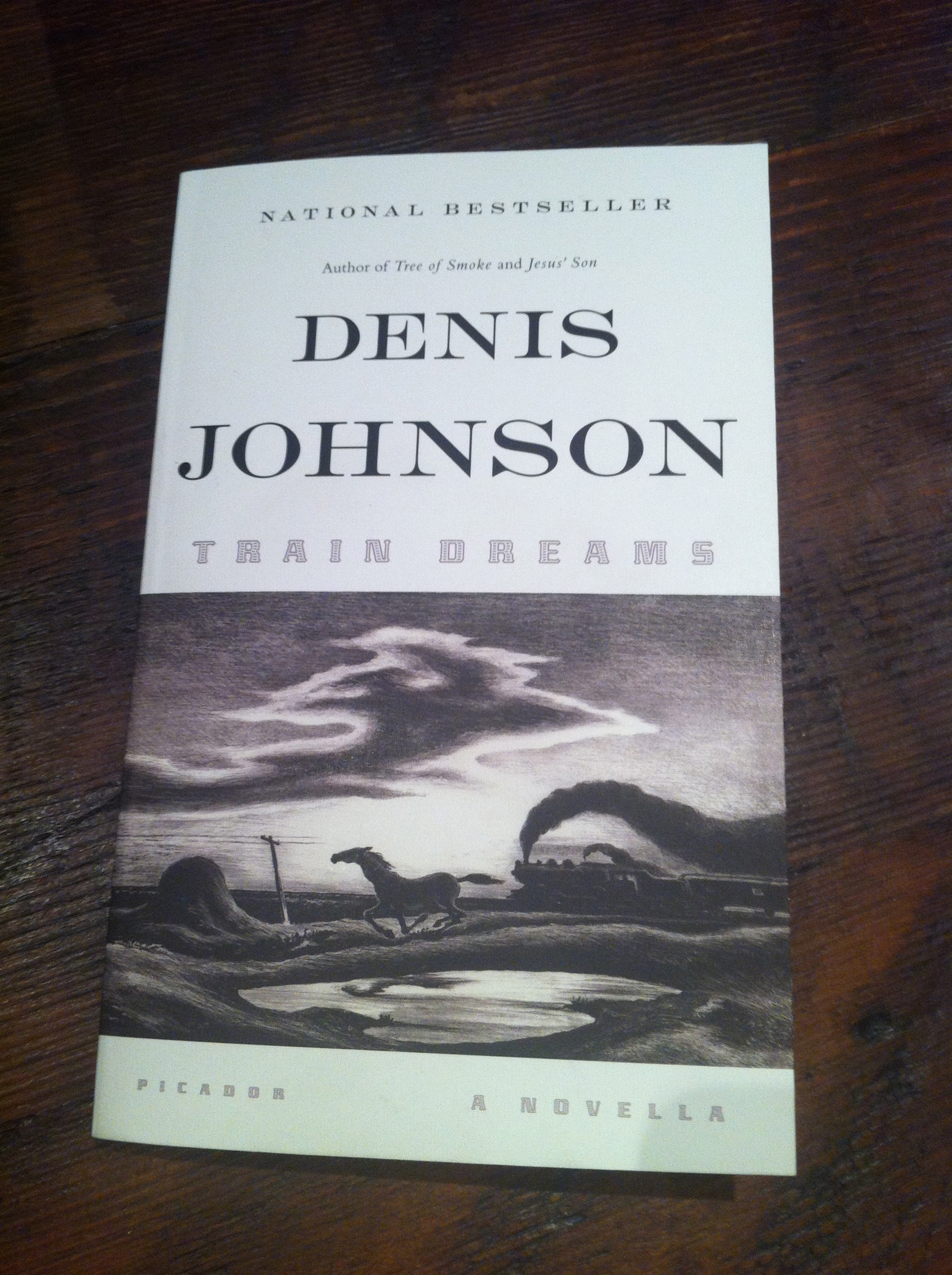
One of Grainier’s last jobs was to get up the Yaak River Road to the saloon at the logging village of Sylvanite, in the hills above which a lone prospector had blown himself up in his shack while trying to thaw out frozen dynamite on his stove. The man lay out on the bartop, alive and talking, sipping free whiskey and praising his dog…
Much that was astonishing was told of the dogs in the Panhandle and along the Kootenai River, tales of rescues, tricks, feats of supercanine intelligence and humanlike understanding.
The Finish, by Mark Bowden
Posted: October 22, 2012 Filed under: America, writing Leave a comment
This is a good book, highly recommended, a complex story well-told.
Bowden notes that in many of his final letters, Osama bin Laden has a “quaint courtesy,” and indeed his language does sound oddly cute. Here’s an excerpt from one written close to his death:
It would be nice if you would pick a number of brothers, not to exceed ten, and send them to their countries individually, without knowing the others, to study aviation… it would be nice if you would ask the brothers in all regions if they have a brother distinguished by good manners, integrity, courage, and secretiveness, who can operate in the United States…
It would be nice. Maybe it’s the translation. Osama also doesn’t think too much of Joe Biden, advising in another letter:
The reason for concentrating on [trying to kill Obama, but not other high-level Americans, during a possible visit to Afghanistan] is that he is the head of infidelity and killing him will automatically make Biden take over the presidency for the remainder of the term, as it is the norm over there. Biden is totally unprepared for that post, which will lead the United States into crisis.

Anyway, the book has some excellent information on the lives and careers of figures key to the hunt for Bin Laden. I learned, for instance, that on 9/11, Bill McRaven, later head of Joint Special Operations Command, was in a hospital bed, having had his pelvis cracked and his back broken during a parachute accident.
Bowden introduces speechwriter and Deputy National Security Advisor Ben Rhodes, noting his”prematurely thinning black hair.” Later, we learn, “his hair had thinned on top.”

Proto-Human
Posted: October 15, 2012 Filed under: writing Leave a commentRemembered a story I heard once that Columbus on one of his later expeditions brought along speakers of Hebrew and Arabic, in the hopes that they might be able to communicate with North Americans in some version of the “original language.” Found myself on the wikipedia page for “Proto-Human language.”
A fairly large number of words have been tentatively traced back to the ancestor language, based on the occurrence of similar sound-and-meaning forms in languages across the globe. The best-known such vocabulary list is that of John Bengtson and Merritt Ruhlen (1994), who identify 27 “global etymologies”.
Source: Ruhlen 1994b:103. The symbol V stands for “a vowel whose precise character is unknown” (ib. 105).
Based on these correspondences, Merritt Ruhlen (1994b:105) lists these roots for the ancestor language:
- ku = ‘who’
- ma = ‘what’
- pal = ‘two’
- akwa = ‘water’
- tik = ‘finger’
- kanV = ‘arm’
- boko = ‘arm’
- buŋku = ‘knee’
- sum = ‘hair’
- putV = ‘vulva’
- čuna = ‘nose, smell’
To summarize some further reading: these findings are controversial.
Karen Russells
Posted: October 8, 2012 Filed under: writing 1 Comment
Have not read Swamplandia! or St. Lucy’s Home For Girls Who Were Raised By Wolves – on title alone both sound excellent – but I did enjoy Karen Russell’s article about Spanish bullfighter Juan Jose Padilla, seen here before a bull gored out his left eye:
Pepe doesn’t think he will ever recover from his son’s accident.
“I thought that I had killed him,” he says in a raw voice. “I thought that I had murdered my son. I was the one who encouraged him in this profession….”
Pepe Padilla has raised three toreros. (Oscar, the middle son, retired as a banderillero the day after Juan Jose’s goring and now runs a chain of pet-supply stores.) Pepe coached his sons after school, caping cows with them in the green hills around Jerez. He once dreamed of being a matador himself. As a teenager, he was a novillero, a matador in training. “But I was a coward,” he says, smiling. “Not like my Juan.”
Today, Pepe is a charmer in his sixties with uncorrected teeth, gold jewelry wreathed by silver chest hair, and one droopy eyelid. For decades he worked as a baker in Jerez, sleeping three or four hours, heading back out before dawn to support his seven children. (Seven children! Franco years, he grins, shaking his head. Everything scarce and hard-won, including condoms.)
So I went on twitter to see if Karen Russell was on there. She is not, but there are 50+ other Karen Russells. Here are some of the twitter biographies of these other Karen Russells:
Country girl at heart who loves her kids (fifth grader & my Navy girl), husband (the judge) and my animals (horses and dog). Life is Good!!!!
I’m a public relations professor, but in my spare time I read mysteries (and sometimes watch on film).
Lives in Fife. Ex Army, Qualified Veterinary Nurse. Doesn’t suffer fools.
Mom of 4 boys, blogger, addicted to Young Adult books, Facebook, and twitter.
23 & a sweet down-to-earth TX girl ! I work as a Paralegal in Downtown Houston!
Married 40 something mum working in OT, diagnosed in may 2011 with severe inflammatory arthritis,learning to accept life changes 🙂
Born, live and work in the best place in the world…. Yorkshire!!!
Christian, mom of three, wife, I make videos of various Christian topics
A curious lover of life who never tires of trivial facts or useful knowledge.
Mother of one, forgiven sinner, lover of classic rock, reader of mysteries, rider of motorcycles, and sometime knitter.
Accountancy student at Glasgow Uni, flute player, Scout Leader, and master of procrastination.
i am a mom to 3 special need boys
registered nurse, church pianist
engaged to a woman who has taught me to be a better woman and mother. so that makes me the luckiest woman in this world.
A feisty free spirit that has low tolerance for stupidity and loves to bake. I also love my grands
im 47 yrs old seperated from my husband i have four sons two are in the army and now my 16 yr old is thinking of joining.i was born in north london.
love spendin time with family n friends,love my job not many can say that haha, have two georgous children who are my world
NICKELBACK!!!
Nutty 40 something that loves horse riding, badminton, hockey and watching pretty much all sport, am an Arsenal supporter, have 2 daughters & grumpy husband.
I teach mathematics
 Helytimes