Bear Mystery
Posted: October 8, 2014 Filed under: America Since 1945, New York Leave a comment
Florence Slatkin walking her dog, Paco, on Tuesday next to the spot where she and a friend discovered a dead bear in Central Park. Ms. Slatkin said the bear’s head was resting on a fallen bike. Credit Richard Drew/Associated Press
Alert reader Tia in Manhattan writes:
Very excited for your new podcast. Are you following the Central Park Bear Mystery?
Tia, thanks for writing. Of course I am.
So, a dead bear was found in Central Park. Here are the facts we know, all from the NY Times:
- The state’s Department of Environmental Conservation announced that the results of a necropsy showed that the cause of death was “blunt force injuries consistent with a motor vehicle collision.”
- After revealing the results of the necropsy, Lori Severino, a spokeswoman for the state conservation department, said that the agency still did not know where the bear had come from, only that it was “likely not the park.”
- The Central Park Conservancy, which runs Central Park and provided preliminary information on Monday, had nothing to add on Tuesday. And a spokesman for the Wildlife Conservation Society, which runs the Bronx Zoo, said it was no longer involved and did not wish to comment.
- The New Jersey Department of Environmental Protection, which has been dealing with a surging black bear population, had nothing to say.
- Calls were made to a retired Bronx homicide commander, Vernon Gerberth. “It wouldn’t be a police matter,” he said, “unless the bear was killed by a person, or if somebody was keeping it as a pet and brought it to the park. People are crazy.”
- Dr. Lana Ciarniello, a bear expert in Canada, said that most bear experts in the United States were attending a conference in Greece and would be hard to reach for comment. She could not make the trip, so she was able to offer her thoughts on the mystery.
- She also said that the bear’s gender might have some relevance: “From a biological standpoint, it’s highly unusual for a female bear cub to be so far from her mother. Mother bears make male bear cubs disperse far from her home range to prevent inbreeding, so it would be less unusual if this were a male bear cub.”
- While there was a bear foot found on a lawn in Queens in 2011, bears have not regularly been seen in New York City for decades.
- An entry in the 1916 edition of Valentine’s Manual of Old New York contains an account of bear hunting on Pearl Street from 1678.
Anyway, I hope everyone enjoys The Great Debates! Available here:
https://itunes.apple.com/us/podcast/the-great-debates/id924258984?mt=2
a touching farewell
Posted: October 8, 2014 Filed under: Uncategorized Leave a comment
from this Vulture article about the passing of actress Sarah Goldberg:
Barry Watson, who played her boyfriend on 7th Heaven, tweeted his condolences Tuesday, writing: “#RIP Sarah. I will miss you always. Love Ya! B.”
The Great Debates
Posted: October 7, 2014 Filed under: America Since 1945, the California Condition 1 Comment
To HelyTimes readers, the “admirable thousands,”
Let me direct you to something I think you’ll enjoy.
My friend Dave King *, noted Parks & Recreation and Workaholics writer, and I have started a podcast called The Great Debates.
I know what you’re thinking: more podcasts?! But I think we’ve got something worth hearing.
We pick a topic – one of the great issues of the day – and without any preparation we debate it. The debates are moderated by the sonorously voiced Dan Medina.
This podcast is short, each episode is about twelve minutes.
Listeners can then vote – and suggest new debate topics – by emailing greatdebates69@gmail.com.
The podcast is available for download on iTunes or at www.greatdebates69.com.
I’d love it if you reviewed it and rated it highly on iTunes and spread the word.
We have nine episodes in the can and I’d argue they are enjoyable.
Hope you enjoy!
* not to be confused with jazzist Dave King
utterly nonsensical
Posted: October 6, 2014 Filed under: America Since 1945, music Leave a comment
The chorus of the song is wordless, consisting of a repeated chant of “lie-la-lie”. Simon stated that this was originally intended only as a placeholder, but became part of the finished song.
“I didn’t have any words! Then people said it was ‘lie’ but I didn’t really mean that. That it was a lie. But, it’s not a failure of songwriting, because people like that and they put enough meaning into it, and the rest of the song has enough power and emotion, I guess, to make it go, so it’s all right. But for me, every time I sing that part… [softly], I’m a little embarrassed.”
It has sometimes been suggested that the words represent a “sustained attack on Bob Dylan”. Under this interpretation, Dylan is identified by his experience as an amateur boxer, and the “lie-la-lie” chorus represents allegations of Dylan lying about his musical intentions. Biographer Marc Eliot wrote in Paul Simon: A Life, “In hindsight, this seems utterly nonsensical.”
Bob Dylan in turn covered the song on his Self Portrait album, replacing the word “glove” with “blow.” Paul Simon himself has suggested that the lyrics are largely autobiographical, written during a time when he felt he was being unfairly criticized:
“I think I was reading the Bible around that time. That’s where I think phrases such as ‘workman’s wages’ came from, and ‘seeking out the poorer quarters’. That was biblical. I think the song was about me: everybody’s beating me up, and I’m telling you now I’m going to go away if you don’t stop.”[5]
During a New York City concert in October 2010, Paul Simon stopped singing midway through “The Boxer” to tell the story of a woman who stopped him on the street to tell him that she edits the song when singing it to her young child. Simon told the audience that she removed the words “the whores” and altered the song to say, “I get no offers, just a come-on from toy stores on Seventh Avenue.” Simon laughingly commented that he felt that it was “a better line.”[6]
His big white belly was moving up and down
Posted: October 5, 2014 Filed under: heroes Leave a comment
page one of:

I’ll get right on that!
Posted: October 3, 2014 Filed under: America Since 1945 Leave a comment
The absurdly overwhelming nature of the world is a fun thing to contemplate. One of my favorite demonstrations is when public intellectuals (I guess we’d call them?) on the Internet assign homework. This is from Andrew Sullivan:
Praising Mahoney’s book, Carl Scott advises those unfamiliar with Solzhenitsyn’s work where to start:
Had I to start over again, I’m not sure the order I’d go in, but certainly theGULAG Archipelago first, in the abridged edition, perhaps some of the key essays and speeches next, available in the Solzhenitysn Reader, edited by Ericson and Mahoney, and then onto either In the First Circle, or the first two first “knots” of the super-novel The Red Wheel, namely, the just reissued–in the superior/complete Willetts translations–August 1914 and November 1916. The third of these is one of my very favorite novels, despite the criticism it gets for providing too much history and political commentary alongside its main sections. For In the First Circle and August 1914, make sure you get the newer versions. And somewhere in there, you need to delve into a number of the short stories and poems.
The “abridged edition” is 528 pages long. I MIGHT not make it to the second of the two knots of the super-novel after I read 14.9 ounces about gulags?
Polio and Songwriting
Posted: October 3, 2014 Filed under: America Since 1945, music, the California Condition Leave a commentJoni Mitchell and Neil Young

both got polio in the same 1951 epidemic.

More on that here, with specific reference to Ian Dury. Dury was played by Andy Serkis in the film Sex & Drugs & Rock & Roll:

I learned that Mitchell/Young polio fact, and many other interesting things, from this David Samuels article:
His second discovery was that he could encourage the writing of hits by urging songwriters to follow his nine rules of hit songwriting. While Caren’s rules are not comprehensive or exclusive, it is easy to measure their value by a glance at the dozens of gold and platinum records hanging in his office. He is happy to run down his rules for me. “First, it starts with an expression of ‘Hey,’ ‘Oops,’ ‘Excuse me,’” he begins. “Second is a personal statement: ‘I’m a hustler, baby,’ ‘I wanna love you,’ ‘I need you tonight.’ Third is telling you what to do: ‘Put your hands up,’ ‘Give me all your love,’ ‘Jump.’ Fourth is asking a question: ‘Will you love me tomorrow,’ ‘Where have you been all my life,’ ‘Will the real Slim Shady please stand up.’”
He takes a deep breath, and rattles off another four rules. “Five is logic,” he says, “which could be counting, or could be spelling or phonetics: ‘1-2-3-4, let the bodies hit the floor,’ or ‘Ca-li-fornia is comp-li-cated,’ those kind of things. Six would be catchphrases that roll off the tip of your tongue because you know them: ‘Never say never,’ ‘Rain on my parade.’ Seven would be what we call stutter, like, ‘D-d-don’t stop the beat,’ but it could also be repetition: ‘Will the real Slim Shady please stand up, please stand up, please stand up.’ Eight is going back to logic again, like hot or cold, heaven or hell, head to toe, all those kind of things.”
The ninth rule of hit songwriting is silence. Why? Because most people who are listening to music are actually doing something else, he explains. They are driving a car, or working out, or dancing, or flirting. Silence gives you time to catch up with the lyrics if you are drunk or stoned. If you are singing along, silence gives you time to breathe. “Michael Jackson, his quote was ‘Silence is the greatest thing an entertainer has,’” Caren continues. “‘I got a feeling,’ space-space-space, ‘Do you believe in life after love,’ space-space-space-space-space.”

In addition to writing all the music and lyrics for Nirvana, Kurt Cobain designed the band’s T-shirts and album covers and created shot-by-shot scripts for the band’s videos on MTV, as well as edited the bios and other publicity materials that helped shape the band’s narrative in the rock press. It was all part of his art, or inseparable from his art; it’s what he got paid for. “Rock and roll is a commercial art form, it’s not just about the music, it’s about what you look like, it’s about how you connect with an audience, it’s about the photos that appear in the British trades.” Nirvana’s longtime manager, Danny Goldberg, told me this when I met with him in New York, before I left for the Grammys. Even when Cobain was nodding off on rock-star doses of heroin in the MTV editing suite, Goldberg remembers, he could still identify exactly where the camera should come in and when to cut away. “He had a dark side, but he was so nice to me, you know, it was so out of proportion to anything that I did for him,” he remembered. “He was tremendously intellectually curious, incredibly creative, and had a great sense of humor; he was like a leprechaun or an elf. You’d go to wherever he was living, and he lived in a lot of places, and there’d be like reams of drawings and paintings and poems. He was also a great fan of other artists. He’d always be saying, ‘You’ve got to hear Captain America, you’ve got to hear the Jesus Lizard,’ or whatever those bands were.”

Good story about mathematician Richard Hamming
Posted: October 2, 2014 Filed under: America Since 1945 Leave a comment
who worked as a “human computer” in the development of the atomic bomb:
Shortly before the first field test (you realize that no small scale experiment can be done-either you have a critical mass or you do not), a man asked me to check some arithmetic he had done, and I agreed, thinking to fob it off on some subordinate. When I asked what it was, he said, “It is the probability that the test bomb will ignite the whole atmosphere.” I decided I would check it myself! The next day when he came for the answers I remarked to him, “The arithmetic was apparently correct but I do not know about the formulas for the capture cross sections for oxygen and nitrogen-after all, there could be no experiments at the needed energy levels.” He replied, like a physicist talking to a mathematician, that he wanted me to check the arithmetic not the physics, and left. I said to myself, “What have you done, Hamming, you are involved in risking all of life that is known in the Universe, and you do not know much of an essential part?” I was pacing up and down the corridor when a friend asked me what was bothering me. I told him. His reply was, “Never mind, Hamming, no one will ever blame you.”
Lifting this from Hamming’s wiki page which got it from Hamming’s article “Mathematics On A Distant Planet” and I owe an ht to Mr. Paul Ford’s twitter
Tove Jansson in 1956
Posted: October 1, 2014 Filed under: heroes Leave a comment
from the Moomins creator’s wikipedia page.
Aged 14, she wrote and illustrated her first picture book “Sara och Pelle och näckens bläckfiskar” (“Sara and Pelle and the Water Sprite’s Octopuses”)
Rather seriously deranged
Posted: October 1, 2014 Filed under: America Since 1945 Leave a comment
Lots of good stuff n the Paris Review interview of John Hersey.
This one stuck out, because Patton happened to be on TV:
INTERVIEWER
Was it that natural a move, to go from writing nonfiction to writing fiction?
HERSEY
I guess I’d been thinking from the very beginning, and had been experimenting a little bit in the pieces I did for Life, with the notion that journalism could be enlivened by using the devices of fiction. My principal reading all along had been in fiction, even though I was working for Time on fact pieces. As I said, Malraux, Silone, John Dos Passos of those years, Hemingway, Faulkner, were all writers who had excited me; the kind of skepticism and challenging of the norms that Van Santvoord had put to me had attracted me to writers who were trying to break the molds in various ways. In Sicily I wrote some Life pieces about people there who interested me very much. I couldn’t take their stories in nonfiction beyond the articles I had written; but implicit in what they were like was the possibility of a novel. So I just plunged in. The book almost wrote itself. I was working under pressure of time—I had a month in which to work. I now look back on it as a naive book, and an imperfect one. But the example of Silone, who spent his last years rewriting his novels, has cautioned me against trying to repair A Bell for Adano, to make it better. Silone went around a long curve from left to right, and I think he wanted to take the political errors of his youth out of his early books. But instead he took his youthfulness out of them, and I think damaged them badly. As did Fitzgerald when he tried to straighten out Tender Is the Night. A Bell for Adano, as I see it now, had a value when it came out, flawed as it is, because it presented to the American public, at a time when the war was far from won, the spectacle of an American general who seemed to represent the very things we were fighting against—General Marvin, loosely based on Patton, who was I think rather seriously deranged during the Sicilian campaign.
From wiki:
Carlo D’Este wrote that “it seems virtually inevitable … that Patton experienced some type of brain damage from too many head injuries” from a lifetime of numerous auto- and horse-related accidents, especially one suffered while playing polo in 1936.
If the New Yorker archive is still free, take a read of John Hersey’s account of Lieutenant John Kennedy’s survival after the sinking of PT 109. Kennedy seems to be the only source for the piece?
(photo from the National Archives)
Oh Werner
Posted: September 30, 2014 Filed under: film Leave a comment
“It takes me 5 days to write a screenplay,” said Werner. “If you’re spending more than two weeks on it something’s wrong.
And:
“If you don’t have a deal in two days, you won’t have a deal in two years”
From here.
The Woman Who Walked 10,000 Miles In Three Years
Posted: September 29, 2014 Filed under: heroes Leave a comment
Crazy story in the NY Times Magazine (insurance):
For that trip, Marquis lined up her first sponsor, the North Face. She doesn’t think she impressed the company by her pitch. She believes it gave her a few backpacks, a couple of tents and some clothes because, she said, “when I told them what I was going to do, they thought, We can’t let that little thing go out without gear.” To supplement the inadequate supply of noodles she could carry, Marquis brought a slingshot, a blow gun, some wire to make snares and a net for catching insects. In the warm months, Marquis ate goannas, geckos and bearded dragons. In the cold months, when the reptiles hid, she subsisted on an Aboriginal standby, witchetty grubs — white, caterpillar-size moth larvae that live in the roots of Mulga trees. (Raw, Marquis said, they taste like unsweetened condensed milk; seared in hot sand, they crisp up nicely.) Throughout, Marquis tried to minimize human contact. She hid her femininity with loose clothes, big sunglasses, hair piled up in a hat. When water was scarce, she collected condensation, either by digging a deep hole and lining the cool bottom with plastic or by tying a tarp around a bush. If those techniques didn’t yield enough liquid — and they rarely did — she drank snake blood. At night Marquis slept close to the trunks of trees, touching the bark in a way that she describes as “almost carnal.” She fell in love with a particular twisted and wind-bent Western myall tree on Australia’s Nullarbor Plain.
I went to look for a picture of the Nullarbor Plain:

that’s a highly populated stretch.
About that picture of Marquis:
A self-portrait that Sarah Marquis took (her camera was on a cart filled with gear) north of Mongolia, during the first month of her trek across Asia and Australia.
Umm…………………………….. hasn’t she heard of Uber?
Who is the classiest Derek of all time?
Posted: September 26, 2014 Filed under: America Since 1945, heroes Leave a comment
Or

(I gotta say: “write what you want and put my name at the bottom of it” is a baller quote by DJ)
Gingham Style
Posted: September 25, 2014 Filed under: Uncategorized Leave a commentdon’t know why but got to wondering if anyone made a parody called “Gingham Style”
Yes, of course they did. Not really recommended:
36.262 is somehow the exact saddest number of views this could have.
Facewash
Posted: September 24, 2014 Filed under: America Since 1945 Leave a comment
President Barack Obama wipes his face with a cloth handed to him by White House Butler Von Everett in the Blue Room of the White House following an event with business leaders in the East Room, Jan. 28, 2009. (Official White House Photo by Pete Souza)
Getting teased by FDR and Stalin
Posted: September 23, 2014 Filed under: America Since 1945 Leave a comment
The scene is the Tehran Conference, the first time Churchill, FDR, and Stalin all met.

Sir Archibald Clark Kerr, the UK’s ambassador to the Soviet Union, is telling Lord Moran, who was Churchill’s doctor, how one of the meetings went:

(Imagine joking around with Stalin about how many people were going to be shot.)
Anyway.
Was googling Kerr (not to be confused with the great Clark Kerr of the UC system) – that same year, 1943, he wrote a letter to Lord Pembroke, apparently a well-known bit of hilarious correspondence in UK diplomatic history circles:
“My Dear Reggie,
In these dark days man tends to look for little shafts of light that spill from Heaven. My days are probably darker than yours, and I need, my God I do, all the light I can get. But I am a decent fellow, and I do not want to be mean and selfish about what little brightness is shed upon me from time to time. So I propose to share with you a tiny flash that has illuminated my sombre life and tell you that God has given me a new Turkish colleague whose card tells me that he is called Mustapha Kunt.
We all feel like that, Reggie, now and then, especially when Spring is upon us, but few of us would care to put it on our cards. It takes a Turk to do that.
Sir Archibald Clerk Kerr, H.M. Ambassador”
The Forever War
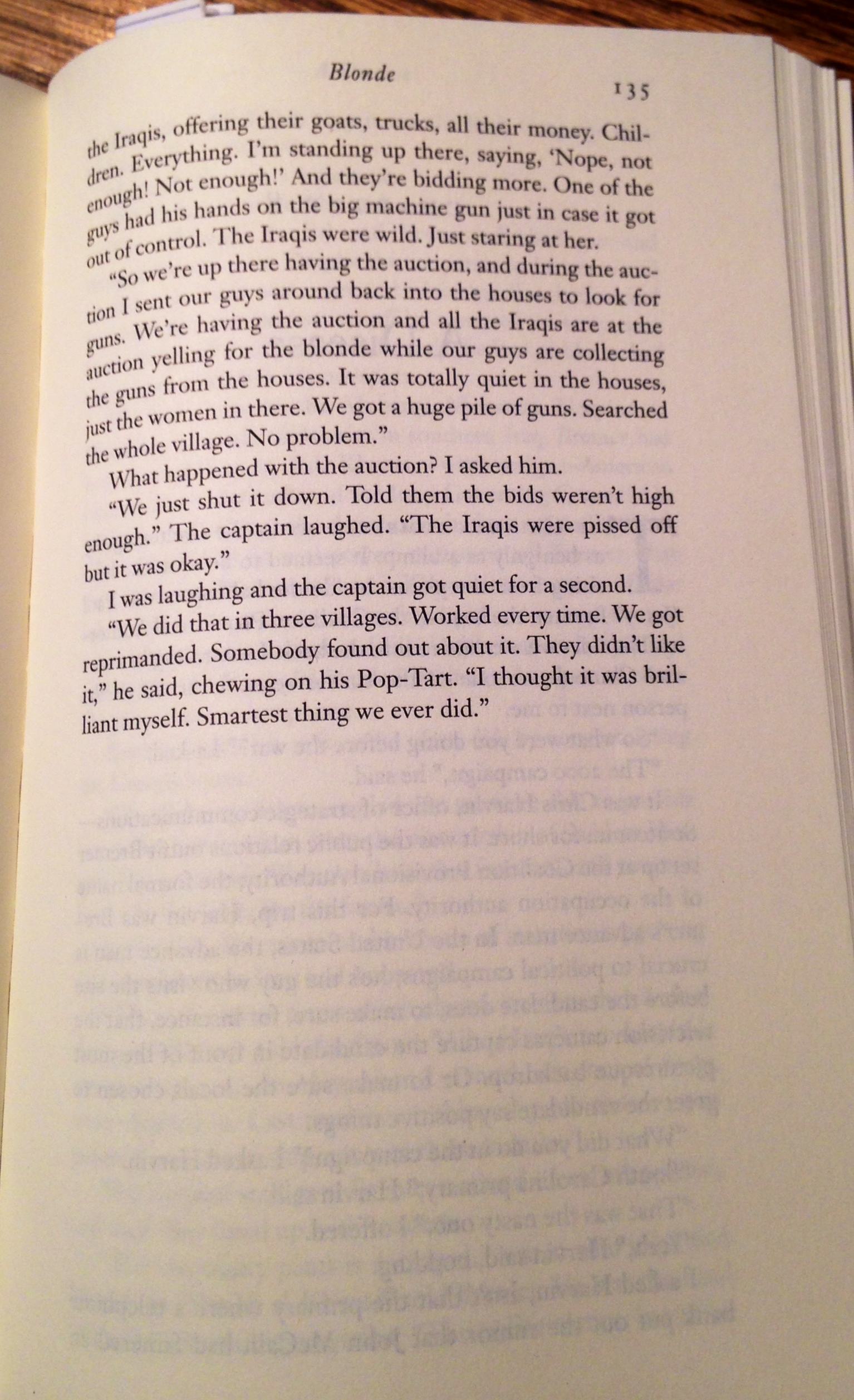
Posted: September 17, 2014 Filed under: America Since 1945 Leave a comment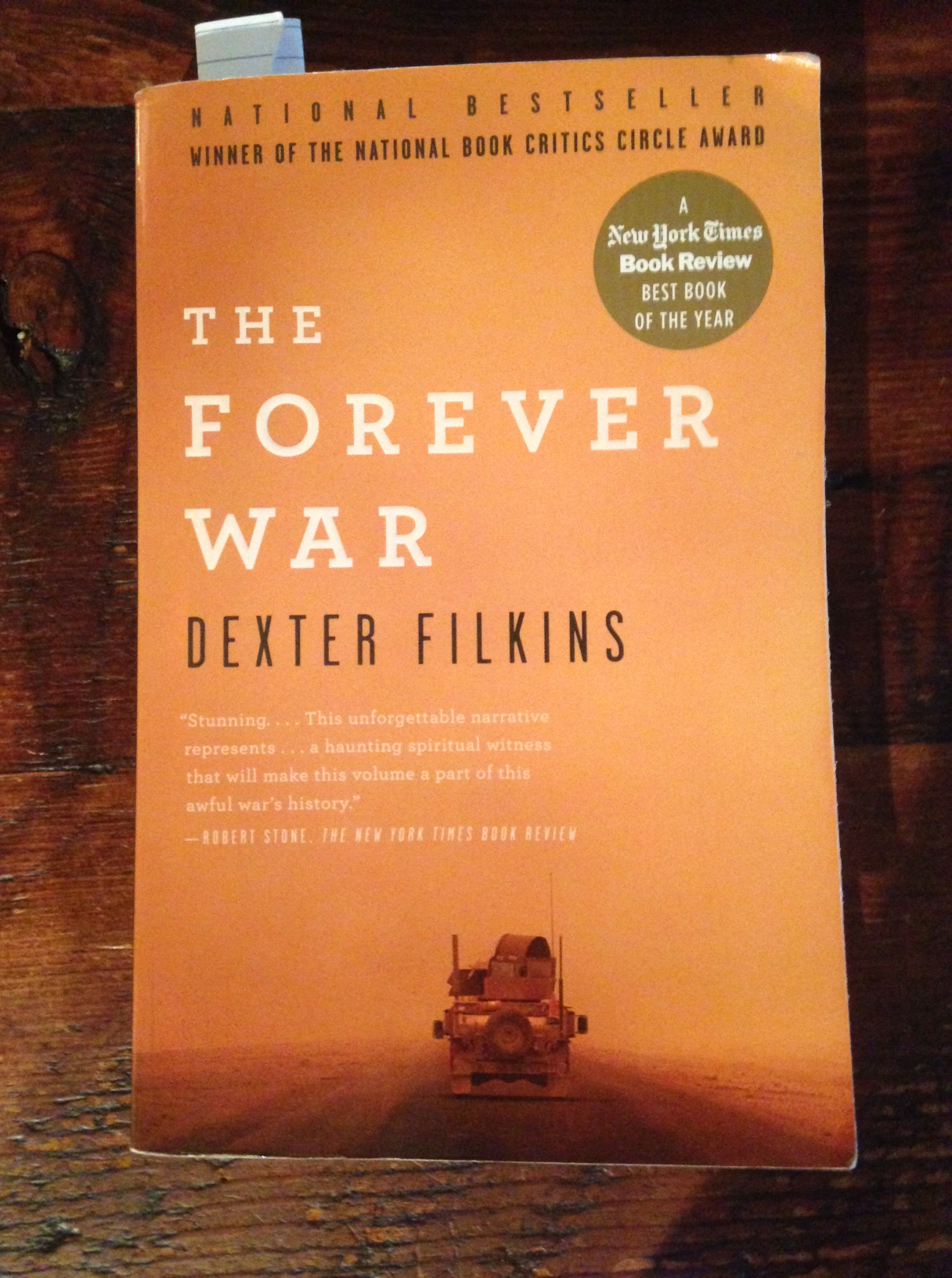 This book should be required reading for American citizens. It’s clear by the end that Dexter Filkins is pretty messed up by the experiences described. I had to finish this book very quickly because I was worried reading it was making me less funny.
Here is an excerpt that’s one of the easier chapters to read.

More nameless masters
Posted: September 16, 2014 Filed under: art history Leave a commentMaster of the Antiphonal Q of San Giorgio Maggiore:

Master of the Female Half-Lengths:


Master of the Washington Coronation:

As an irony
Posted: September 15, 2014 Filed under: America Since 1945, music 1 Commentfrom Buzzfeed’s fascinating profile of Ryan Adams:
“And I slept. I slept like I never had. I totally crashed in this beautiful way. I let go of all the false ideas of my late twenties and early thirties, this construct of who I was and how I thought I should be. That struggle was over.”
That sounds great! How about this?:
In 1994 he formed Whiskeytown. As Adams would famously declare in the group’s musical manifesto “Faithless Street”: “I started this damn country band, ‘cause punk rock was too hard to sing.” Today Adams says the foundational conceit behind the band was a pose — something his more strident critics accused him of at the time. “There’s this wrong idea about me being identified with things that are Southern or country,” he notes. “I do not fucking like country music and I don’t own any of it. I watched Hee-Haw as a kid with my grandmother, I only like country music as an irony. I liked it when I would get drunk.”
As an irony. Or this:
In the studio Adams plied [Jenny] Lewis with psychological tricks: He told her to write her own Oasis-style anthem, forced her to listen to Creed incessantly before laying down vocals. “I had been stuck in the mud for so long, I needed a person who could push me ahead. The casual, low-stakes environment for me was crucial.”
The Master Of The Legend Of St. Ursula
Posted: September 11, 2014 Filed under: art history Leave a comment
Now THAT is a cool name (or notname, in this case).
Probably why there are two of them.
I’m partial to Bruges (above) but I’ll give it up to Cologne (below):

 Helytimes
