from the Paris Review interview with J. P. Donleavy
Posted: May 9, 2012 Filed under: New York, writing Leave a commentINTERVIEWER
How did you motivate yourself?
DONLEAVY
That was easy. It was simply money and fame. I was aware as anyone is, that in this world you can just be swept away. I’m aware of this just as much now. New York is a great place to be reminded of it. You arrive here, and Good Lord, you find out in ten seconds that nothing whatever matters, especially your own small life. So I knew I had to write a book that would be the best work in the world. It was that simple.
rest here. FYI The Ginger Man is not the best work in the world. Some writers are better at playing writer than writing. There is a sentence or two in The Ginger Man that I think about lots, though.
Hills around the Bay of Moulin Huet, Guernsey (Renoir, 1883)
Posted: May 9, 2012 Filed under: art, painting, pictures, Renoir 1 Comment
Met Artwork of the Day nails it again. This might be in a similar spot, anyway the closest photo I can find on Google streetview.
Debt
Posted: May 9, 2012 Filed under: business, Nigeria Leave a commentHelen DeWitt pulls a great thing from this interview with David Graeber, author of Debt: The First 5,000 Years.
David Graeber: An anthropologist who studied people in central Nigeria showed us how we were completely clueless. She doesn’t really speak the language and she gets a house, and immediately women start showing up from the neighborhood and dropping off little baskets of stuff: somebody bringing some okra, somebody bringing some fish. And she doesn’t know what to do so she takes out her little notebook and eventually somebody takes pity on her and starts explaining how things work. The person says, “Well, you know, you give something back to these people. But the key is you have to figure out exactly what it’s worth, and then give them either something slightly more valuable, or slightly less valuable. So if it’s worth twelve shillings, you give them something worth eleven or thirteen, never give twelve. Because if you give twelve, that’s like saying, ‘go to hell, I don’t ever have to see you again.’” So everyone has to be a little bit beholden.
Peter Thiel on pitching
Posted: May 8, 2012 Filed under: advice, business, screenwriting 1 CommentDefinite crossover with movie/TV pitching:
One of the most important things to understand is that, like all people, VCs are different people at different times of day. It helps to pitch as early as possible in the day. This is not a throwaway point. Disregard it at your peril. A study of judges in Israel doing parole hearings showed prisoners had a two-thirds chance of getting parole if their hearing was early in the day. Those odds decreased with time. There was a brief uptick after lunch—presumably because the judges were happily rested. By the end of the day people had virtually no chance of being paroled. Like everyone, VCs make poorer decisions as they get tired. Come afternoon, all they want to do is go home. It does indeed suck to have to wake up early to go pitch. But that is what you must do. Insist that you get on the calendar early.
A related point: It’s also important not to provide too much choice. Contrary to the standard microeconomics literature which extols the virtues of choice, empirical studies show people are actually made unhappy by a lot of choice. Too many choices makes for Costco Syndrome and mental encumbrance. By the end of the day, the VCs have had a lot of choices. So in addition to getting to them early in the day (before they’ve had to make a lot of choices), you should keep your proposition simple. When you make your ask, don’t give them tons of different financing options or packages or other attempts at optimization. That will burden them with a cognitive load that will make them unhappy. Keep it simple.
Whole thing is interesting. HT Tyler Cowen.
Nuns at Tatsang, 1931
Posted: May 7, 2012 Filed under: adventures, mountains, photography, pictures, Tibet, travel Leave a comment
Wish I had a larger version of this. The photographer is Frank Smythe, who went on the 1938 Shipton-Tilman Everest expedition. My source is the Royal Geographic Society.
In 1949, in Delhi, [Smythe] was taken ill with food poisoning; then a succession of malaria attacks took their toll and he died on June 27, 1949 two weeks before his 49th birthday.
Jamsetjee Jejeebhoy, by George Chinnery
Posted: May 6, 2012 Filed under: art, George Chinnery, painting, pictures Leave a comment
And here’s Chinnery himself, done by himself:

Let me tell you some quick facts about William Jardine
Posted: May 5, 2012 Filed under: business, family, from wikipedia, history, Hong Kong Leave a comment
He became a surgeon’s mate on a ship at age 18
His lifelong friend was named Jamsetjee Jejeebhoy
An early business partner was named Hollingworth Magniac
His rival was named Lancelot Dent
He started a business in Hong Kong importing, among other things, opium to China. His partner was James Matheson:
William C. Hunter, a contemporary of Jardine who worked for the American firm Russell & Co., wrote of him, “He was a gentleman of great strength of character and of unbounded generosity.” Hunter’s description of Matheson was, “He was a gentleman of great suavity of manner and the impersonation of benevolence.”
“He was nicknamed by the locals “The Iron-headed Old Rat” after being hit on the head by a club in Guangzhou.”
When the Chinese tried to ban the importation of opium, he gave the foreign secretary a detailed plan on how to attack China, which the British went ahead and did.
His farewell dinner when he left Hong Kong was legendary. FDR’s grandfather was there.
A bachelor, when he died he left his fortune to his nephews and siblings.
Jardine Matheson Group, still run by members of his family, is today – all of this is according to wikipedia – the second-largest employer in Hong Kong.

One more Jack Delano
Posted: May 3, 2012 Filed under: adventures, photography, pictures Leave a commentBorn in the Ukraine in 1923, “he travelled to Puerto Rico in 1941 as a part of the FSA project. This trip had such a profound influence on him that he settled there permanently in 1946.” Died 1997.

More Jack Delano
Posted: May 2, 2012 Filed under: Chicago, machines, photography Leave a commentChicago Railyards, 1942

Poster for a side show at the Vermont State Fair, Rutland, 1941 by Jack Delano
Posted: May 2, 2012 Filed under: New England, photography, Vermont Leave a comment
Tatjana Veiled Head
Posted: May 1, 2012 Filed under: MFA Boston, museum, photography, pictures Leave a commentHerb Ritts, 1988, from the MFA.
The British Entering Concord, Amos Doolittle (1775)
Posted: May 1, 2012 Filed under: heroes, history, New England Leave a comment
I killed a bee with this egregious New Yorker
Posted: April 30, 2012 Filed under: adventures Leave a comment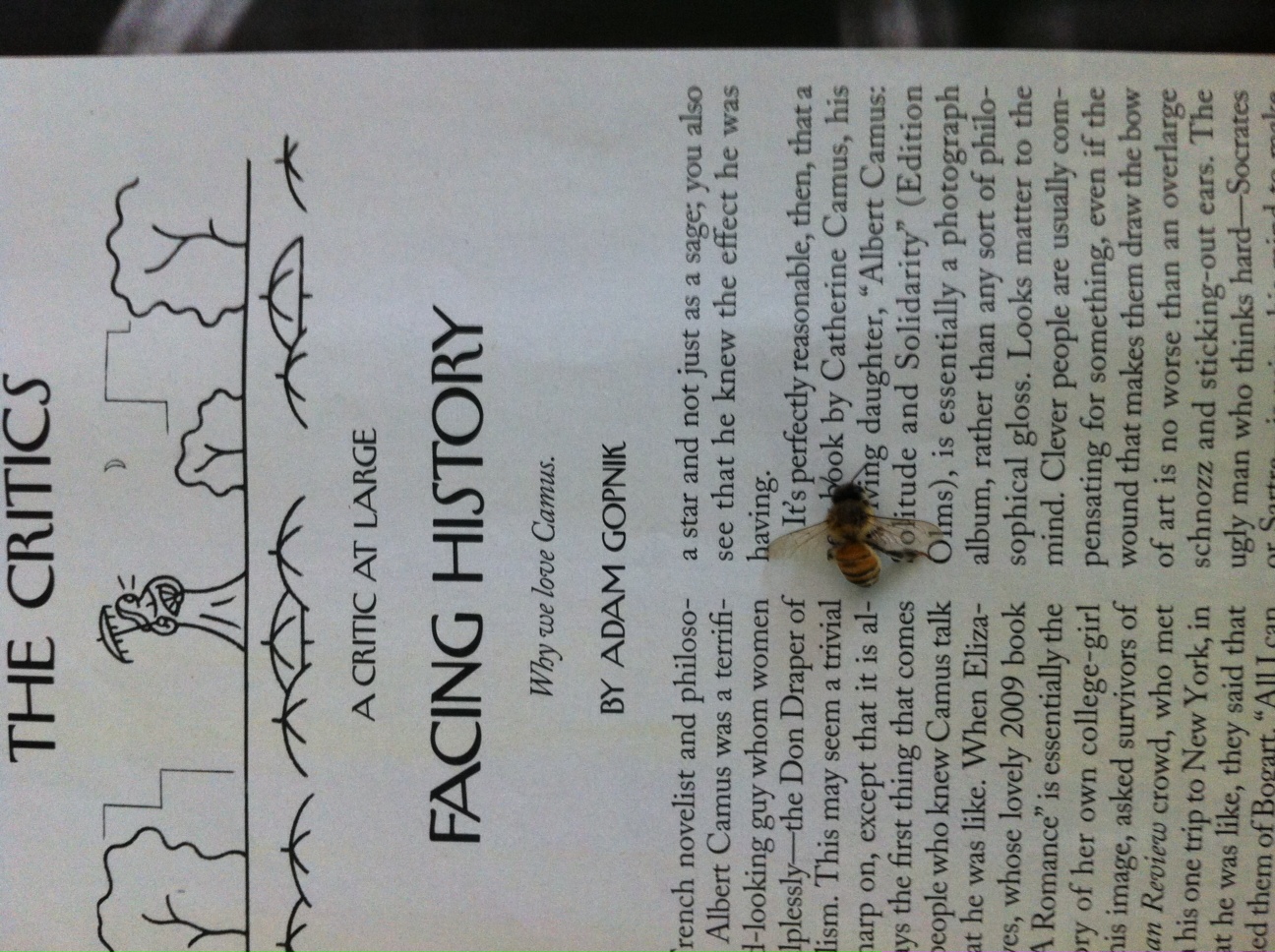
More Celia Johnson
Posted: April 30, 2012 Filed under: adventures, film, Future Mrs. Hely, heroes, how to live, women Leave a commenttubechopped her speech from Noel Coward’s “In Which We Serve” (1942).

Fact (?) I learned in college: Goebbels was constantly infuriated and impressed by how much better and subtler American and English propaganda films were.
[Celia Johnson] later recalled her choice of an acting career with the comment, “I thought I’d rather like it. It was the only thing I was good at. And I thought it might be rather wicked.”
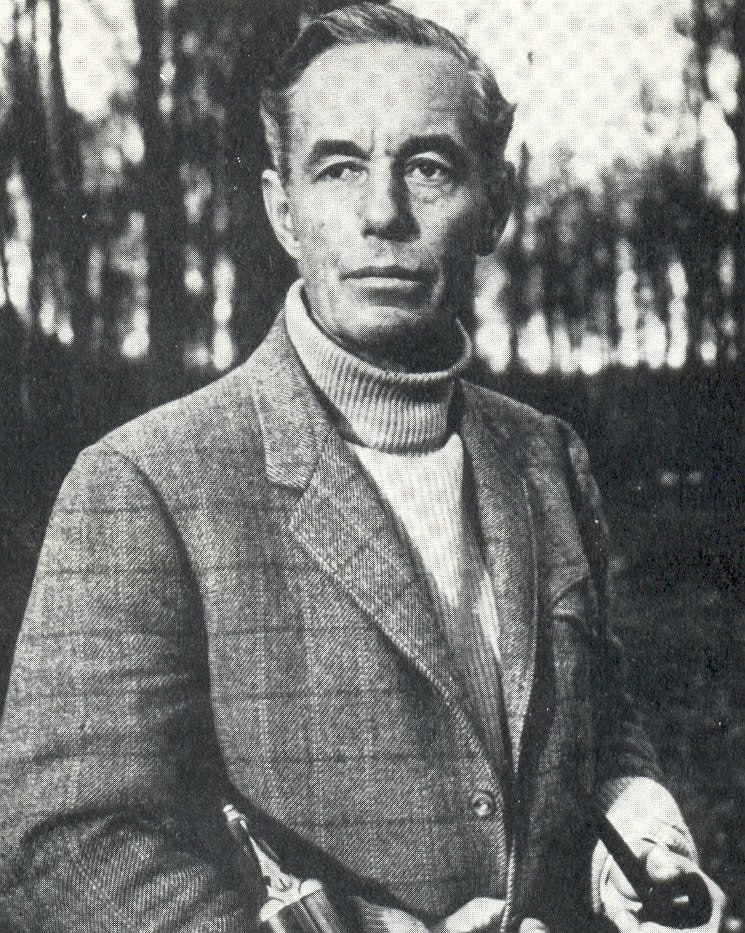
She was married to Peter Fleming, brother of Ian. He held his own in the adventuring department:
In April 1932 Fleming replied to an advertisement in the personal columns of The Times: “Exploring and sporting expedition, under experienced guidance, leaving England June to explore rivers central Brazil, if possible ascertain fate Colonel Percy Fawcett; abundant game, big and small; exceptional fishing; ROOM TWO MORE GUNS; highest references expected and given.”
The expedition, organised by Richard Churchyard, travelled to São Paulo, then overland to the rivers Araguaia and Tapirapé, heading towards the likely last-known position of the Fawcett expedition. During the inward journey, the expedition was riven by increasing internal disagreements as to its objectives and plans, centred particularly on its local leader, ‘Major Pingle’ (a pseudonym).
Here is a picture of him from this intriguing blog:
Sometimes you learn a fact from history that gives perspective
Posted: April 30, 2012 Filed under: history, Vietnam Leave a comment
Ho Chi Minh’s brother, according to wikipedia, was a geomancer.
Geomancy ( Greek: γεωμαντεία, “earth divination”) is a method of divination that interprets markings on the ground or the patterns formed by tossed handfuls ofsoil, rocks, or sand. The most prevalent form of divinatory geomancy involves interpreting a series of 16 figures formed by a randomized process that involves recursion followed by analyzing them, often augmented with astrological interpretations.
Celia Johnson
Posted: April 29, 2012 Filed under: film, Future Mrs. Hely, heroes, women Leave a commentis cool:
North Shore Homesick?
Posted: April 29, 2012 Filed under: art, Childe Hassam, Fitzhugh Lane, Met, museum, New England, North Shore, painting, pictures, Winslow Homer Leave a commentSometimes my friends from the North Shore of Massachusetts who live in New York get homesick and call me up, desperate for a solution. Always I tell them the same thing! “Go to the 760 galleries on the second floor of the Met!”
There you can see Childe Hassam’s “The Church at Gloucester”:

Then you can see Winslow Homer’s “Eagle Head, Manchester, Massachusetts (High Tide):

Then you can see “Stage Fort Across Gloucester Harbor” by our boy FHL:

“Thanks Hely!” they say.
VACATION!
Posted: April 27, 2012 Filed under: how to live 1 Comment
ht the great FK for the photo, from the wikipedia entry for “Shorts”
Paloma Faith
Posted: April 22, 2012 Filed under: music Leave a commentGotta admit, like what she’s up to. Who can make an introduction? Coming in just ahead of this blog’s firm three minute rule:
 Helytimes