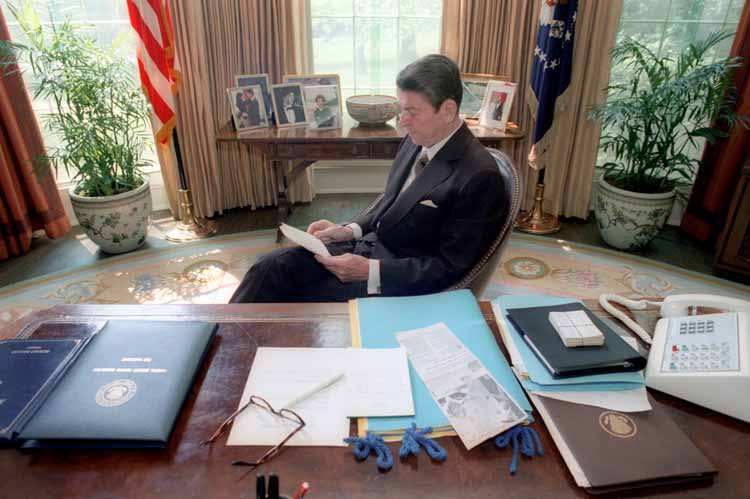
David McCullough
Posted: September 2, 2022 Filed under: America Since 1945, history Leave a comment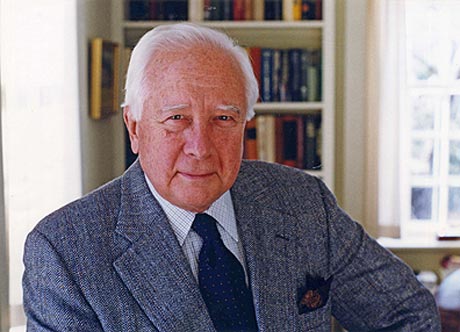
The two most popular movies of all time, while not historically accurate, are about core historic events: Gone With The Wind and Titanic. [And now Avatar, which draws heavily from the historical story of Pocahontas.] There is a human longing to go back to other times. We all know how when we were children we asked out parents, ‘What was it like when you were a kid?” I think it probably has something to do with our survival as a species. For nine-tenths of the time that human beings have been on earth, knowledge that was essential to survival was transmitted from one generation to the next by the vehicle of story.
from an interview for the National Endowment of Humanities.
Warhol/Rothko
Posted: September 1, 2022 Filed under: art history Leave a comment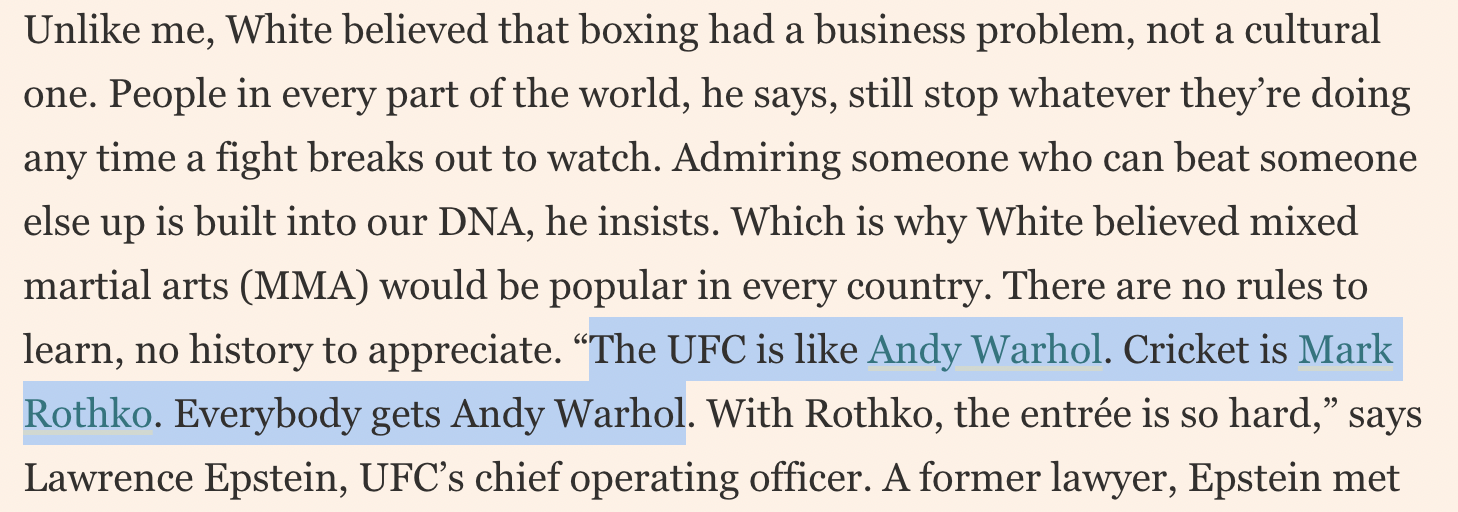
from a profile of Dana White of UFC in the Financial Times. Pretty interesting article, actually: White claims he left Boston for Nevada after Whitey Bulger goons demanded $2,500 in shakedown money. And:
He says there are three main types of people in the world: nerds, jocks and stoners, none of whom truly understand the others. There’s also a small fourth group: fighters. They’re outsiders who lack social skills and operate on a base level. As a kid, he thought he might be one.
(I disagree, I think most people are a blend, but fun system.)
Careless Love: The Unmaking of Elvis Presley by Peter Guralnick
Posted: September 1, 2022 Filed under: America Since 1945 Leave a comment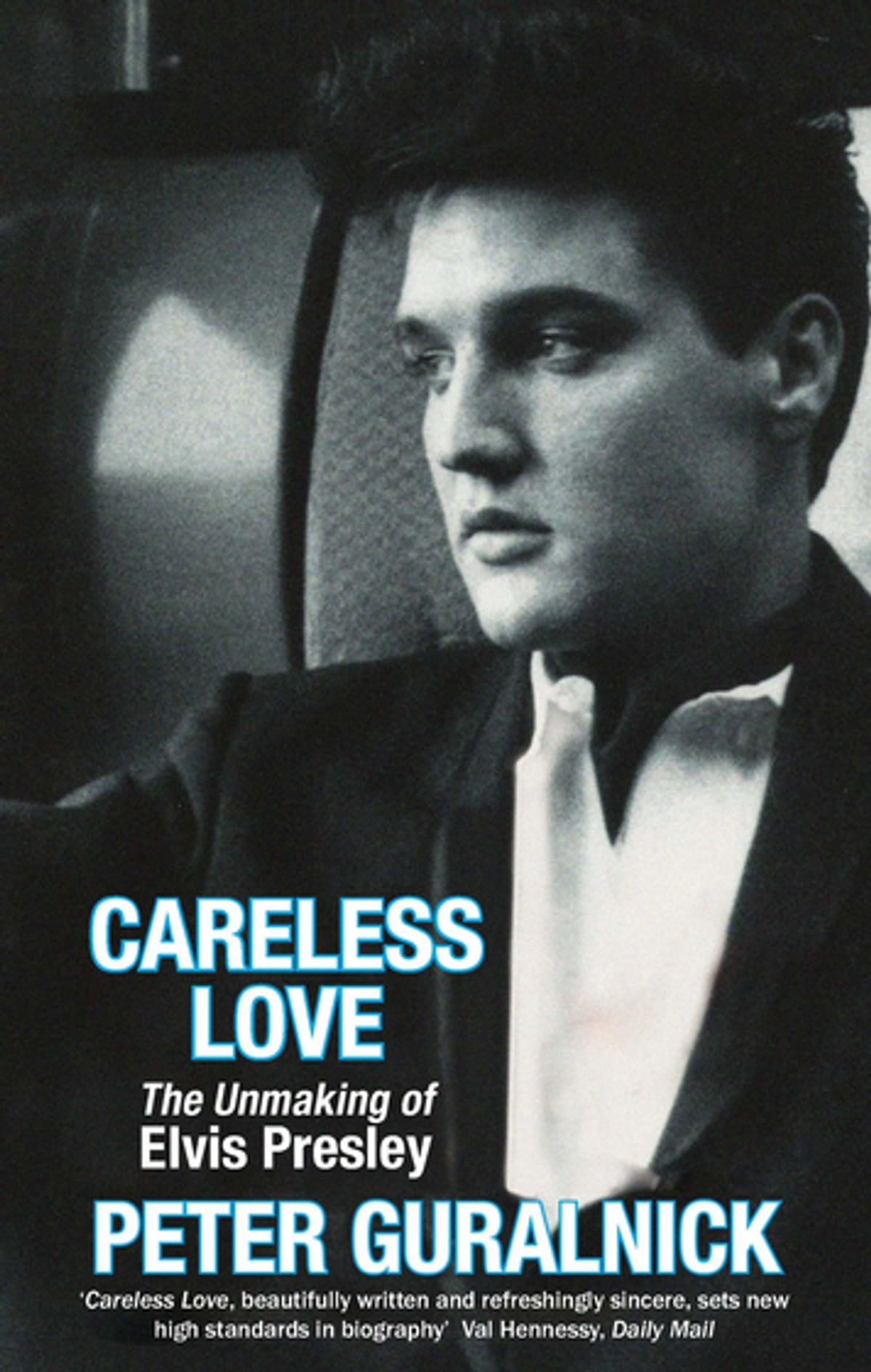
Here are some notes from the sequel to Last Train To Memphis.
Elvis seems like he was basically a twelve year old all his life. He was really into fireworks, guns, karate (a LOT of this book is about karate), slot cars, policemen, cowboys, horses. He was constantly buying cars for people. One day he bought fourteen cars for people, including one for a random woman he met on the car lot. When he got a camera, he “quickly figured out the possibilities. Sometimes he used Priscilla alone, sometimes in Priscilla’s absence he got girls to wrestle for him wearing only white bras and panties, and occasionally he included Priscilla, too, in an expanded scenario.” He had no idea what anything cost and spent wild sums on weird jewelry he designed.
He had to be surrounded by people constantly. Assorted people he met around Memphis came onto his payroll and spent years as his professional pals. At one point one of them drew up a list of duties for everyone:
it was up to Marty to “call Mrs. Pepper for Movie Times (As Early As Possible); Transact Business and Correspondence with the Colonel’s office for Elvis,” and maintain a purchase order system for all charges in Elvis’ name. Alan Fortas got the assignment to, “along with Marty, be responsible for Organization both in good and bad situations,” maintain Elvis’ scrapbook, and “be in den with Elvis as much as possible.”
The scene at Graceland was pretty nuts:
In the short time that the Lackers had been living at Graceland, Elvis’ uncle Johnny Smith had threatened Marty’s wife and come at Marty himself with a knife, while Clettes Presley (Vester’s wife, and Johnny and Gladys’ sister), who drank as heavily as her brother, had made it clear that she had little use for him, too. Marty didn’t think much of Elvis’ retarded uncle, Tracy, who went around saying, “I got my nerves in the dirt” and made noises “like he was getting ready to explode”
At the end of the last book Elvis was 23 and his mother had died, just after he went into the Army. He was already about as famous as anybody, but he was considered kind of a joke by New York critics.
After the funeral he was sent to Germany, where he lived off-base in a weird household with his dad and a German secretary and some friends. His dad took up with the still-married wife of a fellow soldier of Elvis’ – the fellow soldier was drunk all the time and didn’t seem to notice. This twisted situation made Elvis angry, he had loved his mother dearly and this seemed too soon. If there’s a turning point in this book that set Elvis on the desperate and sad path that would pretty much be the rest of his life, I guess it’s this.
Elvis met Priscilla when her military dad was sent to Germany. She was 14, but for some reason her parents let them date. Elvis had strange ideas about feminine purity – he would sleep with other girls but wouldn’t want to sleep with ones he was seriously dating.
Once Elvis gets back to America his story and this book turns pretty repetitive and tragic. He was contracted to make a bunch of movies, and he seems to have been aware that these were terrible. He was ashamed of a lot of his recordings. After a few years of nutty partying, constantly on speed, he had a kind of breakdown. A new hairdresser, Larry Geller, showed up. Elvis started asking him probing spiritual questions. “There has to be a purpose… there’s got to be a reason… why I was chosen to be Elvis Presley.” Larry started bringing Elvis spiritual books, and Elvis started going to the Self-Realization Fellowship in Pacific Palisades.
But mostly he just kept doing crazy amounts of speed and massively powerful prescription painkillers given to him by “Dr. Nick.” There was a brief period in ’68 where he kinda pulled it together and had a huge TV special, and he played to huge crowds in Vegas, but he’s kind of a mess throughout this book.
Elvis had a weird thing about not liking ladies who’d had babies. He sort of turned on Priscilla after she had a baby (although he was cheating on her pretty thoroughly before, too). There’s a sad story of a woman who got pregnant by Elvis, tried to tell him, and then heard him say something about how once someone was a mother they were sacred and shouldn’t be interested in sex. She went and got an abortion alone.
The absolute low point might have been the day he flew to Washington, more or less on a whim, had a crazy letter he’d written on the plane delivered to the White House, where he brought a gun to his impromptu meeting with Nixon. In their meeting Elvis talked about how he felt the Beatles were really behind a lot of anti-American feeling. Then he gave Nixon a hug and took off.
Three years later some beauty pageant winner was sleeping in his bed when he died while sitting on the toilet. That day he’d thrown a raquetball racket at somebody, played Willie Nelson’s “Blue Eyes Crying in the Rain” on the piano, and been delivered a packet of “Seconal, Placidyl, Valmid, Tuinal, Demerol, and an assortment of other depressants and placebos which generally allowed Elvis to get several hours of sleep at a time.” Also he’d taken a bunch of codeine to which he was mildly allergic.
Anyway, this is a really sad book. I pretty much skimmed it. It seemed like a lot of the tragedies of Elvis’ life were a lot like those in Michael Jackson’s life. I guess it’s pretty near impossible to get super-famous when you’re a teenager and not implode. Elvis seemed to have a vague sense inside himself that he’d missed his potential, somehow. One of the band guys he played with in the first book said that he felt that Elvis was a kind of idiot savant – he knew hundreds of songs, but was strange and sensitive and had no idea how to handle being as famous as he was. Maybe nobody does!
He’s really likable all through Last Train to Memphis, I’ll prefer to remember him that way!
Last Train To Memphis: The Rise of Elvis Presley by Peter Guralnick
Posted: August 31, 2022 Filed under: America Since 1945, music Leave a comment
A few years ago I read this book and took a few notes on it, which we present here in case they can be of benefit to the Helytimes reader:
Elvis’ parents were real country folk. His father had done time in Mississippi’s dreaded Parchman Farm prison for writing a bad check. It all seems pretty Dickensian: his boss was “making an example of him.” Elvis’ twin brother was born dead, and Elvis’ mom told him he’d acquired the power of the dead twin.
Then the Presleys moved to Memphis and lived in public housing until they made too much money to qualify (still not much money). Even in Memphis they were seen as kinda bumpkins. Elvis was completely devoted to his mother.
In Memphis Sam Phillips was running Sun Records, trying to record “real Negro music,” and the unrelated Dewey Phillips had a radio show that broadcast to a mostly black audience. Elvis listened mostly to gospel music and sometimes sang at an Assembly of God church.
As a boy Elvis used to turn on lights on Saturdays for his Orthodox Jewish neighbors.
Elvis was driving a truck for an electrical company and trying to be an electrician, even though he felt he was too easily distracted to be good at wiring – he was a little afraid of blowing himself up. He was dating a girl named Dixie who was really in love with him. They were committed to remaining “pure” until marriage.
Elvis used to hang around Sun Records, and he recorded a demo of himself. Sam Phillips had him on a list of maybe promising singers. Months later he found what he thought was a good song for him. It turned out to not sound so good, but Elvis and the musicians Sam had recruited kept screwing around for hours until Elvis started singing an old blues song.
When Elvis’ record of That’s Alright Mama first got huge on Dewey Phillips’ radio show. The first time it was played on the radio Elvis was too nervous to listen and went to the movies. Dewey Phillips kept calling his parents and demanded Elvis come down to the station. When he got out of the movies he went down there. Dewey tricked Elvis into being interviewed on air. He asked Elvis where he went to high school so everyone would know Elvis was white.
Elvis wore “crazy” clothes, like a pink shirt. But he was also incredibly sensitive. He was always afraid people were laughing at him. Sam Phillips wouldn’t let him play at a bunch of rougher bars because he thought Elvis would get beaten up.
[Roy] Orbison later said of his first encounter with Elvis: “his energy was incredible, his instinct was just amazing… Actually it affected me exactly the same way as when I first saw that David Lynch film [Blue Velvet]. I just didn’t know what to make of it. There was just no reference point in the culture to compare it.'”
One thing I took from this book was that musicians in those days died on the road like all the time. Cars caught on fire. And of course we all know the fate of Buddy Holly, Richie Valens and the Big Bopper. At some point Elvis’ mother made him promise not to fly anymore, so he would take the train to Hollywood and New York.
(says a bandmate of an early tour): “he would run the women, he’d run two or three of them in one night – whether or not he was actually making love to all three, I don’t know, because he was kind of private in that sense and if I thought he was going to run some women in the room with him, I didn’t stay. But I just think he wanted them around, it was a sense of insecurity, I guess, because I don’t think he was a user. He just loved women, and I think they knew that.”
By 1955 when Elvis was 20 girls would tear his clothes to pieces. “Of course the police started getting them out, and I will never forget Faron Young – this one little girl had kind of a little hump at the back, and he kicked at her, and these little boots fell out.” (???) Sometime after this Elvis took Dixie to her junior prom.
Manufacturing a hit record back then could actually put a small record company out of business, because there were high upfront costs of making the record, so Sam Phillips sold Elvis’ contract, seemingly without rancor.
“Popular music has reached its lowest depths in the ‘grunt and groin’ antics of one Elvis Presley,” wrote the Daily News. OH REALLY!
In between having his clothes ripped off Elvis seemed to “date” relatively pure-heartedly. There’s a weird account on p. 315 of Elvis and his girlfriend sort of dry-humping and tickling each other and almost doing it but then not doing it: “‘we almost did it, didn’t we baby?’ And I said, ‘We almost did.’ He said, ‘That was close, wasn’t it?'”
Later, in Hollywood, “more experienced girls” were surprised to find that “what he liked to do was to lie in bed and watch television and eat and talk all night – the companionship seemed as important for him as the sex – and then in the early-morning hours they would make love.”
This book had a good amount about what food everybody ate. Elvis liked eggs cooked rock hard and burnt bacon. At age 23 he’s conducting an interview “while lunching alone in his dressing room on a bowl of gravy, a bowl of mashed potatoes, nine slices of well-done bacon, two pints of milk, a large glass of tomato juice, lettuce salad, six slices of bread, and four pats of butter.”
In Hollywood he seems to have fallen in with some real lame characters and professional best friends. He stayed at the Knickerbocker Hotel until that got too nuts and he stayed at the Beverly Wilshire. His movies were shot on the Paramount lot. Sometimes he would call his mother and talk to her all day.
This book ends with Elvis getting drafted into the Army. He agreed with his weird hypnotizing carnival-guy manager Colonel Tom Parker that he should turn down all special offers and just be a regular soldier. He joined the Army and then his mother died. He was totally shattered.
After his mother died, he invited his dentist over and showed him around the recently purchased Graceland.
He said, ‘the newspapers have made my house so laughable’ – that was the word. He said, ‘They have made it sound so laughable, I would love to have your opinion of my home.’ He took us all through the house, my taste is not so marvelous, but it was very attractive, it all fit – there was a modern sculpture on the chimney over the fireplace, and I had the same sculpture in my office, it was called ‘Rhythm.’ Anyway, when we got back to the living room, he said, ‘What do you think? and Sterling said, ‘If you give me the key, I’ll swap you.”
That’s where the juice comes from
Posted: August 29, 2022 Filed under: Uncategorized Leave a commentTraditional sportsbooks are market makers. They set a betting line—the Cubs will win by two runs or more, for example—to attract a roughly equal number of wagers on each side while keeping a small amount for themselves. DraftKings and competitors start with the same approach, but other techniques they use are controversial and likely to attract regulatory scrutiny if the apps draw tens of millions of new customers, as many analysts expect.
The companies harvest user data to ensure that losing bets outnumber winning ones. This process starts with the companies’ ability, so far permitted by state regulators, to profile customers based on betting histories and limit the size of wagers from those expected to win, much like traditional casinos kicking out sharps from the blackjack table. The apps use internal ratings to target the biggest losers, marshaling online tracking technology in a way that casinos—which once handed out rolls of quarters to entice repeat business—could only have dreamed of. DraftKings and FanDuel hire spokespeople, often retired athletes, to pitch risky multi-leg bets that aren’t likely to pay out. In states where it’s allowed, the ultimate prize is cross-selling sportsbook customers into online casino games. “That’s where the juice comes from,” Adam Kaplan, FanDuel’s general manager and vice president for content until last year, said at an industry conference in New York in April.
from this Bloomberg piece about the DraftKings bar coming to Wrigley Field.
Montecito: the little wood
Posted: August 27, 2022 Filed under: the California Condition Leave a comment
The site of Montecito was originally part of the Santa Barbara pueblo lands of which allotments were given to soldiers when their enlistments at the presidio expired. From earliest times it was a region of exceptional beauty, with its leafy canyons and its forested valley, and the Spanish called it El Montecito, the little wood. Even today it is not infrequently referred to as “the Montecito.” Quail, deer, bear, and strayed cattle still roamed the valley in 1847, by which time a small settlement had developed, consisting of a few little ranches with the houses not more than a quarter mile apart…
In the late 1860s the first of the Montecito estate builders had erected a fine old-fashioned Southern home on Hot Springs Road and made the first landscaped garden in the valley. This was Colonel W. A. Haynes. With others soon to follow Haynes’ lead, bears were still so common in the region that a $50 bounty was set on every one taken within the limits of the settlement, and horse thieves and highwaymen were using Montecito as a hideout.
…In the 1870s the bears gradually retreated into the Santa Ynez Mountains and the freebooters all met one form of justice or other, leaving the future of Montecito tottering for awhile between those who wish to keep its natural beauty for homes and estates, and a few hustling Americans who wanted to make it a health center by exploiting the hot springs which had been discovered there in 1801 by an Indian wandering in the foothills.
later:
Montecito embarked on an ambitious landscaping project, to emerge from its chrysalis a gay and exclusive suburb with luxurious estates.
California is full of strange microclimates, and Montecito has one: it’s foresty and cool in there. Eucalyptus trees abound. These are not native, but Australians introduced them during the gold rush, and many were planted in the following years. Jack London planted at least 16,000 eucalyptus trees up on his northern California lands during a speculative craze around 1900. Eucalyptus trees can grow thick and tall and are pleasant to see, but the planting of trees with the potential to explode during wildfires has been a mixed blessing for the state.
Whenever we’re in Montecito we think about Prince Harry and Meghan in exile up there. Something tragic about it, like Wallis and the Duke of Windsor lounging around in the Bahamas with nothing to do. You’re in Heaven but it’s a tiny heaven, there’s not much to do, and you’re sort of trapped. Maybe Harry finds satisfaction in his polo, and Meghan in her podcast.
In 2018 mudslides killed twenty three people in Montecito. The mudflow reached Oprah’s backyard, yet her house was spared.
John Steinbeck on San Francisco
Posted: August 23, 2022 Filed under: San Francisco, Steinbeck, Steinbeck, the California Condition Leave a comment
Thomas Wolf took that one for Wikipedia.
Can you remember anywhere in John Steinbeck’s fiction where he discusses San Francisco? Whole books about Monterey, but does he even mention the place? I couldn’t remember. A friend’s been working on Steinbeck’s letters, he couldn’t think of any mention either.
Turns out Steinbeck does talk about San Francisco in Travels with Charley in Search of America. The chapter begins:
I find it difficult to write about my native place, northern California. It should be easiest, because I knew that strip angled against the Pacific better than any place in the world. But I find it not one thing but many – one printed over another until the whole thing blurs.
He mentions growth:
I remember Salinas, the town of my birth, when it proudly announced four thousand citizens. Now it is eighty thousand and leaping pell mell on in mathematical progression – a hundred thousand in three years and perhaps two hundred thousand in ten, with no end in sight.
(The population of Salinas is, in 2022, 156,77.)
Then he writes some about mobile home parks, and property taxes, concluding:
We have in the past been forced into reluctant change by weather, calamity, and plague. Now the pressure comes from our biologic success as a species.
Then he gets going on San Francisco:
Once I knew the City very well, spent my attic days there, while others were being a lost generation in Paris. I fledged in San Francisco, climbed its hills, splet in its parks, worked on its docks, marched and shouted in its revolts. In a way I felt I owned the City as much as it owned me.
…
A city on hills has it over flat-land places. New York makes its own hills with craning buildings, but this gold and white acropolis rising wave on wave against the blue of the Pacific sky was a stunning thing, a painted thing like a picture of a medieval Italian city which can never have existed.
Steinbeck can’t stay though. He has to hurry on to Monterey to cast his absentee ballot (it’s 1960; he’s voting for John F. Kennedy).
Alice Marble
Posted: August 17, 2022 Filed under: California, San Francisco, the California Condition Leave a comment
(Paul T. submitted this photo to FourSquare)
Several times in walks around San Francisco I’ve stopped at the Alice Marble Tennis Courts, at the top of Russian Hill, for the view from Alcatraz to the bridge.

Alice Marble was a tennis champ of the 1930s and ’40s. Wikipedia informs us:
For a brief time after retirement, she worked on the editorial advisory board of DC Comics and was credited as an associate editor on Wonder Woman. She created the “Wonder Women of History” feature for the comics, which told the stories of prominent women of history in comic form.
In her second autobiography Courting Danger (released after her death in 1990), Marble mentions that, back in the 1940s, she had married Joe Crowley around World War II, a pilot, who was killed in action over Germany. Only days before his death, she miscarried their child following a car accident. After an attempt to kill herself, she recuperated, and in early 1945, agreed to spy for U.S. intelligence. Her mission involved renewing contact with a former lover, a Swiss banker, and obtaining Nazi financial data. The operation ended when a Nazi agent shot her in the back after chasing her while she was trying to escape in a car, but she recovered. Few details of this operation have been corroborated by journalists and authors who tried to investigate this part of her life in the years from the time of her death to the present. No Swiss banker has been discovered, leading to suspicions that this man of mystery might have been a Nazi, someone who Marble may have been trying to avoid having had an association.
Marble greatly contributed to the desegregation of American tennis by writing an editorial in support of Althea Gibson for the July 1, 1950 issue of American Lawn Tennis Magazine. The article read “Miss Gibson is over a very cunningly wrought barrel, and I can only hope to loosen a few of its staves with one lone opinion. If tennis is a game for ladies and gentlemen, it’s also time we acted a little more like gentle-people and less like sanctimonious hypocrites…If Althea Gibson represents a challenge to the present crop of women players, it’s only fair that they should meet that challenge on the courts.”

Female tennis champs of that era are honored all over San Francisco. Alice Marble’s career followed that of Helen Willis Moody, painted by Diego Rivera in his mural inside the former Pacific Stock Exchange. It’s cool that California is still producing world class tennis champs.
The Alice Marble courts are surrounded by George Sterling Park:

Kevin Starr (1973) wrote:
The uncrowned King of Bohemia (so his friends called him), Sterling had been at the center of every artistic circle in the San Francisco Bay Area. Celebrated as the embodiment of the local artistic scene, though forgotten today, Sterling had in his lifetime been linked with the immortals, his name carved on the walls of the Panama-Pacific International Exposition next to the great poets of the past.
Lots of people around George Sterling’s life died of poison, including finally the man himself, who poisoned himself inside the San Francisco clubhouse of the Bohemian Club. Next time I’m up there, I’ll have to stop by the Bohemian Club and see the bronze relief by Jo Mora.
The style of poetry Sterling practiced is no longer really in fashion:
The winds of the Future wait
At the iron walls of her Gate,
And the western ocean breaks in thunder,
And the western stars go slowly under,
And her gaze is ever West
In the dream of her young unrest.
Her sea is a voice that calls,
And her star a voice above,
And her wind a voice on her walls—
My cool, grey city of love.
How did the Bohemian Club go from being a scene of outré artists to having like Richard Nixon as a member? Probably the same way Carmel went from being an out there semi-commune to being a rich person retirement place. And the same way San Francisco was a cool place to drop out in 1965, and is now unaffordable unless you’re making mid six figures programming algorithms.
A lesson from California history: wherever the outcast artists are setting up camp, you’d be wise to buy real estate, and hang onto it for a hundred years. Although maybe that kind of thinking is contrary to the Bohemian Club motto:
Weaving spiders come not here.
The Golden West: Hollywood Stories, by Daniel Fuchs
Posted: August 14, 2022 Filed under: Hollywood, the California Condition, writing, writing advice from other people Leave a comment
Critics and bystanders who concern themselves with the plight of the Hollywood screenwriter don’t know the real grief that goes with the job. The worst is the dreariness in the dead sunny afternoons when you consider the misses, the scripts you’ve labored on and had high hopes for and that wind up on the shelf, when you think of the mountains of failed screenplays on the shelf at the different movie companies…
brother, I hear you, but also c’mon, it beats working for a living.
An old-timer in the business, a sweet soul of other days, drops into my room. “Don’t be upset,” he says, seeing my face. “They’re not shooting the picture tomorrow. Something will turn up. You’ll revise.” I ask him what in his opinion there is to write, what does he think will make a good picture. He casts back in his mind to ancient successes, on Broadway and on film, and tries to help me out. “Well, to me, for an example – now this might sometimes come in handy – it’s when a person is trying to do something to another person, and the second fellow all the time is trying to do it to him, and they both of them don’t know.” Another man has once told me the secret of motion picture construction: “A good story, for the houses, it’s when the ticket buyer, if he should walk into the theater in the middle of the picture – he shouldn’t get confused but know pretty soon what’s going on.” “The highest form of art is a man and a woman dancing together,” still a third man has told me.
Betty Perske
Posted: August 10, 2022 Filed under: America Since 1945, Hollywood Leave a commentIt’s a famous and apparently true story that Howard Hawks cast Lauren Bacall (birth name Betty Perske) in To Have and Have Not opposite Humphrey Bogart, after his wife Slim saw her on the cover of the March 1943 issue of Harper’s Bazaar. The cover was shot in Kodachrome under the eye of Diana Vreeland.
Wikipedia, in the article on photographer Louise Dahl-Wolfe, editorializes:
The young woman looks either waiting to go inside to donate or about to leave the Red Cross blood donor room. The expression on her face is nonchalant with a suggestion that she does not attend the blood donation clinic regularly. Her eyes are empty. She may be disappointed or sad or helpless just as any other American woman knowing the reality is no one can escape. The audience can sense the uncertainty in the air of the time from her expression.

[Bacall’s] final role was in 2014 as a guest voice appearance in the Family Guy episode “Mom’s the Word.”[73]
source:
Didion on Reagan’s day
Posted: August 9, 2022 Filed under: America Since 1945, the California Condition 1 Comment
The aides gave us the details, retold now like runes. Promptly at nine o’clock on most mornings of the eight years he spent as President of the United States, Ronald Reagan arrived in the Oval Office to find on his desk his personal schedule, printed on green stationery and embossed in gold with the presidential seal. Between nine and ten he was briefed, first by his chief of staff and the vice president and then by his national security adviser. At ten, in the absence of a pressing conflict, he was scheduled for downtime, an hour in which he answered selected letters from citizens and clipped items that caught his eye in Human Events and National Review. Other meetings followed, for example with the congressional leadership. “I soon learned that those meetings lasted just one hour, no more, no less,” Tony Coelho, at the time majority whip in the House, tells us in Recollections of Reagan: A Portrait of Ronald Reagan. “If the agenda—which he had written out on cards—wasn’t completed at the end of the hour, he would excuse himself and leave. If it was finished short of an hour, he would fill the rest of the time with jokes (and he tells a good one).” During some meetings, according to his press secretary, Larry Speakes, the President filled the time by reciting Robert Service’s “The Cremation of Sam McGee.”
source. Martin Anderson, who was there, had a different perspective.
Catholic gentlemen in neckties
Posted: August 9, 2022 Filed under: California, the California Condition Leave a comment
The passing of Vin Scully, beloved Los Angeles icon, has occasioned an outpouring of expressions of both loss that we should no longer have this man and gratitude that we ever did. Scully’s skills as a baseball announcer have been the focus of course. We offered some appreciation for the man’s gifts in that field a few years ago. His was a voice we loved and that we’ll miss.
We’d like to note today though another aspect of Scully, and consider him as an example of something that’s passing away. Scully was a Catholic gentleman in a necktie.
For Scully’s gentlemanliness, see any tribute to him. For his Catholicism, note that he narrates a 2 CD recording of the Rosary (you can listen on YouTube). As for the necktie, he didn’t always wear one, but it was part of the presentation, and this was a presenter.
We know this type. They were everywhere in greater Boston circa 1990. The Catholic gentleman in a necktie has national expression in President Joe Biden, though maybe Biden’s roguish side distracts us from his essential typology.
The Catholic gentleman in a necktie was an important part of Los Angeles life as well. Former LA mayor Richard Riordan was one (whether he was a true gentleman couldn’t say, he was before our time, but you’ll accept the point). Rick Caruso, current mayoral candidate, could be another case. Kevin Starr was one. The late John Bowman is one we knew personally, though he didn’t always wear a tie.
Is this type dying away? Current LA mayor Eric Garcetti is a second-generation, copy of a copy version, but he often skips the necktie, and he’s in trouble at the moment for basically not being a gentleman.
Josh Brolin’s character Eddie Mannix in Hail, Caesar (based on the real Eddie Mannix) is shown several times going to confession. This isn’t the outre decadent Catholicism described in The New York Times, it was the real deal, with all the contradictions.
Consider this merely some notes towards a sociological type.
Rest in Heaven Vin. The way he calls this brawl is delightful. (And Greinke demonstrates a pretty good example of a smaller man handling a much bigger opponent).
Senator Alan Cranston (D-California)
Posted: August 8, 2022 Filed under: the California Condition Leave a comment
Served four terms in the US Senate.
As a young man he was sued by Adolf Hitler for publishing an unauthorized translation of Mein Kampf. (Cranston felt the existing translations expunged too much, hiding the true nature of Hitler’s thought).
In the wake of World War II, Mr. Cranston became a strong advocate for world government. In 1945, he published a book, ”The Killing of The Peace,” about how the League of Nations had been defeated in the United States Senate.
In 1947, he took over his father’s real estate firm in Palo Alto.
(from his obituary)
How did he get into office? He made a lot of money, and then he organized:
In 1952, Cranston co-founded the California Democratic Council (CDC), and served as chairman. Since that time, the CDC has served as an unofficial coalition of local Democratic clubs that coordinate electoral activities and activism throughout California. The CDC provided substantial support to Cranston in his bid for State Controller in 1958 and his numerous runs for the U.S. Senate.
Also:
The New York Times called Cranston a “bald, craggy-looking, none-too-charismatic man.”
While on his many political trips, Cranston would spend time sprinting in long hotel hallways to maintain his fitness.
He wanted to abolish nuclear weapons, an idea fellow California politician Ronald Reagan also had. Could they have done it?
Is Alan Cranston’s lasting legacy to history that the Eagles broke up after Glenn Frey and Don Felder erupted in a screaming match at one of his fundraisers, 1980?
On July 31, 1980, in Long Beach, California, tempers boiled over into what has been described as the “Long Night at Wrong Beach”.[58][59] The animosity between Felder and Frey boiled over before the show began, when Felder said, “You’re welcome – I guess” to California Senator Alan Cranston‘s wife as the politician was thanking the band backstage for performing a benefit for his re-election.[60] Frey and Felder spent the entire show telling each other about the beating each planned to administer backstage. “Only three more songs until I kick your ass, pal,” Frey recalled Felder telling him near the end of the band’s set.[61] Felder recalls Frey telling him during “Best of My Love”, “I’m gonna kick your ass when we get off the stage.”
from the Global Security Institute, where we got the photo:
Alan Cranston used as a guide for leadership a quote by the Chinese philosopher Lao-Tzu, which he carried in his wallet for years:
A leader is best
When people barely know
That he exists,Less good when
They obey and acclaim him,Worse when
They fear and despise him.Fail to honor people
And they fail to honor you.But of a good leader,
When his work is done,
His aim fulfilled,
they will all say,
‘We did this ourselves.’
Mike Judge on The Three Stooges
Posted: August 7, 2022 Filed under: comedy, Hollywood Leave a comment.
You brought back a wilder, more anarchic comedy with “Beavis and Butt-Head” in the nineties. At the time, it reminded me of the ferocity of the Three Stooges and other early filmed comedy.
Yeah. It had disappeared for a while. I think for a lot of us—the old folks—there was a time when we were kids, in the seventies or eighties, and the Three Stooges would come on late at night on some weird channel, and it just seemed amazing. I’m a huge Three Stooges fan. It’s interesting to me that when film first had sound, it didn’t take long for people to realize that possibly the best use of that technology was just somebody smacking another person in the head. I’m always arguing with sound mixers about this, because now they layer all the sounds, and it’s funnier when it’s one pure, distinct sound like the Three Stooges had, which is probably just some guy sitting there with a coconut or smacking something. Those sounds are hard to beat. But they now have the ability to layer twenty different sounds, and it ends up being one big, mushy, meaningless, loud sound.
interviewed in The New Yorker.
anyone remember the Three Stooges Nintendo game?

How about this:
Did working dreary jobs help you when it came to writing comedy?
Puts it in perspective. There’s so much material I’ve got from working so many jobs. A lot of the writers that I’ve worked with, same thing. It usually ends up being a good experience.
I remember there was a book I grabbed at a bookstore a long time ago, “Ernest Hemingway on Writing,” and I expected him to be, like, “You’ve got to suffer,” and this and that. But one thing that stood out was something he wrote to F. Scott Fitzgerald: “The good parts of a book may be only something a writer is lucky enough to overhear or it may be the wreck of his whole damn life—and one is as good as the other.” I think that’s a pretty honest thing for him to admit. I remember conversations pretty well. Can’t remember people’s names, but I remember their life story and other details.
They don’t know you’re lying.
Posted: August 7, 2022 Filed under: Hollywood Leave a commentThey didn’t know what it took to sell tickets to young people, and I remember Francis Coppola saying to me, “Just go in there and tell them you know the answer. Just tell them. They don’t know. They don’t know you’re lying. You walk in there and you say, “This is your lucky day because you want to make money in movies, and I want to make money in movies, and I know how to get money.”
Paul Schrader talking about the studios in the early ’70s.
A whole dozen or fifteen filmmakers came in that gap with that sort of braggadocio, and they got empowered, and some of them actually did make money.
from Rock Me On The Water: 1974 The Year Los Angeles Transformed Movies, Music, Television and Politics by Ronald Brownstein, which we got at Chevalier Books on Larchmont.
deer showers
Posted: August 5, 2022 Filed under: the California Condition Leave a commentsad situation on dry Catalina Island:
The famed Catalina Island fox, as well as the island’s non-native deer and bison, are “suffering mightily” due to the lack of moisture, which is tied closely to their food supply, according to Deni Porej, senior conservation director with the Catalina Island Conservancy. Lately, he said, deer have been appearing on the island’s golf course in the evenings, when they know the sprinklers will turn on and provide them with a spot of relief.
from this LA Times piece by Hayley Smith
Where is Hollywood?
Posted: August 3, 2022 Filed under: Hollywood, the California Condition Leave a comment
Hollywood and Highland, 1907. Source.
There was a municipality called Hollywood. It existed from 1903 to 1910. This Hollywood gave up its independence to Los Angeles in exchange for water. Los Angeles was about to arrange for a steady supply via William Mulholland’s Los Angeles Aqueduct, and thirsty Hollywood needed in. (Will this happen to other cities? Countries?)
What is the definition of Hollywood? Here is a map that appears to show the old municipality, I found it on Pinterest (barf) and cannot trace it to a source, this is the closest I get:

Here’s how the LA Times defines Hollywood:

Also seems to be a dead link, I found it here.
AboutHollywood.com tells us this:
Although it is not the typical practice of the City of Los Angeles to establish specific boundaries for districts or neighborhoods, Hollywood is a recent exception. On February 16, 2005, Assembly Members Goldberg and Koretz introduced a bill to require the State to keep specific records on Hollywood as though it were independent. For this to be done, the boundaries were defined. This bill was unanimously supported by the Hollywood Chamber of Commerce and the LA City Council. Assembly Bill 588 was approved by the Governor on August 28, 2006, and now the district of Hollywood has official borders. The border is shown at the right, and can be loosely described as the area east of Beverly Hills and West Hollywood, south of Mulholland Dr., Laurel Canyon, Cahuenga Blvd. and Barham Blvd., and the cities of Burbank and Glendale, north of Melrose Avenue, and west of the Golden State Freeway and Hyperion Avenue.
But how to explain this sign, found on Melrose and Flores (the southwest corner, in fact!) which would push the boundary of Hollywood further west than anyone is prepared to acknowledge?

Beach cottage books
Posted: August 1, 2022 Filed under: writing Leave a commentDuring a stay at a beach cottage recently I picked some books off the shelf.

Paperback version of a beloved classic. But is this even readable?

Yeah I dunno…
Recalling that I read a section of All The King’s Men at a high school speech and debate contest. “Interpretive Reading” was not my strongest event.

Does this lady ever miss? Check out this plot:

Quinn Blackwood, Sugar Devil Swamp, Goblin. YES! How about:

This sounds like a bodice ripper but for men:

I put these books back and didn’t read any of them. If I had to pick I’d read about Goblin!
Eutychus
Posted: July 31, 2022 Filed under: bible, speeches Leave a comment
Next time I have to give a sermon I’m going to choose as my text Chapter 20, verses 7-13 of the Book of Acts, in which Paul gives a sermon so long a guy falls asleep, falls out the third floor window and is knocked cold:
On the first day of the week, when we were assembled for the breaking of bread, Paul, since he intended to leave on the following day, began to speak to them and prolonged his address until almost midnight. There were a great many lamps burning in the upper room where we met, and a young man called Eutychus who was sitting on the window sill fell fast asleep as Paul’s address became long and longer. Finally, completely overcome by sleep, he fell to the ground from the third story and was picked up as dead. But Paul went down, bent over him and holding him gently in his arms, said,
“Don’t be alarmed; he is still alive.”
Then he went upstairs again and, when he had broken bread and eaten, continued a long earnest talk with them until daybreak, and so finally departed. As for the boy, they took him home alive, feeling immeasurably relieved.
The Book of Acts, Praxis Apostolōn, has a couple long sermons from Paul. As a character, I find it hard to get into Paul. Just feels like he makes it all about himself?
Kate Corbaley, Storyteller
Posted: July 29, 2022 Filed under: actors, Hollywood, screenwriting, the California Condition, writing Leave a commentAnother staff writer with a rather unconventional but valued talent was Kate Corbaley. At $150 a week, Corbaley was one of the few staffers whose salary was in the same range as Selznick’s…
Her specialty was not in editorial but rather as Louis Mayer’s preferred “storyteller.” Mayer was not a learned or highly literate man, and he rarely read story properties, scripts, or even synopses. He preferred to have someone simply tell him the story and he found Mrs. Corbaley’s narrational skills suited him. She never received a writing credit on an MGM picture, but many in the company considered her crucial to Mayer’s interest in stories being considered for purchase or production at any given time.
That’s from Thomas Schatz, The Genius of the System: Hollywood Filmmaking in the Studio Era.
Corbaley’s brother was Admiral S. C. Hooper, “the father of naval radio,” if The New York Times is to be believed. What a family of communicators!
Storytelling is a current obsession in business. A few days ago I searched “storyteller” under Jobs on LinkedIn and found 35,831 results. Amazon, Microsoft, and Pinterest are all hiring some version of “storyteller,” as are Under Armor, Eataly and “X, the Moonshot Factory.” The accounting firm Deloitte is hiring Financial and Strategic Storytellers (multiple listings, financial and strategic storytellers are sought in San Diego, Miami, Chicago, Charlotte, Tampa, Las Vegas, and Phoenix).
Cool job.
It’s reported in City of Nets: A Portrait of Hollywood in the 1940s that one afternoon in May, 1936, Kate Corbaley summarized a novel that was already perceived as hot property. She told Louis B. Mayer
a new story about a tempestuous southern girl named Scarlett O’Hara.
Mayer wasn’t sure what to think, so he sent for Irving Thalberg, who declared:
Forget it, Louis. No Civil War picture ever made a nickel.
(This seems improbable: in 1936 Birth of A Nation would’ve held the record as one of if not the biggest movie of all time? Must track this tale to its source, will report.)
 Helytimes