Steak fries well done and a virgin pina colada
Posted: July 30, 2018 Filed under: food Leave a comment
Christine Baskets room service order on a Baskets ep, catchin’ up.
The wild man and his “wildies”
Posted: July 29, 2018 Filed under: comedy, movies Leave a comment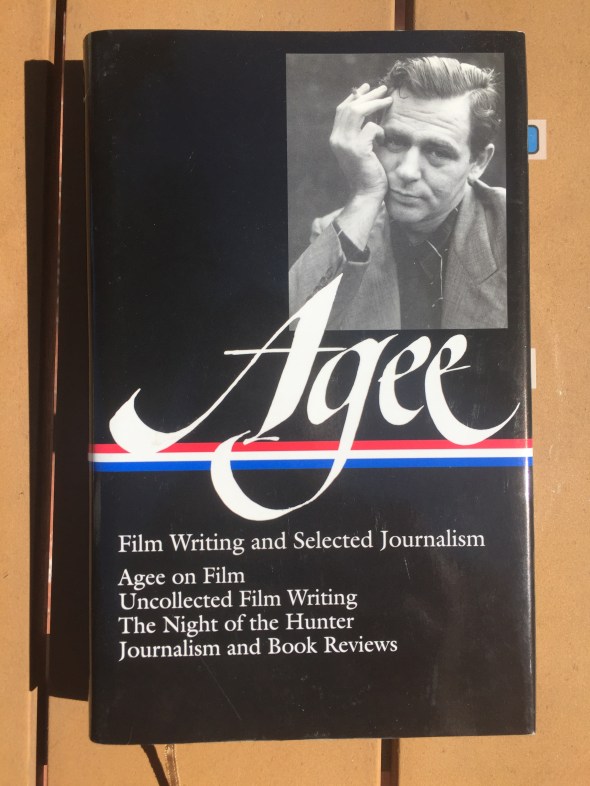
From Comedy’s Greatest Era (1949):
Sennett used to hire a “wild man” to sit in on his gag conferences, whose whole job was to think up “wildies.” Usually he was an all but brainless, speechless man, scarcely able to communicate his idea; but he had a totally uninhibited imagination. He might say nothing for an hour; then he’d mutter “You take . . . ” and all the relatively rational others would shut up and wait. “You take this cloud . . .” he would get out, sketching vague shapes in the air. Often he could get no further; but thanks to some kind of thought-transference, saner men would take this cloud and make something of it. The wild man seems in fact to have functioned as the group’s subconscious mind, the source of all creative energy. His ideas were so weird and amorphous that Sennett can no longer remember a one of them, or even how it turned out after rational processing. But a fair equivalent might be on of the best comic sequences in a Laurel and Hardy picture. It is simple enough – simple and real, in fact, as a nightmare. Laurel and Hardy are trying to move a piano across a narrow suspension bridge. The bridge is slung over a sickening chasm, between a couple of Alps. Midway they meet a gorilla.
Agee speaks of the side-splitting laughter that would erupt in silent movie houses, and how you just can’t get that level of laughter from “talkies,” no matter how funny.
the best of comedies these days hand out plenty of titters and once in a while it is possible to achieve a yowl without overstraining
but nothing like what the “ideally good gags” of the silent days would provoke.
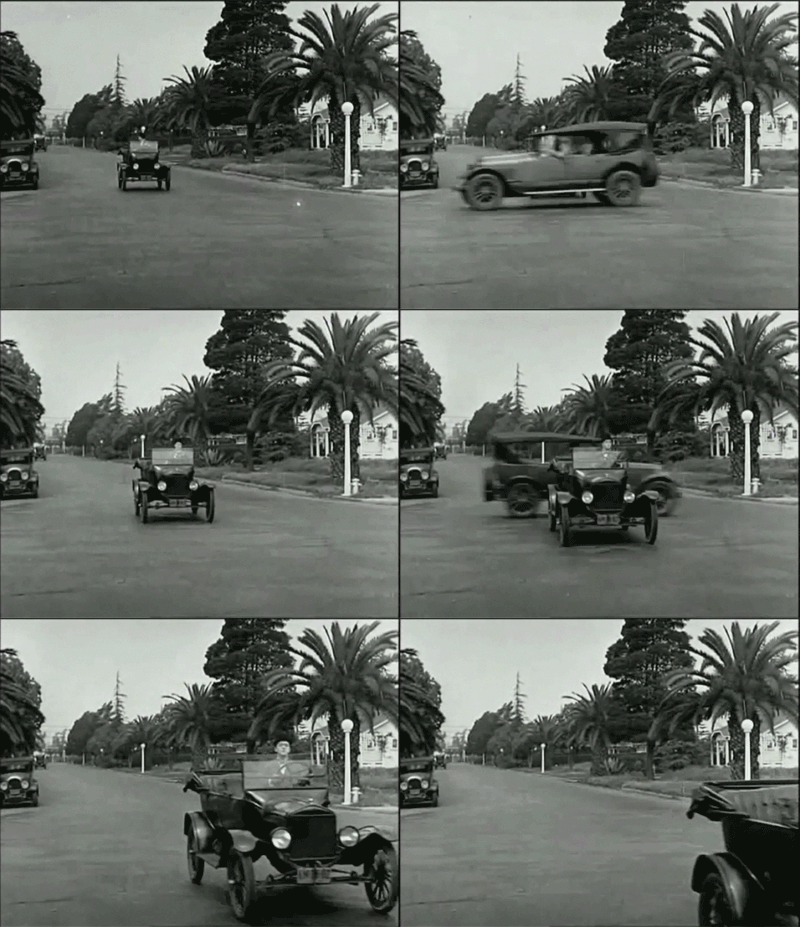
Wasn’t sure I understood what levels of laughter in the movie theater Agee was talking about until I saw the Jackass movies:
Schumpeter
Posted: July 29, 2018 Filed under: business Leave a comment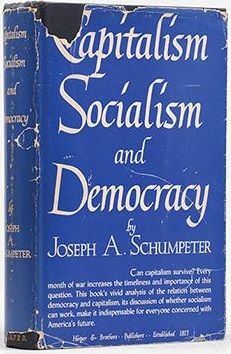
This process of Creative Destruction is the essential fact about capitalism. It is what capitalism consists in and what every capitalist concern has got to live in.
The Economist has a column named after Joseph Schumpeter and it’s been giving me a lot of ideas. Who was Schumpeter?
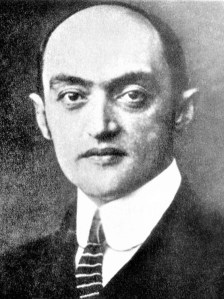
Schumpeter claimed that he had set himself three goals in life: to be the greatest economist in the world, to be the best horseman in all of Austria and the greatest lover in all of Vienna. He said he had reached two of his goals, but he never said which two, although he is reported to have said that there were too many fine horsemen in Austria for him to succeed in all his aspirations.
On what would happen:
Schumpeter’s most popular book in English is probably Capitalism, Socialism and Democracy. While he agrees with Karl Marx that capitalism will collapse and be replaced by socialism, Schumpeter predicts a different way this will come about. While Marx predicted that capitalism would be overthrown by a violent proletarian revolution, which actually occurred in the least capitalist countries, Schumpeter believed that capitalism would gradually weaken by itself and eventually collapse. Specifically, the success of capitalism would lead to corporatism and to values hostile to capitalism, especially among intellectuals. “Intellectuals” are a social class in a position to critique societal matters for which they are not directly responsible and to stand up for the interests of other classes. Intellectuals tend to have a negative outlook of capitalism, even while relying on it for prestige, because their professions rely on antagonism toward it. The growing number of people with higher education is a great advantage of capitalism, according to Schumpeter. Yet, unemployment and a lack of fulfilling work will cause intellectual critique, discontent and protests. Parliaments will increasingly elect social democratic parties, and democratic majorities will vote for restrictions on entrepreneurship. Increasing workers’ self-management, industrial democracy and regulatory institutions would evolve non-politically into “liberal capitalism”. Thus, the intellectual and social climate needed for thriving entrepreneurship will be replaced by some form of “laborism”. This will exacerbate “creative destruction” (a borrowed phrase to denote an endogenous replacement of old ways of doing things by new ways), which will ultimately undermine and destroy the capitalist structure.
Schumpeter emphasizes throughout this book that he is analyzing trends, not engaging in political advocacy.
Any day now!
Schumpeter was interested in the wave theories of Nikolai Kondratiev, a Soviet economist who ended up executed.
He is best known for proposing the theory that Western capitalist economies have long term (50 to 60 years) cycles of boom followed by depression. These business cycles are now called “Kondratiev waves“.
I can’t claim to understand Kondratiev, but the idea that waves are a good metaphor for the cycles of capitalism seems like a start.

Nassim Nicholas Taleb on lions
Posted: July 28, 2018 Filed under: Africa, business Leave a comment
The Fooled By Randomness author and deadlifter describes going to Africa and seeing lots of giraffes and impalas but only one lion:
It turned out that I had squarely made the error that I warn against, of mistaking the lurid for the empirical: there are very, very few predators compared to what one can call collaborative animals. The camp in the wild reserve was next to a watering hole, and in the afternoon it got crowded with hundreds of animals of different species who apparently got along rather well with one another. But of the thousands of animals that I spotted cumulatively, the image of the lion in a state of majestic calm dominates my memory. It may make sense from a risk-management point of view to overestimate the role of the lion — but not in our interpretation of world affairs.
If the “law of the jungle” means anything, it means collaboration for the most part, with a few perceptional distortions caused by our otherwise well-functioning risk management intuitions. Even predators end up in some type of arrangement with their prey.
The origin of algorithm
Posted: July 28, 2018 Filed under: business, Islam Leave a comment
The word “algorithm” comes up a lot these days. We’ve spoken before about the origin of this word, in the name of Muhammad ibn Musa al-Khwarizmi, author of The Compendious Book on Calculation by Completion and Balancing.
written around 820 CE in the city of Baghdad.

The man from Khwarizm.

source: Wiki user Fulvio Spada
The Khwarazam region today doesn’t look too great.

I’m talking about live the life.
Posted: July 27, 2018 Filed under: the California Condition Leave a commentJonathan Gold talking to Ann Friedman:
JG: [Laughs.] There’s a taqueria in Santa Barbara I like that… most of what they serve revolves around a stewed cow’s head. You can order it by name or you can point to the part of the cow’s head that you’d like your taco to be made of. It’s pretty bland, but then you put salsa, cilantro, and onion and stuff on it, and it’s pretty good. There’s a couple of places in East L.A. that do that, but there you have to order it by name.
AF: Like, it wouldn’t be on the menu?
JG: It would be on the menu, but you wouldn’t be able to point at a whole cow’s head and say what you want.
AF: Ah, the visual.
JG: That’s one of the great things about L.A. You can decide that you want to eat essentially as if you live in Guadalajara, or you can decide you want to eat essentially as if you are in Chengdu. There are enough places around that you could probably manage it. I’m not just talking for a meal, I’m talking about live the life.
Pleasantries
Posted: July 26, 2018 Filed under: America Since 1945, the California Condition Leave a comment
Woke up and felt putting some pleasantness on the Internet could be a service. Pic I took of Caleb and Hana’s alpacas.

Here is a Scottish fold from when I was researching how many famous Internet cats (Maru, Shrampton, Waffles, Taylor Swift’s cats) all have the same common ancestor in Scotland, 1961.
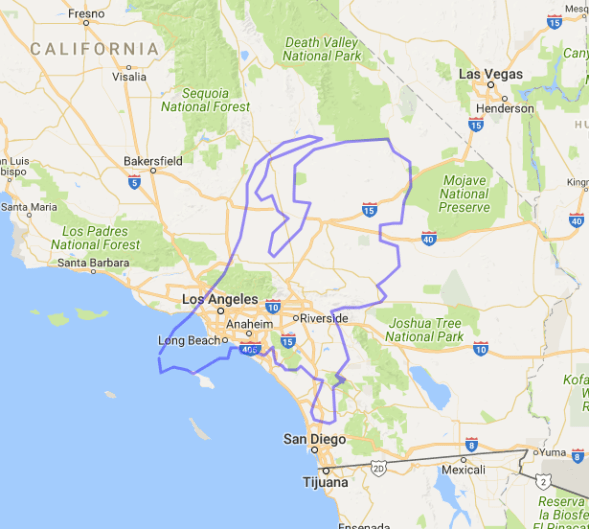
Here’s a comparison of the size of Netherlands to the size of LA, probably from OverlapMap or MapFrappe. I’m not sure if the Netherlands is bigger or smaller than I expected.

Impressed
Posted: July 24, 2018 Filed under: the California Condition Leave a comment
via Curbed. Impressed is such a great word. “It made an impression.”
Is E. M. Forster “wrong”? (or, maybe, are our meanings different than his?)
Posted: July 24, 2018 Filed under: writing 2 Comments
Let us define a plot. We have defined a story as a narrative of events arranged in their time-sequence. A plot is also a narrative of events, the emphasis falling on causality. “The king died and then the queen died” is a story. “The king died, and then the queen died of grief” is a plot.
So says Forster in Aspects of The Novel.
But this is the exact opposite way I feel most professional TV writers talk about this. Shorthanded, “plot” means the events and “story” is the emotional journeys of the characters.
Over here commenter Kenny Chaffin, a writer himself, puts it succinctly:
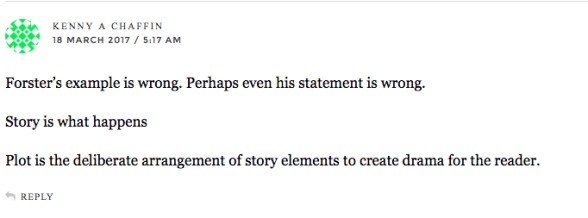
I’m not sure I’d say Forster was wrong, but these words seem to have an inverted meaning in 2018 Hollywood. When you have plot and no story, the audience will be bored.
In The New York Times, there is a casual distance between story and truth
Posted: July 23, 2018 Filed under: the California Condition Leave a comment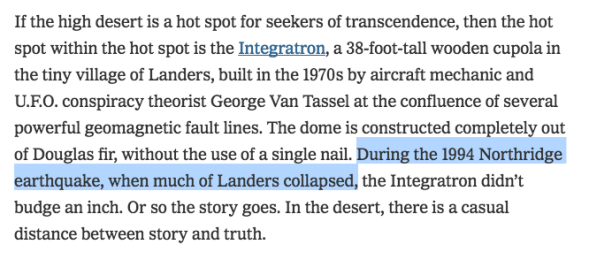
writer of this article says a number of wrong things, including confusing the 1994 Northridge earthquake for the 1992 Landers earthquake. Easy to get a fact wrong, I do it every day, but it’s pretty funny to pair it with a cliché about how people in the desert are always making up stuff.
Weak, weak, weak
Posted: July 23, 2018 Filed under: America Since 1945, politics 2 Comments
The Trump era will end when a Democrat can get in Trump’s face and confidently say this. American politics is not structured for this kinda face to face thing so maybe it won’t be until 2020.
Jump to 3:42 in this director’s cut to see the almost sexual excitement that explodes when Blair drops the word “weak”:
Sherrod Brown is the Dem who physically resembles Blair here the most, imo.
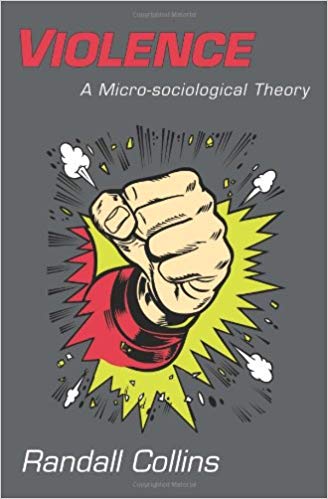
Once a confident Democrat is calling Trump weak to his face, the fight will enter the pattern laid out by Randall Collins:
How does violence sometimes succeed in doing damage? The key is asymmetrical confrontation tension. One side will win if they can get their victim in the zone of high arousal and high incompetence, while keeping their own arousal down to a zone of greater bodily control.
Trump will enter a state of high arousal and high incompetence. Collins continues:
Violence is not so much physical as emotional struggle; whoever achieves emotional domination, can then impose physical domination. That is why most real fights look very nasty; one sides beats up on an opponent at the time they are incapable of resisting.
Unfortch a US president in a state of high arousal and high incompetence has a non-zero chance of ending human life on Earth, so that also must be weighed.
Ayahuasca
Posted: July 23, 2018 Filed under: drugs, Wonder Trail Leave a comment
It was only when I came home from Peru, and started researching Amazonian shamanism, that I realised how different indigenous Amazonians’ conception of ayahuasca-healing can be. Westerners tend to think that emotional problems are caused by issues in our past, which ayahuasca can help us accept and integrate. Indigenous Amazonians (to generalise) are more likely to think emotional problems are caused by sorcery. You are out of sorts because you have been cursed by a secret enemy, or because you’ve offended a spirit. Ayahuasca will help you identify your hidden enemy, remove their curse, and get revenge.
cool article at Aeon by Jules Evans about whether our cultural assumptions are shaping our psychedelic experiences and leading us to misunderstand traditional uses.
More on this topic can be found in:

Interview: John Levenstein
Posted: July 22, 2018 Filed under: writing, writing advice from other people 2 Comments
Classical KUSC / soundless WW2 footage
Posted: July 21, 2018 Filed under: film, music, WW2 Leave a commentfound that playing Smithsonian Channel’s The Pacific War In Color while KUSC our local classical station was coming out of my old radio created a cool effect.
not sure why
Posted: July 20, 2018 Filed under: advertising Leave a comment
but I found this ad for Media Group on the Forbes website depressing. (Also “Media Group”?)
something about the affect of the girl in the shopping cart.
where are her friends? for whom is she performing? does she need help? I can see she’s pretending to be happy but also doesn’t truly seem to be having fun.
I guess it got my attention.
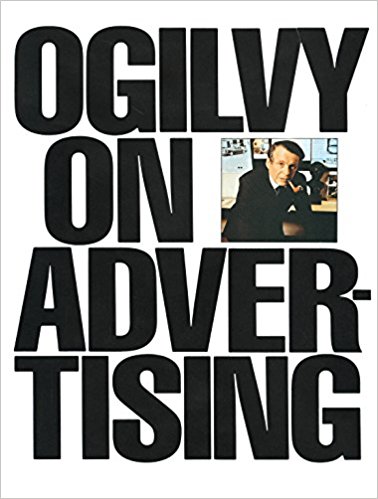
I’d love to discuss it with Ogilvy.
When tyrants tremble sick with fear and hear their death knells ringing
Posted: July 20, 2018 Filed under: America Since 1945, politics Leave a comment
we used to listen to this record when I was a kid.
when friends by shame are undefiled
also a good line.
The first was the 2011 NATO intervention in Libya, which led, ultimately, to the ousting and gruesome lynching of the Libyan dictator, Muammar Qaddafi. Afterward, many people who interacted with Putin noticed how deeply Qaddafi’s death troubled him. He is said to have watched the video of the killing over and over. “The way Qaddafi died made a profound impact on him,” says Jake Sullivan, a former senior State Department official who met repeatedly with senior Russian officials around that time. Another former senior Obama-administration official describes Putin as “obsessed” with Qaddafi’s death
reported Julia Ioffe for the Atlantic in February 2018.
When people had one name
Posted: July 19, 2018 Filed under: history Leave a comment
Thinkin’ about the New Testament bros: Mark, John, James, etc when I came across this from Bob Dylan.
Those songs are just in my genes, and I couldn’t stop them comin’ out. In a reincarnative kind of way, maybe. The songs have got some kind of a pedigree to them. But that pedigree stuff, that only works so far. You can go back to the ten-hundreds, and people only had one name. Nobody’s gonna tell you they’re going to go back further than when people had one name.
(Bob Dylan interview with Jonathan Lethem in Rolling Stone.)
The question, silently: do you really know where you are at this point in time and space and in reality and in existence?
Posted: July 19, 2018 Filed under: America Since 1945, moon Leave a comment(not great image quality there but the audio! from one of my favs:

(avail on FilmStruck streaming, possibly Netflix as well)
Montenegro in the news
Posted: July 18, 2018 Filed under: politics, writing Leave a comment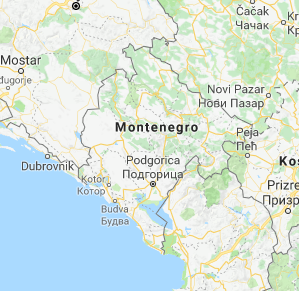
Montenegro in the news:

made me think of:

Gatsby is finally telling his backstory to Nick:
“Then came the war, old sport. It was a great relief and I tried very hard to die but I seemed to bear an enchanted life. I accepted a commission as first lieutenant when it began. In the Argonne Forest I took two machine-gun detachments so far forward that there was a half mile gap on either side of us where the infantry couldn’t advance. We stayed there two days and two nights, a hundred and thirty men with sixteen Lewis guns, and when the infantry came up at last they found the insignia of three German divisions among the piles of dead. I was promoted to be a major and every Allied government gave me a decoration–even Montenegro, little Montenegro down on the Adriatic Sea!”
Little Montenegro! He lifted up the words and nodded at them–with his smile. The smile comprehended Montenegro’s troubled history and sympathized with the brave struggles of the Montenegrin people. It appreciated fully the chain of national circumstances which had elicited this tribute from Montenegro’s warm little heart. My incredulity was submerged in fascination now; it was like skimming hastily through a dozen magazines. He reached in his pocket and a piece of metal, slung on a ribbon, fell into my palm. “That’s the one from Montenegro.” To my astonishment, the thing had an authentic look.
“Orderi di Danilo,” ran the circular legend, “Montenegro, Nicolas Rex.”
“Turn it.”
“Major Jay Gatsby,” I read, “For Valour Extraordinary.”
#teammontenegro
 Helytimes