Welcome, new readers!
Posted: July 30, 2013 Filed under: travel Leave a comment
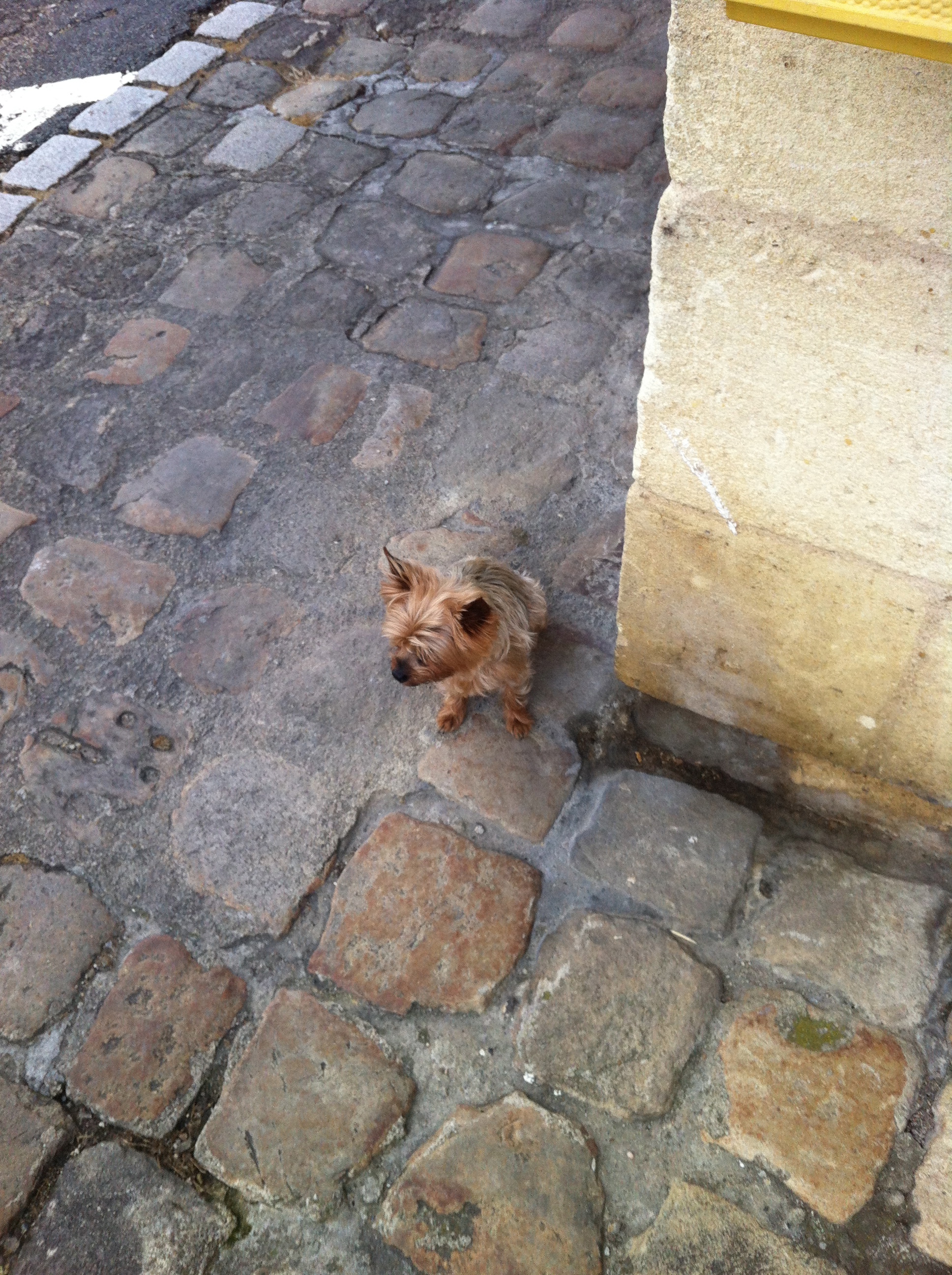 Here’s a dog I saw in France.
Adam Smith
Posted: July 26, 2013 Filed under: family Leave a comment
People of the same trade seldom meet together, even for merriment and diversion, but the conversation ends in a conspiracy against the public, or in some contrivance to raise prices.
Got that from Peter Thiel. Wikipedia reports about Adam Smith:
He never married, and seems to have maintained a close relationship with his mother, with whom he lived after his return from France and who died six years before his own death.
Smith was described by several of his contemporaries and biographers as comically absent-minded, with peculiar habits of speech and gait, and a smile of “inexpressible benignity”. He was known to talk to himself, a habit that began during his childhood when he would smile in rapt conversation with invisible companions… According to one story, Smith took Charles Townshend on a tour of a tanning factory, and while discussing free trade, Smith walked into a huge tanning pit from which he needed help to escape. He is also said to have put bread and butter into a teapot, drunk the concoction, and declared it to be the worst cup of tea he ever had.
Adam Smith got a job tutoring the young Duke of Buccleuch, and with him they traveled all over Europe and met Ben Franklin.
This Duke of Buccleuch spawned a whole line of British aristocrats: one of his descendants was this handsome devil, Prince William of Gloucester:

Apparently it’s after this Prince William that the current Prince William, husband to Kate Middleton, is named.
On page 3 of The Great Gatsby, Nick tells us:
The Carraways are something of a clan, and we have a tradition that we’re descended from the Dukes of Buccleuch, but the actual founder of my line was my grandfather’s brother, who came here in fifty-one, sent a substitute to the Civil War, and started the wholesale hardware business that my father carries on to-day.
Statue on the wall of a hotel in Lisbon, Portugal
Posted: July 23, 2013 Filed under: travel Leave a comment
Three Pictures of Skaters
Posted: July 22, 2013 Filed under: painting, pictures Leave a comment
The Skating Minister, painted by Sir Henry Raeburn. (Danloux attributionists NOT WELCOME)

The Skater, painted by Gilbert Stuart

Wayne Gretzky, Polaroid by Andy Warhol
Pretty baller
Posted: July 19, 2013 Filed under: Uncategorized Leave a commentTo have your picture in the dictionary.

I was looking up cloaca:

Effectiveness
Posted: July 17, 2013 Filed under: advice Leave a comment
Wouldn’t any truly effective person 1) listen rather than read, 2) insist on the abridged version 3) listen while driving?
Six Crises
Posted: July 15, 2013 Filed under: America, Kennedy-Nixon, politics Leave a comment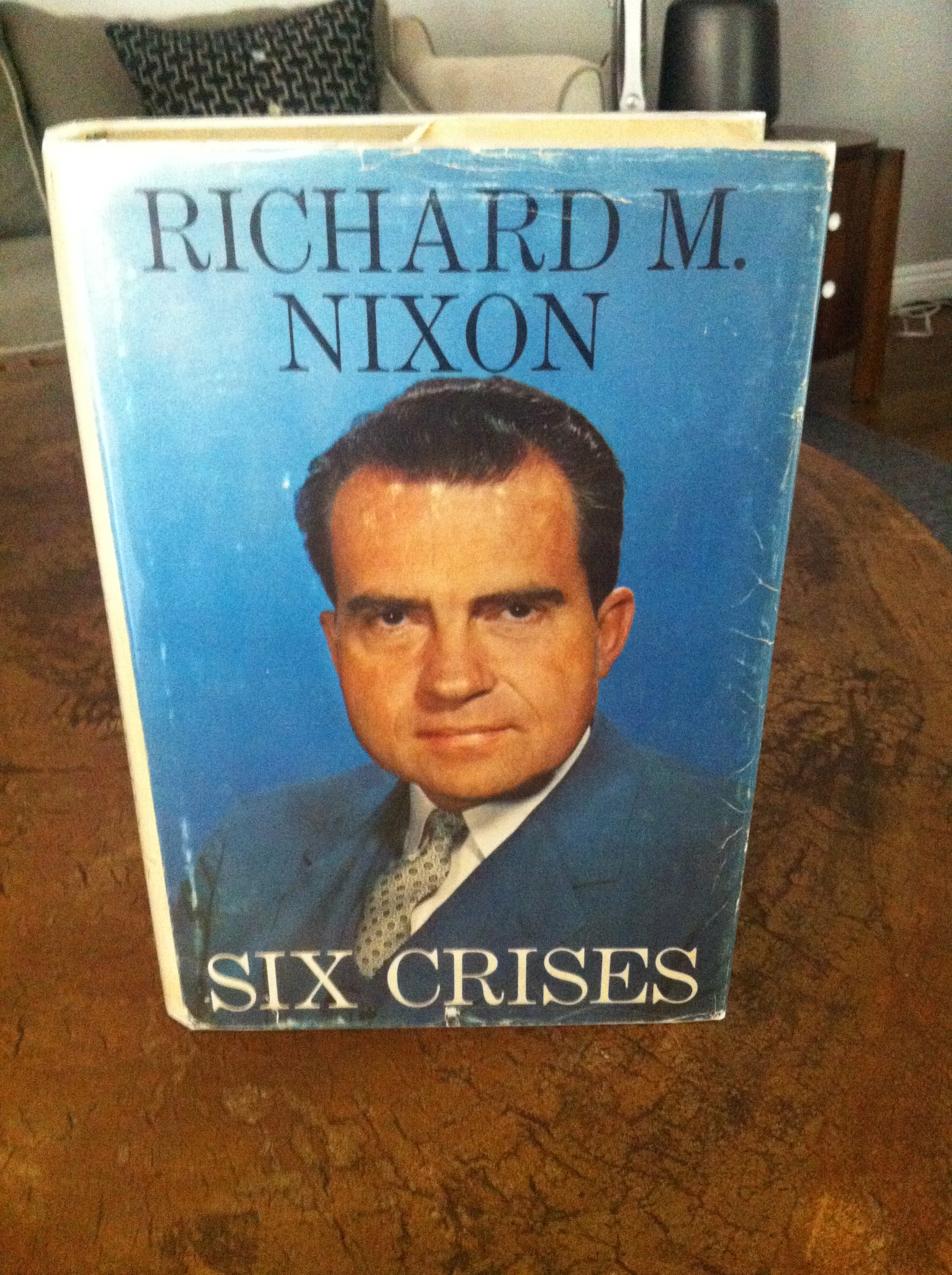
Nixon is talking about his campaign against John F. Kennedy in 1960, and why it is that he did so much better in the second TV debate than in the first:
What, then, were the major reasons for the difference in impact between the two debates?
First, there was a simple but important physical factor – the milkshake prescription had done its work.
I have a pretty good bit of standup comedy worked up that depends…
Posted: July 11, 2013 Filed under: Australia, movies, Nick Cave Leave a comment…on the audience having seen the “pitiless and uncompromising”* Australian western The Proposition (2005).
This movie was written by Nick Cave, who along with Warren Ellis did the soundtrack.

I would like to see Nick Cave perform live again sometime. He was truly demonic. The girls I was with did not care for him as much as the guys I was with. Eventually they walked away.
Nick Cave and Warren Ellis also did the soundtrack to The Assassination Of Jesse James By The Coward Robert Ford (2007).
That is a good trailer. From IMDb:
Warners’ wasn’t entirely in sync with the pacing of the movie, or the length. Dominik was thinking more like ‘Terence Malick’ in examining the relationship between the famous outlaw and his eventual assassin, Robert Ford, played by Casey Affleck. Warners was in favor of having at least a bit more action. Ultimately, Warners went with Dominik’s version, even though Dominik didn’t have final cut as part of his contract. Part of the reason was that Pitt, who produced the movie through his Plan B shingle, backed Dominik. At one point along the way, Pitt and exec producer Ridley Scott had put together their own cut. When it tested to only so-so results, they went back to Dominik’s. The original cut of “The Assassination of Jesse James by the Coward Robert Ford” was nearly four hours long. It was edited down to two hours and forty minutes, its current runtime, at the studio’s request.
The first few pages of Ron Hansen’s novel are pretty mind-blowing, I recommend reading them.
* Roger Ebert.
Imagine you’re exploring around the Pacific Northwest in 1800
Posted: July 10, 2013 Filed under: America, native america 2 Commentsand you see this:

Pretty scary. That’s from this book:

The Golden Gate Bridge Under Construction
Posted: July 8, 2013 Filed under: the American West, the California Condition Leave a comment
The very first shot of The Lone Ranger is set in San Francisco in 1933. There’s a wide shot of the Golden Gate Bridge under construction.
I can’t remember ever seeing that before. I went looking for photos of it and found some good ones here, at the UC system’s Calisphere.

and

Doesn’t this look like Garry Shandling?
Posted: July 8, 2013 Filed under: art, Hans Holbein, Met, museum, painting, people, pictures Leave a comment
The Metropolitan Museum has five portraits that they’re pretty sure are by Hans Holbein The Younger. Let’s have a look:
Here is Derick Berck of Cologne:

Here is Erasmus of Rotterdam:

Here is a member of the Wedigh family, probably Hermann von Wedigh:

“Truth breeds hatred,” is what that note in the book says, according to the Met, which “perhaps served as the sitter’s personal motto.” Weird motto, bro.
And here is Man In A Red Cap:

Now. Take a look at this one, of “Lady Lee”:

The Met says “The painting is close to the manner of Holbein, but the attention paid to decorative effects and linear details at the expense of life-like portrayal of the sitter is indicative of workshop production. The portrait was likely based on a Holbein drawing.”
(Are these guys for real?)
The Vine For America
Posted: July 4, 2013 Filed under: America, music Leave a comment
Needham, Massachusetts, where I spent my kidhood, had a fantastic Fourth of July parade. Here’s some video of the local car dealer, who paints himself red and rides around pretending to be an Indian:
Part of the parade was a kids’ parade. The prizes for the best float in the kids’ parade were fantastic. One year my sister and I made a birthday cake for America and won a pool table.
Some weeks ago I had a vision: a Vine that was a synchronized dance move, set to a track that looped properly, so the annoyingly looping sound of Vine wouldn’t be a problem. I realized this Vine should be America-themed.
Vine burned itself out and Instagram Video appeared, but by then it was in motion.
Dan Medina wrote and recorded a six second dance track.
I recruited some awesome people I know:
Originally there were going to be tableaux representing our neighbors, Canada and Mexico. Due to timing Mexico got cut, but God bless ’em.
Little Esther choreographed:
The people assembled here are all up to various cool and interesting projects.
Here’s the result:
http://instagram.com/p/bRg4hWRt7z/
or
James Eagan is working on a documentary about The Vine For America. I’ve seen a rough cut – it’s quite something.
[Update: here is the doc:]
https://www.youtube.com/watch?feature=player_embedded&v=VM8EaWCvv9M
Compare Medina there to C. W. Peale:

I found this fellow in an old issue of Life magazine
Posted: June 27, 2013 Filed under: Africa, animals, Life Leave a comment
It was this issue.
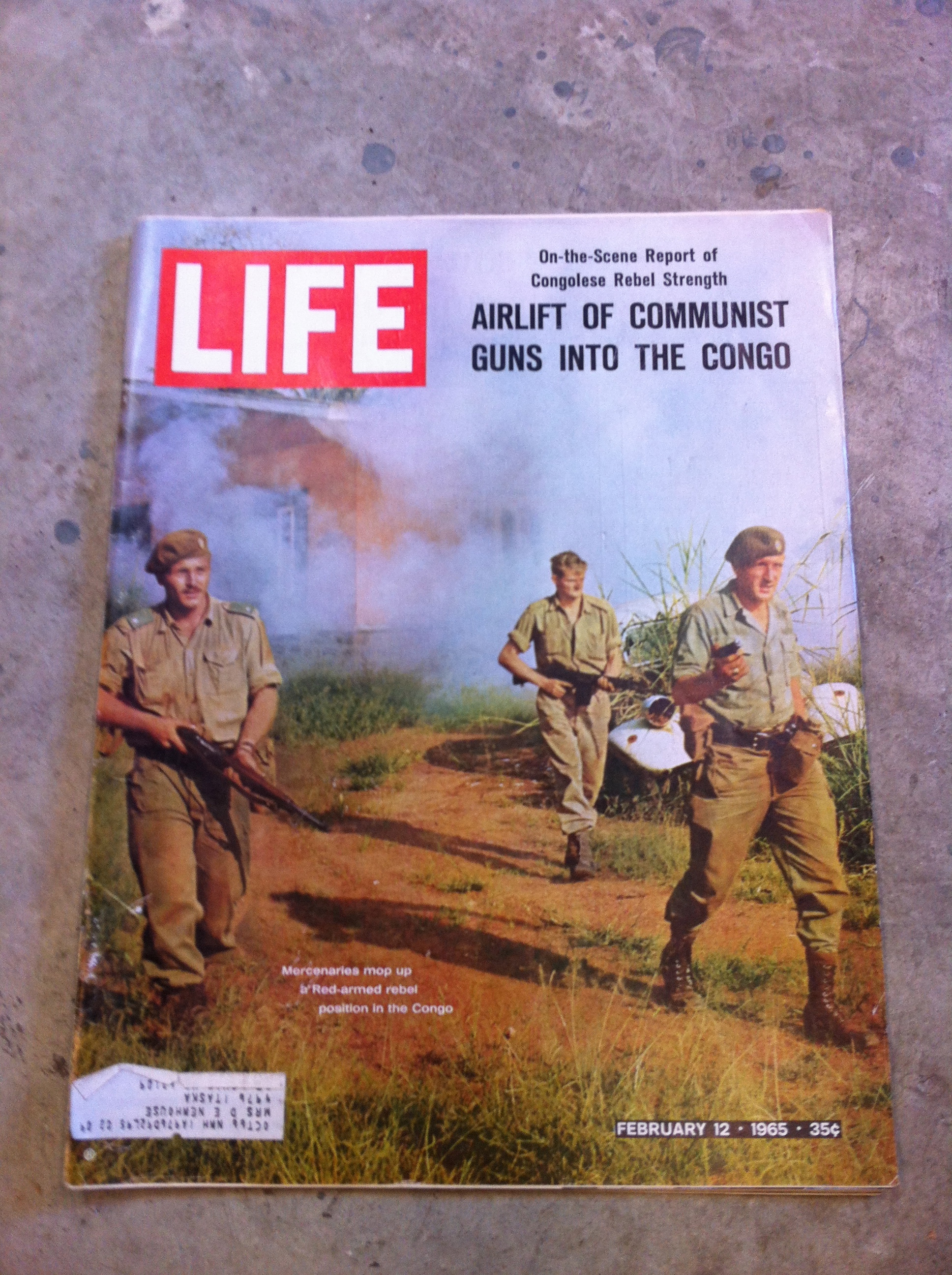
That cover is “Mercenaries mop up a Red-armed rebel position in the Congo”
Here’s his friend.

Encounters With The Great Dogs Of History
Posted: June 24, 2013 Filed under: America, animals, heroes, history, politics Leave a comment
This is FDR’s dog Fala. He was famous in his day.
FDR was accused of sending a destroyer back to fetch him after accidentally leaving him on an Aleutian island (why did the President bring his dog to Alaska in the middle of wartime? I don’t know).
Here is FDR’s zinger of a response, playing on the fact everyone knew back then that Scots are “tight with a penny” as Norm Macdonald put it:
These Republican leaders have not been content with attacks on me, or my wife, or on my sons. No, not content with that, they now include my little dog, Fala. Well, of course, I don’t resent attacks, and my family don’t resent attacks, but Fala does resent them. You know, Fala is Scotch, and being a Scottie, as soon as he learned that the Republican fiction writers in Congress and out had concocted a story that I’d left him behind on an Aleutian island and had sent a destroyer back to find him — at a cost to the taxpayers of two or three, or eight or twenty million dollars — his Scotch soul was furious. He has not been the same dog since. I am accustomed to hearing malicious falsehoods about myself … But I think I have a right to resent, to object, to libelous statements about my dog!
Anyway.
Yesterday I had the pleasure of talking to a woman who once had lunch with Eleanor Roosevelt at Hyde Park. She said Fala sat on her feet the whole lunch.

A cool book cover
Posted: June 19, 2013 Filed under: books Leave a comment
“In Stamboul Train for the first and last time in my life I deliberately set out to write a book to please, one which with luck might be made into a film. The devil looks after his own and I succeeded in both aims.”
A Good Mural In Chelsea
Posted: June 18, 2013 Filed under: New York Leave a comment It’s over near the Portugese Jewish Cemetery.

With regard to recent comments
Posted: June 3, 2013 Filed under: CeliaJohnson, film Leave a comment
This is a safe space. The comments section is intended as a great big picnic of fun and musing, but it’s also available as a safe space for personal reflection and emotional unburdening when necessary/drunk.
Regrettably requests for drugs cannot be honored. But God bless.
Avenue at Middelharnis by Meindert Hobbema
Posted: June 3, 2013 Filed under: Michener, NatlGalleryLondon, painting, pictures Leave a comment
I can’t recall how I got my hands on the postcard – perhaps a teacher gave it to me – but it showed one of the seminal paintings of world art, the one that opened the eyes of European painters to the realities of landscape painting. It bore a name that enchanted me, and from the first moment I saw it, it has been enshrined in my memory, to be recalled whenever I chance to see a row of fine trees leading down a country lane. The Avenue at Middelharnis, by the Dutch painter Meindert Hobbema (1638-1709) seems at first to simplicity itself – it is a perfectly flat landscape with minute distant building showing and down the dead middle of the canvas runs a dirt road flanked on either side by a row of very tall, scraggly trees of almost repugnant form, totally bare of limbs for 90 percent of their height but topped by misshapen crowns of small, heavy branches. It would seem as if almost anyone could paint a better picture than this, but if it commanded my attention and affection at age seven, so also did it captivate the artistic world; it proved that noble landscape painting could be achieved by using simple color, simple design and straightforward execution. People who love painting love Avenue, Middelharnis, and I am pleased to say that as a child I made that discover on my own.
So says:

(that one’s at the National Gallery of London)
Turkish Coffee
Posted: May 20, 2013 Filed under: adventures, travel Leave a comment
When they got to Istanbul, he hired a history professor to give his family a tour. At the end they went to a Turkish bath, where the professor’s lecture gave Jobs an insight about the globalization of youth:‘I had a real revelation. We were all in robes, and they made some Turkish coffee for us. The professor explained how the coffee was made very different from anywhere else, and I realized, “So fucking what?” Which kids even in Turkey give a shit about Turkish coffee? All day I had looked at young people in Istanbul. They were all drinking what every other kid in the world drinks, and they were wearing clothes that look like they were bought at the Gap, and they are all using cell phones. They were like kids everywhere else. It hit me that, for young people, this whole world is the same now. When we’re making products, there is no such thing as a Turkish phone, or a music player that young people in Turkey would want that’s different from one young people elsewhere would want. We’re just one world now’.”
Harold Macmillan, Prime Minister of the UK from 1957-1963
Posted: April 30, 2013 Filed under: politics Leave a comment
Macmillan served with distinction as a captain in the Grenadier Guards during the First World War, and was wounded on three occasions. During the Battle of the Somme, he spent an entire day wounded and lying in a slit trench with a bullet in his pelvis, reading the classical playwright Aeschylus in the original Greek.
 Helytimes