[Senator Lyndon Baines Johnson with U.S. Representative Victor Anfuso and his daughter (right) at a party at the Shoreham Hotel, Washington, D.C.] / MST. digital file from original
Posted: November 18, 2024 Filed under: America Since 1945 Leave a comment
source. I’ve been listening to Caro’s Years of Lyndon Johnson: Passage of Power. Very calming in a way.
Caro makes much of the cruel “Rufus Cornpone” nickname (although he never says who made that up). JFK had his own nickname for LBJ. He called him “Riverboat.”
A tactic LBJ used was getting people to feel sorry for him:
Having observed Johnson close up for more than twenty years, Rowe was aware, he says, that Johnson would always use “whatever he could” to “make people feel sorry for him” because “that helped him get what he wanted from them.” But that awareness didn’t help Rowe when, in 1956, the person from whom Johnson wanted something was him. Having observed also how Johnson treated people on his payroll, he had for years been rejecting Johnson’s offers to join his staff, and had been determined never to do so. But Johnson’s heart attack in 1955 gave him a new weapon—and in January, 1956, he deployed it, saying, in a low, earnest voice, “I wish you would come down to the Senate and help me.” And when Rowe refused, using his law practice as an excuse (“ I said, ‘I can’t afford it, I’ll lose clients’ ”), Johnson began telling other members of their circle how cruel it was of Jim to refuse to take a little of the load off a man at death’s door. “People I knew were coming up to me on the street—on the street—and saying, ‘Why aren’t you helping Lyndon? Don’t you know how sick he is? How can you let him down when he needs you?’ ”
Johnson had spoken to Rowe’s law partner, Rowe found. “To my amazement, Corcoran was saying, ‘You just can’t do this to Lyndon Johnson!’ I said, ‘What do you mean I can’t do it?’ He said, ‘Never mind the clients. We’ll hold down the law firm.’ ” Johnson had spoken to Rowe’s wife. “One night, Elizabeth turned on me: ‘Why are you doing this to poor Lyndon?’ ”
Then Lyndon Johnson came to Jim Rowe’s office again, pleading with him, crying real tears as he sat doubled over, his face in his hands. “He wept. ‘I’m going to die. You’re an old friend. I thought you were my friend and you don’t care that I’m going to die. It’s just selfish of you, typically selfish.’ ”
Finally Rowe said, “Oh, goddamn it, all right”—and then “as soon as Lyndon got what he wanted,” Rowe was forcibly reminded why he had been determined not to join his staff. The moment the words were out of Rowe’s mouth, Johnson straightened up, and his tone changed instantly from one of pleading to one of cold command. “Just remember,” he said. “I make the decisions. You don’t.”
Amazing. But:
Now this technique was used with Jack Kennedy. At meetings, the soft voice was coupled with a face that varied between sullen and sorrowful—the look of a very sad man. And if pressed particularly pointedly by the President for an explanation or a recommendation, he would say, “I’m not competent to advise you on this,” sometimes adding that he didn’t have enough information on the subject, statements that Kennedy viewed, in Sorensen’s phrase, as being Johnson’s “own subtle way of complaining to the President” about his treatment. With Kennedy, however, the tactic had no success at all. “I cannot stand Johnson’s damn long face,” the President told his buddy Smathers. “He just comes in, sits at the Cabinet meetings with his face all screwed up, never says anything. He looks so sad.… You’ve seen him, George, you know him, he doesn’t even open his mouth.” Smathers suggested foreign travel. “You ought to send him on a trip so that he can get all of the fanfare and all of the attention … build up his ego again, let him have a great time”—and also, although Smathers didn’t say it, get him out of Kennedy’s hair. “You know, that’s a damn good idea,” Kennedy replied—and at the beginning of April sent him to Senegal, which was celebrating the first anniversary of its independence.”

Here they are the return from that trip. The man in the middle is listed as “Unidentified.”
Years of Theory
Posted: October 25, 2024 Filed under: America Since 1945, everyone's a critic Leave a comment
Here’s an anecdote. One of Sartre’s closest friends in school was Raymond Aron, a conservative, pro-American political scientist. In those days, the French government had scholarships to various foreign countries. They started a whole French school in Brazil. Lévi-Strauss himself taught in that school and his early work is the result of that contact with Brazil. Roland Barthes taught on this scholarship in Egypt, because the French had a teaching fellowship in Cairo. There was one in Berlin, and when Aron had just gotten back he said, “There’s this thing called phenomenology. What does it mean?” He is sitting in a cafe with Sartre and Beauvoir, and Aron says, “What it means is: you can philosophize about that glass of beer.” Suddenly, the whole idea that phenomenology allowed one to think, write, and philosophize about elements of daily life transforms everything. As historically reconstructed by participants, the drink turns out to have been a crème de menthe, but that doesn’t matter too much. That’s the lesson that these people got from phenomenology, and that’s what seems to me to set off this immense period of liberation from philosophy, a liberation toward theory.
What is postmodern? Structuralist? When someone’s making a Marxist critique of like semiology, what’s happening?
Deluze. Sartre. Levi-Strauss. Lacan. Barthes. Foucault: who were these guys? what’s up here? What is the meaning of these names both as signifiers and signified and as referent?
Theory, structuralism, might not sound important. Academic stuff. Easy to dismiss. But guess what? Theory Thought has real, practical, worldly impact. These ideas are powerful.
The great sentence is not pronounced by Sartre but by Simone de Beauvoir: “On ne naît pas femme: on le devient.” 8 You aren’t born a woman: you become a woman. You are constructed and you construct yourself as a woman.
Interrogating, politicizing, gendering, queering, these are Theory ideas. Lived experience. My truth. The fathers of both Kamala Harris and Pete Buttigieg were Theory-adjacent professors, does that have any meaning? And DJT? The Theorists would say of course, a media figure whose words have no meaning and every meaning? who cannot be taken literally or seriously yet must only be taken literally and seriously? who seems to break reality by his very existence? create experiences across which no translation is possible? That was exactly what we’re talking about. This was the inevitable outcome. Don’t be mad at us for calling it.
Anxiety is: you can’t be free, and you can’t really be authentic, unless you feel anxiety. The French word is angoisse, so the translator is tempted to use the word “anguish,” which is the false friend, the immediate cognate of angoisse. Anguish, that makes it too metaphysical. In French, angoisse is an everyday word. At least angoissé( e). It means, I don’t have any cigarettes—can I go out? I’m waiting for a phone call. Then you’re angoissé( e). That doesn’t mean you’re in anguish, like one of the saints. It just means you have anxiety, and anxiety is an everyday experience.
Making thoughts actions, and words tools of power. Now, Theory would argue, twas ever thus we’re just pointing it out. Language has always been a tool of power. (But Theory would say that, wouldn’t it?)
Karl Marx was a Theorist. The master Theorist. His theory infected and took over huge portions of the world. Many millions died. There are places named after Karl Marx in Cuba Vietnam Russia China etc. All that from a theory he worked out over pints at a pub after doing his reading at The British Museum.
The Years of Theory: Lectures on Modern French Thought aka Postwar French Thought to the Present by Frederic Jameson may be one of the highest value books I ever bought. It is dense. But it’s less dense than Jameson’s other books, because it is transcripts of the guy talking.
If you’re very good at skipping/skimming huge parts of books, it’s fantastic. The drag may be sections where the ideas are so big, weird, vague or complicated that this reader found themself often saying “ok I’m moving on here because my mind is already blown and my circuits are fried.”
Now let’s look at this from a different point of view. We have said that each of these philosophical periods—Greece, the Germans, and now the French—are characterized by a problematic, but a changing problematic, a production of new problems. This is, in effect, Deleuze’s whole philosophy, the production of problems. But, if you put it that way, if you say philosophy’s task is the production of problems, what problems could there be if philosophy has come to an end? These problematics always end up producing a certain limit beyond which they are no longer productive.
The book functions pretty well as a history of France since WW2. Jameson quotes Sartre talking about the Occupation:
Never were we freer than under the German occupation. We had lost all our rights, beginning with the right to speak. We were insulted to our faces every day and had to remain silent. We were deported en masse as workers, Jews, or political prisoners. Everywhere—on the walls, on the movie screens, in the newspapers—we came up against the vile, insipid picture of ourselves our oppressors wanted to present to us. Because of all this, we were free. Because the Nazi venom seeped into our very thoughts, every accurate thought was a triumph. Because an all-powerful police force tried to gag us, every word became precious as a declaration of principle. Because we were wanted men and women, every one of our acts was a solemn commitment.
On the power and demise of the French Communist party:
The minute Mitterrand includes them in his government, they disappear. That’s the end of the Communist Party. After 1980, the Party is nothing. Of course, it is even less than nothing after the dissolution of the Soviet Union. There is still a Communist Party in France, of course, but its power is broken. Mitterrand’s political act here is a very cunning tactic of cooptation, which does them in as rivals to his socialist government, which itself ends up being not very socialist. But, in this period, the Party is a presence; it can irritate all these intellectuals. They revolt against it in various ways.
An idea: Theory begins for real after Camus. Camus says, man’s search for meaning? Forget it. No meaning. You’re pushing a rock up a hill. It’s absurd. Consider Sisyphus happy, live, move on.
Theory maybe says, sure ok but what even is Being? What is it that “we” (?) are experiencing? Jameson:
I’m alive in this moment when the sun is dying, or when climate change is destroying the planet, so many years from the big bang. So also with the body. I have a tendency to fat. Okay, that’s my situation. But I have to live that in some way. I have to choose that. So I keep dieting; I keep struggling against it. Or I let myself go completely. Or I become jolly like Falstaff. We are not free not to do something with this situation. Freedom is our choice of how we deal with it, but we have to deal with it, because it is us. But it’s not us in the way a thing is a thing. We are not our body. We are our body on the mode of not being it. We want people to understand that we are different, that we have a personality, that we’re not exactly what our body seems.
Here’s another one:
Everything we are we have to play at being, even if we don’t feel it that way. That’s a social function, so, of course, you have to rise to the occasion and play at being that social function.
Terry Eagleton, reviewing the book in the LRB, says:

and:

Theory was a big Yale and Duke and Brown thing. There was some of it at Harvard, but it’s not so easy to buy Theory when you remember Cotton Mather and John Adams and John Kennedy and Franklin Roosevelt.
I once interviewed an East German novelist who was quite interesting at the time, and we asked him the then-obvious question: “How much of an influence did Faulkner have on you?” As you know, after the war, all over the world, it is the example of Faulkner that sets everything going, from the Latin American boom to the newer Chinese novel. Faulkner is a seminal world influence at a certain moment. But what does that mean, “Faulkner’s influence”? So he said, “No, I never learned anything from Faulkner—except that you could write page after page of your novel in italics.”
Any time Jameson says “here’s a story for you” or “start with a bit of biography” I perk up. What would the narratologists say about that? Why are stories so addictive? So much more popular than Theory? To answer those questions would be to Theorize stories. Should you spend your time Theorizing stories? Or telling stories?
Why is this detail included in Jameson’s Wikipedia page?:
Both his parents had non-wage income over $50 in 1939 (about USD$1130 in 2024)).[12][15]
Church & state
Posted: October 23, 2024 Filed under: America Since 1945 Leave a commentFrom 1940 to 2000 — through rock ’n’ roll, through the sexual revolution — an eerily stable 70-ish per cent of Americans belonged to a church. From the millennium, that share started collapsing to what is now less than half.
Janan Ganesh in FT. He’s trying to reason through why every US election ends up 50/50.
The stabilisation of the west after 1945 is really a story of dominant parties, such as the Conservatives in the UK, the Christian Democrats in Germany, the right in France and to some extent the Democrats in the US, who ran Congress for much of the second half of the 20th century. The ascendant party could afford to be magnanimous, while the other had every incentive to appeal beyond its base. Veering too far from the centre brought Goldwater-style annihilation. Competition between equals is beautiful in theory. In practice? Well, how edifying have you found the past couple of decades?
(is that true?)
Drop the Trop
Posted: October 10, 2024 Filed under: America Since 1945, archaeology, architecture Leave a commentThey imploded The Tropicana in Las Vegas, clearing room for a potential future stadium for the former Oakland As.

The strangeness of The Tropicana had my fascination.

Doomed for a long time, it was near vacant inside, adding to the odd effect.

On a visit to Las Vegas a couple years ago for Badlani’s birthday I took a walk through there. I was certain I’d taken a set of photos of the place, but today I couldn’t find them. The problems of archiving and curating remain, maybe even more challenging, in the age of infinite photos. What happened to them? Did I delete them as unsatisfactory? Are they lost in the cloud?
I can reconstruct some of the atmosphere from found pieces. Those above are from UK site Freedom Destinations. Here’s one from Oyster.com:

Those strange white couches. The Tropicana seemed like it had given up years ago, and yet the whites were kept close to spotless. A bleached aesthetic. The place was like a 1960s idea of the 1990s, or a 1990s idea of the 1960s. A coherent incoherence.
I find a fine set of photos of the lost Tropicana at, of course, reddit/r/LiminalSpaces:

The most times I ever heard the word “liminal” was in a debate between two professors that broke out during Sue Bell’s masters’ presentation in public art.
Strangely, for whatever reason the one photo of The Tropicana my phone seems to have preserved is this one:

Robert Coover
Posted: October 8, 2024 Filed under: America Since 1945, baseball, writing 1 Comment
The postmodernist Robert Coover died at 92. The Universal Baseball Association is the only one of his I’ve read. This is how the NYT describes it in Coover’s obituary:
Mr. Coover’s many other books included “The Universal Baseball Association, J. Henry Waugh, Prop.” (1968), about an accountant who invents a fantasy-baseball game and is driven mad by it
That’s accurate enough I guess. I loved reading the book. It’s the only one of Coover’s I read, and although it’s sort of fantastical, the plot’s kinda straightforward and the setting is vivid and lived-in. I went looking for the back cover copy that was on my old edition:

He eats delicatessen.
In new editions that’s updated to “take-out,” a mistake in my opinion. I remember Fener laughing out loud when he read that off the back cover when he found it in my office. The term “b-girl” was also dated by the time I read it, it seemed to mean something like this.
Spoiler below as I recall the plot:
Waugh is playing out a season of a dice based fantasy baseball game of his own invention. A star player, a wonderful pitcher, freakishly good emerges, and Henry comes to love him. Then one night he rolls the dice and can’t believe the outcome. The player is killed by a pitch. Henry can’t believe it. It shatters his world. It seems to be sort of a metaphor for God and Jesus (J. Henry Waugh/Yahweh).
The idea of going home to your own private world was on my mind at the time I read the book, when I was a young single man in LA, I’d leave work at 6pm or whatever and walk home to my one bedroom apartment and read or work on writing scripts or novels. It spoke to me, and what spoke to me about it wasn’t the postmodernism (in fact the metaphorical stuff kinda made me roll my eyes) but the realism, the portrait of a life, the investment and absorption into a private entertainment, the sadness and loss of having the game shattered.
So, salute to Robert Coover.
Presidential Dad Trivia
Posted: September 21, 2024 Filed under: America Since 1945 Leave a comment
(source)
George W. Bush, interviewed by David Rubinstein of the Carlyle Group in his book The Highest Calling: Conversations on the American Presidency.

This is not accurate. There was Joseph Kennedy:

who outlived three of his sons. Nathaniel Fillmore lived to be 91, and saw all of son Millard’s presidency. George Harding outlived son Warren, he died in Santa Ana, California.
In his biography of Warren G. Harding, Charles L. Mee describes Tryon Harding as “a small, idle, shiftless, impractical, lazy, daydreaming, catnapping fellow whose eye was always on the main chance”.
The W. Bush interview is frustrating to those of us who think he ruined everything:


How about this:


Well, I’m glad it was nice for you. (Genuinely, I am. The guy has charm, despite the catastrophes. What does that tell us? How can we profit from knowing that a president will come along the consequences of whom are awful and we still are lured in?)
W. does seem to take some responsibility here, on the bank bailouts:

W. Bush seems like a guy who says, well, I made the best decision under the circumstances and then shrugs at the consequences. That was the vibe I got from his book, Decision Points. Just because the consequences are appalling, doesn’t mean it was a bad decision. They no doubt taught him that at Harvard Business School.
In his Miller Center interview, Karl Rove tells a story from the transition meeting with Bill Clinton:
Riley
So this was the one personal thing. Who came up with the line, “When I was young and irresponsible, I was young and irresponsible”?
Rove
Him.
Riley
Him?
Rove
Yes. As he’s also the author—He stole the idea—of “compassionate conservatism.” When we saw Clinton after the election, he said [imitating Clinton], “When I heard you say that phrase, ‘compassionate conservatism,’ George, I knew we were in deep trouble. That’s brilliant, it was just brilliant.”
W communications guy Dan Bartlett tells another:
When they had their transition meeting, as always happens, he asked him. “How’d you get better at it?” Clinton said, “Two things. First, you’re going to give a lot of speeches, so just practice. Practice more than anything else is going to make you better. Secondly, I learned how to take my time and to pause.” He told him a trick. He said, “On every other sentence or maybe every third sentence, it was one or the other, when I hit a period I would count in my head—one thousand one, one thousand two, one thousand three—before I’d read the next sentence. It will be hard for you to pull that off, because it feels like an eternity.”
I don’t know if you’ve done public speaking. I do it now. To master the pause, which Clinton now is brilliant at. He said, “Pacing is everything in speechwriting.” So he took that to heart. He took it, but what Clinton was good at, which Bush was never good at, was that while he was not a gifted speaker, he was an authentic communicator. It was always up to us to make sure that he really believed—Clinton could make the signing of a post office bill like the Gettysburg Address. He could take anything and at a moment’s notice turn it around. You knew when Bush was mailing one in.
Glimpses of Robert F. Kennedy (Senior)
Posted: August 25, 2024 Filed under: America Since 1945, Kennedy-Nixon Leave a comment
(source: MO 2021.4.249 at the JFK Library)
from Herb Caen’s column, January 5, 1968:
At 12:45 p.m. on Wednesday, Senator Robert F. Kennedy was standing curbside on Sacramento St. near Montgomery, dripping charisma all over the place. He was chatting with two of his henchmen (Democrats have henchmen, Republicans have aides) and his mere presence had an electrifying effect. Motorists slowed down to gape at him. A chubby, giggling Japanese waitress emerged from a coffee shop to wait, shivering, for an autograph.
An elderly Japanese in a black overcoat asked for one, too (you know how these Easterners stick together). Four men emerging from the Red Knight suddenly stopped, transfixed, to stare at him as they picked their teeth with toothpicks. The Senator glanced at them with a tentative smile. They moved on, still picking their teeth.
“Lunch,” he said, jaywalking toward Jack’s with a young henchman, Peter Edelman. We went upstairs to Private Dining Room One, a one-windowed cubicle barely big enough for three. The Senator-it’s hard to refrain from calling him “Bobby” although his friends call him “Bob” —stared at the buzzer on the wall. “To summon the girls,” I said. He looked nervous till I explained that it USED to be possible to take girls upstairs at Jack’s. “Now then,” I went on, “let’s light up cigars and nominate a Vice-President” (I forgot to tell you, I’m great fun at parties). He smiled a tiny one. The waiter whispered nervously in my ear: “How do I address him?” “Senator,” I whispered back. “Sir,” said the waiter, clearing his throat, “would you like a drink?” The Senator ordered a beer-“Coors.” …
In casual conversation, the celebrated toughness isn’t apparent. In 90 minutes, he made only one bitter remark—while talking about an Air Force decision (made over McNamara’s objec-tions) that cost us nine planes in Vietnam. He went on to the “futil-ity® of bombing North Vietnam, and recalled how, during World War II, German production had actually increased under heavy bombing. “The Air Force,” he snapped, “is never right.”…
We ordered fresh cracked crab. “This is wonderful,” he enthused.
With a glance out the window: “What a beautiful city.” Helping himself to more mayonnaise: “I could sit here all afternoon, eating cracked crab.” He asked about Joe Alioto and (a note of concern here how Eugene McCarthy is doing in California, but he wouldn’t be drawn out on the subject. Hunters Point came up and I mentioned that Eastern newsmen were always saying that our slums are garden spots compared to theirs. He nodded: “It’s better to be poor in San Francisco than rich in New York.”
“If the war is still on when your oldest son reaches the draft age,” I said, “what will you tell him?” He took evasive action. “Well, we’d talk about it, all about it, and then I guess it would be his deci-sion.” Then he told, with apparent approval, an anecdote about a friend of his who had been “a terrific hawk” before he went to Viet-ham and who is now “a terrific dove.” “He has an 18-year-old son,” Kennedy went on, “and he told me ‘If that kid doesn’t burn his draft card, I’ll do it for him!'”
***
We stepped outside and he was immediately engulfed by auto-graph-seekers. “Senator,” somebody called out, “your helicopter is waiting”— just like in the movies, and he drove away with a wave and that shy smile. Would I vote for him for President? Well, a man who likes our cracked crab and thinks it’s better to be poor in San Francisco than rich in New York …
Steve Shapiro took these photos:

They’re sometimes cited as being from RFK’s presidential campaign, but the one above is from a 1966 trip to California, where he did some campaigning with Pat Brown.

That one New York, Senate campaign.
I found them in Shapiro’s book, American Edge.

California again. That must be the Berkeley Greek Theater. Here’s how The New York Times reported on that speech (front page):

Pat Brown lost that election to Ronald Reagan.

From Ted Kennedy’s memoir True Compass:


(source)
from a Miller Center interview with Reagan campaign aide Stuart Spencer in November, 2001:
I did a thing at Annenberg School last week. It’s a journalism school at University of Southern California communications center. Ed Guttman is involved with it. He was one of Bobby’s guys, and he was there that night. I said to Ed, Maybe you don’t want to answer this question, but one thing that’s always in my mind: politically, why did Bobby, once he became Attorney General, decide to go after the people his father had put together to finance some of this effort? It was a lot of the hoods and Chicago guys that he’d done business with when he was a bootlegger. There’s been references to it, but did Bobby not know that this transpired? Or did Bobby say to his dad, The hell with it, this is good politics. The hell with it—I believe this—these are bad people. He went right to the heart of what thirty years before were Joe Kennedy’s business associates.
There are conspiracy theories out there that cost him his life. I don’t know if they’re true or not, but God, that’s a fascinating triangle. He wouldn’t answer the question. He said, I don’t know what you’re talking about. I’ve never seen that before in our life. It’s like you have the support of the National Rifle Association or the National Environmental Council and you get into power and you gut them. I’ve never seen that before. But he went after them tooth and toenail.

(source: https://www.loc.gov/item/98509265/ )
In Cormac McCarthy’s The Passenger, Bobby Western talks to his lawyer, Kline. Kline gets going on the Kennedys (the bold is mine, long but intriguing):
You didnt have some connection with the Kennedys.
No.
I worked with Bobby in Chicago in the early sixties. Briefly. We were working with a guy named Ed Hicks who was trying to get free elections for the Chicago cabdrivers. Basically Kennedy was a mor-alist. Before long he was to have an amazing roster of enemies and he prided himself on knowing who they were and what they were up to. Which he didnt, of course. By the time his brother was shot a couple of years later they were mired up in a concatenation of plots and schemes that will never be sorted out. At the head of the list was killing Castro and if that failed actually invading Cuba. In the end I dont think that would have happened but it’s a sort of bellwether for all the trouble they were in. I always wondered if there might not have been a moment there when Kennedy realized he was dying that he didnt smile with relief. After old man Kennedy had his stroke the Kennedys for some reason felt that it would be all right to go after the Mafia. Ignoring the longstanding deal the old man had cut with them. No idea what they were thinking. All the time Jack is schtupping Sam Giancana’s girl-friend—a lady named Judith Campbell. Although in all fairness-quaint term—I think that Jack saw her first. Or one of his pimps did. Some guy named Sinatra.
What are you going to say about the Kennedys? There’s no one like them. A friend of mine was at a houseparty out on Martha’s Vineyard one evening and when he got to the house Ted Kennedy was greeting people at the door. He was dressed in a bright yellow jumpsuit and he was drunk.
My friend said: That’s quite an outfit you’ve got on there, Senator. And Kennedy said yes, but I can get away with it. My friend-who’s a Washington lawyer-told me that he had never understood the Ken-nedys. He found them baffling. But he said that when he heard those words the scales fell from his eyes. He thought that they were probably engraved on the family crest. However you say it in Latin. Anyway, I’ve never understood why there is no monument anywhere to Mary Jo Kopechne. The girl Ted left to drown in his car after he drove it off a bridge. If it were not for her sacrifice that lunatic would have been President of the United States. My guess is that with the exception of Bobby they were just a pack of psychopaths. I suppose it was Bobby’s hope that he could somehow justify his family. Even though he must have known that was impossible. There wasnt a copper cent in the coffers that funded the whole enterprise that wasnt tainted. And then they all died.
Murdered, for the most part. Maybe not Shakespeare. But not bad Dostoevsky.
Castro was no part of this.
No. In the end as it turned out he wasnt.
When he took over the island he threw Santo Trafficante in jail and told him that he was going to be shot as an enemy of the people. So of course Trafficante just said:
How much? You hear different figures. Forty million. Twenty million. It was probably closer to ten. But Trafficante wasnt happy about it. The Mafia had a long history of running the casinos for Ba-tista. Castro should have treated them bet-ter. The Mafia. He’s lucky to be alive. The odd thing is that Santo ran three casinos in Cuba for another eight or ten years after that. Language is important. People forget that Trafficante’s first language is Spanish.
Anyway, he and Marcello have run the Southeast from Miami to Dallas for years.
And the net worth of this enterprise is staggering. At its height over two billion a year. Bobby Kennedy wouldnt have deported Marcello without Jack’s okay, but by now the whole business was beyond disentanglement. The CIA hated the Ken-nedys and were working at cutting themselves loose from the administration al-together, but the notion that they killed Kennedy is stupid. And if Kennedy was going to take the CIA apart piece by piece as he promised to do he’d have had to start about two administrations sooner. By his time it was way too late. The CIA hated Hoover too and Hoover in turn hated the Kennedys and people just assumed that Hoover was in bed with the Mafia but the truth was the Mafia had endless files of Hoover as a transvestite-dressed in ladies’ underwear-so that was a Mexican standoff that had been in play for years.
There’s more to it of course. But if you said that Bobby had gotten his brother-whom he adored —killed, I would have to say that was pretty much right. The CIA hauled Carlos off to the jungles of Guatemala and flew away waving back at him. Hard to imagine what they were thinking. They left him there-where he held a counterfeit passport-and his lawyer finally showed up and then the two of them were frogmarched off into the jungles of El Salvador and left to fashion new lives for them-selves. Standing there in the heat and the mud and the mosquitoes. Dressed in wool suits. They hiked some twenty miles until they came to a village. And, God be praised, a telephone. When he got back to New Orleans he called a meeting at Churchill Farms-his country place-and he was foaming at the mouth over Bobby Kennedy. He looked at the people in the room-I think there were eight of them-and he said: I’m going to whack the little bastard. And it got very quiet. Everybody knew it was a serious meeting. There was nothing on the table to drink but water.
And finally somebody said: Why dont we whack the big bastard? And that was that.
I’m not sure I understand.
If you killed Bobby then you had a really pissed off JFK to deal with. But if you killed JFK then his brother went pretty quickly from being the Attorney General of the United States to being an unemployed lawyer.
How do you know all this?
Right. The thing about the Kennedys was that they had no way to grasp the in-appeasable war-ethic of the Sicilians. The Kennedys were Irish and they thought that you won by talking. They didnt really even understand that this other thing existed. They used abstractions to make political speeches. The people. Poverty. Ask not what your country blah blah blah.
They didnt understand that there were still people alive who actually believed in things like honor. They’d never heard Joe Bonanno on the subject. That’s what makes Kennedy’s book so preposterous.
Although in all fairness there’s some question as to whether or not he ever even read it. I’m having the chicken grande.
All right.
You want to pick the wine?
Sure.

Michael Herr talking about the Kennedys in Las Vegas in The Big Room;
Because even then his kid brother was around like a mongoose on Benzedrine, watching, keeping tabs and running the connections down to their root-ends, to see exactly who was friends with who, and who to play up, or down, or chop completely. The older brother’s playground was the younger brother’s nightmare. Still, the action was invigorating. It’s possible that more of the New Frontier was inspired here at the Sands than back on the Massachusetts bedrock or looking dreaming out of the office window at the Jefferson Memorial.
One more from Brother Edward:

Reedy, Twilight of the Presidency
Posted: August 18, 2024 Filed under: America Since 1945, politics, presidents Leave a comment
It’s time to revisit George Reedy, Twilight of the Presidency.
I can’t do better as a summary than this 1970 review by William C. Spragens in The Western Political Quarterly found on JSTOR:

The edition I read is updated for the Reagan administration. Some choice passages:
In talking to friends about the presidency, I have found the hardest point to explain is that setbacks often impel presidents to redouble their efforts without changing their policies. This seems to be perversity because very few of us have the opportunity to make decisions of colossal consequences. When our projects go wrong, it is not too difficult for most of us to shrug our shoulders, cut our losses, and take off on a new tack. Our egos may be bruised. But we can live with that. It is a different thing altogether when we can give orders that can lead to large-scale death and destruction or even to economic devastation. Such a situation brings into play psychological factors that are virtually unconquerable.
Suppose, for example, that a president gives the military an order that leads to the deaths of several soldiers in combat. Can any human being who did such a thing say to himself: “Those men are dead because I was a God-damned fool! Their blood is on my hands.” The likely thought is: “Those men died in a noble cau and we must see to it that their sacrifice was not in vain.”
This, of course, could well be the “right” answer. But even if it is the wrong answer, it is virtually certain to be the one that will be accepted. Therefore, more men are sent and then more and then more. Every death makes a pull out more unacceptable.
Furthermore, when a large amount of blood has been spilled, a point can be reached where popular opposition to a policy will actually spur a president to redoubled effort in its behalf. This is due to the aura of history that envelops every occupant of the Oval Office. He lives in a museum, a structure dedicated to preserving the greatness of the American past. He walks the same halls paced by Lincoln waiting feverishly for news from Gettysburg or Richmond. He dines with silver used by Woodrow Wilson as he pondered the proper response to the German declaration of unrestricted submarine warfare. He has staring at him constantly portraits of the heroic men who faced the same excruciating problems in the past that he is facing in the present. It is only a matter of time until he feels himself a member of an exclusive community whose inhabitants never finally leave the mansion. When stories leaked out that Richard Nixon was “talking to the pictures” in the White House, it was taken by many as evidence that he was cracking up. To anyone who has had the opportunity to observe a president at close range, it is perfectly normal conduct.
(This may be a problem beyond presidents. Do we all have a tendency to double down on our most consequential decisions, even if the results are obviously disastrous?)
The life of the monarch:
As noted, an essential characteristic of monarchy is untouchability. No one touches a king unless he is specifically invited to do so. No one thrusts unpleasant thoughts upon a king unless he is ordered to do so, and even then he does so at his own peril. The response to unpleasant information has been fixed by a pattern with a long history. Every courtier recalls, either literally or instinctively, what happened to the messenger who brought Peter the Great the news of the Russian defeat by Charles XII at the Battle of Narva. The courtier was strangled by decree of the czar. A modern-day monarch-at least a monarch in the White House-cannot direct the placing of a noose around a messenger’s throat for bringing him bad news. But his frown can mean social and economic strangulation. Only a very brave or a very foolish person will suffer that frown.
Some ways in which this effect takes shape:
In retrospect, it is almost impossible to believe that John Kennedy embarked on the ill-fated Bay of Pigs venture. It was poorly conceived, poorly planned, poorly executed, and undertaken with grossly inadequate knowledge. But anyone who has ever sat in on a White House council can easily deduce what happened without knowing 34 THE I any facts other than those which appeared in the public press. White House councils are not debating matches in which ideas emerge from the heated exchanges of participants. The council centers around the president, himself, to whom everyone addresses his observations.
The first strong observations to attract the favor of the president become subconsciously the thoughts of everyone in the room. The focus of attention shifts from a testing of all concepts to a groping for means of overcoming the difficulties. A thesis that could not survive an undergraduate seminar in a liberal arts college becomes accepted doctrine, and the only question is not whether it should be done but how it should be done.
Reedy on White House aides as courtiers, and how Vietnam could’ve happened (he was there!):
Unfortunately, the problem is far deeper than the machinations of courtiers. They do exist in large numbers but most of their energies are absorbed in grabbing for personal favors and building havens of retreat for the future. Generally speaking, they play the role in the White House of the court jesters of the Middle Ages and may even be useful in that they give the chief executive badly needed relaxation. Paradoxically , it is the advisers who are not sycophantic, who are not looking for snug harbors, and who do feel the heavy weight of responsibility who are the most likely to play the reinforcing role. It is precisely because they recognize the ultimacy of the office that they react the way they do.
However they feel, the burden of decision is on another man. Therefore, however much they may argue against a policy at its beginning stages, once it is set they become “good soldiers” and devote their time to making it work.
Those who disagree strongly tend to remain in the structure in the vain hope they can change it coupled with the certainty that they would become totally ineffectual if they left.
This is the bitter lesson we should have learned from Vietnam. In the early days of that conflict, it might have been possible to pull out. My most vivid memories are the meetings early in Lyndon Johnson’s presidency in which his advisers (virtually all holdovers from the Kennedy administration) were looking to him for guidance on how to proceed. He, on the other hand, felt an obligation to continue the Kennedy policies and he was looking to them for indications of what steps would carry out such a course. I will always believe that someone misread a signal from the other side with the resultant commitment to full-scale fighting. After that, all the resources of the federal government were devoted to advising the president on how to do what it was thought he wanted to do.
Reedy on the White House as Versailles:
Sir Thomas Malory seems to have missed the true significance of King Arthur’s Round Table. As long as his knights ate at it every day under King Arthur’s watchful eye and lived in his palace where he could call them by shouting through the corridors, they were his to ensure that the kingdom would be ruled the way he wanted it ruled. Louis XIV did not build the Palace of Versailles as a tourist attraction but as a huge dormitory where he could keep tabs on the nobles who were disposed to become insubordinate if they spent all their time on their own estates. Peter the Great downgraded the boyars whose power rested on their distance from Moscow and brought the reins of government into his own hands by making all the top officials dependent on him. And the Turkish sultans reached the ultimate in the creation of personal force by raising young Christian boys captured in combat as Janissaries who lived solely to defend the ruler.
Reedy has a great chapter titled “What Does The President Do?”:
A president is many things. Basically, however, his functions fall into two categories. First, and perhaps most important, he is the symbol of the legitimacy and the continuity of our government. It is only through him that power can be exercised effectively-but only until opposition forces rally themselves to counter it. Second, he is the political leader of our nation. He must resolve the policy questions that will not yield to quantitative, empirical analysis and then persuade enough of his countrymen of the rightness of his decisions so that they are carried out without disrupting the fabric of society.
At the present time, neither of these functions can be carried out without the president.
He notes that the idea of the President “working” is confusing:
Despite the widespread belief to the contrary, there is far less to the presidency, in terms of essential activity, than meets the eye. The psychological burdens are heavy, even crushing, but no president ever died of overwork and it is doubtful that any ever will. The chief executive can, of course, fill his working hours with as much motion as he desires. The “crisis” days (the American hostages held in Iran or the attempted torpedoing of American navy vessels in the Gulf of Tonkin) keep office lights burning into the midnight hours. But in terms of actual administration, the presidency is pretty much what the president wants to make of it. He can delegate the “work” to subordinates and reserve for himself only the powers of decision as did Eisenhower, or he can insist on maintaining tight control over every minor detail, like Lyndon Johnson.
Presidents on vacation:
It is impossible to take a day and divide it with any sure sense of confidence into “working hours” and “nonworking hours.” But it is apparent from the large volume of words that have been written about presidents that in the past few decades, the only one who seemed able to relax completely was Eisenhower. He was capable of taking a vacation for the sake of enjoying himself, and he disdained any suggestion that he was acting otherwise.
Franklin Roosevelt apparently had little or no time to devote to relaxation. He was notorious for using his dinner hours as a means of lobbying bills through Congress. Once Harry Truman had made a decision he was able to put it out of his mind and proceed to another problem. Furthermore, he too disdained any pretensions of working when he wasn’t. But those who were close to him made it clear that he really didn’t know what to do with himself when he took a holiday. His favorite resort was Key West, Florida, where he would “go fishing” but he would hold a rod only if someone put it in his hands, and about all he really enjoyed was the sunshine and the opportunity to take long walks.
John Kennedy was described as a “compulsive reader” who could not pass up any written document regardless of its relevance to his problems or its contents. Many of his intimates reported that any spare time would find him restlessly prowling the White House looking for something to read. Lyndon Johnson anticipated with horror long weekends in which there was nothing to do. He usually spent Saturday afternoons in lengthy conferences with newspaper reporters who were hastily summoned from their homes to spend hours listening to Johnson expound the thesis that his days were so taken up with the nation’s business that he had no time to devote to friends.
The real misery of the average presidential day is the haunting knowledge that decisions have been made on incomplete information and inadequate counsel. Tragically, the information must always be incomplete and the counsel always inadequate, for in the arena of human activity in which a president operates there are no quantitative answers. He must deal with those problems for which the computer offers no solution, those disputes where rights and wrongs are so inextricably mixed that the righting of every wrong creates a new wrong, those divisions which arise out of differences in human desires rather than differences in the available facts, those crisis moments in which action is imperative and cannot wait upon orderly consideration. He has no guideposts other than his own philosophy and intuition, and if he is devoid of either, no one can substitute.
Reedy summarizes something Robert Caro goes into some detail about (how did an obscure Texas congressman obtain power?):
The office is at such a lonely eminence that no standard rules of the political game govern the approaches to it. Johnson told fascinating stories about the tactics he had used, while still a member of the House, to extract favors from FDR. He made a practice of driving Roosevelt’s secretary, Grace Tully, to the White House every morning. This gave him an opportunity to drop words in her ear, give her memoranda knowing she would pass them on to the “boss,” and learn personal characteristics that he could exploit at a later date. He once filed away in his memory the knowledge that Roosevelt was passionately interested in the techniques of dam construction. A few months later, he wangled his way into the White House with a series of huge photographs of dams that had been supplied to him by an architectural firm in his home district. Roosevelt became so absorbed in comparing the pictures that he absentmindedly okayed a rural electrification project that Johnson wanted but that had been held up by the Rural Electrification Administration for a couple of years.
None of this makes me very sanguine about either Presidential candidate, but over here at Helytimes we consider it better to look truth in the face, best we can, no?
Martin Anderson, a Reagan aide, endorsed the book in a Miller Center interview:
There’s a wonderful book called The Twilight of the Presidency by Reedy. You ever read that?
Young
George Reedy.Anderson
In which he says, If you try to understand the White House—most people make the mistake, they try to understand the White House like a corporation or the military and how does it look, with the hierarchy. He said, The only way to understand it, it’s like a palace court. And if you can understand a palace court, then you understand the White House. I think that’s probably pretty accurate. But those are the things that happen. So anyway, I didn’t go back. So I missed Watergate.Asher
Darn.
First look at Common Side Effects
Posted: July 27, 2024 Filed under: America Since 1945, art, comedy, drugs, film, hely, how to live, pictures, plays, screenwriting, story, the world around us, Wonder Trail Leave a commentFor the past couple of years I’ve been working on this animated show I co-created with the great Joe Bennett. Even adjusting for my personal bias, I believe it came together in an amazing way and will be an incredible show. Coming in 2025.
Ed Ruscha at LACMA
Posted: July 10, 2024 Filed under: America Since 1945, art history Leave a comment
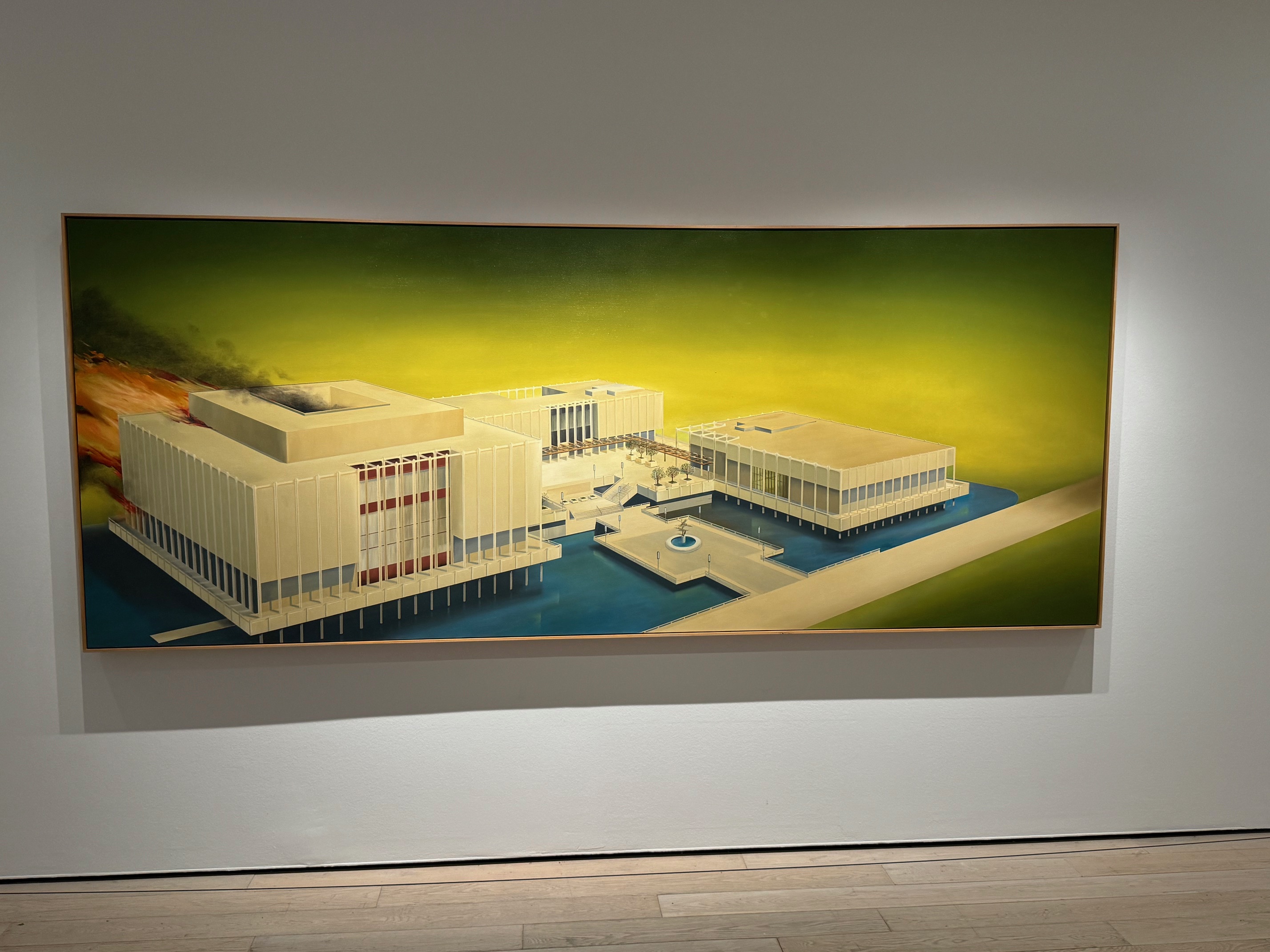
The Los Angeles County Museum on Fire, 1968

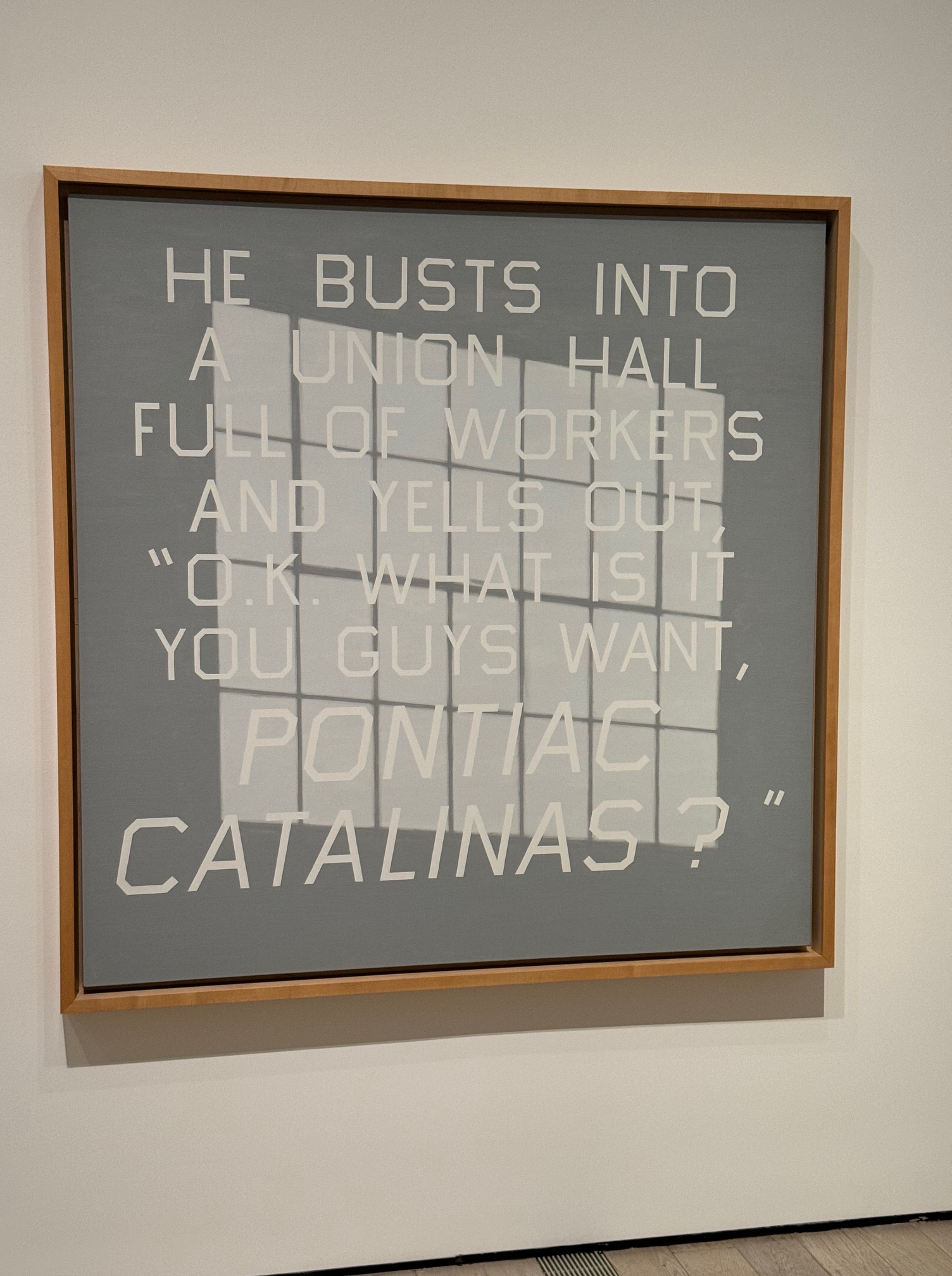
photo taken in Ireland, 1962:




Quality data and Hapsburg AI
Posted: June 27, 2024 Filed under: America Since 1945, business Leave a comment

That’s from the June 7 issue of ValueLine. I subscribed after I saw this clip:
Not even sure what year that’s from.
Quality has been on my mind.
Quality … you know what it is, yet you don’t know what it is. But that’s self-contradictory. But some things are better than others, that is, they have more quality. But when you try to say what the quality is, apart from the things that have it, it all goes poof! There’s nothing to talk about. But if you can’t say what Quality is, how do you know what it is, or how do you know that it even exists? If no one knows what it is, then for all practical purposes it doesn’t exist at all. But for all practical purposes it really does exist. What else are the grades based on? Why else would people pay fortunes for some things and throw others in the trash pile? Obviously some things are better than others … but what’s the betterness? … So round and round you go, spinning mental wheels and nowhere finding anyplace to get traction. What the hell is Quality? What is it?
As the guy says in Zen and the Art of Motorcycle Maintenance. At the Smithsonian you can see Pirsig’s motorcycle:

I was at See’s Candy the other day:

Recently I read this book:


There are some interesting case studies (although they skew a bit Euro):

Will AI ever produce something of “quality”? I have yet to see it.
History: rhyming or nah?
Posted: June 5, 2024 Filed under: America Since 1945, Mississippi 2 CommentsThis is from the annual letter of Kanbrick, an investment company run by Warren Buffett protege Tracy Britt Cool:

You’ve maybe heard this Mark Twain quote before. Here’s what bothers me: there’s no evidence Twain ever said this. It’s not anywhere in his writings (easily searchable). Maybe he said it to some person who wrote it down? Well, Quote Investigator can’t find that quote anywhere in print until 1970.
Twain did write this:
NOTE. November, 1903. When I became convinced that the “Jumping Frog” was a Greek story two or three thousand years old, I was sincerely happy, for apparently here was a most striking and satisfactory justification of a favorite theory of mine—to wit, that no occurrence is sole and solitary, but is merely a repetition of a thing which has happened before, and perhaps often.
but that’s not quite the same thing, is it?
Now, you might say, who cares? But, like, Kanbrick’s job is researching, and curiosity, and getting facts right. If Twain made this interesting statement, wouldn’t it be worth finding out to whom he said it? or where he wrote it? and in what context? Even Mark Twain didn’t go around saying aphorisms. He said stuff in a setting. If Kanbrick had gone looking for the context, they wouldn’t have found it. So, they weren’t curious?
Look, let’s let Kanbrick off the hook here, they’re an investment firm. But here’s Ken Burns in a graduation speech at Brandeis University:
We continually superimpose that complex and contradictory human nature over the seemingly random chaos of events, all of our inherent strengths and weaknesses, our greed and generosity, our puritanism and our prurience, our virtue, and our venality parade before our eyes, generation after generation after generation. This often gives us the impression that history repeats itself. It does not. “No event has ever happened twice, it just rhymes,” Mark Twain is supposed to have said. I have spent all of my professional life on the lookout for those rhymes, drawn inexorably to that power of history. I am interested in listening to the many varied voices of a true, honest, complicated past that is unafraid of controversy and tragedy, but equally drawn to those stories and moments that suggest an abiding faith in the human spirit, and particularly the unique role this remarkable and sometimes also dysfunctional republic seems to play in the positive progress of mankind.
Now, Ken Burns at least gives the qualifier “supposed to have said,” but… Ken Burns made a 212 minute long documentary about Mark Twain! He must’ve steeped himself in Mark Twain! Did he not want to check out the context? I would guess that he just found it too good a quote to lose, and Mark Twain too good a source to put it too.
Here’s the IMF slapping down the quote without even a “supposed to have said.”
People chalk up quotes to Mark Twain and Churchill and Einstein all the time. That’s sorta just human nature to give these witty remarks to folk heroes famous for wisdom and smarts. The part that bothers is me is that no one, even in annual letters to investors and graduation speeches, was curious enough to be like “what was the context here for this quote I like? What was Twain saying? Where did he say it?”
It’s never been easier to find something like that out, it can be done in a few minutes. In the old days you had to walk to Cambridge and find the bookseller Bartlett, who knew every quote. Eventually Bartlett got tired of the inquiries and published a book, which is now an app.
Perhaps you’re thinking, Steve, who cares? These folks wanted to sauce their speech a little bit, does it matter? Maybe not. But as Mark Twain said, “what’s a personal website for if not working out life’s little irritants?”
Related: did Fitzgerald mean that thing about “no second acts in American lives“? Or did he conclude the exact opposite? (I’ve sometimes wondered if F. meant no second acts in the sense of like a three act Broadway play, like: American lives go right from the first act to the third act.)
C.R.A.V.E.D
Posted: May 14, 2024 Filed under: America Since 1945, business, food 1 Comment
continuing a deranged hobby of reading corporate materials for fast food companies. See if you can guess what the acronym C.R.A.V.E.D stands for at $JACK, the corporate parent of Jack In The Box and Del Taco.
To buy time while you think, here is a story about Herb Kelleher, founder of Southwest Airlines, who had a strong, clear mission focus:
There is a great story shared by Chip and Dan Heath in the book “Made to Stick” about the late founder Herb Kelleher. Kelleher once posed a question to someone about their strategy,
“Tracy from marketing comes into your office. She says her surveys indicate that the passengers might enjoy a light entree on the Houston to Las Vegas flight. All we offer is peanuts, and she thinks a nice chicken Caesar salad would be popular. What do you say?”
The person stammered for a moment, so Kelleher responded:
“You say, `Tracy, will adding that chicken Caesar salad make us THE low-fare airline from Houston to Las Vegas? Because if it doesn’t help us become the unchallenged low-fare airline, we’re not serving any damn chicken salad.’
(source)

Jim Simons
Posted: May 11, 2024 Filed under: America Since 1945 1 CommentZierler:
And Jim, when you were a kid, how did you or your teachers or your parents first recognize the abilities that you had?
Simons:
Well, all parents think their kids are a genius, so (laughs) so, but I did get involved with math very early. I loved to keep multiplying by two and see… I finally got up to whatever it is, 1,024, I guess? And so I liked to do that. I remember I was in the car with my father when I was maybe four or five at the most, and he said he had to stop to get gas, and I said, “Why do you have to do that?” And he said, “Well, we could run out of gas if I don’t stop.” And I said to myself and then to him, “Well, you don’t have to run out of gas. You can use half of what you have, and then you can use half of that and then half of that, and you’ll never run out of gas.” (both laugh) Well, it didn’t occur to me that you’d never get anywhere either, but I just kept slicing up what was in the gas tank. And I remember also spending many a night lying in bed thinking, “How do you define the expression, “Pass it on.” That’s an expression, right? Pass it on. How do you define it? How do you explain to someone that he’s supposed to say to someone, the next guy down, et cetera, that wasn’t good enough. I really wanted to figure it out. And one night, I did figure it out, and then when I woke up, I forgot what it was. So (both laugh) but now I remember. But it’s, you know, a strange thing for a kid to do as, I was maybe eight, to think about such a question. So I always liked math.
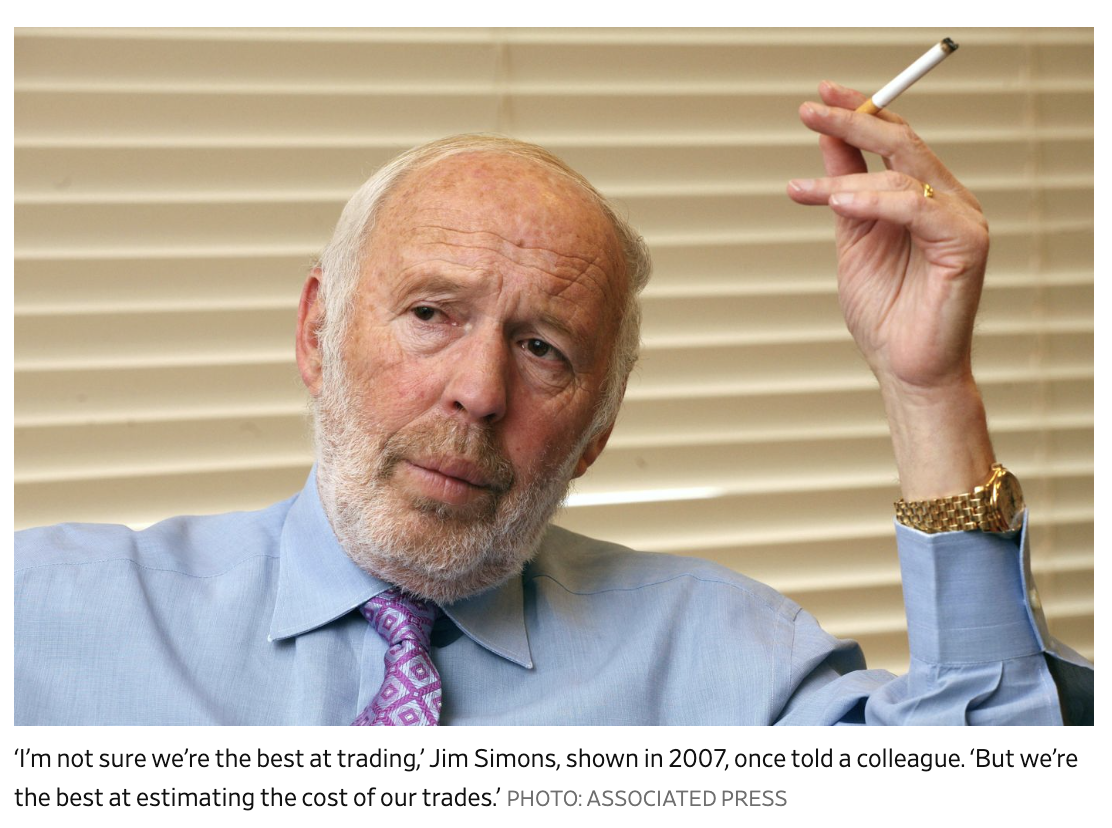
Here’s my source for that. Jim Simons, smoker, figured out a way to turn the markets into a money machine, suffered severe tragedies, gave money to science. (Why are so many brilliants from Brookline? Irish Jewish interaction under the looming mountains of Boston?)
Dumb and Dumber and Bill Clinton
Posted: April 11, 2024 Filed under: America Since 1945, presidents Leave a comment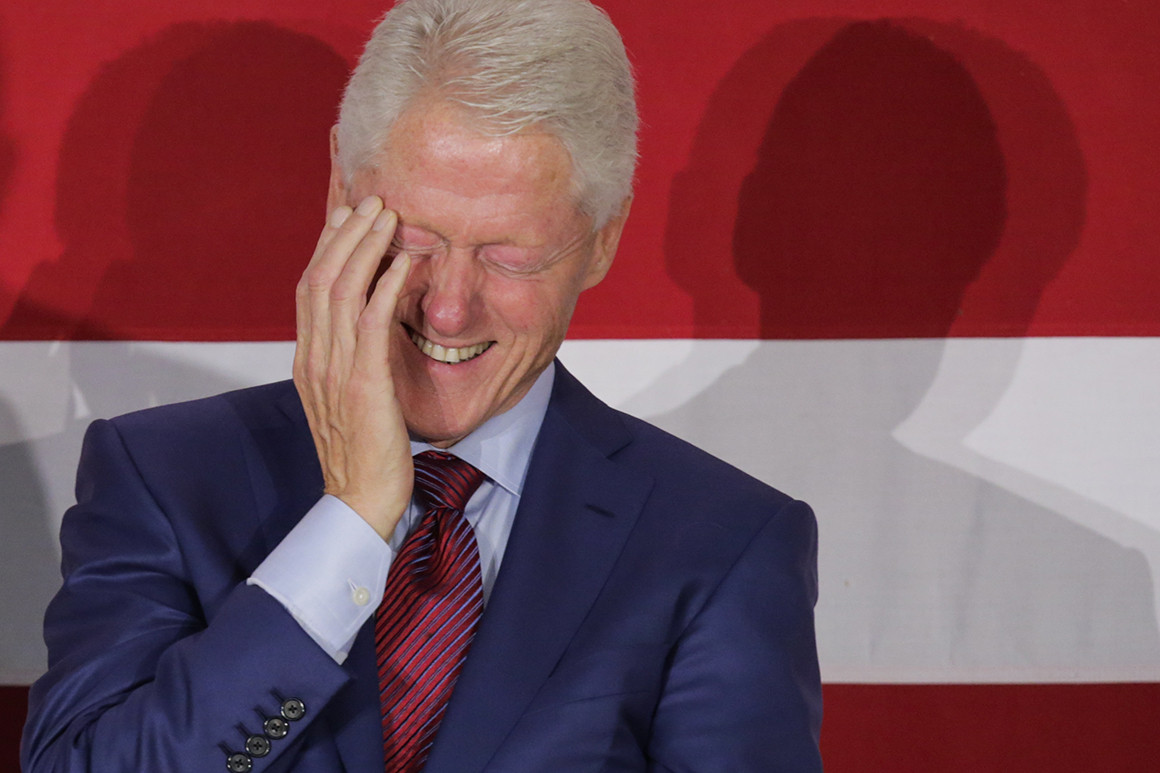
(source)
We’d sit on that airplane and watch—one example, the classically brilliant, stupid movie, Dumb and Dumber.
Riley
I love Jim Carrey, but that’s one I haven’t even been able to watch.
Friendly
It’s a hilariously stupid movie, and there’s Clinton sitting there. This is one of the most brilliant people I’ve ever met and he’s sitting there chewing a cigar, playing hearts, watching Dumb and Dumber, laughing hysterically, but then also not getting some of the story line. I mean partly because he’s playing cards, he’s doing a crossword puzzle, talking to somebody, and watching Dumb and Dumber. But there I am trying to describe the plot line of Dumb and Dumber to the President of the United States. This is surreal.
(source: Andrew Friendly interview at The Miller Center)
Then there were silly little things, too, like his crossword puzzles. That seems like a silly thing, but to the extent that there are pop culture clues in crossword puzzles—The Sunday New York Times is the hardest one, because they get harder throughout the week. I never noticed many pop culture references in the Sunday one, but I’m sure the Monday one might have one or two. He loved to watch cheesy movies. We’d be landing in Moscow, but he wanted to see the last minute of Dumb and Dumber before he walked off the plane or something.
Riley
Does that get him charged up, the last minute of Dumb and Dumber?
Goodin
He likes action movies better. All of this is to say he actively cultivated these lifelong friendships. By virtue of who he is and the life he’s led, those friendships are totally across the spectrum of “real people.” He has such capacity to take in everything. He’ll have as much joy talking about the latest biography of [Abraham] Lincoln as he will about the most ridiculous scene in Dumb and Dumber. He has so much real estate in his brain for these people and relationships and knowledge, and he kept himself open to as many channels as possible.
(Stephen Goodin oral history at the Miller Center)
jackasses like Dykstra
Posted: January 19, 2024 Filed under: America Since 1945 Leave a comment
At the town dump recycled magazines were piled in a converted shipping container (is that what it was?) and I’d go through them looking for Sports Illustrateds.
The phrase “jackasses like Dykstra” stuck with me so much I think of it almost every time I consider the dress code at a nice restaurant. With ease I was able to recover the original, from February 1994.
Boorish Behavior
Your jocular tone in SCORECARD about Lenny Dykstra’s oafish antics in a restaurant (Jan. 17) calls for a response. Wearing a hat in any restaurant is a statement of social ignorance or, more likely, appalling ego, and the loud swearing in the establishment in suburban Philadelphia reinforces my impression of this lout. Your flip conclusion, in which his $24.9 million contract is mentioned, was inappropriate. There is still such a thing as class, just as there is a lack of it.
JOHN KELLEY, Winthrop, Mass.Isn’t SI the publication that ran Karl Malone’s June 14 POINT AFTER saying Charles Barkley should recognize that he is a role model whether he wants to be or not? So why doesn’t this pious injunction apply to Lenny Dykstra, six million bucks a year or not? One reason that people go to nice restaurants is to get away from jackasses like Dykstra.
ROBERT H. PASCHALL, Bishop, Calif.
Is “writing about sports” as a moneymaking prospect dead now? Talking about sports, videos about sports, bigger than ever maybe, but is writing about it over? What does that say about writing?
The importance of bird hunting in American politics
Posted: January 14, 2024 Filed under: America Since 1945, birds, Uncategorized Leave a comment
JAB III used to turkey hunt with Lawton Chiles despite being in opposing parties. According to JAB that paid off during the 2000 Florida recount:
BAKER:
Jeb ran against Lawton Chiles in a very divisive and semidirty race. I had become a good friend of Lawton because I was Treasury Secretary and he was Chairman of the Senate Budget Committee. We did a lot of work together. He was an adversarial Democrat and I was an adversarial Republican, but we both liked to turkey hunt. He would invite me to Florida to hunt turkeys and I would invite him to Texas to hunt turkeys. I would call the turkeys for him and he would shoot them, and he would call them for me and I would shoot them.
One thing that really paid dividends with respect to the Florida recount—I know I’m jumping ahead of you here—Before I’d gotten over there, but it was reinforced after I’d gotten over there, I remembered the types of people that Lawton had appointed to the Florida Supreme Court. I’d probably met some of them. There was a guy named Dexter Douglass—You may remember who that was.
RILEY
He shows up in your book.
BAKER
In my book, yes. He was an advisor to Lawton. He was the guy who told Lawton whom to put on the Florida Supreme Court. He gave him advice about which lawyers to put on. They were all liberal trial lawyers. So when I got to Florida I was of the view, pretty much right off the bat, that if we weren’t able to get this into federal court we had a really tough row to hoe. As it turned out, that was very true. The Florida Supreme Court pulled us out twice, once in the face of a direct order from the United States Supreme Court to review their opinion—They reversed an earlier opinion. So that relationship I had with Lawton Chiles really paid dividends when it was time to go to do the recount.
There was a significant moment in George W. Bush’s governor campaign in Texas that turned on how he handled accidentally killing a killdeer, the wrong kind of bird, during a publicity event on the first day of bird hunting season. Here’s Karl Rove:
Then also, the famous killdeer incident had a big impact, because it showed—Her attitude toward good old boys was condescending. She felt she needed to placate “Bubba” by every September first going dove hunting in East Texas, outside of Dallas. Of course, she was not a hunter, she could care less, but it was a nice show and she’d get a nice picture for the newspapers. Bush went dove hunting and shot a protected bird, a killdeer, and when he discovered that he had done so, after a sharp-eyed television sports reporter noticed that the white markings on the bird meant that it was a killdeer, Bush’s response was not to deny it, but to dispatch a young aide to the game warden’s office to pay the fine immediately.
Then there was the incident where Cheney shot his buddy in the face by accident. Rove:
Rove
On my lease, and that was my lawyer. I was shocked that fact never came out. If you go back to incorporation papers of Rove and Company in 1981, my lawyer, the secretary/treasurer of my corporation, and my landlord is Harry M. Whittington Jr., and that’s the guy Cheney shot. The press corps never figured it out, but could you imagine the headline in the Washington Post? “Cheney Shoots Rove’s Lawyer in Sign of West Wing Tension.”
Riley
Did you get a funny feeling in your stomach when you got that news?
Rove
We could not get Cheney to make it public, and we needed to. It took until the next morning, before Cheney allowed Katharine Armstrong to feed the news to a reporter at the Corpus Christi Caller-Times. The White House press corps was furious with us for having hid this fact from the afternoon and to the next morning.
Why did Cheney’s team bungle releasing that news? Dan Bartlett, W. communications director, explains:
The second one is when he shot Harry Whittington and he shut down all internal communication. We couldn’t get hold of him, couldn’t get hold of his staff. Only learned later that there were some back channel communications with Karl, but they decided that no one in the world would understand or have context for him accidentally shooting somebody while hunting except for one reporter at the Corpus Christi Caller-Times who they couldn’t find because she was on a drunk bender for 12 hours. It took that long to find her.
Nineteen (or so) things I learned in 2023
Posted: December 30, 2023 Filed under: America Since 1945 Leave a comment
I admire Tom Whitwell’s annual list of 52 things he learned in the year. Maybe most of what I learned this year were more emotional truths? I could only come up with twenty. You might know all these things, many of them have been known for some time, they’re just items that came across my transom and stuck with me this year.
- one of many factors that hurt the Confederacy was their railroads had different gauges. It was President Abraham Lincoln who set the standard US railroad gauge (4 ft 8 1/2 in) when he made that standard for the Transcontinental Railroad. (do we buy the just-so story about Roman chariots?)
- during the decade ending in 2021 the US Treasury took in $32.3 trillion in taxes and spent $43.9 trillion
- the so-called Russian-Urkanian hypothesis argues that fossil fuels like oil and natural gas aren’t generated from decaying organic matter, but from non-biological geology events
- the USA detonated 35 nuclear weapons on itself between 1957 and 1977 to see if that would be a good way to drill for oil, construct canals, and do other peacetime projects
- Louis B. Mayer used to don diving equipment to collect scrap metal in Boston Harbor
- in 1000 AD, sugar was unknown in the UK. By 1900 it was supplying one fifth of the calories in the English diet.
- you’re probably eating wood pulp.
- the average Australian spends US $871 on horse racing a year. (Can this be true? My source is Harness Racing Update. It’s possible ADW computer teams are churning in ways that skew the figures. )

(that’s not a fact, just a memorable kind of statement I found on Brian Wilson’s Wikipedia page.)
- Between 1640 and 1652, Ireland lost between 15% and 20% of her population due to war and war-related starvation. (Source.)
- Los Angeles is home to more Native Americans and Alaskan Natives than any other county in the USA. (Source.)
- Kenneth Adams 1934 murals for the University of New Mexico library are now covered because some find them offensive.
- the price paid to a winkte among the Sioux for naming a child was a horse.

- Dopaminergic medications for Parkinson’s disease have been associated with extreme risk taking, and pathological gambling.
- This is what Dick Cheney and his team thought they’d be working on when they went into work on 9/11/2001:

- In 2022 the murder rate in New Orleans was about 7x what it was in Los Angeles. (Source. The murder rate in New Orleans is off the charts. There were 280 murders in New Orleans in 2022, that’s more than in all of Germany.)
- after hearing Fleetwood Mac at the Democratic convention, James Baker warned George H. W. Bush, “they’re playing music we don’t know.“
- Abraham Lincoln frequently compared his situation as president to the tightrope walker Blondin crossing Niagara Falls.

- Actor James Marsden’s dad used to be head of food safety at Chipotle.
- JFK’s high school math teacher invented the point spread.
see you next year!

Thad Cochran
Posted: December 17, 2023 Filed under: America Since 1945, Kennedy-Nixon, Mississippi, New England Leave a comment
Poking around the Edward Kennedy oral history project at The Miller Center I find this interview with former Mississippi senator Thad Cochran.
Cochran was a young Naval officer in Newport when he happened to get an invitation to the Kennedy compound from an Ole Miss coed friend who was working as cook there:
Heininger
What were your impressions of [Ted Kennedy] that very first time you met him in Hyannis Port?
Cochran
Very casual, easy to be with, approachable, good sense of humor, big appetite. He liked chocolate-chip cookies, I know that. He stood there and ate a whole fistful of chocolate-chip cookies, which my friend would make on request. She was apparently good at that.

As a young naval officer here’s what Cochran thought of the buildup to Vietnam:
But then the Vietnam thing came along, and it started getting worse and worse. I didn’t get called back in the Navy to serve in Vietnam, but I was teaching one summer in Newport when the Gulf of Tonkin incident occurred. Just trying to figure that one out and reading about what had happened and looking at a couple of television things of the bombing of the port at—where was it, Haiphong, something like that? I thought, I cannot believe this. What the heck is President Johnson thinking? What is he doing? How are we going to back away from that now, responding to this attack against a merchant ship, as I recall?
Anyway, I began worrying about it. I think, in one of my classes, I even asked the students, the officer candidates about to be officers in the U.S. Navy, would they like to go over to Vietnam and fight over this? Would they like to escalate this another notch? Is there something in our national interest? Of course they were scared to death of it. They didn’t want to say anything, but I think I expressed my view kind of gratuitously, and then later I worried that I was going to get reported for being a belligerent, anti-American Naval officer. I really became angry and frustrated and upset with the way this thing was going, and it just got worse, as everybody knows.
How did he end up in elected office?:
So then I went back to practicing law and just working and enjoying it. I forgot about politics, and then our Congressman unexpectedly announced that he was not going to seek re-election. His wife had some malady, some illness, and the truth was, he was just tired of being up here and wanted to come home. It took everybody by surprise. I’m minding my own business again one day at the house and the phone rings, and it’s the local Young Republican county chairman, Mike Allred, who called and said,
You know, you may laugh but I’m going to ask you a serious question. This is serious. Have you thought about running for Congress to take Charlie Griffin’s place?And I said,Well,and I laughed because I said,You know, I have thought about it. I was surprised to hear that he wasn’t going to run, but I’ve thought about it, and I’ve decided that I’m not interested in running. I’ve got too much family obligation, financial opportunities, the law firm,etc.I think Congressmen were making about $35,000 a year or something like that. There was a rumor it might go up to $40,000. I thought, Well, I have a wife and two young children, and there’s no way in the world I can manage all that, and in Washington, traveling back and forth, etc. But it would be interesting. It’s going to be wide open. It was an interesting political situation. Then he said,
Well, let me ask you this: have you thought about running as a Republican?I laughed again and I said,No, I surely haven’t thought about that.I was just thinking about the context of running as a Democrat, and so I was still thinking of myself as a Democrat in ’72.He said,
Would you meet with the state finance chairman? We’ve been talking about who would be a good candidate for us to get behind and push, and we want to talk to you about it. We really think there’s an opportunity here for you and for our partyand all this. I said,Well, Mike, I’ll be glad to meet and talk to you all, but look, don’t be encouraged that I’m going to do it. But I’m happy to listen to whatever you say. I’d like to know what you all are doing, as a matter of curiosity, how you got off under this and who your prospects are and that kind of thing. I’d like to know that.So I met with them, and they started talking about the fact that they would clear the field. There would not be a chance for anybody to win the nomination if I said I would run. I thought, Golly, you all are really serious and think a lot of your own power. I started thinking about it some more, and I asked my wife what she would think about being married to a United States Congressman, and she said,
I don’t know, which one?[laughs] And that is a true story. I said,Hello. Me.Anyway, a lot of people had that reaction:
What? Are you seriously thinking about this?But everybody that I asked—I started just asking family and close friends, law partners; I just bounced it off of them—I said,What’s your reaction that the Republicans are going to talk to me about running for Congress?I was just amazed at how excited most people got over the idea that I might run for Congress and run as a Republican. That’s unique, and they wouldn’t have thought it because they knew I was not a typical Republican. The whole thing worked out, and I did run, and I did win.
That was ’72. Interesting dynamic in Mississippi that year:
Knott
Were you helped by the fact that [George] McGovern was running as the Democratic nominee that year?Cochran
Yes, indeed. There was no doubt about it. I was also helped by the fact that some of the African-American activists in the district were out to prove to the Democrats that they couldn’t win elections without their support. Charles Evers was one of the most outspoken leaders and had that view. He was the mayor of Fayette, Mississippi, and that was in my Congressional district. He recruited a young minister from Vicksburg, which was the hometown of the Democratic nominee, to run as an Independent, and he ended up getting about 10,000 votes, just enough to deny the Democrat a majority. He had 46,000 or something like that, and I ended up with 48,000 or whatever. I’ve forgotten exactly what the numbers were. The Independent got the rest.
So the whole point was, I was elected, in part—I had to get what I got, and a lot of people who voted for me were Democrats, and some were African Americans who were friends and who thought I would be fair and be a new, fresh face in politics for our state and not be tied to any previous political decisions. I’d be free to vote like I thought I should in the interest of this district. It was about 38 percent black in population, maybe 40 percent, and not only did I win that, but then the challenge was to get re-elected after you’ve made everybody in the Democratic hierarchy mad. I knew they were going to come out with all guns blazing, and they did, but they couldn’t get a candidate. They couldn’t recruit a good candidate. They finally got a candidate but—
Knott
Seventy-four was a rough year for Republicans.
Cochran
It was and, of course, Republicans were getting beat right and left. So when we came back up here to organize after that election in ’74, there weren’t enough Republicans to count. But I was one of them who was here and who was back. Senator Lott, he and I both made it back okay. He was from a more-Republican area: fewer blacks and more supportive of traditional Republican issues.
His opinion on the state of affairs:
Serving in the Senate has gotten to be almost a contact sport, and that’s regrettable, in my view. I would like for it to be more like it was when I first came to the Senate. There was partisanship, right enough, and if you were in the majority, you got to be chairman of all the subcommittees, and none of the Republicans, in my first two years, were chairmen of anything, but that’s fine. That’s the way the House is operated. I’d seen that in the House, and that’s okay. Everybody understands it. But since it’s become so competitive—and the House has too—things are more sharply divided along partisan lines than they ever have been in my memory, and I think the process has suffered. The legislative work product has deteriorated to the point that legislation tends to serve the political interests of one party or the other, and that’s not the way it should be.
Who does he blame?:
I’ve been disappointed in the partisanship that has deteriorated to the point of pure partisanship in court selections, in my opinion, in the last few years, and [Ted Kennedy’s] been a part of that. I’m not fussing at him or complaining about it. It’s just something that has evolved, but all the Democrats seem to line up in unison to badger and embarrass and beat up Republican nominees for the Supreme Court in particular. But it’s extended to other courts, the court of appeals. They all lined up and went after Charles Pickering from my state unfairly, unjustly, without any real reason why he shouldn’t be confirmed to serve on the 5th Circuit Court of Appeals. He had run against me when I ran for the Senate, Pickering had. I defeated him in the Republican primary in 1978. So we haven’t been political allies, but I could see through a lot of the things.
I have a close personal friendship with Pat Leahy and Joe Biden, and I could probably name a few others. I’ve really been aggravated with them all for that reason, and I hope that we’ll see some modification of behavior patterns in the Judiciary Committee. Occasionally they’ll help me with somebody. I’m going to be presenting a candidate for a district court judgeship this afternoon in the committee, and yesterday Pat came up, put his arm around me, and said,
I know you’re for this fellow, [Leslie] Southwick, who is going to be before the committee, and I want you to know you can count on me.Well, I’m glad to hear that.There’s nothing wrong with him. I mean, he’s a totally wonderful person in every way. He’ll be a wonderful district judge.I’m not saying that they make a habit of it, but they’ve picked out some really fine, outstanding people to go after here recently, and there are probably going to be others down the line that they’ll do that. Ted’s part of that, and I think all the Democrats do it. I think that’s unfortunate.
Knott
Are they responding to interest group pressure? Is that your assessment?
Cochran
I think that has something to do with it, but I’m not going to suggest what the motives are or why they’re doing it, but it’s just a fact. It’s pure partisan politics, and it’s brutal, mean-spirited, and I don’t like it.
Heininger
What do you attribute the change to?
Cochran
I don’t know. I guess one reason is we’re so closely divided now. You know, just a few states can swing control of the Senate from one party to the next, and we have been such a closely divided Senate now for the last ten years or so. Everybody understands the power that comes with being in the majority, and I’m sure both parties have taken advantage of the situation and have maybe been unfair in the treatment of members of the minority party, denying them privileges and keeping their amendments from being brought up or trying to manage the schedule to the benefit of one side or the other.
Cochran died in 2019. In the Senate he used Jefferson Davis’s desk.
jet trucks for incinerating
Posted: December 10, 2023 Filed under: America Since 1945, food Leave a commenta nice article in the Wall Street Journal about trucks rigged with jet engines to incinerate junk cars at racetrack shows:
A former Navy mechanic named Doug Rose helped to popularize meltdowns after he created a dragster using a jet engine from a scrapyard. According to his widow, Jeanne, he conducted his first fire show around 1968 with a car he named the Green Mamba. Over the years, he honed his craft until he could torch a half-dozen vehicles at once. “Doug’s objective was to please the people,” she said.
WSJ also has a photographic review of how McDonald’s is revamping her burgers.

We’re not convinced. Yesterday stopped at the Yucaipa In-N-Out. Two cheeseburgers, fries, medium soda, side of pickles and free hot peppers for $12.50. Is there a better deal in America? Of course when you drive by Harris Ranch you get a tough look and smell of the system that makes that possible.
 Helytimes