Shuttin’ Up For Summer
Posted: June 28, 2015 Filed under: America Since 1945, heroes, writing 1 Comment
Time for summer vacation here at Helytimes!
Before I go there were a couple things to get out of my system:

New David Brooks book
I like David Brooks, I’ve read all his books. Lately he’s been getting hammered by the millennials. That’s gonna happen when you tell people stuff they don’t wanna hear, true or not, and you don’t seem to actually have it all figured out yourself. Whatever, he has an exhausting job. Shouldn’t Times columnists take a year off every so often?
The message that’s at the center of this book might be, you must work hard every day at being a better person.
Who would disagree with this? Yet it’s not really a message we hear that often.
Brooks thinks people used to hear this message all the time, it was part of the public life or public religion or culture of this country. As his sparker example, he cites a radio broadcast he heard from the end of WW2:
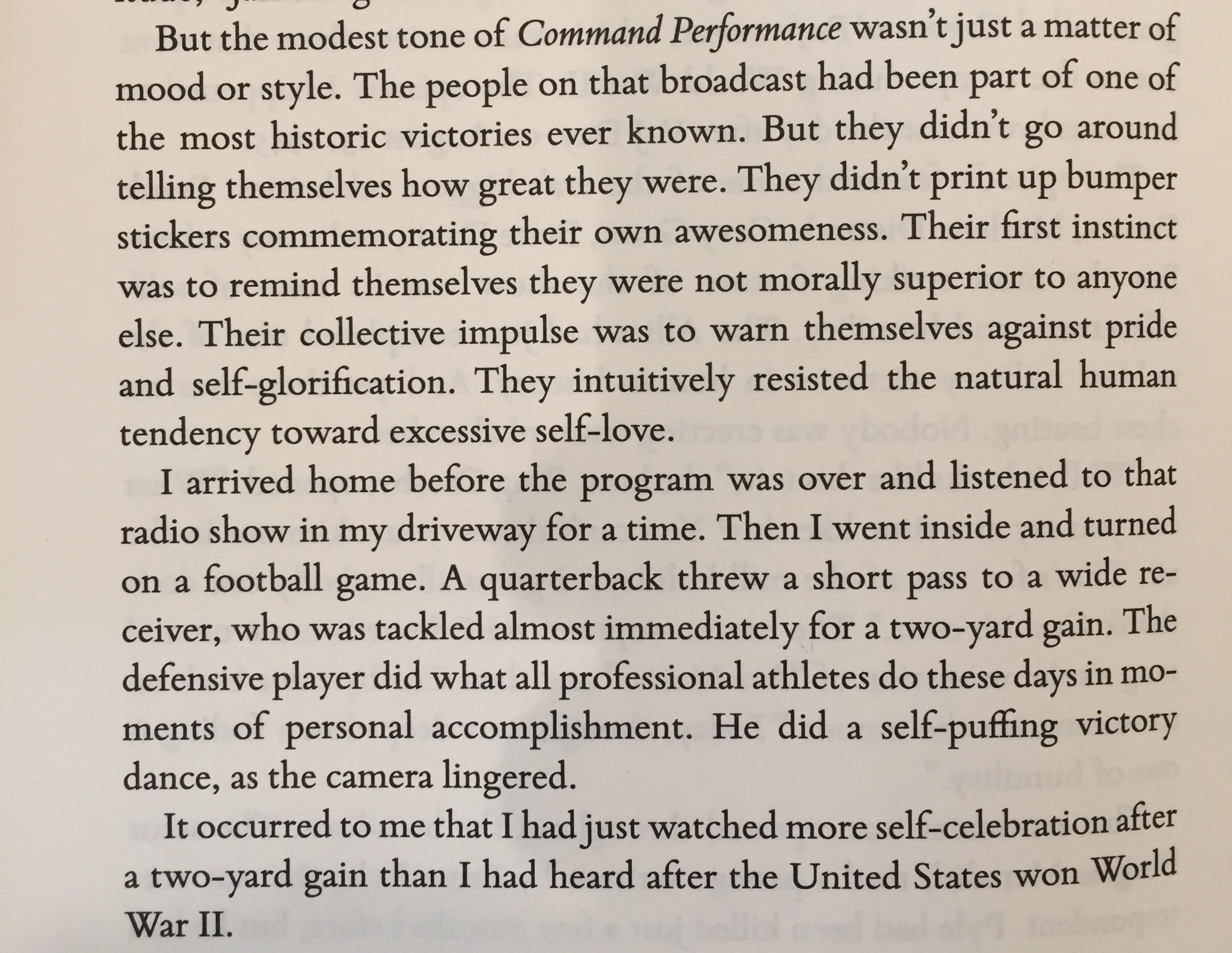
Well, ok. But maybe they were somber because three hundred thousand American guys had gotten killed, half of Europe was leveled, China was fucked, they’d just dropped two world-changing weapons on Japan, there was footage somewhere of bodies being shoved into ditches by bulldozers at Nazi camps, and we might have to fight the Soviets tomorrow.
Maybe they were just tired and exhausted and depressed.
As for the football thing, you know durn well that’s not a fair comparison, Brooks. You’re being glib. An adrenalined athlete and a broadcast at the end of a war are going to have different tones.
Anyway. The book is mini-biographies of:

George Marshall
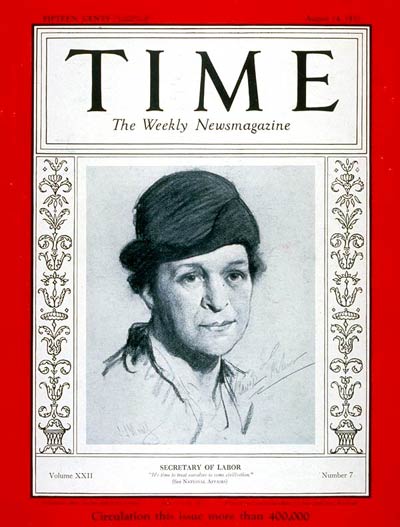
Francis Perkins
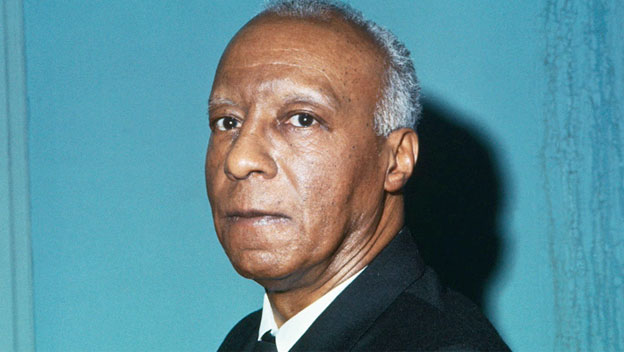
A. Philip Randolph
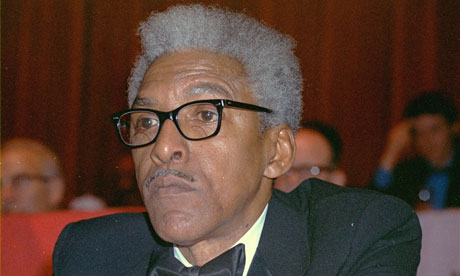
Bayard Rustin
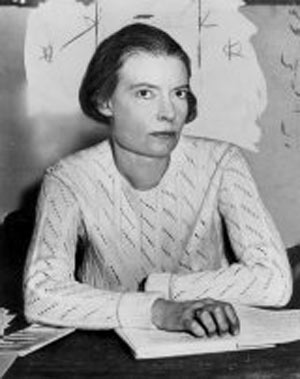
Dorothy Day (a fox, Brooks, you should’ve mentioned that, kind of part of the story here)
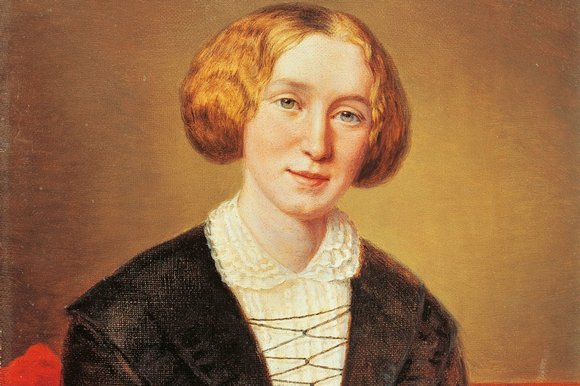
George Eliot
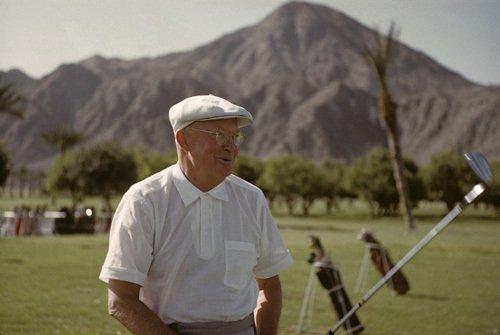
Dwight Eisenhower
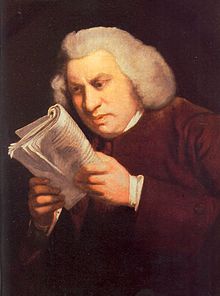
Samuel Johnson plus there’s Johnny Unitas, etc.
Those are all good. Who doesn’t love little biographies?
The basic message is that all these people worked hard to be their best, to find what that was, sort out their values and then live up to them. They overcome crazy challenges, achieved impossibilities, etc.
The world these people grew up in was very different. For one thing it was way poorer. It was way slower. It was traditional. It was segregated. Some of these people worked to change those things, others were like the embodiment of preserving those values.
So not all the lessons are easily transferable. Eisenhower and Marshall were military guys. Day worked in the Catholic tradition. Perkins and Eliot were from rigid semi-aristocracies. Maybe a moral of this book might be “use the values you’ve been taught. Lock into some tradition and try to advance it.” That’s an interesting idea.
One thing that I think is a fake claim in the Brooks book is this:
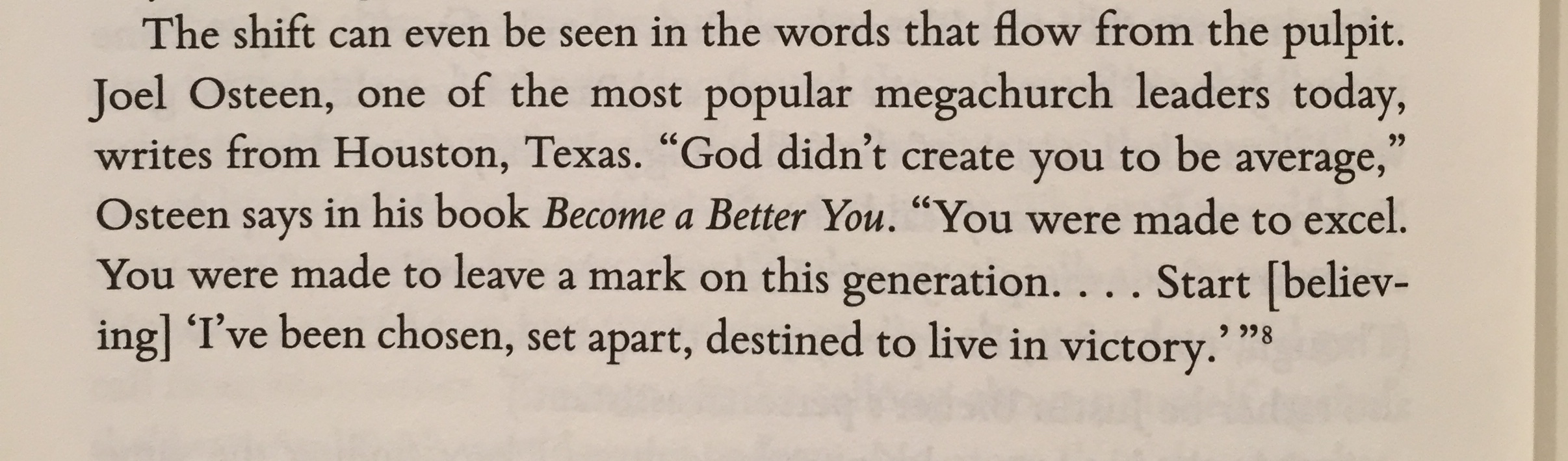
Well whatever, Joel Osteen gives me the willies, but all these characters Brooks describes believed they were “made to excel… to leave a mark on this generation… chosen, set apart”
On the whole though, the book was a fine read, and it’s worth thinking about this stuff. It reminded me of the lectures my high school headmaster used to give. There was a lot of sense in them, I look over this book of them a lot.
This is a fair slam on Brooks’ book.
When Your Enemy Wants To Surrender, Let Him.

Disappointed Brooks wrote a column about Lee without noting my and Bob Dylan’s work on the topic. As it happens I’ve been thinking about Lee a lot lately.
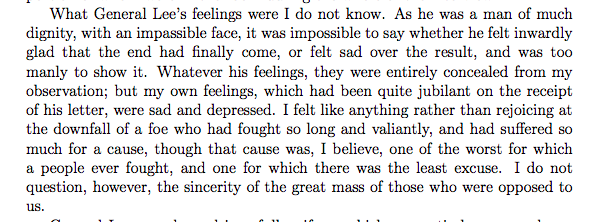
Grant, who’d seen thousands of people, many of them children, die horrible deaths because of Lee’s brilliance, because of his perseverance, because of his ability to inspire an army, Grant who’d lost friends and had to send his own guys to get killed by the thousands because of Lee, treated him with utmost magnanimity.
Here is what Grant says about Lee when they met at Appomattox:
The best one hour about Lee for my money is this PBS American Experience doc, avail free on my PBS Roku channel:
(How hard does American Experience dominate?)
Union General Montgomery Meigs thought of a punishment for Lee. He turned Lee’s wife’s ancestral home, to which Lee hoped to retire one day, into a fucking cemetery:

As for naming schools after him? Sure — maybe it’s a good lesson about how you can have some amazing qualities but be wrong about the most important things of your age. Kids can be reminded every day to ask “what might I be wrong about? what are we ALL wrong about?”
But also who cares? We can and should change our heroes as time goes on. Name it after the next guy. Name all those schools after Harriet Tubman or Sally Ride. Or Francis Perkins or Bayard Rustin.
Anyway: summer!
(I enjoy fails but I do prefer when I know for sure the guy isn’t paralyzed.)
If you need me btw you can find me here!:
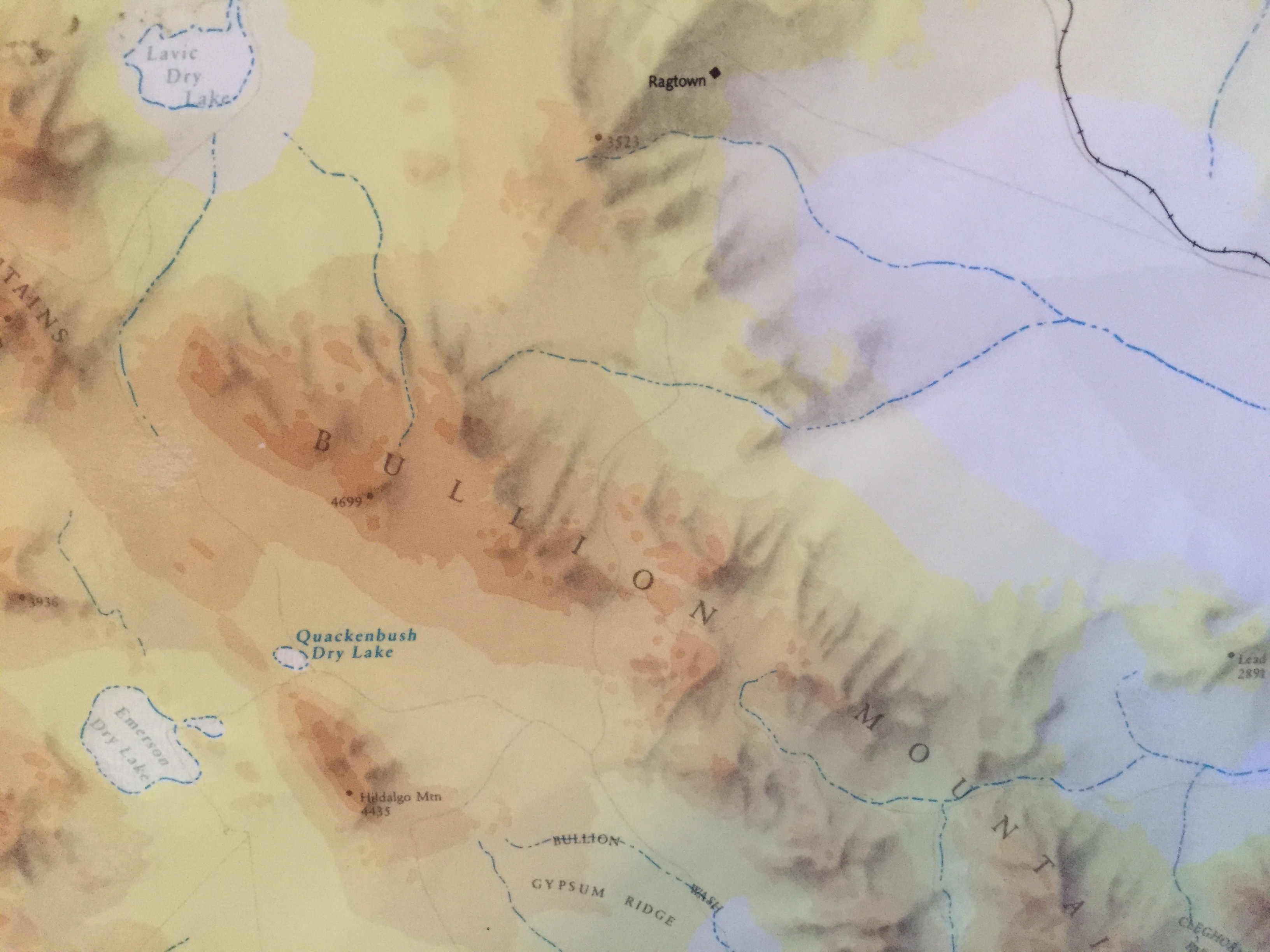
– one of the prettiest songs ever written, says Dick Clark.
The Duke of Abruzzi
Posted: June 16, 2015 Filed under: heroes, Italy, mountains, photography, Tibet, travel, writing 2 Comments
This one prompted me to pick up a book I’d been hearing about for awhile. Wade Davis has been featured on Helytimes before.
 He is the real deal.

The opening chapter of this book is intense, vivid writing about the British experience on the Western Front during World War I. Thought I’d read enough about that horror show: Robert Graves and Paul Fussell and Geoff Dyer. Maybe the guy who hit me in the guts the hardest was Siegfried Sassoon, in part because of what a groovy idyllic life got catastrophically ruined for him.
But Wade Davis makes it all new again. One paragraph will do:


Also fascinating:


Click here if you want to see a photo of Mallory’s dead body, discovered in 1999, seventy five years after he was lost on Everest. Only halfway through Davis’ book, at the moment I’m deep in Tibet suffering along on the painstaking surveying expeditions.
A character keeps popping like a fox into the story and then disappearing — a rival mountaineer, the Duke Of Abruzzi.

(You can read about Abruzzi, why I’d be interested in a duke from there here.) What a life. Says Wiki:
He had begun to train as a mountaineer in 1892 on Mont Blanc and Monte Rosa (Italian Alps): in 1897 he made the first ascent of Mount Saint Elias (Canada/U.S., 5,489 m). There the expedition searched for a mirage, known as the Silent City of Alaska, that natives and prospectors claimed to see over a glacier. C. W. Thornton, a member of the expedition, wrote: “It required no effort of the imagination to liken it to a city, but was so distinct that it required, instead, faith to believe that it was not in reality a city.”[citation needed]
Another witness wrote in The New York Times: “We could plainly see houses, well-defined streets, and trees. Here and there rose tall spires over huge buildings which appeared to be ancient mosques or cathedrals.”
If you’re climbing K2 you’re liable to be on the Abruzzi Spur:

Late in life:
In 1918, the Duke returned to Italian Somaliland. In 1920, he founded the “Village of the Duke of Abruzzi” (Villaggio Duca degli Abruzzi orVillabruzzi) some ninety kilometres north of Mogadishu. It was an agricultural settlement experimenting with new cultivation techniques. By 1926, the colony comprised 16 villages, with 3,000 Somali and 200 Italian (Italian Somalis) inhabitants. Abruzzi raised funds for a number of development projects in the town, including roads, dams, schools, hospitals, a church and a mosque. He died in the village on 18 March 1933. After Italian Somaliland was dissolved, the town was later renamed to Jowhar.

Jowhar found here, I hope user Talya doesn’t mind: http://www.skyscrapercity.com/showthread.php?t=1569979. From wiki: “On May 17, 2009, the Islamist al-Shabab militia took of the town, and imposed draconian rules, including a ban on handshaking between men and women.”
Let’s skip to the best part of any Wikipedia page, “Personal Life:”
In the early years of the twentieth century the Abruzzi was in a relationship with Katherine Hallie “Kitty” Elkins, daughter of the wealthy American senator Stephen Benton Elkins, but the Abruzzi’s cousin King Victor Emmanuel III of Italy refused to grant him permission to marry a commoner. His brother, Emanuele Filiberto, to whom Luigi was very close, convinced him to give up the relationship.[8] His brother later approved of young Antoinette “Amber” Brizzi, the daughter of Quinto Brizzi, one of the largest vineyard owners in northern Italy. In the later years of his life, Abruzzi married a young Somali woman named Faduma Ali.
Here is a picture of the Duke of Abruzzi:

That was taken by Vittorio Sella.
The high quality of Sella’s photography was in part due to his use of 30×40 cm photographic plates, in spite of the difficulty of carrying bulky and fragile equipment into remote places. He had to invent equipment, including modified pack saddles and rucksacks, to allow these particularly large glass plates to be transported safely.[6] His photographs were widely published and exhibited, and highly praised; Ansel Adams, who saw thirty-one that Sella had presented to the US Sierra Club, said they inspired “a definitely religious awe”.
 More on the Duke by Peter Bridges at VQR
Hey again I just yank photos and stuff from books from all over — not sure if that’s like an ok practice but this is a non-profit site, try to credit everyone, the whole point is that maybe you will want to go look at/read the originals.
Interaction Ritual Chains
Posted: June 5, 2015 Filed under: America Since 1945, Christianity, heroes, history, marine biology, religion, sexuality Leave a comment Got interested in the sociologist Randall Collins via his blog, which I think Tyler Cowen linked to.
Collins also wrote a book about violence.

If you find yourself in a bar fight, his main advice on avoiding “damage” seems to be:
1) maintain calm, steady eye contact.
2) speak in a calm clear assertive voice
3) assert emotional dominance, or at least hold your own, emotional dominance-wise.
Most of the damage gets done, says Collins (who watched hundreds of hours of tapes of bar fights) when you’ve already lost the emotional encounter. Even worse if there’s a crowd.
At the heart of Collins’ micro-sociological theory is the concept of “confrontational tension.” As people enter into an antagonistic interactional situation, their fear/tension is heightened. These emotions become a roadblock to violence, and so flight and stalemate often result. Actual violence only occurs when pathways around this roadblock can be found that lead people into a “tunnel of violence.” Collins identifies several pathways into this tunnel, the most dangerous of which is “forward panic.” In these situations, the confrontational tension builds up and is suddenly released so that it spills forward into atrocities ranging from the Rodney King beating to the My Lai massacre, the rape of Nanking, and the Rwandan genocide. Other ways around the stalemate of confrontational tension are to attack a weak victim (e.g., domestic violence) or to be encouraged by an audience (e.g., lynch mobs). Clearly, these pathways can also be combined, as when a schoolyard bully is encouraged by a crowd of classmates or when forward panic is stimulated by a group of bystanders.
Best posts from his blog, I’d say:

this one, on Napoleon and emotional energy.
this one, on Tank Man, is very interesting (although it goes against some other ideas I’ve heard, like Filip Hammar’s claim that it was well-known in his neighborhood of Beijing that Tank Man had been binge-drinking for days leading up to this event.)

this one, about fame, network bridging, and Lawrence of Arabia, is just fantastic.

So’s this one, about what we can learn from the gospel accounts of Jesus about charisma.

This one about Moby-Dick and bullfighting had some really interesting, new to me ideas.
I bought Professor Collins’ ebook, about emotional energy in Napoleon, Steve Jobs, and Alexander the Great. Lots of good stuff in there. And I got his magnum Interaction Ritual Chains. That’s a bit drier, but I’m learning a lot:

The hero with a thousand faces
Posted: May 20, 2015 Filed under: America Since 1945, heroes, the California Condition 1 CommentThis

makes me think of this

Kon-Tiki
Posted: December 29, 2014 Filed under: adventures, film, heroes, movies, the ocean 6 Comments
Who was it who recommended this to me? Hayes? Thanks! It’s on Netflix Instant.
Heyerdahl’s third wife was Miss France 1954:

His big white belly was moving up and down
Posted: October 5, 2014 Filed under: heroes Leave a comment
page one of:

Tove Jansson in 1956
Posted: October 1, 2014 Filed under: heroes Leave a comment
from the Moomins creator’s wikipedia page.
Aged 14, she wrote and illustrated her first picture book “Sara och Pelle och näckens bläckfiskar” (“Sara and Pelle and the Water Sprite’s Octopuses”)
The Woman Who Walked 10,000 Miles In Three Years
Posted: September 29, 2014 Filed under: heroes Leave a comment
Crazy story in the NY Times Magazine (insurance):
For that trip, Marquis lined up her first sponsor, the North Face. She doesn’t think she impressed the company by her pitch. She believes it gave her a few backpacks, a couple of tents and some clothes because, she said, “when I told them what I was going to do, they thought, We can’t let that little thing go out without gear.” To supplement the inadequate supply of noodles she could carry, Marquis brought a slingshot, a blow gun, some wire to make snares and a net for catching insects. In the warm months, Marquis ate goannas, geckos and bearded dragons. In the cold months, when the reptiles hid, she subsisted on an Aboriginal standby, witchetty grubs — white, caterpillar-size moth larvae that live in the roots of Mulga trees. (Raw, Marquis said, they taste like unsweetened condensed milk; seared in hot sand, they crisp up nicely.) Throughout, Marquis tried to minimize human contact. She hid her femininity with loose clothes, big sunglasses, hair piled up in a hat. When water was scarce, she collected condensation, either by digging a deep hole and lining the cool bottom with plastic or by tying a tarp around a bush. If those techniques didn’t yield enough liquid — and they rarely did — she drank snake blood. At night Marquis slept close to the trunks of trees, touching the bark in a way that she describes as “almost carnal.” She fell in love with a particular twisted and wind-bent Western myall tree on Australia’s Nullarbor Plain.
I went to look for a picture of the Nullarbor Plain:

that’s a highly populated stretch.
About that picture of Marquis:
A self-portrait that Sarah Marquis took (her camera was on a cart filled with gear) north of Mongolia, during the first month of her trek across Asia and Australia.
Umm…………………………….. hasn’t she heard of Uber?
Who is the classiest Derek of all time?
Posted: September 26, 2014 Filed under: America Since 1945, heroes Leave a comment
Or

(I gotta say: “write what you want and put my name at the bottom of it” is a baller quote by DJ)
Interesting rumor
Posted: August 20, 2014 Filed under: heroes, villains Leave a commentgoing around: that this guy:

and this guy:

are brothers.
He or she goes up the next day in another plane
Posted: August 12, 2014 Filed under: America Since 1945, heroes, the California Condition Leave a comment
Williams at the 62nd Academy Awards in 1990 with journalist Yola Czaderska-Hayek (from Wiki)
Public* mourning makes me uncomfortable. In the tradition I’m from, which let’s say is some combination of Irish/Italian/New England Catholicism and New England puritanism, the appropriate reaction to death, as I understood it, was somber quiet.
Mourning for celebrities tends to very quickly veer into something personal and showy — “I met him once…” “he/she meant this to me…” — that make me a tiny bit queasy. My gut reaction is that it’s a little selfish or self-aggrandizing, a strange reaction to something which should be humbling, reductive of the self.
I can see the other side too, people feel pain and loss and it’s natural enough to want to express it, so: whatever.
There’s also the comedy instinct to find the exact grey border country between “wildly inappropriate” and “just wrong enough, just teasing enough of taboo, to be exciting and boldly funny.” [I still laugh when I think about the guy who walked into the room where we were watching CNN after 9/11 and – not having heard about 9/11 – the dude walked into the room with both middle fingers up and said “what’s up bitches?” Only to then learn what the thing was that was on TV. An accidental joke.] If you’re gonna try this, though, you better be darn sure it’s funny. (The one or two stabs at this I saw yesterday were not just failures but were revolting and ugly.)
Anyway. I guess that’s it. I’m sad Robin Williams died, and the circumstances are extra sad. He died in Tiburon, CA.
Separate note: unrelated:
Yesterday I was reading Warren Bennis‘ book On Becoming A Leader. Not a great book, I have to say, it doesn’t capture or have the same impact of what it was like to hear Bennis in person. But I found myself thinking about this bit, hours later, it stuck in my craw:
Think what a great batting average is: .400 — which means a great batter fails to get a hit more than half the time. Most of the rest of us are paralyzed by our failures, large and small. We’re so haunted by them, so afraid that we’re going to goof again, that we become fearful of doing anything. When jockeys are thrown, they get back on the horse, because they know if they don’t, their fear may immobilize them. When an F-14 pilot has to eject, he or she goes up the next day in another plane.
(* I guess in this case I mean specifically “Twitter”)
Astronaut Scott Carpenter
Posted: July 17, 2014 Filed under: heroes Leave a comment
“The Loner Who Found Himself New Hero For Orbit”

Who drew that X on his head?
 From his Guardian obituary:
He described the combination of weightlessness and the view of “Mother Earth” as an “addictive combination of the senses.
“Conquering of fear is one of life’s greatest pleasures and it can be done a lot of different places,” Carpenter said.
Overheard from the World Cup announcers
Posted: July 8, 2014 Filed under: heroes, sports Leave a comment
Hope turns to prayer… the likelihood is that prayer will turn to disappointment.
Quiet swagger
Posted: June 12, 2014 Filed under: heroes 1 CommentDesus and Mero referred to Kevin Durant as “swaggerless” a couple times. Don’t know shit about Kevin Durant but I thought that was a funny phrase. Mentioned it to Seattle office, who said, “if you think Kevin Durant is swaggerless you should watch his MVP acceptance speech. Quiet swagger.”
This is indeed an incredible speech.
“Never change who you are.”
“God directed our paths to work together.”
Jump to 23:36 if you’re pressed for time.
Man.
He got me.
Sometimes the adventure gets out of hand
Posted: May 29, 2014 Filed under: heroes Leave a comment
Always interested in stories how people keep their minds together in solitary confinement. Here is a good one from a NY Times obituary today, of Robert J. Flynn, “who spent five and a half years in a Communist Chinese prison during the Vietnam War, almost always in solitary confinement, after he was shot down on a bombing mission.”

“I’d think of my family,” he said. “I’d plan parties, birthdays, anniversaries for everyone. And I would imagine that Kathy bought some land in Alaska and gold was discovered there. And I had the biggest gold mine going. I had all kinds of people working for me — people I knew. And I ran a big imaginary corporation. That’s what I did.”
And gee whiz what a great quote at the end:
“I wouldn’t want to do it again,” he told The News Journal in recalling his captivity. “But it was part of the experience of my life. Life is sort of an adventure. Sometimes, the adventure gets out of hand.”
(that’s him on the right, from UPI/NYT. Corporate flow chart from GMP Hawaii.)
Bedwetters vs. Thumbsuckers
Posted: December 22, 2013 Filed under: heroes Leave a comment
 From NY Times mag profile of McCain by Mark Leibovich:
He invites me to an actual arena that night: in Glendale, Ariz., where the Calgary Flames of the N.H.L. were in town to play the Phoenix Coyotes. This is not the most fabled rivalry in sports, but McCain says he will watch any sporting event (“I’d pay to see the Bedwetters play the Thumbsuckers”). He is a big fan of the Coyotes. There are supposedly other Phoenix Coyote fans, too, though not many of them come to home games. McCain’s 25-year-old son, Jimmy, drives us to the arena. Cindy McCain is in the front seat, and I’m in back with the senator, who is desperate to hear the pregame show on the radio. Silence makes him nervous. He keeps barking out call numbers to Cindy, but no luck. He checks the Coyotes app to find information about the show (McCain talks incessantly about his new Coyotes app), and Cindy continues to hunt around the radio dial, except when she is bracing herself for a crash, which happens on three separate occasions during Jimmy’s gun-and-slam death ride through the greater Phoenix sprawl. When we arrive, miraculously without incident, the McCains engage in a spirited debate about which parking lot to use. Jimmy takes a few wrong turns; Cindy tells him to slow down and asks why he’s going this way or that way, until finally Jimmy snaps and says, “Mom, you make it seem like which parking-lot entrance is the most important thing in the world!” In fact, it’s not, he tells her. “I had a woman almost OD in front of me at a strip club this afternoon. Now that’s something serious.”
“Why were you in a strip club this afternoon?” Cindy asks. Jimmy says he was making a delivery for the family beer distributorship. The woman will be fine, Jimmy reports. His father chuckles in the back.
The arena is ringed with palm trees popping out of the concrete and named for a company I’ve never heard of. Twenty minutes before face-off, the concourse is as placid as Penn Station on a Sunday morning. The celebrity politician walks a few feet ahead of the rest of us. He carries himself with a full and rightful expectation that people will recognize him, and he greets anyone that meets his glance. “Thank you for your service, senator,” many say. He gets this a lot, he says, “usually right before they unload on me.”
In the elevator, we meet a big, handsome guy in a suit who looks like a hockey player and, sure enough, turns out to be an inactive member of the Flames. McCain asks him where he’s from. Minnesota. “Where are you from?” he asks McCain. “Oh, I’m sort of from all over,” McCain tells him. When the player gets off the elevator and I mention to McCain that the guy had no idea who he was, the senator seems slightly amused and even a bit disoriented. “It happens sometimes,” he says.
The seats are about half filled, and the arena is quiet enough during the game to hear the players shouting to each other. Fans are periodically instructed to howl like Coyotes, which McCain does in the same way he greets Wolf Blitzer. The home-team Bedwetters beat the visiting Thumbsuckers 4-2, and McCain heads home happy, except when Cindy can’t find the postgame show on the radio, and Jimmy is nearly killing us again.
Not sure what the point of this profile is except that McCain loves life? Certainly entertaining anyway. This was interesting:
In his book about five Naval Academy graduates, “The Nightingale’s Song,”* the journalist Robert Timberg described what McCain looked like after two months of imprisonment — weighing less than 100 pounds, with collapsed cheeks and atrophied limbs. “His eyes, I’ll never forget,” McCain’s cellmate, Bud Day, told Timberg. “They were bug-eyed like you see in those pictures from the Jewish concentration camps. His eyes were real popeyed like that.”
Day, a decorated fighter pilot, died in July at age 88. “He was the bravest man I ever knew,” McCain said after his death. He and Day had notable disagreements over the years: Day was part of the Swift Boat Veterans for Truth, who campaigned against John Kerry in the 2004 presidential campaign. McCain condemned the group for their attacks against Kerry. “Like a lot of heroes, everything was black and white with Bud,” he told me. “That’s how you survive.”
In captivity, McCain said many of his fellow P.O.W.s would search for omens that their release was imminent. “People would say, ‘Hey, there’s a carrot in my soup, so that must mean we’re going home,’ ” he said. “Bud used to say to them: ‘Right, guys. We’ll be going home one day, but it sure as hell won’t be because we found a carrot in the damn soup.’
* highly recommended.
Ants
Posted: November 15, 2013 Filed under: animals, heroes, Life, painting, people Leave a comment


Nice work boys.

Wilson got his start doing a survey of all the ants in Alabama.
There’s the question of, why did I pick ants, you know? Why not butterflies or whatever? And the answer is that they’re so abundant, they’re easy to find, and they’re easy to study, and they’re so interesting. They have social habits that differ from one kind of ant to the next. You know, each kind of ant has almost the equivalent of a different human culture. So each species is a wonderful object to study in itself. In fact, I honestly can’t…cannot understand why most people don’t study ants.
(source)
Plus look at the wild coolness on Bert Hölldobler:
Bert Hölldobler:

Encounters With The Great Dogs Of History
Posted: June 24, 2013 Filed under: America, animals, heroes, history, politics Leave a comment
This is FDR’s dog Fala. He was famous in his day.
FDR was accused of sending a destroyer back to fetch him after accidentally leaving him on an Aleutian island (why did the President bring his dog to Alaska in the middle of wartime? I don’t know).
Here is FDR’s zinger of a response, playing on the fact everyone knew back then that Scots are “tight with a penny” as Norm Macdonald put it:
These Republican leaders have not been content with attacks on me, or my wife, or on my sons. No, not content with that, they now include my little dog, Fala. Well, of course, I don’t resent attacks, and my family don’t resent attacks, but Fala does resent them. You know, Fala is Scotch, and being a Scottie, as soon as he learned that the Republican fiction writers in Congress and out had concocted a story that I’d left him behind on an Aleutian island and had sent a destroyer back to find him — at a cost to the taxpayers of two or three, or eight or twenty million dollars — his Scotch soul was furious. He has not been the same dog since. I am accustomed to hearing malicious falsehoods about myself … But I think I have a right to resent, to object, to libelous statements about my dog!
Anyway.
Yesterday I had the pleasure of talking to a woman who once had lunch with Eleanor Roosevelt at Hyde Park. She said Fala sat on her feet the whole lunch.

Musashi
Posted: February 22, 2013 Filed under: heroes, painting, religion 4 Comments
Musashi having his fortune told
All Helytimes readers are familiar with Miyamoto Musashi’s work on strategy in Book Of Five Rings, but some may need to brush up on the Dokkodo, “The Path of Aloneness.”
-
Accept everything just the way it is.
-
Do not seek pleasure for its own sake.
-
Do not, under any circumstances, depend on a partial feeling.
-
Think lightly of yourself and deeply of the world.
-
Be detached from desire your whole life long.
-
Do not regret what you have done.
-
Never be jealous.
-
Never let yourself be saddened by a separation.
-
Resentment and complaint are appropriate neither for oneself nor others.
-
Do not let yourself be guided by the feeling of lust or love.
-
In all things have no preferences.
-
Be indifferent to where you live.
-
Do not pursue the taste of good food.
-
Do not hold on to possessions you no longer need.
-
Do not act following customary beliefs.
-
Do not collect weapons or practice with weapons beyond what is useful.
-
Do not fear death.
-
Do not seek to possess either goods or fiefs for your old age.
-
Respect Buddha and the gods without counting on their help.
-
You may abandon your own body but you must preserve your honour.
-
Never stray from the way.

self-portrait
Obama
Posted: February 18, 2013 Filed under: America, Boston, Chicago, heroes, New England, politics, the California Condition, writing Leave a comment
James Fallows calls my attention to this article, from Chicago Magazine in 2007, about then-Senatorial candidate Obama’s Democratic convention speech.
The best bits, for the busy executive:
Obama composed the first draft in longhand on a yellow legal pad, mostly in Springfield, where the state senate was in overtime over a budget impasse. Wary of missing important votes, Obama stayed close to the Capitol, which wasn’t exactly conducive to writing. “There were times that he would go into the men’s room at the Capitol because he wanted some quiet,” says Axelrod. Once, state senator Jeff Schoenberg walked into the men’s lounge and found Obama sitting on a stool along the marble countertop near the sinks, reworking the speech. “It was a classic Lifemagazine moment,” says Schoenberg, who snapped a picture of Obama with his cell-phone camera.
(Photo not included, regrettably.) Kerry’s folks made Obama take out a line:
After the rehearsal ended, Obama was furious. “That fucker is trying to steal a line from my speech,” he griped to Axelrod in the car on the way back to their hotel, according to another campaign aide who was there but asked to remain anonymous. Axelrod says he does not recollect exactly what Obama said to him. “He was unhappy about it, yeah,” he says, but adds that Obama soon cooled down. “Ultimately, his feeling was: They had given him this great opportunity; who was he to quibble over one line?”
And:
On Tuesday, the day of his speech, Obama was up before 6 a.m. He gobbled down a vegetable omelet en route to the FleetCenter for back-to-back-to-back live interviews with the network morning shows. Next, he rushed off to speak at the Illinois delegation breakfast and then to a rally sponsored by the League of Conservation Voters. Afterwards, he returned to the arena for another hour of TV interviews. There was barely time for lunch, a turkey sandwich that he ate in the SUV while being interviewed by a group of reporters.
Always, always tell me what everyone ate.

(both photos from Chicago Magazine, uncredited. Michelle’s skeptical face in that first photo!)
 Helytimes