No end to learning
Posted: October 31, 2013 Filed under: Clubs, history Leave a comment
Started out reading about the Hotel Nacional in Havana.
In 1933, after Fulgencio Batista’s coup against the transitional government, it was the residence of Sumner Welles, a special envoy sent by U. S. President Franklin D. Roosevelt to mediate the crisis, and was the site of a bloody siege that pitted the officers of the Cuban army… against the non-commissioned officers and other ranks of the Cuban army, who supported Batista.
Sumner Welles:
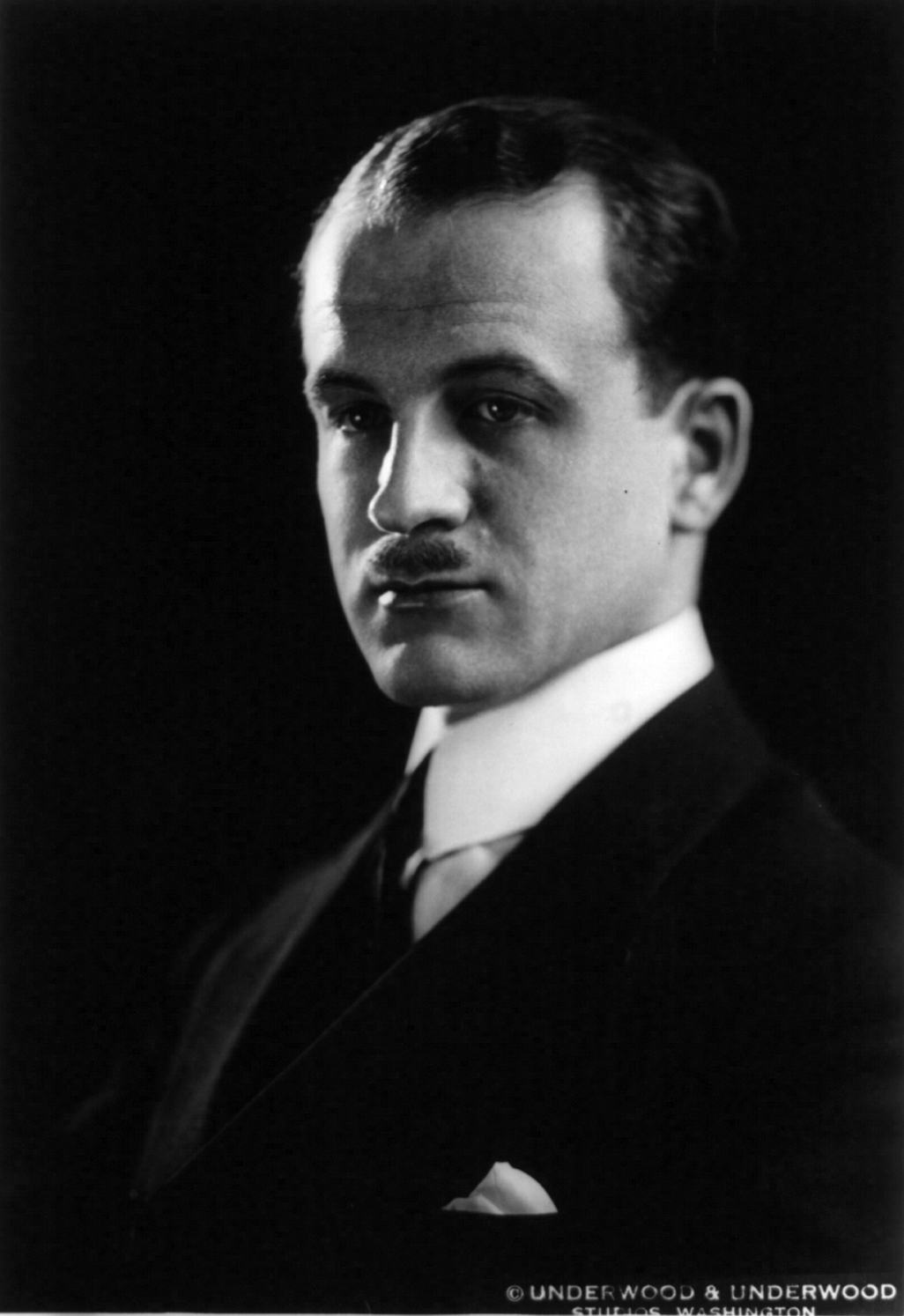
A New York Times profile described him at the time he joined the foreign service: “Tall, slender, blond, and always correctly tailored, he concealed a natural shyness under an appearance of dignified firmness. Although intolerant of inefficiency, he brought to bear unusual tact and a self-imposed patience.”
He lived in this mansion, which is now the Cosmos Club:

The Cosmos Club is a private social club, incorporated in Washington, D.C. in 1878 by men distinguished in science, literature and the arts. In June, 1988 the Club voted to welcome women as members.
Since its founding, the Club has elected as members individuals in virtually every profession that has anything to do with scholarship, creative genius or intellectual distinction.
Among its members, over the years, have been three Presidents, two Vice Presidents, a dozen Supreme Court justices, 32 Nobel Prize winners, 56 Pulitzer Prize winners and 45 recipients of the Presidential Medal of Freedom.
(yes, Carl Sagan is a member of the Cosmos Club)
Let’s not get distracted though. Sumner Welles went on to be Under Secretary of State from 1937-1943.
And then what happened?
In September 1940, Welles accompanied Roosevelt to the funeral of former Speaker of the HouseWilliam B. Bankhead in Huntsville, Alabama. While returning to Washington by train, Welles solicited sex from two African-American Pullman car porters.
Hard to imagine when he had Mrs. Welles at home:

He resigned.
In 1956, Confidential, a scandal magazine, published a report of the 1940 Pullman incident and linked it to his resignation from the State Department, along with additional instances of inappropriate sexual behavior or drunkenness. Welles’ explained the 1940 incident to his family as nothing more than drunken conversation with the train staff
 About that top headline
About Frank Sinatra as Tarzan of the boudoir I have no further info.
Cudjoe Lewis
Posted: October 23, 2013 Filed under: Africa, America, history 1 Comment
Excitement about how terrific John Jeremiah Sullivan is reached me long ago but it took me awhile to get to this book and believe it for myself. Now I’m a JJS belieber.
Enjoyed the book on a plane, a fine setting in all regards but one:
after you’ve finished reading the essay “Unknown Bards” – about certain mysterious bluesmen whose lives are vanished to history except for one recording – you have no way of listening to any of the songs mentioned, let alone the entire album Pre-War Revenants.

The collection’s only delimiting criteria would be that nothing biographical could be known regarding any of the artists involved, and that every recording must be phenomenal, in a sense almost strict: something that happened once in front of a microphone and can never be imitated, merely reexperienced.
On return to California a listening party was organized (thanks to Chennai office).
While listening to this amazing thing the question came up of: whether any people were alive in the American South at the time of these recordings (1910-1940, let’s say) who were born in Africa and brought over to the United States as slaves.
My expensive education paid off because I knew that the Atlantic slave trade was abolished in 1808, the first year that the U. S. Constitution allowed it to be abolished. (Never hurts to remind your strict constructionists how much of what ‘the framers intended’ was “being allowed to own people.” See Article 1, Section 9).
BUT the story’s more interesting.

Wiki:
Cudjoe Kazoola Lewis, or Cudjo Lewis (ca. 1840 – 1935), is considered the last person born on African soil to have been enslaved in the United States when slavery was still lawful.
Together with more than a hundred other captured Africans, he was brought on the ship Clotilde to Mobile, Alabama, in the United States in 1860 during an illegal slave-trading venture.
Cudjoe was the longest-lived survivor of all those who were brought aboard the Clotilde. He was believed to be the last slave born in Africa and brought to the United States by the transatlantic slave trade. Before he died, he gave several interviews on his experiences, including one to the writer Zora Neale Hurston. During that interview in 1928, Hurston made a short film of Cudjoe, the only moving image that exists in the Western hemisphere of an African transported through the transatlantic slave trade.
Hurston named the last eight of the Clothilde’s survivors as: “Abache (Clara Turner), Monachee (Kitty Cooper), Shamber, Kanko (who married Jim Dennison), Zooma (of Togo Tribe), Polute, Cudjo, and Orsey, or Orsta Keeby. Cudjo is the only one alive at present, a dignified, lovable, intelligent man.”
He died in 1935 at the age of 94, in Plateau (Africa Town), Alabama.
Could explore this forever. Was he named after this man?*
The Library of Congress has audio recordings of slave interviews.
* alert reader “DS” calls my attention to a more likely explanation: Lewis was born on a Monday
Putzi Hanfstaengl
Posted: October 18, 2013 Filed under: history Leave a comment
Found this in The Wise Men: Six Friends and The World They Made by Walter Isaacson & Evan Thomas:
McCloy was also responsible for the construction of The Pentagon, which became known as “McCloy’s Folly.” One of his greatest difficulties was getting the plans approved by Roosevelt, who fancied himself an amateur architect. He finally resorted to extortion. The President had gotten himself in a bind involving an old Harvard classmate, Putzi Hanfstaengl, a German refugee who had returned to his native country and acted for a while as a court jester for Hitler. Thinking he could pump useful information out of Hanfstaengl, Roosevelt had hims ent to the U. S. from England, where he was being held prisoner. Hansfstaengl, however, turned out to be a fool, and Roosevelt wanted to get rid of him. McCloy told a White House staffer he would find a safe sinecure for Hansfstaengl at an army base in Texas if FDR would approve the Pentagon blueprints. It worked. At a Cabinet meeting the following week, Roosevelt turned to McCloy and growled, “You blackmailer!”
This raises more questions than it answers and sent me to Putzi’s wikipedia page.
Hanfstaengl was so fascinated by Hitler that he soon became one of his most intimate followers, although he did not formally join the Nazi Party until 1931. “What Hitler was able to do to a crowd in 2½ hours will never be repeated in 10,000 years,” Hanfstaengl said. “Because of his miraculous throat construction, he was able to create a rhapsody of hysteria. In time, he became the living unknown soldier of Germany.”
Throat construction. You can also read there the somewhat confusing story of a “prank” played on Hansfstaengl that led him to think he was about to get killed.
In 1944, Hanfstaengl was handed back to the British, who repatriated him to Germany at the end of the war. William Shirer, a CBS journalist who resided in Nazi Germany until 1940 and was in frequent contact with Hanfstaengl, described him as an “eccentric, gangling man, whose sardonic wit somewhat compensated for his shallow mind.”

Looks like a charmer.
In 1974, Hanfstaengl attended his 65th Harvard Reunion, where he regaled theHarvard University Band about the authors of various Harvard fight songs. His relationship to Hitler went unmentioned.
Anyway, this is a bit of a bummer post so here is a photo of sunny Florida:

Diplomacy
Posted: September 18, 2013 Filed under: history Leave a comment
from yesterday’s NY Times:
Mr. Kerry and Mr. Lavrov completed the plan sitting by the pool at a Geneva hotel.
Lavrov:
At the United Nations, he was known for his elaborate, seemingly absent-minded doodling during lengthy meetings but also for a command of the issues.
“He was a great doodler, but his mind was always spinning away,” said Charles A. Duelfer, who was deputy head of the United Nations’ weapons inspectors program in Iraq in the 1990s and frequently met with Mr. Lavrov at the United Nations headquarters in New York.

…Mr. Lavrov, a chain-smoker, is known as an old-school diplomat. He flatly ignored an effort by Secretary General Kofi Annan to ban smoking in the United Nations headquarters, saying Mr. Annan did not own the building. He enjoys whiskey and cigars, and his hobbies tend toward action sports like rafting and skiing.
He can show flashes of anger. When a photographer asked Mr. Lavrov, Mr. Kerry and the special envoy, Lakhdar Brahimi, to pose after a meeting in Geneva, Mr. Lavrov said: “You don’t give us orders; you just capture the moment.”

And:
The former Austrian foreign minister, Ursula Plassnik, called Mr. Lavrov “one of the most knowledgeable and respected foreign policy actors in the global village.” On her first visit to Moscow, she said, Mr. Lavrov was waiting for her outside the legendary Café Pushkin with a bunch of yellow roses.

Cafe Pushkin

Ursula Plassnik
The history books:
Georgi I. Mirsky, a political scientist at the Institute of World Economy and International Relations, said that the Syria plan was really Mr. Putin’s but that Mr. Lavrov will get the credit.
“In history textbooks, it will be Lavrov and Kerry — Lavrov the great man, he saves Syria from American military strikes, and also saves Barack Obama from a humiliating and embarrassing situation in the Congress,” Mr. Mirsky said. “He is a bureaucrat, he is a good diplomat. He knows the score. And he will never ever say anything that will contradict the official line.”
Who is gonna read that boring ass history book? Not me unless Margaret MacMillan writes it.

(AFP photo of Lavrov and Kerry from here, Lavrov smoking from here credited to Fabrizio Bensch / Reuters, top photo is the Intercontinental Hotel Geneva)
Handsome Devil
Posted: September 6, 2013 Filed under: history, painting Leave a comment
In 1899 companies were crazy.
This man, James Hazen Hyde, inherited the Equitable Life Insurance Company from his dad when he was 23. The company had $400 million in assets.
A few years later he threw a crazy costume party. J. P. Morgan and some other tricksters claimed he’d charged the party to the company, which I guess wasn’t true. Hyde lost his job, and the tricksters got their hands on the company themselves.
I hope he didn’t lose his good looks, though.
(Learned that from here and here and here).
History is crazy
Posted: August 28, 2013 Filed under: history Leave a comment
From this review of this book, about an executioner in 16th century Germany. Being an executioner was, needless to say, a bummer job and here’s how he ended up with it:
His own apprenticeship as an executioner was the result of a catastrophic fall in family fortunes, originating in an episode of almost cinematic vividness. In October 1553, the erratic and unpopular Prince Albrecht Alcibiades von Brandenburg-Kulmbach suspected three local gunsmiths of plotting against his life. Invoking an ancient custom, he commanded a hapless bystander to execute them on the spot. Frantz’s father, Heinrich, had no option but to carry out the commission and, tainted by the act, no options thereafter but to become a professional executioner.
Encounters With The Great Dogs Of History
Posted: June 24, 2013 Filed under: America, animals, heroes, history, politics Leave a comment
This is FDR’s dog Fala. He was famous in his day.
FDR was accused of sending a destroyer back to fetch him after accidentally leaving him on an Aleutian island (why did the President bring his dog to Alaska in the middle of wartime? I don’t know).
Here is FDR’s zinger of a response, playing on the fact everyone knew back then that Scots are “tight with a penny” as Norm Macdonald put it:
These Republican leaders have not been content with attacks on me, or my wife, or on my sons. No, not content with that, they now include my little dog, Fala. Well, of course, I don’t resent attacks, and my family don’t resent attacks, but Fala does resent them. You know, Fala is Scotch, and being a Scottie, as soon as he learned that the Republican fiction writers in Congress and out had concocted a story that I’d left him behind on an Aleutian island and had sent a destroyer back to find him — at a cost to the taxpayers of two or three, or eight or twenty million dollars — his Scotch soul was furious. He has not been the same dog since. I am accustomed to hearing malicious falsehoods about myself … But I think I have a right to resent, to object, to libelous statements about my dog!
Anyway.
Yesterday I had the pleasure of talking to a woman who once had lunch with Eleanor Roosevelt at Hyde Park. She said Fala sat on her feet the whole lunch.

The price of pigs
Posted: April 7, 2013 Filed under: history Leave a comment
A Cambridge tutor had once informed Judt that the true historian knows the price of pigs at the time and place he is studying, and Judt could claim to have known just that, the price of pigs at market in the Var département over several decades.
from this TLS article. This photo, from wikipedia’s article on “pigs,” is captioned “Swedish performer with piglet. Early 20th century.”
RFK
Posted: March 13, 2013 Filed under: America, history, politics Leave a comment
“[Robert] Kennedy did not just play furiously. He was furious,” spoiling, off the field as well as on, for a fight – often for senseless fights. One took place in a Cambridge bar where Bobby, celebrating his birthday with a group of friends, including the football captain, Ken O’Donnell, was picking up everyone’s bar tab. Another Harvard student, John Magnuson, happened to be already celebrating his birthday there, and his friends began singing “Happy Birthday” to him. Infuriated over what he apparently regarded as an intrusion into his celebration, Bob walked up behind Magnuson and hit him over the head with a beer bottle, sending him to the hospital for stitches.
– from Robert Caro, The Years Of Lyndon Johnson: The Passage of Power
Authentic
Posted: January 11, 2013 Filed under: film, history Leave a commentTavis Smiley, in the Daily Beast, talks about Django Unchained:
Tarantino even went on the record saying Roots was inauthentic. First of all, Tarantino is not a historian. When people see his film who don’t have any understanding of history, they take it as history, because Tarantino passes himself off as a historian by declaring Roots inauthentic, and then goes on to make the “authentic” story about slavery. It doesn’t tell the truth about what the black contribution to this country has been. Tarantino has the right to make whatever films he wants to make. What he’s not entitled to is his own set of facts and to lecture black people about the inauthenticity of an iconic, game-changing series like Roots.
I think* Tavis is referring to this quote, also from the Daily Beast. Here’s what QT said, in its context:
“When you look at Roots, nothing about it rings true in the storytelling, and none of the performances ring true for me either,” says Tarantino. “I didn’t see it when it first came on, but when I did I couldn’t get over how oversimplified they made everything about that time. It didn’t move me because it claimed to be something it wasn’t.”
- Worth reading TS’s own description of what the black contribution to this country has been, which gave me something ELSE to think about.
- Boy it would be hard to watch an authentic movie about slavery. Hard enough to watch Django which was a super cool, entertaining adventure story but which also has some scenes that are awful raw to look at.
- Ta-Nehisi Coates weighs in here with about why slave-revenge stories are rare in the historical record. (but is this movie really a revenge story? might it not just be a blown-out version of the dynamic TNC describes? “the preservation and security of their particular black families.” TNC declines to see the movie.)
- QT has more thoughts on Roots here, from 5:07-7:35 or so:
And what about this?:
GROSS: Just one other related question. Did you ever – because I know you really enjoy, have always enjoyed really violent movies. Have you ever been exposed to a movie image – even like when you were a child or as an adult that you wished you hadn’t seen because it was so troubling and scary and you had nightmares about it and hunted you?
TARANTINO: Well, you make that that’s not supposed to happen, like that would be a bad thing.
Or this?:
TARANTINO: Yeah. Well, it was almost like a sitcom, actually the way we lived in the ’70s because she [QT is talking about his mom here] was in her 20s, she was hot, all right, she was a hot white girl. Her best friend was named Jackie. She was a hot black girl. And her other best friend was Lillian and she was a hot Mexican girl. And they lived in this like swinging singles apartment with me.
(LAUGHTER)
GROSS: What impact did that have on you?
TARANTINO: Yeah, well, it was just yeah, it was just, you know, it was the ’70s so it was, you know, I lived with these three hip ladies all going out on dates all the time and dating football players and basketball players and, you know, my mother…
GROSS: Professionals ones or…
TARANTINO: Yeah. Yeah. My mom dated Wilt Chamberlain. She’s one of the thousand.
GROSS: No.
(LAUGHTER)
Puzzled for a minute over who QT sounds like before realizing: Richard Kind.

* pretty sure. did due diligence googling, unless he’s referring to some unprinted comment or something on a TV or radio show. I listened to all of QT on Howard Stern, Charlie Rose, and Terry Gross.
“You can’t help but say hats off to them”
Posted: December 12, 2012 Filed under: heroes, history, New England, writing Leave a comment
When I read Abigail’s letters, I wonder how she ever hat time to write them. She was raising a family with four children, running the farm without her husband there; it was nip and tuck whether she could make a go of it financially; she had sickness to contend with, plagues, waves of smallpox and epidemic dysentery that swept through Braintree. How did John Adams have time to write his letters and keep the diaries? If they’d done nothing else, you’d say to yourself, how did they do it? And remember, they were writing by candlelight with a quill pen, they probably had their teeth hurting because there was no dentistry as we know it. They were probably getting over some recent attack of jaundice or whatever else was epidemic at the time. It’s very humbling. You can’t help but say hats off to them.

Scenes from the life of Marie Antoinette
Posted: December 6, 2012 Filed under: film, history, writing Leave a comment
1) An angry mob tries to show her the head of her best friend.
She’s being held captive by revolutionaries. Outside, she hears an angry mob yelling and shouting. She asked what it was. Nobody would tell her. Antonia Fraser tells us
“…the municipal officers had had the decency to close the shutters and the commissioners kept them away from the windows…
One of these officers told the King “they are trying to show you the head of Madame de Lamballe.”
Mercifully, the Queen then fainted away”.
2) She and her family try to make a run for the border, in disguise, but they are recognized by the local postmaster.
Or possibly by a tavern-keeper who recognized the king’s face from a coin.
3) Her husband is taken from her and executed.
4) Her eight year old son is taken away from her.
He was given to be raised by a cobbler. The revolutionaries tried to trick him into accusing his mother of sexually abusing him.
5) Then at last her hair is cut off, and she’s wheeled in a cart through the streets of Paris. When they led her up to the scaffold, she steps on the executioner’s foot by accident. So she apologizes. “Pardon me, sir, I did not mean to do it.”
None of these scenes (I got from a quick read of wikipedia) were in this movie:
There were some other good scenes.
Le Bal des Ardents
Posted: July 17, 2012 Filed under: history, painting, wikipedia Leave a commentWikipedia recently had an incredibly interesting article of the day, about a disastrous court entertainment that occurred in Paris in 1383. I recommend this article, and the related article on the “glass delusion“, but if you’re short on time this picture pretty much tells the whole story:

Wonderful sentence
Posted: July 9, 2012 Filed under: history, wikipedia, writing Leave a commentfrom wikipedia’s article about British radio personality C. E. M. Joad:
He involved himself in psychical research, traveling to the Harz Mountains to help [Harry] Price to test whether the ‘Bloksberg Tryst’ would turn a male goat into a handsome prince at the behest of a maiden pure in heart (it did not)
I mean, even just this summary of Joad is pretty great:
Cyril Edwin Mitchinson Joad (August 12, 1891 – April 9, 1953) was an English philosopher and broadcasting personality. He is most famous for his appearance on The Brains Trust, an extremely popular BBC Radio wartime discussion programme. He managed to popularise philosophy and became a celebrity, before his downfall in the Train Ticket Scandal of 1948.
Let’s learn about Joad’s romantic life, while we’re at it:
He described sexual desire as “a buzzing bluebottle that needed to be swatted promptly before it distracted a man of intellect from higher things.” He believed that female minds lacked objectivity, and he had no interest in talking to women who would not go to bed with him. By now Joad was “short and rotund, with bright little eyes, round, rosy cheeks, and a stiff, bristly beard.” He dressed in shabby clothing as a test: if people sneered at this they were too petty to merit acquaintance.
I dunno, you tell me if you think he’s looker enough to pull that off, ladies:

Now, the sad part of the story is that I can find out nothing else about the cartoonist “Griff” who apparently drew this cartoon. It is from Courier Magazine, Vol 5 No 1, 1945. That’s all I got!
June 6
Posted: June 6, 2012 Filed under: history Leave a comment
Good day to reread this article, “The Real War 1939-1945” by the late Paul Fussell.
One wartime moment not at all vile occurred on June 5, 1944, when Dwight Eisenhower, entirely alone and for the moment disjunct from his publicity apparatus, changed the passive voice to active in the penciled statement he wrote out to have ready when the invasion was repulsed, his troops torn apart for nothing, his planes ripped and smashed to no end, his warships sunk, his reputation blasted: “Our landings in the Cherbourg-Havre area have failed to gain a satisfactory foothold and I have withdrawn the troops.” Originally he wrote, “the troops have been withdrawn,” as if by some distant, anonymous agency instead of by an identifiable man making all-but-impossible decisions. Having ventured this bold revision, and secure in his painful acceptance of full personal accountability, he was able to proceed unevasively with “My decision to attack at this time and place was based on the best information available.” Then, after the conventional “credit,” distributed equally to “the troops, the air, and the navy,” came Eisenhower’s noble acceptance of total personal responsibility: “If any blame or fault attaches to the attempt, it is mine alone.” As Mailer says, you use the word shit so that you can use the wordnoble, and you refuse to ignore the stupidity and barbarism and ignobility and poltroonery and filth of the real war so that it is mine alone can flash out, a bright signal in a dark time.
The Glorious First Of June
Posted: June 1, 2012 Filed under: adventures, history, painting, the ocean Leave a comment
The Glorious First of June (also known as the Third Battle of Ushant, and in France as the Bataille du 13 prairial an 2 or Combat de Prairial) of 1794 was the first and largest fleet action of the naval conflict between the Kingdom of Great Britain and the First French Republic during the French Revolutionary Wars. The British Channel Fleet under Admiral Lord Howe attempted to prevent the passage of a vital French grain convoy from the United States, which was protected by the French Atlantic Fleet, commanded by Vice-Admiral Louis Thomas Villaret de Joyeuse.
In the immediate aftermath both sides claimed victory and the outcome of the battle was seized upon by the press of both nations as a demonstration of the prowess and bravery of their respective navies.
Sitting Bull Part 2
Posted: May 11, 2012 Filed under: books, Custer, Fate, from wikipedia, history, Indians, photography, pictures, the American West, writing Leave a commentThat detail about the meadowlark is from Nathaniel Philbrick, The Last Stand: Custer, Sitting Bull and The Battle of The Little Bighorn. At best the second-best book about the Little Bighorn battle, first of course being:

but that image is amazing. Good on Philbrick.
What is amazing about “Son Of The Morning Star” is Connell doesn’t just tell the story, he follows the meandering lines that lead to it and out of it, and the people who traced them. He demonstrates that as soon as you focus on any particular incident, you can keep finding new dimensions of weirdness in it.
Take, for example, this meadowlark warning Sitting Bull. Philbrick cites that detail as coming from the recollections of One Bull, Sitting Bull’s nephew, found in box 104, folder 21 of the Walter Campbell collection. Walter Campbell was born in Severy, Kansas in 1887. He was the first Rhodes Scholar from the state of Oklahoma. He wrote under the name Stanley Vestal. Why? I don’t know. According to the University of Oklahoma, where his collection is kept, he was adopted by Sitting Bull’s family, and “was named Makes-Room or Make-Room-For-Him (Kiyukanpi) and His Name Is Everywhere (Ocastonka). Kiyukanpi was the name of Joseph White Bull’s father, and Ocastonka is a reference to the Chief’s great fame.”
Here’s a picture from the Walter Campbell collection:

That’s Young Man Afraid Of His Horses. Here’s another:

Regrettably OU won’t let me make that any bigger. Campbell/Vestal/His-Name-Is-Everywhere died of a heart attack on Christmas Day, 1957.
There’s also a Walter CAMP who is very important in Bighorniana. Camp worked for the railroad, and so could travel all over. An unsourced detail from Indiana University’s Camp collection is that this is how he “spent his summers,” finding lost battlefields and interviewing old Indians and soldiers. Here is a picture from Camp’s collection:

As for One Bull, here he is. This is a photograph by William Cross (which I found here):

On wikipedia’s page for One Bull, however, they illustrate him with a picture of his spoon:

This spoon is now in the Spurlock Museum, at the University of Illinois at Urbana-Champaigne, where they also have collections of Japanese wood carvings, Arctic artifacts, and Babylonian clay tablets.
Sitting Bull
Posted: May 10, 2012 Filed under: Custer, from wikipedia, history, Indians, museum, mysticism, people, photography, pictures, the American West 2 Comments
In August of 1890, Sitting Bull left his home to check on his ponies. After walking more than three miles, he climbed to the top of a hill, where he heard a voice. A meadowlark was speaking to him from a nearby knoll. “Lakotas will kill you,” the little bird said.

Let me tell you some quick facts about William Jardine
Posted: May 5, 2012 Filed under: business, family, from wikipedia, history, Hong Kong Leave a comment
He became a surgeon’s mate on a ship at age 18
His lifelong friend was named Jamsetjee Jejeebhoy
An early business partner was named Hollingworth Magniac
His rival was named Lancelot Dent
He started a business in Hong Kong importing, among other things, opium to China. His partner was James Matheson:
William C. Hunter, a contemporary of Jardine who worked for the American firm Russell & Co., wrote of him, “He was a gentleman of great strength of character and of unbounded generosity.” Hunter’s description of Matheson was, “He was a gentleman of great suavity of manner and the impersonation of benevolence.”
“He was nicknamed by the locals “The Iron-headed Old Rat” after being hit on the head by a club in Guangzhou.”
When the Chinese tried to ban the importation of opium, he gave the foreign secretary a detailed plan on how to attack China, which the British went ahead and did.
His farewell dinner when he left Hong Kong was legendary. FDR’s grandfather was there.
A bachelor, when he died he left his fortune to his nephews and siblings.
Jardine Matheson Group, still run by members of his family, is today – all of this is according to wikipedia – the second-largest employer in Hong Kong.
The British Entering Concord, Amos Doolittle (1775)
Posted: May 1, 2012 Filed under: heroes, history, New England Leave a comment
 Helytimes