Showbiz
Posted: April 15, 2019 Filed under: Hollywood, the California Condition Leave a commenta non-industry friend asked me to summarize the current dispute between the WGA and the ATA. I did my best:


Anyway. We welcome comment!

How far could you get from LA using public transportation networks?
Posted: April 11, 2019 Filed under: the California Condition Leave a comment
For the purposes of this exercise, let’s rule out Amtrak. It’s “public transportation” in a way but that’s another level. Let’s talk about traveling, by public transit only, no Greyhound, connecting network to network, and see how far you could get.
Worked on this problem briefly and here’s what I came up with.

The key is really Lancaster. From LA you could take an 785 Antelope Valley Transit Authority Bus to Lancaster.

From Lancaster, you could connect on Kern Valley Transit and go as far as Lost Hills or Delano, or even out to Ridgecrest.

You’ll be dropped off around here:

But, you could also hop on the Eastern Sierra Transit Authority’s Mammoth Express, go out to Lone Pine, change there for a bus that will take you to Reno, Nevada.

You could even hop off early, in Carson City, Nevada. It’s thus easier to travel in this method to Nevada’s state capitol than it is to California’s.
Far as I can tell, closest you can get to Sacramento without resorting to Amtrak or Greyhound from Los Angeles is Delano or Lost Hills.
Along the coast I don’t see how you get farther than Santa Barbara.
If you’re heading east, I could see you getting to Hemet with some help from the Riverside Transit Authority, or you could work your way all the way to the east side of the Salton Sea with some help from the Sunline Transit Agency.

We welcome corrections from our transit-minded readers!
Four Views of Yosemite
Posted: April 9, 2019 Filed under: the California Condition Leave a comment



Yosemite has to be one of the most photographed places in the world. Yet, everyone there is: producing more photos. You walk around and see everyone with their phones out, snapping away. Or people not satisfied with phones, hauling big cameras too.
What is the meaning of continuing to photograph it? Maybe there’s an appeal like what draws rock climbers there, you want to try your stuff on the famous playground of the masters.
My mind was opened reading this Playboy interview with Ansel Adams, where he talks about trying to make the photograph capture what he was feeling:
Similarly, while the landscapes that I have photographed in Yosemite are recognized by most people and, of course, the subject is an important part of the pictures, they are not “realistic.” Instead, they are an imprint of my visualization. All of my pictures are optically very accurate–I use pretty good lenses–but they are quite unrealistic in terms of values. A more realistic simple snapshot captures the image but misses everything else. I want a picture to reflect not only the forms but what I had seen and felt at the moment of exposure.
More:
Playboy: When did you know you could accomplish it?Adams: I had my first visualization while photographing Half Dome in Yosemite in 1927. It was a remarkable experience. After a long day with my camera, I had only two photographic plates left. I found myself staring at Half Dome, facing the monolith, seeing and feeling things that only the photograph itself can tell you. I took the first exposure and, somehow, I knew it was inadequate. It did not capture what I was feeling. It was not going to reflect the tremendous experience. Then, to use Stieglitz’ expression, I saw in my mind’s eye what the picture should look like and I realized how I must get it. I put on a red filter and figured out the exposure correctly, and I succeeded! When I made the prints, it proved my concept was correct. The first exposure came out just all right. It was a good photograph, but it in no way had the spirit and excitement I had felt. The second was Monolith, the Face of Half Dome, which speaks for itself.

Jobs
Posted: April 8, 2019 Filed under: business, the California Condition 2 Comments
from:

Kondo’ing some books. Picking up Walter Isaacson’s bio of Steve Jobs does not spark joy, but I did take another look at several passages I’d noted.
Here’re some previous Helytimes posts related to Steve Jobs.
Paul Beatty’s Literature From Los Angeles Class
Posted: April 4, 2019 Filed under: the California Condition, writing Leave a commentOV: You teach an MFA class at Columbia called Literature from Los Angeles. Why didyou decide to do that?
PB: Why? I guess my reason is twofold. I stole the idea from a friend of mine who actually taught a class like that. She’s always complaining, “These kids never have any setting!” So I wanted to talk about setting and what setting means, not just in terms of place but what the notions of setting are. So it’s partly that. And partly a way of getting the students to read stuff they haven’t read before. So we read Chester Himes, we read Michael Jaime-Becerra; we read Wanda Coleman, we read Karen Tei Yamashita; we readBret Easton Ellis, we read Bukowski. We read a ton of stuff.
I’d like to take the class Paul Beatty lays out in this LitHub interview. Sent me to learn about Chester Himes.

Mike Davis in City of Quartz: Excavating the Future of Los Angeles, describing the prevalence of racism in Hollywood in the 1940s and ’50s, cites Himes’ brief career as a screenwriter for Warner Brothers, terminated when Jack L. Warner heard about him and said: “I don’t want no niggers on this lot.”[4] Himes later wrote in his autobiography:
Up to the age of thirty-one I had been hurt emotionally, spiritually and physically as much as thirty-one years can bear. I had lived in the South, I had fallen down an elevator shaft, I had been kicked out of college, I had served seven and one half years in prison, I had survived the humiliating last five years of Depression in Cleveland; and still I was entire, complete, functional; my mind was sharp, my reflexes were good, and I was not bitter. But under the mental corrosion of race prejudice in Los Angeles I became bitter and saturated with hate.
Should we boycott The Beverly Hills Hotel?
Posted: April 3, 2019 Filed under: Hollywood, the California Condition 1 Comment
George Clooney says yes. The reason why is because this hotel, along with nine other fancy hotels, the Bel-Air here and some in London and France, are owned by the Sultan of Brunei. Clooney:
At the head of it all is the Sultan of Brunei who is one of the richest men in the world. The Big Kahuna. He owns the Brunei Investment Agency and they in turn own some pretty spectacular hotels.
A couple of years ago two of those hotels in Los Angeles, The Bel-Air and The Beverly Hills Hotel were boycotted by many of us for Brunei’s treatment of the gay community. It was effective to a point. We cancelled a big fundraiser for the Motion Picture Retirement Home that we’d hosted at the Beverly Hills Hotel for years. Lots of individuals and companies did the same. But like all good intentions when the white heat of outrage moves on to the hundred other reasons to be outraged, the focus dies down and slowly these hotels get back to the business of business.
But now there’s a new law going into place in Brunei. Says Clooney:
The date April 3rd has held a unique place in our history over the years. Theologians and astronomers will tell you that Christ was crucified on that date.
(what?)
On April 3rd Harry Truman signed the Marshall Plan, arguably the greatest postwar intervention in the history of man. The first portable cellphone call was made on April 3rd. Marlon Brando was born on that day.
But this April 3rd will hold its own place in history. On this particular April 3rd the nation of Brunei will begin stoning and whipping to death any of its citizens that are proved to be gay. Let that sink in. In the onslaught of news where we see the world backsliding into authoritarianism this stands alone.
Here’s the thing though. The last execution of any kind in Brunei was in 1957.
It’s not like they’re stoning people all the time. The 1957 execution actually happened while Brunei was a UK protectorate.
Meanwhile, in Saudi Arabia, four years ago:
In 2014, a 24-year-old Saudi Arabian man was sentenced to three years detention and 450 lashes after a Medina court found him guilty of “promoting the vice and practice of homosexuality”, after he was caught using Twitter to arrange dates with other men.[18]
A year ago, in Hollywood:
On Wednesday night, M.B.S. was welcomed to a Hollywood dinner hosted by producer Brian Grazer and his wife Veronica, alongside William Morris Endeavor boss Ari Emanuel, who is finalizing a deal with M.B.S. for a $400 million stake in Emanuel’s talent agency. The guest list was saturated with executives, including Amazon’s Jeff Bezos, Disney’s Bob Iger, Patriots owner Robert Kraft, and Snapchat’s Evan Spiegel, as well as tech entrepreneur Kobe Bryant, whom the prince reportedly made a special request to meet. Having traded his traditional ceremonial garb for a suit, M.B.S. kibitzed with former Trump aide Dina Powell and Vice co-founder Shane Smith; discussed the exploding use of Snapchat in Saudi Arabia; and asked Kobe how he got his Oscar. Topics that were deemed off-limits included the 32-year-old’s bombing campaign in Yemen, which has killed thousands of civilians; his abduction of Lebanon’s prime minister, Saad Hariri, in November; and the decidedly un-Hollywood-like repression of independent media and journalists, one of whom was recently imprisoned for five years for “insulting” the royal court.
And guess what? The Four Seasons

is 45% owned by the Kingdom Holding Company of Saudi Arabia!
For whatever reason, Brunei likes to fantasize, pretend, and profess to having Sharia law. Hollywood likes to judge them for that, while obviously not being serious about caring about human rights in countries where it’s more important to do business and whose hotels it would be more inconvenient to boycott.
One of the easiest things in the world is to point out hypocrisy. I think George Clooney is cool. But why are we always picking on poor Brunei? Because it’s easy?
What we’re pretending to be mad about, what we’re pretending to do about it, what Brunei is pretending their punishments are: it’s all make-believe.
I will boycott the Beverly Hills Hotel I guess. But I’ll be sad about it because I think it’s a beautiful, cool landmark. I especially like the Fountain Coffee Room.

I predict in a few years we will once again forget about our mission to improve things in Brunei.
Aptly named places
Posted: February 20, 2019 Filed under: the California Condition Leave a comment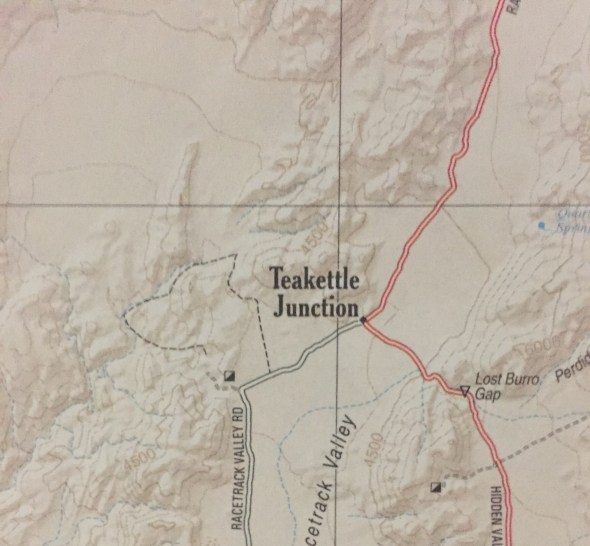
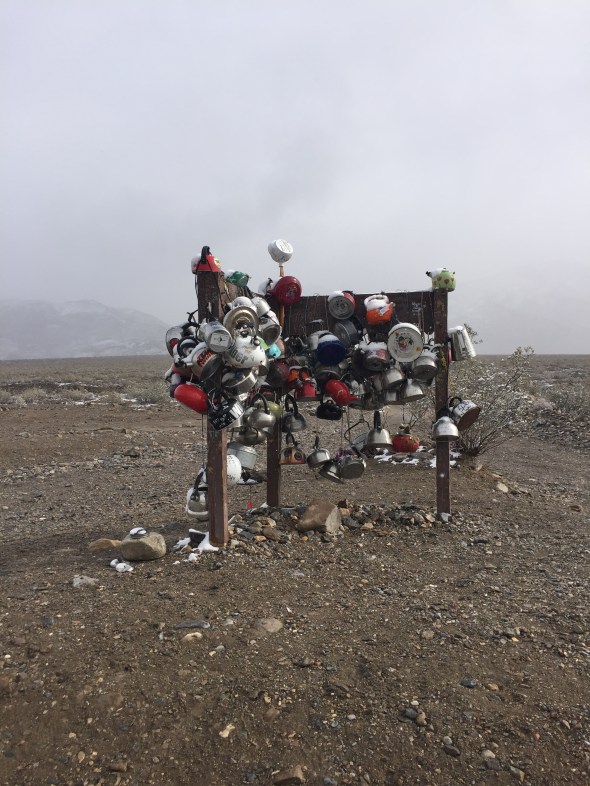
Cool to see snow in that part of the world.

Water in the Mojave
Posted: February 1, 2019 Filed under: the California Condition, water Leave a comment
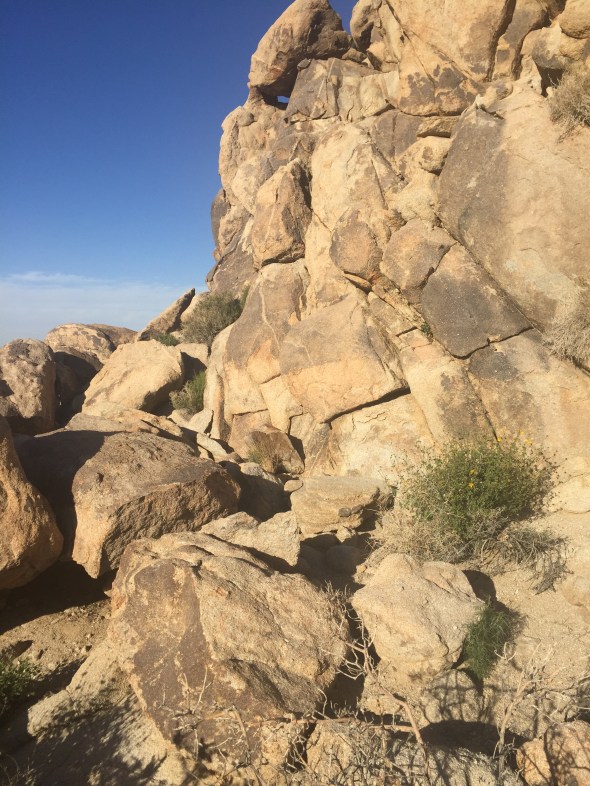
High in the rocks water was collecting from the recent rains
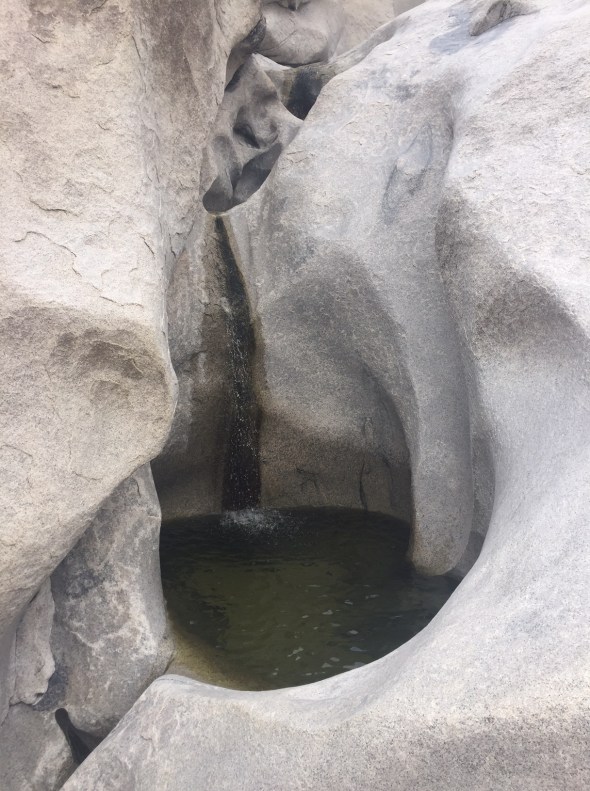
Splashing down, pooling in the natural tanks
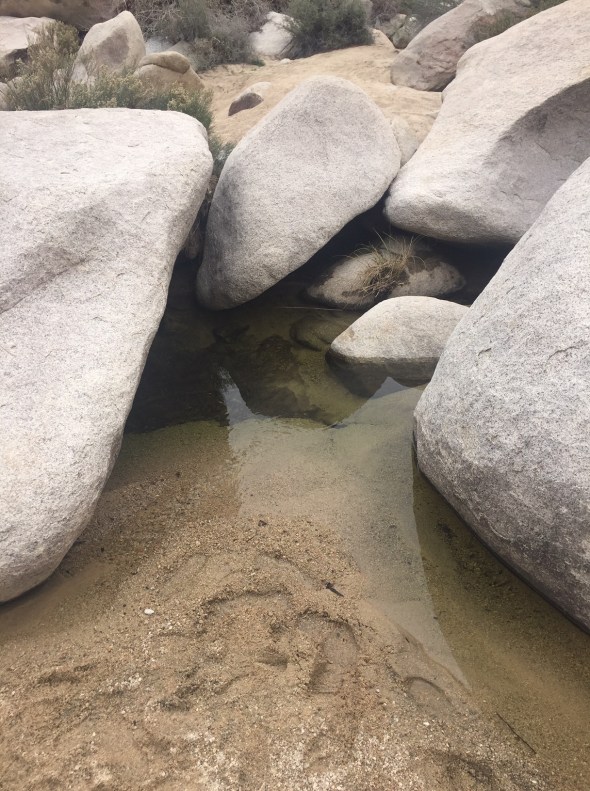
Saw a frog (California tree frog?) in this one.
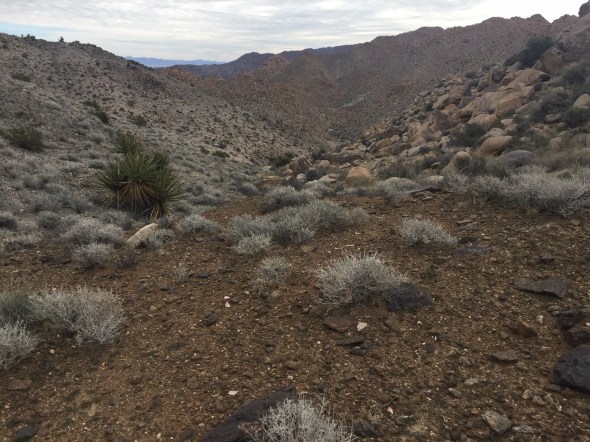
Some of the plants out there flower in ways that seem monstrous, almost obscene

Is this a natural formation in the rock, or an ancient ruin?
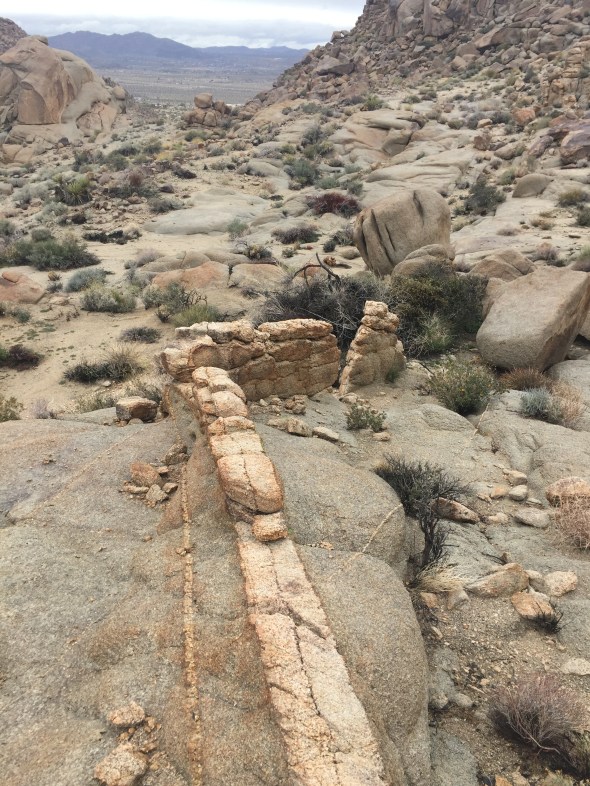 More archaeology will be needed at this site.
Oceanfront property for sale!
Posted: January 29, 2019 Filed under: the California Condition Leave a comment
This property was listed for sale in Malibu.

I dunno it looks like it already fell into the ocean? Anyway it’s listed for one point five million dollars. 
could be good if wet rocks become the new currency.
JTree
Posted: January 12, 2019 Filed under: America Since 1945, the California Condition Leave a comment
Today’s top story on Hi Desert Star. Photo is captioned:

article by Kurt Schauppner.
What good is bad news in a crisis? I’m more of an evangelist — a good news guy. Hoping reports of damage to trees and such during shutdown is overblown.

Take strength from local heroes?
From the local Facebook page, it sounds like there may be some exaggeration or misunderstanding.
Like so many problems, a few assholes are doing most of the damage. Good people do outnumber assholes, is my experience, and by a wide margin.

obviously don’t chainsaw me, or even shove me too hard, I could be hundreds of years old and I’m very fragile! I’m terrible firewood anyway I’m pretty much made of dust!
Back to good news next post!
Hollywood: The Dream Factory
Posted: December 30, 2018 Filed under: the California Condition Leave a comment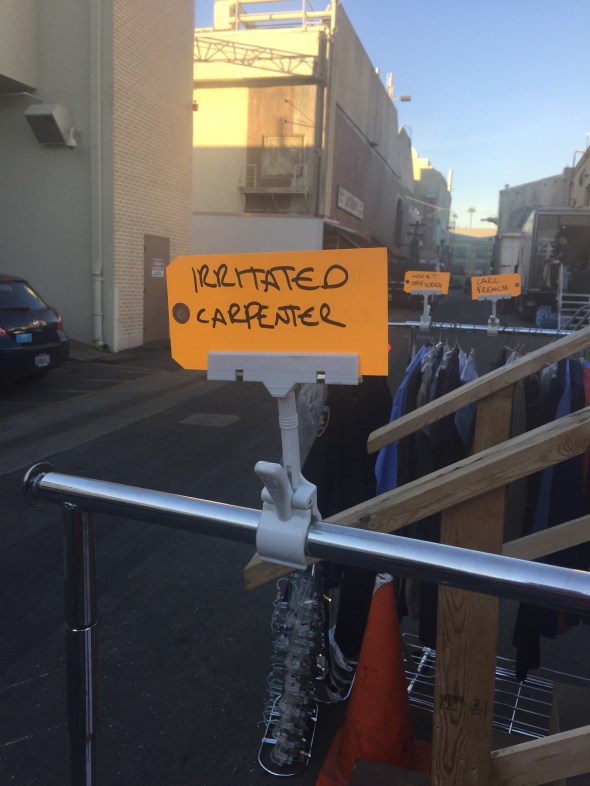
Seen on the Paramount lot.
Movie Reviews: The Favourite, Mary Queen of Scots, Schindler’s List
Posted: December 14, 2018 Filed under: America Since 1945, everyone's a critic, film, movies, the California Condition, Uncategorized Leave a comment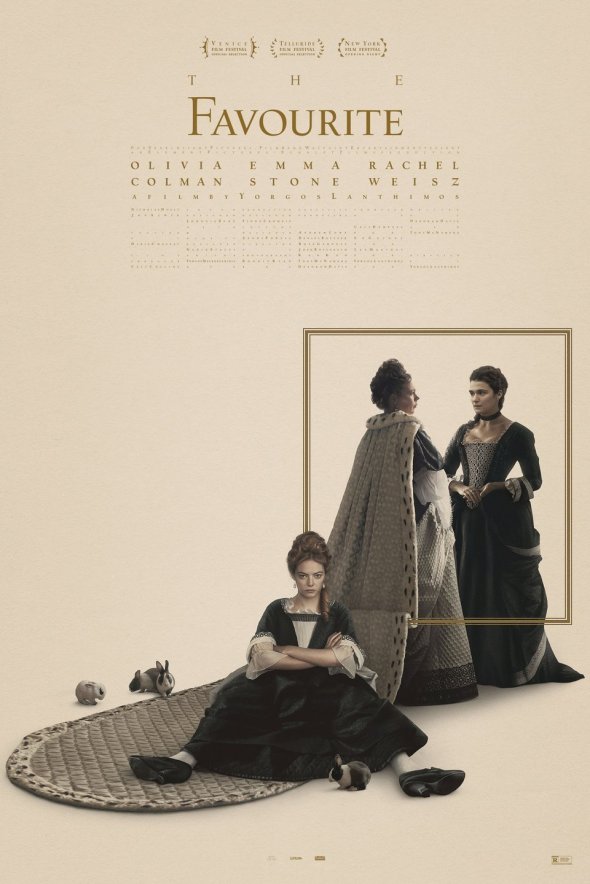
Finding myself with an unexpectedly free afternoon, I went to see The Favourite at the Arclight,
You rarely see elderly people in central Hollywood, but they’re there at the movies at 2pm. While we waited for the movie to start, there was an audible electrical hum. The Arclight person introduced the film, and then one of the audience members shouted out “what’re you gonna do about the grounding hum?”
The use of the phrase “grounding hum” rather than just “that humming sound” seemed to baffle the Arclight worker. Panicked, she said she’d look into it, and if we wanted, we could be “set up with another movie.”
After like one minute I took the option to be set up with another movie because the hum was really annoying. Playing soon was Mary Queen of Scots.

Reminded as I thought about it of John Ford’s quote about Monument Valley. John Ford assembles the crew and says, we’re out here to shoot the most interesting thing in the world: the human face.
Both Saoirse Ronan and Margot Robbie have incredible faces. It’s glorious to see them. The best parts of this movie were closeups.
Next I saw Schindler’s List.

This movie has been re-released, with an intro from Spielberg, about the dangers of racism.
This movie knocked my socks off. I forgot, since the last time I saw it, what this movie accomplished.
When the movie first came out, the context in which people were prepared for it, discussed it, saw it, were shown it in school etc took it beyond the realm of like “a movie” and into some other world of experience and meaning.
I feel like I saw this movie for the first time on VHS tapes from the public library, although I believe we were shown the shower scene at school.

My idea in seeing it this time was to see it as a movie.
How did they make it? How does it work? What’s accomplished on the level of craft? Once we’ve handled the fact that we’re seeing a representation of the Holocaust, how does this work as a movie?
It’s incredible. The craft level accomplishment is on the absolute highest level.
Take away the weight with which this movie first reached us, with what it was attempting. Just approach it as “a filmmaker made this, put this together.”
Long, enormous shots of huge numbers of people, presented in ways that feel real, alive. Liam Neeson’s performance, his mysteries, his charisma, his ambiguity. We don’t actually learn that much about Oscar Schindler. So much is hidden.
Ralph Fiennes performance, the humanity, the realness he brings to someone whose crimes just overload the brain’s ability to process.
The moving parts, the train shots, the wide city shots. Unreal accomplishment of filmmaking.
Some thoughts:
- water, recurring as an image, theme in the movie.
- there are a bunch of scenes of just factory action, people making things with tools and machines. that was the cover. was not the Holocaust an event of the factory age, a twisted branch of Industrial Revolution and efficiency metric spirit?
- reminded that people didn’t know, when it began, “we’re in The Holocaust, this is the Holocaust.” It built. It got worse and worse. there were steps and stages along the way.

- what happened in the the Holocaust happened in a particular time and place in history, focused in an area of central and eastern Europe that had its own, centuries long, context for what you were, who belonged where, history, which tribes go where, what race or nationality meant, how these were understood. Göth’s speech about how the centuries of Jewish history in Kraków will become a rumor. I felt like this movie kind of captured and helped explain some of that, without a ton of extra labor.
- In a way Schindler could almost be seen as like a comic character. He didn’t start his company to save Jews. He starts it to make money from cheap labor. He’s a schemer who sees an opportunity. A rascal out to make a quick buck, a con man and shady dealer who ended up in the worst crime in history, an honest crook who finds he’s in something of vastness and evil beyond his ability to even comprehend.
- There is a scene in this movie that could almost be called funny, or at least comic, when Oscar Schindler (Neeson) tries to explain to Stern (Ben Kingsley) the good qualities of the concentration camp commandant Göth that nobody ever seems to mention!
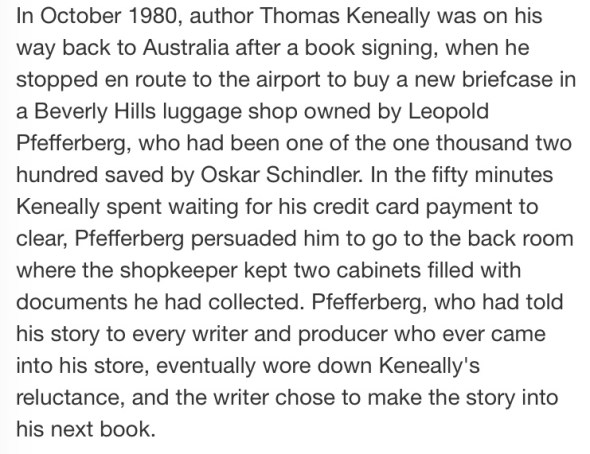
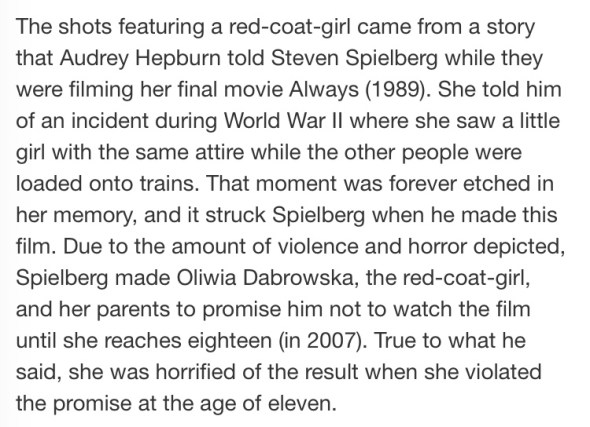
- Kenneally’s story of how he heard about Schindler:
- The theme of sexuality, Goth’s sexuality, Schindler’s, what it means to love and express your nature versus trying to suppress and kill. Spielberg is not really known for having tough explorations of sexuality in his films but I’d say he took this one pretty square on with a lot bravery?

- if I had a criticism it was maybe that the text on the little intermediary passages that appear on screen a few times and explain the context felt not that clear and kind of unnecessary.
- I feared this movie would have a kind of ’90s whitewash, I felt maybe takes exist, the “actually Schindler’s List is BAD” take is out there, with the idea being that Spielberg put in too much sugar with the medicine which when we talk about the Shoah, unspeakable, unaddressable, is somehow wrong, but damn. I was glad for the sugar myself and I don’t think Spielberg looked away. The Holocaust occurred in a human context, and human contexts, no matter how dark, always have absurdity.

- the scene, for instance, were the Nazis burn in an enormous pyre the months-buried, now exhumed bodies of thousands of people executed during the liquidation of the Krakow ghetto, Spielberg took us as close to the mouth of the abyss as you’re gonna see at a regular movie theater.
What does it mean that Spielberg made a movie about the Holocaust and the two leads are both handsome Nazis?
*As a boy I was attracted to the history of Britain and Ireland as well as Celtic and Anglo-Saxon peoples in America. The peoples of those islands recorded a dramatic history that I felt connected to. They also developed a compelling tradition of telling these history stories with as much drama and excitement as possible eg. Shakespeare.
At a library book sale, I bought, for 50 cents a volume, three biographies from a numbered set from like 1920 of “notable personages,” something like that.
These just looked like the kind of books that a cool gentleman had. Books that indicated status and intelligence.
One of this set that I got was Hernando Cortes. I started that one, but even at that tender age I perceived Cortes was not someone to get behind. The biography had a pro-Cortes slant I found distasteful.
Another volume was about Mary Queen of Scots.
Just on her name, really, I started reading that one.
Mary Queen of Scots’ life was a thrilling story, and this one was melodramatically told. Affairs, murder plots, insults, rumor, execution.
Sometime thereafter, at school, we were all assigned like a book report. To read a biography, any biography, and write a report about it.
Since I’d already read Mary’s biography, I picked her.
As it happened, I overheard my dad confusedly ask my mom why, of all people on Earth, I’d chosen Mary Queen of Scots as the topic for my biography project. My dad did not know the backstory, which my mom patiently explained.
My dad’s reaction on hearing I’d picked Mary Queen of Scots, while not as harsh as Kevin Hart’s imagined reaction on hearing his son had a dollhouse, helps me to understand where Kevin Hart was coming from. Confusion, for starters. Upsetness.
At the time the guys I thought were really heroes were probably like JFK and Hemingway.


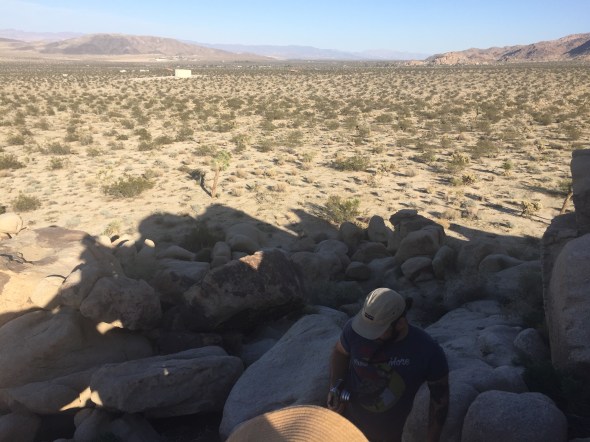
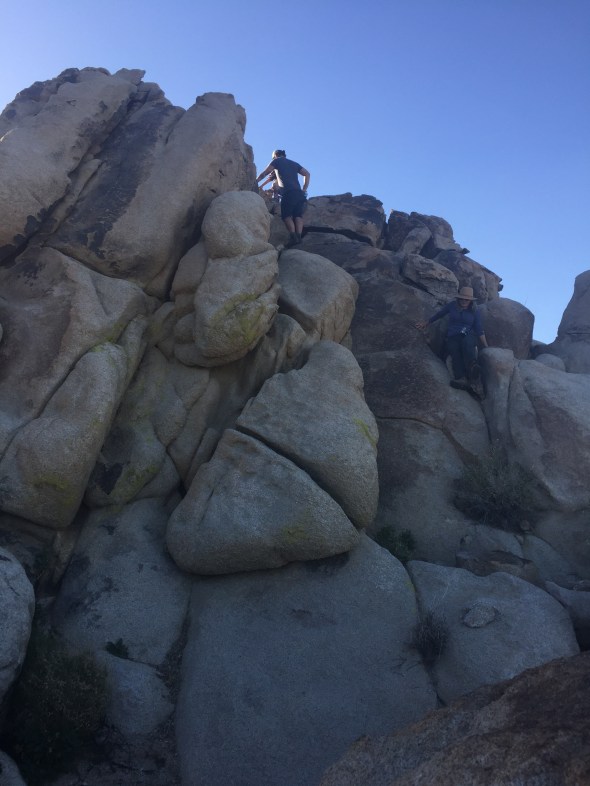

Go Inside
Posted: December 1, 2018 Filed under: art history, the California Condition Leave a comment
They’re making progress on the dome/orb that will one day hold the Academy Museum (motto: Go Inside The Movies).
At neighboring LACMA the American Outliers exhibit is terrific.
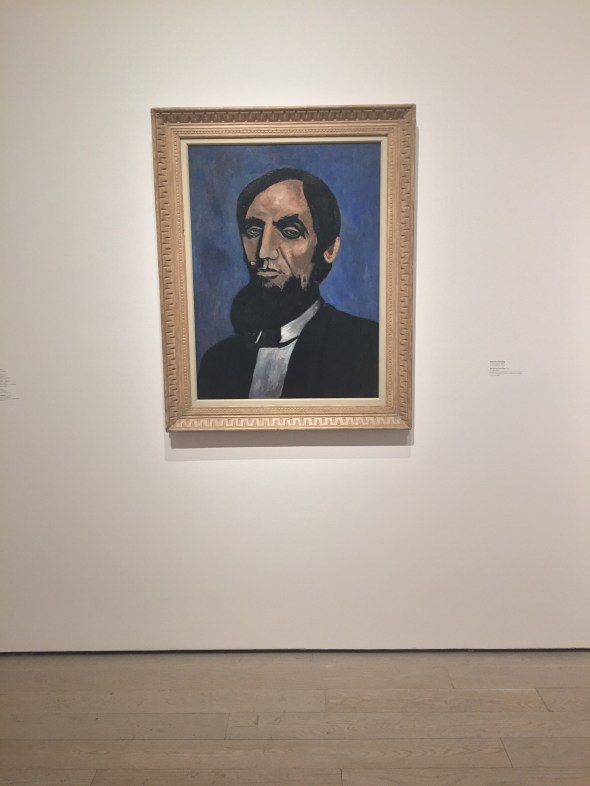
The Great Good Man by Marsden Hartley of Lewiston, Maine.
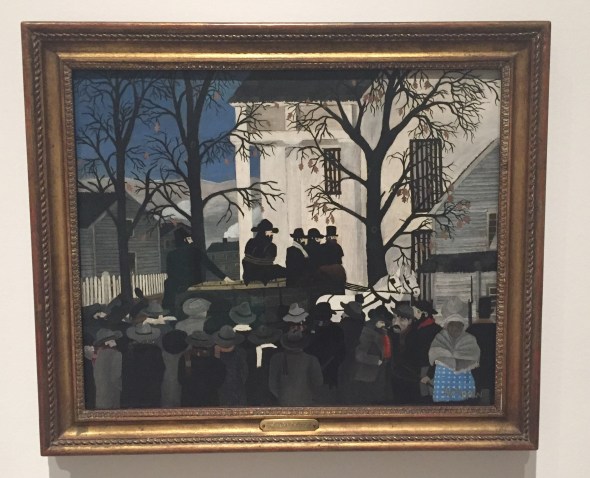
Struck by Horace Pippin’s John Brown Going To His Hanging:
Pippin served in K Company, 3rd Battalion of the 369th infantry, the famous Harlem Hellfighters, in Europe during World War I, where he lost the use of his right arm after being shot by a sniper. He said of his combat experience:
I did not care what or where I went. I asked God to help me, and he did so. And that is the way I came through that terrible and Hellish place. For the whole entire battlefield was hell, so it was no place for any human being to be.
While in the trenches, Pippin kept an illustrated journal which gave an account of his military service.

How about this one, Miss Van Alen:
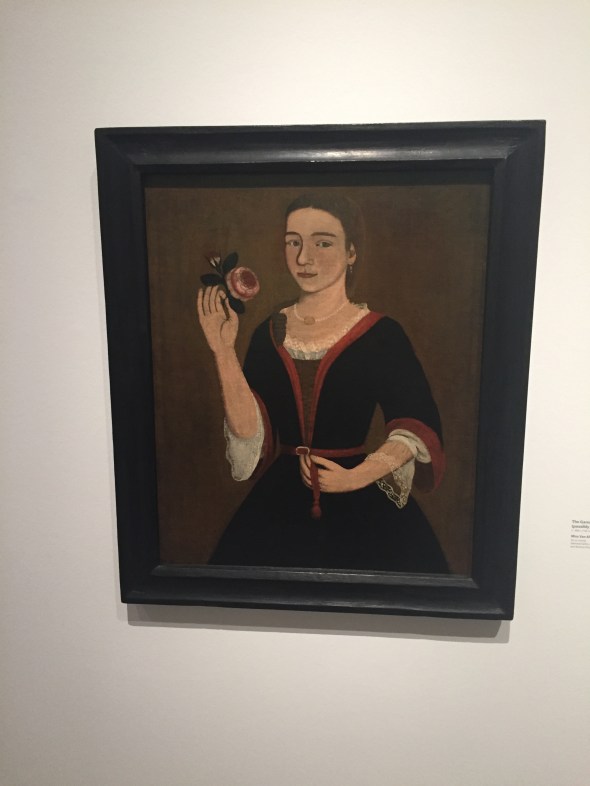
attributed to “The Ganesvoort Limner (possibly Pieter Vanderlyn).”
Generally untrained and itinerant, limners were a class of artists who helped shape the image of colonial Americans, securing the social status of their middle-class sitters in portraits that convey an air of refinement.
says The National Gallery.
Proposed motto for LACMA: Go Inside The Art.

The Helytimes California Voter Guide
Posted: October 31, 2018 Filed under: the California Condition Leave a comment
Really impressed with the LA Podcast well-argued voter guide. The LA Times has a thorough one. Read a few others, and here I present my picks for anyone who wants to vote a straight Helytimes ticket.
GOV: Gavin Newsom
not psyched about it. California should have a cool Governor.
LT. GOV: Ed Hernandez
SoS: Alex Padilla
CONTROLLER: Betty Yee
TREASURER: Fiona Ma
Not even sure why but I love Fiona Ma.

AG: Xavier Becerra
INS COMMISH: Ricardo Lara
State Board of Equalization 3rd: Tony Vazquez
Going on @ONLX rec here, they both sound bad. I admire the case for abstaining.
SENATE: Dianne Feinstein
There’s a fine case for Kevin De Leon, Feinstein voted for the Iraq War and stuff. But KDL took $5,000 from Cadiz Water Corp, which is trying to steal water from the Mojave National Preserve and sell it to Orange County. Then he helped kill AB 1000, which would’ve stopped this. To me, that’s just such a petty and direct corruption on an issue I care about. I’m sure he thought he could get away with it.
I guess I’m a one issue voter, which is letting bighorn sheep drink from Bonanza Spring.
Dianne Feinstein has her things but to my mind she’s also fairly heroic. I’d prefer a Senator not be a million years old, but then again the very word comes from the Latin meaning “old man.”
US House of Representatives: Adam Schiff
For your state reps I’d ask LA Podcast, I voted for my local Dems:
BEN ALLEN for Sen,
RICHARD BLOOM was my only option for Assembly.
Judges
Went with LA Podcast for Appeals Judges.
NO on Corrigan, yes on all the others for Appeals
For Judges I went:
SAUCEDA (LA Times says Coletta, they both sound good to me)
HUNTER (LA Times says Michel)
HANCOCK
RIBONS
Superintendant of Public Instruction: Tony Thurmond
Both Times and LA Podcast went Thurmond.
County Assessor: Prang
Sheriff: McDonnell
crazy contest with no good answer imo. LA Times and LA Podcast split.
State Propositions
Prop 1 – Bonds for Housing Assistance: YES
Prop 2 – Mental Illness Housing: YES
Prop 3 – Water Bonds: YES
this one’s a push, went with LA Podcast over LA Times
Prop 4 – Hospital Bonds: YES
Prop 5 – Property Tax Transfer: NO
Prop 6 – Gas and Vehicle Tax: NO
Prop 7 – Daylight Savings Time: YES
Prop 8 – Caps on Dialysis: NO
LA Podcast says don’t vote
Prop 10 – End Rent Control Restrictions: YES
Prop 11 – Ambulance Workers: NO
Prop 12 – Cage Free Animals: YES
LA County
Measure W (flood control): YES
LA City
Measure B (municipal bank): YES
sounds like a stupid measure but whatever
Measures E and EE: YES and YES
Thalia
Posted: October 18, 2018 Filed under: art history, comedy, the California Condition Leave a comment
Whenever I need a boost in either comedy or idyllic poetry I just call upon the muse Thalia
Yang-Na
Posted: October 8, 2018 Filed under: the California Condition Leave a comment
Re-resolve this Indigenous Peoples’ Day to return LA back to its original name of Yang-Na:

from: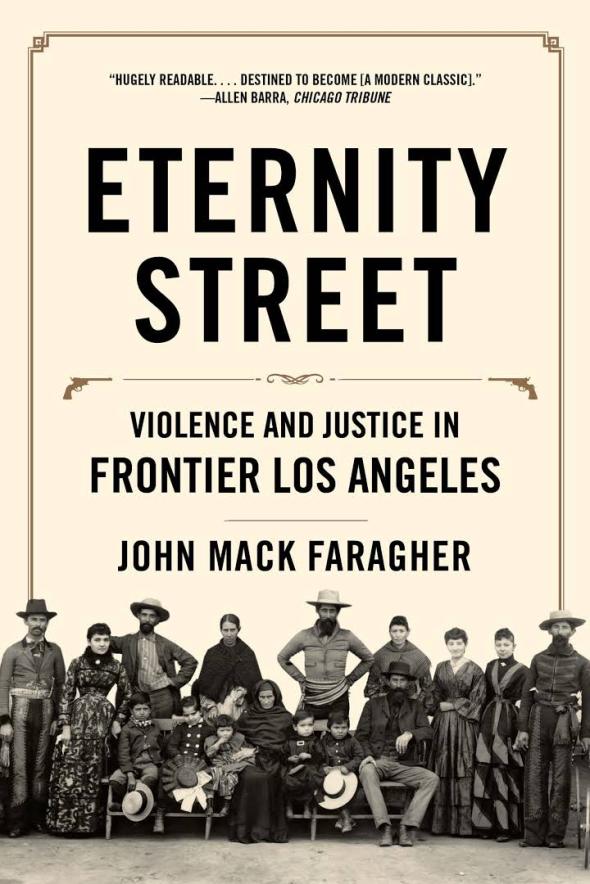
Guess how much Nestlé pays for the water in Arrowhead Water
Posted: August 12, 2018 Filed under: America Since 1945, the California Condition, water Leave a comment
Nestlé gets the water for Arrowhead in the San Bernadino National Forest, owned by you and me, the American people.

In 2016, Nestlé took 32 million gallons of water from the national forest, in an area not known for its abundance of fresh water.
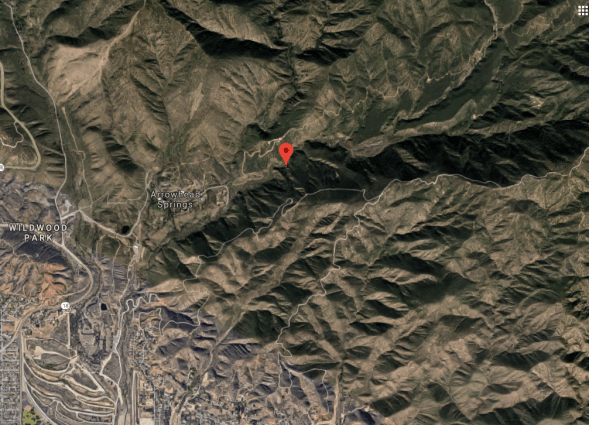
How much did they pay for this? I found the answer in a recent issue of High Country News:

$2,050?! I feel like I’m getting ripped off!
More in the Desert Sun.
Swung by Lake Arrowhead this weekend:

in my Quora digest
Posted: August 8, 2018 Filed under: Islam, religion, the California Condition Leave a comment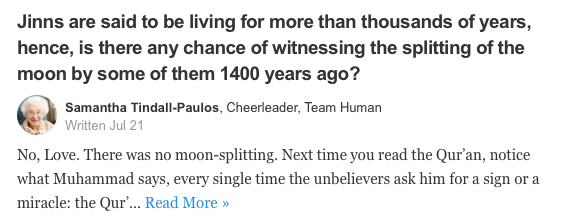

 Helytimes
_01.jpg)