Peabiddy, Peabody, and Peabodys
Posted: May 31, 2026 Filed under: America Since 1945, TV Leave a comment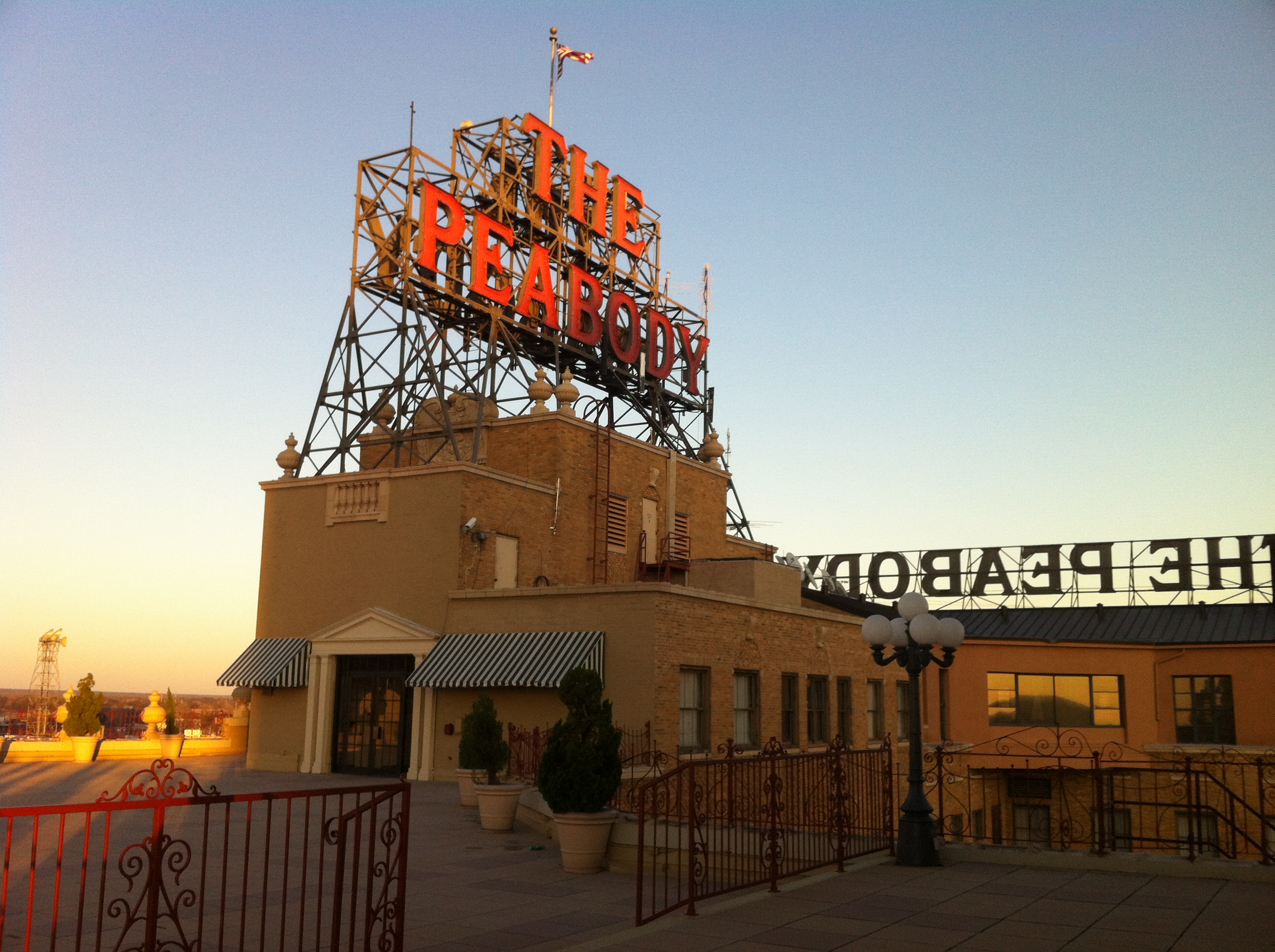
In Massachusetts there is a town called Peabody. Locally it is pronounced “PEE-biddy.”
The town was once part of Salem, and then became “South Danvers,” and then, in 1868, changed its name to Peabody, in honor of George Peabody, who was born there.
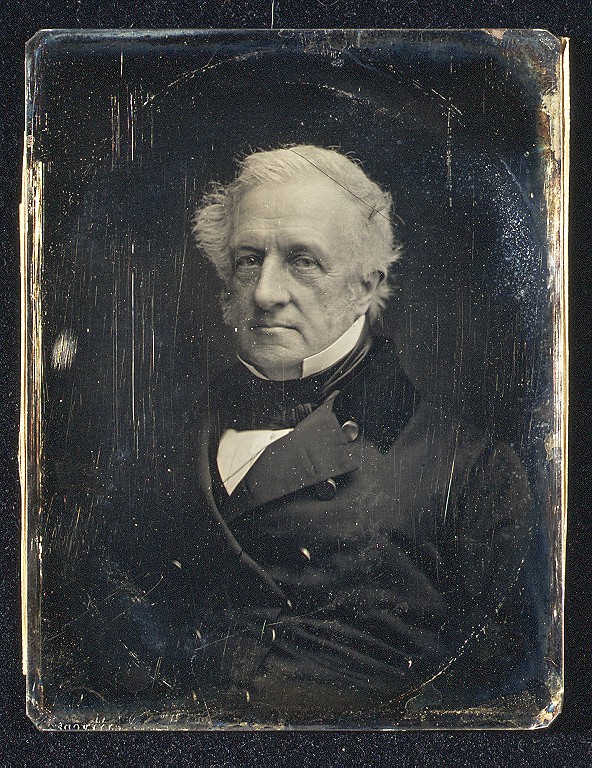
George Peabody was a financier and pioneer of trans-Atlantic banking. He started out, like every other rich American of the 19th century, in “dry goods,” and then selling cotton in the UK. He expanded into banking. He would sell the bonds of US states in London.
Here’s some of what Ron Chernow says about him in House of Morgan:
Peabody, a good talker, was not prepossessing. Over six feet tall with light blue eyes and dark brown hair, he had a rumpled face, with knobby chin, bulbous nose, side whiskers, and heavy-lidded eyes. That this homely man would found the House of Morgan-later a white-glove affair with high-society partners famous for good looks and stylish dress—is ironic. He carried the scars of early poverty and was quick to feel slights and perceive enemies. Like many who have overcome early hardship by brute force, he was proud but insecure, always at war with the world and counting his injuries.
Born in Danvers, Massachusetts, he had only a few years of schooling. When he was a teenager, his father died, and Peabody worked in his brother’s shop to support his widowed mother and six siblings. When he later prospered in a Baltimore dry-goods business with a rich older partner, Elisha Riggs, he remained haunted by his past. “I have never forgotten and never can forget the great privations of my early years, he later said.3 He hoarded his money, worked incessantly, and retained a lonely air.
In 1837, Peabody moved to London. A year later he opened a merchant house at 31 Moorgate in London, furnishing it with a mahogany counter, a sate, and some desks. He joined a select group of merchant bankers who traded in dry goods and also financed such trade; hence, their businesses became known as merchant banks. They developed a form of wholesale banking remote from the prosaic world of bank books, teller windows, and checking accounts.
Late in life, he looked for a successor:
Ordinarily, Peabody would have chosen a son or nephew to take over the business. Most merchant banks were family partnerships with a few talented outsiders. But as a bachelor, Peabody was in the unusual position of having to shop for an heir and bequeath his empire to a stranger.
He was, however, no stranger to the company of women. While he didn’t smoke or drink, he resorted to the shadowy world of illicit pleasure
(He had a mistress and an illegitimate daughter.)
Peabody took on a young partner, also from Massachusetts, named Junius Spencer Morgan.
Late in life, this Peabody became charitable:
The Civil War years saw the metamorphosis of George Peabody from Scrooge to Santa Claus. He had been a prototypical heartless banker, a one-dimensional hoarder. As a contemporary said, “Uncle George, as Americans… call him—was one of the dullest men in the world: he had positively no gift, except that of making money.”29 Yet this dour man suddenly became prodigal in his gifts; his philanthropy was as immoderate as his earlier greed. He found it hard to break his miserly habits. “It is not easy to part with the wealth we have accumulated after years of hard work and difficulty,” he confessed. 30 Now a lifetime of hoarding was disgorged in one compensatory binge, cleansing his Yankee conscience.
Wikipedia declares him “the father of modern philanthropy.” The list of his causes is many. The Peabody Museum at Harvard is one that made an impression on young Helytimes.
The Peabody Education Fund, for the purpose of promoting “intellectual, moral, and industrial education in the most destitute portion of the Southern States,” post-Civil War, was another big one.
It may have been this effort that Robert Campbell Brinkley had in mind. Brinkley founded the Peabody Hotel in Memphis. The story goes that he was going to name it the Brinkley Hotel, but just then he found out his friend Peabody had died, so he named after the great philanthropist.
In Memphis they pronounce this hotel “Pee-Body.” My Massachusetts pronounciation caused me no end of queer looks when I lived in this hotel for a week in 2022 while my wife was working on Young Rock. What a happy time that was.
There was more than one philanthropic George Peabody. There was also George Foster Peabody:
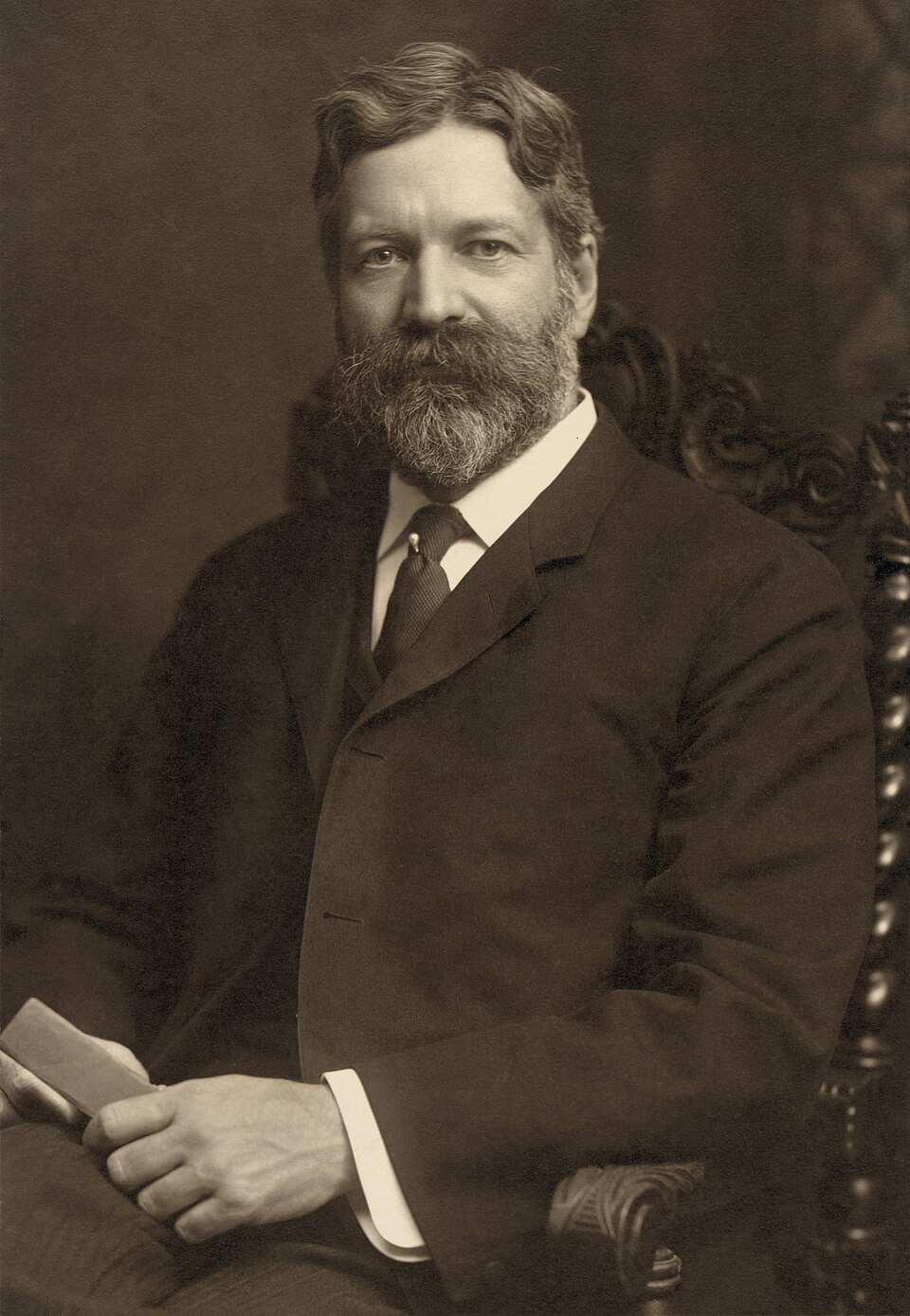
This George Peabody was connected to Junius Spencer Morgan’s son, J.P. Morgan. When J.P. Morgan put together General Electric, he had this George Peabody on the board of directors. Did J.P. and George ever discuss his father’s friend George? No doubt. If George Foster was closely related to the first George, I can find no evidence of it, but they were probably connected somewhere.
George Foster Peabody was also a benefactor to the South. He was raised in Georgia, and developed Warm Springs, where his friend Franklin Roosevelt came to soak (and eventually died).
The Peabody Awards for Excellence in Broadcasting are administered by the University of Georgia, and are named after this Peabody.
Start researching Peabodys and they are legion. Nathaniel Hawthorne married a Peabody. The first English language kindergarten was started by Elizabeth Peabody:
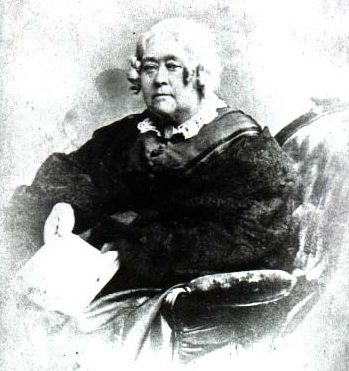
Imagine having this lady teach you finger painting.
Two different Peabodys, Harlan Berkley Peabody Jr and Francis Peabody Magoun, were important in the study of oral poetry. (Berkley Peabody’s obituary is soothing reading). There was Frank Peabody the paleontologist, and Frances Peabody the doctor and essayist, and James Hamilton Peabody, governor of Colorado, who crushed the Cripple Creek miners’ strike, and Richard Peabody who fought alcoholism. The town of Peabody, Kansas is named after a vice president of the Atchison, Topeka and Santa Fe Railroad (boy if you wanted a town named after you, 19th century railroad exec was the way to go).
How about tough old Endicott Peabody, the fighting reverend:
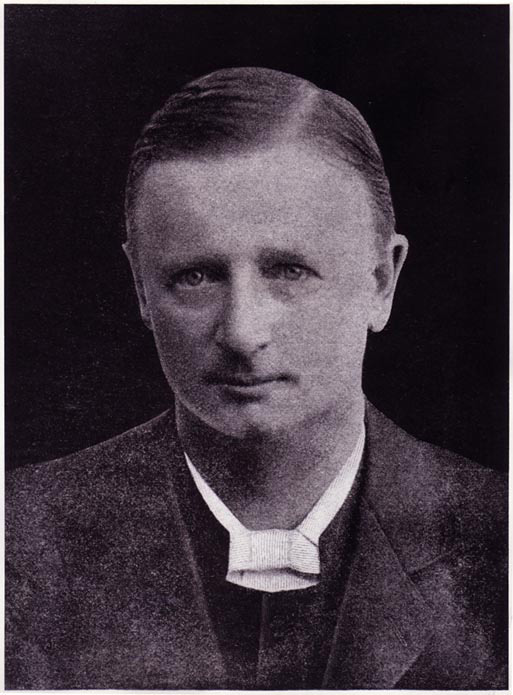
After his first semester of classes, Peabody was invited to take charge of a fledgling Episcopal congregation in Tombstone, Arizona. He arrived in January 1882, three months after the Gunfight at the O.K. Corral.
Though Peabody felt unqualified, his stay in Tombstone proved that he could attract donors and manage a congregation, two traits he employed to great effect in his educational career. Within months, he raised $5,000 to build St. Paul’s Episcopal Church. It opened on June 18, 1882, making it the oldest Protestant church building in Arizona.
It is said that he visited saloons to ask gamblers for donations and “would challenge locals to boxing matches on the condition that if he won, they had to come to church on Sunday,” although Peabody dismissed most of these stories as apocryphal.
This Peabody founded the Groton School. Isaacson & Thomas, in The Wise Men:Six Friends and the World They Made, say:
Groton’s driving force was Endicott Peabody, who ruled the school for its first sixty years. Educated in England at Cheltenham and at Trinity College, Cambridge, the Rector was a perfect Victorian. Tall and muscular, regarding his body as a temple, he always dressed in highly polished black shoes, blue suit, and white starched bow tie. As a thirteen-year-old Averell Harriman described him in a letter home:
“You know he would be an awful bully if he wasn’t such a terrible Christian.”
Peabody cared more about sportsmanship than scholarship. “I’m not sure I like boys who think too much,” he once said. “A lot of people think a lot of things we could do without.” He personally taught two subjects: football and sacred studies. “The way of the non-athlete at Groton was not so much hard as inconsequential,” wrote the school historian. “Football was the King of the Games. Theoretically, a boy does not have to play the game, but moral suasion on the part of the faculty and students makes it almost impossible to avoid doing so.”
…
Although Peabody was thoroughly intimidating, most of the students also revered him. He remained a loyal and powerful force to most of them throughout their lives, marrying them off, christening their children, and even on occasion visiting them in jail. (When one of his old prefects, New York Stock Exchange president Richard Whit-ney, was convicted of embezzlement, Peabody visited him at Sing Sing. He brought Whitney a first baseman’s mitt so he could play on the prison team.) Franklin Roosevelt cited him as “the biggest influence in my life.
… At the school’s twentieth anniversary celebration, the President of the United States, Theodore Roosevelt, summed up that message for the students by paraphrasing the gospel of Luke: “Much has been given you. Therefore we have a right to expect much from you.”
Groton did produce more than its share of public servants. The school history notes that Groton’s first thousand graduates included a President, two Secretaries of State, two governors, three senators, and nine ambassadors, grandly extrapolating that it the rest of the U.S. population had produced leaders at the same rate, “there would have been 37,000 Presidents, 350,000 ambassadors, 110,000 Senators…” With some exceptions, most notably Franklin Roosevelt, Groton’s graduates avoided politics and tended to prefer the more discreet branches of government, particularly the OSS and the CIA. Few entered the ministry, and virtually none pursued the arts. Service to God and Country was overshadowed by service to Mammon. The largest single category of career choice in the school history is “finances, stocks, bonds, etc.”
The grandson of this Endicott Peabody was Endicott “Chub” Peabody, who served one term as governor of Massachusetts and then ran and lost for a series of offices of diminishing importance in Massachusetts and New Hampshire.
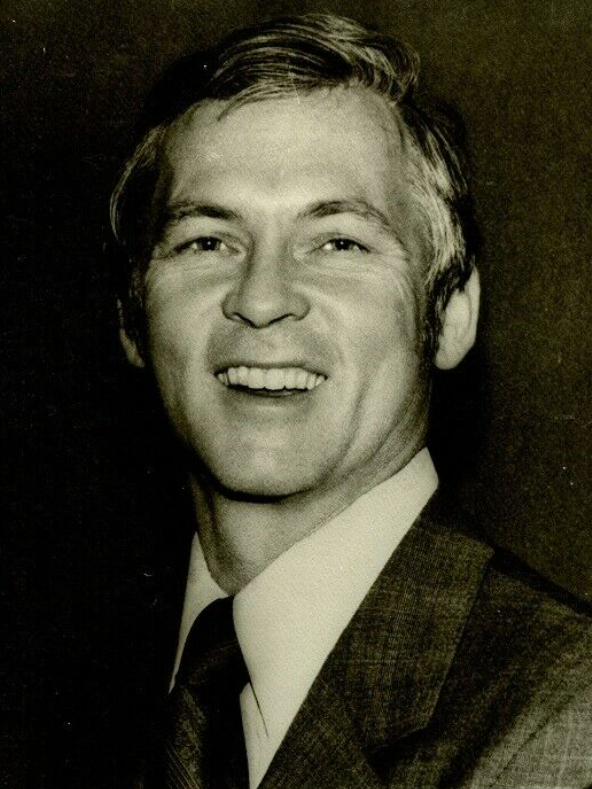
Chub. From his obituary in The Economist:
Young Endicott went to Groton, inheriting the nickname “Chub” from his father, who had also attended the school. They love tradition in Massachusetts.
In fact, as a young man he was more bulky than chubby. He was a football star at Harvard, a “baby-faced assassin” according to a writer in the Boston Globe. He had a brave war against the Japanese as a submarine officer, afterwards practising as a lawyer in Boston and getting political ambitions. He was in love with politics and after his string of failures moved to Washington for a time, just as a hopeful actor will go to Hollywood, without prospects but just to be there among the glamour. He did some lobbying and was given some minor political tasks by sympathetic Democrats.
In the tributes since his death “gentleman” is a word often used. He sometimes seemed to be too gentlemanly to be a successful politician. When he lost his bid for the Senate in 1966 he seemed genuinely pleased that his opponent, Edward Brooke, a black, had won. Ending racism was a family passion. At the age of 72 his mother was arrested in a southern town in 1964 for entertaining a group of whites and blacks in a segregated restaurant. Ending the death penalty was another of his campaigns, and he was always receptive to the latest liberal cause. One of his last tasks was to chair a meeting in Boston calling for the abolition of landmines.
What about the Mr. Peabody mentioned in John Prine’s song “Paradise”? That is Francis Peabody, founder of what’s now Peabody Energy. He was from Illinois, I don’t think he’s closely related to these Peabodys.
Anyway, this is all a roundabout way of bragging that Common Side Effects won a Peabody Award:

The ceremony will be at the Beverly Wilshire Hotel, a place that would probably shock Endicott. Then again is it worse than Tombstone?
We would be very remiss if we didn’t mention the greatest Peabody of all: