After the bad harvests of 1845 and 1846, the resulting inflation and hunger crisis reached its peak in 1847. Spreckels emigrated to the United States in 1848 at the age of 19 to start a new life, with only one German thaler in his pocket, which upon arrival in the US, he exchanged for 75 cents. (Equivalent to about $30 in 2023 dollars.) Spreckels settled in Charleston, South Carolina, working as a grocery clerk, taking over the grocery store after a year and a half by buying it on credit from the retiring shop owner.
Claus’s brother Bernard had moved to San Francisco, and told Claus things were booming there. In 1855 Claus moved there. He opened a grocery store, and then a brewery. From Wikipedia:
Brewing proved a sometimes difficult line of work. Beermaking required constant monitoring for temperature, something that might be ignored when a shift change happened, requiring Spreckels to come in late at night and monitor the process himself. He later stated that he often slept no more than four hours per day for months on end.
A new idea:
Spreckels saloon was located in the same area as George Gordon’s San Francisco and Pacific Sugar Refinery and frequented by some of its workmen. Spreckels had overheard a conversation between these workmen discussing the wastefulness of the sugar refining process at their factory, which allowed large amounts of sugar liquor to overflow and run into the sewers. Spreckels sensed that if the refinery could still turn a profit while wasting so much of its product, then the profit potential in sugar must be enormous. An additional factor was the outbreak of the American Civil War in 1861, which cut off the North from Southern sugar supplies, causing demand to outstrip supply.
This went great, but it wasn’t easy:
In 1869, overwork and stress had led to severe burnout and a mental breakdown, characterized by memory loss and other physical and mental symptoms. His doctors advised him to withdraw from all business activity. Spreckels left management of the California Sugar Refinery in the hands of his partners and spent the next 18 months over 1869 and 1870 traveling with his family in Europe. This trip included a course of hydrotherapy at the spa town of Karlsbad, Bohemia. He returned to San Francisco in early 1871 with his health and vigor fully restored.
He had sugar plantations in Hawaii, and sugar beet operations in Santa Cruz County. In Maui he built the company town of Spreckelsville. But he found himself on the wrong side of Hawaiian politics after the overthrow of the Kingdom, and left.
Allegations by the Chronicle and other critics included the claim that he practiced slavery on his Hawaiian plantations, that he acted as a pimp for King Kalākaua, and that he had defrauded stockholders in his company
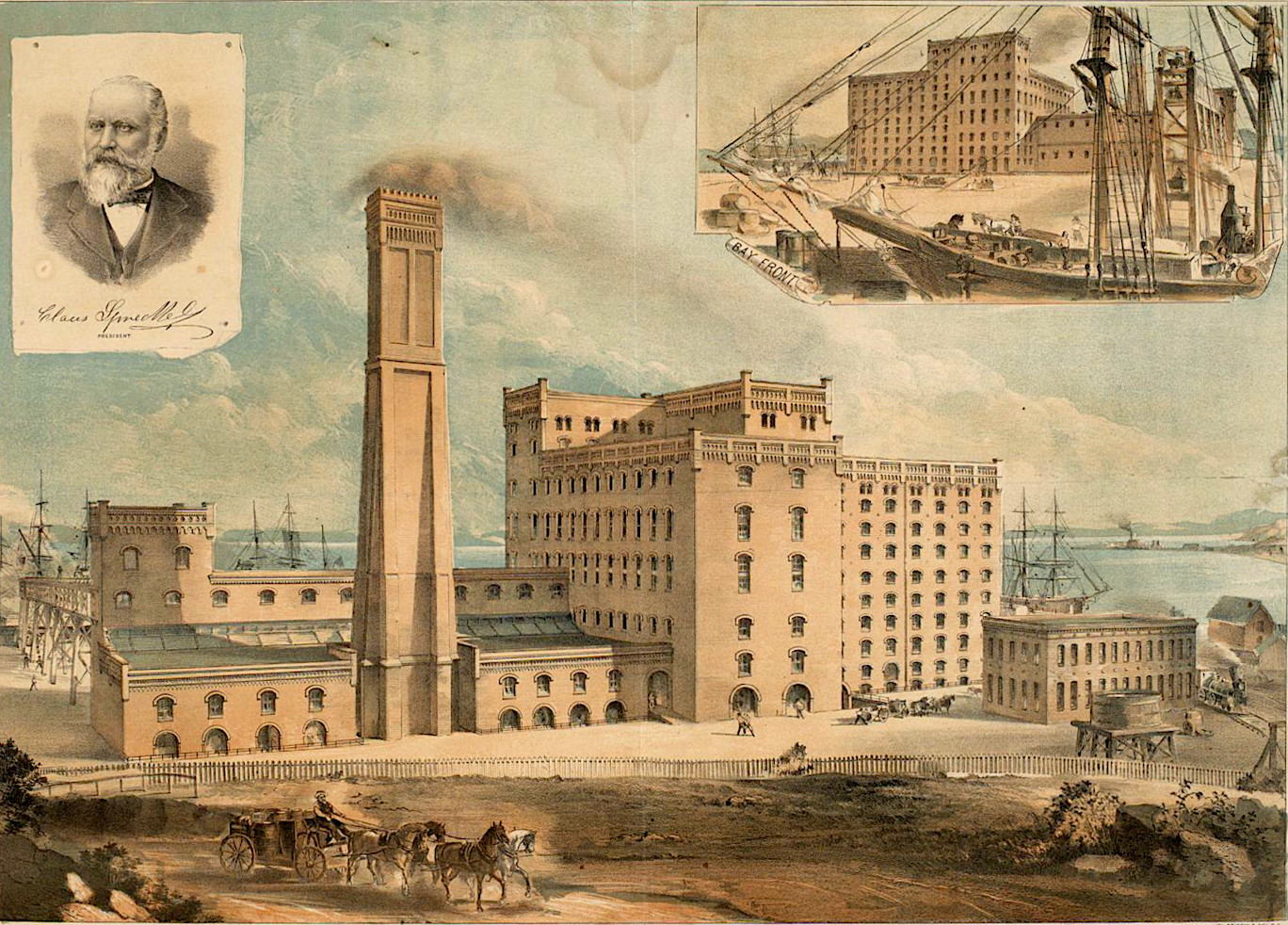
Back in California Spreckels developed more sugar beet operations, and established another Spreckelsville:
(source). Sometime I’d like to visit. from a 2012 Monterey Now article:
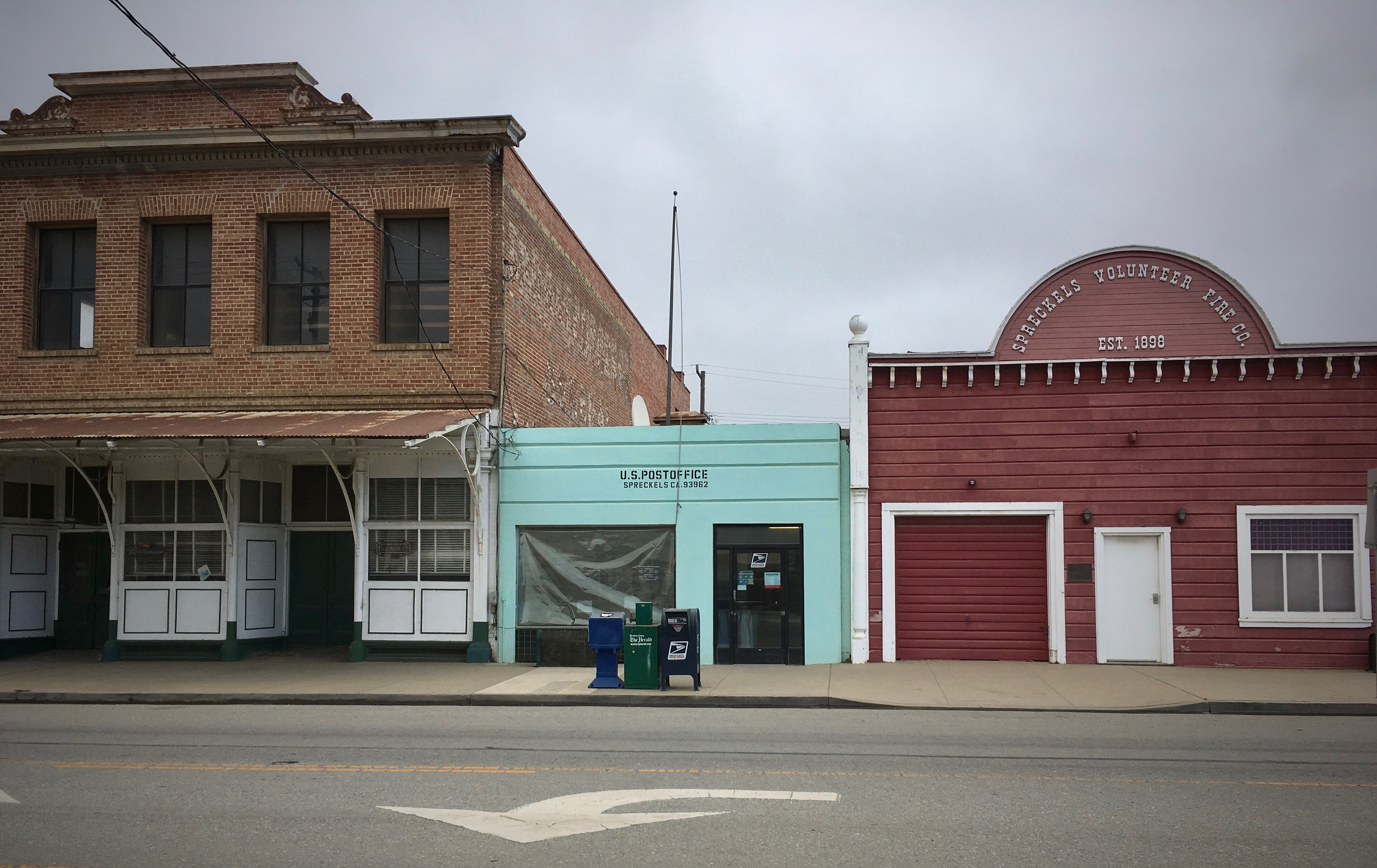
Claus Spreckels founded the town in 1899, when the sugar plant became the world’s biggest, binging on 13 million gallons of water from local wells and processing 3,000 tons of beets a day.
The company may have left in the ’80s, but its imprint never will. Sugar beets still pop up “randomly” in the yard, according to resident and local celebrity chef Todd Fisher.
“People who live there will forever associate with the sugar plant,” he says. “We’ve all got some form of memento.”
The impact appears permanent on the wider Salinas Valley as well. Claus Spreckels is credited for the Salad Bowl’s first raised row crops and for pioneering its underground irrigation.
“He put Salinas on the map agriculturally,” says Tanimura & Antle cofounder and CEO Rick Antle. “It was basically wheat crops for cattle feed before him.”
“The Spreckels Sugar Company built a vast network of wells, pumps, ditches and canals, all to bring water to the beet fields,” authors Gary Breschini, Mona Gudgel and Trudy Haversat write in Images of America: Spreckels. “This irrigation project transformed the dry ranches into fertile farmland. In subsequent years, the irrigation made the switch to row crops possible. In many ways, it was Claus Spreckels who turned the Salinas Valley green.”
He developed a railroad into the Central Valley that competed with the Southern Pacific.
By the early 1960s a series of mergers and acquisitions swallowed up Spreckels Sugar. Some remnants became part of Amstar and others were shut down.
Some of Spreckels children were Adolph, who shot San Francisco Chronicle publisher Michael DeYoung, failed to kill him, and was acquitted. Aldoph also bred the first California horse to win the Kentucky Derby. He married Alma de Bretteville:
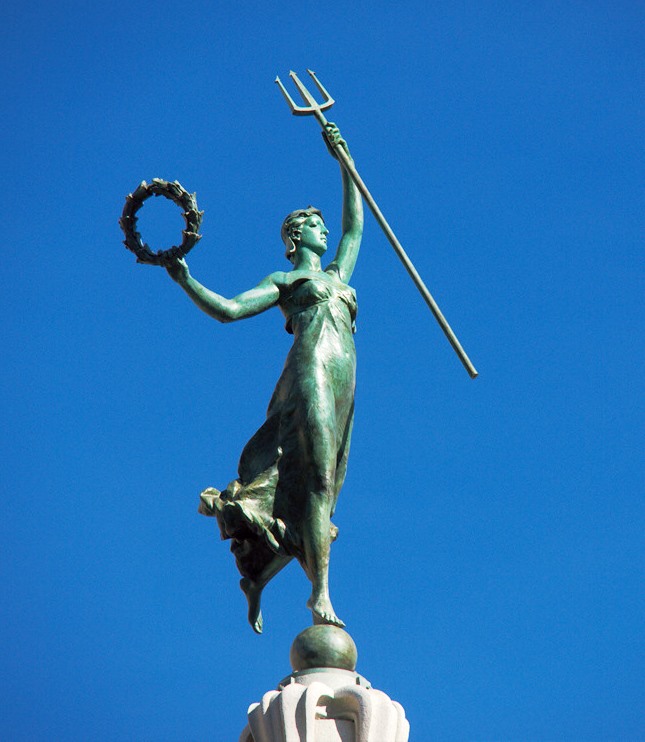
Alma de Bretteville met her future husband thanks to a rumor that she modeled for the Dewey Monument by Robert Aitken, which can be found in Union Square. One version of the story holds that Aitken hired Alma de Bretteville Spreckels, who had modeled for Aitken previously, to model for the statue. However, a 1902 article detailing the monument’s construction states that Aitken’s model was Clara Petzold or Petzoldt, a popular artists’ model in San Francisco at that time. Regardless, this statue was selected from a number of entries and only barely made the cut, thanks to the crucial vote of the chair of the Citizens’ Committee, Adolph B. Spreckels. Although he was 24 years older than she was, he was smitten by Alma, and after a five-year courtship, they married on May 11, 1908.
Alma funded the Palace of the Legion of Honor, famed San Francisco landmark seen in the movie The Rock.
Adolph’s brother John D. was an important figure in San Diego. He built the “Impossible Railroad” that connected the city, through rough terrain, to the east, requiring miles of tunnels and bridges.
At various times he owned all of Coronado Island, the San Diego-Coronado Ferry System, the Union-Tribune Publishing Co., the San Diego Electric Railway, the San Diego & Arizona Railway, and Belmont Park in Mission Beach. He built several downtown buildings, including the Union Building in 1908, Spreckels Theatre in 1912, the Hotel San Diego, and the Golden West Hotel. He employed thousands of people and at one time he paid 10% of all the property taxes in San Diego County.
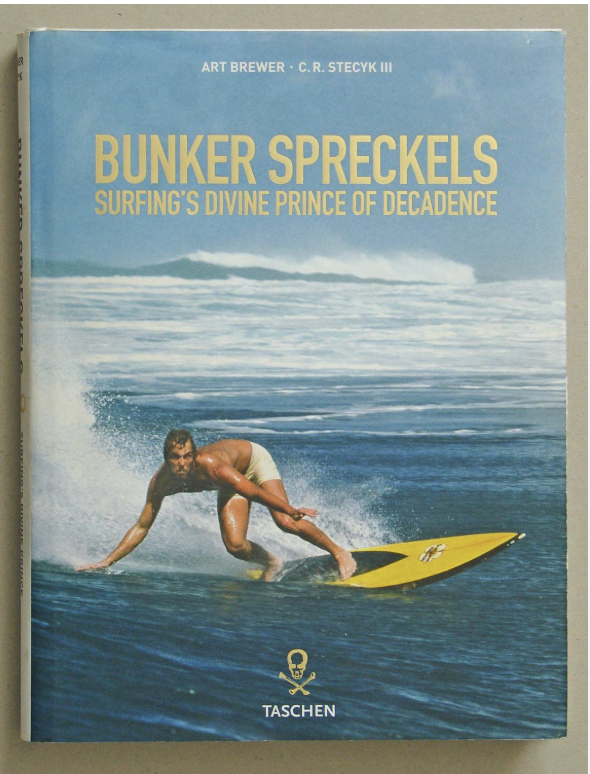
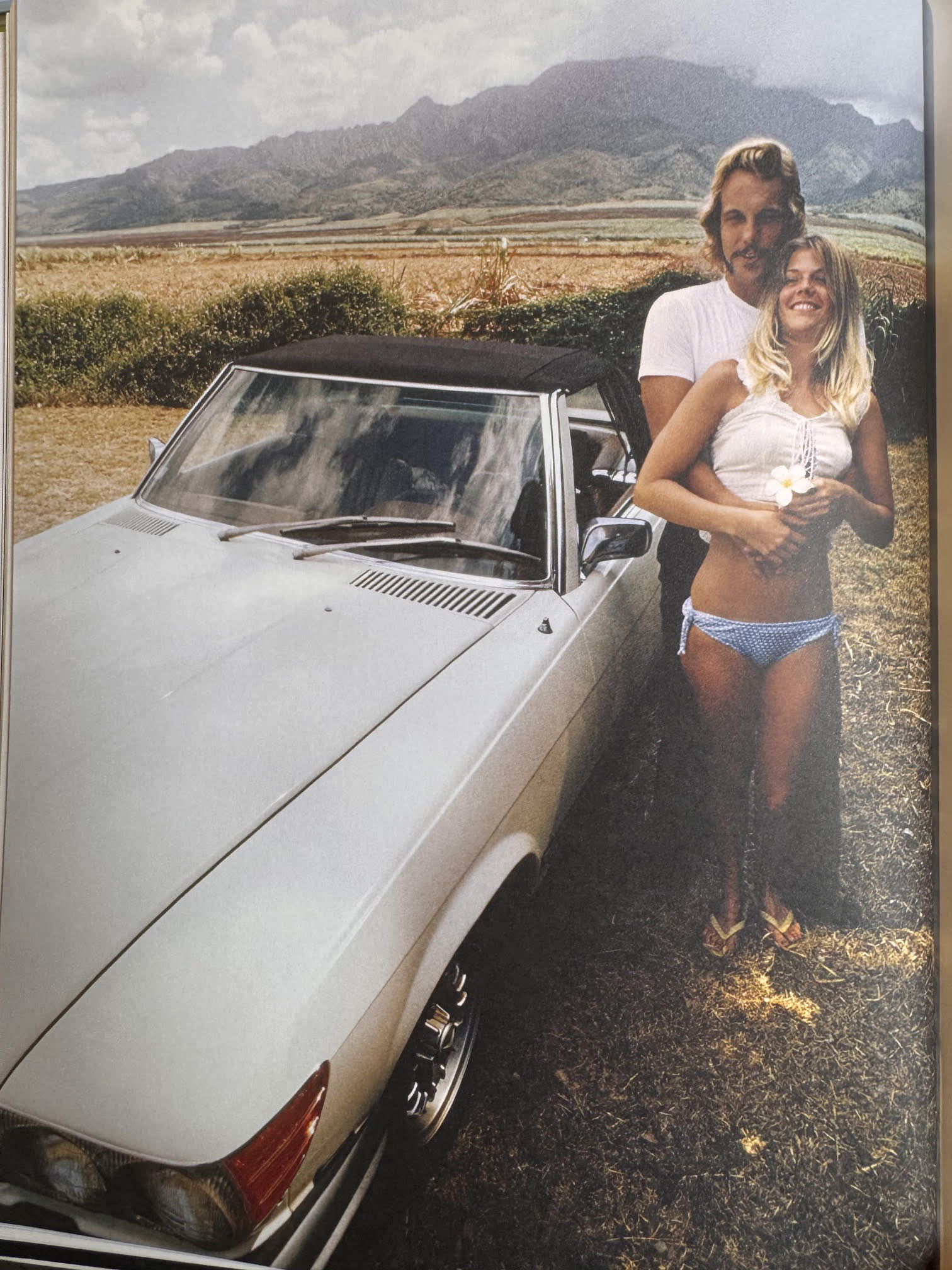
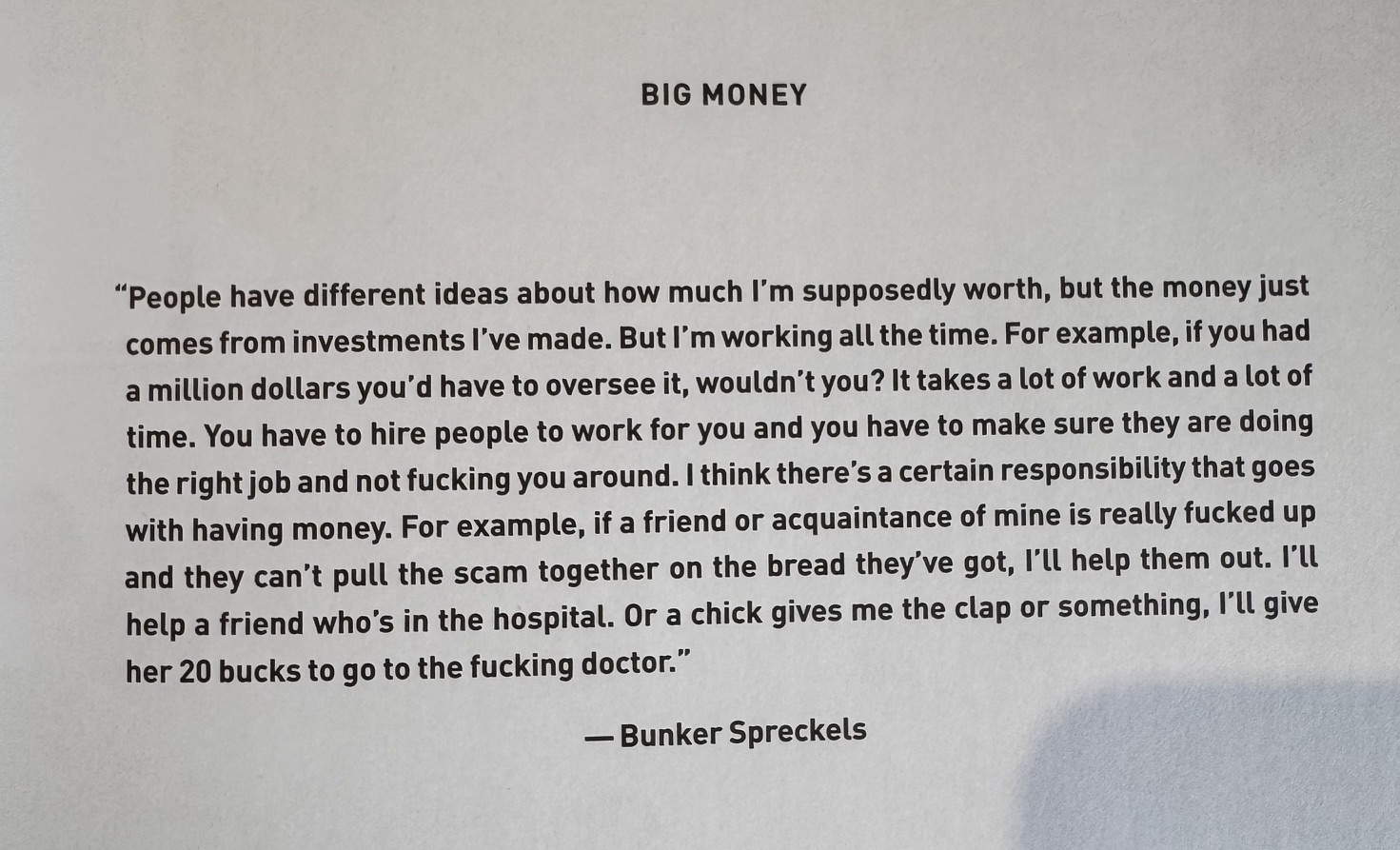
Adolph’s son, Adolph Jr, was the father of the surfer Bunker Spreckels:
When Kathleen’s marriage collapsed to Adolph Jr, she fell into the arms of one Clark Gable, who took Bunker on as his own, schooling him in the arts of hunting and Hollywood artifice (In one of Bunker’s final interviews, with writer CR Stecyk III, he said of Gable: “I’ll say one thing – he was the same way at home that he was on the screen. He didn’t change very much. He was from that no-crap school of acting and that’s the way he lived, too. He was never one to talk about himself… He taught me how to shoot. He taught me how to use different weapons – knives and bullwhips, that type of thing. He was good with a whip. He was good with a lasso, good in the cowboy arts. Good with horses. He was good with animals. He was into hunting and fishing.”) Gable was, by many accounts, a wonderful stepfather to Bunker, but when he died suddenly in 1960, he left in his wake a boy with a wild streak who had never lived by the de facto rules of society, and an heir to a ridiculously large inheritance. In the years after Gable died, Bunker is said to have used the actor’s Oscar trophy as a doorstop. What could possibly go wrong? Between the ages of 15 and 20, Bunker made ends meet by selling bags of weed here and there while living on Gable’s ranch. His girlfriend at the time was Miss Teen California and they would kill time cruising around in her trophy car. Despite embarking on a promising career as a stockbroker, Bunker returned to his family’s de facto homeland of Hawaii when was 18 (he wouldn’t inherit his fortune until 21) and threw himself into surfing culture (he’d originally envisioned himself flying missions into Vietnam). As a young boy, he had already been taken on by the island’s nobility. Because of his family’s support of the king, David Kalākaua, many of the old kahunas believed Bunker to be a reincarnated Hawaiian prince and taught him from an early age the ways of Pacific island life. Hunting, arching, fishing, and of course surfing, his true passion.
Let’s get into your background. Has your family always been a powerful family?
Yes.
Do you know much about your ancestors?
Quite a bit actually, about some of them, just maybe the key people in the family. I’ve read books on them. We come from a Viking line of Tetons. My great grandfather Claus Speckels- only then it was Von Spreckelsen, but in America we dropped it to Spreckels – sailed over from Germany in 1846.
He was in the grocery business?
He was in the grocery business in New York and he made his money and he came West. He went up to San Francisco and got into the beet sugar business as well as public utilities. I think he had his finger in parts of the banking business, too. He made a lot of money in those businesses. Then he came to Hawaii in the late 1800s.
Before going to Hawaii, I believe he was involved in running the government of San Francisco some-how. There was a little corruption with him and some other guy. That seemed to be the rule. There was always some sort of corruption going down around him. As I look in my book at my notes here / see the word “corruption.” Corruption. Opium bribes. Gifts to the king.
Who’s that in the picture?
Kalakaua. And then the Oceanic Steamship Company, which is now the Matson Line. The SS “Lurline” is named after a Spreckel. She’s named after Lurline Spreckels.
But your family has been influential in the development of modern Hawaii?
Not modern Hawaii, no.
Well, if it wasn’t for your family we probably wouldn’t know Hawaii more or less as it is today: territorial, statehood, and all that.
They were here when it was a monarchy. After the queen was jailed it became whatever it became, the annexation business. Our family by that time had pretty much pulled out of here.
After my great-grandfather Claus, there was another Spreckels that ran a bit of a game here, but nothing like Claus ran. Plus, there was no more monarchy because when Claus was here he was the king’s best friend.
What was their life like?
I hear it was pretty decadent. The legend is that Claus won the kingdom playing cards, which isn’t true. It was just that Kalakaua had a lot of missionaries on his back and a lot of people breathing down his neck because he liked to party and drink gin and what not, and have his women and his opium and whatever he liked. They call him the “merry monarch” because he liked to party.
He was overspending and he owed money to so many different people. Whenever something was going to happen he’d have to ask people if he could do it, and here is the king having to ask all these people if he could do something. When Claus came to Hawaii he walked right to the front door, had a drink with the king, and said, “How much money do you need to bail yourself out of this and pay everybody off?” The king told him and he paid everybody off. Kalakaua fired his whole cabinet at 2 in the morning one night and they put in the people that Claus and Kalakaua wanted in the cabinet.
Plus the king gave Claus Spreckelsville, land for his sugar plantations.
Claus brought his engineers over from Germany and they redesigned the sugar industry, the refining of the sugar and all that, they redesigned that. They dug the Spreckels ditch for irrigation purposes. They just revolutionized the whole sugar industry to the point that they kind of had a monopoly on the sugar business because they had the most advanced techniques and they could produce the most sugar in the fastest, most effective way. That was Claus’s genius. He knew who to call up and who to bring on and have this design or that design.
How did the missionaries react to them?
They felt that Claus came over here with his money and his power and offered his friendship to the king. Claus is responsible for the king traveling, too, getting him on a boat and going around the world. He really wanted to make Hawaii a power, the king did. They’d go in and they’d present themselves to European royalty and all that kind of stuff and tell them to come to Hawaii, “We’ll take care of you,” and all that kind of stuff. The missionaries came over here with their Bibles and their talk. I think they totally ruined Hawaiian culture with all that. The Hawaiians had their own gods. I feel that some of the missionaries who came were hypocritical. Some of them really hadn’t done their homework.
You mean with what the people were like?
Yeah, they just came over here and started waving Bibles and told everybody to put their clothes on. They taught them to read. They imposed something on the Hawaiian people. They imposed their way of life and their trip.
How did your great grandfather differ?
He was a heathen. He was a realist. He came over and he didn’t use Christianity to get what he wanted.
He used the things he had made with his hands, his power, and the things he had at his disposal.
Did your great grandfather speak Hawaiian?
Not fluently, no.
What kinds of activities was he into?
He drank. He could drink Kalakaua under the table. They could both drink. I just heard that. They could both drink all night and the next day, they would be up working.
Claus went around, he oversaw the fields. He’d check on his bosses and his workers and make sure things were getting done right.
Let’s change gears a bit. What do you feel you’ve gained from your father, Adolph?
I learned how to find out as much about people as fast as I possibly can. I learned that from my father. When you go out with my father you find everything out about the coffee-shop waitress and everything about her whole life in about two minutes. That was one of his better qualities.
How did he do it?
He’d just strike up a conversation with her. He’d probably tell her a joke. He was quite a lady’s man, quite charming if he wasn’t too intoxicated. He would just break the ice with a joke or something like that, or “How’s the family?” and before you knew it he’d get the whole story from her.
What’d you learn from your mother?
I probably couldn’t sum that up in one sentence. I probably learned how to listen to other people rather than shooting my mouth off and letting my feelings and my emotions be known. She would say, “Be as wise as a serpent, as sound as a dove.” That’s just one little trick | picked up from her.
What about your stepfather, Clark Gable?
I learned a lot about grooming. I heard from him what a fuck-tit the acting business is. I learned a lot about words, how to use words. He taught me how to use the dictionary.
If you haven’t read or re-read _Dear Mr Henshaw_ in a while it has a lot of good detail about working class life in Salinas Valley area around the time of Spreckels closure. (Narrators father drives trucks including sugar beet loads.) I found it a moving re-read as an adult.




_crop.jpg)
If you haven’t read or re-read _Dear Mr Henshaw_ in a while it has a lot of good detail about working class life in Salinas Valley area around the time of Spreckels closure. (Narrators father drives trucks including sugar beet loads.) I found it a moving re-read as an adult.