





Number of unaccompanied minors, age 17 or lower, apprehended during or after border crossings, fiscal year 2017:
Trump aside, what exactly is the plan here?
Hat tip goes to @BaldingsWorld.
Weak, weak, weak
Posted: July 23, 2018 Filed under: America Since 1945, politics 2 Comments
The Trump era will end when a Democrat can get in Trump’s face and confidently say this. American politics is not structured for this kinda face to face thing so maybe it won’t be until 2020.
Jump to 3:42 in this director’s cut to see the almost sexual excitement that explodes when Blair drops the word “weak”:
Sherrod Brown is the Dem who physically resembles Blair here the most, imo.
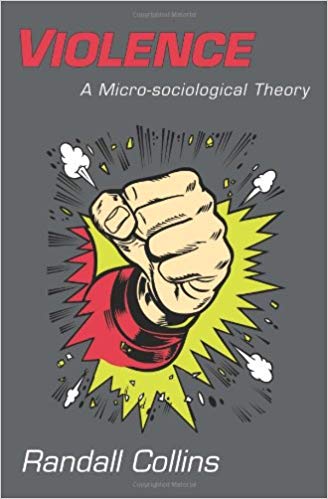
Once a confident Democrat is calling Trump weak to his face, the fight will enter the pattern laid out by Randall Collins:
How does violence sometimes succeed in doing damage? The key is asymmetrical confrontation tension. One side will win if they can get their victim in the zone of high arousal and high incompetence, while keeping their own arousal down to a zone of greater bodily control.
Trump will enter a state of high arousal and high incompetence. Collins continues:
Violence is not so much physical as emotional struggle; whoever achieves emotional domination, can then impose physical domination. That is why most real fights look very nasty; one sides beats up on an opponent at the time they are incapable of resisting.
Unfortch a US president in a state of high arousal and high incompetence has a non-zero chance of ending human life on Earth, so that also must be weighed.
When tyrants tremble sick with fear and hear their death knells ringing
Posted: July 20, 2018 Filed under: America Since 1945, politics Leave a comment
we used to listen to this record when I was a kid.
when friends by shame are undefiled
also a good line.
The first was the 2011 NATO intervention in Libya, which led, ultimately, to the ousting and gruesome lynching of the Libyan dictator, Muammar Qaddafi. Afterward, many people who interacted with Putin noticed how deeply Qaddafi’s death troubled him. He is said to have watched the video of the killing over and over. “The way Qaddafi died made a profound impact on him,” says Jake Sullivan, a former senior State Department official who met repeatedly with senior Russian officials around that time. Another former senior Obama-administration official describes Putin as “obsessed” with Qaddafi’s death
reported Julia Ioffe for the Atlantic in February 2018.
The question, silently: do you really know where you are at this point in time and space and in reality and in existence?
Posted: July 19, 2018 Filed under: America Since 1945, moon Leave a comment(not great image quality there but the audio! from one of my favs:

(avail on FilmStruck streaming, possibly Netflix as well)
Summits with Russia
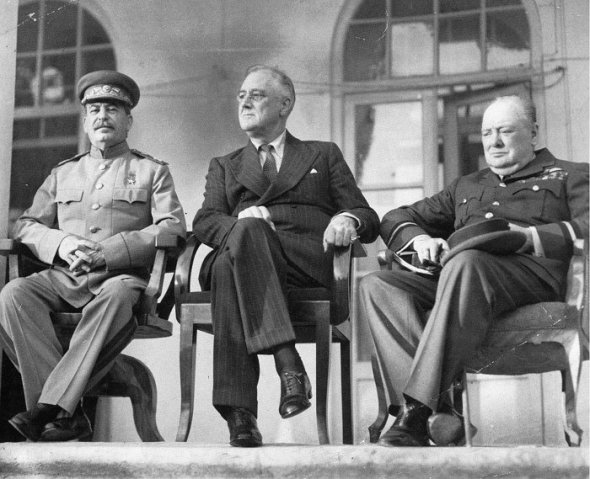
Posted: July 16, 2018 Filed under: America Since 1945, presidents Leave a commentTehran, 1943. FDR and Stalin joke (?) around with Churchill about the idea of executing German officers:
When they had disposed of Germany, Stalin threw off care; he was, the Ambassador said, in superb form, pulling the P.M.’s [Winston Churchill’s] leg all the evening. I asked the Ambassador:
“Was Stalin’s ragging a cat-like instinct to play with a mouse, or was he just in great spirits now that he had gained his end?”
He did not answer. The P. M. had not, he said, tumbled to Stalin’s game. The Ambassador was full of Stalin’s talk.
Stalin: “Fifty thousand Germans must be killed. Their General Staff must go.”
P.M. (rising and pacing the room): “I will not be a party to any butchery in cold blood. What happens in hot blood is another matter.”
Stalin: “Fifty thousand must be shot.”
The P.M. got very red in the face.
P.M.: “I would rather be taken out now and shot then disgrace my country.”
The President, said the Ambassador, then joined in the fun.
Roosevelt: “I have a compromise to propose. Not fifty thousand, but only forty-nine thousand should be shot.”
The Prime Minister got up and left the room. Stalin followed him, telling him he was only joking. They came back together. Stalin had a broad grin on his face.
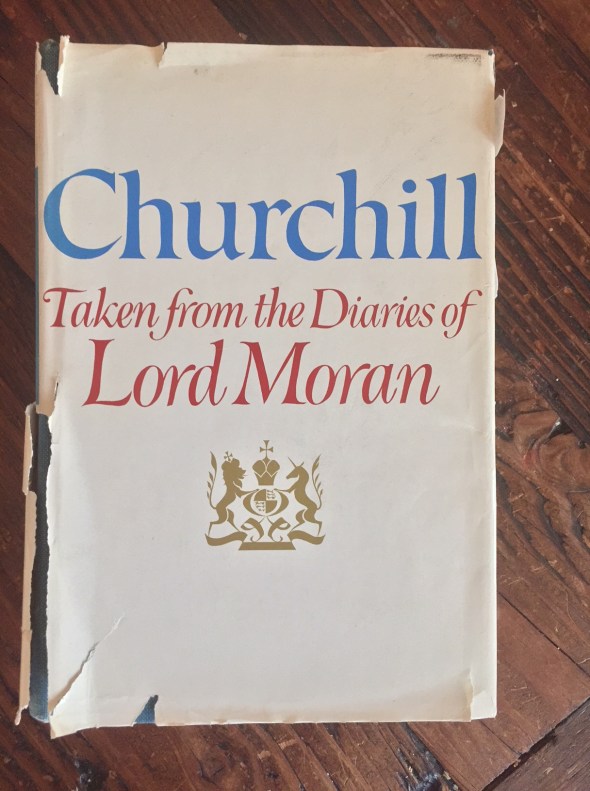
The Ambassador is Sir Archibald Clark Kerr, quoted in:
San Cristóbal
Posted: July 14, 2018 Filed under: America Since 1945, Mexico Leave a comment
took this one myself.
Visited the town of San Cristóbal while writing this book:

Now I read in the New York Times piece by Oscar Lopez and Andrew Jacobs that the residents don’t have enough water, and so instead are drinking Coke.
Why don’t they have enough water?
Because of the Coke factory.
Buffeted by the dual crises of the diabetes epidemic and the chronic water shortage, residents of San Cristóbal have identified what they believe is the singular culprit: the hulking Coca-Cola factory on the edge of town.
The plant has permits to extract more than 300,000 gallons of water a day as part of a decades-old deal with the federal government that critics say is overly favorable to the plant’s owners.
Bill Clinton in his post presidency used to speak of working with Coca-Cola, which has one of the world’s most effective distribution networks, to bring health care and medicine to remote places in Africa. Thought that was kind of a cool idea, neoliberalism at its best, you know? There was a positive story to tell there, but you gotta wonder who is really steering in the relationship of Coke and politicians.
If you want to read about San Cristóbal and San Juan Chamula and the nearby towns of Chiapas, get my book. A special place, grateful I got to go there.

Nanette and Domino’s Pizza and Taxonomies
Posted: July 13, 2018 Filed under: America Since 1945, business Leave a comment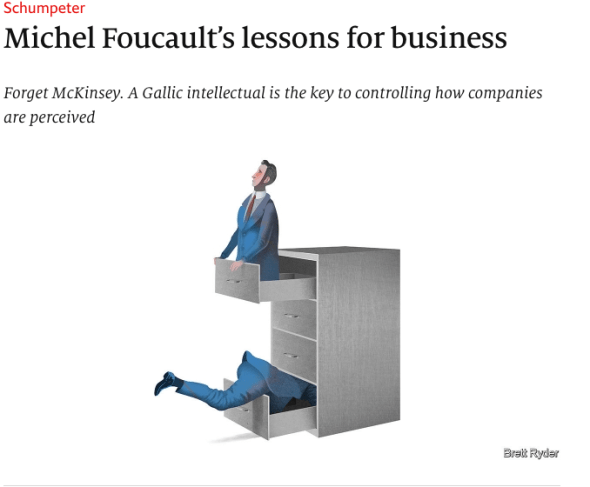
Really interested in this Schumpeter column in a recent issue of The Economist:
NOT many businesspeople study post-war French philosophy, but they could certainly learn from it. Michel Foucault, who died in 1984, argued that how you structure information is a source of power. A few of America’s most celebrated bosses, including Jeff Bezos and Warren Buffett, understand this implicitly, adroitly manipulating how outsiders see their firms. It is one of the most important but least understood skills in business.
Foucault was obsessed with taxonomies, or how humans split the world into arbitrary mental categories in order “to tame the wild profusion of existing things”. When we flip these around, “we apprehend in one great leap…the exotic charm of another system of thought”. Imagine, for example, a supermarket organised by products’ vintage. Lettuces, haddock, custard and the New York Times would be grouped in an aisle called “items produced yesterday”. Scotch, string, cans of dog food and the discounted Celine Dion DVDs would be in the “made in 2008” aisle.
I’m always into it when CEOs have a bold claim on what kind of company they are, redefining their own classification. Here are some examples:


Or in Ugly Delicious when Dave Chang says Domino’s is a technology company:
Was thinking about how important taxonomy is. Take, for instance, Nanette:
How much of the staggered, overpowered reaction to this special comes from approaching it in the taxonomy “standup comedy” / “Netflix comedy special” and then having that classification broken/subverted?
Would it have a different effect if you experienced it in the category “Edinburgh Fringe Festival-style personal show,” an overlapping but different taxonomy?
What about how the Emmys has the categories “comedy” and “drama,” when it seems to me the cool nominees in both categories tend to blur and push the limits of those definitions?
Another example of taxonomic power from Charles C. Mann’s Reddit AMA:
I am so grateful for the W&P book. Thank you for exploring these issues. I work in Oil and Gas and I’m very concerned about that unfortunate byproduct climate change. I’m also tired of being the bad guy at dinner parties. Is responsible oil and gas development a contradiction in terms? I’m wondering if you could sketch a possible social imaginary in which people like me have a beneficial role in contributing to our needed energy switch, while at the same time, you know, maybe keeping my job for a few years???
My son is in the energy business, too. He worries about this.
I always tell him, there is no reason to be the “bad guy” at parties. First, fossil fuels have contributed immensely to human well-being—there’s just no question about that. And, until we learned about climate change, there was little reason to doubt they had, on balance, a good ecological role. I live in a cold place (Massachusetts) that requires heating for people to survive. It would be a wasteland if people were still heating with wood. Wood heat denuded the entire NE, causing massive erosion and soil loss. Fossil fuels had in this case profound positive effects.
Now… climate change is a different matter.
Broadly speaking, it seems to me that there are two kind of fossil fuel companies, those which have decided they are energy companies, and those which have decided they are oil and gas companies. The former are adapting to the new reality, heavily investing in alternative energy and working to innovate; the latter are fighting progress. (I hope you are lucky enough to work for one of the former!) The former will continue to be indispensable to modern society. Note that almost all of the essential development of solar panels–what transformed them from laboratory curiosities at Bell Labs to a workable product–was done by oil and gas companies, which needed to power offshore oil platforms. Until China entered the market, Big Oil made the overwhelming majority of solar panels. Some companies will continue in that tradition and eventually build and maybe operate huge renewable facilities, especially with technologies like offshore wind.
What about the latter type of company? They will become, eventually and grudgingly, suppliers of raw materials for other industries–oil, gas, coal tar, etc., are essential modern raw materials. That’s a smaller role, but not one to be ashamed of. Still, I’d rather be working inside one of the first type, working to push the transition to renewables, which is what my son is doing.
Readers, what do you think about taxonomies?
Henry Adams to young FDR
Posted: July 13, 2018 Filed under: America Since 1945, politics Leave a comment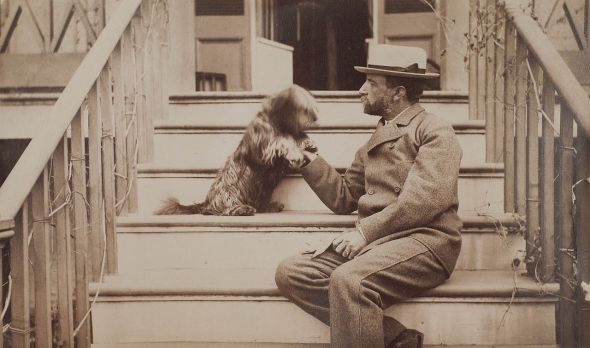
Henry Adams with dog Marquis from Wikipedia
Young man, I have lived in this house many years and seen the occupants of that White House across the square come and go, and nothing that you minor officials or the occupants of that house can do will affect the history of the world for long.
Believe he said this to FDR when Frank was assistant secretary of the Navy. Quote from Old Money by Nelson Aldrich.
Beloved Woman of Justice
Posted: July 11, 2018 Filed under: America Since 1945, art history Leave a comment
Cool statue I came upon in Knoxville, TN a few months back. 
Let them overturn Roe.
Posted: July 10, 2018 Filed under: America Since 1945, politics Leave a commentThis is my hot take for today:
Let’s assume you agree with me and think women in the United States should have access to abortion when they need it.
Letting Roe v Wade get overturned could be a positive outcome that would help this cause in the long term.
What would happen if Roe were overturned tomorrow? Well, in California, New York, Massachusetts, Vermont, Alaska, etc, I’m estimating about 29 states, I’m guessing: nothing.
In another 30 or so states, legislators might try to make abortion illegal. This would become an important, contentious issue in state elections. I believe this would drive voter turnout and galvanize women voters in particular.
We might look to Ireland as an example of what could happen. The issue of repealing the Eighth Amendment, which banned abortion, came up for a vote. An electrified, involved, young electorate turned up. Turnout was 64%, and Yes – the “pro choice” side – won with 66.40% of the vote (source).
I think this was healthy and democratic for Ireland.
Wouldn’t similar debates and votes, or mini versions in legislative elections in the states where abortion would be a contentious issue, be healthy and good for the country?
Or, better yet, have a women’s rights amendment to the Constitution. That would be great too.
Where in the Constitution is there a right to an abortion? It’s not in there. We might like it to be in there, but it’s not. The Roe decision didn’t find it in the Ninth Amendment:
The enumeration in the Constitution, of certain rights, shall not be construed to deny or disparage others retained by the people.[1]
In fact, if I understand right, the majority in Roe went out of their way to say they didn’t find it there:
The Court declined to adopt the district court’s Ninth Amendment rationale, and instead asserted that the “right of privacy, whether it be founded in the Fourteenth Amendment‘s concept of personal liberty and restrictions upon state action, as we feel it is, or, as the district court determined, in the Ninth Amendment’s reservation of rights to the people, is broad enough to encompass a woman’s decision whether or not to terminate her pregnancy.”[38] Douglas, in his concurring opinion in the companion case, Doe, stated more emphatically, “The Ninth Amendment obviously does not create federally enforceable rights.
The majority in Roe found the right in the Fourteenth Amendment, which is ridiculous. Not at all the intent of that amendment. At that point you’re making up stuff.
Roe v. Wade is one of the few Supreme Court decisions I’ve read and… it feels flimsy. It feels like a wire and string solution to get to a result the court wanted.
The Roe decision is cheating. It’s like the referee giving your team extra points because he wants you to win. That might get you the result you want. But it’s not good for the game.
Let the states fight it out! Let conservative legislators be forced to show how they’re gonna enforce making abortion illegal. Let them fight it every election cycle.
(lol bc I’m obviously out of my depth, ran this one by our legal counsel, MMW, for comment:
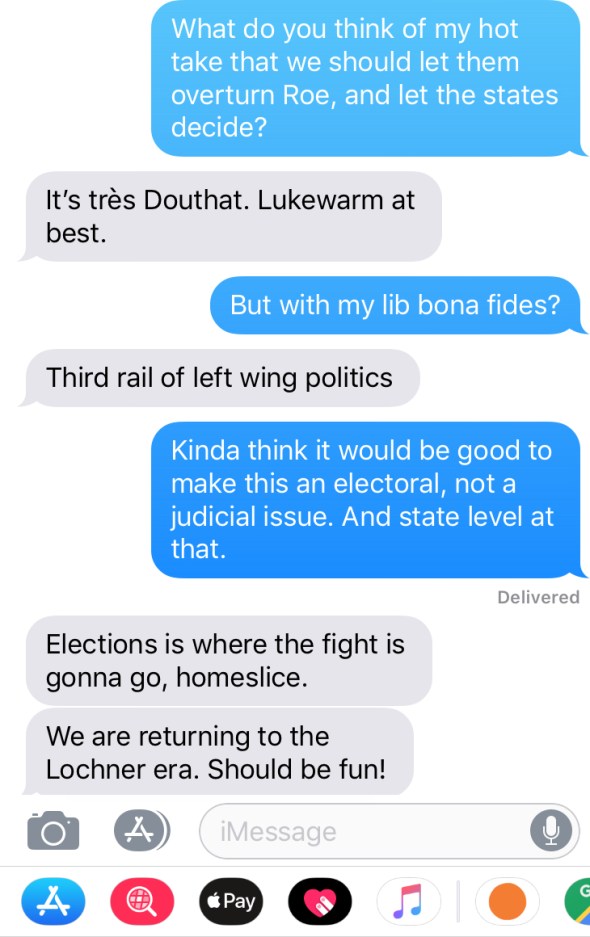
Had to look up the Lochner era.
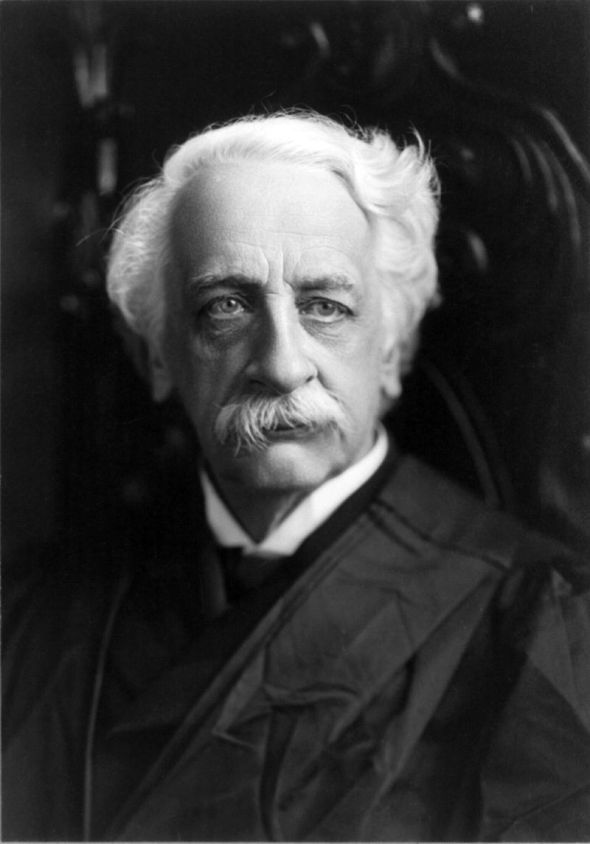
Hi, I’m Rufus Wheeler Peckham.
Warren Buffett on why Coke is so good
Posted: July 2, 2018 Filed under: America Since 1945, business 2 Commentsjump to 6:42:
(h/t Naval Ravikant. )
Ended up watching this whole Buffett Q&A. If you watch other Buffett talks he does tend to repeat himself. This one is good.
Interesting to me how much Buffett talks about two companies, See’s and Coca-Cola, that have an emotional connection to the consumer. The results of that might be in the balance sheet, but the reason is beyond numbers. A genius of Buffett to combine cold technical investment analysis with being, like, the ultimate late 20th century American consumer.
As for Coke, the only new drink I know of that people drink five or six of a day is:

John Lanchester
Posted: July 1, 2018 Filed under: America Since 1945, business Leave a commentOne example I saw when I was researching Whoops!, my book on the crisis, was in Baltimore. There people going to buy houses for the first time would turn up at the mortgage company’s office and be told: ‘Look, I’m really sorry, I know we said we’d be able to get you a loan at 6 per cent, but something went wrong at the bank, so the number on here is 12 per cent. But listen, I know you want to come out of here owning a house today – that’s right isn’t it, you do want to leave this room owning your own house for the first time? – so what I suggest is, since there’s a lot of paperwork to get through, you sign it, and we sort out this issue with the loan later, it won’t be a problem.’ That is a flat lie: the loan was fixed and unchangeable and the contract legally binding, but under Maryland law, the principle is caveat emptor, so the mortgage broker can lie as much as they want, since the onus is on the other party to protect their own interests. The result, just in Baltimore, was tens of thousands of people losing their homes. The charity I talked to had no idea where many of those people were: some of them were sleeping in their cars, some of them had gone back to wherever they came from outside the city, others had just vanished. And all that predatory lending was entirely legal.
strikes again in LRB (link, free).
Napoleon said something interesting: that to understand a person, you must understand what the world looked like when he was twenty. I think there’s a lot in that.
[…]
I notice, talking to younger people, people who hit that Napoleonic moment of turning twenty since the crisis, that the idea of capitalism being thought of as morally superior elicits something between an eye roll and a hollow laugh. Their view of capitalism has been formed by austerity, increasing inequality, the impunity and imperviousness of finance and big technology companies, and the widespread spectacle of increasing corporate profits and a rocketing stock market combined with declining real pay and a huge growth in the new phenomenon of in-work poverty. That last is very important. For decades, the basic promise was that if you didn’t work the state would support you, but you would be poor. If you worked, you wouldn’t be. That’s no longer true: most people on benefits are in work too, it’s just that the work doesn’t pay enough to live on. That’s a fundamental breach of what used to be the social contract. So is the fact that the living standards of young people are likely not to be as high as they are for their parents. That idea stings just as much for parents as it does for their children.
July 2017
Posted: June 30, 2018 Filed under: America, America Since 1945 Leave a commentThat was a good month of posts on Helytimes, if you’re one of those folks who likes poking around in the archives.
Bob Marley, John Adams, Bert Hölldobler, Deke Slayton, Amban, Ansel Adams.
Also feel I did fine work in July 2014.
Merrick Garland
Posted: June 28, 2018 Filed under: America Since 1945 Leave a comment
The optics were never exactly right with this guy.
(Found this picture screensaved, and can’t even find where it’s from. Google thinks it’s the generic picture for “tuxedo.”)
Borders Part 2
Posted: June 24, 2018 Filed under: America Since 1945, Wonder Trail Leave a comment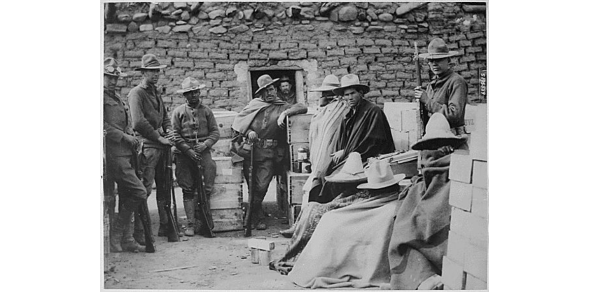
“Villa bandits who raided Columbus, New Mexico, caught by American soldiers in the mountains of Mexico and held, in camp near Namiquipa, April 27, 1916.” from NARA
Lots of INTENSE feedback about post yesterday on borders.
I’m just reporting reality as I perceive it.
Since Pershing went after Pancho Villa, it’s been clear that along one thousand nine hundred and blahblah miles of desert, even the fiercest efforts of government are gonna, at best, disappear into the dust.
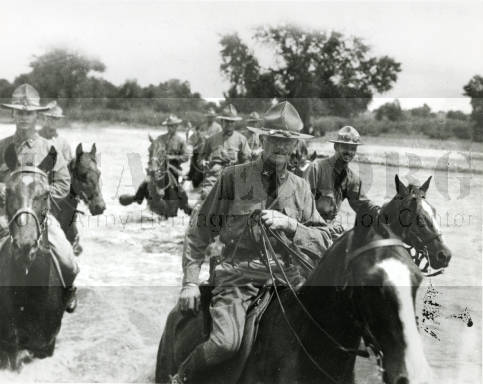
from the Mexican Border Service photo collection.
And they had Patton!
(How ’bout this by the way:
Pershing was permitted to bring into New Mexico 527 Chinese refugees who had assisted him during the expedition, despite the ban on Chinese immigration at that time under the Chinese Exclusion Act. The Chinese refugees, known as “Pershing’s Chinese”, were allowed to remain in the U.S. if they worked under the supervision of the military as cooks and servants on bases. In 1921, Congress passed Public Resolution 29, which allowed them to remain in the country permanently under the conditions of the 1892 Geary Act. Most of them settled in San Antonio, Texas.
).
What kind of conservative believes that the federal government can put a wall here and stop people from moving across it?
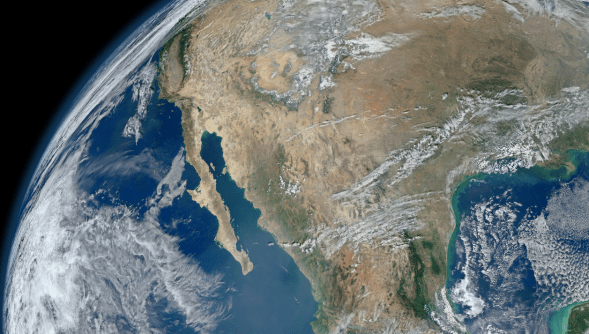
close up of this 2012 NASA composite image
Does declaring an new federal attempt to impose “no tolerance” enforcement seem more tyrantish or freedomish to you?
Does the fear of brown people from south of our border, like the fear of psychotically violent black people, have something to say about our own guilty conscience? There isn’t a country from Mexico to Chile that hasn’t been severely screwed by the USA.
Look, I’m no expert. My book about Mexico, Central and South America was the work of an enthusiastic amateur, not a serious scholar!
From where I sit, in Los Angeles, California, USA, I can understand the traditional politician approach of talking any way you want to get elected and then not going anywhere near actually doing anything about the border.

The current president got elected by sticking his fork in this electrical socket. I’m not seeing how it ends? Best case he declares victory and moves on.
Borders
Posted: June 22, 2018 Filed under: America Since 1945, politics 1 Comment
Feel like I am the only person in the world who accepts the reality that borders are over.
This isn’t a political position or something I’m advocating for. It’s an observation of fact.
Hard to say when we can date it, exactly. The first time we could see Earth from space? Maybe Malcolm McLean‘s pioneering of the shipping container. Stuff, an unstoppable amount of stuff, and money, and information, and people flow and move across borders in a way that is way beyond the ability of any state or government to stop.
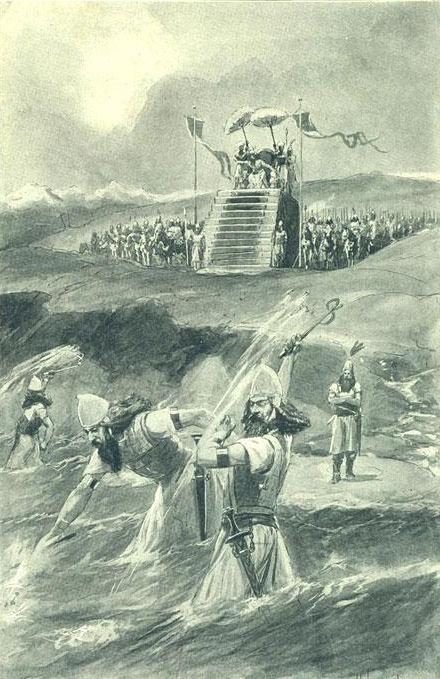
The idea of a wall stopping this seems about as futile as Xerxes ordering his guys to whip the sea as punishment.

UAC there standing for unaccompanied children. That’s from the US Customs and Border Patrol website.
Tyler Cowen reports:
U.S.A. fact of the day
“What exactly is the plan here?” is the question for sure.
How much force and violence would be needed to stop this? Who would direct that? Do the guys in charge seem like they could handle that?
How many trans-border families already exist, and what to do about that?
I have no answers, only a feeling that statements like “if you don’t have a border you don’t have a country” or something are not in touch with reality.
We already don’t have a border. Without massive government expenditures, force and violence that would sicken any liberal or conservative, we never will again.
What’re we gonna do now?
RIP Stanley Cavell
Posted: June 20, 2018 Filed under: America Since 1945, film, writing 1 Comment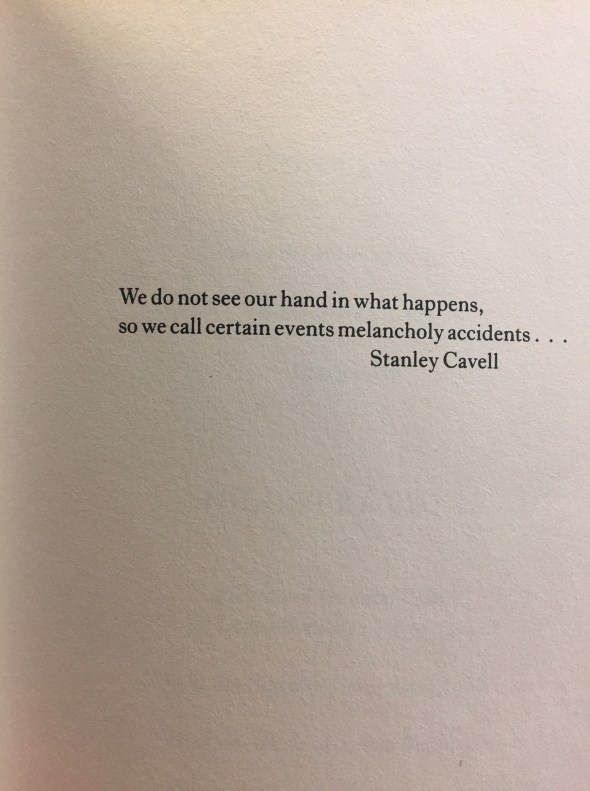
Here is an obituary of the Harvard philosopher, who has left this Earth. To be honest with you, most of Cavell’s work is over my head. Much of it seems to deal with the ultimate breakdown of language and the difficulty of meaning anything.
Cavell wrote the epigraph for my favorite book:
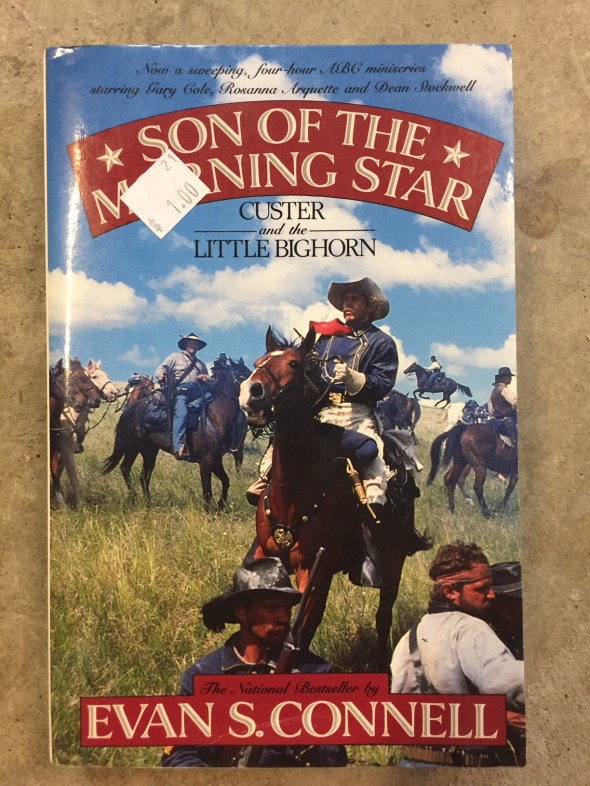
and at some point, somebody (Etan?) recommended I check out:
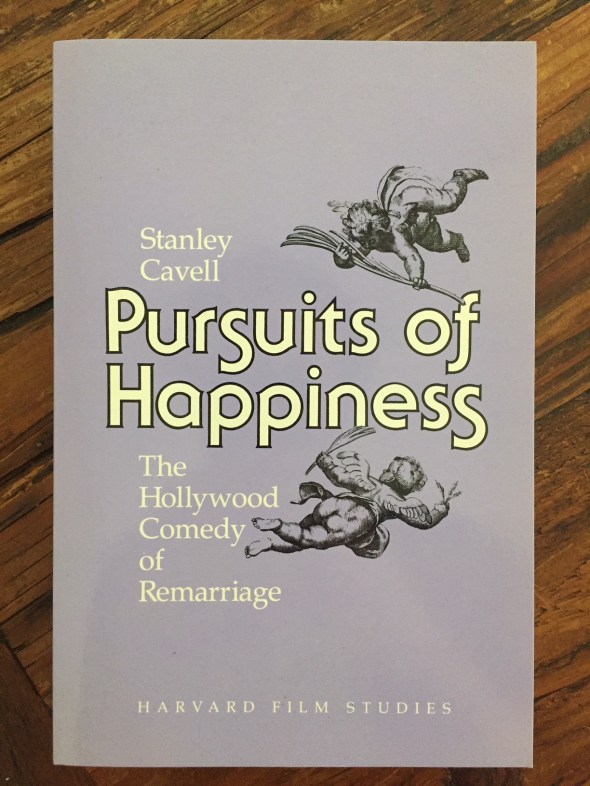
which meant a lot to me.
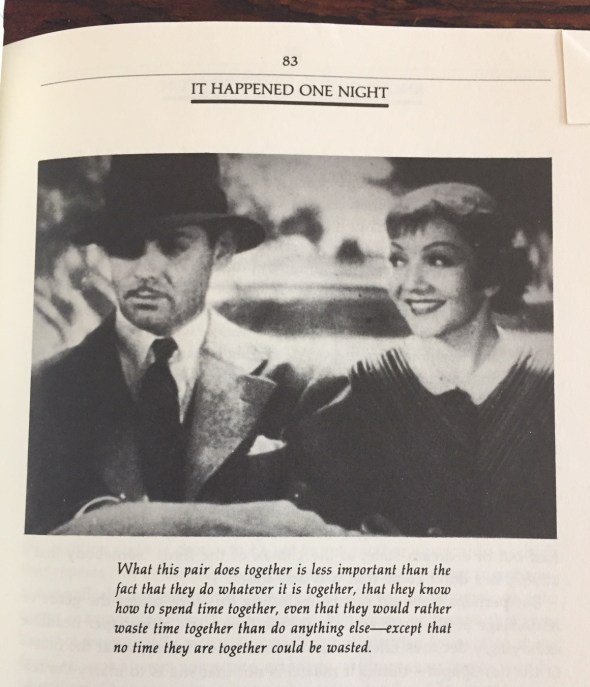
This book is a study of seven screwball comedies:
The Lady Eve
It Happened One Night
Bringing Up Baby
The Philadelphia Story
His Girl Friday
Adam’s Rib
The Awful Truth
These Cavell calls comedies of remarriage. They’re stories (mostly) where the main characters have a history, and the plots involve the tangles as they struggle, fight, and reconnect.
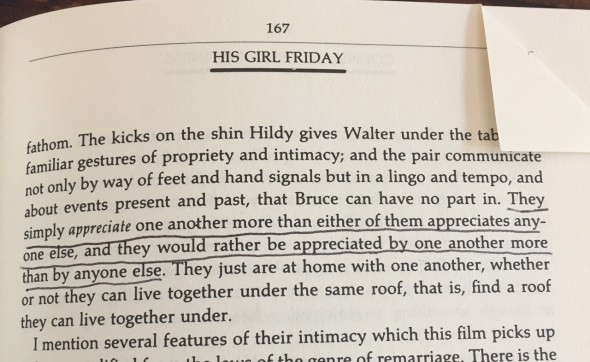
What the book really gets it is: what is revealed about us or our society when we look at what we find pleasing and appropriate in romantic comedies? Why do we root for Cary Grant instead of Jimmy Stewart in The Philadelphia Story for instance?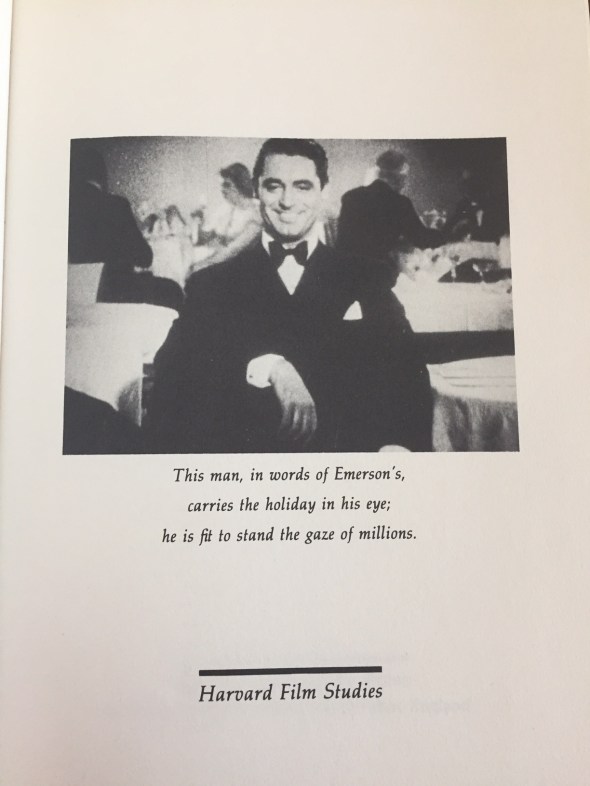
It’s fun to watch these movies and read this book. 
It’s dense for sure. I read it before the Age of Phones, not sure how I’d fair today. But I still think about insights from it.

At one point Cavell says (in a parenthetical!):
I do not wish, in trying for a moment to resist, or scrutinize, the power of Spencer Tracy’s playfulness, to deny that I sometimes feel Katherine Hepburn to lack a certain humor about herself, to count the till a little too often. But then I think of how often I have cast the world I want to live in as one in which my capacities for playfulness and for seriousness are not used against one another, so against me. I am the lady they always want to saw in half.
Cool phrase.
RIP to a real one!
Things I learned reading The Economist this week
Posted: June 18, 2018 Filed under: America Since 1945, world Leave a comment
- If you invest $100,000 in the island nation of Saint Lucia, they’ll make you a citizen.
- South Africa has an unemployment rate of 26%.
- Bernard Henri-Levy has been performing a one-man show about Brexit at Cadogan Hall in Chelsea.
Michelle Wolf, Peter Schweitzer, and DC/media as pro wrestling
Posted: June 14, 2018 Filed under: America Since 1945, politics Leave a comment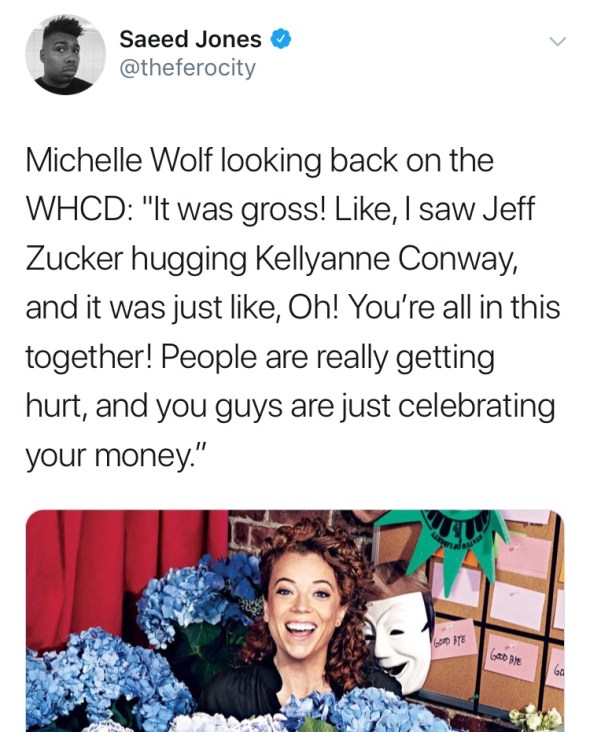 Michelle Wolf says that in this Vulture profile by Amy Larocca.
A very similar complaint voiced by Clinton Cash author Peter Schweitzer in the Devil’s Bargain book about Trump and Bannon: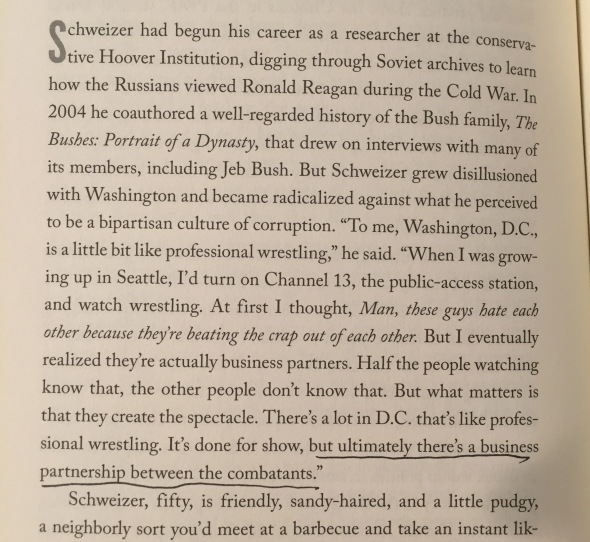
 Helytimes


