Bull
Posted: February 15, 2017 Filed under: art history Leave a comment
Norton Simon Museum
There’s a beautiful Picasso lithograph of a bull, and it starts off as this beautifully rendered, three-dimensional bull and he just takes stuff away from it. There’s several in the series, but by the end of it, it’s just four or five lines that really evokes “BULL.” There’s something artistically sophisticated about it that also suits me as a person. I had such an early love for the Charles Schultz comics, and those TV specials. It sounds kind of embarrassing to say, but those Halloween and Christmas specials were really important in terms of giving me the artistic bug. There was an under-indication on the surface but then a quite capacious moral world behind it that really intrigued me.
so says George Saunders in Vulture. Happened to see some of these at the Norton Simon Museum one day this fall:

first

third

sixth

ninth

I dunno, third is pretty good. Also not bad:

In his biography Chuck AmuckChuck Jones claims that he made this cartoon after producer Eddie Selzer burst into Jones’ workspace one day and announced, for no readily apparent reason, that bullfights were not funny, and they were not to make a cartoon about them. Since Selzer had, in Jones’ opinion, consistently proven himself to be wrong about absolutely everything (having once barred Jones from doing any cartoons featuring Pepé Le Pew, on the grounds that he perceived them as not being funny, which led to Jones and Maltese to do For Scent-imental Reasons, which won an Oscar, which Selzer accepted), the only possible option was to make the cartoon.
Discussion Question: is George Saunders influenced at all by Bugs Bunny?

Ways Of Seeing
Posted: January 6, 2017 Filed under: art history Leave a comment
Reading NYT obit of 90 year old provocative art critic John Berger:
John Peter Berger was born in London on Nov. 5, 1926, and raised in only moderate comfort, with little high culture, in what he described as a working-class home.
questions:
in how much comfort were you raised?
in how much comfort would The New York Times say you were raised?
how much comfort is best for child?
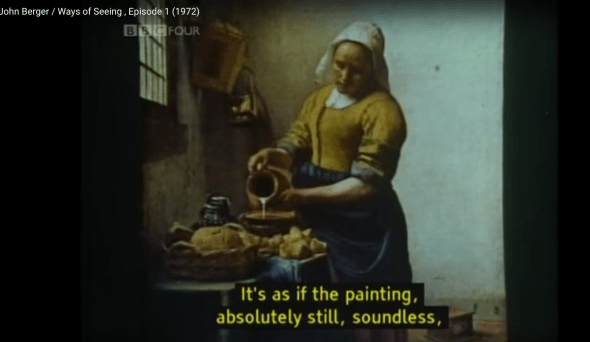
Ended up watching the whole first episode of Ways Of Seeing there on Youtube and thought it was great!


Twins Seven Seven
Posted: December 28, 2016 Filed under: Africa, art history, painting Leave a comment via Tyler Cowen I learn about Nigerian artist Prince Twins Seven Seven
or more formally Prince Taiwo Olaniyi Wyewale-Toyeje Oyekale Osuntoki. He received his nickname because he was the only surviving child from seven distinct sets of twins.

He came to the United States in the late 1980s and settled in the Philadelphia area, although he traveled abroad frequently. His life entered a turbulent period, filled with drinking and gambling, he said. Destitute, he found work as a parking-lot attendant for Material Culture, a large Philadelphia store that sells antiquities, furnishings and carpets.
When the owner learned that Prince Twins Seven-Seven was an artist, he had him decorate the store’s wrapping paper. Later, he was given a small room to use as a studio.
from his obituary


SUNDAY TAKES!
Posted: September 18, 2016 Filed under: art history, Australia, marine biology, painting, pictures, presidents, writing Leave a commentHere are some takes and items for your Sunday enjoyment!
The coach on Netflix doc series Last Chance U:

The most compelling, complex character on “TV” right now
Sales:
In an old folder of articles I found this one, about Peter Thiel’s Zero To One
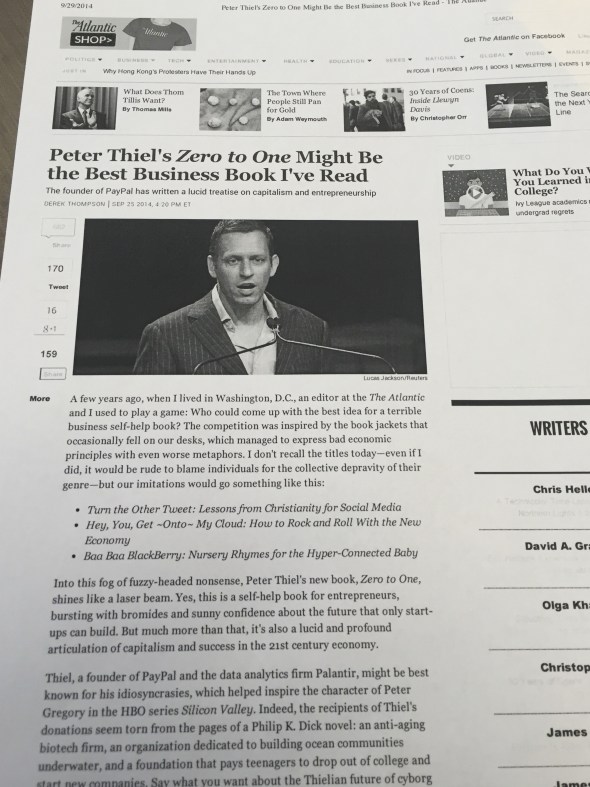
Thiel and his ideas are interesting to me. I’m open to the Vali/OwenE take that he might just be a kinda smart guy who got lucky and thinks he’s a genius. He definitely should not be on the Supreme Court.
I loved Zero To One, but Thiel’s support for Trump makes him seem like a much darker and more troubling figure than I felt he was when I was reading it.
Two interesting points in the article that had new meaning in light of Thiel being a Trump guy:

Is that something like what Trump did (old grouchy white men? white American nationalists? you’d think they’d be served by a lot of political competitors but maybe there was a hole in the market)? What about this?:

Unfortunately, Trump is good at sales and Hillary Clinton is kind of bad at sales.
Sometimes this campaign we get a reminder of how good at sales Bill Clinton is. Here is Bill talking about the Clinton Foundation. This clip is used by GOP and conservative sites as I guess kind of scummy because Clinton compares himself to Robin Hood:
Maybe comparing yourself to Robin Hood is a little much, but when I hear Bill explain the Clinton Foundation as asking for money from people who have a lot of it and giving it to people who don’t have any, it makes it sound a lot better.
Does anyone effectively refute the claim that almost 10 million more people in more than 70 countries have access to life-saving medicines through the Clinton Health Access Initiative?
Silence Of The Lambs

Not topical or relevant at all but for forever I’ve had in my phone a bunch of screenshots of this movie, one of the most gripping movies ever. Saw it on TV some months ago and was struck by how much of it is just a closeup of a person’s face. How unsettling/compelling!

Baltimore can be quite a fun town if you have the right guide
This guy:

This jumped out at me
In a not otherwise “sexy” article about English literary critic William Empson’s book The Face Of The Buddha:

William Empson:

Millennials
Enjoyed the caption on this one, from National Geographic’s Instagram:

Mediocrities

Thomas Frank, profiled in the Politico 50 list:

Frank went to University of Kansas, University of Virginia, and University of Chicago. Can he be trusted?
Doing some reading about AquAdvantage salmon, a genetically modified animal

- Am I ugly?
A growth hormone-regulating gene from a Pacific Chinook salmon, with a promoter from an ocean pout, was added to the Atlantic salmon’s 40,000 genes. This gene enables it to grow year-round instead of only during spring and summer. The purpose of the modifications is to increase the speed at which the fish grows without affecting its ultimate size or other qualities. The fish grows to market size in 16 to 18 months rather than three years.
Asked Anonymous Investor to take a look at the financials of the AquaBounty company.
I haven’t looked into the science, but if their salmon is all that they claim, AquaBounty should have a big pricing advantage. Because their fish grow so much faster than a normal salmon, they should be much cheaper to produce, and sell — undercutting their competitors.
This reminds of the tiny speculative biotech companies I invest in. There’s no money coming in, only money being burned. But you’re hoping someday for a big FDA approval that will open sluices of torrential cash. In this case, the FDA approval has come But the primary problem (they have a few) is that major buyers like Kroger and Target vowed not to carry the product. My guess is the company will eventually make inroads, just as Monsanto, Syngenta, etc, have in the past. But it might take a long time. Big money usually wins in the end. And the hippies, as always, will go whining back to their yurts.
AquaBounty is selling for around 64 million dollars. Not a bad price for a what looks like a pretty decent lottery ticket.
Not sure why AquaBounty only trades in London. The volume is extremely thin. This is a stock not on many people’s radar.
I do know that AquaBounty is controlled by Intrexon (the same company trying to battle Zika via their patented breed of mosquitos). They own over 50% of AquaBounty. Intrexon trades here under the ticker XON. It’s a 3 billion dollar company. (A year ago it was worth more than 6 billion). Intrexon does a lot of interesting Monsanto-type things, and the stock is sort of a darling of Wall Street. But lately doubt has crept into the story. Intrexon has been slow in providing evidence for many of it’s scientific claims. The company says they don’t want to divulge their trade secrets by releasing too much data. Skeptics speculate that they’re not disclosing much, because, they believe, much of the science probably doesn’t work.
Interesting. Here’s what Intrexon (NYSE: XON) has been up to:

“I couldn’t be more pleased with the birth of these adorable kittens,” noted Blake Russell, President of ViaGen Pets. “As the largest global provider of genetic preservation services for companion animals, we look forward to expanding the life-enriching connections that people form with their pets. Our goal is to bring this opportunity to all pet owners and their families.”
Sure. Anonymous Investor adds:
In the salmon world, AquAdvantage salmon are considered “ugly”. In a test 95% of salmon chose to mate with wild salmon over AquaBounty salmon.
Reginald
American Dad co-showrunner Brian Boyle has a very fine set of glasses with the AD characters on them.

One fan’s opinion? the show should do more with Reginald.

Reginald
The Flemish Giant
Somebody at work mentioned that the biggest kind of rabbit is called a Flemish giant.

Well worth the image search.
Boston accents:

A good, clear discussion of an often misunderstood issue from this classic
On the subject of Boston:

In Australia this kind of coconut frosted cake is known as Boston bun. Everyone was baffled when I told them I’d never heard of it.
A Boston bun is a large spiced bun with a thick layer of coconut icing, prevalent in Australia and New Zealand. Traditionally the bun contained sieved potato, and modern versions sometimes contain raisins. It is often served sliced, to accompany a cup of tea. The origin of the name is unknown.
In New Zealand they’re often called a Sally Lunn, especially in the North Island
Still reeling

from good times in Australia. A bizarro version of the United States, upside down and weirdly (to a USA observer) developed in all kinds of ways. For instance, Australia people talk about “the deep north” as like a joke on the way we talk about the “deep south.”
Important to remember that on the other side of the equator, you have to flip countries upside down to think about them. Their south is our north. If you think about that pointy part of Queensland as Florida, the Northern Territory as Texas, Tasmania as Newfoundland or Nova Scotia, Melbourne as Boston and Sydney as New York, you’re still way off but getting somewhere.

Ok but flip Australia upside down in your mind.
Huge thanks to the many people of New Zealand and Australia who helped me out. Puts me in mind of this week’s scripture, Matthew 25:35.
Bummed to miss
Had to come back to the USA before the Brisbane Writers’ Festival, so I missed Lionel Shriver of We Need To Talk About Kevin fame apparently light it up with a wild speech about cultural appropriation (attacking what seems to me to be a ridiculous straw man?)
I can’t find a photo of her wearing a sombrero, as she is alleged to have done. Did she really refer to herself as a “renowned iconoclast”?
Which Australian state library is the best?
I enjoy Melbourne’s State Library of Victoria so much:

photo by Wiki user Brian Jenkins
I mean how can you not admire that they have Ned Kelly’s armor on display?:

Some great illustrations on Ned’s wiki page:

“A strange apparition”: when Kelly appeared out of the mist-shrouded bush, clad in armour, bewildered policemen took him to be a ghost, a bunyip, and “Old Nick himself”.
a bunyip:

Let’s take a virtual look at Australia’s other state libraries:
Tasmania:

Hmm.
Would a better state library be a step towards helping Tasmania’s insane illiteracy rate?
New South Wales:


Impressive. Classic if slightly dull exterior, solid interior, I rate it a 9 (out of 11).
Queensland:
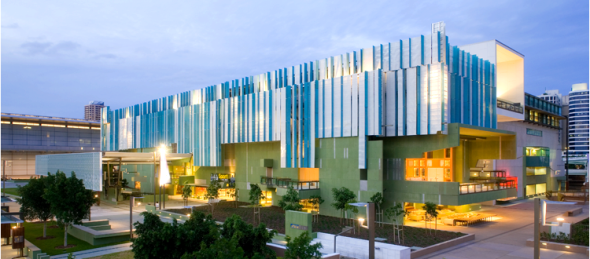

A big swing on the exterior, the interior kind of interesting but also kind of a like a weird mall. I’ll give it a 7.
Northern Territory:

No independent library building, it’s housed in the Parliament House which is kind of cool. DNQ for the rating system.
Western Australia:


Trash exterior, interior so weird as to be kind of interesting. 8.
The old version, once housed in Hackett Hall, appears to have been pretty cool:

South Australia:

Ok…

Aw yeah! 11/11.
Short Books
Australia/New Zealand publishing is so good at short books. I read a bunch of short books while traveling.

This one began as speech Flanagan gave, focusing on his disgust for the abuses, catastrophes, and inhumanity at Australia’s offshore detention centers for asylum seekers, but also about a general disappointment in political and cultural life:
Conformists par excellence, capable of only agreeing with power however or wherever it manifests itself, they are the ones least capable of dealing with the many new challenges we face precisely because those challenges demand the very qualities the new class lacks: courage, independence of thought and a belief in something larger than its own future.
The new class, understanding only self-interest, believing only in the possibilities of its own cynicism, committed to nothing more than its own perpetuation, seeks to ride the tiger by agreeing with all the tiger’s desires, believing it and not the tiger will endure, until the tiger decides it’s time to feed, as the mining corporations did with Kevin Rudd, as News Limited is now with Julia Gillard.
He goes on about the alternative:


If I may make a crude summary Flanagan’s argument could be he wishes Australia remembered Matthew 25:35 a little more.
Flanagan and I once shared a publisher, and I’m told his books are masterpieces, especially Narrow Road To The Deep North.
Also good, and more lighthearted if at times equally scorching:

Here’s a taste, where Pieper is digressing about a dog he adopted:
Took a page out of Vali’s book and wrote Mr. Pieper a short and simple fan letter complimenting him on his book. He wrote a gracious note back. Gotta do this more often.
I can’t write to the great New Zealand short story writer Katherine Mansfield because she’s dead:

If I could, I would compliment her on “The Garden Party.” This story starts out so boring and stodgy and Victorian I really thought I was in for it. But it pays off. Spoiler alert this is the last page:

What life was she couldn’t explain. No matter. He quite understood.
‘Isn’t it, darling?’ said Laurie.
Southbank
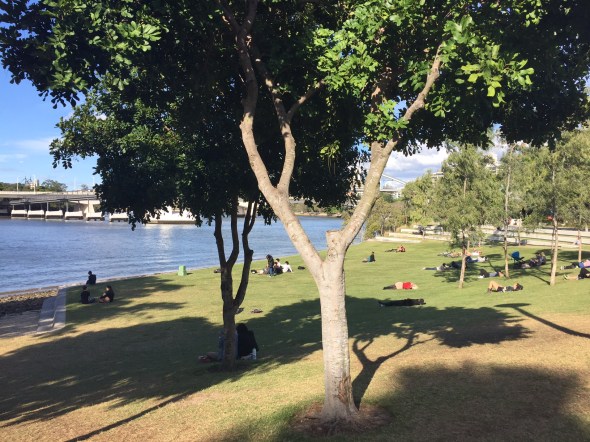
This scene, on Brisbane’s Southbank, really reminded me of this one, in Paris a hundredsome years ago:

Richard Bell

Impressed by this massive painting at the Milani Gallery in Brisbane by Australian indigenous artist Richard Bell.
(The price in Australian dollars is 55,000.)
Bell caused controversy in April 2011 after revealing that he selected the winner of the prestigious Sir John Sulman Prize through the toss of a coin.
When Will You Marry?
Posted: September 8, 2016 Filed under: art history, Boston, MFA Boston, museum, New England, painting, pictures, Tahiti Leave a comment
What a title for a painting. Heard of this Gaugin painting in an article about Qatar’s art scene. Reportedly some Qataris bought it for $300 mill. Says Wiki, back in 1893:
Gauguin placed this painting on consignment at the exhibition at a price of 1,500 francs, the highest price he assigned and shared by only one other painting, but had no takers.
Gaugin didn’t always crush it with his titles (Study of A Nude, etc) but sometimes he nailed it. Here is Where Are You Going?

(sometimes less interestingly called Woman Holding A Fruit)
Of course best of all, Where Do We Come From? What Are We? Where Are We Going? at the good ol’ Boston MFA.

Charles Morice two years later tried to raise a public subscription to purchase the painting for the nation. To assist this endeavour, Gauguin wrote a detailed description of the work concluding with the messianic remark that he spoke in parables: “Seeing they see not, hearing they hear not”. The subscription nevertheless failed.
You can read about Geoff Dyer’s frustrating experiences with these paintings and Gaugin and Tahiti in:
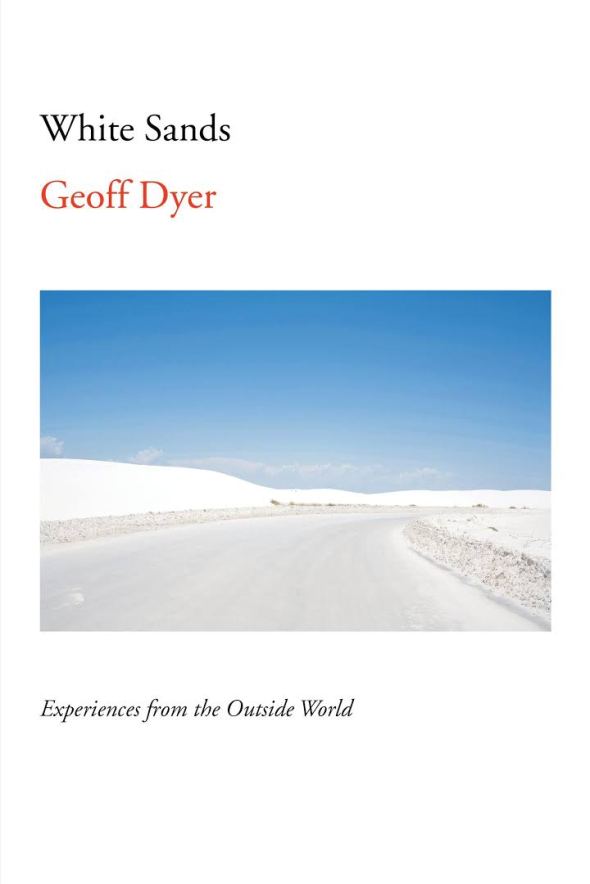
I was bummed I missed that dude at the Melbourne Writers’ Festival, bet we could’ve had some laughs.
Twenty Greatest Australian Artistic Accomplishments of All Time
Posted: August 18, 2016 Filed under: art history, Australia 10 CommentsLet’s see if I can make an absolutely definitive list:

20) The Thorn Birds by Colleen McCullough
This book is like nine hundred pages long and it sounds sexy, there were worn paperback copies at every library book sale of my youth so it must’ve hit home. Haven’t read it, but I think it’s an achievement, it makes the cut.
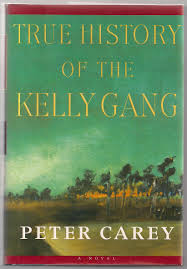
19) True History of the Kelly Gang by Peter Carey
I myself didn’t finish it but it definitely seemed like an achievement.
18) The movie Oscar and Lucinda.
This movie is weird and great. Ralph Fiennes can’t stop gambling. A real achievement.
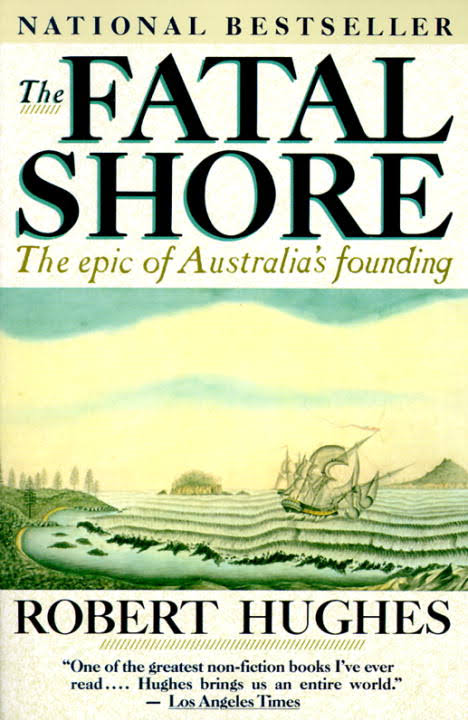
17) The Fatal Shore by Robert Hughes.
Enormous, ambitious, compelling, tremendous work of historical storytelling. Some excerpts give a sense of the style:
“At the lower end [of poor London circa 1788] were occupations now not only lost but barely recorded: that of the “Pure-finders,” for instance, old women who collected dog-turds which they sold to tanneries for a few pence a bucket.”
of the first night the convicts were allowed on land in Australia: “as the couples rutted between the rocks, guts burning form the harsh Brazilian aguardiente, their clothes slimy with red clay, the sexual history of colonial Australia may fairly be said to have begun.”
“Davey marked his arrival in Hobart Town in February of 1813 by lurching to the ship’s gangway, casting an owlish look at his new domain and emptying a bottle of port over his wife’s hat.”
16) The song “Waltzing Matilda”
Give it up, this is catchy song.
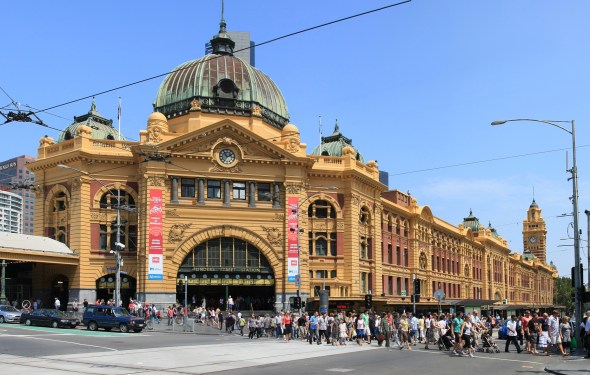
15) Flinders Street Station
Australian architecture has to be represented. You can’t give it to the Sydney Opera House though, designed by a Dane. The Royal Melbourne Exhibition Hall gets a lot of attention, but I think Flinders Street Station is the more unique and impressive building and thus the greater achievement.
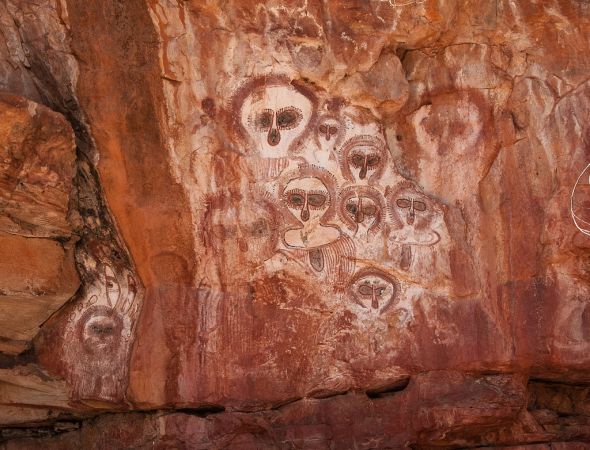
14) Wandjina Rock Art of the Kimberly.
Spooky, mesmerizing, and 4000 years later (judging by pictures, never seen it, would love to) it still holds up.
13) The Bee Gees, To Love Somebody
Not sure if the BeeGees should be included, they weren’t born in Australia, but feel like they make the cut. Corny? Maybe, but sometimes putting it all out there heart-wise is the way to go. Don’t agree? Take it up with with Beyoncé:
The Bee Gees were an early inspiration for me, Kelly Rowland and Michelle. We loved their songwriting and beautiful harmonies.
12) The song “Tomorrow” by Silverchair
Just a slam dunk of ’90s rock. These guys were 18 when they recorded this.

11) Paintings of Warlimpirrnga Tjapaltjarri
Wild, original, great. Previously covered here.
10) The movie The Proposition
Intense, gripping, cool. The soundtrack alone almost got its own entry.
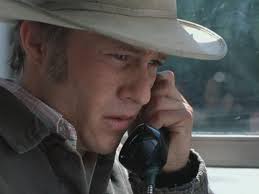
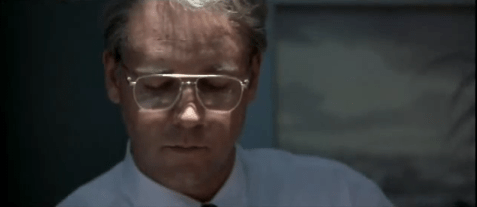
9) Heath Ledger’s performance in Brokeback Mountain / Russell Crowe’s performance in The Insider (tie)
Wasn’t sure how to place individual acting achievements in non-Australian movies, but felt like they should be represented. Heath Ledger is so good in this movie, he walks such a dangerous line, it’s tense all the way through. Crowe in The Insider is, imo, his best and most human performance in an incredible career.
8) AC/DC’s song “You Shook Me All Night Long”
Indisputable party rock classic. It’s true, maybe “Highway To Hell” or another AC/DC tune could go here, but I think “Shook” is the more dramatic achievement, standing out from the crowd of AC/DC songs.
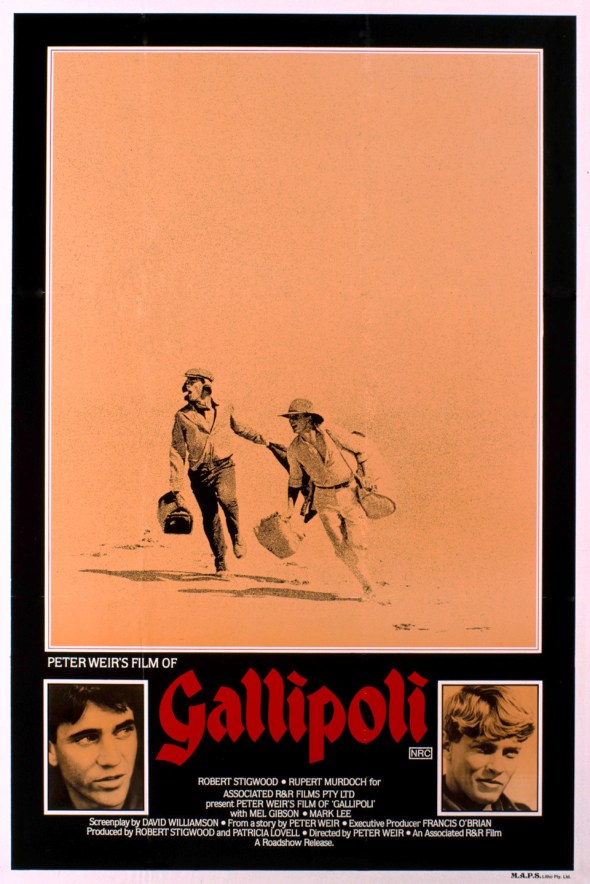
7) The movie Gallipoli
Young Mel Gibson, deeply moving movie about running, buds, war. What an intense journey this film takes you on.
6) Tame Impala’s album Currents
Why are some songs on this list and some whole albums? Because it’s my list, I can do what I want.
Kevin Parker of Tame Impala has said that listening to the Bee Gees after taking mushrooms inspired him to change the sound of the music he was making in his latest album Currents.[94]
5) The movie Walkabout
Why are Australians so good at making dreamy movies? Great kid performances. One of Warburton’s top seven!
4) Cait Blanchett in I’m Not There
What a masterful performance. Amazing achievement.
3) The movie Picnic At Hanging Rock
Is there another movie with such a special combo of creepy, trippy, mysterious? Peter Weir crushing it.
2) The Mad Max epic.
Ride chrome into Valhalla. When you put all three movies together, it’s a wonder this didn’t come in first.
1) The Avalanches album Since I Left You
Number one by a mile. Name a better album by Mozart. You can’t.
Honorable mention:
- This painting of a platypus by John Lewin

- Natalie Imbruglia’s “Torn“
- Summer Heights High (respect, I just never got too into it)
- Rebel Wilson’s performance in Bridesmaids and Pitch Perfect
- One of Patrick White works (“The Ham Funeral”?). Dude won the Nobel Prize, but I have not read them and can’t include them here.
- Priscilla Queen Of The Desert (seems admirable)
- Kath & Kim
- The Slap TV drama
- Nicole Kidman’s performance in Moulin Rouge
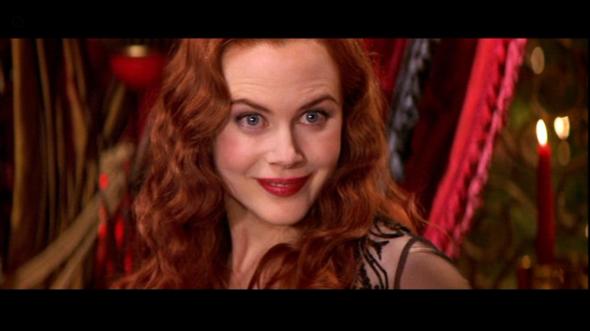
you might’ve thought Nicole Kidman would’ve made it into the top 20 but the fact is she didn’t!
- INXS, “The Devil Inside”
a strong case can be made for INXS – my countercase is why didn’t I remember them until Boyle suggested them when I told him about this list?
- Joseph Reed’s interior for the State Library of Victoria

- Brett Whiteley’s Summer at Carcour:
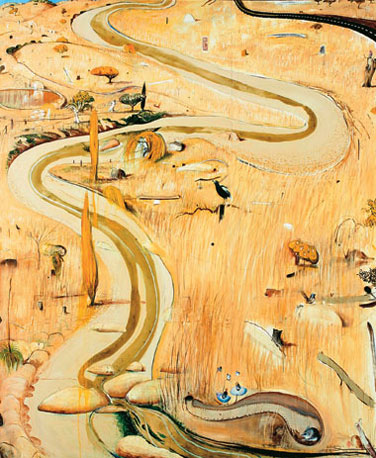
I welcome your arguments in the comments.
Conversations with Cezanne
Posted: July 18, 2016 Filed under: art history Leave a comment
Found this one at Alias Books in Atwater. There are conversations with this guy?! 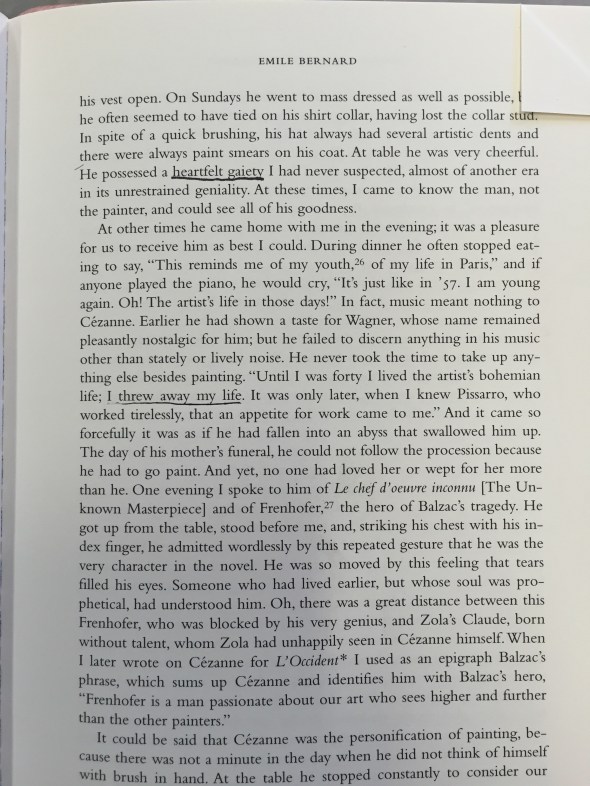


Hamatsa emerging from the woods – Koskimo
Posted: June 23, 2016 Filed under: art history, photography, pictures Leave a comment
good photo from the Edward S. Curtis archives / Library of Congress.
_of_the_Duwamish,_1896.jpg)
Princess Angeline (Duwamish)
Like a Hockney painting
Posted: April 9, 2016 Filed under: America Since 1945, art history, Kennedy-Nixon, the American West Leave a comment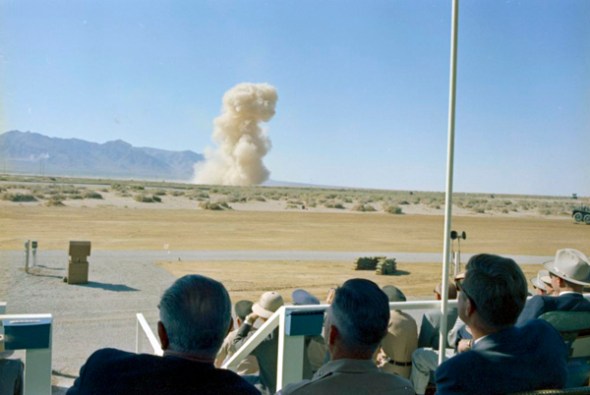
JFK checking out a missile test at White Sands, New Mexico.
Trip to Western States: White Sands Missile Range, New Mexico
Cecil Stoughton. White House Photographs. John F. Kennedy Presidential Library and Museum, Boston
Frank Gehry, William Pereira and SoCal architecture
Posted: March 18, 2016 Filed under: America Since 1945, architecture, art history, the California Condition Leave a comment
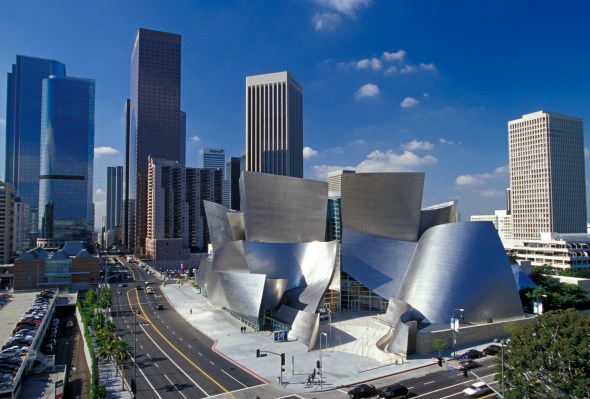
lifted from http://www.archdaily.com/441358/ad-classics-walt-disney-concert-hall-frank-gehry credited to Gehry Partners
Is this a good building?
Is Frank Gehry, who designed it, a good architect?
How would we answer that?
What is good or bad architecture, really?
INTO this NY Review of Books piece by Ingrid Rowland which explores these questions.

http://www.archdaily.com/tag/guggenheim-museum-bilbao, credited to flickr user Iker Merodio
Whoa. 
I can only find one of those three “exquisite little paintings” on the Bilbao Fine Arts Museum’s very decent website. The Annunciation:
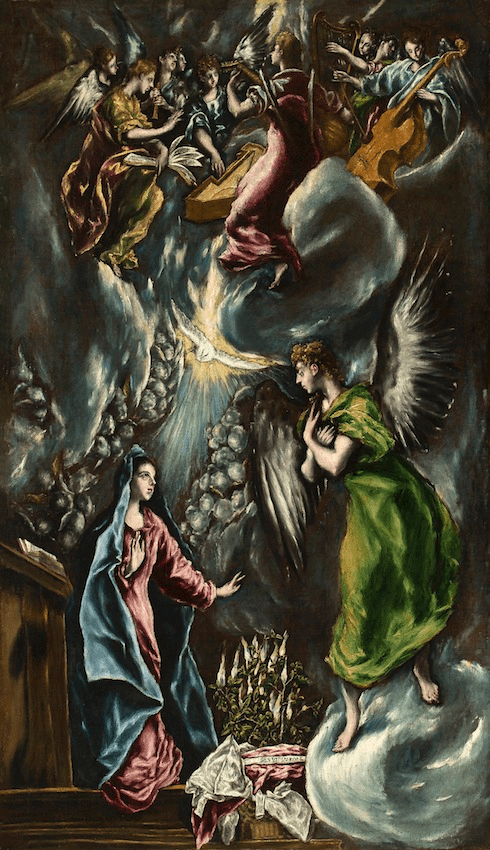
El Greco was rad, my goodness. 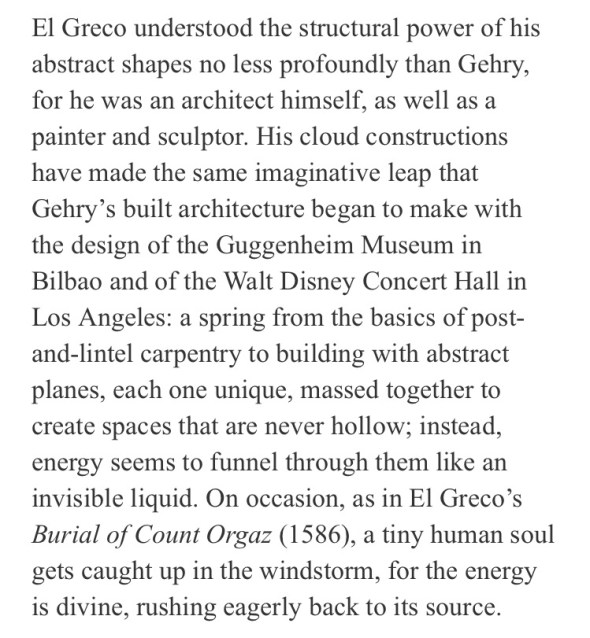
Here, Rowland talks about Gehry’s house in Santa Monica:
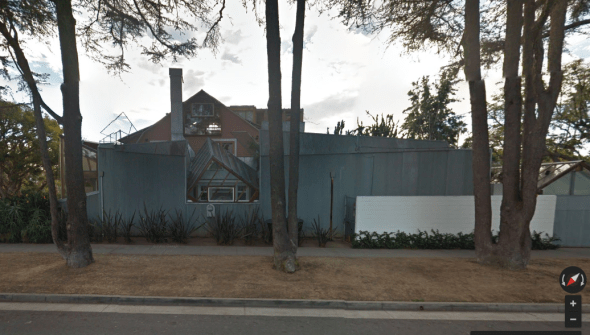
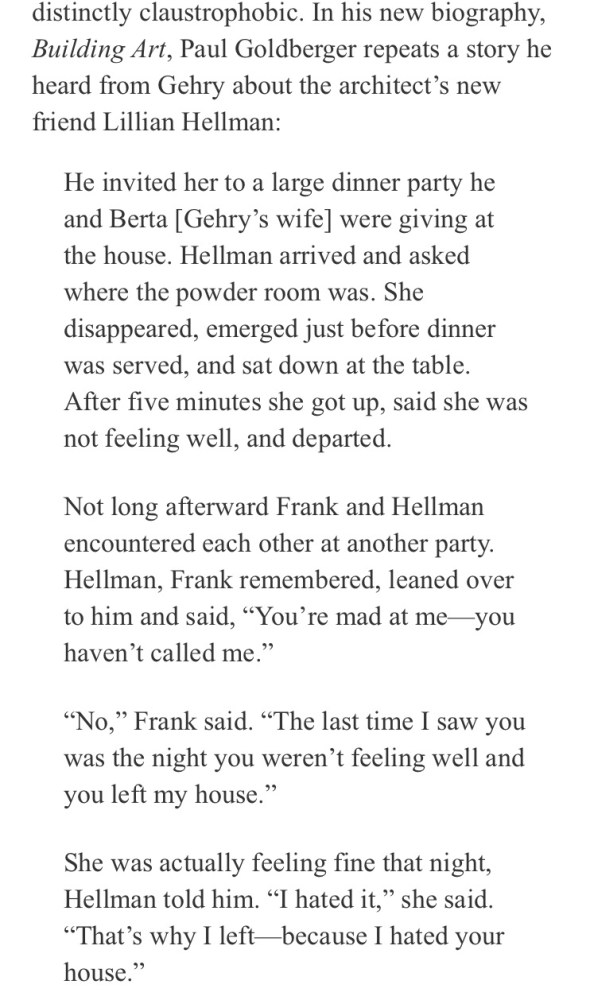 Let’s have a look, photo from Google Street View:
Maybe the most eye-opening part of this piece to me though was Rowland talking about earlier SoCal architect and Gehry mentor William Pereira. This guy designed so many buildings that I see every day! 
5900 Wilshire, for example.

Pereira’s Oscar was for Reap The Wild Wind:
Did he design boats or something? The history of Irvine is topic for another day, but here’s some of Pereira’s work on the UC campus there:
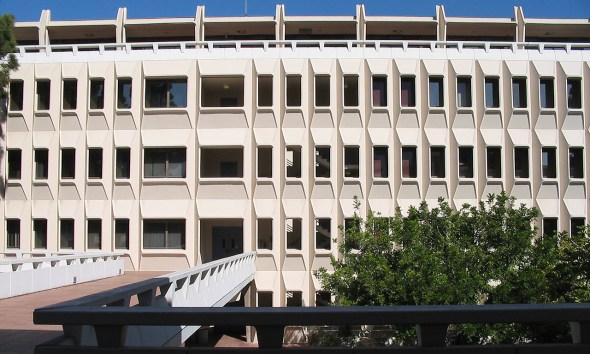
The Theme Building of LAX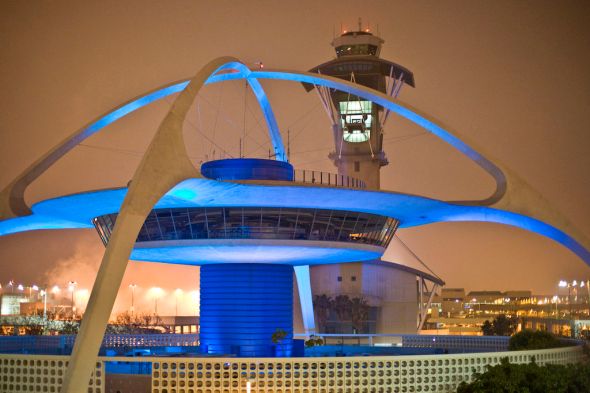
(Wikipedia doles out the credit a bit more generously:
It was designed by a team of architects and engineers headed by William Pereira and Charles Luckman, that also included Paul Williams and Welton Becket. The initial design of the building was created by James Langenheim, of Pereira & Luckman.
Luckman was no slouch himself, he went on to do Boston’s Prudential Tower:
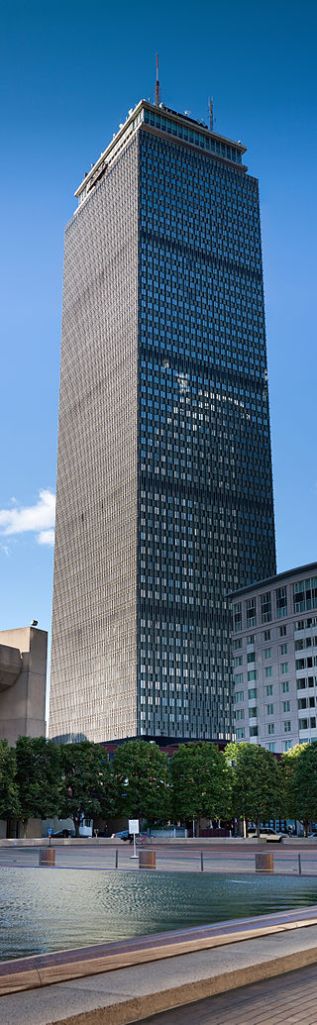
Wikipedia asks me to credit user RhythmicQuietude with the photo
Luckman did the Forum here in LA as well:
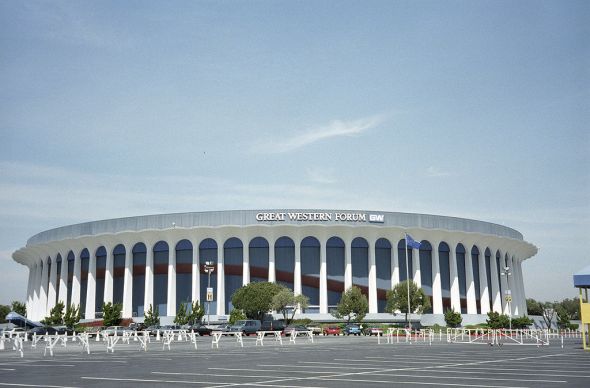
A modest sentence from his Wiki:
Then in 1947, President Truman asked him to help feed starving Europe.
Here’s Pereira’s ziggurat for the Chet Holifield Federal Building:
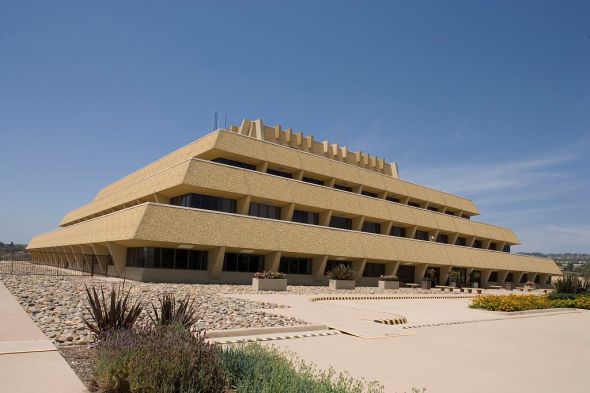
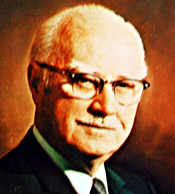
which is of course modeled on Chet Holifield’s head:
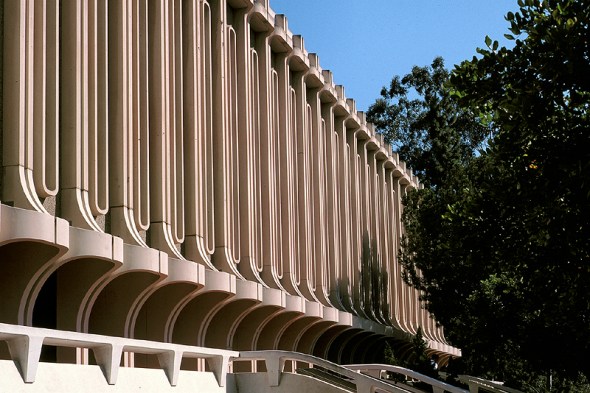
More Pereira from UC Irvine:
The Disneyland Hotel:

Sam Howzit (aloha75) – https://www.flickr.com/photos/aloha75/
CBS TV City:

dope tumblr Jet Set Modernist has some good classic pics of CBS TV City in all its Mad Men era glory.
Not sure which of these buildings in Newport Beach Pereira did, but they all have a style we might call Pereiraesque:
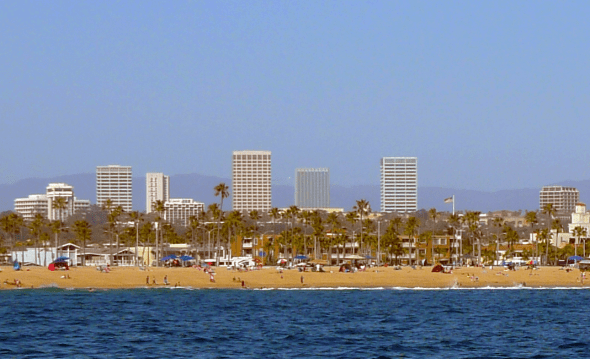
Wiki asks for attribution to user: WPPilot
More more! :
Here’s the Assyrian-revival tire factory turned Outlets:
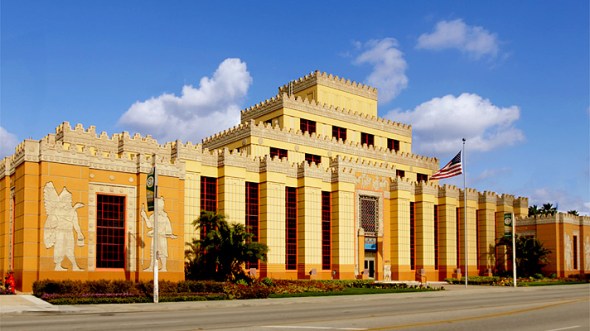
photo from http://www.discoverlosangeles.com/blog/guide-outlet-shopping-la, credited to 1 Johnny, Flickr
And the Patriotic Hall I always wonder about when I see it south of the 10:
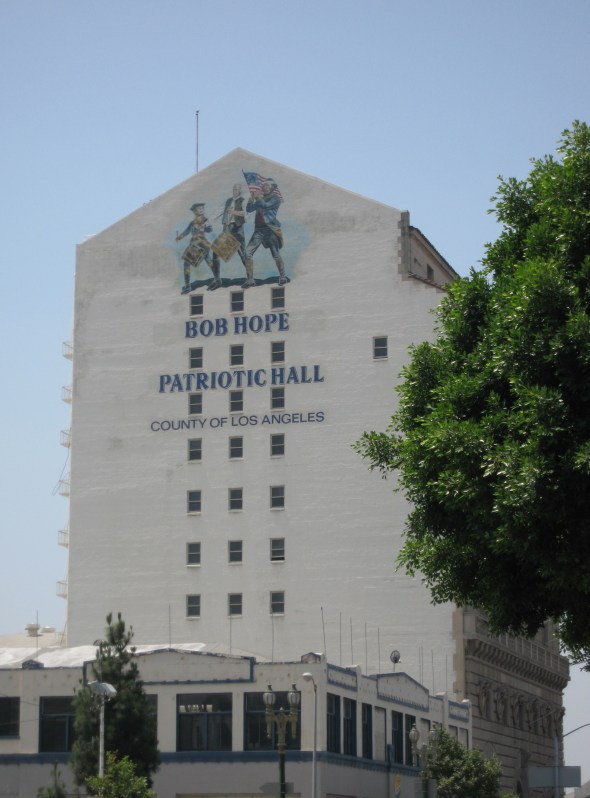
You can see Frank Gehry in the first few minutes of Kate Berlant’s episode of The Characters:
Mora update
Posted: February 1, 2016 Filed under: art history, the California Condition Leave a comment
Peter Hiller, curator of the Jo Mora Trust, writes in with a few points and corrections, duly incorporated on our post about Jo Mora. Thanks so much, Peter!
Co-worker Charles picked up a reproduction of the Salinas rodeo poster. So many fantastic details:

Jo Mora could’ve done a fantastic Where’s Waldo I bet. (Why did they feel the need to change the American title from the original English “Where’s Wally?” I wonder?”
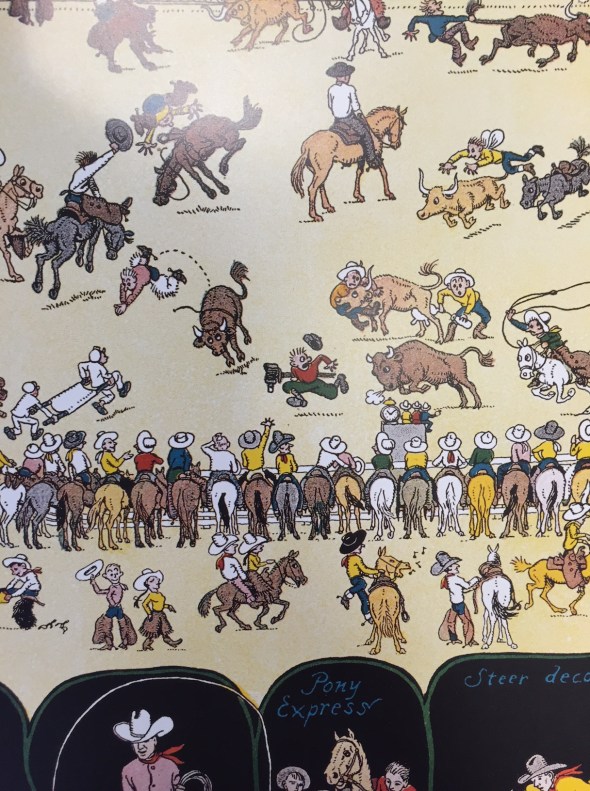
Jo Mora probably would’ve been good at wimmelbilderbuch of all kinds, a term I just learned from the Where’s Wally? wiki.
Hieronymus Bosch, Pieter Brueghel the Elder and Hans Jurgen Press are regarded as the fathers of the format.

Brueghel the Elder’s Netherlandish Proverbs. Can you spot all 112?
Jo Mora
Posted: January 19, 2016 Filed under: art history, the California Condition 3 Comments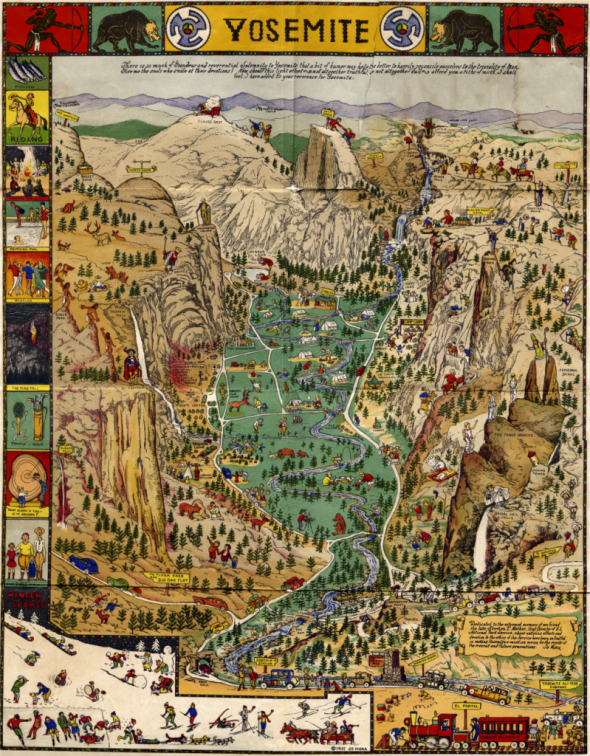
Jo Mora has to be in the conversation about top Uruguayan-Californian artists, yet I’d only heard of him a few weeks ago when co-worker Charles called my attention to the cover art for The Byrds’ Sweetheart Of The Rodeo album:
drawn from a Mora poster of a rodeo in Salinas:

Here is Mora’s 1946 book Californios: The Saga of The Hard-Riding Vaqueros, America’s First Cowboys:
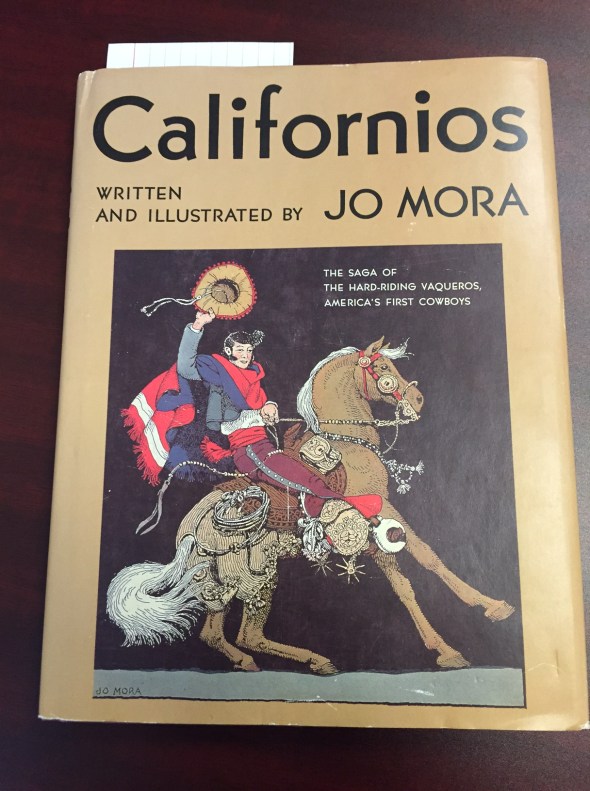
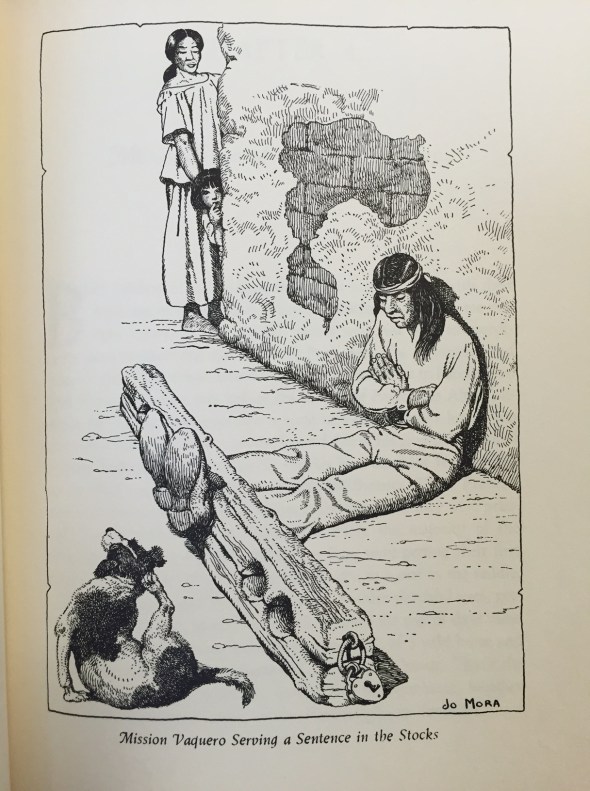
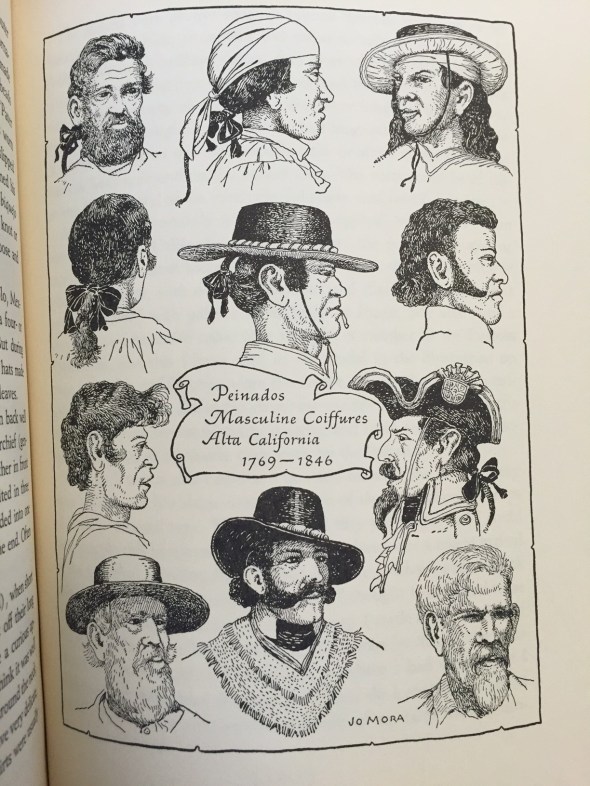
Look at these fucking hipsters.
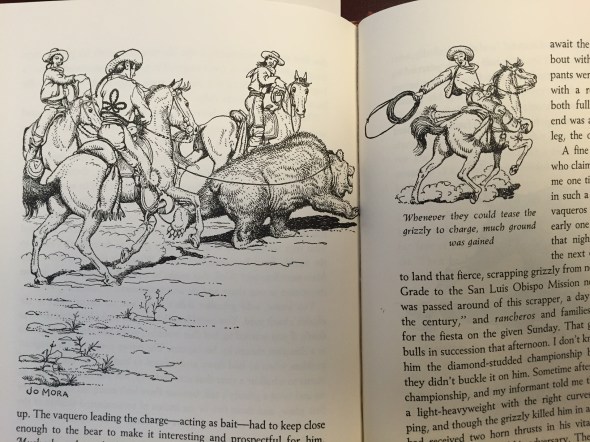
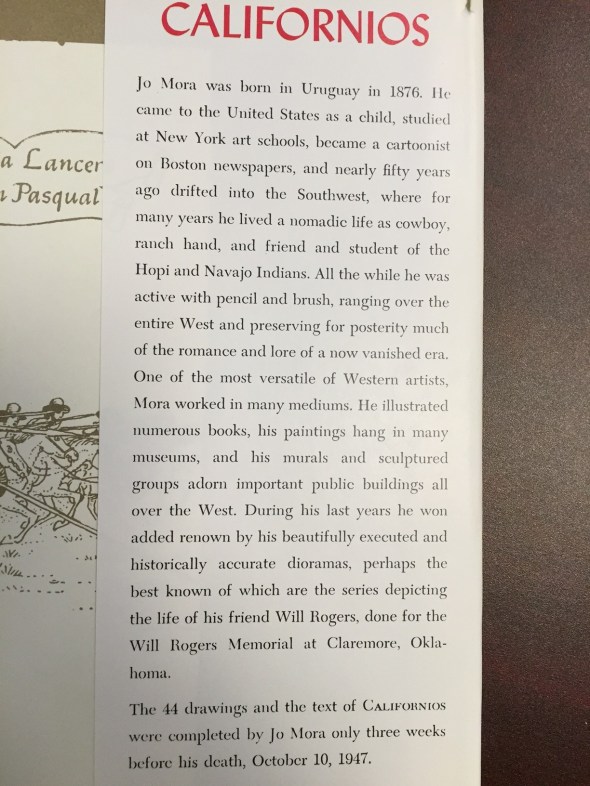
“He won added renown for his beautifully executed and historically accurate dioramas.” What a thing to say about a man! Let’s have a look at the dioramas for his friend Will Rogers:

These dioramas look so great, and there aren’t many photos of them online. This one is fantastic, and so is this one. And don’t miss this one! I didn’t copy them here because Flickr user Todd Carr has all his rights reserved. I feel pretty ok about reproducing most widely-available photos, but I dunno, Todd went to the trouble of going to Claremore, Oklahoma, and since he’s pretty much the only source on these,and he did a great job, it doesn’t feel quite right. Still, I hope Mr. Carr doesn’t mind me showing just this one, of what must be the plane crash that ended Will’s life:
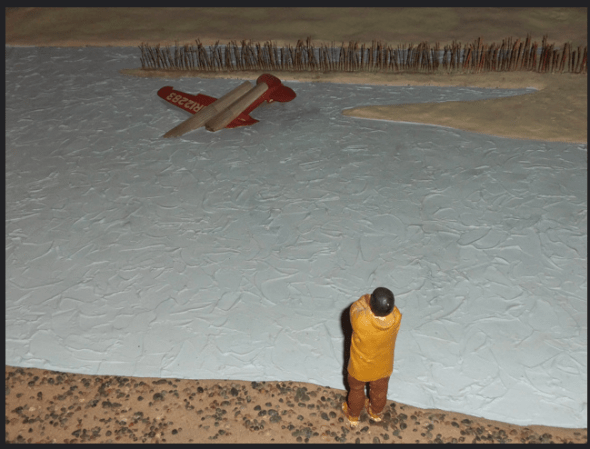
Hope you don’t mind Todd, you are a great photographer!
Mora was also a gifted sculptor — he made, for instance, these guys for the Pacific Mutual Building, right here at 6th and Grand in downtown Los Angeles:

Here’s a list of Mora’s public artworks. The list was put together by Peter Hiller, curator of the Jo Mora Trust Collection, and we thank him for his help and great work! You can see and learn more about Mora over at their website, and Peter Hiller tells us he has the Los Angeles map for sale.
Mora began his career as a cartoonist in Boston. Here’s an early cartoon, The Foolish Walrus:

How about his map of Los Angeles?

Or this menu?
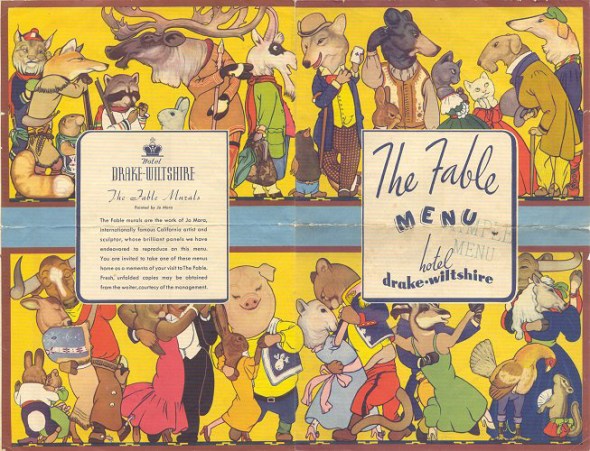
Mora visited many Spanish missions in California that summer by horseback. He followed the “Mission Trail”, also called the “Kings Highway”.
What a boss.
New Paintings For Barry
Posted: December 8, 2015 Filed under: America Since 1945, art history, painting Leave a comment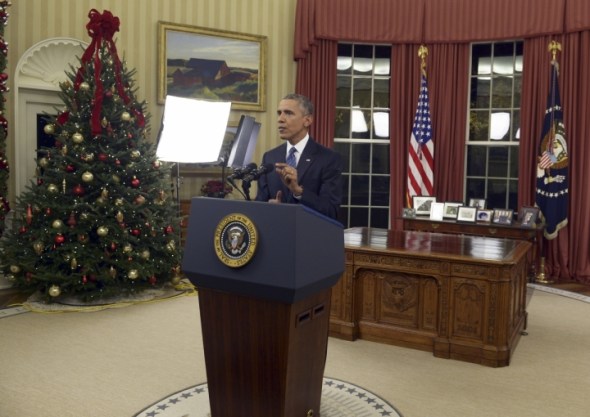
Reuters pool photo
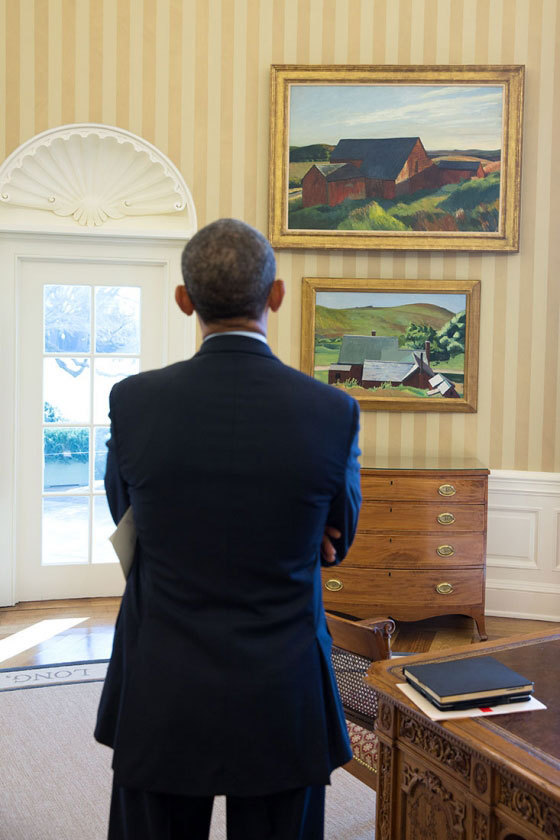
Why did Obama talk in this weird way, and not sitting at the desk? I dunno, but it looks like he got some new paintings for the Oval Office to replace Childe Hassam. I learn they are Josephine Hopper’s, on loan from the Whitney:
Official White House Photo by Chuck Kennedy
Says Whitney curator Dana Miller:
How did you feel when you saw the works installed on the Oval Office wall? Does their new context change the way they read?
There was something pretty wonderful about the way the light was streaming into the Oval Office the day we hung the works, in that it mimicked the lighting in Cobb’s Barn. With Hopper it is so much about the quality of light, and I think the early morning light at that moment echoed what we were seeing in the painting and I remember remarking upon that to Barbi Spieler, Head Registrar for the Permanent Collection, who was there as well. For obvious reasons we don’t often see Hopper paintings in natural light at the Museum.
When I saw the official White House photograph taken by Chuck Kennedy of The President standing in front of the two paintings, I thought it looked like a Hopper composition. Hopper’s urban scenes are often of a solitary figure caught in quiet contemplation, and that’s what the photograph captured. The light in the office and the sense of stillness are very Hopper-esque; the sun even seems to be coming into the office at the precise angle of the sun in the painting. And the back of The President recalls the back of the figure in Hopper’s most famous painting, Nighthawks. I’m guessing Chuck Kennedy knew exactly what he was doing. And of course, it was deeply gratifying to see an image of President Obama so intently focused on the paintings.
The paintings are of Cobb’s Barn in South Truro, Mass. — Cape Cod. Both Hoppers were like obsessed with Cobb’s Barn, here is Edward:
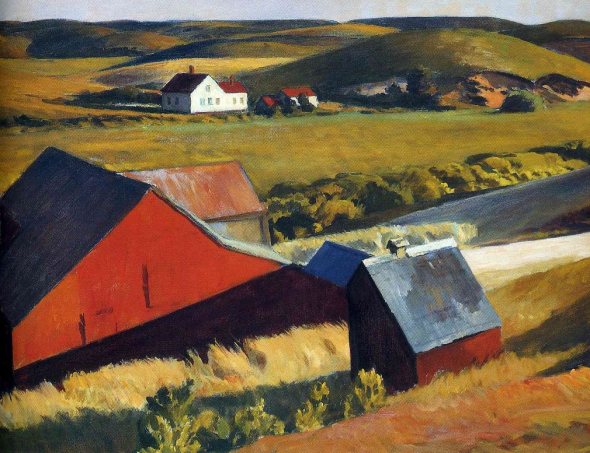
Far as I can tell Cobb’s Barn isn’t there anymore. Bit of a bummer, maybe they should put up a plaque or something.
Josephine Hopper:
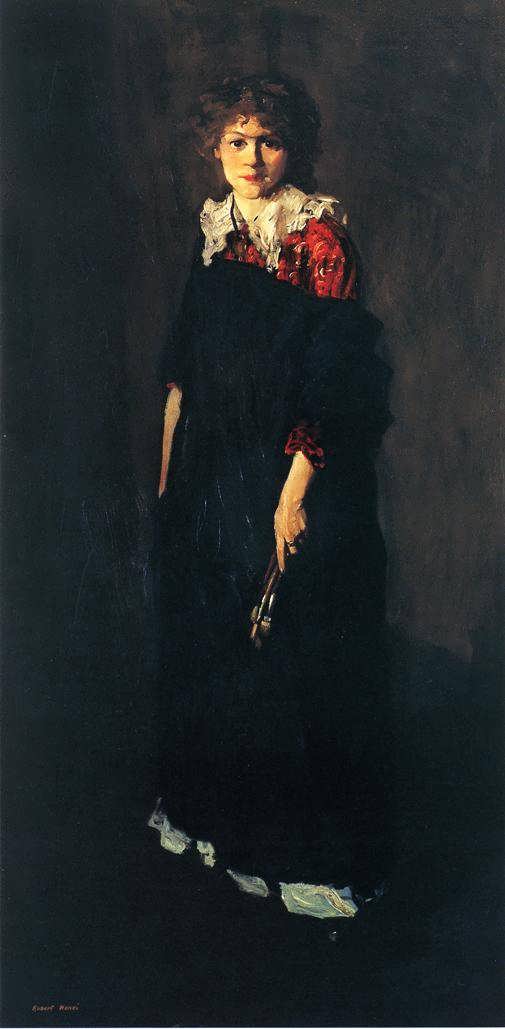
That’s her painted by Robert Henri, who loved to paint babes:
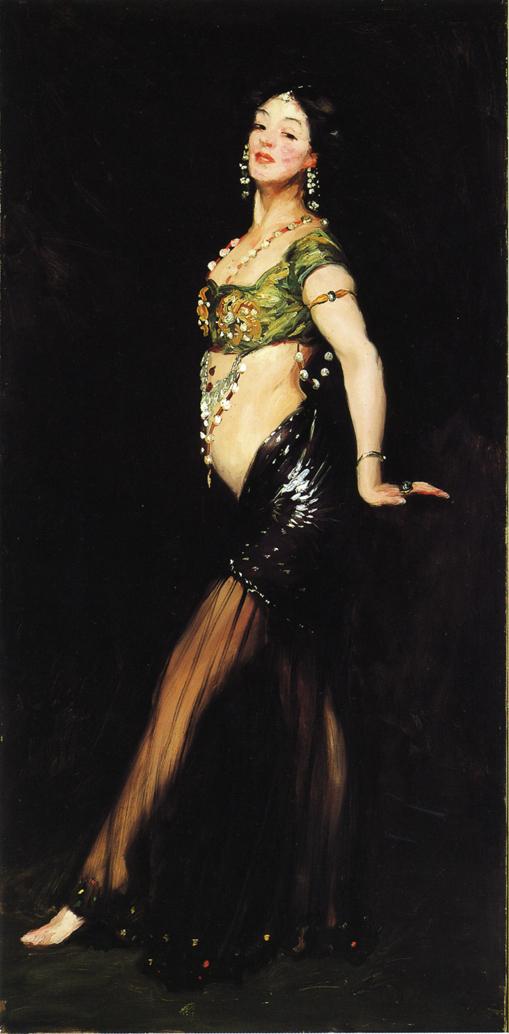
Henri was, by this point, at the heart of the group who argued for the depiction of urban life at its toughest and most exuberant. Conservative tastes were necessarily affronted. About Henri’s Salome of 1909, critic Hughes observed: “Her long legs thrust out with strutting sexual arrogance and glint through the over-brushed back veil. It has far more oomph than hundreds of virginal, genteel muses, painted by American academics. He has given it urgency with slashing brush marks and strong tonal contrasts. He’s learned from Winslow Homer, from Édouard Manet, and from the vulgarity of Frans Hals”.
More Helytimes coverage about the Hoppers.
Now, what painting is in the Oval Office may seem meaningless but I gotta tell ya: I like living a country where the President is expected to have some taste and make some choices about putting some cool art on the wall.
Presidents have different art on the wall, but it means something to them. George W. Bush made a real point of having a bust of Churchill in there. Obama allegedly returned it, right? Ted Cruz definitely tells the whole truth about that?
New president, new art. We can all find American art we like, that’s a great thing about us. You can bet in the Reagan days they made choices about the art:
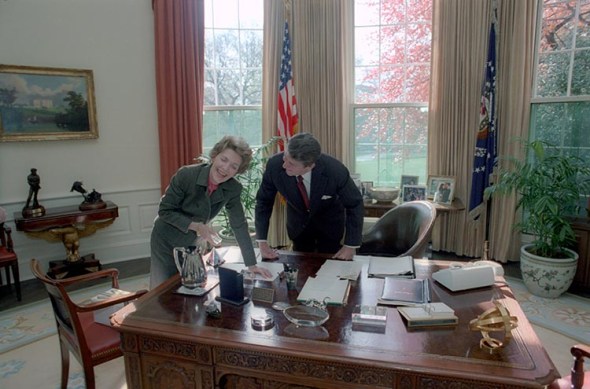
Looks like Reagan has The President’s House up there.
From the “Artwork” section of the Wiki page on Oval Office:
Most presidents have hung a portrait of George Washington – usually the Rembrandt Peale”Porthole” portrait or the Charles Willson Peale three-quarter-length portrait – over the mantel at the north end of the room. A portrait of Andrew Jackson by Thomas Sully hung in Lyndon Johnson’s office, and in Ronald Reagan’s, George H. W. Bush’s and Bill Clinton’s. A portrait of Abraham Lincoln by George Henry Story hung in George W. Bush’s office, and continues in Barack Obama’s. Three landscapes/cityscapes by minor artists – The City of Washington from Beyond the Navy Yard by George Cooke, Eastport and Passamaquoddy Bay by Victor de Grailly, and The President’s House, a copy after William Henry Bartlett – have adorned the walls in multiple administrations. The Avenue in the Rain by Childe Hassam and Statue of Liberty by Norman Rockwell flanked the Resolute Desk in Bill Clinton’s office, and do the same in Barack Obama’s.
What a slam! “minor artists”. The friggin’ President looks at your painting every day and you’re still minor. These art world guys are tough on each other, I tell ya.
Anyway.
Reader reaction is encouraging me in a White House kick. Be sure to weigh in to Helytimes if you know any facts about Oval Office art. Somebody out there knows what Bartlett had up.
A Reader Writes:
Posted: September 30, 2015 Filed under: architecture, art history Leave a comment
Re: architects whose works sound like their names, how could you forget Gaudi?
Good point!

Calatrava
Posted: September 25, 2015 Filed under: architecture, art history Leave a comment
In my opinion, this is the architect whose stuff looks the most like his name sounds.

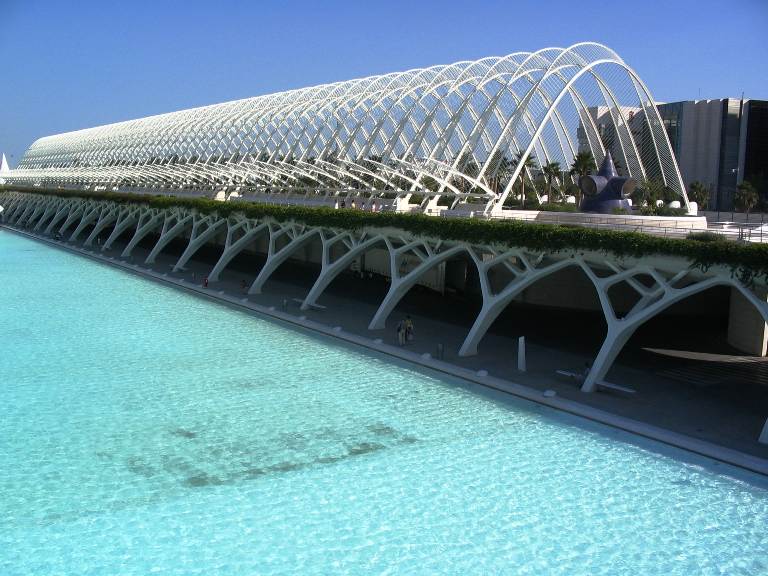

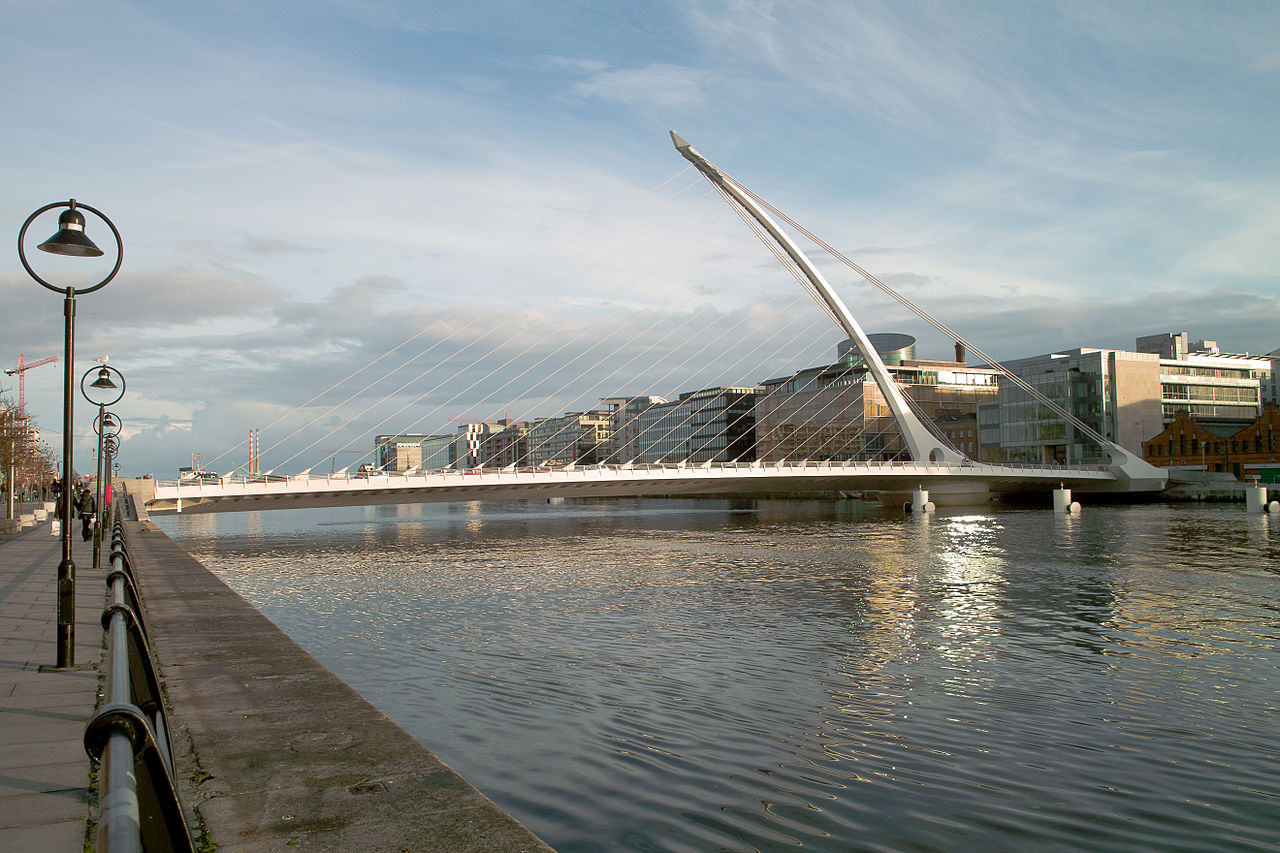

Second place? Rem Koolhaas.

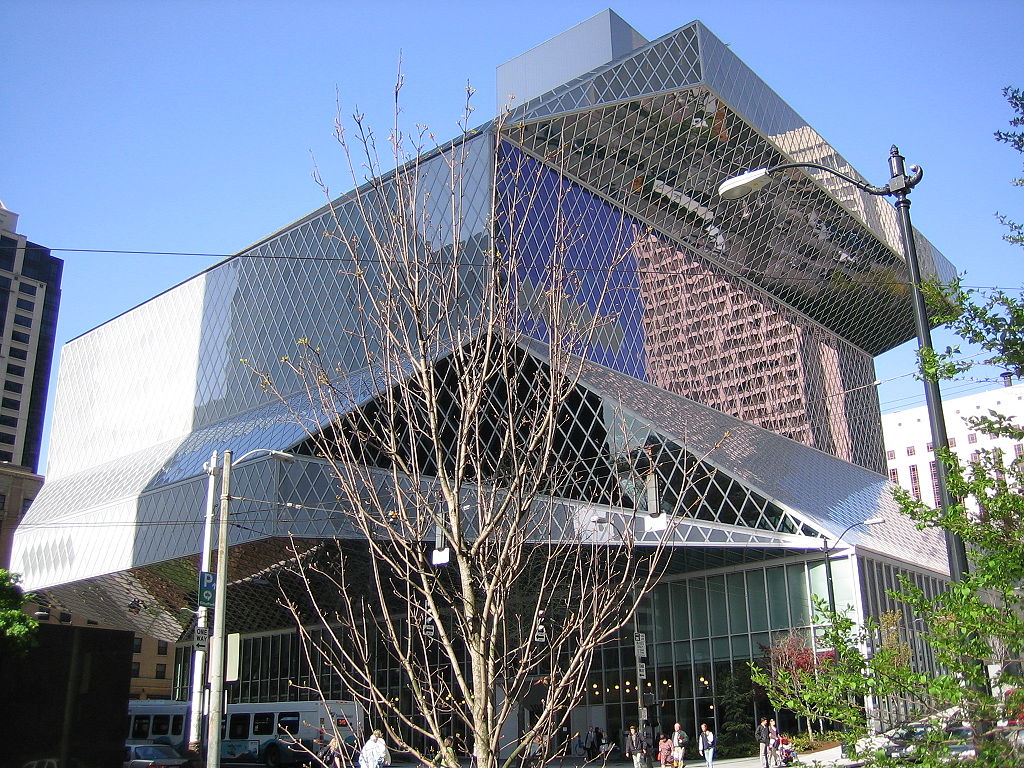
Although isn’t an architect called Cool House a bit on the nose?

Blog I Endorse
Posted: September 21, 2015 Filed under: America Since 1945, animals, art history, film, the California Condition Leave a comment

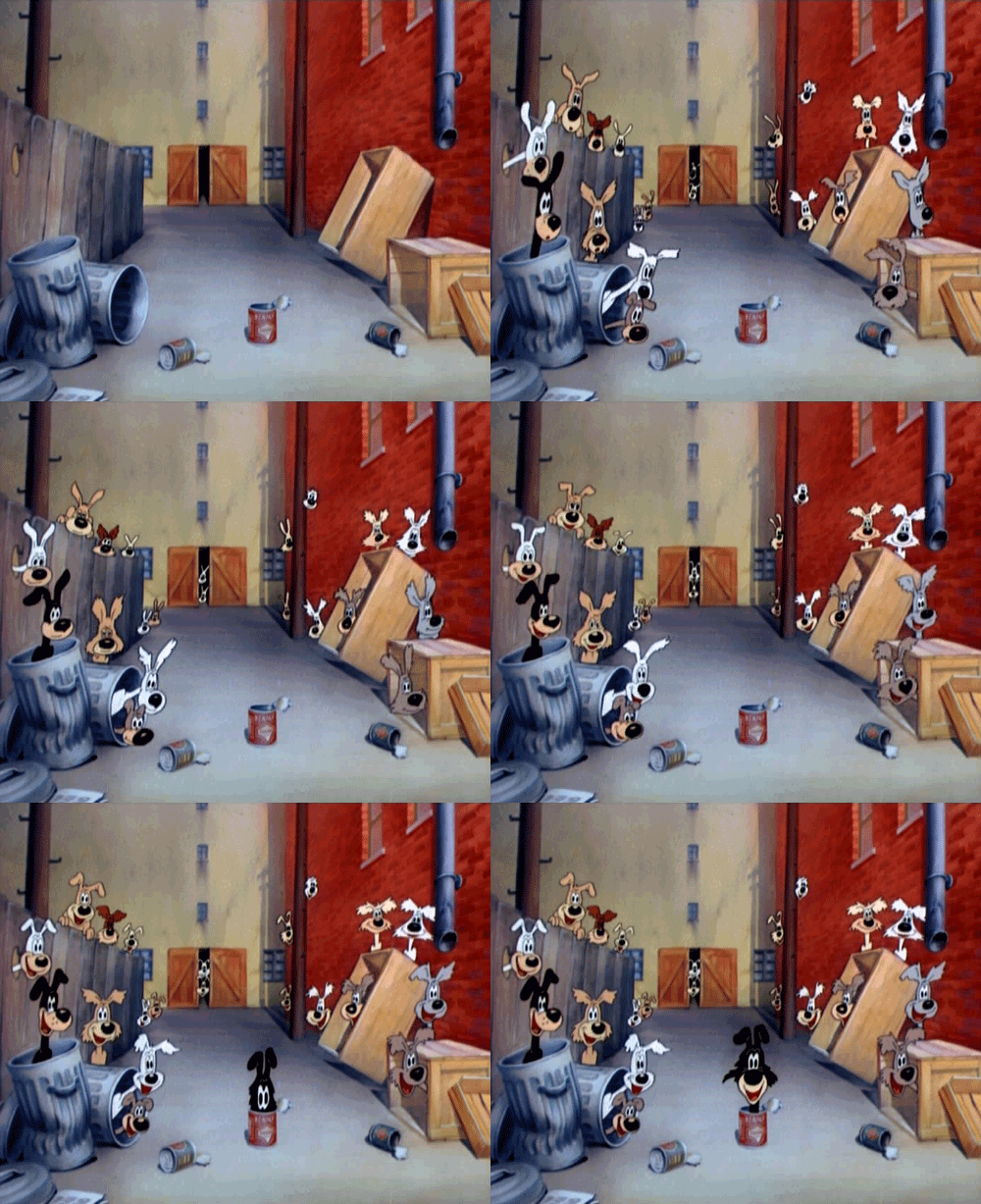
He turned to animated television commercials, most notably the Raid commercials of the 1960s and 1970s (in which cartoon insects, confronted by the bug killer, screamed “RAID!” and died flamboyantly) and Frito-Lay’s controversial mascot, the Frito Bandito.

Frito Bandito
Warlimpirrnga Tjapaltjarri
Posted: September 19, 2015 Filed under: art history, Australia 1 Comment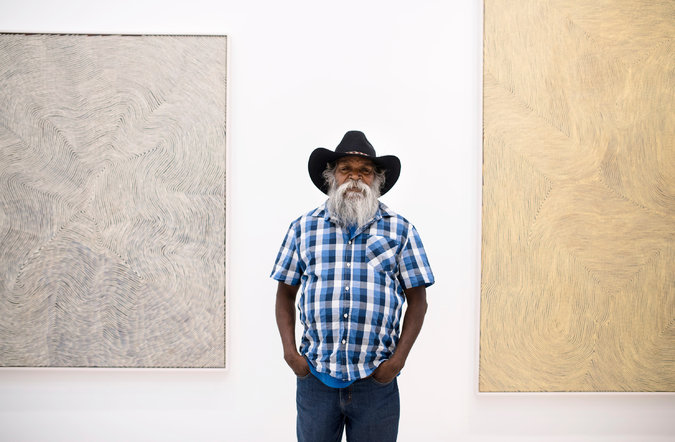
Karsten Moran for NY Times
Somebody or another on Twitter directed me to this NY Times article by Randy Kennedyabout Warlimpirrnga Tjapaltjarri, Australian Aboriginal artist:
Until he was in his 20s, he and his family, part of the Pintupi Aboriginal group, lived in a part of the Western Australia desert so remote that even after other Pintupi were forcibly relocated into settlements in the 1950s and 1960s, his family remained out of view, hunting lizards and wearing no clothes except for human-hair belts, as its ancestors had for tens of thousands of years. When they were encountered by chance in 1984 and persuaded to move to a Pintupi community, they instantly became famous, known in newspaper accounts as the Pintupi Nine and described as the last “lost tribe.”
They moved to bustling Kiwirrkiri:

Here is one of Warlimpirrnga’s paintings at the National Gallery of Victoria:
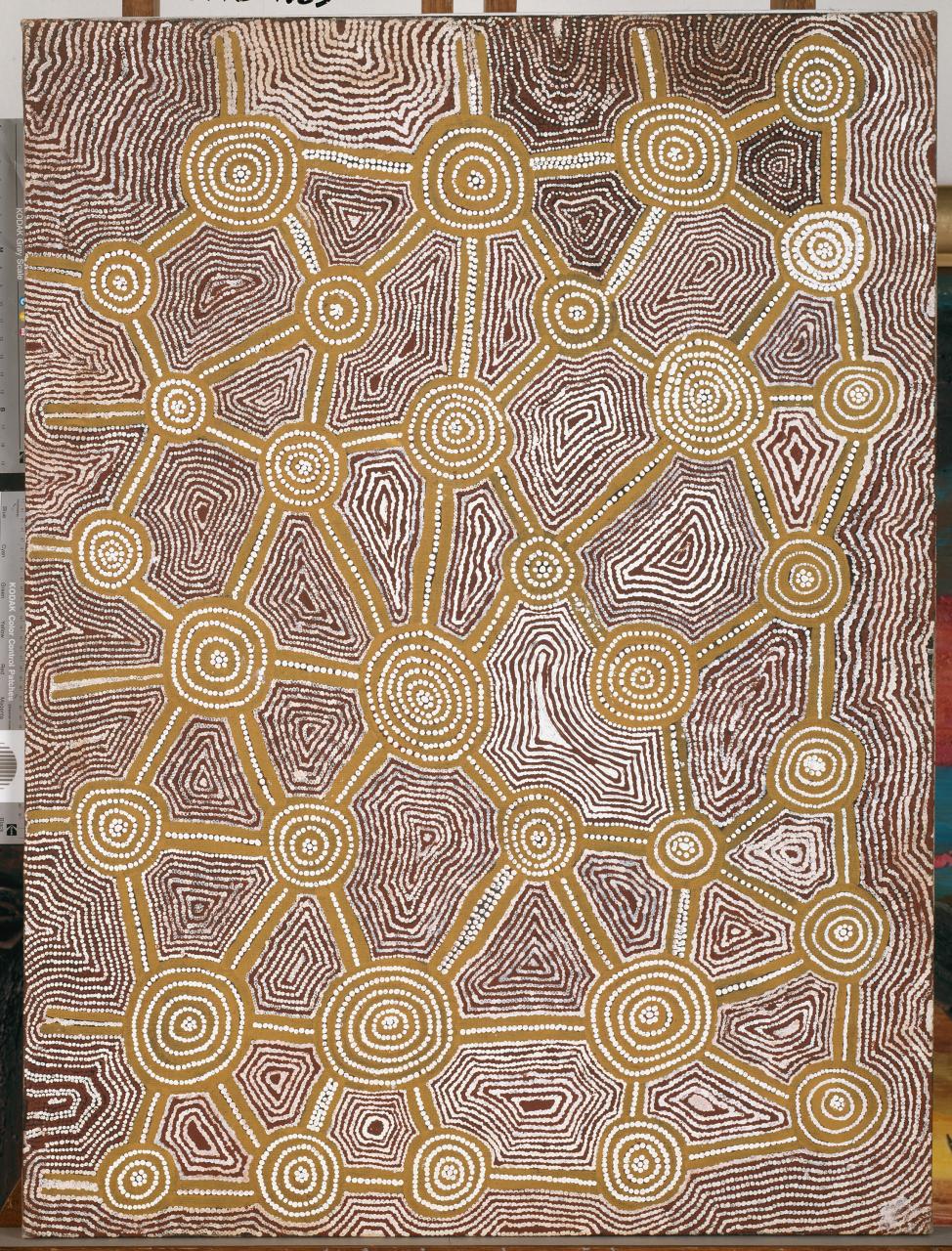
The lines and switchbacks, painted on linen canvas while it is flat on the ground, correspond to mythical stories about the Pintupi and the formation of the desert world in which they live. Some of the stories, which are told in song, can be painted for public consumption, but others are too sacred or powerful to be revealed to outsiders. “My land, my country,” said Mr. Tjapaltjarri, the only English words he uttered during an interview, pointing at a painting with a circle made out of dots. He said it represented a group of ancestral women who appear only at night in the desert around Lake Mackay, a vast saltwater flat that is the primary focus of his paintings.
The way that the lines and curves tell the stories remains mostly a mystery. “I’ve been asking that question for 40 years, and I’ve never really gotten the same answer twice — it’s very inside knowledge,” said Fred R. Myers, an anthropologist at New York University who has studied the Pintupi and their art since the early 1970s and as a doctoral student helped bring attention to the Papunya Tula Artists cooperative, which is owned and directed by Aboriginal people from the Western Desert. “The paintings operate more like mnemonic devices than like representations of a narrative.”
Here’s another one:
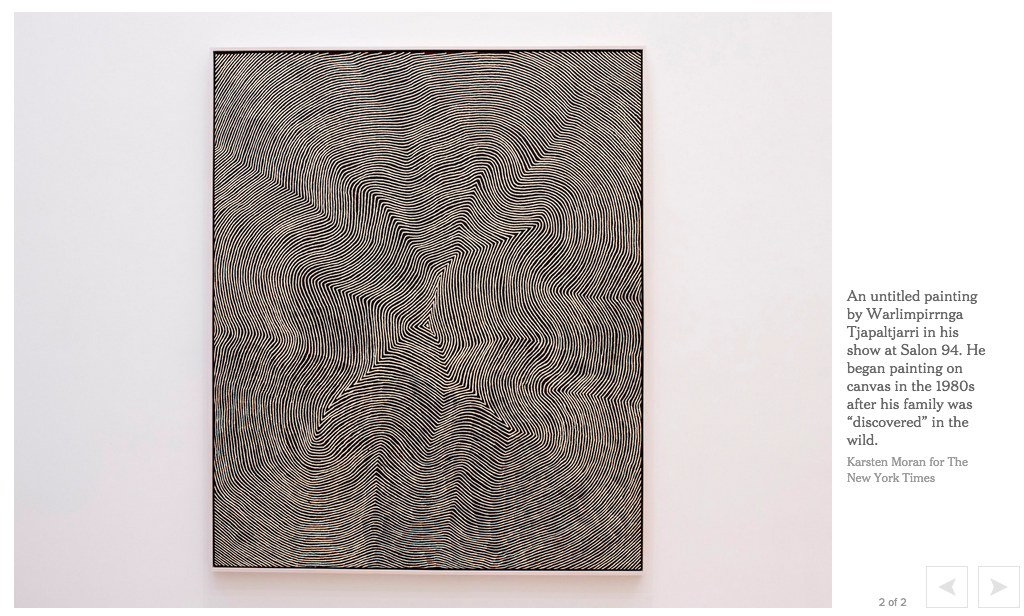
(gotta say I’m more into the newer stuff).
Here is a good article about the Pintupi Nine from The Australian:
The Pintupi Nine were certainly the last major group to come in, and enjoy a certain celebrity status in Kiwirrkurra that Warlimpirrnga in particular seems happy to trade on. During our interview in his front yard he told a fanciful story of going to New York and hunting rabbits with a boomerang; I was later assured he has never travelled outside Australia.
Welp, now he has:
Dressed in jeans, a checked shirt, Everlast tennis shoes and a black cowboy hat that would have been right at home at Gilley’s nightclub in Houston in the ’70s, Mr. Tjapaltjarri said through an interpreter that he was enjoying the attention his paintings were receiving but that the city itself was a little intimidating. He liked the subway, but the Top of the Rock at Rockefeller Center not so much.
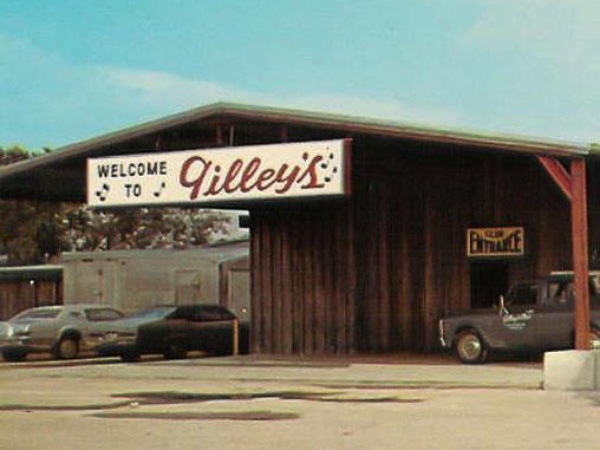
Reading about all this led me to the Wiki page for Aussie anthropologist Donald Thomson, which has this great line:
Thomson lived with the Pintupi, and liked them, through much of the 1950s and 60s.
Maybe on their tour of Australia Dave and Little Esther will have a chance to check out Lake Mackay:
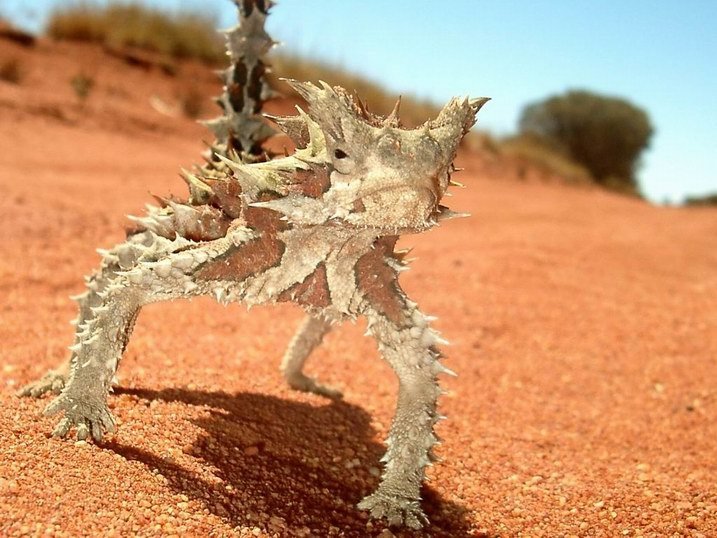
photo by “Viking” found here: http://www.panoramio.com/photo/100106
Unicorn Tapestries
Posted: October 27, 2014 Filed under: adventures, art history Leave a comment
The first time I went to Paris I went to the Musee de Cluny and spent a long time trying to make sense out of the unicorn tapestries.

The lady stands in front of a tent, across the top of which is written “À Mon Seul Désir“, an obscure motto, variously interpretable as “my one/sole desire”, “according to my desire alone”; “by my will alone”, “love desires only beauty of soul”, “to calm passion”

I heard an interview once with Joseph Campbell where he talks about being a 23 (or so) year old student in Paris – must’ve been 1925 or so. He was there to study Provençal and medieval French. He says one day he sat down on the steps of the Musee de Cluny and thought to himself, “what the fuck [I’m paraphrasing] am I doing learning Provençal? I don’t even know how to make a decent meal for myself!”
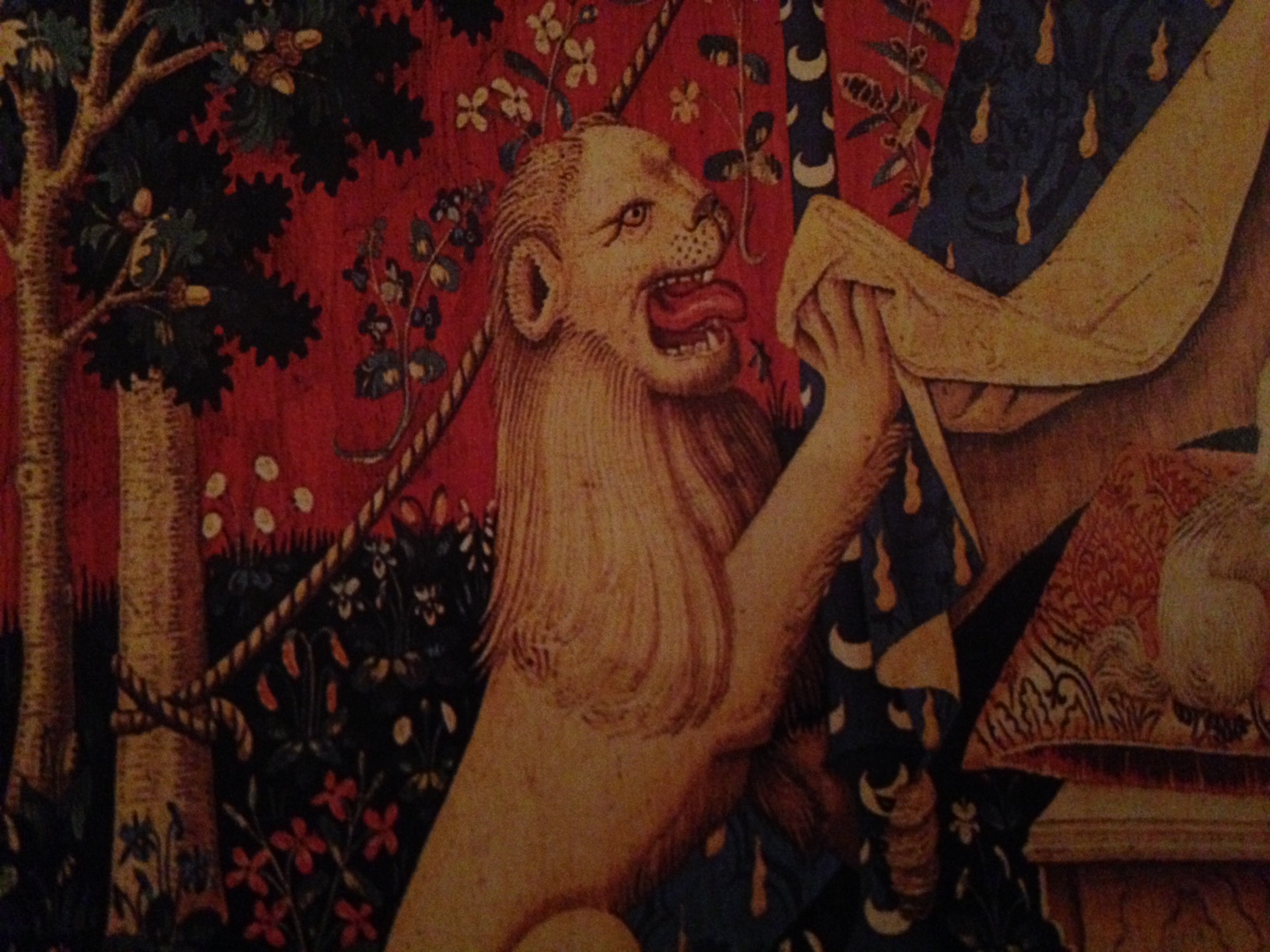
The tapestries were rediscovered in 1841 by Prosper Mérimée in Boussac castle where they had been suffering damage from their storage conditions.

The next time I went to Paris I didn’t waste my time staring at 16th century tapestries. I partied all night with Chris McK and his friends at some underground club or someplace and in the morning Durbin and I scalped tickets to the French Open.
More nameless masters
Posted: September 16, 2014 Filed under: art history Leave a commentMaster of the Antiphonal Q of San Giorgio Maggiore:

Master of the Female Half-Lengths:


Master of the Washington Coronation:

The Master Of The Legend Of St. Ursula
Posted: September 11, 2014 Filed under: art history Leave a comment
Now THAT is a cool name (or notname, in this case).
Probably why there are two of them.
I’m partial to Bruges (above) but I’ll give it up to Cologne (below):

 Helytimes
