Shady Grove
Posted: October 3, 2017 Filed under: America Since 1945, music Leave a commentIn honor of the late great Tom Petty I invite you not to forget Mudcrutch, and post this Helytimes classic from April 2015
In my foolish youth I thought Tom Petty was kind of a joke, until Bob Dylan in Chronicles woke me up hard.
Bob also has words of respect for Jerry Garcia:
What an eerie tune. Wikipedia is unusually quiet on this one.
Many verses exist, most of them describing the speaker’s love for a woman called Shady Grove. There are also various choruses, which refer to the speaker traveling somewhere (to Harlan, to a place called Shady Grove, or simply “away”)

Harlan
The folks at mudcat.org take on the problem:
| Subject: Origins: ‘Shady Grove’ a mondegreen ? From: GUEST,Jake Date: 15 Aug 10 – 11:23 PMMulling (for the thousandth time) over the incongruity of ‘Shady Grove’ which is nothing about trees protecting the singer from the sun, but seems to be a woman’s name, it occurred to me in a flash of insight, that of course it must have started as a song about a Woman or girl named “Sadie” with the surname “Grove”, ie, “Sadie Grove”, and was corrupted by the usual vagaries of oral transmission, etc, etc. Searching this forum and the web generally provides no support for this conjecture, however. |
| Subject: RE: Origins: ‘Shady Grove’ a mondegreen ? From: MGM·Lion Date: 15 Aug 10 – 11:32 PMI have always shared this confusion: Shady Grove seems to be the woman’s name, but also the name of the place or location in which she lives, sometimes incongruously both at the same time. The fact that it’s one of those myriad songs [Going Down Town; Bowling Green …] which share pretty much the same set of ‘floaters’ doesn’t help.~Michael~ |
| Subject: RE: Origins: ‘Shady Grove’ a mondegreen ? From: Hamish Date: 16 Aug 10 – 03:18 AM”Wish I was in Shady Grove” takes on a new meaning.”When I was in Shady Grove I heard them pretty birds sing” (and the earth moved, no doubt). |
| Subject: RE: Origins: ‘Shady Grove’ a mondegreen ? From: GUEST,Lynn W Date: 16 Aug 10 – 04:11 AMThere is a comment on Wikipedia that the melody is similar to Matty Groves. Any connection, I wonder? |
| Subject: RE: Origins: ‘Shady Grove’ a mondegreen ? From: Jack Campin Date: 16 Aug 10 – 05:19 AMWikipedia has got it backwards. The folk-revival version of “Matty Groves” took its tune from “Shady Grove”. |
That’s as far down this hole as I can go at the moment.
I’d be shocked if any Helytimes readers hadn’t wikipedia’d The Child Ballads.
If demographizing the known Helytimes readership, I’d say “it’s people, mostly people I know, who have Wikipedia’d The Child Ballads.”
Still, why not a refresher on some best ofs?
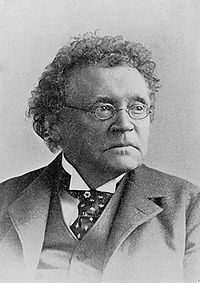
Although shy and diffident on account of his working-class origins, he was soon recognized as “the best writer, best speaker, best mathematician, the most accomplished person in knowledge of general literature” and he became extremely popular with his classmates.
Child became the Boylston Professor of Rhetoric and Oratory when he we was 26. Says an admirer, writing in the 1970s:
Child well understood how indispensable good writing and good speaking are to civilization, or as many would now prefer to say, to society. For him, writing and speaking were not only the practical means by which men share useful information, but also the means whereby they formulate and share values, including the higher order of values that give meaning to life and purpose to human activities of all sorts. Concerned as he thus so greatly was with rhetoric, oratory, and the motives of those mental disciplines, Child was inevitably drawn into pondering the essential differences between speech and writing, and to searching for the origins of thoughtful expression in English.
(Yes! That’s the good reason for being into this I’ve been looking for.)
Sometimes I picture Child backpacking around from pub to pub learning these things. Mostly, though, he got them from manuscripts.
Don’t you worry, he could cut loose sometimes:
he also gave a sedulous but conservative hearing to popular versions still surviving.
Child engaged
in extensive international correspondence on the subject with colleagues abroad, primarily with the Danish literary historian and ethnographer Svend Grundtvig, whose monumental twelve-volume compilation of Danish ballads, Danmarks gamle Folkeviser, vols. 1–12 (Copenhagen, 1853), was the model for Child’s resulting canonical five-volume edition of some 305 English and Scottish ballads and their numerous variants.
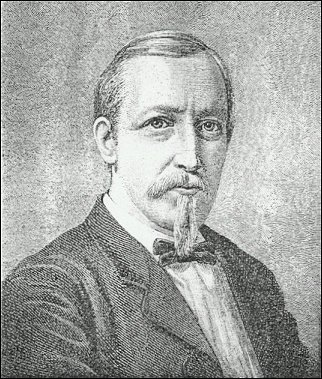
Svend.
Child is buried in the Sedgwick Pie.

Is Kyra Sedgwick eligible for the Sedgwick Pie? Seems like she might be. Also seems a bit rude to ask a wonderful and very alive actress and mother if she’s given any thought to her grave.
Famously (? I guess, I never read the biography) not included:

Trouble at the Allah-Las concert !
Posted: August 24, 2017 Filed under: music, the California Condition Leave a comment
In Rotterdam, a concert cancelled after Spanish police warn Dutch police about a possible bomb plot.

I wonder what the terrorists don’t like about this band.
The name?
Colin Drury of The Guardian, Aug. 2016, reports:
They chose to use Allah – Arabic for god – because they wanted something “holy sounding”. But they say they never realised some might interpret it as trivialising or mocking their religious beliefs. “We get emails from Muslims, here in the US and around the world, saying they’re offended, but that absolutely wasn’t our intention,” says Michaud. “We email back and explain why we chose the name and mainly they understand.”
In Turkey, a show got pulled because the promoter didn’t feel comfortable. “But what’s the alternative?” asks Siadatian. “We’ve had the name so long I don’t think we can change it. That wouldn’t work. We don’t dwell. You know, no regrets.”
What the band do regret is the growing gentrification of hometown LA.
I guess if I stand for anything it’s for a band’s right to call themselves whatever, without anybody getting blowed up over it.
Free speech protections do not equal endorsements. But in the civilized world you can call your band whatever you want.
Don’t know much about the band. I like this song Catamaran. Very cool song.

Cube Houses of Rotterdam by wiki user Hanselpedia
Hey thanks for the birthday wishes Helytimes readers! We aim to share with you quality, interesting, well-sourced content about California, the USA, and the world, and we appreciate you.
The ignoble and unhappy regime
Posted: August 15, 2017 Filed under: America Since 1945, music Leave a comment

Evocative phrase from Bob Marley and the Wailers’ “War” (34:05 above) keeps popping into my mind.
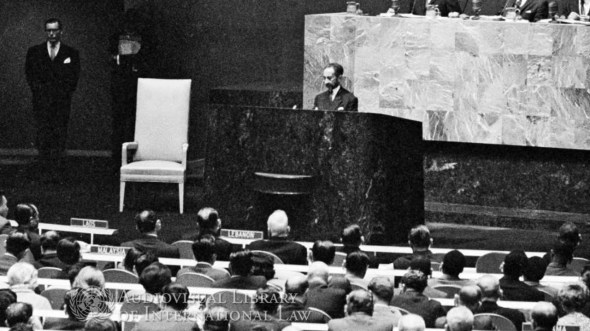
The lyrics are a near-exact repetition of a speech in the UN by the Ethiopian emperor Haile Selassie. However, the two simple guitar chords and the semi-improvised, spirited melody put to Selassie’s words is unmistakably Marley’s.
Wicked Game
Posted: August 11, 2017 Filed under: music 1 Comment
A friend tells a story about a guy who had a cassette that was just this song over and over, they once listened to it all night while playing cards.
If you drove from LA to Portland just listening to this song on repeat would you go insane? Become a genius?
Bob Marley in Boston
Posted: July 2, 2017 Filed under: baseball, Boston, music, New England Leave a comment
Because people were talking about Baby Driver, I started singing it in my head to the tune of Bob Marley’s Slave Driver.
What a song. So then I went looking for Slave Driver on Spotify. I found a recording of Bob Marley and The Wailers, Live At The Music Hall, Boston, 1978. “Easy Skanking In Boston ’78” is the title, which I don’t love saying. “Bob Marley and The Wailers Live At The Music Hall – Boston – 1978” seems like it gives you what you need?

The Music Hall is now the Wang Theatre. Photo from Wikipedia by Tim Pierce.
Somehow shocking that Boston would be the scene of a legendary Marley concert. Who was in the crowd?!
Steve Morse wrote about this recording for The Boston Globe when the album was released in 2015:
My one meeting with Bob Marley was memorable. I was sent by the Globe to interview him at the Essex Hotel in New York before his show at Boston’s Music Hall in 1978. I walked in to Marley’s room, which looked out over Central Park, at 11 a.m. It was a chaotic scene. Four or five members of his entourage were kicking a soccer ball that banged off the picture windows. Two king-size joints were being passed around. Bob sat on a couch, reading aloud from the Book of Revelation.
Realizing I was in over my head, I waited a while before daring to ask Marley about his music. He agreed to talk, shut the Bible, quelled the soccer noise, and stated his worldview: “Everything is going to be united now. Everything is going to be cool. Forget the past and unite.”
Marley’s response to a country politically divided and stricken with gun violence was notably cooler and more Christian than the NRA’s response.
|
” |
Two months later he’d be in Boston.
(Minute 34-38 or so a good sample)
June 8, 1978 was a Thursday, a hot night, 89 degrees. The Red Sox had an off day, but that weekend they’d start a ten game win streak on the road in the West Coast.
The Sox would win 99 games that year, but lose a one game playoff to the Yankees at home in Fenway Park.
Ned Martin would call the game for WITS radio.

Years later he’d die of a heart attack in a shuttle bus at the Raleigh airport on his way home from Ted Williams’ memorial.
Wanted to listen to the original record of Sgt. Pepper’s
Posted: June 20, 2017 Filed under: music Leave a comment

I knew my man Jeff was the guy to talk to. Pictured: Jeff’s stereo.
Dreaming The Beatles / The Love You Make
Posted: May 20, 2017 Filed under: music 2 Comments
Devoured this book after reading Tyler Cowen’s endorsement. Here are two samples:

And:
How freaking interesting are the Beatles?! Even their names. John and Paul.

If you had a Catholic boyhood like I did and Paul did how can it not have some meaning that these guys are named John and Paul?!

from this Globalnews.ca article about a John Lennon letter
The world these guys came out of!

Postwar England. source: the Daily Mail
Mentioned reading Dreaming The Beatles to my buddy, who looked at me like I was an adorable if foolish schoolchild and suggested I get serious and read The Love You Make, written by Peter Brown, who was Brian Epstein’s assistant.

My God, this book! Incredible tale! Brian Epstein:

from wiki:
Koch, Eric / Anefo – [1] Dutch National Archives, The Hague, Fotocollectie Algemeen Nederlands Persbureau (ANeFo), 1945-1989

Both books talk about how phenomenon of being the Beatles almost overwhelmed the Beatles, and everyone around them. At its best it felt something like living in a yellow submarine with all your friends aboard, suggests Sheffield.
At its worst it seems so oppressive and scary it nearly / did kill them. At least once the Beatles were almost crushed to death in their car from the pressure of fans.

Started listening on Spotify to all the Beatles albums, in order.

I would say the biggest leap that hits me is when you get to the third song on this one. You’re listening to like two hours of very solid pop music, and then you get to You’ve Got To Hide Your Love Away.
Then, you get to this:
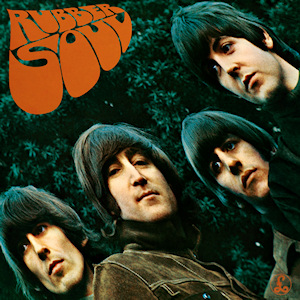
from Wiki:
This is the cover art for the album Rubber Soul by the artist The Beatles. The cover art copyright is believed to belong to the label, Parlophone/EMI, or the graphic artist(s), Robert Freeman/David Julian Beard. Resampled from digital copy included on The Beatles USB Box Set
and we’re on another planet.
On their first album the Beatles covered this:
Hard to find some Beatles songs on YouTube. The hash that was made of the Beatles’ finances and rights is a whole interesting story on its own. Epstein meant the best for the Beatles, can he be blamed for not realizing that lunchbox and doll rights would be worth millions?
The predators that descended on the Beatles later are a dark parade. When Allen Klein heard on the radio that Brian Epstein had died at 32 of a drug overdose, his reaction was to snap his fingers and say “I got em!”
The Beatles were taxed at something like 94%. Various tax avoidance schemes like investing in “related businesses” were somewhat doomed by John’s, especially, disgust at the idea of becoming anything like a businessman.
A publicly traded company, Northern Songs, owned the Lennon-McCartney songs for awhile:
During 1965 it was decided to make Northern Songs a public company to save on capital gains tax. 1,250,000 shares were traded on the London Stock Exchange, which were worth 17 pence each ($0.28), but were offered at 66 pence ($1.09) each. Although the trade was scoffed at by various financial institutions, it was expected that the application lists would not remain open for more than 60 seconds, which is exactly what happened, as the lists were oversubscribed. After the offer was closed, Lennon and McCartney owned 15% each, worth £195,200 ($320,000), NEMS a 7.5% interest, and James and Silver (who served as Northern Songs’ chairmen), controlling 37.5%, with Harrison and Starr sharing 1.6%. The remaining shares were owned by various financial institutions.
At some point Paul bought up more shares without telling John, a bit of sneakiness which Peter Brown treats very harshly. Peter Brown is, in my opinion, a little too brutal on Paul, but then again he was there and I wasn’t. It does seem like all the Beatles could be rather heartless to Brian Epstein, who meant a lot to Peter Brown.
To me, a degree of forgiveness comes in when you think that everything we think of as The Beatles happened to these guys by age thirty. When they were recording the White Album, George Harrison was twenty five. How would you be at twenty-five if you’d been world famous since you were eighteen?

I find this photo at the Telegraph, credited to Rex
None of them were from stable homes. Ringo’s childhood, in particular, was like some cruel Roald Dahl story. (OK fine it was Dickensian). At age six he’d regularly be left at home all night alone while his mom was at work. Says Brown:
At the age of six, only a year after starting St. Silas’s Junior School, Ritchie developed what was thought to be a simple stomachache. But when the pain lasted through the night he was finally taken to the hospital in an ambulance. It was too late; his appendix had already burst and periontis had set in. He remained in a coma for ten weeks, and with various complications including falling out of his hospital bed on his seventh birthday, he spent a solid year in the hospital. By the time he was back in school he was so far behind the other children he couldn’t read or write, and what little he learned from that point on was taught to him by a sympathetic neighborhood girl.
Later:
One rainy morning a big black car came to fetch him in the Dingle and took him away to the Heswall Children’s Hospital, a huge, gray children’s sanitorium in the Wirral. There he was put to bed, where he remained for the next two years.
Ringo is underappreciated, in my view. I’m not qualified to speak to his drumming, which was believed by Paul at least as well as some producers to be not too great. Ringo was treated rather cruelly by the other Beatles but without his good-natured willingness to play diplomat and either forgive or ignore slights and insults it seems clear the Beatles probably would’ve collapsed.
Now it’s time to declare what I consider to be the single most beautiful Beatles song and I declare it to be:
I may be projecting but I believe in the runup to the White Album you can feel a competition of insane excellence between John and Paul. With Blackbird the competition is over. In my opinion some subsequent tension between Paul and John had to do with John’s belief that it was semi-criminal a guy who could write Blackbird would also write some of the stuff Paul McCartney later put out. Thus what was best and greatest about Paul was, to John, tangled up with what was most frustrating about him, as can so often happen with lovers and friends.
Railroading was a talent
Posted: April 7, 2017 Filed under: music, travel Leave a comment

Reading about Casey Jones:
Railroading was a talent, and Jones was recognized by his peers as one of the best engineers in the business.
On KUSC
Posted: March 16, 2017 Filed under: music, the California Condition Leave a comment
our local classical radio station, the DJ just said (I’m paraphrasing)
if you like the classical music you’re hearing, roll down your windows and share it with your neighbors!
then he said, mild as all hell,
just a suggestion.
KUSC’s website.

Mirga! I swear I won’t forget
Ottensamer ist clarinet bae.
Clarinetist Andreas Ottensamer’s third solo album is dedicated to the Mannheim School: an 18th-century melting pot of musical revolutionary experimentation.

Prince
Posted: December 11, 2016 Filed under: America, music Leave a comment
sent to me by reader Mat W., no idea where he found it.
Jill Willis(Prince’s publicist, 1989–90, and co-manager, 1990–93): He was always dressed in what could look like show/stage clothes: a couture suit, matching handmade boots from a shoemaker in Paris, his hair done and full makeup. One time, I had taken the red-eye from L.A. to Minneapolis and went home long enough to shower, threw on a baseball cap, jeans, sweatshirt, and drove over to the studio. I went up the stairs and Prince was coming down the hall from his office. “Going fishing?” he asked.
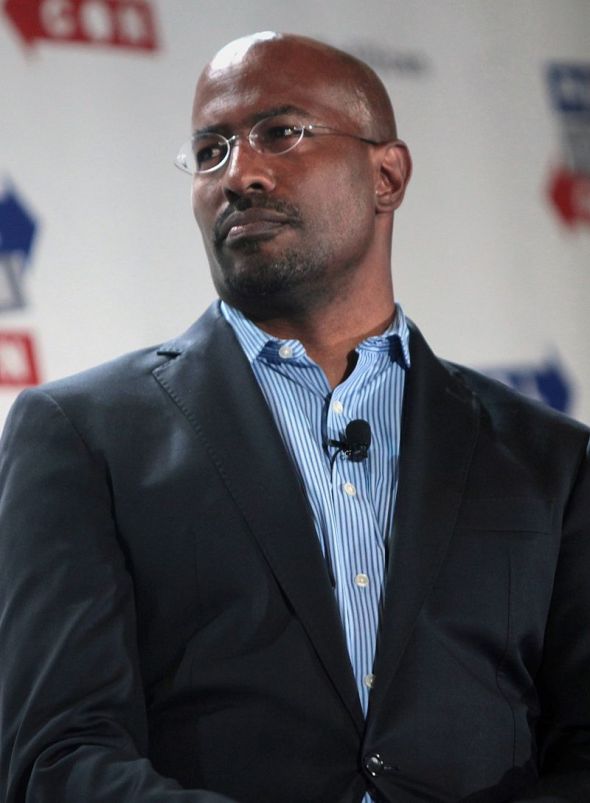
Van Jones: He was very interested in the world. He wanted me to explain how the White House worked. He asked very detailed kind of foreign-policy questions. And then he’d ask, “Why doesn’t Obama just outlaw birthdays?” [laughs] I’m, like, “What?” He said, “I was hoping that Obama, as soon as he was elected, would get up and announce there’d be no more Christmas presents and no more birthdays—we’ve got too much to do.” I said, “Yeah, I don’t know if that would go over too well.”
and
Van Jones: Prince wrote music the way you write e-mails, okay? If you were transported to some world where the ability to write e-mails was some rare thing, you would be Prince. He was just writing music all the time. He slept it, he thought it. And it wasn’t all great—some of it was good, some of it wasn’t. But he had no expectation, he was just being himself. It’s like you cut the water faucet on—I don’t think the faucet is sitting there thinking, “This is the best water ever!” The faucet is just doing what the faucet does. That’s kind of how he was.
The Van Jones ones were the best, which led me to Mr. Jones’ wiki:
Wiki:
He has described his own childhood behavior as “bookish and bizarre.” His grandfather was the senior bishop in the Christian Methodist Episcopal Church, and Jones sometimes accompanied his grandfather to religious conferences, where he would sit all day listening to the adults “in these hot, sweaty black churches” Jones was a young fan of the late John and Bobby Kennedy, and would pin photographs of them to a bulletin board in his room in the specially delineated “Kennedy Section”. As a child he matched his Star Wars action figures with Kennedy-era political figures; Luke Skywalker was John, Han Solo was Bobby, and Lando Calrissian was Martin Luther King, Jr.
Song of the Sunday: Bobbie Gentry covering James Taylor
Posted: May 15, 2016 Filed under: music Leave a comment
Groovy opening
Posted: May 3, 2016 Filed under: adventures, film, Italy, movies, music Leave a comment
Tyler Cowen is a king
Posted: April 22, 2016 Filed under: heroes, music Leave a comment
I think his “dirty little secret,” if you will forgive the pun, is that once you get past the first album he wasn’t much of a true Dionysian, but rather a playful polyglot who assumed various poses. Most of all I was impressed by his urge to create, and how strong and how internal that drive seems to have been.
That Silver Haired Daddy Of Mine
Posted: March 22, 2016 Filed under: music Leave a commentis it time
for this Everly Brothers classic to be repurposed as a gay anthem?
Bama
Posted: February 8, 2016 Filed under: America Since 1945, Louisiana, music, Texas Leave a comment
Did not know this is like a DC semi-slur/term for dummy? via NY Mag via cuz.
By the time Costa got fired for using it, ’Bama had been around for quite some time, and its meaning and use had changed. Most likely, the word was first used to put down recent arrivals to D.C.’s black neighborhoods from southern states—especially Alabama, says cultural anthropologist and long time Smithsonian staffer John Franklin. “It’s had currency over several generations,” Franklin says. It was a way of calling someone a black hick: “There was some disdain for people who didn’t live in the city and weren’t sophisticated.” The word had particular weight during the Great Migration, when many African Americans left the rural South for northern cities. Then, the point was to differentiate the newer arrivals from the longtime Washingtonians—who worried that the countrified Southerners flooding the District would reflect badly on the whole community. It was, essentially, the way D.C.’s black residents called one of their own a redneck. (Around the same time, German Jews who had already been in the U.S. for a few decades coined their own slang term to put down their less sophisticated Russian and Polish cousins—and thus, “kike” was born, only becoming a generalized ethnic slur afterwards.)
Eventually, ’Bama lost most of the geographic connotations it once had, and melted into just another piece of regional slang. Even white kids like Costa learned what it meant, picking it up by osmosis from the culture around them. Costa says his own definition of ’Bama is that it refers to a person who is “stupid.” He spent most of his life in the Baltimore-Washington area, and says he and his friends grew up using “the B-word” all the time.
All Roads
Posted: January 15, 2016 Filed under: America Since 1945, heroes, music, the California Condition, war Leave a comment
Happening to watch half of Jarhead on TV (Saarsgaard so good! *) leads to reading screenwriter William Broyles Jr.’s Wiki page, which leads to reading his essay “Why Men Love War”:
A lieutenant colonel I knew, a true intellectual, was put in charge of civil affairs, the work we did helping the Vietnamese grow rice and otherwise improve their lives. He was a sensitive man who kept a journal and seemed far better equipped for winning hearts and minds than for combat command. But he got one, and I remember flying out to visit his fire base the night after it had been attacked by an NVA sapper unit. Most of the combat troops I had been out on an operation, so this colonel mustered a motley crew of clerks and cooks and drove the sappers off, chasing them across tile rice paddies and killing dozens of these elite enemy troops by the light of flares. That morning, as they were surveying what they had done and loading the dead NVA–all naked and covered with grease and mud so they could penetrate the barbed wire–on mechanical mules like so much garbage, there was a look of beatific contentment on tile colonel’s face that I had not seen except in charismatic churches. It was the look of a person transported into ecstasy.
And I–what did I do, confronted with this beastly scene? I smiled back. ‘as filled with bliss as he was. That was another of the times I stood on the edge of my humanity, looked into the pit, and loved what I saw there. I had surrendered to an aesthetic that was divorced from that crucial quality of empathy that lets us feel the sufferings of others. And I saw a terrible beauty there. War is not simply the spirit of ugliness, although it is certainly that, the devil’s work. But to give the devil his due,it is also an affair of great and seductive beauty.
Which leads me to decide to finally read Chris Hedges’ book War Is A Force That Gives Us Meaning:
Chris Hedges was a graduate student in divinity at Harvard before he went to war. He spent fifteen years as a war correspondent for the Dallas Morning News, theChristian Science Monitor, and the New York Times, reporting on conflicts in El Salvador, Bosnia, Kosovo, and Iraq.
While on Amazon their robot recommends to me Ernst Jünger’s Storm Of Steel —

that’s a pass for now, but I will check out Ernst’s Wiki page:
Throughout the war, Jünger kept a diary, which would become the basis of his 1920 Storm of Steel. He spent his free time reading the works of Nietzsche, Schopenhauer, Ariosto andKubin, besides entomological journals he was sent from home. During 1917, he was collecting beetles in the trenches and while on patrol, 149 specimens between 2 January and 27 July, which he listed under the title of Fauna coleopterologica douchyensis (“Coleopterological fauna of the Douchy region”).

a leatherhead beetle in Death Valley illustrates the wiki page on coleopterology
which leads me to the wiki page for Wandervogel:
Wandervogel is the name adopted by a popular movement of German youth groups from 1896 onward. The name can be translated as rambling, hiking, or wandering bird (differing in meaning from “Zugvogel” or migratory bird) and the ethos is to shake off the restrictions of society and get back to nature and freedom.
which leads us both to the Japanese pastime of sawanobori, which looks semi-fun:

a bit silly but in the best way
and to History Of The Hippie Movement, subsection “Nature Boys Of Southern California” and thus to Nat King Cole’s song Nature Boy:
which has maybe the longest wiki page of any of these, culminating in
The song was a central theme in Luhrmann’s Moulin Rouge! “Nature Boy” was initially arranged as a techno song with singer David Bowie’s vocals, before being sent to the group Massive Attack, whose remix was used in the film’s closing credits. Bowie described the rendition as “slinky and mysterious”, adding that Robert ‘3D’ Del Naja from the group had “put together a riveting piece of work,” and that Bowie was “totally pleased with the end result.”
And just like that we’re back to Bowie.
*Saarsgaard on Catholicism:
In an interview with the New York Times, Sarsgaard stated that he followed Catholicism, saying: “I like the death-cult aspect of Catholicism. Every religion is interested in death, but Catholicism takes it to a particularly high level. […] Seriously, in Catholicism, you’re supposed to love your enemy. That really impressed me as a kid, and it has helped me as an actor. […] The way that I view the characters I play is part of my religious upbringing. To abandon curiosity in all personalities, good or bad, is to give up hope in humanity.”
RIP Red
Posted: January 14, 2016 Filed under: America Since 1945, music, the California Condition Leave a comment
It’s not just Bowie — this week music also lost Red Simpson, writer/performer of the above song (discussed briefly in this book).
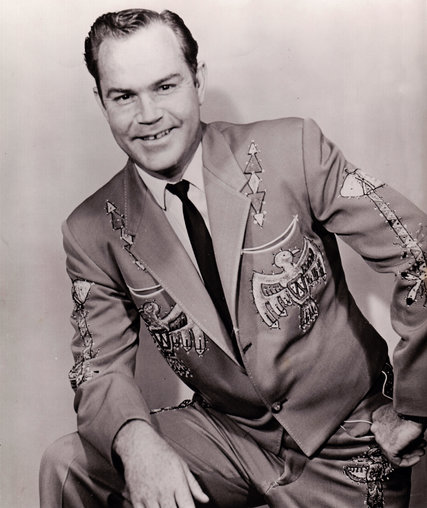
From his NY Times’ obituary I learn that he performed regularly at Trout’s:

pic from this interesting blog: https://wayfarenotes.wordpress.com/ “Stories of Music Towns you Haven’t heard of yet”
Joseph Cecil Simpson was born on March 6, 1934, in Higley, Ariz., the youngest of 13 children, and grew up in Bakersfield, where he learned to play guitar as a child. His red hair earned him his nickname.
He enlisted in the Navy during the Korean War and served on the hospital ship Repose, where he played with a shipboard group, the Repose Ramblers.

Speaking of Simpsons, I can’t hear about a ship like this without thinking of the Simpsons’ landing on the USS Walter Mondale:
but the Repose had a dramatic history:
Arriving on 3 January 1966, she was permanently deployed to Southeast Asia and earned the nickname “Angel of the Orient.” Operating mainly in the I Corps area, she treated over 9,000 battle casualties and 24,000 inpatients while deployed. Notably, USS Repose was on station during the 1967 USS Forrestal fire that killed 134 sailors and injured 161.

the Forrestal fire. Future Senator John McCain’s plane was destroyed in the fire — one of many exciting events in his not-boring life.
According to Wiki Red’s last release was “Hey Bin Laden” but I cannot find that tune on YouTube.
I wonder if Red liked Bowie.
REMINDER: if you enjoy Helytimes, subscribe to Helytimes Newsletter by emailing helphely@gmail.com. No more than one email a month, with bonus content and fun!
Special Snowflakes
Posted: December 23, 2015 Filed under: America Since 1945, music, science Leave a comment
Wandering into a hipster-type boutique in the East Village to buy a present for an Evil Santa/White Elephant type thing during a brief stop in NYC, I heard this song playing:
I really liked this album when it first came out, still do I guess. From the wiki page for the album:
In an interview with Rolling Stone Magazine, Pecknold admitted that his girlfriend of five years found the stress this album placed on their relationship too much, and ended things. Upon hearing the completed album, she realized that Pecknold’s efforts were worth it, and they tried to work it out. The couple has since split up.
Also:
Added to this, he stated they wanted to record very quickly, saying he wanted to do the “vocal takes in one go, so even if there are fuck-ups, I want them to be on there. I want there to be guitar mistakes. I want there to be not totally flawless vocals. I want to record it and have that kind of cohesive sound. Van Morrison’s Astral Weeks, to me, is the best-sounding album because it sounds like there were only six hours in the universe for that album to be recorded in. So I want it to have that feeling.
(Remember now that after reading this for the first time when the album first came out, I went back and gave a good hard listen to Astral Weeks, which I found totally boring even though I’m obsessed with the Van Morrison song “And it Stoned Me”:
Morrison, in 1985, related the song to a quasi-mystical experience he had as a child:
I suppose I was about twelve years old. We used to go to a place called Ballystockart to fish. We stopped in the village on the way up to this place and I went to this little stone house, and there was an old man there with dark weather-beaten skin, and we asked him if he had any water. He gave us some water which he said he’d got from the stream. We drank some and everything seemed to stop for me. Time stood still. For five minutes everything was really quiet and I was in this ‘other dimension’. That’s what the song is about.)
Anyway, we’re talking about snowflakes. Here are the opening lyrics of the song Helplessness Blues:
I was raised up believing I was somehow unique
Like a snowflake distinct among snowflakes, unique in each way you can see
And now after some thinking, I’d say I’d rather be
A functioning cog in some great machinery serving something beyond meBut I don’t, I don’t know what that will be
I’ll get back to you someday soon you will see
So now I am older than my mother and father
when they had their daughter
now what does that say about me

A snowflake, from the wikipedia page “snowflake,” which I am free to use and remix provided I attribute the photographer, Dakota Lynch.
On campuses so saturated with progressivism that they celebrate diversity in everything but thought, every day is a snow day: There are perishable snowflakes everywhere. The institutions have brought this on themselves. So, regarding the campuses’ current agonies, schadenfreude is not a guilty pleasure, it is obligatory.
I notice lately that some members of your generation are being called, derisively, Snowflakes. Are you really a frail, special and delicate little thing that might melt when the heat is on?

Snow and ice: how are they different?
In 1988, Nancy Knight was documenting snowflakes for the National Center for Atmospheric Research and found two identical snowflakes of the hollow column type.
Nancy’s colleagues recall her spirited approach to hunting for hail and other items of interest. “Some of my most hilarious memories of Nancy on field campaigns were driving,” says Karyn Sawyer, the former director of UCP/JOSS. “We’d be rocketing along a dirt road somewhere, and she’d insist that we stop because she had spotted an interesting bird.”

Nancy Knight w/hail
Helytimes Top Ten Albums Of 2015
Posted: December 16, 2015 Filed under: music Leave a comment
3) Sturgill Simpson, Metamodern Sounds In Country Music.
Technically came out in 2014.
Ordinarily I hate people’s photos of concerts but look how Sturgill & gang look like a little colored diorama here at the Ace Hotel in Los Angeles:

2) Fleetwood Mac, Rumours.
Technically came out in 1977.
1) Grimes, Art Angels
Thank you, and please nominate your faves to helphely@gmail.com
In searching for these found this video for Tusk which I suspect will also appeal to Helytimes readership.
Hoax job at Folkways?
Posted: September 24, 2015 Filed under: music, South America Leave a comment

Reader Vali C. writes:
In The Mayor of MacDougal Street:
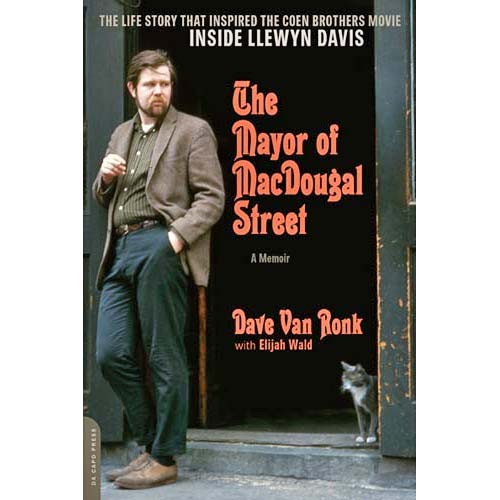
Dave Van Ronk claims that this recording
was completely faked. Instead of recording sounds of the south american rainforest, two of his friends made bird noises in the shower and sold it to folkways. Even after Folkways realized it was a fake, they decided to keep it in the catalog.
Green sounds of the tropical rain forest: black howler monkeys, toucans and chachalaca dominate the dry season while tree toads, Bufo marinus(South American toads) and parakeets accompany the rainy season. Recorded in the Peruvian Amazon region called Montaña and possibly under the showerhead of a Manhattan apartment.
 Helytimes

