Uncomfortable giant bunny
Posted: April 8, 2016 Filed under: animals, New England Leave a comment
An anonymous correspondent sends us this one with text:
maybe drunk but thought video was funny
http://wpri.com/2016/04/06/rescue-a-pet-demi/
Atypical cinematic take on Boston
Posted: March 10, 2016 Filed under: Boston, film, New England Leave a commentThe other day I was home sick from work, and Field of Dreams was on TV. Readers will recall Ray Kinsella goes to Boston to track down Terence Mann. What a specific take on Boston! No one is Irish or has much of an accent, and the biggest Red Sox fan is a black guy. Kudos to director Phil Alden Robinson for taking things deeper.
Great headline sent by our Rhode Island office
Posted: January 25, 2016 Filed under: New England Leave a comment
Triggerfish selfie
Posted: January 23, 2016 Filed under: New England, the ocean Leave a comment
via this blogpost, “25 Creepiest Creatures of Narragansett Bay,” ht Sis.
Granite
Posted: January 4, 2016 Filed under: New England Leave a comment
If you can find a more boring-sounding television program I’ll be impressed! I can guess why this might be on, say, WSBE in Providence, but why was KVCR in Riverside/San Bernardino airing it?
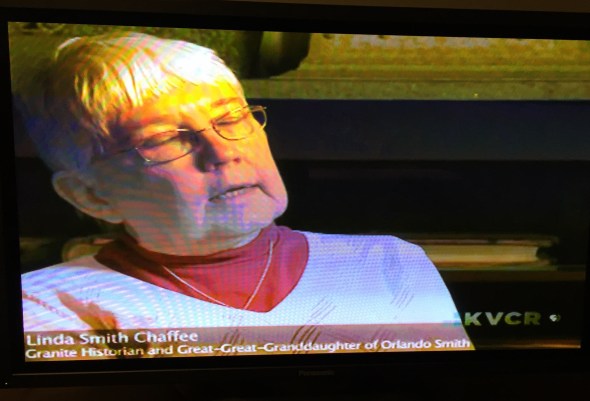
If I’d known “Granite Historian” was a job everything might’ve been different.
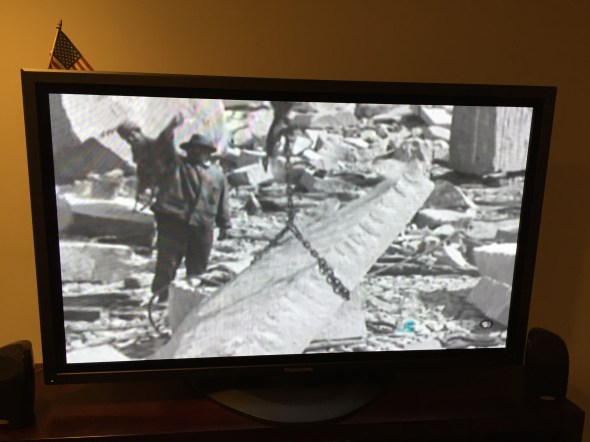
Haven’t made it through the whole program yet but it ain’t going anywhere.
The word “spa” in Massachusetts
Posted: October 2, 2015 Filed under: America Since 1945, Boston, New England Leave a comment
Massachusetts local dialect is all over the Web these days*. This is a favorite topic of mine.

A discussion of placemats caused my sister to send the above photo, and sent me looking into the Massachusetts use of the word “spa.”
Best (first) source I found was (of course?) at Village 14, “Newton’s Virtual Village”:

The word spa comes to us from Spa, Belgium:

The greatest Belgian in fiction? Some people say its Poirot but I say it’s Remy from “Young Indiana Jones Chronicles.”

For Massachusetts dialect, let me give a shoutout to David Hackett Fischer’s Albion’s Seed: Four British Folkways In America.

This guy is a boss. He tells us that what we think of as the “Boston accent” might have its origin in the dialect of East Anglia:
Also he suggests how Scots-Irish people brought us pig-ribs and fighting and gun-love.

- see previous Helytimes coverage of the ocean sunfish here
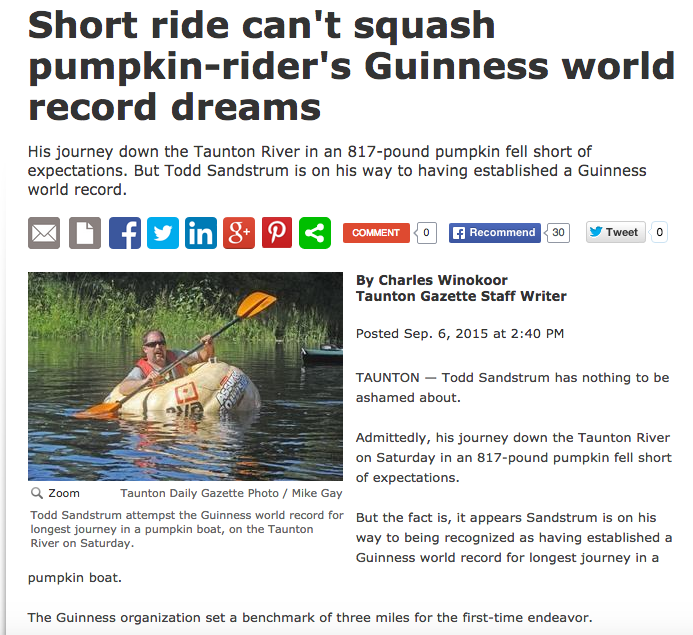
Nothing to be ashamed about
Posted: September 7, 2015 Filed under: New England Leave a commentA New England correspondent sends us this one:
Story about what it was like to live in a house with John Quincy Adams
Posted: August 25, 2015 Filed under: Boston, New England, politics 3 Comments
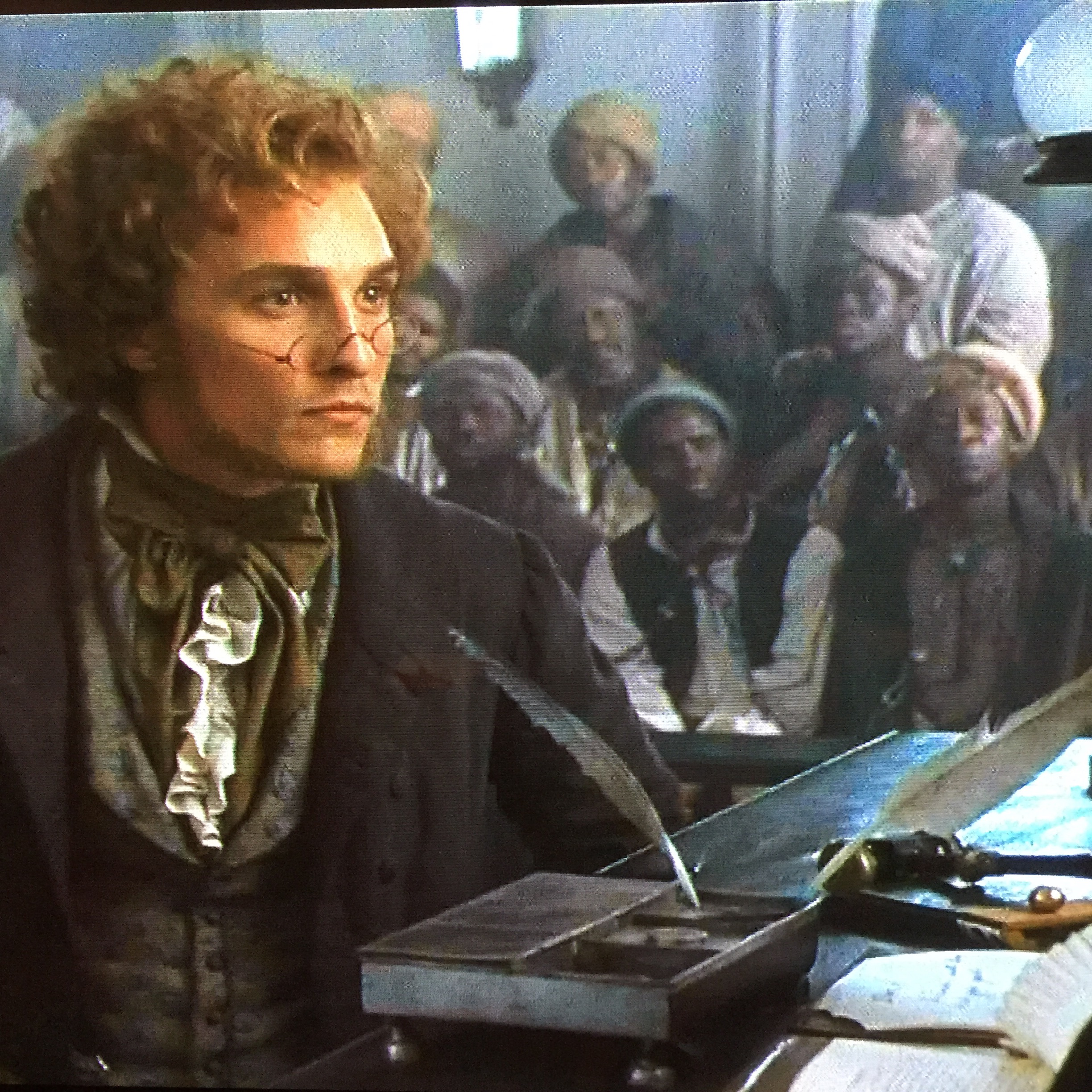
John Quincy Adams isn’t our most cinematic president, but Anthony Hopkins does a grand old job playing him in Amistad.
(Never forget that McConaughey was in Amistad, by the way:
)
Now, if you ask me (nobody did) Amistad doesn’t totally nail it as a movie, because the courtroom battle, instead of being about the rightness or wrongness of slavery, ends up coming down to like some points of international and maritime law. But there’s a great speech by JQA, seen here starting at minute 1:30, about telling a story:
Recently I picked up recently Paul Johnson’s The Birth Of The Modern, a book I’d been seeing on distinguished bookshelves for years, with that great cover art by CDF:

What an absolute boss of a book, one of the highest interesting-information-per-page books I’ve ever come across. How did Paul Johnson write it, on top of everything else he was up to? From PJ’s Wikipedia page:
The following year, he attacked Ian Fleming’s James Bondnovel Dr No and in 1964 he warned of “The Menace of Beatlism” in an article contemporarily described as being “rather exaggerated” by Henry Fairlie in The Spectator.
Johnson started out as kind of a lefty it appears, but he’d end up working for Margaret Thatcher:
“‘I was instantly drawn to her,’ he recalls. ‘I’d known Margaret at Oxford. She was not a party person. She was an individual who made up her own mind. People would say that she was much influenced by Karl Popper or Frederick Hayek. The result was that Thatcher followed three guiding principles: truthfulness, honesty and never borrowing money.'”
Speaking of not a party person, Johnson has a great description the odd couple times that were had when John Quincy Adams, John Calhoun, and James Ashton Bayard went to negotiate the treaty that would end the War Of 1812.
Seems JQA could come off as a bit of a pill:


Imagine referring your bros to Martens, Book vii, chapter 55, section 3!
Poor guy. JQ was probably just trying to live up to his dad, who was no slouch either. Van Wyck Brooks sums up Adams The First in a footnote in The Flowering Of New England:

They don’t make ’em like they used to.
Nicklawler.com
Posted: July 29, 2015 Filed under: Boston, New England Leave a comment
Nick’s photo of Saigon Central Post Office
My high school bud Nick has a blog, similar minimalist layout style to this one and the OG master Bookbinderlocal455.
A lot of posts are his photos from Asia.
But there are also several posts about investing that I found so interesting I read them several times and sent them to others. Here’s a few samples.
From this post, “The Brooklyn Investor: The Greatest Investment Book Ever Written“:
“Any time you extend your bankroll so far that if you lost, it would really distress you, you probably will lose. It’s tough to play your best under that much pressure.”
This is exactly what Joel Greenblatt said in an essay soon after the financial crisis. He was talking about how many people thought the error in their investment was that they didn’t foresee the crisis and so didn’t sell stocks before the collapse. Greenblatt insisted that this couldn’t be done anyway and that the real error was that these people simply owned too much stocks. If you own so much stock that a 50% decline is going to scare you and make you sell out at precisely the wrong moment (and as Greenblatt says, and Brunson says in this book, you are almost guaranteed to sell out at the bottom), then you owned too much stock to begin with. Greenblatt said the mistake wasn’t that they didn’t sell before the crisis, but that they sold in panic at the bottom. This was the error. So the key defense against inevitable (and unpredictable) bear markets is to not extend yourself so much that it will distress you when the markets do fall (and they will). Buffett says that if it would upset you if a stock you bought declined by 50%, then you simply shouldn’t be investing in stocks. As I like to say all the time, more money is probably lost every year in trying to avoid losing money in the stock market than actual losses in the stock market! via The Brooklyn Investor: The Greatest Investment Book Ever Written.
Profoundly interesting quote. Sub out the word “your bankroll” for, say, “yourself” and does it apply to other situations, like championship tennis?
Thought “What are questions?” was also a great post, on the great Clay Christensen
So was “Everybody Gets What They Want,” a cold-eyed suggestion about whether people are subconsciously manifesting / The Secret-ing themselves:

Check it out. Nick also found some good old photos of Boston:
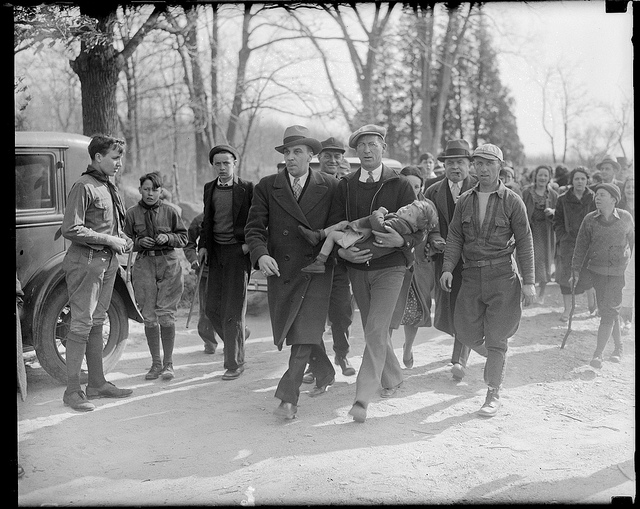
Kid lost, and then found from Crime/Police: Miscellaneous
Also, you can enjoy this:
Coaches, Part 2: Belichick
Posted: January 29, 2015 Filed under: America Since 1945, New England, sports Leave a comment
(Part One, about Pete Carroll and Nick Saban’s memoirs, is here)
The most interesting character in this book isn’t Belichick, it’s Ernie Adams.

Photo by Stu Rosner from this Northwestern magazine article: http://www.northwestern.edu/magazine/winter2008/feature/adams.html
Ernie Adams, it should be noted, was a coach even before entering Andover. he had gone to elementary and junior high at the Dexter School, a private school in the Boston area (where John F. Kennedy had gone), and being more passionate about football than the teacher who had been drafted to coach the intramural team there, he had ended up giving that teacher more suggestions than the teacher wanted to hear. Finally the teacher, in desperation, had turned to Ernie and said, “Well, if you know so much, why don’t you coach?” That was an offer Ernie Adams could not turn down, and he ended up coaching the Dexter team quite successfully.
At Andover he had already befriended another football-crazed classmate, Evan Bonds, with whom he talked constantly and with whom he diagrammed endless football plays and with whom he jointly did the senior project breaking down and analyzing all of Andover’s plays from the their senior season…
Bonds felt that although his own life revolved completely around football, Adams was already a good deal more advanced in his football obsessions, going off on his own to coaching clinics where everyone else was at least ten years older, collecting every book written by every coach on the game, the more technical the better, and collecting films of important games: “Ernie already had an exceptional football film collection, sixteen-millimeter stuff, the great Packer-Cowboy games, Raiders-Jets, films like that, which he somehow found out about through sports magazines, had sent away for, and for which he had enough primitive equipment that he could show the films,” Bonds said. “It’s hard to explain just how football crazed we were, but the year before Bill arrived, when we were in the eleventh grade, and it was spring, the two of us went down to Nickerson Field, the old Boston University field, because BU was having an intra-squad spring game. We were up there in the stands, taking notes, these two seventeen-year-olds – can you believe it? – scouting an intra-squad game at BU on our own, and I still have no earthly idea what we would have done with the notes. Anyway, pretty soon a BU assistant coach came up looking for us, to find what we were doing, and why we were doing it. So we said we were from Northeastern, as if that would give us extra legitimacy, and the coach said what we were doing was illegal, and we had to get out then and there.”
And then at Andover arrived young Bill Belichick, doing a post-graduate year, a kind of bonus senior year after graduating from Annapolis High, in the hopes of getting into a better college:
Adams was already as advanced a football junkie as Belichick: he had an exceptional collection of books on coaching, including Football Scouting Methods ($5.00 a copy, published by the Ronald Press of New York City, and featuring jacket quotes from, among others, the legendary Paul Brown: “Scouting is essential to successful football coaching.”), the only book written by one Steve Belichick, assistant coach of the Naval Academy. The book was not exactly a best seller – the author himself estimated that it sold at most four hundred copies – nor was it filled with juicy, inside tidbits about the private lives of football players. Instead it was a very serious, very dry description of how to scout an opponent, and, being chockful of diagrams of complicated plays, it was probably bought only by other scouts and the fourteen-year-old Ernie Adams.
That year, just as the first football practice was about to start at Andover, Coach Steve Sorota posted the list of the new players trying out for the varsity, including the usual number of PGS – the list included the name Bill Belichick, and Ernie Adams was thrilled. That first day Adams looked at the young man with a strip of tape that Belichick on his helmet, and asked if he was from Annapolis, Maryland, and if he was related to the famed writer-coach-scout Steve Belichick, and Bill said yes, he was his son. Thus were the beginnings of a lifetime friendship and association sown…
..”Because we were such football nerds, it was absolutely amazing that Bill had come to play at Andover, because we were probably the only two people in the entire state of Massachusetts who had read his father’s book,” Bonds said years later.
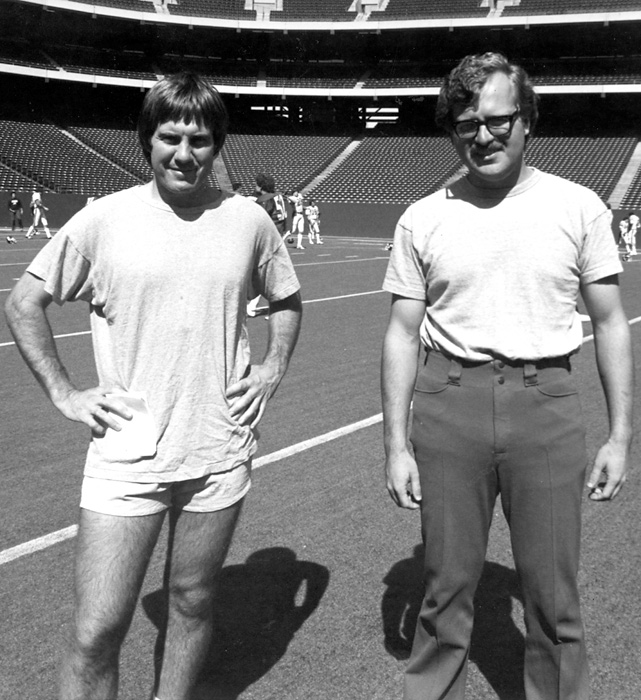
Belichick and Adams, traceable through http://www.patsfans.com/new-england-patriots/messageboard/threads/rare-photos-of-bill-belichick.813505/
Adams has more or less been at Belichick’s side ever since, “Belichick’s Belichick,” aside from interludes on Wall Street. Here’s a good profile on him, with quotes from Andover classmate Buzz Bissinger. (Apparently Jeb Bush was in that class too).
So you can never really tell what is going on in his head. But I did get Carlisle to call Adams on Monday and ask for his five favorite books, hoping to get a window into the places a man like him goes for inspiration. Here is the list:
- “The Best and the Brightest,” by David Halberstam
- “The Money Masters of Our Time,” by John Train
- Robert Caro’s three-volume biography of Lyndon B. Johnson
- Robert Massie’s biography of Peter the Great
- William Manchester’s two-part biography of Winston Churchill
…
Adams also seems to enjoy not only watching greatness work, but also seeing it fail. Carlisle thinks the central message of Halberstam’s Vietnam classic appeals to Adams: that people incredibly well-educated and well-intentioned could be so flat-out wrong about something. It’s a helpful notion to keep in mind about the conventional-wisdom-obsessed world of football, where pedigree and tradition dictate many overly conservative decisions. Indeed, when Adams agreed to participate in Halberstam’s Belichick book, he did so with this caveat: For every two questions the journalist got to ask Adams about football, Adams got to ask one back about Vietnam. Did that trait allow Adams to make sure the mistakes of Belichick in Cleveland were not repeated? Maybe.
Most articles on Adams will include this detail:
When Belichick and Adams were together when the coach was in Cleveland, Browns owner Art Modell once said, “I’ll pay anyone here $10,000 if they can tell me what Ernie Adams does.”
Or:
A few years back, during a team film session, the Patriots players put up a slide of Adams. The caption read: “What does this man do?” Everyone cracked up. But no one knew.
Mysterious, rigorous, intense, scholarly dissection of football — that seems to be the Belichick way. “Unadorned,” as Halberstam puts it:


Belichick doesn’t seem like the kind of dude to write a book, least of all a peppy all-purpose motivational paperback like Pete Carroll’s. This is the closest thing, a kind of biography starting with the arrival of Bill Belichick’s grandparents in America. They came, like Belichick apprentice Nick Saban’s grandparents and Pete Carroll’s maternal grandparents, from Croatia:
 Bill Belichick grew up in football. His dad, Steve Belichick, spent the bulk of his career (33 years) as an assistant coach at the Naval Academy. (As a young guy, a fellow coach advised him to get a tenure-track job as an associate professor of physical education, so he had job security even as eight head coaches passed through.) Belichick’s mom seems like a great lady — she’d done graduate work in languages at Middlebury, and during the war she translated military maps. She learned Croatian so she could speak to her in-laws more easily.
Though he never worked at Oakland, Belichick apparently picked up several things from the way Al Davis ran the Raiders:
There were important things that [assistant coach Rich] McCabe told Belichick about the Davis system that would one day serve Belichick well. The first thing was that Oakland looked only for size and speed. Their players had to be big and fast. That was a rule. If you weren’t big and fast, Oakland wasn’t interested. The other thing was about the constancy of player evaluation. Most coaches stopped serious evaluation of their personnel on draft day – they chose their people, and that was that. But Davis never stopped evaluating his people, what they could do, what you could teach them, and what you couldn’t teach them. He made his coaches rate the players every day. Were they improving? Were they slipping? Who had practiced well? Who had gone ahead of whom in practice? The jobs the starters had were not held in perpetuity.
This is similar to stuff Carroll talks about — everyone is competing every practice. After a stint in Denver:
That summer [Belichick] came home and visited with his boyhood friend Mark Fredland and told him he had found the key to success: It was in being organized; the more organized you were at all times, the more you knew at every minute what you were doing and why you were doing it, the less time you wasted and the better coach you were.
Halberstam likes Belichick, obviously. They had become friendly because they both had houses on Nantucket, and Halberstam suggests that the gruff Belichick we see is part presentational strategy:
That persona – the Belichick who had never been young – was one he had either created for the NFL or had evolved because of the game’s needs. Part of the design was more or less deliberate, and part of it was who he was. For when he had first entered the League, he had been a young man teaching older men, and he had needed to prove to them he was an authority figure. Thus, he believed, he had been forced to be more aloof and more authoritarian than most coaches or teachers working their first jobs.
Compare this to the young guy at Wesleyan with his frat brothers, sneaking a case of beer into a showing of Gone With The Wind (why that movie? even Halberstam is baffled) under his parka.
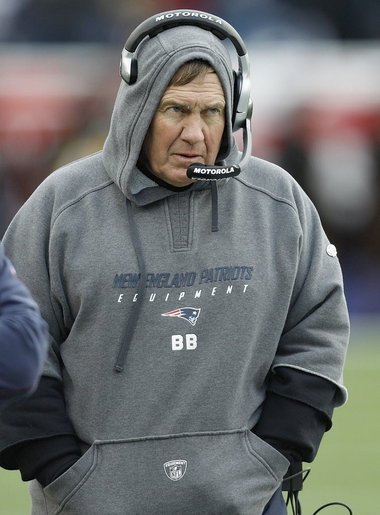
The best parts of this book are about Belichick’s relationship with Bill Parcells, when they were at the Giants. The biggest issue there was how to handle Lawrence Taylor, who was supremely excellent at football, but semi-out of control on drugs and women, prone to nodding off in meetings though he would somehow intuitively understand what he had to do in complex plays. A great anecdote — LT has injured his ankle:
So on his own, without telling the coaches, he went to a nearby racetrack and somehow managed to find someone there who was an expert in horse medicine, who had some kind of pill – a horse pill – and he took it and played well.
Belichick’s takeaway from dealing with LT was, apparently, never to bend the rules for anyone.
Parcells and Belichick needed each other, but they weren’t friends exactly:
There was one terrible moment, during a game, when Belichick called a blitz, and Parcells seemed to oppose it. They went ahead with it and the blitz worked – the other team did what Belichick had expected, not what Parcells had – but Parcells was furious, and over the open microphones in the middle of a game, he let go: “Yeah, you’re a genius, everybody knows it, a goddamn genius, but that’s why you failed as a head coach – that’s why you’ll never be a head coach… some genius.” It was deeply shocking to everyone who heard it; they were the cruelest words imaginable.
Not true, though. Belichick got to be head coach at Cleveland, where he didn’t really get on with owner Art Modell or QB Bernie Kosar and had a tough time, going 36-44 there. Halberstam almost seems to admire how bad/stubborn/unhelpful Belichick was with the media there.
And then he got to New England (taking over for the fired Pete Carroll).
As his friend Ernie Adams said, “The number one criteria for being a genius in this business is to have a great quarterback, and in New England he had one, and in Cleveland he did not.”
The stuff in Halberstam’s book about Belichick’s decision to go with Brady over Drew Bledsoe is pretty great:
But among those most impressed by Belichick’s decision to go with Brady was his father. Steve Belichick thought it was a very gutsy call, perhaps the most critical call his son had ever made, because the world of coaching is very conservative, and the traditional call would be the conservative one, to go with the more experienced player in so big a game. The way you were protected if it didn’t work out, because you had gone with tradition and experience, and no one could criticze you. That was the call most coaches would have made, he said, under the CYA or Cover Your Ass theory of coaching. Many of his old friends disagreed with what his sone was doing, he knew, but he was comfortable with it himself. When friends who were puzzled called him about it, he told them that Bill was right in what he was doing. “He’s the smart one in the family, and I’m the dumb one,” he would say.

Brady seems like he earned it, surely, and he had the special thing Belichick needed:
There were some quarterbacks who were very smart, who knew the playbook cold, but who were not kinetic wonders, and could not make the instaneous read. That was the rarest of abilities, the so-called Montana Factor: the eye perceiving, and then even as the eye perceives, transferring the signal, eye to brain, and then in the same instant, making the additional transfer from brain to the requisite muscles. The NFL was filled with coaches with weak arms themselves, who could see things quickly on the field but who were doomed to work with quarterbacks who had great arms, but whose ability to read the defense was less impressive. What Brady might have, they began to suspect, was that marvelous ability that sets the truly great athletes apart from the very good ones. Or as one of the assistants said, it was like having Belichick himself out there if only Belichick had had a great arm. In the 2001 training camp Brady would come off the field after an offensive series, and Belichick would question him about each play, and it was quite remarkable: Brady would be able to tell his coach what every receiver was doing on each play, what the defensive backs were doing, and explain why he had chosen to throw where he had. It was as if there were a camera secreted away in his brain. Afterward, Belichick would go back and run the film on those same plays and would find that everything Brady had said was borne out by the film.
There’s no secret in this book. Belichick is obsessed with analyzing football, has been since he was at least seventeen, probably younger. Even with that intensity it took luck and circumstance to get him five Super Bowl rings. A lesson from the coaching careers of Carroll and Belichick might be perseverance, but I don’t think that’s even the word for this — it’s not like it’s any kind of choice with these guys, it’s nature.
I read one other Halberstam sports book a few years ago, The Amateurs, about Harvard rowing. The theme of that book is similar: obsessive characters irresistibly driven, almost forced by their nature to be completely devoted, single-minded, unrelenting. There was no end of it. “The kind of guys whose idea of a day off is to drive up to New Hampshire and cross-country ski until you couldn’t stand up,” as a rowing coach put it.

Most of us (me) aren’t this kind of guy, certainly not about football or rowing. The compelling thing about the Pete Carroll book is that he seems semi-human. He seems to find joy and fun in this pursuit. Not that he’s any less competitive than Belichick, and who knows what eats him up in private. But he can explain what he’s doing to others in a way that seems born out of enthusiasm and positivity rather than just some incomprehensible inner nature. Just being willing to try to explain it is something.
That’s not typical:
“Don’t do it, don’t go into coaching,” the famed Bear Bryant had counseled young acolytes who were thinking of following him into the profession, “unless you absolutely can’t live without it.”
There was a constant loneliness to the job, a sense that no one else understood the pressures you faced. Each year, before the season began, Belichick would tell his team that no one else would understand the pressure on them, not even the closest members of their families. The person in football who knew him best and longest, Ernie Adams, thought Belichick had remained remarkably true to the person he had been as a young man. Adams was a serious amateur historian, and he was not a coach who threw the word “warrior” around to describe football players, because they were football players, not warriors, and the other side did not carry Kalashnikovs. Nonetheless, he thought the intensity under which the game was now played and the degree to which that intensity separated players and coaches from everyone else, even those dear to them, was, in some way, like combat, in that you simply could not explain it to anyone who had not actually participated. It was not a profession that offered a lot in the way of tranquility. “My wife has a question she asked me every year for ten years,” Bill Parcells said back in 1993 when he was still married, “and she always worded it the same way: ‘Explain to me why you must continue to do this. Because the times when you are happy are so few.’ She has no concept.”
(A good roundup of Belichick stories here.)
Boston Marathon bomber’s friends
Posted: November 3, 2014 Filed under: America Since 1945, Boston, New England Leave a commentA courtroom sketch of Dias Kadyrbayev, who pleaded guilty on Thursday. (Jane Flavell Collins / Associated Press)
On a recent visit home to Massachusetts I was surprised to learn about this story, which I hadn’t been following. After they learned that their friend Dzhokhar Tsarnaev probably did the Boston Marathon bombing, several associates went to his room and rounded up some of his stuff and threw it out.
The New Yorker tells the story with all kinds of vivid details.
The three of them went to Taco Bell, then to Tazhayakov and Kadyrbayev’s apartment, where Kadyrbayev’s girlfriend, Bayan Kumiskali, was about halfway through watching “The Pursuit of Happyness.” Everyone but Tazhayakov got stoned, then they all sat on the couch and watched the second half of the movie, checking for news on their devices.
Can’t help but feel for Azamat Tazhavakov, “who was known as a mama’s boy, even though he was thousands of miles away from home.”
When Tazhayakov awoke early the next morning, he discovered that Dzhokhar Tsarnaev, who was still on the loose, had now been publicly identified as a suspect in the bombing, and that Tamerlan had been killed. Tazhayakov began to panic and smoked marijuana for what may have been the first time in his life.
A VERY bad decision.


One of my bitch older sisters
Posted: November 19, 2013 Filed under: history, New England 1 Comment
emailed me just to mock me by saying she got to go see the dinosaur footprints out in western Mass.
which I’ve NEVER SEEN.
I’m telling you: they’ve been doing shit like this to me my whole damn life.
Sunday
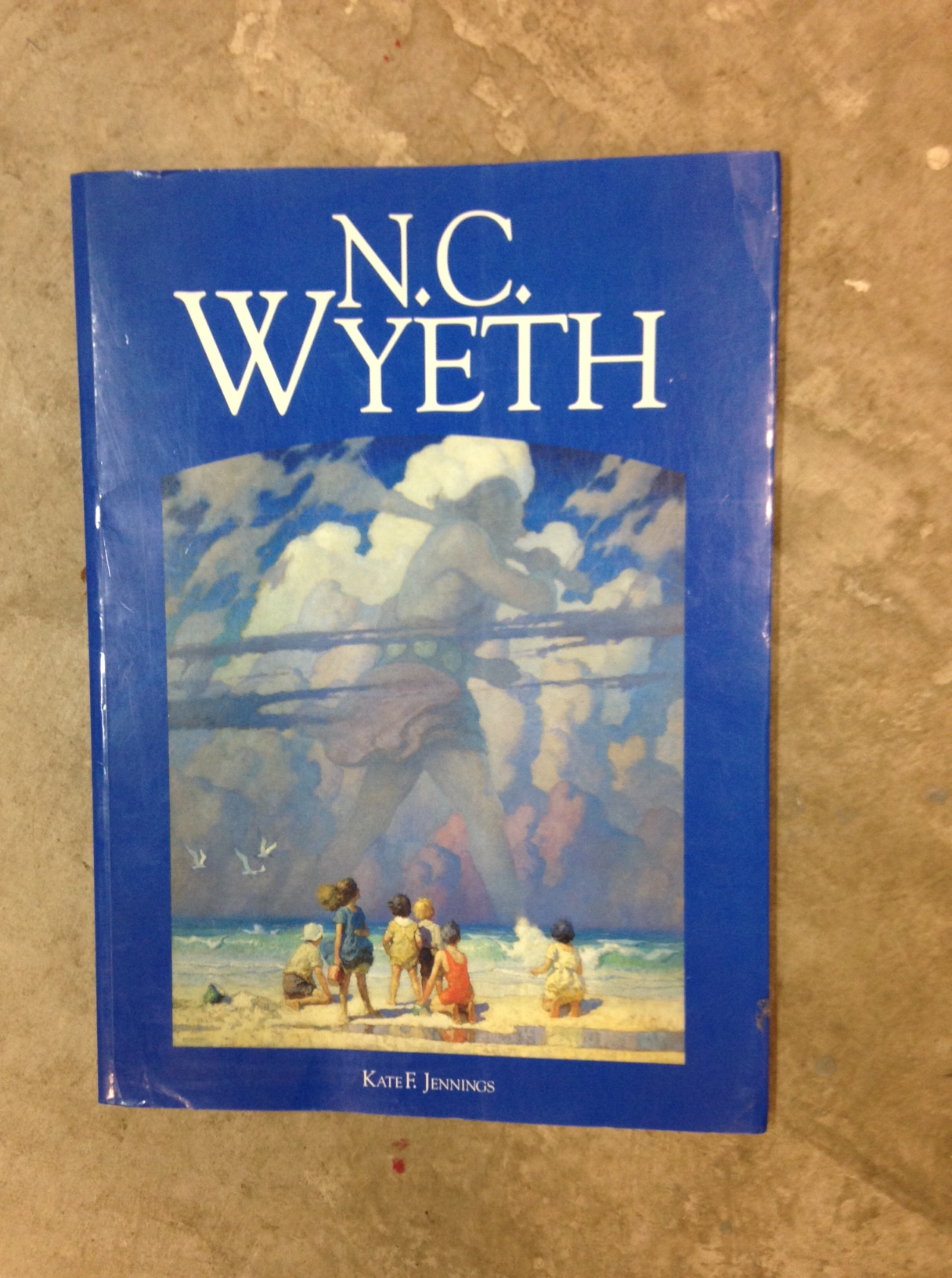
Posted: October 27, 2013 Filed under: New England, painting, religion, Wyeth Leave a comment
And in the morning I took the Bible; and beginning at the New Testament I began seriously to read it,1920.
Illustration for Robinson Crusoe by Daniel Defoe.
Martha’s Vineyard Sign Language
Posted: September 22, 2013 Filed under: New England Leave a comment
The Founder Effect.
Possibly getting a slam in on his neighbor island, Nathaniel Philbrick claims in his Away Off Shore: Nantucket Island And Its People, 1602-1890:
Unlike some towns on Martha’s Vineyard, whose original settlers moved in a group form England only to continue a longstanding tradition of inbreeding (with serious genetic consequences, which included deafness and hermaphroditism), Nantucketers began with a fresh gene pool collected from towns throughout the [mainland] Merrimack Valley.
Martha’s Vineyard.
It’s apparently true that deafness was extremely common on Martha’s Vineyard. Wiki:
In 1854, when the island’s deaf population peaked, the United States national average was one deaf person in 5728, while on Martha’s Vineyard it was one in 155. In the town of Chilmark, which had the highest concentration of deaf people on the island, the average was 1 in 25; in a section of Chilmark called Squibnocket, as much as a quarter of the population of 60 was deaf.
The island even had its own sign language:
The ancestry of most of the deaf population of Martha’s Vineyard can be traced back to a forested area in the south of England known as the Weald—specifically the part of the Weald in the county of Kent. Martha’s Vineyard Sign Language may be descended from a hypothesized sign language of that area in the 16th century, now referred to as Old Kent Sign Language. Families from a puritan community in the Kentish Weald emigrated to the Massachusetts Bay Colony area of the United States in the early 17th century, many of their descendants later settling on Martha’s Vineyard. The first deaf person known to have settled there was Jonathan Lambert, a carpenter and farmer, who moved there with his hearing wife in 1694. By 1710, the migration had virtually ceased, and the endogamous community that was created contained a high incidence of hereditary deafness that would persist for over 200 years.
By the 18th century there was a distinct Chilmark Sign Language, which was later (19th century) influenced by French Sign Language, forming Martha’s Vineyard Sign Language (19th and 20th centuries). From the late 18th to the early 20th century, virtually everyone on Martha’s Vineyard possessed some degree of fluency in the local sign language…
The last deaf person born into the island’s sign language tradition, Katie West, died in 1952. A few elderly residents were able to recall MVSL as recently as the 1980s when research into the language began. Indeed, when Oliver Sacks subsequently visited the island after reading a book on the subject, he noted that a group of elderly islanders talking together dropped briefly into sign language then back into speech.

Oliver Sacks.
The hermaphroditism seems like a touchier subject. In looking into it I found this, from Walter Pitkin’s 1921 book Must We Fight Japan?

Anyway. Walter Pitkin went on to write the bestselling nonfiction book of 1933, Life Begins At Forty.

From a quick image search for “Life Begins At Forty”
Nantucket Shark Mystery
Posted: August 8, 2013 Filed under: New England, the ocean Leave a comment
From The Boston Globe:
A dead shark was found lying in front of the Sea Dog Brew Pub in Nantucket this morning and removed by the Department of Public Works.
The Department of Public Works assures is this is not a common occurrence:
“It’s not too often we find sharks on land like that,” said John Braginton-Smith, a foreman for the department.
He offers a theory:
“In summertime, someone can get one too many beers in them and think that’s amusing,” he said.
(ht Chestnut Hill office. Photo is credited to Jimmy Agnew with caption “A fishy mystery.”)
Obama
Posted: February 18, 2013 Filed under: America, Boston, Chicago, heroes, New England, politics, the California Condition, writing Leave a comment
James Fallows calls my attention to this article, from Chicago Magazine in 2007, about then-Senatorial candidate Obama’s Democratic convention speech.
The best bits, for the busy executive:
Obama composed the first draft in longhand on a yellow legal pad, mostly in Springfield, where the state senate was in overtime over a budget impasse. Wary of missing important votes, Obama stayed close to the Capitol, which wasn’t exactly conducive to writing. “There were times that he would go into the men’s room at the Capitol because he wanted some quiet,” says Axelrod. Once, state senator Jeff Schoenberg walked into the men’s lounge and found Obama sitting on a stool along the marble countertop near the sinks, reworking the speech. “It was a classic Lifemagazine moment,” says Schoenberg, who snapped a picture of Obama with his cell-phone camera.
(Photo not included, regrettably.) Kerry’s folks made Obama take out a line:
After the rehearsal ended, Obama was furious. “That fucker is trying to steal a line from my speech,” he griped to Axelrod in the car on the way back to their hotel, according to another campaign aide who was there but asked to remain anonymous. Axelrod says he does not recollect exactly what Obama said to him. “He was unhappy about it, yeah,” he says, but adds that Obama soon cooled down. “Ultimately, his feeling was: They had given him this great opportunity; who was he to quibble over one line?”
And:
On Tuesday, the day of his speech, Obama was up before 6 a.m. He gobbled down a vegetable omelet en route to the FleetCenter for back-to-back-to-back live interviews with the network morning shows. Next, he rushed off to speak at the Illinois delegation breakfast and then to a rally sponsored by the League of Conservation Voters. Afterwards, he returned to the arena for another hour of TV interviews. There was barely time for lunch, a turkey sandwich that he ate in the SUV while being interviewed by a group of reporters.
Always, always tell me what everyone ate.

(both photos from Chicago Magazine, uncredited. Michelle’s skeptical face in that first photo!)
“You can’t help but say hats off to them”
Posted: December 12, 2012 Filed under: heroes, history, New England, writing Leave a comment
When I read Abigail’s letters, I wonder how she ever hat time to write them. She was raising a family with four children, running the farm without her husband there; it was nip and tuck whether she could make a go of it financially; she had sickness to contend with, plagues, waves of smallpox and epidemic dysentery that swept through Braintree. How did John Adams have time to write his letters and keep the diaries? If they’d done nothing else, you’d say to yourself, how did they do it? And remember, they were writing by candlelight with a quill pen, they probably had their teeth hurting because there was no dentistry as we know it. They were probably getting over some recent attack of jaundice or whatever else was epidemic at the time. It’s very humbling. You can’t help but say hats off to them.

Chicken of the woods
Posted: October 29, 2012 Filed under: food, New England Leave a comment
Learning about laetiporous thanks to this article, “Cape Cod mushroom fan hit jackpot while foraging,” sent to us by Chestnut Hill office. Three good sentences from the article:
Ian Sullivan saw the giant mushroom and rejoiced. There would be soup that night.
“It’s fun for them to find something that is big and bright orange growing in the woods.”“You have to think like a mushroom,” said Sullivan.

 Helytimes