Chancellor of the Exchequer
Posted: July 6, 2022 Filed under: United Kingdom Leave a commentThe UK has a new Chancellor of the Exchequer. The last guy, Rishi Sunak, resigned as the Johnson government teeters due to accumulated scandals that center around drunken stupidity and general boorishness.
The new Chancellor (for now) is Nadhim Zahawi, who was born in Baghdad. Let’s see what wickedness lurks on his Wikipedia page:
In late January 2018, it was reported in the media that Zahawi was one of the attendees at a men-only dinner event organised by the Presidents Club at the Dorchester Hotel in London. Media reports alleged that female hostesses were subjected to sexual harassment and incidents of groping and inappropriate touch. Following the revelations of his attendance at the event, Zahawi posted a tweet condemning such behaviour and stated that he felt uncomfortable at what he saw happening.
Wow! The Financial Times sent some undercover operatives to the event disguised as hostesses:
At their initial interviews, women were warned by Ms Dandridge that the men in attendance might be “annoying” or try to get the hostesses “pissed”. One hostess was advised to lie to her boyfriend about the fact it was a male-only event. “Tell him it’s a charity dinner,” she was told. “It’s a Marmite job. Some girls love it, and for other girls it’s the worst job of their life and they will never do it again . . . You just have to put up with the annoying men and if you can do that it’s fine,” Ms Dandridge told the hostess.
I read further on the event:
Some MPs called for the resignation of children and families minister Nadhim Zahawi, who had been among the guests, as well as for a police investigation of the event. Presidents Club co-chairman David Meller resigned from his Department of Education directorship. Jonathan Mendelsohn, another of the guests, was removed from the Labour frontbench in the House of Lords. Several bookshops stopped the sale of books by the comedian David Walliams, who had hosted the event and put up the right to name a character in his next book as a prize. All of these men said to the media that they had neither participated in nor witnessed any misconduct.
Who is David Walliams?
Walliams has been diagnosed with bipolar disorder, and he described his 2006 swim of the English Channel as “some sort of redemption”.
You see this everywhere in the UK character: the desire to escape their island taking absurd form. Joining the Navy, invading India, looking for the source of the Nile, whatever it takes to flee. Swim if necessary. The sad fact is the British are stuck on a wet island, and not only that, but stuck with each other. Aside from alcoholism, the Irish solutions to the same wet island problem, namely indulging in poetry, historical brooding or music, only sometimes occur to the average Englishman, though many an Irish transplant trapped in Britain has demonstrated this method successfully (see Paul McCartney for example, or Morrissey).
Dead pool
Posted: July 5, 2022 Filed under: the American West, the California Condition Leave a comment
from a June 20, 2022 LA Times piece, “As water crisis worsens on Colorado River, an urgent call for Western states to ‘act now’” by Ian James.
I must admit that as catastrophic as it would be, kind of curious to see how the dead pool would play out. Would they have to shut down Las Vegas?

Meanwhile in Lake Mead, they keep discovering weird stuff as the water level sinks. There was the dead body found in a barrel:
Investigators are dating the crime to the late 1970s or early ’80s, with KLAS quoting Las Vegas Lt. Ray Spencer as saying, “The victim’s clothes and shoes were sold at Kmart in the mid-to-late 1970s.”
Who were the forensic fashion investigators who put that together? Human ingenuity is remarkable, maybe with that kind of brainpower and creativity we’ll solve the southwestern water crisis before we deadpool.
The dentist
Posted: July 5, 2022 Filed under: advice Leave a commentMy beloved dentist retired, which is too bad. I went to meet the new dentist.
The new dentist said he was more of a coach than a dentist. He said,
I’ve never seen a tooth without a person attached.
Then he asked me if I drink much seltzer or sparkling water (not really) and he told me there’s citric acid in the canned green tea his wife buys, and that three days a week he drives up from Orange County listening to podcasts about the dark web and marketing.
I told him my previous dentist always gave me nitrous, part of her “relax the patient” philosophy. The new dentist said they didn’t have nitrous in his office, so I said I’m in the wrong office and he didn’t laugh.
Then he declared me healthy and I got X-rayed. That was the last I heard from him and my teeth are working fine, so I guess I’ll just go back to get them cleaned again in a couple months.
The Empty Space
Posted: July 3, 2022 Filed under: shakespeare, the theater Leave a comment
At Stratford where we worry that we don’t play our repertoire long enough to milk its full box office value, we now discuss this quite empirically: about five years, we agree, is the most a particular staging can live. It is not only the hair-styles, costumes and make-up that look dated. All the different elements of staging – the shorthands of behaviour that stand for certain emotions; gestures, gesticulations and tones of voice – are all fluctuating on an invisible stock exchange all the time.
I see that theater director Peter Brook has died. I got a lot out of his book, The Empty Space.
In Haitian voodoo, all you need to begin a ceremony is a pole and people. You begin to beat the drums and far away in Africa the gods hear your call. They decide to come to you, and as voodoo is a very practical religion, it takes into account the time that a god needs to cross the Atlantic. So you go on beating your drum, chanting and drinking rum. In this way, you prepare yourselves. Then five or six hours pass and the gods fly in – they circle above your heads, but it is not worth looking up as naturally they are invisible. This is where the pole becomes so vital. Without the pole nothing can link the visible and the invisible worlds. The pole, like the cross, is a junction.
Brook has much to say about actors:
For instance, a young actor playing with a group of inexperienced friends may reveal a talent and a technique that put professionals to shame. Yet take the very same actor who has, as it were, proved his worth and surround him with the older actors he most respects, and often he becomes not only awkward and stiff, but even his talent goes. Put him then amongst actors he despises and he will come into his own again. For talent is not static, it ebbs and flows according to many circumstances.

This must’ve been something:
There the company toured villages bordering the Sahara, using a carpet as a stage upon which to improvise stories in imaginary languages.
Mishopshnow
Posted: July 3, 2022 Filed under: the California Condition Leave a comment
land acknowledgments can ring hollow, but who wouldn’t support returning some California places to their native names? For example Carpinteria could revert to the name the Chumash apparently gave it.

A Climate for Health and Wealth
Everest
Posted: July 2, 2022 Filed under: nature Leave a commentThe world’s biggest bacteria discovered in Caribbean mangrove swamp:

That’s from the Financial Times, paywalled but this link should work for the first three bacteria fans who click.
Santa Barbara, 1834
Posted: July 2, 2022 Filed under: the California Condition Leave a comment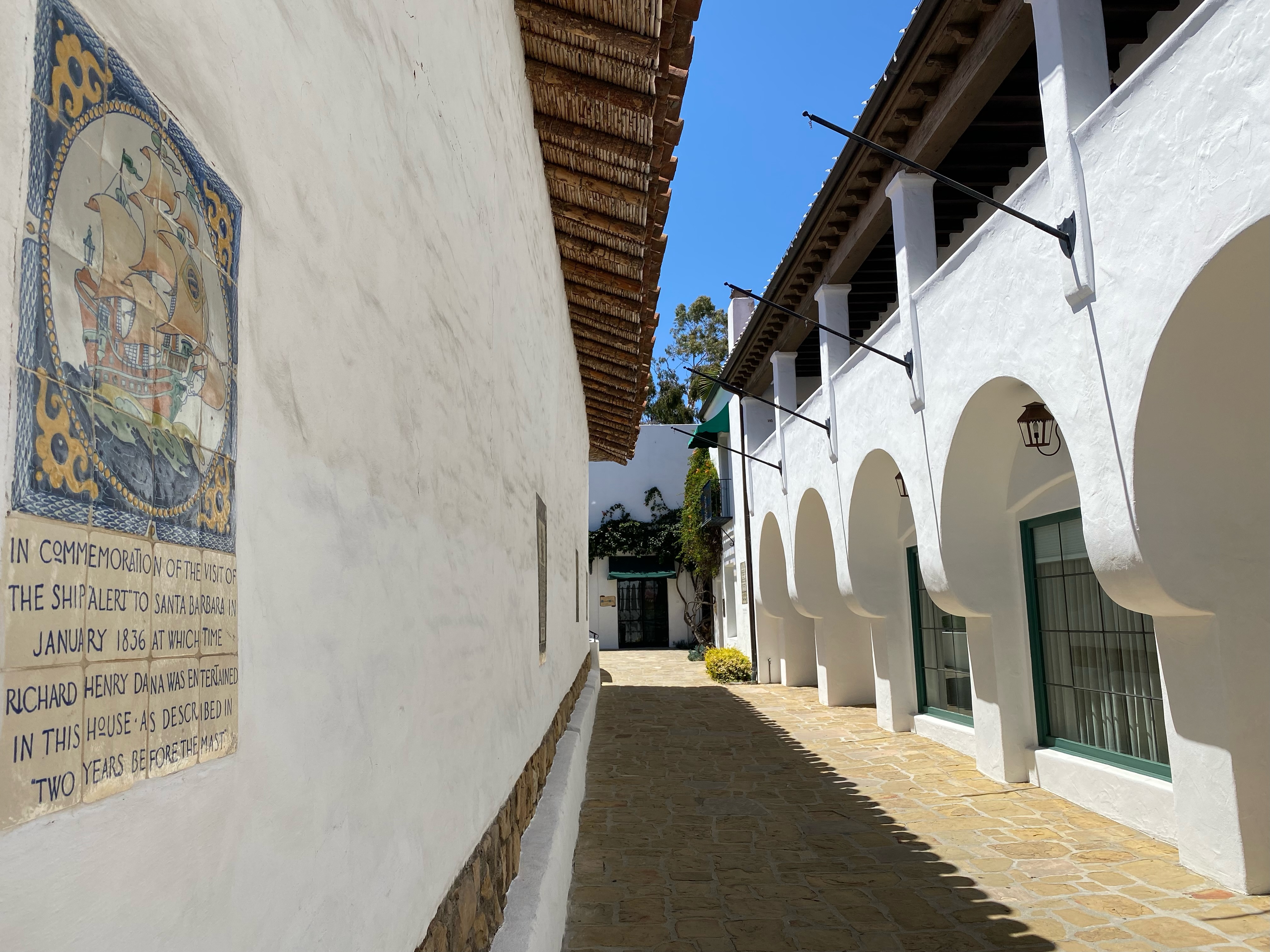
Strolling through El Paseo in Santa Barbara, I saw this on the wall and got to thinking about Dana.
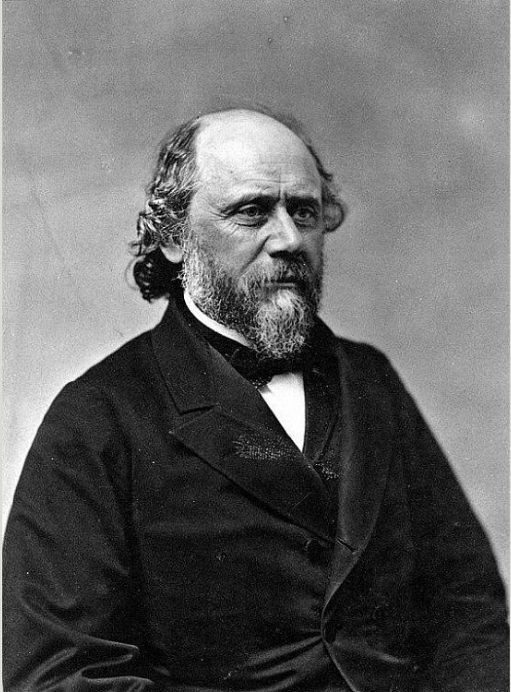
The year was 1834. Richard Henry Dana Jr was a Harvard student who caught the measles and then noticed he was losing his eyesight. Thinking it might be good for him, he left school and enlisted as a sailor on a trip around Cape Horn to California.
The ship’s trade was in buying up cow hides from the ranches of Mexican California:
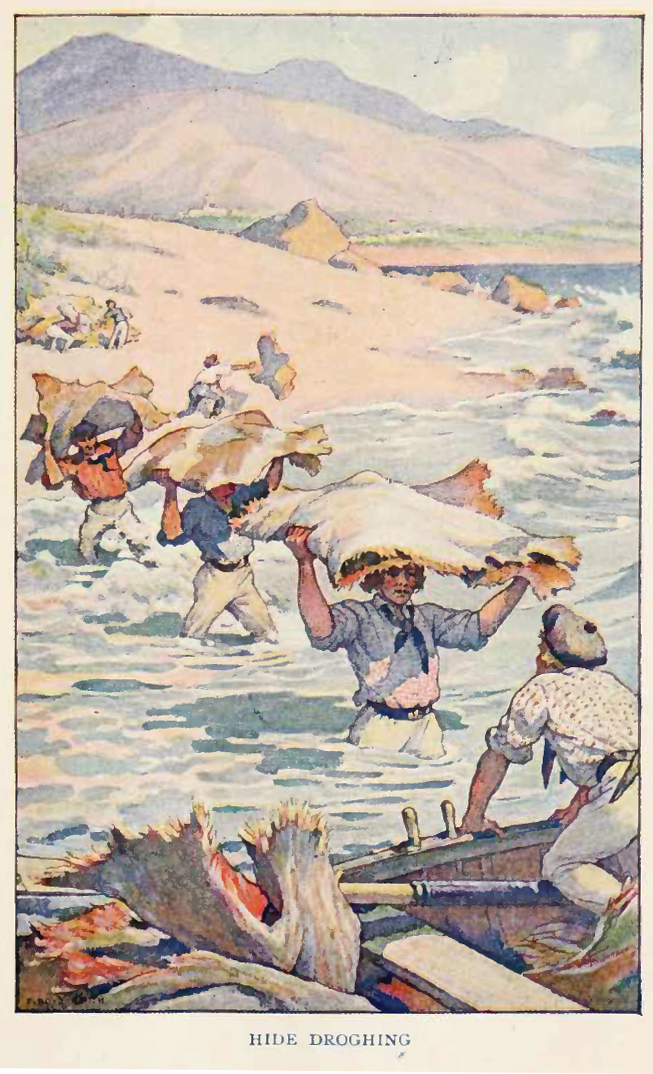
(from illustrations for a 1911 edition. Wikipedia credits this one to Sidney Chase but I think it’s by E. Boyd Smith.)
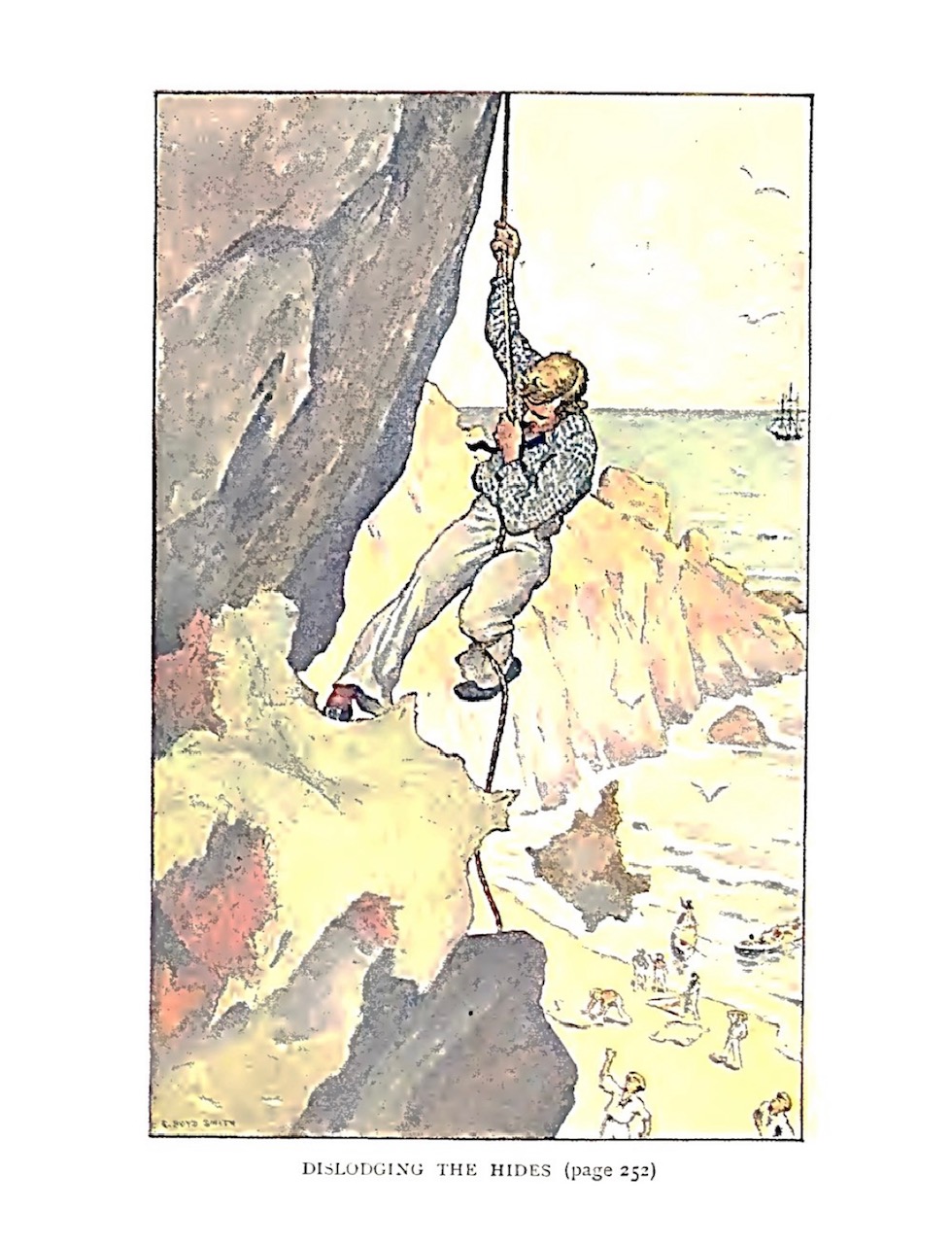
At one point, finding themselves at the top of a cliff, threw the hides down to the ocean over the edge. The site where this occurred is now Dana Point, California.
Dana doesn’t have much to say about Los Angeles, although he spent some miserable time doing hard work in San Pedro. Here he is on Santa Barbara, where he had a chance to get a slice of life:
In the middle of this crescent, directly opposite the anchoring ground, lie the mission and town of Santa Barbara, on a low, flat plain, but little above the level of the sea, covered with grass, though entirely without trees, and surrounded on three sides by an amphitheatre of mountains, which slant off to the distance of fifteen or twenty miles. The mission stands a little back of the town, and is a large building, or rather a collection of buildings, in the centre of which is a high tower, with a belfry of five bells; and the whole, being plastered, makes quite a show at a distance, and is the mark by which vessels come to anchor. The town lies a little nearer to the beach—about half a mile from it—and is composed of one-story houses built of brown clay—some of them plastered—with red tiles on the roofs. I should judge that there were about an hundred of them; and in the midst of them stands the Presidio, or fort, built of the same materials, and apparently but little stronger. The town is certainly finely situated, with a bay in front, and an amphitheatre of hills behind. The only thing which diminishes its beauty is, that the hills have no large trees upon them, they having been all burnt by a great fire which swept them off about a dozen years before, and they had not yet grown up again. The fire was described to me by an inhabitant, as having been a very terrible and magnificent sight. The air of the whole valley was so heated that the people were obliged to leave the town and take up their quarters for several days upon the beach.
He goes ashore:
We were then pulled ashore in the stern of the boat, and, with orders to be on the beach at sundown, we took our way for the town. There, everything wore the appearance of a holyday. The people were all dressed in their best; the men riding about on horseback among the houses, and the women sitting on carpets before the doors. Under the piazza of a “pulperia,” two men were seated, decked out with knots of ribbons and bouquets, and playing the violin and the Spanish guitar. These are the only instruments, with the exception of the drums and trumpets at Monterey that I ever heard in California; and I suspect they play upon no others, for at a great fandango at which I was afterwards present, and where they mustered all the music they could find, there were three violins and two guitars, and no other instrument. As it was now too near the middle of the day to see any dancing and hearing that a bull was expected down from the country, to be baited in the presidio square, in the course of an hour or two we took a stroll among the houses. Inquiring for an American who, we had been told, had married in the place, and kept a shop, we were directed to a long, low building, at the end of which was a door, with a sign over it, in Spanish. Entering the shop, we found no one in it, and the whole had an empty, deserted appearance. In a few minutes the man made his appearance, and apologized for having nothing to entertain us with, saying that he had had a fandango at his house the night before, and the people had eaten and drunk up everything.
“Oh yes!” said I, “Easter holydays?”
“No!” said he, with a singular expression to his face; “I had a little daughter die the other day, and that’s the custom of the country.”
Here I felt a little strangely, not knowing what to say, or whether to offer consolation or no, and was beginning to retire, when he opened a side door and told us to walk in. Here I was no less astonished; for I found a large room, filled with young girls, from three or four years of age up to fifteen and sixteen, dressed all in white, with wreaths of flowers on their heads, and bouquets in their hands. Following our conductor through all these girls, who were playing about in high spirits, we came to a table, at the end of the room, covered with a white cloth, on which lay a coffin, about three feet long, with the body of his child. The coffin was lined on the outside with white cloth, and on the inside with white satin, and was strewed with flowers. Through an open door we saw, in another room, a few elderly people in common dresses; while the benches and tables thrown up in a corner, and the stained walls, gave evident signs of the last night’s “high go.” Feeling, like Garrick, between tragedy and comedy, an uncertainty of purpose and a little awkwardness, I asked the man when the funeral would take place, and being told that it would move toward the mission in about an hour, took my leave.
A funeral procession, a cockfight, a horse race:
Here was as peculiar a sight as we had seen before in the house; the one looking as much like a funeral procession as the other did like a house of mourning. The little coffin was borne by eight girls, who were continually relieved by others, running forward from the procession and taking their places. Behind it came a straggling company of girls, dressed as before, in white and flowers, and including, I should suppose by their numbers, nearly all the girls between five and fifteen in the place. They played along on the way, frequently stopping and running all together to talk to some one, or to pick up a flower, and then running on again to overtake the coffin. There were a few elderly women in common colors; and a herd of young men and boys, some on foot and others mounted, followed them, or walked or rode by their side, frequently interrupting them by jokes and questions. But the most singular thing of all was, that two men walked, one on each side of the coffin, carrying muskets in their hands, which they continually loaded, and fired into the air. Whether this was to keep off the evil spirits or not, I do not know. It was the only interpretation that I could put upon it.
As we drew near the mission, we saw the great gate thrown open, and the pádre standing on the steps, with a crucifix in hand. The mission is a large and deserted-looking place, the out-buildings going to ruin, and everything giving one the impression of decayed grandeur. A large stone fountain threw out pure water, from four mouths, into a basin, before the church door; and we were on the point of riding up to let our horses drink, when it occurred to us that it might be consecrated, and we forbore. Just at this moment, the bells set up their harsh, discordant clang; and the procession moved into the court. I was anxious to follow, and see the ceremony, but the horse of one of my companions had become frightened, and was tearing off toward the town; and having thrown his rider, and got one of his feet caught in the saddle, which had slipped, was fast dragging and ripping it to pieces. Knowing that my shipmate could not speak a word of Spanish, and fearing that he would get into difficulty, I was obliged to leave the ceremony and ride after him. I soon overtook him, trudging along, swearing at the horse, and carrying the remains of the saddle, which he had picked up on the road. Going to the owner of the horse, we made a settlement with him, and found him surprisingly liberal. All parts of the saddle were brought back, and, being capable of repair, he was satisfied with six reáls. We thought it would have been a few dollars. We pointed to the horse, which was now half way up one of the mountains; but he shook his head, saying, “No importe!” and giving us to understand that he had plenty more.
Having returned to the town, we saw a great crowd collected in the square before the principal pulperia, and riding up, found that all these people—men, women, and children—had been drawn together by a couple of bantam cocks. The cocks were in full tilt, springing into one another, and the people were as eager, laughing and shouting, as though the combatants had been men. There had been a disappointment about the bull; he had broken his bail, and taken himself off, and it was too late to get another; so the people were obliged to put up with a cock-fight. One of the bantams having been knocked in the head, and had an eye put out, he gave in, and two monstrous prize-cocks were brought on. These were the object of the whole affair; the two bantams having been merely served up as a first course, to collect the people together. Two fellows came into the ring holding the cocks in their arms, and stroking them, and running about on all fours, encouraging and setting them on. Bets ran high, and, like most other contests, it remained for some time undecided. They both showed great pluck, and fought probably better and longer than their masters would have done. Whether, in the end, it was the white or the red that beat, I do not recollect; but, whichever it was, he strutted off with the true veni-vidi-vici look, leaving the other lying panting on his beam-ends.
This matter having been settled, we heard some talk about “caballos” and “carrera” and seeing the people all streaming off in one direction, we followed, and came upon a level piece of ground, just out of the town, which was used as a race-course. Here the crowd soon became thick again; the ground was marked off; the judges stationed; and the horses led up to one end. Two fine-looking old gentlemen—Don Carlos and Don Domingo, so called—held the stakes, and all was now ready. We waited some time, during which we could just see the horses twisting round and turning, until, at length, there was a shout along the lines, and on they came—heads stretched out and eyes starting;—working all over, both man and beast. The steeds came by us like a couple of chain-shot—neck and neck; and now we could see nothing but their backs, and their hind hoofs flying in the air. As fast as the horses passed, the crowd broke up behind them, and ran to the goal. When we got there, we found the horses returning on a slow walk, having run far beyond the mark, and heard that the long, bony one had come in head and shoulders before the other. The riders were light-built men; had handkerchiefs tied round their heads; and were bare-armed and bare-legged. The horses were noble-looking beasts, not so sleek and combed as our Boston stable-horses, but with fine limbs, and spirited eyes. After this had been settled, and fully talked over, the crowd scattered again and flocked back to the town.
Returning to the large pulperia, we found the violin and guitar screaming and twanging away under the piazza, where they had been all day. As it was now sundown, there began to be some dancing. The Italian sailors danced, and one of our crew exhibited himself in a sort of West India shuffle, much to the amusement of the bystanders, who cried out, “Bravo!” “Otra vez!” and “Vivan los marineros!” but the dancing did not become general, as the women and the “gente de razón” had not yet made their appearance. We wished very much to stay and see the style of dancing; but, although we had had our own way during the day, yet we were, after all, but ‘foremast Jacks; and having been ordered to be on the beach by sundown, did not venture to be more than an hour behind the time; so we took our way down
A return:
Santa Barbara looked very much as it did when I left it five months before: the long sand beach, with the heavy rollers, breaking upon it in a continual roar, and the little town, imbedded on the plain, girt by its amphitheatre of mountains. Day after day, the sun shone clear and bright upon the wide bay and the red roofs of the houses; everything being as still as death, the people really hardly seeming to earn their sun-light. Daylight actually seemed thrown away upon them.
He attends a wedding:
The great amusement of the evening,—which I suppose was owing to its being carnival—was the breaking of eggs filled with cologne, or other essences, upon the heads of the company. One end of the egg is broken and the inside taken out, then it is partly filled with cologne, and the whole sealed up. The women bring a great number of these secretly about them, and the amusement is to break one upon the head of a gentleman when his back is turned. He is bound in gallantry to find out the lady and return the compliment, though it must not be done if the person sees you. A tall, stately Don, with immense grey whiskers, and a look of great importance, was standing before me, when I felt a light hand on my shoulder, and turning round, saw Donna Angustia, (whom we all knew, as she had been up to Monterey, and down again, in the Alert,) with her finger upon her lip, motioning me gently aside. I stepped back a little, when she went up behind the Don, and with one hand knocked off his huge sombrero, and at the same instant, with the other, broke the egg upon his head, and springing behind me, was out of sight in a moment. The Don turned slowly round, the cologne, running down his face, and over his clothes, and a loud laugh breaking out from every quarter. He looked round in vain, for some time, until the direction of so many laughing eyes showed him the fair offender. She was his niece, and a great favorite with him, so old Don Domingo had to join in the laugh. A great many such tricks were played, and many a war of sharp manoeuvering was carried on between couples of the younger people, and at every successful exploit a general laugh was raised.
Another singular custom I was for some time at a loss about. A pretty young girl was dancing, named, after what would appear to us the sacrilegious custom of the country—Espiritu Santo, when a young man went behind her and placed his hat directly upon her head, letting it fall down over her eyes, and sprang back among the crowd. She danced for some time with the hat on, when she threw it off, which called forth a general shout; and the young man was obliged to go out upon the floor and pick it up. Some of the ladies, upon whose heads hats had been placed, threw them off at once, and a few kept them on throughout the dance, and took them off at the end, and held them out in their hands, when the owner stepped out, bowed, and took it from them. I soon began to suspect the meaning of the thing, and was afterward told that it was a compliment, and an offer to become the lady’s gallant for the rest of the evening, and to wait upon her home. If the hat was thrown off, the offer was refused, and the gentleman was obliged to pick up his hat amid a general laugh. Much amusement was caused sometimes by gentlemen putting hats on the ladies’ heads, without permitting them to see whom it was done by. This obliged them to throw them off, or keep them on at a venture, and when they came to discover the owner, the laugh was often turned upon them.
Twenty-four years later, 1859, he returns:
Santa Barbara has gained but little. I should not know, from anything I saw, that she was now a seaport of the United States, a part of the enterprising Yankee nation, and not still a lifeless Mexican town. At the same old house, where Señor Noriego lived, on the piazza in front of the court-yard, where was the gay scene of the marriage of our agent, Mr. Robinson, to Doña Anita, where Don Juan Bandini and Doña Augustia danced, Don Pablo de la Guerra received me in a courtly fashion. I passed the day with the family, and in walking about the place; and ate the old dinner with its accompaniments of frijoles, native olives and grapes, and native wines. In due time I paid my respects to Doña Augustia, and notwithstanding what Wilson told me, I could hardly believe that after twenty-four years there would still be so much of the enchanting woman about her.
A visit to Los Angeles:
The Pueblo de los Angeles I found a large and flourishing town of about twenty thousand inhabitants, with brick sidewalks, and blocks of stone or brick houses. The three principal traders when we were here for hides in the Pilgrim and Alert are still among the chief traders of the place,—Stearns, Temple, and Warner, the two former being reputed very rich.
There used to be a replica of Dana’s ship, the Pilgrim, in Dana Point, CA, but I’m just now learning it keeled over and sank in 2020!
Sorry these excerpts are kinda long, I just wanted to have all of Dana’s thoughts on Santa Barbara in one place.
How is this a house?
Posted: June 30, 2022 Filed under: the California Condition 1 Comment
Seen in Malibu not long ago.
Keep an eye out for this man
Posted: June 30, 2022 Filed under: America Since 1945 Leave a comment
From a journey that took me to the FDA Office of Criminal Investigations Most Wanted Fugitives site.
authenticity / domain expertise
Posted: June 29, 2022 Filed under: Uncategorized, writing, writing advice from other people Leave a comment
Have been mulling over Paul Graham’s statement here: does this apply to all writing? Think on the compelling novels. Don’t they usually combine authenticity and domain expertise? Even if the domain expertise is gained by a passionate amateur, as in Tom Clancy.
Last terrific novel I read was Elif Batuman’s Either/Or: authenticity and domain (Harvard, literary studies, sexual trauma) expertise? Check and check on that one.
Or here’s John Grisham:
I read a lot of books written by other lawyers–legal thrillers, as they are called–I read them because I enjoy them, also I have to keep an eye on the competition. I can usually tell by page three if the author has actually been in a fight in a courtroom, or whether he’s simply watched too much television.
(Grisham in that speech itemizes three essential elements of voice: clarity, authenticity, and veracity).
Or how about Ellison on Hemingway‘s authenticity and domain expertise:
when he describes something in print, believe him
Somewhere Shelby Foote said that the reason his Ken Burns interviews were compelling was simply that he knew what he was talking about, he’d been thinking, reading, writing about the Civil War for twenty years. (He still got some stuff wrong).
Is it that simple? Is the key to writing just 1) being genuine and 2) knowing what you’re talking about?
Gotta work on this.
Which type are you?
Posted: June 28, 2022 Filed under: adventures Leave a comment
from this wild article by Charles King about Margaret Mead and Gregory Bateson.
smart little kid
Posted: June 27, 2022 Filed under: America Since 1945 Leave a commentMartin Anderson talking to Stephen Knott about Ronald Reagan for The Miller Center.
Anderson
Were you a smart little kid too?
Knott
I guess so. Yes, the feedback was mostly positive, so I should assume.
Anderson
Did that make you popular with the other little kids?
Knott
Not necessarily.
Young
No. No.
Anderson
Everybody says the same thing. I think it’s a fascinating—I’ve only done about 20 people so far, but everybody says the same thing. First of all, (A) they were really smart. I remember when I went to school, I knew all the alphabet, I knew everything and I used to raise my hand, I knew all the stuff and it was just terrific. The next thing you know, they were calling me Smarty Marty and I discovered this was not good.
Then, I don’t know about you, but the next step they all go to is that they all learn ways to cope with that. And one of the things they learned was that it’s not good to be smart and show other people how smart you are, at least if you want any friends. And that may be the key to Reagan, that he was incredibly smart and quick and he was also tall and he was handsome, he was good-looking. That’s a very powerful combination to drive on people and he laid back. That’s a pure guess.
the dimensions to this man. from an interview with Ken Adelman:
The next day we got there to the chateau in Geneva. We’d spent a long time setting up the meeting. It was in a neutral place in a neutral city and a neutral country. This chateau was owned by the Aga Khan, and Reagan was told he could take it if he fed the goldfish; he was very attentive about feeding the goldfish
The goldfish appears to have been a news item at the time.
Here’s more from Anderson (a loyalist and enthusiast) on Reagan’s nature:
Anderson
I once described him as warmly ruthless. He had this appearance of being friendly and jovial and nice, never argued with anyone, never complained. But if you shook your head and thought about it a little bit, he always did it his way. It was like there was a steel bar right down the middle of him and everything you touched was soft and fuzzy except the steel bar in the middle. He always did it his way. No matter how many people talked to him, no matter what happened, he always did it his way. If you were in the way, you were gone, you were fired. He never took any pleasure out of it, just gone.
I think if you really want to look at Reagan, one of the things we show with this new book we have, is something that I knew from dealing with him. He was incredibly smart. I know this doesn’t sound reasonable, but he was incredibly smart. I’ve dealt with professors at Columbia and professors at Stanford, but he could look at something and understand it and grasp it and turn it around and work with it and play with it. He was incredibly quick. I’d say he had a brain that was comparable to—and I’d talk to Milton Friedman or Ed Teller and Arthur, all those guys, he could stay with them.
Now, he hid that. He just backed off. He never argued with staff. You could have ten different people tell him the same thing and he’d just listen. He never said to them, Look, you dumb bunny, ten years ago I wrote an article on this, a long article. He’d just say, That’s an interesting idea. So many of the policy issues that were proposed to Reagan over time, by different people, he listened, That’s very interesting. Then when he did it, even though it was something he’d decided many, many years previously he would do, all these people were delighted. He was doing what they had told him. He was happy with that, he didn’t care.
He used to say privately, There’s no limit to what a person can get done if you don’t care who gets the credit. And he was just very smart. The second thing is, there was this feeling that he was lazy, that he took naps. Well, I traveled with him for almost four years. He never took a nap. It was total nonsense. In fact, he worked all the time. We have uncovered evidence with this book in terms of the handwritten documents and so on, he was writing all the time. He was studying, he was writing, he was working all the time, in private. As soon as he came out in public, put on the public persona, he was friendly and jovial and talking.
So I think people made the mistake of saying, Gee, this guy is an easy-going—obviously, we never see him working, so therefore the staff must be telling him what to say. Not true. And when they ran up against him, they assumed he could be persuaded and pushed around. Big mistake. And the woods are full of people that tried to do that, like Al Haig, Don Regan, a whole bunch of them.
Mining News
Posted: June 26, 2022 Filed under: business Leave a comment

forget what search or series of searches led to me being hit with these ads. Don’t mind it.

An egg a day
Posted: June 25, 2022 Filed under: business, food Leave a commentJoe Weisenthal Tracey Alloway interview their colleague Tim Culpan about FoxConn and founder Terry Guo.
And so one of the first things Terry Guo did was he said, okay, I want all of my workers to eat well. So every single one of them would get an egg a day, so they could get a bit of protein. That was kind of a bit of a way out idea at the time. This was, just to be clear, this was in the eighties, seventies and eighties, seventies and eighties. And so Terry Guo is not an electronics guy. Most people in the tech industry have a tech background, they have an electronics background, maybe electronic engineering, Terry Guo studied at a maritime college in Northern Taiwan. So he really studied shipping and logistics, and then he moved into plastics. So his kind of opening business was plastic injection molding. And if you think of Taiwan in the seventies and eighties, it was known, as you know, ‘Made in Taiwan,’ cheap plastic toys, Barbie dolls, and everything else was made in Taiwan.
That’s my bold.
Some of the history of the world:
Joe: (13:44)
How did Apple find Foxconn?Tim: (13:48)
Well when Steve Jobs came back, as we all know, the company was in trouble, they, Apple was actually making their computers — like physically making them in California, but over a period of time, many companies, you know, Michael Dell and Hewlett Packard, Compaq, and others were starting to outsource to Asia. And at some point during that period of time, Tim Cook, who was operating officer at the time, he’d not yet become CEO, would’ve discovered Foxconn and realize that, you know, these guys make the components. We should probably get to know them. And they really jumped into bed deeply when the iPod came out in the early 2000s.
Vintage
Posted: June 24, 2022 Filed under: the California Condition Leave a comment
just one of those vintage sunsets
Chapel Hill
Posted: June 20, 2022 Filed under: America Since 1945 Leave a commentThe Carolina Inn is immaculate. I’m not sure I’ve ever seen such a tight ship of a hotel. Warm cookies in a jar as you check in? Yes.
It was built (by hand? -ed) by alumnus John Sprunt Hill and donated to the university in 1935.
Is “it” right, maybe it should be “she” like a ship. Top: you should stay in any hotel that has her own Wikipedia page.
They take the color scheme seriously at UNC Chapel Hill. This is from the Color Palette section of the University Branding and Identity Guidelines.

All anyone wanted to talk about in Chapel Hill (this was Thursday, March 31 of this year) was the Duke vs UNC basketball game. At The Dead Mule Club, anyone who walked in had one question: what time do you open on Saturday? (12noon, first come first serve, no cover).

My photos always feel inadequate to the emotional experience. I don’t have anything like the eye nor take the care Ansel Adams did.
I’d heard it said that the campus of UNC at Chapel Hill is one of the most beautiful in the USA. My sample is not total but from what I’ve seen yes, let’s include it. Who are the other contenders? University of Virginia. Harvard. Middlebury. I find the vibe off at Princeton but “it has to be in the conversation” as the televised sports discussers say. UCLA and Cal Berkeley, both are impressive to me, as are Amherst, Wellesley. Feel like I’ve seen both Smith and Mount Holyoke and they look nice? Although if they sorta blur together, is that judgment on their beauty? Did we see William & Mary when I was a boy? Anyway, UNC at Chapel Hill is beautiful.

Beautiful places are inspiring, old beautiful places especially so. That such a place can be not just created but sustained and maintained for generations.
Moved by the university cemetery. Students would die, and sending their bodies home on wet roads in winter wasn’t hygienic, so they started a cemetery.

Just after a rainstorm when I rolled in. Only late in the day maybe did people realize the rain was gone. . They came back out. First I had the walk pretty much for myself. Wet blooming trees. Some people waiting for the bus, some naval cadets getting together for a run. Dog walkers and stray errand doers.
On the walls of The Carolina Inn they have displays about distinguished grads of the university. Many, many, not just famous ones. White and black, men and women, on my floor law school alums. The vastness of the collection creates an impression, these countless dignified people who taught constitutional law for thirty years or were judges or the first black person to serve in some important role in some county.
How about the sad fate of Spaight?

Father and son both killed in duels. Like Hamilton. “As lucky as a Spaight in a duel” is a localism.
The most famous grad of UNC Chapel Hill has got to be Michael Jordan. Right? One way UNC is inspiring is it shows a state, public institution capable of producing excellence. The University of California is capable of that too, what treasures, do we appreciate them enough? How do we keep them?

Would this make a good movie? The music might not bang enough for modern ears. But maybe? Picture it as a small budget feel good festival kinda thing, it might find an audience.
Unusual view of a seagull
Posted: June 19, 2022 Filed under: the California Condition Leave a comment
Guitarist
Posted: June 17, 2022 Filed under: music Leave a commentheard a story about a blues guitarist who learned guitar during his first concert. don’t ask me which one.
Cattle as weapon of invasion
Posted: June 16, 2022 Filed under: the California Condition Leave a comment

thought that was a well-articulated historical insight, from a writeup about the Cuyama Valley by Judith Dale in the Lompoc Record.
That picture of cows I found at the California Bureau of Livestock Identification.
not my favorite name
Posted: June 14, 2022 Filed under: America Since 1945 Leave a comment
but if I’m in that part of Nevada I will stop.
 Helytimes