Inside Hollywood
Posted: February 3, 2014 Filed under: writing 1 Comment
From this profile of Beau Willimon and the writing staff of “House Of Cards”:
Meanwhile, Willimon stood in front of a table full of writers and spoke, while the writers, many of them playwrights whose work he admired, sat and listened and occasionally chimed in. One writer, whose back was toward me, idly surfed the Internet: He researched a plane ticket, then checked out an Airbnb listing for a tropical getaway for $99 a night, then bought some camping gear, then browsed an article with the headline “The Top Five Regrets of the Dying.”
(An excellent detail although why did reporter Adam Sternbergh include it I wonder? Photo by Ruddy Roye.)
Complex Magazine Presents: Desus vs. Mero
Posted: January 29, 2014 Filed under: comedy Leave a comment
Q: What is the oldest joke in America?
A: it’s a person of one race imitating a person of another race.
Probably (after initial terror) Columbus guys back on the Pinta cracked each other up by “doing” Arawaks.
No doubt the top Arawak comedians could do killer imitations of Columbus-guys, which helped them forget the pain of smallpox etc.
I think through @chelseaperetti I started reading @thekidmero’s tweets. For a long time I did not follow him (he has tweeted upwards of 59,000 times) but I would look through his feed sometimes.
The Kid Mero lives in the Bronx. I think the only times I ever went to the Bronx were 1) to eat an Irish toastie at Mary’s Celtic Kitchen with Boyland or 2) to go to Yankee Stadium.
But apparently there are non-white areas of the Bronx.
The Kid Mero has a podcast with another guy from the Bronx called Desus. The podcast, “Complex Magazine Presents: Desus vs. Mero,” can be found for free on iTunes and “Skitcher” (??). It is hilarious. Both dudes are super funny.
One topic that comes up in episode 3 is the enthusiasm of white people for apples, also for cheese.
Here is another topic that comes up:
Anyway: recommended.
(photo of multi-cultural Irish step dancing troupe from the Bronx)
Silent movie.
Posted: January 28, 2014 Filed under: animals Leave a commentIt is called “Pasadena Bear Encounter.”
Himalayan Marmot
Posted: January 27, 2014 Filed under: animals Leave a comment
In an effort to juice my stats before this blog’s valuation next month by Standard & Poor’s, I’m getting into the cute animal game.

Simpler and better.
Posted: January 24, 2014 Filed under: America Leave a commentJohn Ehrlichman, from the doc “Our Nixon” (avail on Netflix Instant). I’d say this doc is “fascinating” but I’m already super interested in Nixon so please, be aware of my bias.
Following his release from prison, Ehrlichman held a number of jobs, first for a quality control firm, then writer, artist and commentator. Ehrlichman wrote several novels, including The Company, which served as the basis for the 1977 television miniseries Washington: Behind Closed Doors. He served as the executive vice-president of an Atlanta hazardous materials firm. In a 1981 interview, Ehrlichman referred to Nixon as “a very pathetic figure in American history.” His experiences in the Nixon administration were published in his 1982 book, Witness To Power. The book portrays Nixon in a very negative light, and is considered to be the culmination of his frustration at not being pardoned by Nixon prior to his own 1974 resignation. Shortly before his death, Ehrlichman teamed with best-selling novelist Tom Clancy to write, produce, and co-host a three-hour Watergate documentary, John Ehrlichman: In the Eye of the Storm.
(Idea occurred to me watching “Our Nixon”: JFK hired people who were extremely confident, raised in/part of “the establishment.” Nixon hired people who were extremely insecure, embittered and aggrieved with “the establishment.” Danger with both.)
Dustin Van Wechel, “Headstrong”
Posted: January 23, 2014 Filed under: painting, the American West, the California Condition 1 Comment
Reader “Matt M.” in La Jolla writes:
Dear Helytimes,
I know you’ve been accused of being “Headstrong” so I thought you might enjoy DVW’s image of the same name, which I saw on the Autry Museum’s Pinterest page.
Love the site!
– Matt M.
Right you are, Matt. Thanks for reading. That painting is oil on linen. Van Wechel is truly one of our finest living buffalo painters.
You can write to HelyTimes Mailbag at helphely at gmail, subject line “Mailbag.”
I don’t think this is a good name.
Posted: January 15, 2014 Filed under: the California Condition Leave a comment
Reading this Dana Goodyear article about valley fever:
“The impact of valley fever on its endemic populations is equal to the impact of polio or chicken pox before the vaccines,” John Galgiani, an infectious-disease physician who directs the Valley Fever Center for Excellence, at the University of Arizona in Tucson, says. “But chicken pox and polio were worldwide.”

Holy shit!
Posted: January 13, 2014 Filed under: Africa Leave a comment
Archaeologists Identify Tomb of Sobekhotep I!
Egyptologists have been pumped for this moment ever since the discovery of the Kahun Papyri.

That’s of course in the collection of Flinders Petrie.

He described Egypt as “a house on fire, so rapid was the destruction” and felt his duty to be that of a “salvage man, to get all I could, as quickly as possible and then, when I was 60, I would sit and write it all.”
And what happened to Flinders’ head, you wonder?
When he died in 1942, Petrie donated his head (and thus his brain) to the Royal College of Surgeons of London while his body was interred in the Protestant Cemetery on Mt. Zion. World War II was then at its height, and the head was delayed in transit. After being stored in a jar in the college basement, its label fell off and no one knew who the head belonged to.[10] It was identified however, and is now stored, but not displayed, at the Royal College of Surgeons of London.
Was Flinders related to Australia explorer Captain Matthew Flinders, you wonder? Yes, is the answer, he was his grandson.
Please please Wikipedia tell me Flinders was an unambiguous hero I can get behind without reservations:
Petrie remains a controversial figure for his pro-eugenics views and opinions on other social topics…
Petrie was a dedicated follower of eugenics, believing that there was no such thing as cultural or social innovation in human society, but rather that all social change is the result of biological change, such as migration and foreign conquest resulting in interbreeding. Petrie claimed that his “Dynastic Race”, in which he never ceased to believe, was a “fine” Caucasian race that entered Egypt from the south in latepredynastic times, conquered the “inferior” and “exhausted” “mulatto” race then inhabiting Egypt, and slowly introduced the finer Dynastic civilization as they interbred with the inferior indigenous people. Petrie, who was also affiliated with a variety of far right-wing groups and anti-democratic thought in England and was a dedicated believer in the superiority of the Northern peoples over the Latinate and Southern peoples, derided Budge’s belief that the ancient Egyptians were an African people with roots in eastern Africa as impossible and “unscientific”, as did his followers.
Oh well. I doubt Sobekhotep was a peach either.
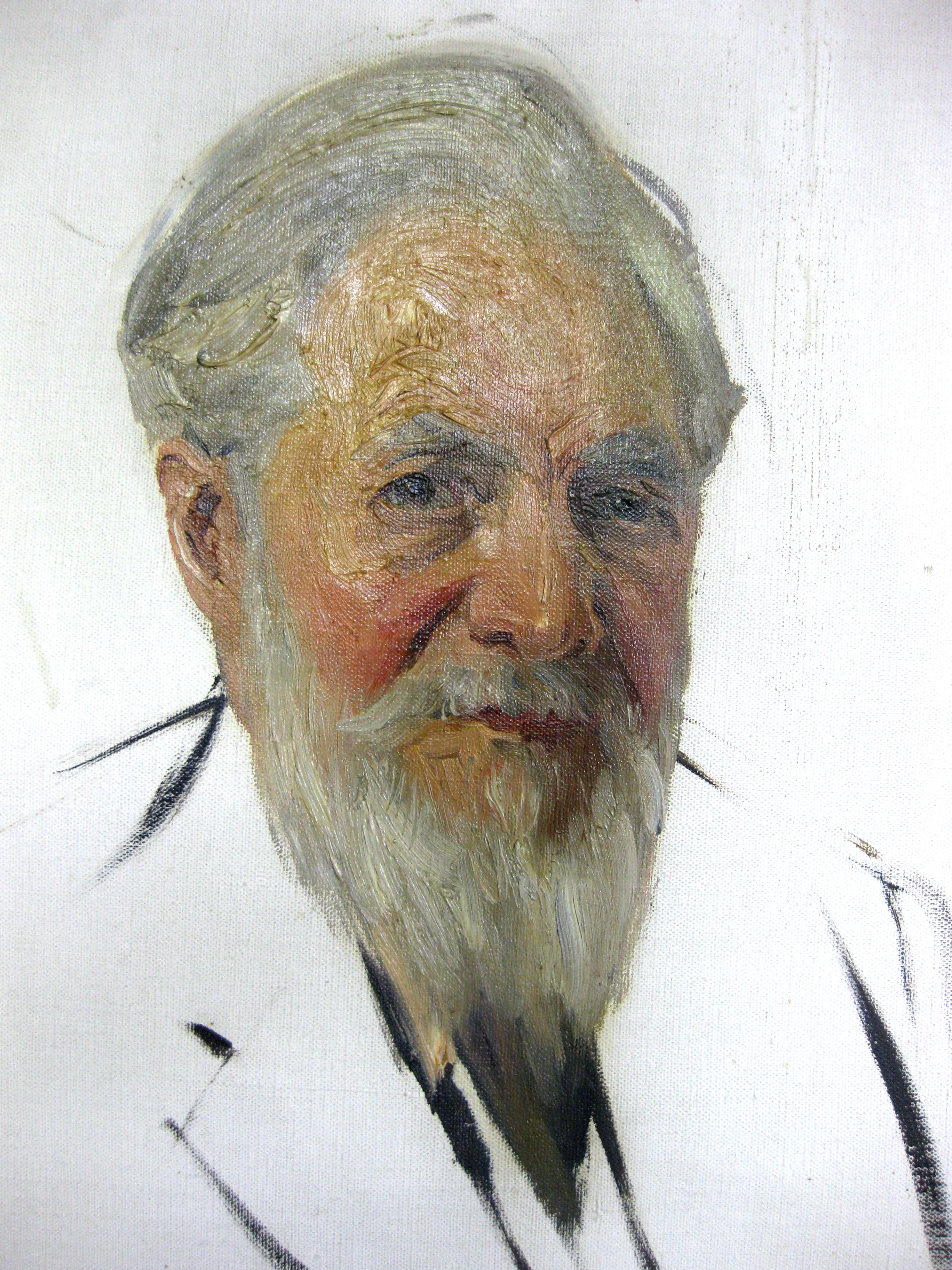

“There’s gonna be a lotta days when you lay your guts on the line and come away empty-handed”
Posted: January 9, 2014 Filed under: advice Leave a commentGood advice.
(h/t HelyTimes correspondent “Rob C.” in Auburn)
Timeless Art?
Posted: January 8, 2014 Filed under: music Leave a commentIf you haven’t watched this in awhile, I think you will find it’s still good:
from Seinfeld’s Reddit AMA
Posted: January 6, 2014 Filed under: comedy Leave a comment
Die.
Or:
[–]HallucinoJER 232 points 11 hours ago*Hello Jerry, then again since we’re not friends (yet) I’ll call you Mr. Seinfeld.
When you were a kid, what was your ultimate “one day if I’m rich I will…” fantasy?
Did you fulfill it yet?
First of all, I love being called Mr. Seinfeld. In fact, all my children call me that. It’s funny that you should ask this, because this was something I loved to do as a kid with my friends was sit on my stoop and think “what would we do when we were rich” when we were kids in Long Island. And I remember thinking “The greatest thing you could do if you were rich would be to have a go-kart track.”
I don’t have one. I do have a long driveway in my house in Long Island, and sometimes I ride on it on a scooter. And that makes me feel like Richie Rich.
Richie Rich, that comic book, made me anxious. Just the whole thing was kind of weird, it brought out strange, uncomfortable emotions of envy, and you know, sadness. He had parents, but it was one of the most depraved comic books of all. I wonder if it still exists, it can’t possibly still exist.
Everly Brothers
Posted: January 4, 2014 Filed under: America Leave a comment
(tune in for the first forty seconds at least for a good lesson in evolutionary biology)

Bedwetters vs. Thumbsuckers
Posted: December 22, 2013 Filed under: heroes Leave a comment
 From NY Times mag profile of McCain by Mark Leibovich:
He invites me to an actual arena that night: in Glendale, Ariz., where the Calgary Flames of the N.H.L. were in town to play the Phoenix Coyotes. This is not the most fabled rivalry in sports, but McCain says he will watch any sporting event (“I’d pay to see the Bedwetters play the Thumbsuckers”). He is a big fan of the Coyotes. There are supposedly other Phoenix Coyote fans, too, though not many of them come to home games. McCain’s 25-year-old son, Jimmy, drives us to the arena. Cindy McCain is in the front seat, and I’m in back with the senator, who is desperate to hear the pregame show on the radio. Silence makes him nervous. He keeps barking out call numbers to Cindy, but no luck. He checks the Coyotes app to find information about the show (McCain talks incessantly about his new Coyotes app), and Cindy continues to hunt around the radio dial, except when she is bracing herself for a crash, which happens on three separate occasions during Jimmy’s gun-and-slam death ride through the greater Phoenix sprawl. When we arrive, miraculously without incident, the McCains engage in a spirited debate about which parking lot to use. Jimmy takes a few wrong turns; Cindy tells him to slow down and asks why he’s going this way or that way, until finally Jimmy snaps and says, “Mom, you make it seem like which parking-lot entrance is the most important thing in the world!” In fact, it’s not, he tells her. “I had a woman almost OD in front of me at a strip club this afternoon. Now that’s something serious.”
“Why were you in a strip club this afternoon?” Cindy asks. Jimmy says he was making a delivery for the family beer distributorship. The woman will be fine, Jimmy reports. His father chuckles in the back.
The arena is ringed with palm trees popping out of the concrete and named for a company I’ve never heard of. Twenty minutes before face-off, the concourse is as placid as Penn Station on a Sunday morning. The celebrity politician walks a few feet ahead of the rest of us. He carries himself with a full and rightful expectation that people will recognize him, and he greets anyone that meets his glance. “Thank you for your service, senator,” many say. He gets this a lot, he says, “usually right before they unload on me.”
In the elevator, we meet a big, handsome guy in a suit who looks like a hockey player and, sure enough, turns out to be an inactive member of the Flames. McCain asks him where he’s from. Minnesota. “Where are you from?” he asks McCain. “Oh, I’m sort of from all over,” McCain tells him. When the player gets off the elevator and I mention to McCain that the guy had no idea who he was, the senator seems slightly amused and even a bit disoriented. “It happens sometimes,” he says.
The seats are about half filled, and the arena is quiet enough during the game to hear the players shouting to each other. Fans are periodically instructed to howl like Coyotes, which McCain does in the same way he greets Wolf Blitzer. The home-team Bedwetters beat the visiting Thumbsuckers 4-2, and McCain heads home happy, except when Cindy can’t find the postgame show on the radio, and Jimmy is nearly killing us again.
Not sure what the point of this profile is except that McCain loves life? Certainly entertaining anyway. This was interesting:
In his book about five Naval Academy graduates, “The Nightingale’s Song,”* the journalist Robert Timberg described what McCain looked like after two months of imprisonment — weighing less than 100 pounds, with collapsed cheeks and atrophied limbs. “His eyes, I’ll never forget,” McCain’s cellmate, Bud Day, told Timberg. “They were bug-eyed like you see in those pictures from the Jewish concentration camps. His eyes were real popeyed like that.”
Day, a decorated fighter pilot, died in July at age 88. “He was the bravest man I ever knew,” McCain said after his death. He and Day had notable disagreements over the years: Day was part of the Swift Boat Veterans for Truth, who campaigned against John Kerry in the 2004 presidential campaign. McCain condemned the group for their attacks against Kerry. “Like a lot of heroes, everything was black and white with Bud,” he told me. “That’s how you survive.”
In captivity, McCain said many of his fellow P.O.W.s would search for omens that their release was imminent. “People would say, ‘Hey, there’s a carrot in my soup, so that must mean we’re going home,’ ” he said. “Bud used to say to them: ‘Right, guys. We’ll be going home one day, but it sure as hell won’t be because we found a carrot in the damn soup.’
* highly recommended.
The human desire to give a shit is not defeatable.
Posted: December 20, 2013 Filed under: writing Leave a comment
from Craig Mazin and John August’s podcast (Mike is guest Mike Birbiglia):
Craig: You’ve lost your defenses and you’re expecting to laugh again. So, nobody sees it coming, you know? I remember talking to David Zucker and Jerry Zucker about the first time they screened the movie Airplane! for a test audience. And in their minds everything was jokes. They were just obsessed with how the jokes would play. And they were just thrown on their heels when at the end of the movie the plan finally lands and the audience bursts into applause.
Mike: Oh, that’s amazing.
Craig: Because they cared that the plane would land. You know? And they just thought, “It doesn’t matter. We’ve told them in every possible way this is not a real plane.” It is to them. It matters. And so the human desire to give a shit is not defeatable.
Saving Mr. Banks
Posted: December 19, 2013 Filed under: film, the California Condition 1 Comment
* Man, I thought this was a deeply, deeply interesting movie.
* Everybody in the movie does a great job. It is a well-made movie, the story’s really artfully told. I’s not like I remember Mary Poppins super well, but they lay that stuff in just right. I straight up enjoyed this movie.
* But: part of what I liked about it was the thrilling feeling that it was so unbelievably shameless. John Lee Hancock directed this movie, he directed The Blind Side, which was perfectly, amazingly shameless. Or was it not that shameless, is the world really like this and I’m just jaded/cynical and I need movies like this to bring me back to the fullness of humanity??
* What’s at the heart of this movie? What is this movie saying about cynicism, honesty, manipulation, entertainment? There’s Paul Giamatti talking about his handicapped daughter? Is this a play on being a shamelessly cornball movie? Does it matter? Isn’t the argument of this movie that putting something like that into your movie for the purpose of bending your emotions and giving you hope is ok? Is the moral that if you let down your cynicism for one second you’ll find yourself moved, and that feeling, that person, is your truer, better self? But how can the ends of that message come across if the means is truly shameless manipulation?
* How much is it on me, the audience, to agree to not be cynical, and how much is it on them, the storytellers, to not then manipulate me? What’s the deal we make when we suspend disbelief and what counts as a betrayal of that deal?
* At one point Walt Disney (Tom Hanks) looks at P. L. Travers (Emma Thompson) but it’s shot so he’s nearly looking to camera, to the audience. “Trust me,” he says. What are we to make of a movie made by Disney (the company) where the story of the movie is Disney (the man) making the case for manipulative entertainment to a reluctant audience? Where there’s a scene of a cold, repressed woman reduced to tears in a movie theater by the power of a movie?
* Saving Mr. Banks exists at some intersection where cynicism and idealism cross over each other again. If Disney makes a movie that runs right at some of the issues that make cynics so knee-jerk scornful of “Disney,” isn’t that kind of interesting and cool? Even if (of course) the ultimate product is in the end pretty pro-Disney? Or is it just nth level propaganda? Does it matter, if it’s fun and moving to watch?
* now look I’m not comparing anyone to Nazis or anything: but a thing that has stuck with me since I learned it is the idea that Goebbels was continually stunned and amazed at how much better and more effective the American “propaganda” movies that were coming out of a non-state directed Hollywood were than the products of Germany’s completely controlled machine, big example being Mrs. Miniver.

* I don’t want to deal with the idea of possible sexism in Saving Mr. Banks, but I mean the story of this movie is an uptight old woman is seduced by a powerful and calming man and when she finally submits herself to him after a lengthy courtship she experiences an extreme emotional release (right?)
* MORE!: the moviemakers monkeyed with the history at least a little bit, but how much? This article, “Saving Mr. Banks Is A Corporate, Borderline Sexist Spoonful of Lies” from LA Weekly (which I only learned about when the co-screenwriter got in a Twitter spat with the reviewer) would suggest quite a bit. This New Yorker article from 2005, though, suggests it’s hard to know, that maybe P. L. Travers played it a lot of different ways depending on who she was talking to. (that article, btw, written by Caitlin Flanagan, whose thoughts on nanny issues are always good to stir up the Internet).
How much does this matter? Isn’t part of the argument of this movie something about “the goal of entertaining and creating hope through entertainment can supersede other concerns,” or something? I dunno. Surely the people who made this movie looked into it more than your average reviewer and made their own set of ethical choices about how faithful they had to be to reality. If the manipulation of reality for narrative makes us queasy why and at what point does it make us queasy? How far are you allowed to go on these kinds of things?
I mean, a movie is a lie, that’s not really Walt Disney and it’s not really 1961. How much are you allowed to lie, though? I mean we all agree some accuracy is important, see Wikipedia:
To accurately convey Walt Disney’s Midwestern dialect, Tom Hanks listened to archival recordings of Disney in his car and practised the voice while reading newspapers.[37][38] Hanks also grew his own mustache for the role, which underwent heavy scrutiny—with the filmmakers going so far as to matching the same dimensions as Disney’s.[39][40]
Do we like hearing these things because it suggests the moviemakers are showing respect for the truth, and respect for us the audience by doing this work? Does it matter only when the real-life person is as famous/sacred at Walt Disney? Are critics like Amy Nicholson in LA Weekly mad the way we’re mad when we catch someone lying to us? Because it suggests the liar doesn’t respect us and thinks they can get away with it?

* An Australian person once claimed to me that it’s a well-known thing among Australians that Australians are known to get emotional when they come to Los Angeles. The person who claimed this to me said it was a combination of the flora, eucalypts and stuff, reminding them of home, plus Los Angeles is often the last stop on a long trip and they’re tired and on their way home. An odd claim maybe but then it was spontaneously confirmed to me by a whole other Australian. Saving Mr. Banks hints at this theme a little bit, I guess, but even that gets weirder when you learn the Australian scenes were shot in California.
* Real-life P. L. Travers is pretty interesting. Here’s some teasers from her Paris Review interview:
INTERVIEWER
Does Mary Poppins’s teaching—if one can call it that—resemble that of Christ in his parables?
TRAVERS
My Zen master, because I’ve studied Zen for a long time, told me that every one (and all the stories weren’t written then) of the Mary Poppins stories is in essence a Zen story. And someone else, who is a bit of a Don Juan, told me that every one of the stories is a moment of tremendous sexual passion, because it begins with such tension and then it is reconciled and resolved in a way that is gloriously sensual.
or here she is talking about her time with the Navajo:
I’d never been out West and I went to stay on the Navajo reservation at Administration House, which is at Window Rock beyond Gallup…
One day the head of Administration House asked me if I would give a talk to the Indians. And I said, “How could I talk to them, these ancient people? It is they who could tell me things.” He said, “Try.” So they came into what I suppose was a clubhouse, a big place with a stage, and I stood on the stage and the place was full of Indians. I told them about England, because she was at war then, and all that was happening. I said that for me England was the place “Where the Sun Rises” because, you see, England is east of where I was. I said, “Over large water.” And I told them about the children who were being evacuated from the cities and some of the experiences of the children. I put it as mythologically as I could, just very simple sayings.
At the end there was dead silence. I turned to the man who had introduced me and said, “I’m sorry. I failed, I haven’t got across.” And he said, “You wait. You don’t know them as well as I do.” And every Indian in that big hall came up and took me silently by the hand, one after another. That was their way of expressing feeling with me.
I never knew such depths of silence, internally and externally, as I experienced in the Navajo desert. One night I was taken at full moon away into the desert where they were having a meeting before they had their dancing. There were crowds of Indians there, about two thousand under the moon. And before the proceedings began there was no sound in the desert amongst those people except the occasional cry of a baby or the rattle of a horse’s harness or the crackling of fire under a pot—those natural sounds that really don’t take anything from the silence.
They waited it seemed to me hours before the first man got up to speak. Naturally, I didn’t understand what they were saying. But I listened to the speeches and I enjoyed the silences all night long. And when the night was far spent, they began to dance. Not in the usual dances of the corn dance; they had their ordinary clothes on and were dancing two-and-two, going around and around a fire, a man and a woman. And I was told that if you’re asked to dance by a man and you don’t want to dance, you give him a silver coin. So one Indian did come up, but I went with him. I couldn’t do the dance, even though it wasn’t a very intricate dance; it was more a little short step round and round, just these two people together. So we two strangers danced around the fire. It was very moving to me. And we came back to the House in the early morning.
* Oh! What about the part in the movie where P. L. Travers’ dad says of her poetry “it’s not exactly Yeats, is it?” Well real-life P.L. grew up to know Yeats. Is that anything? I dunno, probably not.
* What if this is a story about a pretty good con artist/manipulator (Travers) going up against the best who ever lived (Disney), and when she realizes how meagre her gifts are compared to his she becomes spiteful and petulant (Salieri-in-Amadeus style)?
* They mention in the movie that Robert Sherman got shot. Apparently he was in on the liberation of Dachau. A Jewish guy liberates a death camp and comes home and writes the cheeriest songs anyone’s ever heard? I mean, that’s a whole other interesting movie.
P. L. Travers as a young actress:

We Spent It All On Kites
Posted: December 11, 2013 Filed under: writing 1 Comment
Ann Summa for The New York Times
Haven’t read The Flamethrowers by Rachel Kushner yet despite strong recs from Pittsburgh office and elsewhere.
How about this, from this NY Mag profile?
In Eugene, Oregon, where the Kushners lived in a painted school bus like Ken Kesey’s, Rachel walked to her “totally hippie preschool” unaccompanied. Hard at work on their Ph.D.’s, the Kushners often left her and her brother at home alone, once for days with no sitter. “They left money in a jar,” Kushner says. “We spent it all on kites, and then we didn’t have any money to buy food.”
And:
Eugene “was a sweet little town,” Kushner says now, “but it was the seventies. I feel like there was a certain kind of evil lurking around the edges.” She and Smith are raising their own 6-year-old son very differently. “We actually take him to school and make his lunch. We dress him in clothes.”

Counting Puffins
Posted: December 10, 2013 Filed under: animals Leave a comment
from The Big Picture.
Q’s About INSIDE LLEWYN DAVIS
Posted: December 9, 2013 Filed under: film, Irish traditional music, music, New York Leave a comment
Question ONE:
* Is

as wonderful as

?
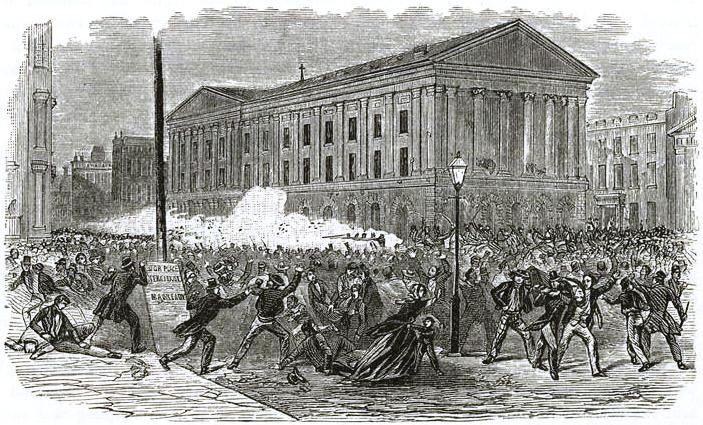
Look, I don’t want to turn this into another Astor Place riots, but I think there’s a healthy American vs. UK rivalry to start here.
Question 2:
The biggest Dylan fan I know says: “every time Dylan does something, ten years later it’s revealed to be genius.” Is the same true of the Coen Bros?
Even if I didn’t really like one of their movies, they are so good I assume that I’m wrong. I liked this one though, even though it was so so sad.
Listen to Carey Mulligan, Justin Timberlake, and Oscar Isaac sing 500 Miles. Best I can tell they all did their own singing.
Question 3:
Who wrote “500 Miles”?

This song is usually attributed to Hedy West, who put together “fragments of a melody she had heard her uncle sing to her back in Georgia.”
Her father, Don West, was a southern poet and coal mine labor organizer in the 1930s; his bitter experiences included seeing a close friend machine-gunned on the street by company goons in the presence of a young daughter.
Question 4:
What is the meaning of this movie?
I’ll tell you one message I felt strongly: “pursuing great art requires great sacrifice. It’s tragic if the art falls short. You don’t get the sacrifice back. Maybe the sacrifice itself is still noble but it’s an awfully lonesome road.”
Also this could be seen as a movie about a man being punished by God for abandoning a cat.
This was a movie where the hero literally does NOT save the cat.

Question 5:
The two best units of art that emerged from Jewish Minnesota have to be the Coen Brothers and Bob Dylan, right? Both deeply fascinated with “the old, weird, America.” Is there anything to that?
Question 6:
What would Minnesotan F. Scott Fitzgerald make of this movie?
I saw it just around the corner from where F. Scott Fitzgerald died.
Question 7:
Will the movie revive interest in The Clancy Brothers?

Question 8:
Why is Justin Timberlake so good at playing lame characters?

Is it because he has moved in his life so far beyond the idea of coolness?
Consider this testimonial by Joe Jonas. Timberlake, who at least in his choices appears very smart, was at an equivalent point of fame and self-awareness TEN YEARS AGO.
Question 9:
How the fuck is some guy in a magazine or a newspaper supposed to review a movie like this?? Obviously everything you’d think of the Coen Brothers already thought of times 1000!!
That’s what I thought as I walked out.
Sometimes Anthony Lane cheeses me off but his review of this movie helped me think about it.
(Some photo sources. Are photos of movie stars on the Internet just public property we can repost? I dunno, but 85% of all HelyTimes profits goes directly to charity)
 Helytimes